Chocolate makes smart

You always knew it, didn’t you? Now there is a study suggesting a correlation between chocolate consumption and winning Nobel prizes.

screen-shot-2012-11-20-at-4-46-58-pm1

While you are emptying that jar of Nutella, you may however want to consider why this study is bogus:

  • Correlation does not imply causation.
  • The average chocolate consumption in a country does not mean that the respective Nobel laureates personally eat as much or indeed any chocolate. With such a small sample size, the laureates themselves should have been questioned.
  • Nobel prizes are awarded to individuals or organizations, not to countries. How to contribute the many Nobel laureates who were born in one country, studied in another country and then moved to a third country? Surely, they didn’t suddenly become more intelligent by moving from a low-chocolate to a high-chocolate environment.
  • Nobel prizes are such rare and singular events (often awarded decades after the underlying work had been performed) that they are not even a good measure of a population’s intelligence.
  • Higher chocolate consumption per capita could indicate higher economic well-being, which might lead to more people studying and researching under better conditions than in countries that can’t even afford Milka.
  • Chocolate melts in heat. Therefore, I wouldn’t be surprised if people in colder countries eat more of it. But the cold may also prompt people to spend more time at the library than at the beach, thus leading to more and better research in Estonia than in the Dominican Republic.
  • Or maybe those cold countries up north still benefit from not having been colonized in recent history? Or from decades of peace?
  • Or they are not as affected by drought, again leading to better nutrition overall?

So, I am sorry to say, the study doesn’t show anything. But it does serve as an example of how to dissect such findings (and I am sure many more points of criticism could be made). By the way, before you mention it, the same applies to all the studies according to which the consumption of red wine leads to a longer life. Think of all the people you know and who of them drinks red wine regularly. It’s not the worker in the coal mine or the boy living on the rubbish dump, is it? No, it’s the middle-class teacher and his sociologist wife. I’ll bet you a ton of chocolate that even without any sip of wine, they would live longer than manual laborers who get exposed to toxic fumes every day.

(Thanks to fellow chocolate and research fans Romeu and Mafalda for pointing me to this study!)

Posted in Food | Tagged , , | 9 Comments

The Island of the General

2e92bfc3ff314105680c892740da9ee0-giuseppe-garibaldi-blouse-stylesIn November 1860, Giuseppe Garibaldi could have asked for anything. He had begun a campaign with less than a thousand men, but had marched from victory to victory. He had ignited enthusiasm for an idea that had seemed unrealistic until then: a unified Italy. For that idea, he had been sentenced to death, he had fled, he had spent years in exile, just to return to Italy again and again to fight for the country he wanted to create.

Without Garibaldi, Italy would not exist, and without Garibaldi, Victor Emmanuel II wouldn’t have become king of that country.

So the king asked the general what reward he wanted for his lifelong service. A cabinet post? Rule over one of the provinces? A castle? Nobility?

“Just give me a sack of potatoes, so I can start a farm,” the 53-year old replied, mounted a boat and sailed to Caprera, a small and rather inhospitable island north of Sardinia.

The journey to Caprera offers ample opportunity to become seasick, because first you need to get from Italy to Sardinia, then from Sardinia to La Maddalena and ultimately from La Maddalena to Caprera. As the islands are getting smaller, so are the boats. But to find out why “the only wholly admirable figure in modern history” (according to the historian Alan Taylor) withdrew to an island with a few horses and donkeys, I have to set out on this arduous journey.

Actually, I don’t need a boat for the last part anymore. A 600-meter long road has been built between La Maddalena and Caprera. Small boats can still pass through a bridge. A civilian speedboat is whizzing past the former naval base, while I am whizzing to the island of the national hero by bicycle. As we are going to dive into the history of the 19th century today, I find a vehicle from pre-modernity quite fitting.

Pine trees and a few eucalyptus trees provide some shade. When Garibaldi moved to Caprera, the island was almost completely barren because, like everywhere around the Mediterranean, the Romans had raged and cut down all the trees. (We are lucky that they never discovered the Amazon.) The wind is playing with the branches of the pines. Apart from that, it’s almost silent. Only a few birds are chirping.

Caprera Überblick.JPG

At a picnic area, a bar made of timber bears the name “il barone rosso”. Hopefully, it was not named after the pilot from World War I, who bore the same title. Between the trees, there are a few unoccupied hammocks.

The road bifurcates. The Garibaldi Museum is to the left, the Garibaldi Memorial to the right. I’ll take the right turn for now. The higher I am struggling on the bike, the shorter the regular pine trees become, but the taller the mountain pines grow. At the summit, there is a rifugio for tired hikers with a seemingly endless supply of pine cones lying around, perfect for making a fire and a barbecue. Why is it that the most and the largest pine cones can always be found in places where the danger of forest fire prohibits the idea of lighting a fire?

From the Garibaldi complex, you can look down to the sea which is bluer than the Caribbean. Actually, if you know Sardinia, you don’t need to bother yourself with going to the Caribbean anymore. (And yes, I took it upon me to explore the Caribbean personally before giving this advice.)

Karibik.JPG

The memorial is an old fort, Forte Arbuticci, which had been in military use until World War II and on top of which a comparatively small museum has been grafted. Small, but nice. The museum is modern, multi-media, informative and interesting. But because most of the information is only in Italian, it’s good that you have dispatched me to translate everything for you.

Fort.JPG

Even better that I have come alone. Because in such a museum, I read all the boards, study all the maps and take pages of notes. The other visitors are rushing through the museum, watching a few video clips, going back to their car and speeding on. I can spend hours here. Maybe it helps that I don’t have a car waiting for me, but only a bicycle and the looming midday heat.

I will give you the summary: born in Nice, seafaring, journeys as far as Russia, rebellion in Piedmont, sentenced to death, escaped to South America via Marseilles, revolution in Brazil, fleet commando for Uruguay in the war against Argentina, returned in 1848 for the revolution in Sicily, leading the revolutionary army, flight to Tangier and New York after the revolution failed, journeys to China, Australia, Peru, Chile, shipwrecked, returned to Italy once again, fighting in the Alps, liberation of Sicily, capture of Naples, fight against the Pope, wounded in battle, prison, fighting for France in the 1870/71 war against Prussia.

A life like one of Karl May‘s novels.

Oh, Garibaldi himself also wrote three novels after retiring.

But even more impressive than all the sailing and shooting and slaughtering are Garibaldi’s political ideas. He argued against the death penalty (granted, he had a personal stake in that), for general elections, for female emancipation, for a European federation, for self-determination of the Balkan peoples, for abolishing the papacy.

Garibaldis Denkwürdigkeiten.JPG

Garibaldi Guard.jpg

During the Civil War in the United States, the Union negotiated with Garibaldi, who was offered a generalship first and then the supreme command over all troops. But Garibaldi’s condition was that the war would be fought with the express goal of abolishing slavery. At the time, President Lincoln wasn’t ready to do that.

Because he fought in Europe and in the Americas, Garibaldi was called “the hero of the two worlds”. If someone had informed him about the situation in Congo or in Kashmir, he probably would have hurried there as well. Even units that had nothing to do with Garibaldi used his name, like the Garibaldi Guard in the US Civil War, the Garibaldi Battalion in the Spanish Civil War, the Communist Garibaldi Brigades in Italy during World War II and the Garibaldi Partisan Division in Yugoslavia.

toscano-garibaldiSo after a few hours, I feel like I know almost every private detail of Garibaldi. Finally, for I have already seen hundreds of statues and memorial plaques of him all over Italy.  Any village has at least a Garibaldi Boulevard and a Garibaldi Park. Though, in my opinion, the best memorial are the Garibaldi cigars, which are luckily also available in almost every village. And they are not even expensive. But I am wandering from the subject again, when the reader would prefer my gaze to wander from the fort across the island.

Caprera is rather paltry. Stony. Windy. The pine trees adorning the island now were only planted by Garibaldi. So he himself didn’t benefit much from them. There is a nice coast for some walks, but to spend all of retirement here? Someone must have been really fed up with humanity.

A lady working a the memorial explains the way back, but I have already discovered a shortcut on the map: a hiking path past a military exclusion zone and a holiday resort. Both of them deserted. The buildings are crumbing, a few plastic chairs are strewn about the resort, as if nobody had been here in months. Very spooky.

Haus kaputt.JPGFerienanlagen.JPG

Especially in the south of Italy, I never understood why tourism is limited to two months in summer and it’s completely empty for the rest of the year. It’s May and it’s already warm, even hot, but my Italian friends are shocked: “Nobody is going to Sardinia now! We will all go there in August.” Even families without children, who would be independent of the school holidays, leave exactly on 15 August of each year, preferably going to the same holiday apartment in the same town where they have been staying for decades. The in-laws rent the holiday apartment next door, and they lunch and dine every day with the same people they already know from home. It seemed to me that not much value is placed on individualism in Italy. One reason why it was not quite the right country for me.

But today, I am alone and free like a revolutionary.

Although I feel well-informed already after the visit to the memorial, I continue to cycle to the museum in Garibaldi’s former house. There are a locomotive, a barrel for making wine, agricultural equipment, a mill and sickles. It looks like any museum of local history.

Haus1Haus2Haus3

Inside the house, there are a small piano, a horse buggy, four sabers, five bayonets, paintings, maps, nine muskets. Comfortable and classy, but nothing pompous. The best thing is the view through the tall windows. The rooms are cooled by the wind. The children’s bedroom has the same beds as the one for the parents. Equality!

Two guards are observing me carefully, ready to intervene the second I would dare to take a photo of the inside of the house.

In the room in which Garibaldi died, there is a pair of padded crutches and some medicine next to the bed. From the deathbed, one enjoys a look towards Corsica. The calendar and the clock indicate that it was 2 June 1882 at 6:20 am, when a very full life came to an end.

Not without some logical consistency, the guided tour moves towards the gravestones in the garden, where photography is allowed again. Here too, simplicity and frugality rule. The general didn’t want anything ostentatious. His wife and his children at least got marble with inscriptions, but Garibaldi himself was laid to rest under an unhewn granite rock.

Grab.JPG

And that was it. The group almost got chased through the museum. I learned much more at the memorial site, and in a more relaxing atmosphere.

As I couldn’t dwell in Garibaldi’s White House as long as I had wanted to pay my respect to the place, I extend the bicycle trip around the island. Hilly roads and paths lead me to the southern tip of Caprera. Each bay is more beautiful than the last. Some of them with sandy beaches,

Bucht Sand.JPG

others with rocks,

Bucht Steine.JPG

and all of them almost completely devoid of humans.

Finally, I find a place in the shade for a picnic, when something nudges me gently from behind: a pig!

Wildschwein.JPG

In the spirit of Garibaldi, purportedly an animal lover and vegetarian, I let it live. Also, it is so peaceful and friendly that it perfectly suits the island and the whole day.

Caprera Abend.JPG

Practical advice:

  • There are no flights or regular ships to Caprera. So you have to take the ferry from Palau in Sardinia to La Maddalena. The ferry goes almost every hour and costs 9 euros for a two-way ticket.
  • You can reach Palau by train from any major city in Sardinia.
  • Outside of the summer season, it’s really easy to find accommodation on La Maddalena.
  • I generally would advise against going to Sardinia in July or August: overcrowded, booked out, too expensive and too hot. I was there in May, and it was perfect.
  • Both islands are wonderful for cycling and hiking. One advantage of going on foot: you can walk closer to the coast.
  • A good bicycle cost 10 euros per day, but I got it for 15 euros for two days. The shop in Via Amendola (as you exit the ferry) also rents out scooters and quads. Phone 0789-737606, e-mail mgmega@tiscali.it. There are a few hills on the island, but nothing that would be insurmountable by bicycle.
  • Allegedly, there is a bus on Maddalena going to Caprera. Because many visitors to La Maddalena drive to Caprera, it also shouldn’t be hard to catch a ride as a hitchhiker.
  • The combined ticket for both museums on Caprera costs 10 euros or 5 euros if you are between 18 and 25 years old. As is often the case in Italy, younger and older (65 years and above) visitors can enter for free.
  • The memorial is only open from Thursday through Sunday and only 0900-1400. Garibaldi’s house is open from Tuesday through Sunday, 0900-2000.
  • Don’t forget sunscreen and a hat! Particularly on La Maddalena, there are hardly any trees and thus no shade.

(Hier gibt es diesen Artikel auf Deutsch.)

Posted in History, Italy, Photography, Sardinia, Travel | Tagged , , | 8 Comments

How about tipping?

Wikipedia has this map of tipping customs in restaurants:

tipping map

This might be useful for those of you who like to do things as they are done customarily.

Me, I am rather skeptical regarding tipping. And it really pisses me off when people expect it or even add it to the bill, like I have experienced it in Chile and the US. If you run a restaurant and you can’t pay your staff a living wage, close the damn restaurant! Or if you know that you need to charge 10% more, amend the menu instead of luring customers with fraudulently low prices.

Also, I don’t quite understand why I, as a poor freelancer earning less than minimal wage should support people with a fun job that even comes with free food. And ain’t nobody never tipping me when I deliver a great translation (which does not come with free food).

No, I reserve tips for cases when I want to. For example when I spend more time than normal at a restaurant, reading a book and smoking a cigar for an hour after I have finished lunch, then I pay extra for the time that I occupied the space. Or when a hairdresser in Brazil or Romania has to communicate with me in a foreign language, then I compensate them for the added stress. Or when a taxi driver helps me carry my bag to the house. Or the guy at the hotel who patiently answers all my questions about where to find this and that.

But if you do run a restaurant or a shop and want tips, I recommend that you put up a jar for all tips for the whole crew. Otherwise, the practice is rather discriminatory, with young people receiving more tips than older people, beautiful people more than less beautiful people and big-breasted women more than their lesser endowed but probably equally hard-working colleagues. (Yes, there is a study on that.)

(This article was also published on Medium.)

Posted in Economics, Travel | Tagged , , , | 10 Comments

The most beautiful time of the year

Well, by now it’s almost over again. But I sent out my father to take some photographs for you to enjoy the feast of colors for a little bit longer. Unfortunately, he doesn’t venture very far from home (I hope I don’t get the same disease or whatever it is when I’ll be old myself), so all the photos are from the Upper Palatinate and the Bavarian Forest regions in Bavaria.

Kulzer Moos_DSC3545.jpeg

Herbstwald_DSC3278.jpeg

Because this is Bavaria, there must of course be castles, ruins and Medieval fortifications.

Falkenberg 1 aus Buch.jpeg

Hohenburg_DSC2434.jpeg

Amberg_DSC3815.jpeg

The rivers and lakes are perfect for a walk or for relaxing with a book and a cigar at this time of the year. There is still sun (on some days), but the mosquitoes have already disappeared.

Winklarn bei MO_DSC3532.jpeg

Drachensee bei Eschlkam_DSC3477.jpeg

Arbersee klein_DSC28302300dpi.jpeg

And you can find mushrooms in all colors and sizes.

Pilz rot.jpg

Moser Steinpilz_DSC4034.jpeg

I knew that my home county of Amberg-Sulzbach had a partnership with Argyll & Bute in Scotland and that there was a student exchange, but I didn’t know that there is also a cattle exchange.

Highland cattle.jpeg

And when the weather and the mood turn more gloomy, there are always cemeteries, like the Jewish cemetery in Sulzbach-Rosenberg.

Jüdischer Friedhof Sulzbach-Rosenberg Andreas Moser.jpeg

Jüdischer Friedhof Grabsteine hebräisch.jpeg

Jüdischer Friedhof detail.jpeg

By the way, one of my father’s books about the Upper Palatinate region has also been published in English.

Posted in Germany, Photography | Tagged , | 24 Comments

Random Thoughts (17)

  1. Now I know why it’s called CATalonia: it doesn’t know if it wants to walk through the door or not.
  2. Shouldn’t nobody sign no contract that they ain’t read before.
    (I am now giving legal advice in country lyrics, at no extra cost.)
  3. I never knew Luxembourg was a world power, but now I read that the Luembourgish Army fought in the Korean War.
  4. Why do the three Baltic states have such an uneven women/men-ratiosex ratio
  5. The numbers for different age brackets give a partial answer. Everything is fine until 55 years of age, then the number of men drops off. Above 65 years old, the ratio is a stunning 2 women for 1 man.
  6. From a program about bird migration on the BBC, I learned that storks returning to Europe with obviously African arrows and spears shot through their bodies were some of the first indicators of bird migration.
  7. I didn’t think that this advice might become relevant for my readers in the USA, but apparently the time has come: How to make fun of Nazis.
  8. I noticed that you can save a lot of time if you eat only one big meal per day instead of three smaller ones.
  9. Thanks to Ana Alves for sending me Human Rights after Hitler by Dan Plesch, The Non-Existence of God by Nicholas Everitt and Teaching Plato in Palestine: Philosophy in a Divided World by Carlos Fraenkel! 
  10. I give up on Venice. Each time I go there, the whole city is flooded, whatever the time of year.
  11. For the World Fair 1937 in Paris, an architect proposed this 700-meter-high tower that could be scaled by cars: 
  12. Thanks to the readers who alerted me to this dream job with the New York Times. But when a newspaper announces such a job, I am quite certain they already have someone in mind and only use the job advert to create additional buzz.
  13. Upon reading Paul Theroux’ The Great Railway Bazaar, I noticed that I could have saved myself the investigation to find out the longest possible train route. For he writes: “The way is clear, by rail, from Hanoi Junction to Liverpool Street Station in London,” but then makes a detour via Japan and Vladivostok.
  14. When I was young, we could still read and smoke for passport photosPass
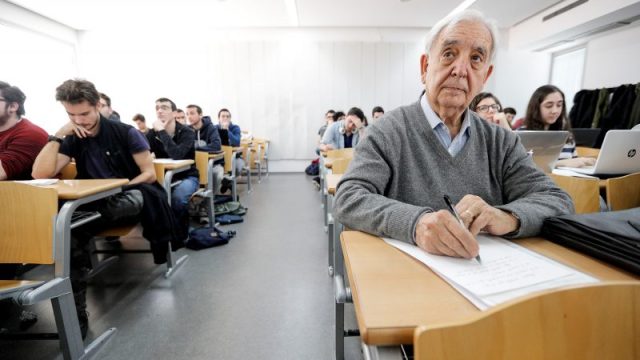
  15. After taking up studying again, I still have to get used to asking for student discount everywhere.
  16. Did you know that I inspired a verb in German? “To moser” means to constantly nag and criticize, although not without reason. Quite fitting.mosern
  17. Every generation is entitled to its own Spanish Civil War.
  18. The #MeToo campaign is opening my eyes. Thank you! I hope it’s a bit easier for those speaking out because so many victims are coming forward (and absolutely no blame at all on those who don’t – I wouldn’t either), making it less about the individual stories, but about how widespread abusive, violent, demeaning and criminal behavior is. – It’s really shocking for me to read it from so many women whom I know, and I hope I will always keep this in mind when the subject comes up.
  19. How to scare Germans: Look people in the eye, smile and say “hello”.
  20. For Coming Out Day, I confess that I prefer books over people.
  21. How to spot difficult clients:
    “Hi Andreas,
    You might be rightfully charging your fees – but …”
    (I stopped reading at that point.)
  22. Life would be much more comfortable if it was socially acceptable to go to university in jogging pants.
  23. What if Bob Mueller arrests Donald Trump in exactly the same moment as Trump fires Mueller?
Posted in Books, Estonia, Germany, Italy, Latvia, Law, Lithuania, Politics, Spain, Time, Travel, USA | Tagged , , , , , , , , | 12 Comments

Studying history at University of Hagen

Hier geht es zur deutschen Originalfassung dieses Artikels.


Good news: I am a student again!

Because I am constantly reading, thinking and writing, I thought that I might as well study once again. After all, I always enjoyed university more than work, and everybody needs a hobby. I prefer browsing books over bar brawls and lounging in libraries over listening to loud Latin lyrics.

I had always wanted to study history. Immediately after high school, I only didn’t do so because other subjects had attracted my curiosity as well. Due to family imprint (to blame somebody else) and the neoliberal zeitgeist of the time, I thought that job prospects had to be a relevant factor when choosing one’s field of study. Thus, history was relegated. The finals between law and economics were then decided by a fear of higher mathematics and probably also by a predisposition for arguments and discussions.

The possibility of studying two subjects at the same time had not even crossed my mind back then, for I was under the misguided impression that I had to finish my studies as soon as possible in order to become a productive member of the national economy. Well, that’s how we thought in the 1990s. You have to remember that back then (at least in Germany), the radio played songs every day encouraging you to “increase the Gross National Product”. But, dear young readers, take your time! It really doesn’t matter if you start sitting in an office or standing at the assembly line at age 24 or age 26. Study as long as you can!

After the end of the Cold War, maybe history didn’t seem that interesting for a while either. Coca Cola had won against Vita Cola, the Berlin Wall had come down, and that was it. End of history.

But now it’s 2017, the 100th anniversary of the Russian Revolution, the peripety of World War I and the actual beginning of the 20th century. I have also regained an interest in pursuing the academic study of history because I find it misinterpreted and misrepresented in political debates more and more (“slaves came to America looking for prosperity”, “terrorism is a new phenomenon”, “this area was always Armenian/Palestinian/Hungarian”). Whether we are talking about monuments to Confederate generals or to victims of the Holocaust, the future of Palestine or Abkhazia, we can hardly discuss such issues seriously without an informed look into history.

As you know, my life is modeled on the Migration Period, so I didn’t have the heart to make a decision for one fixed location for several years. Therefore, because of flexible time management and because I didn’t want to sit next to giggling teenagers, the best option was the University of Hagen, Germany’s distance university.

Apart from MA and PhD (but we don’t want to think quite that far this semester), this university only offers history as part of the BA in Cultural Studies with literature or philosophy as a minor.

Kuwi

I don’t mind that at all, I thought – until I held the introductory course books for literature in my hands and stumbled, or indeed tripped and fell, over such seemingly unliterary concepts as self-referential closeness of the theory of structuralism and donquijotesque transfers of the text to decontextualized allegorical dimensions. I like literature and I would like to enjoy it further. The first and possibly overhasty impression tells me that to this purpose, I better stay away from the study of literature. Maybe it’s like food, which also tastes better when you don’t know how it was prepared.  So I will choose philosophy as a minor and hope that my MA in philosophy will be recognized to a large extent, allowing me to focus on history in the coming years.

The majority of you who don’t read this blog as an ersatz-Bildungsroman but for its travel reports, will now worry and wonder if the roving reporter will only be sitting at his desk for the next four to six years and not experience any more noteworthy adventures.

Schreibtisch Fernuni.JPG

You needn’t worry about this, please, because:

  1. Most of my travels haven’t been journalistically exploited yet. About a dozen notebooks with chocolate stains and bullet holes are still waiting for a hungry audience that they could feed for years.
  2. I should remind you that many of my travel reports have already been enriched with historical knowledge, which sets my blog apart from the standard sun-beach-caipirinha travel blogs. This information shall henceforth be even better researched and substantiated.
  3. Because I can carry out the distance studies from anywhere, I will move around a few times during the project. The next move will probably be to Eastern Europe again.
  4. Although most classes are virtual, the university also offers regular seminars in person. For example, I have just been to a whole intensive week of history lectures and seminars in Hagen. After Haifa and Hanga Roa, you are surely dying to read something about Hagen in North Rhine-Westphalia. For the next seminar in December (“Crisis of European modernity – changes and departures: the epochal year 1917”), I will have to go to Frankfurt.
  5. In June 2018, there is even a field trip to Krakow (“Politics of remembrance and of history in a Polish metropolis 1900-1970”). I am looking forward to that in particular because, to my great shame, I still haven’t been to neighboring Poland. (Heck, even my grandfathers have been there, albeit on invasion.) Maybe I will add a few extra extra months there.
  6. Because of a seminar on Mesopotamia (this one without an excursion, unfortunately), I’d like to travel to Iraq. But unfortunately, international flights to Kurdistan were suspended after the independence referendum (take note, Catalonia!), making everything more complicated and expensive and thus less likely. We’ll see if I find a way. I’ve already discovered that there are regular buses from Amman to Baghdad, and now that ISIS has gone bankrupt that should be super-safe.
  7. And then there is the Erasmus program! When I was sharing a flat in Bari with Erasmus brats who were partying more than they were studying, I was still making fun of it. But now I am looking forward to EU subsidies for one or two semesters abroad. I don’t need to go to the stupid parties, after all.
  8. I am confident that I will also think of something interesting and exotic for the internships. You know me. I can’t stay glued to my desk for that long. I haven’t put the backpack in mothballs yet.

Studying can be a thrilling journey of discovery, too.

Because I have already been writing about history in this blog, you hopefully won’t mind if I report from a seminar from time to time or turn one of my term papers into an article. And maybe some of you can be motivated to return to university yourselves. I notice that there is a trend to a second or third degree. (Or maybe that’s mainly among my lawyer friends who are hit with a burnout.)

Lastly, I have extended my wishlist with a list of books specifically for my studies, which may be more useful for Christmas than yet more socks with elks. 😉

Posted in Germany, History | Tagged , , | 30 Comments

Why travelling with little money is the best

Dan Kieran writes in The Idle Traveller:

If you have to rely on other people, you are forced to be open and engage with them, which quickly spreads the notion of friendship and community. One person leads you to another further along your path or pushes you in a slightly different direction from the one you were imagining. It is a loss of control, but an entirely life-affirming and liberating one.

If, on the other hand, you have plenty of money and no need of anyone’s help, you can venture all over the world without meeting a single local person.

And I agree.

If I had enough money to stay in hotels all the time, I would never have tried Couchsurfing, where I met plenty of inspiring and helpful people. They often made my trips much more interesting than they would have been without local contacts. This summer for example, I stayed with a young Couchsurfing host in Abkhazia, who took me to galleries and exhibitions and introduced me to artists, academics and even the former Foreign Minister of the country.

If I had stayed in a hotel, I wouldn’t have experienced any of this. (In my experience, AirBnB hosts don’t have as much time/interest as Couchsurfing hosts, but that may also be due to the travelers’ preferences.)

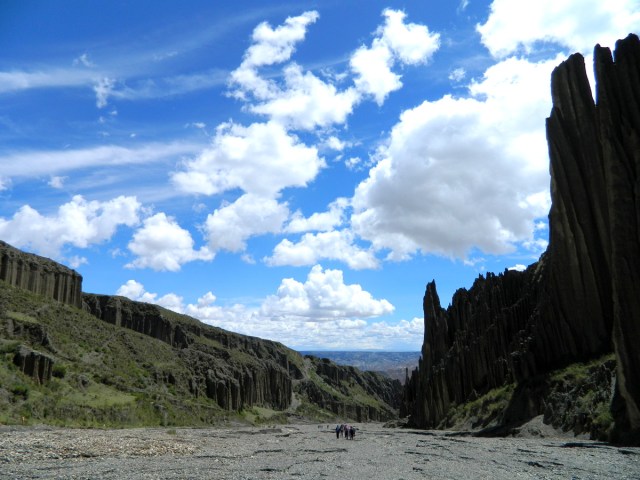
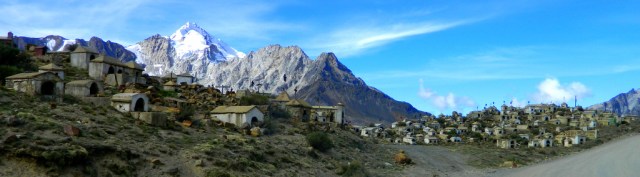
If I had enough money to rent a car, I would never stand by the side of the road and hope for a stranger to invite me into their car. A particularly nice driver in Montenegro even invited me to his home, prepared a meal and drinks and gave me a bunch of presents before taking me exactly where I needed to go. In Bolivia, I was walking in the mountains when a truck with miners stopped to take me through a breathtakingly beautiful valley. The most hitchhiking-friendly place so far was Easter Island: cars, quads, pick-up trucks sometimes even stopped without me trying to hitchhike. “Jump in,” the drivers said without asking for my destination, because all roads lead to the only town on the island anyway.

In Brazil, I even caught a ride on a helicopter.

If I had enough money for a car, I wouldn’t have spent a freezing night at the train station in Romania that lead to a very memorable encounter.

If I had enough money for restaurants all the time, I would never buy food from the market and eat in the park, where people sit down next to me and chat me up. It is this contact with random locals, not only with members of my own profession or my own social class, that makes traveling most interesting.

If I had enough money for intercontinental planes, I wouldn’t have found myself on a ship crossing the Atlantic.

If I had enough money to fly from one capital city to the next, I would never see the little towns and villages in between, the ones that are forgotten, where the waste dumps and slums are, where development lags 20 years behind. In other words, I wouldn’t have seen reality. I would know and understand less about the world.

hobo.JPG

(By the way, I don’t want to recommend Dan Kieran’s book. Except for a few interesting thoughts, it’s rather boring and free of substance. You’ll be entertained better by reading this blog. – This story also appeared on Medium. – Hier gibt es diesen Artikel auf Deutsch.)

Posted in Books, Economics, Philosophy, Travel | Tagged , , , | 25 Comments

The Sad Future of Catalonia

In some conflicts, you don’t need to pick a side. Because sometimes, both sides are wrong. Between the Catalan and the Spanish governments, it’s impossible to keep tabs on who has committed more grave mistakes.

Even for supporters of self-determination, it’s hard to take the Catalan independence referendum seriously because its proponents didn’t have any plan for the day after. They blatantly mislead Catalans about the prospect of remaining in the EU, which shows complete ignorance about how the EU – or indeed any international body – works.

If a member state of the EU could split in two and then have two seats and votes in the Council of the European Union, then what’s to prevent Germany from splitting into two again? Or France into 100 regions in order to gain a super-majority in the EU?

That’s not how international law works. Countries as political entities are members of the EU, not a certain stretch of land. If you leave that country, you are out. If, on the other hand, a country grows, it doesn’t require a new application for membership, as seen after German reunification in 1990. [Hint for Romania and Moldova. ;-)]

Second, as anyone can look up in the EU Treaty, admission of a new member requires unanimous consent of all existing members. Unanimous! Yes, that includes Spain. Even before the central government unleashed Inquisition 2.0 in Catalonia, nobody could have expected Spain to consent. Any such hope is naive. Just ask Kosovo.

But things can get even more depressing from Catalonia’s viewpoint. Because there is a village in Greece which is also called Katalonia.

Katalonia greek

As the Republic of Macedonia can tell you, Greece won’t allow anyone into the EU as long as they have a name that resembles that of any Greek region, district, county, city, village or restaurant. (Greece even refuses academic ties with the University of Georgia because it’s in a town called Athens.)

So if – and that’s a big if – an independent Catalonia were ever to advance in EU membership talks, it couldn’t do so under the name of Catalonia. It would either need to resort to an ancient name like Aragon, but that sounds too much like Lord of the Rings, doesn’t it? Or like Macedonia, the new entity would be known under an abbreviation. FACOC for Former Autonomous Community of Catalonia is almost as catchy as FYROM.

Posted in Europe, Greece, Language, Macedonia, Politics, Spain | Tagged , , , | 18 Comments

The sweet life of a freelancer

From a conversation with a potential client on Upwork:

price garden book

They didn’t hire me for the job.

Posted in Economics, Time | Tagged , | 12 Comments

The state of Brexit negotiations

EU British flag.JPG

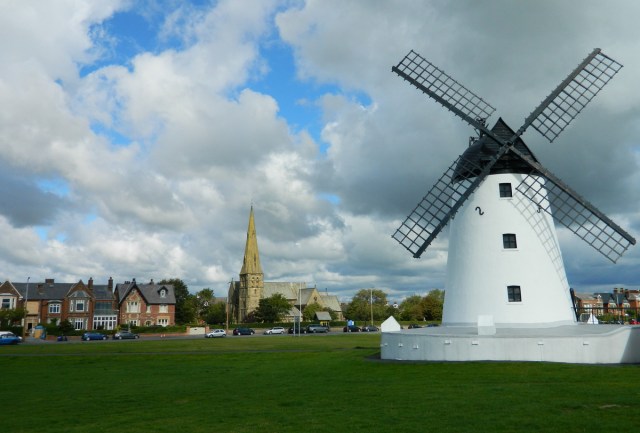
Photographed in Lytham St Annes in Lancashire, England.

Posted in Europe, Photography, Politics, UK | Tagged | 1 Comment