
Zur deutschen Fassung dieser Einführung ins Haushüten.
Sometimes, one random encounter changes the course of our lives. When I lived in Montenegro, as I walked down to Tivat from a hike on Mount Vrmac, I bumped into a lady with a scary dog. The dog wasn’t hers, she explained, she was from Hawaii and just staying in Montenegro for three weeks, house sitting and taking care of the dog in the absence of the owners. And that’s how I heard of house sitting for the first time.
What is house sitting?
When the owners of houses or apartments want to travel, they are sometimes worried about their house, about plants and, above all, about their pets if they cannot take them on holiday. Sure, you could put the animals in a shelter, but these places are not as cozy as one’s own home. (People don’t seem to have those reservations about their grandparents, though.)
Therefore, homeowners look for someone to live in their house during the time of their absence and feed the dog, water the plants, shovel the snow, empty the mailbox and make sure that nobody breaks in. The owners feel more relaxed, knowing that someone takes care of everything and contacts them from time to time, sending photos of their pet.
“Hmm,” I thought, “this would be perfect for my traveling lifestyle.” Jessica, the lady from Hawaii, was very encouraging and gave me plenty of tips and help. Combined with the experience I have gained in the past years, I pass this information on to you.
If you understand German, there was also an interview with me on German national radio.

So, you get to go on vacation for free?
No. You really must not see it as a vacation or a holiday. I rather treat it as a job, with responsibilities towards the house, the owners and the animals.
There is usually no payment involved at all, but if someone allows me to stay in their house or apartment for free, it’s like they are paying my rent and my utility bills. So I should take my responsibilities seriously.
Particularly if there are pets, this means that I will invest serious time to take care of the pets. Merely keeping them alive is not enough, I also want them to be happy. If they need cuddling for a few hours every day, then they get the cuddles. (I can still listen to podcasts or watch a movie while doing that.)
I am also mowing the lawn, watering the plants, taking out the trash, checking on the solar panels and picking up the mail. Most important are regular updates for the owners, so they know that the house hasn’t burned down and that the cat or dog is still alive. I also inform the homeowners of the mail received, offering to scan and forward it to them.
So, as you see, it’s not a holiday and you don’t have complete freedom of your time. Particularly if there are pets, you shouldn’t really spend the night elsewhere, so you cannot go on longer trips in the area. But for me, requiring a lot of time for studying, reading and writing anyway, it’s perfect. For the opportunity of living in another city or country, it’s a small price to pay, I think. And sometimes, you get to stay in real palaces.

How can you do house sitting if you are afraid of dogs?
I only work with cats.

This severely limits the number of jobs I can apply to because around 80% of house sitting offers include dogs. So, if you want to apply for house sitting jobs, please only apply to the ones with dogs, horses, sheep and snakes, so we won’t be competing.
Leave the cats to the cat lover.
The only exception is our neighbor’s dog in Germany, but she is so cute and harmless, she is basically a cat.

Oh, and I did take care of rabbits once. Now, the only animals missing are sheep.

How long do these house sits last?
Some people only look for a house sitter for a weekend, others are going away for half a year, to spend the winter in their summer house in the Caribbean. Most offers are for a few weeks, coinciding with the average time of a vacation. A lot of people want to get away for Christmas, and who can blame them?
I prefer to stay for several months, particularly if I have to fly somewhere. When I am already in the area, I am also open to shorter assignments.
How do you find these jobs?
There are special websites.
- Mind My House was my first try because the fee is quite reasonable at 29 $/year. I scored a few jobs quickly after signing up. Most of the offers are in North America and in Western Europe, with occasional offers from other regions.
- House Sitters UK only has offers from the UK, as the name suggests. They have the best-organized website, I think, and I personally love staying in the UK. So, the 20 £/year are worth it. I have already secured a few placements through them. If you want to sign up with House Sitters UK, use the referral code CKYWBT to get 25% off your membership fee.
- Nomador has a focus on France, but also offers from the rest of the world. The membership costs 74 €/year, but they offer a free trial membership, with which you get 3 applications.
- Mind a Home UK is, not surprisingly, limited to the UK. They only charge 15 £/year.
- For a while, I also used Trusted Housesitters. They run a very professional website and have plenty of offers, but when they raised the fee to 150 €/year, I was out.
- House Sit Mexico would be interesting, because I would love to go to Latin America again. But 79 $/year are too much for the relatively few offers they have.
- Housecarers charge 50 Can$/year. I haven’t checked them out yet, mainly because I already find enough placements through the other websites.
- The standard membership with House Sit Match costs 49 £/year, but I haven’t been able to properly use the search function on that website yet.
- Luxury House Sitting costs 25 $/year. I find the website a bit confusing, because they don’t remove filled positions.
There are also plenty of house/pet sitting groups on Facebook and on Couchsurfing. If you already have a profile there, it might even be easier to find house sits, because people can read your references or find out much more about your personality.
I am curious to hear about your experience with these websites, if you have any, or additional links, of course. None of the websites is really perfect when it comes to search parameters. For example, when I specify that I want to care for cats, I always get plenty of offers with cats and dogs. Also, none of them allows for tailored e-mail alerts. For example, when I block out certain dates, I still get offers for those dates. That could be much improved.
The very best website is House Sit Search, developed by Mark and Maria, which aggregates the results from all the commercial websites, but with perfectly working and thoughtful search parameters, for once.
What is missing on all the websites I have seen so far, are offers from Eastern Europe, the Middle East, Africa and Central Asia. Maybe in those parts of the world, people simply ask their neighbors for help. Too bad, because I would be very excited to spend some time there.
Because competition on the house sitting websites is quite high, I also recommend telling your friends and relatives that you are available for this tough job. And if any of the readers of this blog has a cat and wants to go on holiday, or if you have a summer house that you don’t use for the winter, and want somebody to live there and to write stories, please let me know!

Where have you done house sitting so far? And where will you go next?
So far, I have done the following house sits:
- Summer 2018: two months in Vienna, Austria, taking care of the apartment of friends.
- Fall 2018: one month in Venta Micena, Spain, taking care of a cat. (I found this job through MindMyHouse.)
- Winter 2018/19: three months in Calgary, Canada, taking care of a cat. (MindMyHouse)
- May 2019: two weeks in Newquay, Cornwall, England, with one cat. (House Sitters UK)
- July 2019: two weeks in Vienna. This time, my friends also entrusted me with their cat.
- August 2019: two weeks in Antwerpen, Belgium, with one cat. (Trusted Housesitters)
- August 2019: two weeks in Brussels, Belgium, with two cats. (MindMyHouse)
- September 2019: two weeks in Chastre, Belgium, with two cats. (Trusted Housesitters)
- December 2019 – January 2020: three weeks in Kyiv, Ukraine, with two cats. (Trusted Housesitters)
- March – June 2020: three months on Faial, with two cats. (MindMyHouse)
- Summer 2020: two weeks in Vienna, with one cat.
- April 2021: two weeks in Bremen, Germany, with one cat. (Nomador)
- May 2021: two weeks in Waltenstein, Switzerland, with two cats. (Couchsurfing)
- June 2021: two weeks in Bad Münstereifel, Germany, without any animals. Yes, I do that too, just caring for the house, watering plants, taking out the trash, scaring off burglars.
- July 2021: two weeks in Trento, Italy, with two cats.
- July 2021: two weeks in Munich, Germany, with two cats. (Trusted Housesitters)
- Summer 2021: one month in Stockholm, Sweden, with one cat.
- October 2021: one week in Neuendorf, Brandenburg, Germany, with one cat. (Trusted Housesitters)
- Winter 2021/2022: three months in Oberstenfeld, Baden-Württemberg, Germany, with two rabbits and two birds. (MindMyHouse)
- February/March2022: three weeks in Bad Mergentheim, Baden-Württemberg, Germany, with two cats. (Nomador)
- June 2022: two weeks in Viechtach, Bavaria, Germany, with two cats. (MindMyHouse)
- July/August 2022: three weeks in Berlin with a cat. (MindMyHouse)
- Autumn 2022: three weeks in Lepsény, Hungary, with four cats. (MindMyHouse)
- Winter 2022/23: two weeks in Chastre, Belgium, with two cats.
- January-March 2023: two months in Berlin, Germany, with two cats.
- April-June 2023: two months in Markkleeberg, Saxony, Germany, with two cats.
- Autumn 2023: three weeks in Berlin, without any pets.
- October 2023: one week in Görlitz, Saxony, Germany, with two cats.
- Spring 2024: six weeks in Berlin, with two cats.
On this page, I always list my upcoming travels, including the next house sits.

Do you need a visa to house sit?
That depends on the country and on your citizenship, of course.
But because there is typically no money involved, you can usually do it on a tourist visa or the visa waiver for tourists. When I was questioned by Canadian immigration, for example, I explained the concept and said, correctly, that it was unpaid. It did not pose any problem at all.
EU citizens can of course stay in other EU countries for as long as they want.

Do you have any tips for me, based on your own experience?
Plenty of tips, and I will probably expand this list:
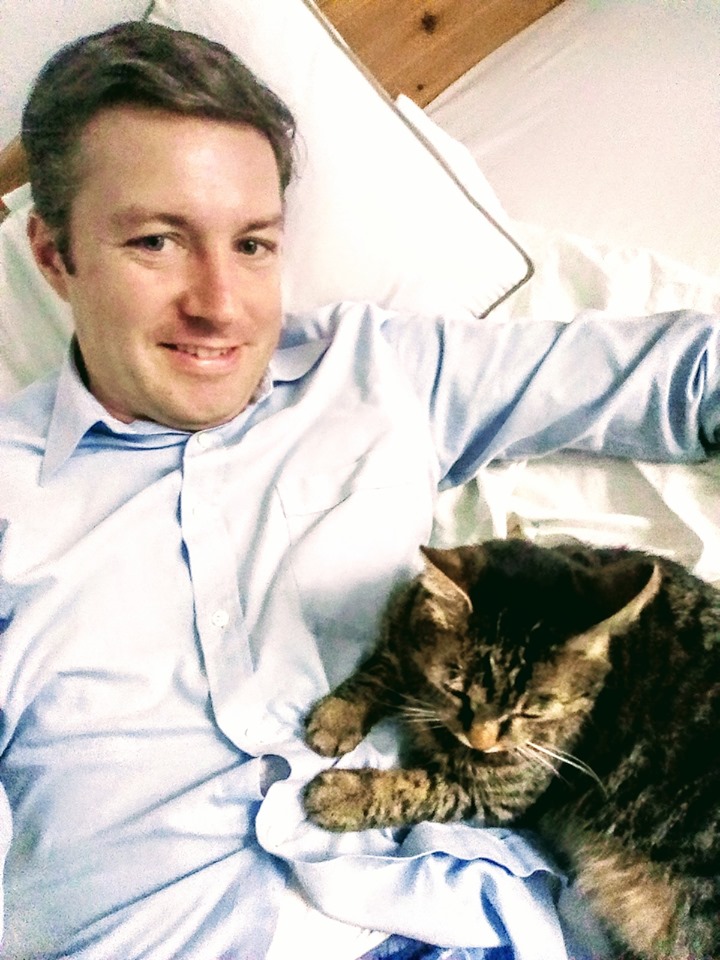
- Fill in your profile with meaningful information, be witty and likable, and have photos of you with animals. (Having said that, let’s not kid ourselves that everyone has the same chances. I don’t think I would have gotten all the offers if I was an 18-year old black dude with a crazy beard instead of a 43-year old white lawyer from Germany. This is unfair, of course, but that’s reality. Some homeowners have told me that they only look for women, and one of my applications for Canada was explicitly declined because I was not Canadian.)
- Respond to specific points in the ad.
- If you can make it, offer to visit the homeowners long before the house sit, so they can get to know you and see how you interact with their cat/dog/crocodile. If that is not feasible, offer at least a video call.
- When the ads come up on those house sitting websites, you need to be quick. Homeowners have told me that they typically receive tons of applications in the first few days. Many of them deactivate the ad after two or three days.
- As I wrote above, tell everyone that you are up for this kind of job.
- Stay away from offers that read something like: “We have 5 cats, 7 dogs, 2 horses, a flock of sheep and 18 acres of fields, from which we expect you to collect the potatoes. You should also take care of our B&B guests, change their sheets, clean their rooms and prepare them breakfast.” Seriously, some people are trying to abuse house sitting for cheap labor. If you will be working day and night, you won’t benefit from living in another country.
- When homeowners make the application too cumbersome, you may want to abort the process. I had one couple from New Jersey once who kept asking for ever more references and documents, then sent a 12-page contract for me to review, and ultimately told me that they decided to give the job to someone they knew. I should have sensed that earlier.
- I know you all want to go to Hawaii or to Paris, but if you don’t get any of those jobs, maybe apply to some in your own country. Everything will be easier once you have a few testimonials on your profile.
- Think before you apply! If you have never handled dogs or cats, or only played with them once for an hour, this is not for you. If you are not sure, if you will have time, this is not for you. Once you commit, you can’t walk out of it (or it would be really shabby).
- Plan the trip in a way that you have at least an extra day before the job begins. Often, the homeowners already allow you to stay at the house, so you can all become familiar, especially with the animals. But even if not, it’s worth booking a hotel/hostel/AirBnB for a night before to give you all plenty of time.
And once the house sit has started:
- As described above, take the house sit seriously. It’s your main job during the stay.
- Take care of issues yourself without bothering the owners. If light bulbs needs to be changed or small repairs need to be done, take care of them. If you break a cup, replace it. If the cat vomits on the carpet, clean it. None of this requires the owners to be disturbed on their holiday.
- Ask the owners how often they want updates. These usually refer to the pets. I have found it the easiest to befriend the owners on Facebook and then post photos of the cat from time to time, so they see that the cat is alive and happy.
- Before the return of the owners, you should obviously clean the house, replenish food supplies, change bed sheets, bake a cake and pack your bags, so that you are ready to leave. When people come home from a safari or a six-month stay on the International Space Station, they usually want to spend time with their pets or just be left in peace. Don’t hang around. The job is done. You are on the road again.
What are the risks?
Oh, come on, don’t be so negative!
Just be careful, lock the door, turn off the stove after cooking and don’t smoke inside the house.
Honestly, I only have one fear: that a cat will die while in my care.
Probably, I forgot some really important questions, so just fire away in the comment section below. If you already have experience either as a house sitter or a homeowner, I am also curious to hear from you.
Do you want a posctard?
Actually, you would be surprised how hard it has become to find postcards in some places. But for you, dear reader, I’ll walk the extra miles!
€10.00



















 The style is clear, precise, not overloaded with details. Ligne claire is the expression, I believe, and I like it. It allows you to read quite quickly, and you know that everything that is drawn has some importance. There are no decorative or distracting accessories.
 The funny thing in Ms Satrapi’s case is that she had been attending a French lycée in Iran until 1979, when it was forced shut, and was sent to a boarding school in Austria, which was run by Christian nuns and much stricter and more religious than anticipated.