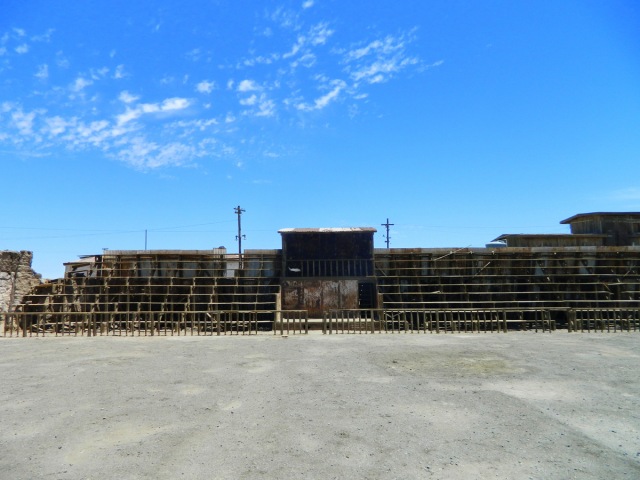
At 16:00 there would be a basketball game, I had heard.
So I was there at 16:00 sharp. There, but alone. No players, no spectators, no ball, no ice-cream vendor whose presence would have been highly desirable in the heat. Not even a Coca-Cola machine.
I was surprised, for Chile had actually been the most punctual country in South America. But maybe it was different in Humberstone, this city deep in the desert? But then, the whole town was dominated by a clock tower which I could see from the stand. 15:58.
So I had the basketball court all to myself for another two minutes.
The lonelier the wait and the scorchier the heat, the slower time passes. I walked across the field a few times, threw a couple of imaginary three-pointers, cheekily sat down in the most expensive row and kept looking at the clock. 15:58.
Something was not quite right. I wasn’t wearing a watch, so I couldn’t prove to the clock tower exactly how wrong it was, but after I had waited long enough to gather dust and rust like the basketball court itself, I remembered the trick with the sun. And sun there was plenty of, I can tell you. Uff! From the shadows cast, I could discern that it couldn’t be any later than 13:00. No wonder my friends hadn’t showed up yet.
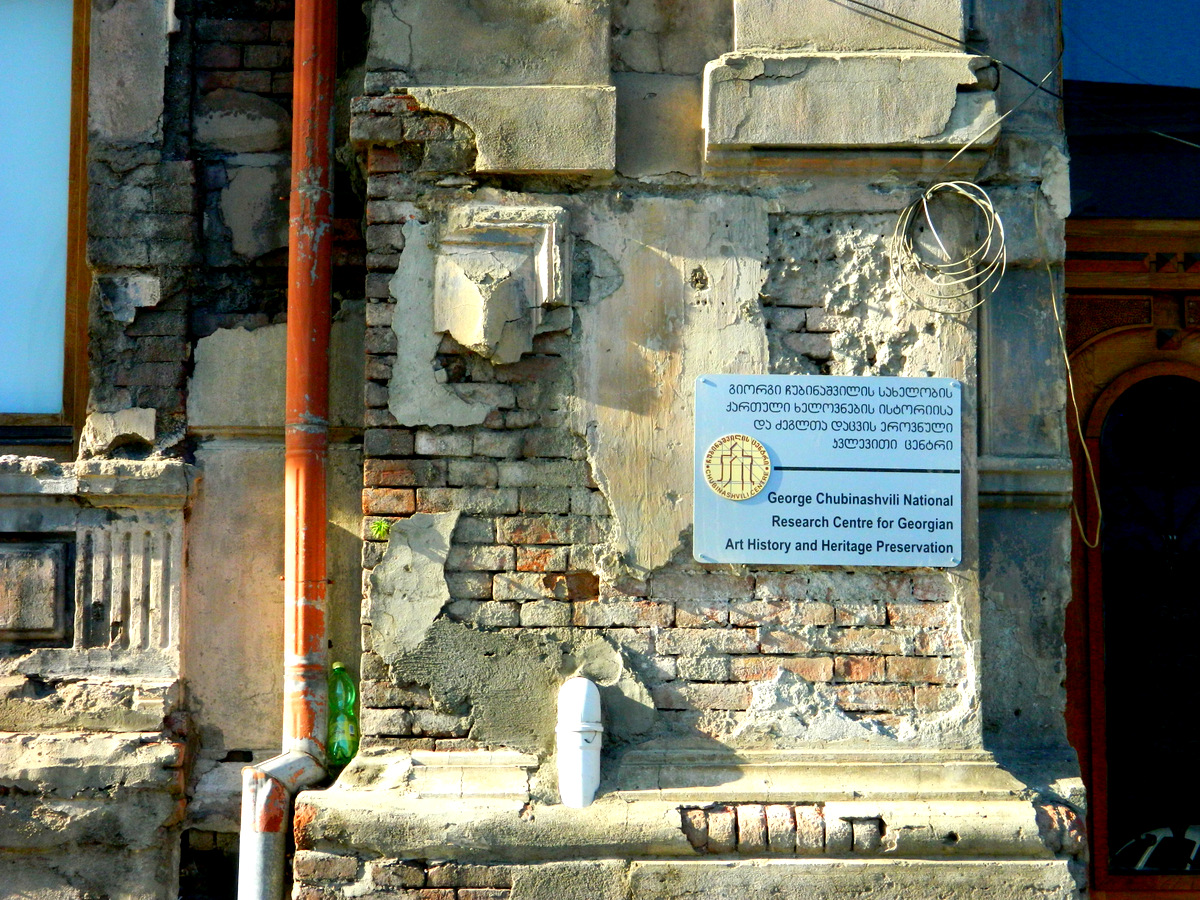
I had an appointment at the Georgian Heritage Preservation Council to talk about cultural heritage in the country. But the entrance to the building told me everything I needed to know.
Tweets cannot change laws, regulations or rules. Each time Donald Trump tries to do so, he should be laughed at.
Why can’t Microsoft Windows move a file from one folder to another while the file is open? I can move open books and bottles around the whole house.
Poland is not only doing away with separation of powers, but also deforesting parts of Bialowieza National Park, one of Europe’s last primeval forests.
If this railway project will include passenger transport, I would most definitely return to South America. I have already been on part of this line in Bolivia.
People arguing about who invented the smiley. But we’ve always had Ü in the German alphabet.
I thought of moving to the Czech Republic. But then I learned that they speak like this: “Chrt zdrhl z Brd. Vtrhl skrz strž v tvrz srn, v čtvrť Krč. Blb! Prskl, zvrhl smrk, strhl drn, mrskl drn v trs chrp. Zhltl čtvrthrst zrn skrz krk, pln zrn vsrkl hlt z vln. Chrt brkl, mrkl, zmlkl. Zvlhls?” Now I am scared.
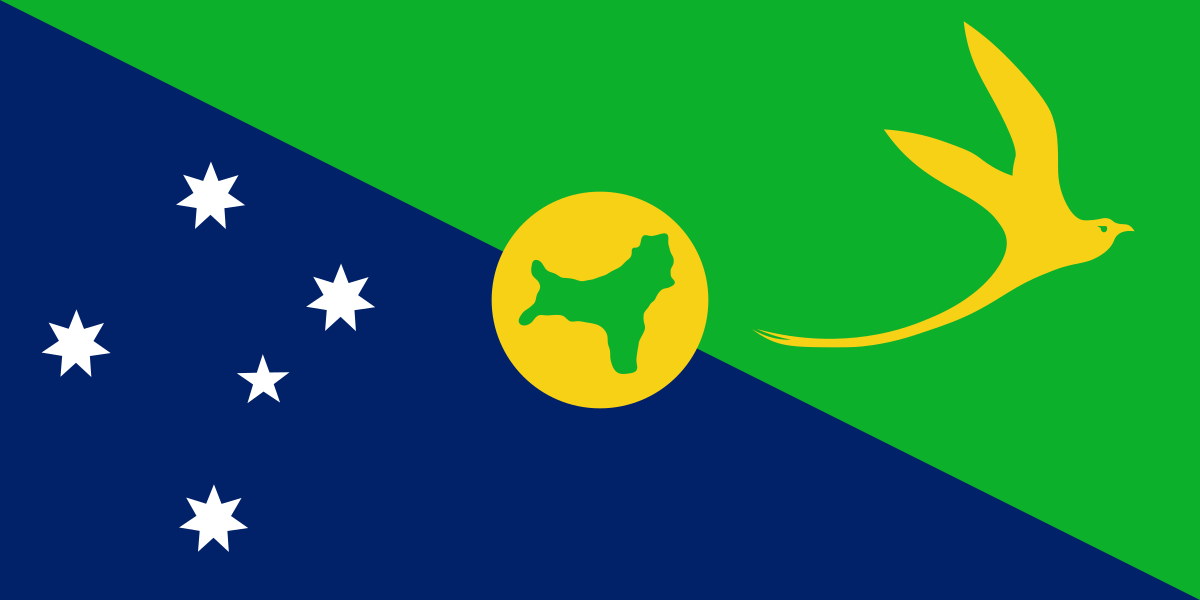
I had the first visitor from Christmas Island on my blog.
Reading the book Black Earth, I became aware of a village in Ukraine that was calculated and named as the geographical center of Europe in 1887: Dilove.
“Really?“ I wondered, not because I would begrudge Dilove the distinction, but because I had already visited the alleged center of Europe a few years ago, in the aptly named Europe Park in Lithuania.
The underlying calculation in this case dated from 1989.
Over a hundred years, it may be possible for a continent to grow a bit, shrink a bit or move around a bit. After all, the continental drift had been invented in the meantime. But from Ukraine to Lithuania, that’s a stretch – at least geographically. Different methods of calculation must have been used.
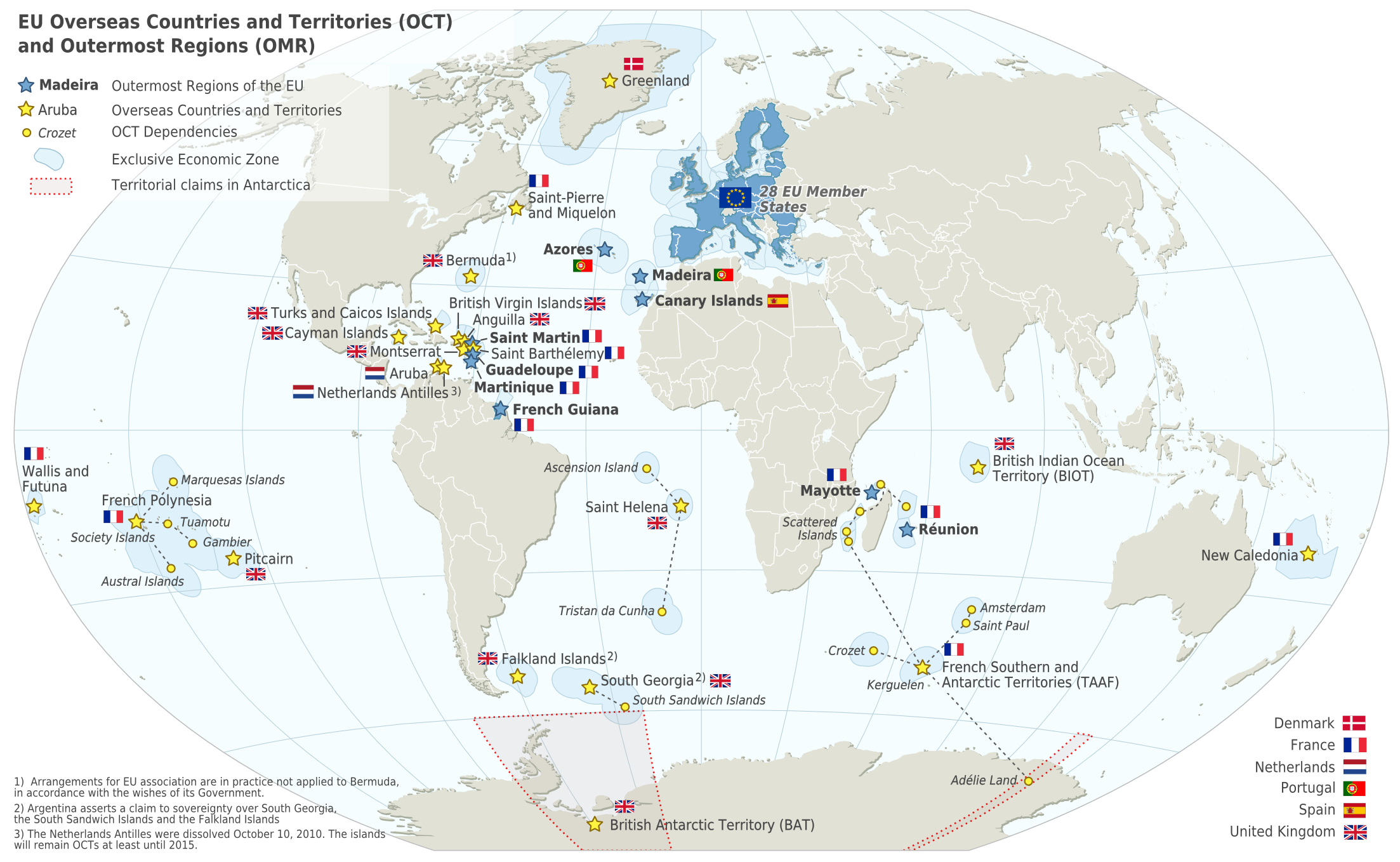
The first problem is to determine what Europe is. Do you do it politically? Then it would be the Habsburg Empire or the European Union. With or without candidates for accession? Will the United Kingdom suddenly be (even) less European in two years? And what is the effect of that Swiss hole in the middle of the European cheese? Do you include the islands which expand the territory of the EU all the way to Guadeloupe and New Caledonia? Aren’t French Guyana and Ceuta so obviously in South America or Africa, respectively, that they cannot be part of Europe? What about Northern Cyprus? Questions upon questions. Good that at least Germany lost everything from Samoa to the Bismarck Archipelago, for otherwise the map of the EU would be even more complicated.
But even leaving political interpretations aside, a mere geographical calculation of the center of the continent can be debated endlessly as well. Where to draw the Eastern boundary? What about Turkey? What about the Caucasus? Is Malta European or African? Do you simply connect the most outward points to determine the center? Or do you consider the boundaries of the landmasses? Possibly weighted for the product of surface times density, because an acre of Switzerland weighs more than an acre of Holland. Or do you pick the center of a circle drawn around Europe?
If you are playing around with methods and figures, you will always find some center of Europe situated in a small village hoping to benefit from Euro-centrist tourism. Because it is striking that all centers of Europe have so far been in villages in the pampas where nothing else is happening:
I am spending a few months in Ammerthal, the Bavarian village where I grew up.
“But there is no theater, no cinema, no Academy of Sciences?” my friends from New York, Paris and Moscow are asking, worried and pitiful at the same time.
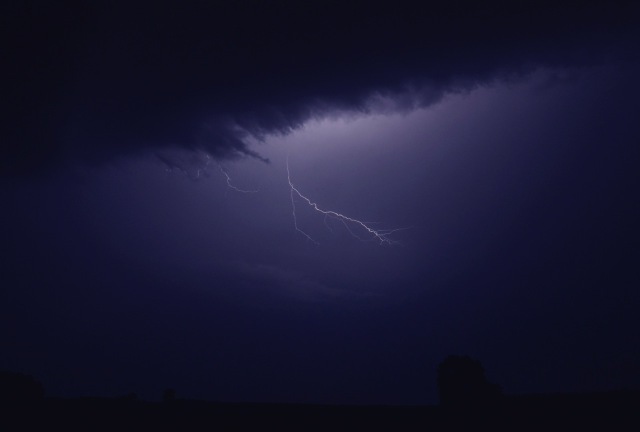
That’s true. And that’s why for entertainment, we go out into the fields and stare into the sky. Yesterday, they had a great show. For at least twenty minutes, the sky was lit and flashing, but without any rain and with almost no thunder. Like a thunderstorm where someone had played with the controls, dimming sound and precipitation but overmodulating light effects.
The photos were taken by my father. We stayed until someone added a hailstorm, which made us run back home.
Sam Shepard’s death is a sad but fitting occasion to watch some of his films (again): Homo Faber, Black Hawk Down, Don’t Come Knocking and many more.
And not to forget Blackthorn, a Western movie set in Bolivia. Sam Shepard played Butch Cassidy, who did indeed live in Bolivia, and the movie was mostly filmed in the most beautiful country in South America, too.
Attentive readers of my blog will recognize some of the locations, for example the spooky but beautiful cemetery in Milluni.












 The Happy Hermit