In 2017, I seem to have been a bit lazy. I did not run a single half-marathon. But with the risk of war rising, I want to become fitter again. Last weekend, I began by running a half-marathon near Pilsen in the Czech Republic.
And as I visited the European Capital of Culture of 2015, I decided to stay for a whole week.
If we all stop smoking at the same time, we would gain so much in weight that the Earth would leave its orbit.
In defense of Jeremy Corbyn, who hasn’t been a spy when they were young?
I hope you didn’t forget to celebrate/commemorate the Day of the Sea on 23 March?
Universities that allow students to carry-out online surveys among self-selecting Facebook friends to collect “data” for research papers should be bombed. – Then, the students could study the statistics of saturation bombing.
Looking at the Brexit transition agreement, it seems that the UK will remain in the EU, except that it will lose voting rights and not sit at the table anymore.
Hmm, great deal, I suppose.
I was really much more impressed by the Paralympics than by the Olympics.
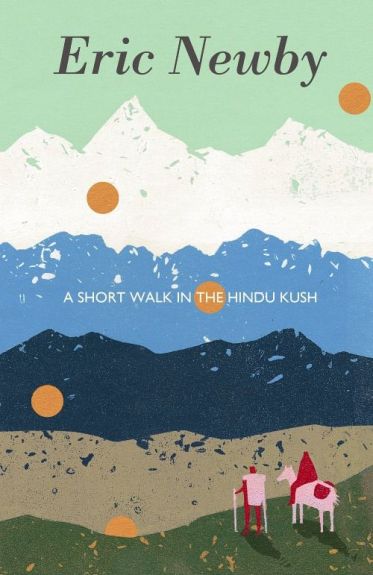
Thanks to Dieter Schuffenhauer for A Short Walk in the Hindu Kush by Eric Newby. This classic of travel literature is deservedly one.
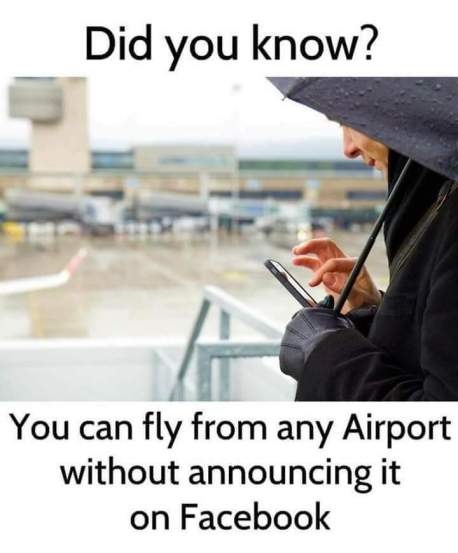
Now that we know that Facebook is somewhere between incompetent and criminal, maybe we can all spend more time writing and reading blogs again. I generally find the level of debate on blogs higher, and it’s also easier to find old articles/comments again and to link to each other. It seems a more durable medium than Facebook, let alone Instagraph.
When friends, from whom you haven’t heard in months, suddenly “want to talk to you”, you can bet that they have a legal question. Seriously, in 100% of the cases, no exception.
For my spring hike, I am considering the idea of walking along the German section of the Roman limes. Have any of you ever done that?
I had been hiking on the uninhabited side of Easter Island for a half a day already. The northwest coast was not only devoid of people, but also completely barren. I hadn’t found anything to eat or drink. The sun was shining relentlessly.
Along the way, I had come past several cadavers and skeletons. It began to dawn on me that I too might leave my life on that island if I couldn’t muster the strength to keep walking until nightfall. In light of that danger, I had just begun to record something like a good-bye video when I remembered the most important survival tip. Just in time.
Saved and strengthened by the bananas, I did indeed manage to continue the hike until I reached the beautiful bay of Anakena in the north of Easter Island.
There, I could finally get the much desired Coca Cola.
In 2017, I actually got around quite a bit. So much that my passport fell apart. But instead of souvenirs, I only brought back dozens of notebooks, filled with stories to be told, and a few photos to accompany them. (Actually, some of you did get souvenirs, but that’s for the elite circle of supporters of this blog.)
2018 will be a much quieter year, with a focus on university and on publishing articles about past travels. To help me decide with which stories to begin, I’ll give you an overview of what happened in 2017 and expect your comments on what you are most curious about.
The year 2017 began at one of the most beautiful places, at Lake Titicacain South America. First in Puno on the Peruvian side, then in Copacabana on the Bolivian side.
And wow, was I happy to be back in Bolivia, which remains my favorite country. If I ever have to pick one city to live for the rest of my life, I wouldn’t hesitate to move to Cochabamba. But that time, I decided to stay in La Paz until April.
I was lucky to be there on 21 February, the anniversary of the constitutional referendum, with manifestations from both sides.
But even if I had missed that, I needn’t have worried. There were protests and marches every day. Living quite centrally, I was awoken by drums or fireworks regularly.
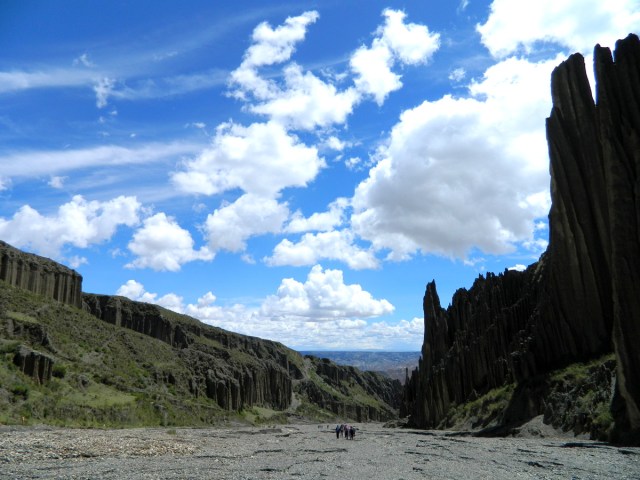
It was almost too late, however, that I discovered a wonderful hiking group, Free Trek, and so I could only join them once. Valle de las Animas looks like out of this world, but it’s actually just a short walk from the bustling city.
In April, it was time to fly to Colombia, where I was very positively surprised by Bogotá. An organized, bicycle-friendly, green, cultural city full of bookshops, exhibitions and chess players in the street.
I was about to leave Colombia and South America by boat, so I had to go to Cartagena, the port city in the Caribbean. Cartagena looks beautiful, but it’s the opposite of Bogotá: hot and humid instead of mild and pleasant, hedonistic instead of intellectual, and superficial instead of cultural. Where Bogotá had chess players, Cartagena had beauty queens.
By May, I was already looking forward to return to Europe and happy to get on the cruise. Two weeks on the high seas sounded like an enticing prospect, but it wasn’t really as relaxing as my first cruise. Maybe it was too much Cartagena and not enough Bogotá.
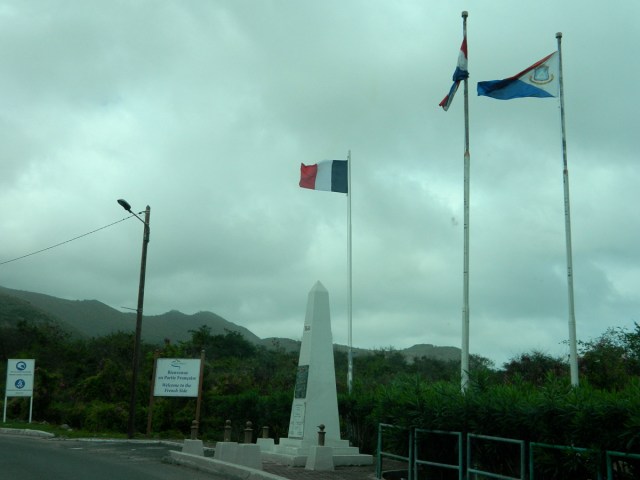
But that way, I got to some islands which I would otherwise never have visited. On Sint Maarten/Saint Martin, I even had a friend waiting for me, who took me around the island, providing lots of information on the politics, economics, social structure and race relations of the island. And when we crossed from Sint Maarten to Saint Martin, I was already back in the European Union – in the middle of the Caribbean!
A few weeks later, everything was destroyed by Hurricane Irma.
The same fate befell Antigua, where I was surprised by how British-colonial everything still looked, despite most people being the descendants of slaves, who, by the way, staged a revolt in the 1730s. Yes, the climate was so hot and humid that I preferred to spend a few hours at the local history museum in St John’s.
The last island stop on the cruise was Madeira. Returning to Europe was as beautiful as I had hoped, with mild climate, flowers blooming, and finally a city where I could sit in the park and read a newspaper without having to listen to everybody else’s music at inhumane volume. I almost wanted to quit the cruise and stay in Funchal for longer.
But luckily, I stayed aboard until we reached mainland Portugal. I already liked Lisbon, where I only stayed briefly, but Sintra blew me away. Castles and monasteries, hidden in the forest or perched on mountaintops, all connected by hiking paths, and with beautiful gardens, romantic ponds and mysterious tunnels. A magical place!
And then I was back in Germany. Well, at least it was summer, so it was sunny, green and perfect for hiking. And not having to worry about anacondas and piranhas was a bit of a relief.
But somehow, I can never stay in Bavaria too long without getting depressed by the petite bourgeoisie there, so already for my birthday in July, I fled to the Caucasus.
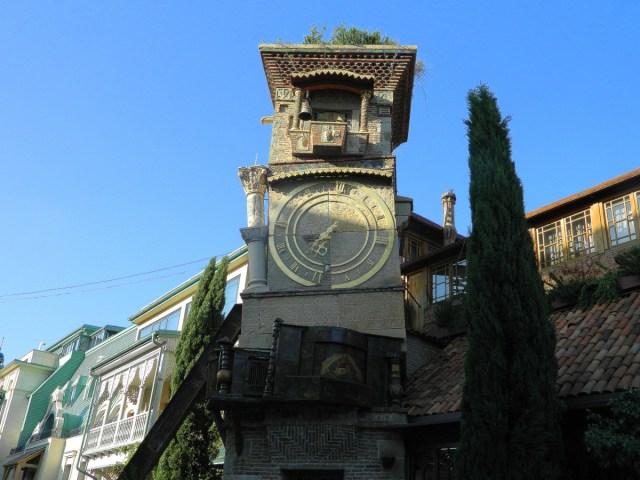
In Tbilisi in Georgia, I was lucky to stay in a part of town that hadn’t been modernized yet. Beautiful old courtyards, crooked buildings, wooden balconies, with elements of Persian architecture.
It immediately struck me as a city where I could imagine living, but Kutaisi and Zugdidi were nice, too.
Yerevan had more concrete than green, but still a nice cultural vibe, while Dilijan turned out to be the hiking paradise in Armenia.
In Azerbaijan, I felt the weight of the one-family autocracy in Ganja, while Göygöl was completely different and welcoming.
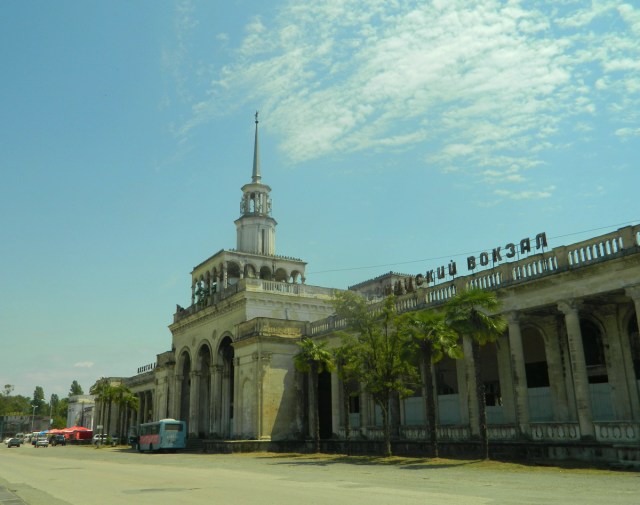
But the biggest surprise on my Caucasus tour was Abkhazia. The capital Sukhum has the grandeur of a Black Sea resort with a long tradition, but, as an effect of war, flight and emigration, a decimated population. Even at the height of summer, the city was never crowded.
As some of you know, I have been toying with the thought of moving to a Russian-speaking place to learn Russian. Because nobody in Abkhazia expects anyone to learn Abkhaz and because almost everyone is bilingual, but not many people speak English, it seems like the perfect place for such language studies. (Transnistria would be another alternative.)
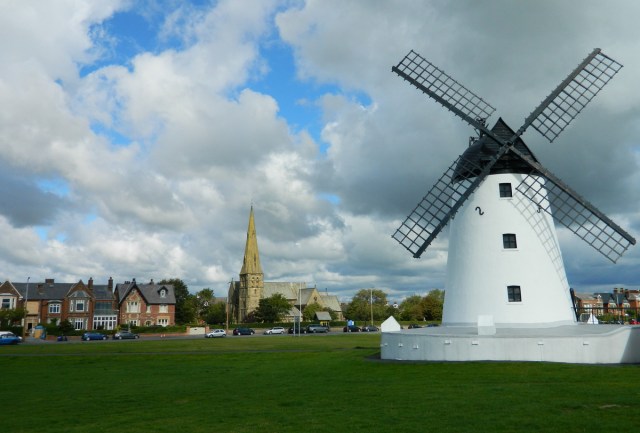
As I returned to Germany, I met a former classmate of mine who was living in Britain at the time, in Lancashire to be exact. It was wonderful to see how well we got along after not having seen each other for at least ten years, and he invited me to visit him in Lytham St Annes, that “bubble of happiness”, as he called it.
But we also had time to explore the seedy side of Blackpool, watch an impressive airshow in Southport
and go hiking in the Lake District.
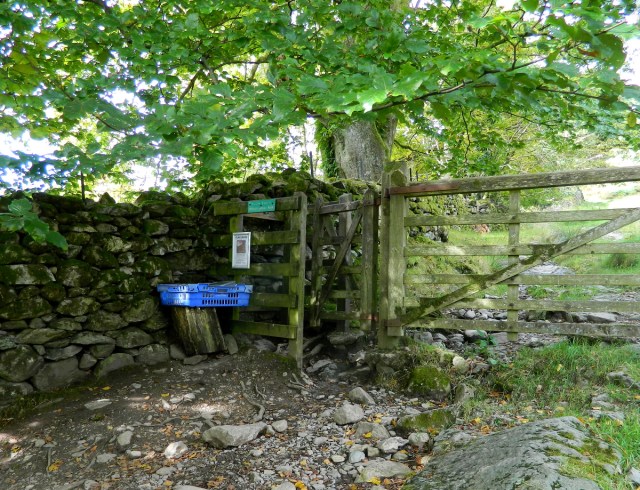
Once again, I realized how perfect Britain is for hiking. Not only the beautiful landscape, but also a really good infrastructure, with public transport, pubs in every small village and even food deposited by friendly people along the path.
And then I returned to university in October, and traveling was over. Well, I did go to Hagen in Northrhine-Westfalia for one week. Allegedly, it’s Germany’s most boring city, but I honestly didn’t find it too bad. But maybe that was due to an intensive week of history lectures.
Now that she is retired, my mother is becoming more interested in traveling, and so she suggested a trip to Prague for a couple of days in autumn. It turned out to be the perfect time because it was still warm, but the leaves were already golden and red.
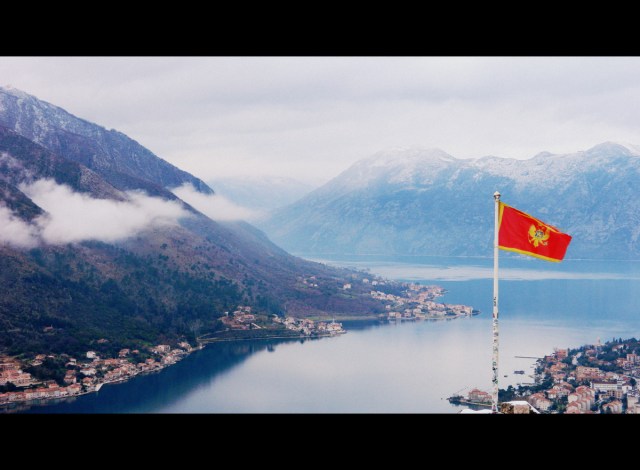
In Germany however, November was becoming more and more depressing. I urgently needed to escape and chose to move to Kotor in Montenegro for three months. I had been there before and liked it a lot, but this longer stay reconfirmed that Kotor really is one of the most beautiful cities in the world – even in winter.
So, now it’s up to you. Let me know what you are most interested in, and I will get cracking on the articles, edit the videos and publish more photos.
Last night, a man threw a grenade at the US Embassy in Podgorica. Nobody was injured because it was midnight and everybody was at home. Disappointed to discover this, the man used his second amendment grenade to blow himself up.
That is sad, particularly for the people who need to clean up the mess. I hope they get some extra pay.
Anyone who knows me knows how outraged I am about people making noise, whether by fireworks, church bells, music, terrorism or parties, particularly late at night. But in this case, I am almost more annoyed by the media reports about it, particularly in the US press.
They all explain that Montenegro is a country and where it is. As if nobody knew that! Anyone who has seen Casino Royale, conveniently released in 2006, just as the country became independent, knows Montenegro.
Nonetheless, I can still understand that. Better safe than sorry. Better explain it once again than have readers confuse Montenegro with Madagascar. Also, the articles need to be filled with something.
But what outrages me is that every report in the US press uses the word “tiny” to describe Montenegro.
Montenegro, one of the world’s youngest nations, is a tiny country of 640,000 nestled between Bosnia and Herzegovina, Serbia, Kosovo and Albania. It was once part of Yugoslavia; later, it became half of the nation of Serbia and Montenegro before declaring independence in 2006.
Montenegro is located in southeastern Europe and was once part of Yugoslavia.
The U.S. established diplomatic ties with the tiny nation in 2006 after it split from much larger Serbia.
First of all, what’s the informational value of that adjective?
Second, it’s not true. Montenegro is NOT tiny! If you think it is, try to walk from Herceg Novi to Bijelo Polje! Microbes, atoms and prematurely born mice are tiny, but not Montenegro.
Granted, with 13,812 square kilometers, Montenegro is no Russia or China. But there are smaller countries or states that I never see referred to as “tiny” in every newspaper report: Qatar, Jamaica, Lebanon, Puerto Rico, Rhode Island, Cyprus, Bahrain, Singapore, Delaware and of course the Vatican. Why do we not regularly read about “the tiny country of Lebanon” or the “tiny state of Delaware”?
If there is one adjective that should accompany Montenegro in every report, it’s “beautiful”.
By the way, if there will be a travel warning issued by the US State Department, you can safely ignore it. Montenegro is safe and friendly, definitely safer than the USA itself. And we all know that the State Department tends to overreact with their travel warnings (example 1, example 2).
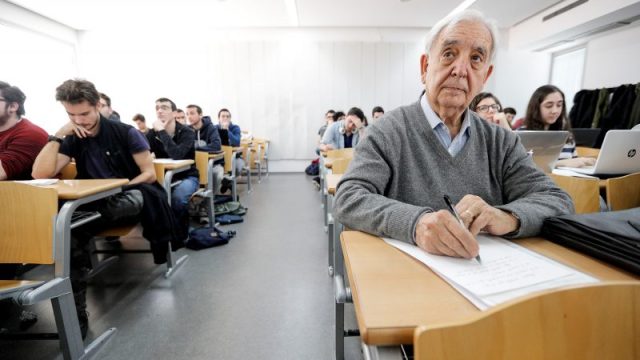
When I returned to university to study history at age 42, some were wondering what the point of studying in mid-life would be. Miguel Castillo is 80 years old and is studying history in Spain. He decided to do so after surviving a heart attack because he wanted to use the remaining time in his life more actively than the average pensioner.
This year, Mr Castillo will go to Verona for an Erasmus semester. Luckily for him – and for me – Erasmus has no age limit.
My biggest problem with Erasmus is actually that I am spoiled for choice with all the countries and universities participating.
The Revolutions Podcast is quite informative, but sadly, I have a very low tolerance towards mispronunciations, especially if every name, place and concept is pronounced as if it was located in Texas. The names of South-American revolutionaries were really not “Bowlivar” or “Sucray”.
Due to the lack of a twin study, I will never be able to discount the possibility that I am smart because I ate a lot of ‘Smarties’ in my childhood.
The theory of relativity is relatively irrelevant.
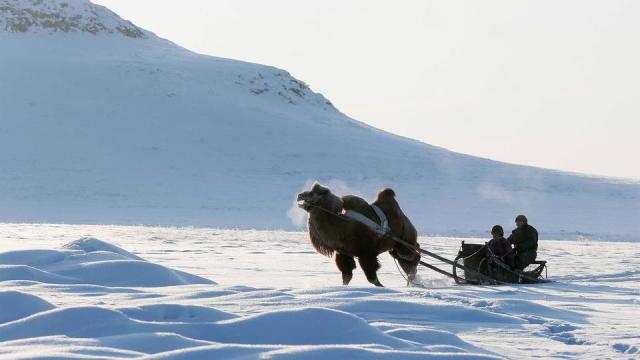
Who knew that camels also work in the snow?
As an ophidiophobic hiker, I think countries should only be allowed to join the EU once they have eliminated all snakes.
My short story about millionaire translators was quite well received in Montenegro. I was surprised because it was rather long (2350 words) and about a quirky subject.
That made me think about publishing fewer short posts (and relegating more of them into these Random Thoughts) to focus on longer and hopefully better articles.
This is the perfect week for studying:
Chancellor Merkelin a speech: “It’s time to stop mosering around.”
My name has become a verb in German, meaning “to constantly criticize”. Many readers will understand why.
Where have I heard Donald Trump’s claim about his “very good brain” before?
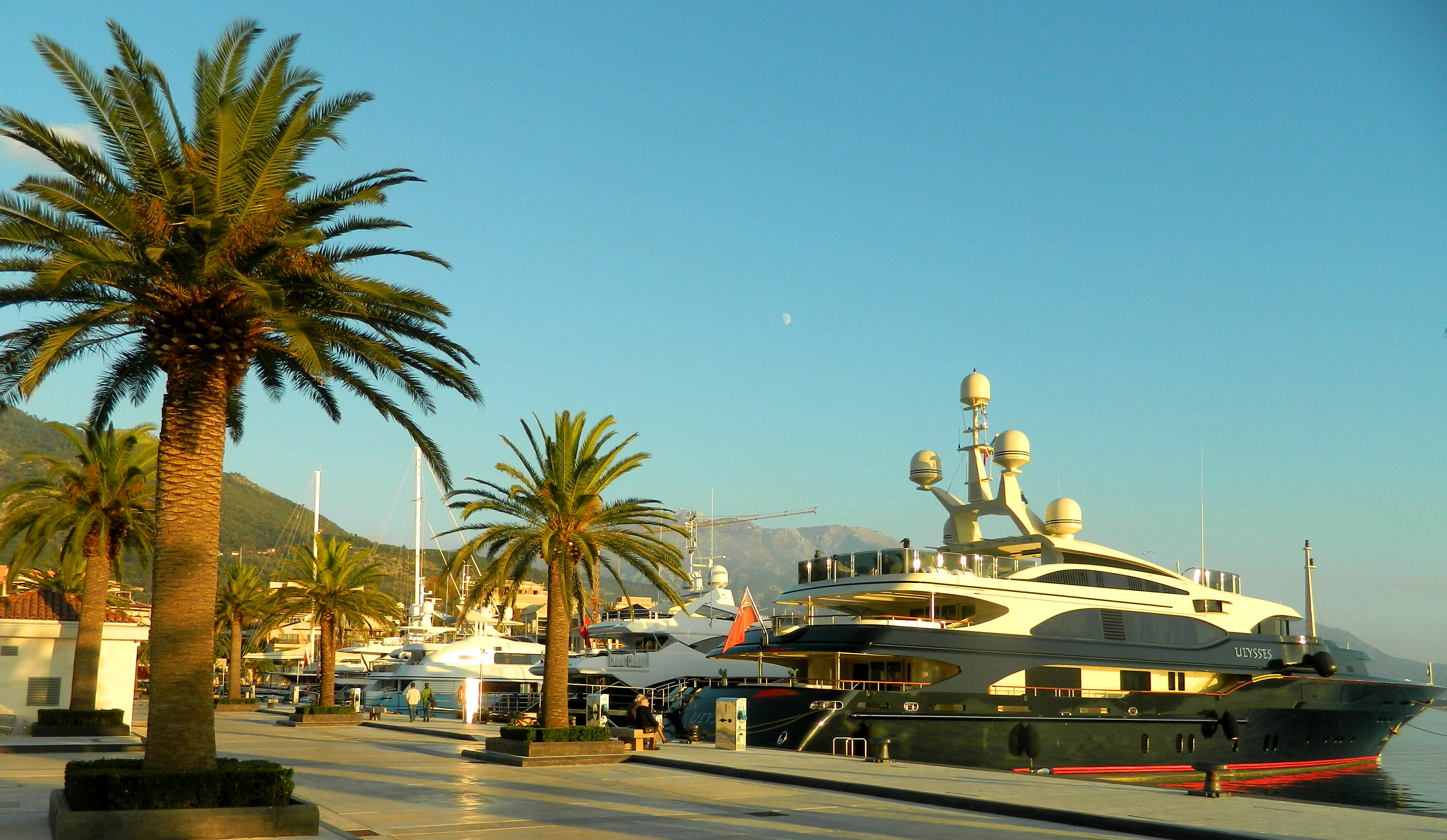
Tivat is different from the rest of Montenegro: more glitzy, more shiny, more expensive, more show-off. All the things I don’t like. I only go there regularly because I am trying to visit the Maritime Museum in Tivat. But every time I try to visit, it’s closed.
The last time, when I had a few hours to kill before the bus back to Kotor (on a nice day, you can also walk across Vrmac), I strolled along the waterfront, looking at boats. In Tivat, they don’t have real boats with cranes and containers and sailors and guns and turrets. No, they just have toy boats. Fancy toys, but no match even for the navies of Austria or Bolivia.
“Who buys such toys?” I wondered, and the answer is the same as for all other toys, like expensive cars, houses, phones and a second handbag: people who have too much money and a boring job. Drug dealers, money launderers, lawyers probably. Then I remembered that I am a lawyer, too, and that having a chat with some of the boats’ owners might be interesting.
Thus, I ventured into one of their bars (again, those in real ports like Monrovia or Dar-es-Salaam are more interesting) and looked for people who look like yacht-owners. Men, their shoes and clothes too white, as if to stress their cultural whiteness, sweaters in burgundy red or navy blue thrown over their shoulders, seemingly captivated by the little screens in their hands, but really bored, because the second I walked through the door, they all looked up simultaneously, hoping to spot an attractive woman. My looks disappointed, I couldn’t help but notice, but I was too quick. Using that split-second chance to build upon the visual connection, I cheerily greeted them: “Good afternoon, gentlemen”.
Two of them looked down on their phones, but the other two were still polite (maybe they had only recently become millionaires), returning a “hello”, even with a smile. Not having thought of a more sophisticated approach, or too occupied by maritime metaphors, I barged right in: “Are those ships outside yours?”, knowing quite well that four guys couldn’t possibly own all 60-or-so boats in the harbor.
“They are indeed,” they replied, not without some pride. Luckily, human beings are simple. If they own stuff, they like to talk about that stuff. So I just needed to ask a few questions, “which one is yours?”, “where do you go with it?”, “how long have you had it?”, “how many people can sleep on it?” and they all got excited enough to tell me everything in exact knots and fathoms and leagues.
I was curious to find out how these guys could afford their boats, so I asked: “What work do you that you can sail around the world all the time?”, although it should later turn out that they mostly sail to Bar or Herceg Novi, which they could more easily reach by bus.
“We are translators,” Marko replied, leaving me stunned, because I am a translator too, and I can’t even afford a bicycle, let alone a yacht. I explained my surprise and Mirko, Marko’s colleague, asked me what languages I translate.
“Only English and German,” I had to admit, ashamed.
They looked at me with pity, as if they were the Berlin Philharmonic Orchestra of 1966 and I was a small girl with a flute, knocking on the door and saying “I want to play music too.”
“So, which languages do you all translate?” I asked, bracing myself for a list of five languages each, from Icelandic to Swahili. But like in a play that they had performed many times before, each of them mentioned just one language, fired like four consecutive and impeccably timed shots.
“Croatian.”
“Serbian.”
“Bosnian.”
“Montenegrin.”
Coinciding with the last syllable of the last language, they all had a broad grin on their faces.
“And English, obviously,” I added, for we had been conversing in that language.
“Oh, we also speak German, French and Italian,” Duško added matter-of-factly, “but that’s really not relevant for our translation business. We only translate between Croatian, Serbian, Bosnian and Montenegrin.”
“But,” I interjected, because I prepared myself and my readers before moving to Montenegro, “that’s all Serbo-Croatian. Everybody who speaks one language understands all the others. Why …”
“Whoa, whoa, whoa!” Now it was Ivo, the Croat, interrupting me. “Each of these languages is a distinct language. Each nation has its own territory, its own people, its own history and its own culture and language. Until not too long ago,” he added dramatically, “people died while fighting for the right to speak their own language.” Even two of his friends were looking a bit uneasy at this. I, thinking that people often choose to die for rather silly things, but not wishing to upset anyone who lost an uncle or a father or a leg in the many Yugoslav wars, was looking a bit lost myself.
Baaaam!
Ivo slammed his flat hand on the table, breaking out in laughter: “Hahaha, just kidding, man! Sit down and we’ll explain it to you.”
Uff! I was relieved as if we all had just signed the Dayton Agreement.
“Do you smoke?” Mirko asked and slid a pack of cigarettes across the table. In Montenegro, you can still smoke in restaurants and bars. “And take a look at the warning label,” he instructed me, as if I should seriously think about the threat of lung cancer before lighting up.
“Pušenje ubija,” it said, “smoking kills”. But in three languages. Or three times in the same language?
The first one is Bosnian, the second Croatian, or maybe the other way round. Nobody knows. Can you see the difference between the two? No, me neither.
The last one is Serbian, written in Cyrillic, but it says exactly the same: “Pušenje ubija.”
“You are old enough to remember the Yugoslav wars?” Duško asked, kindly overlooking my grey hair.
“Yes.”
“Well, then you know that many people died. Many people lost their homes, many lost families, some even split from their wives or husbands because they were Serbian or Croatian and suddenly didn’t get along anymore. Until a year before, they had all been happy Yugoslavs and one day, whoom, everything changed and they destroyed a beautiful country. But in the end,” he continued, the others lowering their gaze and looking somber, “all the borders remained like they had been in Yugoslav times. Nobody had gained anything.”
“Except independence.”
“Yes, but Yugoslavia was finished anyway, just like the Soviet Union or East Germany. It was economics, nobody needed a war for that. But people don’t fight against inflation or for productivity, they don’t care about trade balances or the GDP. People only fight for concepts like fatherland and mother tongue, although their fathers and mothers had built a single nation with all the other fathers and mothers.”
“It all started with Croatia,” Ivo said, almost proud. “We were the first to ditch Serbo-Croatian, or Croato-Serbian as we had always called it. Of course we still spoke as we spoke before, but suddenly we called it Croatian and pretended that it was completely different from Serbian.”
“And there are some minor differences,” Mirko conceded, “regional variations, like you have between British and American English or between Austrian German and German German. They are mutually intelligible, but during the break-up, nationalists suddenly stressed the few words that were different. It would be like someone arguing that Austrian and German are completely different languages because the Austrians say ‘Paradeiser’ where you say ‘Tomate’.”
I had never heard that Austrians have a different word for ‘tomato’, but I knew that in Serbo-Croatian, the vegetable is called ‘paradajz‘, confirming a long-held suspicion that Austria is actually part of the Balkans.
“But if everybody could still understand everybody else, why would anyone need translators?” I asked.
“Because nationalists are so stupid that they believe the nonsense they sprout. So, suddenly, the Croatian government couldn’t read documents or newspapers from Serbia anymore. Soon thereafter, Bosnia-Herzegovina wanted to be independent as well, called its language Bosnian and couldn’t read or write in Serbian or Croatian anymore.”
“And that’s where we came in,” Marko continued. “We came from different parts of Yugoslavia and were studying philology in Nikšić in the 1990s. We were happy to be in Montenegro because this was really the most relaxed part of Yugoslavia, where no Serb would shoot at a Croat, no Croat at a Bosniak, and nobody even at an Albanian. Maybe it was the Nikšić beer that kept everyone peaceful, I don’t know. But we were close to graduation and we sure as hell didn’t want to die for Vukovar or Sarajevo. Out of pure fun, and maybe desperation, we opened our own company of translators, offering to translate Serbian, Croatian and later Bosnian. It was actually meant as a means of protest, to show how silly that linguistic nationalism was.”
“And, did anyone hire you?” I asked, suspecting the answer as I glanced out at the boats moored in the marina.
“Yes!! Like crazy! We couldn’t believe it! Immediately after we sent out offers to government agencies, municipalities, publishing houses and so on, we got more work than we could handle. Nobody in Croatia wanted to read anything in Serbian anymore, so we had to translate laws, announcements, press releases, newspapers. All we had to do was to transcribe the Cyrillic letters into Latin letters. Of course we outsourced all that work to the younger students at the faculty, whom we paid a little bit.”
“And it got even better when the war moved to Bosnia, because there was suddenly a third language, which was in reality basically identical to Croat. Sometimes we just changed some words to justify our invoices.”
“So if the languages are now really different, it’s actually your fault?”, I joked.
“You could say so,” Mirko smiled. “But we have the same excuse as the people who supplied arms and ammunition: If we hadn’t done it, somebody else would have done it.”
“It got even funnier when IFOR and SFOR came to Bosnia-Herzegovina after 1995. We offered our services as interpreters and they always had to pay at least for two of us, because we would say that only one of us spoke Bosnian and the other one Serbian, for example. We got to ride around in Humvees and sometimes even in helicopters, it was great fun.”
“Until we saw the first dead bodies,” Ivo remarked, and the whole table fell silent.
Trying to cheer things up, Duško said: “Remember that one time when there was a Spanish NATO soldier who had been born in Croatia? He didn’t buy our bullshit, of course. But what was worse, he thought we were nationalistic idiots ourselves, refusing to understand the other ‘languages’. We had to tell him that we were just in it for the money.”
“Luckily, he was a cool guy. ‘Well, the more money these new countries here spend on translators, the less they can spend on landmines,’ he said. But we had to pay him off.”
“So you must have been the only people in ex-Yugoslavia who were not happy when the wars were over?”, I tried to joke.
“Believe me, there were many people not happy about it, and they were earning much more than us.” How naive my question had been, how little I knew and how different our lives had been, just because I had been born 1000 km to the north. They had made millions, but lost their country, their innocence and their belief in humanity.
“And the work was actually not over, because all these new countries needed to renegotiate international treaties and wanted translations of the old treaties concluded by Yugoslavia. Then there was the EU accession of Croatia. And then came the internet and every town wanted to have a website. In Bosnia, this is the best business, because they want to have their websites in Bosnian, Croatian, Serbian and sometimes in English. We can charge for three translations.”
“This is an ongoing business,” added Duško. “We have a contract with the City of Mostar, for example. They have one of those quadrilingual websites. They don’t even realize that it’s exactly the same, because the Bosnian mayor only ever looks at the Bosnian version, his Serb colleague only at the Serbian version, and the Croat one only at the Croatian version. But Bosnia-Herzegovina is a messed-up state anyway. Even if they want to plant trees in a park, they will hire three gardeners from the three ethnicities.”
“And thank God for Montenegro!” Marko explained it: “In 2006, Montenegro was the last state to become independent, and in 2009 they added two new letters to the alphabet and called it ‘Montenegrin’. Of course we were the first to apply for all the ‘translations’, and because we had studied in Montenegro, we got that contract. So now, all we do is add diacritical marks to the S and the Z, and the Republic of Montenegro is happy.”
“Thank God also for Croatia!”, Ivo added. “With Serbia, Montenegro and Bosnia applying to enter the EU, guess who insists on all their documents being translated into Croatian? We will have work for years to come.”
“But there is a danger on the horizon!” Mirko sounded worried. “A group of linguists have just published a manifesto, explaining that our four languages are actually just regional variants of one language. They even pointed to the burden of translation costs, directly attacking our business model.”
“And to be honest,” added Marko, “they are right. But luckily for us, such decisions are not made by professors and scientists, but by politicians.”
“Živjeli!” They all raised their glasses, and I was happy about having learned a lot and that at least some of the profiteers of the ex-Yugoslav wars were quite nice guys. But I still didn’t understand what was the point of buying boats if you never used them to go to Fiji or Easter Island. Maybe living in countries that constantly split up makes you worried about being gone for too long.



















 The Happy Hermit