She has been separated for more than 15 years. Back then, the husband disappeared. No contact ever since. “Somewhere in the Balkans,” she says, “Kosovo, Montenegro, around there. He is making damn sure that ain’t nobody ever gonna find him.”
Also, she says, he is highly dangerous. Something about smuggling and weapons and gang warfare. With plenty of bodies buried in the Balkan forests.
Obviously, the case appeals to me.
I already see myself climbing the peaks of the Durmitor mountain range and swimming through Tara Canyon. Getting the backpack ready, I am looking forward to weeks of drudging myself from village to village, asking around for Mister ….. and on the lookout for hajduk henchmen.
But I am still a professional lawyer, so first I need to carry out some due diligence. I have to run an internet search for the disappeared husband.
After a few minutes, I have found him. I send him a message, he calls back right away. It’s a rather pleasant conversation. Of course he agrees to the divorce, no problem at all.
Almost disappointing that the case got resolved so easily.
Also, I really would have loved to see the face of the Family Court in Germany, had I handed in my invoice for three weeks of criss-crossing the peaks of the Balkans.
Some might be surprised to hear this, but as a lawyer, my main goal is to bring peace into the world. This is how I do it:
– Client calls and wants to sue everyone preemptively and proactively, to litigate left right and center, and to file more motions than there are birds in the sky.
Long awaited, the day has finally come: The German parliament has passed substantial amendments to the Citizenship Act, which will – in many cases – make naturalization in Germany easier. In essence, the residency requirement will be shortened to 5 years, and Germany will no longer object to foreigners maintaining their original citizenship. Dual citizenship will no longer pose any problem.
But before we get into the details – and before everybody who is interested in German citizenship becomes too excited -, I have to put things into context:
There are basically three paths to German citizenship.
The most common way is by descent. If you have at least one German ancestor, you may already be a German citizen, without ever having realized it. Because there were several waves of mass emigration from Germany throughout history, there are millions of descendants around the world. Theoretically, there is no limit on how far back you can go in your family tree. In practice, if it’s more than three or four generations, it becomes rather tricky.
On citizenship by descent, I have a separate article. This path is not affected by the changes enacted now.
The second way is restitution. This concerns a whole number of different cases, in which your ancestors lost German citizenship, but you can now reclaim it. I also have a separate article on this rather complex issue. Again, these cases are not affected by the new law.
The third path is naturalization. This means that you immigrate to Germany, live and work there for several years, learn the language, pass the citizenship test, and pledge allegiance to the king. No wait, we’re actually a republic now.
As a citizenship lawyer, I deal with those cases the least, because they are usually straightforward. The main problems that require a lawyer in naturalization cases are prior criminal convictions, past or present use of the welfare system, and – until now – getting an exemption that allows you to hold on to your first passport.
Only naturalization is affected by the changes that will come into effect in June 2024. If you have previously looked into German citizenship by descent or by restitution, and the result was negative, you can stop reading. (Unless, and I am sorry that things are a bit complicated, you received a negative reply before the changes of 2021 were enacted. In this case, you actually should look into your situation very carefully. Or hire a hot-shot lawyer to do so.)
So now, let’s get to the point: What are the changes to German citizenship law?
Dual citizenship:
The most important change, clearly, is that Germany no longer objects to dual citizenship.
The principle already had many holes, and more and more citizens held dual or indeed multiple citizenship. Because country A can only legislate the citizenship of country A, but not those of countries B through Z, and because you often obtain citizenship without knowing it (particularly at birth), multiple citizenship is pretty much inevitable in many cases.
The insistence that you can only be loyal to one country was weird from the beginning, long outdated by now, and complicated to maintain. Thankfully, it has been given up completely. Henceforth, you will receive German citizenship regardless of what you decide to do with your existing citizenship. (You can still give it up if you want to – and if your home country permits you to do so.)
Interestingly, and often overlooked, this change also makes it much easier for Germans to take on a second citizenship. Because until now, we needed to obtain prior permission, lest we would have forfeited German citizenship (§ 25 StAG). Without knowing it, this has happened to hundreds of thousands of Germans living abroad. Trying to reclaim previously held German citizenship, either directly or by descendants, is a large bulk of my work.
For me personally, this opens up enticing possibilities. Especially as I have lived in a few countries already to which I feel a much closer emotional connection than to my native Germany. I just hope that the stint as an illegal immigrant in Bolivia won’t shatter the dream of living out my life by Lake Titicaca.
Residence between 3 and 5 years:
Due to many exceptions, the ban on dual citizenship really didn’t affect that many applicants. But another change will affect almost everyone: The residency requirement for naturalization in Germany has been reduced considerably.
Hitherto, the standard requirement for naturalization was 8 years, although there were several ways to shorten this period. The new standard requirement will be 5 years (§ 10 I 1 StAG).
And these 5 years can be reduced to anything between3 and 5 years in cases of exceptional integration, as measured by language skills (German at the C1 level, § 10 III no. 3 StAG), school, education and work experience, as well as civic engagement (§ 10 III no. 1 StAG).
To answer one of the questions I receive most often: If your German is not at the C1 level, there is no chance. That is the minimum requirement, on top of which you need to have done outstanding academic or professional work, run for city council (if you are an EU citizen), volunteered in environmental, social or political groups, organized arts exhibitions, volunteered as a firefighter, and published a book about Germany. As a general rule, if you haven’t been on television or radio, then your achievements probably don’t count as exceptional.
The new law holds on to § 12b StAG, one of my favorite sections of the German Citizenship Act, which means that you don’t have to physically remain in Germany for the whole time of the required residence. It even allows you to combine several stays. I have had plenty of clients who were surprised to learn that they already meet the residency requirement, because the time they spent in Germany as a student a decade ago counts. (Holidays don’t count, sorry.)
The new law also holds on to § 9 StAG, according to which spouses of German citizens will usually receive German citizenship after living in Germany for 3 years.
German citizenship for children of foreign parents:
Germany does not generally have ius soli, whereby you receive the citizenship of the country in which you happen to be born. (Most countries in the Americas operate like this.)
But there is an exception for children born in Germany to two foreign parents, if at least one parent has been residing legally in Germany for 5 years (§ 4 III 1 no. 1 StAG) with any type of permanent residence permit (§ 4 III 1 no. 2 StAG). These children will receive German citizenship at birth.
Obviously, these children will also receive their parents’ citizenship (based on the respective laws of that country or those countries) and will thus have dual or multiple citizenship. These children will no longer have to decide for only one citizenship at age 21 (as used to be case until now, § 29 I 2 StAG).
Adoption:
The rule that a foreign child adopted by German parents receives German citizenship by virtue of the adoption (§ 6 StAG) will remain unchanged.
But the rule that a German child adopted by foreign parents loses German citizenship (§ 27 StAG) will be removed. German children adopted by foreign parents will now keep their German citizenship. Whether they will receive their adoptive parents’ citizenship depends on the citizenship law of that country, of course.
This sounds like an arcane provision of the Citizenship Act, but it is relevant in a surprising number of cases. Especially in cases of descent, we often discover that a German child was adopted. Either because his/her parents were dead or lost, as was often the case after World War II, or – more relevant in recent years – because of adoptions in patchwork families.
A typical case goes like this: German mother with German child falls in love with a foreigner and they want to move to his home country. To speed up immigration, they get married and the father adopts the child. Although nobody intends to do so, the child may lose German citizenship. Because the mother doesn’t lose German citizenship, she thinks that her son still is German as well. Decades or generations later, they discover the error. Very tricky cases, especially as there are different types of adoptions, several exceptions to the rule, and oddly enough, many people who think they were adopted never were (in the formal legal sense).
Now, with § 27 StAG gone, you have one less thing to worry about. But then, if you have children, you always got plenty of other things to worry about.
Language requirement:
The general language requirement for naturalization in Germany is the B1 exam (§ 10 IV 1 StAG).
This is an easy intermediate level, which enables you to hold everyday conversations, read simple newspaper articles and write e-mails or letters. If anyone still writes letters. The Goethe Institute has sample exams for all language levels, so you can test yourself. Keep in mind that you don’t need to ace the test. You just need to pass it.
There is a short list of exceptions of people who do not need to pass the B1 exam:
Children under the age of 16 only need to show “age-adequate” level of German (§ 10 IV 2 StAG).
Foreign workers (the so-called “Gastarbeiter” or “Vertragsarbeitnehmer”) who came to West Germany before 1974 or to East Germany before 1990 only need to prove oral knowledge of German. They do not need to pass a written exam (§ 10 IV 3 StAG). They also do not need to pass the citizenship test (§ 10 VI 2 StAG). The idea is to finally naturalize the people who came to Germany to rebuild the country after World War II, who have been living here for decades, and who have mostly been working in manual jobs, without any access to formal higher education.
Lastly, all applicants who simply cannot manage to pass the B1 exam, although they have tried to do so repeatedly and seriously. In this case, the applicant only needs to show sufficient oral knowledge of German to get by in everyday life (§ 10 IVa StAG). This concerns people with severe physical or mental handicaps, but not illiterates, as illiteracy can be overcome.
I am a bit worried about this latest point, because I already receive far too many e-mails in which people ask me to file for an exemption from the language requirement. Suddenly, everyone wants to be dyslexic. But if you graduated from high school or have a university degree, you can also learn a foreign language. In any case, you have to attend a language course first and attempt to pass the exam (several times if necessary), before you can even think about using the “I’m too stupid”-excuse.
Germany has no minimum income requirement for naturalization, but you need to show that you can support yourself and your dependents without access to welfare. You must not be collecting either “Bürgergeld” or “Sozialhilfe”. All other public subsidies (e.g. the student support “BAföG” or the housing benefit “Wohngeld”) or unemployment benefits based on your previous contributions (“Arbeitslosengeld”) do not render naturalization impossible, but you will need to show how you are going to finance your life in the long run.
Thus far, § 10 I 1 no. 3 StAG included an exception for applicants who were on welfare “for no fault of their own”. This was a beautifully vague term, under which I could argue many different cases. Apparently, I went too far with that, because the new law restricts the exception to a few specific narrow cases:
Only the same group of foreign contract workers mentioned above (cf. the language requirement) can still claim the general exception of being on welfare “for no fault of their own” (§ 10 I 1 no. 3 (a) StAG).
Another exception from the no-welfare requirement applies if you are in full-time employment and have been in full-time employment for at least 20 of the past 24 months (§ 10 I 1 no. 3 (b) StAG). This concerns the so-called “working poor” who so graciously provide the basis for capitalism and rising stock prices.
Spouses of a “working poor”, if they have a minor child (§ 10 I 1 no. 3 (c) StAG).
This part of the new law is much harsher than the old rules. People with disabilities or depression, single parents, people who are taking care of an elderly or sick family member, and similar groups will have a much harder time to apply for naturalization. They are left with the application pursuant to § 8 II StAG, which is a discretionary naturalization. Paradoxically, these are the kind of cases which will probably require the help of a lawyer (who could argue non-discrimination clauses protecting people with disabilities, for example), although it concerns exactly the folks who don’t have much money. (Not that I want to imply that lawyers are expensive.)
Political requirements:
The new Citizenship Act is much more political than the previous one.
While people who were actively fighting against basic liberal and democratic values (§ 11 s. 1 no. 1 StAG) or terrorists (§ 11 s. 1 no. 2 StAG in connection with § 54 II no. 2 or 4 AufenthG) were already excluded from naturalization, the new Citizenship Act of 2024 includes a whole number of points which prevent naturalization, even when all other conditions are met.
From now on, foreigners who are married with several spouses simultaneously will be barred from naturalization (§ 11 s. 1 no. 3 (a) StAG).
As an expert on international family law, I can already see plenty of problematic cases. Because it happens more often than not that people “forget” to get a divorce before entering into a second marriage in another country. Sometimes, they have lost contact with their first spouse, sometimes they want to save the money for lawyers (never a good idea), sometimes they think it doesn’t matter. Whenever I tell people in that situation that it will come back to haunt them later, they don’t believe me. Well, now you have one more example how that nonchalance will ruin your life.
And Germany won’t naturalize any more machos. The new § 11 s. 1 no. 3 (b) StAG stipulates that naturalization is not an option if the applicant demonstrates through his (or her) behavior that he (or she) disrespects the equal treatment of men and women.
Wow. Honestly, if this was strictly applied, it would cover a large number of applicants, both men and women. After all, it’s not only toxic masculinity which poses a threat to equality, but also subservient anti-feminism. Let’s just put it this way, from the practical perspective of legal advice: If you are thinking about ever applying for German citizenship, stop making silly jokes based on gender stereotypes. Don’t be sexist. Don’t treat women as pretty objects. Don’t expect men to pay the bill on the first date. Don’t change your last name, just because you got married to some dude. Don’t ask your boyfriend to kill the spider if it’s on your side of the bed.
In any case, if this clause will be applied in practice at all, it will lead to the most interesting court cases.
The term “basic liberal and democratic values”, which as a core concept of German law is less vague than it sounds, will now have some of its elements spelled out explicitly. § 10 I 3 StAG will specify that “actions motivated by antisemitism, by racism or by other dehumanizing tendencies” violate the German constitution and the basic liberal and democratic values enshrined therein.
Again, this is a very wide clause, as it speaks of “actions”, not of criminal acts, let alone convictions. Those were already a problem before. Now, the immigration authority can check your Facebook feed for racist crap, antisemitic tropes or if you ever belittled victims of a genocide. They will also receive information from other government agencies, especially the prosecutor’s office and the intelligence services.
As opposed to the anti-machismo clause, I expect this section of the new law to be applied very strictly. I also expect this to lead to plenty of litigation, which could be good news for me as a lawyer. Problem is, I don’t like to work with racists or antisemites.
Revocation:
I suspect that these political aspects will be responsible for the bulk of attempts to revoke German citizenship. Because according to § 35 StAG, Germany can revoke citizenship within 10 years after naturalization if it turns out that the applicant provided false information.
So far, this revocation was already permissible even when the individual was rendered stateless by it (§ 35 II StAG). In the future, when most naturalized German citizens will retain their primary citizenship, statelessness is no longer a problem, which makes revocation even easier.
Ceremony:
Lastly, the new § 16 s. 3 StAG stipulates that there shall be a big party when you receive German citizenship.
Can’t nobody argue with that!
As I said, if you have a straightforward case, you don’t need a lawyer. But if you have a complicated situation, especially based on descent or restitution, or problems regarding the qualification of previous stays in Germany, questions as to whether you have been a resident at all, if you meet the “exceptional integration” criteria, or similar stuff, feel free to contact me for a consultation.
And please share the blog with anyone whom you think this information will help. Thank you!
those who start their call or message by explaining that they don’t really need a lawyer, because they have already done all the research themselves and the law is, of course, obviously on their side
rambling requests sent at 2 o’clock in the morning
people who mention how wealthy and/or important they are
messages that feign urgency, when there is none
clients who point out that “my case will make you famous”
But the funniest thing is when somebody writes an e-mail, in which they explicitly state that they do want to pay for your services, but you know they won’t.
Here is an example from last week, after I had replied to the initial e-mail with a quote for a very modest consultation fee. I had even deviated from my standard fee, because it wasn’t exactly a very complicated case. Except for the complicated client, perhaps.
Dear Andreas,
I must express my surprise at the apparent tone of your message. While I understand the importance of your expertise and the value of legal advice, the juxtaposition of your statement that my question is a “very typical one” and the subsequent request for payment seems contradictory.
It’s funny when people who aren’t lawyers try to sound like one, but it ends up reading like convoluted nonsense.
Your initial assertion, “As your question is a very typical one, I don’t need to charge my full consultation fee,” led me to believe that my inquiry fell within the scope of routine queries you encounter.
It did. But you also gotta pay for routine haircuts, routine pizzas and even for routine heart surgery.
I want to assure you that my intention was never to seek a free service. I am more than willing to compensate for your time and expertise, as I understand the value of professional guidance.
It probably took you longer to verbosely “assure your intention” and “willingness to compensate” than a simple bank/Paypal transfer would have taken.
However, the accusatory note in your message implies an assumption that I am fishing for free advice, which is not conducive to establishing a professional and collaborative relationship.
Oh gosh, now it descends into the tone of those bland and boring business websites. I understand that, in order to make a living, we sometimes need to do things which are not particularly honorable. But when people think that human beings really talk like this, it makes me more sad than an orphanage full of children from Chernobyl, each of them with several tumors, gnawing away at their innocent little brains.
I am genuinely seeking assistance and guidance in navigating the complexities surrounding German citizenship, and I am more than willing to honor your fee structure.
When people say that they will “honor” something, you know they won’t. People who “honor” someone else’s territorial integrity, for example, usually invade their next-door neighbor soon thereafter.
If there is any misunderstanding or clarification needed on my part, please let me know. I believe a transparent and open communication style is key to fostering a positive working relationship.
Actually, without no payment, there ain’t gonna be no “positive working relationship” that can’t be “fostered”.
Thank you for your understanding, and I look forward to the opportunity to engage in a mutually beneficial professional exchange in the future.
“I would prefer not to,” as Bartleby said. And he worked at a law office, so he should know.
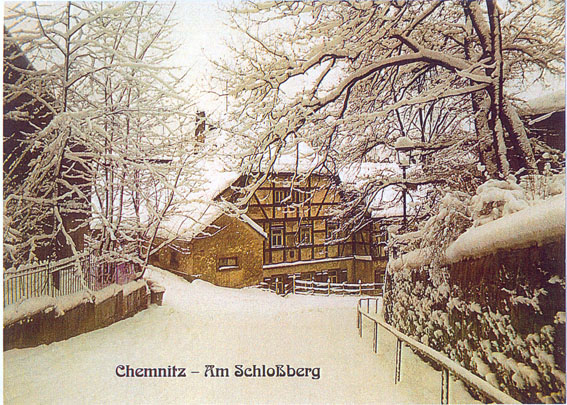
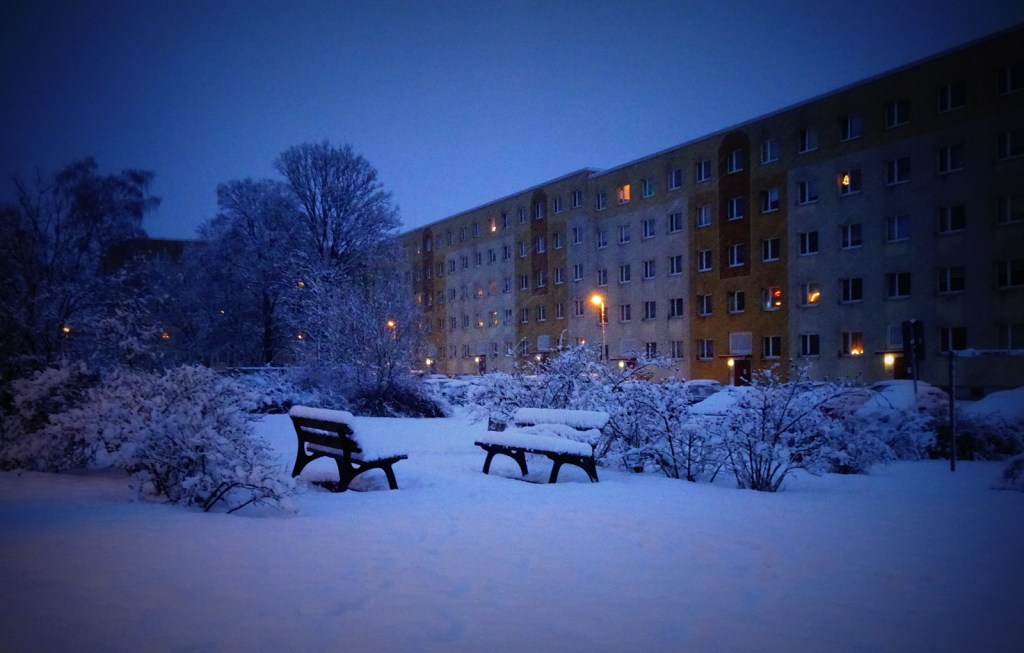
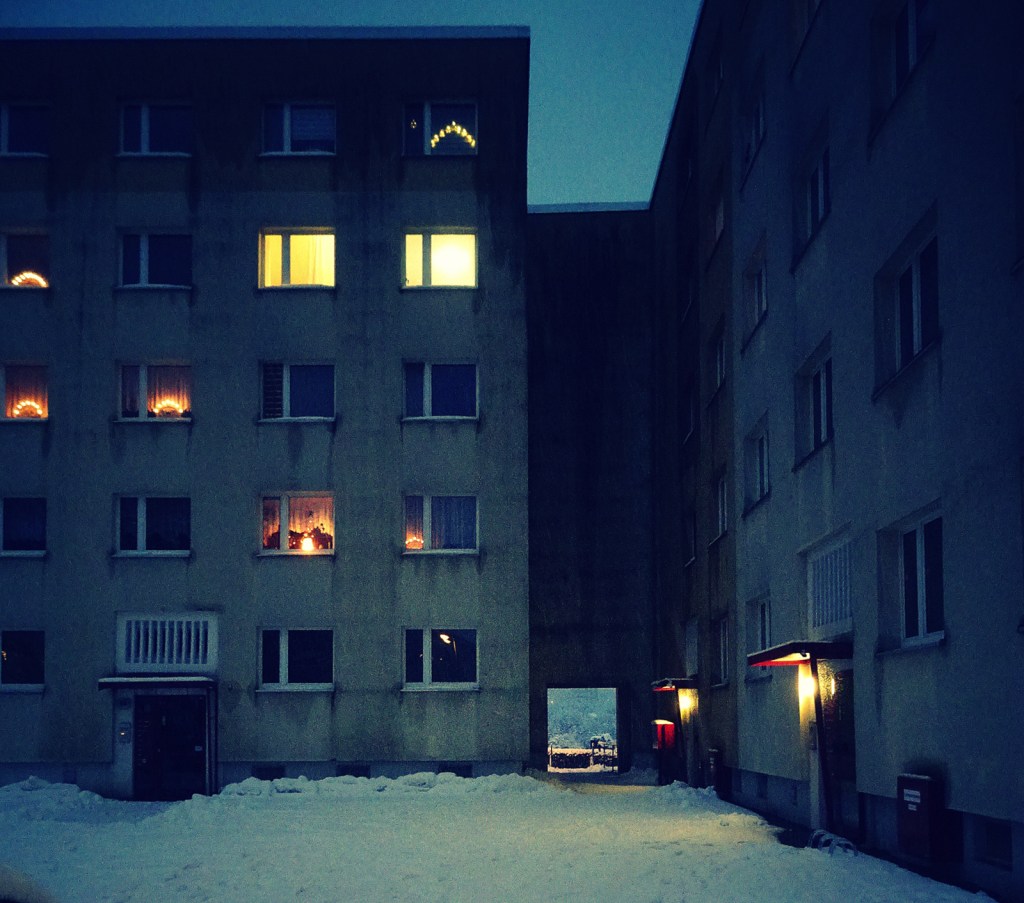
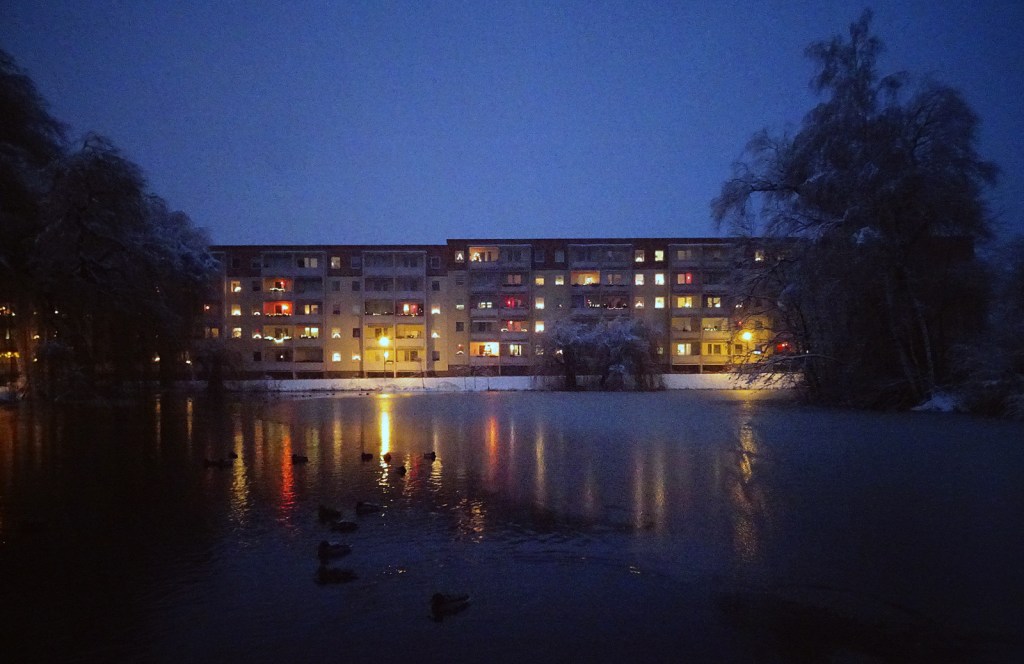
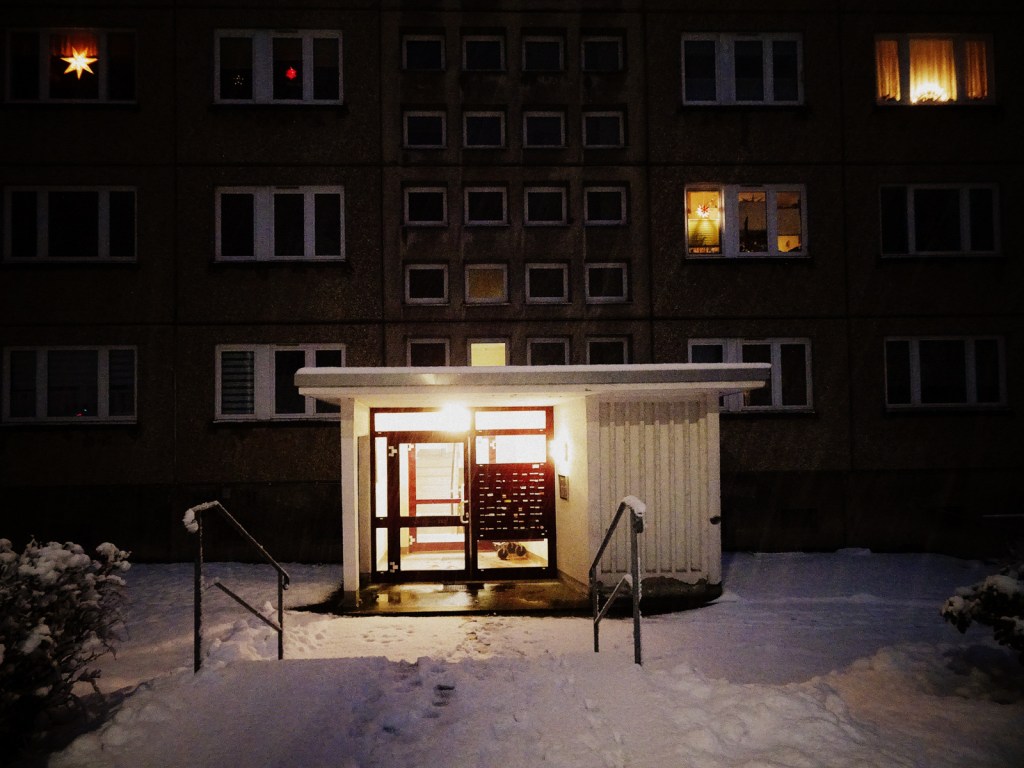
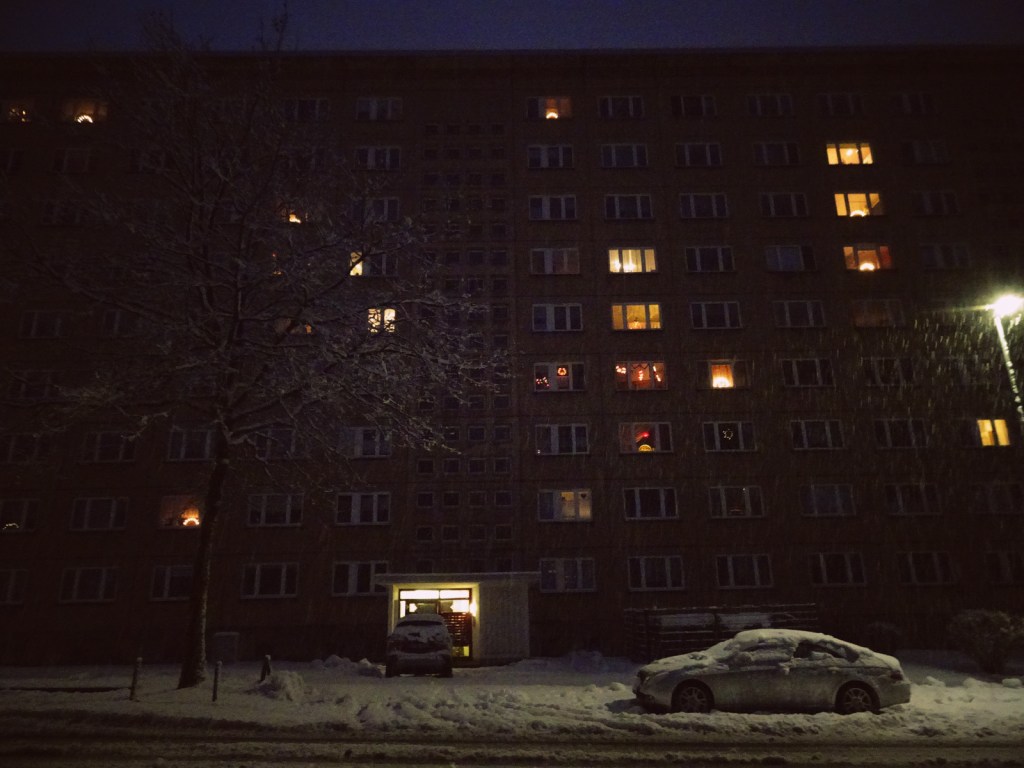
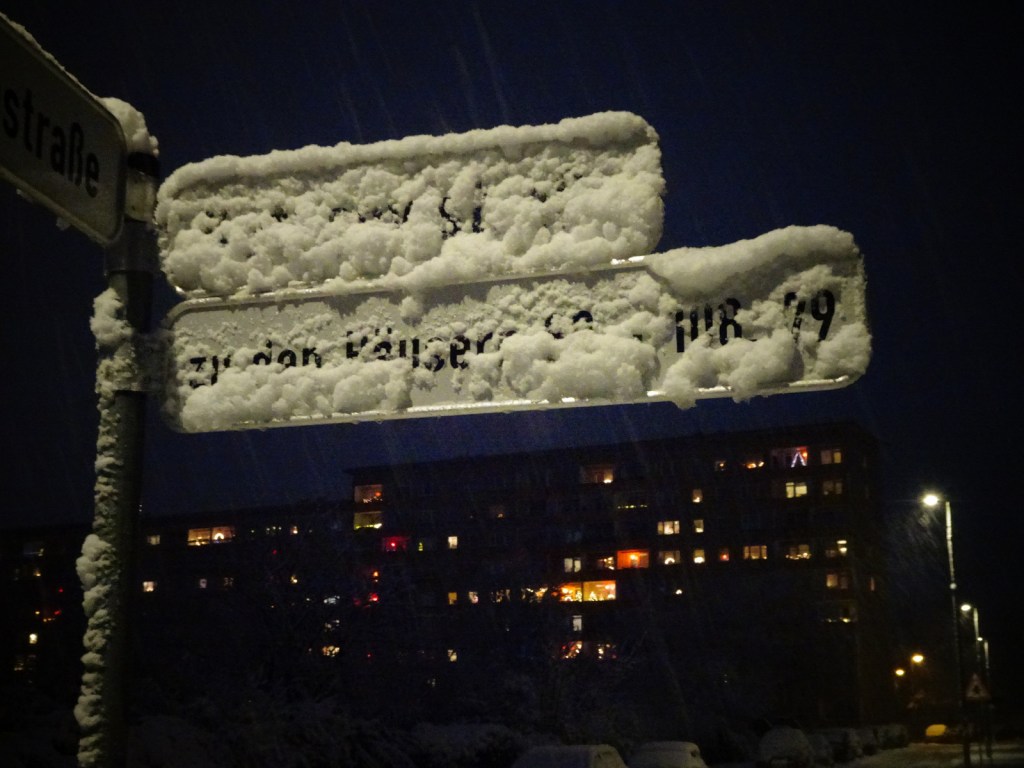
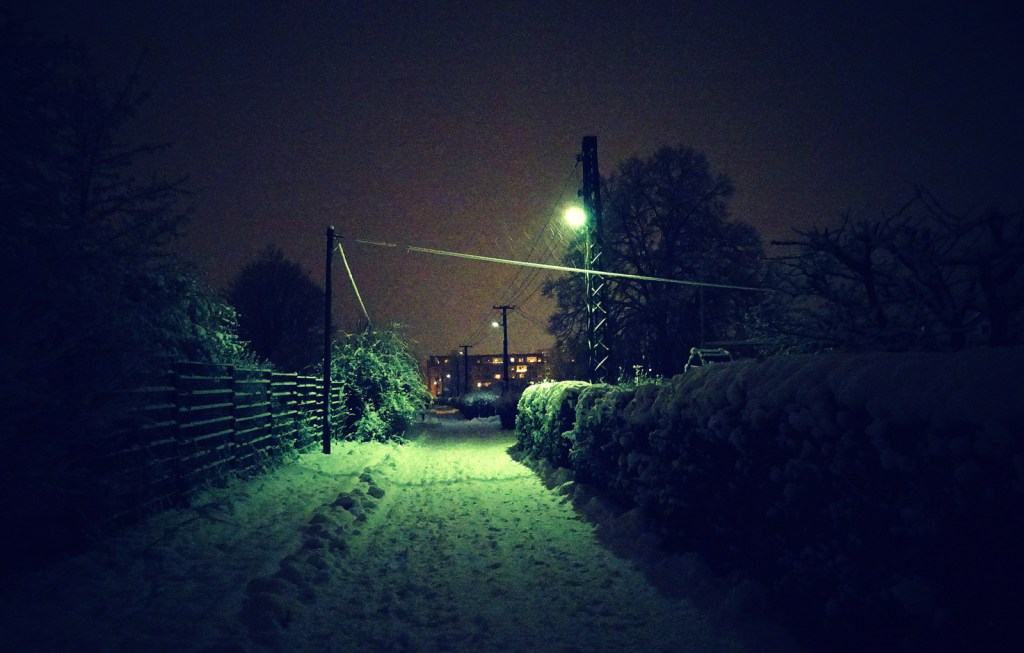
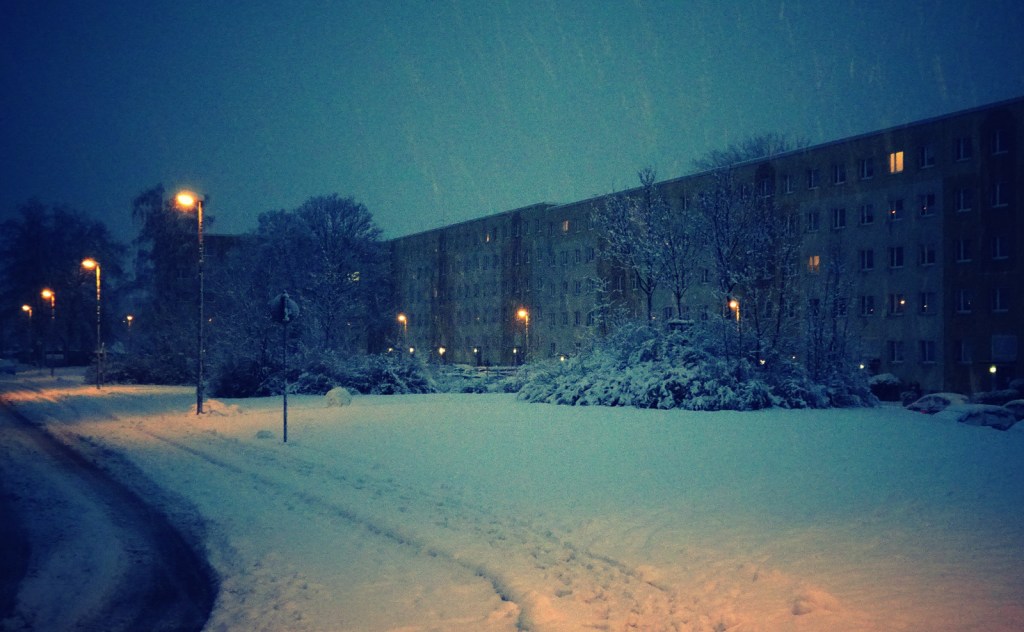
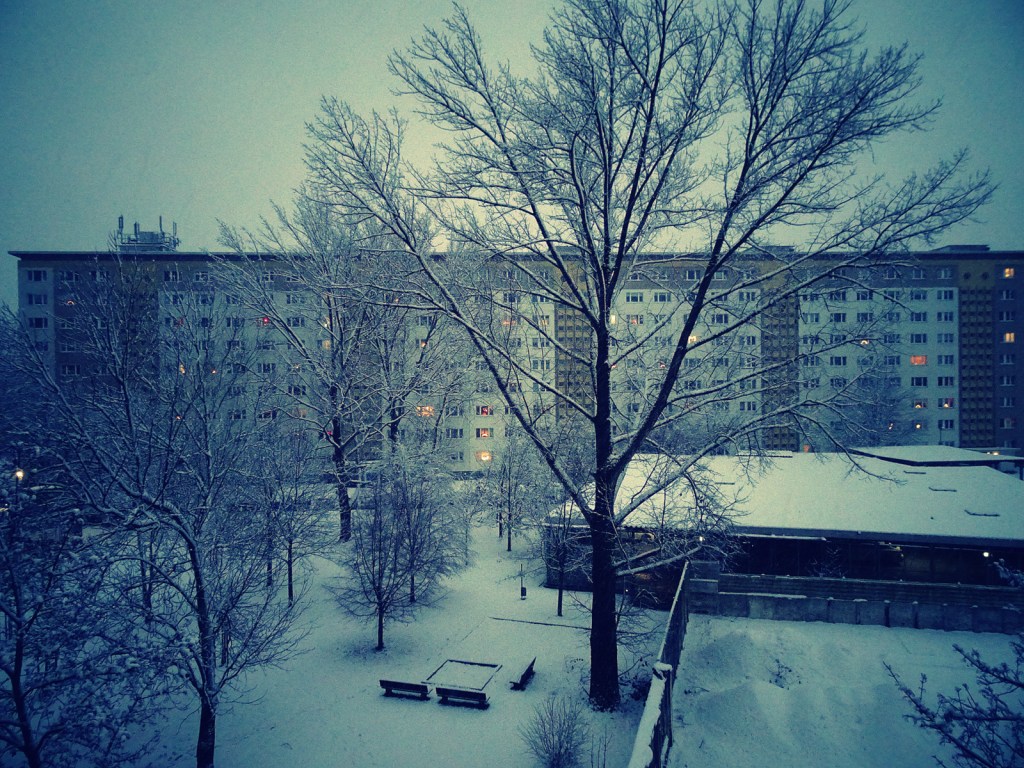
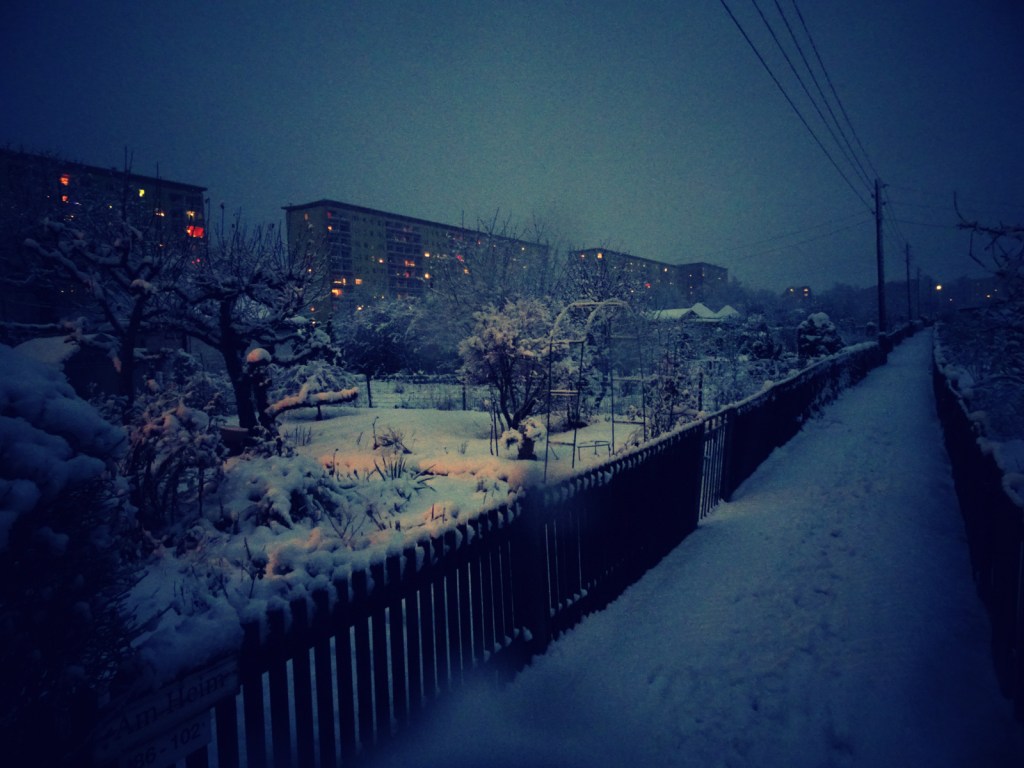
The skepticism I had expressed the day before was proven wrong yesterday when it snowed so heavily that the whole city of Chemnitz was covered in a thick layer of powdery snow. And it seemed like it would never stop snowing!
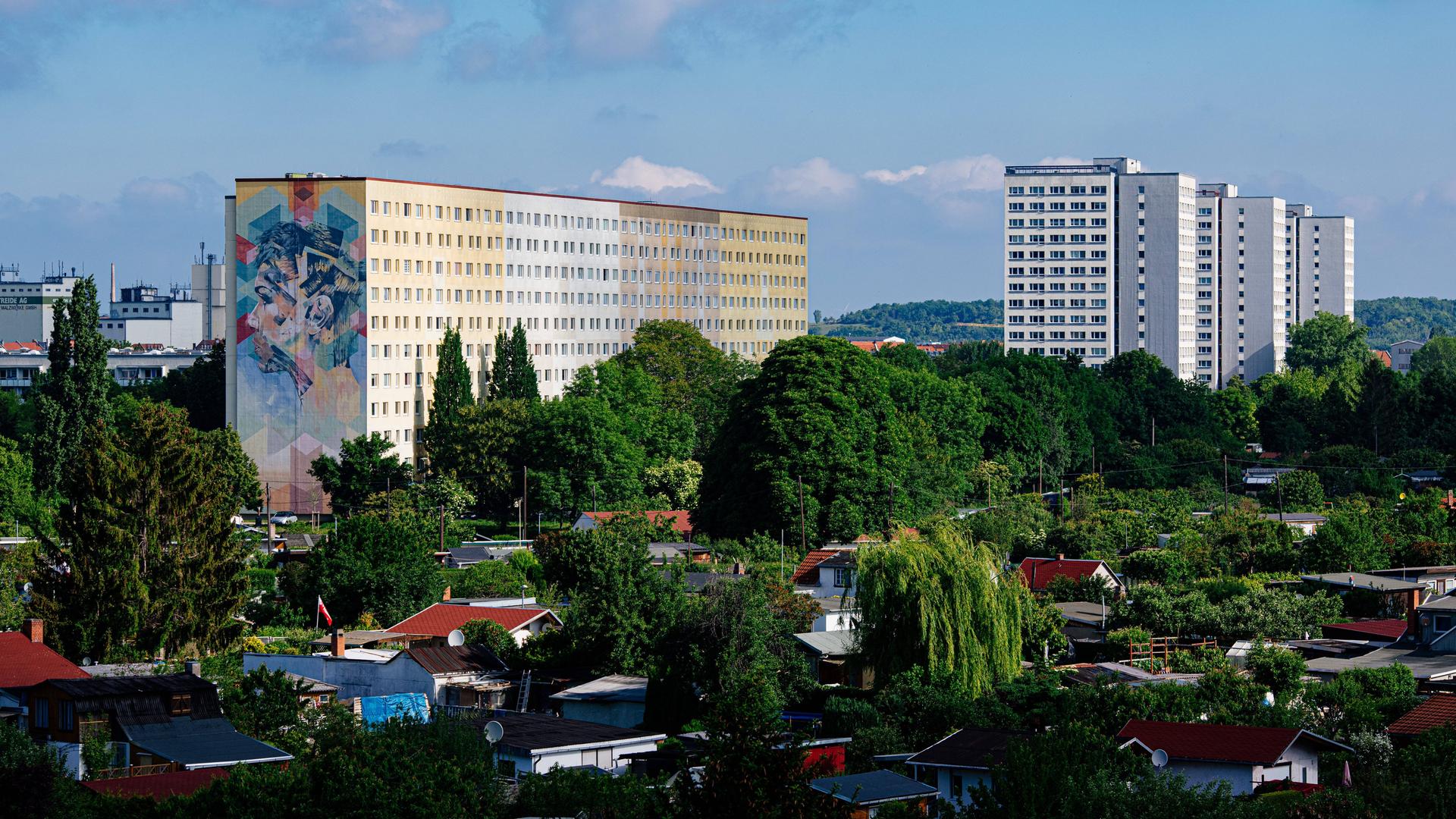
But because those readers who have never had the joy of a Eastern European winter can’t imagine how romantic this season looks between socialist-era prefabricated apartment blocks, I limited myself to a short walk around my neighborhood. (Besides, I didn’t feel like trudging through the cold for hours.)
In a neighborhood like this, you get this cozy Siberia feeling. With a desire for hearty food, high-proof dessert and novels as thick as a brick and as dramatic as the Russian Civil War.
Sadly, though, I was right with my initial skepticism. Today, most of the snow has melted and the city is suffering from flooding.
After I have come under criticism that my living room allegedly looks like an office, I have redecorated and put up some flowers.
Looks really cozy now, doesn’t it?
And for those of you who were so shocked by the Stalingrad poster that your toes froze off, you needn’t worry: It’s not celebrating the Wehrmacht, but the Red Army and its victory against German barbarism. - Notwithstanding the moral complication posed by the Soviet Union’s initial complicity with the Nazis. Sadly, though, I don’t find any posters celebrating the US Army here in East Germany.
Still, I think I may have to go to the Museum of Archaeology in Chemnitz, where they currently have an exhibition called “Home Sweet Home”. And I need to visit more flea markets. Problem is, at some flea markets in Chemnitz, you could think that the Wehrmacht is having a fire sale.
Since August, I have been living in Chemnitz, which, to the older ones among us, might ring a bell as Karl-Marx-Stadt. The news usually leads to an astonished “Why Chemnitz??” Surprisingly not only from people who have never heard of Chemnitz, but also from the locals.
Now that I’ve had to give the reasons for this decision at least a hundred times, I finally thought of the obvious. I have this little blog, after all, which has already revealed far too much of my personal life. Thus, I can simply explain the thought process that led me to choose Chemnitz and then conveniently, comfortably and elegantly refer to this article whenever I am asked for the hundredth and next time.
First, let me remind you how and where I had been living these past years:
Here there, gone tomorrow. Living out of a backpack. Without many material possessions or much personal baggage. Rarely knowing where I would be in two months. Complete freedom.
But as beautiful as this constant roaming around is, there are downsides to it.
No, I don’t mean all the times I got accused of being a spy, like when I happened to walk into a Navy base in Montenegro. That was always fun, and what’s one week in prison, when you get a good story out of it? A good deal, I would say.
It was my history studies that suffered the most from this erratic lifestyle. As educational as it is to live in a different country every few months and to immerse myself in the local history, as interesting as the museums in Bogotá and the archives in Montenegro are, I can’t write a thesis if I’m constantly on the go and can only take a few books with me. I have heard that they have books on the interweb now, but I’m more of an old-fashioned student.
And they don’t serve beer at the online library.
Also, I have already been house and cat sitting for more than five years now, which has taken me to many interesting places from Switzerland to Sweden, from Venta Micena to Vienna and has been saving me the expense of rent. But, as you know, I believe that a healthy lifestyle requires starting something completely new every 5 to 7 years.
And lastly, I’ve enjoyed so much hospitality over the last years that I am determined to give some of it back. I’ve always preferred being a Couchsurfing host rather than a guest, and I wanted to have an apartment again where friends and strangers can stay for a few days and bring stories (and booze) from all over the world.
These two guys from Virginia even brought cigars. Great!
The decision in which country to settle was involuntarily easy. Places like Romania, Bolivia or Abkhazia would be much more interesting for me than Germany.
But unfortunately, I didn’t learn anything practical like mining or carpentry or truck driving, that would allow me to make a living anywhere in the world. Because I didn’t have good enough grades, I only found admission to the Faculty of Law, from which I was dismissed with a lousy bar exam. Whenever I went to the port in Piraeus, Odessa or Dar es Salaam and wanted to enlist on a ship, I was ridiculed. “He can’t even do a taut-line hitch,” the sailors laughed and showed no interest in a lecture on the history of maritime law.
Thus, I had no other choice than to move to Germany again, the only country where I can practice as a lawyer. (The few German lawyers working abroad are usually involved in dubious things like money laundering on Caribbean islands. That’s not for me.)
Caribbean islands are boring. (This is Sint Maarten / Saint Martin, but all these islands look the same.)
If it had to be Germany, it should at least be a region which was hitherto unknown to me. I have always liked the feeling of being a newcomer, not knowing anything or anybody, starting from scratch and setting out to establish new friends and contacts. Whenever I am in one place for too long and I understand how everything works, I feel not challenged anymore.
After I have repeatedly criticized how little interest West Germans show in East Germany and because I think that the implementation of German unification is the responsibility of each and every citizen, one decision was clear: As a Westerner, I would move to the East. And to the proper, real, hardcore East, not Berlin or Potsdam or one of those gentrified places.
Because I find flat landscapes dull, Mecklenburg, Pomerania and anything north of Leipzig were ruled out right away. I understand that flat fields are practical for growing corn, for tank battles and for the gross national product. But I am more of a hobo than a farmer, so I need mountains.
I also wanted to move to a medium-sized city. Nothing against big cities, but if you mainly want to study and write, then there are too many distractions in Leipzig or in Dresden. But it shouldn’t be too small either. Annaberg-Buchholz and Bad Schandau are cute, but I would be afraid that there won’t be anything left to discover after a few months. Görlitz is wonderful, but since the almost complete loss of Silesia, it is simply too peripheral. (If I had a talent for Polish, it would be a wonderful place to live, but I don’t.) The city should also have at least one university, and a proper one at that, not just individual faculties like in Freiberg or Tharandt.
There was one city that kept coming to mind. Chemnitz had been on my radar ever since it was chosen as the European Capital of Culture 2025. If I have calculated correctly, 2025 is just two years away. And because I want to stay in one place for at least three years, that fits perfectly. So I’ll get to see the whole program, from the hectic preparations, the billions of investments, the influx of visitors from all over the world, and then the sad decline back to insignificance. Or hopefully something more sustainable. In any case, that could be exciting.
I have moved plenty of times in my life. Usually I just rented an apartment through the internet, without knowing the city or even the country before. Sometimes this approach worked fantastic, sometimes less so.
This time, I wanted to approach the matter much more professionally, methodically and systematically. Thus, I decided: “I will visit Chemnitz for a day, walk around town aimlessly, and see how I feel.” I think that’s much more informative than when people pore over statistics about which city has a supposedly better quality of life, where the climate is best and pollution is lowest, where you earn the most and pay the least in rent. Although the latter actually speaks for Chemnitz, as we are about to discover.
The train ride from Leipzig to Chemnitz is already a real stunner, as you approach the increasingly wild and romantic landscape over daring viaducts. They still have the old trains here, with the cozy six-person compartment, where you make new friends every time, and where you can open the windows and smoke in unison with the steam locomotive.
Once you reach Chemnitz, the first question is: “And where is the city?” Because unlike in Cologne, for example, where you are overwhelmed by that stupid cathedral as soon as you get off the train station, here you step outside under the open sky.
From the first moment, I feel good in Chemnitz, but it takes a while until I understand why: In this city, you don’t feel confined anywhere. There are no winding alleyways, no dark corners and no deep canyons of high-rise buildings. The streets are as wide as the Champs Élysées, if not wider. Wherever you venture, it feels spacious, open, wide and airy.
I have a standard test: When I can cross the main road in broad daylight, violating the red traffic light, without being run over, then I like the city. (If not, then not.)
There may be other cities where you can enjoy this sense of freedom in public spaces. Beautiful Eisenhüttenstadt, for example. But nobody lives there anymore. Chemnitz, on the other hand, is home to 250,000 people. To achieve such generous urban planning on this scale, that’s world-class architecture, which puts Chemnitz in the same league as Minsk, Pyongyang or Brasília.
Some people feel lost in vast open landscapes like Mongolia, Atacama or Chemnitz. I like them. So if you are looking for spaciousness and tranquility, you no longer have to make the arduous journey to the North Cape or to Alaska. Just hop on the bus to Chemnitz and feel like in a city that was built just for you.
And if your first thought upon arrival is “wow, what a futuristic bus station”, then you’re already in the right mood for a tour of the city of modernism. With architecture that you have hitherto only seen in science fiction movies and in Yugoslavia.
For the sake of historical fairness, though, I should mention that Chemnitz did not become as modern out of its own volition. Rather, it required some urban planning assistance from the helpful Allied air forces, which gave Chemnitz the opportunity for a relaunch in 1945.
Unfortunately, the intended denazification did not quite work out in the long term. But architecturally, Chemnitz has risen from these ruins as Karl Marx once did from the ashes. Especially along the Avenue of Nations, a truly magnificent boulevard that would be the envy of world cities like New York, Paris or Buenos Aires (if they had ever heard of Chemnitz), you feel as if teleported back to the 1950s and 1960s.
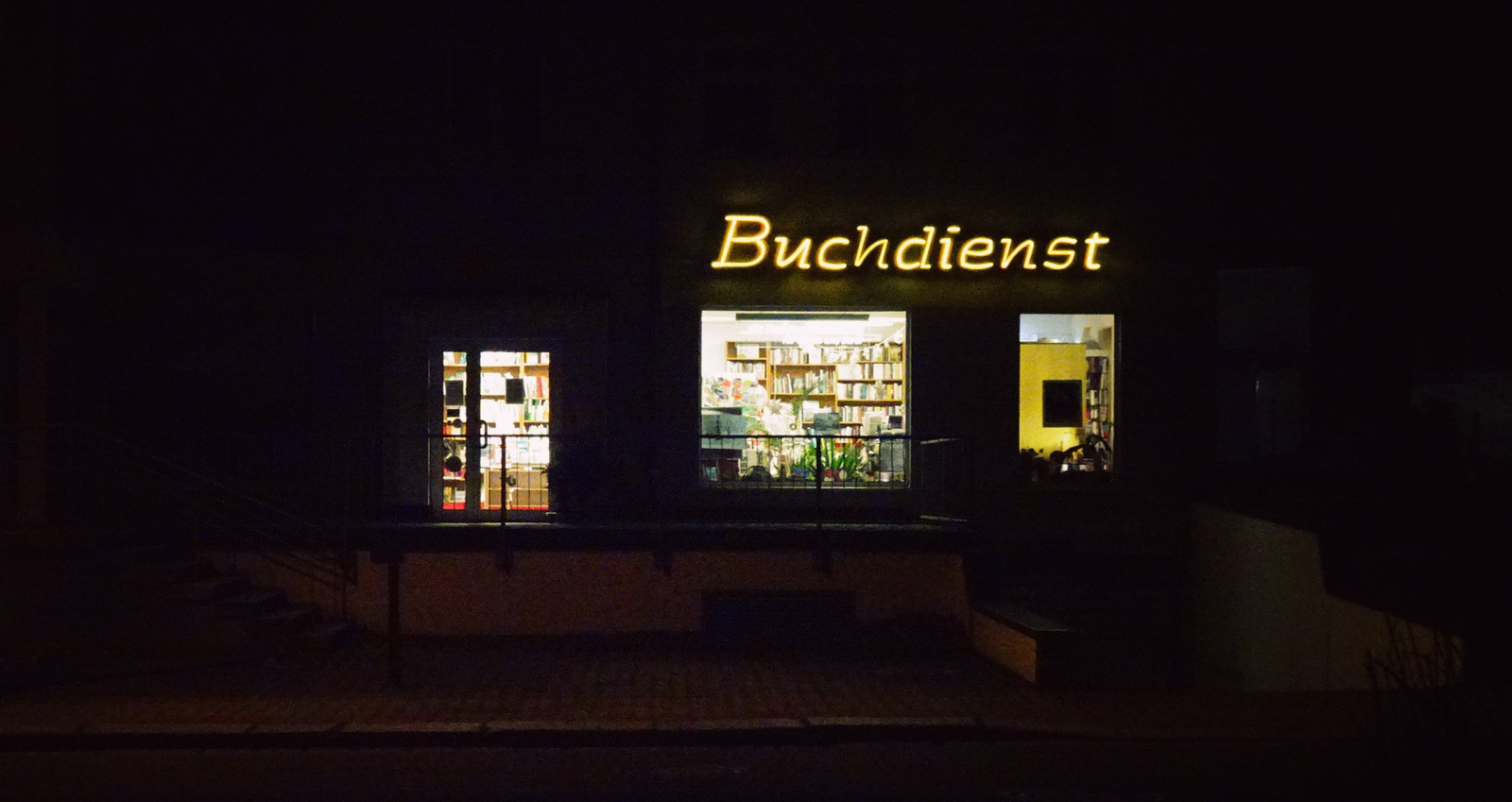
This may not be “beautiful” in the classical kitschy sense, like in Rothenburg or in Marienbad. But I think it’s fantastic that entire neighbourhoods preserve that time, right down to the lettering on the cafés, hotels and bookshops. Walking through Chemnitz is like that feeling you get when you discover a box of old, faded postcards in a second-hand bookshop that remind you of your childhood.
Eastern modernism they call it here, although the West built in a similar style in those euphoric days of the nuclear age. But in the West, it was usually torn down again after 30 years, because, according to Schumpeter, capitalism must always destroy everything.
Chemnitz was already modern even before it became Karl-Marx-Stadt in 1953. I don’t know why Dessau and Weimar and Tel Aviv brag about the Bauhaus architecture and Chemnitz is always overlooked. If you want to experience modernist architecture, Bauhaus, New Objectivity, but also the Gemeindebauas you know it from Vienna, then you will spot a whole number of gems on a walk around Chemnitz.
Or rather, to address one peculiarity of Chemnitz right away, during one walk around town, you will hardly see anything. This is probably the reason why many people, who are only passing through for a few hours, move on disappointed. Because Chemnitz is gigantic! 221 square kilometers, the same size as Bucharest, Amsterdam or Düsseldorf. Larger than Stuttgart, Hanover, Stockholm, Helsinki, Nuremberg, Milan, Copenhagen or Lisbon. More than twice the size of Paris! And these are not cities where you walk around for two hours and think that you have seen everything.
I go for a stroll every day, if only to refine the air of this industrial city with the sweet scent of cigars. And after six months in Chemnitz, I’m still discovering completely new neighborhoods.
Chemnitz is also wonderfully green. The lake below the castle or the city park along the river, also named Chemnitz, invite you to spend the day outside. The cemeteries and the Park of the Victims of Fascism invite you to reflect about history.
Zeisigwald (literally the forest of siskins) is large enough for hours of hiking and dotted with old volcanic cones, hidden lakes and leafy beer gardens.
Küchwald forest with its pioneer railway, an open-air stage and the GDR’s aerospace center reminds me of Akademgorodok. Or at least of Vingis Park in Vilnius.
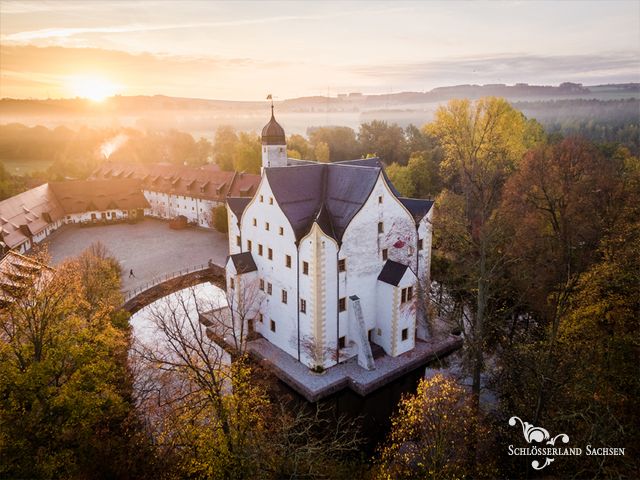
And the suburbs all have their own character anyway. Rabenstein with its castle. Klaffenbach with its moated palace. Einsiedel with the yummy brewery. Adelsberg with its distinctive tower.
I could go into rhapsodies about the whole area, the castles and palaces, the endless forests and the Zschopau valley. The whole region is being included in the Capital of Culture 2025, so you’re almost drowning in ideas for excursions and hikes. It never gets boring here, and the German flatrate for trains (49 €/month) is used to the maximum .
But today, I will stick to Chemnitz itself.
Not knowing where the actual center is, I took a wrong turn on my first visit and ended up in Sonnenberg. This is a wonderful Wilhelminian style district and I couldn’t stop being amazed. Every house is a gem, with elaborate gables, bright and colorful, with ceiling paintings and stucco in the entranceways. Just like St. Petersburg before the revolution, if anyone still remembers.
And the best thing, at least for people like me who are looking for an apartment: In no other city of this size have I seen so many “for rent” notices in the windows. The entire housing market is on its head. This is so relaxing compared to cities like Berlin or Munich, where almost all conversations revolve around extortionate rents and real estate sharks. In Chemnitz, meanwhile, you can easily find something for less than 5 euros per square meter.
I never could have afforded such a large apartment anywhere else.
The mantra that the housing shortage can only be solved by building, building, building looks like it is standing on shaky scaffolding. Maybe there is enough housing, but a distribution problem. Especially for people who work from home or for students, I don’t understand why they absolutely want to live in Munich or Frankfurt, where a large part of their lifetime is spent increasing the landlord’s fortune. Smart students go to Chemnitz, Cottbus or Halle, have a relaxed life and always have enough money in their pockets for parties and holidays. (And yes, I studied in smaller cities myself: Regensburg, Milton Keynes and Hagen.)
And then, Chemnitz has thousands, even tens of thousands of apartments, houses and palaces that you can move into without any rental agreement at all.
Sonnenberg in particular reminds me a lot of the Bronx. Demolished houses. Crack houses. People taking their living rooms out onto the street in summer. The supermarket, called “Netto”, is referred to as the “Ghetto Netto”. The always slightly intoxicated men in front of it don’t gather around burning oil barrels, but they do set fire to cardboard boxes and use an upturned shopping cart as a barbecue grill. And whoever is the first to leave the house in the morning might stumble over a dead body.
If you want something a little more dignified (and can pay horrendous rents of up to 6.50 euros per square meter), you move to Kassberg. This is one of the largest districts of Wilhelminian and Art Nouveau architecture in Europe. Very posh.
For me personally, that’s a touch too bourgeois. And then you probably have snobs for neighbors there, maybe even lawyers. For the first three months, I stayed at a friend’s apartment in Sonnenberg. On the one hand, it was a really exciting area, and I would certainly have found a lot of clients there. But because I prefer studying and writing over working, it was more important that I found a quiet place.
So I moved to the Yorck district. It has such a nice Eastern European charm, with prefabricated buildings, allotment garden colonies and garage estates, which brings back nostalgic memories of my time in Vilnius, in Targu Mureș and in Kyiv.
When you saw the magnificent houses in Kassberg, you probably already assumed: Chemnitz must have been really rich at one time! Indeed it was. Around 1900, railroad construction, mechanical engineering and the textile industry made Chemnitz the city with the highest commercial tax revenue in the German Reich. The city was called “Saxon Manchester”, but also “Soot Chemnitz”.
Ernst Ludwig Kirchner: Chemnitzer Fabriken (1926)
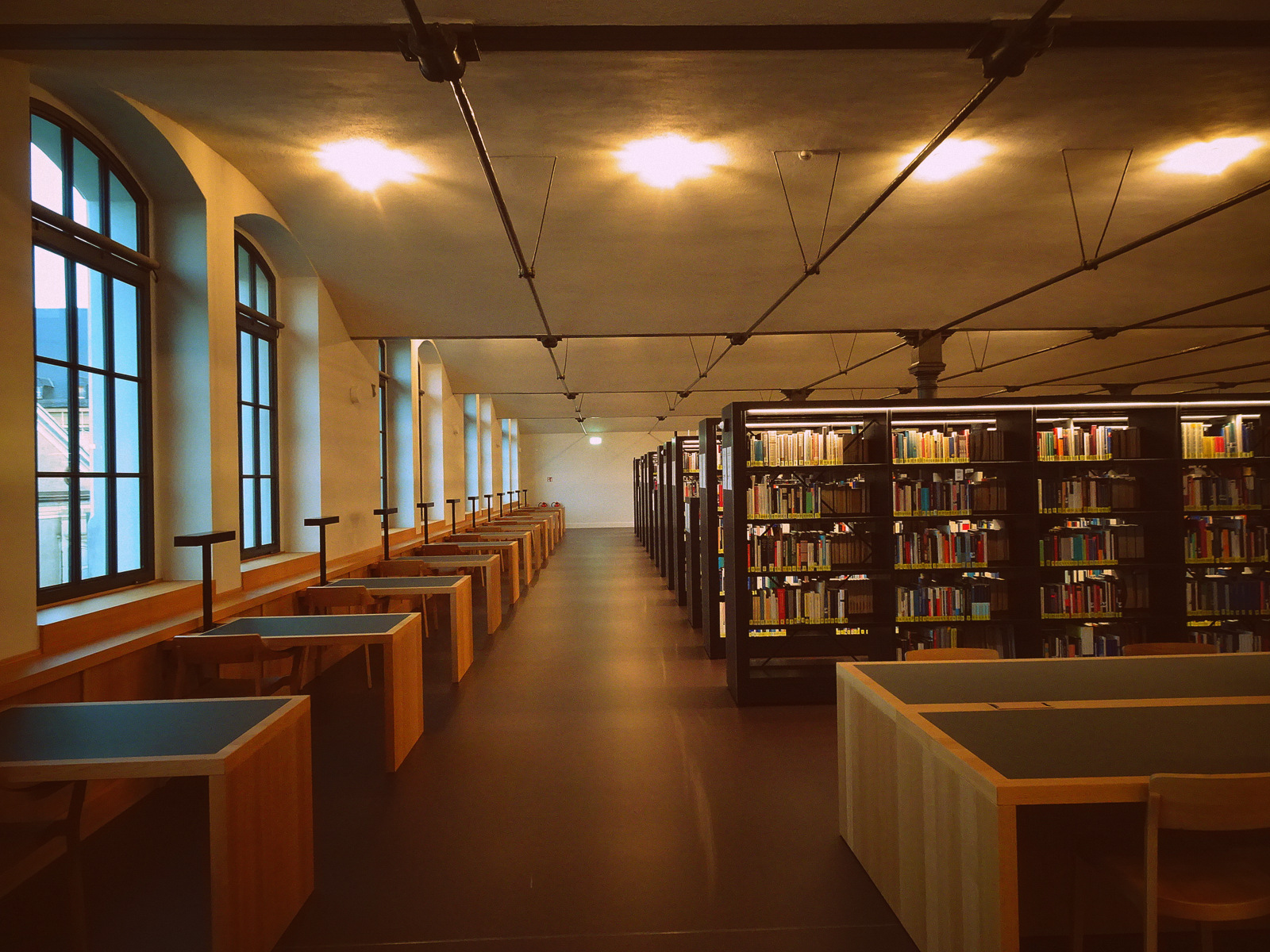
Chemnitz is a paradise for fans of industrial history. Many of the factory buildings are empty and waiting to be discovered by “lost places” photographers. Others are being creatively reused, for example for the state archive, the Stasi records archive, the university library or a coffee roastery.
Walking the short distance from the old factory buildings to the Karl Marx Monument, you could be forgiven for thinking that Chemnitz was the product of an ill-considered, but all the more intense and deeply sincere love affair between Detroit and Pyongyang. And I mean that as a compliment, because such a unique combination is quite an achievement.
But those who appreciate more traditional townscapes won’t be disappointed in Chemnitz either:
I like second-tier cities that are often overlooked. No surprise therefore that Targu Mureș and Cochabamba, along with Vilnius, have been the cities where I’ve felt most at home so far. I also like it when the residents don’t take themselves and their city so seriously and don’t constantly brag about living in the most beautiful city in the world, whether it’s justified (Rome) or not (Munich).
If I praise the city and tell locals how much I like it, at best I am met with a doubtful expression and they ask if I am trying to make fun of them. In the worst case, they say “Chemnitz is a shithole”, in a way that allows no contradiction.
Always tirelessly fighting for the freedom of speech, I nevertheless contradict and list some of the charming aspects of Chemnitz. The locals then ponder for a moment and say something like “we don’t even have a beach”, “our football team is in the fourth division”, “yesterday the bus to Hilbersdorf was five minutes late, the country is totally going to the dogs” and – very popular – “nothing will come out of this Capital of Culture anyway”.
You then realize that those people don’t have an issue with Chemnitz, but are against everything and everyone, against electric vehicles and public broadcasting, against foreigners and mothers-in-law, against the city and the world. I don’t think these people would be happier in any other place. But what I haven’t yet figured out is why there are more grumpy people in Chemnitz than elsewhere. In any case, you really stand out here if you are smiling in public. I wouldn’t be surprised if one day someone will call the cops on me for being too positive.
So, there might be a few more reports from Chemnitz and the Ore Mountains over the next few years. And for those who follow this blog only for the international travels, you needn’t worry! I still have hundreds of stories in the pipeline, from Abkhazia to the Azores, from Estonia to Ecuador, from Sweden to Sicily. And it was precisely for the reason of getting these memories on paper that I finally wanted to settle down in one place for a few years.
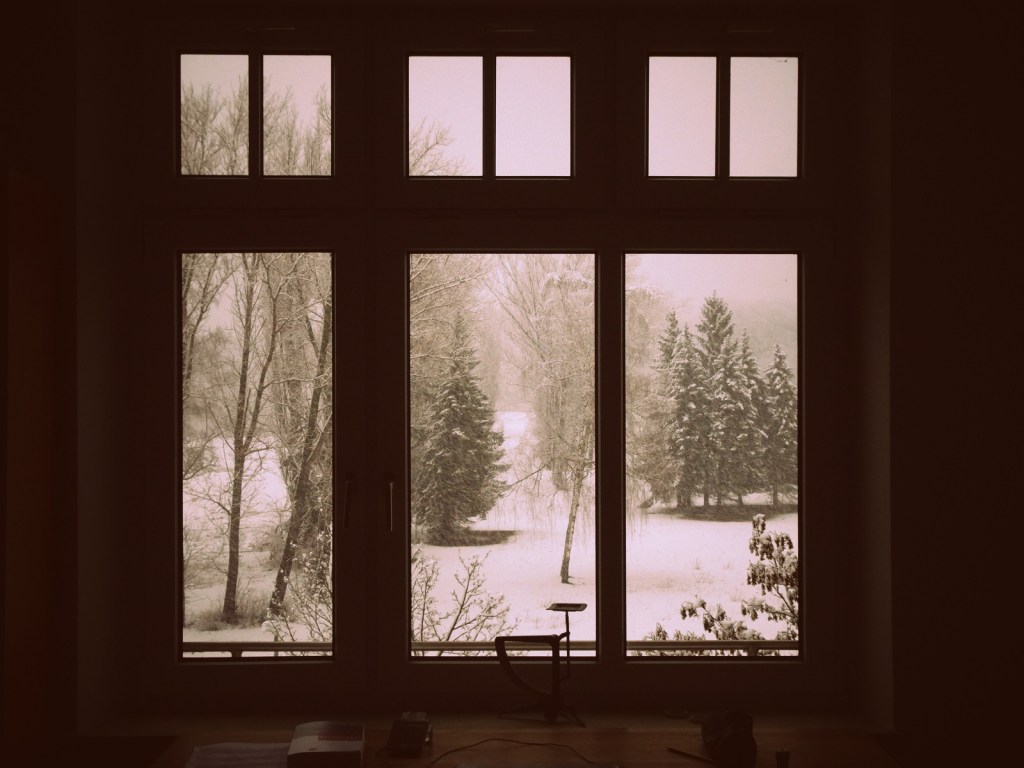
I chose the apartment for this view from the desk alone.
Also, the project “Journey to the Center of Europe” will continue. And I have another project on the European Capitals of Culture in mind. As always, too many ideas, too little time. Please keep your fingers crossed that people will get along and sort out their problems themselves, so that I will have less work as a lawyer and more time to write.
Links:
Here, I will henceforth have more articles about Chemnitz.
A lady who already displayed some warning signs wanted me to advise her about a child custody case in Germany. In the following conversation, I am the part in dark blue.
I haven’t heard from her again.
By the way, I am surprised by the number of people contacting me, asking me to get a copy of their own divorce decree, because they lost it. It would be so easy to get it from the lawyer who represented them in that proceeding, from the court, or even from the ex-spouse. Really no need to hire a new lawyer for that.
2.3 million index cards, and that’s only for the district of Karl-Marx-Stadt.
This is one of the many pieces of information I took away from my visit to the Stasi Archive in Chemnitz, as Karl-Marx-Stadt is called today. Even more shocking than the statistics, however, were the methods used by the Stasi, the secret police in East Germany.
Surveillance, wiretapping, spying, arrests, opening the mail (18,000 letters per day, again only in Karl-Marx-Stadt) – we have all heard about that. Less well known is the fact that the Stasi killed people and how they did it. Shooting. Poisoning. Influencing doctors to change the dosage of medication, causing the patient to slowly wither away. Not to forget about all the suicides.
The most perfidious method was “Zersetzung”, literally decomposition and a method of psychological destruction. Sandra Meier, the historian at the Stasi Archive in Chemnitz, who answers my endless questions with truly tireless enthusiasm, explains the connection to the Helsinki Accords of 1975: After the countries of the Eastern Bloc had committed themselves to respecting human rights, the East German leadership scaled back high-profile arrests and criminal proceedings, instead opting for the secret, quiet and silent “elimination” of opposition activists, peace groups, environmental activists, those willing to leave the country, or those who simply did not fit in.
Using “Zersetzung”, the Stasi wanted to break up groups which were critical of the regime by spreading rumors against one or more of their members. The goal was to discredit them, to spread general insecurity or mistrust, or to divide the group, thus rendering it ineffective.
Alternatively, target persons could also be treated in an excessively benevolent manner, e.g. by granting them holiday trips, allocating a coveted apartment or a car. That gave the impression that the person concerned must surely be working for the Ministry for State Security. The same effect was achieved by leaving alone one or two members of a group, when everyone else was summoned or arrested. This naturally aroused the suspicion among the others that those not arrested were Stasi informers.
The Stasi also worked with forged love letters, which the boyfriend or girlfriend of the target person then discovered by chance. Or anonymous gifts. This went as far as forged photos of allegedly cheating partners and fake divorce petitions from the wife, which were shown to the husband while he was in custody. Not only political groups, but also marriages and families were to be systematically and completely destroyed. With serious long-term consequences.
I remember some of the cases described in Stasilandby Anna Funder. It’s a very empathetic book, but some of the stories are so brutal, I had to pause for a few days until I could move on to the next chapter. Nevertheless an important read, maybe especially now that Katja Hoyer’s Beyond the Wall is storming the charts, or however you call that with books.
According to Sandra Meier, such book launches, but especially anniversaries and movies have a crucial influence on the number of people asking to see their own Stasi files. They are usually disappointed, though, that access to the files is not as swift as in The Lives of Others. After about three months, you receive the information if there are any files on you at all. It can take up to a year and a half before you ultimately hold the files in your hands.
Applications for access to the files can be submitted at the head office in Berlin or at one of the 13 branch offices. For tonight’s tour around the archive, only two interested citizens have turned up. Me, because what else would you do for fun, and a 64-year-old man asking for access to his files.
“Why now?” I wonder, because he would have had the opportunity to do so for 30 years.
“I never really had any pressing curiosity,” he says. He knows that he was under surveillance, because he had contact with relatives in West Germany. He was also harassed because he was one of the few who didn’t join the FDJ youth organization and didn’t attend the “Jugendweihe”, a secular substitute for Confirmation. He conveys the impression of someone who is absolutely at peace with himself. He didn’t pretend to be someone who he wasn’t, but he also doesn’t think of himself as an activist. He felt the repression of the dictatorship, but he knows that others have been hit much harder. He doesn’t expect any dramatic revelations, “but the wife said: Come on, take a look at your file before it will be too late.”
Last year, there were still 30,000 applications for access to Stasi files.
Even if you don’t think you have your own Stasi file, the Stasi Archive is well worth a visit. Especially for Westerners who still know little about the GDR. Both the headquarters and the branch offices offer a wide range of educational programs with events, lectures and guided tours.
The branch office in Chemnitz is particularly worthy of a visit, because – as befits the “City of Modernity” – it has moved into a newly designed and futuristic-looking building, which is located inside an old industrial building.
Chemnitz has many beautiful spots, but I am particularly fascinated by all the industrial heritage in this part of the city, along Annaberger Strasse. Even if some of the factories do look like they are not working at full capacity at the moment. At least in my layman’s eyes, not being an industrialist – or even an industrious person – myself.
As you see, for those of you interested in lost places, Chemnitz is a dream destination!




















.jpg)




 The Happy Hermit