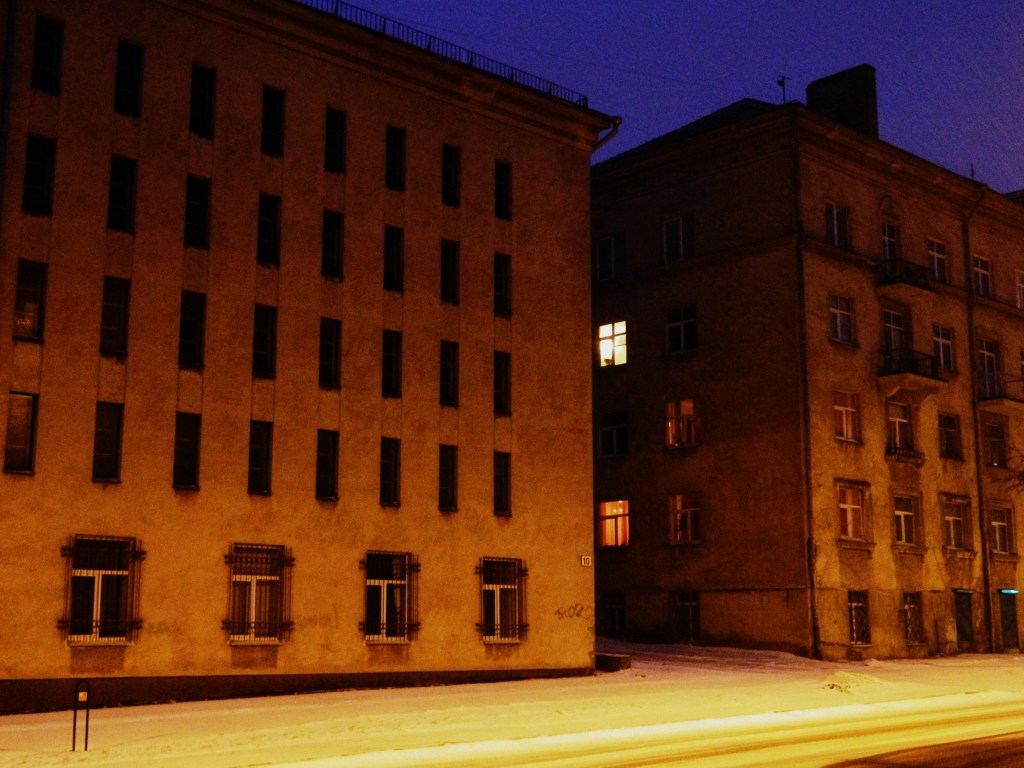
After all, I still haven’t even published the articles about the last geographical centers I visited – in Cölbe, near Purnuškės, in Europe Park north of Vilnius and in Suchowola. And then, there is the special episode about the geographical centers of Chemnitz.
My little history series has also been on hiatus for several months. As you see, the situation on this blog is pretty much a disaster.
Unfortunately, since I’ve returned to work as a lawyer, I’ve had far less spare time than granted to us under any human rights treaty. Divorces, child abductions, drugs and the new citizenship law all keep me on my toes. And a large part of my creativity is poured into legal briefs, which are only appreciated by a very exclusive audience. If at all.
In short: I really need a vacation.
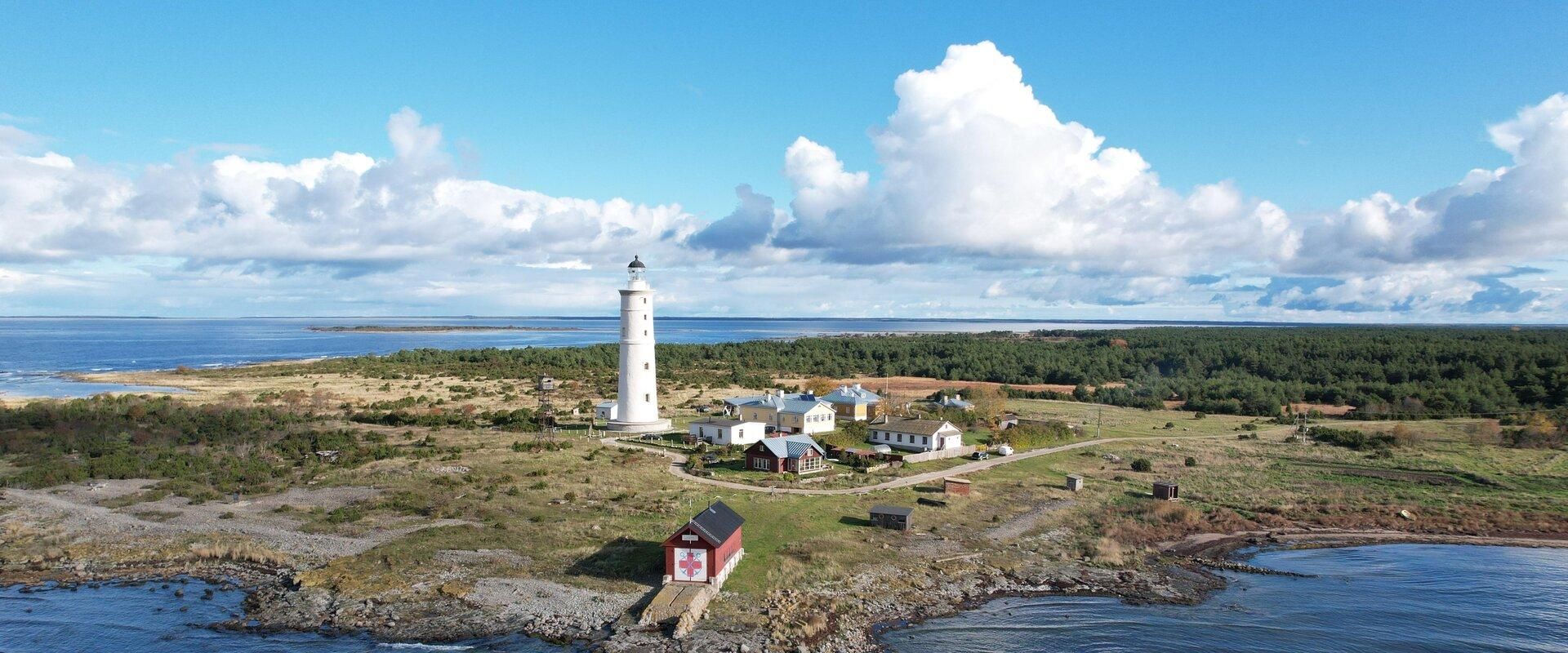
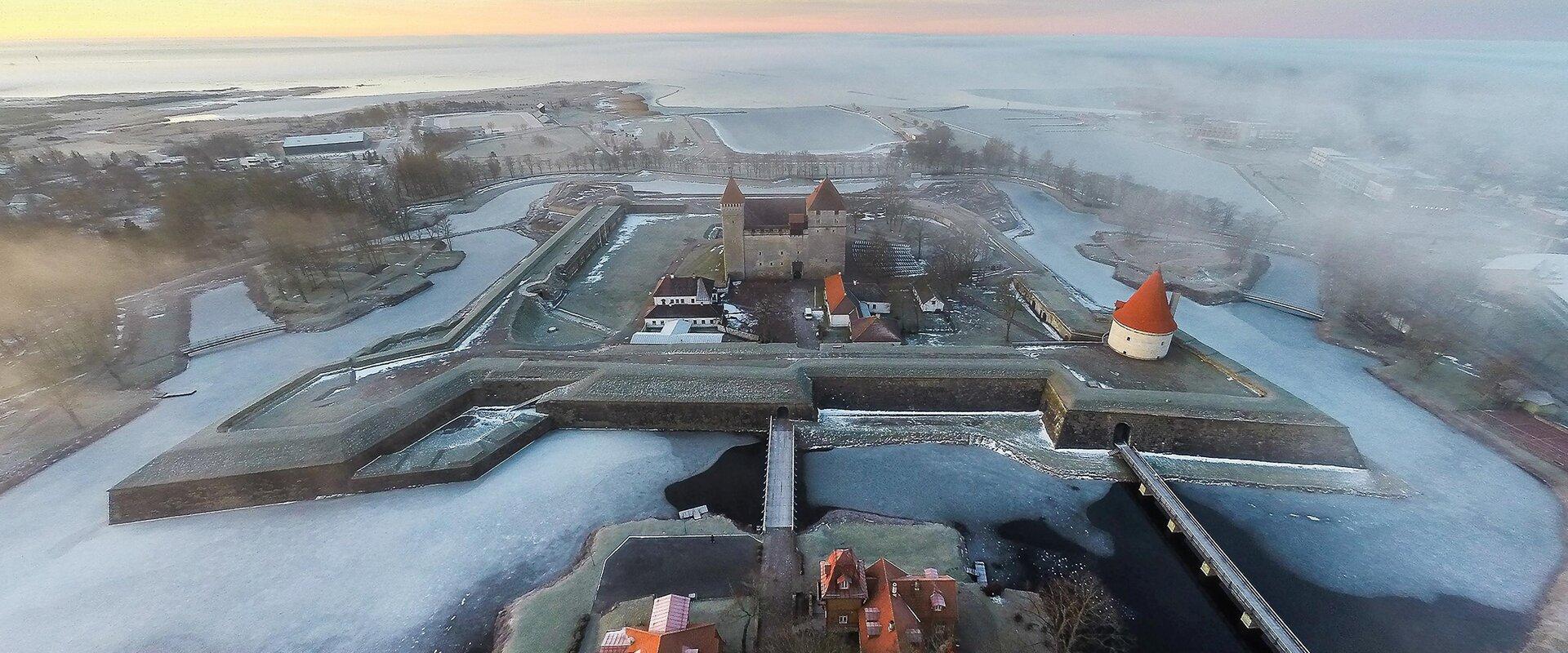
So I’ve picked out the one of the supposed centers of Europe that I imagine to be the most beautiful and dreamlike of them all: the island of Saaremaa off the coast of Estonia.
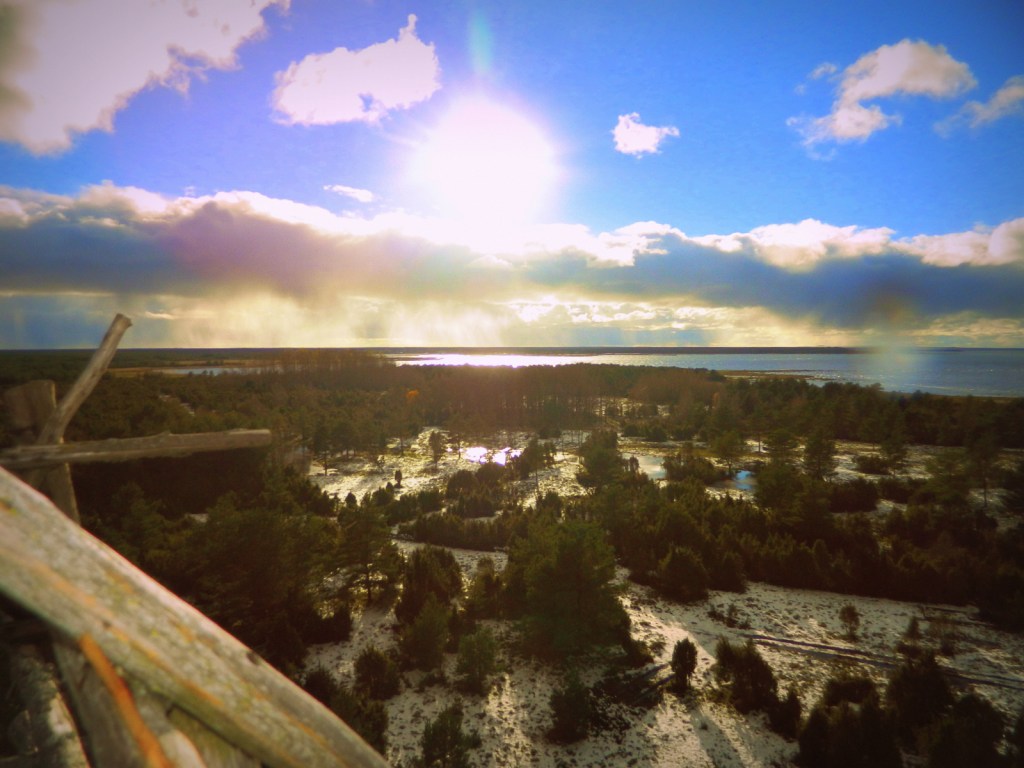
Back then it was the end of October and the first snow had just fallen. That’s why I’m going in September this time, when it’s still perfect weather for swimming, as the following videos show:
Hm, maybe I should pack a sweater. Just in case.
Actually, come to think of it, I am more into hiking than swimming anyway.
What I’m most looking forward to is the peace and quiet. Saaremaa is twice the size of Los Angeles, but only 36,000 people live on the island. And half of them are probably on the mainland to study or work.
I’m also excited by the outlook of staying on an island so sparsely populated that there is most certainly no mobile network or internet. I’ve already packed a backpack full of books and I am longing to take an offline break from all the problems of this world. (Unless some stupid country will invade Saaremaa again.)
So there will be radio silence until the end of September.
But after that, I hope to return to a regular publication schedule. I’ve put a freeze on accepting new clients until the end of the year, so that I have more time to write – and to study. I figured that in the gray fall and cold winter, your desire for travel stories from all over the world will be stronger than now in summer. At least that’s how I feel about it myself.
When I arrived in Bolivia, the arrivals hall at the airport in Cochabamba was so full that the police simply called out loudly: “Who is a local?” Anyone who raised their hand and their passport could walk through passport control without being checked. It was a concession to the late hour and to stressed travelers who wanted nothing more than to drop into bed after having flown halfway around the world.
I should have joined that crowd, but at the time I wasn’t yet confident enough that I would pass for a Bolivian.
So I got a one-month tourist visa at the airport. Free of charge. This I could extend twice for another month by going to the immigration office. When I told my Bolivian friends where I was heading, they all advised to take a few books, a bottle of water and the day off, because I would need to wait for at least half a day. In reality, you go directly to the friendly guy at counter no. 6 and before you can even sit down and start to explain your wish to stay for another month, he has already taken your passport, stamped it with the extension and handed it back to you. “How much do I have to pay?” I asked. “Nothing. Enjoy your stay in Bolivia!”
Three months per calendar year are the maximum allowed on a tourist visa. When I wanted to stay in Bolivia longer, I was overwhelmed with offers of employment contracts, volunteering contracts and marriage proposals, all of which could have served as the basis for a residence permit. It was also most surprising how many people could claim that “the head of the immigration office is my friend” or how many people had “a sister-in-law at the very top of the immigration department”.
But I didn’t want to do anything shady. Also, I was already intrigued by the prospect of getting arrested to take a look at the famous Bolivian prison system. Once, after my visa had already expired, I was held up at a police checkpoint. I was already hoping to be taken away in a van with metal-grilled windows, on the way to explore the justice system of a Latin American country. The officer checked my passport carefully, looked at me, looked at the visa with sorrow, looked back at me and handed my passport back. All he said was: “I am glad you are enjoying Bolivia, Señor.”
So I stayed four more months, illegally. From now on, whenever you are ranting about “illegal immigrants”, please remember that it’s people like me that you are talking about.
Bolivia is not only friendly to visitors, but also quite smart. Instead of locking up immigrants, building walls or deporting people, all of which would cost a lot of money, they impose a fine.
So I worked hard for a few months until I had saved thousands of bolivianos. The day before my planned departure, I went to the immigration office in La Paz, pockets filled with stacks of money, to pay the fine.
I was very nervous. After all, I was in a foreign country, I had committed a crime, I was on my way to the authority responsible for prosecuting these crimes, and I had to explain everything in Spanish.
There was a soldier at the gate of the immigration office who told me that unfortunately they were closed to the public on Wednesday afternoons.
“Oh,” I exclaimed, ”that’s sad. Because I still have to pay a fine before I leave the country tomorrow.” For the hundredth time in my life, I made a resolution that I would never again wait with important things until the last day of the deadline.
No matter what Tucholsky said about soldiers, this one was nice. He recognized my self-inflicted plight and said: “Well, come on in and we’ll see if anyone is still here.”
In fact, there was a lone civil servant at one of the counters. He had probably had been looking forward to a visitor-free afternoon, finally allowing him to sort through files or read the ministry’s new circulars.
But he was very friendly and offered me a seat and a cup of tea. When I started to apologize profusely for having lived in his country beyond the permitted time, he reassured me: “Señor, you don’t have to apologize for that. It can happen to anyone.” Whenever he noticed that I was nervous, he would say: “Don’t worry about it”, as if I had forgotten to get off my bicycle at a zebra crossing.
Zebra crossings were invented in Bolivia, by the way, but that’s another story.
When the official took my passport and saw that I had been in the country illegally for a whole four months, he too became concerned. Normally, tourists overstay by a few days because they miss their flight or get lost in the jungle.
He then set about calculating the fine that was due. Until then, I had read different figures, from 20 to 26 bolivianos per day.
The officer took the time to explain in detail how the fine was calculated, and for the benefit of other travelers, I can reveal that the amount is 12 UFV per day. An UFV is an unidad de fomento de la vivienda, which is an accounting unit introduced to make payable amounts independent of inflation. It is calculated by dividing the Consumer Price Index of the present month by the Consumer Price Index of the same month of last year, taking the 12th root of that result, then calculating the nth root, whereby n is the number of days of the present month, and finally multiplying this result by the value of the UFV of the previous day.
I did not understand it.
The officer had a computer and a calculator, but he preferred using a pencil and lots of paper to do his calculations. After about 10 minutes, he pronounced that I would have to pay a little more than 3,000 bolivianos.
“Good,” I said, because that was exactly the amount I had saved up. Just one boliviano more, and I would have had to sell another kidney.
“Not good at all,” said the official, who was visibly shocked by the hefty amount.
“That doesn’t matter. I knew it beforehand and saved accordingly.” Somehow, the roles had been reversed, and it was me who had to tell him that he needn’t worry.
“But the other tourists only ever pay a very small fine.” He used the word multita, the diminutive of multa. It’s difficult to translate, partly because you can’t imagine an ICE agent talking about a teeny-tiny fine. “It would be unfair if you had to pay so much more.”
I couldn’t think of any more arguments, other than pointing out that I even had the money with me and could pay the full amount on the spot.
“No, no,” he said in horror, ”let’s first see if there isn’t some kind of exception in the law. An upper limit perhaps, so that you only have to pay for one or two months.”
He called his boss.
The head of the immigration department came down immediately, greeted me warmly, also told me not to worry, and then discussed the case with his officer. I stood there, a lawbreaker, while the two law enforcement officers discussed whether there were any exceptions in the law that could be used in my favor. From the expressions on their faces, I realized that there was no easy solution.
Finally, the boss asked me how I was going to leave the country. By plane or by bus?
“I will take the bus to Peru,” I said.
“Very good!” he exclaimed with relief. “Then you won’t pay anything now, and if you get checked at the border, you can still pay there.” He only half-heartedly concealed his hope that I would somehow slip through, smiling about the solution he had found.
I don’t know why people have such a bad opinion about government offices. People are really helpful there. (A completely different mishap happened on the way to the border. That was a bit much for one day, even for me. But it wasn’t the authorities’ fault.)
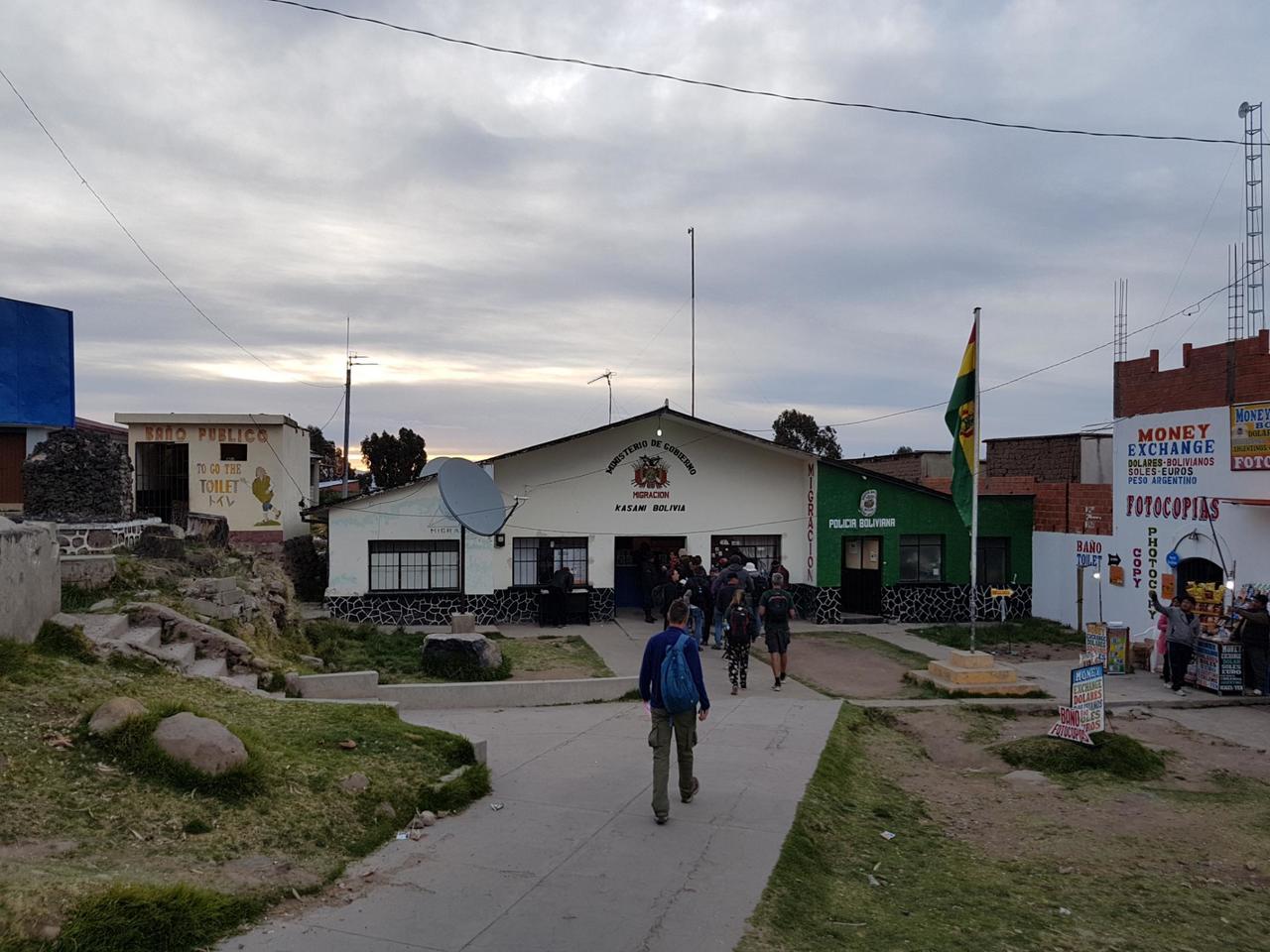
Unfortunately, I’m the type of person who can’t just put my passport on the counter without saying a word when leaving the country in the hope that nobody will notice. When I entered the Bolivian border post in Kasani on the sores of Lake Titicaca, I admitted it straight away: “I think I have to pay a fine before I’m allowed to leave the country.”
Because all the other passengers on the bus were less criminal than me and therefore quickly processed, all four counter officials soon gathered around me to hear my story. “If you like Bolivia so much, why didn’t you simply get married to a Bolivian woman?” one suggested. As they questioned me with serious curiosity about my travels, one of them did the same and equally complicated calculation of UFVs and bolivianos.
Again, the state representatives were shocked by the amount owed, discussed it among themselves and recalculated it several times. The border officials had smartphones with calculators and internet, which they used to exchange WhatsApp messages with their wives all the time, but for the complicated calculation of the 12th root of something, they too preferred paper and pencil.
Here too, they discussed whether there were any exceptions and whether something could be tweaked until one of them had the idea: “Let’s call the head office in La Paz, maybe they can think of something.” That was the office where I had been the day before.
I don’t know if one of the two men from yesterday was on the phone who would still remember me. In any case, the order came from the ministry to show no mercy to any gringos.
The border officials told me that with my fine of 3,082 Bolivianos, I would unfortunately only receive the silver medal. They had already taken more than 4,000 bolivianos from another traveler. I was disappointed.
By the way, all of this is done strictly above board. The payment is not a bribe. You get a receipt, lots of handshakes and best wishes for the trip. You are also given the useful hint that you are no longer allowed to enter Bolivia in the same year, but as the border official said with a broad smile: “From January 1st next year, everything will be forgotten and you will be very welcome again!”
As you can see from the receipt, I committed the “grave violation” of “staying in Bolivian territory in an irregular way”. The fine was 25.68 bolivianos per day. That’s 3.34 euros (3.70 US dollars) or exactly 100 euros per month. Not much for getting to live in the friendliest and cutest country in the world.
The following January, I immediately moved back from Peru to Bolivia. I only overstayed my second stay by a week or so, but this time, I wasn’t the least bit nervous about the small fine.
Whenever someone brings up the argument of Europeans allegedly having a superior culture or history, I have to think about the whole continent being dotted with mass graves from the Baltics to the Balkans.
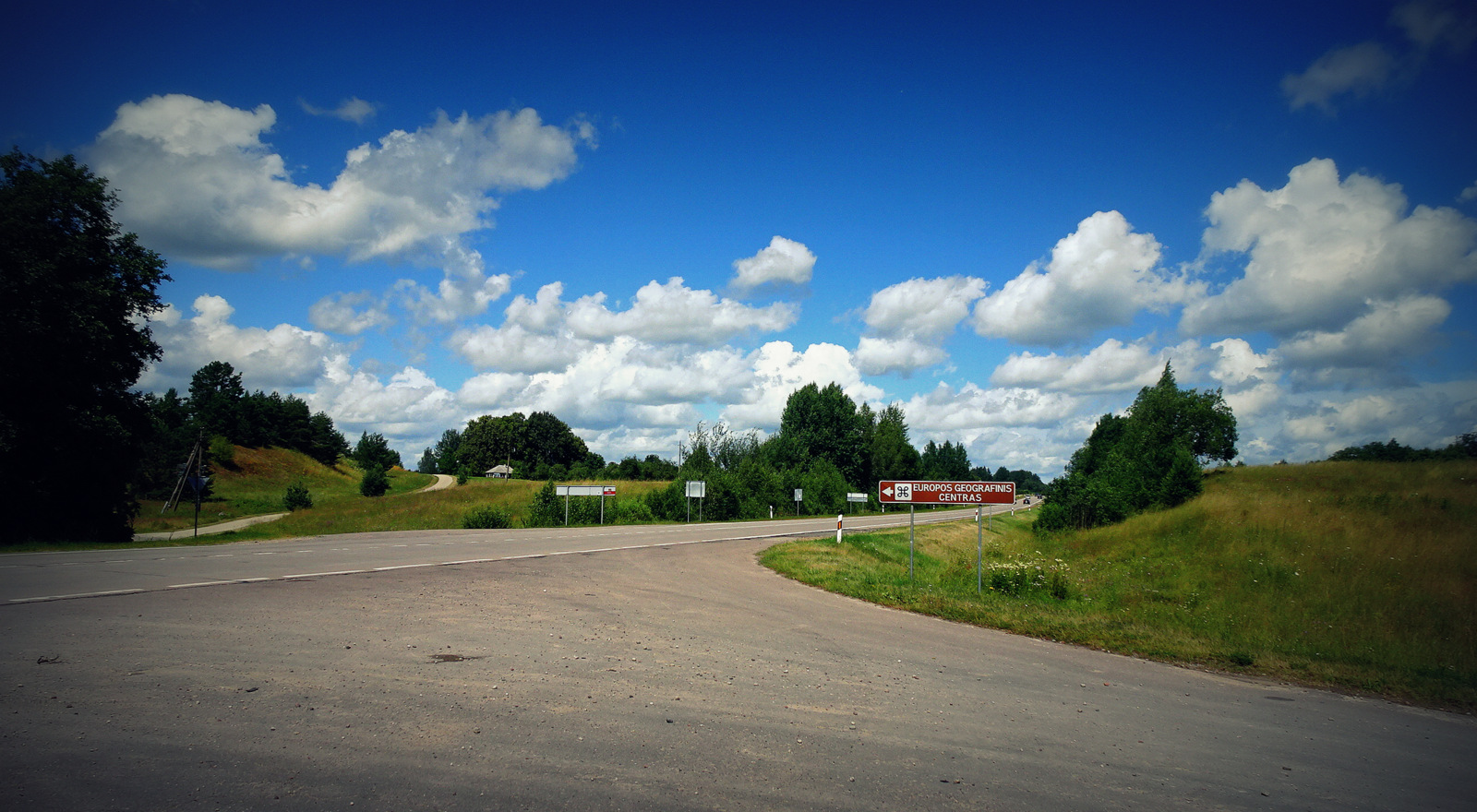
It felt more like the middle of nowhere than the center of Europe, when the bus driver dropped me off at this intersection in the Lithuanian countryside.
All day, I had been wondering about the police presence at train stations in the east of Poland. And then, while on the train, the cell phone chirped, providing the explanation.
Not the welcome I would have expected, but coming from Germany, I do appreciate the gesture of being warned before being shot.
The request to “Turn back immediately!” sounded rather harsh and insistent, but at that point I had been awake for 14 hours, had been on the train for 11 hours and was physically and mentally tired. Honestly, central Poland is not exactly the most exciting landscape in Europe. Flat and wide. Very wide. Unlike my tireless cell phone, I had neither the power nor the energy to turn back immediately. Besides, where to? I am on a mission to find the center of Europe!
So I just got off the train in Augustów and did what I’m particularly good at: Appearing innocent. I noticed that the police only checked people who looked like foreigners. I quickly asked a fellow passenger for a cigarette, lit it and put on a football-induced sad face. That way, I could pass for a Pole and sneak through the – admittedly not very rigorous – checkpoint.
In the park, I sponged a few megabits from the public Wi-Fi to catch up on what I had neglected to do before the trip: reading the news. That’s how I learned that Poland had set up a restricted zone on the eastern border, with foreigners no longer being allowed to enter. (Hence the text message in English, and apparently only to foreign cell phones that were traveling in the forbidden zone.)
Many people aren’t aware of this, but we are all foreigners, in most countries of the world. In Poland, I might still try to argue that we are all European, but I am not sure if the soldiers in the forest are up for such discussions. Also, as a German who is conscious of his country’s history, I don’t really want to be marching around Poland uninvited. The grandmothers and grandfathers of contemporary Poles have suffered enough from what my grandfathers once did here.
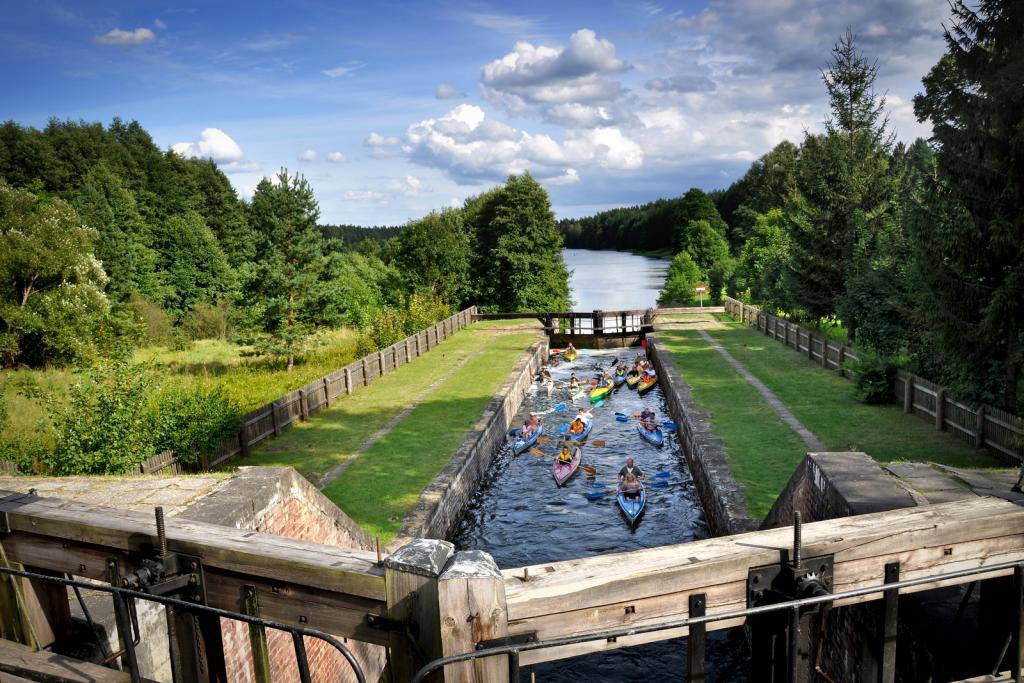
But it is a sad development, because I had really been looking forward to long walks along the Augustów Canal. With that canal leading to Belarus, that might not happen.
Fortunately, I found an accommodation that didn’t care about names or documents. Or rather, only about documents depicting ancient kings.
And now I’m sitting here, in the middle of the Suwałki Gap, and I can neither go forward (because I would be shot) nor back (because then I’d have to admit that I was in the restricted zone). For an employee on annual leave, that would be the dream situation, because “unfortunately” you have to extend your leave and can’t return to the office or the factory floor.
It honestly amazes me how unimaginative most people are. It’s so easy to “accidentally” “lose” your passport while on vacation in a faraway country. Or to “miss” the return flight. And poof, you have to extend your stay by two weeks! I once missed the last ferry from the Azores and had to stay on the island for a whole three months. That was really bad luck. 🙃
Now you want to ask: But how can I afford such long holidays? The answer lies in the very first photo, in my mobile phone. With each iPhone that I didn’t buy, I financed a trip around the world. The good old Nokia phone cost me 6 euros and has been doing its job for 15 years now. It is particularly practical when traveling, because the battery lasts so long, you don’t even need to bring a charger.
Now I have to find out what type of activities are still allowed in an exclusion zone.
I just wanted to interrupt my journey to Podlachia for a an hour or so, to stretch my legs and to grab something to eat.
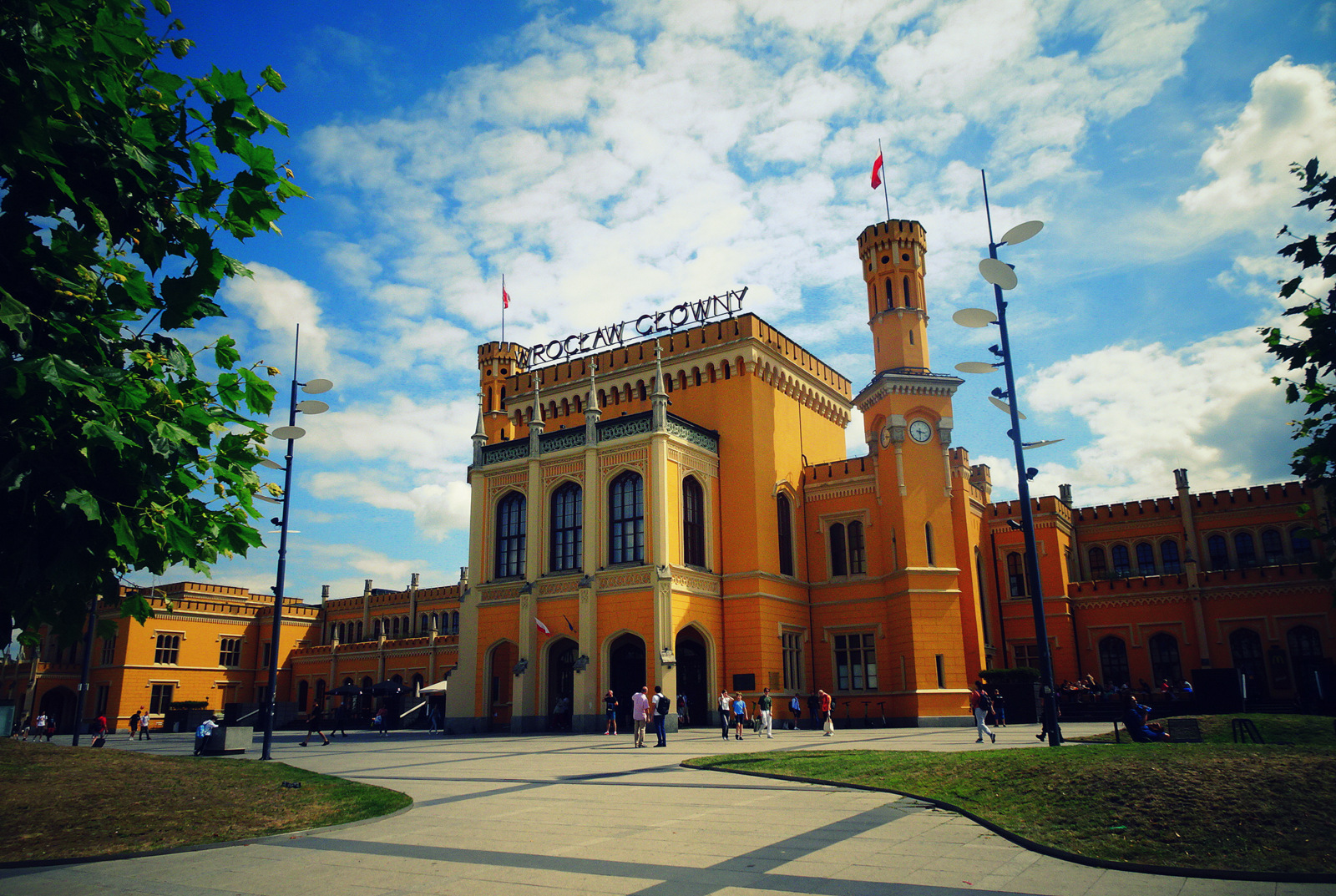
But when I stepped out of the train station in Wrocław, I thought: “Wow. If the train station already looks like a castle, then I am curious what the rest of the city looks like.”
So I decided to stay for two nights.
As I hadn’t prepared this, I have just been wandering around aimlessly. But what an interesting city this is! (More photos coming soon.)
Last year, my birthday coincided with the search for an apartment – ultimately successful -, so that I couldn’t embark on any of my classical birthday trips in 2023. Instead, I only went hiking for the whole day, which I still turned into three articles (part 1, part 2, part 3).
Since then, I have returned to practice as an attorney which sadly comes with a strict statutory 2-week limit on vacations (§ 53 I Nr. 2 BRAO). But those two weeks I am going to use fully and to the last minute to rejuvenate the cherished tradition of birthday trips.
Wow, there are still a lot of points missing. That will easily take a few more years, but you are not in any rush, are you? At the end of June, I will be heading to Poland, where the geographical center of Europe is located in Suchowola, in the far north-east of the country, according to the oldest calculations of 1775.
Suchowola is a small town of only 2200 inhabitants, but that’s the beauty of this series: the fact that I am randomly assigned to points that I would otherwise never have visited, thanks to the strange and obscure work of mathematicians, astronomers and geodesists. And then I have to see what I make of them.
Besides, I can’t imagine Poland being boring anywhere. At least not for a traveler interested in history. If necessary, I will expand the radius by a few kilometers, which will put Augustów on our map. That town is by the Augustów Canal, which, because this blog brings together fans of canals from all over the world, would make a worthwhile hike.
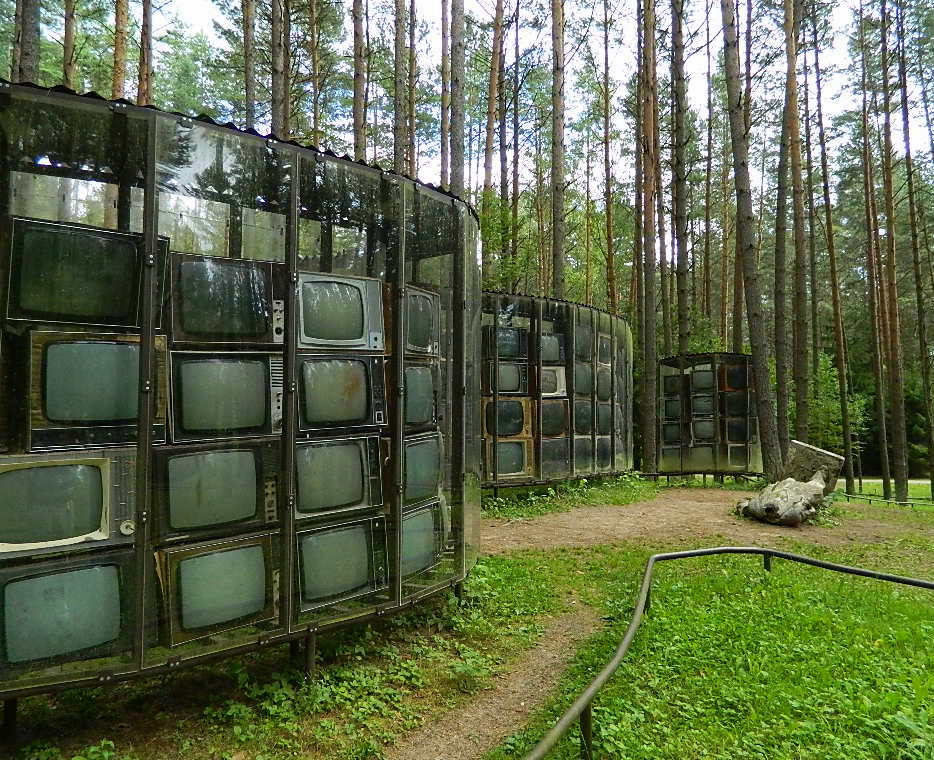
One of the centers is in Europe Park, a truly wonderful open-air museum.
But Lithuania has – apparently the calculations differ a little bit – a second place that claims to be the geographical center of Europe: Purnuškės.
I don’t know how I could have missed this second point when I was living in Lithuania.
In any case, I’m looking forward to returning to this lovely country. The one year I spent in Vilniusfelt like living in paradise. If Lithuanian wasn’t intentionally the most complicated language in the world, I might even have stayed.
Lithuania also fits in perfectly with my birthday trip, as Lithuanians celebrate their national holiday on July 6th. Wandering through the forests on this day, you will come across people in traditional costumes and with flowers in their hair, dancing through the countryside. And in the evening, the whole country gathers to sing. The Baltic peoples once even defeated the Soviet Union with singing.
The only center of Europe missing in the Baltic States will be on the island of Saaremaa. But at my leisurely pace, all of this would be too much for a two-week trip. (My travel guideline: If you have two weeks, only plan for one week. The rest will fill up spontaneously). Besides, these Estonian islands are so enchanting that I don’t mind spending two weeks just on Saareema.
Let’s see if it is still as complicated as it was in 2012 when I lived in Lithuania. Back then, you went to the post office, where the letter was weighed and the postage calculated at the first counter. With this information, you went to the second counter. There you paid the right amount and got a receipt. With the receipt, you went to the third counter, where you got the stamp. Then you had to go back to the first counter, where the strict postal inspector checked that you stuck the stamp on the correct letter. When I wanted to hand over the letter, I was told: “This is an international letter, you can’t post it here. You have to go to the international department of the central post office.” There I had to fill out a form for each letter and have it checked and stamped by the international mail commissioner. When I finally wanted to post the letter, I was admonished: “You’ll have to post it yourself. There are boxes outside.” It still felt like in the Soviet Union.
Ever since I returned to practice law, I get invited to all sorts of fancy events. Usually, I neither care much about them, nor do I have the time.
But when I saw the name of the place where the Bar Association of Saxony held its annual reception, it was clear that this was a coded invitation to the most exclusive club of the world. So I did show up.
Looking at my attire, I really don’t understand why they double- and triple-checked my credentials. (I mean, I have come a long way from my hobo days.) But in the end, I managed to charm my way inside.
You may not have heard much about the Bilderberg conference. In fact, you shouldn’t have, because it is top secret. No photos, no quotes, nothing. You don’t even swap business cards.
But, as I usually get invited to anything only once, I have nothing to fear anyway. So, I am going to spill two of the most important lessons I took away from the conversation with a fellow lawyer.
Lesson one:
He told me how he had once been extremely close to a burnout and had taken a few days off over New Year’s, to reflect on his options and to decide whether to continue in that field. He came to the conclusion that it was really just a handful of clients that caused all the stress and the headache. The rest were okay, some of them even nice.
When he returned to the office, he sent a letter to all the annoying clients, telling them that he no longer wished to work with them.
Sure, he lost business and revenue. But he regained joy and energy and peace of mind. After all, there are more important things in life than work and money.
He went on to give me his most important advice. Once a quarter, he goes through his list of open cases, firing the most annoying 10% of the clients. Because like in most other businesses, it’s a few clients who cause most of the headache. (And they are probably the ones who don’t even bring in much revenue.)
Funnily, clients are often surprised when I terminate my relationship with them. “You can’t do that,” they exclaim, apparently in the erroneous belief that they have hired me for life. I even know lawyers who aren’t aware of that possibility and believe that once they accepted a case, they have to stick it out.
Obviously, with experience you get pretty good at identifying such people before you take them on. In life and in business, the word “no” should be used as often as possible. But, like in relationships, some people seem nice at the beginning, and their darker sides only becomes apparent over time.
Lesson two:
As we were standing at the dessert buffet, the same lawyer told me about Quarkkeulchen, a local Saxon specialty.
These things are an absolute delight. A revelation. A feast of happiness and yumminess.
Maybe I should combine these two lessons and only accept clients who know how to cook Quarkkeulchen and a prepare a full platter for our first consultation.
Time management. To-do lists. Multi-tasking. 24/7 availability. Many of you are desperately trying many different methods to squeeze more productive time into your days or weeks, to get more done, and to become more efficient.
Forget about it! You cannot manage time. Time flies. You cannot stop it. And before you know it, you’ll be dead.
If you feel that you have too much to do, that you are over-worked and close to a burnout, you need to manage something else than time. You need to manage your tasks. Because time is a fixed value, it is the amount and the scope of the tasks accepted by you (or handed to you) which determine how much you work and how exhausted – or relaxed – you are.
There is only one proven method of “time management”: Do less!
Because of this, the word “no” is the most important management tool.
Most of us instinctively say “yes” when we are asked if we want to do something. With new tasks come new clients, new responsibilities, more income, more excitement. Sometimes, it even feels good when people ask you, because it shows trust in your abilities.
Also, it seems to be socially expected to say “yes” when somebody asks you something. “Do you want to come to my party?”, “could you help me with this sales project?” or “would you like to watch my children over the weekend?” If you say “no”, you will seem anti-social, suspicious, selfish, weird. You may simply say “yes” out of a reflex or because you don’t want to lose a friend or a job. You are too afraid to say “no”.
I have developed a few techniques how to deal with this problem:
Say “no thanks” instead of “no”. If someone asks you to watch their children over the weekend and you say “no thanks” in a very nice and genuine way, you make it sound as if they had offered you a favor but you graciously declined. I have often experienced that people don’t even know how to react to that. They just walk away, totally confused. Try it!
Another reply I sometimes use is the famous line from Herman Melville’s Bartleby the Scrivener who coincidentally also works at a law office. When asked to do something, he politely responds with “I would prefer not to.” However, I have found this to be less effective than a simple “no thanks”, as it sometimes elicits the question “why?”
Don’t reply at all. This works very well with e-mails, letters and voice messages (another reason not to answer your phone). Every day, I delete some of the e-mails I receive from prospective clients without replying to them. I know I won’t have the time, or I am not interested in their case or they sound as if they don’t want to pay for my services. You find this impolite? It isn’t. Nobody has an entitlement to your time. It is your time and you alone decide what to do with it. You do not owe anything to anybody, especially not an explanation.
Reply late. That’s a less drastic, but very effective version of method no. 3. Reply after a week or after a month. Usually the project will have found somebody else to do it. Or it will have turned out that it wasn’t that important after all. You will innocently ask “does this still need to be done?” and to the reproachful account of how somebody else already completed the job, you will reply – with a thankful smile – “that’s good, I am happy to hear that.”
I understand that all of this is harder when you are in employment because you have signed a contract that gives somebody else some control over some of your time. My first advice therefore is to avoid employment, but I realize that this is not always possible. When your manager asks you to do something which you don’t find worth your time, I suggest you reply “Sure I can do that, but then I cannot work on something else in the same time. Which other project/client do you wish me to abandon/neglect?” Make sure that your boss realizes that every hour can only be spent once and that every task they give you comes at the expense of some other task.
The last point is also an important point for your personal life. You may think “it doesn’t really cost me much to go to this party which I won’t enjoy, but it will make other people happy” or “well, it’s only one evening of the week”. But always remember: Whatever you do, it prevents you from doing something else at the same time! This something else could be something that you would enjoy much more. The fancy economic term for this is “opportunity cost”.