After I have come under criticism that my living room allegedly looks like an office, I have redecorated and put up some flowers.
Looks really cozy now, doesn’t it?
And for those of you who were so shocked by the Stalingrad poster that your toes froze off, you needn’t worry: It’s not celebrating the Wehrmacht, but the Red Army and its victory against German barbarism. - Notwithstanding the moral complication posed by the Soviet Union’s initial complicity with the Nazis. Sadly, though, I don’t find any posters celebrating the US Army here in East Germany.
Still, I think I may have to go to the Museum of Archaeology in Chemnitz, where they currently have an exhibition called “Home Sweet Home”. And I need to visit more flea markets. Problem is, at some flea markets in Chemnitz, you could think that the Wehrmacht is having a fire sale.
Since August, I have been living in Chemnitz, which, to the older ones among us, might ring a bell as Karl-Marx-Stadt. The news usually leads to an astonished “Why Chemnitz??” Surprisingly not only from people who have never heard of Chemnitz, but also from the locals.
Now that I’ve had to give the reasons for this decision at least a hundred times, I finally thought of the obvious. I have this little blog, after all, which has already revealed far too much of my personal life. Thus, I can simply explain the thought process that led me to choose Chemnitz and then conveniently, comfortably and elegantly refer to this article whenever I am asked for the hundredth and next time.
First, let me remind you how and where I had been living these past years:
Here there, gone tomorrow. Living out of a backpack. Without many material possessions or much personal baggage. Rarely knowing where I would be in two months. Complete freedom.
But as beautiful as this constant roaming around is, there are downsides to it.
No, I don’t mean all the times I got accused of being a spy, like when I happened to walk into a Navy base in Montenegro. That was always fun, and what’s one week in prison, when you get a good story out of it? A good deal, I would say.
It was my history studies that suffered the most from this erratic lifestyle. As educational as it is to live in a different country every few months and to immerse myself in the local history, as interesting as the museums in Bogotá and the archives in Montenegro are, I can’t write a thesis if I’m constantly on the go and can only take a few books with me. I have heard that they have books on the interweb now, but I’m more of an old-fashioned student.
And they don’t serve beer at the online library.
Also, I have already been house and cat sitting for more than five years now, which has taken me to many interesting places from Switzerland to Sweden, from Venta Micena to Vienna and has been saving me the expense of rent. But, as you know, I believe that a healthy lifestyle requires starting something completely new every 5 to 7 years.
And lastly, I’ve enjoyed so much hospitality over the last years that I am determined to give some of it back. I’ve always preferred being a Couchsurfing host rather than a guest, and I wanted to have an apartment again where friends and strangers can stay for a few days and bring stories (and booze) from all over the world.
These two guys from Virginia even brought cigars. Great!
The decision in which country to settle was involuntarily easy. Places like Romania, Bolivia or Abkhazia would be much more interesting for me than Germany.
But unfortunately, I didn’t learn anything practical like mining or carpentry or truck driving, that would allow me to make a living anywhere in the world. Because I didn’t have good enough grades, I only found admission to the Faculty of Law, from which I was dismissed with a lousy bar exam. Whenever I went to the port in Piraeus, Odessa or Dar es Salaam and wanted to enlist on a ship, I was ridiculed. “He can’t even do a taut-line hitch,” the sailors laughed and showed no interest in a lecture on the history of maritime law.
Thus, I had no other choice than to move to Germany again, the only country where I can practice as a lawyer. (The few German lawyers working abroad are usually involved in dubious things like money laundering on Caribbean islands. That’s not for me.)
Caribbean islands are boring. (This is Sint Maarten / Saint Martin, but all these islands look the same.)
If it had to be Germany, it should at least be a region which was hitherto unknown to me. I have always liked the feeling of being a newcomer, not knowing anything or anybody, starting from scratch and setting out to establish new friends and contacts. Whenever I am in one place for too long and I understand how everything works, I feel not challenged anymore.
After I have repeatedly criticized how little interest West Germans show in East Germany and because I think that the implementation of German unification is the responsibility of each and every citizen, one decision was clear: As a Westerner, I would move to the East. And to the proper, real, hardcore East, not Berlin or Potsdam or one of those gentrified places.
Because I find flat landscapes dull, Mecklenburg, Pomerania and anything north of Leipzig were ruled out right away. I understand that flat fields are practical for growing corn, for tank battles and for the gross national product. But I am more of a hobo than a farmer, so I need mountains.
I also wanted to move to a medium-sized city. Nothing against big cities, but if you mainly want to study and write, then there are too many distractions in Leipzig or in Dresden. But it shouldn’t be too small either. Annaberg-Buchholz and Bad Schandau are cute, but I would be afraid that there won’t be anything left to discover after a few months. Görlitz is wonderful, but since the almost complete loss of Silesia, it is simply too peripheral. (If I had a talent for Polish, it would be a wonderful place to live, but I don’t.) The city should also have at least one university, and a proper one at that, not just individual faculties like in Freiberg or Tharandt.
There was one city that kept coming to mind. Chemnitz had been on my radar ever since it was chosen as the European Capital of Culture 2025. If I have calculated correctly, 2025 is just two years away. And because I want to stay in one place for at least three years, that fits perfectly. So I’ll get to see the whole program, from the hectic preparations, the billions of investments, the influx of visitors from all over the world, and then the sad decline back to insignificance. Or hopefully something more sustainable. In any case, that could be exciting.
I have moved plenty of times in my life. Usually I just rented an apartment through the internet, without knowing the city or even the country before. Sometimes this approach worked fantastic, sometimes less so.
This time, I wanted to approach the matter much more professionally, methodically and systematically. Thus, I decided: “I will visit Chemnitz for a day, walk around town aimlessly, and see how I feel.” I think that’s much more informative than when people pore over statistics about which city has a supposedly better quality of life, where the climate is best and pollution is lowest, where you earn the most and pay the least in rent. Although the latter actually speaks for Chemnitz, as we are about to discover.
The train ride from Leipzig to Chemnitz is already a real stunner, as you approach the increasingly wild and romantic landscape over daring viaducts. They still have the old trains here, with the cozy six-person compartment, where you make new friends every time, and where you can open the windows and smoke in unison with the steam locomotive.
Once you reach Chemnitz, the first question is: “And where is the city?” Because unlike in Cologne, for example, where you are overwhelmed by that stupid cathedral as soon as you get off the train station, here you step outside under the open sky.
From the first moment, I feel good in Chemnitz, but it takes a while until I understand why: In this city, you don’t feel confined anywhere. There are no winding alleyways, no dark corners and no deep canyons of high-rise buildings. The streets are as wide as the Champs Élysées, if not wider. Wherever you venture, it feels spacious, open, wide and airy.
I have a standard test: When I can cross the main road in broad daylight, violating the red traffic light, without being run over, then I like the city. (If not, then not.)
There may be other cities where you can enjoy this sense of freedom in public spaces. Beautiful Eisenhüttenstadt, for example. But nobody lives there anymore. Chemnitz, on the other hand, is home to 250,000 people. To achieve such generous urban planning on this scale, that’s world-class architecture, which puts Chemnitz in the same league as Minsk, Pyongyang or Brasília.
Some people feel lost in vast open landscapes like Mongolia, Atacama or Chemnitz. I like them. So if you are looking for spaciousness and tranquility, you no longer have to make the arduous journey to the North Cape or to Alaska. Just hop on the bus to Chemnitz and feel like in a city that was built just for you.
And if your first thought upon arrival is “wow, what a futuristic bus station”, then you’re already in the right mood for a tour of the city of modernism. With architecture that you have hitherto only seen in science fiction movies and in Yugoslavia.
For the sake of historical fairness, though, I should mention that Chemnitz did not become as modern out of its own volition. Rather, it required some urban planning assistance from the helpful Allied air forces, which gave Chemnitz the opportunity for a relaunch in 1945.
Unfortunately, the intended denazification did not quite work out in the long term. But architecturally, Chemnitz has risen from these ruins as Karl Marx once did from the ashes. Especially along the Avenue of Nations, a truly magnificent boulevard that would be the envy of world cities like New York, Paris or Buenos Aires (if they had ever heard of Chemnitz), you feel as if teleported back to the 1950s and 1960s.
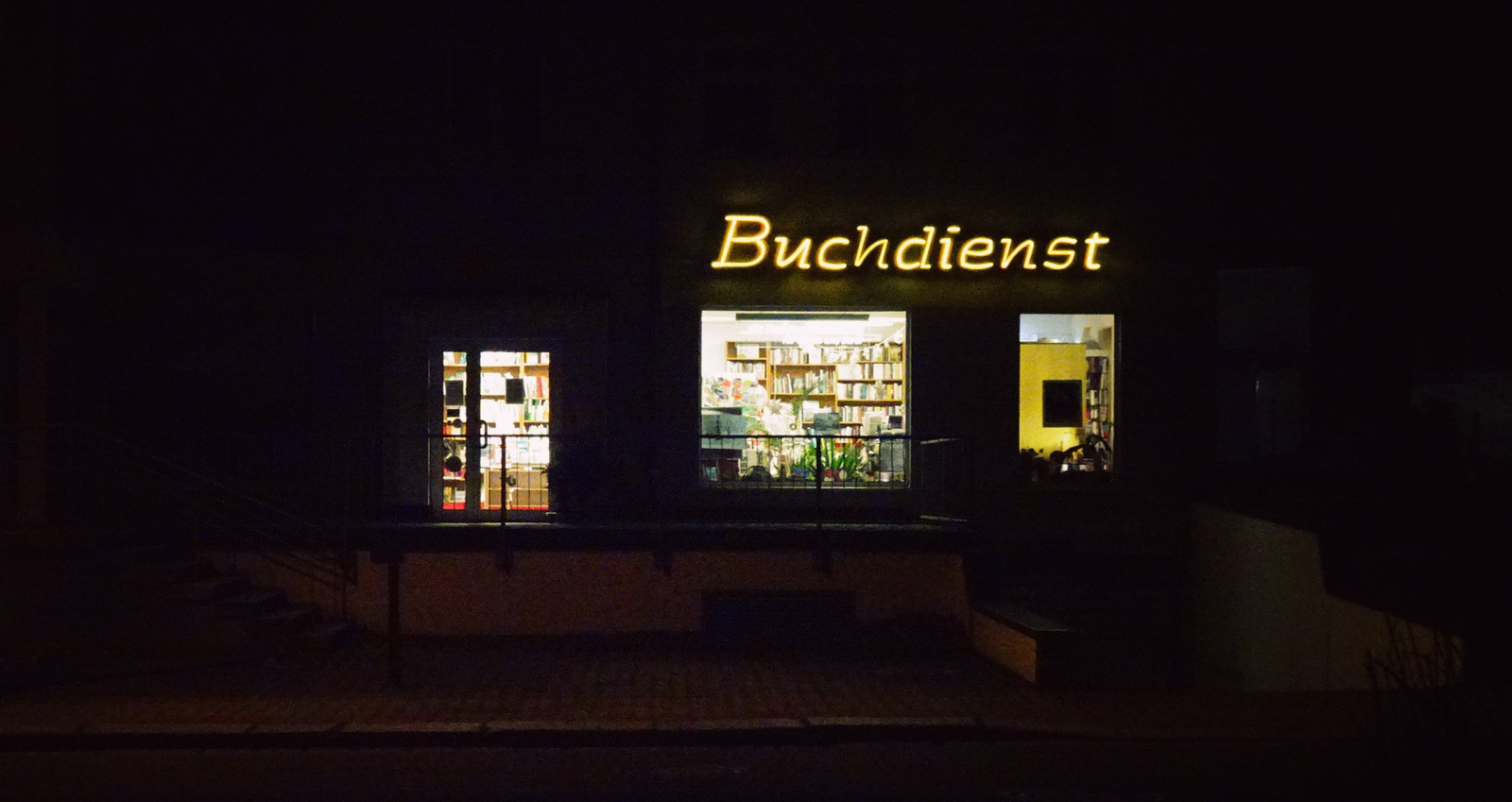
This may not be “beautiful” in the classical kitschy sense, like in Rothenburg or in Marienbad. But I think it’s fantastic that entire neighbourhoods preserve that time, right down to the lettering on the cafés, hotels and bookshops. Walking through Chemnitz is like that feeling you get when you discover a box of old, faded postcards in a second-hand bookshop that remind you of your childhood.
Eastern modernism they call it here, although the West built in a similar style in those euphoric days of the nuclear age. But in the West, it was usually torn down again after 30 years, because, according to Schumpeter, capitalism must always destroy everything.
Chemnitz was already modern even before it became Karl-Marx-Stadt in 1953. I don’t know why Dessau and Weimar and Tel Aviv brag about the Bauhaus architecture and Chemnitz is always overlooked. If you want to experience modernist architecture, Bauhaus, New Objectivity, but also the Gemeindebauas you know it from Vienna, then you will spot a whole number of gems on a walk around Chemnitz.
Or rather, to address one peculiarity of Chemnitz right away, during one walk around town, you will hardly see anything. This is probably the reason why many people, who are only passing through for a few hours, move on disappointed. Because Chemnitz is gigantic! 221 square kilometers, the same size as Bucharest, Amsterdam or Düsseldorf. Larger than Stuttgart, Hanover, Stockholm, Helsinki, Nuremberg, Milan, Copenhagen or Lisbon. More than twice the size of Paris! And these are not cities where you walk around for two hours and think that you have seen everything.
I go for a stroll every day, if only to refine the air of this industrial city with the sweet scent of cigars. And after six months in Chemnitz, I’m still discovering completely new neighborhoods.
Chemnitz is also wonderfully green. The lake below the castle or the city park along the river, also named Chemnitz, invite you to spend the day outside. The cemeteries and the Park of the Victims of Fascism invite you to reflect about history.
Zeisigwald (literally the forest of siskins) is large enough for hours of hiking and dotted with old volcanic cones, hidden lakes and leafy beer gardens.
Küchwald forest with its pioneer railway, an open-air stage and the GDR’s aerospace center reminds me of Akademgorodok. Or at least of Vingis Park in Vilnius.
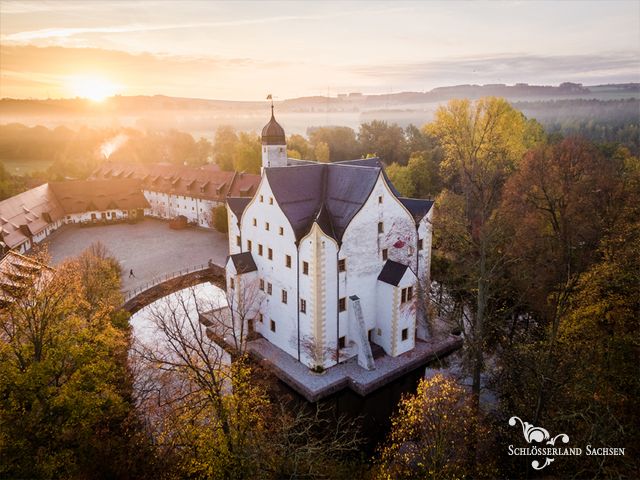
And the suburbs all have their own character anyway. Rabenstein with its castle. Klaffenbach with its moated palace. Einsiedel with the yummy brewery. Adelsberg with its distinctive tower.
I could go into rhapsodies about the whole area, the castles and palaces, the endless forests and the Zschopau valley. The whole region is being included in the Capital of Culture 2025, so you’re almost drowning in ideas for excursions and hikes. It never gets boring here, and the German flatrate for trains (49 €/month) is used to the maximum .
But today, I will stick to Chemnitz itself.
Not knowing where the actual center is, I took a wrong turn on my first visit and ended up in Sonnenberg. This is a wonderful Wilhelminian style district and I couldn’t stop being amazed. Every house is a gem, with elaborate gables, bright and colorful, with ceiling paintings and stucco in the entranceways. Just like St. Petersburg before the revolution, if anyone still remembers.
And the best thing, at least for people like me who are looking for an apartment: In no other city of this size have I seen so many “for rent” notices in the windows. The entire housing market is on its head. This is so relaxing compared to cities like Berlin or Munich, where almost all conversations revolve around extortionate rents and real estate sharks. In Chemnitz, meanwhile, you can easily find something for less than 5 euros per square meter.
I never could have afforded such a large apartment anywhere else.
The mantra that the housing shortage can only be solved by building, building, building looks like it is standing on shaky scaffolding. Maybe there is enough housing, but a distribution problem. Especially for people who work from home or for students, I don’t understand why they absolutely want to live in Munich or Frankfurt, where a large part of their lifetime is spent increasing the landlord’s fortune. Smart students go to Chemnitz, Cottbus or Halle, have a relaxed life and always have enough money in their pockets for parties and holidays. (And yes, I studied in smaller cities myself: Regensburg, Milton Keynes and Hagen.)
And then, Chemnitz has thousands, even tens of thousands of apartments, houses and palaces that you can move into without any rental agreement at all.
Sonnenberg in particular reminds me a lot of the Bronx. Demolished houses. Crack houses. People taking their living rooms out onto the street in summer. The supermarket, called “Netto”, is referred to as the “Ghetto Netto”. The always slightly intoxicated men in front of it don’t gather around burning oil barrels, but they do set fire to cardboard boxes and use an upturned shopping cart as a barbecue grill. And whoever is the first to leave the house in the morning might stumble over a dead body.
If you want something a little more dignified (and can pay horrendous rents of up to 6.50 euros per square meter), you move to Kassberg. This is one of the largest districts of Wilhelminian and Art Nouveau architecture in Europe. Very posh.
For me personally, that’s a touch too bourgeois. And then you probably have snobs for neighbors there, maybe even lawyers. For the first three months, I stayed at a friend’s apartment in Sonnenberg. On the one hand, it was a really exciting area, and I would certainly have found a lot of clients there. But because I prefer studying and writing over working, it was more important that I found a quiet place.
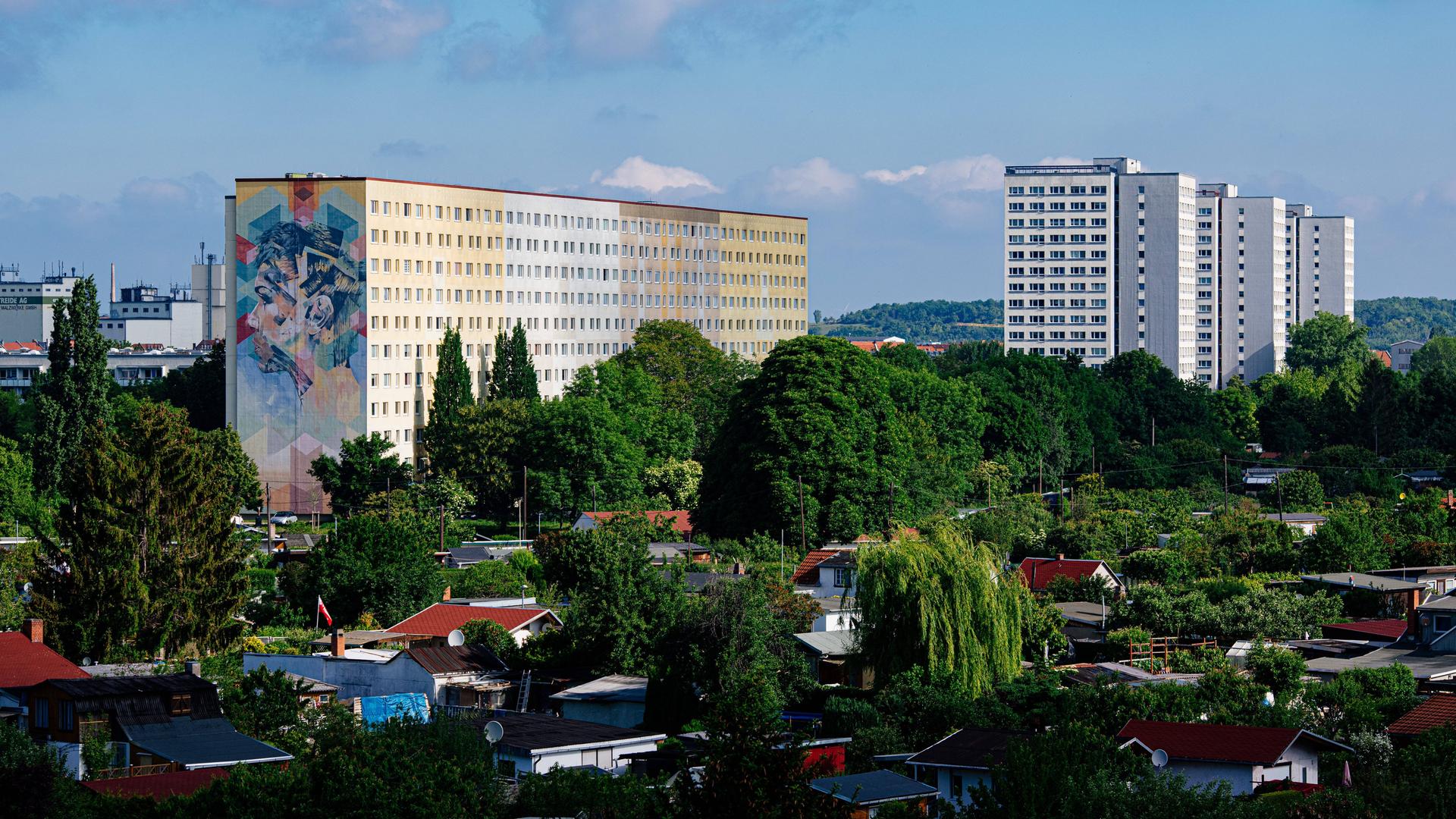
So I moved to the Yorck district. It has such a nice Eastern European charm, with prefabricated buildings, allotment garden colonies and garage estates, which brings back nostalgic memories of my time in Vilnius, in Targu Mureș and in Kyiv.
When you saw the magnificent houses in Kassberg, you probably already assumed: Chemnitz must have been really rich at one time! Indeed it was. Around 1900, railroad construction, mechanical engineering and the textile industry made Chemnitz the city with the highest commercial tax revenue in the German Reich. The city was called “Saxon Manchester”, but also “Soot Chemnitz”.
Ernst Ludwig Kirchner: Chemnitzer Fabriken (1926)
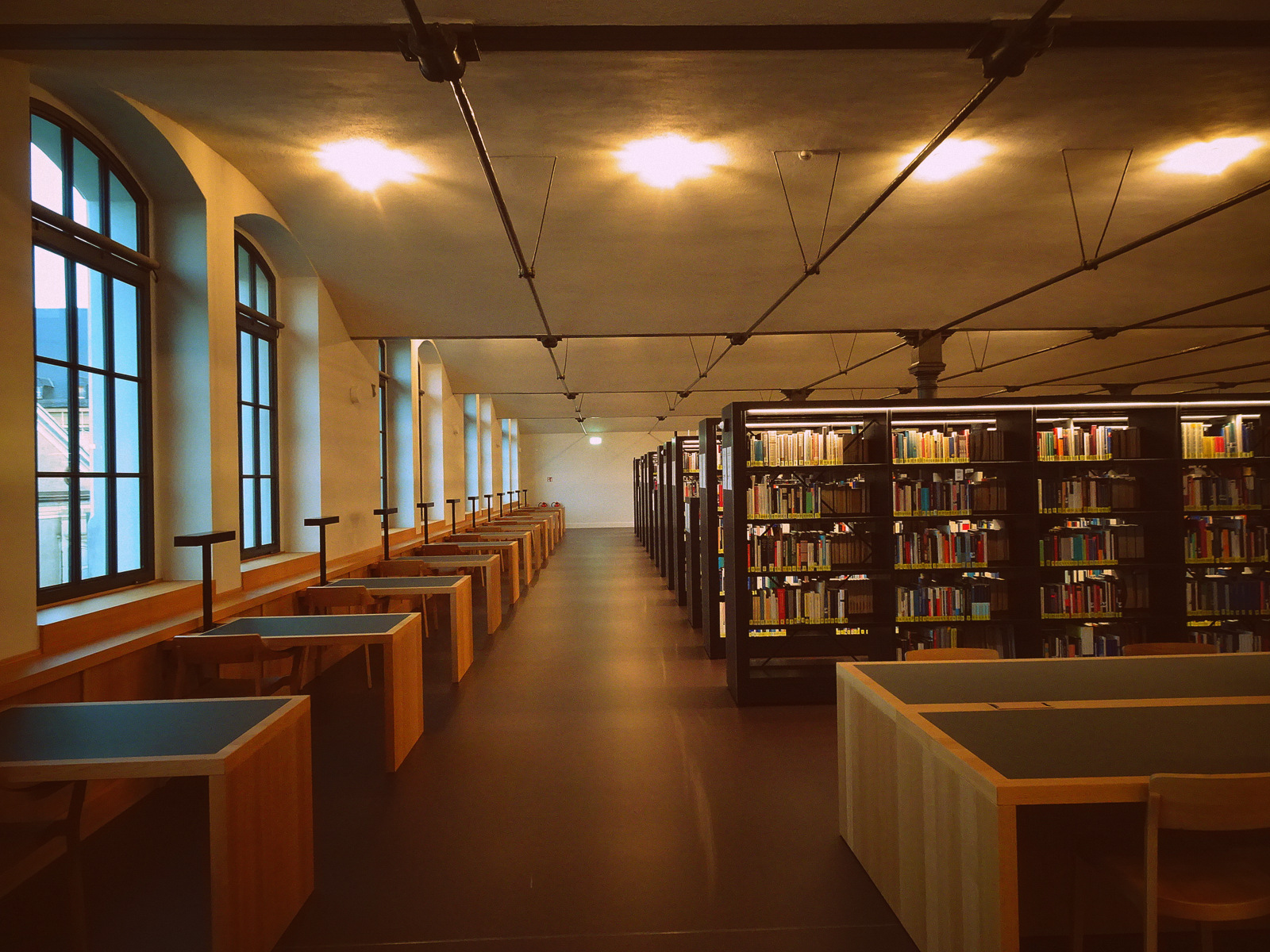
Chemnitz is a paradise for fans of industrial history. Many of the factory buildings are empty and waiting to be discovered by “lost places” photographers. Others are being creatively reused, for example for the state archive, the Stasi records archive, the university library or a coffee roastery.
Walking the short distance from the old factory buildings to the Karl Marx Monument, you could be forgiven for thinking that Chemnitz was the product of an ill-considered, but all the more intense and deeply sincere love affair between Detroit and Pyongyang. And I mean that as a compliment, because such a unique combination is quite an achievement.
But those who appreciate more traditional townscapes won’t be disappointed in Chemnitz either:
I like second-tier cities that are often overlooked. No surprise therefore that Targu Mureș and Cochabamba, along with Vilnius, have been the cities where I’ve felt most at home so far. I also like it when the residents don’t take themselves and their city so seriously and don’t constantly brag about living in the most beautiful city in the world, whether it’s justified (Rome) or not (Munich).
If I praise the city and tell locals how much I like it, at best I am met with a doubtful expression and they ask if I am trying to make fun of them. In the worst case, they say “Chemnitz is a shithole”, in a way that allows no contradiction.
Always tirelessly fighting for the freedom of speech, I nevertheless contradict and list some of the charming aspects of Chemnitz. The locals then ponder for a moment and say something like “we don’t even have a beach”, “our football team is in the fourth division”, “yesterday the bus to Hilbersdorf was five minutes late, the country is totally going to the dogs” and – very popular – “nothing will come out of this Capital of Culture anyway”.
You then realize that those people don’t have an issue with Chemnitz, but are against everything and everyone, against electric vehicles and public broadcasting, against foreigners and mothers-in-law, against the city and the world. I don’t think these people would be happier in any other place. But what I haven’t yet figured out is why there are more grumpy people in Chemnitz than elsewhere. In any case, you really stand out here if you are smiling in public. I wouldn’t be surprised if one day someone will call the cops on me for being too positive.
So, there might be a few more reports from Chemnitz and the Ore Mountains over the next few years. And for those who follow this blog only for the international travels, you needn’t worry! I still have hundreds of stories in the pipeline, from Abkhazia to the Azores, from Estonia to Ecuador, from Sweden to Sicily. And it was precisely for the reason of getting these memories on paper that I finally wanted to settle down in one place for a few years.
I chose the apartment for this view from the desk alone.
Also, the project “Journey to the Center of Europe” will continue. And I have another project on the European Capitals of Culture in mind. As always, too many ideas, too little time. Please keep your fingers crossed that people will get along and sort out their problems themselves, so that I will have less work as a lawyer and more time to write.
Links:
Here, I will henceforth have more articles about Chemnitz.
A lady who already displayed some warning signs wanted me to advise her about a child custody case in Germany. In the following conversation, I am the part in dark blue.
I haven’t heard from her again.
By the way, I am surprised by the number of people contacting me, asking me to get a copy of their own divorce decree, because they lost it. It would be so easy to get it from the lawyer who represented them in that proceeding, from the court, or even from the ex-spouse. Really no need to hire a new lawyer for that.
2.3 million index cards, and that’s only for the district of Karl-Marx-Stadt.
This is one of the many pieces of information I took away from my visit to the Stasi Archive in Chemnitz, as Karl-Marx-Stadt is called today. Even more shocking than the statistics, however, were the methods used by the Stasi, the secret police in East Germany.
Surveillance, wiretapping, spying, arrests, opening the mail (18,000 letters per day, again only in Karl-Marx-Stadt) – we have all heard about that. Less well known is the fact that the Stasi killed people and how they did it. Shooting. Poisoning. Influencing doctors to change the dosage of medication, causing the patient to slowly wither away. Not to forget about all the suicides.
The most perfidious method was “Zersetzung”, literally decomposition and a method of psychological destruction. Sandra Meier, the historian at the Stasi Archive in Chemnitz, who answers my endless questions with truly tireless enthusiasm, explains the connection to the Helsinki Accords of 1975: After the countries of the Eastern Bloc had committed themselves to respecting human rights, the East German leadership scaled back high-profile arrests and criminal proceedings, instead opting for the secret, quiet and silent “elimination” of opposition activists, peace groups, environmental activists, those willing to leave the country, or those who simply did not fit in.
Using “Zersetzung”, the Stasi wanted to break up groups which were critical of the regime by spreading rumors against one or more of their members. The goal was to discredit them, to spread general insecurity or mistrust, or to divide the group, thus rendering it ineffective.
Alternatively, target persons could also be treated in an excessively benevolent manner, e.g. by granting them holiday trips, allocating a coveted apartment or a car. That gave the impression that the person concerned must surely be working for the Ministry for State Security. The same effect was achieved by leaving alone one or two members of a group, when everyone else was summoned or arrested. This naturally aroused the suspicion among the others that those not arrested were Stasi informers.
The Stasi also worked with forged love letters, which the boyfriend or girlfriend of the target person then discovered by chance. Or anonymous gifts. This went as far as forged photos of allegedly cheating partners and fake divorce petitions from the wife, which were shown to the husband while he was in custody. Not only political groups, but also marriages and families were to be systematically and completely destroyed. With serious long-term consequences.
I remember some of the cases described in Stasilandby Anna Funder. It’s a very empathetic book, but some of the stories are so brutal, I had to pause for a few days until I could move on to the next chapter. Nevertheless an important read, maybe especially now that Katja Hoyer’s Beyond the Wall is storming the charts, or however you call that with books.
According to Sandra Meier, such book launches, but especially anniversaries and movies have a crucial influence on the number of people asking to see their own Stasi files. They are usually disappointed, though, that access to the files is not as swift as in The Lives of Others. After about three months, you receive the information if there are any files on you at all. It can take up to a year and a half before you ultimately hold the files in your hands.
Applications for access to the files can be submitted at the head office in Berlin or at one of the 13 branch offices. For tonight’s tour around the archive, only two interested citizens have turned up. Me, because what else would you do for fun, and a 64-year-old man asking for access to his files.
“Why now?” I wonder, because he would have had the opportunity to do so for 30 years.
“I never really had any pressing curiosity,” he says. He knows that he was under surveillance, because he had contact with relatives in West Germany. He was also harassed because he was one of the few who didn’t join the FDJ youth organization and didn’t attend the “Jugendweihe”, a secular substitute for Confirmation. He conveys the impression of someone who is absolutely at peace with himself. He didn’t pretend to be someone who he wasn’t, but he also doesn’t think of himself as an activist. He felt the repression of the dictatorship, but he knows that others have been hit much harder. He doesn’t expect any dramatic revelations, “but the wife said: Come on, take a look at your file before it will be too late.”
Last year, there were still 30,000 applications for access to Stasi files.
Even if you don’t think you have your own Stasi file, the Stasi Archive is well worth a visit. Especially for Westerners who still know little about the GDR. Both the headquarters and the branch offices offer a wide range of educational programs with events, lectures and guided tours.
The branch office in Chemnitz is particularly worthy of a visit, because – as befits the “City of Modernity” – it has moved into a newly designed and futuristic-looking building, which is located inside an old industrial building.
Chemnitz has many beautiful spots, but I am particularly fascinated by all the industrial heritage in this part of the city, along Annaberger Strasse. Even if some of the factories do look like they are not working at full capacity at the moment. At least in my layman’s eyes, not being an industrialist – or even an industrious person – myself.
As you see, for those of you interested in lost places, Chemnitz is a dream destination!
I have noticed that I receive many e-mails with the same questions, so I have started to post the most frequent questions – and of course the answers – for everyone to read. For free, can you believe that?!
As these FAQ and the many comments might already answer some of your questions, I invite you to browse this page before you contact me (or any other lawyer) about your case.
And if you find these FAQ useful or if you ask a new question, it would be nice of you to support this blog. Thank you!
1. We did not get married in Germany. Can we get a divorce in Germany or do we need to return to the country of marriage?
As long as you have some ties to Germany, whether it be residence or citizenship, you can file for divorce in Germany.
You do NOT need to return to Las Vegas, Denmark or wherever you might have gotten married. Although it could of course be a good excuse to do so, if you got married in Fiji, for example. (But still, you would probably want to go with somebody else than your spouse, I guess.)
2. We are both non-German citizens. Can we get a divorce in Germany?
Yes.
As long as one of you has residence in Germany for at least a year, or both of you have residence in Germany at the moment, the German court will accept your divorce case.
However, if you are both foreigners, the German court can apply the divorce law of your home country, if you choose to have it that way.
This is why international family law is much more complex, but also more interesting. Because it requires that I look at the different laws in play and decide which one to pick. Often, they are rather similar and it doesn’t make a difference. But just as often, they differ greatly, and you might be better off by opting for foreign law.
It’s a neat combination of filing for divorce in Germany, but using the laws of your home country. Especially as foreign citizens can also qualify for legal aid in Germany, which means that the government will pay your lawyer if you cannot afford to do so.
3. Will my home country recognize the German divorce?
That depends on your home country, of course.
But if minimum requirements of due process are kept (such as giving the other party time to respond and letting them know of the court date in due time), most countries fully recognize German divorces and other court orders.
Obviously, before I take on your case and file for divorce in Germany, I will check if your home country will recognize the outcome.
4. What are the requirements for getting a divorce in Germany?
If the court applies German law, you only need to show that you have been separated for one year. You do not need to explain why you split up, who did what, and who is to blame. This one-year separation requirement can also be met if you still live at the same address. You are just not supposed to live as husband and wife any longer, if you know what I mean.
This enables a couple who both want a quicker divorce to file way before the one year of separation by simply claiming that they have been separated for one year. If both spouses stick to the story, the court is not going to find out about it and will grant the divorce. (I have never ever had a judge doubt this. After all, they also want to close the case as quickly as possible.)
5. I am not yet separated for one year and my spouse won’t cooperate, but I still want a quicker divorce. Any chance?
There is a way around this requirement for foreign citizens residing in Germany. Because you can opt to choose the divorce law of your home country, which may have a shorter or no separation requirement at all.
Alternatively, you can try to argue that remaining married would pose an undue hardship. The courts only accept this argument if your spouse has committed criminal acts against you or is constantly harassing or cheating on you. Usually though, these cases become so messy that the whole process takes over a year and you might as well have waited for a simple no-fault divorce.
6. How long does a divorce proceeding take in Germany?
If both of you live in Germany and you file for a simple divorce (no child custody, no financial claims), it usually takes between 4 and 6 months. If you argue about custody and visitation for your children, about child support and alimony, about your house and your pension, it might easily take a few years.
If your spouse lives in another country, getting him or her served with the paperwork is the main issue determining the duration of the divorce process. This could mean another few months if we need to get somebody served in the European Union or in North America, or up to a year if you need to get somebody served in Afghanistan. However, if your spouse is cooperative, this can be sped up considerably.
7. Do we both need an attorney?
No. Only the spouse who files the petition for divorce needs an attorney. The respondent does not necessarily need an attorney if it’s an amicable divorce.
Sometimes, spouses even show up together, asking me to take care of their amicable divorce. I can only represent one spouse officially, but if he/she is fine with the other spouse sitting in, then so am I. No other attorney is needed in these scenarios and you can split the lawyer’s fees.
8. Can I file for divorce without knowing where my spouse lives?
If all of this will yield no result and we can show all the research we have done, then the court will go ahead without the other spouse participating.
9. I would like to have an annulment instead of a divorce.
You need to have a very good reason for that: Either you found out that your spouse is already married to somebody else. Or you can prove that your spouse lied to you or failed to disclose important things that would have prevented you from getting married to him or her, had you known about them (e.g. your spouse has a lethal sexually transmittable disease and did not tell you).
Without very good reasons (and the evidence to support them), it’s virtually impossible to get an annulment from a German court.
10. How soon after a divorce can I get married again?
Whenever I hear that question, I would like to ask “Didn’t you learn anything from the last relationship? Why don’t you enjoy single life for a while?”
But the client is king, and no question remains unanswered: After the court grants the divorce, both spouses still have one month to appeal. Unless both of you waive their right to an appeal at the divorce hearing, you will have to wait one month before you can get married again.
CAVEAT: In a complicated legal field like international family law, there are thousands of possible constellations. It would be impossible to write these FAQ in a way that would make them apply to all scenarios. These FAQ were written with “standard” cases in mind, which constitute the large part of requests that I receive. They might not be applicable in unusually complex cases. To find out where your case is on the complexity scale, some common sense will help: If you are two foreign nationals who moved to Germany, or you are a foreign national married to a German citizen, these FAQ should give you some pretty good guidance. If on the other hand, you are a dual citizen of Ecuador and the USA and got married in Cyprus to a dual citizen of Germany and Israel after you signed a prenuptial agreement in Switzerland, which also governs the fate of your corporations in Russia and Turkmenistan, and you have two children in school in Australia, plus an adopted child from Zambia, you know that these FAQ cannot possibly address your situation. In that case, you better book a proper consultation with me.
All of Germany likes to complain about its capital city. It is often hard to tell whether it’s genuine disgust, secret envy or simply the national pastime of nagging. Those with the strongest opinion of Berlin, calling it a monstrous Moloch, a den of iniquity or the world capital of chaos, have probably never been to Berlin themselves.
Curiously, though, Berliners are also complaining all day long. In this case, the loudest voices come from those who have never left Berlin and believe that everywhere else in the world, every bus is always on time, that you obtain passports, driving licenses and building permits in one day and without any hassle, or that in the rest of the country, all roads and bridges repair themselves overnight, without construction sites and detours, without budget overruns or delays.
Berlin, as imagined by people not living in Berlin.
I myself am not a big city person, really. But whenever I spend some time in the largest city in the European Union, I am actually positively surprised. And as the bearer of good and cheerful news, as the optimist-in-chief, as the champion of truth and beauty, as whom you have gotten to know me, I want to invite you to join me on some of my walks around Berlin.
Relatively unknown, there is a network of paths, routes and trails in Berlin where you can get a completely different impression of Gotham City. Green Walks they are called, and there are twenty of them. For a total of 550 km, these routes wind their way across Berlin, mainly through green spaces, in forests and along waterways.
I don’t know how many of them I will manage to walk. After all, I also have other travel plans (Babylon, Baghdad, Bishkek, to name just a few). And some of the trails are a bit long, up to 63 km, like the Green Walk No. 1 (River Spree Trail).
On the other hand, and this is the beauty of Berlin and the Green Walks, you can take a break at any time, get on the bus or train, go home, and continue hiking the day or the weekend after. And for in-between, there are some short trails, starting at 7 km, like the Green Walk No. 20 (Bullengraben Walk).
For the first walk, I chose a route that lies between these two extremes: The 33 kilometers of the Green Walk No. 2, the Spandau Walk. On my German blog, I have a detailed report about this absolutely beautiful hike (part 1, part 2). I am terribly sorry for my international readers, but for these long articles, I just don’t find the time to write English versions anymore. :/ – As unsatisfying as online translations are (DeepL is still better than the others), I recommend that you get a subscription of my German blog and have it translated in your target language. You will definitely get the gist of it – and all the wonderful photos.
Honestly: I was absolutely blown away! I was of course aware that Berlin is greener than Dubai or Los Angeles. But I really wouldn’t have guessed that you can walk for kilometers through nature, without seeing a single other human being. A long, very varied and absolutely worthwhile trail.
The idea for the Green Walks is an old one, by the way. The urban planner Hermann Jansen had already included them in his plans for Greater Berlin, which was established in 1920. Unfortunately, a few things happened right after the founding of the city: Inflation, depression, National Socialism, World War II, the extensive destruction of the city and the division of Berlin all got in the way. Thus, the project was not realized until 1994.
Those among you who know this blog will already have guessed: On the walks, we will encounter all of these dramatic historical incisions. Because walking with me is never straightforward, but always a wild to and fro across the centuries.
With that much to write about, I particularly appreciate the quiet places where you can pause, think, write and smoke.
Two weeks in Israel, five different hostels/guesthouses, with the most different experiences. At the last one, Al-Yakhour-Hostel in Haifa, I realize, painfully, why there is a horror movie called “Hostel”.
And it had begun so well: a beautiful old Templar house with spacious, bright rooms. Excellent location in Ben Gurion Street, just below the Bahai Temple. Modern and clean toilets and showers. A large kitchen. Sofas in the garden. A friendly welcome from the nice Arab boys who opened the hostel only a month ago. And – always the best hostel surprise, which I already experienced several times during this 2015 trip in Israel – I have the four-bed room to myself. A single room for a quarter of the price. Even more important than the savings is the guarantee of a night I can sleep through. No snoring roommate keeping me awake (as experienced in Jerusalem and Tiberias), no Erasmus students coming back late at night and announcing their return at the highest volume (bad memories of the shared apartment in Bari still haunt me).
But I made the calculation without the all-around-the-clock service of Al-Yakhour-Hostel: the non-sleeping guarantee is included in the price. Coming home from an early evening walk, I can neither use the promised kitchen, nor the lounge with library, where other guests are lounging. But they obviously don’t pay $ 31 per night like me, instead relying on their friendship, acquaintance, kinship, existing or incipient relationship to the operators of the hostel. I am either not noticed at all, or with a “what-does-the-stranger-want-here? look.”What does the stranger want here?”-look.
The big room is being decorated with garlands. A birthday? The anniversary of the Nakba? A suicide bombing? Hopefully a once-in-a-lifetime event, not a regular occurrence every night.
So I’m going out again and find myself a pizza joint. I generously give the young people a few hours and don’t return until just before midnight.
But upon my return, the hostel has degenerated into a disco. Boys and girls are dancing, drinking, boozing, bawling, singing. A laptop is playing Arabic music so loud that the neighbors in Lebanon can hear it.
How am I supposed to fall asleep with this? Maybe it’s my fault that I didn’t bring earplugs, but they wouldn’t do much good. Because noise isn’t the only problem. With each bass, the iron frame of my bed shakes. Even if I bury my head under the admittedly soft pillow, the movements of the whole barn are so strong that they probably register as an earthquake at the seismological station.
I do understand that people want to celebrate, – well, honestly I don’t understand it, but you have to be tolerant of other lifestyles – but if you charge money, renting a room to someone to sleep (!), then you shouldn’t actively prevent the customer from achieving the contractual purpose.
Shortly before 1 o’clock, I demonstratively go to the kitchen to pick up my bottle of iced tea from the fridge. I stop for a while, looking around (attractive girls), wearing an expression between angry, surprised and reproachful/uncomprehending (you have to know me to fear it) and hoping for a reaction, whether it be an apology, an explanation, an invitation, the acknowledgement of my (paying and thus financing the whole binge) presence or – my biggest wish – turning down the volume. None of these things happen. Not a very thoughtful bunch of young people.
I retreat to the room, not yet giving up the hope that the latter of my goals will come true with a little delay. Instead, it is getting louder. The singing of the drunkards is already drowning out that of the singer moaning from the YouTube video.
At 1:45 in the morning, I have had enough. Either I will put an end to the improvised Woodstock or I will at least use the sleep deprivation to write a review of the hostel. With these two goals in mind, I walk down into the kitchen again, notebook and pencil in hand. The kitchen is empty at the moment (everyone is in the disco room or outside). I pour myself a glass of Jaffa orange juice, sit down at the big dining table and start writing these lines.
Those who want to go to the fridge have to pass in front of my eyes, firing the above described look, maybe even angrier now, at each of the beer collectors. Until one of the young guys running the hostel walks through the kitchen, grins at me and says “Hi” as if everything is hunky-dory.
With a decidedly frowning look, I ask: “I hope it’s not that loud every day?”
As if he hadn’t noticed the complaint, he replies: “No, only on Fridays.”
I explain to the, according to their brochure, “knowledgeable staff” that today is Thursday.
And this information about the calendar really works miracles! After a few minutes, the music stops and over the next 45 minutes, the guests are departing, alone or in pairs. They all have to pass through the kitchen in front of me. One boy says, with venom in his voice: “Now you have it quiet”, as if the wish of a paying guest to sleep at 2 o’clock has destroyed his youth. Only two girls politely wish me a “good night”, but they too look at me as if I was a spoilsport, a grandfather or a strange oddball.
I am sitting at the kitchen table alone, but with more than two dozen empty bottles of Becks beer. Next to them, there is a brochure about Palestinian “Life under the Occupation”. The irony that their comrades in the Gaza Strip are not allowed to drink beer not because of Israel, but because of Hamas, is probably lost on these young people.
The next morning, the music is loud again. The little sister of the big party from yesterday is already in full swing. And now it’s really Friday, so tonight will be unbearable.
But here comes Farid and apologizes sincerely. For the remaining nights, he will transfer me to a soundproof house next door, which is actually reserved for families traumatized by incoming missile fire, and which costs $ 130 per night. I will have it all to myself and for $ 31 a night. And I will sleep really well.
Do you know those itchy-scratchy maps that people have in order to show off where they have been?
I always find them a bit misleading, especially when someone has been to Saint Petersburg on a cruise once, and then they mark 11% of the world’s land mass as “visited”. Or people who have been to Yugoslavia in 1984 and now check all seven of its successor states.
Granted, when I say that I have been to 66 countries or so, it also includes those where I merely changed trains and loitered around for a few hours. That’s why I never take these lists and competitions serious.
For each country that you have ever set foot in, you can award yourself between 1 and 5 points, depending on the depth of your experience. Obviously, that’s still subjective and I have seen some people be rather generous with what constitutes “staying” or “living” in a place. I myself have applied these terms quite conservatively, and I currently score 132 points for Europe.
The most depressing thing is that there are still blank spots on my own continent, after years, in fact decades of traveling.
To my great shock and dismay, I have also noticed that I still haven’t been to any new country in 2023. Nor in Europe, nor anywhere else. Obviously, I can’t allow the year to end like that.
So, for Christmas I have to go to either to
Norway (too expensive),
Finland (too dark),
Ireland (I would really prefer to visit in summer, because it looks like a lovely place for hiking),
Andorra (I think they have snow there, too),
San Marino,
Bosnia and Herzegovina,
Bulgaria,
Belarus,
or Iraq.
For what will be a trip of not more than two weeks, I really don’t want to fly. I am one of those somewhat environmentally conscious people, you know. I guess I could also take a ferry to
Cyprus or
Tunisia.
From the latter, I could then even hitchhike to Libya. That would be more in line with some of my previous Christmas trips, which have taken me to Iran, Lebanon and Syria.
I know it’s silly to stick to the at-least-one-new-country-per-year rule, because it would be just as exciting to get to know Asturias, Moravia or Bukovina. But as someone who regularly reneges on all his other resolutions, from dieting to exercise, from studying to writing, I should at least hold this last line of defense.
So, now I am asking for your thoughts, especially if you live in any of the countries mentioned. And if you have a couch, you might even make a new friend. ;-)
For reasons of global inequality, the majority of this blog’s readership is located in the northern hemisphere, where they are currently suffering from the summer heat, fleeing forest fires, or – depending on their worldview and personal priorities – simply happy that the golf course is still getting enough drinking water to keep the lawn green.
Not everyone is a Karl May, who can just make up wild stories. Or a Karl Marx. But that’s another topic, albeit one I might return to soon, because I’ve recently settled down in Karl-Marx-Stadt for the foreseeable future. Due to apartment hunting, moving stress and similar petit-bourgeois nonsense, there was also a noticeable lull on the blog this summer. But now, it’s time to put away hammer and compass, and pick up the pen again.
So, while it’s 35 degrees outside (and even more for those who think that Fahrenheit is a useful measure), I have dug up another refreshing expedition to a cooling place for you. Even in summer, Wrangel Island rarely gets more than zero degrees.
“Wrangel who?” you are asking, prompting me to go back in time, not only by the one hundred years promised in this series, but by two hundred years to start with. Because it was in 1823 that the history of this island began, at least discounting for such boring disciplines as geology, prehistory or paleontology, which would even put a polar bear asleep.
Ferdinand Baron von Wrangel was one of those Baltic Germans whom I have already introduced in another (and unfortunately more bloodthirsty) episode. He worked as a geographer, explorer and surveyor for the Russian tsar, who wanted to know more about Siberia, especially if there was anything useful (gold, wood, fur) to be found between all the useless stuff (snow and ice).
Now, I would ask you to pause for a second and think about the great explorers and their voyages that come to mind. You will probably remember Christopher Columbus, James Cook, Alexander von Humboldt, Vasco da Gama, Henry Morgan Stanley, Hernán Cortés, Roald Amundsen, Ernest Shackleton and all their voyages around the oceans, the search for the Northwest Passage, the marches to the South Pole, the conquest of America, Africa and Australia, but I am certain that Siberia will remain a white spot on your mental map. (Alexander von Humboldt’s expedition to Russia and Siberia is largely unknown even in his home country.)
But after the Middle Ages, Russia was just as much a colonial power as most other European powers. Except that it didn’t need to send fleets overseas because it had the world’s largest landmass right next door, just waiting to be conquered, plundered and subjugated.
Another difference with Portugal, Spain, France, Great Britain, the Netherlands and Germany is that in Russia the colonial attitude still determines foreign policy to this day.
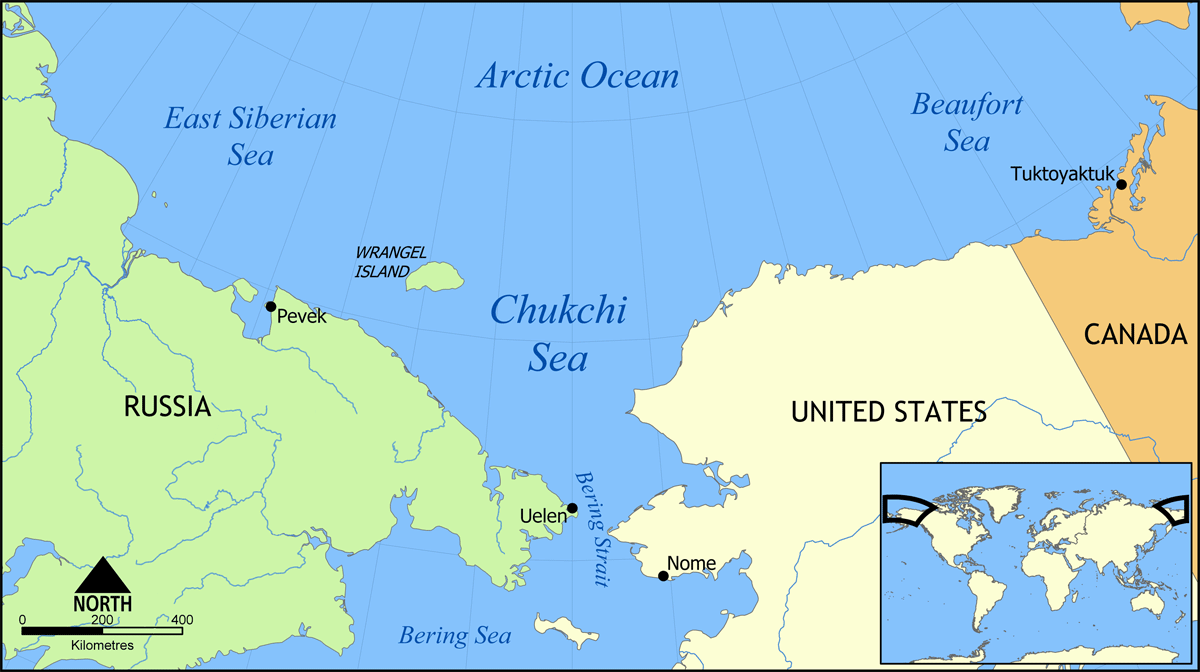
On the map of Russian expansion, you can already spot Wrangel Island in the upper right corner. However, Baron von Wrangel could not see it in 1823, because either the weather, the sea or his mind was too foggy at the time. But while mapping the coast of Siberia, the local Chukchi people told him that there was an island to the north of Siberia. This was confirmed by bird flight, because birds usually do not senselessly and pointlessly fly into the Arctic Ocean, but towards an island where they can take a rest and grab a bite. Birds are pretty clever creatures.
One always wonders how the Polynesians, for example, were able to discover tiny Easter Island in the huge Pacific Ocean. But actually, all you have to do is surf around on the sea until you see flocks of birds. You follow the birds, and swoosh, you’ve discovered an island with mysterious statues and can henceforth make a living from tourism.
That reminds me that I still haven’t gotten around to write the full story about my trip to Easter Island. Maybe in November, when it will be grey and cold and miserable, and you will be longing for the sun and the South Seas. As a countercyclical traveler, I should also write countercyclically.
Baron von Wrangel never saw the island that was named after him. But before you want to pity him about this, don’t worry, he still had an exciting life. He sailed around the world several times and became Governor General of Russian America in 1829, later an admiral, Minister of the Sea and all sorts of scientific jobs.
Yes, you read that right: Russian America. And it’s quite logical, in a way. Once you’ve colonized all of Siberia, you won’t be stopped by a small Bering Strait, and you’ll conquer the next continent. Like the other colonial powers with their East India Companies, Russia established the Russian-American Trading Company, privatizing profits while socializing costs, and allowing a state within a state to emerge that put politics before the cart of its financial interests. (Much like Wall Street.)
It is well known that Alaska was Russian until it was sold to the United States in 1867. Less well known is that the Russian-American Trading Company also had a base in California: Fort Ross, which you can still visit today.
In 1841, Fort Ross was not sold to the USA, but to a Mr. Sutter from Switzerland, who established something like a private colony, called New Helvetia. But at least the older ones among you already know this story, which sounds suspiciously like Karl May, from the movies. Oddly though, in the film, the Swiss gentleman becomes German. The German movie industry must have been on some weird propaganda trip in the 1930s.
Even fewer people know that the Russian-American Trading Company wanted to annex Hawaii and established several bases there. Once again, a German was significantly involved. German-Russian cooperation for the subjugation and division of the world really has a long tradition. Therefore, please do not be surprised if at some point the Russian Pacific fleet appears off Hawaii and says: “You have always been Russian, and therefore we must bomb you into submission.” Strange logic that, bombing and killing the people who supposedly belong to one’s own country or people.
Therefore, let’s quickly return to the good old times when everything was happy-hunky-dory and all people were brothers.
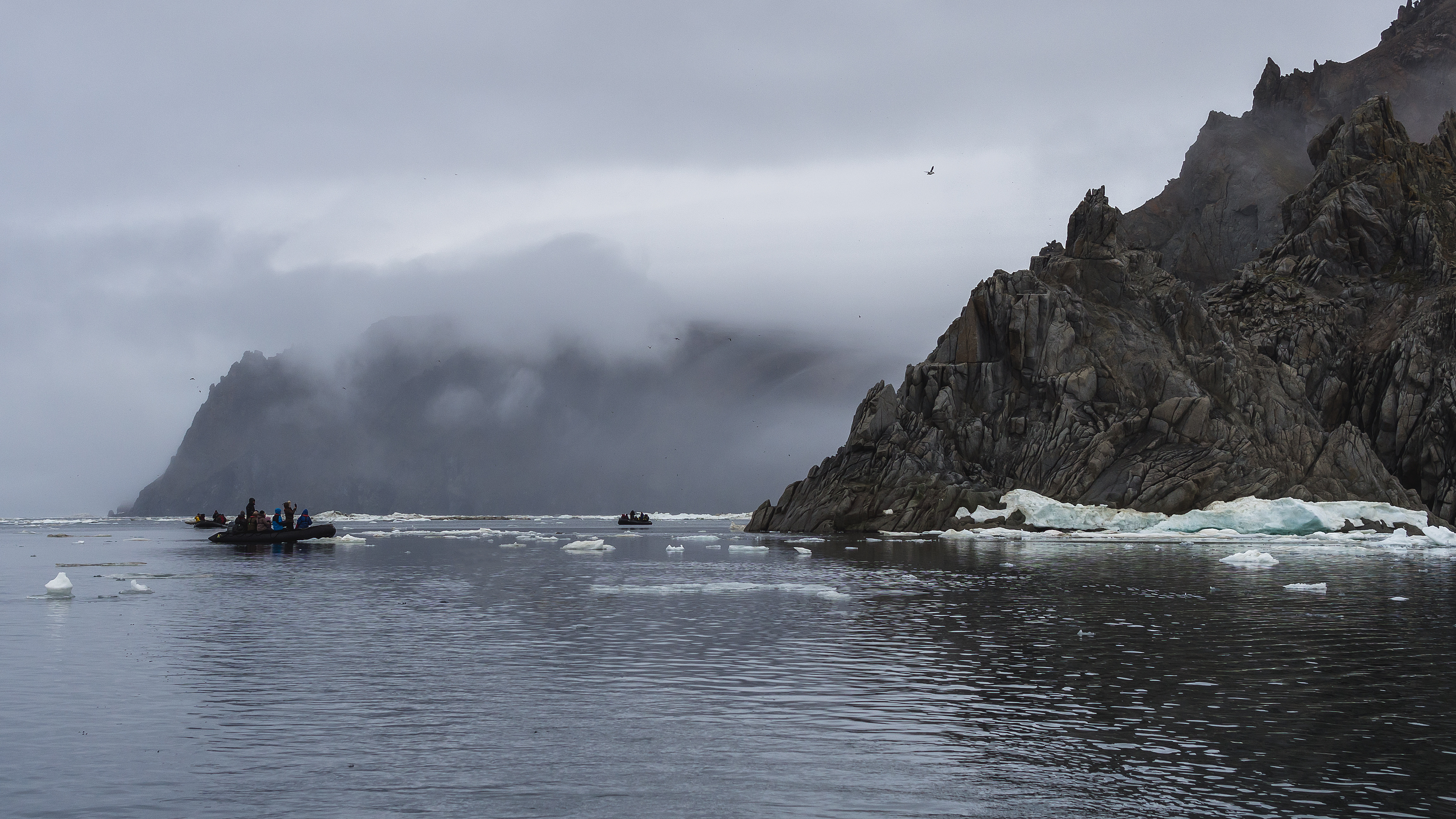
Wrangel Island was sighted several times by whalers or explorers. The coast was mapped. From 1881 at the latest, people also set foot on the island. But nobody wanted to hang around longer than for a glass of grog, because the island didn’t really look that inviting. It’s Siberia, after all. Only further north. And surrounded by ice-cold water.
Not an island worth fighting over.
Especially not between countries that already have millions, if not billions of acres of vast and empty land. The 3,000 square miles of Wrangel Island aren’t quite nothing, but from the point of view of the United States, Canada, Russia or the Soviet Union, you wouldn’t think that they could work themselves into a frenzy over something the size of Rhode Island.
Well, then you don’t know the great powers very well.
They are as quarrelsome as bored pensioners with a grandson in law school.
The first move was made by Captain Calvin Hooper, who set foot on the island in 1881 and rammed a U.S. flag into the ground. Hooper may have been a good captain and a nice chap (I have no information about this), but he was not a scholar of international law. Otherwise, he would have known that it takes a bit more than a windy flag to take possession of islands.
But he probably wasn’t that serious, because neither he nor the United States Navy returned to the island in the decades that followed. Instead, a Russian icebreaker came by in 1911, piled up a pile of rocks, and then moved on. That doesn’t win you an island in the long run, either.
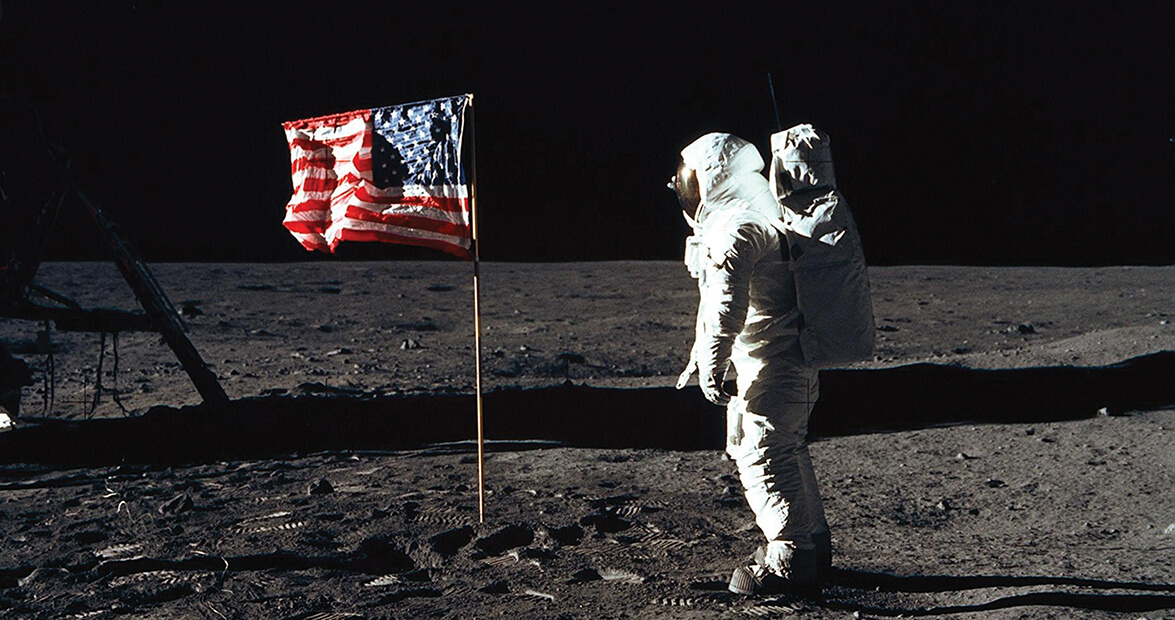
No, you can’t make the moon American like that.
The next visitors came unintentionally. In January 1914, the Karluk, the flagship of the Canadian Arctic Expedition, sank. The castaways made it to Wrangel Island. The captain, Robert Bartlett, together with a colleague, set out on foot for Siberia (the sea was frozen over, after all), and from there another 1,100 kilometers through Siberia to the Bering Strait, still on foot, to find a ship to Alaska.
From there he sent a rescue ship to Wrangel Island, and when you see the King & Winge, it becomes clear why many of the Arctic expeditions of the time ended with ships crushed in the pack ice. But this time, the rescue mission was successful, at least for those who survived the nine months on Wrangel Island.
The leader of the Canadian Arctic Expedition, Vilhjálmur Stefánsson, had a very bad character trait which, absurdly, some people, especially those working in HR departments, consider a positive one: He was ambitious.
As the majority of his posse had survived on Wrangel Island, he thought: “I might as well take possession of this island for king and country!” The country was Canada, the king was British, because Canada at the time was not yet truly independent. – As far as I know, Canadians still believe in the British king. I have a friend who has been living in Canada for ages, but he refuses to apply for Canadian citizenship, because then he would have to swear an oath to the king. Personally, I think that’s a bit pedantic; especially since he’s British. So he already has the king on his hands anyway, whether he wants to or not. That is what a monarchy is all about, after all.
But back to Stefánsson. In 1921, he organized an expedition, this time with the explicit goal of not becoming shipwrecked, instead landing on Wrangel Island with full intent and to live there for a year and thus take possession of the uninhabited island for Canada. Granted, this was a better plan than the earlier excursions, which only briefly stuck a flag in the snow and then departed again. At least in theory.
Stefánsson gathered four young men (Allan Crawford, Frederick Maurer, Milton Galle and Errol Lorne Knight). All of them under 30, fresh out of college and just as ambitious as the expedition leader. They had probably been at McKinsey or Boston Consulting Group together.
Because the Canadians and Americans were, of course, to conduct highly important research, they could not under any circumstances engage in mundane activities such as hunting, cooking or sewing tents and winter clothing. For that, Stefánsson hired some Inuit families, of whom he thought: “They live in the ice anyway, they will know what to do.”
When the whole troupe gathered in a port in Alaska on 9 September 1921 to set sail on the Silver Wave, there were two surprises.
First surprise: The Inuit immediately realized that they were dealing with a bunch of inexperienced snobs, that the equipment was inadequate, and that in case of food shortages, the plan seemed to be that the Eskimos would serve as food for the white folks.
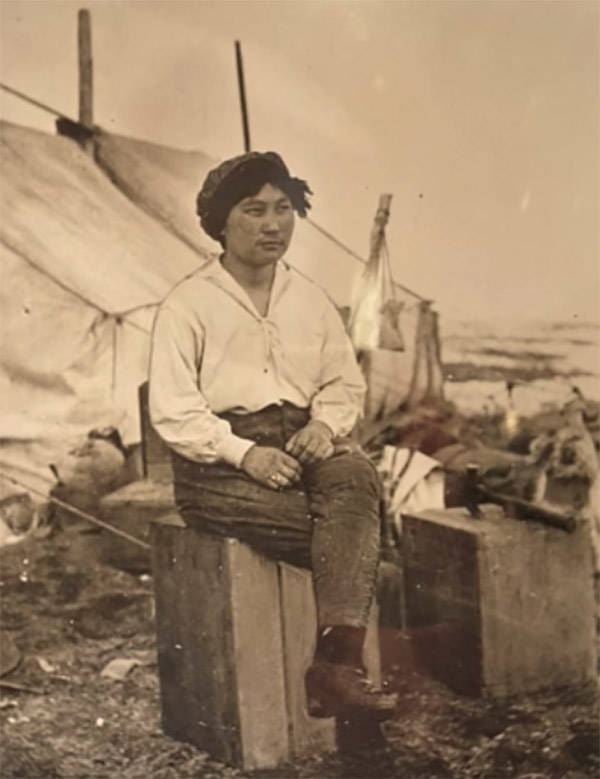
So, at the last minute, the Inuit withdrew. With one exception, a 23-year-old woman named Ada Blackjack. She was widowed, had a son with tuberculosis, and knew that without the monthly expedition salary of $50, her son would probably die. Because Ada Blackjack could cook and sew, the explorers thought: “Well, the girl will do. This way we’ll even save the money intended for all the other guys.”
Second surprise: In port, the great expedition planner Stefánsson told his men that unfortunately he could not accompany them – “too much work at the office, you know”, – but that he would visit them next year with another ship, possibly even pick them up.
Maybe I’m a little oversensitive, but for me, that would have been one giant red flag!
Not so for our young heroes, which is why the four men and one woman went off on their own. (Plus the ship’s crew, of course, but they wouldn’t stay on the island).
Oh, and on the voyage, there was the third surprise: They were supposed to stay on Wrangel Island for one year, but they only had food for six months. To save money, clever Mr Stefánsson had planned that the Inuit would hunt enough animals for everyone to live in luxury. Except that the hunters hadn’t come along.
On 16 September 1921, the four men and Ada were abandoned on the island. The captain promised to come back in the summer of 1922 to check up on them. All they would have to do was to get through one year of cold and isolation, “for king and country”.
In the beginning, things didn’t even go badly. They built tents for themselves and traps for the local fauna. The men learned to hunt – willy-nilly, because Campbell’s tomato soup soon becomes very boring. Ada cooked and sewed furs and blankets from the skins of seals and foxes – they didn’t dare touch the polar bears, though. For entertainment, they invented a card game, which they named after their cook.
The winter of 1921/22 was hard; as was to be expected. But, like in life, you can survive the coldest winter when you know that next summer the redeeming ship will appear on the horizon.
By now, you can probably guess what the next surprise was. The summer of 1922 was exceptionally cold. The sea around Wrangel Island did not thaw, even in summer, and the rescue ship got stuck in the ice somewhere along the way.
“Surely just a little delay,” the four men and Ada thought in August 1922, waiting for September.
“Maybe they will come after the summer holidays,” the four men and Ada thought in September, waiting for October.
“It is probably taking them longer because they had to rescue someone else on the way,” the four men and Ada thought in October, waiting for November.
“Maybe they want to surprise us for Christmas?” the four men and Ada thought in November, waiting for December.
“Or for New Year’s,” the four men and Ada thought in December, waiting for January.
“Screw it, I don’t think anybody will ever show up,” the four men and Ada thought toward the end of January 1923 and decided to walk to the Siberian mainland. It was winter, after all, and the sea was frozen over.
Like here in Lithuania.
However, one of the men, Errol Lorne Knight, had fallen so ill that he was no longer fit to walk. He was suffering from scurvy, a deficiency disease that predominantly affects North Americans if they do not regularly consume fast food, fat and sugar. – Well, our merry band of explorers should have gone to the McDonald’s Islands instead, haha.
In such exceptional situations, it helps to have a clear moral compass. For the other three men, it was therefore immediately clear: “Ada, you stay with the terminally ill guy, and we’ll get out of here.” Of course, they also promised Ada and Knight that they would get help, but everyone had heard that promise more than enough. That’s like me promising to “take care of it this week” when you call or e-mail me. You might as well wait for the next ice age.
Because Knight could no longer get up, Ada now had to go hunting all by herself. For lack of experience, she often caught nothing at all for days, and then only a rabbit. Despite absolutely insufficient food intake and although Knight lay on the couch all day like Al Bundy, Ada was able to nurse him through another five months. It was not until 22 June 1923 that he died.
Crawford, Maurer and Galle, the three men who had made their way to the mainland, died as well. However, no one knows where or when or how. They disappeared, and ain’t nobody never found no shred of them.
Ada Blackjack was now all alone in the Arctic Sea.
You may have noticed it above in the group photo. If not, take another close look:
Exactly! The men, who otherwise got nothing right and did everything wrong, had made one correct decision. In good seafaring tradition, they had taken a cat with them.
The cat’s name was Victoria and she was extremely sweet, cute, kind, smart, cooperative, funny, sensitive and generally the perfect companion in all situations. In addition, she proved to be very adaptable and resilient, motivating the humans, who otherwise would have long ended their misery, to stay alive and keep going.
Indeed, it must be stated unequivocally: Without the cat, Ada would not have survived. And all the expeditions that failed before and since – whether in the Arctic or Antarctic, in the Himalayas or in outer space – probably lacked a cat.
And so, Ada and Victoria held out until 20 August 1923, when the Donaldson finally arrived to pick up the two sole survivors after almost two years in the ice.
Because the Donaldson thought she would find a prosperous Canadian colony, she had immediately brought along a slew of new settlers. Charles Wells and twelve Inuit climbed off the ship cheerfully and – were people really that stupid back then? – were not discouraged by the fact that everyone but Ada and the cat were dead.
And Stefánsson, the unlikable organizer of the whole mess? He claimed that the island now belonged to him – not the king – and sold it.
Pretty cheeky, you might think. Until you think about it a bit and realize, together with Jean-Jacques Rousseau, that all of capitalism is based on this cheekiness:
The first person who, having enclosed a plot of land, took it into his head to say this is mine and found people simple enough to believe him, was the true founder of civil society. What crimes, wars, murders, what miseries and horrors would the human race have been spared, had someone pulled up the stakes or filled in the ditch and cried out to his fellow men: “Do not listen to this imposter. You are lost if you forget that the fruits of the earth belong to all and the earth to no one!”
Fortunately, in the meantime, just around the corner from Wrangel Island, a country had emerged that wanted to reverse this misguided idea. In the course of that, it sadly took its own many misguided paths. The Soviet Union renewed a claim to the island that had already been made by Tsarist Russia in 1916, this time not for king and country, but for the workers, peasants and soldiers.
The USSR sent the ship Red October (not the one from the movie) in 1924, told the Americans that the fun was over and got them off the island. And then the Soviets did the same nonsense as the Americans and Canadians before: They sent colonists to the island, left them to themselves again for years, because the supply ships couldn’t get through the ice.
But the Soviets made one additional mistake: They didn’t bring a cat.
That’s why the governor of the island, Konstantin Sementchuk, went crazy at some point in the 1930s and had all the other inhabitants murdered, persecuted, poisoned and starved to death. The story is too grim to go into the details. On the other hand, quite normal for the Soviet Union under Stalin, where every day and in every life, there was big drama. You actually have to be thankful that nobody detonated a nuclear bomb on the island.
Stalin died in 1953 – probably because he didn’t have a cat.
From then on, almost normal life developed on Wrangel Island, though never with more than a few hundred people. But the icebreakers had improved, so ships with newspapers and tobacco showed up regularly. The town of Ushakovskoye was founded, with a school, hospital, department store, airport and even a library.
If you are now thinking “great, I’ll go on a holiday there”, you are too late. Because in 1997, the settlement was abandoned. The older inhabitants refused to move away, like they always do. The last surviving lady got eaten by a polar bear in 2003.
Probably how important cats are for mental health and survival during hard times.
Links:
All articles of the series “One Hundred Years Ago …”. – You probably noticed that I only found time for the August episode in September, but there will also be an episode for September 1923. Either about the Bauhaus, about the military coup in Spain or about Bavaria, just in time for the upcoming state elections there.











.jpg)