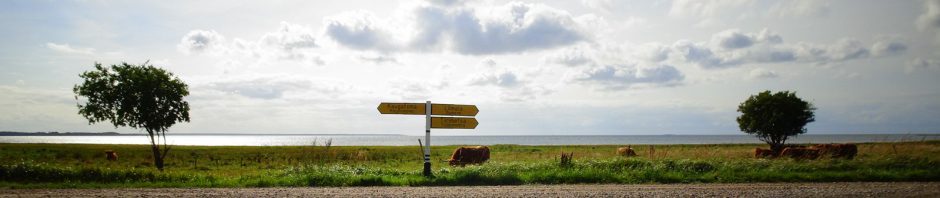
When you adorn your house with $-signs, but put up a note that it’s not for sale.
Photographed in Avenida 6 de Agosto in La Paz, Bolivia.
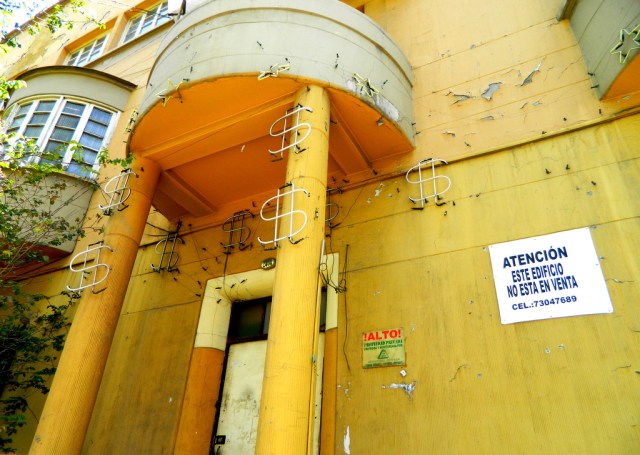
When you adorn your house with $-signs, but put up a note that it’s not for sale.
Photographed in Avenida 6 de Agosto in La Paz, Bolivia.
This wouldn’t fly in Germany because someone would scream “violation of privacy” and lawsuits would ensue, but in Bolivia

and in Romania,

there are lists in the entrance hall of apartment complexes showing the tenants’ names and what they respectively owe for utilities.
In Romania, all of my neighbors could thus see how economically I used electricity, gas and water. But it was very practical that I could pay to the friendly lady in apartment no. 7, who had her office at the kitchen table, and who gave me a huge plate of cookies when it was time to say good-bye after one year in Târgu Mureș.


Bolivia must have negotiated the best intellectual property treaties of any country in the world (only Iran comes close, but that country is not a party to the Berne Convention). Respect to the hot-shot lawyers who did that!
In Bolivia, you can get any movie on DVD on the same day it is released in cinemas worldwide. Sometimes even before the release date!
The distribution occurs in a decentralized manner, through self-employed vendors who carry boxes of DVDs to street corners or who sell the films out of the trunk of their car. Amazing how Bolivia could negotiate the right for its small businesses to take over the distribution, when the big Hollywood studies usually want to control everything.

Each DVD costs around one dollar per film. Compare that with movie tickets or the prices on Amazon, and it’s another miraculous deal negotiated by Bolivia.
On top of that, the service is impeccable. There is something called DVD-on-demand: if your local vendor doesn’t have the film you want, you write the title on a piece of paper, hand it to him and tomorrow – same place, same time – he has the desired movie for you. This shows that even the mom-and-pop outlets have excellent connections to all distributors worldwide.

Photographed in Copacabana on the shore of Lake Titicaca in Bolivia.
First they came for the scientists, and I did not speak out—
Because I was not a scientist.
Then they came for the journalists, and I did not speak out—
Because I was not a journalist.
Then they came for the gays, and I did not speak out—
Because I was not a gay.
Then they came for the Mexicans, and I did not speak out—
Because I was not a Mexican.
Then they came for the Muslims, and I did not speak out—
Because I was not a Muslim.
Then they came for the women, and I did not speak out—
Because I was not a woman.
Then they came for me—and there was no one left to speak for me.
Stupid me! I should have done business with the Trump Organization—
that alone would have protected me.

“So, for the next four years – which will be the greatest four years ever – you have to address the payments to my daughter. Just officially, you know?” *wink, wink*
Is it coincidence that the evil man in this mural in La Paz, Bolivia is hiding behind a Donald Trump mask?
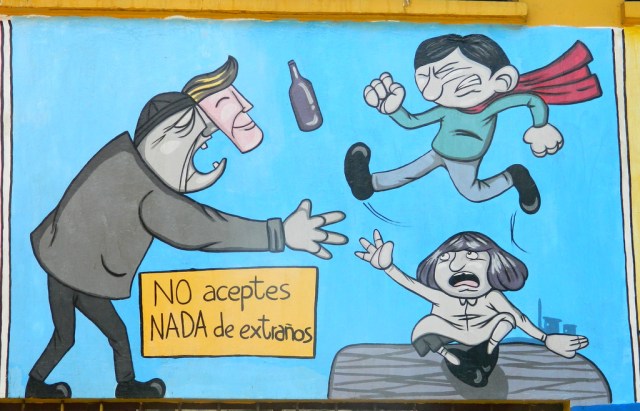
In any case, I find these warnings misguided because most strangers are good people.
People ask me why I don’t go to a hospital when I am sick, when I get bitten by a bear/anaconda/piranha, when I have strange viruses, when I am bleeding from all orifices or when I have kidney stones (OK, that one time I actually did go to a hospital because the pain was unbearable). The reasons are that
“But what do you do when X/Y/Z happens?” people respond in shock. My answer, as with so many other things in life, is “I will cross that bridge when I get there”. The worst-case scenario is that I will die, but it seems to me that a lot of people with health insurance are dying too, so I am not sure there is a connection. Recently, another European traveler whom I bumped into in South America seriously wondered: “But then who will pay for your body to be flown home?”
A strange concept, not only because I personally don’t have a home, but because dead people in general don’t have homes. Dead people have nothing. It is already 2018, but let me explain it once again: dead means dead. There really isn’t anything beyond it. And even most people who subscribe to the erroneous opposing belief don’t believe that their idea of “something” depends on the state or location of their body, otherwise they wouldn’t ask for cremation in a last act of pyromania.
Apparently, there is a funny thing: an insurance policy that will pay for your body to be repatriated in case of death. Selling insurance policies which you promise to honor for the time after the death of your contracting partner generally sounds like a profitable business model. Those of you who enter into such policies may please get in contact with me in order to grant me a long-term loan.
The tree-hugger in me cannot embrace the idea either. If this deplorable custom will gain popularity, the sky will soon be filled with planes ferrying corpses, body parts, coffins, urns and souls from one continent to the other. Some of these planes will collide and their passengers collapse, and yet more planes and courageous pilots will be necessary to fly around yet more corpses. And so on. German au-pair girls will be flown back from Australia, Indian guest workers from South Africa, the ambassador of an obscure small country will be returned to the Caribbean. A global carousel of corpses.
It really shouldn’t matter where on this wide world you go to seed and compost. I am going one step further: I hereby expressly prohibit that my body will be flown anywhere after my death! The idea of the last resting place being determined by nothing but the coincidence of a train accident in Bangladesh, freezing to death while mountaineering in Bolivia or falling from a bicycle in the Kyrgyz steppe strikes me as a rather romantic idea.

A beautiful cemetery in Bitola, Macedonia. It hasn’t been in use since the Ottoman Empire.
Even more romantic would be to simply get lost and never be heard of again, but my home country of Germany of course has a law on getting lost (seriously). Reading that makes you lose any kind of Livingstone/Mallory/Earhart romanticism.
I am not even thinking of myself when setting up these instructions, after all I don’t believe in my continued existence after the heart will stop pumping blood. My motivation lies rather in the hope that relatives, friends and readers of this blog, if they ever want to lay down a flower or a stone, will have to travel to a country that they otherwise would never have visited. Those who never leave their small town will suddenly turn into explorers and adventurers. Pilgrims from all directions will flock to a quiet mountain village in Bhutan, to a farm in Zambia or to the marker stone for kilometer 2,300 on Ruta Nacional 40 in Argentina.
On the long journey to there, they will read my books, and when they get to know the friendly locals they will realize how they have been wasting their lives by going to the office day in, day out, instead of exploring the world. They will wire home the termination notice for their employment contract, for their apartment lease, maybe for their marriage and will embark on a new life, at exactly the same spot where mine ended.
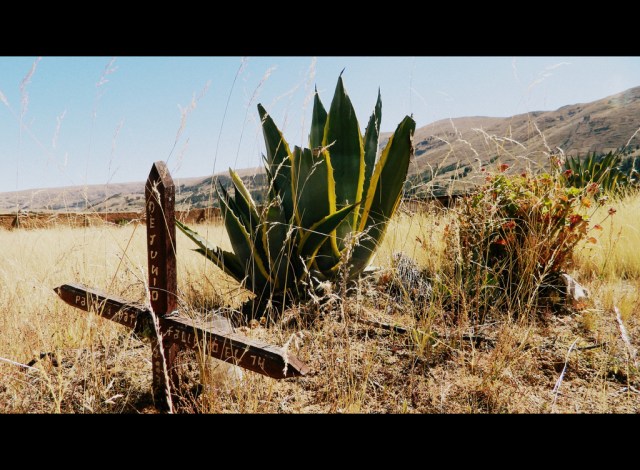
I almost remained in that cemetery in Bolivia. How could I have known that the villagers had serious objections against a stranger taking photos of graves?
Realistically though, nobody will come by. Because people only visit cemeteries when these are on the way to the shopping mall, when there is free parking and when the rare visit doesn’t upset one’s self-selected memory of the deceased. When the latter would make the visitors reflect, and possibly make them notice that the dead never was the person the survivors wanted him to be, then it’s really too much of a hassle.
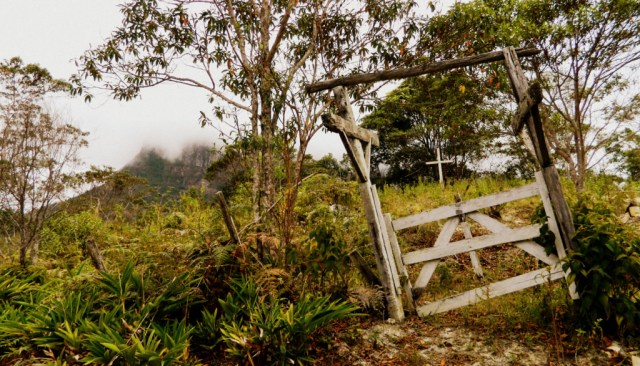
To reach this cemetery in Chapada Diamantina, Brazil, you need to hike across a mountain range. Ain’t nobody never get there with no car.
Links:
Whenever I move to a new country, I receive e-mails from people whom I don’t know, welcoming me to their country, offering help and giving advice. That’s nice.
As I am about to move back from Peru to Bolivia, I realized how well these random messages from strangers illustrate the character of both countries.
When I moved to Peru in August 2016, I got a lot of e-mails about food,
You have to try ceviche!
You have to try guinea pig!
You have to try this and that!
as well as not very original touristy advice,
You must go to Machu Picchu!
and business offers:
My uncle/brother/grandmother has a travel agency/car rental/taxi company. It’s the best travel agency/car rental/taxi company in town. Don’t go anywhere else! Everyone else is trying to rip you off.
I can rent you an unfurnished shack in a village for loads of money.
There were so many identical, non-personal messages that it felt like a country inhabited by bots. After a short while, I knew in advance what people would say when they met me. (To be fair, there were one or two exceptions during the five months in Peru.)
Now, as I am moving back to Bolivia, the first message was from a lawyer with the Instituto de Estudios Internacionales in Cochabamba:
Hello, this weekend there will be a seminar on PHILOSOPHY AND METHODOLOGY OF INTERNATIONAL LAW. It’s free, and if you want to join, I can add you to the list of participants.
If there is a country that thinks like me, has the same interests as me, and where I feel at home, it’s Bolivia.
After all, even the children here are already engaged in moot courts and legal debates:

I was sitting in the park outside of the courthouse in Puno today, reading Nuestro hombre en La Habana and, fittingly, smoking a habano, when a gentleman in a suit – but without a hat – walked up to me and handed me a large brown envelope with a heavy stack of papers.
“This may be more interesting than the book you are reading, Sir,” he said.
“Ehm, thank you.” I looked up and smiled. “But who are …”
He interrupted me, not because he was impolite, but because he was noticeably in a hurry: “Watch out for yourself.” His voice was calm, but his eyes betrayed the seriousness of the warning.
As he disappeared into the crowd of teenagers, tourists, ice-cream vendors, photographers and old ladies selling hats and warm socks, I considered it impolite if I tried to follow him with more than my curious gaze. He didn’t look back once.
Not wanting to appear suspicious by getting up right away, I opened the unsealed envelope on the spot and began reading. They were obviously copies, not originals, and on almost every page, sections were highlighted by a yellow marker pen, drawing my attention to those paragraphs.

And this was only the first page.
As I continued reading,
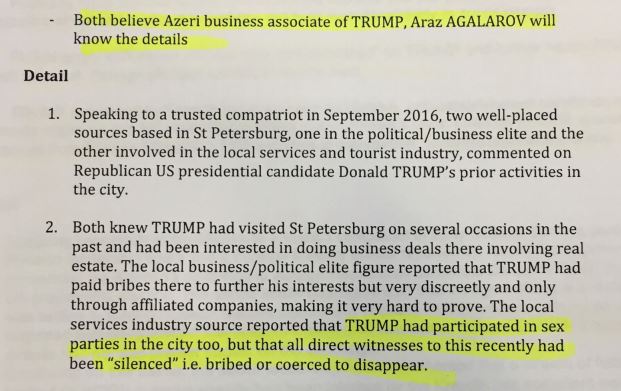
Only later tonight did I realize that maybe I myself should be worried, too. Therefore, I have uploaded the total 35 pages for you to read here, removing anyone’s incentive to silence me. – And in case you think that I am making something up, these are the documents that CNN is talking about.

 The Happy Hermit