Journey to the Center of Europe – Kruhlyi, Ukraine

Zur deutschen Fassung.

For the project “Journey to the Center of Europe”, I am going to visit all the places that have ever laid claim to being the geographical center of Europe or the European Union. And write about them.

The first stop was a place far off the beaten path, in a country that many people didn’t know anything about until very recently. Because my first journey took me to Ukraine. I don’t know why, but somehow, the readers of this blog are always keen on me risking my life. Well, if you do need to satisfy your lust for sensationalism, then rather by reading this edutaining blog than by watching a bullfight. Poor animals.


Solotvyno. The first place in Ukraine after walking over a rickety wooden bridge, crossing the river Tisa and with it the Romanian-Ukrainian border.

The bus station is a small container on the main road with an impressive list of buses and departure times hanging on the outside wall. I missed the 8:28 bus to Rakhiv by a few minutes. Doesn’t matter, though, because the next one will leave at 9:10 already. Or so the schedule of departures says.

The station manager, a helpful lady, steps out and informs me that the timetable is no longer valid. The drivers were called to the front, the busses are now serving in the war.

“Nobody knows when they will be back,” she says, and I am not sure if she is talking about the drivers or the buses.

“Or if they will come back at all,” she adds with a sigh. It sounds like her husband is one of the bus drivers.

The day is 15 July 2022. Or, in the calendar currently in use, day 142 of Russia’s attempt to wipe out Ukraine. For a supposed Blitzkrieg, that’s dragging one quite a bit.

There will only be one bus today, at 11:15, the woman says, and she doesn’t blame me for trying to hitchhike instead.

But nobody stops. Some drivers thunder through the town at over 100 km/h, well aware that all the traffic cops have swapped their radar guns for real ones and are patrolling trenches instead of turnpikes.

Finally, a couple stops, but they ask for money. How much, I ask. Between the two of them, they are debating this matter for a while. I don’t understand anything, but I imagine the wife arguing that you can’t just leave a stranger standing by the road like that. The husband, on the other hand, talks of war, inflation, uncertain times. There is a bit of back and forth between the two, until the husband writes a number on a notepad, already covered with so many numbers as if he was in the business of providing coordinates to the artillery: 1500 hryvnia.

Honestly amused by the misjudgment of my financial capacities, I decline. 1500 hryvnia are about 60 euros. For 30 kilometers. (One week later, it will be only 40 euros. Maybe the couple worked at the Ukrainian Central Bank and already knew something about the upcoming devaluation. Or, and this is more likely, it shows that money simply should not be taken so seriously.)

I am disappointed that no one stops. There is a war, after all, and I read and hear so much about people’s readiness to help. I can’t see any of it. And I feel as if some drivers are eyeing me suspiciously. As if there was something absurd about hitchhiking during a war. Perhaps they find it suspicious that a young man, muscular, beaming with fitness, is not in the military. – But then, why they would leave someone standing by the side of the road who just turned 47 last week and couldn’t enlist in the military because he failed the sports test?

Only after three quarters of an hour, the second car stops. Excited, I say “Добридень”. Businesslike, the man says “money”. But because he only asks for 10 euros, and because I have no more reason to be optimistic, I agree.

He asks me for “dokumenti”. I tell him that I am from Germany, which he thinks is so-so, but good enough for the military checkpoint. Maybe that’s why no one else has stopped, because the drivers know that they are looking for spies at the end of the town? But the young soldiers wave us through, barely looking into the car.

A few villages further, the driver picks up two women on the roadside who want to go to Rakhiv. They don’t even talk about the price, which shows that Vasily is known as a fair chauffeur with fixed rates. I am more concerned with his racing driving style, passing other cars in mountainous curves next to steep cliffs, honking wildly, but the women in the backseat don’t seem to mind.

We are traveling along the Tisa. The Ukrainian side of the river is secured with rolls of barbed wire. Why, I am wondering, because I don’t think Romania will launch an attack. But many Ukrainians have already escaped through this shallow, innocuous river to avoid military service. In this area alone, the Romanian border police pick up 5 to 10 men every day. They don’t send them back.

The fishermen whom I spot on the Romanian side are probably happy about the absence of Ukrainian competition. Tonight, there will be war-profiteering trout served everywhere in Maramureș.

The driver and the two women in the back seat find it amusingly curious that someone would make the long journey from Germany to look for the geographical center of Europe in this remote valley in the Carpathians. This is not Paris or Rome or London, after all.

But if my information is correct, the center of Europe is right by the river Tisa. After it has turned north, no longer marking the border. Here, the railroad bridge connects two Ukrainian sides and is patrolled by Ukrainian soldiers.

The railroad from Sighet in Romania to Ivano-Frankivsk in Ukraine, known to older readers as Stanyslaviv, crosses the Yablunytskyj Pass and connects Maramureș with Ruthenia, Bukovina with Galicia.

Tingling names, ringing a distant bell, without knowing exactly what they were, where they were, when they were. Mystical places, like from the “Lord of the Rings”, but it was only the Habsburg Empire. It perished more than a hundred years ago, in a self-instigated blaze that grew into global conflagration. Gone and forgotten, for generations already, one would think. A hundred years is a long time. Except that here, in the far-away valley of the Tisa, nothing is ever forgotten. But more about that later.

There are no trains today. Instead, plenty of cars. Mostly families. Parents take photos of their children. Children take pictures of their parents. A girl forces her boyfriend to take 32 photos of her in unnatural poses. He would like to put an end to his misery by throwing her into the river, if it weren’t for the soldiers watching from the bridge.

It is a beautiful summer day. Lush green. The water in the river is rushing. The highest mountain in Ukraine, Hoverla, is only 25 km away, but the mountains here are so gently curved that, regardless of their height, they look more like hills. Wooden stalls are selling honey, sausages, snow globes and Hutsul costumes. Only one boy sells something useful: Coca Cola and Snickers, in case I have to walk the 30 km back over the mountains.

A light drizzle sets in. The kind of summer rain you don’t even hide from, because you know it will be over soon. Smoke is rising. It is day 142 of the war, of which, by now, nobody believes that it will be over soon. But no shot was fired, no bomb was dropped, no rocket exploded. The smoke is coming from the chimney of the restaurant.

And what is it that draws all these people here?

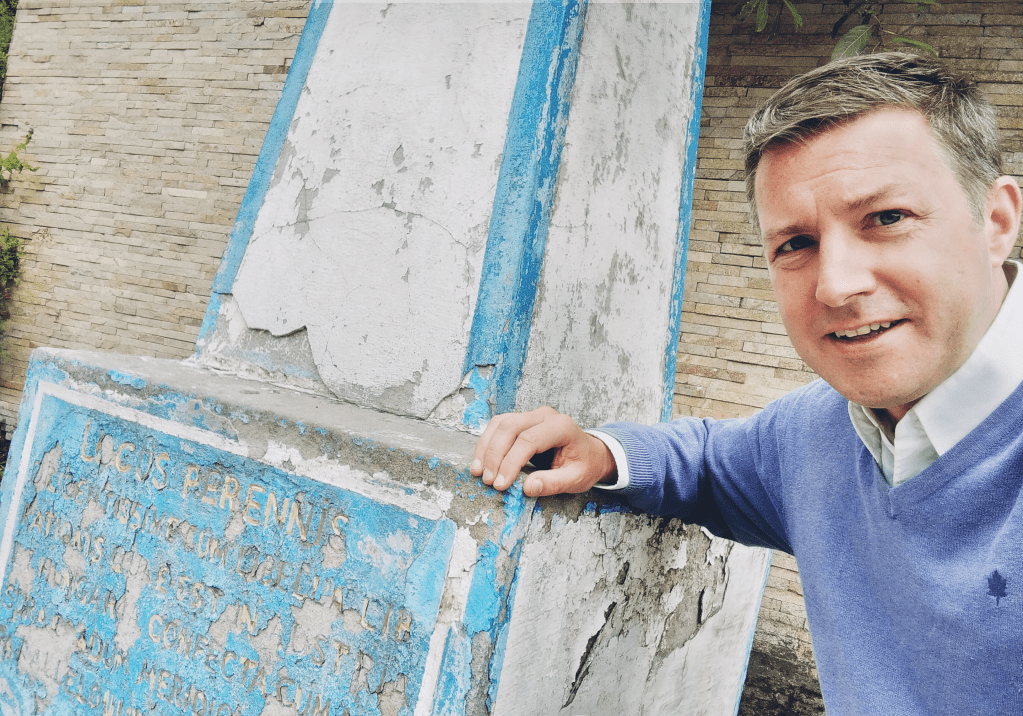
A stone marker. Built in 1887 and slightly tarnished by time.

At that time, the district of Rakhiv belonged to the Austro-Hungarian Empire. After laying the railroad tracks, the Austrian engineers apparently had some bricks, mortar and education in classics to spare and left an inscription in Latin:

Locus Perennis Dilicentissime cum libella librationis quae est in Austria et Hungaria confecta cum mensura gradum meridionalium et parallelorum quam Europeum. MDCCCLXXXVII.

In this Carpathian region, inhabited by the Hutsuls and where Germans and Austrians had been settled as lumberjacks, no one knew Latin, and thus, the marker fell into oblivion.

Although Dilove was actually very much at the center of European history. In the 20th century alone, it belonged to or was occupied by more than a dozen countries: the Austro-Hungarian Empire, the Hungarian Federative Socialist Republic of Councils, the Ukrainian Soviet Socialist Republic, the Hutsul Republic, the Ukrainian People’s Republic, the West Ukrainian People’s Republic, Czechoslovakia, Slovakia, the Republic of Carpatho-Ukraine, Hungary, Nazi Germany, the Soviet Union, Czechoslovakia again, Transcarpathian Ukraine, the Soviet Union, Ukraine since 1991.

And now, once again, war.

In this remote valley in the Carpathians, the people who have changed nationality, political system and language several times in the course of their lives probably have a much better idea of what Europe means than those in Paris, Rome or London. Here, they know that borders, nation states and passports are merely random twitches of bureaucracy and form no basis for identity.

Only in the Soviet Union was the Austrian railroad engineers’ memorial marker was remembered again. It happened like this: In 1964 Nikita Tarasov, member of the Geographical Commission of Rakhiv Rayon and as such delegated – on a representative and consultative basis – to the Geographical Commission of the Ukrainian Soviet Socialist Republic, had to step out for a moment while hiking in the Carpathians. By chance, he stopped right next to this little column, got a flash of inspiration, as often befalls geniuses at the most unprepared moments, and thus put Dilove on the agenda of the 13th Inter-Commissional Meeting of the Academic Commissions of the Ukrainian Soviet Socialist Republic, where the matter was referred to the Subcommittee on Geodesy of Places of Possible Inter-Rayonal Significance, and in 1986 it was finally decided that this was a most important and unique place that should be decorated with a plaque.

This Soviet plaque is still next to the stone marker. It says something like: “Here, in the opinion of the Geographical Commission of the Ukrainian Soviet Socialist Republic and with the consent of the competent minister in the honorable Council of the Union of Soviet Socialist Republics, is a significant point, so unique and unparalleled that it can exist only at this very point.”

It does sound important, but also a bit vague, doesn’t it? The reason was that no one among the geographers was ready to admit any knowledge of Latin, because that would have labeled them as bourgeois. You might as well go straight to the train station and buy a ticket to Kolyma for yourself.

But it didn’t matter, because in 1986 came Perestroika (good), Chernobyl (bad), the return of Andrei Sakharov (good), the sinking of the cruise ship “Admiral Nakhimov” (bad) and no one worried about the marker anymore.

Until 1991, when Ukraine suddenly became independent again. Ukraine regards itself as part of Europe. Quite rightly so. After all, that’s what the Maidan Revolution in 2014 was about. But I don’t want to digress too far. Especially because whenever I visit said Maidan Nezalezhnosti, I am harassed by some stupid birds.

Like half of Europe, Ukraine struggles with the problem that Western Europeans believe that Europe ends at the Oder-Neisse line or maybe in Prague. (Hardly anyone knows that Vienna, Athens and even Görlitz lie further east than Prague.) In order to geodetically underpin its EU membership application, Ukraine henceforth claimed, with reference to the Austrian surveyors of 1887, not only to belong to Europe, but to be the very center of our continent. A banner joyfully proclaims the country’s status as a candidate for EU membership, attained a few weeks ago.

By the way, in many reports and documents you can find the information that the center of Europe is in Dilove. Maybe because that’s the closest bus stop. But from there, it is another 3 km to the exact spot, which is much closer to the hamlet of Kruhlyi.

All the authors who write about Dilove probably never went there, instead copying from each other. Only on this blog do you always receive original, first-hand, fact-checked, thoroughly researched facts. Guaranteed!

And here, you also get the truth about the Latin inscription. It means something like:

This is a permanent location recorded for eternity, determined with European precision by a special measuring instrument manufactured in Austria-Hungary and using the system of latitude and longitude. 1887.

One could almost think that the engineers dispatched to Transcarpathia were pulling a joke with the important-sounding but meaningless text.

I would love to go back with one of the horse-drawn carts. That’s still missing on my hitchhiking bingo card. But they are all galloping in the wrong direction, to Rakhiv, the capital of the district, the Paris of the Hutsuls, the gateway to the Carpathians, the center of the biosphere reserve, a UNESCO World Heritage Site.

In the right direction, dozens of cars and day-trippers are going, but they make sure to ignore me. Maybe it’s because of the way I look. With a white shirt, beige pants, short hair and freshly shaved, I look like a Mormon or a Jehovah’s Witness. And no driver wants to spend an hour being lectured about Jesus. Especially not when his country is being bombed in the name of Christianity.

Or it could be something else.

Because when, after half an hour, a man in an old Zhiguli stops, he first asks for my documents. When I say that I am from Germany, I am allowed to get in. He too mentions the army checkpoints. Here in the border region, no one really wants to give a ride to a Ukrainian man trying to avoid military service by jumping into the raging floods of the Tisa.

In Dilove, the driver has to stop briefly to get some bread. He leaves me sitting in the car and the key in the ignition. You can recognize the really good people by the fact that they can’t even imagine that somebody would do anything bad. He doesn’t want any money either. In Velykyi Bychkiv (Gross-Botschko in German) he drops me off directly at the bus station. Here, too, the same situation as in the morning: The timetable has been reduced dramatically, the next bus to Solotvyno, 10 km away, will come in two hours.

But maybe the bus station information people and I have always been talking past each other, because later I learn that the people in this region – just as some people still convert everything into pounds, shillings and pennies – do not set their clocks to Kiev, but to Vienna. So they use the Central European time zone instead of the Eastern European time zone, which means a difference of one hour. Or would mean a difference of one hour, if it weren’t more complicated. Because when Transcarpathia became part of the Soviet Union in 1945, the time difference between Vienna and Moscow was two hours. When Ukraine became independent in 1991, and the time difference between Dilove and Kiev was only one hour, many people kept the two-hour time difference to the capital. Out of habit. So, in effect, they were living according to the time zone of London or Lisbon, imagining themselves in good old Vienna. I bet many of them also had a picture of the last Austrian emperor hidden in their house.

Timekeeping is further complicated by summer and winter time, which begins or ends on different days in different districts or is not implemented at all in some districts. In addition, depending on the religion, the Julian, Gregorian, Old Rite, Autocephalous Orthodox or Reformed calendars are used to determine the beginning of spring or fall and thus the time the clock changes.

Trains use the time zone of the destination instead of the local station. So, if from the same station at the same time, one train leaves for Budapest, one for Bucharest and another one for Moscow, one leaves at 1 pm, the other at 2 pm and the third at 3 pm. Although they depart at the same time. Got it? But the local people will give the time in Carpathian time, that is Kiev minus one hour, or, for older people, Kiev minus two hours. On the other hand, if they are talking to a foreigner, they will use Vienna time, naturally. Except young people, they just look at their cell phones and have no idea what time zones are.

In Solotvyno, I had wondered why people were at the station hours before the train left. But now I understand. When there’s only one train a day, you don’t want to run the risk of miscalculating.

Multilingual people also use different times depending on the language they are talking in. And, in case I haven’t mentioned it yet: Multilingualism is quite normal in this region. People here spoke and still speak Ukrainian, Russian, German, Yiddish, Hungarian, Slovak, Romanian, Czech, Ruthenian, Romani, Polish, Old Church Slavonic and, as I tested for you, a little bit of English. One more reason why I think that the search for the heart and essence of Europe rightfully leads you to the Carpathians.

And in case you are wondering whether I made this up – an almost indecent question in view of my research: No! There are even scientific studies about the Transcarpathian time zone. The graph shows the percentage of the population still using the Habsburg time in 2016, the photo shows the opening hours of a pizzeria in Ukraine according to Vienna and Kiev time zones.

This back-and-forth calculation between different time zones must be easy for people who grew up speaking three or four languages. I certainly can’t get my head around it.

I rather walk to the end of town and try to hitchhike. Again, dozens of cars pass by, and I’m starting to get angry. What good are the patriotic flags on the car, if nobody stops? What good are the crosses on the rearview mirror, when you let your fellow man wither by the road in the midday heat? And at some point, I think about the fact that Ukrainians can use the trains for free in the European Union. I’m not a refugee, I am here voluntarily, I don’t want to equate unequal things. But it would be nice to get a bit of solidarity in return.

The increasingly gloomy thoughts are interrupted by a young man in a van, who also first asks which passport I have with me. When I say that I am from Germany, his face brightens. His whole family has found refuge in Germany, he is the only one who has remained in Ukraine.

“Ukraine is not a good place to raise children right now,” he says, and I appreciate the understatement with which he describes the war. He is a kind man. Underneath the current sadness, you can still recognize the pre-war personality. I hope it won’t get buried irrevocably.

Although he is driving something important to be taken somewhere urgently, he makes a detour to drive me to the border in Solotvyno. To the “kordon”, as he says in Ukrainian, reminding me that one hundred years ago, here was to be the “cordon sanitaire” between Western Europe and the Soviet Union.

After crossing the border, a woman on a bicycle catches up with me. She had been behind me, queuing for the Romanian checkpoint.

“Excuse me, sir,” she asks, “may I ask what kind of passport you have?”

“A German one,” I reply.

She thanks me for the information and explains the question: “We were all wondering why you were the only one who didn’t have to open your bag.”

That’s how it works. If you ever need a smuggler, use a neatly dressed middle-aged man, preferably with a German passport. Guys like that never get checked. And now I have to find a buyer for the plutonium I brought across the border….

For people who are checked here every day by Frontex when they just want to visit their parents in the next village or go shopping, for whom these newfangled nation-state borders cut through their beautiful Carpathian land or their Bukovina, for people who can communicate fluently on both sides, this discrimination is particularly degrading.

On the other hand, when dealing with Frontex, you already have to be thankful that they don’t throw you over the bridge into the river.

The red color on the railing and on the bridge marks the border. On one side Ukraine, on the other Romania. On one side war, on the other peace. On one side conscription and combat, on the other college and cinema.

A red line, drawn as arbitrarily as the point near Dilove, cutting the continent, families and lives in half.


So, this was the first episode of the project “Journey to the Center of Europe”.

I suspect that I will also find cause for historical and current reflections on Europe at the next mid-points, as insignificant as they may seem at first.

Have a look at the map and the list of all the places to be visited. If you live near one of these points, I would be happy to meet you! And the esteemed supporters of this blog will receive a postcard. (Unfortunately, I didn’t find any postcards in Ukraine, so you will receive one from somewhere else soon.)

Do you want a posctard?

Actually, you would be surprised how hard it has become to find postcards in some places. But for you, dear reader, I’ll walk the extra miles!

€10.00

Links:

Posted in Austria, Europe, History, Photography, Romania, Travel, Ukraine | Tagged , , | 21 Comments

Journey to the Center of Europe

Zur deutschen Fassung.

It is July 15th, 2022. The early hours of the day are still morning-pleasantly fresh, although it will turn into a very hot day. There is even a bit of a drizzle in between. The kind of summer rain that you don’t bother hiding from, because you know it will be over soon. And anyway, rain is better than rockets.

It is day 142 of the Russian attack on Ukraine, of which, by now, nobody believes that it will be over soon.

Over a rickety wooden bridge, I walk across the river Tisa. From Romania into Ukraine.

Completely legal. Brief, friendly border checks on both the Romanian and the Ukrainian side. No warnings. No precautionary instructions. No questions about what the hell I want in Ukraine in the middle of the war.

And I would have had such a good answer: I am looking for the center of Europe.

“In Ukraine??”, many will wonder, considering that most people in the world didn’t know anything about this country until recently. Ukraine, Ural, Ulan-Ude, it was all the same. Far away. Somewhere near Siberia.

But back to that day in July 2022. From Solotvyno, the border town, buses go to Rakhiv, I had read. On the way, I could get off near Dilove. But the bus station, in reality merely a container by the main road, looks as if abandoned.

The station manager, a helpful lady, steps out and informs me that the timetable is no longer valid. The drivers were called to the front, the buses are now serving in the war.

Well, I guess I will have to hitchhike then. Hitchhiking in the middle of a war. Not as easy as I thought, I find out. But, as always with hitchhiking, if you wait long enough, someone will stop. After an exaggeratedly fast and furious drive through the beautiful Carpathians, always along the Tisa river and not seriously bothered by the military checkpoints on the way, Vasyli drops me off at the hamlet of Kruhlyj in the Dilove commune of Rakhiv county – not without wondering what the hell that weird foreigner is looking for exactly there.

The roving reporter, however, can hardly grasp his luck. He really found the place and the stele he was looking for, marking the geographical center of Europe. Built in 1887 and looking as tattered as you’d expect after that much time.

It was built by Austrian engineers during the construction of the nearby railway. Back then, the district of Rakhiv was part of the Austro-Hungarian Empire. Actually, this place is much more European than you would think. In the 20th century alone, it belonged to almost a dozen countries. (Successively, not simultaneously.) The people here spoke and still speak Ukrainian, Russian, German, Yiddish, Hungarian, Slovak, Romanian, Czech, Ruthenian, Romani and, as I found out, a smattering of English.

Historically, linguistically and ethnically, this valley in the Carpathians is more European than Berlin, Paris or Rome. But more about this in my detailed article about Kruhlyj, coming soon, in which I unfortunately have to decipher the Latin inscription of the “locus perennis” and inform the world that it has been the victim of a translation error for 135 years. The Austrian railroad engineers had never claimed this to be the center of Europe.

Hence, my quest shall go on.

I remember that, many years ago, I had stumbled across another alleged center of Europe. It was in Lithuania, and they even called the place Europe Park. Back then, too, I was surprised to find that point in what I would have thought of as the periphery of Europe.

Mitte1
Mitte2
Mitte3

The underlying calculation in this case dated from 1989.

Over a hundred years, it may be possible for a continent to grow a bit, shrink a bit or move around a bit. After all, the continental drift had been invented in the meantime. But from Ukraine to Lithuania, that’s a stretch – at least geographically. Other places laying claim to that fame are in Slovakia, in Hungary, in Germany, and so on. Different methods of calculation must have been used.

The first problem is to determine what Europe is. Do we interpret it politically? Then it would be the Habsburg Empire or the European Union. With or without candidates for accession? Is the United Kingdom suddenly no longer European? And what is the effect of that Swiss hole in the middle of the European cheese? Do we include the islands which expand the territory of the EU all the way to Guadeloupe and New Caledonia? Aren’t French Guyana and Ceuta so obviously in South America or Africa, respectively, that they cannot be part of Europe? What about Northern Cyprus? Questions upon questions. Good that Germany lost all its colonies, from Samoa to the Bismarck Archipelago, for otherwise the map of the EU would be even more complicated.

But even leaving political interpretations aside, a mere geographical calculation of the center of the continent can be debated without end – and without result – as well. Where to draw the eastern boundary? What about Turkey? What about the Caucasus? Is Malta European or African? Do you simply connect the most outward points to determine the center? Or do you consider the boundaries of the landmasses? Possibly weighted for the product of surface times density, because an acre of Switzerland weighs more than an acre of Holland. Or do you pick the center of a circle drawn around Europe? One could also weigh the result by population, to prevent the Scandinavian countries from taking themselves too important. Or calculate an economic midpoint, weighed by GDP.

If you are playing around with methods and figures, you will always find some center of Europe situated in a small village hoping to benefit from Euro-centrist tourism. Because one thing is striking. All the centers of Europe have so far been in places where nothing else is happening. Or, in the case of Flossenbürg and Braunau am Inn, where they want to divert attention from what they are really infamous for. This is a – probably incomplete – list of all the places that have ever claimed to be the center of Europe or the European Union:

  • Braunau am Inn, Austria
  • Polotsk, Belarus
  • Vitebsk, Belarus
  • Ives at Lake Sho, Belarus
  • Viroinval, Belgium
  • Mount Dyleň (Tillenberg) on the German-Czech border
  • a hill east of Čečelovice, Czech Republic
  • Mount Melechov, Czech Republic
  • Locus perennis near Lišov, Czech Republic
  • Pupík Evropy (the belly button of Europe) in Jakubovice, Czech Republic
  • the astronomical center of Europe outside of Kouřim, Czech Republic
  • the point calculated by Jára Cimrman in Havlíčkův Brod, Czech Republic
  • Mõnnuste on the island of Saaremaa, Estonia
  • Saint-André-le-Coq, France
  • Noireterre, Saint-Clément, France
  • Arnstein, Germany
  • Hildweinsreuth near Flossenbürg, Germany
  • Kleinmaischeid, Germany
  • Cölbe, Germany
  • Gelnhausen-Meerholz, Germany
  • Westerngrund, Germany
  • Veitshöchheim, Germany
  • Tállya, Hungary
  • Purnuškės, Lithuania
  • Europe Park, Lithuania
  • Suchowola, Poland
  • Landskrona, Sweden
  • Kremnica, Slovakia
  • Kruhlyj (between Dilove and Rakhiv), Ukraine

And here is a lovingly and laboriously prepared interactive map. The blue check marks indicate the places where I have already been. Green check marks will soon decorate the points I have already published an article about.

This map is especially handy to find out if you happen to live near one of these points of global importance. In that case, please let me know, because I have set my mind to visit all the centers of Europe and to write about them. No superficial travelogue, of course, but, as you have come to expect from me, diving deep into the history. (Even if Flossenbürg and Braunau am Inn aren’t too happy to hear about that.) And because I travel mostly by hitchhiking and hiking, there should be one or the other adventure happening on the way. Speaking of adventures: Keep your fingers crossed that I get the visa for Belarus! Otherwise I’ll have to sneak across the border somehow…

And, come to think of it, that’s quite a neat project to turn into a book, isn’t it? Because I really think that I can discover more about the essence of Europe by traveling to all those little places, rather than by sitting around in Brussels.

If you find the idea interesting, I appreciate any kind of support! Especially a couch for a few nights, if you happen to live near one of the many centers of Europe. Or on the way.

Do you want a posctard?

Actually, you would be surprised how hard it has become to find postcards in some places. But for you, dear reader, I’ll walk the extra miles!

€10.00

Posted in Austria, Belarus, Belgium, Czech Republic, Estonia, Europe, France, Germany, Hungary, Lithuania, Poland, Slovakia, Sweden, Travel, Ukraine | Tagged | 12 Comments

Nobody needs an Airport

Zur deutschen Fassung.

Have you been wondering how the revolutionary 9-euro ticket has transformed travel in Germany?

Well, as expected, trains and buses are visibly fuller, sometimes crowded, although rarely overcrowded. (And if so, it’s always because of people who insist on bringing their bicycle on a train.)

Roads and highways are less congested. There are fewer accidents. People are more relaxed. Everyone is happier.

And because everyone can now afford to take the comfortable, scenic and romantic railroad, almost nobody has to use uncomfortable, claustrophobic and unreliable airplanes anymore.

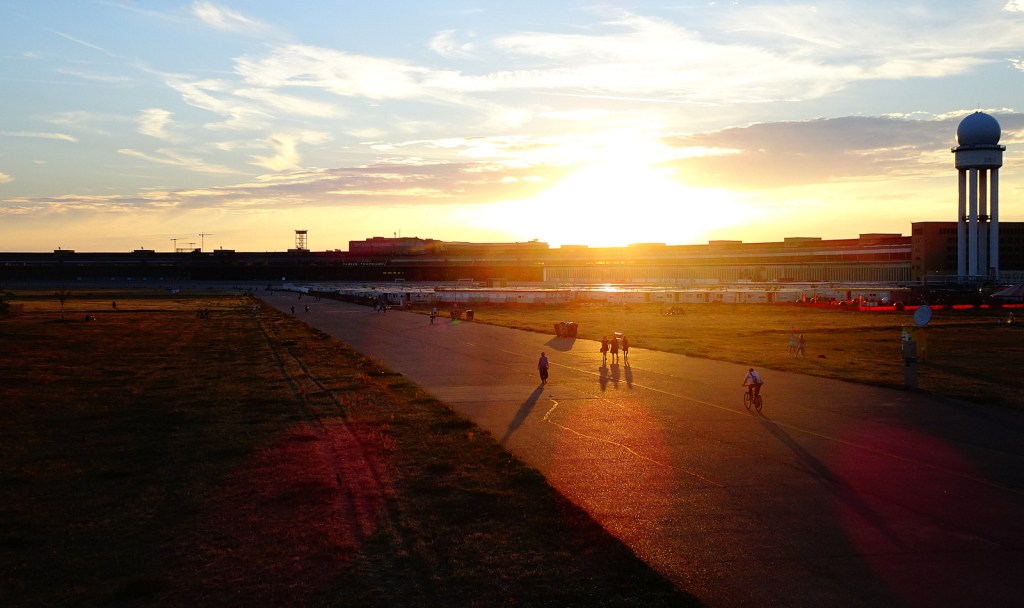
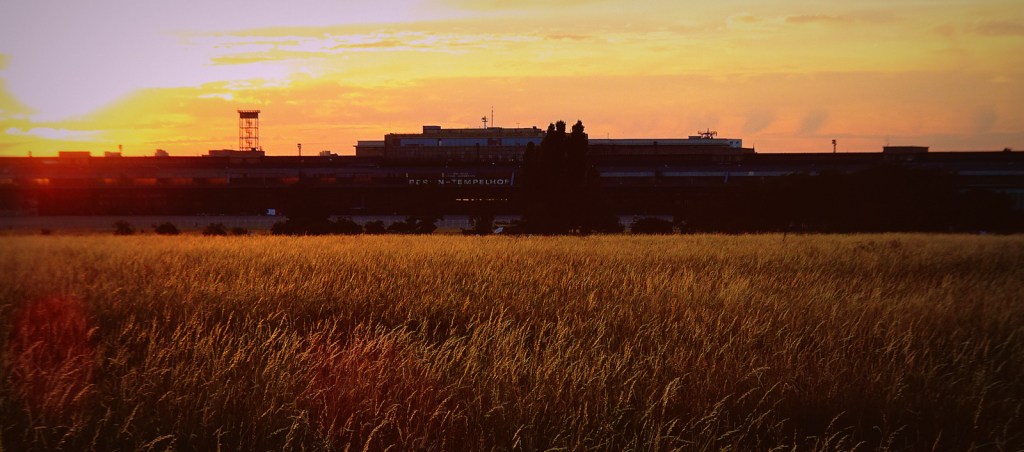
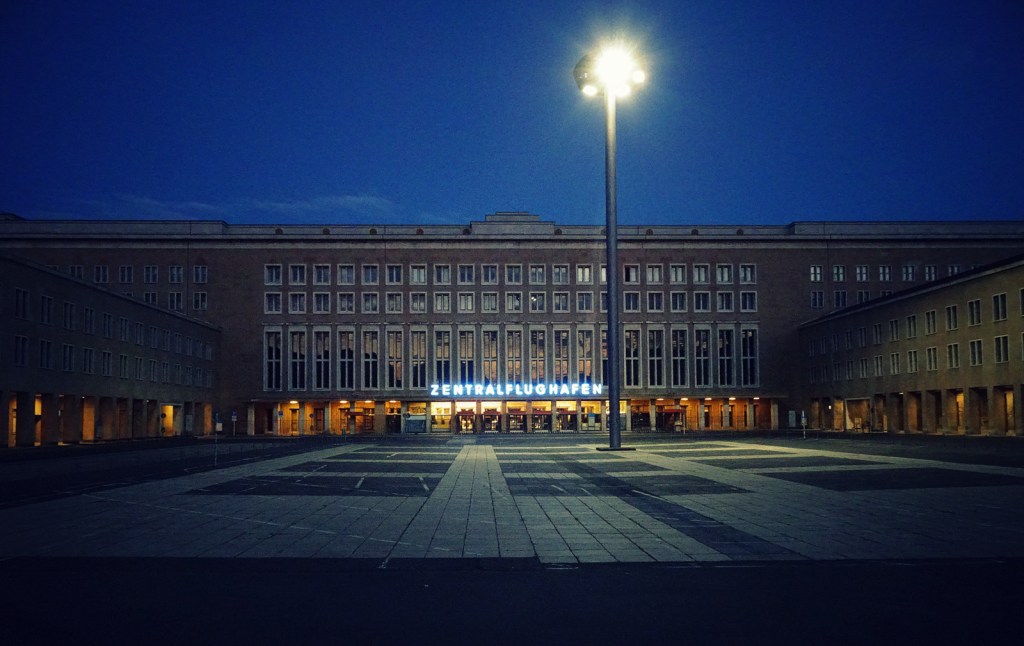
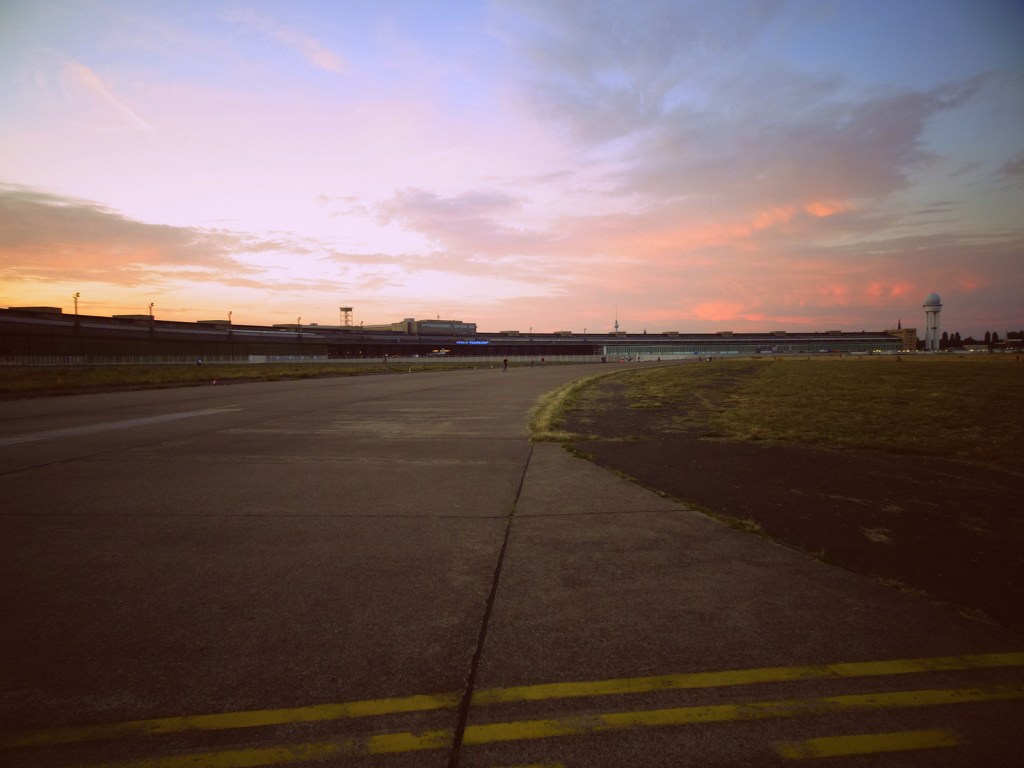
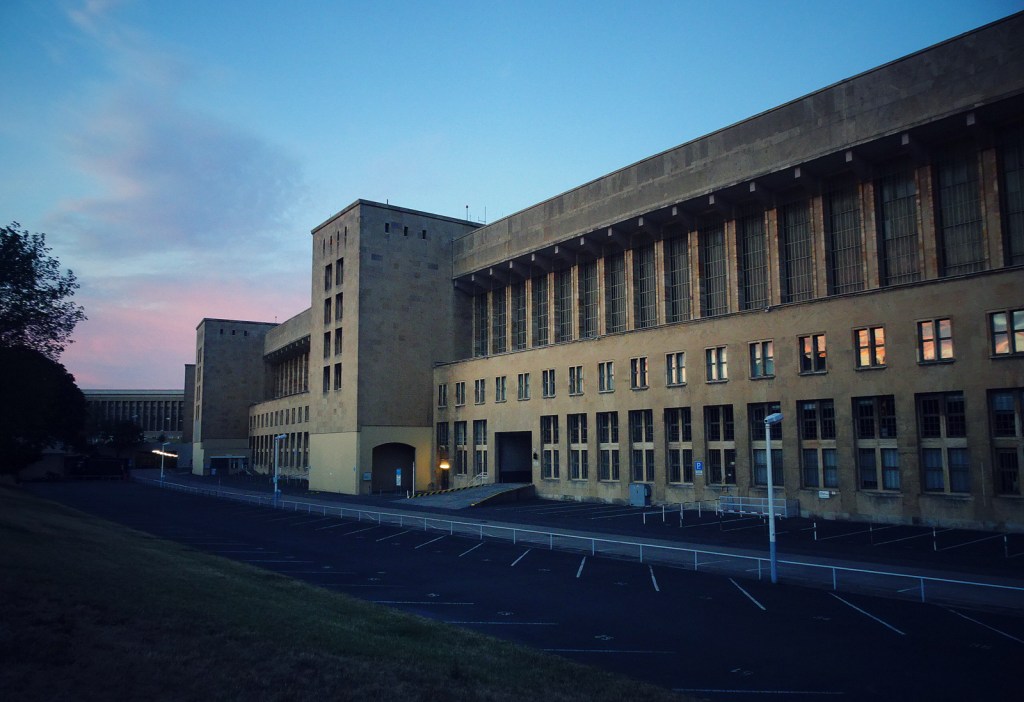
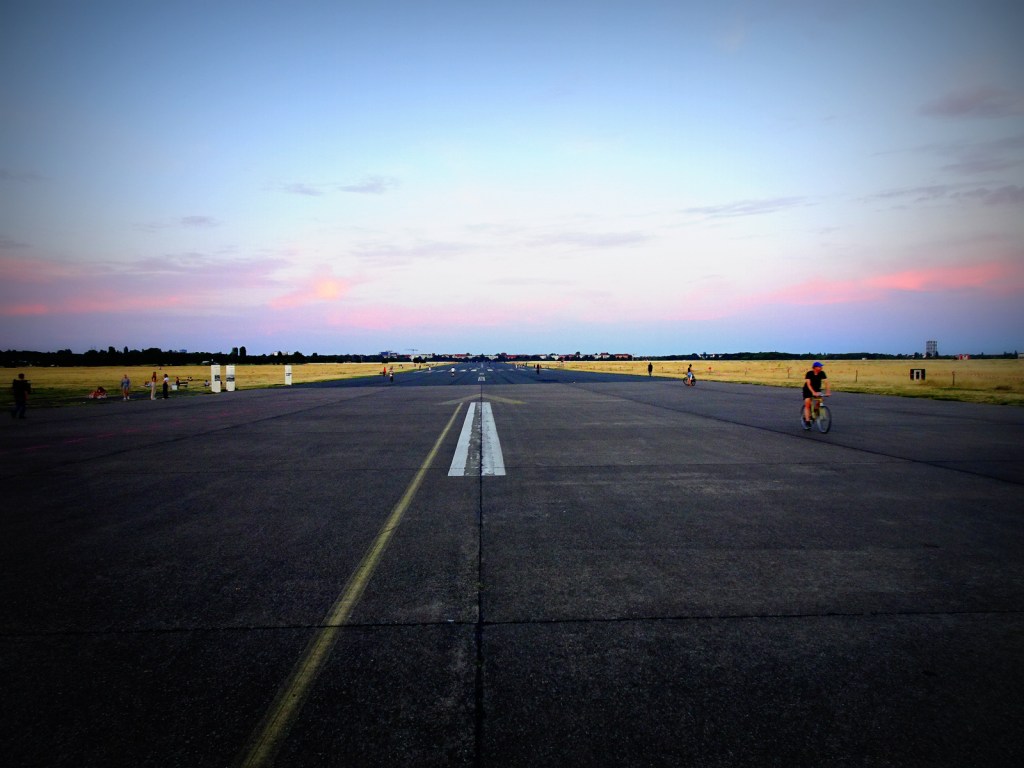
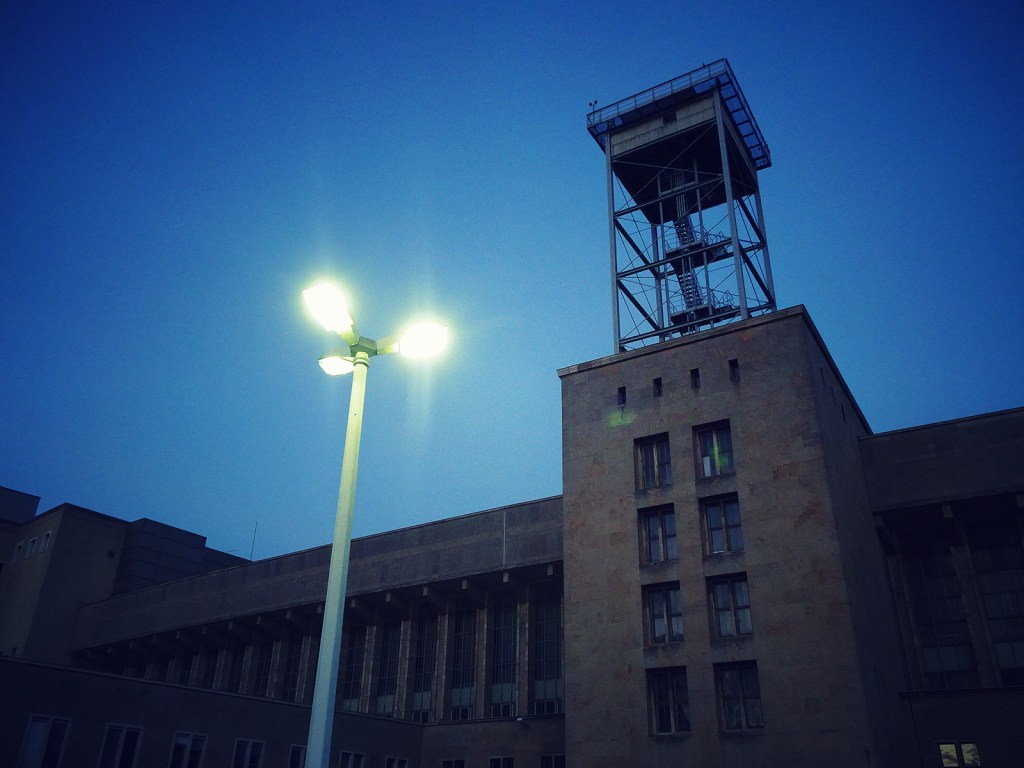
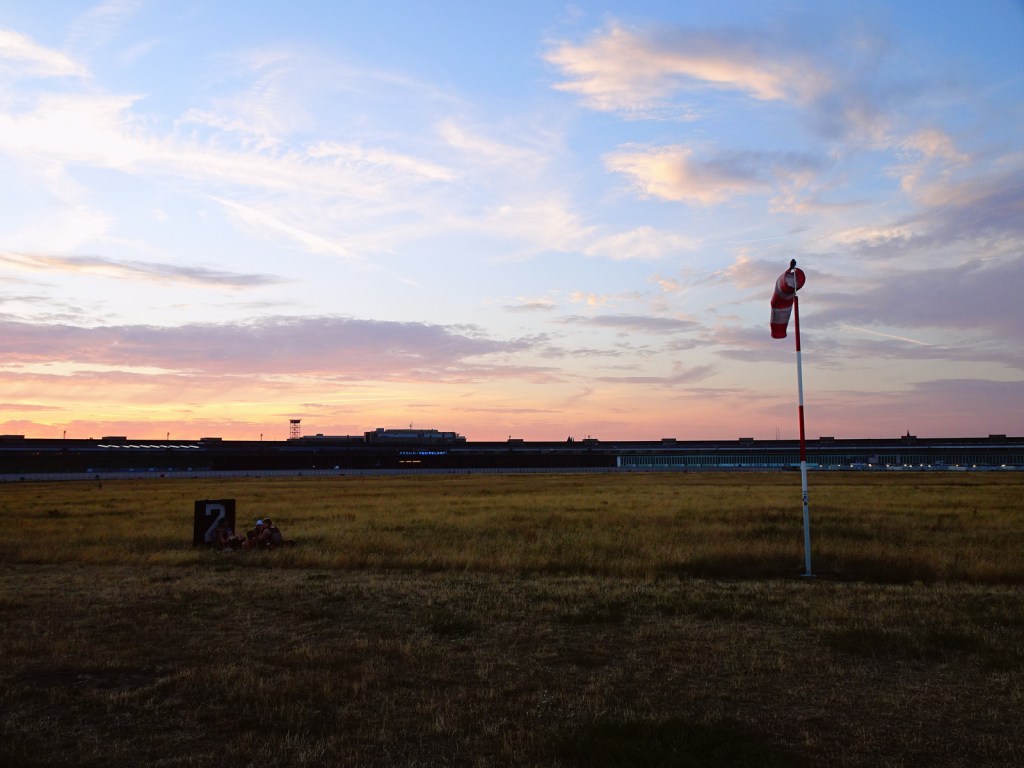
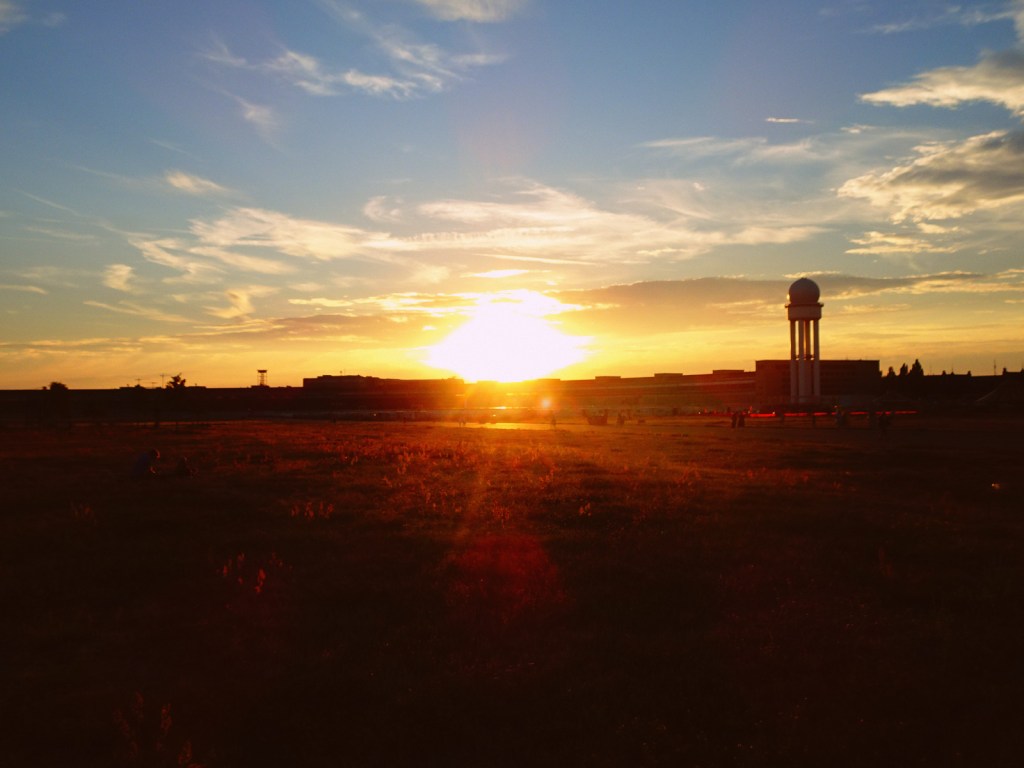
Trying to find out how air travel in Germany has been affected, I decided to walk to the airport in Berlin last night. With my penchant for romantic situations, I got there just in time for the sunset.

And I was in for quite a surprise: The airport was almost empty. It was open for business, theoretically, but nobody wanted to use those gas-guzzling planes anymore. All the parking was empty. I could walk around the terminals without any security stopping me. People had taken over the runway for cycling, roller-blading, jogging and picnicking.

Links:

Posted in Germany, Photography, Travel | Tagged , , , , | 16 Comments

Drug Dealers with an Honor Code

Zur deutschen Fassung.

July 2022. Hasenheide in Berlin-Neukölln. A large, green park with a petting zoo, an open-air cinema, a dog-walking area, an arboretum, a monument to the women who allegedly rebuilt Germany after World War II (which is a myth), a rose garden, a mini-golf course, a snack bar that doesn’t offer currywurst but is desperately seeking employees, the first gymnastics field created by the famous Friedrich Ludwig Jahn personally in 1811, and the Sri Ganesha Hindu Temple, the completion of which is taking even longer than that of the infamous Berlin airport.

Where the paths and trails intersect, men are standing around in a conspicuously inconspicuous manner. Sometimes one, sometimes two, sometimes three. From time to time, one of them disappears into the bushes and buries something or digs something up. Like a squirrel.

I usually assume the best in people and would therefore like to think that the men are looking for a lost cat. Or collecting signatures for one of the many referendums in Berlin. (The one with the universal basic income would suit me very well.) Or philosophizing about the oxymoronic nature of illiberal democracies, while enjoying the fresh air.

But since they don’t even attempt to strike up a conversation with me, a recognizably referendum-signing-willing cat lover who is an enthusiastic philosopher, I have to cast off the Rawlsian veil of ignorance, look cruel reality into the eye and realize that these men are probably selling substances that the legislature, which is meeting only a few kilometers away – if they weren’t on summer recess already – has relegated to annex I of section 1 paragraph 1 of the Narcotics Act and thus to illegality.

Almost nowhere in the world am I being bothered by dope dealers, marijuana merchants and opium offers, which is probably due to me looking rather decent and law-abiding, not to say boring. Hence, people are always surprised when they hear about all my adventures. Probably, most drug consumers have more bourgeois lives than me. Some of them might even have a mortgage. Or iron their shirts.

One evening, I interrupt my sauntering and sit down on a bench for a break, when I unexpectedly overhear snippets of conversation from the group on the next bench, about 10 meters away.

Initially, I deem them to be consumers of the aforementioned dietary supplement, but apparently, it is local knowledge that they are also active in the production, or at least the distribution thereof.

Three youngsters walk past, then take heart or whatever organ controls addiction, turn around and ask the three gentlemen, a lady and a dog if it was at all possible to purchase some “weed” from them. A cleverly chosen code word, I think appreciatively. After all, the park is called “Hasenheide”, which means “Rabbits’ Heath”, so the FBI surveillance satellite won’t think of anything suspicious when it hears the word “weed”, but merely of cute little bunnies.

“No way,” one of the men on the bench says, “we ain’t sellin’ nothing to no kids.”

“We are not kids,” retorts one of the juveniles, “we are teenagers”.

“Law says you’re a kid ’til you turn 18,” explains the man on the bench. “And when you facin’ the judge, it makes a huge difference if you sold to an adult or a kid.”

He seems to speak from personal experience with the justice system, although that does not prevent him from continuing with his small business.

“Kids always rat on you,” says one of the other men on the bench.

“And when word gets out that we are selling to kids, the park will soon be full of police again”, adds the third man. It sounds like he enjoys the park much more without any law enforcement present.

“Don’t you have an older brother?” asks the woman from the quartet on the bench. Apparently not.

Unfortunately, I don’t catch the whole conversation, but the teenagers probably claim that they are adults already or close to it, because the drug dealers reply, sternly: “Then let’s see your ID cards!”

At least one of them is so close to his 18th birthday that the drug cartel is getting soft. The dealers even roll the joints for the kids, because they suspect that the boys would never be able to do it so neatly.

I can’t tell whether they concluded a sale or whether it was an early birthday gift. In any case, the dealers insist that the teenagers consume the herbal product on the spot. Under adult supervision, so to speak. In case one of the boys gets sick.

I guess the kids didn’t imagine their first drug experience to be so uncool. They whisper and giggle coyly while puffing.

Meanwhile, the drug dealers criticize the German government for being so slow with sending tanks to Ukraine: “Worst part is, even if they wanted to provide the tanks faster, they couldn’t. Coz you gotta involve 15 agencies, and every paper needs to be issued five times and signed and stamped by every Tom, Dick and Harry.” And all of that despite Ukraine being an adult.

Although I am listening as inconspicuously as I can, one of the drug dealers saunters over to me on a reconnaissance mission and then back to his buddies. It probably bothers them that I am smoking a cigar, and they fear that I might poach their customers with this refined tobacco product.

The greater threat to their business, however, looms from the legalization which the German government has announced. A few weeks ago, the “International Cannabis Business Conference” was held in Berlin, where pharmaceutical companies, law firms and management consultants jostled for market share. I guess the people there have fewer moral scruples than the nice folks in the park.

Instead of Hashish Heath, I now usually go to some of the beautiful cemeteries in the neighborhood. The drug dealers don’t go there. I guess that too would violate their honor code.

Links:

Posted in Germany, Law, Photography | Tagged , , | 13 Comments

Escaping the War

You can’t hear it in the photo, but the girl was crying.

Photographed in Solotwyno, Ukraine, in July 2022.

Posted in Photography, Ukraine | Tagged , , | 4 Comments

One Hundred Years Ago, two young Men left Bavaria for the United States – June 1922: the Vogl Brothers

Zur deutschen Fassung.

When thinking about migration, we distinguish between push- and pull-factors when we try to get to the bottom of migrants’ and refugees’ reasons to move/flee. The former refer to incentives to leave a place and move away. Common causes are poverty, war, political or religious oppression. The latter try to explain why migrants choose a particular place as their destination. These may be economic opportunities or a preferred political system, but also linguistic or cultural proximity, more sunshine, or family members already living abroad.

Based on my own experience, I would like to add an often overlooked reason: Boredom. Or, to put it more positively: Curiosity. A sense of adventure. Wanderlust.

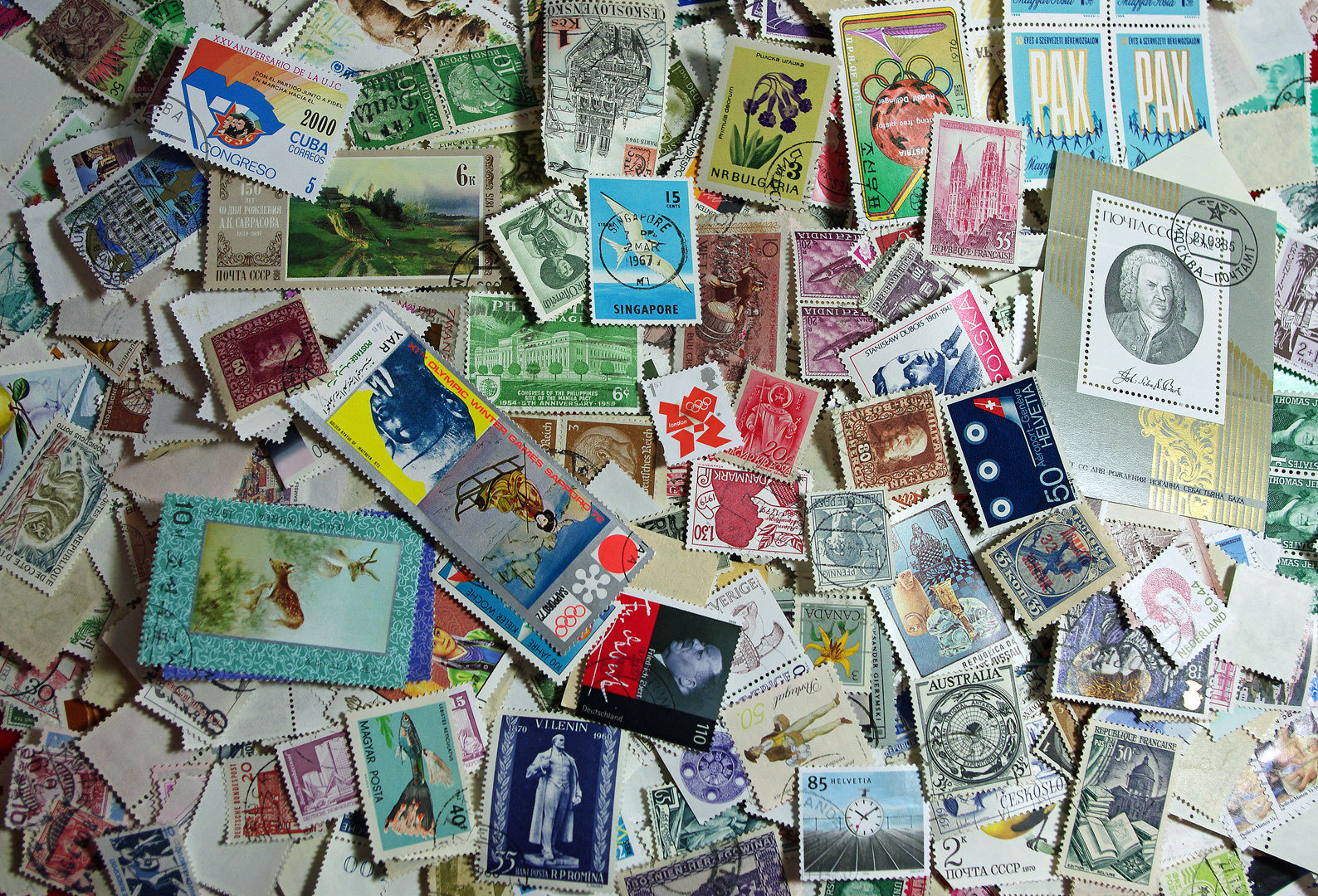
For me, the wish to see more of the world has always been the natural state of mind. Even as a child, I gazed longingly at the world map above my bed, devoured travel books (back then there was no interweb, let alone fantastic world travel blogs like this one), collected stamps from all over the world, looked up the places in the atlas, and brightened up every time I heard foreign languages on the radio or in the street.

The bad habit of spending one’s entire life in one place seems absurd to me, even unnatural, considering how diverse the world is. Perhaps this was still understandable in times when life expectancy was a meager 30 years, so that after high school, military service and university, only two years remained until death. (If you were very unlucky, those 30 years coincided with the Thirty Years’ War, the Eighty Years’ War or the Hundred Years’ War.) But now we are all going to become 80, 90 or 100 years old. If you don’t want to be bored to death, you have to move to another country every seven years at the latest!

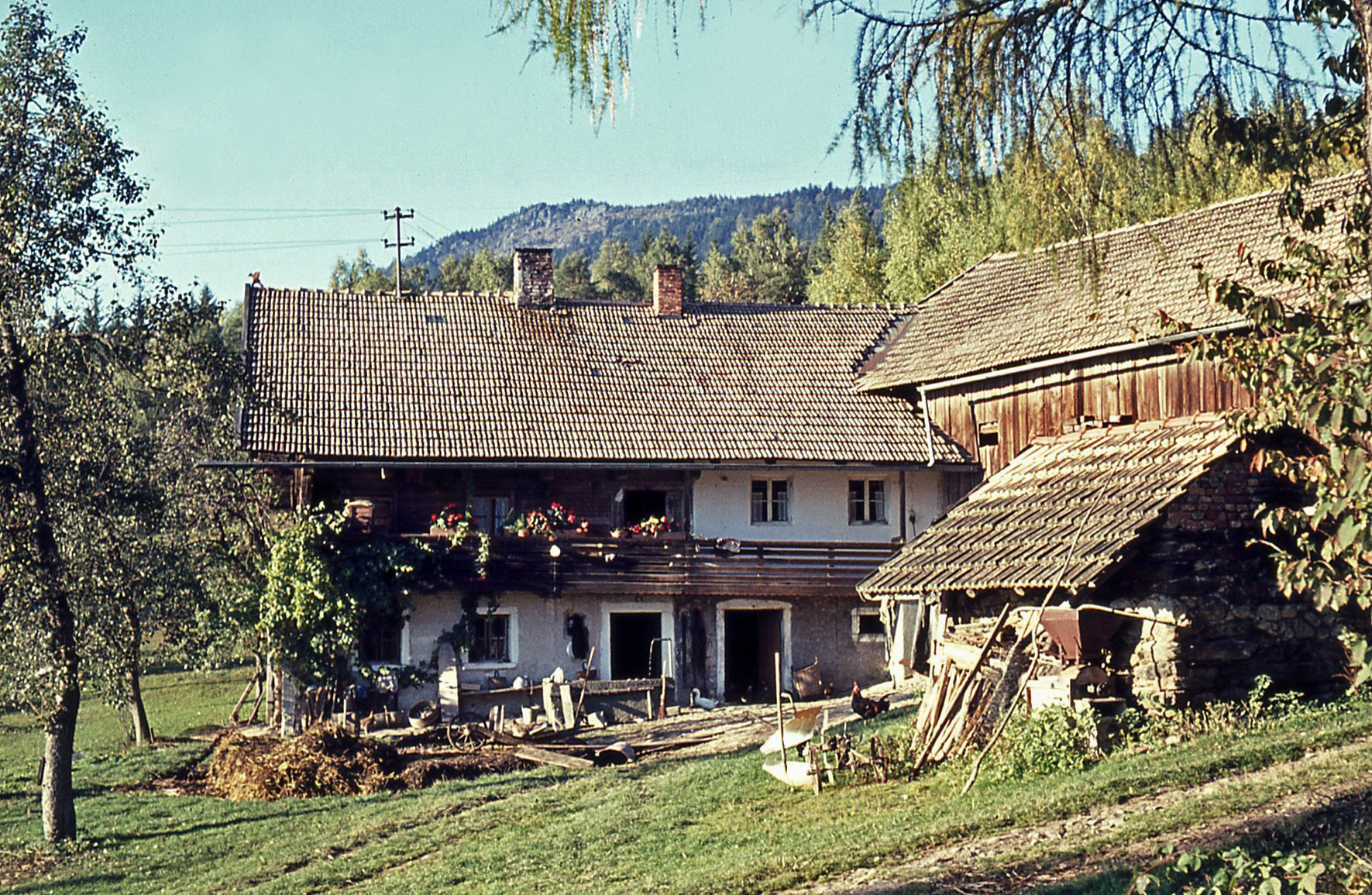
Unfortunately, fate had condemned me not only to grow up in a boring little village in Bavaria, but had also punished me with a rather provincial family, for whom it would have been unthinkable to move further than 10 km from their birthplace.

I always wanted to leave that place. That’s probably why I became a globetrotter and a global citizen. In this respect, I can well understand that – to finally get to the actual story – my great-granduncle Josef Vogl emigrated from this farm in the Bavarian Forest to the USA exactly one hundred years ago, in June 1922.

Now, this does not exactly qualify as an event of world history, as most of the events covered in previous episodes of this small, but fine history series. But I would like to bother you with it nevertheless. For one, because the countless cases of this and similar emigrations together did make world history, in this specific case the emigration of millions of Germans all over the world. On the other hand, I would like you to join me on the trail of research, because I would not be surprised if your family history also contains hitherto unknown migration stories. (In the USA alone, 45 million people give their main ancestry as “German”, and in Canada, Australia, South Africa and Latin America, too, I have met a great many people with amazingly German/Austrian/Swiss sounding names.)

For me, curiosity was kicked off with two photos, taken around 1960, showing my father (the Elvis impersonator), my uncle (the Hitler impersonator), the rest of the extended family, and an unknown man who is obviously the center of attention.

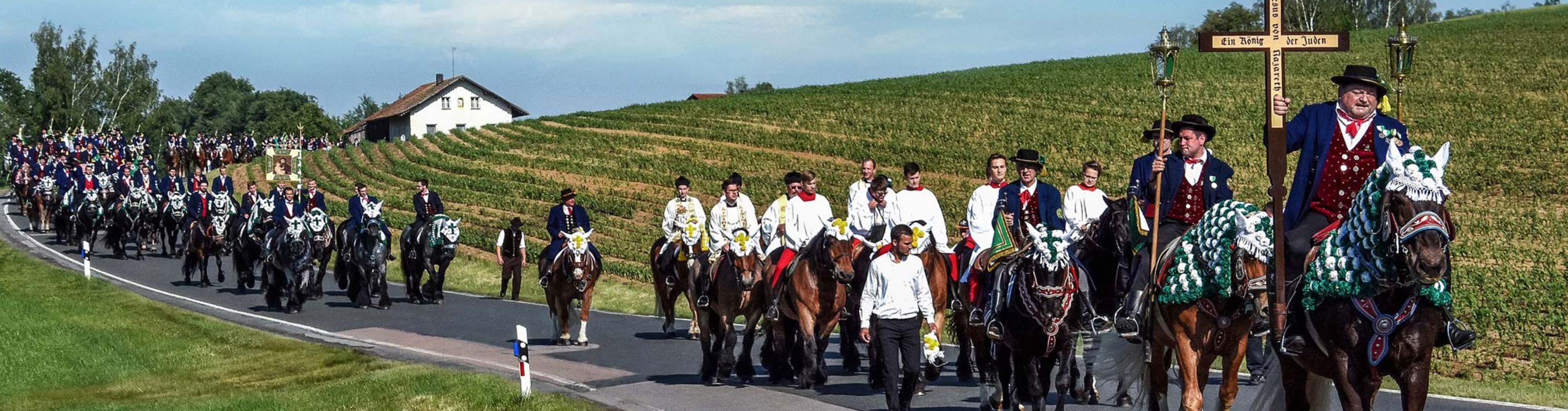
“That was Frank from America,” my father says. Actually, his name was Franz. Franz Vogl, the younger brother of Josef Vogl. Both emigrated to the USA. Josef came to visit once after World War II, Franz/Frank returned twice. Each time at Pentecost, because there is always a hell of a party in Kötzting. Something like the Oktoberfest, but with horses.

“And they got mighty drunk,” my father remembers, “because Frank had dollars.”

Maybe it was because of that drunkenness, but that was all I could get out of my father and uncle. They did not know where in the USA their great uncles had lived. They did not know when and why they had emigrated. They did not know – beyond Franz Vogl’s wife shown in the photo – about any families, descendants and thus possible cousins and other relatives. They did not know whether they were Republicans or Democrats. They didn’t know what they had done in World War II. Nothing at all.

At some time in the 1960s, contact had broken off.

In our family, it is considered suspicious to leave home and venture out into the world. Traveling is considered frivolous, a heretical attempt to leave one’s God-given place on Earth. As I said, I can understand why Josef and Franz wanted to leave. And so I am the only one who is interested in this story. But even I forgot about it for a while.

Until I was in New York again and took the ferry to the Statue of Liberty. That’s the lady with a torch reciting a poem that includes the call: “Give me your tired, your poor, your huddled masses yearning to breathe free.”

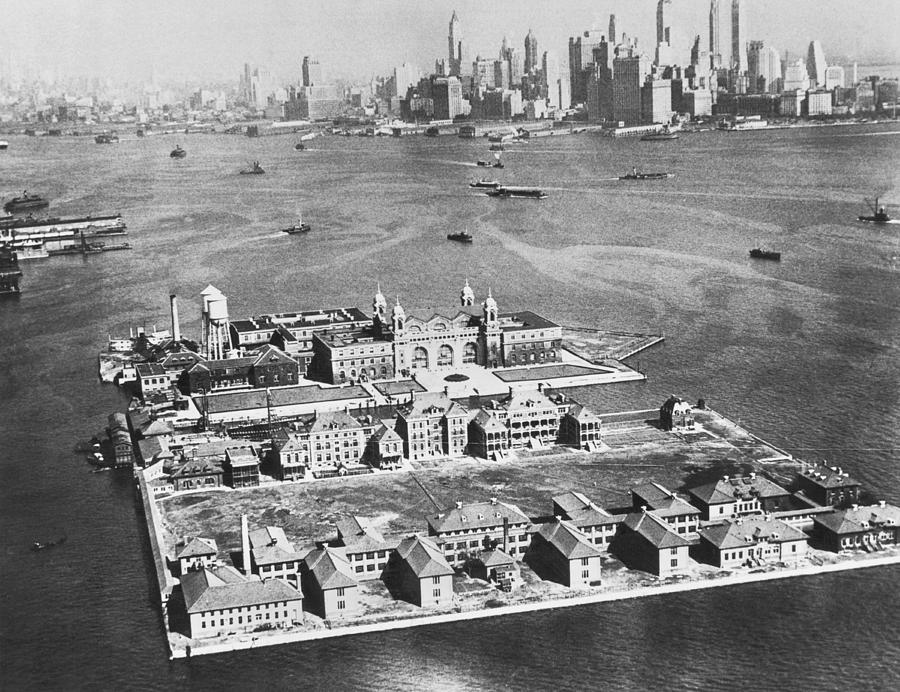
That slogan is quite appropriate, because the Statue of Liberty was indeed the first thing to be spotted by most immigrants who came to New York by ship. Before they were allowed into the country, however, they landed on a neighboring island, Ellis Island, where, until 1954, the central immigration processing point of the USA was located.

Now the former holding room for immigrants is a museum. Here, you can learn how immigration policy changed over time, what requirements immigrants had to fulfill, how the medical examination and quarantine worked. I walked through the arrival hall, the doctors’ rooms and the dormitories, where my relatives felt solid ground under their feet again for the first time after crossing the Atlantic.

By the way: Make sure that you don’t accidentally take the ferry to Rikers Island instead of Liberty Island or Ellis Island. From there, you wouldn’t be able to leave that easily.

On Ellis Island, they had those new-fashioned computer terminals, where you could search for relatives – or for anyone, really. Practically like an archive, only without the romance of leafing through thick books for hours. I knew precious little except that there were two brothers, named Franz and Josef Vogl. Let’s see what I could find with that.

First, I learned that Vogl is a rather common name: 827 hits. (My great-granduncles had a different surname from mine because they come from a grandmotherly line and because the women in my family have not yet been emancipated enough to keep their surnames after marriage.) With my own last name, Moser, there are 6377 hits. Among them even 9 Andreas Moser, who emigrated to the USA between 1866 and 1936. Oh, if only I had met one of them by chance in the port tavern before departure. I might have snatched the ticket from him and used it myself.

If you know the year of birth, the year of emigration or other information, you can narrow down the search. You can also filter by hometown and birthplace. But I’ll demonstrate in a moment why the latter doesn’t make sense. The two came from Kötzting in the Bavarian Forest, but Kötzting does not yield any hits. Neither does Koetzting. Nor Kotzting. So I have to look through the list manually and finally find the two. They didn’t give the nearest town, as I would do when arriving in New York, but the name of their village: Traidersdorf.

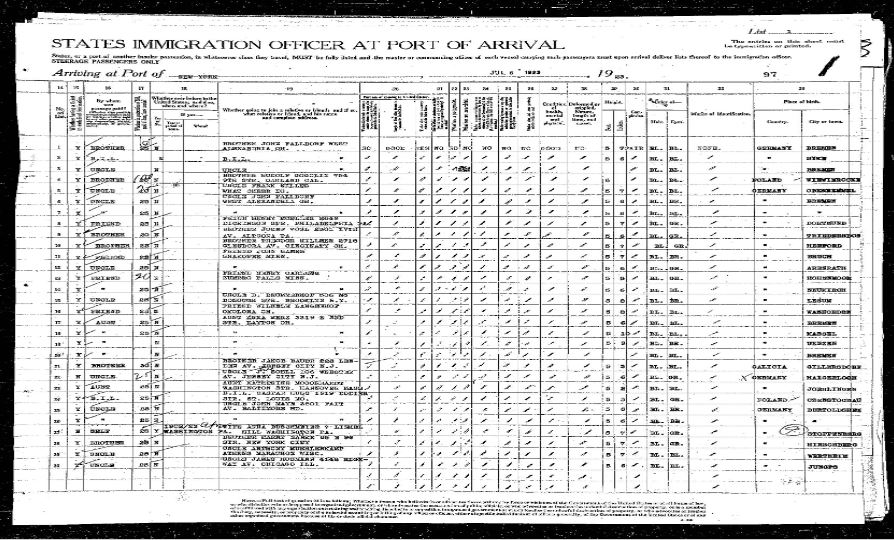
There they are: Josef Vogl, emigrated in 1922, and his younger brother Franz Vogl, who followed him in 1923. (The last column contains the name of the ship on which they traveled.)

You can track this search or research your own relatives, because the database is accessible online. Free of charge. (You just have to register to use all the features.)

Let’s first look at Josef Vogl, because it was him who exactly 100 years ago gave us the reason to celebrate this centenary.

Right away I find out that he was born in 1893, that he arrived in New York on the ship “President Taft” on 30 June 1922 at the age of 29, and that he had set sail from Bremen. (After crossing the Atlantic twice, the “President Taft” was renamed the “President Harding,” so don’t let the image captions confuse you.)

This was already a proper cruise liner, not one of those creaky windjammers, half of which sank. 18 knots. Space for 644 passengers, half in first class, half in third. The ship was only commissioned in 1922, so the paint still smelled fresh, the brass railings shone, and because it was summer, no one was afraid to hit icebergs, polar bears or penguins.

I could write about the highly competitive market for emigration to America now, about the cartels of the shipping companies, the emigration agents going around the countryside, with their brochures about the happy and prosperous life overseas, where everyone can have their own gold rush – or at least their own farm.

I could write about what the journey to Bremen meant for someone who, until then, only knew whatever villages could be reached within a day’s walk from the family farm. (This was before the time when the Wehrmacht sent German men on long trips abroad.) It’s actually not that far. One or two days by train, at a total cost of only 9 euros. But as far as I know, besides the two emigrating brothers, I am the only one in the extended family who has ever made it to Bremen.

I could write about the conditions on board, the differences between first and third class, the calm seas in summer, the stormy seas in winter, and the joy of a few weeks without any internet and television.

I could tell you that Josef Vogel was by far not the only one from that village who emigrated. They were a whole group of young men and women who left home together.

But I don’t want to write a whole book about this, and will thus attempt to reign in my wandering thoughts, leading them straight to the other side of the Atlantic, to New York. It was there where, on said 30 June 1922, some clerk made a meticulous list of all arriving passengers, with Josef Vogl being first in line. Whether this means that he confidently strode off the steamship as the first passenger, or if he was the sea-sickest of them all, or whether it was mere coincidence, I don’t know.

What I do learn is that he was 5 feet 6 inches tall (1.67 meters), had blonde hair, grey eyes and 50 dollars in his pocket. That would be about 800 dollars today, not really an impressive amount for starting a new life. I guess he had to look for work pretty soon.

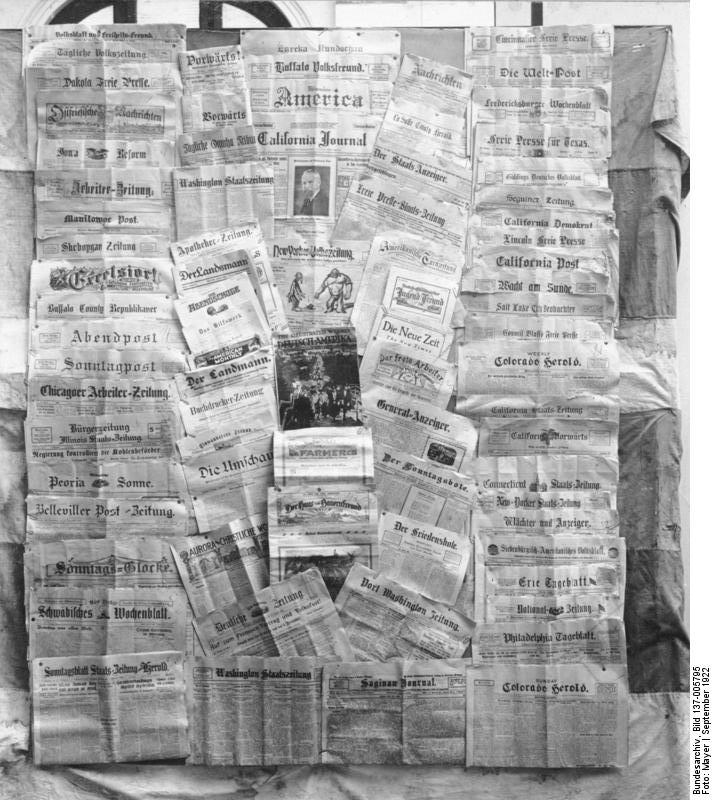
A very interesting column is the first stop where the immigrant wants to go until he can stand on his own two feet. “Friend Josef Sturm – Carroll JA” it says. For one thing, the name suggests that this is a friend from Germany. That wouldn’t be a surprise, since German immigrants liked to keep to themselves. They had German schools, German churches, German clubs and hundreds of German-language newspapers. There were German neighborhoods in the cities and German towns in the countryside, from Bismarck to Germantown.

Deutsche Zeitungen in Nordamerika

I didn’t know what “Carroll JA” was supposed to mean, until I figured out that the J is meant to be an I: Carroll, Iowa. From Traidersdorf to Carroll, that’s like jumping from the frying pan into the fire. Or, as we say in German: escaping the rain into the water tower, which coincidentally is the proud landmark of this small town in the flat countryside. Well, if it wasn’t so flat, you wouldn’t need a water tower to get the necessary pressure to the water pipes. By the way, even when I was a child (1970s and 1980s), the ice-cold water on the farm in the Bavarian Forest came from the well in front of the house.

To this small town, which probably is quite a nice place, I now would have to travel to dig through archives, old newspapers and look for gravestones in the cemetery, if I wanted to pick up the trail of my great-granduncle Josef Vogl.

Would have. If we weren’t dealing with a classic case of chain migration. Because Josef soon got his younger brother Franz to join him. Franz arrived in New York, as I also learn from the online archive of Ellis Island, on 6 July 1923 at the age of 26. He too had sailed from Bremen, on exactly the same ship as his older brother, which by now was called “President Harding.” (That July 6th is my birthday and that I am happy about any support for this blog is only worth mentioning in passing.)

Everything was neatly noted down for him, too (line 9). It is apparent that it was the time of the economic crisis and inflation in Germany, because he only had 20 dollars with him. But he stated that his brother had paid the passage for him. Which was nice. I would do the same for my brother and sister any time if they can no longer stand it at home.

But the most helpful piece of information in this document is the address provided by Franz Vogl as the destination of his journey in 1923: “Brother Josef Vogl, 2301 17th Avenue, Altoona PA.”

That’s a real bingo! Even before I have to dig through old boxes in the archives of Carroll, Iowa, I already know that Josef had moved to Altoona, Pennsylvania, within a year and his younger brother Franz followed him there. Altoona, by the way, is also one of those German towns; it’s the Americanized spelling of Altona near Hamburg. They even got mountains there, the Allegheny Mountains.

And they got plenty of railroads and locomotive factories. When I reported this to my father, he remembered that Franz/Frank had told him during his visit to Germany that he worked for the railroad. So you see: It does make sense to share even preliminary results, because then somebody will remember something they didn’t know they knew. These “Unknown Knowns” were even overlooked by Donald Rumsfeld.

But the biggest step forward is that we have not only the city, but the exact address. You can’t get more bingo than that! And because Americans had rebelled against the General Data Protection Regulation in 1775, every street in the USA is now photographed, filmed, bugged by the NSA and posted on the interweb. Here is a recent photo:

The communist star above the porch does indeed suggest a family connection. On the other hand, the house doesn’t look like it was built in the 1920s. Maybe the neighborhood looked completely different back then? Maybe 17th Avenue was in a different part of town 100 years ago? Maybe someone got the address wrong?

To find out more, I will simply write a letter to this address. Or travel to Altoona to investigate myself. Or hope that someone from Altoona will read this article.

Of course, I could also search the databases. But I prefer to do it the old-fashioned way. And besides, I want to leave something for future articles on the search for the long-lost relatives.

And you can launch your own investigation, too! Because, as you have seen: Even if you think your family is boring and has always lived in the same place ever since the Mongols settled, almost every family has someone with a migration story.

But don’t trust artificial intelligence too much! You gotta work with a detective’s creativity, thinking in all directions. An example: Only when I looked at the document dated 30 June 1922 for the third or fourth time did I notice that the column “previous stay in the USA” indicated the period 1914-1921.

What? Did Josef already emigrate for the first time in 1914, when he was just 21 years old? I searched and searched, but could find no entry in the Ellis Island database. Close to despair, I remembered how stupid computers are and how smart people are, searched only for the last name, and sure enough: This time, his name is spelled as Joseph, not Josef. And the place of birth has been wrongly transcribed as “Fraidersdorf”.

At that time, he sailed from Antwerp, on a Red Star Line ship, whose former port facilities now house a migration museum. As luck would have it, I have been there as well.

In 1914, Josef Vogl was already drawn to Carroll, going – with four other migrants – to the nephew of someone whose name I cannot decipher. But it means that he may have lived there much longer than I had previously thought. So I do have to go to the archives in Carroll, Iowa, after all.

What would be of particular interest to me: How did he spend the time of World War I? With the US entering the war in 1917, anti-German sentiment was spreading. As a young man, was he taken to one of the internment camps?

German internment WW1

The fact that migrants returned to their homeland after a few years and emigrated again later was nothing special, by the way. Since steamships had replaced the unsafe sailing ships and the journey had become relatively plannable, safe and comfortable, immigrants returned to Europe again and again. In order to get married. To take up an inheritance. Or to open a business with the money they had saved. Josef only stayed in Germany for one year, from 1921 to 1922.

In 1924, one year after Franz Vogl’s migration, the USA drastically tightened immigration rules and set quotas for certain countries of origin. This put an end to mass immigration. Good thing Josef and Franz made it in time. At least they were spared the Nazis that way.

And now I am curious about your own investigations into family history!

Links:

Posted in Germany, History, Travel, USA | Tagged , , , , , , , , , | 14 Comments

Back from the Carpathians

Zur deutschen Fassung.

Shockingly little has happened on this blog in the last few months. :-(

First, this was due to university, where I am working on a paper about the history of labor in the Middle Ages and in Early Modernity. As any subject that you delve into deeply, this has turned out to be much more complicated (and even more interesting) than anticipated.

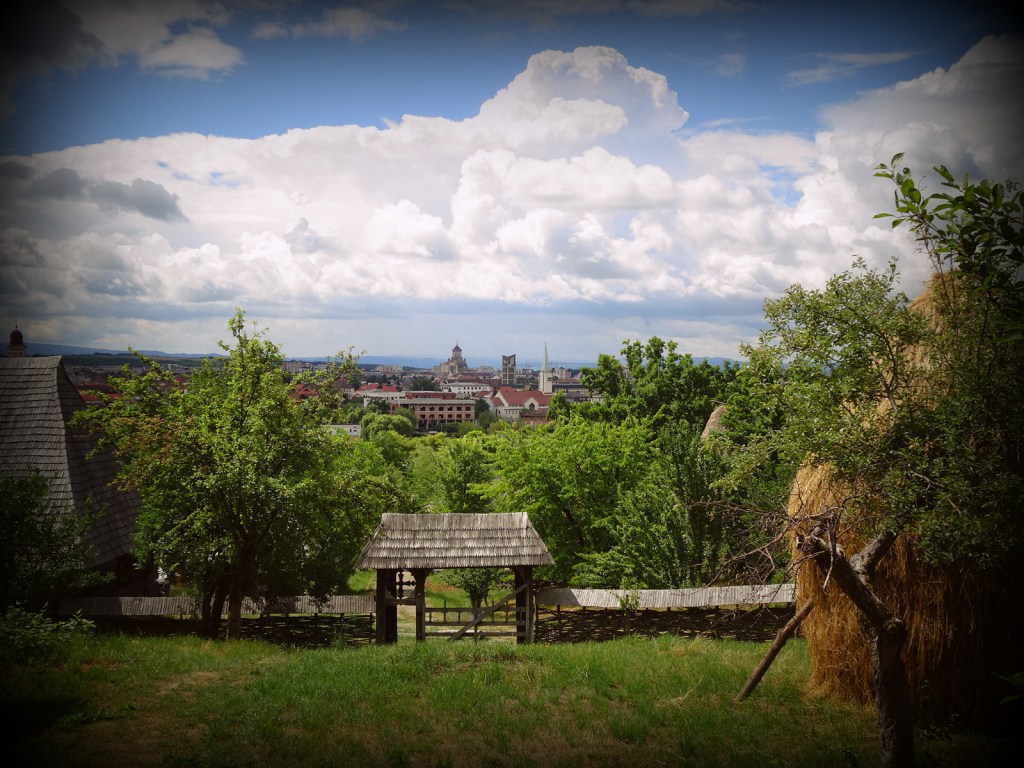
And, for the last two weeks, I was finally traveling again. For my birthday, I went to Romania and to Ukraine, whence I shall have some (hopefully) interesting stories for you. While I am working on these, here are a few photos to wet your appetite.

First, I went to Alba Iulia. As Romania’s secret capital, this will feature in an upcoming episode of my history series “One hundred years ago …”, because in October 1922, this is where King Ferdinand and Queen Marie were crowned. Almost one hundred years was also the time it took me to circumvent the citadel, the second-largest man-made defense structure in the world, just after the Great Wall of China.

There will also be a story about being locked in at the Botanical Garden and about a very legalistic playground.

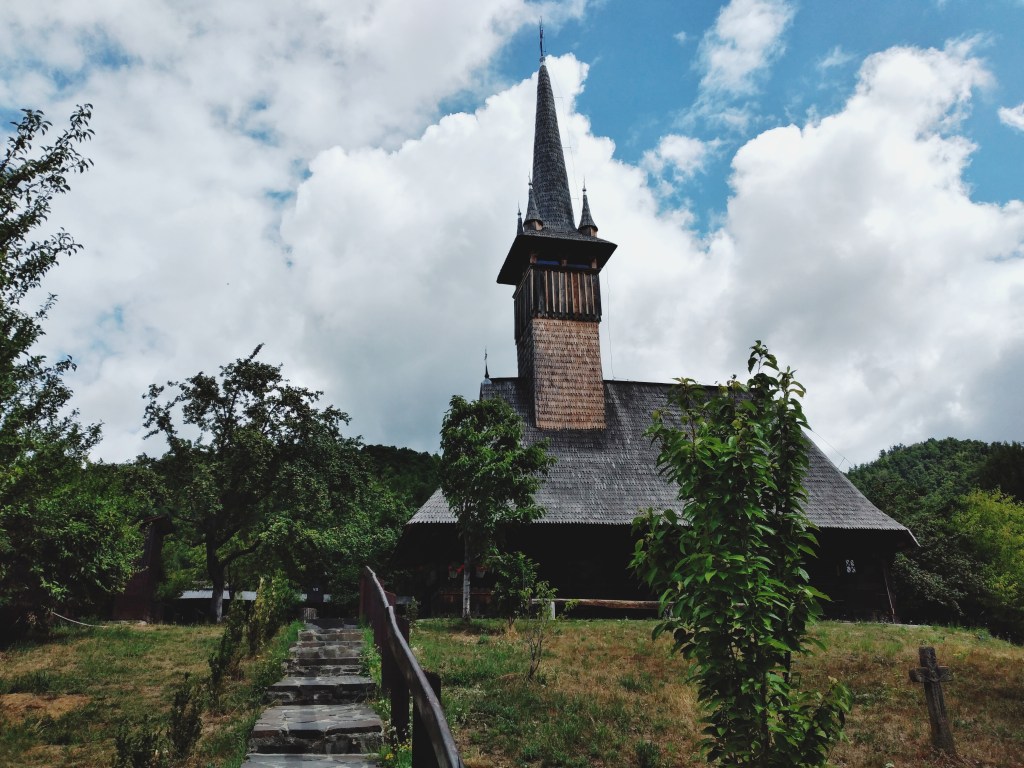
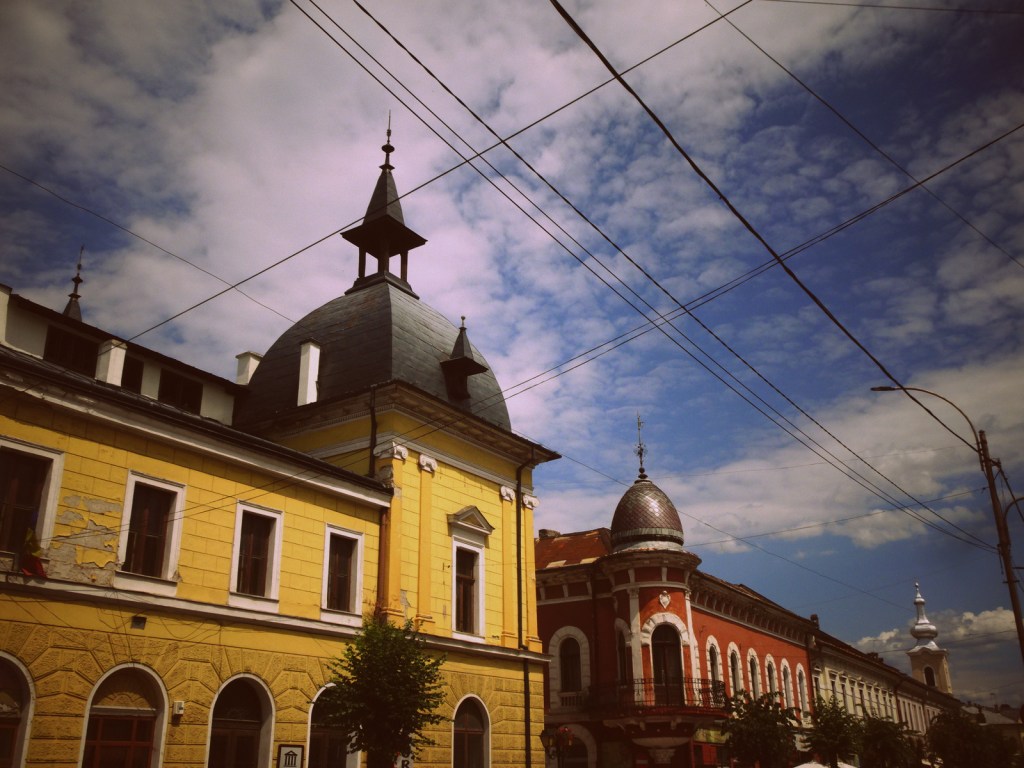
Next, I went to Baia Mare, the lovely capital of Maramureș.

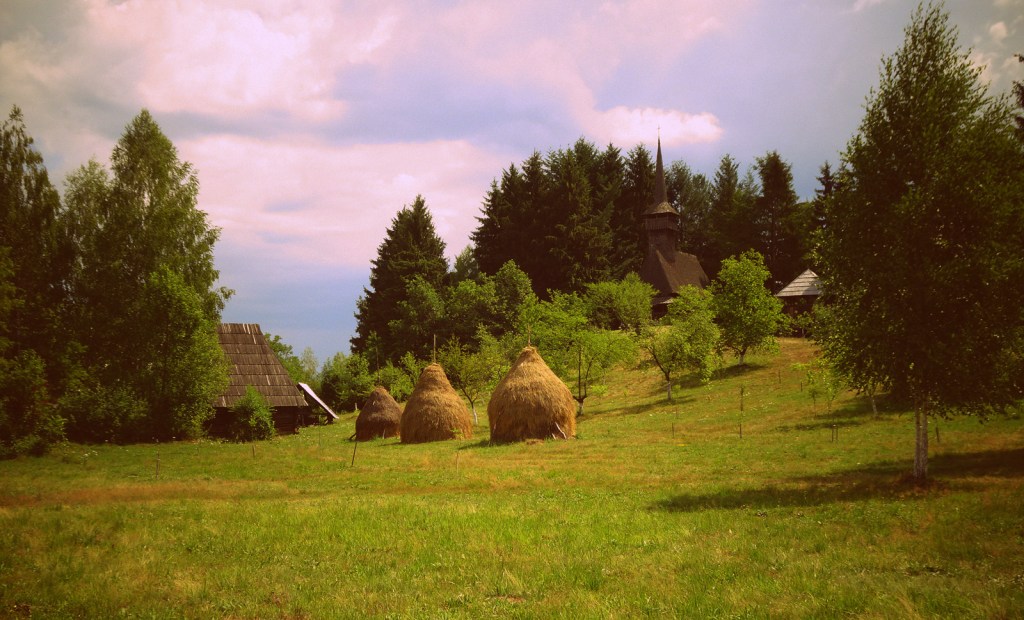
Travel between the cities was a delight not only for the view of mountains, rivers and the typical wooden houses, but also because I got to hang out in architectural gems like the Baia Mare bus station.

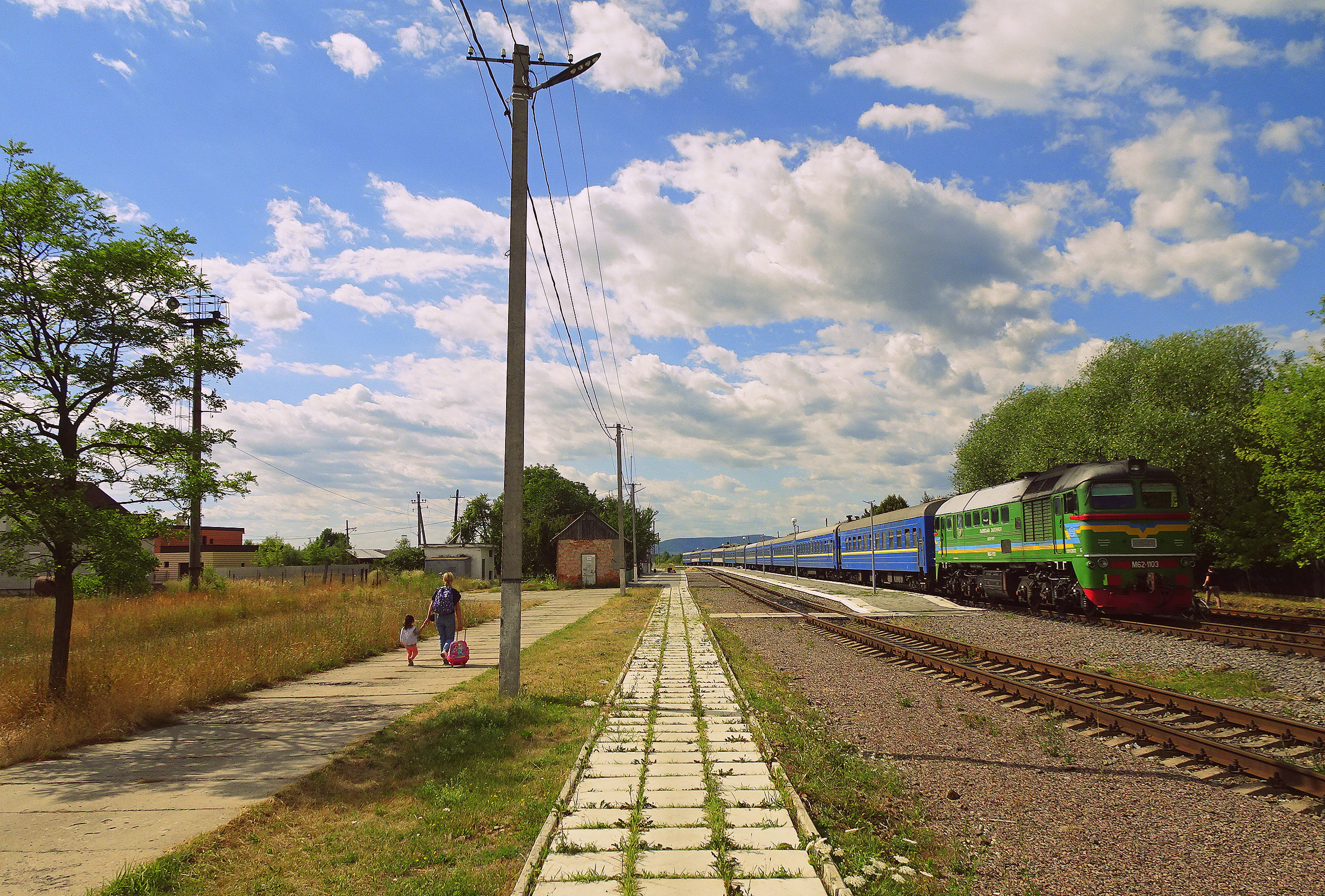
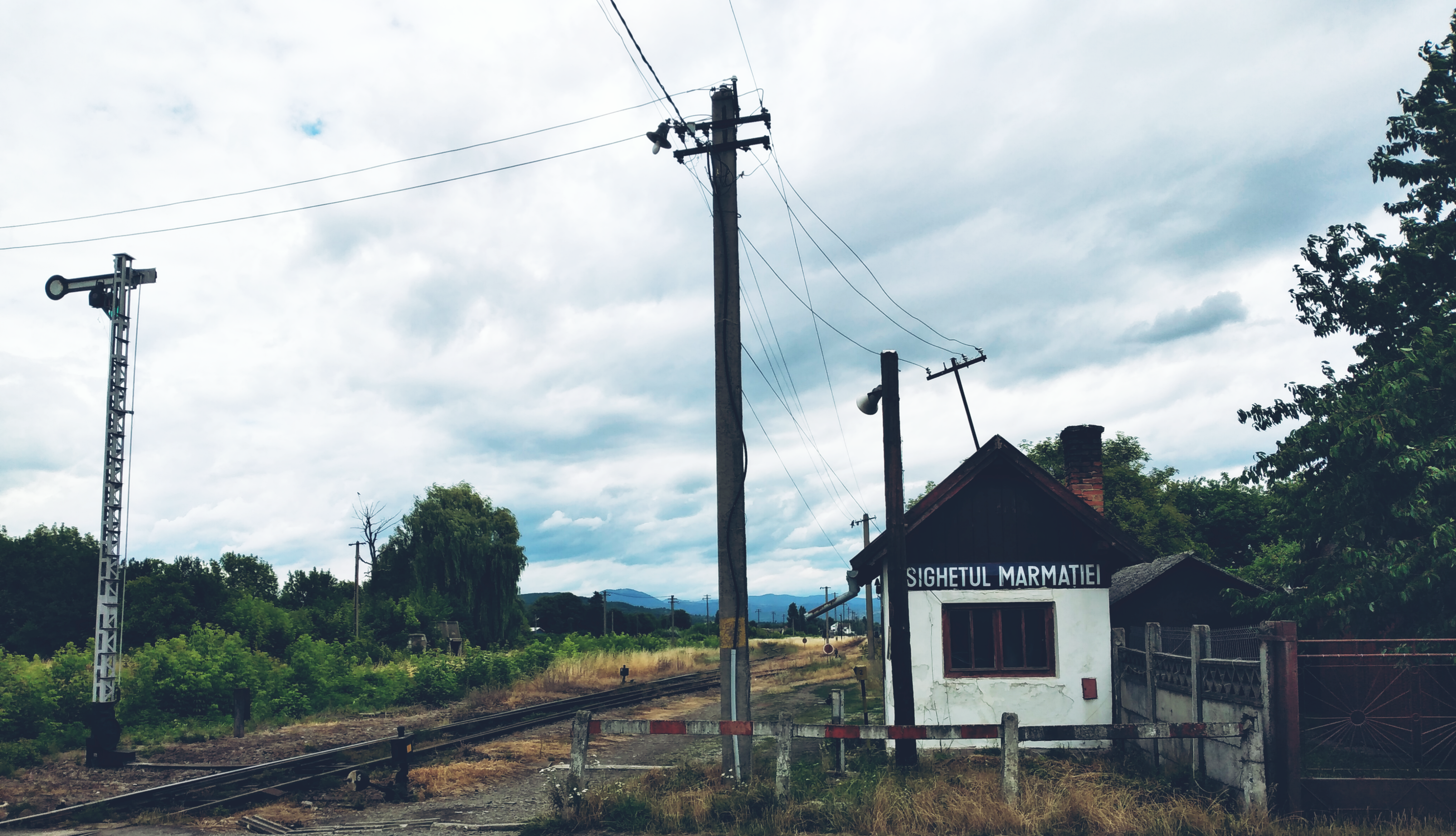
Or the train station in Sighet.

Sighet is quite a lively town for its size, with museums like the one for the victims of Romanian communism or Elie Wiesel’s childhood house, attracting visitors from around the world.

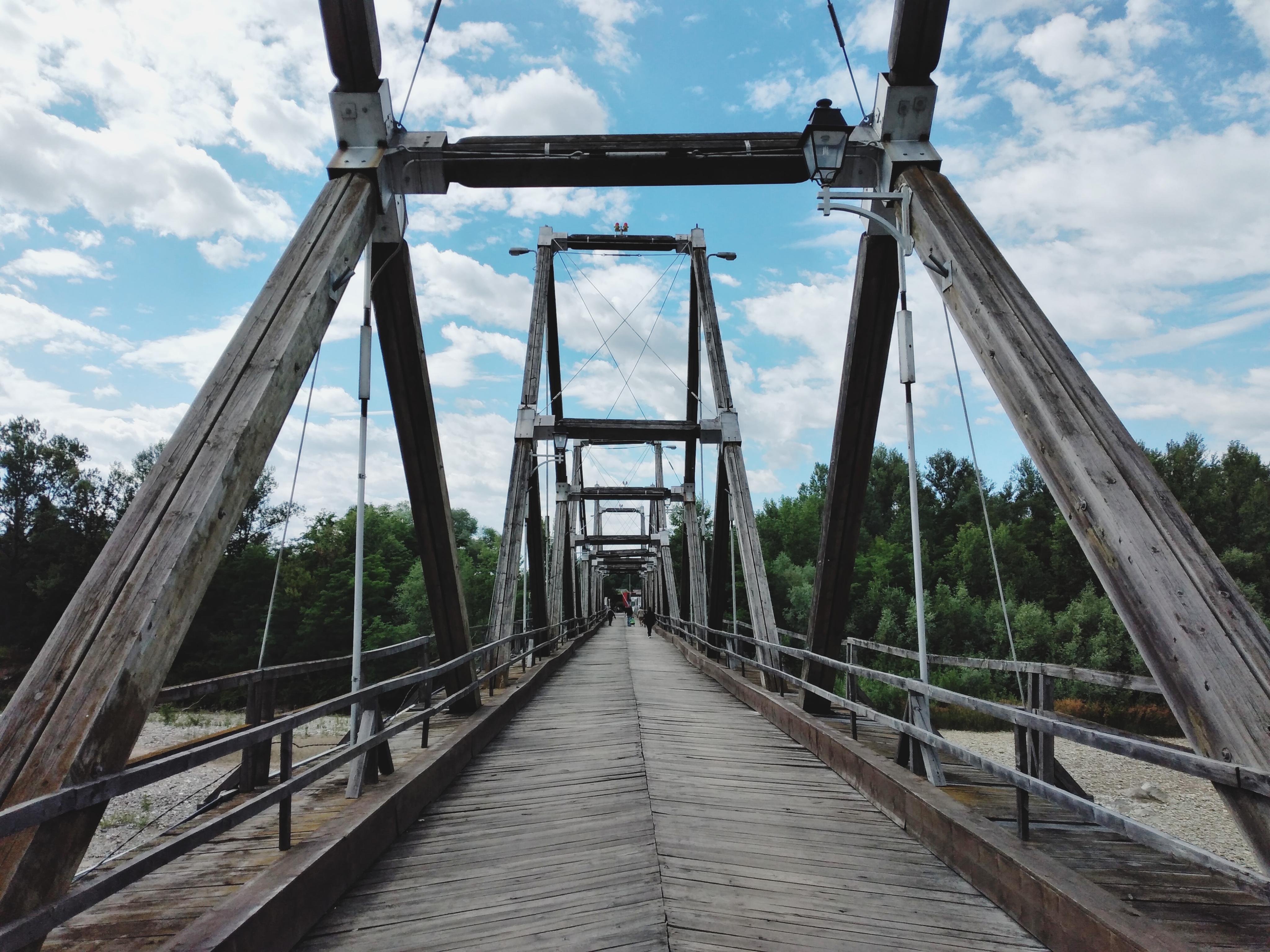
But I mainly used Sighet to walk across this wooden bridge into Ukraine.
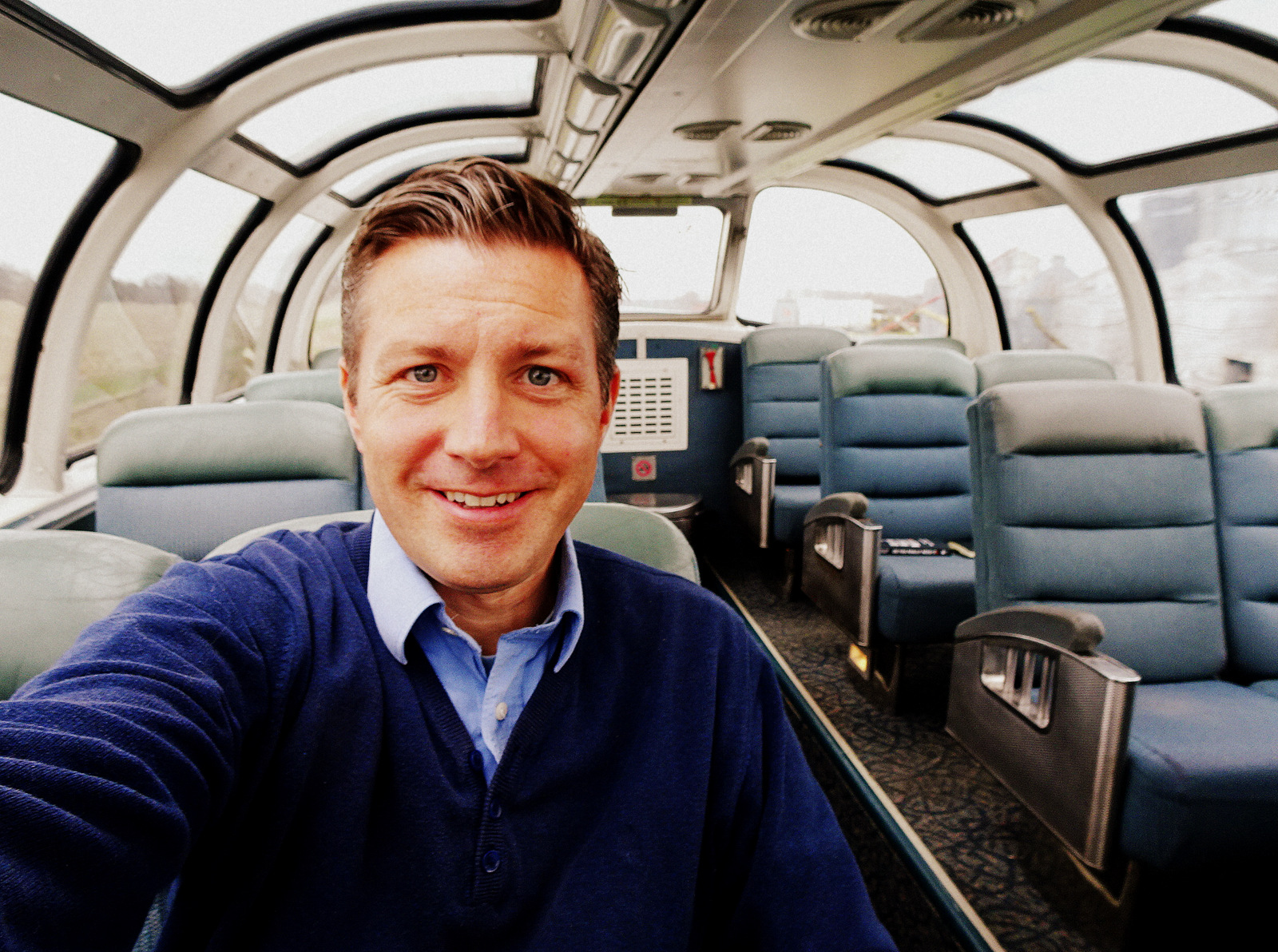
For a country bracing full-out war, the border process was astonishingly easy and straightforward (and much friendlier than in other countries in peacetime). Even the trains are still running, although I had to hitchhike because I wanted to go to find the geographical center of Europe. Which I did.
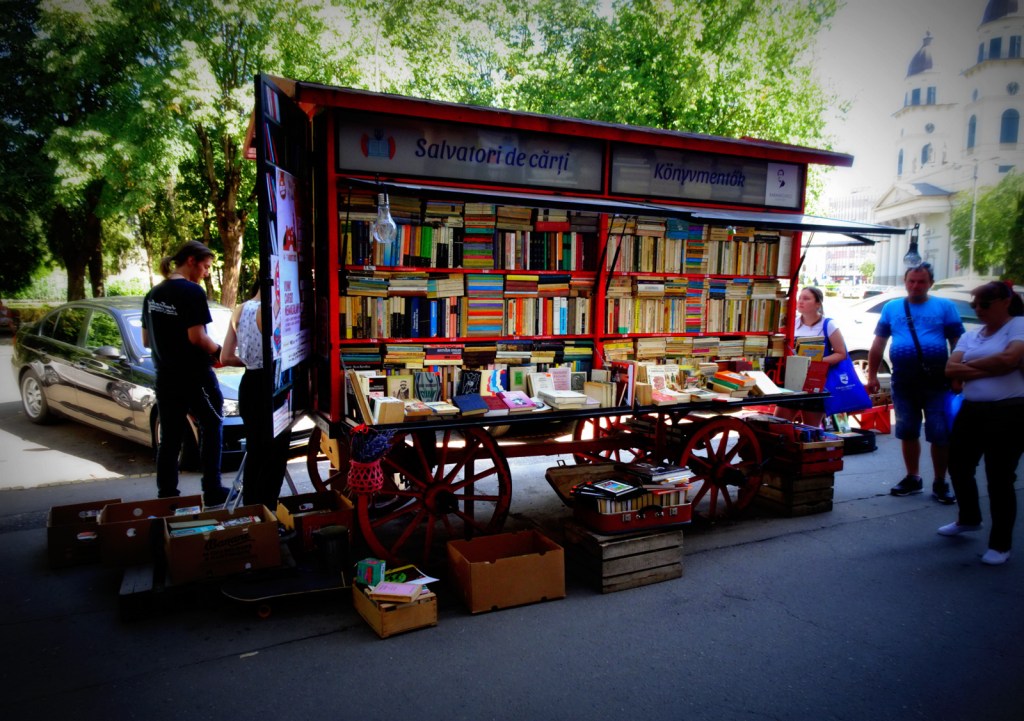
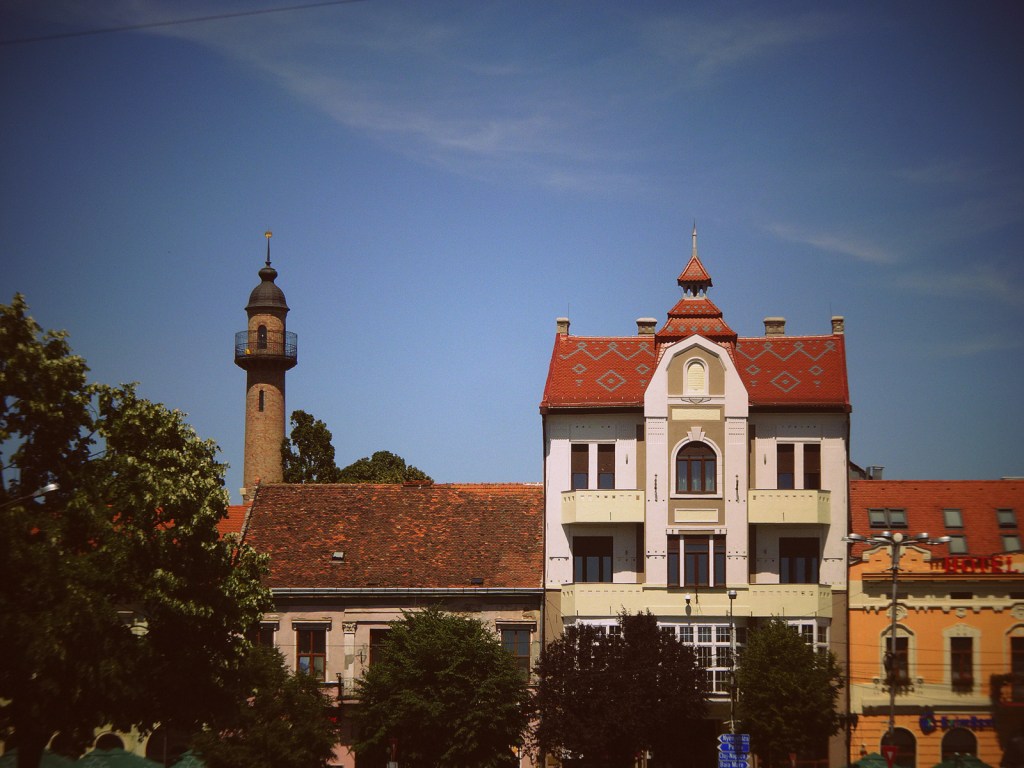
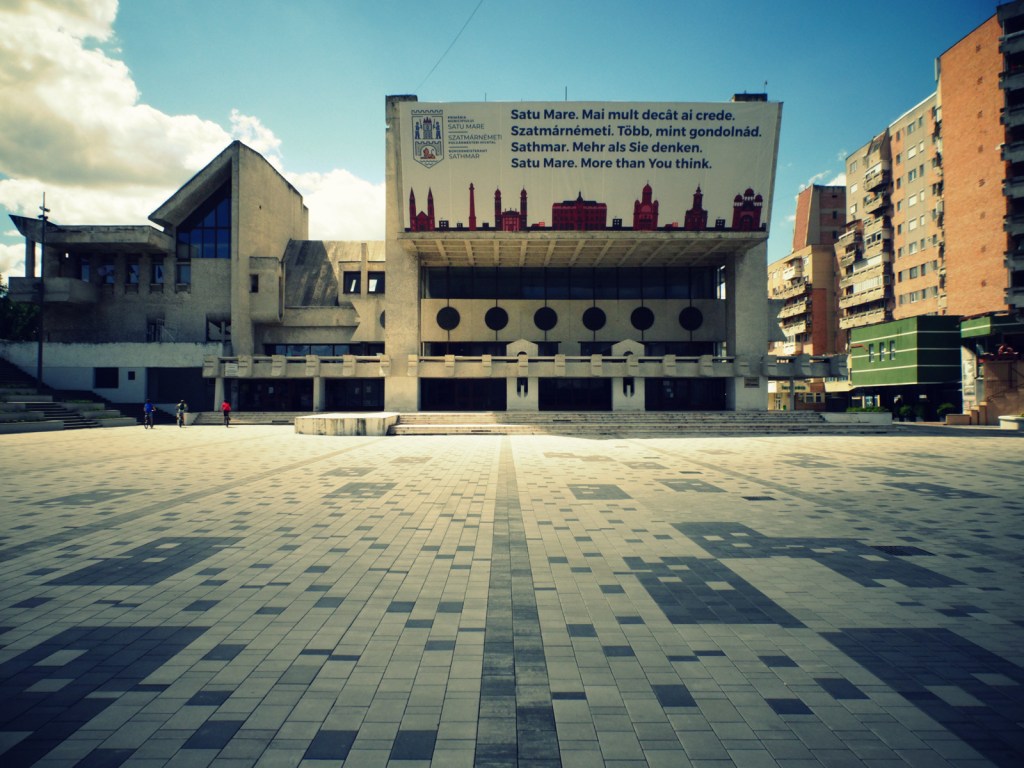
The last stop on my trip, back in Romania, was Satu Mare. A very friendly town, with people everywhere taking time to talk. At the art museum, the director herself gave me a guided tour of the exhibition about Aurel Popp. In French. There seemed to be surprisingly little tourism, even though a brochure which I picked up from the tourist information boasted of direct flights between Satu Mare and New York. (The information was outdated, or had never been true.)

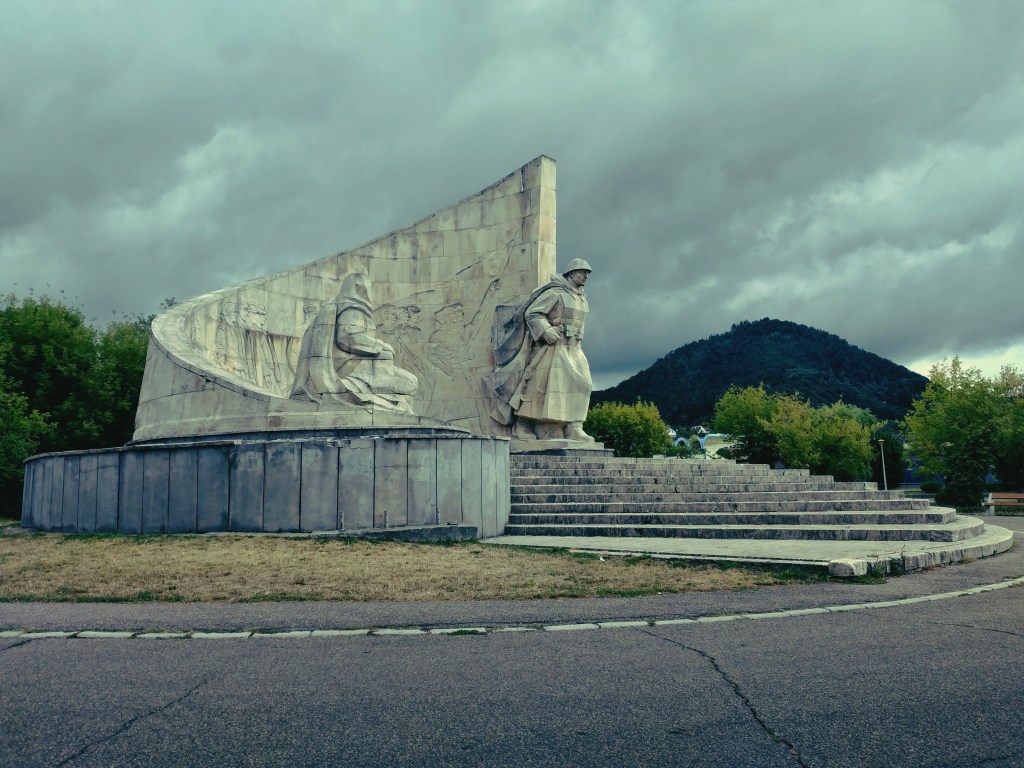
Satu Mare should be much better known, though, because it must be the world’s secret capital of Brutalism.

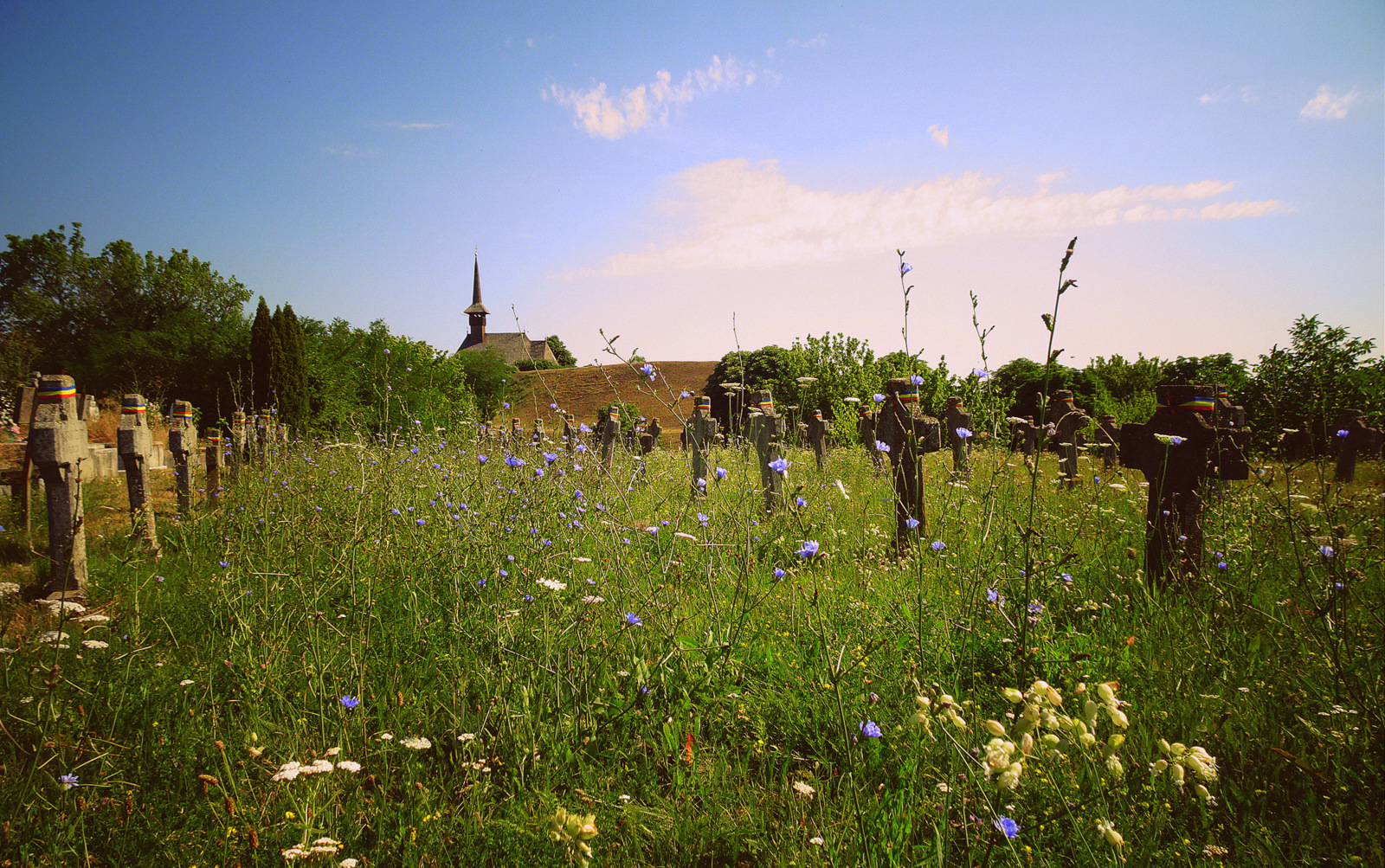
And as always, there will be plenty of cemeteries.

And cats. Both of these were photographed in Solotwyno, Ukraine. I guess you can tell whose owner is still around and whose owner has been killed.

But more about that in the upcoming articles.

In the meantime, take a look at my older articles about Romania and about Ukraine.

Do you want a posctard?

Actually, you would be surprised how hard it has become to find postcards in some places. But for you, dear reader, I’ll walk the extra miles!

€10.00

Posted in Photography, Romania, Travel, Ukraine | Tagged , , , , | 5 Comments

Slow Down!

Photographed on my last New Year’s Eve hike.

Posted in Life, Photography | 5 Comments

Film Review: “Top Gun Maverick”

I can keep this short:

A boring macho-kitschy movie, where half-dead actors are put on stage in a vain attempt to reanimate plots that have been dead for a long time.

The only good thing is that the flying seems to have been real, none of that computer-aided crap.

If you are interested in Navy aviation, I can recommend a really good book, though: “Another Great Day at Sea” by Geoff Dyer. In fact, this is a delightful read even if you are not at all interested in aviation, as Dyer uses his stay on an aircraft carrier to delve into sociology, economics, religion and the American psyche. Observing and story-telling at its best!

Links:

Posted in Cinema, Military, USA | Tagged , | 8 Comments

Walking from Kötzting to Viechtach

Zur deutschen Fassung.

That should be an easy walk, I thought, as there is a river connecting the two towns in the Bavarian Forest.

Well, there is a river. But there ain’t always a path. So I had to climb a bit. I had to walk through poison ivy. I got wet, muddy and exhausted.

It was a great day!

In the rest of the valley, from Viechtach to Gotteszell, they reactivated the old railway line, which is much more comfortable, of course. But that’s for another article.

And yes, this summer’s 9-euro ticket is also valid on scenic train journeys like this one.

Links:

Posted in Germany, Photography, Travel | Tagged , | 8 Comments