
- Now I know why it’s called CATalonia: it doesn’t know if it wants to walk through the door or not.
- Shouldn’t nobody sign no contract that they ain’t read before.
(I am now giving legal advice in country lyrics, at no extra cost.) - I never knew Luxembourg was a world power, but now I read that the Luembourgish Army fought in the Korean War.
- Why do the three Baltic states have such an uneven women/men-ratio?
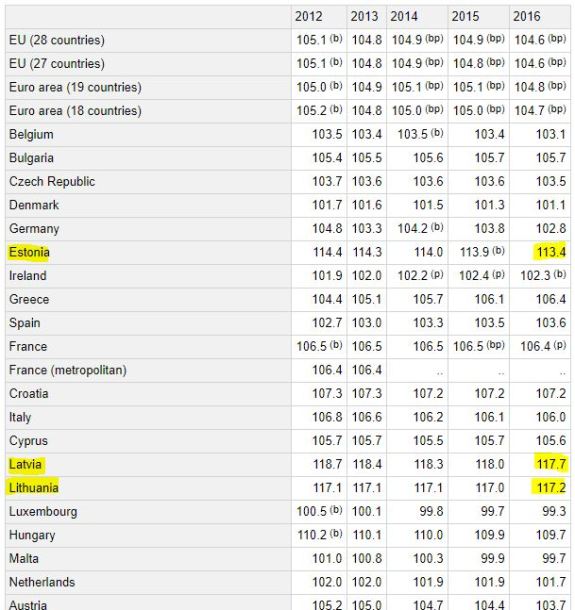
- The numbers for different age brackets give a partial answer. Everything is fine until 55 years of age, then the number of men drops off. Above 65 years old, the ratio is a stunning 2 women for 1 man.
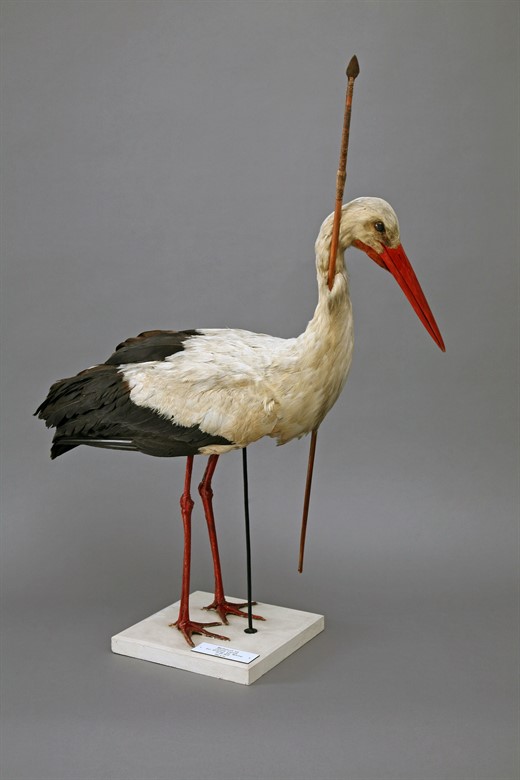
- From a program about bird migration on the BBC, I learned that storks returning to Europe with obviously African arrows and spears shot through their bodies were some of the first indicators of bird migration.
- I didn’t think that this advice might become relevant for my readers in the USA, but apparently the time has come: How to make fun of Nazis.
- I noticed that you can save a lot of time if you eat only one big meal per day instead of three smaller ones.
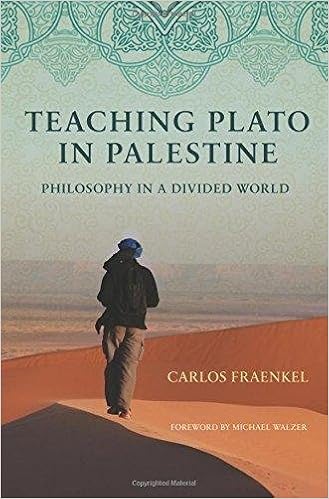
- Thanks to Ana Alves for sending me Human Rights after Hitler by Dan Plesch, The Non-Existence of God by Nicholas Everitt and Teaching Plato in Palestine: Philosophy in a Divided World by Carlos Fraenkel!
- I give up on Venice. Each time I go there, the whole city is flooded, whatever the time of year.
- For the World Fair 1937 in Paris, an architect proposed this 700-meter-high tower that could be scaled by cars:

- Thanks to the readers who alerted me to this dream job with the New York Times. But when a newspaper announces such a job, I am quite certain they already have someone in mind and only use the job advert to create additional buzz.
- Upon reading Paul Theroux’ The Great Railway Bazaar, I noticed that I could have saved myself the investigation to find out the longest possible train route. For he writes: “The way is clear, by rail, from Hanoi Junction to Liverpool Street Station in London,” but then makes a detour via Japan and Vladivostok.
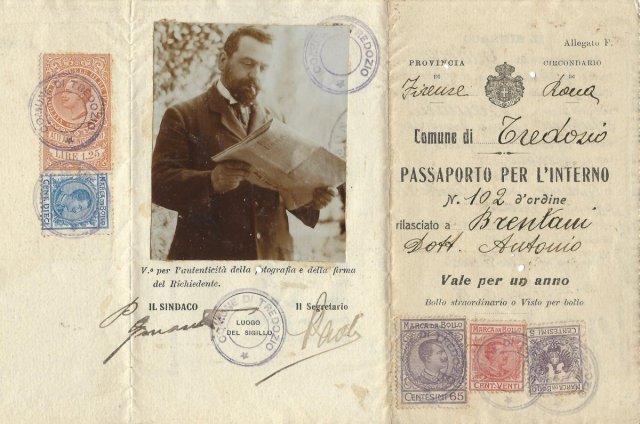
- When I was young, we could still read and smoke for passport photos.
- After taking up studying again, I still have to get used to asking for student discount everywhere.
- Did you know that I inspired a verb in German? “To moser” means to constantly nag and criticize, although not without reason. Quite fitting.

- Every generation is entitled to its own Spanish Civil War.
- The #MeToo campaign is opening my eyes. Thank you! I hope it’s a bit easier for those speaking out because so many victims are coming forward (and absolutely no blame at all on those who don’t – I wouldn’t either), making it less about the individual stories, but about how widespread abusive, violent, demeaning and criminal behavior is. – It’s really shocking for me to read it from so many women whom I know, and I hope I will always keep this in mind when the subject comes up.
- How to scare Germans: Look people in the eye, smile and say “hello”.
- For Coming Out Day, I confess that I prefer books over people.
- How to spot difficult clients:
“Hi Andreas,
You might be rightfully charging your fees – but …”
(I stopped reading at that point.) - Life would be much more comfortable if it was socially acceptable to go to university in jogging pants.
- What if Bob Mueller arrests Donald Trump in exactly the same moment as Trump fires Mueller?
Random Thoughts (17)
Posted in Books, Estonia, Germany, Italy, Latvia, Law, Lithuania, Politics, Spain, Time, Travel, USA
Tagged Catalonia, Donald Trump, legal advice, Luxembourg, Media, passport, poetry, Statistics, Venice
12 Comments
Studying history at University of Hagen
Hier geht es zur deutschen Originalfassung dieses Artikels.
Good news: I am a student again!
Because I am constantly reading, thinking and writing, I thought that I might as well study once again. After all, I always enjoyed university more than work, and everybody needs a hobby. I prefer browsing books over bar brawls and lounging in libraries over listening to loud Latin lyrics.
I had always wanted to study history. Immediately after high school, I only didn’t do so because other subjects had attracted my curiosity as well. Due to family imprint (to blame somebody else) and the neoliberal zeitgeist of the time, I thought that job prospects had to be a relevant factor when choosing one’s field of study. Thus, history was relegated. The finals between law and economics were then decided by a fear of higher mathematics and probably also by a predisposition for arguments and discussions.
The possibility of studying two subjects at the same time had not even crossed my mind back then, for I was under the misguided impression that I had to finish my studies as soon as possible in order to become a productive member of the national economy. Well, that’s how we thought in the 1990s. You have to remember that back then (at least in Germany), the radio played songs every day encouraging you to “increase the Gross National Product”. But, dear young readers, take your time! It really doesn’t matter if you start sitting in an office or standing at the assembly line at age 24 or age 26. Study as long as you can!
After the end of the Cold War, maybe history didn’t seem that interesting for a while either. Coca Cola had won against Vita Cola, the Berlin Wall had come down, and that was it. End of history.
But now it’s 2017, the 100th anniversary of the Russian Revolution, the peripety of World War I and the actual beginning of the 20th century. I have also regained an interest in pursuing the academic study of history because I find it misinterpreted and misrepresented in political debates more and more (“slaves came to America looking for prosperity”, “terrorism is a new phenomenon”, “this area was always Armenian/Palestinian/Hungarian”). Whether we are talking about monuments to Confederate generals or to victims of the Holocaust, the future of Palestine or Abkhazia, we can hardly discuss such issues seriously without an informed look into history.
As you know, my life is modeled on the Migration Period, so I didn’t have the heart to make a decision for one fixed location for several years. Therefore, because of flexible time management and because I didn’t want to sit next to giggling teenagers, the best option was the University of Hagen, Germany’s distance university.
Apart from MA and PhD (but we don’t want to think quite that far this semester), this university only offers history as part of the BA in Cultural Studies with literature or philosophy as a minor.

I don’t mind that at all, I thought – until I held the introductory course books for literature in my hands and stumbled, or indeed tripped and fell, over such seemingly unliterary concepts as self-referential closeness of the theory of structuralism and donquijotesque transfers of the text to decontextualized allegorical dimensions. I like literature and I would like to enjoy it further. The first and possibly overhasty impression tells me that to this purpose, I better stay away from the study of literature. Maybe it’s like food, which also tastes better when you don’t know how it was prepared. So I will choose philosophy as a minor and hope that my MA in philosophy will be recognized to a large extent, allowing me to focus on history in the coming years.
The majority of you who don’t read this blog as an ersatz-Bildungsroman but for its travel reports, will now worry and wonder if the roving reporter will only be sitting at his desk for the next four to six years and not experience any more noteworthy adventures.

You needn’t worry about this, please, because:
- Most of my travels haven’t been journalistically exploited yet. About a dozen notebooks with chocolate stains and bullet holes are still waiting for a hungry audience that they could feed for years.
- I should remind you that many of my travel reports have already been enriched with historical knowledge, which sets my blog apart from the standard sun-beach-caipirinha travel blogs. This information shall henceforth be even better researched and substantiated.
- Because I can carry out the distance studies from anywhere, I will move around a few times during the project. The next move will probably be to Eastern Europe again.
- Although most classes are virtual, the university also offers regular seminars in person. For example, I have just been to a whole intensive week of history lectures and seminars in Hagen. After Haifa and Hanga Roa, you are surely dying to read something about Hagen in North Rhine-Westphalia. For the next seminar in December (“Crisis of European modernity – changes and departures: the epochal year 1917”), I will have to go to Frankfurt.
- In June 2018, there is even a field trip to Krakow (“Politics of remembrance and of history in a Polish metropolis 1900-1970”). I am looking forward to that in particular because, to my great shame, I still haven’t been to neighboring Poland. (Heck, even my grandfathers have been there, albeit on invasion.) Maybe I will add a few extra extra months there.
- Because of a seminar on Mesopotamia (this one without an excursion, unfortunately), I’d like to travel to Iraq. But unfortunately, international flights to Kurdistan were suspended after the independence referendum (take note, Catalonia!), making everything more complicated and expensive and thus less likely. We’ll see if I find a way. I’ve already discovered that there are regular buses from Amman to Baghdad, and now that ISIS has gone bankrupt that should be super-safe.
- And then there is the Erasmus program! When I was sharing a flat in Bari with Erasmus brats who were partying more than they were studying, I was still making fun of it. But now I am looking forward to EU subsidies for one or two semesters abroad. I don’t need to go to the stupid parties, after all.
- I am confident that I will also think of something interesting and exotic for the internships. You know me. I can’t stay glued to my desk for that long. I haven’t put the backpack in mothballs yet.
Studying can be a thrilling journey of discovery, too.
Because I have already been writing about history in this blog, you hopefully won’t mind if I report from a seminar from time to time or turn one of my term papers into an article. And maybe some of you can be motivated to return to university yourselves. I notice that there is a trend to a second or third degree. (Or maybe that’s mainly among my lawyer friends who are hit with a burnout.)
Lastly, I have extended my wishlist with a list of books specifically for my studies, which may be more useful for Christmas than yet more socks with elks. 😉
Why travelling with little money is the best
Dan Kieran writes in The Idle Traveller:
If you have to rely on other people, you are forced to be open and engage with them, which quickly spreads the notion of friendship and community. One person leads you to another further along your path or pushes you in a slightly different direction from the one you were imagining. It is a loss of control, but an entirely life-affirming and liberating one.
If, on the other hand, you have plenty of money and no need of anyone’s help, you can venture all over the world without meeting a single local person.
And I agree.
If I had enough money to stay in hotels all the time, I would never have tried Couchsurfing, where I met plenty of inspiring and helpful people. They often made my trips much more interesting than they would have been without local contacts. This summer for example, I stayed with a young Couchsurfing host in Abkhazia, who took me to galleries and exhibitions and introduced me to artists, academics and even the former Foreign Minister of the country.
If I had stayed in a hotel, I wouldn’t have experienced any of this. (In my experience, AirBnB hosts don’t have as much time/interest as Couchsurfing hosts, but that may also be due to the travelers’ preferences.)
If I had enough money to rent a car, I would never stand by the side of the road and hope for a stranger to invite me into their car. A particularly nice driver in Montenegro even invited me to his home, prepared a meal and drinks and gave me a bunch of presents before taking me exactly where I needed to go. In Bolivia, I was walking in the mountains when a truck with miners stopped to take me through a breathtakingly beautiful valley. The most hitchhiking-friendly place so far was Easter Island: cars, quads, pick-up trucks sometimes even stopped without me trying to hitchhike. “Jump in,” the drivers said without asking for my destination, because all roads lead to the only town on the island anyway.
In Brazil, I even caught a ride on a helicopter.
If I had enough money for a car, I wouldn’t have spent a freezing night at the train station in Romania that lead to a very memorable encounter.
If I had enough money for restaurants all the time, I would never buy food from the market and eat in the park, where people sit down next to me and chat me up. It is this contact with random locals, not only with members of my own profession or my own social class, that makes traveling most interesting.
If I had enough money for intercontinental planes, I wouldn’t have found myself on a ship crossing the Atlantic.
If I had enough money to fly from one capital city to the next, I would never see the little towns and villages in between, the ones that are forgotten, where the waste dumps and slums are, where development lags 20 years behind. In other words, I wouldn’t have seen reality. I would know and understand less about the world.
(By the way, I don’t want to recommend Dan Kieran’s book. Except for a few interesting thoughts, it’s rather boring and free of substance. You’ll be entertained better by reading this blog. – This story also appeared on Medium. – Hier gibt es diesen Artikel auf Deutsch.)
Posted in Books, Economics, Philosophy, Travel
Tagged adventure, Couchsurfing, hitchhiking, money
25 Comments
The Sad Future of Catalonia
In some conflicts, you don’t need to pick a side. Because sometimes, both sides are wrong. Between the Catalan and the Spanish governments, it’s impossible to keep tabs on who has committed more grave mistakes.
Even for supporters of self-determination, it’s hard to take the Catalan independence referendum seriously because its proponents didn’t have any plan for the day after. They blatantly mislead Catalans about the prospect of remaining in the EU, which shows complete ignorance about how the EU – or indeed any international body – works.
If a member state of the EU could split in two and then have two seats and votes in the Council of the European Union, then what’s to prevent Germany from splitting into two again? Or France into 100 regions in order to gain a super-majority in the EU?
That’s not how international law works. Countries as political entities are members of the EU, not a certain stretch of land. If you leave that country, you are out. If, on the other hand, a country grows, it doesn’t require a new application for membership, as seen after German reunification in 1990. [Hint for Romania and Moldova. ;-)]
Second, as anyone can look up in the EU Treaty, admission of a new member requires unanimous consent of all existing members. Unanimous! Yes, that includes Spain. Even before the central government unleashed Inquisition 2.0 in Catalonia, nobody could have expected Spain to consent. Any such hope is naive. Just ask Kosovo.
But things can get even more depressing from Catalonia’s viewpoint. Because there is a village in Greece which is also called Katalonia.
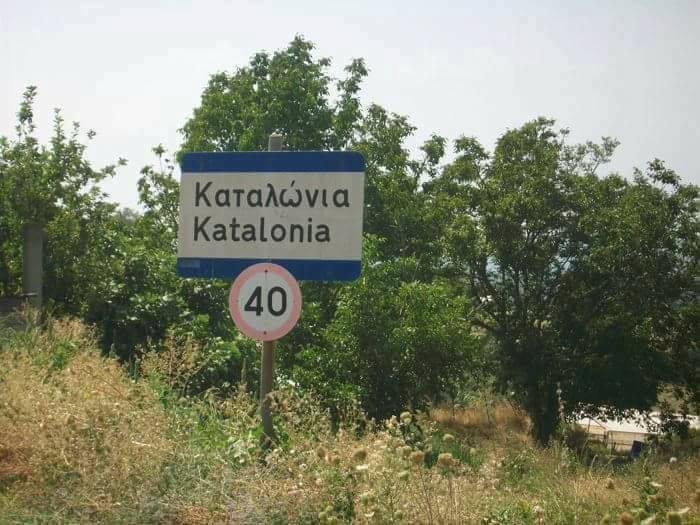
As the Republic of Macedonia can tell you, Greece won’t allow anyone into the EU as long as they have a name that resembles that of any Greek region, district, county, city, village or restaurant. (Greece even refuses academic ties with the University of Georgia because it’s in a town called Athens.)
So if – and that’s a big if – an independent Catalonia were ever to advance in EU membership talks, it couldn’t do so under the name of Catalonia. It would either need to resort to an ancient name like Aragon, but that sounds too much like Lord of the Rings, doesn’t it? Or like Macedonia, the new entity would be known under an abbreviation. FACOC for Former Autonomous Community of Catalonia is almost as catchy as FYROM.
Posted in Europe, Greece, Language, Macedonia, Politics, Spain
Tagged Catalonia, international law, international public law, referendum
18 Comments

The state of Brexit negotiations
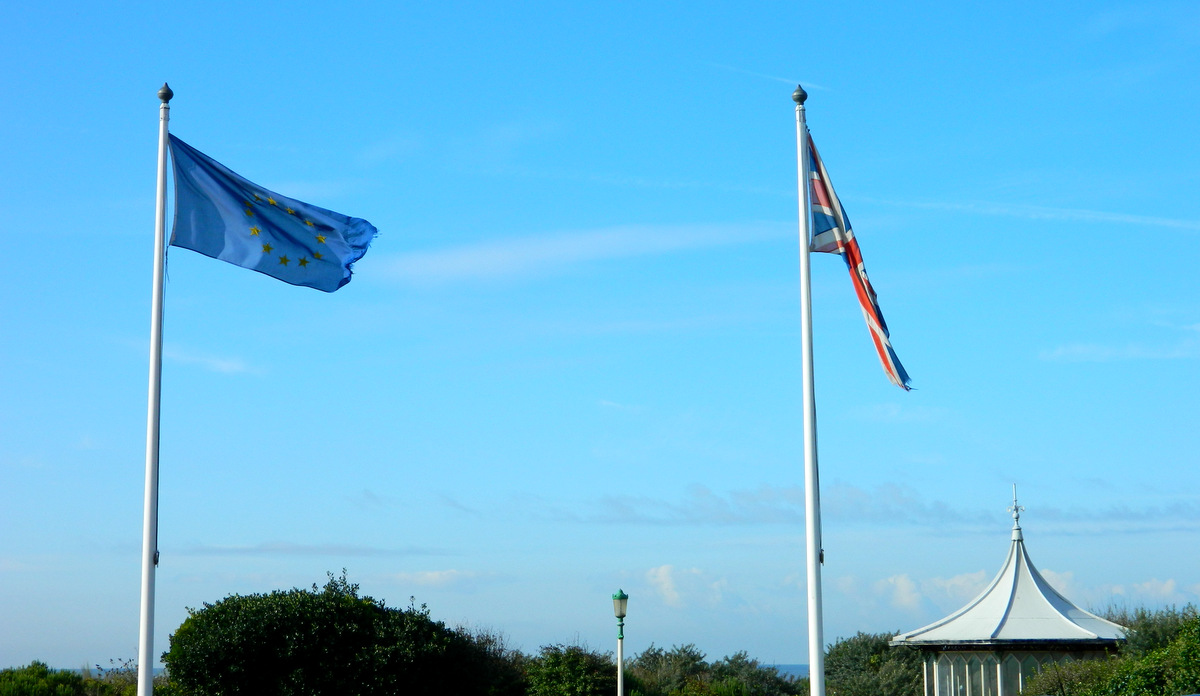
Photographed in Lytham St Annes in Lancashire, England.
Buy more saltpeter!
In the article about Humberstone, I had already shown a few of the placards which I found in the museum there.
Most of them were from the first decades of the 20th century. I quite like the graphic design and typography of that era. Another interesting aspect is the range of languages, from Arabic to Chinese. Globalization is nothing new, it seems.

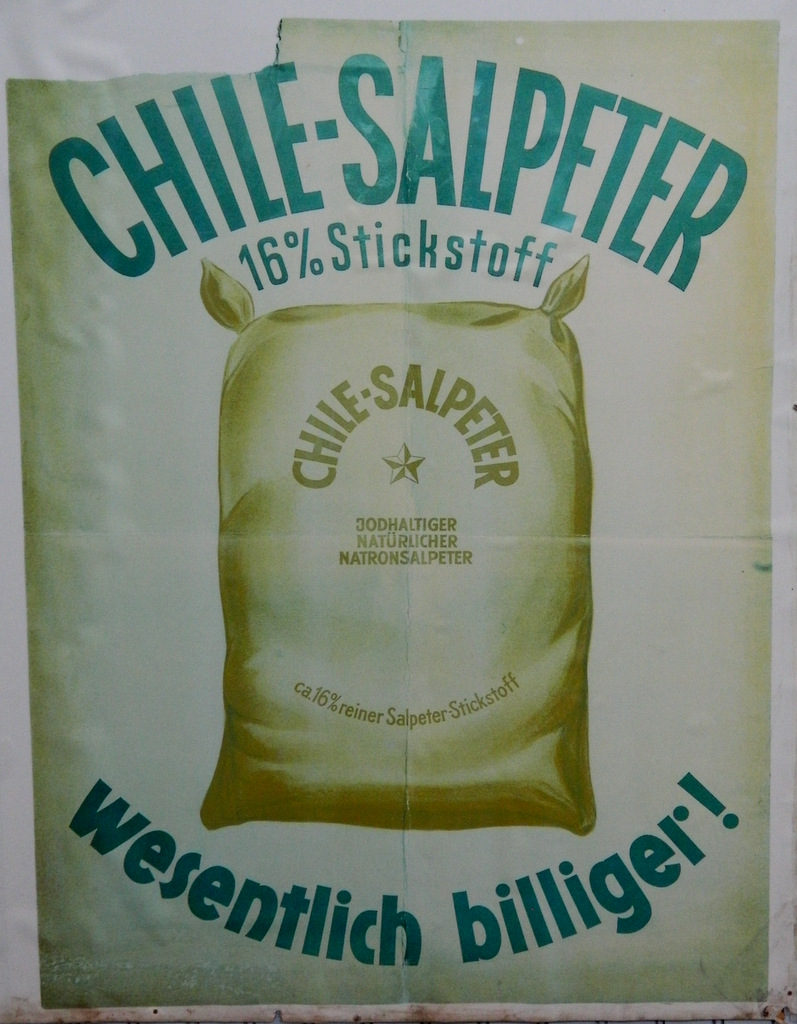


Customers in India even got a parable with pictures. To the left is the family which treated its field with salpeter, for which they receive a full tobacco harvest, a fat cow and a casket of coins. To the right is the family which stuck to organic farming, for which they got their personal famine, a collapsing house and no jewelry for the wife.

Tobacco wasn’t frowned upon yet.

The ads are dominated by information or naturalist depictions of sowing, harvesting and agricultural products. But some posters utilize drawings of attractive ladies who have nothing to do with the product at all. Until today, commercial artists lacking creativity apply this method to sell anything from cars to chainsaws.


But this doesn’t work in all markets and cultural sensitivities have to be considered. Particularly German customers prefer figures, charts and statistics. For them, there was this poster from the very early 20th century which illustrated how the use of saltpeter from Chile greatly increased the apple harvest.

An early form of the infographic, one could say.
But farmers in the Netherlands received something even more modern: an infomercial pressed on a record.

Posted in Chile, Economics, History, Photography, Travel
Tagged design, globalization, Humberstone, infographic
Leave a comment
Priorities in the countryside
Not even a proper toilet, but the tree has a satellite connection.

(Photographed on the way to Savin Kuk in Montenegro.)
Humberstone Hotel
“But is there a hotel?” some of you have been asking after reading my article about Humberstone made them want to visit.
Of course there is:

And from your room, you have a view of the town’s central square.

Also, you are right next door to both the swimming pool and theater. Perfect.
Train Theater in Germany
A train ride as a piece of art:

 The Happy Hermit