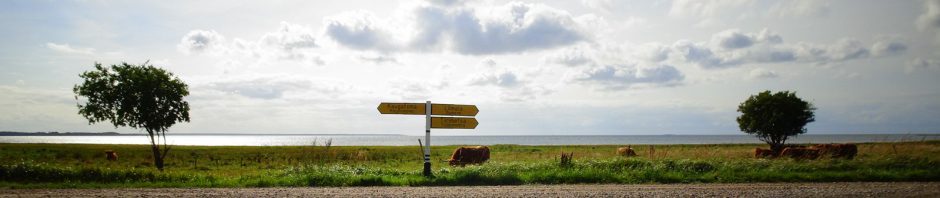

Photographed during the hike on Vrmac.
Photographed during the hike on Vrmac.
Hiking in Montenegro, there is always something to discover, even deep in the mountains. But more often than not, the places have long been deserted.
Did you notice how perfectly I synchronized the music to the action? On my first attempt to create a video with soundtrack, even! Now that I know how this works, I will have to go through my old videos and make them ready for Hollywood.
The weather was not particularly nice today, but that made the valley even spookier and thus fitting to the forgotten village.

Each time I receive a message from my bank in Lithuania, I am reminded of the insistence of that language to Lithuanianize foreign names,

although I don’t quite understand what’s wrong with my first name, which already ends in a perfectly Lithuanian -as (but maybe it is the regressive intransitive vocative case or some other grammatical peculiarity that I never understood). And why is my last name not properly Lithuanianized, like that of movie stars and fictional characters? I want another -as in the end.

So when you move to Lithuania and want to fit right in, you have to add -as, -is or -us (if you are male) or -a or -ė (if you are female) to your first name. Please don’t ask what to do if you are intersexual, because Lithuania doesn’t understand any jokes about this.
To the family name, you add another -as, -ys or -is if you are male. If you are female, your last name is even more complicated. If you are unmarried, you add -aitė, -ytė, -ūtė or -utė. I could never hear a difference between ū and u, but I was told that it’s a huūuūge difference. If you are married, you add -ienė and you keep that form even once you are widowed (I seem to remember also if you are divorced). If you want to be super-progressive and show that your civil status or your love life is nobody’s business, you can now add -ė.
In other words, if you have already mastered several languages and need a real challenge (i.e. massive headache), move to Lithuania.
By the way, I think pet names need to be Lithuanianized too. And agentas Džeimsas Bondas is fighting Munreikeris and Spektras, which really included a Lithuanian actor, Gediminas Adomeitis, playing in the film with, of course, Danielas Craigas. He did not win an Oskaras, though.
I was only looking for a spy film from Yugoslavia to practice some Serbo-Croatian, and I found a true gem!
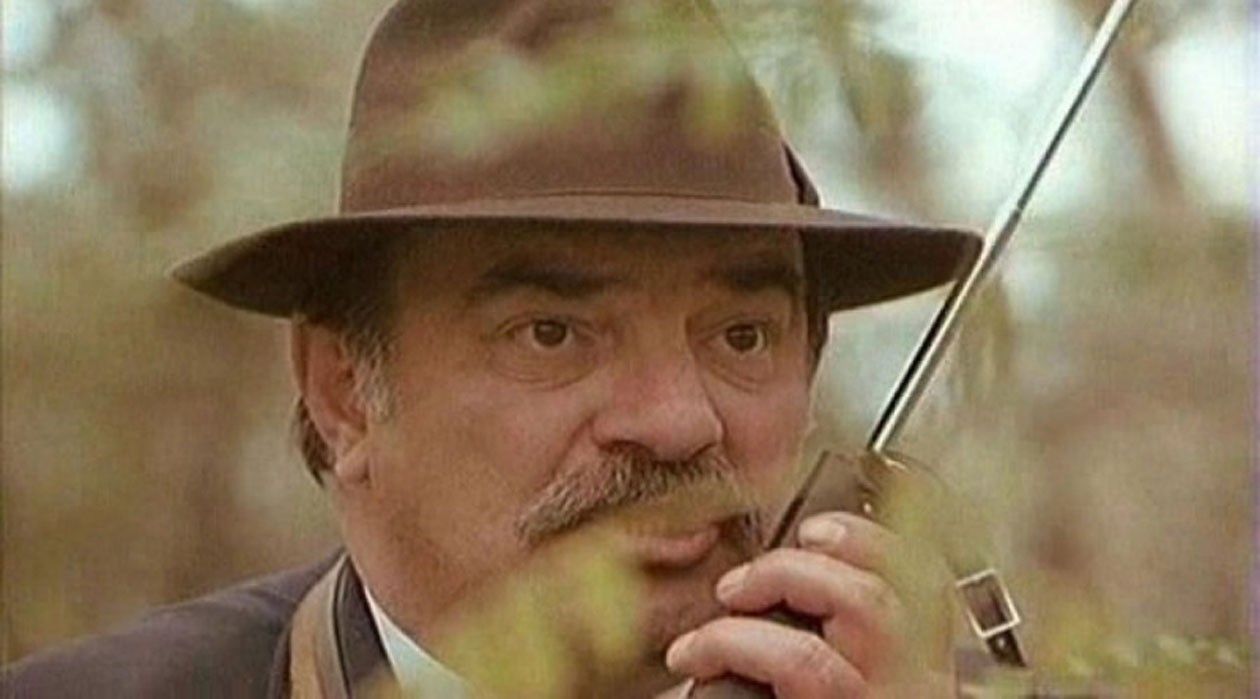
Balkanski špijun (Balkan Spy) was released in 1984 and is a comedy about an elderly gentleman who is asked to come to the police in Belgrade to provide some information about his tenant, who has just returned to Yugoslavia after living in France for 20 years. It’s a routine check, but the landlord (played masterfully, both in its comical and tragic aspect, by Danilo Stojković, pictured below) suspects that his tenant is a spy and starts following him. Anything he observes is evidence of a widening foreign plot to overthrow the Yugoslav government, and he takes it upon him to get to the bottom of it, recruiting his wife, his twin brother, quitting his job and going to even more extreme measures to become a full-time counter-spy.
The film is hilariously funny, even for people who know nothing about Yugoslavia. But on a deeper level, there is so much more: a story about a former Stalinist who went to prison himself is now trying to save the nation, the wife who initially thinks that her husband has gone crazy but becomes supportive as she realizes that his life found a meaning again, surprisingly open criticism of corruption, inflation, bureaucracy and economic hardship in socialist Yugoslavia, the paranoia or suspicion about anything foreign, the tension between old-school socialists and free-market entrepreneurs, and how for someone believing in a conspiracy, all facts and non-facts only support his theory. Not only the latter point is still topical at times, and not only in the Balkans.
Here is the complete film with English subtitles, and trust me, you have a great movie night ahead of you.

Photographed in Kotor, Montenegro.
Good idea, good writing, but somehow lost me halfway on its way around the globe.
Not that any particular idea is needed to set out and explore the world, but, as far as ideas go, circumventing the planet following the 60th northern parallel sounded interesting. Passing through Shetland, Greenland, Canada, Alaska, Siberia, Saint Petersburg, Finland, Sweden and Norway would open up comparisons of how different societies deal with isolation, remoteness, harsh climate and the threatening change to the latter.
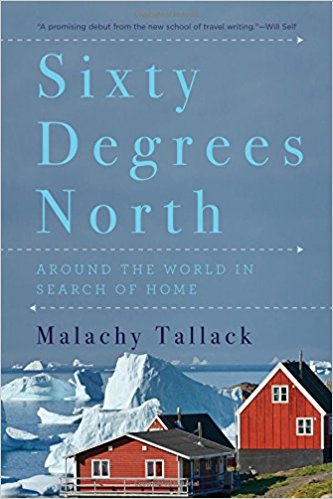 Malachy Tallack is best at describing landscape. If you want to read about different shades of moss, shapes of stones and the flight of pelicans, this is your book. Sadly, I am more interested in sociocultural concepts and maybe the odd adventure happening on the road.
But from his writing, I gained the impression that Tallack wasn’t the kind of guy to whom adventures would happen. He definitely wouldn’t seek them out. There is too much (and too-often repeated) rambling about his father’s death and other introspective trains of thought, which are really of no particular interest. Almost everybody’s parents die one day, so I failed to see the big drama.
Lost in his thoughts, Tallack was often walking around alone and I felt that in most locations, there were not enough locals whom he met. Even when he meets up with a friend in Alaska, he uses the time to reminisce about their friendship, which again couldn’t interest me less.
As to sociocultural concepts, Tallack is almost exclusively focused on two ideas: home (which he seems to understand as a romanticized feeling for the place where one was accidentally born or grew up) and land ownership (which he is against). His praise of indigenous societies for not having private or any title to land strikes me as superficial, if not naive, for how could societies without a legal system even have or enforce title, except with violence? Also, private property is not all negative. Lack of it makes it much harder to stand up to the group, to be an individual, to be different, for fear of being ostracized and losing participatory rights in the group’s land.
I gave up reading 60 Degrees North after the chapter on Siberia, or ostensibly on Siberia, I should say. It seems that Tallack didn’t even travel through Siberia, although it makes up the largest part of the landmass along the 60th parallel. He reminisces about a former visit to Kamchatka (which again makes him think about home in Shetland, as any other place has done so far) and then adds some Gulag history, apparently taken from books or Wikipedia. Well, there would actually be memorial sites and museums to be visited, former prisoners to be spoken to, researchers to be interviewed, court documents to be studied.
I felt cheated after this chapter and quit. The fear that I would miss anything interesting in the second half of the book was non-existent.
One reason for reading this book was that I had previously had the idea of circumventing the world along the 49th northern parallel, because this is where my hometown in Germany is located (roughly) and because I like the moderate climate that you get up/down there, depending on your geographical point of view, for most of the year. Also, such a trip would traverse interesting places from Paris to Stalingrad, Karlsruhe to Kazakhstan, Ukraine to Sakhalin and then follow the US-Canadian border. If I ever do that, there will be less about dead parents, the color of the water and Shetland, and more about history, society and the random strangers who invite me into their homes, I hope.
Yes, Austria. Not Australia.
That cute country with castles and Kaiserschmarrn, waltz and Waltz, Mozart and marzipan?
But Austria has winters, too. Tough winters, like in Wyoming. And mountains like in Montana. Valleys like in Yosemite.

And reclusive communities deep in those mountain valleys who don’t warm to strangers.
The Dark Valley was actually filmed in South Tyrol, now in Italy, but it was part of the Austrian Empire at the end of the 19th century, when the movie is set, and people there still speak primarily German today. But more importantly, the landscape, the weather and the cinematography are perfect.
So is the acting, the scant dialogue (having the main character come to Austria from the USA is a good explanation for his sparing use of words), the editing, everything. What director Andreas Prochaska has pulled off is better than some Tarantino movies, for example his rather disappointing last Western, The Hateful 8. Without gory violence, without shrill characters and without tedious banter, Prochaska has created one of the best Western movies in recent years. It was the Austrian submission for foreign-language Academy Award in 2014, and I have no idea why it did not make it into the final round.
Highly recommended to any fan of Western movies!
If you don’t mind the subtitles, I recommend the original version (there is not too much dialogue anyway, link to DVD and Amazon video). Alternatively, there is a dubbed version in English (link to DVD and Amazon video).
I you provide professional services, you should add the words “quick question” to your e-mail configuration settings and send those messages straight to the spam folder. Case in point from today:
RE: Quick Question
Hello Andreas,
my German husband and I have recently separated and will divorce. I’m British (inzwischen doppelte Staatsangehörigkeit ), we married in the UK in 1995 and have been living in Germany ever since.
If I’ve understood you rightly we could divorce under both German and British law, though German law would be more usual and might be less complicated. Is that correct?
We have three teenagers living with me. My husband earns 6x more than me. Would there be any radical advantages from my side to go with British law (apart from it being quicker – my husband is having an affair )?
Thanks for a short reply.
Best wishes
Rachel K[……].PS. I love Persians too and will make a donation to Freundeskreis Asyl for your reply.
So the lady could read enough about me to determine that I “love Persians” (which is not correct, as I love, if at all, individual people, but never nationalities or ethnicities), but was willfully ignoring my repeated warnings that I don’t give legal advice for free.
Hence my subtle reminder:
Hello Rachel,
I appreciate your offer to donate to Freundeskreis Asyl, but I am not sure how I will benefit from that.
Andreas Moser
She either didn’t get it or was trying hard, but not without success, to be pesky as hell.
Hello Andreas,
isn’t supporting something close to your heart a thoughtful way of saying thank you for pointing me in the right direction with my question?
Rachel.
No, it isn’t. Or as I expressed it, because I was cooking and watching a Western movie at the time:
That ain’t puttin’ no food into my stomach, Ma’am.
And then she really turned from wannabe-client to troll:
Isn’t warmth in your heart worth something too??!
It surprises me that people can read around my blog for legal advice, to find my e-mail address, my Skype ID and so on, but overlook the many examples of me publishing e-mails by people who didn’t manage to become my clients. That’s an important part of this blog. But maybe some people are subconsciously aiming for these five minutes of infamy instead of proper legal advice.
I think I understand why the husband left.


 The Happy Hermit