The following is the English translation of a presentation I gave during a field trip with my university to Ypres. Because it’s a German university, there is a focus on German (language) sources and on the German approach to commemorating World War I. Still, I thought this might be of interest to some of my international readers as well.
Day trips to Chernobyl. Favela tours in Brazil. “Dark tourism” is the umbrella term for such trips, and many will dismiss is as the macabre idea of a time in which even death and suffering are exploited for business opportunities. But the phenomenon is not really that new.
The battlefields of Waterloo (Belgium, 1815) and Gettysburg (USA, 1863) already attracted visitors in the 19th century. The Western Front received visitors while the battles of World War I were still raging. Most of them were writers, but there were also some curious tourists. And the places that had been shelled for four straight years began to experience mass tourism as soon as the armistice was signed. In this article, I shall focus on Ypres in Belgium, because this city remains one of the most important “pilgrimage sites” on the Western Front until today – and because I went there with my university for a field trip in February 2020.
Battlefield tourism during World War I and immediately thereafter
Even though, as I mentioned in the introduction, battlefield tourism was no new phenomenon after 1918, it did experience exponential growth after World War I. One reason is the concurrence with mass tourism taking off at the same time. Technological advances raised the level of interest and curiosity as well as the opportunities to travel, beginning with cameras, with which the soldiers took photos, all the way to cheaper and easier transport, including the emerging all-inclusive package holidays.
Lieutenant J. W. Gamble, with the British Forces, predicted in December 1915:
Ypres will be flooded with tourists and sight-seers after the war, and they will be amazed by what they see.
During the war, it was mainly photographers, painters, journalists and writers who dared to visit the frontlines or get at least close enough to claim that they had “been there”. Some of the German book titles in particular read as if they wanted to encourage people to go on similar trips themselves: Five fronts. On the firing-lines with English, French, Austrian, German, and Russian troops by Robert Dunn [1915], Durch Belgien zur Westfront by Ludwig Ewers [1915], Reise zur deutschen Front by Ludwig Ganghofer [1915], Reise in den belgischen Krieg by Heinrich Eduard Jacob [1915], A Visit to Three Fronts, Glimpses of the British, Italian and French Lines by Arthur Conan Doyle [1916], The unbroken line. Along the French trenches from Switzerland to the North Sea by Warner Allen [1916], Un Tour d’Europe en temps de Guerre by Georges Verdene [1916], Im Auto durch Feindesland by Paul Grabein [1916], Mit Rucksack und Wanderstab durch Belgien an die Westfront by Karl Straub [1916], Mit dem Auto an der Front: Kriegserlebnisse by Anton Fendrich [1917], A Traveller in War-Time by Winston Churchill [1918], Aus den Pampas Argentiniens nach Ypern. Eine abenteuerliche Kriegsfahrt zur Front by Leo Toelke [1918].
Beginning with 1919, the first guidebooks were published, for example the Illustrated Michelin Guide to the Battlefields (1914-1918), pointing to frequent travel activity immediately after the war. Thomas Cook was one of the best known travel agencies to offer such tours, but by far not the only one. It has to be said though that the travel agency was cautious enough not to offer such tours while the fighting was still raging, despite repeated requests by customers. In March 1915, Thomas Cook announced in The Times that due to opposition from the French side, they would not yet offer any tours to the Western Front while there was active fighting.
But in 1919, the first coaches went to Flanders. In its brochures, Thomas Cook claimed that direct experience of the battlefields and the trenches was essential to get an authentic and complete picture of the “Great War.” The advertising was aimed at anyone who wanted to “pay tribute to the memory of the glorious dead.” In their 1920 guidebook, Thomas Cook portrayed the trip to the Western Front as a civic duty:
We do not know – and we cannot know – what war really means until we have visited the battlefields and the ruined towns and devastated miles upon miles in the north of France and Belgium. And it is our duty to visit them.
The battlefield is turned into the symbol of an entire war, where history is made tangible and palpable. And immediately after World War I, the landscape in Flanders was of course really and most visibly scarred by devastation.
In 1919, a bicycle race, the “Tour of the Battlefields”, also led through this scarred landscape. For obvious reasons, no German cyclists were allowed to take part.
German travel agencies also offered organized tours, as this example from the beginning of the 1930s shows:
Especially in the decades immediately after World War I, visitors often wanted to take home more than just photos or memories. Grenades, helmets, cooking utensils, everything that wasn’t nailed down was packed away, among others by the first curator of the Imperial War Museum, founded in 1917. From today’s perspective, this seems impious, almost like grave robbery, but how were these trips seen after 1918 by the participants and by those who stayed at home?
Contemporary reception of such trips
With ambivalence, is the unambiguous answer. Soon, a differentiation arose between seemingly “legitimate” visitors to the Western Front, such as veterans and relatives, and the “tourists”, who went for curiosity, sensation and even ghoulishness.
One of the most biting critiques against the latter group is the polemic “Reklamefahrten zur Hölle” (Marketing Trips to Hell) by Karl Kraus, written in 1921 and mocking the offer for the readers of the Basler Nachrichten, which advertised the trip to the Western Front like a jolly outing.
The dichotomy between “pilgrims” traveling for honorable motives and “profane tourists” was also reproduced again and again in English-language newspaper articles, poems, and literature of the time. A report in The Times of 7 June 1920 shows that quite some thought was given to how the journeys should be labeled:
The French have a better term for what are described in this country as battlefield tours. They call them pilgrimages.
Even the travel agencies were aware of the thin line of good/bad taste, along which their coaches were traveling to Flanders. Thomas Cook made it explicitly clear in their publications that the trips were in no way intended to serve the fascination of horror or other low motives.
In reality, such a clear separation between travel purposes may not have existed. In particular, visitors from overseas who could only afford a trip to Europe once in a lifetime combined visiting graves and commemorating with subsequent beach vacations or with Belgian beer.
Different purposes of battlefield tourism throughout the times
The less time had passed since the actual fighting, the more directly and immediately visitors felt connected to the countless deaths at the front. As long as trenches and battle debris were still clearly visible, there was no need for mediation by tour guides or museums.
Especially for the relatives and former comrades of fallen soldiers, places like Ypres were the cemetery where they could visit the grave. Ideally, this was a grave with a name, otherwise a memorial for unknown soldiers. This connection, even of the bereaved, to a particular place was probably more pronounced on the Western Front than in other theaters or in other wars, because here, in the trench war, soldiers were in one place for a long time, from where they wrote home again and again. Places like Ypres or Verdun thus became known names on the home front as well.
The surviving veterans were often only able to convey their memories to their family members while visiting the former frontline and the graves of their fallen comrades. In literature, too, one encounters the figure of the former soldier who must return (with family) to the front to overcome the trauma (Josefs Frau by Erich Maria Remarque, Douaumont oder die Heimkehr des Soldaten Odysseus by Eberhard Möller).
While during the war, the families of the fallen may still have hoped for a subsequent reburial, it soon became clear that this was not a viable option for logistical and financial reasons. This particularly affected German families because their loved ones were overwhelmingly buried in “enemy territory.” In 1921, the Reich government did allow the “repatriation of fallen soldiers,” but only under the condition that the relatives had to cover all the expenses. Very few could afford to do so.
The Volksbund Deutsche Kriegsgräberfürsorge (VDK), founded in 1919, took over the task of looking after German military cemeteries abroad and had no interest at all in repatriating bodies. As a self-proclaimed advocate of the fallen, the VDK insisted “that all who stood and died side by side in battle remain united in death.” Thus, the role of soldier should supersede that of father, brother, husband or friend, even in death.
The association’s periodical Kriegsgräberfürsorge is a treasure trove of reports from relatives who visited graves located abroad. Practical advice such as how to obtain a passport, where to stay, what costs to expect, take up a lot of space, just as one would expect with “normal” tourist travel. As an example, the rather negative review of the travel agency Thomas Cook by a German tourist in 1924, who complained that the tour guides were “sprouting French propaganda”:
But they also printed emotive reports in the spirit of German nationalism and militarism, like this one in 1925, talking of “hotly contested fields who drank the blood of the best of the German youth” and so on.
And you know those German tourists who come up with proposals on how to improve things as soon as they arrive? Well, they too were already a problem in 1931, for example when they instructed the gardeners at the war cemetery to remove all the branches from the trees, making them look like stupid naked brooms:
For the Nazis, military cemeteries became symbolic places where vows were made to make up for Germany’s defeat in World War I. The town of Langemark, north of Ypres, had already become a myth in the German Reich during the war itself. In 1933, the VDK magazine wrote that it was finally possible to call out to the dead there “Behold: we are marching again, joyful and ready for more sacrifice!”
March again they did, invading Belgium (once again) in 1940. In the fall of 1940, by which time Langemark was under German occupation, the site served for a military memorial service. From the German perspective, only now had World War I come to its proper conclusion.
After World War II, which would have created enough new battlefield tourism sites, for example in Normandy, tourism to Flanders resumed, although initially without visitors from Germany.
The VDK, which was re-established in 1946, broke with the traditional heroization of war death that had dominated commemoration between the two world wars. It professed its support for reconciliation in Europe, but on the other hand remained silent about German war crimes in the two world wars. In this way, the VDK reinforced the idea that Germans were victims too, which was widespread in the early Federal Republic. It maintained the image of the supposedly “apolitical professional soldiers”, which ultimately persisted until the Wehrmacht exhibition in 1995.
Visiting the war graves was also of particular importance for remembrance in West Germany, because the country had neither a national memorial for fallen soldiers, nor a national ceremony for them. Volkstrauertag was not limited to fallen soldiers, unlike, for example, Memorial Day in the United States or November 11th as Remembrance Day in the United Kingdom and other Commonwealth countries. Public remembrance of soldiers in the Federal Republic of Germany took place either in a municipal (church) context or abroad.
Since World War I and again since the 1960s, the cult of the dead has changed. With the transition from a sacrificial to a victimological understanding of sacrifice, the suffering and death of soldiers was less and less glorified, understood more as a warning and increasingly viewed with distance and, in part, with incomprehension. The fact that this development took a noticeable turn at the time of the Vietnam War shows that the commemoration of the past can never be understood in isolation from the respective current discourses.
From the point of view of local communities, institutions and tourism associations as well, the focus has shifted from battlefield tourism, a term which they now frown upon, to cultural heritage tourism (including an application for recognition of the battlefields in Flanders, Wallonia and France as UNESCO World Heritage Sites) and to reconciliation tours. The focus is no longer on macabre fascination with death by the thousands or the military historians’ obsession with detail, but on remembrance and on lessons learned. Meanwhile, we look back as Europeans, proud of the integration and peace we have achieved since.
More reports from Belgium, a country where you are reminded of the two world wars wherever you go.
Let me know if you are interested in a full report about the field trip to Ypres, Langemark, Diksmuide, Essex Farm, Vladslo, Koekelare, Zonnebeke, Kemmel and Poperinge. In between the cemeteries, museums and lectures, there’s plenty of good Belgian beer, too, I promise.
For a short break from the library, I went to the park in Amberg, my hometown in Germany. It doesn’t matter how highly motivated you are studying, sometimes you need a break. And thus, I am sitting under centuries-old trees, listening to the water fountain, reading the newspaper and smoking a cigar.
A mere 15 minutes have passed, when a thin, dark man with gold teeth introduces himself in English. He is from Cuba and a musician, he says.
As he opens his small backpack, I already fear that he is going to offer me a CD. I am a conscientious objector to music and would thus have to decline.
But no, he pulls out a large wooden box, opens it like a treasure trove, and presents Cohiba cigars. The big ones. Churchill size.
I last smoked these in Bolivia, where they only cost a few euros each. To avoid smoking too much, I purchased only one at a time, which is why the shopkeeper, whom you know from this alcohol-free story, had to go to the refrigerator and unpack the box each time. It was just a corner store, but whenever the box was empty, the clerk would say: “No need to despair, señor. Tomorrow or the day after, the plane from Cuba will arrive,” as if it were flying in just for this little store on Avenida America. On the other hand, that would explain the many runways hidden in the jungle, without having to resort to nasty rumors of drug smuggling.
While I have been digressing like an airplane gliding over the gentle waves of the mild Caribbean waters far below the radar of focused writing, the man from Cuba has taken a seat next to me.
“The situation in Cuba is terrible,” he says. That’s why he is selling cigars, so he can bring his wife some money for food. “If there is any food,” he caveats. “You can’t even get chicken every day!” Anyone who has been to Latin America knows what a disaster that is. Without chicken at least twice a day, most people can’t function properly. Honestly, after a year and a half in South America, I couldn’t see no chicken with rice no more.
Imprudently, I have switched to Spanish, although I should know that I don’t understand Cubans (nor Argentineans). One could get used to the plural congruence of impersonal verbs, the morphosyntactic deviations, the substitution of liquid palatals. But the rapid pace of speech combined with unpronounced consonants brings me to my limits.
In Cuba, the colloquial language became the standard language after the 1958 revolution. As formerly underprivileged classes ascended to language-shaping positions, such as teachers, politicians and radio hosts, the development was welcomed by Marxist linguists as an element of democratization. Moreover, many intellectuals emigrated, leaving behind a somewhat sloppy linguistic swamp.
Just like in Amberg.
But I do believe to understand that he forms a band with six colleagues, himself playing the drums, and that they are on a three-month tour around Europe. Not as street musicians, but a proper, professional band. Tomorrow they will go to Switzerland, then to Luxembourg, then Berlin and back to Amberg, where they are staying at the Bruckmüller brewery.
“Well, that’s convenient,” I say, suggestively.
“Oh no, we’re not those kind of musicians,” he objects, assuring me that he hasn’t touched a single bottle of German beer. He pronounces “German beer” as if the whole world knew it as some devilish brew.
Still having a 70-cent Toscano-Garibaldi cigar in my mouth, I can’t deny that I occasionally smoke. But on the other hand, it allows me to credibly assure that I can’t pay the suggested price of €10 for one or €15 for two Cohibas.
I know. Even €30 in some places. But I find that exaggerated. It’s like people paying €20,000 more for a car because it has a star on the hood, which they could get for €25 at a junkyard. Or when people pay ten times as much for a first-class ticket in order to arrive just as quickly as I do in economy class. And between you and me, the Toscano cigars taste better, too.
All right, he says, then I should just give him €10 or €12 or whatever I want for two Cohibas. Apparently, the tobacco market has not yet been hit by inflation.
When I tear a page from the newspaper to wrap the cigars (argument no. 28 against electronic reading), he puts four Cohibas on it and suggests €20.
I accept the deal and we say goodbye with a handshake. Unfortunately, I didn’t understand his name. But he promised to be back at the same park in mid-June.
I used to ignore Germany as a travel destination and venture off into the big wide world instead. But after having seen a lot of the latter, I realized that the former is actually quite alluring.
If you have always thought of visiting, wait no longer! Because Germany will never be as affordable again as this summer.
In an effort to shift to more environmentally friendly public transport and to compensate citizens for rising fuel costs, due to the war in Ukraine, the German government has come up with the following radical solution:
In the months of June, July and August 2022, a monthly ticket to use public transport in all of Germany will cost only 9 euros per month.
That’s one ticket, valid for a whole month, for the whole country (which is still quite a huge country, even after losing a bit of territory in the last two world wars).
The ticket will cover all regional trains (which, despite their name often go through several states), all public buses, all trams, metros, and even ferries where those are part of the public transport system. – Not covered are long-distance trains like the ICE bullet train, small touristic train lines, and private buses or ferries. Also not covered is first class, but let me tell you a secret: First class doesn’t get you anywhere one minute faster than second class.
Honestly, apart from Luxembourg, this is probably the best transport deal you are getting anywhere in the world. Actually, considering the difference in size between Luxembourg and Germany, it is the best transport deal in the world, period.
And apart from transport, Germany is very affordable to travel anyway.
There are plenty of friendly Couchsurfing hosts, and it’s perfectly legal to sleep outside, in parks or forests. In some states, like Bavaria, that right even enjoys constitutional protection (see chapter 131 of this article). And yes, that also applies to foreign citizens.
As does the 9-euro ticket. You don’t even need to pre-order or do anything complicated. No, in Germany, the country of efficiency, you simply go to the first ticket-vending machine after entering the country, whether by land, air or sea, and obtain the generous transport voucher.
Even more efficient would have been to make it completely free, of course, but then the police couldn’t arrest people without a ticket any longer, and the prisons would suddenly be very empty. Seriously, for lack of real crime in Germany, there are thousands of people in prison after having taken the subway without a ticket. (And you thought your country has a prison problem. Well, unless you are from Norway. Or the Netherlands. Or the Dominican Republic.)
The only thing to keep in mind: There might be more passengers than usual this summer. So, bring some patience and a big book. And try to travel during the week, not only on weekends, when everyone will want to go to Neuschwanstein or Rothenburg.
I would avoid the tourist hot-spots anyway, because Germany is beautiful almost everywhere. Not having to pre-book any trains or seats, just hop on a train, follow the Rhine or the Neckar river, and get off when you see a beautiful castle (every 4 km) or a beer garden (every 7 km). Or whenever you want.
Usually I write about cities to motivate you to visit them yourself. In the case of Odessa, the Ukrainian port city on the Black Sea, which, as you will see, is so much more than a port city, this may be too late. Odessa may become the next target of Russian destruction.
I visited Odessa in January 2020, after house-sitting in Kyiv and a stopover in Uman. The report is based largely on notes that I took at the time, thus conveying the impression I got back then. Only very occasionally will I intersperse current references from the war in 2022, because this is mostly intended as a personal, subjective report. And the memory of a city where so much more will be destroyed than buildings, cats and human lives.
1
Some people see photos of Inca ruins, the Eiffel Tower or the Matterhorn and know: “I have to go there!”
My brain operates more linguistically than visually, so it’s the names of cities – without knowing anything else about them – that make me dream: Timbuktu. Samarkand. Damascus. Jerusalem. Casablanca. And Odessa.
Sometimes, it might be better to stick with the dreaming, so as not to shatter the illusions and damage the world climate. But if I already am in Ukraine, I can’t ignore the siren call.
2
Arriving in Odessa by train, you are welcomed with style. Every long-distance train is greeted with classical music blaring from every speaker. There’s nothing like waking up to Tchaikovsky as you drowsily stagger out of the sleeper car and step into a new city about which, if I am honest, I don’t know anything yet.
The second surprise is the lettering on the imposing station building: “Welcome to Odessa, Hero City!” An honor bestowed by Stalin during World War II (more on this in chapter 47), including the Order of Lenin, with the Ukrainian flag above it. On the portal are the dates 1905, 1917 and 1944, for the Russian Revolution, the October Revolution and the liberation of Odessa by the Red Army.
In the station restaurant, which exudes the charm of the 1960s, Red Army soldiers are watching with hammer and sickle while I am eating a red cabbage salad. Instead of a hammer and a sickle, I got a knife and a fork, though.
None of this fits the Russian propaganda that Ukraine is a country of Nazis and fascists. But it also shows Ukrainian ambivalence about the Soviet Union. And it confuses Western readers who rarely make a distinction between the Soviet Union and Russia and are amazed that there are so many different countries, peoples, cultures, languages and histories east of Berlin or Prague.
The confusion will not diminish in what is to follow, I am afraid. But those who like to cast their prejudices aside, are welcome to follow me on this walk around Odessa.
3
It is January 13th, but in the basement that will be my apartment for a week, the electric candles on the Christmas tree are still glowing.
“According to the old calendar, today is New Year’s Day,” Vadim explains, incidentally in very good German, which he learned without ever having been to Germany. The apartment rental business is actually his wife’s, but whenever he sees that a guest is coming from Germany, he wants to practice his language skills.
“Good that you’re staying in Odessa for a whole week. You really need that much time to see the city.” Besides, he says, prices for basements have fallen through the floor right now, while they will quadruple in the summer. After the end of the Soviet Union, Ukraine has apparently fallen into the trappings of a cruel market economy.
I ask Vadim if he is already booked out for summer. “It’s going well,” he says diplomatically, explaining quite unpatriotically: “People used to go to Crimea in the summer. But since Russia’s annexation, that’s no longer possible. So they come to Odessa instead.”
Kyiv is far away, Moscow even further.
The business-minded don’t mind whether it’s the ruble or the hryvnia rolling in.
4
There is construction, sawing and hammering going on everywhere. Far outside the old town, ugly hotels are being built. The old town itself is being lovingly restored. The streetcar network is being expanded.
Five months ago, this building opposite the Transfiguration Cathedral was completely dilapidated, people tell me.
5
The cathedral itself needed some repairs as well. In 1936, it had been blown up, following orders from Stalin.
But you couldn’t tell now.
Soborna Square with the Transfiguration Cathedral is just around the corner from my basement loft, so I get to know this square at every hour of the day. And the night. Even in sub-zero temperatures, men are playing chess outside.
I haven’t yet discovered the park where women play chess.
But maybe the women here find chess not feminine enough. Ukrainian women, at least the young, single ones, deem many activities to be unfeminine: opening doors, buying a bus ticket, opening a can of Coca Cola, saying thanks to waiters and – an absolute no-go – paying restaurant bills.
Seriously, so many women here have such a princess complex, one would wish them the same fate as the Romanovs. The only normal ones are those socialized in the Soviet Union, when women were still allowed to be train drivers, cosmonauts and engineers.
But enough of social criticism, you wanted to see something of the city.
6
People who have never been to Odessa always ask if the city feels more Ukrainian or more Russian. On my first aimless stroll, the answer is slowly forming in my head: neither nor.
The opera is Austrian and is playing Iolanta in Russian, Il Barbiere di Siviglia in Italian and Carmen in French.
Mendelevich Passage opposite Soborna Square could just as well be in Milano or in Florence.
The palaces look like in Venice, Bucharest or Paris.
The city was founded by the German-Russian Empress Catherine II, the first governor was a Spaniard with Irish roots, the second a Frenchman. The harbor looks towards Constanța and Constantinople.
Odessa, so far from the the mind of most Europeans, is a European city through and through. “Vienna as it never was, but without sea,” photographer David Staretz calls it in a recent pictorial volume about this truly picturesque city.
7
On this journey, something terrible happened. I still have at least one week ahead of me, but I have already finished – and then given away – all the books I brought with me, most recently an illuminating book about Ukrainian history by Serhii Plokhy, The Gates of Europe. Now the backpack is lighter, but the brain is craving for new input.
As I step out of the train station, I recognize the cover image: the local offices of the state railway and the cathedral for Great Martyr and Holy Unmercenary Healer Saint Panteleimon.
8
Odessa is not an old city, as you can tell from the chess-board-like map of the city. Someone tried to copy New York, quite obviously.
The city was founded only in 1794, but it began flourishing no later than 1815, when the duty-free port was invented here. People came from all over Europe to work, to do business, to start over, to feel free, to escape pogroms, to set sail for adventurous sea journeys, or to hide from Pinkerton or Hercule Poirot.
Kyiv is far away, Moscow even further.
9
On Syerova Street, the ambulance driver, whose uniform makes him look more like a mechanic, is sitting on the curb, smoking a cigarette. Either he is waiting for the paramedics with a stretcher, or the ambulance itself has broken down.
With many cars, I wonder if they will ever drive again.
Or if they will end up being used for barbecues in Diukivsky Park.
10
Diukivsky Park is actually not far from the center. If you set off in the wrong direction from the bus station, you are already there. Or you take the streetcar, line 12 or 15.
A young girl is taking pictures of her pretty friend in a yellow-ochre sweater, making model poses. It remains unclear if they choose me, with a notebook in my hand and smoking a cigar, as the background for their photos or if they don’t even notice me. A few lonely baby carriages are being pushed back and forth. But otherwise, there is not much going on here.
And there would be so much to see and do: A moated castle, a go-cart track, a theater and, right next to the lake for family outings, the headquarters of the Bandidos biker gang. Maybe they are the reason why not too many people dare to visit the park. Although, the real bandits in Odessa are sitting elsewhere, but more on that in chapter 16.
11
The construction boom probably explains why I can’ t find “The White Guard” or “A Dog’s Heart” by Mikhail Bulgakov at Starokonny Market, as I had hoped, but only drills, saw blades, rubber boots, carpet glue, sandpaper, tiles, but also canaries and night vision goggles.
You could get almost everything here, but nothing that I need.
12
On Sofiyivska Boulevard, four students from the Naval Academy are walking past me, in black coats with gold buttons, and in black fur hats, the coats too long and wide, the hats too large for them. They look like children wearing their fathers’ uniforms. Like children playing war, one would say elsewhere. But here, there is war.
And then I finally remember whence I know Odessa, without ever having visited before: “Battleship Potemkin”, a silent movie from 1925 and for some reasons regarded as a film classic, was filmed here. Good that I missed it when it first came out, I think, and start looking for a cinema.
But the cinemas I find are only playing Star Wars IX, Jumanji and Cats. Nothing with ships. Although cats and ships would actually go well together. I guess I will have to watch it on YouTube. The Soviet Union won’t crack down too harsh on this one little copyright violation, I hope.
I walk back to my apartment, which is accessed through a long archway, across a courtyard, over a small garden fence and down the stairs into the basement. This is the kind of apartment that no one wants in peacetime, but which can save lives in times of war or revolution because of its hidden and protected location. If we have war or peace right now, that’s hard to say. “Frozen conflict” is what political scientists call situations like the one in Donbass, but I am not sure if it feels frozen to the people being shot at there. On the other hand, in Odessa, life is absolutely normal.
In any case, I am definitely frozen. When Vadim showed me the apartment, I thought he had accidentally left the stove on. Now I realize that it was the only way he could make it seem like you could survive here in January. The kettle, tea and packet soups are quickly becoming my best friends.
And the warm bed, in which I suffer through 72 minutes of Potemkin’s battleship before falling asleep.
I guess the film only became famous because the scene of the massacre on the stairs – and especially the baby stroller rolling down, unfaced by the mayhem around it – has been copied in many movies since.
One thing is for sure: I have to find those stairs!
13
But first, I meet up with Yaniv.
We had met when we were both living in Târgu Mureș in Romania. Supposedly, he is now studying medicine in Odessa, but I have the impression he is more concerned with culinary arts. As we walk through the city, he can comment on every restaurant, bar and kebab stand: “They have the best burgers here, but unfortunately they’re a bit expensive. That’s only for my birthday.”
“Where are you staying?” he asks me.
“Dvorianska Street.”
“What number?”
“Seven.”
“Oh, there is ‘Merry Berry’ right across the street. They have fantastic Frappuccino with strawberry foam and Oreos.”
14
There, are those the famous Potemkin Steps? And there is even a bottle of Odessa sparkling wine for the honest finder.
No, that’s not the one, I have to admit, disappointed.
15
In the “Molodost” pub, we are drinking beer from preserving jars. That’s what happens when grandma saves every pickle jar, “because you never know when you might need them.” Eventually, the basement fills up and the grandson has to open a bar.
As is often the case, I forget my scarf in the bar. Oh, the scarves, hats and gloves I’ve forgotten all over the world, you could equip a whole battalion with them. I don’t even buy such annoying pieces of clothing anymore, because they are gone after a week anyway.
I only notice the loss after an hour of walking through the nightly city. Because the Molodost is not far from my apartment, I make the small detour. The pub is packed now, but my scarf is still on the table. Someone has even folded it nicely.
Seems to be an honest city.
In the coming days, I also notice that each time I take the tram. In Odessa, you don’t pay when you get on, but when you get off. Of course, you could also step off at the back or hope that the conductor doesn’t notice anything in the crowd of passengers. But why be dishonest, when a ride costs 5 hryvnias? That’s about 15 cents.
16
Even the dogs are honest here. This one has found a wallet and is taking it to the lost & found office.
As the lost property office is located at City Hall, it may well happen that the wallet will “get lost” there, though. Because the mayor, Gennadiy Trukhanov, is in prison, awaiting trial for fraud, money laundering, embezzlement, abuse of power. But of course he remains in place as mayor.
Pretty much like Joachim Wolbergs, the mayor of Regensburg, a city in Germany, where I went to law school, coincidentally.
And suddenly I understand a mural which I have seen to the left of Saint Paul’s Church, sealing a twinning agreement between the two gangster cities.
The case is even more dubious than I thought, and you are reading this scoop exclusively on my blog. See for yourself: One guy is the corrupt mayor of Odessa, the other is the corrupt mayor of Regensburg. Gennadiy Trukhanov and Joachim Wolbergs.
Do you notice anything?
Exactly: It’s one and the same person! That guy is so brazen, not only does he govern two cities in two different countries at the same time. Not only does he defraud, steal and plunder in two cities in two countries. No, he even initiated a municipal partnership, so he can fly back and forth between Regensburg and Odessa at the taxpayers’ expense.
And if your first reaction is one of disbelief, I ask you to find a photo that shows the two of them together. There is none. And that’s pretty suspicious for the two mayors of two twinned cities, isn’t it?
But you needn’t worry about the gentleman. As Wolbergs, he was only sentenced to a jail term on probation. And as Trukhanov, he was released in October 2021 after somebody posted a million dollars bail. That somebody was a member of parliament who happens to be a billionaire in his private life. Which is quite normal in Ukraine, as you know from Andrey Kurkov’s novel “Penguin Lost”. Highly recommended, but you should read “Death and the Penguin” first.
17
The story of the two criminals, who may only be one criminal, could have been written by the two greatest writers from Odessa, who may only have been one writer: Ilya Ilf and Yevgeni Petrov, who wrote and published together as Ilf and Petrov. Nobody can imagine how two writers are supposed to write novels together, but the result is convincing.
Like every city, Odessa has a number of monuments for generals, mayors, explorers and writers. But the most popular one is a monument for a novel: “The Twelve Chairs” by the dubious duo Ilf and Petrov.
It is a picaresque novel about a hidden treasure of jewels, for which the rightful heir, a greedy priest (as if there were any other priests) and the shrewd and charming crook Ostap Bender are fighting an eventful chase against each other. One of the funniest books of Soviet literature!
I am not a friend of the opera, I have to admit. But if people insist on combining singing, music and jumping around, then I wish they would at least choose realistic topics like the electrification of the country, the building of the Stalin White Sea-Baltic Canal, or the mechanization of agriculture.
Is that still verism or already proletkult?
19
These book-shaped benches in Taras Shevchenko Park are neither, they just a stupid idea.
Sure, they look funny and creative. But you just can’t sit comfortably on these silly benches, let alone sleep. That’s the typical harebrained idea of people who have never once sat on a park bench for a few hours.
And much more important would be a bookstore, for crying out loud.
20
As Yaniv and I walk by Cooper Burger, he says: “On Mondays, you can get two burgers for the price of one here. And they’re good, too.”
Me: “It’s Monday.”
We immediately realize that we’re both very hungry, and the decision is made.
It’s good to meet with someone who is also a frugal student, instead of being constantly presented with recommendations for the most expensive restaurants. Many people in Ukraine have the misconception that all Western Europeans are rich.
21
Oh, you want to see the sea, don’t you?
After all, that’s why most visitors come to Odessa. I myself am not a water lover, but just for you, esteemed readers, I’ll go to the beach.
Two years later, the same beach will be used to fill sandbags, to protect the city against Russian bombs, shells and missiles.
22
There, are these the famous Potemkin Steps?
Proud about the discovery, I stride them up and down, up and down, until I remember and realize that the real Potemkin Steps aren’t supposed to be in the outskirts of Odessa, but right in the center of the city.
Oh well, I’ll keep looking then.
But first, I need a break. I am trying to lure a cat down from a tree, but apparently, I confused the Ukrainian words for cat (“kitty”) and dog (“chewbacca”), because instead of the former, the latter appears. But he does really look as if he needs lunch more urgently.
Okay, okay, if you look at me like that, I will make an exception for once and share my meal with a dog.
23
Have you noticed that the cats in Odessa all look very well-nourished?
Either it’s the harbor, where there is always some fish left over. Or the people here are simply nice enough to put the remains of their dinner outside.
24
The love of animals is also evident in the infrastructure: Larger parks have veterinary stations, where you can take your animals for inspection or repair, or where more independent animals can drop by on their own accord and without an appointment.
Not to be confused with the veterinary is the veteran, sitting in the same park, looking rather exhausted and pensive. Based on the years indicated on the memorial, I assume that he has been to Afghanistan.
And now the war has come back to haunt him in his own country.
26
Further south, the weather and the waves become rougher and more raging. In the morning, you could have forgotten that it was January, but now the wind whips the calendar back into your face with brutal force.
27
The churches in Odessa are rather small, inconspicuous, almost hidden. Like townhouses between the much more splendid hotels, banks and trading houses.
Or perhaps I should say: less Christian. Because Odessa was always a Jewish city as well. The third largest Jewish community in the world, after New York and Warsaw. More than 40 synagogues. Yiddish was the most spoken language in Odessa.
Until the Nazis and their Romanian accomplices came. And, we should not omit to mention, Ukrainians who collaborated with the Nazis. As a whole, Ukraine would prefer to keep quiet about this episode, although some people here are outright proud of it.
Many former synagogues are falling into disrepair.
The few that are still active are so desperate for new recruits that they even offer Jewish students money to attend lectures: 100 hryvnia for a boring lecture on Leviticus.
Yaniv tried it once, but “the atmosphere there was too Gestapo-like for me. They got upset because I used the time to study on Wikipedia on my cell phone.” He’s an expert on skewed historical comparisons.
28
In the morning, the port radio wakes up the city. From the loudspeakers, Leonid Osipovich Utyossov is crooning about, of course, Odessa.
But besides some bus drivers and street sweepers, I seem to be the only one who bothers to get up so early. Really, Odessa has a different rhythm. When you arrange to meet people for breakfast here, they ask, “So, 12:30 or 1 pm?” When I suggest 9 or 10 o’clock instead, I always hear that’s much too early.
29
And thus, even the Museum of Modern Art is still closed at 12 o’clock. One could pass the time with a game of geopolitical basketball, but instead I strike up a conversation with two women who are also waiting for the museum to open. Alexandra is a lawyer, psychotherapist, editor, lecturer, attractive and intelligent. Anna less so.
When the museum finally opens its gates, we spot an artist couple in one room, unwillingly rising from their night’s lodging, and we smell the unwashed socks. Well, maybe they are refugees from eastern Ukraine. You shouldn’t judge before hearing someone’s story. And maybe not even then.
An exhibition celebrates Volodymyr Strelnikov, a painter from Odessa, who has been living in Munich since he was exiled in 1978.
And the usual objects and ideas that you can find in a museum of modern art: Artwork made of mechanical parts, accompanied by the sounds of a shipyard in the background. The video of a very happy pyjama bear performing a Hasidic dance. And a lot of images and installations that are self-explanatory, I guess.
If, like me, you are more into classical painting, you can already look forward to a visit of the Museum of Fine Arts in the former palace of Count Pototsky – or in chapter 50.
30
Alexandra and Anna want to go to a shisha bar and smoke hookah. That’s not really my thing, but somehow, you have to hook up with the locals. Otherwise, this blog would only be about me.
The conversation with the two women, however, is going rather slowly, because they are constantly on their cell phones. Attached to the shisha bar is a tattoo studio, Black Brush. The guys there are probably all getting tattoos out of boredom, because their girlfriends are staring into their phones all day long. They are scrolling through the online stores of TK Maxx and Zalando and talk about shopping trips to Krakow and to Italy. And Alexandra, the psychotherapist, should really know about the dangers of internet, cell phone and shopping addiction.
In the evening, they want to go to a lecture by some financial guru, who will explain how to work less and earn more. I offer to tell them from my own life experience, especially on how to travel the world with relatively little work. But the key to success, of course, is to spend less.
In Ukraine, for example, I go to Humana, where they sell the clothes that excessive shopaholics in Germany throw into the container. In those stores, you choose what suits you, pants, shirt, sweater, winter jacket, and at the checkout, everything is weighed together and multiplied by a price per kilo. It’s as simple as buying coal or firewood. I can’t remember the price per kilo, but for a few euros you can get completely dressed.
They look at me as if I were stupid, yet they paid 50 US-dollars each for the course that night. Even Ostap Bender wouldn’t pull off such cheap charlatanry.
Later, Anna tells me in horror about a couple who were attacked in their house by men with submachine guns. The grandmother, who lives in the same house, was so frightened that she is in hospital now. But the most dramatic part of the story, according to Anna, is this: “They were not even rich! The house, the car, the clothes, the jewelry, it was all bought on credit.”
The burglars couldn’t really care less about the financing and the original ownership of the loot, but they were looking for cash, which the show-off couple had forgotten to get on credit. Well, that’s what you get from being materialistic and superficial. No one has ever robbed me, with my hole-ridden shoes and my old cell phone.
I’m just afraid that Anna is going to draw the wrong lesson from this story.
31
Hearing that I am from Germany, the women tell me about the villages of Grossliebental and Kleinliebental, just a few kilometers outside the city. There are still a lot of German villages in the area. I should actually take a walk there, in the footsteps of the Black Sea Germans. I’ll do that when I’ve seen enough of Odessa, I say.
“Ha,” says Alexandra, “you’ll never manage to see even half of it. The streets here in the city center alone will take you days. Don’t just rush along, but pay attention to the tiles, the balconies, the stairs, the drawings, the carvings.” A friend of hers offers architectural tours, spending three hours on just one street.
On the way back to the apartment, I will realize that she was right: Odessa is a city of details. You really have to look closely.
32
And you need to listen closely.
Alexandra and Anna speak Russian with each other, not Ukrainian. But they are and feel Ukrainian. “Of course,” they exclaim, shocked that anybody would consider them Russian.
In the West, when talking about Ukraine, people often make a distinction between majority Ukrainian-speaking cities and majority Russian-speaking cities. In reality, many people here speak several languages (or a mixture) and change between them, depending on whom they speak to or depending on the occasion. Language is not considered as a marker of identity, but as a communication tool.
Just like I write this blog in English, but don’t want the United Kingdom to annex me. Or like Austrians, North Italians, East Belgians, Swiss, Liechtensteiners, Luxembourgers, Transylvanians, Mennonites and some Slovenes and Brazilians speak German, but don’t want the German army to come marching in (again).
For the people of Ukraine, it is not a choice between two countries anyway, but the difference between freedom and dictatorship. After all, the refugees from eastern Ukraine did not flee because the authorities now require them to speak Russian (which they are all fluent in), but because they do not want to be bombed, nor imprisoned without trial, nor tortured.
Moreover, young people like Alexandra and Anna feel European, at least since 11 June 2017. Both of them still have that date etched in their memory. That’s the day when Ukrainians were first able to travel to the European Union without a visa. Thanks to cheap flights, they can be in Athens, Riga, Warsaw, Wroclaw, Milan, Budapest, Rome or Berlin in an hour or two. They are much more interested in Greece, Italy or Germany than in politics or the war in their own country.
Kyiv is far away, Moscow even further.
Yet farther removed from the value system of the young ladies are men who only pay for their own can of Coca Cola. That way, I make sure that I can spend the rest of the day alone. Which is good, because my life, too, is a constant struggle for freedom and independence.
33
As I reach the National Scientific Library, I can still spot the person walking away with the last books. Again, I am left empty-handed.
A poster outside of the library points to a digital collection “Treasures of Ukraine”. – Two years later, libraries and museums all over Ukraine will be feverishly digitalizing, hiding paintings in basements, protecting statues with sandbags. Like the one for Count Richelieu in Odessa.
34
If anyone believes that Ukrainian is easier than Russian: Don’t even think about it!
Ukrainian, too, has seven grammatical cases and for the inflection of nouns differentiates by genus, declension class, and, depending on the hard, soft or mixed ending, additionally by subgroups of the respective declension class. With exceptions for the prepositional locative, of course.
And I don’t even want to get into verbs and adjectives.
35
Not exactly overwhelmed, but slightly annoyed by this was Ludwig Zamenhof, an ophthalmologist who lived in Białystok and in Warsaw from 1859 to 1917. Both these cities are in Poland now, but at the time, they belonged to the Russian Empire. He spoke Yiddish with his mother, Russian with his father, and Polish and Belarusian with the neighboring children. His father was a teacher of French and German, so Ludwig picked up these languages en passant. He also learned Latin, Greek, English and Hebrew at school. (Why such a person becomes an ophthalmologist instead of a foreign correspondent or a secret agent is anyone’s guess. Probably the influence of a petit-bourgeois upbringing. As with so many of us, who have had our dreams beaten out of us.)
Anyway, Ludwig Zamenhof developed Esperanto, an artificial language, so that all people of the world could become friends. The lofty dream didn’t quite come true (I suspect because English is pretty easy to learn and has effectively taken over the role of world language), but as many as 2 million people speak Esperanto.
I have to think of this, as I take a look into the courtyard of Deribasivska Street no. 3. There, among the clotheslines, stands a statue of the benefactor of world peace and universal communication.
36
It is worthwhile to take a look through the open gates and to sneak into the inner courtyards, where another Odessa shows itself. A hidden, private Odessa, where time seems to have stopped decades ago, where children can play in the past, where you still repair your own car on the weekends, where you share with neighbors whenever you have cooked something, and where Ostap Bender from chapter 17 carries out his shady business.
37
If the courtyards are not secluded enough for you, Odessa offers an even better hiding place: catacombs. A whole lot of them. Depending on whom you ask or where you look, there are 2000, 2500 or 3000 km of underground passages.
They were created rather accidentally. For the construction of all the pretty houses, shell limestone was dug from the ground, which then left tunnels up to 60 meters deep. At some points, there three levels of catacombs. They were useful for smugglers, as an adventure playground, but especially for Soviet partisans during World War II. Despite the capture of the city by German and Romanian troops, this allowed some resistance groups to carry on fighting.
Today, mainly stupid tourists die there, because they get lost in the labyrinth of catacombs. There is no risk this will happen to me, because I’m too stupid to find the entrance in the first place.
38
The Museum of Western and Eastern Art on Pushkin Street is one of those museums where the building is more interesting than the exhibition. But quite fitting to have Western and Eastern art meet in this melting pot of Western and Eastern Europe.
If the museum attendant in the corner is guarding Napoleon, or if Napoleon is guarding the museum lady, I don’t know. But it looks like they have gotten to know each other so well over the decades of her working here, they don’t need to discuss the geopolitical situation yet again every day.
Museum ladies in Eastern Europe are a type of their own. Usually beyond 55 years old, with home-knitted jackets and thick sweaters. Comfortable slippers on their feet. As if they were at home in their living room, they walk through the palaces they are guarding. They are educated, often art historians, literary scholars, Orientalists, Romance scholars, English scholars, who did highly esteemed work at academies, institutes and universities in the Soviet Union, but for whose skills capitalism no longer has any use. Never do such unkind sentences as “No photography allowed” cross their lips. Instead, they look at you as if to say, “Oh boy, you look so skinny. Do you want some potato soup?”
After the exhibition about looted art returned to Ukraine, I come to the not yet returned art looted from Japan, China and Mongolia. I see; West and East in the name of the museum do not only refer to Europe.
I should really get rid of this eurocentrism by taking that train to Asia as soon as possible.
39
I had planned to go to the Fine Arts Museum next, but Yaniv calls and says we urgently need to go the Food Market, because it will close tomorrow.
In a large hall, which somehow looks like a former slaughterhouse/swimming pool/theater, there is all the food on two floors that you can also get anywhere else: pizza, gyros, burgers, hummus.
Why are they closing, I ask, because it looks popular and busy.
“They have to renovate,” Yaniv points to the ceiling. “After that, a new project is supposed to come in here, but no one knows anything for sure.” The construction boom in this city has really spiraled out of control.
But the pizza tastes solid.
40
Even much larger than the Food Market is Privoz Market. Several halls, each as large as an airship hangar.
One hall for fruits, one for vegetables, one for bread and pastries, one for cheese. In the fish hall, the produce is still alive, with fish, crabs and shrimps snapping for attention.
The meat is no longer alive. As proof, the saleswoman cuts slice after slice for me to taste. After also sampling carrots stuffed with cream cheese and cheese wrapped with eggplant, I’m already full without having bought anything.
There are fruits here that I have never seen before. Fish that I never wish to see again. But no books.
41
“Ah, you’re looking for books?” asks Yaniv. “There is a market in front of the trade union building.”
That’s fortuitous, because I wanted to go to that tragic union house anyway. However, I quickly realized that even though it’s right next to the train station, people like to overlook it. No one mentions it on their own. No one wants to talk about it. And if they do, it remains vague and obscure. It is a taboo subject.
As if back then, on 2 May 2014, something was unleashed that the survivors themselves were shocked by. Like a ghost from the vodka bottle, which the Odessites, both the pro-Ukraine and the pro-Russia ones, wanted to push back into the bottle, and then cork it up tight and throw it into the sea.
The union building has been empty ever since. The large square in front of it, once used for public festivals and parades, is deserted. A boy is trying out his moped, driving around in a wide circle.
The fence is decorated with flowers and photos for the 42 people who died. But very small, as if to avoid accidentally lighting a fire that everyone hopes will never flare up again. No flags, no national symbols, no big slogans. Even the Christmas tree is rather modest.
And there is really a book market here. In the freezing cold, the vendors are keeping up the literary supply for the city. However, only in Russian and Ukrainian. The only books in English are “English for Seamen” and “English for Mariners”.
42
That reminds me that I could actually show you the port. After all, that’s not an irrelevant institution in a port city.
Just like tourism, the port of Odessa in a way benefits from the Russian occupation of Crimea and of eastern Ukraine. When all other ports of the country are occupied, blocked or dangerously close to the frontline, the only remaining free port can’t complain about business and prefers to stay out of politics.
Kyiv is far away, Moscow even further.
As I sadly never went to sea myself, nor worked in a port, I don’t know what to tell you about all the cranes and ships and containers. I suppose this is where global commerce is conducted, where wheat is exported and plastic is imported. This is where all the bribes, corruption and smuggling happens. There are farewell dramas and joyful reunions. Oh, what a treasure trove of stories a port would be, if only I had learned something useful and could sneak my way into this realm with a forklift license.
But I can tell you more about the sailing vessel: This is Druzhba (friendship), a training ship. Now, that windjammer is a beautiful incentive to join the Naval Academy, isn’t it? Unfortunately, the ship has been laid up, awaiting repairs, for 20 years already.
The red ship next to it is the search and rescue ship Oleksandr Okhrimenko.
The ship in the front with the license plate number F130 is the frigate Hetman Sahaydachny, the flagship of the Ukrainian Navy. In March 2022, it will be sunk during the Russian attack on the port of Mykolaiv, probably caused by the Ukrainian crew, who wanted to prevent it from falling into Russian hands.
The Mykolaiv shipyard also produced the guided missile cruiser Moskva, which two years later, as the flagship of the Russian Black Sea Fleet, together with 13 other Russian ships, will blockade the port of Odessa and threaten the city. – Until it will sink. Maybe the Russian sailors knew the movie “Battleship Potemkin” (chapter 12) and dared to repeat history.
I don’t suspect any of this yet, though, as I am surveying submarine hunting corvettes, patrol boats and other cutters.
But I think I better get going. Because navies don’t like it at all when curious landlubbers take photos of their ships. That can get you under suspicion of espionage in no time, as I once experienced on a naval base in Montenegro.
43
And there I finally stumble upon them: the real Potemkin Steps.
It was clear that I should have looked for them near the harbor, since the stairs are the gateway to the city for all those who arrive by ship, as was customary before the invention of the railroad, the automobile and the airplane.
What a view after weeks of sailing on the high seas! Like a mountain, the steep steps are towering over the harbor. You would need binoculars to recognize the people at the top, as if looking for someone on a far-away ridge.
And the promise that this almost unconquerable mountain of steps holds! Whoever is able to climb this staircase will, or indeed must, be rewarded with a city that is worth it. After such an entrance and ascent, there simply cannot be some mediocre little harbor town. Whatever you left behind, the journey to Odessa was worth it, you already know it in the moment you step off the boat, long before you reach Primorsky Boulevard.
Once up there, after 200 steps, you are indeed welcomed by generous parks, wide boulevards and splendid palaces.
Playing a role in Sergey Eisenstein’s film (see chapter 12) is not the stairs’ only claim to fame. They are also architecturally impressive. Throwing back your glance, you see, well, unfortunately an ugly hotel building, but do you notice how close the harbor looks? It looks like it’s just a short walk down the stairs.
As a reminder and for contrast, take another look at the steps from down below.
The stairs were deliberately designed in a way that when standing at the top, you can see only the landings, but no steps, which brings the port closer to the city. From below, on the other hand, you see only steps, but no landings. But the fact that the staircase looks endlessly long from below, almost reaching into the sky, is mainly due to another architectonic trick. At the bottom, the stairs are 21 meters wide, at the top they measure only 13 meters. From below, the distortion in perspective creates the illusion of a distance that doesn’t exist, while from above, it removes the difference in distance. Ingenious!
44
A similar illusion are the bookstores indicated on the city map.
They have all been replaced by bars or kebab shops. Sad.
45
Close to the apartment, on the corner of Dvorianska and Pastera Streets, a woman is selling fruits and vegetables late at night.
“Emil, would you please translate for the customer that one kilogram of apples and the lemon cost 45 hryvnia,” she asks her son, who is about 12 years old and sitting next to her, playing on his cell phone.
He shyly does as instructed, and his mother’s Scythian gold teeth gleam with pride.
46
Because you can’t meet anyone in Odessa early in the morning (see chapter 28), I take the bus to the site of the former 411th Soviet Coastal Defense Battery, where there’s still a bit of equipment from World War II standing around. You never know when you might need it again. And in the meantime, it serves as a playground.
Or as a place for romantic dates: “I swear eternal love to you, by the honor of the glorious Black Sea Fleet, and I will fight for your heart like the 255th Marine Rifle Brigade once did for the coastal stretch between Chornomorske and Novofedorivka.”
Unfortunately, the enamored couple and I picked the coldest day of the week. As I am climbing around on the submarines and rocket launchers, my fingers almost freeze to the steel.
47
Two years later, an icy chill overcomes me yet again as I look through my photos. In front of the small “Museum of the Heroic Defense of Odessa”, which is of course still closed so early in the day, a map shows the siege of the city in 1941.
Thick arrows of enemy armies pointing at Ukrainian cities from all directions, this has sadly acquired a renewed relevance in the spring of 2022.
The Soviet Union evacuated part of the civilian population by sea. To prevent the ships from chugging along empty on the return trip, they brought back reinforcement troops. Together with the population remaining in Odessa, they built three defensive rings around the town.
The fortune of battle went back and forth, as you can see from the blue and red arrows on the map, but in the end, the attackers captured Odessa. However, because the city had withstood more than two months of siege, it was declared a Hero City and was henceforth allowed to wear the Order of Lenin, which it now proudly does at the train station (see chapter 2).
And now, once again, Odessa looks like it did in 1942, with sandbags and tank barriers in front of the city’s cultural monuments.
48
The bus driver on bus no. 175 refuses to accept the fare: “No, no, you don’t have to pay until you get off.” And even then, probably only if you were fully satisfied with the ride.
For passengers who go only a few stops, he waives the fare altogether, I notice.
What a difference from Kyiv, where even the privately nicest people become unfriendly as soon as they put on the uniform of a transport company or a supermarket. In contrast to the capital, Odessa seems much more relaxed, friendly, easy-going. I think I could live here.
49
On Torhova Street, an old woman with a headscarf stands on the sidewalk, selling pastries. Different ones, but all of them look tempting. She has a rickety wooden stand with a microwave oven, the cable of which leads to the pharmacy behind her. In return, the pharmacists probably get to eat for free.
The woman insists on packing the pastry in a plastic bag, although I am trying to signal that this hurts my environmental conscience. Besides, I am hungry right now.
A few meters away, I sit down on a bench, take a big bite and discover that although it looks like a sweet pastry, the dough is filled with meat and cheese. After eating half of it, I am filled, too, and now I understand the purpose of the bag. One pastry is enough for two meals.
50
By the standards of Odessa, the Museum of Fine Arts is housed in an almost modest building. This was the summer residence of Count Pototsky on Sofiyivska Boulevard, just in case you are looking for it. In Odessa, many people still refer to houses not by the street address, but by the name of the family who first lived there.
Here, too, several women in warm sweaters are sitting at the counter, each of them absorbed in a book. One of them interrupts her reading to sell me a ticket. 35 hryvnia for students, that’s about 1 euro. At the next door, another woman interrupts her reading to scribble something on my ticket. Probably to prevent me from selling it on the black market.
As I enter the first hall with paintings, there is a guided tour underway. But in Russian, so I abstain and explore the museum on my own. Only once do my ears catch a familiar name. Ivan Kramskoi. In Kyiv, I had lived on Ivana Kramskoho Street and it took me a month to understand that this is not a woman’s name, but the palatalized third-degree ablative of Ivan Kramskoi, a grammatical form only to be used to denote streets running in a north-south direction.
Here, too, old women in wool sweaters and wool caps are sitting everywhere and reading, as still as if they were posing for a painting by Kyriak Kostandi.
Crimea, the peninsula inaccessible since 2014, is longingly depicted in a whole range of paintings.
The wooden staircase to the upper floor is so crooked and askew, that I’m afraid I won’t make it to the 20th century section alive. But carefully, I do, and I get rewarded with Soviet art. As with the opera in chapter 18, here, real-life scenes are immortalized: Workers read news of the record coal production by the miner Alexey Stakhanov. Rebellious sailors from the battleship Potemkin (see chapter 12) carry Vakulinchuk’s body ashore. Just regular everyday scenes, as you have all experienced them at the factory or in the kolkhoz.
51
After one week without books, I miss reading so much that I go to the train station and desperately ask for international newspapers.
Süddeutsche Zeitung? – No.
Spiegel? – No.
New York Times? – No.
Economist? – No.
El Pais? – No.
Do you have any international newspapers? – One moment, I’ll go and look in the office… We still got the South China Morning Post.
Well, at least something in English. So I listlessly read about Hong Kong, Malaysia, container ships and Alibaba, until I discover a small news item on page 19: “Multiple cases of SARS-like corona virus at Hubei Xinhua Hospital. Authorities close fish market in Huanan.”
On that day, 21 January 2020, I know: This will be the apocalypse.
I immediately look for a house-sit on an island as remote and virus-proof as possible, find one in the middle of the Atlantic, and book a flight leaving Odessa the same evening.
52
The airport building is so old, I am surprised not to find any hammer and sickle here. If there weren’t already other passengers freezing, shivering and waiting, I would think that I have gotten myself lost. Some concrete, some fake marble, plenty of asbestos, partly falling from the ceiling. Maximum temperature inside the building is 10 degrees. There is so little light in the corridors, when you want to look for a bathroom, you need to use your cell-phone flashlight. The wallpaper is coming of the walls.
I follow the A4 paper indicating the was to the smoking room. Maybe that’s where they have the comfy chairs and the cozy fireplace.
No, it’s a small room, tiled like a slaughterhouse or a dairy. What qualifies it as a smoking room is only the fire extinguisher, which has been keeping the door open since it was left over from the Chernobyl disaster in 1986. Completely open, so that the smoke can spread through the whole airport.
Across the tarmac runs a large, skinny, white and seemingly stray dog. If it had been one of the fat cats, I would have taken it with me in my backpack.
53
The next day, in a Facebook group about Eastern Europe, someone asks if one day is enough to visit Odessa. I don’t reply because I find such questions and the answers to them pointless. As I feared, someone, even a local, responds: “In one day in Odessa, you can actually see everything there is to see.”
Someone doesn’t know their own city.
But people who have struggled through this long article are probably not in danger of rushing through cities like that anyway. Better take your time. As you can see, it’s worth it. And after the war, a visit to Ukraine would be a welcome contribution to the reconstruction of the country.
Did you ever notice that the term “discovery” is only used when a white guy first steps onto some territory, where non-white folks have been living for a long time? And that fake explorer fame is even bestowed upon those captains who are zig-zagging across the seas like a drunken sailor, confused about the shape of the Earth, about starboard and portside, and about everything else.
Yes, I am talking of Christopher Columbus, who, because he had some public relations guy on board, somehow managed to eradicate all previous discoveries of America from mankind’s memory. The Asians walking across the Bering Strait, the Vikings, the Polynesians, the Phoenicians, King Abu Bakr II of Mali, Prince Madoc of Wales, the EU-funded joint Portuguese–Danish–German expedition of 1473, as well as the tunnel from Egypt to Mexico. Why else would there be pyramids in Central America? All of them forgotten, repressed, silenced.
This introduction is a little concession to those readers who are less interested in the 20th century, but more in the centuries mired more deeply in history and myth, and whose interests are painfully neglected on this blog. But one is supposed to write about that which one knows, which in my case is – if anything at all – modern history. Thus, the digression about Christopher Columbus serves the only purpose of mentioning that he was from Genoa.
At Columbus’ time, Genoa was a republic. (Yes, that’s the reason why he made America a republic, too. Well spotted!) The port city later became French and ultimately – thanks to the heroic actions of Giuseppe Garibaldi, who, unlike Columbus, is someone who totally deserves all admiration – Italian.
There, in Italian Genoa, the world’s powerful and influential congregated in April 1922, hence exactly one hundred years ago, to hammer out the details of the post-war order. The 34 countries present were particularly interested in economic and financial issues. Their conference was dominated by two pressing problems.
First: Russia. While all other countries were suffering under economic systems ranging from liberal to capitalist, the Russian people had given itself a new economic order in October 1917, according to which everything belonged to everybody. That socialism or communism was still pretty new at the time and regarded with keen interest all over the world, but the capitalists had told the international governing elite that it was a terrible idea.
By the way, if anybody wants to be a smart-ass at this point: It is correct to refer to Russia, not to the Soviet Union, because the latter was only established in December 1922. When the time comes, there will probably have to be a separate episode about that. Because otherwise, I would have to devote December 1922 to the foundation of the Irish Free State or the Nobel Prize for Albert Einstein, both of which are subjects in which I feel far too unqualified for writing about them with even the semblance of any half-knowledge.
Second: Germany. The main issue was renegotiating the reparations payments, which Germany had to pay as the country bearing the sole legal responsibility for World War I (Art. 231 of the Versailles Treaty). Germany usually likes to pretend that it’s super rich, but at the time, Germany was whining and complaining that it was totally broke, that it couldn’t pay the reparations, that all of this was unfair, sob, snivel, wail.
So, in a way, these two countries were the ostracized ones in the new world order. The Russian delegation had not even been able to find a hotel in Genoa, so the Bolshevists had to seek refuge in Rapallo, 30 kilometers away. At Hotel Imperiale, which, as a diligent researcher, I should have inspected in person, but which unfortunately would have taken up my five-year plan budget.
If you have ever enjoyed pariah status at school, at university or at work yourself, you know very well how that works: If two people are ostracized, then sooner or later, they get together. If only out of boredom.
After a few days of conferencing back and forth, the Russian and German delegations began to feel claustrophobic in their hotel rooms, while the other countries went out to dance, to the movies or to gamble. Having pizza every night can become quite boring, even though food was a welcome change for the Russians. So, the Russians invited the Germans to Rapallo and asked, a bit uncouth due to diplomatic inexperience: “Say, if nobody else wants to play with us, why don’t we become friends?”
The Germans conferred for a while, but ultimately reached a consensus: better a dubious friend than no friend at all. (Everything bad in life and in world history is due to people like those, who can’t be alone and simply enjoy an evening with a book.)
But Germany and Russia also shared an aversion. A very strong aversion. Against Poland. That funny country had the habit of disappearing, then popping up again, of being divided, then reunited again, of being moved east on one day, and west on the next. Rarely was any of this the fault of the Poles. They had, like so many Eastern European countries and peoples, merely the bad luck of being wedged between the great powers of Germany, Russia, Austria-Hungary and the Ottoman Empire and being used as a military playground by those bullies.
Here is an animated overview of the animated Polish territorial history:
You got that?
I just hope you missed neither the Polish-Ukrainian War fought over Galicia, Carpatho-Ukraine, Volhynia and Bukovina from 1918 to 1919 between Poland, Hungary, Czechoslovakia and Romania on the one hand and the West Ukrainian People’s Republic, the Ukrainian People’s Republic, the Hutsul Republic and the Komancza Republic on the other hand, nor the Polish-Soviet war from 1919 to 1921. Attentive readers will now ask how there could have been a Soviet war, when you just learned above that the Soviet Union was only to be founded in December 1922. Well, there was already a Soviet Russia and a Soviet Ukraine, who in this war fought (and lost) together against Poland, Latvia and the Ukrainian People’s Republic.
Just memorize two things, if you can: First, and this is the perennial issue in this history series, World War I wasn’t finished in 1918 by any means. Second, even one hundred years ago, Ukraine was not part of Russia. (I know that all of this is terribly complicated. But that doesn’t mean that somebody who claims that it ain’t so is right. Quite the contrary, anyone claiming that probably wants to dupe you.)
But now back to beautiful Rapallo.
After much vodka, wine, and grappa, Russian Foreign Minister Georgy Chicherin pulled a treaty from his pocket, handed it to his German counterpart Walther Rathenau, and said: “Just sign on the dotted line.”
Rathenau was rather skeptical really, but the first article of the short treaty document spelled out that both countries would waive any claims for reparations and other damages. Rathenau was a fiscal conservative, and he was always happy if his government would have to spend less. The free market would take care of everything else, he thought. And signed.
Apart from that, the treaty included the resumption of diplomatic, consular and trade relations. Trade and commerce were the main drivers of German foreign policy, and German businesses were already waiting in line. (They had somehow gotten wind of the draft treaty even before it had been signed.)
At the core of German-Russian friendship would be oil. Germany supplied the technological expertise to exploit the oil fields in the Caucasus, and undertook to build highways, petrol stations and cars, so that Germany would become dependent on Russian oil, and later on Russian natural gas. The construction of pipelines was advertised as a project of friendship and peace, accompanied by cultural campaigns. Young (East) Germans were happy to escape the petit-bourgeois constraints of their parental homes and frolickingly flocked to the Soviet taiga and tundra, where they were cutting down forests and laying pipelines in romantic Jack-London-Klondike-adventure mood.
Last autumn, I was hitchhiking in Saxony, in Eastern Germany. In Bautzen, an elderly man picked me up. He actually needed to go to Dresden, but drove a huge detour to take me all the way to Bernsdorf. He told me stories from his exciting life as an engineer, during which he had seen most of the world. But the highlight remained the years in which he helped to build the Drushba pipeline.
A whole generation of Est German citizens working and welding, wrestling and weeping on the pipeline of friendship, that explains a certain emotional connection, which West Germans lack. In West Germany, we thought more strategically: “If we need more fuel, the USA will have to ‘liberate’ another country.”
Coincidentally, the pipes for the showcase project for Soviet-Eastern-European cooperation were supplied by West Germany, Italy and Japan. Even during the Cold War, economic cooperation was sailing along quite smoothly. Nobody dared touch the Treaty of Rapallo.
But the military component of the German-Russian and soon German-Soviet cooperation should turn out to be much more fateful. The Treaty of Rapallo doesn’t mention it explicitly, but that cooperation had already begun in the year before, in 1921, and was intensified after the alliance signed on the Ligurian coast.
Here too, it makes sense to look at the situation before the treaty:
The Russian army was outdated. They still used mainly horses, as you remember from the episode about the cavalry officer who founded the Kingdom of Mongolia. In 1905, Russia had lost the war against Japan. Until then, it had been unimaginable that a European great power would lose against some Asian islands. In 1920, Russia had lost the war against Poland (see above), although Poland had barely scraped into existence again after having been absent from the world stage for more than one hundred years. The flagship of the Black Sea fleet just sank. It was all very embarrassing.
For Russia, who wanted to attack every neighbor from Finland to Ukraine, it was therefore imperative to modernize its military.
Germany had the technical knowledge, the military-industrial complex, and plenty of unscrupulous people in all positions of commerce and industry. Perfect conditions for rearmament, one would think.
Alas, there was the Treaty of Versailles. Its goal was to keep Germany a military dwarf (Art. 159-213). For example, Germany was not allowed to have more than 100,000 soldiers and not more than 36 warships. Germany was prohibited from having tanks, submarines or an air force. Germany was banned from introducing the draft and from developing chemical weapons.
Basically, the German military was supposed to be reduced to the level of the Russian military.
So, what did the German military do?
If you have read the article about January 1921 very carefully, you already know the answer: The German military didn’t give a damn about the Treaty of Versailles and built up an air force and a tank force. Not openly, of course, but in secret.
And were was the best place for Germany to hide its air force and its tanks?
That you will never guess: The German secret fighter pilot school and testing facility was based in Lipetsk. The secret tank school Kama was near Kazan. The secret chemical weapons testing facility Tomka was near Volsk, now Shikhany. Joint aircraft factories were built in Fili, Kharkiv, Samara, Yaroslavl and Rybinsk. Deep in the Soviet Union, far from the eyes of the world public and the satellites of the NSA, Germany rearmed against all treaty promises, trained pilots and tank drivers, developed new military technology and tested battle tactics.
Germany financed all these facilities and was allowed to train its own pilots, tank drivers, etc. there, but also had to let Soviet soldiers and officers participate in the courses. Regardless of any political rhetoric against the other country, military cooperation continued unabated. Just like it did under Ronald Reagan.
Only Hitler terminated the cooperation in September 1933. Not so much for ideological differences, but because the Nazis had no more interest in hiding their circumvention of the Versailles Treaty. The revision and indeed the violation of the peace treaty was an openly declared government policy, after all.
But the Soviet Union kept the chemical weapons plant near Volsk/Shikhany. At the 33rd Central Scientific-Research Experimental Institute of the Nuclear, Biological and Chemical Protection Troops, the nerve agent Novichock was developed. This has famously been used in Russian state terrorism, for example against Alexei Navalny. That’s also why, according to a secret protocol to the Tomka Treaty, Germany had to receive the patient and provide the life-saving treatment.
Speaking of secret protocols: Germany and the Soviet Union went on to conclude other treaties, of which the Non-Aggression Pact was the most consequential. This is the treaty also known as the Molotov-Ribbentrop Pact, named after the respective foreign secretaries, or as the Hitler-Stalin Pact. It was signed on 24 August 1939, which was rather practical, as one week later, Germany would invade Poland and start another world war. (If there will be a World War III, could someone else start it this time, please, so that Germany won’t be responsible for everything that goes wrong?)
“Non-aggression pact” was a somewhat misleading name for that treaty. Germany and the Soviet Union did indeed promise not to attack each other, but a secret protocol provided for plenty of aggression against a number of other countries: Poland, Lithuania, Estonia, Finland, Latvia and Moldova. The military cooperation was resumed again as well. From 1939 to 1940, the Soviet Union provided a secret submarine base near Murmansk to Germany, for example. Soviet icebreakers prepared the path for German destroyers. World War II was real teamwork. Any project manager would be proud.
Treaties at the expense of third parties are always a bad thing; just think of the Munich Agreement 1938. They are also legally invalid, but when you had a border with Germany or with the Soviet Union – or when you have a border with Russia today -, international law doesn’t help you much. The only thing that helps are arms supplies, as the Soviet Union had to find out in 1941, when it was suddenly and surprisingly attacked by Nazi Germany.
“But we have a non-aggression pact,” Stalin wondered, as German planes and tanks, once built and tested in the Soviet Union, bombed and shelled Soviet cities.
Stalin was generally a bit of a doofus. Because from 1941 on, all the Soviet officers and soldiers who had studied, maneuvered and practiced together with the Germans could have been put to excellent use for the Red Army. Whoever knows the enemy can better assess the opponent’s technology and tactics. Unfortunately, Stalin had all these officers executed in 1936/37, because he did not trust anyone who had ever been in the same room with a German. (I think he also had all the people executed who called him names on the internet. He was a sissy like that.) Confusingly, a few years later, Stalin signed a pact with the Germans himself, but, as I said, he was not the brightest cookie in the jar. You really have to wonder how he got re-elected every four years.
The secret protocol was so secret that Mikhail Gorbachev admitted its existence only in December 1991. In general, Soviet and post-Soviet policy towards history was and is a hotchpotch of highly selective misrepresentation. For example, monuments not only in Russia, but also in other successor states of the USSR, pretend that World War II began only in 1941.
(The photos are from Uman, from Kyiv and from Odessa in Ukraine, and from Sukhumi in Abkhazia.)
That’s why many people there believe that World War II or the Great Patriotic Special Military Operation began only in June 1941, when Germany attacked the Soviet Union. The same people also like to believe that the Soviet Union received no US-American tanks and planes and other support, but won the war single-handedly. But then, in the USA, many people believe that the soldiers who landed in Normandy in June 1944 went on to personally liberate Berlin. And everyone always forgets about the Brazilian division. The world being round and thus having more than one potential frontline seems to be too complex for many people.
The truth is that the Soviet Union entered the war already in September 1939. It attacked Poland and occupied the east of the country. Two months later, it attacked Finland, and in 1940, it gobbled up Estonia, Latvia, Lithuania and parts of Romania.
So, when Vladimir Putin defends the Hitler-Stalin Pact, you now know what he means. In Eastern Europe, in all the countries that have suffered under their geographic location between Germany and Russia so often, people know that too.
Only in the West, especially in Germany, which prides itself so much on “having learned the lessons of history”, nobody wanted to notice how Rapallo-Molotov-Ribbentrop-like it must have appeared to the countries of Eastern Europe, when Russia and Germany opened a new pipeline that would circumvent and exclude all the others.
Especially in Germany, where people are quick to point out the “special responsibility from our history”, only few wanted to realize that Germany has no special historical responsibility towards the Russian state, especially not the current mafia state, but towards all peoples of Eastern Europe who suffered under German occupation. And towards those who, in the Red Army, fought fascism and liberated our concentration camps. Besides Russians, Tatars, Kyrgyz, Kazakhs, Georgians, Abkhazians, Ingushetians, Ossetians, Belarusians and so on, there were also Ukrainians. Millions of Ukrainians. That is why in every small village in Ukraine, there is a memorial to the Soviet soldiers, always well-kept and with fresh flowers placed in front of it.
What lesson to draw from the bloody German-Russian century? That great powers must stop treating other states like disposable territories. And it’s also us, the people of the West, who must think differently about Eastern Europe.
Ukraine is not a cow from which filets can be cut. Poland is not a buffer state. The Baltic States are not a peripheral region. The Balkans are not a powder keg. Neither is the Caucasus. Romania is not a reservoir of cheap labor. Belarus is not a transit country. All states, from Montenegro to Moldova, from Abkhazia to Albania, are incredibly interesting countries, all of which have a right to their own, self-determined, sovereign existence. Including their own decision whether they want to join the EU, NATO or FIFA.
That includes being more creative when planning your holiday! Peleș is more beautiful than Neuschwanstein. Sukhumi is like Nice, just without the crowds. The fjords in Montenegro are almost as impressive as the ones in Norway, but having two beers won’t bankrupt you. And don’t even get me started about Odessa.
Speaking of bankruptcy: I appreciate any support for this little blog. Including contributions from guest authors! For May 1922, is there anyone who knows anything about the League of Nations protectorate for Albania? Or about the civil war in Paraguay? Or about the Narcotic Drugs Import and Export Act in the USA? Because I for sure don’t know nothing about none of those issues. :/
Links:
All articles of the series “One Hundred Years Ago …”.
A few days ago, on April 24th, it was the Armenian Genocide Remembrance Day. You probably didn’t notice, unless you have a large Armenian diaspora in your neighborhood. And because Armenians flock to wine and cognac, that really only happens in Paris, California and South Australia.
Moreover, the world is currently distracted by a war, about which one can/must argue whether it might not also bear genocidal features. This is a difficult legal question into which Messrs. Lauterpacht and Lemkin brought some clarity in the first half of the 20th century. Coincidentally, both began their careers at the university in Lviv/Lemberg, which is now being shelled by Russian missiles.
But, you may already have guessed, holding the latest installment of the “One hundred years ago …” series, hot off the press, in your hands: This issue was more topical one hundred years ago.
On 17 April 1922, to be precise, when Aram Yerganian and Arshav Shiragyan, who as Armenians were understandably a bit pissed off about the genocide, shot and killed two high-ranking officials responsible for that very genocide. In the middle of Berlin.
Cemal Azmi had been sentenced to death by a Turkish court for his involvement in the genocide. Bahaeddin Şakir had been charged with crimes against humanity in Malta. But both fled to Berlin, where they felt safe. “Don’t worry, Bahaeddin,” said Cemal Azmi, “Germany always wants to do business with all sides. All their talk about human rights is just blah-blah.”
With that, he was not only correct, but also outlined the guidelines of German foreign policy for the following 100 years. Well, you don’t become the world’s export champion by sticking to principles.
An even more dubious pleasure than being lied to by Vladimir Putin is getting to know me in person. I don’t lie, but on many topics I just say: “Oh, I wrote an article about that once.” After all, one of the main reasons behind launching this blog was to avoid having to tell the same story over and over again. Some find that impersonal. I find it efficient.
By the way, it was the trial against Soghomon Tehlirian in Berlin that got Raphael Lemkin in Lviv/Lemberg interested in the subject of genocide and which made him switch from linguistics to law. Like so often, everything is connected with everything else.
And don’t worry, of course there will also be a full episode for April 1922.
Links:
All articles of the series “One Hundred Years Ago …”.
In April 1922, so much stuff happened that, as earth-shattering as each of the events may have been, I can only devote a cursory glance to some of them.
Like the death of his beloved majesty, Emperor Karl I of Austria, Hungary and so on, on the much appreciated island of Madeira. But for that, I can luckily refer you to a previous episode about said emperor, in which I already covered his death anyway.
No, this is not the emperor. This is the man who could have saved the emperor, if only his majesty hadn’t been so skeptical about vaccines. But I explain all of this in the episode about October 1921 in great detail.
Enjoy reading it (again!)
And yes, it’s Habsburg, not Hapsburg.
Links:
All articles of the series “One Hundred Years Ago …”.
When I started this series, I promised that we wouldn’t deal with war, revolution and upheaval every month, but sometimes also explore the lighter things in life. Cats and culture, for example.
That’s why we are heading to the cinema today!
But minors only if accompanied by parents, please. Or with a doctor’s note.
Because one hundred years ago, in March 1922, was the release of Nosferatu – A Symphony of Horror. And what a film release it was! Preceded by a weeks-long media campaign with newspaper ads, large posters, flyers, signs on streetcars and airships. And then the premiere: in a marble hall in Berlin, with a costume ball, with dancers, with an orchestra. They probably even had cigars.
It was the first time in German cinema history that a film’s advertising budget was larger than the production budget.
Which is why the film became so famous. In my opinion.
People who really know something about movies, however, say something different. They claim that Nosferatu is a masterpiece of film history, a seminal gravestone, no a milestone. They praise the visual style, the image composition, the lighting, the camera work, the set-up of the scenes, the framing, the play with light and shadow, the parallelization of body and structure in the interplay of actor and architecture, the creation of tension through transversal movement, the subjectification of the camera view, the partial breaking of the fourth wall, double-exposure cross-fade effects, the naturalistic landscape shots, and the chilling effect created by the reversal of meaning when landscape shots, which would be idyllic in themselves, become scary.
Just the kind of stuff people say when they want to sound smart. Personally, I can’t say much, because I’m afraid of horror movies. If I tell you that I can’t even watch Buffy the Vampire Slayer, The Little Vampire or Attack of the Killer Tomatoes, you hopefully won’t expect me to watch this archetype of horror films.
Before you make fun of me, see if you will dare yourself:
I peeked in for a few minutes, but the real estate agent Knock is as seriously scary as I feared. Even though it’s a silent film, his sardonic laughter sends shivers down my spine. No, I wouldn’t be able to survive all 94 minutes of this.
But in the few parts I was able to watch, white as a sheet and shivering with fear, I was surprised at how many of the issues raised in the film are still relevant today, exactly 100 years later.
For example, when Count Orlok arrives by ship in Wisborg (played by Wismar), he brings Covid-19 to town. Unlike in the few earlier horror films, the monster is no longer merely after individual victims, but poses a threat to all of humanity. Nosferatu is a super-spreader.
Instead of fighting the threat jointly and proactively, the people of the town freeze in shock and surrender to doom. The city councilors, worried about their businesses and shops and factories, invoke “freedom” and “individual responsibility” to justify their inaction. The epidemiologist Dr. van Helsing is completely ignored.
What I liked, as an avid hitchhiker, is that the film is an early proponent of environmentally friendly car-pooling. As Hutter is roaming through the Carpathians, a carriage stops, offering to take the young man to his destination, Orava Castle in Slovakia. In the era of incipient automobility, this was an important statement against selfish individualism, against wasting resources and for greater solidarity.
Looking at that castle, it actually makes me want to hitchhike there as well. Now, I haven’t seen how it ends in the movie, but I am sure it will have a happy ending. Movies always do.
Of striking topicality are the many scenes in which Nosferatu is driving, shipping and hauling coffins around. A clear reference to the Amazon and other delivery guys of our time and a metaphor for consumerism and capitalism. Humans don’t even need vampires, because they suck and exploit themselves, always accumulating more and more coffins in the basement. (That’s where the term “skeletons in the closet” comes from, when people buy and order so much stuff that they don’t even know where to put it all.)
Oh, by the way, this Nosferatu alias Count Orlok is the actual vampire villain, not – as I initially suspected – the estate agent Knock. On the other hand, what’s the difference between real estate brokers and vampires? Bloodsuckers they both are.
Nosferatu was played by Max Schreck, whose portrayal was so convincing that his name entered the German language as a common expression (“Ach, Du Schreck!” = Oh, my gosh!) and even became a verb (“erschrecken” = to frighten, to scare).
And then, Hollywood adopted the word.
The only actor more frightening than Max Schreck was Klaus Kinski, who could make your blood freeze just by peacefully sitting in a talk show.
Werner Herzog was the only director, with whom he got along well, which is why the former cast the latter to play the vampire in the 1979 remake Nosferatu the Vampyre.
What man people don’t know about Klaus Kinski: In the 1990es, he became Germany’s foreign minister, because East and West Germany couldn’t agree on any other candidate. Once, it must have been during the United Nations General Assembly in New York in 1998, I (on the very left, as behooves my politics) even met him (fourth from the right).
This raises (at least) two questions: Why was I more important as a 23-year-old than I am now? And why didn’t anyone back then tell me how stupid my glasses look? (By the way, I still have the same ones, although the diopters don’t fit at all anymore. But unfortunately, the health insurance doesn’t pay for new glasses, because they are blowing their money on some stupid homeopathic yoga pills instead.)
Back to the movie. The plot (young man goes to the Carpathians to close a real estate deal with a count, but realizes that he is a vampire, and so on) may ring a midnight bell. That’s right, it’s the same story as in the novel Dracula, written by Bram Stoker, published in 1897.
The producers of Nosferatu didn’t even try to hide the fact, pointing to it in the opening credits: “Based on the novel Dracula – by Bram Stoker. Liberally written by Henrik Galeen.” The production company, Prana Film Ltd, for which Nosferatu was the first film, had spent a lot of money on advertising, on cigars, on champagne and all sorts of glitter and frippery to fit the cliché of the Roaring Twenties, but there was one thing they had forgotten: a lawyer.
“That would be the third bloodsucker,” I hear someone joke. But that would be a cheap shot, and those are not tolerated here.
Before producing a film, it would be advisable, as in most situations in life, to consult a lawyer. If the film people had asked me, this would have been my advice:
If you are making a film based on a book, you have to come to some agreement with the author. Or you have to change the story in such a way that you can credibly claim that you came up with it independently. But in no case should you be so moronically stupid as to mention in the opening credits the book from which you stole the story!
And for this solid advice, I wouldn’t even have asked for much, just begged for a small extra role. When I was still working as an attorney, that’s how I got an appearance in Tatort, a weekly crime drama on German TV. In episode 624 “Feuerkämpfer” you can see me in two tiny walk-on roles, which are not only not worth mentioning, but in which I was literally not allowed to mention anything. Because the film was set in Hamburg, and unfortunately, I have a Bavarian accent. (These film people are incredibly professional and really pay attention to every detail). – For the second time already, I am asking myself why my life used to be more exciting when I was younger. United Nations, television, etc. And now I’m sitting here writing a blog. Like an old man who comes up to you in the park and tells you his life story without being asked.
But Prana Film Ltd didn’t fare any better.
Bram Stoker was already dead. (This often happens to people who get involved with vampires.) Copyright is an inheritable right, though. Florence Stoker, the Dracula author’s widow, was less lawyer-shy and sued Prana Film Ltd for copyright infringement. She won, because “but we changed the names” is not a sufficient defense against a copyright lawsuit. Especially when, see above, the defendant admits in the movie to have availed itself of another source.
Five months after the premiere, Prana Film Ltd went bankrupt. Nosferatu was to remain their only film.
At Ms. Stoker’s request, the court ordered the destruction of all copies of the film. According to § 98 I 1 of the German Copyright Act, this is one of the possible consequences of a copyright infringement, and it was always a great pleasure when I was able to enforce that. You then meet the opposing lawyer at some junkyard, he unloads a truck full of DVDs or books, and you set them on fire. So, if you’ve always wanted to be a witch and dance around the fire, but didn’t get into witch school, just go to law school instead and then specialize in intellectual property law.
So, this film shouldn’t even exist anymore.
How is it then that you – if you are less of a chicken than me – can still watch Nosferatu today? Well, at the time of the lawsuit, too many copies of the film had already been distributed all over the world. They were shown in cinemas from Casablanca to Cochabamba, from Turku to Timbuktu, and probably even in the dubious cinemas of Valletta and Salvador.
Because the copies had been passed on, resold, lent, borrowed and partly copied without permission, not even Prana Film Ltd had a clear tally anymore. (Besides, it was bankrupt, so it didn’t give a damn. All it really wanted was to win the Oscars, but those weren’t invented until 1929.) And even if one could have researched in which cinemas of the whole wide world a reel of Nosferatu was still humming in the projector, not all countries had ratified the Berne Convention, a treaty for the international recognition of copyright law. There are many countries in the world that are still pretty relaxed about it. – And so, contrary to the court order, the film became undead.
But enough of the legal excursus. After all, you are here for the vampires.
I think I have something against Dracula and similar vampires not only for aesthetic and nervous reasons, but also because I lived in Romania for a year. In Transylvania, to be exact. There, I noticed very quickly how annoying it is when visitors or friends from all over the world are constantly creeping out of their coffin to crack vampire jokes. Really, folks, that’s not creative! (I don’t even want to imagine what lame jokes the people of the Virgin and the Sandwich Islands have to deal with.)
These “jokes” are especially annoying because the myth of dangerous Transylvania in the dark Carpathians was created by Bram Stoker, who was never in Romania but lived in the United Kingdom of Great Britain and Ireland. During Stoker’s lifetime, Ireland had not yet become independent. That happened only in 1921/1922, thus exactly during the era of focus in this small history series. However, due to the complexity of the Irish struggle for independence, I have thus far shied away from this topic. If someone feels competent, please raise your hand! (Anyway, I would have to see Ireland for myself first. Because I just made the painful realization that I have never been there. And I wouldn’t want to write such malarkey as this Stoker guy.)
In Nosferatu, Hutter says “I must travel far, far away, to the land of thieves and phantoms”, thus serving the common clichés about Eastern Europe of a dangerous and poor and wild place. The typical anti-Slavic prejudices, in whose tradition Eastern European workers are still being exploited today.
Incidentally, the novel Dracula was not published in Romania until 1990, almost a hundred years after its first publication. The absurd story that the country was haunted by vampires was not even known in Romania. From the 1960s, Romania opened up to Western tourism, and suddenly there came tourists with garlic and crucifixes in their luggage, looking for Dracula’s castle.
At first, the Romanians didn’t know what the stupid Westerners wanted. Then they explained patiently and over and over again that there was no Dracula castle because Dracula was a fictional character. No, there were no vampires here. Yes, there was running water and electricity. No, nobody drank blood. Yes, the children went to school. No, the cemetery on the hill was from World War II.
Only one Romanian thought bigger, further, faster: Alexandru Misiuga. When once again, three Americans pestered him, looking for Dracula’s castle, he asked them what the story was all about. In the book, Jonathan Harker, the character in Dracula, visits Bistrița and then travels over the Borgo Pass to Count Dracula’s castle.
Misiuga was director of the Bistrița Tourism Office and thought: “I can make something out of this!” He applied to the Minister of Tourism for a permit to build a hotel at the Borgo Pass. In doing so, however, he had to keep Dracula a secret, because the book was banned in Romania. So he made up stories of ski tourism and things like that and finally got the permit. Of course, the tourists came only because of Dracula.
However, today most Dracula visitors go to Bran. There is a castle that has absolutely nothing to do with Dracula. How could it? After all, there was no Dracula. But this castle resembles the one described by Bram Stoker in his book. Meanwhile, the castle has given up the fight, marketing itself as Dracula’s castle and selling Dracula mugs, Dracula hats, Dracula mouse pads and all the junk that Nosferatu tried to warn us about.
When I lived in Romania, a friend told me about “strigoi”. These are undead people, but not vampires. They don’t bite anyone, they don’t drink blood, they just get up from the grave and do a little mischief or take revenge on someone who has harmed them. That’s why, one lunar cycle after the burial, people open the grave at night and chop off the corpse’s head, just to be on the safe side. Or drive a stake through the heart. Or cut out the heart and burn it. The friend offered to ask around in the villages around Târgu Mureș, and maybe we could watch the proceeding one night.
I said thanks, but no thanks.
Because what I learned from Nosferatu: If a woman wants to keep you up until dawn, you can’t trust her.
And what you learned: How to write about a movie that you didn’t dare watch.
Links:
All articles of the series “One Hundred Years Ago …”.
If you learned something useful this time, I’d be happy about your support for this blog. Maybe that way I can finally update my glasses for the first time in twenty years.
It’s been two years since I visited my friends Yaniv and Nastya in Odessa. Because of Covid, we hadn’t had any chance to meet since, but this spring we wanted to make it happen. In April or May, whenever it would be warm enough to hitchhike to Ukraine again.
But then, things turned out differently.
Yesterday [I wrote this story on 12 March], they arrived in Nuremberg. Nastya has relatives here, so they have a place to stay. For the time being.
“It’s only for a few weeks,” they say.
I am thinking of World War I, the wars in Yugoslavia, the war in Syria, the Thirty Years’ War, and I don’t say anything.
We had arranged to meet in front of Frauenkirche, a church in the center of Nuremberg, at 10:30 in the morning. They arrive a little bit later, because they got confused with the subway. Odessa doesn’t have a subway, because there is a whole network of catacombs below that city, where people were hiding from the attacking German and Romanian forces during World War II. 80 years later, my friends fled in exactly the same direction from which the enemy came the last time: to Romania and then, via a ten-day odyssey of trials and tribulations, to Germany.
“We had wanted to do more traveling this year anyway,” they try to joke as we hug. But it’s obvious that they are exhausted and tired.
11 o’clock in front of Frauenkirche is apparently when and where a daily guided tour through Nuremberg starts. As we are in its way and Yaniv and Nastya need to get to know the city anyway, we spontaneously decide to join the tour.
On a bridge across the river Pegnitz, the guide shows a photo of the old town in 1945, completely destroyed.
When they see such images, Yaniv and Nastya are not thinking of Nuremberg. They are not thinking of World War II. I can see the fear in their eyes. Not only the fear for their city and for their cat, which they had to leave behind, but above all for friends and relatives who stayed in Ukraine. Nastya’s parents, for example. The mother is sewing camouflage nets for the Ukrainian army. The father goes to the beach every day and fills sandbags to protect the buildings and monuments of the city.
And her grandfather is experiencing the second siege of Odessa in his lifetime. Back then, as a 14-year-old, he joined the partisans and stole batteries from the vehicles of the Romanian and German occupiers. How he will make himself useful this time, he doesn’t know yet. But he is already holding on to empty bottles, in case he needs to turn them into Molotov cocktails. Nastya is stifling tears as she talks about him.
In the meantime, the tour has arrived at the art bunker, below the Imperial Castle: “This is where the most important art treasures were stored during World War II to protect them from the bombs. But people also found refuge in the cellars, which had once been dug to keep the beer cool.”
Yaniv and Nastya are thinking of their friends all over Ukraine, holding out every night in bunkers or in subway shafts. They never complain about their own situation, by the way, but always talk about the people in Kharkiv or Mariupol, who got it much worse. At one point, Yaniv says: “It could be worse. We could be living in Afghanistan or Syria.”
Later, we go to the planetarium at Plärrer Square, right next to the Municipal Utilities building, which could star in any GDR movie. Nastya heard at the train station that they will give out free SIM cards for Ukrainians here. About 50 people are already standing in line, most of them exhausted, with blank looks, no tears left to cry.
People ask each other where they are from and then nod silently. Ukraine is a large country, almost twice the size of Germany, and Yaniv and Nastya hear about many towns for the first time. Besides those short questions, there is not much talk. Nobody wants to burden the others with their personal suffering.
It’s a warm day, so I suggest a walk through the Volkspark with its lakes. Nastya asks if she is allowed to feed the ducks, because then she would buy some bread. But she has heard that in Germany, there are many rules about what is allowed and what is forbidden. For the same reason, my friends don’t follow me when I leave the path and take a shortcut through the meadow. They prefer to take the long detour, not wanting to do anything wrong.
As we are eating currywurst at Fritten-Kalle, still in the park, Yaniv, pointing to the monumental building across the lake, asks: “What is that Colosseum there?”
I explain that we are standing on the grounds where the Nazis held their party rallies. This is where the marches took place. This is where the propaganda films were produced. This is where a nation was being sworn in for war.
Yaniv says: “The fact that I, as a Jew, can stand here and say loudly and freely that Hitler was an asshole, that’s actually enough satisfaction for me.”
His grandparents and great-grandparents, who once had to flee Odessa to escape the Nazis, would never have thought it possible that their (great-)grandson would one day flee to Germany, and to Nuremberg of all places, and that he would chat with a German in sight of Nazi architecture and steal the fries off a German’s paper plate because I was so immersed in historical explanations.
Oh damn, this curry sauce is so hot, it really makes your eyes water.
In the evening, we stop by the Welcome Center for Ukrainian refugees at Hans Sachs Square. About thirty people are waiting in line to register; they have just arrived from the train station. One or two bags is all they have for their new life. Less than most of us pack for a holiday.
There is information for people who need medication or a doctor. There are food vouchers. People can get vaccinations. The Ukrainian diaspora seems unfathomable, because there are bi-, tri-, quadrilingual people helping everywhere.
Back outside the Welcome Center, I am explaining the legal intricacies of their residency status to my friends. As a lawyer, I am constantly fighting against misinformation from non-lawyers spreading on the internet like a plague. There is no difference between peacetime and wartime, this is a perennial scourge of humanity. No, you will not be deported after three months. No, your relatives will not have to pay higher taxes if they house you. No, you do not have to stay in the town where you first register.
A woman with a child approaches, listening shyly. She doesn’t want to interrupt us. But I can tell she has something on her mind, so I turn towards her.
“Sorry to interrupt,” she says with a soft voice, “but I would have an apartment for a woman from Ukraine with a child. Free of charge, of course. For a year. Do you know anyone, perhaps?”
She has no connection to Ukraine, knows no one from there, but is eager to help. We also don’t personally know anyone who currently needs an apartment in Nuremberg, but we discuss the various possibilities of networking with those in need of help. When the woman, still holding her child by the hand, casually mentions that she has already been standing in front of the Welcome Center all day to present her offer, Nastya can no longer hold back.
Now she bursts into tears, not because of the horror, not because of the war, not because of the bombs, not because of having become a refugee from one day to the next, but because of the unexpected generosity of complete strangers. “I can’t believe that there are such good people,” she murmurs over and over, apologizing for crying in public. After all, she doesn’t know if that’s even permitted in Germany.
To make matters a bit more complicated, though, Germany is a rather decentralized country, so that every state, region, town and regional transport authority have their own additional rules. Honestly, it’s more confusing than in those dodgy Donbas “People’s Republics”. – But still, please don’t get legal advice from your grandmother in Kamyanets-Podilsky who read something on an internet forum from somebody in Krasnokutsk, whose niece once watched a movie with lawyers.
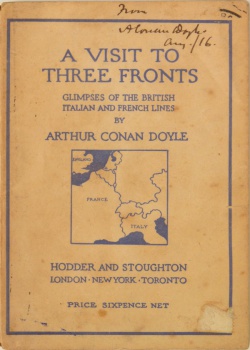

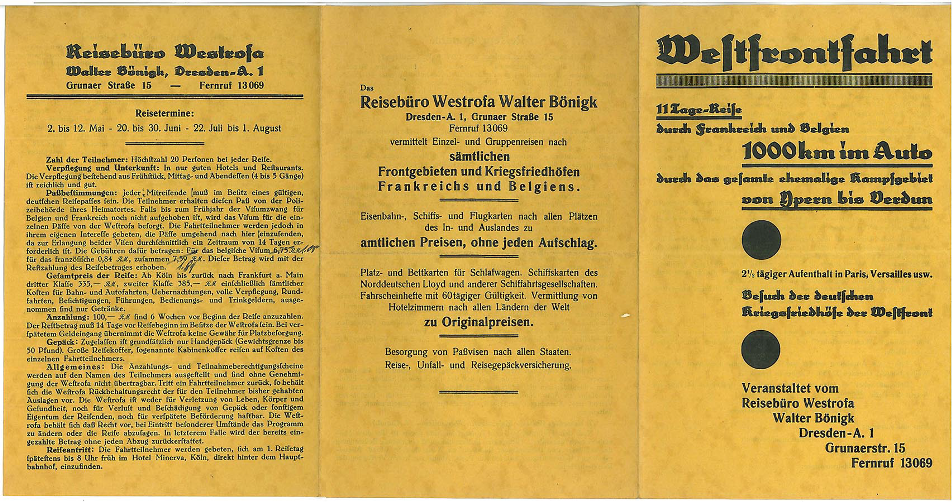


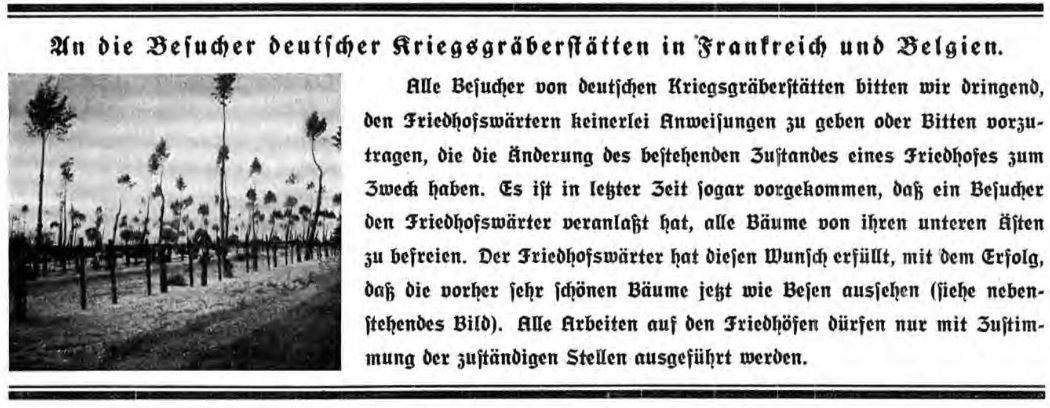


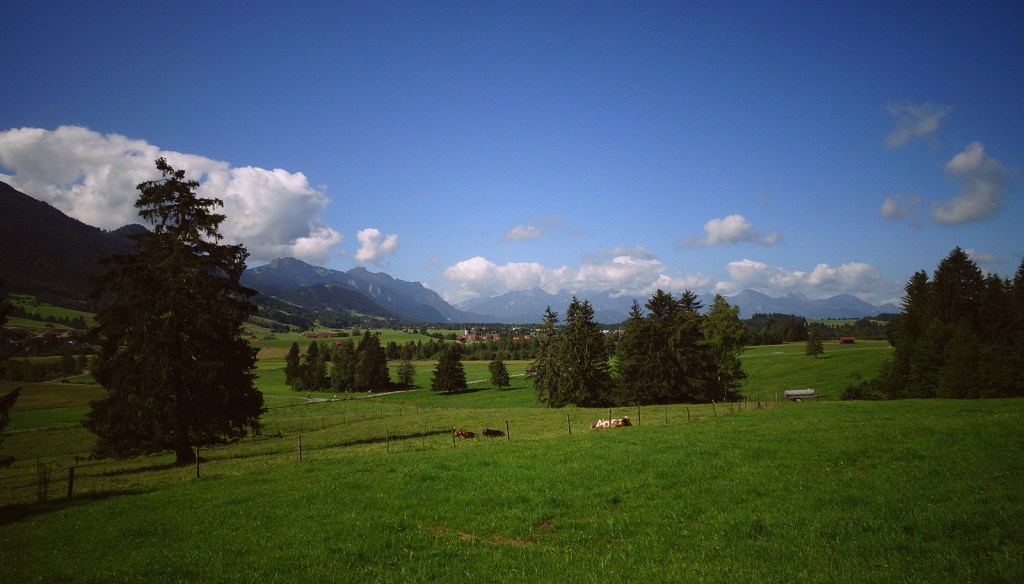
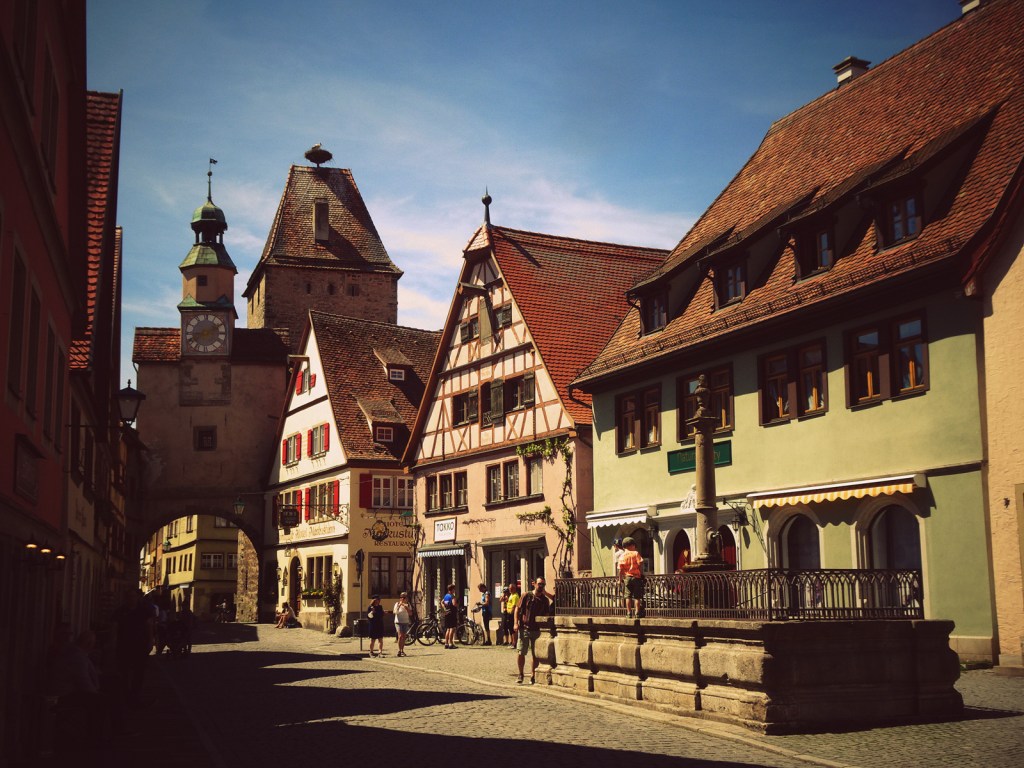


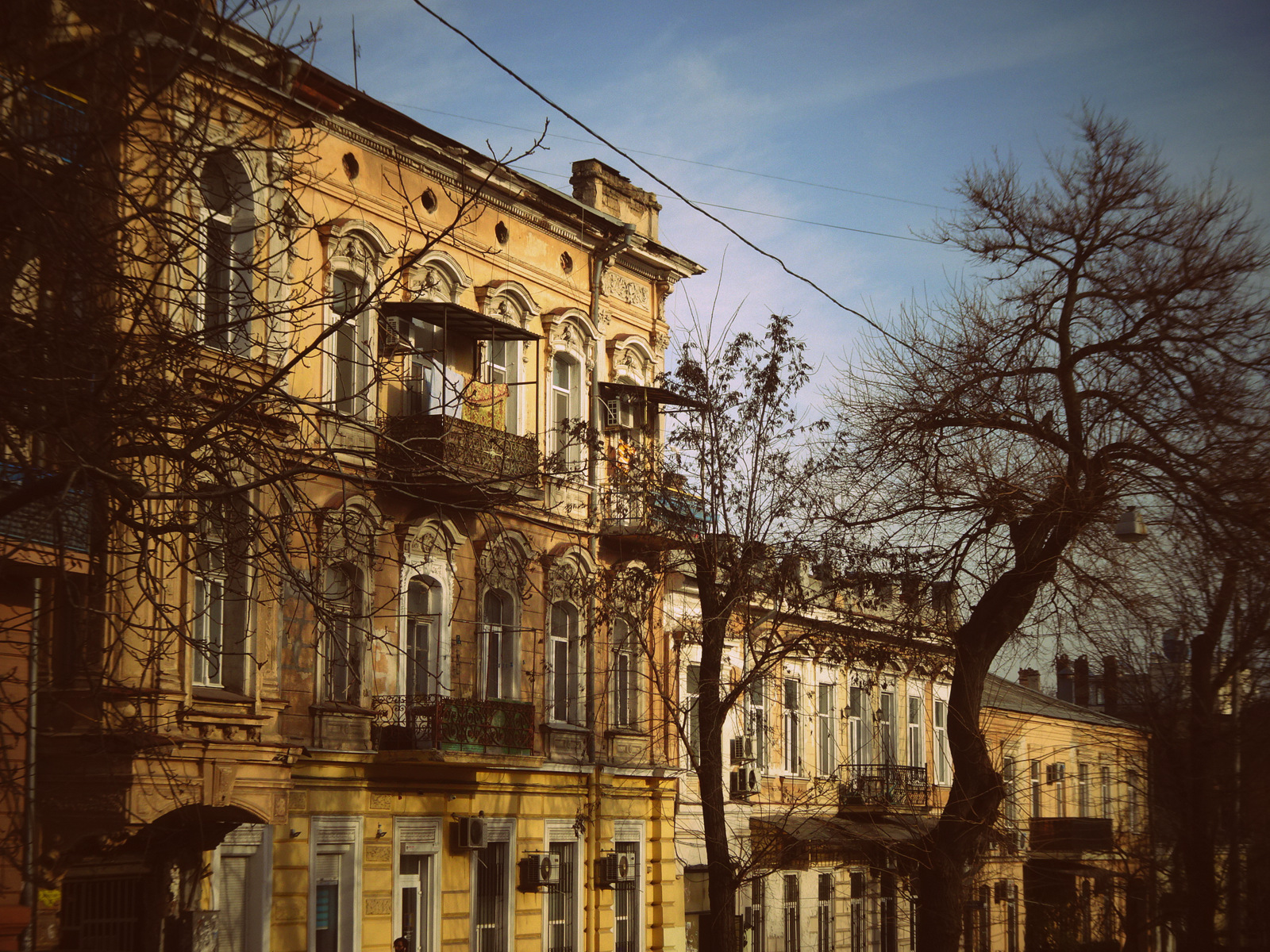

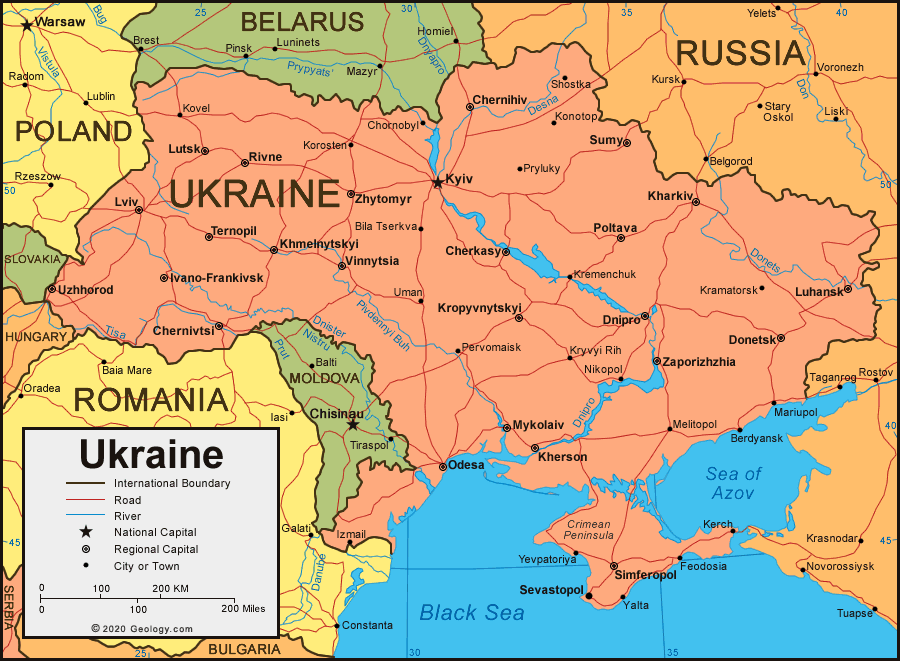


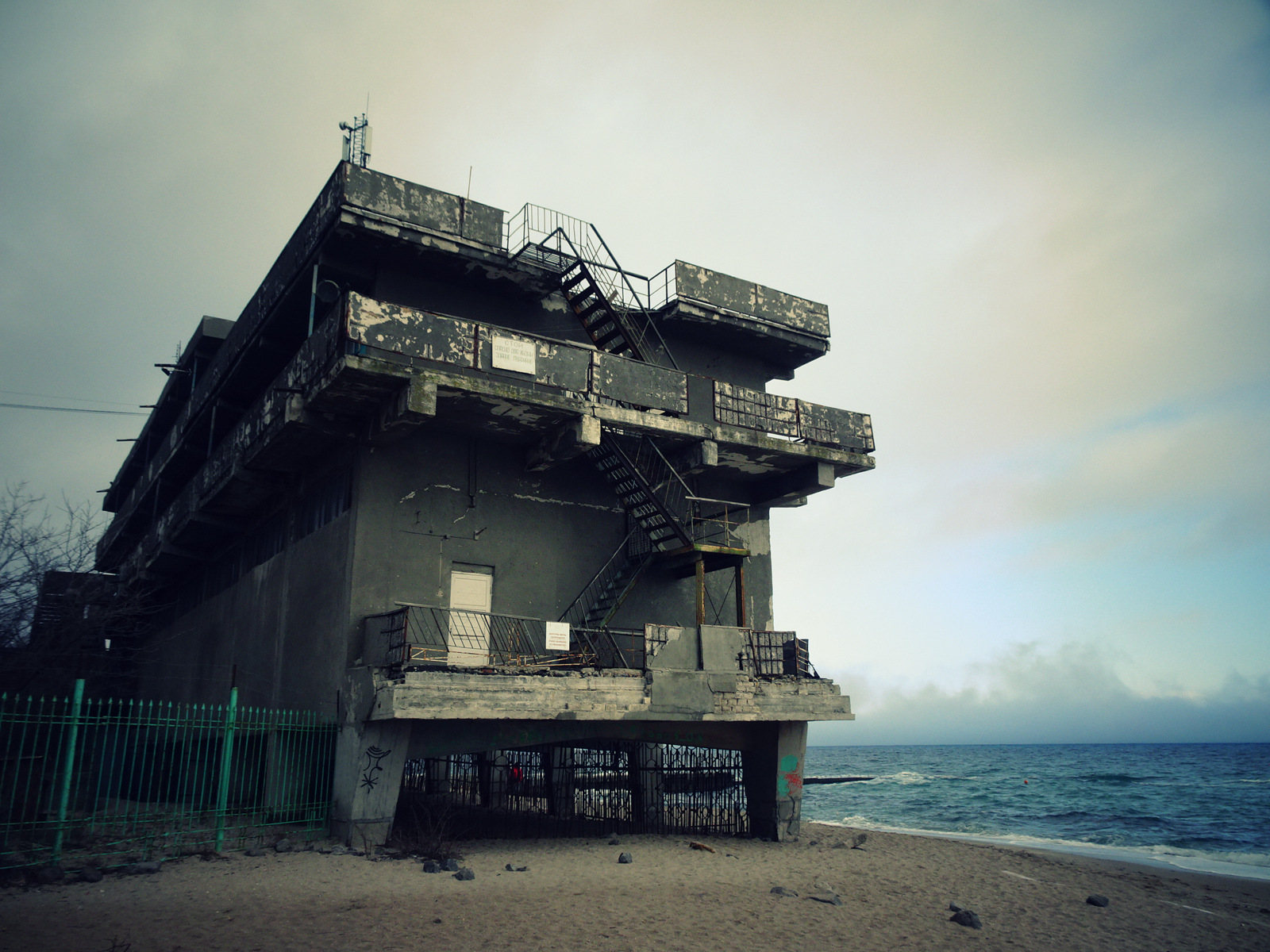


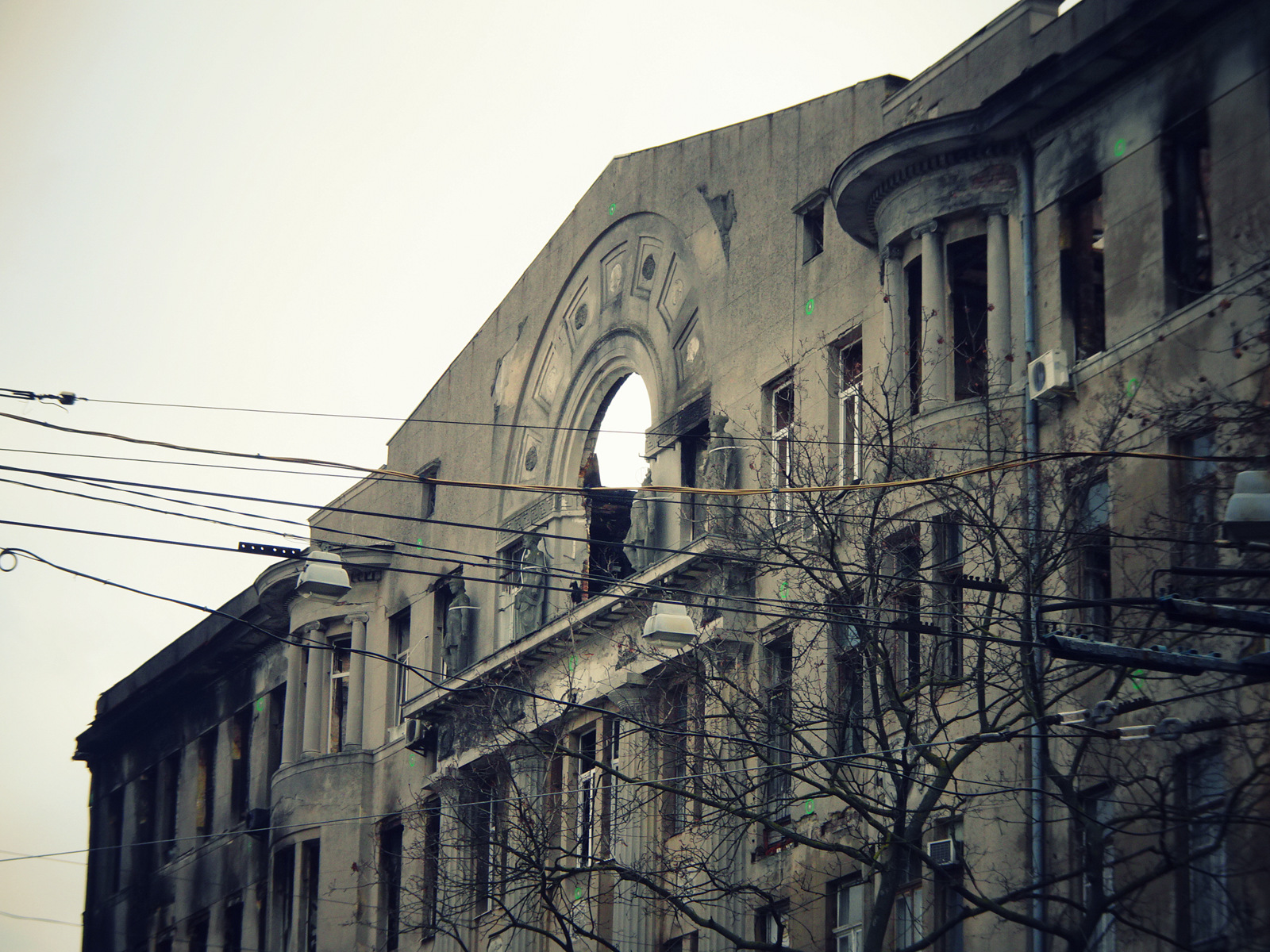


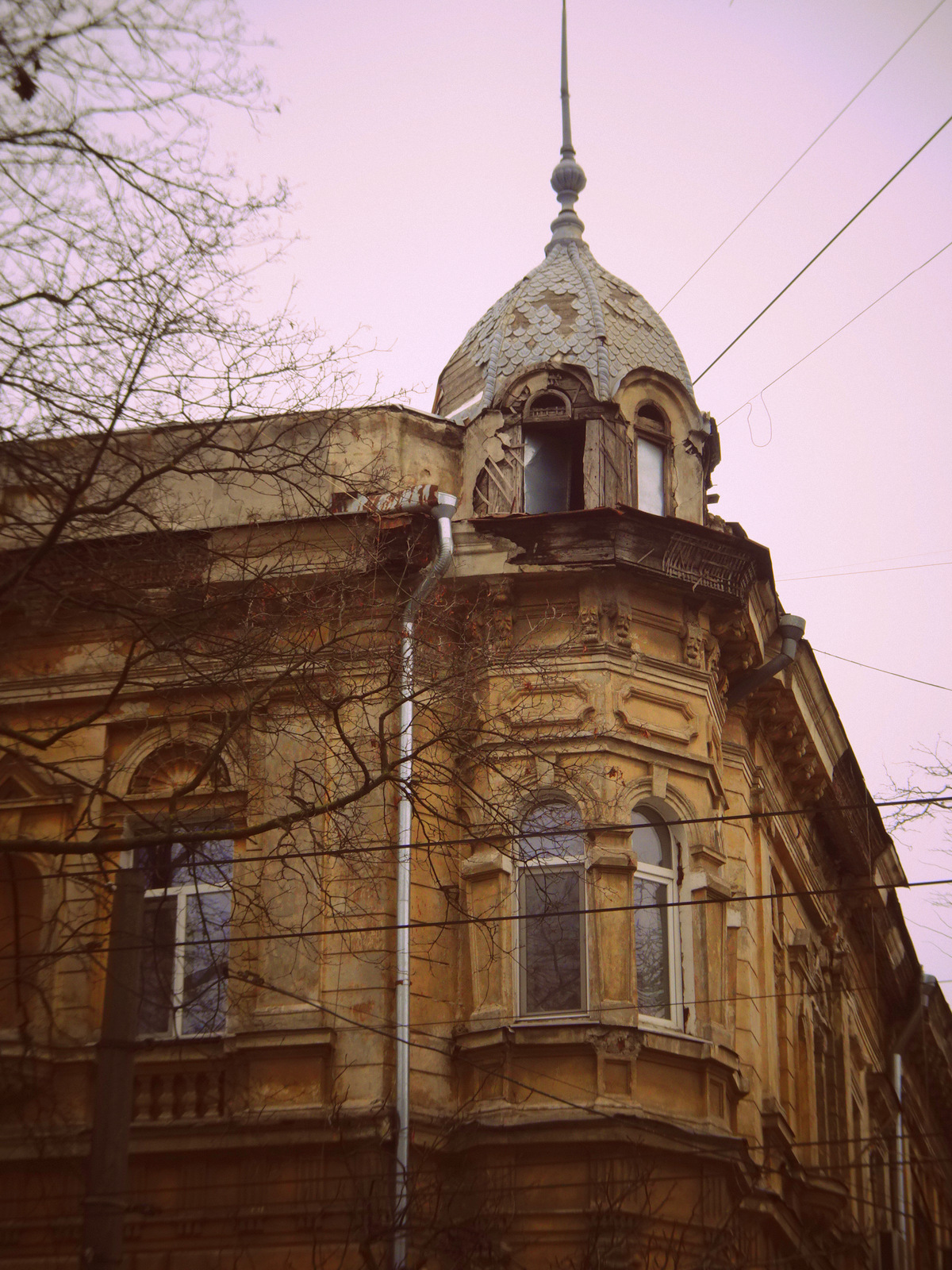


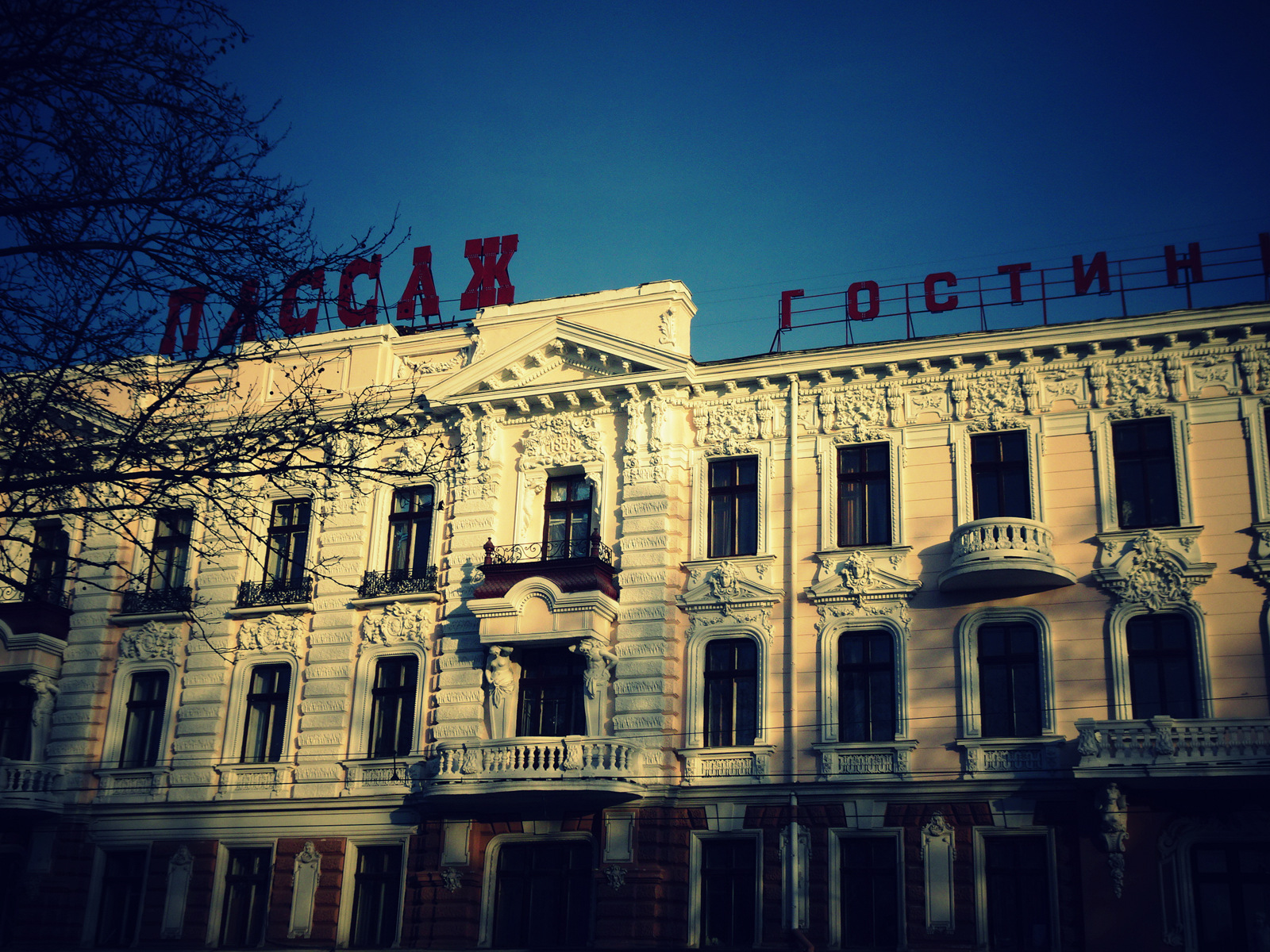


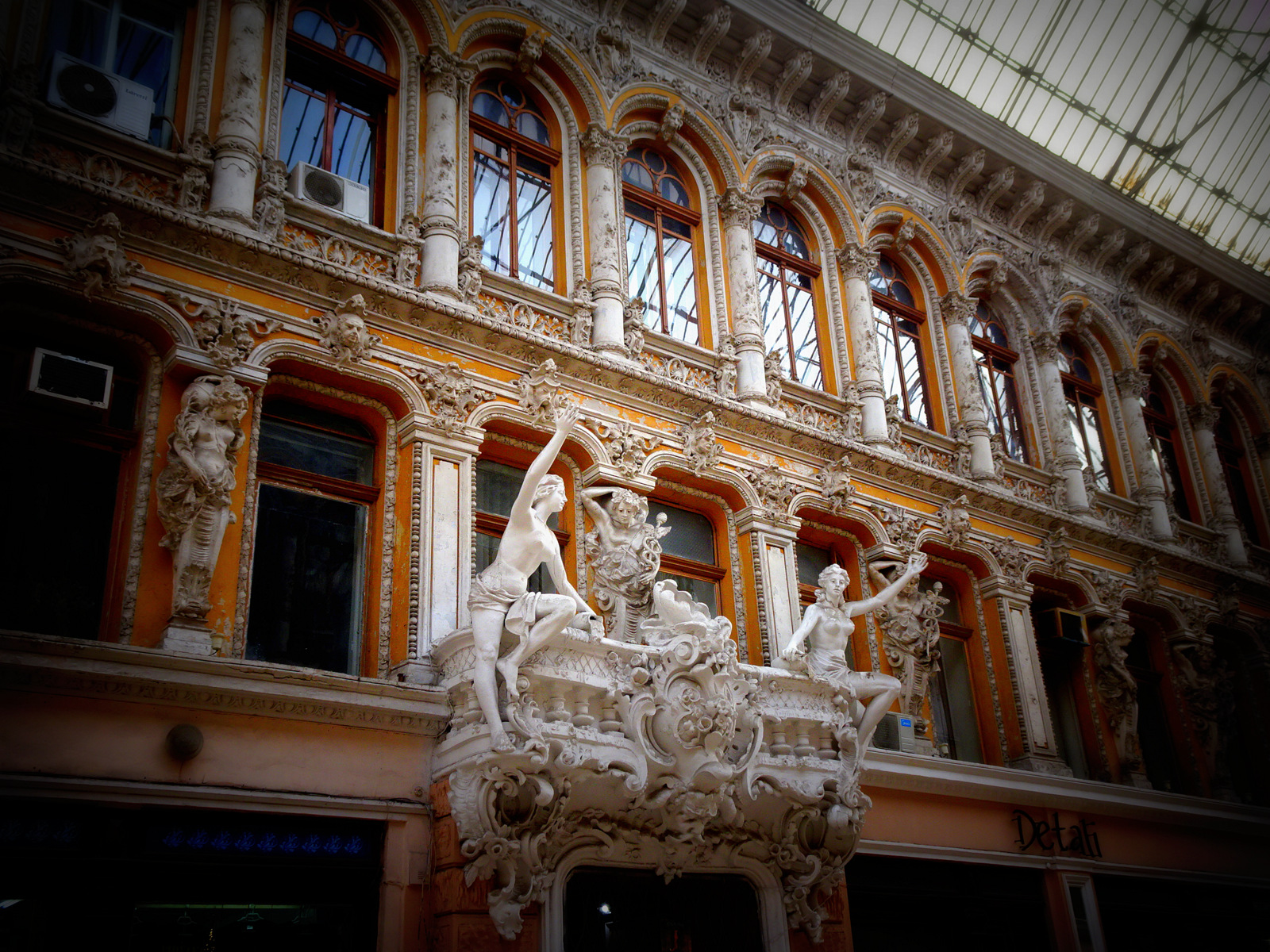


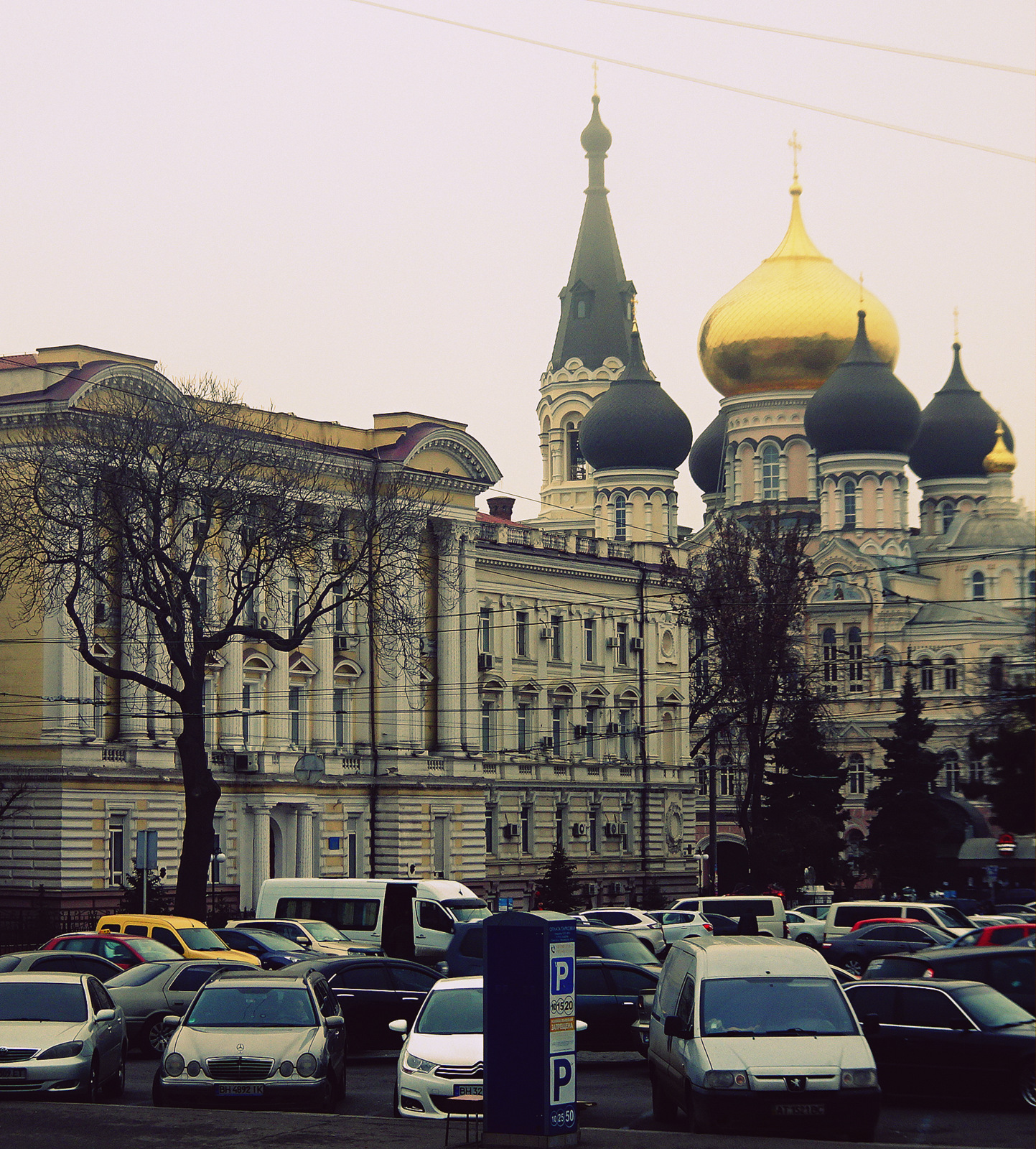


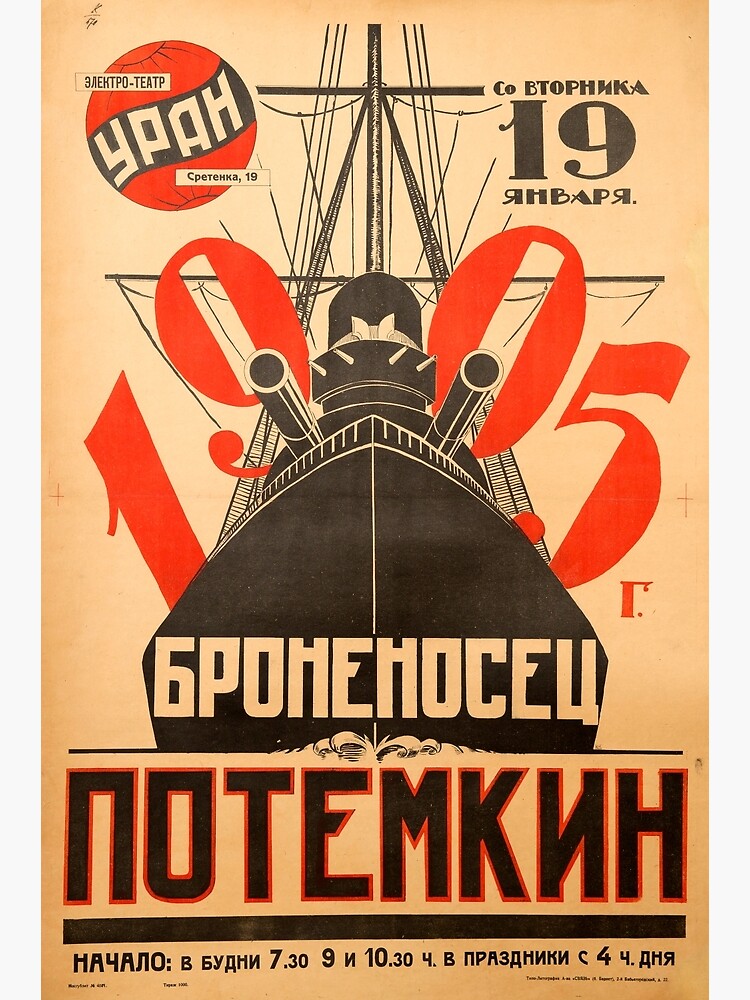
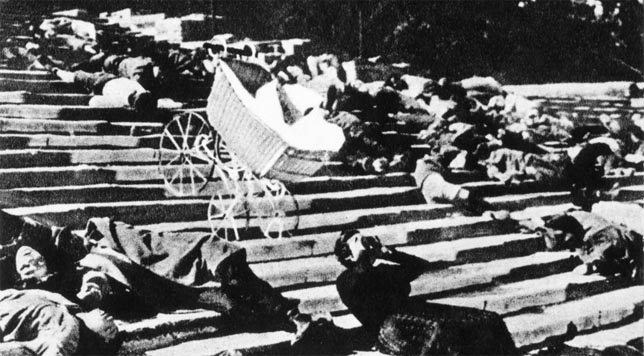


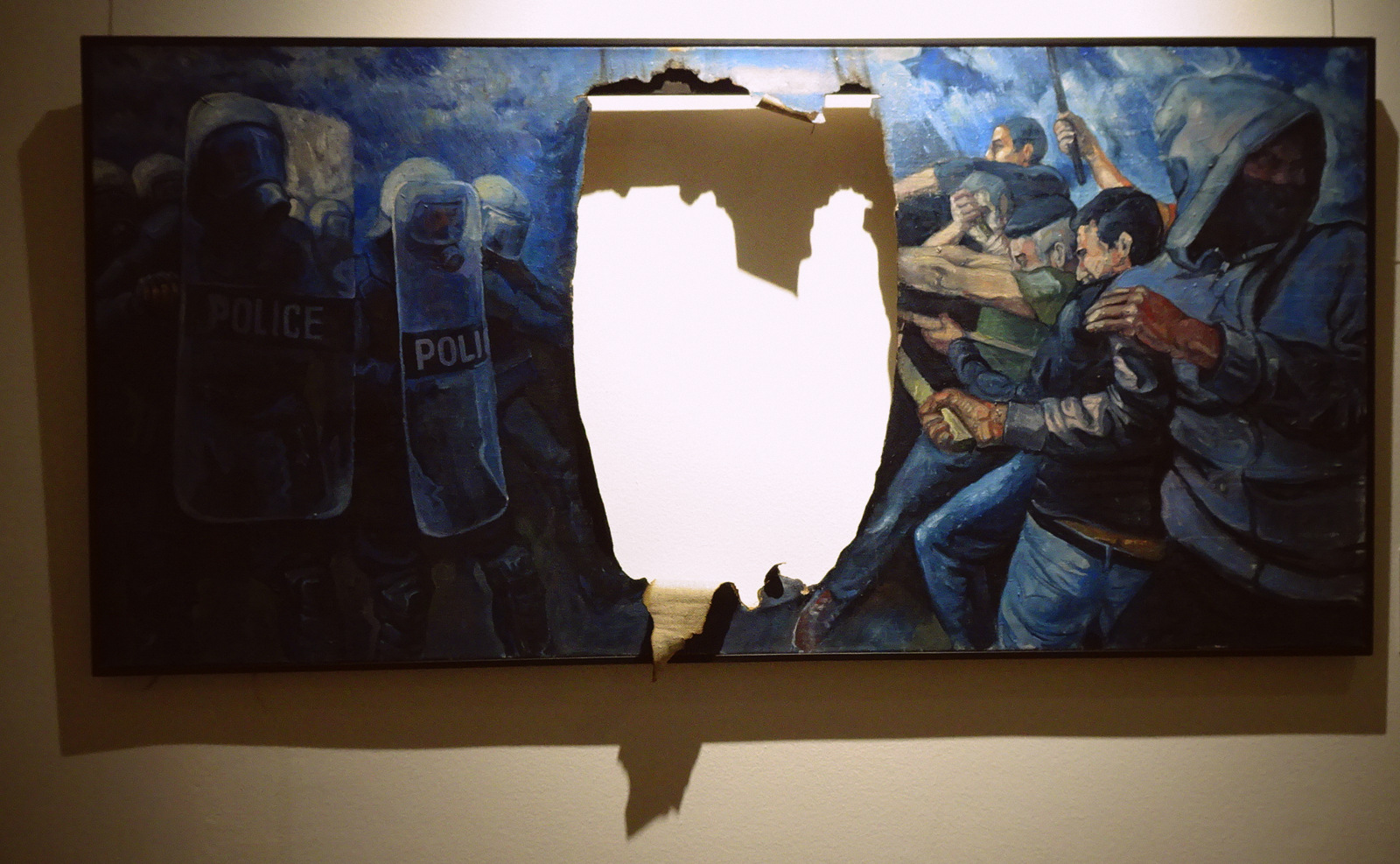

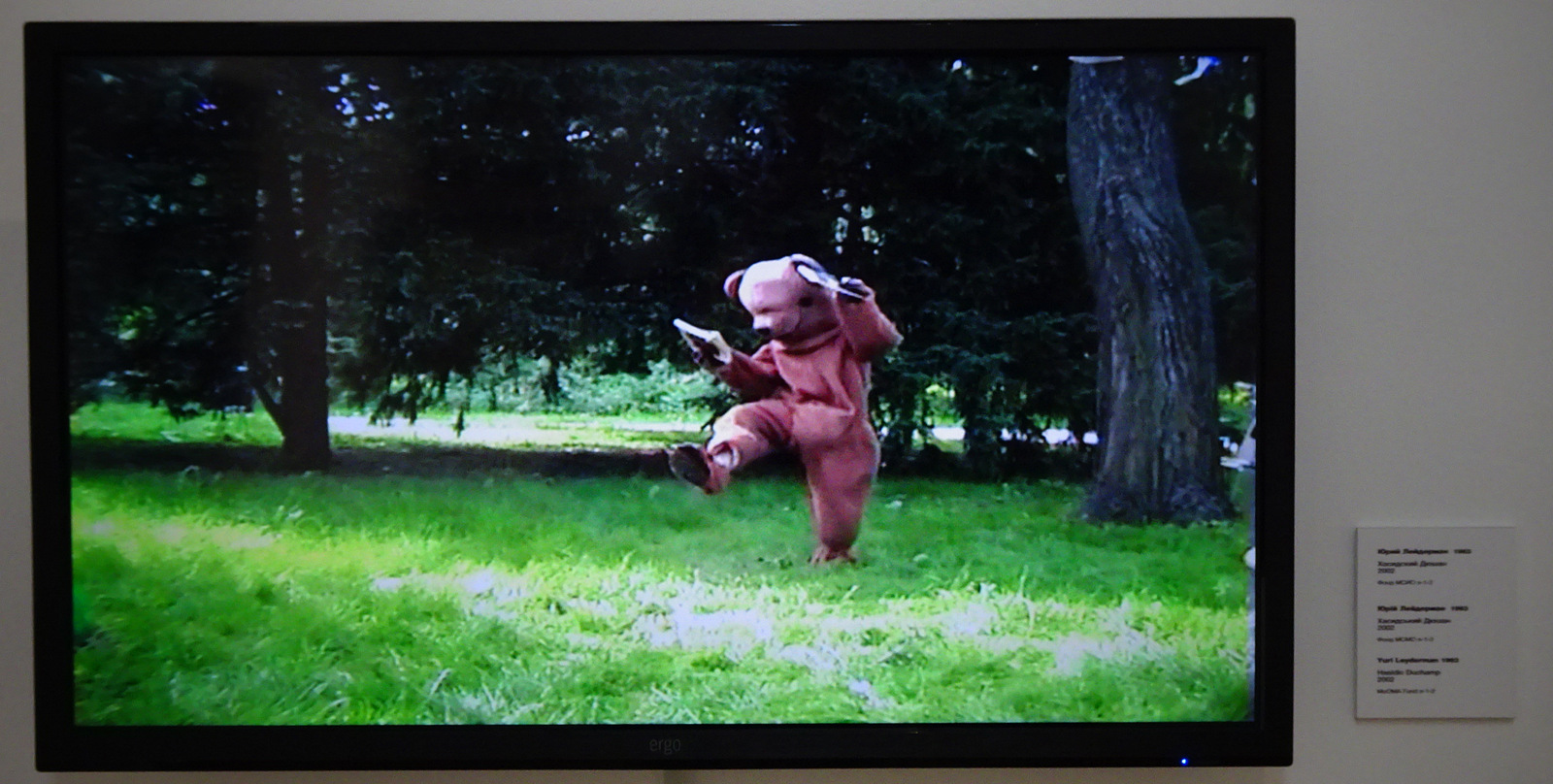


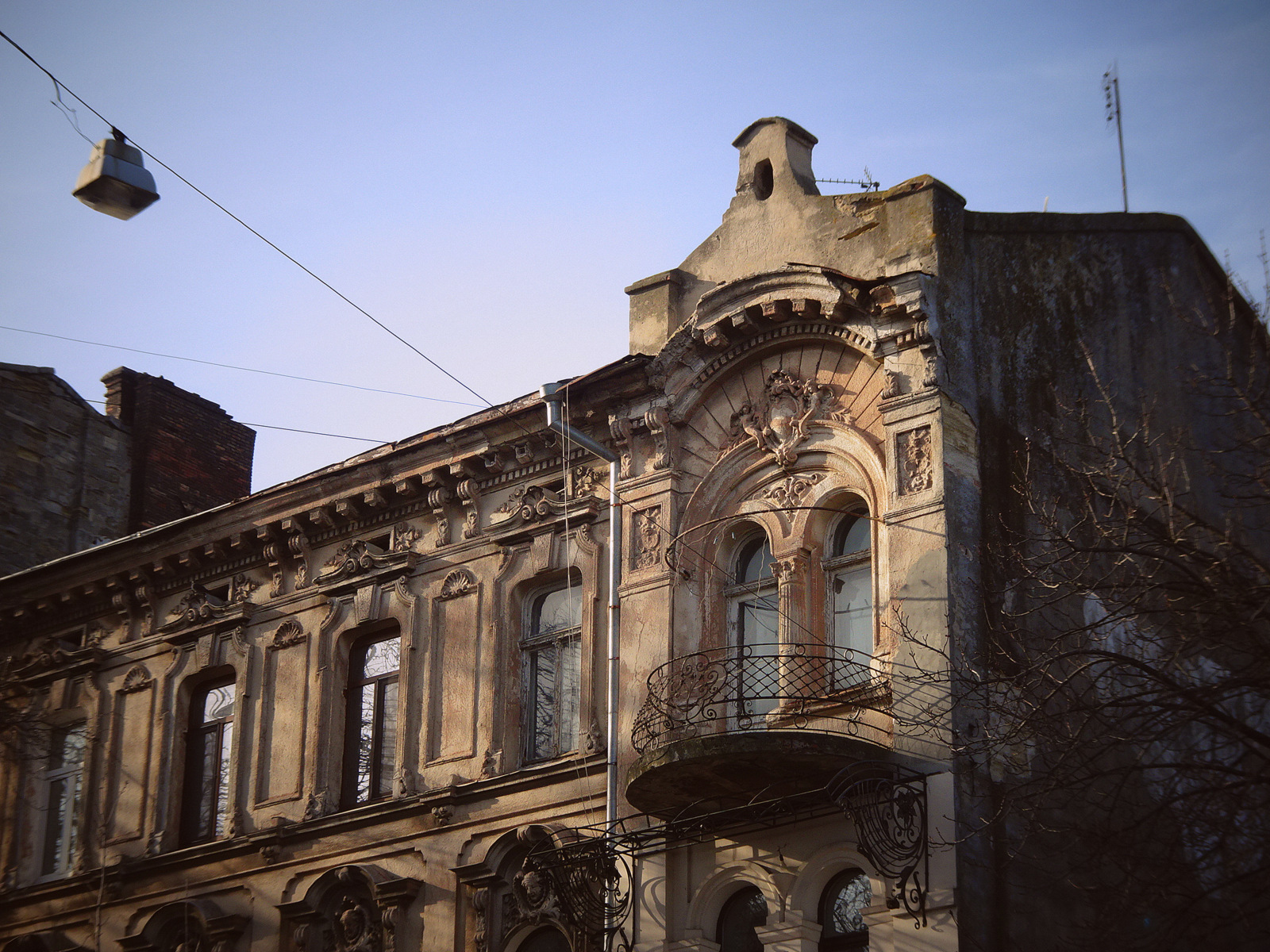
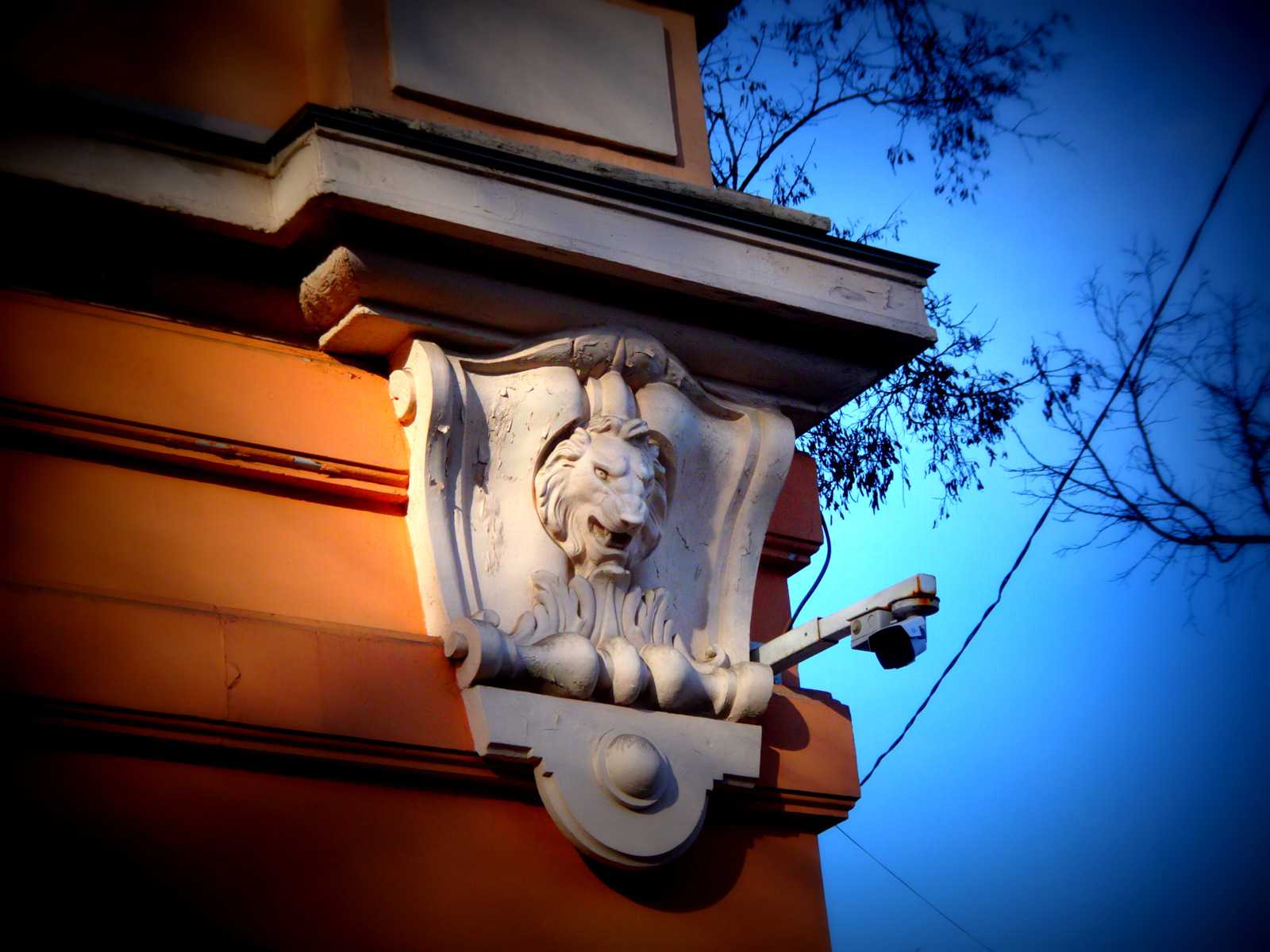
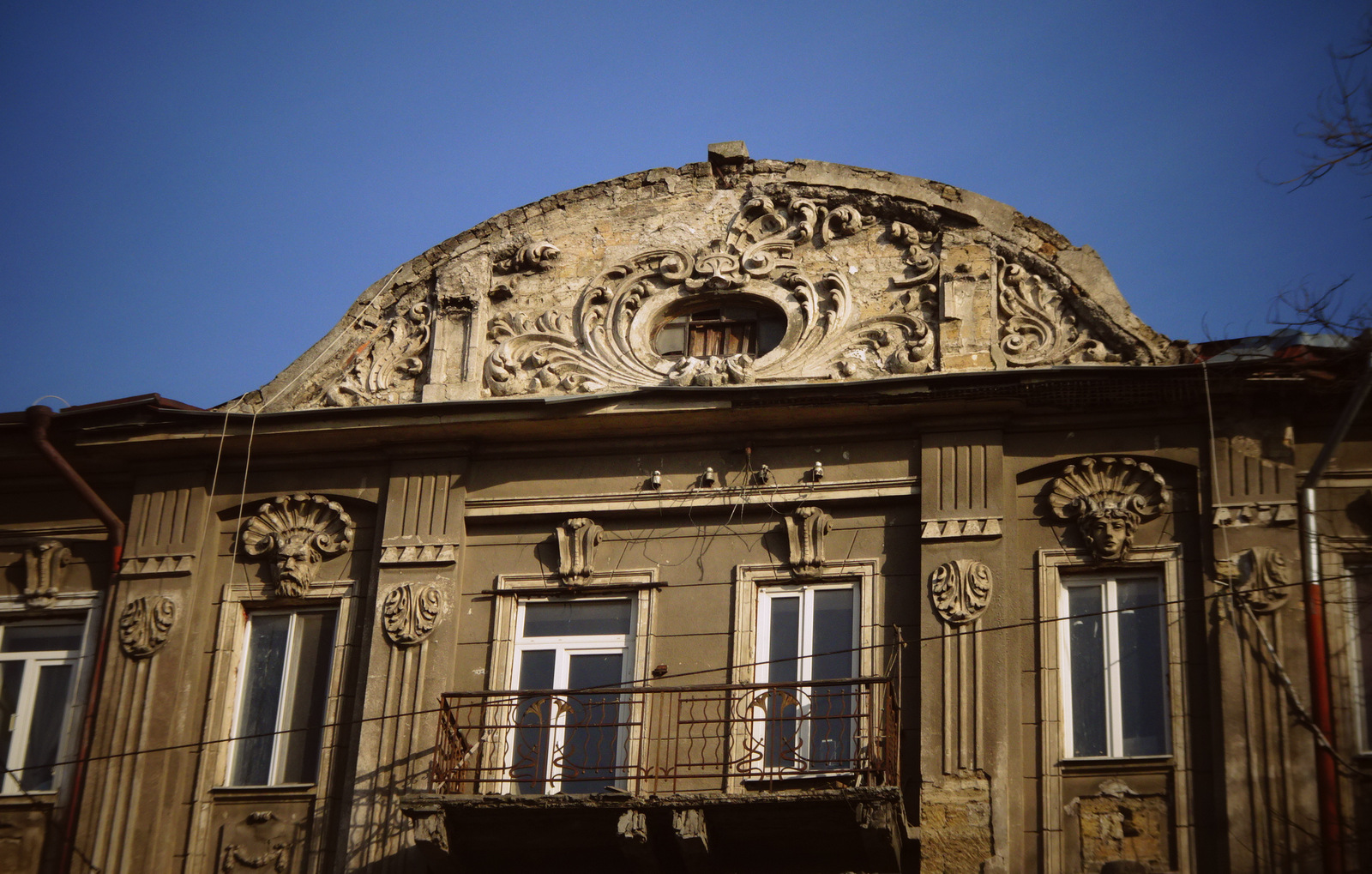

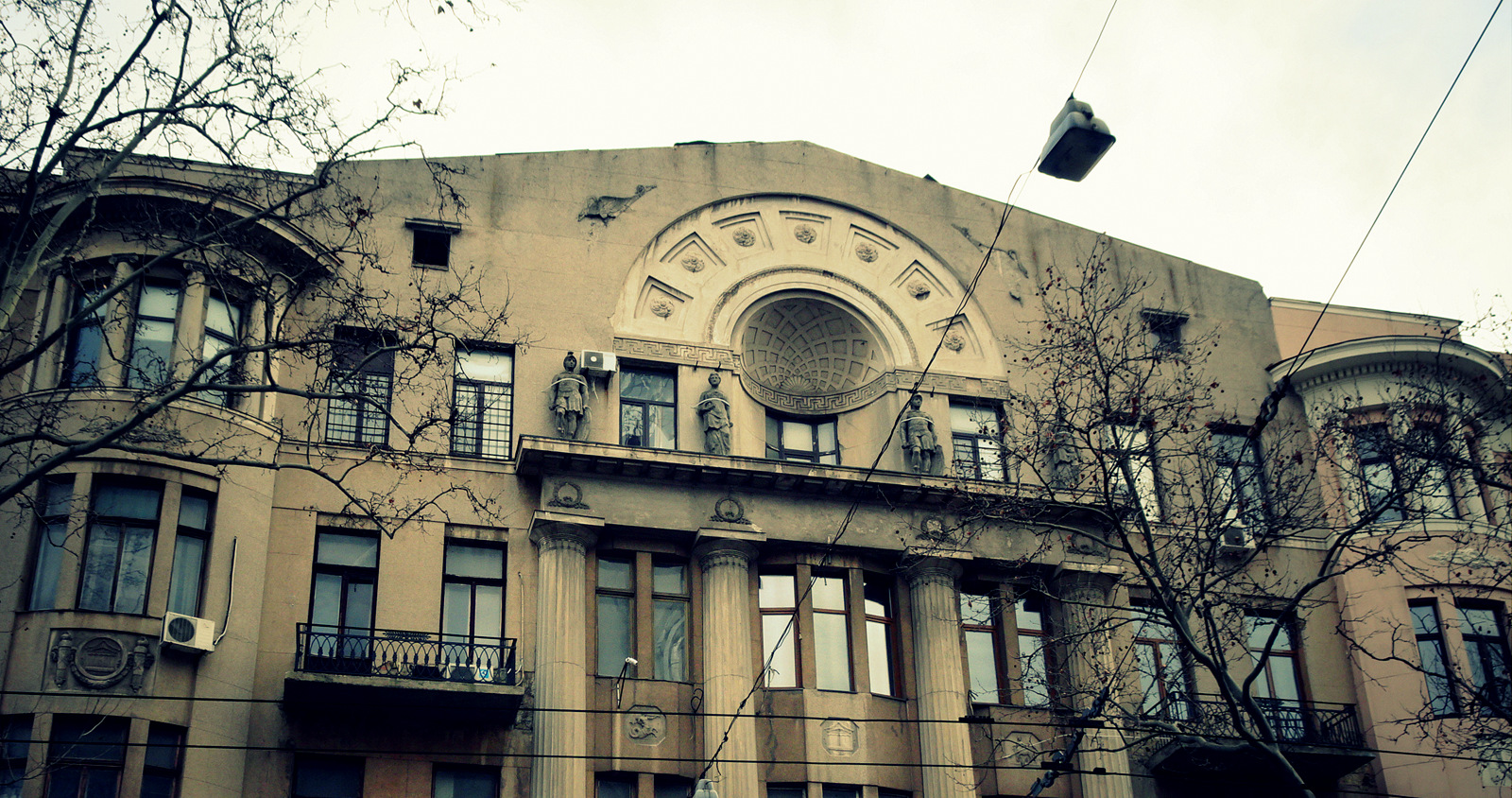


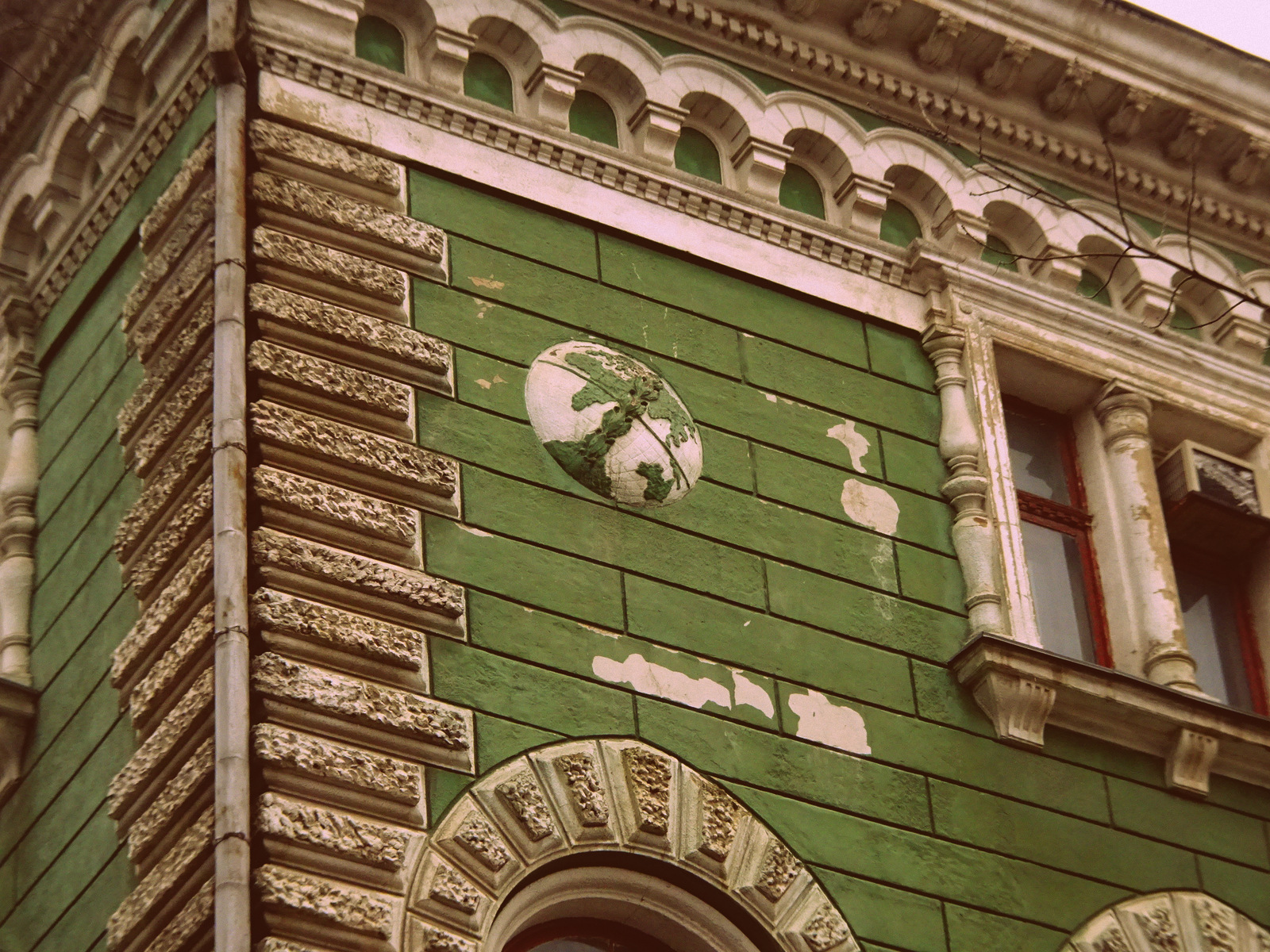

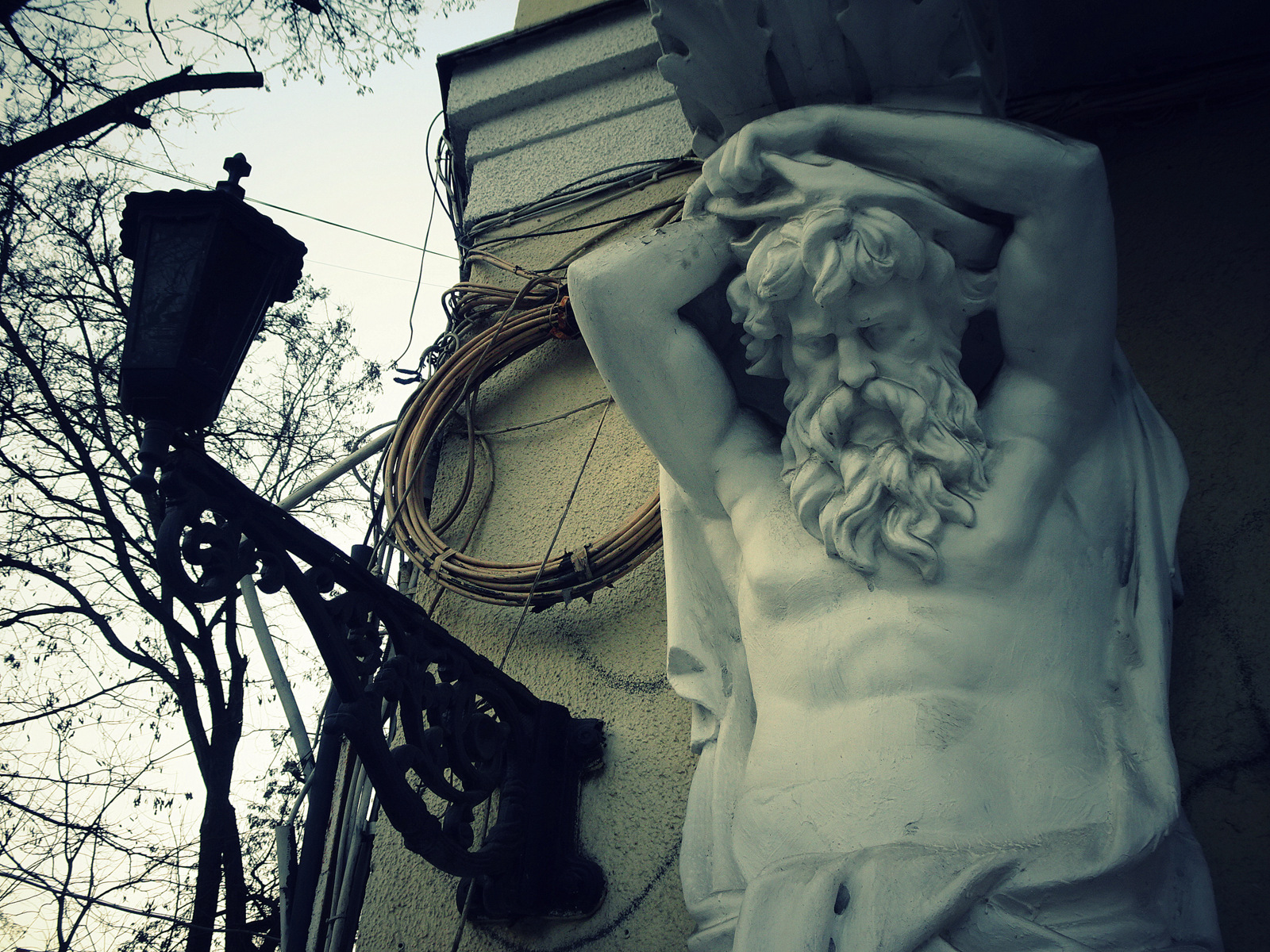


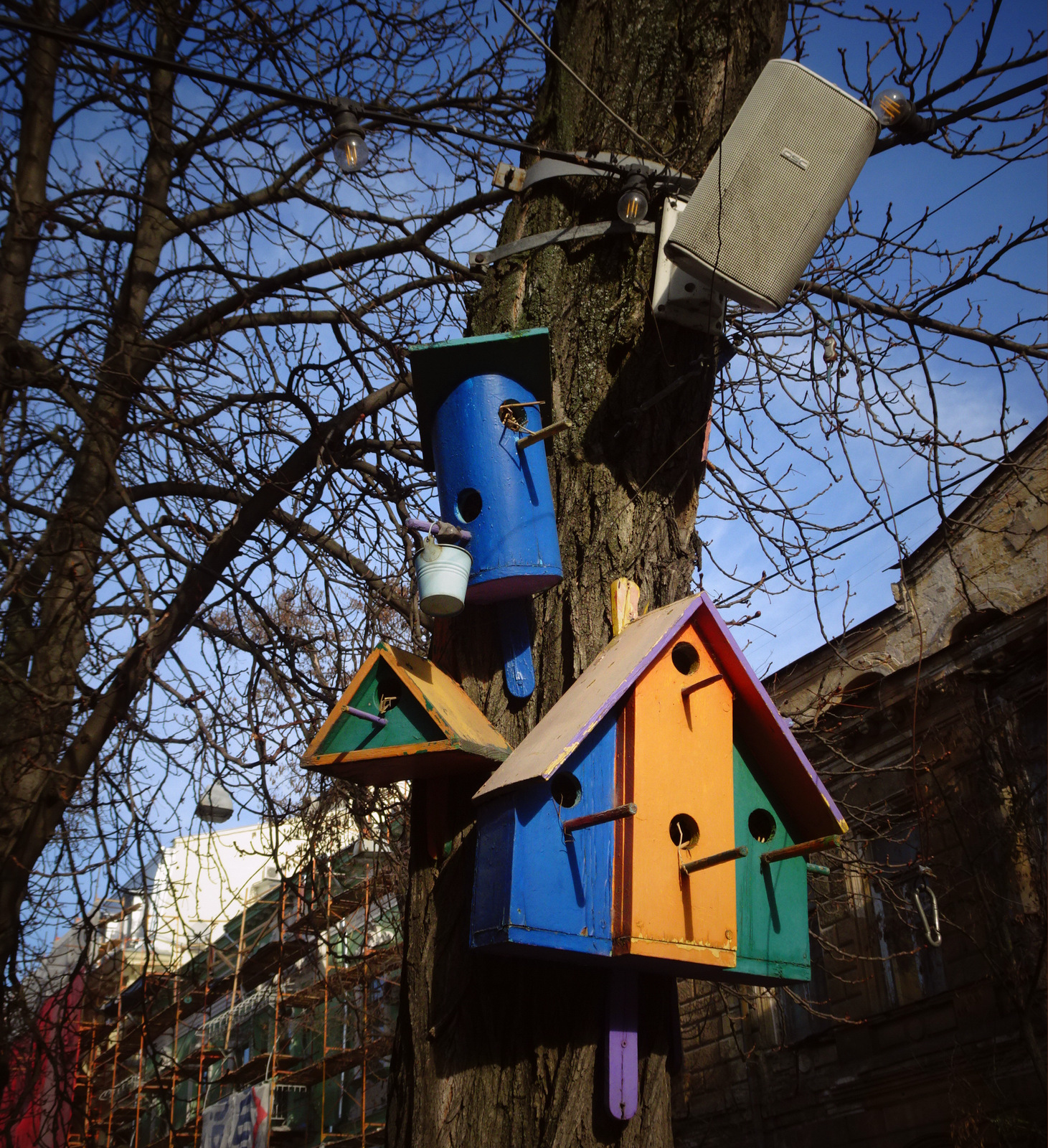
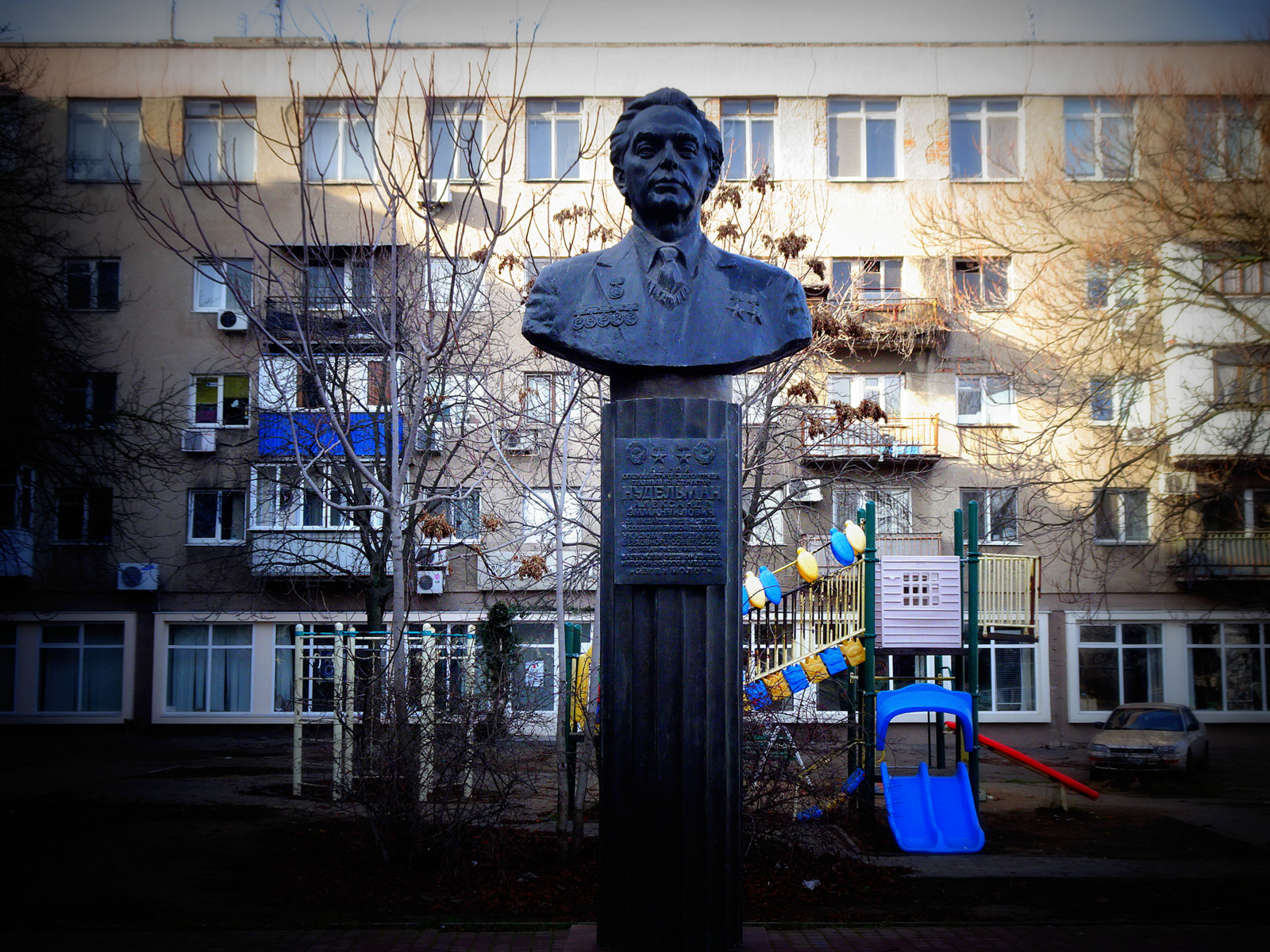
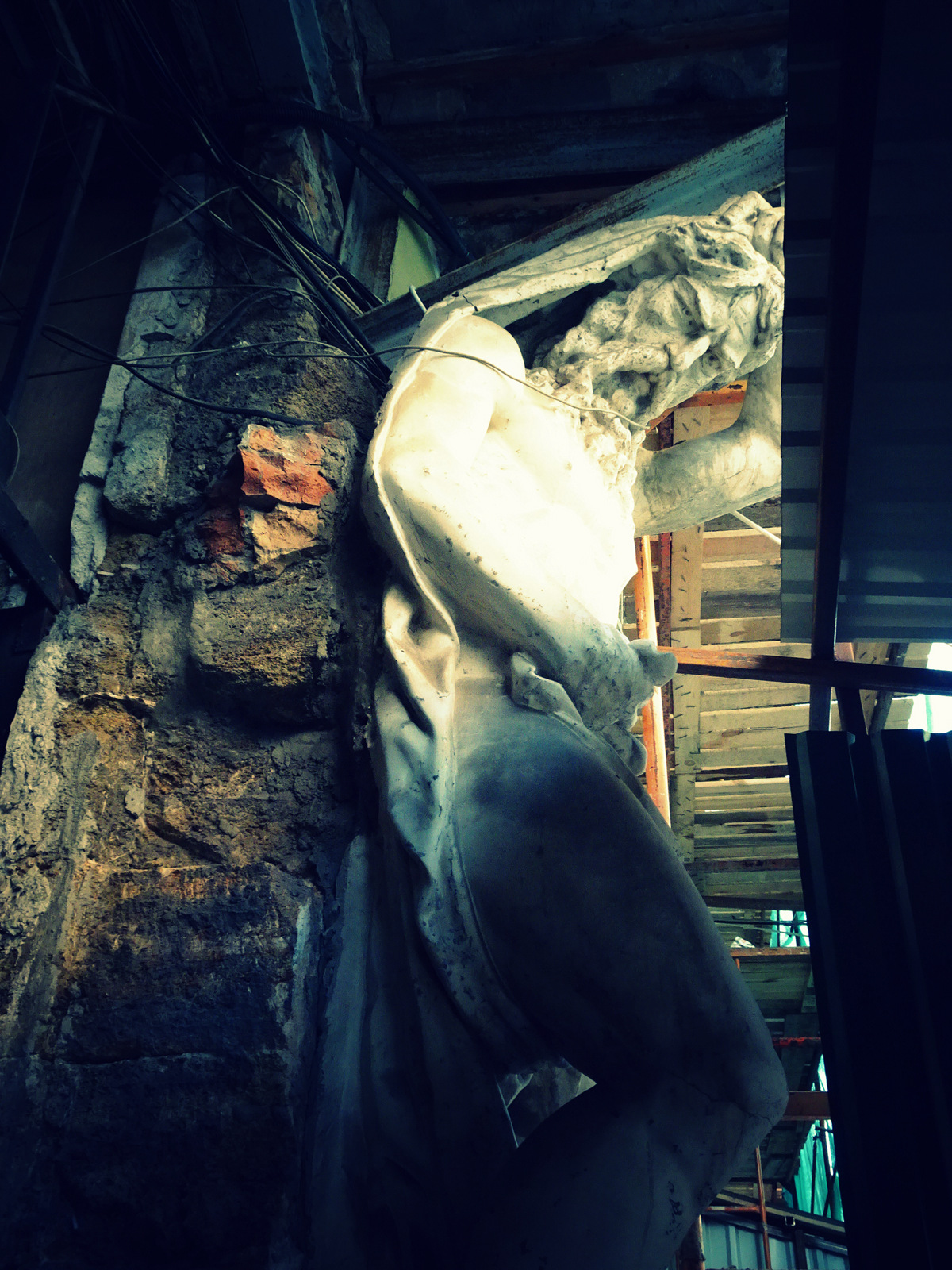


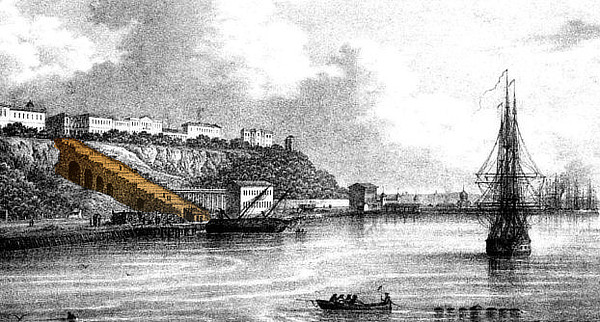

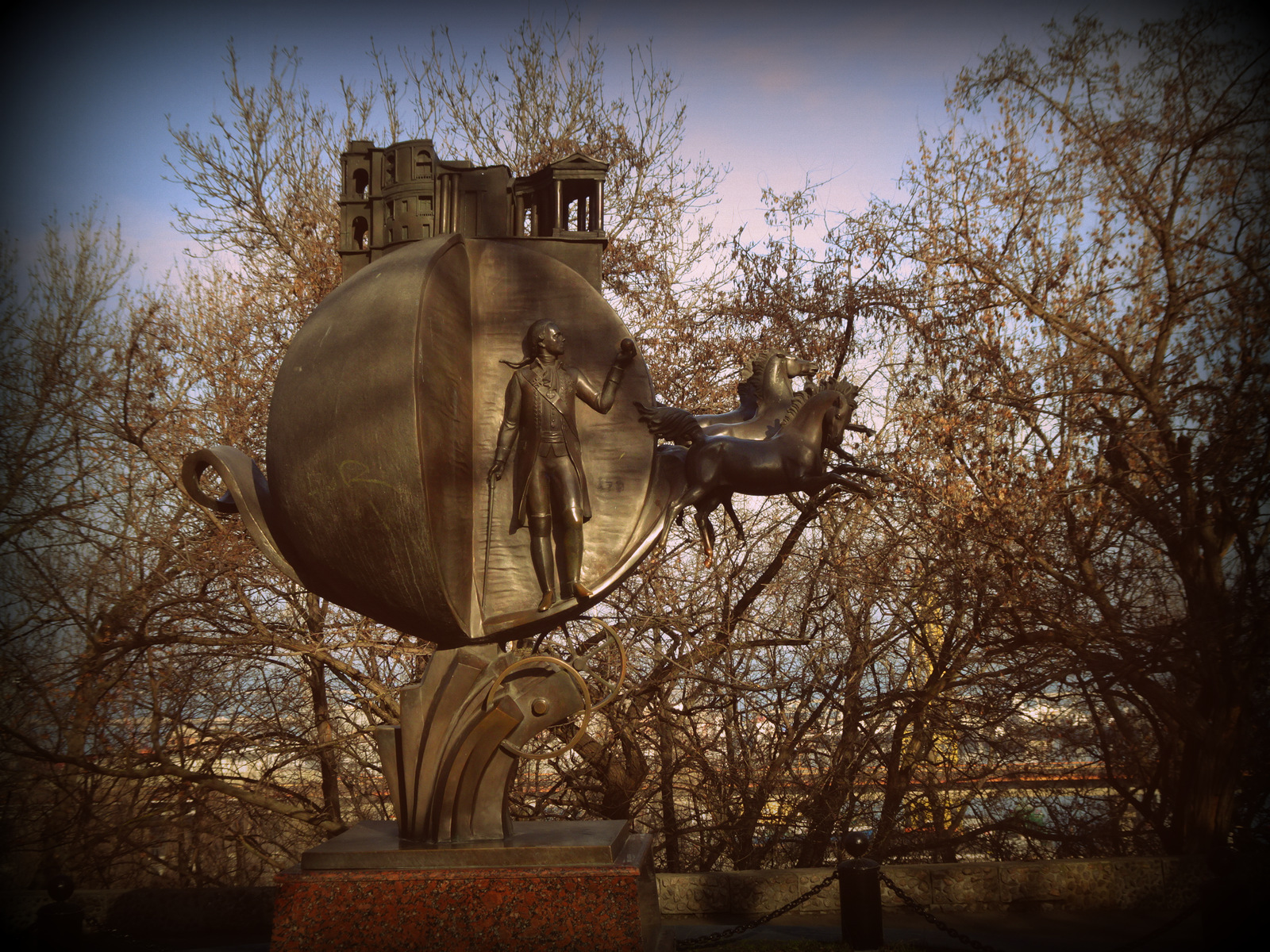


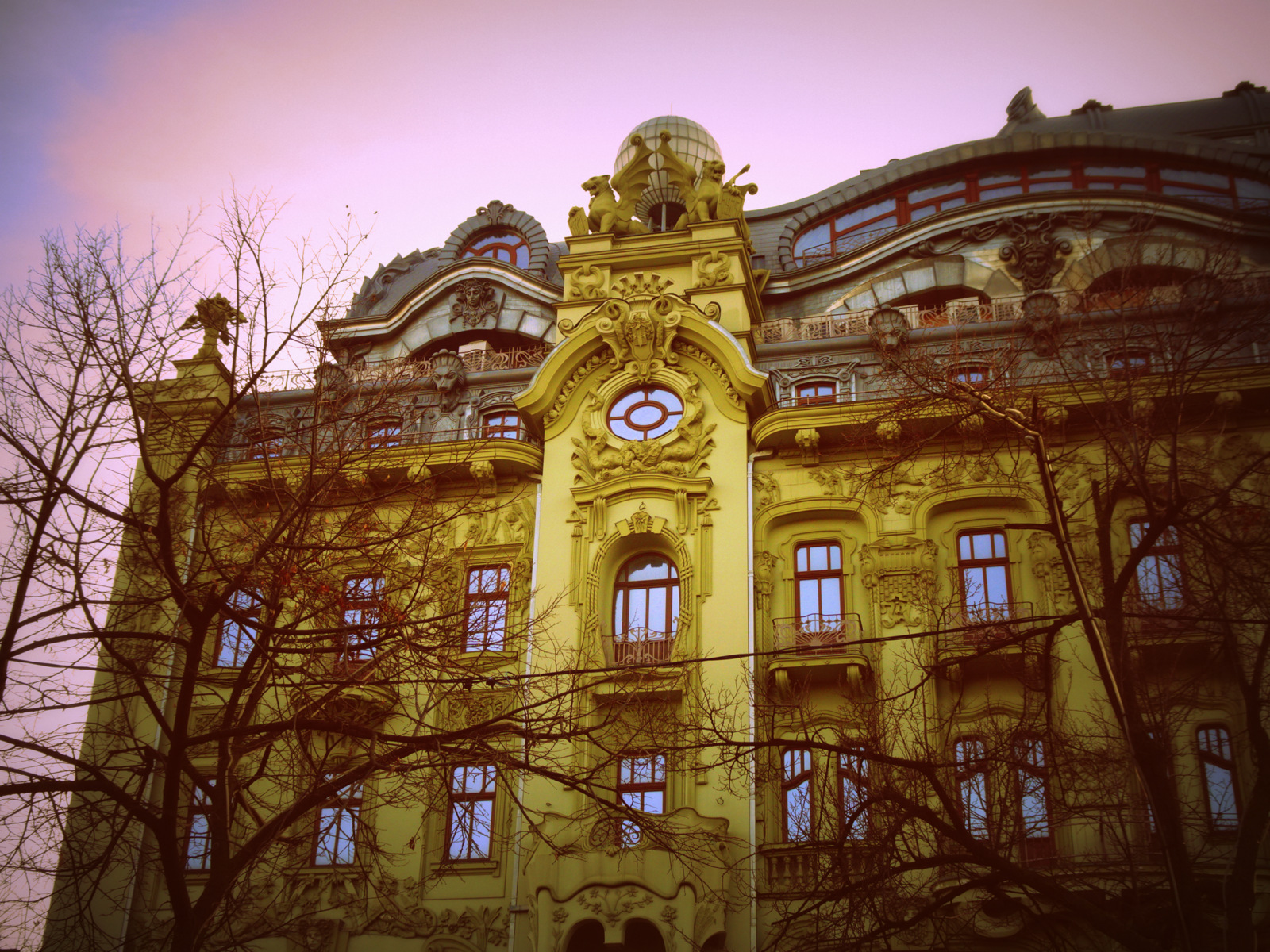


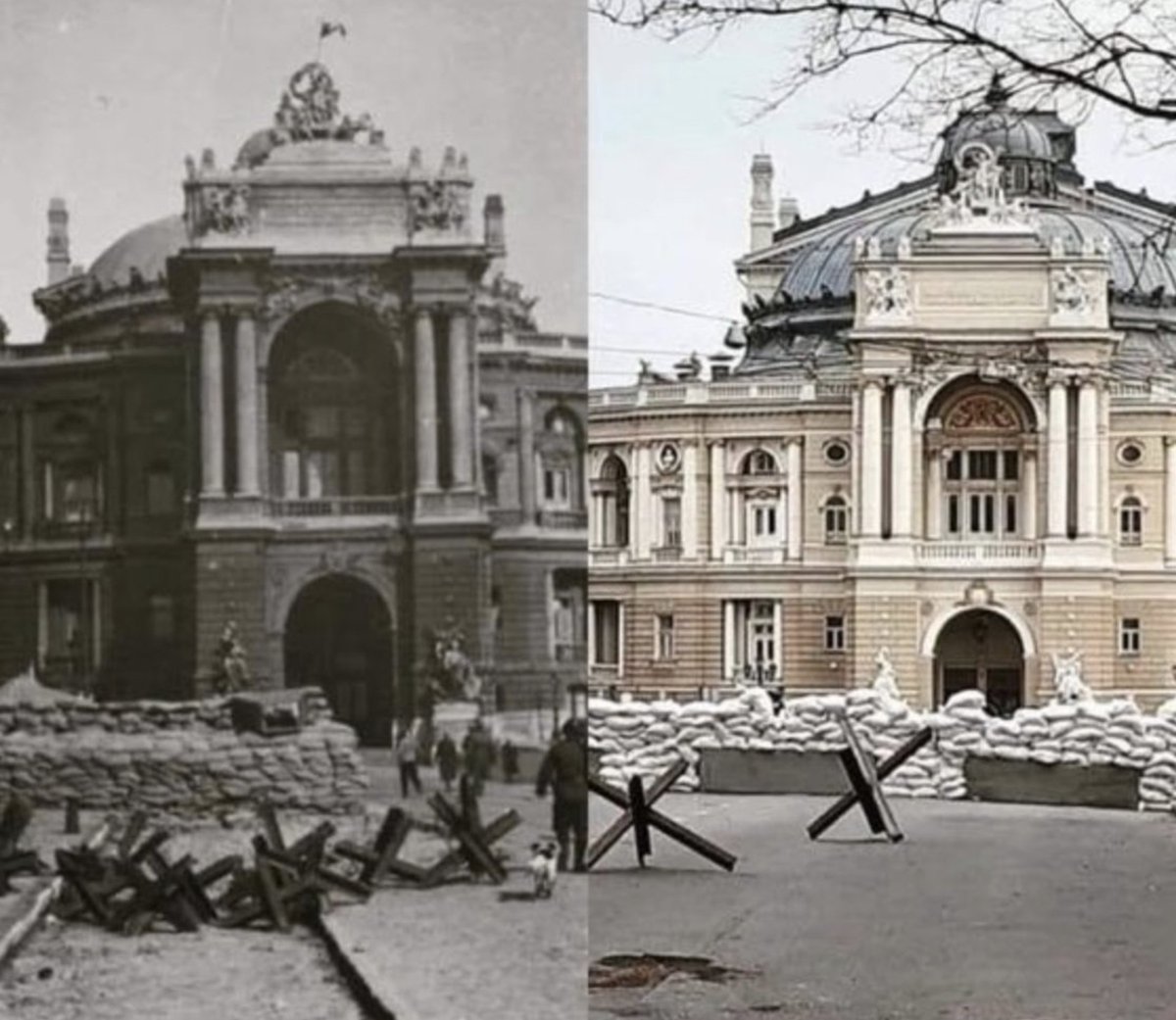


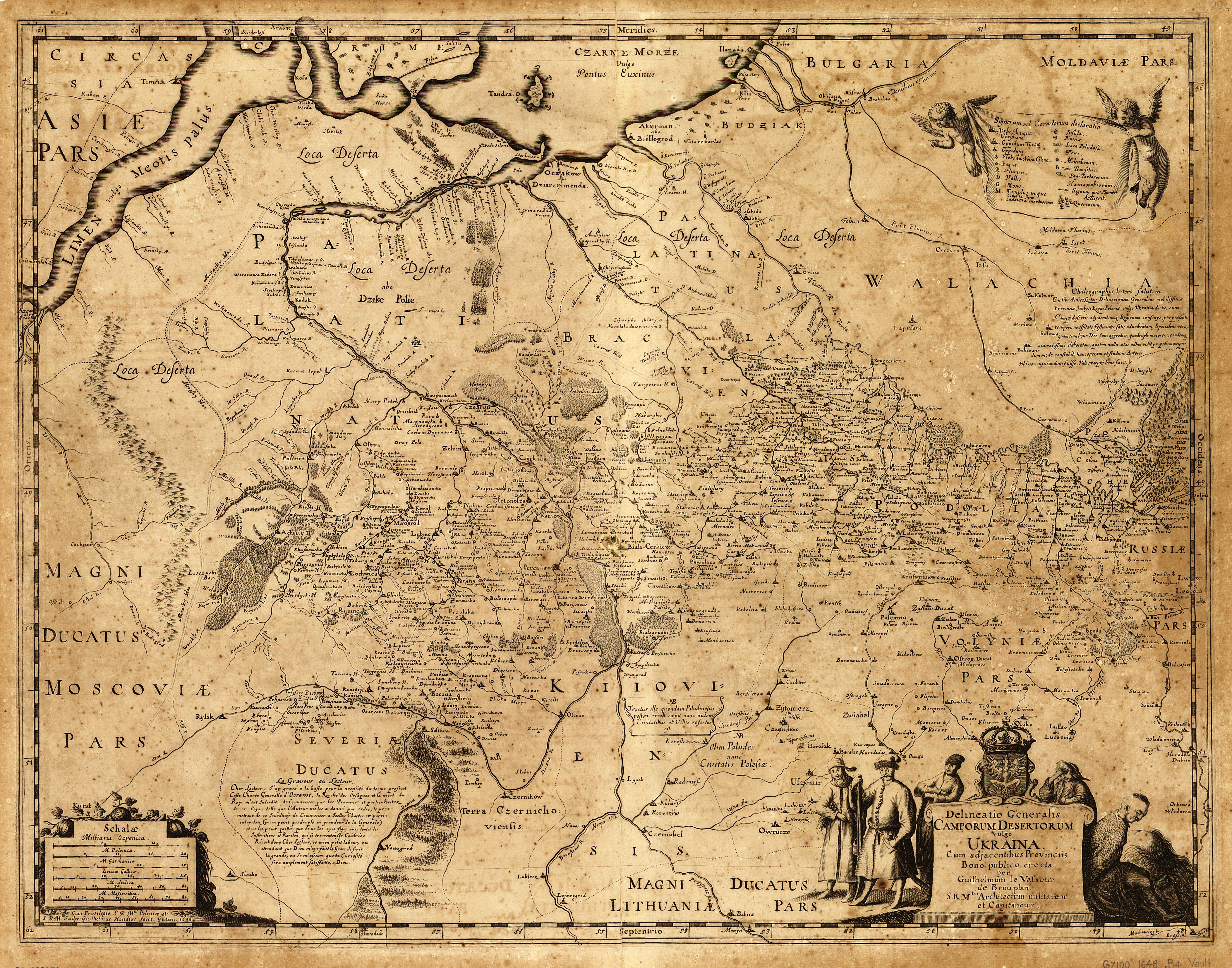
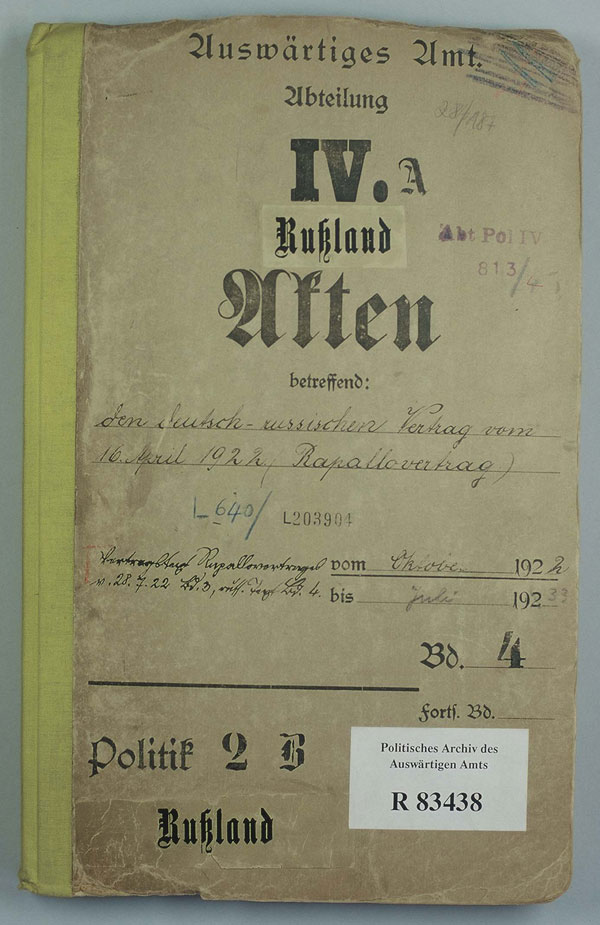


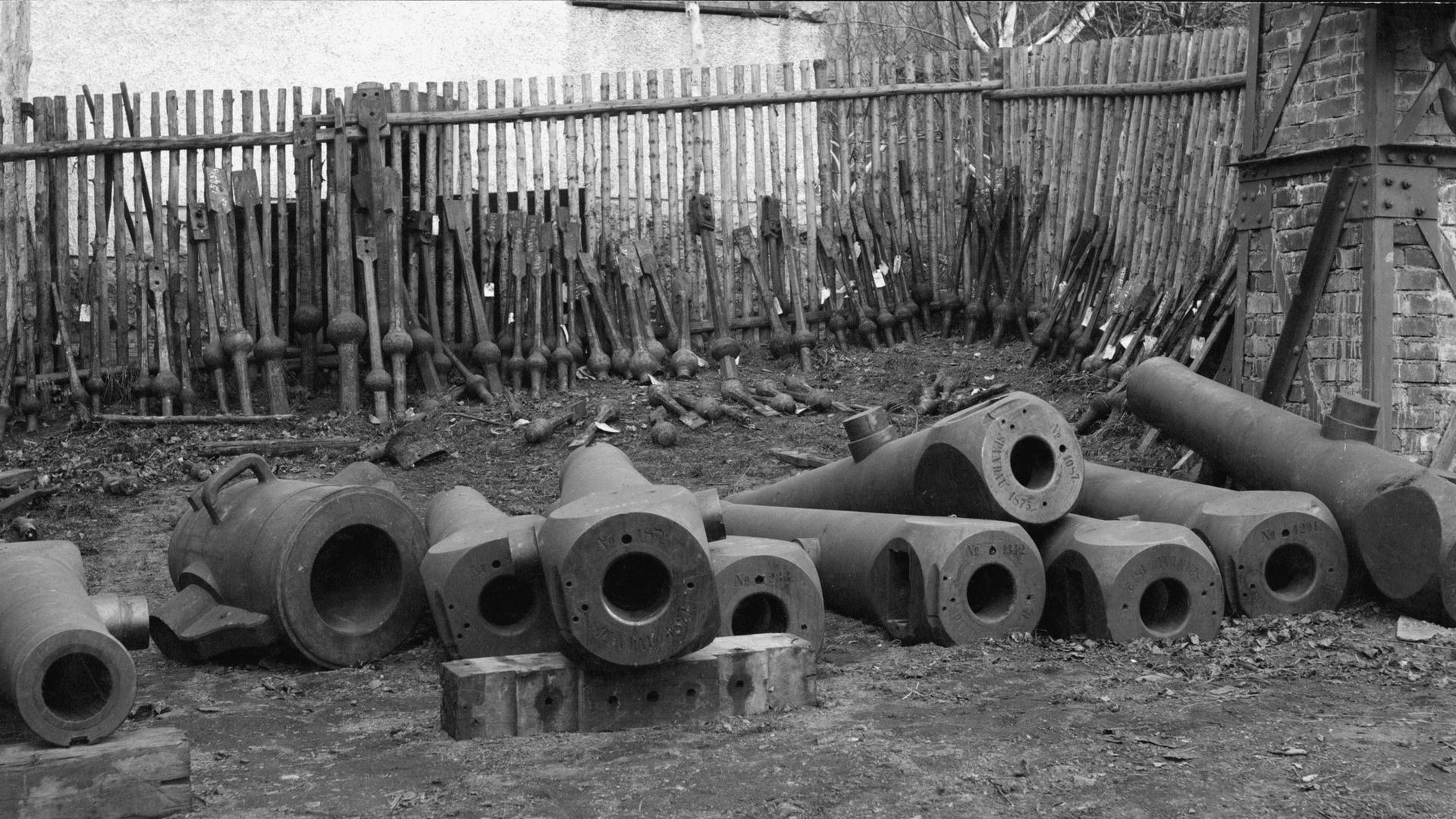


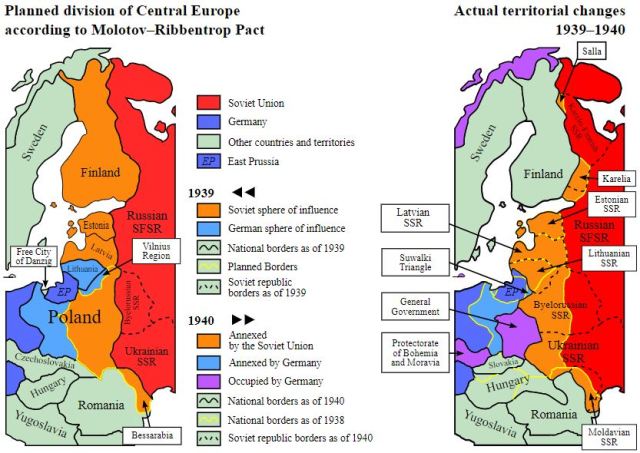
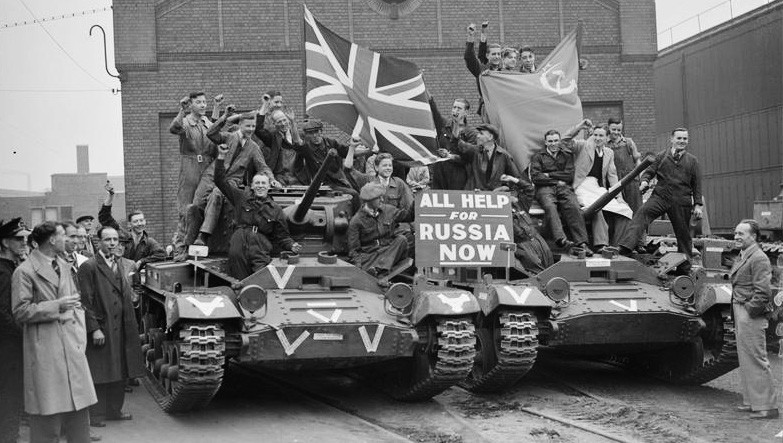





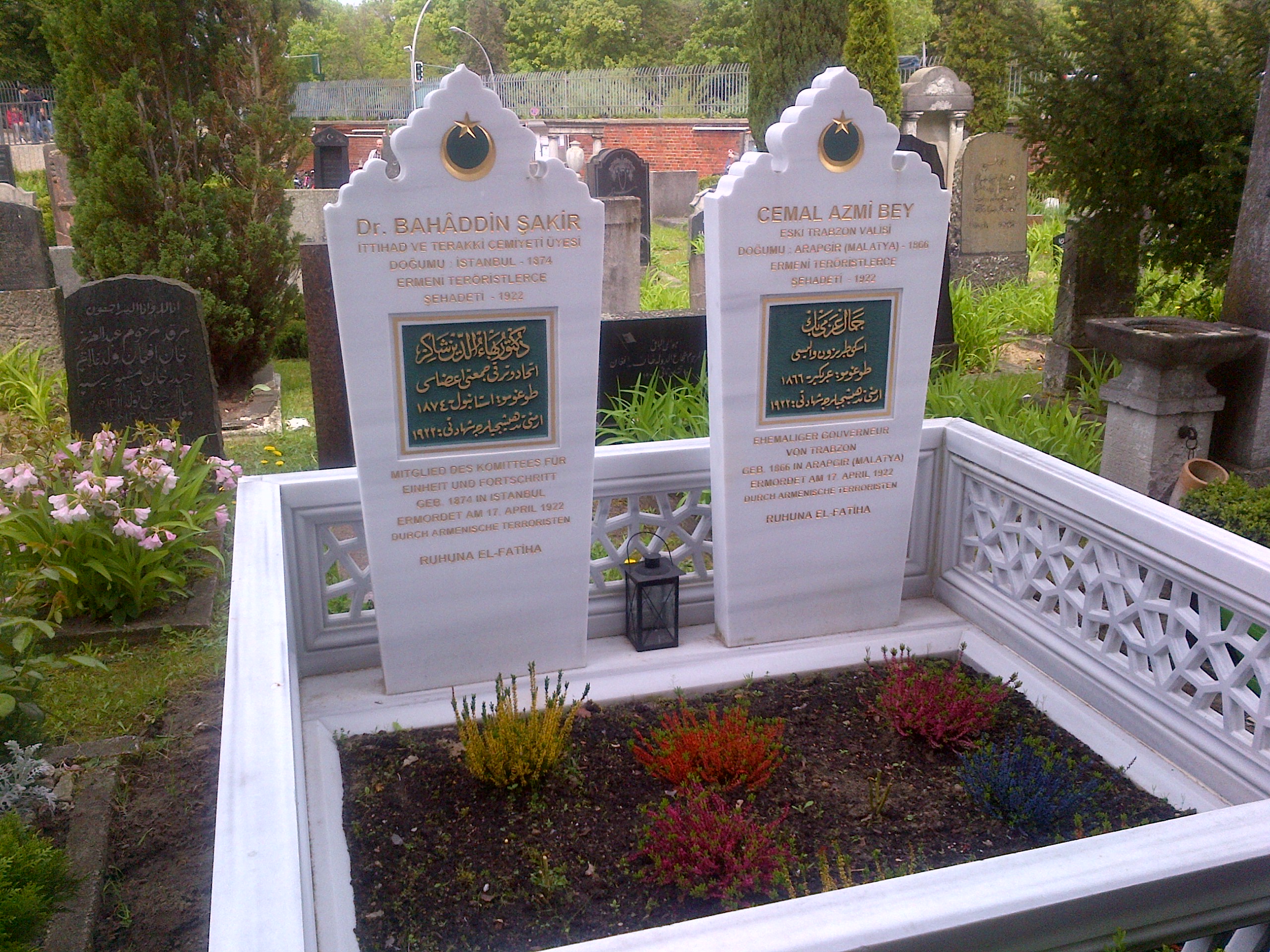
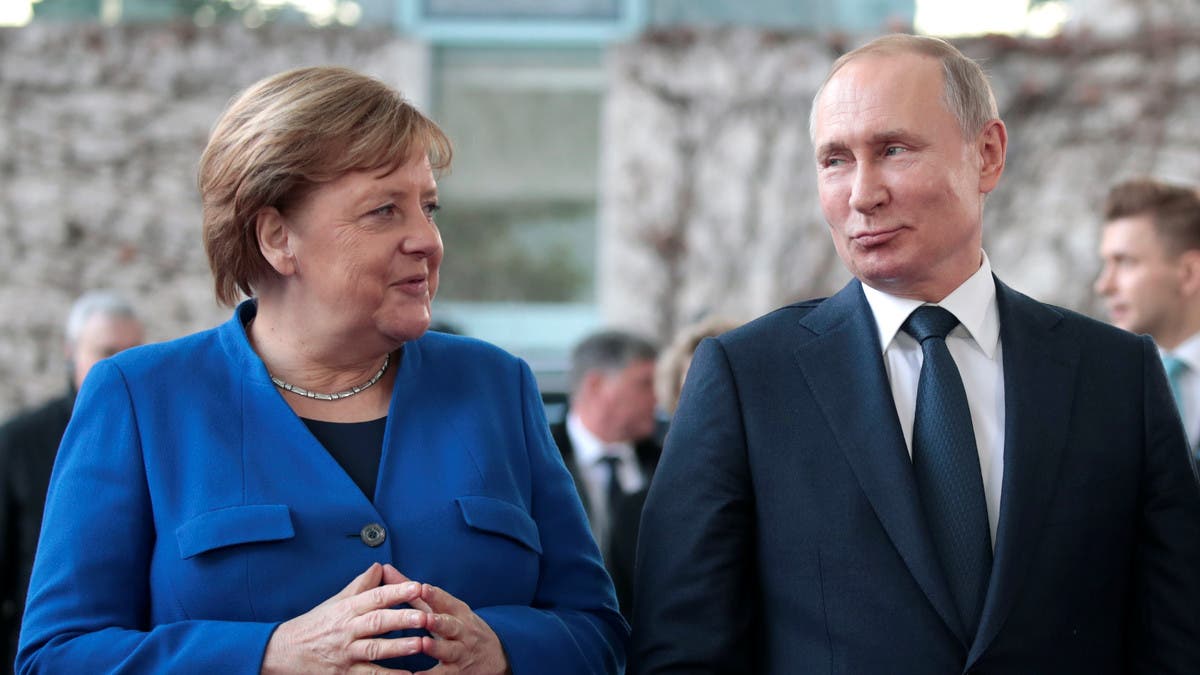




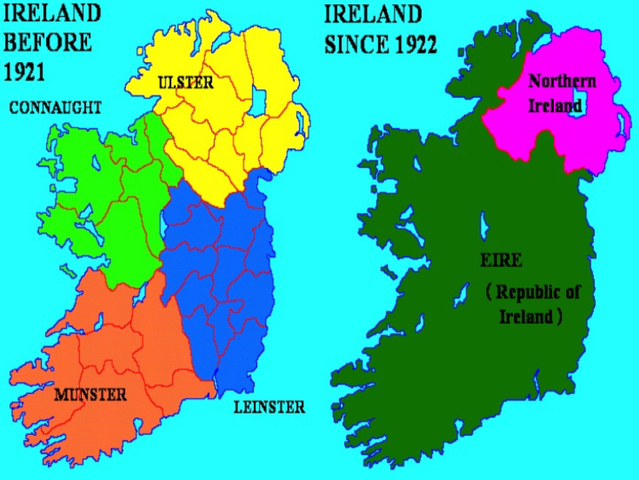


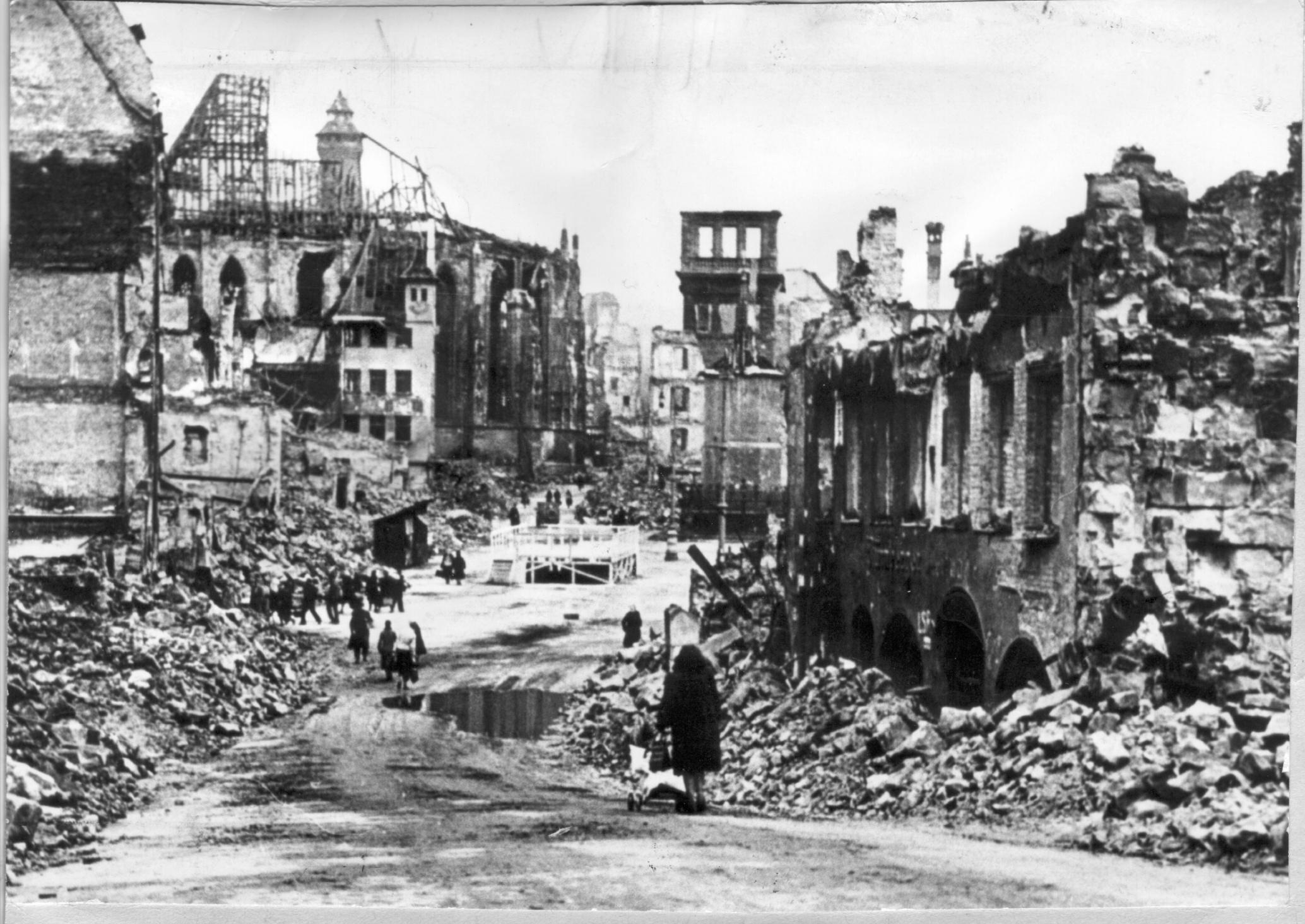

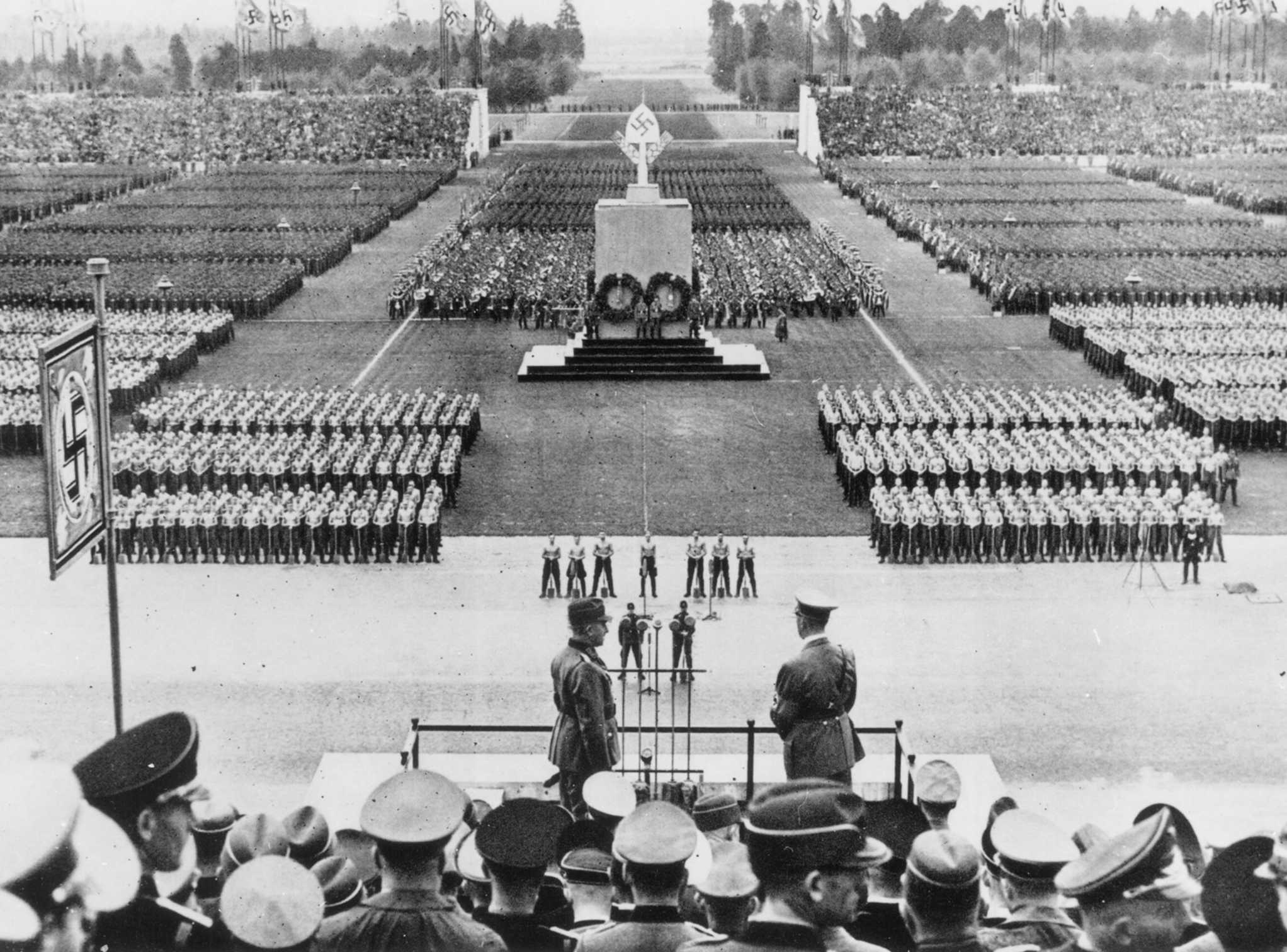
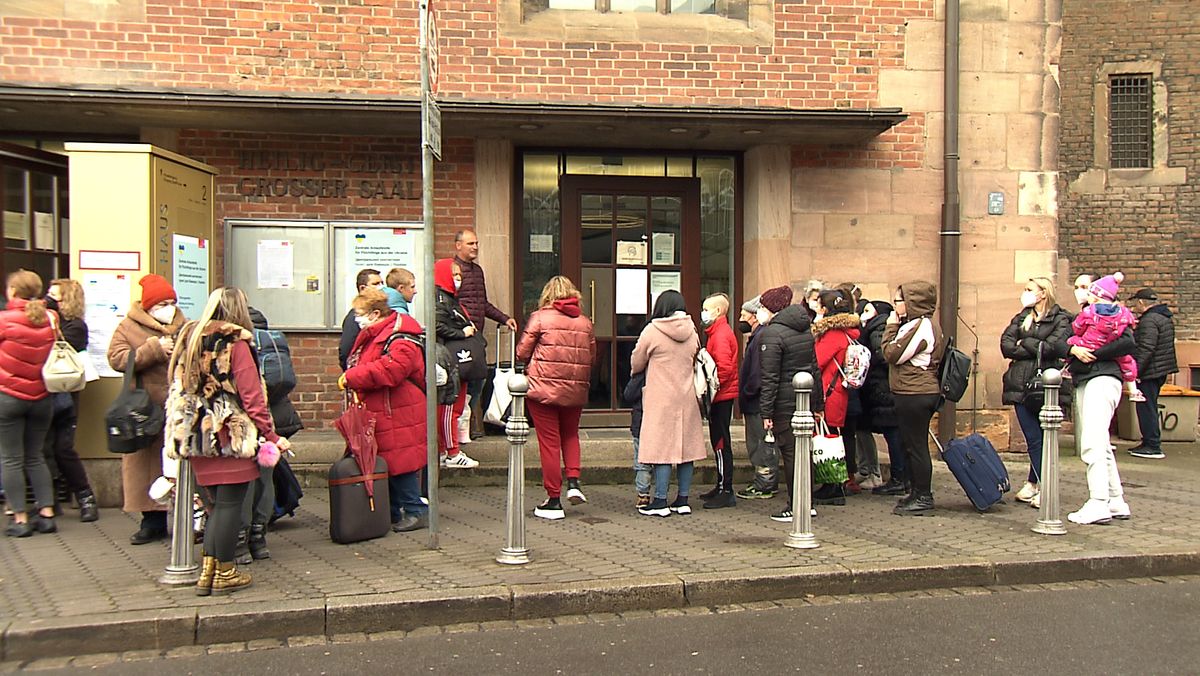

 The Happy Hermit