Next trip: Easter Island

As Peru is turning out to be the noisiest country in the world, I urgently need a time-out. I just want to walk across green meadows, sit by the sea and dig out some ancient artefacts for a week.

The perfect place to do this is Easter Island in Chile. Although “in Chile” is not exactly the right term, because first I have to fly across 3,512 km of Pacific Ocean to get there. This is neither good for the environment, nor for my therewith thoroughly depleted savings. But if I will run out of dough, an island in the middle of the Pacific is the best place to let fate hit me hard.

world-map-easter-island

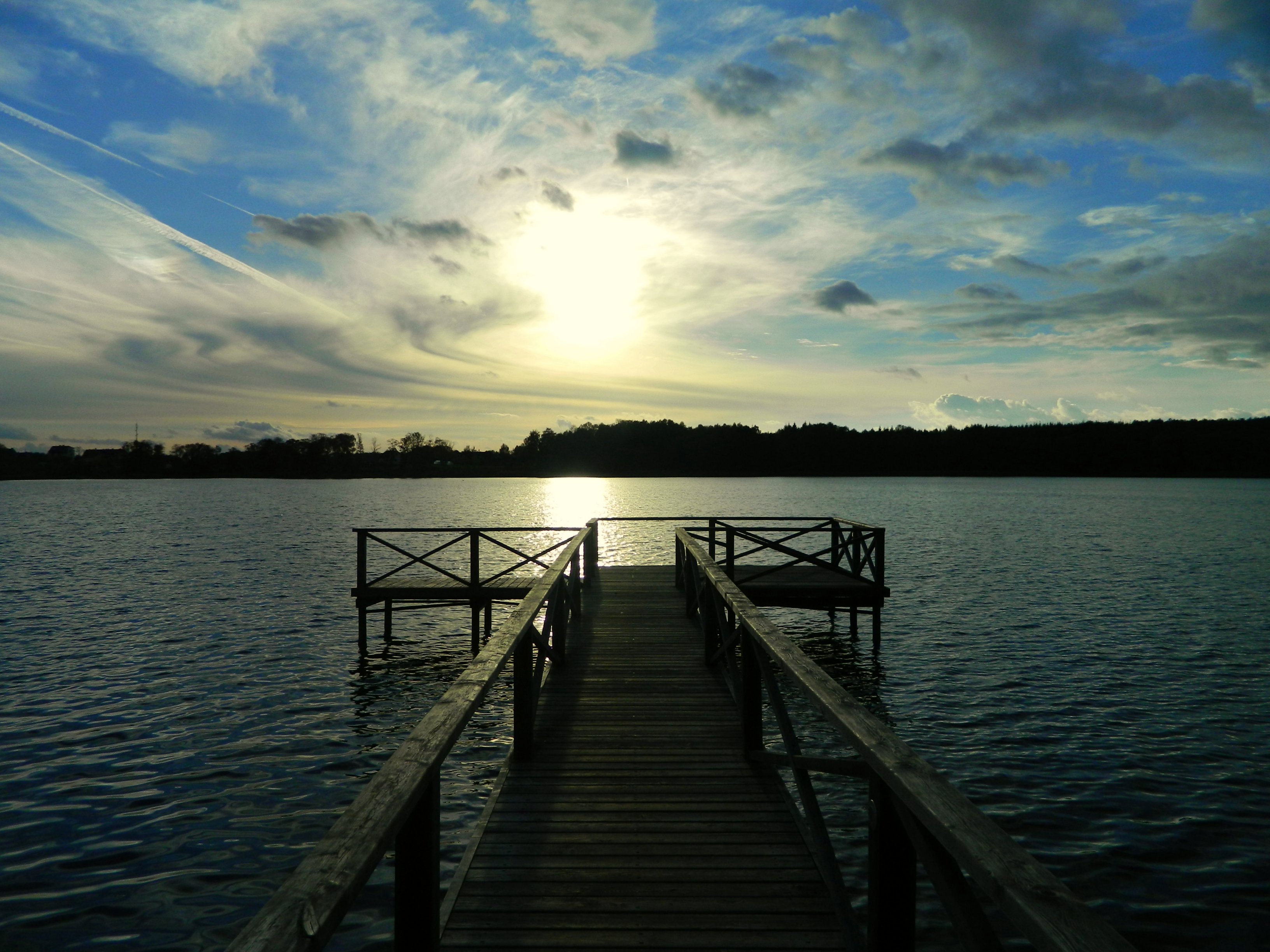
Thus I will spend the first week of October hiking and marveling in a spot more secluded than any I have ever visited. I am sure you want a postcard.

moai-easter-island

rano-kau08

Posted in Chile, Easter Island, Travel | Tagged | 17 Comments

How far can you get by train?

Zur deutschen Fassung dieses Artikels.


One of my readers wrote that he had been wondering how far he could get if he took his local commuter train and continued traveling with no other means of transport than the railway. As a train enthusiast, I couldn’t stop thinking about this. Because that reader lives in Lauf in Bavaria and thus only a few stops from my hometown of Amberg, the idea might also prove useful for my relatives who are afraid of flying and who had so far thought that they could never escape the confines of German provincialism.

This research is based on someone setting off from Germany, but as train networks on the European continent are well-connected, it is useful for anyone else living or traveling in Europe too.

My farthest train journey from Germany was to Ljubljana in Slovenia. A scenic ride crossing the Alps. In the restaurant car of the Austrian Railway you enjoy majestic views and Sachertorte while vehicle traffic piles up for hours and for many kilometers at the border crossings that nationalist politicians want to re-establish all over Europe.

But you could go on in that direction: Zagreb, Belgrade and from there either to Montenegro or to Timisoara in Romania. Once you are in the Balkans, you can’t help but think of the Orient Express. Is it still possible to go from Central Europe to Istanbul by train? Of course it is.

Seat61 illustrates some of the connections, but there are many more options, for example from Belgrade to Timisoara and from there to Bucharest. If you have time, I recommend the detour via Targu Mures, Gheorgeni, Baile Tusnad and Brasov, where the romantic scenery with clear rivers and wild horses running parallel to the tracks and the somewhat antiquated Romanian Railway will give you a Western-movie feeling.

Turkey-map.jpg

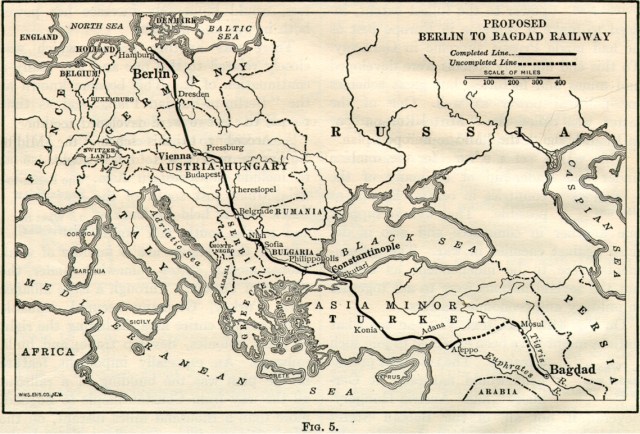
While strolling around Istanbul, you may suddenly remember that great infrastructure project from one century ago, the Baghdad Railway. When it was completed in 1940, it had taken a bit longer than the 10 years originally budgeted, but sadly enough the route into the Syrian desert was already completed by 1915, just in time for the genocide against the Armenians.
baghdad-railway-map

This connection to Iraq is currently experiencing some interruptions of service due to the war in Syria and the occupation of Mosul by ISIS. Towards the south-east, for the time being Turkey is thus the last stop.

But if this is not enough, you can explore any of Europe’s other extremities by train.

In the south you go to Villa San Giovanni in Calabria, from where you take the ferry to cross the 3 km to Messina in Sicily. I would argue that it still counts as a train journey because you can stay on the train during the brief crossing and then continue either to Palermo or Syracuse. Both lines run just a few meters from the Mediterranean and offer wonderful views.

In the south-west you can get as far as Lagos in Portugal via France and Spain.

Thanks to the Eurotunnel, you can reach Great Britain without any problems and continue all the way to Thurso in Scotland without having to use any other means of transport.

If you want to go even further north, you cross Öresund Bridge from Denmark to Sweden, reaching Scandinavia by train. The northernmost train station is Narvik in Norway.

Norway train snow.jpg

But, as everyone from Napoleon to the Nazis knew, if you really want to travel, you have to go east. In Russia, the longest stretch you can cover by train without having to change trains or even leave the train, the Trans-Siberian Railway between Moscow and Vladivostok, is 9,288 km. That is twice the distance from Syracuse to Narvik and a distance that most Europeans cannot really grasp. The journey takes a week, which puts a heavy toll on long-distance relationships. “I am sorry, Nadezhda, but when I was already in Krasnoyarsk, I remembered that I have to be back at work next week and I had to turn around.”

Central Europe is connected to this masterpiece of railway engineering via Warsaw and Minsk or via Kiev. If you are lucky, you get to Moscow just in time to get on the sleeper train to Pyongyang in North Korea, at 10,267 km the longest train connection in the world for which you don’t need to change trains. But who would really want that, to stay on the train all the time? Ok, maybe during the Siberian winter and if you have a crate of good Russian literature with you. But when I see Lake Baikal and birch forests passing by, I want to get off and go hiking. When else do you have a chance to visit Nizhny Novgorod, Yekaterinburg or Irkutsk?

transs10

Knowing myself, I would get stuck at the most unlikely of places and the railway line would be less a means of transport than a story line, along which I trod eastward with ever-increasing curiosity. The far east of Russia doesn’t even need to be the final destination. You can continue to Beijing via Mongolia or Manchuria.

Trans-Siberian-map.jpg

There you catch the train to Lhasa and you can float to Tibet at altitudes of more than 5,000 meters. But that’s the end of that line for now. There are plans to extend the train connection to Nepal and India, but even in China this will take a few more years. Yet those who got on the train in Lauf or in Leiden and made it to Lhasa have at least circumvented half the world by train.

Zug Lhasa.jpg

If you want to make a few more kilometers, simply transverse China and take the train to Vietnam. The last 1,600 km from Hanoi to Ho-Chi-Minh-City will seem like a short commute after such an adventure. And you will realize how small your own country is.

So, if you ever have a few weeks of free time, go to your train station and see how far you will get with the most comfortable way of traveling. I definitely know what I will do next.

Links:
Posted in Belarus, China, Europe, Germany, Italy, Montenegro, North Korea, Poland, Portugal, Romania, Russia, Scotland, Serbia, Sicily, Syria, Technology, Travel, UK | Tagged , , , | 27 Comments

Is this the Beginning or the End of the Journey?

(Seen and photographed in Trakai in Lithuania.)

Posted in Lithuania, Photography, Travel | Tagged | 11 Comments

Bolivia’s missing children

One office stands out from all the others at the bus and train terminal in Santa Cruz. It’s the only one that doesn’t employ a person shouting the names of cities to which there are still available seats on the next bus: “Sucre, Sucre, Sucre!” “Beni, Beni, Beni!” “Quijarro, Quijarro, Quijarro!”

Even without screaming girls, the office of the Bolivian Transit Police attracts my attention. Its windows are plastered with WANTED-posters, or so I believe at first. “Let’s see what the typical crimes here are,” I think, approaching with curiosity. This might be a more interesting way to spend the time I have to wait for the Orient Express than having another portion of chicken and rice.

vermisstenplakat-1

The first poster reads DESAPARECIDO. Missing. Well, that can happen. The next poster: DESAPARECIDO. The one next to that: DESAPARECIDO. And so on. Of the 60 posters only one calls for help with identifying a car thief. The other 59 concern missing persons.

vermisstenplakat-2

I understand that in a large country like Bolivia, you can easily get lost and die in the desert or get eaten by a jaguar in the rainforest. But so many people? No, this is more than the normal rate of atrophy.

Even more shocking is the composition of victims. These are less the demented doters that abscond elsewhere from time to time, but mainly children and teenagers. I pencil some of the names and ages in my notebook: Yandira, 18. Estefany, 14. José Luis, 6. Milan Jailany, 2. Yamine, 14. Ayelen, 17. Maria Andrea, 17. Jhon Azariel, 5. Karla Andrea, 15. Ana Maria, 14. Misael Paco, 1 ½. Chico, who can also be called Tiko Tiko (this one is a missing dog). The brothers José Enrique and Mauricio Dennis, 10 and 13. Nayely, 12. José Maria, 9. Elio, 12. Carla, 14. Airon Daniel, 13. I guess that’s enough to give you an impression of the age group which is hit the hardest by inexplicable disappearances. By the way, the dog has three posters on that wall, each of the children only has one.

Vermisstenplakat 3.JPG

Although the posters are already faded and ripped, none of the pleas for help date from before September 2015. Many of them are from the still young year of 2016. (I took these photos and notes on 15 February 2016.) And these are only the people missing in Santa Cruz.

Upon leaving the terminal, I spot further missing person’s posters at the entrance. They are the brand-new cases. Ana Paola, 15, and Devora Natalia, 16.

Vermisstenplakat 4.JPG

When I raise this subject with people in town, they tell me anecdotes of human trafficking, prostitution, forced labor all the way to gruesome speculations about organ trafficking. Bolivia’s borders with Brazil, Peru, Chile, Argentina and Paraguay mostly run through the rainforest or sparsely populated areas that could only be policed with disproportionate effort. You hardly face any hurdles here, whether you are smuggling humans, drugs or pirated DVDs.

Humans often don’t even require smuggling because they travel across the border themselves. Many stories of forced labor and (forced) prostitution begin with promises of better-paid work in the factories or on the farms of neighboring countries. Once the Bolivian children are in Sao Paulo or Santiago, their “employers” take away their documents, don’t pay out the salary, lock them up in the basement and abuse them.

Too often activists against forced labor use the term “slavery”. I am rather cautious regarding that. For once, I think it trivializes real slavery. Second, even exploitative employment maintained by coercion is something different than trading humans like property. But the latter is exactly what happens on Bolivia’s borders, 128 years after Brazil was the last country in the Americas to abolish slavery. In La Quiaca in Argentina, Bolivian children are sold for around 350 $.

But this doesn’t explain the missing babies and infants. Maybe they pop up with some North American or European family who always wanted to adopt a cute child.

(Zur deutschen Fassung dieses Artikels.)

Posted in Law, Photography, Travel | Tagged , , | 28 Comments

The end of Gary Johnson

Even worse than not knowing a city that has been in the news for the past five years (and a city so famous and historically important that you might have heard of it in high school) is the naive suggestion that “joining hands with Russia” will bring peace to Syria. And did Mr Johnson suggest that Western support for the Free Syrian Army and the Kurds was a mistake?

Even Herman Cain had some idea of Libya and Sarah Palin knew the general direction of Russia. For a second there, Gary Johnson looked even more clueless than Donald Trump.

I dare say that from now on it’s downhill for Gary Johnson, which is sad because a lot of voters aren’t happy with the choices offered by the Democratic or the Republican Parties this year. If you are considering the Green Party, forget it too. Their candidate for Vice President, Ajamu Baraka, thinks that Bashar al-Assad is a democratically elected leader who is ruthlessly attacked by colonial powers.

Posted in Politics, Syria, USA | Tagged , | 36 Comments

Love is in the Air

At the airshow in Targu Mures, Romania:

heart1 heart2 heart with arrow

Posted in Love, Photography, Romania, Travel | Tagged | 1 Comment

War and Peace

In his autobiography My Early Life, which concluded the time before World War I and was published before World War II, Winston Churchill takes this lesson from the Boer Wars:

Let us learn our lessons. Never, never, never believe any war will be smooth and easy, or that anyone who embarks on that strange voyage can measure the tides and hurricanes he will encounter. The Statesman who yields to war fever must realise that once the signal is given, he is no longer the master of policy but the slave of unforeseeable and uncontrollable events. Antiquated War Offices, weak, incompetent or arrogant Commanders, untrustworthy allies, hostile neutrals, malignant Fortune, ugly surprises, awful miscalculations – all take their seat at the Council Board on the morrow of a declaration of war.

This warning should hang in all offices of any Defense Department.

Very interesting also the young Churchill’s thoughts on what should come after war.

I have always urged fighting wars and other contentions with might and main till overwhelming victory, and then offering the hand of friendship to the vanquished. Thus I have always been against the Pacifists during the quarrel, and against the Jingoes at its close. […]

As it is, those who can win a war well can rarely make a good peace, and those who could make a good peace would never have won the war. It would perhaps be pressing the argument too far to suggest that I could do both.

The last two sentences read like a foreboding of Mr Churchill’s election defeat in 1945, just as he had helped to win World War II.

Winston Churchill machine gun

Maybe this photo made voters doubt if Mr Churchill would be the right man for peace.

(Thanks to long-time reader Ana Alves who mailed me Churchill’s autobiography as part of her annual book package. If you want to support this blog too, here is my wishlist of books. It’s hard to get the books I want in English or in German in South America, so I appreciate any help. Thank you!) 

Posted in Books, History, Military, Politics, UK | Tagged , , , , | Leave a comment

“Do not Overtake!”

Überholverbot.JPG

„Why does nobody ever listen to me?” the do-not-overtake sign on the road from Puno to Arequipa wonders yet again.

Posted in Peru, Photography, Travel | Tagged , | 1 Comment

Moving to the Pacific Ocean

Sometimes I make mistakes.

It was a mistake to believe that Arequipa would be like Cochabamba just because it has the same perfect climate, spectacular mountain views and is of similar size. Maybe it’s not fair to compare anything with Cochabamba in Bolivia, which was the friendliest city and the city with the best quality of life I have ever lived in, but Arequipa in Peru is one of the noisiest, busiest, loudest cities I ever had to endure. Rush hour is so stressful here that I was happy not to have a gun, because I would have gone amok like Michael Douglas in Falling Down. And the ever-barking dogs would have been the first ones to die. Once I tried to film the traffic on Avenida Ejército, when a warning appeared on my phone: “The noise level around you suggests that you are in a war zone. Leave immediately!” But I found this video which closely resembles the traffic in Arequipa:

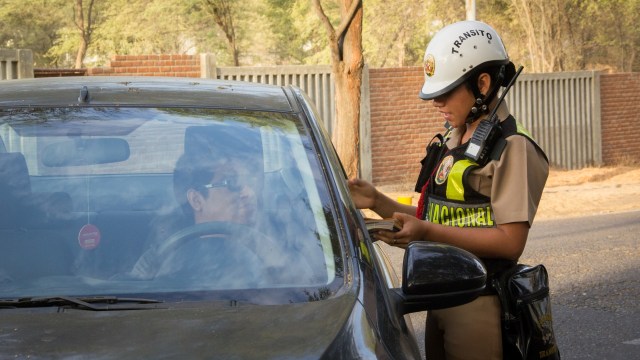
And as if that wasn’t bad enough, the city dispatches cars with loudspeakers for extra noise. Another problem seems to be that the Peruvian Traffic Police consists exclusively of attractive women, so that many men drive recklessly on purpose because they want to get stopped.

Seguridad-Vial-3.jpg

It was a mistake to believe the many people who told me that Arequipa is a tranquil and cozy city. By now I know that all Peruvians work for the National Tourism Agency and at all times only say good things about their country. You hear the same list of places that “you have to see” from everyone, and everything in Peru is “the best” and “the most beautiful”. Like in North Korea. Even when I point out that I am actually more interested in politics or sociology, people respond: “You have to see Machu Picchu.” For a country that receives billions of tourists every year, it seems to be unthinkable that there is a foreigner who has different interests than taking a selfie in front of Inca ruins that are already depicted on 22% of all Facebook profiles worldwide. Oddly enough, the same people who advertised Arequipa as “the best city to live in” before I came now readily admit that it’s very chaotic, hectic, loud and that there are no parks or green spaces to go running.

It was a mistake to believe all the friendly messages along the lines of “Don’t worry. Once you are in Arequipa, I will help you find an apartment.” Miraculously, 90% of these people disappeared, died, were extremely busy or moved away as soon as I arrived in Arequipa. The rest didn’t try to help me but help themselves by offering apartments which were more expensive than in Tokyo. Well, you do also get regular earthquakes here. One of my readers offered a “cozy house in the countryside”. I had to ask for photos several times and it turned out to be a garage in a village. She wanted 350 US-$ per month for it. Most landlords in Peru even try to rent you places without any furniture. “You don’t have your own bed, table, bookshelf, fridge, oven, everything?” “Ehm, no. I mentioned that I am traveling around the world and that I am just here for a few months.” “Oh.” I thought only landlords in Germany were that silly.

Many landlords were also openly discriminatory. “I prefer renting to foreigners.” “Oh sorry, I prefer not to rent from racists.” Scaremongering is another tactic: “This is the safest part of town. Don’t move anywhere else! All the other neighborhoods are very dangerous,” as if Arequipa was between Baghdad and Caracas on the list of most criminal cities in the world. Well, regarding the noise it actually is like Baghdad on the evening of 21 March 2003.

It was a mistake to believe any non-writer who promised that “Arequipa is a perfectly peaceful place to write”. I should have listened only to Mario Vargas Llosa who was born in Arequipa and who moved away as soon as he could. Guess where to? To Cochabamba. I actually developed a theory about magical realism while here: it was never a deliberate art form, but the result of writers not being able to properly sort their thoughts amidst all the banging doors, beeping cars, fireworks, screaming neighbors and barking dogs. That’s why The Time of the Hero doesn’t make sense and why the sequence of chapters in Rayuela is completely muddled up. Now I understand why the literary output in Russia is higher and better. I too miss my cozy Soviet Krushchovka, particularly in a cold winter where you can’t do much else than sit at home and write. Actually, even the one time I was stranded on an island in the Pacific which was used for tests of nuclear bombs, it was more peaceful than in Arequipa.

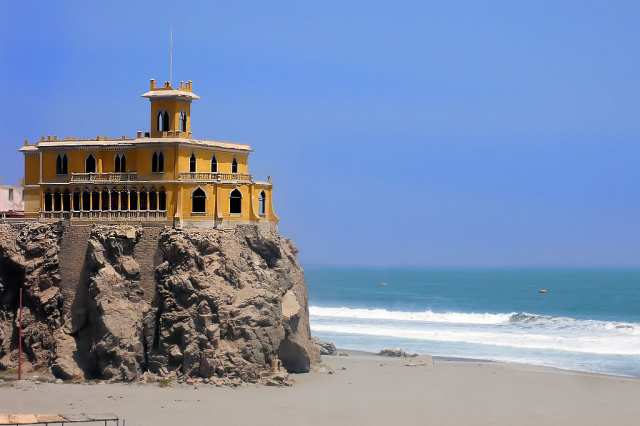
Thinking about the Pacific, I got an idea. Luckily I am not only good at making mistakes, but also at analyzing them and correcting them quickly. Arequipa is only 100 km from the Pacific Ocean. Now it’s winter in the Southern hemisphere, so there should be plenty of empty holiday homes by the empty beach. Because it’s off-season and because I am a better negotiator than Donald Trump, I found a huge apartment in Mollendo for a good price. It’s spacious, cozy, light, furnished with bookshelves and writing desks and it overlooks the sea.

Mollendo Haus am Strand

Perfect for writing. The beach seems great for running. And for watching sunsets. After all, this is the west coast. If I am lucky, I will even experience a tsunami.

But you won’t learn about that because there is of course no internet in old pirate palaces on top of steep rocks overlooking the ocean. So if you want to stay in contact, you have to write an old-fashioned letter or send a most welcome book package. Thank you!

By the way, Arequipa is really interesting to visit. The old part of town has beautiful architecture, an enormous monastery and many museums. But I discover more and more that there are cities which are good to visit and there are cities which are good to live in. The two groups rarely overlap.

(Zur deutschen Fassung dieses Artikels.)

Posted in Peru, Travel | Tagged , , , | 20 Comments

Hey Elise, can you take out the trash?

Every few days, my regular good-morning concert of yapping dogs, hammering neighbors, beeping cars and weeping babies is enriched by Beethoven’s Für Elise.

First I thought that one of the neighbors has a monotone taste in music and is playing the song on infinite loop. When the musical terror was right in front of the door once, I assumed that one of my housemates’ cell phone has a kitschy ringtone. Finally, my blogging housemate enlightened me that the song announces the arrival of the rubbish collection.

That’s actually a nice service for people who can’t remember that every Tuesday, Thursday and Saturday you can put the far too ubiquitous plastic bags out for collection.

Once I saw a rubbish collection vehicle in the center of town, which played a different song. Apparently, every ward in Arequipa has its own rubbish collection music. With great delight I imagine the debates at  the city council meeting in which the decision was made which district got to use which song. Maybe someone was particularly clever and noticed that the copyright for Für Elise has already expired and thus no royalties are due.

(Zur deutschen Fassung.)

Posted in Music, Peru, Travel, Video Blog | Tagged , | 2 Comments