Readers of this blog will have noticed that I am a radical Atheist. But there is one religious idea that I have incorporated in my life, although in a secular version.
It’s the idea of the shabbat, the 7th day of the week, on which one is supposed to rest. I use the Jewish term for this day, because I think it’s the best known, but many other religions have similar recommendations/rules, following a 7-day rhythm, from the Buddhist uposatha to the appropriately named 7th Day Adventists.
The Bible says you are not to shear sheep or to plow the field, but as this wouldn’t really make any difference in the lives of most contemporary believers, there is room for interpretation. Have you ever noticed that theology is a lot like law, just without the democratic legitimacy? Contemporary disputes seem to focus on whether it’s OK to drive on shabbat or to use electricity.
But I am not bound by the Bible or others’ interpretations of it. I don’t have any gods to appease. I have adopted the idea for the sake of my own sanity alone.
So what do I do on my shabbat?
The first point is: no work. Now, most people will say “oh, I already do that. I have Saturday and Sunday off.” But that’s not what I mean. After all, I personally don’t work regularly anyway. I mean: not even thinking about work! And that’s a big difference.
In practice, this means that on my shabbat, I will not read any e-mails, I will turn off my phone, I will not go through any documents that are work-related, I will not try to improve any skills that can be put to use, and I won’t even think or talk about work.
The second point, and it aids the first one tremendously, is to spend the day in nature. It doesn’t need to be anything far or fancy. I usually just go out of the door and walk through the forests and across the fields, until it gets dark. If I felt that I can’t walk that much, I would go to a lake and read a book there (but nothing work-related).
I currently live in the countryside in Germany, which makes this easier than for someone living in Mexico City, I concede that. But when I have lived in cities, I just took the bus to the last stop and started walking from there. Or sometimes I take the train to a town 30 km away and walk back home. It doesn’t really matter, it’s not a sports day, it’s not a competition. The idea is to clear the mind from all the clutter. And you’ll be surprised how soothing nature is.
The third point might be the most important one: no internet. I wake up in the morning, I pack my backpack and I leave the house without having checked e-mail, Facebook or Twitter. If this is a problem for you, then you are addicted. And most of us are. But once you are outside, enjoying all the shades of green, the fresh flowers, the chirping of the birds, or maybe talking to the farmer in the field or another hiker that you bump into, you will begin to feel the freedom that comes from lack of connectivity. And remember, until about twenty years ago, that’s how we all lived all the time. And we were fine.
Even if you are not into nature, you can follow the third point. You can go to a museum. Or to the library. Or fishing. Or race your bike around the island. Theoretically, you could also do it at home and read Russian literature or play the guitar all day. But at home, I find the temptations too many. There is the TV, there is the computer, there is the phone. And swoosh, you’ll have lost another day to mindless waste of time.
There are three main lessons of the internet-free day: (1) I don’t really need Twitter or Facebook or even the news. When I come home from such days, I realize how much you can get out of a day if you aren’t constantly online. (2) Nobody needs me or my opinion, either. The world continues very well, or just as badly, without my contribution. I am really not important. (3) Without the constant distractions and interruptions, I can have deeper thoughts, think about bigger issues, think differently. I feel that this has an effect on the quality of my thinking, as I am not torn out of any train of thought by a new tweet or a beeping cell phone every few minutes.
You may have noticed that I prefer to do such activities alone, but that’s not necessary. Actually, when I look at many couples and how little they communicate with each other and their children, compared with the time they spend on gadgets, then maybe it would be healthy to spend a day outside, just the two of you, without worrying about likes on Instagraph, being happy to spot a squirrel instead. If that thought scares you more than it fascinates you, then it’s time to end the relationship anyway.
Even with all my skepticism towards technology, I make one exception when I walk around an area that I know and where the novelty effect is low: an MP3 player with one earplug, because one ear should always be open to the sounds of nature. The important difference to a phone or the internet is that I choose ahead of time what I download and what I listen to. I am not lead from clickbait to clickbait. I listen to podcasts about the history of the Incas or about Kant’s categorical imperative (I try to avoid current politics because a lot of it won’t matter in six months), rather than waste my time looking at the 112th photo of cute cats or girls in bikinis. (By the way, guys, you would be surprised how often you come across a secret lake or a secluded bay, with a naked woman walking out of the water, lasciviously asking you if she can use your shirt as a towel. True story.)
I personally don’t even have a regular day of the week for this. Sometimes it’s on the weekend, sometimes during the week, depending on where I am, what I have to do, and on the weather, of course. But it’s the one day of the week that I am always looking forward to. There is delight in being unproductive. After all, we are humans, not machines.
Actually, now that I am thinking of it, maybe I should extend this routine to one week per month.
In every country, there is a place that everyone, literally everyone, recommends you to visit. Actually, recommend is too weak of a word for the obtrusiveness: “You haveto go there!” Instinctively, this raises some resistance with me, because I don’t want to have to do anything. And many of such places are wildly overrated. It leads to tourists driving across the country for hours, only to visit Neuschwanstein or Bran Castle, although there are hundreds of other castles scattered across Germany or Romania that are equally interesting. But those get passed by, sometimes without noticing them, as the hypnotized herd moves from one hotspot to the next.
In Canada, this dubious role falls to the small town of Banff in Alberta. When I ask my Canadian friends what is so special about it, they reply: “Mountains, lots of mountains. And a lake!” Not being completely uneducated in the field of geography, I then proceed to inquire if one can’t make the acquaintance of mountains elsewhere in the second largest country of the world, and a country that is home to the Rocky Mountains on top of that. Bewildered, they reply: “But everybody goes to Banff.” And that’s exactly the reason why I won’t go there.
Granted, I am not very creative either. I simply go to Canmore. Coming from Calgary, that’s about 25 km before Banff. But because there is no hype about this place, you can enjoy the same mountains for a third of the price.
1
I have just arrived, breathe the fresh air and soak up the mountain view (both all the more relaxing after three months in a large city), when a passerby addresses me: “Canmore, it’s a heap of problems.” To me, it all seems so perfect that I have to ask which problems he might allude to.
“Don’t you see the terrible traffic?”
Ehm, no.
He explains that sometimes, the railway crossing is closed for five minutes and that the cars will then back up, even around the corner. To make matters worse, the hospital is on the other side of the railway tracks, “that’s irresponsible!” Small-town problems.
“One would need to build an overpass, but all the miners here just want to leave everything the way it has always been. I’ve got nothing against the miners, please don’t get me wrong! After all, they built the town.” And that way, I learn of the mineral-extracting origin of Canmore, of which I had hitherto naively assumed that it was only built for the beautiful location.
2
The most striking difference between the big city and Canmore is not only the view, but that strangers simply smile and wave at each other and say hello. Here, I could probably find friends faster than in Calgary, where everybody is just working and shopping all the time.
The most seductive smile is directed at my by a bookstore in the main street, Café Books, but I am already carrying more than enough books with me. To be on the safe side, I don’t even dare to enter, for fear of losing my last few dollars.
3
The ladies at the reception of the cozy Mountain View Inn hardly give me a chance to get to know the town by myself. Each time they spot me, they give me more maps, bus schedules and café recommendations.
And every morning, they want to know where I will be hiking that day. “Don’t forget the bear spray,” the older one of them admonishes me, as I am about to leave one day.
“Oh. Where can I get this bear spray?”, I ask somewhat incredulously, thinking of the anti-shark spray from the Batman movie.
“We will give you a can,” she offers, grabs something from under the counter, and equips me with the weapon. Good that I am not a pacifist.
Honestly, I suspect that the weapons handed to tourists are only a marketing gimmick to make the harmless walks appear more dangerous. Like the life vests on rubber dinghies.
4
On the other hand, maybe the bears are real and come all the way into town. Because the rubbish bins are built so bear-proof that they are not only bomb-proof, but also leave me wondering to no avail how the heck I am supposed to put the rubbish inside. I give up.
Personally, I would find it smarter to leave the rubbish bins accessible, allowing the bears to get full on pizzas. Then, they wouldn’t need to devour humans. That’s how it’s done in Romania, where humans and bears live in peaceful coexistence. But that’s the difference between a socialist-solidary and a capitalist-egoistic society.
5
It’s only the end of March, but spring is already raging. The snow on the south-facing hills is melting. The bears are just waking up. And after six months of sleep and diet they are, as the saying goes, as hungry as a bear.
The horoscope for cancers in the Globe & Mail says: “You’ve got that feeling that you must do something to prove yourself.” I understand that as an encouragement to go bear hunting.
6
On the bus to Canmore, I spoke with a girl who only went to Banff for one day. She would have a couple of hours to walk around there, before heading back to Calgary. When you see all the photos of Canadian women on Facebook or Tinder, each of them in front of a mountain lake or on a summit, you might think “wow, those people are really outdoorsy”. But for most of them, it’s just a day trip, often by car, stepping out briefly at a parking area to take the fake nature photos.
“I heard that the most beautiful hike in Canada is in Banff,” she explains. Just for that, she flew to Alberta. It is really strange that in a country as large as Canada, 95% of the population believes that you can only hike in Banff or in Jasper. A mere 10 km to the south or the east, they already think it’s a terribly stupid idea. Outdoor spirit this is not.
A friend from Calgary also once wanted to seduce me to Banff, but she only had time for a day trip. “For lunch, there are three options,” my guide began to plan, “there is a burger restaurant, where everybody goes when they are in Banff. Then there is …” I dared to interrupt her and point out that I would go to Banff for the mountains and lakes, the bears and the forests. Especially if I only had one day, I definitely wouldn’t waste two hours of the still scarce daylight in a restaurant. “I’d rather get a Snickers bar from the gas station and spend more time in the mountains,” I explained, but she didn’t understand.
Thus, I went alone. To Canmore instead of Banff. And for a whole week, not just a measly day.
In this kind of nature, I almost want to get lost. Some of the river’s tributaries are still frozen over, granting access to islands or to the opposite shore, although sometimes, it crackles alarmingly as I run across the ice. Alternatively, I cross the river on toppled trees.
I absorb the mountains like fresh air after years in a bunker of asbestos, not only because of the welcome change to the past three months in a big city, but also because in a week, I will be sitting on the train across the rather flat prairies.
8
And thus I walk and walk, always following the river. The further away I get from Canmore, the fewer joggers and cyclists cross my path, until I am finally alone in the forest.
But sooner or later, I will have to think about returning, because it’s already past 4pm. And exactly in that moment, I reach a road with a bus stop. An exemplary bus stop even! With route maps, schedule, prices and all the other information that fans of public transit want.
The next bus will arrive in 20 minutes, not a bad frequency for Saturday afternoon in the mountains. Until then, I will try to get back into town by hitchhiking. After 25 failed attempts, a red BMW stops. The driver welcomes me with the words “usually, I never stop for hitchhikers”, and I thank him profoundly for making an exception. Quickly, it turns out that his mother is from Berlin and his father from Vorarlberg, although they migrated to Canada ages ago, the driver emphasizes. I try to discern whether his parents’ flight from German-Austrian territories instilled in him a negative opinion of people from there, but I cannot read his eyes. Like everybody in Canmore, the driver wears sunglasses at all times. Maybe this town is a nest of spies?
He recommends a certain hike and the Legion, a home for veterans, as the place with the cheapest beer. And then the ride is already over. It’s sad that hitchhiking has been made illegal on some roads in Canada, while not on others. That confuses drivers and they never stop at all. And it would be such a wonderful way to get to know the country and the people.
9
From my spacious corner suite at the aptly named Mountain View Inn, I look at the most alluring group of mountains in the valley, the Three Sisters, each time I wake up and each time I fall asleep.
But these little Matterhorns are all too inaccessible, too steep and too dangerous for a hobby hiker like me, especially now that there is still snow. So, the rule for the Three Sisters is: I can look, but not touch.
10
The next morning, on the bus to the Nordic Center, I meet a guy from Whitehorse, a small but capital town in the Yukon. “We are only 30,000 people, but”, he adds with pride, “we have a direct flight to Frankfurt.” He has been to Germany himself for a conference about wood-based construction and to look at a few factories. Industrial espionage, in other words. But now, he works as a wood-construction engineer and is in Canmore for a few months.
He uses his free Sunday to go cross-country skiing where the Olympic Nordic skiing events were held in 1988. In order to still have snow well into spring (it’s early April by now), huge heaps of snow are piled up on mountainsides that are not reached by the sun. Those are covered with sawdust to slow the melting process. The inventory is so enormous that there will still be snow from the previous year left in fall, allowing the skiing season to being in September.
To prepare for the next winter, tons of sawdust need to be produced. Building the wooden houses is really only a byproduct.
11
From the ski trail, I want to hike to the two Grassi Lakes, but the path leads through a conservation area, where deer is being reforested. I like to break rules, but in this case, Bambi rules, so I have to find a different way.
Luckily, there is a map at the skiing center. With its help and taking a close look at the surrounding mountainscape, I try to memorize in which direction the lakes are. I spot a gap between Ha Ling Peak and Mount Rundle. That’s where I need to go.
The straight line to where I suspect the lakes is a bit steep, but it’s even steeper to the left and the right of it. Also, the map shows a creek, so it can’t be terribly steep.
Yesterday was that premature summer day, so the ice on a lower-lying lake is no longer strong enough for me to walk across. Or is it? No, with increasing age and weight, I am becoming more cautious.
Hence, I have to circumnavigate the little Arctic Ocean, without losing sight of the destination. At that time, the question why I insist on climbing to the higher-lying Grassi Lakes when I have another lake right in front of my eyes, as legitimate as it may sound, doesn’t even cross my mind.
12
The hillside about to be crested is facing north and thus still full of snow. Even more dangerous than snow, especially at an angle far steeper than 45 degrees, it’s covered in ice. I am pulling myself from tree to tree, rather than my boots finding a grip.
The little stream doesn’t run at ground level, after all, nor as peacefully as I had thought. In reality, it throws itself down a wall of rock with thunderous roars. The same wall that I am trying to ascend, so the water and me are competing for space.
At the mountaintop, the heat of the sun is melting the snow, resulting in tons of water rattling down. As the sun will rise and become warmer in the course of the day, that should get even worse. I just hope that the waterfall won’t widen, because I can’t move to the right either, where there is a wall of ice, as hard as stone and as smooth as the Olympic toboggan track.
Now I understand why Louise from the Tourist Information had said something about crampons and ice axes. Naturally, I was too stingy for either.
I am battling forward, upward, meter by meter. My hands are scraped by rocks. My breath is panting, probably more for fear than exhaustion. Remember, snow-melt time is bear-wake-up time. And in this terrain, I couldn’t run anywhere.
13
Suddenly, the sun disappears. Everything is covered with clouds. First, it becomes foggy, then outright bleak and spooky. Is that already nightfall? I don’t think so, because it was still before noon when I began the climb. Following adventure rule no. 19, I didn’t take a watch.
So, now the waterfall on the left will soon freeze over, and I will be trapped like in the eternal ice of Antarctica, just vertically.
The wind is howling, the trees are creaking, the sky looks as grim as if it regards my little hiking plan as a great affront. The hillside is becoming ever steeper, gravity ever more of a lethal enemy.
14
And that’s the end. Sadly.
From my position, I can’t tell how close I am to the lakes, or whether I am even moving in the right direction. But I do see that I can’t continue. The wall above me is now really too steep and too icy. Disappointed, I realize that turning back is the only way to save my life.
Back to Earth, I slide with little elegance. Good that nobody sees me, except for a squirrel. But if I will receive any donations for this article, I will have to use them for a new pair of pants. At least the descent is pretty rapid, and the injuries limited to a few further scrapes and some bruises.
Without the bloody ice, I would have made it. I believe. Therefore, in summer, I can wholeheartedly recommend the path. Just follow the waterfall!
15
The further hike does lead me to a lake, eventually, namely to Quarry Lake, the remnant of an exhausted surface mine.
I am just as exhausted as the mine, fall down in the grass and celebrate having survived another folly by smoking a few life-shortening Marlboro cigarettes, which aren’t allowed to be called Marlboro in Canada.
But that’s a story for another time. Now, you want to hear more about the mines. In 1887, the extraction of coal began in Canmore. The main customers were the steam engines, which is why the transcontinental railway was built through this beautiful scenery and why even today, impressively long freight trains thunder past at least once per hour.
Unfortunately, steam trains went out of fashion (probably the fault of Greenpeace or other tree-huggers), and on Friday, 13 July 1979, the mine closed. That established the superstition that Fridays which coincide with the thirteenth day of the month bring bad luck. But that’s an erroneous belief. In reality, superstition itself brings bad luck.
The mine’s head engineer, Gerry Stephenson, was an enthusiastic angler and had a better idea than simply filling up the ugly hole. Finally, he would be able to fly-fish at home in Canmore. And thus, the lake was born.
In town, the building of the miners’ union reminds us of that not-very-old history, but to my disappointment, I don’t meet any miners there who could tell me about forgotten gold mines.
They are probably all taking advantage of the cheap beer at the Legion.
16
Sitting by Quarry Lake, I finally ask myself why I didn’t walk here comfortably in the first place, taking a book to read by the lake, instead of hunting for lakes in alpine and arctic conditions. I don’t understand why I do things like this again and again. After all, I am really not an ambitious person. Higher, faster, farther was never my motivation.
Bigger, more, costlier, however, is the motivation of a couple, to whose argument I have to listen because they carry it out so loudly. They debate how big the new house should be, how close it should be to the lake and how wide the driveway has to be. Some materialists cannot even pause in nature.
17
Speaking of houses: This blue lagoon looks beautiful, but it smells horribly. Through a pipeline, the sewage from the built-up areas, devouring ever more nature, is pumped into the ecosystem.
18
In the evening, there is snow, even down in the valley. If I had stayed in the mountains longer, there would not have been a happy ending. Tomorrow, I’ll go for a relaxing day.
19
As I return to the motel, there is a power outage. “Because of some explosion,” as the ladies from the reception explain, inviting me to join them in the tea room around some candles, because “there isn’t any light or internet in your room anyway.” (Many people believe that internet would be necessary to survive.)
When they ask me about my plans for the next day, I have to think of something on the spot: “I guess I am going to walk to Banff.” That’s about 25 km.
They tell me that they once had a guest who ran all the way to Banff and back. Well, by comparison, my plan is rather relaxing then.
20
From the motel window, I not only see the temptation of the unassailable Three Sisters, but plenty of rabbits hopping around. I will encounter them every day, everywhere in town.
21
So, the next morning, I set off early to walk all the way to Banff, to visit a place that everyone expect me desperately wants to see (oh, the things I do for you, the curious reader) and to save the 6 $ for the bus.
On the map, I saw that the Trans Canada Trail leads from Canmore to Banff. Irritatingly though, this trail also leads the hikers astray. Because this long-distance trail, crossing Canada from coast to coast, mostly follows highways or paths right next to highways. I don’t want to be too harsh, but this long-distance trail is the worst and most redundant hiking trail in the world. It is a big deceit, an annoyance, an utter failure.
This is how the Trans Canada Trail looks like in Banff National Park:
And once on that path, there is no escape. On the right is the highway, on the left there is a high fence for many miles. It felt like running in a corral, except that animals in a zoo are granted more distance from the road. At the few points where there is an opening in the fence, you reach a railway track or would soon need to walk through a river.
22
So, if you are planning to go to Canada for hiking, you better turn around right away and go to Britain or Austria, where hiking trails are really made for hikers.
If you do insist on crossing Canada on foot, look for an electricity route. They are wide enough for a whole army to march through. And you will always have juice for your cell phone.
23
Just once, there is a lookout point, where you are allowed to run around in the grass a bit, after entering through a grille with a bear warning.
The view is great from here, I readily admit that, but the only reason for the rest area is because it’s a parking by the highway. Canada seems to be a country for cars, not for people.
Still, I cherish the break, urgently needed after marching on concrete for hours. Before unpacking the lunch, just to be on the safe side, I take the bear spray from my backpack and read the instructions on the confusingly detailed bear-warning board.
First, it explains the difference between black and grizzly bears. I am advised to pay attention to the shape of the shoulder and the face, as well as the claws. Those measure up to 4 cm in the case of the black bear, whereas those of the grizzly bear measure at least 5 cm. Truly a very helpful piece of advice in the case of an attack! But what about a baby grizzly? In the end, it all doesn’t matter, because the zoological crash course also explains: “Both species are able to climb trees and to swim.”
Then, I am instructed what to do if I wanted to avoid encountering bears: walk in a group, be loud and not unpack any food. I happen to do the opposite of everything, which is just as good, as I really do want to meet a bear.
But what when the bear will show up? Then, I am supposed to differentiate between different moods that the bear might be in. If it makes noise, growls, snaps its jaws and charges at me, then – to my great bewilderment – it is a defensive bear. All of those are allegedly signs of a bluff charge, although the board fails to mention any good reason why the bear should do such a silly thing. In that case, I am supposed to retreat slowly and, if necessary, spray the bear spray into the bear’s face (if the wind is coming from the right direction, which I will still have to determine then, because otherwise the poison knocks me out instead of the predator). If the bear does touch me, I should fall on the ground and pretend to be dead. This position has to be maintained until the bear has left. If the contact has however made the bear aggressive (yes, that could happen too), then the advice is: “Fight the bear with any means!”
If, on the other hand, the bear is calm, watches me and follows me around, then it is an aggressive bear or, as it is called in diplomatic Canadian, a non-defensive bear (political correctness gone mad). In that case, I have to make myself as big as possible (how? by jumping up and down?), cause noise, proceed to a secure location (great idea!) and then fight the bear with anything I can find: bear spray, sticks, rocks. But: “Only use the bear spray if the bear is about 5 meters away from you.” The guidelines make no mention of panic.
I have studied law, but there are far too many ifs and buts, worse than in an IRS regulation. And how stupid do you have to be to lie down on the ground when a bear is coming closer? Especially when you are, as advised, hiking in a group. I would run as fast as I can. A new hiking buddy or a new girlfriend can always be found, particularly when you are a world-famous blogger.
24
The rest area would also be the only place from where I could hitch a ride, but only in the direction which is not in line with the plan for the day. Because you can’t get to the other side of the road, and anyway, there is no shoulder for hitchhikers, nor for hitchhiker-friendly drivers.
This trail is such a dread, I am already beginning to dream of a bear eating me. But only a cute squirrel lies in wait for me.
25
Looking at all the nature around me, you are surely wondering “Is there really no other way?” But it really isn’t that easy. In winter, I could walk on the frozen river, but too much of the ice has already melted.
The other alternative from Canmore to Banff leads across the massive Mount Rundle massif with its six summits. To the left of it is Canmore, to the right Banff, meaning that you have to cross all summits on the way. That really would be a bit of a stretch for one day.
And today, it’s also rather foggy up there.
26
Judging by the pain in my legs, I should already be in Banff. But first, I reach a small cemetery in the forest. Or actually a large cemetery with a small occupancy. Just a handful of dead people are enjoying the sight of the mountains.
A wolf or a coyote is roaming around, hoping to increase the population of the institution. It seems to see a candidate for an imminent demise in me, because it keeps following me closely and curiously.
27
A few more kilometers further, this time on a bike path, again directly next to the road, finally there is Banff, this most eulogized town in Canada. Tourism seems to be booming, because I see hotels to the left and the right, some of them as huge as if they wanted to compete with the mountains in the background.
After marching 25 km, I have earned a can of coke, I would think. But the shops sell only Fjällräven, North Face and Harley Davidson (offering 50% discount on motorbikes). Canmore also lives from tourism, but there, you have at least normal pizza and kebab places – and the bookstore. In Banff, that spot is taken up by jewelers. It is a show-off town, quite fitting for all the people coming here for a day, eating an overpriced burger, taking a snapshot in front of mountain background from the side of the road, feeling like big adventurers.
I never thought that I would one day have to explain this: If you can buy diamond diadems from Cartier in a place, then you are not in the wilderness!
28
And there is another difference that I notice. In Canmore, people smile at me, the stranger, and some even say hello. In Banff, nobody does that. Here, people only look at me dismissively because there is a hole in my pants and because I take off my shoes while resting next to the lake.
But because my articles only become interesting through interactions with other people, I chat up a lady walking around the lake. She has just arrived in Banff and therefore hasn’t internalized yet that hobos must be ignored.
Emma has left the cycle of stress and work, in her case at the BBC, because she “didn’t want to do what the masses do”. Thus, she ended up in Banff, Canada’s no. 1 tourism destination with more than 4 million annual visitors, and is now training to be a ski instructor. This is what all the “downshifters” from New Zealand, Ireland and Australia are doing here. Surprising, no shocking, how many of those super individualists are doing exactly the same as their colleagues.
Undiplomatically, I cannot fail to withhold my opinion, whereupon Emma accuses me of emitting “negative vibes” and walks on, probably to yoga or something else that is mighty spiritual or mindful.
29
My advice to visitors to the Rocky Mountains: Canmore is the better Banff. The mountains are the same anyway. The weather is also equally unstable in both places. And there is a bus connecting both towns, for only 6 $, so save yourself that trail.
30
The next day, I prefer to go hiking in the area around Canmore again. In Cougar Creek, there is, unsurprisingly, a warning of cougars. Damn it, I don’t have the right spray with me. But I am not even reading all the rules and instructions today. Probably, cougars are even more complicated than the already over-regulated bears.
I follow the path to Mount Lady MacDonald, because that sounds as if there will be a snack stall at the summit. The trail is quite steep, but not tough. A beautiful forest path with great views.
There are more hikers here than on the other trails. Repeatedly, I pass young people sitting by the wayside, taking a rest. Others are already jogging down from the summit, those are the early risers. Two elderly men stand in the middle of the path, directing my attention to a chubby bird that doesn’t seem to be overly shy. On their phone, they have calls of the female wood grouse to attract the male grouse. But the bird is too smart to be fooled into boinking a smartphone.
As we introduce each other, it turns out once again that everybody around here speaks German. László’s parents were Hungarians from territories that are now part of Romania and Serbia, respectively, and he himself was born in Bavaria at the end of World War II. But as Hungarians, his parents “of course” spoke German (Antal Szerb and his remarks about German as a Weltsprache come to mind), which they used to communicate when young László was not supposed to understand. So, he taught himself German with adventure novels by Karl May. Even now, 60 years later, he can recount some of the titles in German: Im Land der Skipetaren, Durchs Wilde Kurdistan, Der Schut. The other gentleman, Chris from England, who also has been living in Canada for decades, is learning German because he loves to listen to Richard Wagner’s operas.
We notice that we could get along, and the two gentlemen are hiking together every week anyway, so they are happy to include me in their little hiking group. Both of them are older than 70, but they are noticeably faster than me. When I reach that age, I also want to be that fit.
But the conversation is so interesting that I don’t even notice the effort and the scarcity of oxygen. Both of them have traveled far and are well-informed. László has lived in Iran, in Brazil and in Peru, and we talk about the world, about the European Union, about Romania, about right-wing parties in Germany, about universities, the elections in Alberta, about the Baltics, about Cuenca in Ecuador, and before I noticed it, we have reached the old tea house, of which only a wooden platform is left. Instead of McDonald’s, we have some apples, cereal bars and the view.
The actual summit is another few hundred meters higher, almost at 3,000 m, but it looks pretty steep and there is a very thin ridge up there. In consideration of the two elderly gentlemen, I unfortunately have to deprive myself – and thus you – of that adventure.
Ok, honestly, that kind of ridge wouldn’t have been for me anyway.
31
The path down is of course easier than the ascent, but time also flies because of the animated debates we are having. This time, the subjects are cars, ecological taxes, the Treaty of Trianon, dual education and training, Canadian federalism, British industrial policy, traffic in Tehran, landmines in Bosnia and high-speed trains.
Only as I get back to town, I realize that we had been talking so much that I hardly took any photos of the hike. Well, it shouldn’t matter, you have already seen enough mountains and trees by now.
This encounter once again confirms my theory that traveling is best done alone. If I had been hiking as a couple or a group, I hardly would have spoken with strangers for hours, and I wouldn’t have learned anything new.
32
These bicycle repair and air-pump stations are an idea that should be copied worldwide.
33
Finally, one of the receptionists at the motel tells me the reason for the number of cute bunnies in Canmore: “Someone had a rabbit farm and went bankrupt. He didn’t have the heart to sell the bunnies,” (I wonder if therein lies the reason for the bankruptcy) “and released them all”.
34
After I have already explored as much as I could on foot, I finally need a car to get into the higher mountains. Renting is too expensive. Stealing could pose legal problems, and to be honest, I don’t even know how to open a car door without a key, let alone start the engine.
So I have to resort to a trick. I invite a friend to visit me in Canmore, allowing him to escape his children for a day. It works. The photographer Edward Allen, already an old friend to regular readers of this blog, comes to Canmore for a day and we go into the mountains south of the town, past the Grassi lakes, which had caused me so much suffering some days ago.
But today, we don’t care about these little puddles. We want to go higher, to bigger lakes, to farther views and into thinner air.
In the ice-cold wind and the absolute silence, we both feel reminded of the Himalaya, where none of us has ever been.
35
A snow groomer has drawn a trail around one of the lakes, which we follow appreciatively. In this remoteness, I would normally be afraid of bears, but Edward talks non-stop and so loud, that even Bigfoot would take to its heels.
And that way, I finally get some new outdoor photos of myself.
36
For food, we finally go to Café Books to support the local literary scene. The whole week, I had been avoiding it, to not get tempted, and now I see that it is indeed a treasure trove. Luckily, I am broke.
The café is in a separate annex for used books, probably to prevent the new books from taking on the flavor of the curry.
37
On the day of departure, I can still afford a taxi for the few kilometers to the Tourist Information, whence the bus to Calgary leaves. The taxi driver is still waiting with me for the bus, “because I don’t have any business that early in the morning anyway”, and we talk for about 15 minutes, during which he invites me to a cup of coffee, which takes up a considerable part of the fare I paid.
I really like small towns.
Practical advice:
I stayed at the Mountain View Inn, which was cozy, spacious and affordable.
In summer, the cheapest ride from Calgary to Canmore/Banff is the On-It bus (10 $), in winter Banff Express (30 $).
In Canmore and in Banff, the local Roam Transit is quite good. Some of the routes go a bit into the mountains, from where you can start your hikes. You don’t really need a car.
One bus line regularly commutes between Canmore and Banff (for 6 $) and runs until around 10pm. Because accommodation is much more expensive in Banff, it even pays to stay in Canmore if you want to spend more time in Banff.
If, like me, you forget/lose your adapter for European appliances and need a new one, you will be helped professionally at “The Source”, opposite from the “Canadian Tire” in Canmore.
If you run out of books during your trip, your heart will jump with joy as soon as you enter Café Book.
When I lived in Romania, some people said about the long-term dictator, who was overthrown in 1989: “You know, in the beginning, Ceaușescu was not even that bad. After he came to power in 1965, he distanced Romania from the Soviet Union. And many things relaxed. Not dramatically, but it was a thaw of sorts.”
Internationally too, Nicolae Ceaușescu took Romania on a different course than most Eastern European countries, maybe comparable to Yugoslavia under Tito. Still a Warsaw Pact country, Romania did not participate in the crushing of the Prague Spring in 1968, and Ceaușescu openly condemned the intervention. He maintained political and economic relations with the West, receiving for example Charles de Gaulle and Richard Nixon in Romania.
“But then, everything changed in 1971.”
“Why?”, I ask, not being able to remember anything dramatic in world history from that year.
“Ceaușescu got invited to North Korea. And there he saw the personality cult for Kim Il-Sung, the total control of all aspects of society, the combination of nationalist and communist ideology, the idea of self-sufficiency of a country. When he came back, he wanted to turn Romania into a European version of North Korea.”
I am always skeptical of simple or monocausal explanations for historical developments. But when you watch a video of the reception in North Korea, you have to admit, one can see how that could go to Mr Ceaușescu’s head.
And indeed, just a few weeks after the visit to North Korea, Ceaușescu published the so-called July Theses, rolling back previously granted freedoms for the press, for writers and other intellectuals, for universities. The thaw had ended abruptly.
If you have friends who are planning to travel to North Korea, better be careful! You don’t know how it will mess them up. (You should also be suspicious if your own president seems to be rather keen on getting invited to North Korea.)
While the effect of the state visit by Ceaușescu in 1971 on Romania has been widely known or claimed, the effect on North Korea has been overlooked. Trying to impress the Romanian leader, the North Korean state spent almost one year preparing for the festivities. The expense in money and human resources (all the people in the parade could not work in the fields or in factories while rehearsing for the performance) was a huge drain on the North Korean economy, from which the country never recovered.
Nowadays, people don’t remember, but until 1971, North Korea was economically on par with South Korea.
For about 20 years after the momentous visit, you notice that the North Korean reported GDP is a flat line. Obviously that doesn’t reflect reality. It went downhill the year after everything was blown on costumes and balloons, but nobody wanted to admit it, so the North Korean chief economist simply kept using the numbers from the previous year. So, Ceaușescu not only ruined one country, but two. Good that he was executed.
But at least we got a catchy tune from the summit.
This is the third part of the crossing-Canada-by-train trilogy, hence my recommendation to read part 1 and part 2 first. Otherwise, the whole story will go haywire and derail like a freight train, setting an innocent town ablaze. And you don’t want that, do you?
As much as Winnipeg had become my favorite city in Canada, one day it was time to leave. The train was scheduled to arrive at 7pm, in reality it steams into the station at 11:45pm and it takes another hour for us to leave. But all passengers are aware of that and have stayed at home for a few more hours, enjoying a long dinner and watching a hockey match, because they use the handy online tool which provides live updates of the position, speed and delay of all trains.
All passengers? No! One indomitable traveler has no smartphone and deems all this technology to be a silly gimmick. Thus, I show up a few hours early and have the mighty train station with its dome all to myself.
Maybe I should finally get one of those internet gizmos? But no, a delay of five hours isn’t really that bad. Once, the train had accumulated a delay of more than 30 hours while crossing Canada. Well, even that wouldn’t worry me, as I brought enough books to read.
Soon, more smartphone- and app-resisters show up: about 12 men in black garments and black hats, women in long, uni-colored dresses, bonnets pulled deep over their heads, as well as boys in black pants, dark blue shirts and straw hats. They are carrying large plastic buckets and wooden crates, tied together with rope. They speak in a mix of English, German and something similar to German. They are Mennonites, namely those of the old order.
I can’t believe my luck! Not only am I about to travel in my favorite means of transport from the 19th century, but I am going to share the ride with people from the same. I am too shy and decent to take head-on photos of other people, but I know you are bursting with curiosity. So I pretend to take a selfie, hoping that you can catch a glimpse of the ladies behind me.
Now I just have to get to know them somehow. I understand snippets of their conversation in German, but when they speak English, I understand more. They like to mix both languages: “Das ist interesting” or “der Zug is a hundred twenty-six kilometers weit weg.” That information is also being shown on a monitor inside the station.
Some of the men are studying a fold-out flyer with the map of the whole route, arousing my unchristian envy. I get up to get one from the information desk, and as I return to the waiting hall, I wave with the map, saying “That was a good idea, gentlemen, thank you very much!” They laugh, and the ice has been broken. Egon Erwin Kisch or Ryszard Kapuściński couldn’t have done this more elegantly or more quickly. Now I just have to stay on the ball!
“How far are you going?”, I ask, still in English. Some to Sudbury Junction, others to Washago, both in Ontario. “From there, we still have to go by bus for several hours. We live close to Lake Superior.”
The gentlemen want to hear about my journey, too, of course, and thus I tell them, making sure to mention that I am from Germany. No reaction. I have to be more direct, it seems: “I overheard you speaking German too, am I right?”
“Yes, a German dialect,” they say, still in English.
Cheekily, I switch to German: “Dann lassen Sie uns doch Deutsch sprechen.”
“Ja, kenn mer scho mache. Wir sprechen Pennsilwania-Deitsch. Ich hab mal ghert, in Deitschland gibt’s ne Region, die wo heisst Schwoben. Dort spreche die Leit anscheinend so wie wir.” (For the benefit of the English-speaking readers, I will translate the conversation from now on. But it was a very interesting experience to speak German in a dialect, of which I am not sure if it still exists in Europe. I felt that it was easier for me to understand them because I am from southern Germany. In the German version of this article, there are a few more examples of the dialect.)
“But our books are in High German.” By “books”, they mean the New Testament, which each of them has in the pocket. “Our books are not printed in English letters, though, but in German script. I have heard that you don’t use that anymore since World War II.” He refers to the Gothic script, and I shamelessly attempt to ingratiate myself with the gentlemen from antiquity: “Oh, I can read that. When I was a child, I read Karl May’s books in that script.” One of the young men smiles, whether for knowledge of the author or out of pity because I read something else than the Bible, I don’t know. Now I have to read a few lines from the Gospel of John, a test that I master effortlessly and with distinction.
Would you have passed the test?
Hopefully they won’t ask for my religion, because as an Atheist, I would probably be an outcast in this group. Due to indoctrination received in early childhood, I can sometimes pass as a Catholic, but it seems the Mennonites aren’t too fond of Catholics either. Because when I ask for their family histories, each of them stresses that their ancestors fled from Switzerland in the 18th century. And I wouldn’t be surprised if the persecutors had been Catholics, because that’s what Catholics do, persecuting anything and anyone (except sexual predators within their own church).
One of the Mennonites, the funniest of the lot, whose hands look as if he had just finished planting a thousand turnips, really speaks like a Swiss. With him, I can speak in German fluently. One of the older gentlemen speaks more Swabian, and the others I can only understand partially. When they speak among themselves, it’s all a riddle to me. We’ll be switching back and forth between languages in the coming days.
“Days?” you are wondering. Well, Canada is large, and the train from Winnipeg to Toronto takes 38 hours, inconveniently including two nights, which, as always, I have to spend in the cheapest class without a bed. I don’t even need to ask the Mennonites in which class they travel, because I can already tell that they are penny pinchers.
When the train finally arrives just short of midnight, a noisy group of around 50 hyperactive teenagers leaves the train. They have reached their destination, and both the Mennonites and I thank God that we don’t have to share a train with them. That would have been a horror.
During the whole time, I can’t get my notebook out, let alone take any photos. That would destroy the trust that I am trying to build up. As we enter the train, I therefore walk on to the next carriage, so I can finally write everything down. My seat is the only one where the light will be on for a few more hours. (And you always thought I have an easy life!)
In the coming days, we will bump into each other again and again. That’s the nice thing about train travel. If you want to change your conversation partner, you walk through the train, sit down elsewhere, go to the restaurant car or to the car with a glass ceiling, where one is almost never alone. This story will therefore be jumping back and forth between different conversations, but I also want to convey what it’s like to walk through the train, from interesting to boring, from amusing to annoying conversations. Don’t worry if you will get lost in between! In the end, we will safely arrive in Toronto, guaranteed.
At some point after 3am, I must have fallen asleep, because at 5:30am, I wake up as the train stops in the middle of nowhere. The headlights of a pick-up truck have brought the train to a stop. Two men get out of the car and onto the train. A robbery? No, just an extra stop.
Speaking of pick-up trucks, now I remember a story that the Mennonites told me: a bear came into one of their settlements. Tommy, who was just working on the Fendt tractor, wanted to catch it with the forklift, but the bear was of course quicker and more agile. Gary joined the scene with his pick-up truck, ramming the bear again and again. The bear wasn’t bothered by this either, so Tommy shouted to his wife: “Bring the rifle, but the 308!” The wife was ice-cold and killed the bear. They took it to school the next day, so the children could see a bear.
The Wild West, it still exists.
After the short night, I walk up to the panorama deck. It’s rather cold there, but at least that will help me wake up more quickly, even before consuming the first breakfast coke.
The other early risers are my Mennonite friends. The children are already busy reading books, and at 8:30am, one of the Mennonite ladies shows up to distribute school material. The work begins.
But the education seems to be limited to Bible study and simple arithmetic. Because again and again, someone asks me questions like “How did you come to Canada from Europe?”
“By plane,” I answer carelessly.
“Is that as fast as the railway?”
I don’t think so, but how am I supposed to explain this to someone for whom the (relatively slow) train is the maximum of diabolical modernity? “It’s a bit faster. But it’s not that much fun, you don’t have that much space and you are tied to your seat. Taking the train is really much better,” I try to reassure him.
From his eyes, I notice that he can’t imagine any of that. And I realize that I am not only dealing with people who refuse technology, but who also refuse information about technology. People who don’t have a TV and never leaf through a magazine, how are they supposed to know what the interior of a plane looks like?
A completely different problem with technology has befallen two middle-aged Canadian women, who arrive in the dome car: “I am freaking out, there is no signal up here either!” “And no internet since yesterday, I don’t even know how my dogs are doing.” “When is the next stop where we can use the phone?” “This was the most stupid idea ever. I will never get on a train again!”
Once more, we are dealing with the kind of people who criticize the railway for everything that has nothing to do with the railway. If you take the car to uninhabited parts of Canada, you won’t have a phone signal either. A friend from Winnipeg told me that she could never take the train because she was claustrophobic. I asked her how big her car was or whether she would have a freight jumbo to herself when flying, but she didn’t get it. And then there are of course those complaining about delays of the train, as if cars never get stuck in traffic.
Of similar absurdity are the arguments of those who want to justify why the train is less popular in Canada than elsewhere in the world. “Canada is huge,” is the standard explanation/excuse for anything. Russia is huge too, and not only the famous Trans-Siberian Railway is a common means of transport. In Canada, the population is even more concentrated in a few metropolitan areas, all of them within a corridor along the border with the USA, which should make train travel more efficient and economically viable. Just because a country is big doesn’t mean that every passenger wants to go to the North Pole.
“Canada doesn’t have enough people,” is the next weak argument. Well, there are 37 million and thus no fewer than in Austria, Switzerland, the Netherlands, Romania or Montenegro, where the train comes more often than twice a week.
No, it must be the ideology of individualism that disallows collaborative solutions. The First Nations with their communitarian view of society, on the other hand, would most certainly have built railroads.
Two guys, traveling in the same carriage as me, introduce themselves: Chance and Curtis. They only met on the train, but both of them are going the whole way from Vancouver to Toronto without a break. “Hats off,” I want to say in light of such a long trip, but none of them will take off his baseball cap during the whole journey, not even for a second.
Curtis is a nuclear physicist and works in a research center, doing things that I don’t understand. The rather bulky metal boxes above his seat are worrying me slightly. Maybe he is a plutonium courier?
Chance is an actor (he played Phil in the series The Switch), social worker and script writer. “Oh no, not another script writer,” comes to mind after the experience with Beniamin from part 2 of this train journey. Does the whole train only exist for authors to talk to passengers for the purpose of writing stories and screenplays, without noticing that the other person took the train for exactly the same purpose? It seems we are not really as creative as we all believe.
Climbing back up to the panorama deck, I notice that the one of the two Canadian ladies who is slightly less obsessed with mobile phones has a different obsession, no less worrying. She asked the staff for cleaning spray and paper towels and is cleaning the windows. “Those teenagers on their school trip pressed their unwashed hair against the windows,” she explains her activity.
And the cleaning does indeed seem to improve the view, because one of the Mennonites calls over: “Do you see the bald eagle up there?” I have to admit, I wouldn’t have recognized the eagle, but I do spot a dot at the far end of the firmament. So it’s true, the eyes remain in better condition if you are not staring at screens all the time. “It has to be a young one, because once they turn three years old, they change the color,” he adds, zoologically versed.
It’s generally impressive how much the Mennonites know about nature. But tree huggers they are not. Their relation to the environment is more one of utilization, following the instructions in Genesis 1:28 to subdue the earth. The following story will illustrate this quite well:
“The beaver is a clever animal. We once had a beaver on the farm. He needed a large tree for the construction of his dam, at which he had gnawed just enough for the tree not to fall. ‘Why doesn’t he gnaw more to topple it?’ we asked, until we noticed that he needed wind from the north, so the tree would fall in the right direction. Where we live, the wind doesn’t blow from the north very often. So the beaver waited for six weeks until the wind was right. And on that day, he felled the tree.”
“Wow!”, I exclaim, both in admiration for the beaver and for the gift to observe something like that. We people who grew up in modern civilization wouldn’t even understand the beaver’s plans.
“The dam is built so well, all the trees and twigs are so intertwined, you cannot destroy it by hand,” the farmer continues, “so we had to use dynamite to blow it up.”
“All the fish got killed, too,” his colleague remembers.
I wouldn’t entrust the Mennonites with our national parks, let’s put it that way. In the end, they too are disciples of growth, following the aforementioned section of Genesis that calls for fertility and reproduction. One of the Mennonites tells me that he now lives in a village with 40 people, but that he came from a village with 100 people. When the community becomes too big, they have to split up because the land doesn’t support them anymore.
In my view, that’s the wrong response to economic and environmental problems of growth, but today I want to listen, not lecture. I am curious how the decision is made who gets to stay and who has to leave. “It’s a bit of coincidence,” he replies vaguely, “but the new settlement has to include old and young people.” The Mennonites benefit from the trend to urbanization. That way, many farms and sometimes whole villages are left behind, and they buy them. When Canadians want to move to the city and give up their village, the Mennonites ride into town with 8 million dollars in cash in the saddle bags. They could easily save that much money because they never bought an Apple product in their lives. (Which is, coincidentally, also how I finance my life.)
On this trip, there is a clash of extremes and I am right in the middle. “Where on earth are we?”, one of the ladies screams, as if the train was trying to kidnap her. The Mennonite men leaf through a very torn street atlas and inform her that we will soon reach Sioux Lookout. Long-term readers know that I am quite the super-scout, but even I don’t understand how they figured this out in the flat prairies, where everything looks the same. Maybe they recognized the abandoned sawmill that we just passed. “Let’s hope that the phone will work there,” is the only thought of the cell-phone lady.
After Sioux Lookout, the landscape is becoming more interesting than in the prairies. It is still relatively flat, but now with forest and lakes. The train no longer follows a boring straight line, but meanders through birch, spruce and fir forest.
“It looks like there were forest fires,” one of the Mennonites points to the burnt ground, from which cute little green trees are sprouting, beginning nature’s cycle yet again.
It is no coincidence that the forest right next to the railway line had burnt down. Flying sparks from the steam engine and the brake discs, cigar butts thrown out of the window, small cause, big effect. Smoking is prohibited, by the way. The conductor seems to have a fine nose, because every few hours, she calls through the bathroom door and reminds people of the tobacco ban. Those caught only leave the washroom after 15 minutes because they need to clean the cubbyhole of ash and smell, only to steadfastly deny that they have ever smoked. Sometimes, she has kicked people off the train for that, the conductor tells me. From my reaction, it seems to be obvious that I find that quite tough, because she continues to explain: “Hey, the smoking ban is not some railway company rule, it’s federal law.” Ok, but in most of the places where we stop, there is not even a hotel. If you get kicked out there, you’ll be beaten by a bear.
Later, when we are so close to a town that the phone fetishist has a signal, she proudly shows her cell phone to one of the Mennonites: “Look, the dot shows where the train is. That way, the I-phone always knows where we are,” although “always” is a wild claim, as we have seen. And when the fellow luddite asks: “So can you let me know when we pass the Wiebe farm?”, she is as gobsmacked as a goblin who got smacked in the gob.
“I just had two bars, now I got only one,” the telephone lady, let’s call her Tiffany, screams out aghast. It is her first long trip. She can ride the train for free because her late husband was employed by the railway. She could have done so for 30 years already, but she never had time before because she was working her entire life (a typical Canadian syndrome, and insofar, the Mennonites fit right in). Her husband actually never took the train himself, she adds, because he was afraid that it would derail. “I know in what a bad state the tracks are, I won’t risk that,” he kept saying until he died, probably in a car accident.
The cleaning lady, let’s call her Pamela, is very keen on telling the story of her life. She only got married when she was 45, two days after the wedding the husband moved from Ontario to Alberta, she quit her job as a microbiologist, only found work at the golf course, had to take out a mortgage. After five years of marriage, it turned out that her husband is gay. Oddly enough, she is less angry about the lost five years than about the jointly accumulated debts which she believes she has to pay off. “I could be on the Jerry Springer Show,” she says of herself, relieving me of having to come up with a fitting description.
During that sermon, she shows me endless photos of dogs and cats on her mobile phone (that also works without a connection, sadly). As she wants to show me a photo of the amputated leg of her diabetic father, I get up and can only rescue myself by cheekily asking the Mennonites what they have in the large plastic container that is wandering around between their seats. They have home-made potato chips, showing that these immigrants from Germanic countries have North-Americanized a bit, after all.
One of the elder Mennonites now addresses the lady with the dramatic life: “You are from Alberta and you have dogs? Do you know Miss Victoria Bond, then?“
“Ehm, no.”
“She also lives in Alberta.”
“Where in Alberta?”
“I don’t know. But she has two dogs, and I thought that you might have met her.”
At this point, I should explain that the Province of Alberta measures more than 660,000 km2. That’s the size of Germany and Italy combined.
It is still early morning, but I already have to jot down some secret notes, otherwise I will forget many of the oddities occurring on this train. So I withdraw to the restaurant car, where the Mennonites most definitely won’t venture. They are self-sufficient. Maybe the chicken in the wooden box has even laid fresh eggs.
Over breakfast, I get to know Richard, who brought his bicycle onto the train, so he can ride around the rain in Toronto in an environmentally friendly manner. The transport of the bike only costs another 20 $, that’s not bad for a distance of almost 2,000 km.
Richard himself also rides for free, because he used to work as a conductor, having acquired a lifelong right to use the train. He tells me that the route used to run by the shore of Lake Superior and was much more scenic. But now it’s apparently more important to bring all the plastic stuff from China to Toronto as quickly as possible, hence the priority for the freight trains.
Richard has another interesting piece of information. He knows why the train was delayed by five hours when it reached Winnipeg. “Last night, I had a conversation with an elderly gentleman. Well, maybe conversation is the wrong word, it was very one-sided. He might have suffered from dementia, in any case, he hardly spoke. The next morning, he was dead. The coroner and the sheriff came aboard in Saskatoon, hence the delay.” I just hope they took the body with them, instead of storing it in the freezer, whence my breakfast bacon came.
An elderly couple sits down at our table, maybe attracted by the morbid topic. They are from Winnipeg too. When I tell them that I have just spent ten days there, they can hardly believe it. “Ten days in Winnipeg, is there even that much to see?” I keep observing this phenomenon on my trips: the most interesting and likable cities are completely underrated, even by the people living in them. I could have spent months in Winnipeg without getting bored. But this shall be the subject of a separate article, in case anyone is interested.
Before Hornepayne we have to wait in the wilderness for 90 minutes, because “there are too many trains in the station”. Those are the long freight trains, which are carrying crude oil through the country, which is first exported, then refined abroad, and then re-imported as fuel to run all the vehicles of the people who don’t want to travel by train. Very efficient indeed, such a market economy.
The conductors are nice enough to open the doors, so we can stretch and walk around a bit. We can’t get very far though, because a creek runs parallel to the tracks and the ice isn’t thick enough to walk on it.
Ultimately, we do reach Hornepayne. A place with a population of 1,000, but those who urgently need to make trivial phone calls are on cloud nine. During the stop, which is just long enough for people to run to the supermarket and back, there seems to be an incident in which somebody tries to climb onto the engine. But the conductor spots him and chases him away. I don’t see anything myself, but the news spreads as quickly through the train as wildfire through the prairie.
By now, Chance, Curtis, Tiffany and Pamela have become acquainted and are mired in a vehement discussion, quagmired even. Unfortunately, they have chosen the panorama car as their debating venue. The ladies are complaining that nobody is working anymore (which is not true) because everyone is receiving welfare and free housing (which is not true), that native Americans/Canadians have to be treated better although they personally did not kill any of them (of which I hope that at least the latter statement is true, but it overlooks the continuing effects of discrimination and mistreatment), that nobody thinks of the oil industry and farming (which is really not true in Canada), and that they want better public services and lower taxes (which is illogical). In one sentence, they are typical Albertans.
The young guys dispute each point, quite substantiated, but somewhat overzealously, becoming personal far too easily. They believe that protecting the environment is more important than oil, that taxes aren’t a bad thing, that in particular companies could pay a bit more (for which they are denounced as socialists), and that postcolonial societies have an obligation towards the formerly colonized people (I find their argument puts too much emphasis on the ethnic-cultural side and not enough on the socio-economic side). In once sentence, they are typical Canadians who are not from Alberta.
It is as if exaggerated stereotypes are reenacting a political dispute on Twitter. It doesn’t make any sense, but this is compensated by an ever increasing volume and ferocity, while the Mennonites and I want nothing more from life than adoring the beautiful landscape of Ontario. “White people can say what they want, they are always branded as racists,” Tiffany rants. That is really bollocks and a sure sign that racist remarks are about to ensue.
I prefer to get up and go to lunch, where I meet Richard once again. He seems to be living in the restaurant car. (Maybe he has a lifelong free ticket for food and drinks, too). “Did you hear about the guy who climbed onto the engine?” he welcomes me back.
“Yeah, what happened there?” I ask, hoping for details.
“I have no idea what he wanted. The conductor tore him down, and then he ran off. Good that she discovered him before the train got moving. That could have become really dangerous!”
Even the oldest among the Mennonites has never been further west than Winnipeg. In his whole life. And now he is worried if he can still work, because he got some metal in his knee and is walking around the train with two sticks. “I probably won’t be able to work with the horses anymore, because I couldn’t jump out of the way fast enough. Maybe I can still build beehives.” So, this is where Max Weber got the theory of the protestant work ethic from.
Someone like me, with the career aspiration of being a vagabond, would be ostracized in such a community. When they inevitably ask me about my profession, I therefore don’t tell them the truth, which is that I am studying history and traveling around the world, caring for cats, but I refer to the profession that I last exercised ten years ago, that of a lawyer.
“With what specialization?” the Swiss-speaking Mennonite asks.
“Family law, divorces and disputes about children.”
“That is simple,” he replies, “it’s always the fault of the other person!“ He really is the funniest guy of the group. On the issue of divorce, he just says: “We don’t do that. That is a strong point about the Mennonites.” I would see that differently, but I have the impression that he himself notices that this approach only ignores problems, instead of solving them.
Probably, Mennonites don’t need lawyers for anything. Because they are such die-hard pacifists that they wouldn’t even file a lawsuit, instead hoping for the Day of Judgment. Tragically, the combination of German descent and pacifism meant that the Mennonites in Canada were seen as traitors during World Wars I and II. Of the men, many were put in internment camps or condemned to forced labor. (More about this in my article about German immigrants in North America.)
Even late in the evening, the young leftists and the old rightists are still arguing bitterly. Now they are deep into the discussion of racism. While four white people are vehemently arguing about racism, two rows further on, there sits a young black man, probably thinking “What the heck do you know?” or praying fervently not to be drawn into this muddled debate.
During the night, the train is racing as if it believes it can catch up the enormous delay. I am dreaming that I am visiting friends in their house by the sea, which is shaking and squeaking like the train. “That’s the wind,” they say, and in the dream I am so scared that I can’t sleep.
The next morning, I wake up too late for the sunrise. The landscape has changed. Now, there are little lakes and bogs everywhere, somehow connected to Georgian Bay.
In disbelief, I ask the Mennonite gentlemen if they could even sleep on the rumbling train. “Yes, of course,” they reply, as if that is a silly question.
Chance and Curtis are now talking about the mysterious stowaway: “The guy wanted to catch the train for free and hide between the wagons.” “How crazy is that? It’s freezing cold out there, especially at night.” “Maybe he just needed to get to the next town.” “Well, the next train is in three days, he can try it again then.”
That sounds as if another hobo career, probably inspired by this blog, was stopped in its tracks. Sad.
Now, the enigma of Curtis’ nuclear suitcase is revealed: he is simply as old-fashioned as me and is carrying a huge stack of books still printed on paper. We people riding the train are really stuck in a different century.
I should have known that the question is pointless, but I do ask the Mennonites if they ever want to come to Europe. All of them answer in the negative, and I have the impression they never thought about it, because it simply isn’t an option. In this context, they yet again mention that they were persecuted in Switzerland and had to flee. Don’t they know how much has changed since? Maybe they really don’t have any idea of contemporary Europe, because as one of them hears that I am from Germany, he asks: “Do you know Erwin from Braunschweig?”
But I can pose stupid questions too: “Do you have your own radio station in German?”
“We have no radio or television in our houses.” Oh, then I don’t even need to ask about internet or telephone.
But I do inquire about cars.
“No, we don’t have cars.”
“But yesterday, your colleague mentioned a tractor,” I interject.
“Yes, in their community they do things differently,” he says sadly. “We only have horses and buggies.” The word of God is so ambiguous that every village interprets it differently.
In my hand, I am holding one of the books that I brought for the journey: 21 Lessons for the 21st Centuryby Yuval Harari. It deals with biotechnology, algorithms, control over data. And suddenly, I envy the bearded man with his dirty fingers sitting next to me, because for many issues, he has already found the solution. And he doesn’t seem to be stressed. Now I understand how he can sleep so well at night.
In the unheated glasshouse, where people are now throwing stones at each other’s heads, it is as cold as in a fridge, but the discussion is too heated and too fruitless for me. Most people only take this train once in a lifetime, damn it, do other passengers really have to poison the experience with the same old discussions that one has already heard elsewhere a hundred times?
What I like about the Mennonites is that they can have a conversation without entertaining the whole train; a talent which they should pass on to their fellow Canadian passengers, who seem to believe that everyone is interested in their crap.
I am sorry that I have no more photos from Ontario, but I really can’t stand it upstairs any longer and withdraw to my seat. I need to catch up on sleep anyway.
But less than an hour later, I can’t believe my bad luck, the two guys come downstairs and take a seat opposite from me, continuing the discussion which seems to have escalated upstairs. I am not surprised, because particularly Chance is far too aggressive to get anywhere. And both of them over-emphasize the generational divide. They regard the two ladies as representatives of a parental generation, with which they had bad experiences. And the women think they understand more about life because they are divorced or widowed.
They come from completely different schools of thought and if they attack each other full throttle, nothing useful can come out of it. Yesterday, Chance told me about his upbringing in a foster family, about drugs, homelessness and his sex change. He would actually have a lot in common with the lady from the Jerry Springer Show; enough to build some understanding and empathy.
It’s true, the ladies have some weird views, and they have never thought about structural racism. But one can explain that in a calmer and more gentle way. Or pose questions to make people reflect. After all, I can also have a respectful conversation with the Mennonites, although I am an Atheist and against work. But on a train ride, I prefer listening over lecturing.
Those people who scream at and insult each other, they return home from a journey of several days and thousands of kilometers with exactly the same opinion. With me, each time something changes. After each journey, I am different than before.
When I bump into the conductor again, I ask her about the guy who tried to jump onto the train. “Oh, he only wanted to take a selfie next to the engine. But when these stories wander through the train, they always change.” Good that you dispatched me on this trip, the one who verifies everything, who asks three times, and who researches diligently.
But this work is tiresome, and so I fall asleep and miss the departure of our Mennonite friends. Too bad. But then, the hope that they would invite me to join them in their village and to live an internet-free life probably wasn’t realistic. If someone can spot an eagle three kilometers in the air, he can also spot in a second that I have no useful skills for agriculture or carpentry.
And, despite the personal friendliness, they are probably not really that much interested in contact. You will have noticed that I did not learn the name of any of the Mennonites (except those of Tommy and Gary of the bear chase; maybe because they assumed that I would know these gentlemen). This is particularly astounding in North America, where usually every stranger gives you his hand right away and introduces himself within 30 seconds: “Hi, my name is Tim. Let me tell you about my life and invite you over for barbecue.” The Mennonites are rather shy and reserved, another point in which I am closer to their mentality.
And something else is striking: in the whole two days, I did not speak with any of the Mennonite women. Sometimes, I greeted them, and they smiled back shyly. The women did not always sit separately from the men, but none of them ever said anything in my presence, although it was apparent that the young ladies were curious about the mysterious stranger, who looks like an actor whom they have never seen on the TV which they don’t have, but who speaks their language. The First Epistle to the Corinthians 14:34-35 seems to be strictly adhered to. If I were to get to know the men more closely, I might find out that they are not likable oddballs, but religious fundamentalists. Fundamentalists, whom we, if their holy book had a different name, would regard as a danger for society and in particular for the children thus raised. In that case, there would also be more of an outcry when adult women can’t read or write.
In the end, we even get to Toronto two hours earlier than planned. Arriving two hours earlier despite departing with a delay of five hours, that’s a net gain of seven hours added to my life expectancy.
I had chosen the train because I wanted to see mountains and lakes, rivers and towns, snow and rocks, because I wanted to gain a geographical overview of this unwieldy country. But in the end, it was the people and their stories that remain in my memory, who have brightened up the journey, and who would make me choose the train any time again.
Via Rail has all the information, schedules and booking options.
In summer, the train runs three times a week, in winter twice per week.
If you are flexible, try out different dates because the prices vary greatly. In summer, the train is quite booked out, and a conductor has told me that from 1 June, the prices will double. In the off-season, the complete ride from Vancouver to Toronto is available from 466 Canadian dollars (= 300 €).
I couldn’t book the ticket online with my European credit card and thus had to go to a travel agency. In the off-season, it is however possible to simply buy the tickets at the train station before you depart. I saw some of my fellow passengers do that.
What you should take with you: a book, a blanket for the night, slippers.
Internet is only available at the train stations. (The lack of internet was one of the factors I liked the most. It made people much more communicative.) But every seat has a power outlet.
A tip for cost-conscious travelers: The tap in the washroom is high enough to allow bottles to be filled up with water. That way, you don’t need to spend anything for drinks on the train. And if you want to be a supersaver, you will most likely find an empty plastic bottle in the rubbish bin of the train station where you embark. – As I always say, traveling doesn’t need to be expensive.
The food on the train is actually not expensive (take a look at the menu), but if you really want to save, you can bring everything with you. There is boiling water next to the kitchen, so you can prepare tea and soup.
Calculate a few hours of delay. In no case should you book a flight directly after the planned arrival.
Links:
Part 1 and part 2 of the train trip across Canada.
Michael Holzach spent one year with the Hutterites, a similar group in Canada, also of German descent. About this experience, he wrote the book The Forgotten People.
You can learn quite a lot about a country if you take off the headphones and listen to people instead, wouldn’t you agree? I actually got excited to apply this method elsewhere. Which country are you most curious about? Depending on the country, this type of travel doesn’t even need to be very expensive, but of course I am grateful for any support for this blog!
Not quite last minute, but two days before my departure, the house-sitting gig in the Cotswolds in England fell through. That’s sad, because I had been looking forward to it.
So, I sat here in Bavaria with a packed backpack, ready to go, and had to think of an alternative. Of course I could stay at home and study, but I was in travel mood. Looking for a beautiful place that I could easily reach by train, the choice was obvious: Mariánské Lázně (Marienbad is the more easily pronounceable German name) in neighboring Czech Republic.
Sometimes, I wonder why we often want to travel afar, overlooking the beautiful and interesting places in our proximity.
Because three years after a referendum in which a narrow majority voted, ostensibly, against fellow Europeans being part of the political decision-making process (and for British people being excluded from the European decision-making process, although I am not sure if voters thought that far), this European non-Brit seems to be able to vote in the United Kingdom:
So, despite Brexiteers lambasting the European Union as “undemocratic”, I can now elect a British representative in the European Parliament. Arguably, this election is more democratic than that for the British Parliament, let alone that for the English Parliament, because it is based on proportional representation. Oh wait, there is no English Parliament. Because oddly enough, only Wales, Scotland and Northern Ireland have parliaments. Hold on, the Northern Ireland Assembly has been suspended for two years and Northern Ireland is ruled directly by Westminster, pretty much like India was until 1947.
Speaking of democracy, the EU has neither a monarch, nor a House of Lords, in which, among other remnants of centuries past, there are 26 bishops appointed by the church. (But only English bishops, none from Wales, Scotland or Northern Ireland! Bishops from there can vote in the EU election, though.)
My suggestion for a compromise in this Brexit mess is that the United Kingdom will remain in the European Union, but the EU will adopt elements of the political system of this quirky island. It may seem dysfunctional at times, but funny it certainly is.
This house in Newquay is a good symbol for how Britain sees itself in Europe.
The house probably believes that it is self-sustainable, while relying heavily on commerce and cooperation with the mainland.
In the Cornish Guardian, a letter was published this week, asking “Why are the Cornish so pessimistic about Brexit when we live in such a lovely part of the world?” The correspondent went on to argue that this, combined with “a lovely climate” and being “surrounded by sea” will attract visitors and endless riches.
This shows the inward-looking naiveté plaguing parts of this country. Nobody, especially not me, wants to dispute that Cornwall is beautiful. I love it here! But the combination of beautiful landscape, lovely climate and lots of water is hardly a unique selling point in a European Union that includes countries such as Italy, Spain, Greece, France, Portugal and Croatia. Even Slovenia, Poland, Lithuania, Latvia, Estonia, Romania, Bulgaria, Germany and the Netherlands have coasts with plenty of water, and they do get nice weather from time to time. If holidaymakers want to go to an English-speaking country, there are Malta and Ireland. Why the number of visitors from the EU to the one country, where their free international roaming and their health insurance won’t work anymore after Brexit, should increase dramatically, I don’t know.
In the first part of this Trans-Canadian railway trilogy, the prior perusal of which I recommend for reasons of strictly following the timetable, I had written about the historical importance of the railway for the establishment of Canada. The current importance for passenger traffic can be inferred from the location of the train station in Edmonton. It is situated far from the inner city and not even connected by bus. Edmonton, I should remind readers, is not some tiny hamlet, but the capital city of Alberta.
Because my chest of books is too heavy to drag all the way to the station, I have to ask a taxi driver for help. Coincidentally, he has just moved from Winnipeg to Edmonton. Asked about the difference between the destination and the point of departure of my journey, he succinctly says: “Winnipeg is better for social life. Edmonton is better to find work.” Perfect, then I am going in the right direction, always running away from work.
The station is still closed, but a few other passengers are already waiting. Like me, they expected a grand station with restaurants to spend the last stationary hours, and like me, they are now freezing in the cold. There is a French-Australian couple also taking the train just for the fun of it. There is a Canadian, who introduces himself as Trevor, not only with a hearty handshake, but by pouring out his heart right away. His mother has died, aged 75 (from pneumonia and infections) and he is going to Ontario for the funeral. He left her, his stepfather, his siblings and his children behind eight years ago, when he moved to Edmonton for a job, something with truck parts. In Canada, people work so much that they can’t visit their families before retirement or death. “The last five and a half years, I haven’t taken any holidays at all,” he explains proudly. For all that effort, he looks exhausted and drained. This is what capitalism does to people.
Now, Trevor has given up the job. He wants to start over in Ontario and reconnect with the family. Sometimes, somebody needs to die before we realize what’s important.
The oldest of the early arrivals looks even more haggard. A wrinkled, unshaven man with cowboy boots, leather jacket, wool cap and no more than a few teeth, he looks about 80 years of age. He points to the freight trains in the station and says, with a strong Russian accent: “I used to jump onto those trains and travel across the whole country.” Which country he means, he doesn’t say, but I have the strong suspicion that it was one of those countries that no longer exist.
Then, the door opens and a Via Rail employee, who identifies with his employer so much that he has assumed the proportions of a locomotive, summons the passengers: “Welcome to the home of the late train!” Nobody even bats an eyelid about the announcement that the train already has a delay of two hours. In any case, we are compensated – or maybe seduced into acquiescence – with free coffee, jam-filled biscuits and ice cream.
Once on the train, you recognize the experts of train travel, by which I mean myself, because they immediately change from hiking boots into slippers. The beginners, on the other hand, are those who are shocked by the absence of internet. I would like to hope that they will be positively surprised by the internet-fee days ahead of them, but some of them have already moved down too far on the path of addiction. Just like the smokers who beg the conductor that he may please wake them up each time the train makes a stop, even if it will be at 2 o’clock in the morning.
The sun sets before we leave the station, hence there is no beautiful sunset shot today. Finally, with a delay of three hours, we get rolling. I have caught the train just in time for dinner in the restaurant car (vegetarian curry) and go to bed immediately thereafter. Returning to my seat, which is all I have for a bed, from dinner, I notice that we are still in Edmonton. During all that time, we have only moved around 3 km. That’s gonna lead to a hefty delay! I am not too perturbed, but Trevor may miss the funeral. Signs of nervousness are creeping into the sadness already engulfing him. As medicine, he brought several bottles of beer.
We are held up by those bloody long freight trains again, of which there seem to the thousands on the rails. Even worse, some of them have derailed in recent months. So, this may turn into a very slow journey.
Once the train picks up speed, I am quite convinced that we will meet the same fate of derailing. It’s scary how much the train sways, jerks and screeches. Even my two Atlantic crossings were less rocky. The whole ruckus is all the more disconcerting because the ride through the Prairies should be along an even and straight line.
There is no thinking of sleep. The train driver seems to be hell-bent on catching up the delay, forgetting completely that he is ferrying human beings through the night instead of cargo across the plains.
At the end of the last train ride, I didn’t even want to get off. This time, the night is so restless and unedifying that I already worry about the next leg of the journey, another 35 hours on the train, from Winnipeg to Toronto. Plus delays. At 6 o’clock in the morning, when we stop in Saskatoon for 20 minutes, I am already awake and step outside with all the smokers.
My hope is that the fresh air will do what the lack of sleep couldn’t. And then, perfectly choreographed, the sun rises just as we are pulling away from Saskatoon.
The delay has shrunk to two hours, the conductor informs us. So, the train was really speeding like a maniac all night.
Slowly, the passengers are introducing themselves. After all, depending on the final destination, we will spend one or several days together. The Canadians talk about shops, businesses, buildings and who owns what, yet again. One very adventurous couple reports about having driven to the USA, where they visited a Walmart supermarket.
Only the old Russian seems to have somewhat more intellectual tendencies. He waves me over to his seat (as on the last trip, every passenger has at least two seats, which is very relaxing) and opens a briefcase, old and old-fashioned, probably made of Soviet leather. “I have something for you to read.” In precautionary mode, I explain that I really have enough books with me, but he interrupts me: “Oh no, you certainly don’t have anything like this.” I am fearing some religious pamphlets, because who else pushes reading material upon innocent victims?
He pulls a stack of about 80 typewritten pages from an envelope. “I write film scripts. I want you to read this and to tell me your opinion. Your honest opinion.” He only needs 4 million dollars for the production, he says, adding that this isn’t really much for a motion picture.
The script has been wandering through many hands, that I can tell from the crumpled pages. From the title page, I learn the name of the author and fellow passenger (Beniamin) and the year it was typed up (1982). “I have six more scripts,” he threatens, but this one seems to be the best one, the one he carries with him, wherever he goes.
I begin to read, something about cowboys and horse races, not bad at all. The dialogues are good and flowing naturally. When I get to the point where an old man remembers how once, as a young man, he had been riding a freight train and jumped off in Winnipeg because it looked as if there was work to be found, I can’t tell if the script is based on the author’s life, or whether he enriches his own life story with the product of his creativity.
The story becomes more serious, the contrast between countryside and the city is one of the issues. I like the caricature of the Canadian obsession with work, money and real estate. As I pass my verdict, Beniamin almost becomes angry because I failed to spot all the references and connections. Impatiently, he explains how the film is to be interpreted.
The anger may be borne from frustration about his journey, because, as he hastens to tell me, he took the train west to Vancouver, to Calgary and to Edmonton to sell his script from 1982. But the journey was unsuccessful, probably not for the first time in his life.
Time for breakfast. In the restaurant car, the waiter points out a bison farm. “Good meat, very tender,” he explains, looking at the animals outside. Unfortunately, that meat is only served in First Class. Yesterday, I thought that slippers and jogging pants are enough to prove my train travel expertise. Today, I realize that iron cutlery would also be clever utensils to bring aboard, because breaking plastic forks are annoying. I bet in First Class, they have proper knives. On the other hand, with proper knives come proper murders, as we know from the Orient Express.
As I am sauntering up and down the aisle – one of the pleasant activities, which you can hardly engage in on planes, buses or in cars, at least not without irritating others -, I sometimes sit down for a talk with the scriptwriter. After all, we have plenty of time. On one of these visits, I have a newspaper with me, and with that, disaster takes it course.
Beniamin points to the headline promising or threatening changes to Canadian asylum law, and he gets going faster than the train in which we are sitting: “This will be the subject of my next film! I have been telling you for 20 years already that you are allowing too many foreigners into your country,” he agitates. He thinks that I am Canadian. I asked him when he came to Canada, but he fails to notice the irony. He emigrated or fled in 1975.
I explain that I deem migration to be something quite natural, that all groups of immigrants to North America were seen as a threat at first, but that they all integrated quickly, that the term “illegal immigration” might be best applicable to the European settlers in North America, and that it is rather comical that a Russian explains to a German, both living in Canada, that Canada has too many immigrants. But Beniamin isn’t interested in my objections, I notice. He prefers to keep talking without pause and responds to his own arguments. Maybe that’s the effect of writing movie scripts. I have to ask him several times where in the Soviet Union he came from. And even when I, quite excited, tell him that I have actually been to his hometown of Chișinău, it doesn’t stop the flow of words and prejudice.
The flat terrain may be a more appropriate symbol for the country than the Rocky Mountains, which insinuate audacity and wilderness, for which Canadian culture has no place, except in mythical self-perception. An announcement on the train informs everyone that the bar on board only has a license to sell one alcoholic drink per passenger per hour. The conductor also warns that he will intervene upon the smell of marijuana products, strong perfume and smelly feet. Smoking is banned and frowned upon anyway. So much for the Wild West. It only looks like it.
Quite as flat as Hungary or Holland the Prairies are not. But you can’t call them hilly either, maybe wavy. Just so much that tractors and harvesters find no insurmountable obstacles.
The landscape is dominated by agriculture. We pass small towns like Young in Saskatchewan with cute wooden churches. But the real cathedrals are the grain elevators.
The distances between the towns look as if one could walk for several days without coming across any human settlement. I wonder where in these eternal plains the Trans Canada Trail runs.
From below the fields, mines produce potash, which is then distributed on the surrounding fields as fertilizer. Or, as an old gentleman in the panorama car explains: “Potassium is an alkaline metal, but in nature, it only occurs in ionic salts and thus has to be distilled.” He keeps talking of potassium silicates, macronutrients, lignin and turgor pressure.
All of this he is not telling to me, but to a young lady sitting across from him. For the remainder of the ride, it remains unclear if she is his granddaughter or not. She calls him Joe, they share meals, she gets him a beer from the bar, but on the other hand, she tells him about her life as if he doesn’t know her yet. Or maybe he is just not interested. Like many old men on this train, he prefers to listen to himself talking. I sense, with some dread, that I am encountering my future self on this journey.
I had taken a book to the panorama car, but Joe speaks not only very loudly, but is also quite fascinating to listen to. The contrast between appearance and rhetoric couldn’t be any greater. He looks like a farmer, at least 80 years old, with white hair. He scuffles through the train with a bent back. His pants are held a bit too high by a pair of suspenders. How many teeth he still has, he can successfully conceal. He looks like Spencer Tracy in “Inherit the Wind”.
And he speaks with exactly the same eloquence, no longer about agricultural economics now, but about the bourgeoisie before the French Revolution, the Oracle of Delphi, about Sparta, the Amazons and the Isthmus of Panama. He speaks slowly, but refined in his expression and with a conviction as if he had personally lived through everything that he has read.
The next town justifying a stop, if only for ten minutes, is Melville in Saskatchewan. The local ice hockey team is called, in typical Canadian-capitalist fashion, the Melville Millionaires. Or maybe the founders simply couldn’t come up with a better alliteration.
The old station building is no longer in use, but there are plans to restore it. As so often in Canada, this needs to be financed privately. To that purpose, the band Soul Deep will give a concert on 27 April 2019, charging a steep entrance fee of 60 $. But then, in a town of millionaires, that’s nothing.
It is a beautiful sunny day, but the wind sweeps across the platform so crazily that the driver has to keep the foot on the brake for the whole stop, to prevent the train from being blown away. Now I understand why it’s always so darn cold in the middle of the Canadian meteorological map.
What I don’t understand, on the other hand, is the absence of wind turbines and solar panels. Here, you got space, sun and wind in abundance, and a population that likes to earn money and won’t protest if something gets built. (In Canada, there are only protests if something is not getting built.)
Back in the glass-domed panorama car, Joe is still holding a monologue, now about the diminishing role of OPEC, the necessary reforms to the election law, Belize and Curaçao as possible places for his retirement (how old does this guy want to become?), Bitcoins and the separation of the train passengers by classes. Sometimes, he has to cough so severely that one can already hear the Grim Reaper, but other than that, there is nothing that can interrupt him.
Joe would actually be a good person to play the main character in Beniamin’s script. And, speaking of the writer, I soon run into his arms and thus into another long conversation. On the one hand, he is educated, talks about Schopenhauer, about Nietzsche, about the work as an artist giving wings that make you independent from the opinion of others and of society. “If you are an intellectual, you know it yourself. You don’t need anyone’s confirmation.” But he regrets that he just isn’t a salesman when it comes to his own work. I can sympathize with him on that one.
On the other hand, he is stuck in the past, speaks favorably of Lenin, fears evil Western misdeeds behind every corner: “Everything that you read about Russia is false propaganda.” He still lives in the Cold War. He insists on calling the popular uprising in East Germany in 1953 a “putsch” and is proud that he helped subdue it with his tank. And he won’t realize how dopey it is that a Jewish Soviet refugee from Moldova, living in Canada, is ranting about migrants – with a Russian accent.
The old men on the train provide more entertainment than the musicians organized by Via Rail, although on this train, they are quite good. The clientele on the ride across the heartland is different from that on the train through the Rocky Mountains. Fewer tourists, but more people who simply have a lot of time. Or maybe they are all afraid of flying.
The landscape is less dramatic than the one in the west, that’s no surprise. But the ride is more relaxing, because I don’t constantly have to jump from left to right to capture dramatic photos of mountains and rivers.
The conductor is running through the train, all excited, informing us that we have more than caught up the delay and that we will reach Winnipeg early. “I haven’t seen that happening in more than two years,” he is stunned.
Outside of Winnipeg, the land becomes totally flat, so that the wind is roaming across the Prairies unhindered and inexplicably still unharvested. The sun disappears behind hazy clouds, unspectacular like the whole ride. Yet, a bit of melancholy overcomes me, as the capital of Manitoba is coming closer. The train has become a home, the fellow travelers flatmates. Some of them are oddballs, but interesting characters, like in a Steinbeck novel. Joe reminds me of a farmer in “Pastures of Heaven”, who devoured the encyclopedia and the Greek classics.
The generous approach to time means that even those continuing the journey get to spend three hours in Winnipeg. Thus, they can smoke as much as they need, go for a walk and maybe look for a shower. As I say goodbye to Beniamin, he tells me that he doesn’t even know where he is going to live now. He sold his house, all in an attempt to finance the film. “But,” he adds self-mockingly, “because that didn’t work out, I have a lot of money now.” Which proves that you can earn a living with writing, after all.
Practical advice:
Via Rail has all the information, schedules and booking options.
In summer, the train runs three times a week, in winter twice per week.
If you are flexible, try out different dates because the prices vary greatly. In summer, the train is quite booked out, and a conductor has told me that from 1 June, the prices will double. In the off-season, the complete ride from Vancouver to Toronto is available from 466 Canadian dollars (= 300 €). I haven’t seen any cheaper price, except for teenagers or seniors, which may explain why there were so many geezers on the train.
I couldn’t book the ticket online with my European credit card and thus had to go to a travel agency. In the off-season, it is however possible to simply buy the tickets at the train station before you depart. I saw some of my fellow passengers do that.
What you should take with you: a book, a blanket for the night, slippers.
Internet is only available at the train stations. (The lack of internet was one of the factors I liked the most. It made people much more communicative.) But every seat has a power outlet.
A tip for cost-conscious travelers: The tap in the washroom is high enough to allow bottles to be filled up with water. That way, you don’t need to spend anything for drinks on the train. And if you want to be a supersaver, you will most likely find an empty plastic bottle in the rubbish bin of the train station where you embark. – As I always say, traveling doesn’t need to be expensive.
The food on the train is actually not expensive (take a look at the menu), but if you really want to save, you can bring everything with you. There is boiling water next to the kitchen, so you can prepare tea and soup.
Calculate a few hours of delay. In no case should you book a flight directly after the planned arrival.
Links:
Part 1 and part 3 of the train trip across Canada.
A short story inspired by the conversation with Beniamin.
Couchsurfing, staying with hitherto strangers for free, is a good way to get to know a country and its people. It’s even more rewarding in countries where you don’t speak the language and where you are sometimes a bit lost without local guidance. (One of my best Couchsurfing experiences was in Abkhazia, for example.) And Iran is a fascinating country to visit anyway.
Stephan Orth, a journalist from Germany, apparently thought the same. For one month, he flew all around Iran, spending the night at locals’ houses whenever possible. They told him about life in Iran and showed him the parts that most tourists never reach, like the battlefields from the Iran-Iraq War.
Unfortunately, for the most part, the book scratches only the surface. Of course, he discovers what every other traveler to Iran has found out, that there is a public sphere and a private sphere. As soon as you cross the threshold into someone’s house, headscarves fall, Western music is turned up, alcohol magically appears and the conversation is open and uncensored. But Orth seems to have met mostly people who were looking for freedom in shopping frenzies and drugs. Some Persian poets also pop up, but one thing that really made me wonder is that in a book published first in 2015, nobody spoke of the Green Revolution in 2009. Not a single word in the whole book. I just don’t believe that. Maybe the author wants to protect his hosts, but then he could have put the political discussions into the mouths of the ubiquitous anonymous taxi drivers.
The many interspersed text messages, which the author, allegedly an adult, exchanges with Iranian teenage girls are rather childish. These embarrassing attempts at flirtation do not exactly enrich the book.
I am even more disappointed by this book, because I had previously read “Couchsurfing in Russland” (so far only available in German) by the same author. That one was better, well-researched, more informative. I have the impression that after the success of the book on Russia, he got the assignment to go to Iran with the sole purpose of writing another book, even if there was not enough material. Not every trip needs to be turned into a book.
The author may have been aware of this himself, because at one point, he laments that “doing Couchsurfing, you only meet a certain group of people, the educated ones who speak English well and who are modern and internet-savvy.” This is not the way to get a real reflection of Iranian society. The speed of the journey is not conducive to a literary work either: “It is one of many days in Iran, on which I wish that I wouldn’t constantly be on the go, moving from host to host. I wish that I could stay longer and gain more than just a fleeting insight into someone else’s life.”
In some parts, Orth addresses interesting and delicate issues that would have deserved a deeper investigation. Like him, I have experienced that German visitors to Iran are greeted as “Aryan brothers”. Even when I was in Evin prison, the judge mentioned this to me. (That story should actually be turned into a book!) The widespread appreciation of Hitler in Iran and the neurotic fixation on Israel as the alleged source of all evil are annoying, and one has to give credit to Orth that he mentions these bad habits, hoping that some Iranians may rethink their opinion or, at the very least, that other travelers are forewarned.
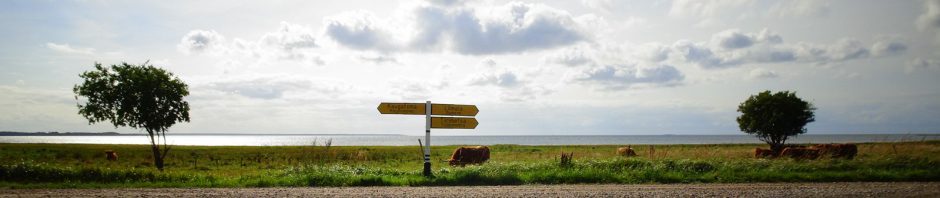

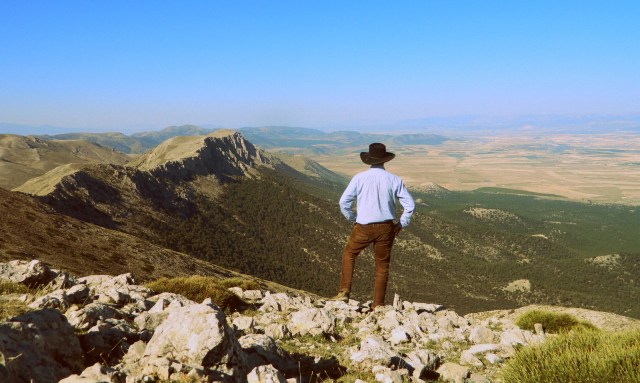
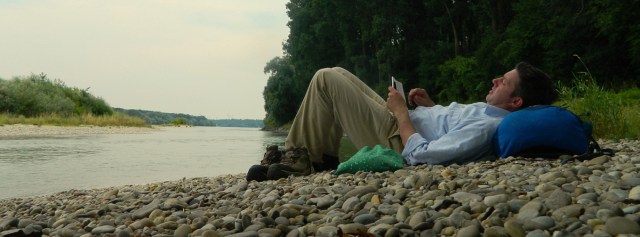


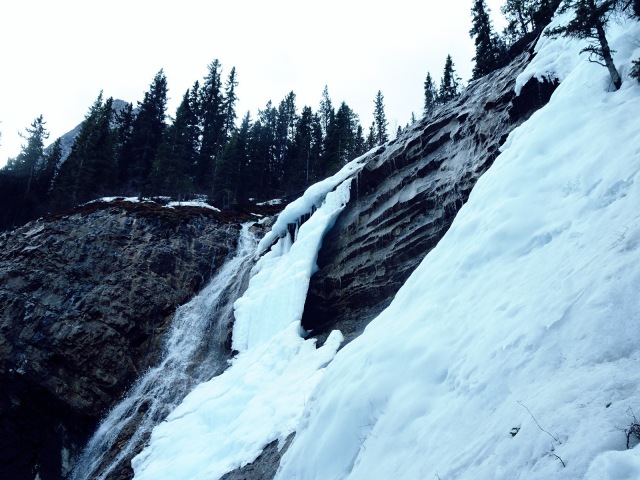

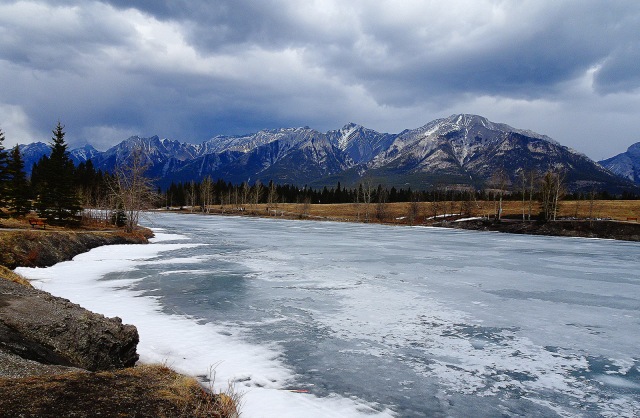


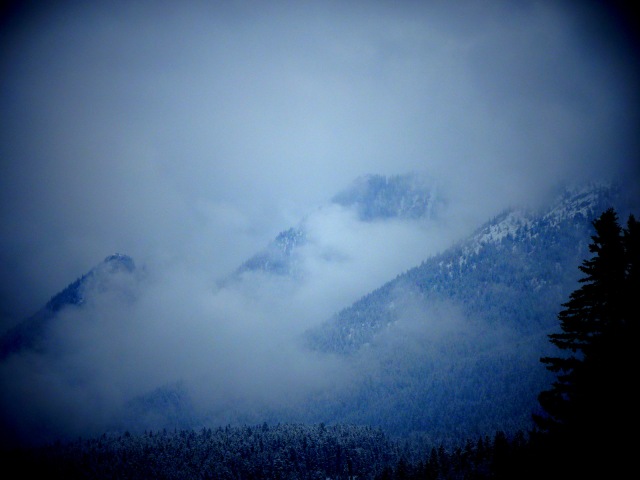


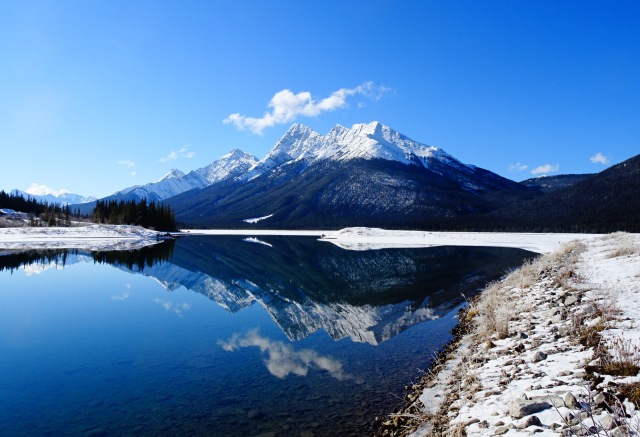


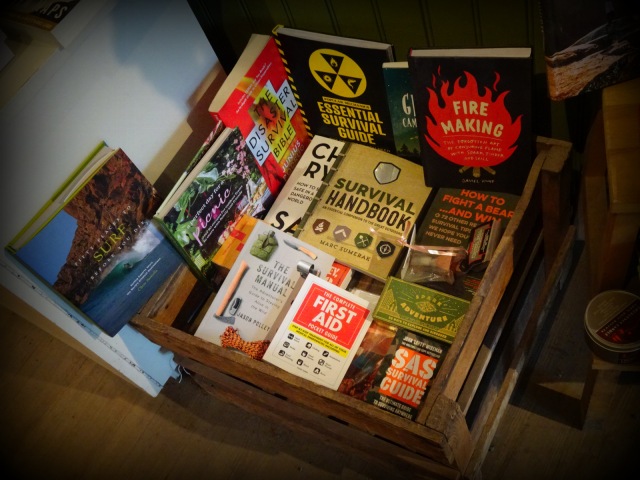


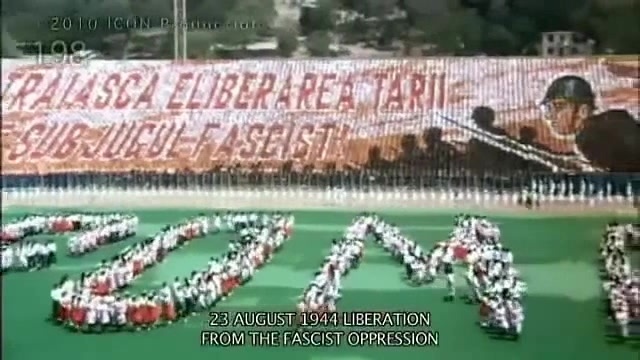
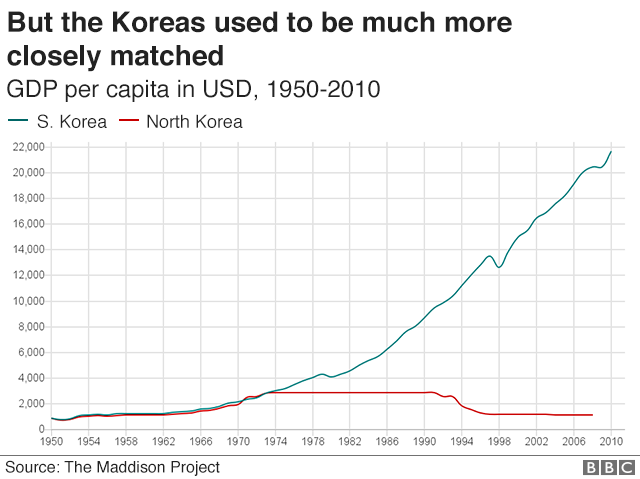







 Unfortunately, for the most part, the book scratches only the surface. Of course, he discovers what every other traveler to Iran has found out, that there is a public sphere and a private sphere. As soon as you cross the threshold into someone’s house, headscarves fall, Western music is turned up, alcohol magically appears and the conversation is open and uncensored. But Orth seems to have met mostly people who were looking for freedom in shopping frenzies and drugs. Some Persian poets also pop up, but one thing that really made me wonder is that in a book published first in 2015, nobody spoke of the Green Revolution in 2009. Not a single word in the whole book. I just don’t believe that. Maybe the author wants to protect his hosts, but then he could have put the political discussions into the mouths of the ubiquitous anonymous taxi drivers.
 The Happy Hermit