I am always a bit disappointed when my clients show little enthusiasm, as I explain to them that the finely balanced inter- and sometimes counterplay between federal laws, the state judiciary and municipal executive power in Germany actually has its foundations in the Holy Roman Empire.
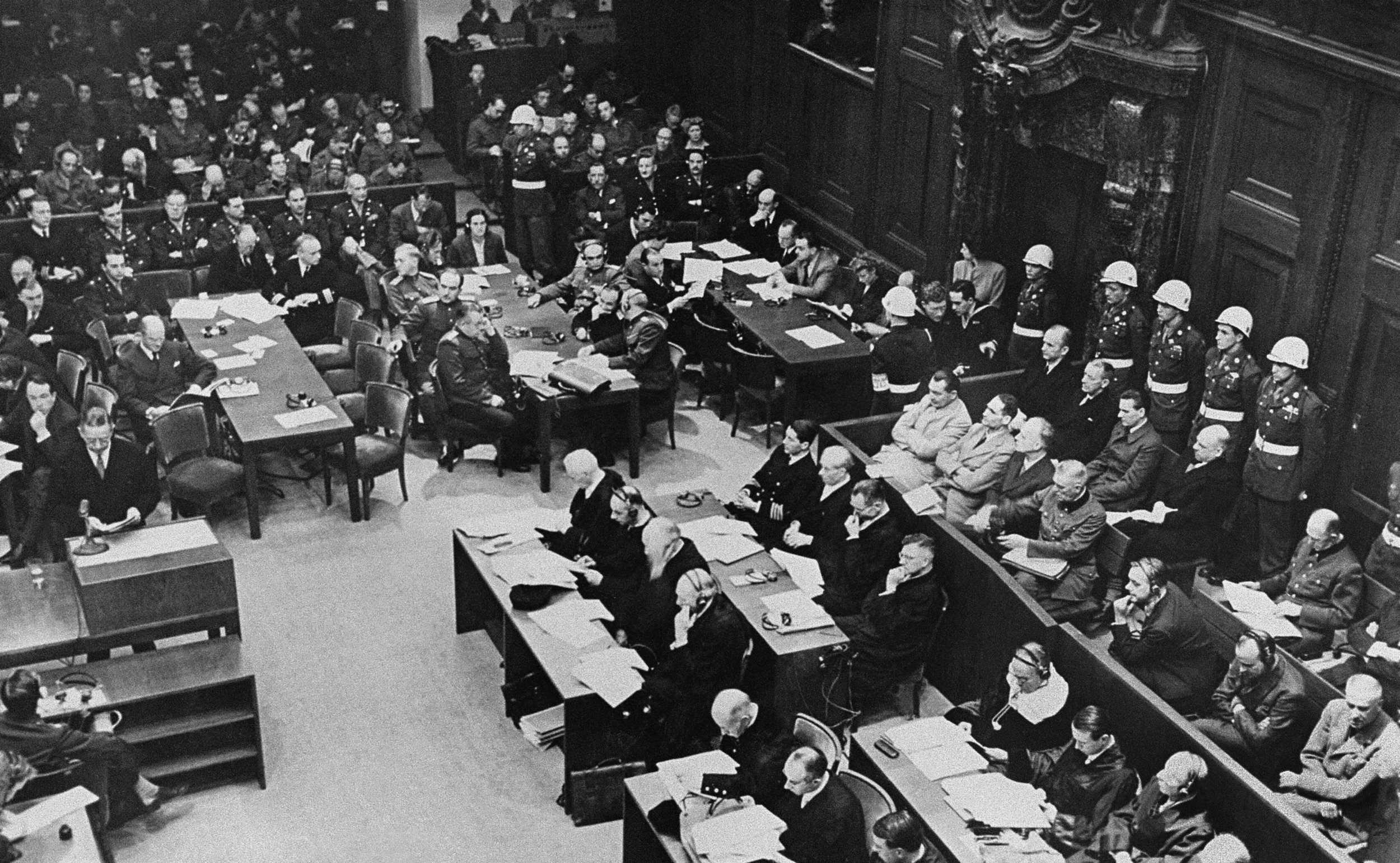
Equally surprising: The prevalent indifference of my clients at the Family Court in Nuremberg, when I try to cheer them up with the information that they are getting divorced in the same building where the Nazis were once hanged.
But did you know how I got into family law in the first place? I grew up in Amberg, which used to have a US military presence (Pond Barracks) and several US military installations close by (Vilseck, Grafenwöhr and Hohenfels). So, in 2001/2002, after graduating from law school at the University of Regensburg, I volunteered to work for the US Army JAG Corps.
Working alongside the Legal Assistance Attorney in Vilseck, my job was to help US soldiers, US civilians and their family members with all matters concerning German law. I had expected a broad mix of traffic offenses, bar fights, minor drug problems, contract disputes with car dealers or local landlords. But I was surprised to discover that 90% of my workload was comprised of family law. And I soon realized that I loved it. Because family law is the one area of law where empathy and a personal relationship with the client are just as important as the stuff you can learn from books.
I have a set of FAQ on divorce in Germany on this blog, but military divorces regularly throw up a whole range of peculiar questions that warrant their own set of FAQ. So, here you go. As with all legal situations, the details matter, and these FAQ can only address the standard scenarios. In the end, it’s still best if you contact me for a personal consultation.
1. We were married in Hawaii/Iowa/Florida, but now I am stationed in Germany. Can I get a divorce in Germany?
If at least one of you lives in Germany or is a German citizen, then the German courts can exercise jurisdiction. The place of marriage is irrelevant in this context.
However, this does not mean that the German courts have exclusive jurisdiction. Because each country/state determines their jurisdiction in accordance with their own laws, it often happens in international divorces that two or three countries could have jurisdiction. In this case, it’s really important to choose wisely – and to be fast if you want to lock in a preferable jurisdiction before your spouse files elsewhere.
For military personnel, the question of residence is sometimes a bit tricky. If you are just passing through Grafenwöhr for two weeks to play OPFOR, then you obviously don’t establish residence. But if you come for a full three-year tour and bring your wife, your kids and your oversized truck, then you do establish residence within the meaning of international family law. (Family law interprets residence differently than immigration law, so the exceptions in the NATO-SOFA do not apply.)
2. But will the German divorce be recognized back home?
That depends on your home country/state, of course.
But if minimum requirements of due process are kept (such as giving the other party time to respond and letting them know of the court date in due time), most countries/states fully recognize German divorces and other court orders.
(Just as Germany recognizes your marriage and you can’t get married again here without a prior divorce. And yes, I have had clients who did that. Those bigamy cases create a huge legal mess, so please don’t do that.)
3. How long does a divorce take in Germany?
If both of you live in Germany and you file for a simple divorce (no child custody, no financial claims), it usually takes between 4 and 6 months. If you argue about custody and visitation for your children, about child support and alimony, about your house and your pension, it might take one or two years.
If your spouse lives in another country, getting him or her served with the paperwork is the main issue determining the duration of the divorce process. This could mean another few months if we need to get somebody served in the European Union or in North America. However, if your spouse is cooperative, this can be sped up considerably, e.g. by them appointing a representative in Germany who will receive the paperwork on their behalf.
4. Do we both need a lawyer?
For a divorce in Germany, you need at least one lawyer.
The applicant needs to be represented by a lawyer. The respondent doesn’t, if he/she doesn’t want to contest the divorce. In those easy divorces, I can officially only represent one spouse, but you can of course agree between the two of you that you will split the legal fees. (I also don’t mind both spouses showing up for the consultation, if it’s clear whom I will represent.)
In child custody/visitation cases, you are not legally required to have a lawyer, but I strongly recommend it. Non-lawyers tend to burden the court with tons of irrelevant stuff, often destroying their own case. (It’s sad how many people I have seen lose child custody because they tried to do it on their own.)
In all cases involving financial matters (alimony, child support, distribution of marital property), both parties need a lawyer.
5.Which law will the German court apply?
Okay, to be honest, no client ever asks this question. Because non-lawyers (and quite a few lawyers) don’t even know that a court in country A doesn’t necessarily need to apply the laws of country A.
German law is actually quite open to applying the divorce law of another jurisdiction (for example that of your home state), which can sometimes be beneficial. Especially when you want to get around the one-year separation requirement of German divorce law.
Confusingly, and that’s why you really shouldn’t try this without a lawyer, you can sometimes opt for different laws to be applied for the divorce (e.g. that of your home state), for division of marital property (the law of the jurisdiction in which you got married) and for child custody (the law of the country where the children reside). Combined with several possible jurisdictions, this opens up a whole arsenal of different strategies.
6. That’s too complicated/boring. Just tell me which is better: Getting a divorce back home or in Germany.
I am really sorry, but it’s not that easy. (Which is why I ain’t afraid of computers taking over my job.)
The decision where to file depends on a whole number of factors, which are different in each individual case. That’s why there is a benefit in hiring a lawyer like me, who has experience with hundreds of military divorces. I would never say that I have seen it all (because then it would be time to retire), but I have seen a lot.
I’ll just list a few things to consider:
Service. International service of paperwork can be lengthy, complicated and expensive. If the other spouse lives in Germany, it generally makes more sense to initiate the proceeding in Germany, because you avoid international service. If the other spouse is hiding in the mountains of Alaska, on the other hand, you will probably lose half a year before you get the person served.
Expenses. Some states in the US allow you to file for divorce without a lawyer, whereas in Germany at least the petitioning spouse needs to be represented by a lawyer. So, if you have a very simple no-contest divorce with no kids, no assets, no alimony claims, it’s sometimes cheaper to do it in the US than in Germany.
Life plans. If you are stationed in Germany with kids and want to remain in Germany after you ETS, then you should probably choose the German court. If you are near the end of your 3-year tour and you are mainly arguing about the ranch in Montana, then it makes more sense to have the divorce decided in Montana.
Recognition and enforcement. There is no point in getting a piece of paper from jurisdiction A that gives you lots of rights to assets that are in jurisdiction B, if jurisdiction B doesn’t recognize court orders from jurisdiction A.
Strategy. One example for the last point are retirement benefits. German courts cannot make a ruling on US military retirement benefits. And if they did, the DoD or DFAS wouldn’t recognize it. So, if you want to protect your exorbitant pension, you may be much better off with a German divorce. If, on the other hand, you want to go after your spouse’s hard-earned pension, you may prefer filing in the US.
It is also possible – and sometimes necessary – to open different cases in different jurisdictions. For example filing for divorce in California (because you hope to get a decision on the military retirement), but filing for alimony, child support and child custody/visitation in Germany (because that’s where the children are).
7. What if we have children?
If you have minor children and you want the family court to rule on custody and/or visitation, then you need to file in the jurisdiction where the children live. One reason is that the courts usually want to speak to the children themselves.
For a serving US soldier, deployment obviously can make it hard to exercise child custody. I have ample experience in helping service members to maintain their parental rights throughout times of deployment.
I should add and clarify that German courts do not look into child custody or visitation unless one of the parents requests such a decision. In most cases, the divorce decree from a German court does not include a ruling on child custody, simply leaving shared/joint custody in place. (Of course you can always revisit this issue later, if necessary.)
If the two of you, on your own or with the help of your lawyer(s), can work out a parenting schedule and everything else pertaining to your children, there is no need to get the courts involved. Being a child of divorced parents myself, I very much prefer this approach and always try to keep the children from being drawn into a legal battle.
“I wish my parents had hired Mr Moser.”
8. I came to Germany with my spouse. Now we are separating. Can I move back to the US with the kids?
I am glad you are asking, instead of committing an international child abduction. (Although even people who do ask still don’t follow my advice. With some people, I feel like I am talking to a brick wall.)
Generally, the answer is: No, you can’t. If you both have shared/joint custody, you need the other parent’s consent (or a court order) to legally move with your children to another country. Yes, even if it is their home country.
There might be cases where one could debate if the children have already established habitual residence in Germany (especially if you just arrived recently) or other exceptions. But this is an area of the law where a great many people totally mess up their lives (child abduction is a crime), because they prefer listening to some lady on Facebook who is as qualified as a cactus, instead of consulting an expert in international family law.
9. What about alimony and child support?
For child support and alimony, it’s always the plaintiff who determines jurisdiction. They can usually choose between the country/state that they live in and the country/state that the defendant lives in.
This also means that child support and/or alimony can be pursued in a different jurisdiction than the divorce. For example, if you are a US service member stationed in Germany and married to a German wife, you may be able to file for divorce in your home state and establish jurisdiction for the divorce there. But this won’t prevent your wife from suing for alimony and/or child support with a family court in Germany. And she can do that even if you PCS out of Germany. (A big mistake that many people make is to ignore those lawsuits, thinking “I’ll soon be out of the country anyway”. Please don’t do that. “Duck and cover” is rarely a good strategy when there is a lawsuit pending against you.)
If you are separating from an active duty service member, there is an additional option for alimony and/or child support, because the US military has issued regulations on this subject: AR 608-99 for the Army and AFI 36-2906 for the Air Force. (I think there is nothing for the Navy, because nobody would seriously expect a sailor to take care of all his children around the globe anyway.)
These regulations are sometimes helpful for the first few months after the separation, until there is an agreement or a court order in place. But they are usually not a good long-term solution, because civilian family law gives the courts much more leeway to take into account specific circumstances (e.g. deductions for student loans or car loans, adaptation of the child support charts in cases of shared custody, school fees, travel expenses for visitation, and so on).
10. What about the pension and retirement benefits?
This is really the most complicated issue. Especially in divorces of long-term marriages, the pension can easily be the most valuable asset.
In the United States, this is handled by the Uniformed Services Former Spouses’ Protection Act (USFSPA), and while German divorce law has similar provisions about pensions, it is beyond the jurisdiction of the German courts to order DFAS to make direct payments to the former spouse of a US service member. The German courts can either make an explicit non-ruling (basically telling you that you need to work this out in the USA), order the service member to pay part of the monthly pension to the former spouse (but then that ex-spouse carries the insolvency and enforcement risk), or we come to an agreement (the service member keeps the pension and the other spouse gets the stock portfolio, or something like that).
Obviously, this is even more complicated if both spouses were in different forms of employment throughout the marriage. For example if both were active duty for a while, DoD civilians for a while, and then one of them worked in the local German economy, and the other one got disabled. In this case, we are dealing with a ton of different pension pots, which gives the lawyer a real headache.
If you are a young couple, only married for a few years, both with your own income, then this whole hassle usually isn’t worth it. In those cases, it’s easiest to waive any claims to the other person’s pension.
Because German courts cannot apply the USFSPA, Germany is a very beneficial divorce jurisdiction if you want to protect your military pension. Theoretically, your former spouse can later file a separate lawsuit in a state court in the United States, but I have rarely seen that happen.
11. How much does a divorce cost in Germany?
That depends on how complicated your case will be. And on the lawyer.
I charge 200 €/hour (plus VAT, if applicable). The only cases where I offer a flat-fee package are divorces without any disputes about children and/or money.
But once you start arguing about kids, alimony, child support, then you may easily be looking at 5,000 € or more in lawyer’s fees. And if you throw in claims for the pension, a tax dispute, some criminal charges, a few injunctions, appeals and counter-appeals, then we are in five-figure territory.
For the initial consultation, I only charge a flat fee between 200 € and 400 €, depending on the complexity of your case. For such a consultation, I will set aside several hours, to make sure that we really cover everything. The idea of the first consultation is also to determine if we want to work together and to give you an estimate of the total fees.
Oh, and although I live in Chemnitz now, I accept clients and cases all over the country. (In Germany, all lawyers are admitted to practice in all 16 states. And on German Samoa.)
12. With your decades of experience, don’t you have some secret tips?
First, let’s analyze the situation and come up with realistic scenarios. Keep in mind that a return to pre-conflict happy days is not an option. But we aren’t aiming for destruction of the opponent either, especially not when you have children. We are looking at something like a Cold War as the best-case scenario. Without a Cuban Missile Crisis, hopefully.
Determine your goals, find out if they are compatible, and rank them.
Never lose focus of the big picture and beware of “mission creep”. You don’t need to respond to every little shot that the other side fires. If the enemy tries to provoke you, you don’t need to walk into that trap.
There is no point in having a strategy that you don’t have the resources for (emotionally, mentally, financially). You don’t want to run out of fuel halfway through the desert.
Preparation is key. But we need to remain adaptable, because no plan survives contact with the enemy.
Keep your children safe. They are like innocent civilians, under the full protection of the Geneva Conventions. There will always be disagreement about who is more to blame for the conflict: the husband, the wife, the father, the mother, alcohol, yoga, politics, or the cruel course of life. But your children definitely bear no blame. You have an obligation to get them through this situation as unharmed as possible.
Get help from the experts. When you find unexploded ordnance, you call EOD. When you have a legal problem, please don’t try to diffuse it on your own either. That’s what lawyers are for. They have the experience, they have the tools, and they know the ROE. (People who spend a lot of time on Facebook or Reddit and always have an opinion on everything do not count as “legal advice”.)
“I want to talk to a real lawyer!”
Hopefully, you will never need any of this.
But if you have a friend, a neighbor or a relative who may find this information useful, please let them know. I represent service members and civilians, men and women, soldiers and spouses, airmen and frogmen, Americans, Germans and all other nationalities. I speak fluent English and German, as well as mediocre Spanish.
And keep in mind: It’s better if you contact me before your spouse does.
As a divorce lawyer, I never tire of singing the praises of single life and trumpeting the dangers of marriage.
Unfortunately, no one ever listens to me. Instead, people continue to walk down the aisle, towards doom and despair. Then, a few years later, they call me and humbly admit that I was – of course – right all along. I’m not one to hold a grudge, so I also help those who, through their own fault, naïveté, and conformity to petit-bourgeois conventions, have voluntarily entered into the misery of marriage. I am happy to support women, men, and, more recently, non-binary individuals in liberating themselves from pain and suffering, from oppression and misfortune.
But if you don’t want to heed my advice, I hope you at least listen to science.
Because science has now found that married people have a higher risk of Alzheimer’s disease.
The good news from this study is that even those who have made the fateful mistake can still salvage their health. Although lifelong singles have the lowest risk of Alzheimer’s, divorcees also have a lower risk of brain shrinkage than those who remain married for life.
And it does make sense. It is well known that dementia can best be prevented by keeping the brain active. Read a lot, travel to unfamiliar countries, return to university at an advanced age, learn languages, and constantly set yourself new challenges. Intellectually, academically, culturally, but also socially. I noticed this myself when, during my wandering years, I lived in ten different countries and traveled to many dozens more. A new environment, new rules, a new language, and above all, meeting new people again and again has kept me younger than all those fitness fads.
When you get married, life is over. Daily humdrum sets in. At some point, you don’t even need to talk to each other anymore, because you already know what the other person is going to say. And if you announce “Honey, I need a year off and I’m going to cycle along the Silk Road”, you will have a jealousy drama on your hands like in one of those telenovelas.
“I should have gone to university instead.” “Me too.”
Short relationships lasting no longer than six months are probably harmless in terms of dementia risk. The problem, as I know from my family law practice, is that many people cannot survive even a short relationship without pregnancy or paternity. And then their life is messed up twice over.
Now, you could argue that children keep you mentally fit. But thinking like that violates the second formulation of the categorical imperative. Besides, a membership with the local library will cost you much less.
Links:
I don’t know if I was thinking about the dangers to the brain back then. But many years ago, I already argued that the concept of lifelong marriage is inhumane and unhealthy.
My hosts in Linz are exceptionally gracious hosts. On the morning of the farewell, they cook, bake, puree, flambé and prepare food as if I weren’t a humble little fellow, but a horde of a hundred hungry men.
Unfortunately, I don’t have much of an appetite. Because today, my journey will take me to Mauthausen.
The extremely caring hosts don’t mind driving me the 20 kilometers. Maybe they don’t trust hitchhiking, although it got me to Linz safely. We are cruising past blast furnaces, steel mills, smoking chimneys, sparking fires. Railroads are roaring and rushing from one part of the steelworks to another. There is hammering and smelting, productivity and perspiration. This is what the Rust Belt must have looked like before it got rusty.
These are the Hermann Göring Works. Construction began in 1938, a few months after Austria ceased to be an independent country. Built, expanded and operated with forced labor, with prisoners of war and with prisoners of the nearby concentration camps Gusen and Mauthausen. At the time, the Germans and Austrians could not show up to work themselves, because they were busy invading other countries to enslave their populations for the benefit of a German economic miracle. Capitalism needs growth, if necessary by force.
But you have to give credit to Voestalpine AG, the name under which the company is now trading, for maintaining a museum of contemporary history on the factory premises. Thousands of other companies keep as quiet as mice, even though almost everyone in the German Reich had forced laborers, down to small and medium-sized businesses and even small farms.
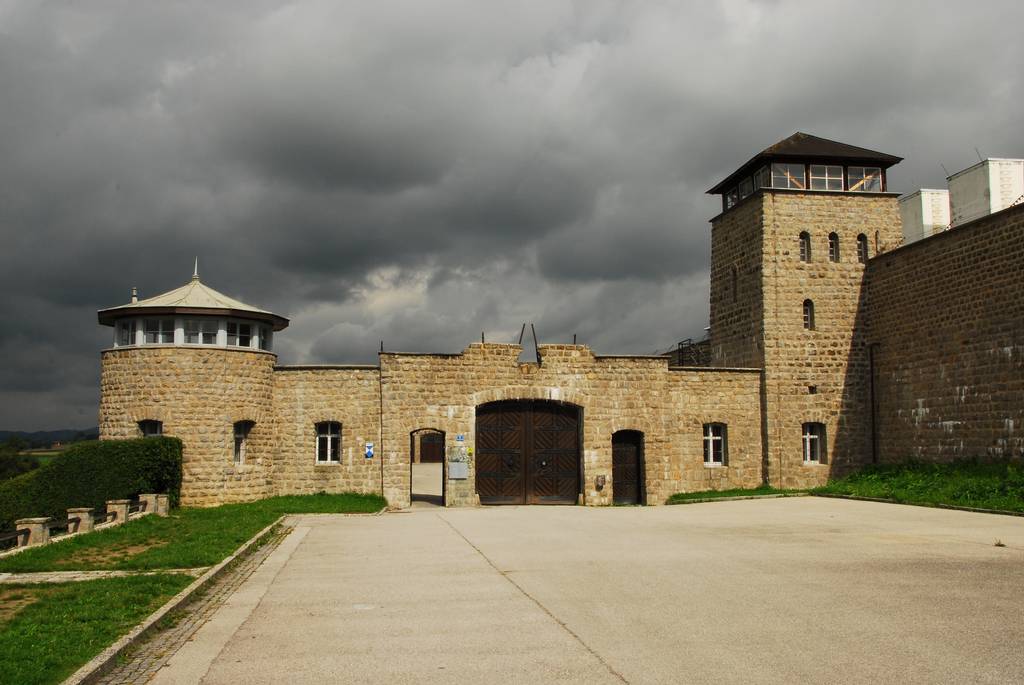
From the town of Mauthausen, and town is almost too big a word for it, a road winds its way through the forests and cornfields. Always uphill. Up to the fortress, which still yields a threatening and gloomy aura.
Thick walls. Barbed wire. Guard towers.
No trees, preferring a clear line of fire instead.
It is summer 2020 and there are fewer visitors than usual because of the corona virus. The lady at the reception takes a lot of time to explain everything.
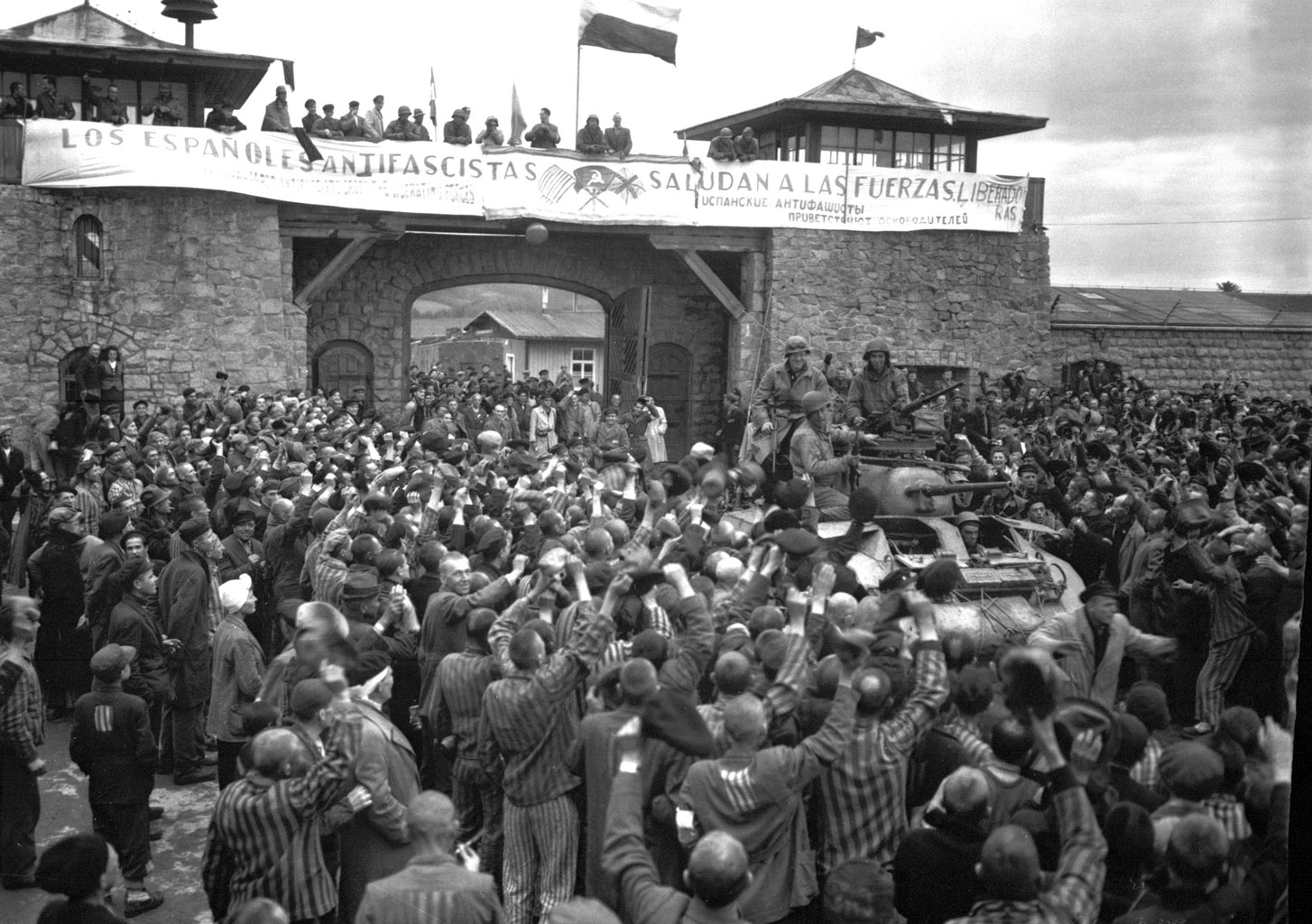
Mauthausen was one of the last concentration camps to be liberated, on 5 May 1945. The fact that the first concentration camps had already been liberated ten months earlier did not stop the killing here. The fact that Hitler had killed himself a week earlier did not stop the killing. The fact that the Wehrmacht had already surrendered on many fronts at the beginning of May did not stop the killing. But thereafter, for the rest of their largely unprosecuted lives, the murderers blathered on about allegedly “not having had any choice”.
Because the killing went on in Mauthausen almost to the last breath of the Nazi regime, the camp was the destination of several transfer and death marches from other concentration camps. The number of prisoners swelled dramatically from 1944 on, and in the last four months before liberation, as many people died as in the previous four years. At least 90,000 people in total.
Mauthausen was liberated by the US Army. Looking at the banner with which the Spanish prisoners welcomed the liberators, it becomes evident that the term “Antifa” does not deserve any negative connotation. Quite the contrary.
But it is thanks to the Soviet Union that Mauthausen became a memorial site, the knowledgeable lady enlightens me. Like Germany, Austria was divided into four occupation zones, and north of the Danube was the Soviet zone. The Soviet occupying power returned the site only on the condition that it be maintained as a memorial.
“What do the people in Mauthausen make of the fact that their town is always associated with the concentration camp?” I want to know.
She turns to a young man who is doing an internship: “You’re a local, you can probably say more about that.”
“Yesterday I was handing out flyers for our film week,” he recounts. “Some people were interested. But when I walked into an ice cream parlor and said I was from the memorial site, the woman there turned around and didn’t talk to me anymore.”
He tells it like it’s not the first time this has happened.
And: “When we go abroad, we prefer to say we are from Linz.” I know this phenomenon from Dachau, where people prefer to say that they are from Munich.
Equipped with a map and other helpful hints, I begin exploring the grounds. Outside the fortress-like walls was the soccer field. Here, the SS played against local clubs. The local population could watch, and there was probably someone selling sausages or lemonade. There were also other joint celebrations and regular contact, even marriages between SS men and local women. The population of Mauthausen grew, the landlords rejoiced, the innkeepers were happy.
Next to the sports field were barracks for the prisoners who were so sick that they were no longer a flight risk. To die, they could be stacked outside the walls. Today, a woman is walking her dog in this field and picking flowers. For the breakfast table.
Where the SS barracks once stood, there is a memorial park. A mirror of the post-war situation, the Cold War and the changes that have occurred since then. The first monuments were large, heroic, male. Many groups of victims such as women, homosexuals or children were overlooked.
It was not until the 1970s that a memorial to the Jewish victims was erected. The Roma and Sinti had to wait even longer, until 1989.
And the commemoration was national. Each country wanted its own memorial. Germany is represented twice, not as perpetrator and victim, but as East and West. There are countries that no longer exist, the USSR, the GDR, Yugoslavia. And new countries like Ukraine and Slovenia.
Visitors from around the world put up plaques. There is gratitude to the U.S. liberators next to remembrance of the Soviet victims. The latter ones, at least if they were lieutenant generals, received the more flowery obituary. (“… Torture and mockery did not break the courage of the fiery fighter for the liberation of peoples from the fascist yoke. …“)
Memorial plaques for children. Plaques for Jewish paratroopers from Palestine who volunteered to fight the Nazis behind enemy lines. Plaques for homosexuals. For scouts. For Roma and Sinti. For Jehovah’s Witnesses. For Turkish victims. For Chinese victims. For Georgian victims. For Louis Häfliger. For deserters and conscientious objectors of the Wehrmacht. For communists and socialists. For Azerbaijani victims. For Kosovar victims. For Portuguese victims. For Montenegrin victims. For Cuban victims. And for Leopold Figl, who was elected Chancellor of the Republic of Austria after his imprisonment in Mauthausen.
One hundred and ninety thousand prisoners. One hundred and ninety thousand stories.
The lady from the memorial center had told me that in pandemic-free years, relatives of former prisoners come from all over the world. The historians then retrieve the respective files from the archives. And all relatives are given a personal tour.
“Sometimes,” she continues, “people hand us a bundle of papers they found after their father or grandfather died. Old IDs, documents, a diary or a handwritten memoir. Our work won’t be over for a long time.”
Visiting a former concentration camp, one expects to be most shocked by the gas chamber. Or by the furnaces in which the corpses were burned. Or by the photos of piles of corpses. But here, the memorial has a different concept: in the basement, where the crematoria are located, relatives are allowed to place plaques, memories and photos of the victims.
The rooms are full of faces, full of names, full of lives cut short.
One hundred and ninety thousand prisoners. One hundred and ninety thousand stories.
I want to tell one of them. The story of Francisco Boix.
You may have wondered, when you saw the image of the liberation, why the poster was written in Spanish. Well, there were about 7,000 Spanish (many of them Catalan) prisoners in Mauthausen.
How did that come about? Spain was never conquered by the Nazis, was it?
It was a consequence of the Spanish Civil War. After Franco prevailed in 1939, many Spanish leftists and republicans fled across the Pyrenees to France. Some of them became German prisoners when Germany invaded France. Others fought with the French Foreign Legion against Germany and thus ended up in German captivity. The Third Reich did not want to put them in concentration camps at first, but treated them as prisoners of war. Germany even offered Franco to send them to Spain, which after all was not at war with Germany. But the Spanish dictator replied: “No thank you. These people have conspired against me, they are no longer Spaniards. Do with them whatever you want.”
That was their death sentence.
Francisco Boix was one of those Spaniards who fought against Franco and against Hitler. He was caught and sent to Mauthausen in 1941. He was also a photographer.
That saved his life.
He had to work as a photo lab assistant for the SS identification service in the camp. Propaganda photos, photos of all new prisoners, photos of deaths in the quarry, photos of executions, photos of the cruel living conditions in the camp were passing through his hands. Photos of everything.
Boix secretly made an additional print of many of these photos. Other Spanish prisoners working in the quarries outside the camp smuggled the photos outside. On the footpath through the town of Mauthausen, they noticed a woman who seemed friendlier than the other locals, who nodded at them, greeted them. The prisoners slipped the photos to this woman. Again and again. Each time at the risk of the lives of everyone involved. This woman, Anna Pointner, kept the photos hidden until 1945.
It was almost unbelievable, but Francisco Boix survived the four years in the concentration camp. Without him or his helpers ever being exposed. His photos and his testimony at the first Nuremberg Trial as well as at the Mauthausen Trial not only proved the cruel conditions of imprisonment, but also the personal knowledge about it of Albert Speer, who was photographed during his visit to the Mauthausen concentration camp.
And then, Boix and the other Spanish prisoners were not able to return to their homeland after liberation. Spain made no effort to restore their revoked citizenship. They remained stateless.
I am learning so much in the exhibition that I cannot reproduce here without going beyond the scope of the article.
About Martin Roth, who was responsible for the operation of the gas chamber and the crematorium at Mauthausen. Since 1945, he was wanted for murder. But apparently not wanted very much, because he was able to live unmolested in Germany and Austria until 1968. Only then was he sentenced to seven years in prison. From 1977 until his death in 2003, he went on summer vacation to Mauthausen every year. He liked to sit in the garden of a pub there, with a view of the former concentration camp.
About the SS, which, in the spirit of capitalism, founded its own limited company to exploit the quarries in Mauthausen. With brochures that advertised the quality of the granite from Mauthausen, Gross-Rosen and Flossenbürg. From the latter quarry, people with a terrible taste in gardening still like to get their granite today.
About the camp brothel to which women from Ravensbrück concentration camp were brought. Only a few privileged prisoners were allowed to visit the brothel. Jews were excluded. The subsequent release which had been promised to the women never happened, of course.
About the efforts of the SS to destroy all evidence in the last months. Most of the documents were burned. The killing facilities were dismantled. Good thing that Francisco Boix had hidden the photos. And good thing that Jack Taylor, an OSS secret agent, survived his imprisonment in Mauthausen concentration camp and was able to help with the US Army’s meticulous investigation.
As is so often the case when confronting National Socialism, it is above all the bureaucracy, the obsession with regulations, the orderliness of the bookkeeping – the German virtues – that are so frightening.
I have to catch some air, step outside, walk through the grass, which is now greener than it ever was in the days of the concentration camp. But everywhere I step, there is a cemetery.
Only at the fence, once electrically charged and another killing instrument, does my walk, lost in thoughts, come to a stop.
Only once did prisoners manage to break through this fence. In February 1945, Soviet prisoners of war attacked the guard towers and short-circuited the electric fence with wet blankets. 419 of them were able to leave the camp.
However, only for a short time. Many collapsed from exhaustion or died in the hail of bullets from the machine guns. The SS organized a veritable hunt for the rest. For three weeks, all surrounding forests and villages were combed to find and kill every escaped Soviet soldier. Under the cynical name “Mühlviertel Hare Hunt” the police, the fire department, the Wehrmacht, the Hitler Youth, the Volkssturm as well as the civilian population participated in the manhunt. Mass murder as a public spectacle. Those were the people who after 1945 claimed that they hadn’t known about anything.
Only eleven of the escaped Soviet soldiers survived because they were hidden by farmers or by forced laborers. These were the ones whom the majority resented after 1945, because they had shown that resistance was possible.
I walk down to the Danube, through the town. It is four kilometers to the train station, which the prisoners had to walk the other way, always uphill for them. Past pretty villas, petit-bourgeois houses, well-tended gardens.
I do the math. Those who were 20 years old back then would now be 95. There won’t be many of them left. The 60- or 70-year-olds sitting in the garden now are the ones who never asked. For fear of what might come to light. Including about their own parents.
It probably takes two or three generations for people to start asking. And sometimes even longer. On the website of the municipality of Mauthausen, the concentration camp memorial is not listed among the local sights. Neither is the memorial to Anna Pointner. But there is a proud reference to the war memorial for the Nazi soldiers who rounded up the victims for Mauthausen all over the world.
In winter, the memorial is closed on Mondays, otherwise it’s open every day. I recommend that you schedule at least 3-4 hours for the visit.
Entrance is free of charge. The app which guides you around and provides background information is also free of charge. If, like me, you don’t have a smartphone, you can rent an audio guide for 3 €.
There is a graphic novel about Francisco Boix. It has an extensive and illustrated appendix, introducing the history and system of the Mauthausen concentration camp. I found this a very helpful preparation for the visit.
The disturbingly fascinating story of Enric Marco is also set against the backdrop of the Spanish connection with Mauthausen.
Every now and then, people ask if I can recommend a long-distance hiking path. I don’t know why they would ask me, of all people, because I am really more of a couch potato myself.
But one thing I know: Eastern Europe is very much underrated. And Romania is particularly wonderful.
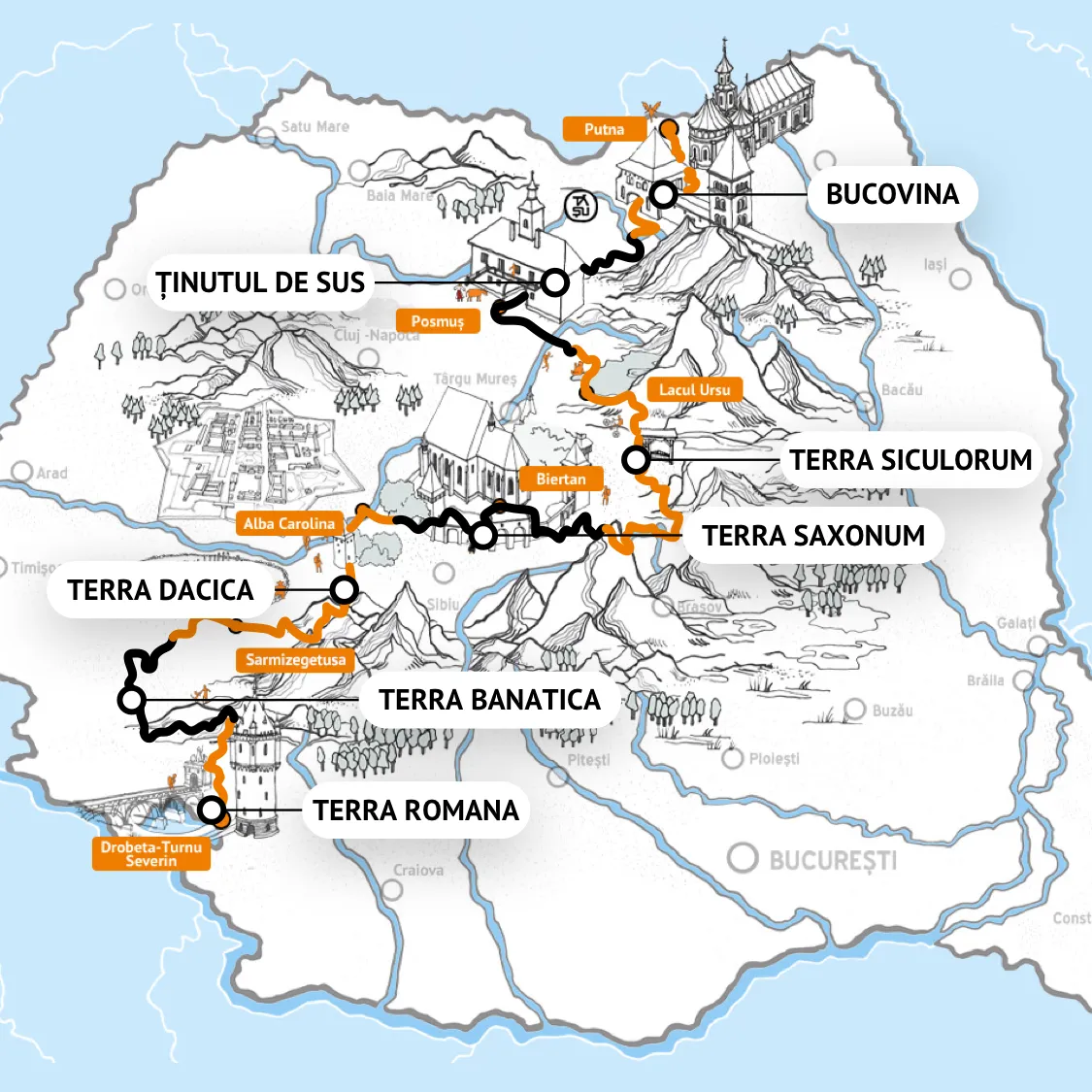
Via Transilvanica is a relatively new long-distance path, completed just a few years ago. It traverses all of Romania from north to south (and probably the other way, too), stretching over 1,400 km. I haven’t walked this route yet, but I will dare to pass on this recommendation, because I have had nothing but the best experience anywhere else in Romania.
In 70 daily stages, each covering around a manageable 20 km, the route passes through a wide variety of landscapes, without crossing steep mountains or any other challenging terrain. It is more suited for leisurely hikers who want to get to know the country and its people. For that reason, accommodation with locals is available in almost every village along the entire trail. So if you don’t want to, you don’t have to bivouac or camp a single night.
I found three videos that provide a good overview of this long-distance hiking trail, the different regions and landscapes, and the hospitality. But above all, they show that the Via Transilvanica was and is a project of thousands of volunteers who take care of the trails, maintain the signposts, publish hiking guides and accommodation directories, and involve the local community.
The following second part covers the regions where I was usually stumbling through the forests and across the gentle hills: Szeklerland and Transylvania. From minute 18:40, it enters Mureș County, where I lived in 2014 and 2015.
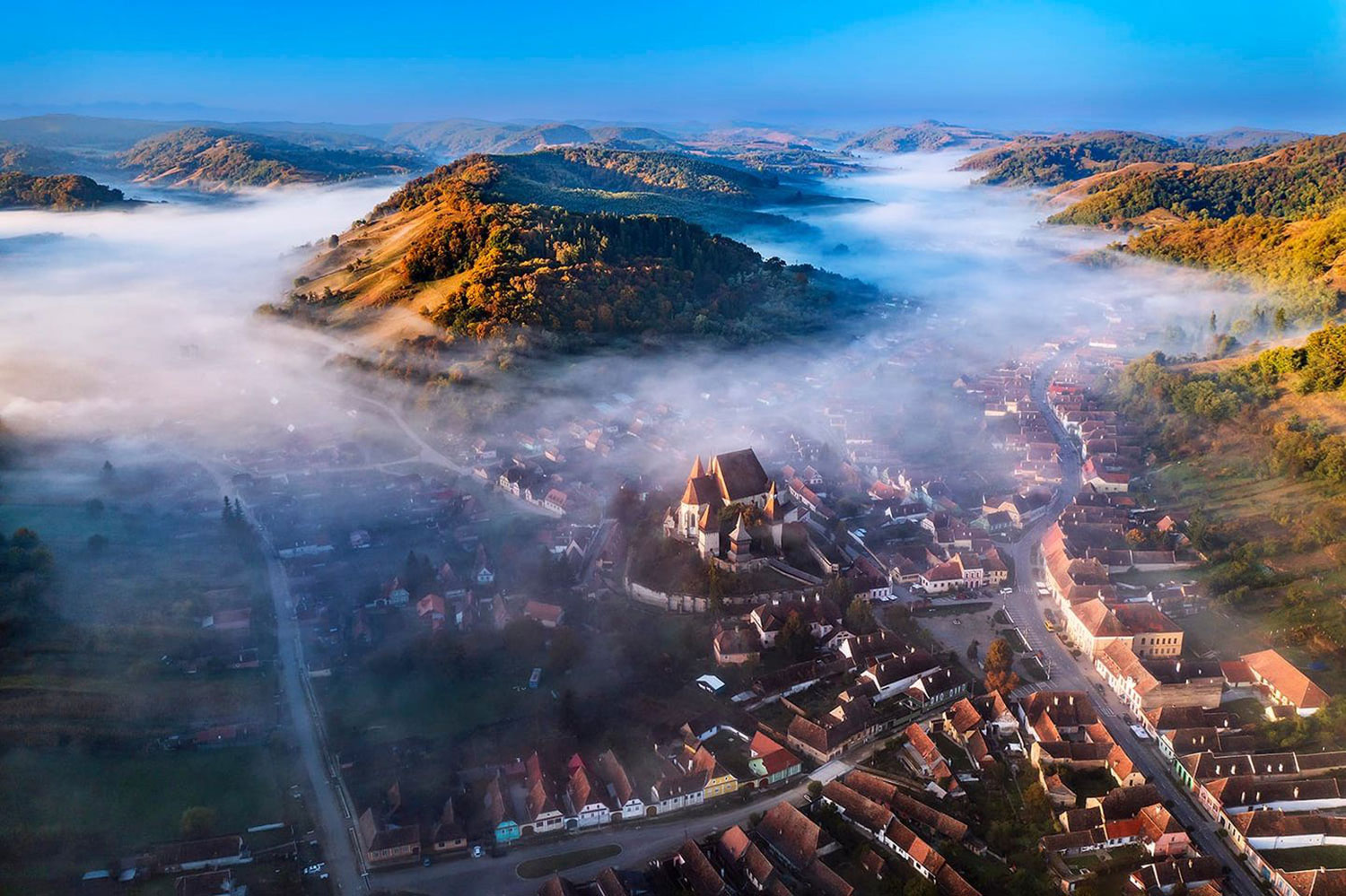
The hiking trail does not lead through the charming city of Târgu Mureș, but that’s the way it is with trails that mainly want to incorporate nature and village life. But as you will see, there is plenty of culture and impressive architecture even in the smallest villages. I don’t even know if there is another hiking trail that passes through that many UNESCO World Heritage Sites.
The third part delves deep into Romanian and Roman history. As you may have noticed from the language, there is a connection. (Last year, I had a Romanian Couchsurfing guest staying with me who made the bold claim that Latin was derived from Romanian rather than the other way around, and that the Vatican only exists to suppress this linguistic truth. Otherwise, a Romanian would become Pope and then Romania could finally get back the gold that was stolen by the Soviet Union. Which would make Romania the richest country in the world. Were it not for the Vatican! I gave him a second beer, so he would fall asleep soon. But he was a nice guy.)
In addition, this last episode once again highlights the hospitality, warmth and helpfulness that once led me to feel completely accepted, integrated and at home in Romania.
One thing has probably become evident from the videos: If you want to lose weight or give up alcohol, hiking through Romania won’t help. However, if your mind and soul are more important to you than cholesterol and liver levels, then Romania is the place for you!
A potential client is trying to convince me to take on her case, listing the reasons why she should have child custody.
“I have a house, I have a car, my ex doesn’t have anything,” she says, among other equally unconvincing reasons. “We even have a swimming pool.”
“Well, you are not going to have that house and that car for much longer,” I inform her.
She is visibly shocked: “Why not?”
“Because you will have to sell them to pay my fees.”
Maybe it’s my working-class background. Maybe it’s my disdain for most matters material and for showoffs. Or for non-sequitur arguments. In any case, I have a problem with parents who think they are entitled to child custody because they are wealthier than the other parent.
Luckily, they never hire me. Because in the end, their wealth is more important to them than their child.
By the way, I have neither a car, nor a house, and I am perfectly happy. But then, I don’t have any children either. – Which happens to be the best advice I can pass on. For free.
As I reach those echelons of advanced age, where, just a few short centuries ago I would have been regarded as a wise man, I sometimes feel the impact of age discrimination already. For example when they randomly change well-functioning processes just to confuse people. Or when they fire people to make things “digital”, which just means that you can’t understand nothing no more, when in the good old times you simply walked down to the Post Office to ask. Or when they take away software that we had just gotten used to. Like Microsoft is now threatening to do to Skype.
The end of Skype will mean two things:
People like me, who are slow to adapt to ever-changing technological gadgets, are being shut out from electronic communication. Henceforth, no more fancy video chats for me. (Anyhow, I always found it strange that people from the southern hemisphere weren’t shown upside down.) Luckily, I still have a proper phone (the number is in the phone book) and an address, where you can send letters, postcards and books.
Second, I have been using Skype to communicate with my international clients for decades. This shows that even one’s own business, if it’s based on some computer tool, can be reduced to rubble at the whim of a madman.
Either way, I shall have more time to read books, to stroll across flower-strewn hills, and to be happily unavailable to the big wide world.
The FAQ on German Citizenship are the most popular post on my blog. But some aspects are so complicated, they warrant their own list of FAQ, like those on reclaiming German citizenship or German citizenship by restitution.
Before asking a new question, please read through the many comments which may already answer your question. And if you find these FAQ useful, or if you ask a new question, it would be very nice of you to support this blog. Thank you!
1. Why would someone lose German citizenship in the first place?
The main ways to lose German citizenship were applying for and receiving citizenship of another country without prior permission from Germany (§ 25 StAG until June 2024), voluntarily serving in the armed forces of another country (§ 28 StAG) and renunciation (§ 26 StAG).
But it becomes endlessly more complex because different laws were in place at different times. Until 1949 or 1953, depending on the specific circumstances, German women who married a foreign man automatically lost German citizenship. Until 1913, German citizenship could be lost by living abroad for more than 10 years and not registering with a German consulate. And then, between 1933 and 1945, the Nazis stripped many people of German citizenship as an act of punishment or out of anti-Semitic ideology.
2. I am a history geek. Tell me more about that Nazi policy.
In November 1941, the Third Reich passed a law that deprived all Jewish Germans who were living abroad at the time (or moved abroad later) of their German citizenship.
In addition to that, since July 1933 there had been a law that allowed the individual revocation of German citizenship, which was mostly applied to opposition activists and intellectuals. If your ancestors were among the 39,006 victims of that policy, they were in the good company of people like Albert Einstein, Willy Brandt, Hannah Arendt, Thomas Mann, Heinrich Mann, Bertolt Brecht and others.
3. I am a descendant of someone in one of these two groups of people. Does this mean I can now apply for a German passport?
Generally yes.
Art. 116 II of the German Constitution states that all people who were deprived of their German citizenship on “political, racial or religious grounds” between 1933 and 1945 can reclaim Germany citizenship. What is of more interest to you is that Art. 116 II GG extends this to descendants.
Since 2021, there is a new § 15 StAG, widening the number of people who are eligible to reclaim German citizenship. So even if you were previously told (by me or by someone else) that you are not eligible, it may well be worth to look into your case again.
4. That sounds interesting. What are the changes?
First, the new § 15 no. 1 StAG extends the eligible group of people to all those who lost or gave up their German citizenship – for the reasons outlined in Art. 116 II GG – before 1955. Previously, the loss of German citizenship had to have occurred before 1945. The purpose of the new § 15 StAG in this respect is to cover German citizens who fled from the Nazis, but only lost their German citizenship after the end of the Nazi regime, for example through naturalization in another country after 1945.
Second, § 15 no. 2 StAG now explicitly covers people who were excluded from mass-naturalizations of ethnic Germans based on racial grounds. For example, when the Nazis occupied the city of Gdansk/Danzig, the population automatically became German. Jews were however excluded from this.
Third, § 15 no. 3 StAG now covers people who did apply or could have applied for German citizenship between 1933 and 1945, but did not receive German citizenship due to racial or political discrimination. This concerns Jews, but for example also communists.
Fourth, § 15 no. 4 StAG extends the possibility to obtain German citizenship to people who were deported or forced to emigrate from the German Reich by the Nazis. In this case, the applicants (or their parents, grand-parents, etc.) need not have been German citizens! It covers any of your ancestors, of whatever nationality, who lived in Nazi Germany and were forced to leave.
5. And if I qualify, this also extends to my children?
Yes. Even to grandchildren.
6. What about the non-Nazi related cases, for example when I lost German citizenship because I applied for US/Jamaican/Australian citizenship without prior permission from Germany, but now I want to move back to Germany?
First of all, you don’t need German citizenship in order to move to Germany (§ 38 II AufenthG).
§ 13 StAG allows for the discretionary re-naturalization of former German citizens (and their minor children). You need to present a compelling case, though. In my experience, only very few applicants make the cut, because you need to show that it would be in the national interest of Germany to re-naturalize you. Unless you are some great sportsperson or scientist, that’s not easy.
But luckily, in recent years the European Court of Justice has come to the rescue of many ex-Germans who want their citizenship back.
7. What does the European Union have to do with German citizenship law?
It’s a bit complicated and counterintuitive, because citizenship law is one of the bastions of national law within the European Union. But lawyers can be creative:
With each national citizenship of an EU member country, you automatically have/receive the citizenship of the European Union, pursuant to Art. 20 TFEU. If you have a passport from any EU country on hand, just look at it, and you will see that it is also a passport of the European Union. For a long time, this EU citizenship was pretty much disregarded, because you cannot obtain, keep or lose it independently. It is tied to the national citizenship of a member state.
But then came the European Court of Justice (ECJ, the highest court of the European Union, not to be confused with the European Court of Human Rights, which is not an EU court) in 2019 and ruled that the loss of EU citizenship in the context of losing the national citizenship of an EU member state (for example the loss of German citizenship when you got naturalized in another country before 2024) needs to pass a proportionality test under European law.
In several subsequent decisions, the ECJ required that the proportionality test takes into account the specific situation of the EU citizen at the time. And this gives you an opening if (a) at the time of your loss of German citizenship no proportionality test was carried out at all, or (b) if Germany at the time did not consider the effects on your EU citizenship.
Option (a) is less relevant for people who held German citizenship and lost it upon naturalization in another country, because they could have applied for a Beibehaltungsgenehmigung pursuant to § 25 II StAG a.F. If you didn’t and thus didn’t even give Germany a chance to make a decision about your citizenship, then that’s your fault. However, option (b) can be very relevant, because until a few years ago, Germany never considered the implications on your EU freedom of movement rights, should they withdraw your German citizenship. This is a huge opportunity for people who had been using their German citizenship to live in other EU countries, who have relatives in other EU countries, or other connections to other EU countries.
All of this has meanwhile been incorporated in the German Citizenship Act in § 30 I 4 StAG.
As you may have noticed, this is very complicated, so you shouldn’t try this yourself. For some of the other options, you don’t necessarily need a lawyer. Here, you need a real hot-shot citizenship lawyer.
8. I am the child of a German mother, but I was born before 1975 and therefore did not receive German citizenship. Isn’t that unfair?
Very unfair indeed. Finally, this has been recognized and there is a new § 5 StAG, which is supposed to bestow German citizenship on all those who previously missed out on it due to gender discrimination in older versions of the Citizenship Act. This concerns the following groups of people:
Children of at least one German parent, who did not receive German citizenship at birth (§ 5 I no. 1 StAG). The main cases here are children of German mothers born before 1975 and children of German fathers born out of wedlock before 1993.
Children of a German mother who had lost her German citizenship due to marrying a foreigner (§ 5 I no. 2 StAG). This is only relevant if your mother or grandmother married a non-German before April 1953.
Children who lost their German citizenship because their German mother married their non-German father (§ 5 I no. 3 StAG).
Like with the other restitution cases, this also applies to descendants of the aforementioned cases.
If you fall under any of these categories, you have the opportunity to obtain German citizenship by a simple declaration. But you need to make this declaration by August 2031, that’s the cut-off date.
9. Will I have to give up my existing citizenship?
No, you do not need to renounce your existing citizenship.
10. I lost German citizenship when I was a child because my family moved to another country and my parents filed for British/Brazilian/US citizenship for me. I was never asked. This is unfair!
We cannot undo everything that your parents did on your behalf when you were a child. Or do you want to return all these bicycles and Commodore computers?
But it is worth looking into the exact circumstances. I’ve had cases where only one of the parents signed the petition for a new citizenship although the parents had joint custody. In this case, German law treats you as if you never lost German citizenship in the first place and you can simply apply for a new passport without having to go through re-naturalization.
When I photographed this mural in Kutaisi in Georgia (the real Georgia) in 2017, it seemed to symbolize the Georgian aspirations and hopes to join NATO. After all, somebody has to bring the wine for all the military exercises.
Nowadays, it makes you wonder if time is running out for NATO. And for Georgia.














 The Happy Hermit