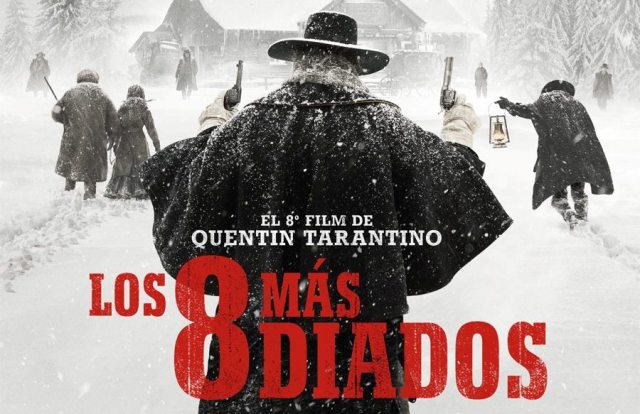
Trailer: “Los 8 mas odiados” (“The Hateful Eight”)

When I like a film, I may go to the theater a second or a third time to watch it again. (Yes, I pay for films because I believe in copyright law. And because I think that many films don’t work as well on a small screen.) This happens regularly with Quentin Tarantino’s films. Inglourious Basterds I watched three or four times, once without glasses and from the last row to focus just on the soundtrack.

Luckily, with The Hateful Eight, I have another reason to go and watch it again and again and again. In Bolivia, it’s playing with Spanish subtitles of course.

That’s a great way to learn Spanish, but in order to catch all the subtitles and to remember them, I will have to watch this film more than once. About eight times, I guess.

Los-ocho-mas-odiados

Posted in Cinema, Language | Tagged , , , | 15 Comments

German history follows me all the way to Bolivia

Zur deutschen Fassung dieses Artikels.

A few days ago in Santa Cruz, in eastern Bolivia:

The Orient Express on which I had come from San José de Chiquitos, even further in the east of the country, was delayed by an hour. Thus, I had to hurry to get to the airport to catch a flight back home to Cochabamba. In the city center I looked and asked around for bus no. 135, but to no avail. I had to bite the bullet and hail an expensive cab. Luckily, there are always plenty of them cruising around.

One of the first questions of every cab driver is of course: “Where are you from?”

“From Germany,” I still reply, although I haven’t lived there for seven years. But in first or passing conversations, simplicity prevails.

“Oh, my father was from Germany,” the driver says, as excited as me about this coincidence. “But he was no Nazi!!” he adds, waving his right index finger and looking at me in the rear-view mirror to make sure I got this very important clarification.

I express my retroactive admiration for the taxi driver’s father’s opposition to the National-Socialist regime, but he already continues telling me the story of his father: a German Jew, from the area around Frankfurt, who had gone through several concentration camps, lost his whole family, was the only one to survive, emigrated to Bolivia, married a Bolivian woman and had a family here.

“That was a huge massacre that this guy Hitler made,” the taxi driver remarks, still visibly agitated by his father’s fate. As far as is possible in the brevity of time, in the morning rush-hour and with my limited Spanish skills, I try to point out that one would do injustice to the tens of thousands of abettors and the millions of  followers of the Nazis if one were to forget their role in the holocaust. It’s not like one man could organize and carry out a genocide on an industrial scale for twelve years by acting alone.

Although I already have more than enough work of this kind, I spontaneously launch my own offensive of reparation: “Did your father still hold German citizenship when you were born? Because then you would have German citizenship, too.” After all, this is one of my areas of specialization. Actually, even if the father had lost his German citizenship, the son would have the right to reclaim German citizenship under § 15 StAG. But I don’t want to make it too complicated.

Carlos, that is the name of the potential German, doesn’t really want to travel to Germany, but is nonetheless excited by the prospect of a German passport: “Then I can finally visit my children in the US without having to apply for a visa.” We agree to remain in contact, that he will e-mail me more details of his family’s history and that I will see what is possible in his case. He doesn’t offer to reduce the fare of 70 bolivianos, though.

jüdische Einwanderer in Bolivien
Jewish emigrants in Bolivia

You can read a bit more about the Jewish emigration to Bolivia here. Or you can get Leo Spitzer’s book Hotel Bolivia.

Of particular interest is the town Chulumani, hidden in the almost impenetrable Yungas forests. Some of the Jews from Germany fled here because they thought they’d be safe in those remote mountains. For the same reason, a different group of Germans fled to Chulumani after World War II: high-ranking Nazis were hiding from prosecution there. For a time, Klaus Barbie (who advised Bolivian dictators, whose families had also come from Germany, coincidentally) and allegedly Adolf Eichmann and Josef Mengele lived in the same town as the Jews who had fled from them. For the Bolivians, it was hard to comprehend why these immigrants didn’t get along with each other, for they were all Germans in their eyes.

Chulumani

Links:

  • More about Bolivia.
  • More about history.
  • I never made it to Chulumani, sadly. But when I return to Bolivia to write a book about this fascinating country, I will of course go there. I am thankful for any support for this mission!
Posted in Bolivia, German Law, Germany, History, Holocaust, Immigration Law, Law, Travel, World War II | Tagged , , , , , , , | 16 Comments

Video Blog: How you wake up in Santa Cruz

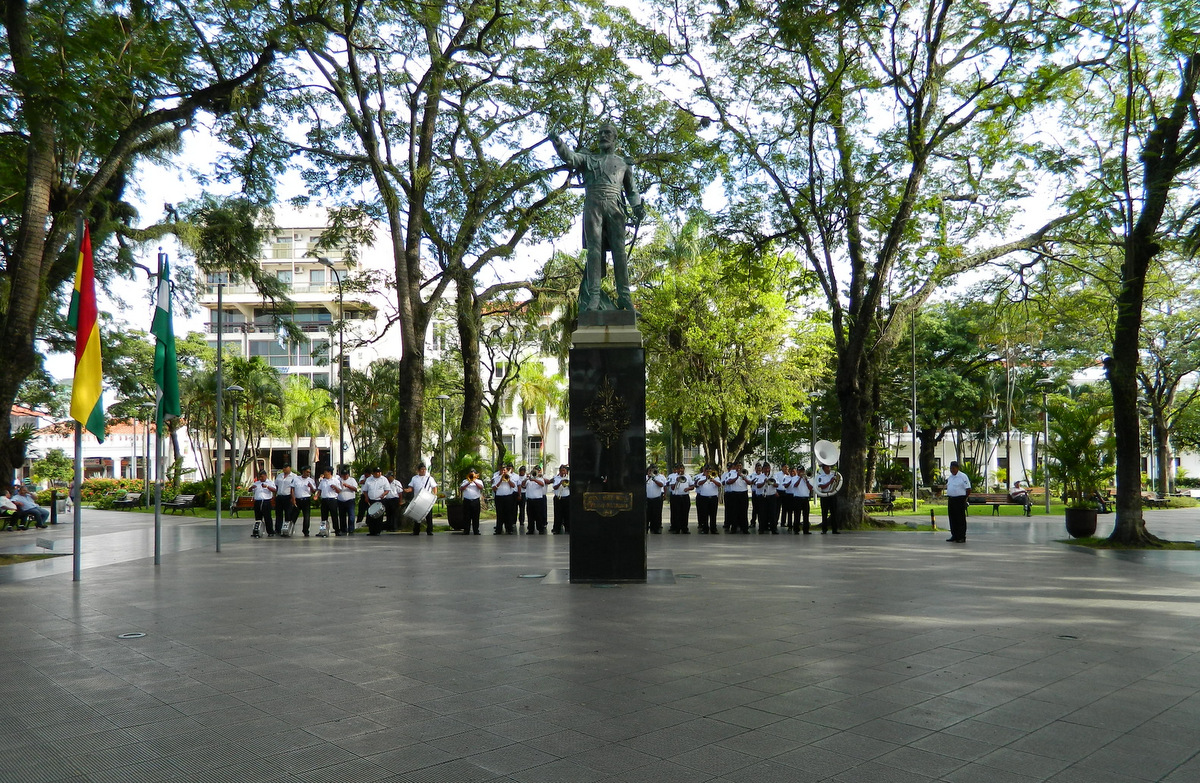
It’s early morning in Santa Cruz in Bolivia. Although the smartest thing in this heat would be to get up and go to work at 5 o’clock, the Square of 24th September, named after a revolt on that day in 1810, is still almost empty at 8:30. Only a few shoeshine men and pensioners are already about.

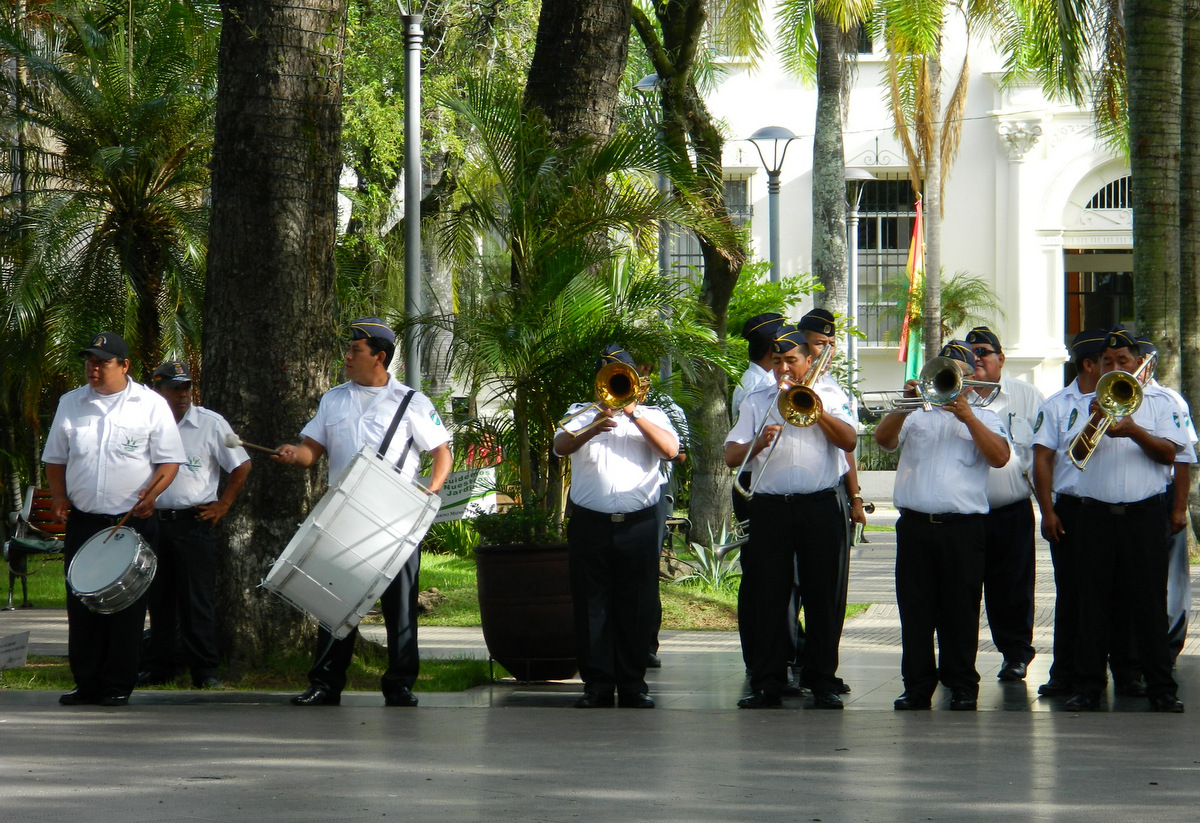
And the band which woke me up. Despite the time it took me to shower and get dressed, they are still playing in full swing when I finally join the spectacle, which is largely and sadly devoid of viewers or listeners.

Kapelle1.JPG

But listen and watch for yourself:

And it continued like this at least for another half hour. It seemed to me like the duration of the concert was timed exactly to cover the time needed to read El Deber, the local newspaper, drink a cup of coffee and smoke a cigar.

Kapelle2

The apartments with a balcony facing the Square of 24th September must be really sought-after.

(Diesen Artikel auf Deutsch lesen.)

Posted in Bolivia, Music, Photography, Travel, Video Blog | Tagged | 3 Comments

Personality Cult in Bolivia

It is not as bad as in dictatorships, but for a democracy, the personality cult surrounding President Evo Morales is quite strong. At Cochabamba airport, you already see a huge poster of the president from the tarmac, and all over the country, you hear, see and read “Evo”. In part, this is authentic admiration and affection for the first indigenous president, of whom even some critics admit that he did preside over a period of stable economic growth and that he began to tackle social problems which had hitherto been ignored. On the other hand, it sometimes seems to me like a substitute for a political agenda. “He is one of us” in lieu of debates about education, economic inequality, the economy’s dependency on raw materials etc.

It is not only because of this personality cult that I am skeptical regarding the planned amendment to the Bolivian constitution, with which President Morales wants to allow the re-election of the president to yet another term, in fact his own renewed re-election to a fourth term (and possibly beyond that, for he is only 56 years old and Fidel Castro is one of his heroes). This issue is subject to a referendum on 21 February 2016, for which I expect a close outcome, although the NO campaign may have benefited from a string of personal and government scandals uncovered in recent weeks.

More about this in the coming days (because today I am traveling in the east of Bolivia), but on the issue of personality cult, I want to share this photo with you. I took it today at the bus and train station in Santa Cruz.

Evo Morales dios.JPG

“Mr President, may God enlighten him forever.” The kitschy photo with the baby is a two-edged sword however, because one of the recently uncovered scandals involves a(nother) illegitimate child of the president.

(Auf Deutsch lesen.)

Posted in Bolivia, Photography, Politics, Travel | Tagged , | 24 Comments

I have found my vocation in Bolivia

You may have been wondering why I haven’t published anything for a whole month. (Actually, far fewer of you wondered than I had hoped would wonder. Only two people of my tens of thousands of readers contacted me, asking if everything was OK. A very depressing outcome of this little experiment.)

Well, first I was offline because I didn’t have internet at home – which is now in wonderfully cozy Cochabamba in Bolivia -, then I had to catch up with work, and lastly, I spent a lot of time outside and away from the computer because the climate here is perfect. Really perfect.
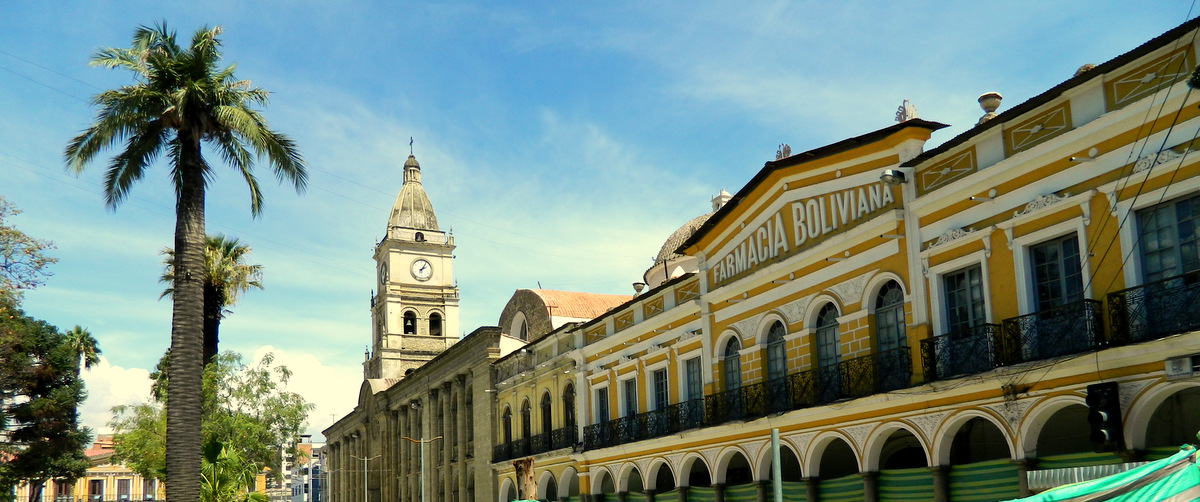
Farmacia Boliviana

central square of Cochabamba

Fellow travelers may know the feeling: Sometimes you come to a country where you have never been before, yet you realize right away “This country and me fit together.” This is what happened to me in Bolivia. The beautiful and diverse nature, the extremely interesting history with everything from Incas to Mennonites, from revolutions to water wars, the colorful indigenous cultures, and most importantly the Bolivians themselves. Maybe I am extremely lucky, but I have mostly met very friendly, humorous, polite, educated, warm, welcoming, interesting and helpful people. Already on the first day, I felt at home. I was overwhelmed by the hospitality of Bolivians who invited me, showed me their town, introduced me to their friends and offered all kinds of help.
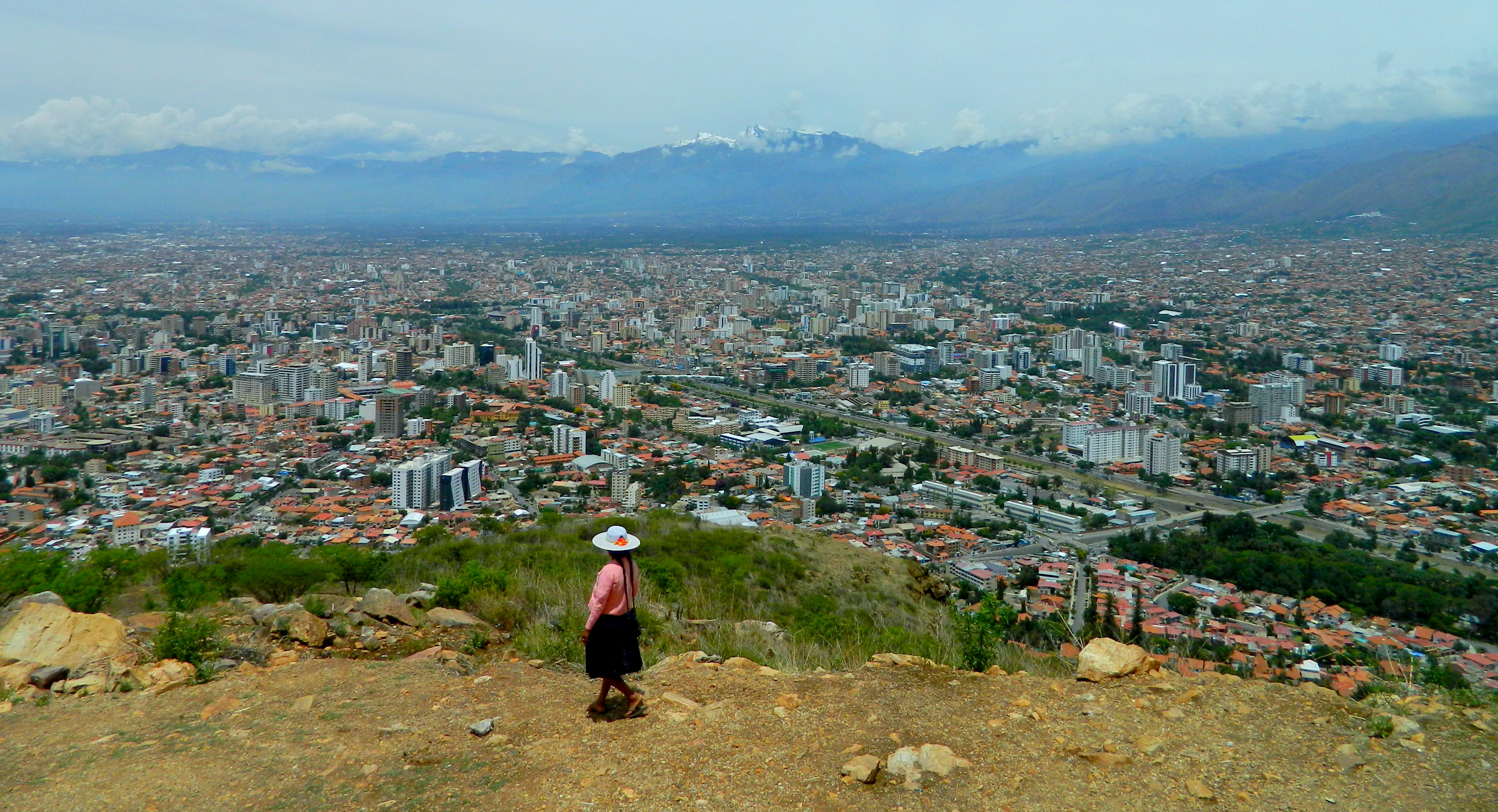
panorama snow lady with hat

Cochabamba with Mt Tunari (5,020 m) in the background

It also seems to become a regular feature of my traveling that I cherish and appreciate countries which are over-looked by most travelers and dismissed by everyone else. It hurts me when Europeans coming to South America ask “Is it worth to go to Bolivia?” You only need to look at a map to see that Bolivia spans all climate, geological and vegetation zones from the Andes to the Amazon, from salt flats to savannas, from the low-lying Pantanal to Mt Sajama with 6,520 m. Even other South Americans too often dismiss Bolivia as “the poorest country of the continent,” ignorant of any other fact and not in the least interested to learn more or to discover it for themselves. Admittedly, flights to Bolivia are rather expensive, even from the neighboring countries, which may dissuade some interested visitors. But there is always a bus or a romantic train connection.
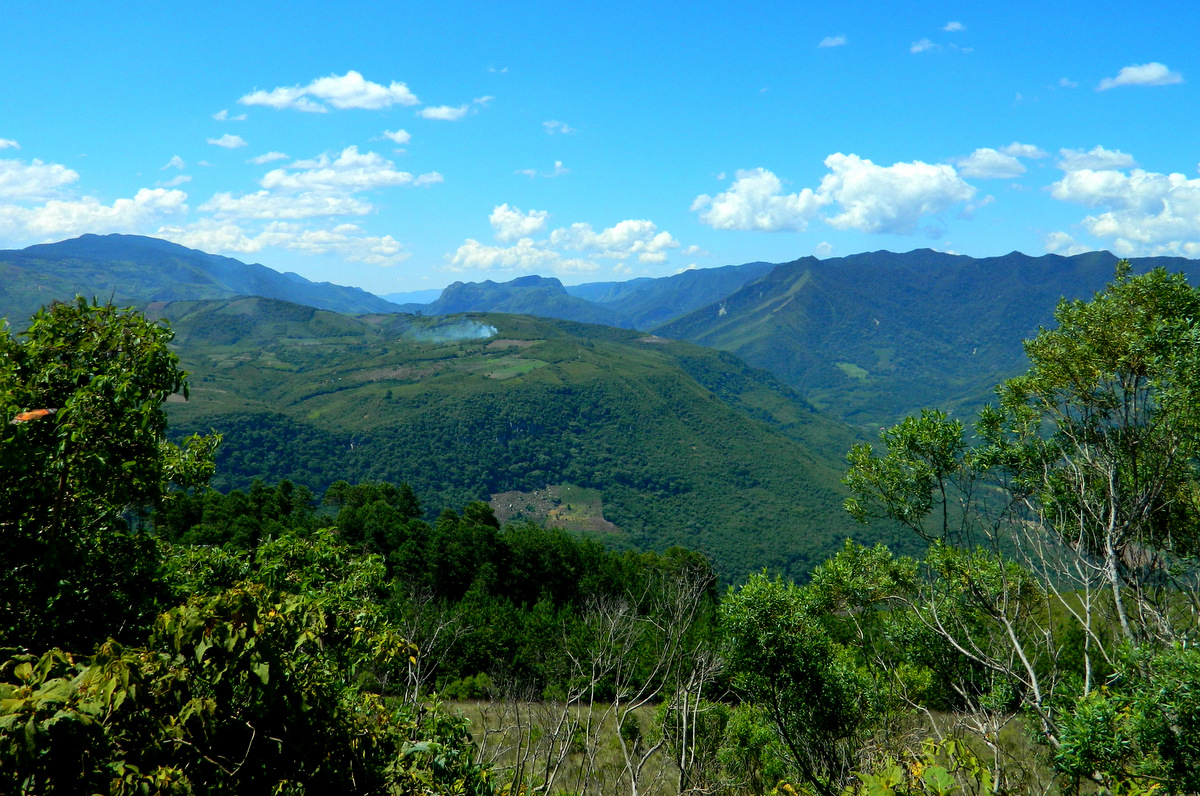
view from El Fuerte

view from El Fuerte near Samaipata

Well, you already know that I prefer to live in and write about countries that don’t receive 100 million tourists a year. So I decided to stay in Bolivia for a bit longer, explore the country, its culture, its history and the contemporary social, economic and political issues more in-depth. Let’s see if I can convince some of you to visit.

Luckily, I discovered that in Bolivia I can even find work with my otherwise useless talents: Last weekend, I was in Quillacollo when I saw this crowd of people listening to a speaker in the park. Because there is currently a heated debate going on in Bolivia about a constitutional referendum on 21 February 2016, because of Simón Bolívar in the background, and due to wishful thinking, I assumed that a political discussion was raging. Impressed by the number of people interested in such an event, I walked up to the congregation – and noticed that this was actually a storyteller.
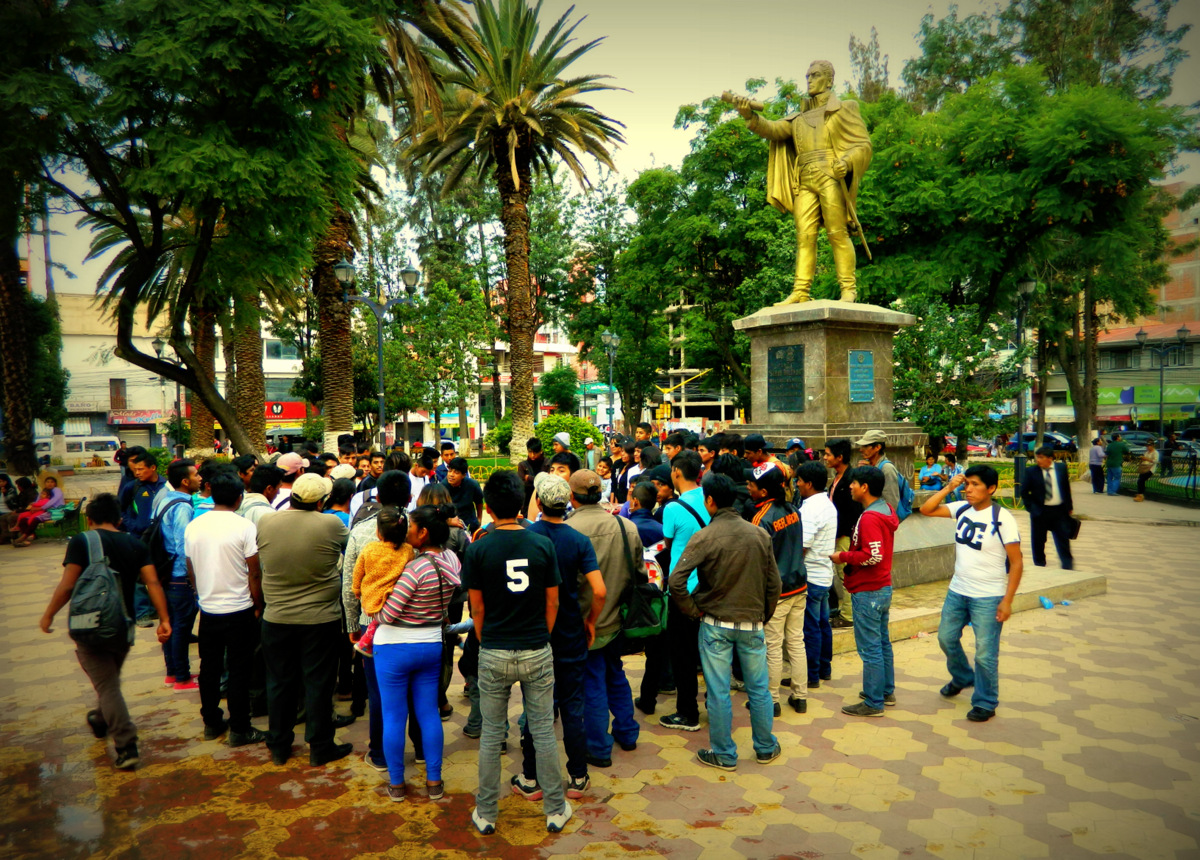
joke teller Quillacollo

a storyteller and the attentive crowd in Quillacollo

Yes, in Bolivia it’s a legitimate profession to stand in the park and tell jokes or stories. My Spanish was still too limited to understand anything, but the performance of the guy was strong and the audience was visibly captivated. More and more people joined. When the storyteller finished, a hat went around and got filled with gold and silver coins.

This is the solution to my constant financial destitution! There is no doubt that I have many stories to tell. I like to talk. As anyone who has ever met me in person can attest, I can talk for hours. And I have a fancy hat to be filled with coins of appreciation. – Now I only need to speed up my Spanish studies, and soon you can find me in a park in your town. Hasta luego!

(Zur deutschen Fassung dieses Artikels.)

Posted in Bolivia, Photography, Travel | Tagged , | 33 Comments

Art in Montenegro

It’s a bit stereotypical with the Balkan-type cap and the drooping mustache, but this is art in Montenegro.

Art Montenegro

It reminds you a bit of the Easter Island heads, doesn’t it?

(Photographed at the Winter Palace in Podgorica, Montenegro.)

Posted in Easter Island, Montenegro, Photography, Travel | Tagged , | Leave a comment

Dakar Rally in Argentina and Bolivia

My timing could be better: Just as I have moved to Bolivia to find some peace and quiet, the Dakar Rally thunders and roars past.

The famous desert race, which has removed Paris from its name, still calls itself the Dakar Rally, although it went to the Senegalese capital for the last time in 2007. In 2009 the rally moved to South America.

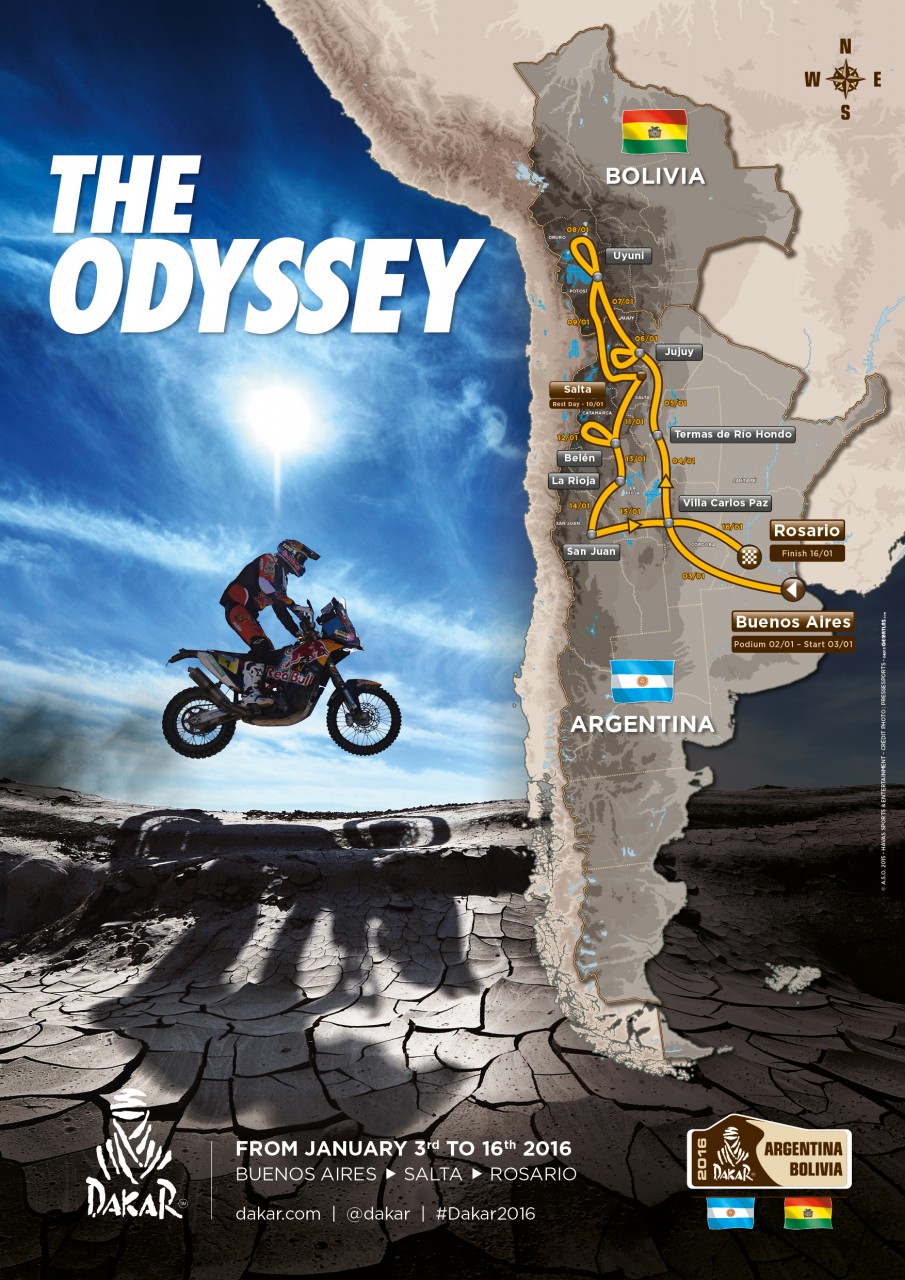
Since the beginning of the year, the cars, motorcycles, trucks and quads have been racing through Argentina. From 7 January 2016, they will be in Bolivia for a few days to disturb and destroy the salt flat of Uyuni.

Dakar 2016 map

A few weeks after the world came together in Paris to agree on leaving behind fossil fuels, fuel is burnt and the air is polluted here, just for fun and sport. Any optimism one could have had after the Paris accord (I had none) volatilizes in the clouds of dust swirled up by the race.

The direct impact on the environment and on archaeological treasures isn’t any better. But Evo Morales, who plasters the whole country with posters explaining “Living in unison with nature means living a good life,” thinks that the Dakar Rally is good advertising for Bolivia. Apart from the fact that the salt flats of Uyuni are the last place in Bolivia that would need any promotion, the money would be better spent if a travel blogger would have his stay in Bolivia financed for a year and would regularly write about the country and the people. Coincidentally, I am available.

Instead, Bolivia allows the sports company ASO to dip into the public purse and even deploys the military for logistics and for securing the racetrack. A practical side effect of the army’s presence is to dissuade anyone who would have thought of staging a protest against this racket.

My main point of criticism about the Dakar Rally is that it is a murderous spectacle, literally. The deaths of drivers can still be booked under risks willingly taken. But in the 37 years of its existence, the Dakar Rally has taken 69 human lives in total. Among them were more journalists than have been killed by some terrorist organizations and several children, who tend to cross streets, particularly if nobody bothered to inform them that this deadly circus would pass through their village.

Nani Roma of Spain and co-pilot celebrate winning the car title of the South American edition of the Dakar Rally 2014 in Valparaiso

“Sorry for all the people we killed. But it was great fun!”

In accordance with tradition, this year’s race began with a driver mowing down a dozen spectators.

If I drove like that, I would (hopefully) have to stand trial. Not so in the case of the Dakar Rally, whose drivers apparently enjoy legal immunity.

(Zur deutschen Fassung.)

Posted in Argentina, Bolivia, Sports, Technology, Travel | Tagged , , | 11 Comments

Film about my Adventures in Brazil

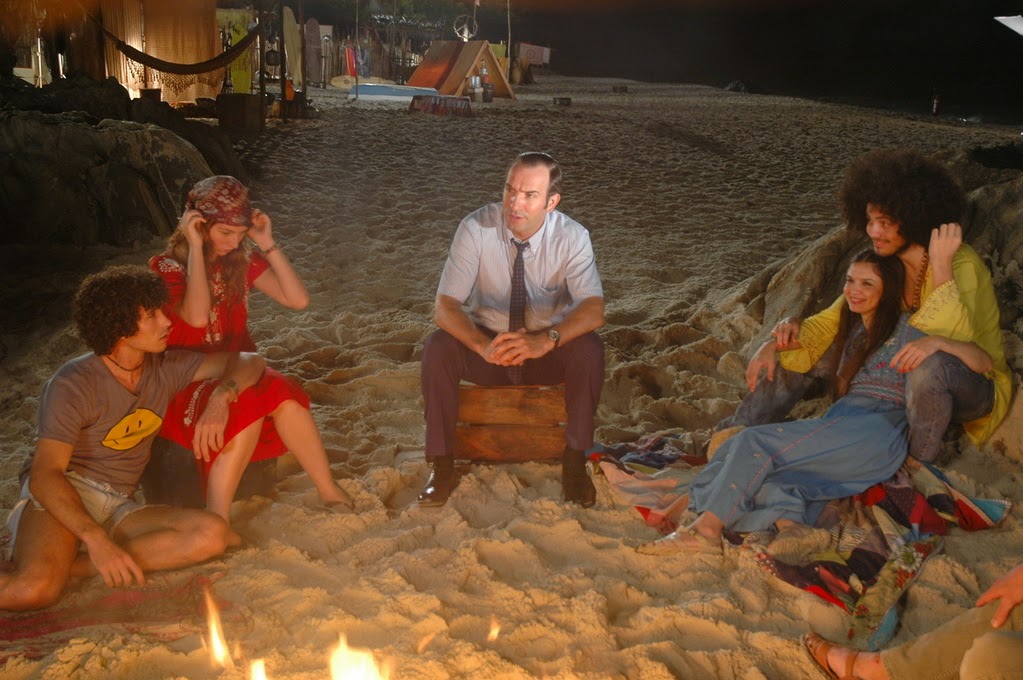
Now that I am safely on a plane from Brazil to Bolivia, I can reveal a bit more about what I have been doing here. Here is the trailer to the upcoming film about my adventures in Brazil:

oss-117-hippies

In Vale do Capão. Seriously, there are still people there who believe they are hippies.

Posted in Brazil, Cinema, France, Israel, Travel | Tagged , | Leave a comment

Fashion Forecast 2016

After I began setting a new trend in 2015, one thing is certain: 2016 will be the year of the hat. Gentlemen, if you don’t want to look old-fashioned next year, I recommend that you ride to the next hatter right away.

hat close Westernhat wide Westernhat wide 2 Western

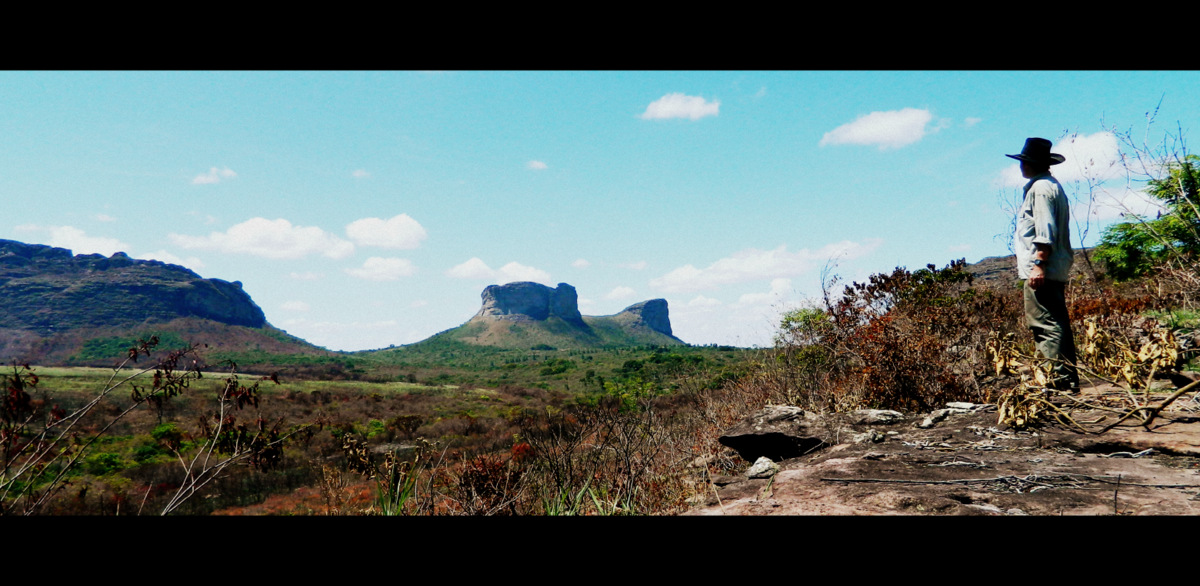
I took these photos during my hike to Morro do Pai Inacio, the prominent flat-topped mountain in the background, in Brazil.

In his new film The Hateful Eight, Quentin Tarantino has already jumped on the stagecoach.

Posted in Brazil, Cinema, Photography, Travel | Tagged , , , , , | 15 Comments

Easily Confused (55) Bill Cosby

Rap star:

ice cube

Rape star:

bill-cosby

Posted in Music, USA | Tagged , , | 12 Comments