
- What a week in South America. Venezuela is moving closer to dictatorship

- and in Paraguay, protesters set the Parliament building on fire.
- Too bad I don’t have time to be everywhere myself. Both would be extremely interesting right now.
- I have been worrying a lot about clean air, clean water, clean atmosphere, but honestly, the pollution that annoys me the most is noise.
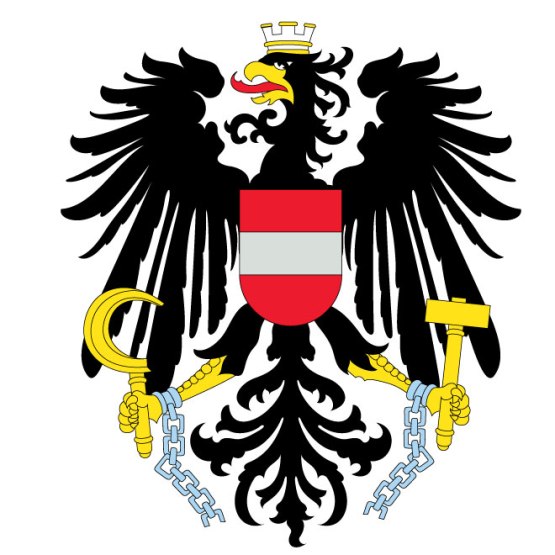
- Why does the eagle in the Austrian coat of arms have a hammer and a sickle? Is he/she a communist?
- I just learned about the “Green Book“, a travel guide published by Victor Hugo Green from 1936 to 1966 that listed hotels, restaurants, barber shops and gas stations in the United States that accepted black travelers and customers.
- In an interview on that subject, someone remembered how, as a little boy, he was happy that his parents always had a pick-nick basket with chicken and melons in the car. Only later did he find out that this was necessary, for they were refused service by most restaurants and supermarkets on the road.
- For stamp collectors, there is an additional reason to ask me for a postcard, a letter or a parcel from South America: exotic stamps.
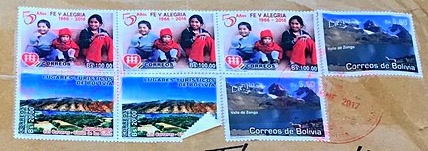
- Are there still people who collect stamps?
- I believe that my early fascination for stamps from the USSR, Tanzania and French Guiana arose my interest both in traveling and in history.
- If you want to join the French Foreign Legion, you should know that you have to do four pull-ups before you can even enter the recruitment office. I couldn’t do it.
Random Thoughts (10)
Posted in Austria, Books, France, History, Human Rights, Military, Politics, Sports, Travel, USA, Venezuela
Tagged Human Rights, Paraguay, racism
3 Comments
Kaunas: European Capital of Culture 2022
As with the choice for 2021, I agree with the election of the European Capital of Culture for 2022. It will be Kaunas in Lithuania.
Sadly and inexplicably, during my whole year in Lithuania, I only found one day to visit Kaunas, the former provisional capital (1920-1940). I don’t want to get into how that – the provisional capital, not my visit – happened, because Lithuanian history is complicated.
In any case, I found the city beautiful, green, inviting. Architecture, culture and history definitely warrant it to be a European Capital of Culture.


I remember thinking back then: “If I ever move to Lithuania again, I’ll move to Kaunas”. Nothing against Vilnius, which is a beautiful city too, but I generally don’t like to live in the same city twice.
And Kaunas had a creative idea to protect bicycles from being stolen.

Or maybe that was art.
There will probably be more of that in 2022, but even before the big year, Kaunas is well-worth a longer visit. Besides the churches, parks and museums, Pažaislis Monastery and the Open Air Museum of Lithuania, both situated by a large artificial lake should be quite interesting.
And you shouldn’t forget the so-called Ninth Fort, which was the place of mass executions of Jews during the German occupation.

I haven’t been to the museum at the Ninth Fort yet. Hopefully, it is better than Grutas Park or even the museum at the former Gestapo prison in Vilnius, where the Nazi occupation, the Holocaust and in particular the Lithuanian participation in the latter is sometimes glossed over in a somewhat revisionist manner.
The most segregated place in America
Even after the Civil Rights Act of 1964 put an end to all official segregation, there are still some places in the USA where black and white Americans don’t mix very much.
I have often heard that Sunday morning is the most segregated time in America, with most churches recruiting their flock from one race only. But in my experience, the most segregated places are barber shops (not only in America, by the way).

I once stayed with some friends in Harlem for a week and went to get a haircut. I stepped into a barber shop, uttered a greeting, and at least 10 dark-skinned heads turned towards me, looking surprised. (I am white.) “How can I help you?” the guy who looked like the head barber asked, breaking the silence after a few seconds during which people kept staring at me. He sounded as if he expected me to ask for directions to the AA meeting. “I would like to get a haircut, if it’s possible,” I explained my presence. The barber was shocked, although one would assume that providing haircuts was the purpose of the institution I had stepped into.
When my turn had come, the barber was noticeably at unease with my hair. He cut away tiny portions, not making much of a difference, and worked very slowly, as if he was afraid of committing a mistake. I tried to encourage him to cut a bit more. “It grows back quite quickly,” I reassured him as if talking about a species of plants he had never seen before. In the end, I paid the 10 $ more for the experience and the conversation because my hair pretty much looked the same. When I got home, I used an electric razor to cut the rest myself.
A year later I lived in Tottenham in London and visited another barber shop which was run and frequented by blacks only. It was simply the closest barber shop to my house. I wore a suit on my first visit and earned scared looks when I stepped into the little shop. “Are you here for the taxes?” was the welcome I encountered. I was happy to negate that. “No, I am just here for a haircut,” I replied, adding my hopefully reassuring smile. The first haircut took around 45 minutes, which is about three times as long as it should. Still, I became a regular. After about half a year, I saw another white client, and I thought to myself “progress at last in the fight against segregation”.
Coca Cola is everywhere
There are not many things that I am addicted to. I can go without cigars for months. Chocolate is a different issue. One week is the maximum, after that I get cranky. But after three days without cola (it doesn’t matter which brand, the cheapest one is usually fine), I am running to the store, longing and lusting for a bottle.
One might imagine that this would lead to withdrawal symptoms on multi-day treks in the jungle or in the desert. But no! At least not in South America. Because here, where the coca for the cola comes from, there is a Coca Cola vendor in any place where at least one hermit is living. Like here in Titicachi, an unjustifiably rarely visited hamlet on the shore of Lake Titicaca in Bolivia.

Actually, Lake Titicaca itself is sponsored by Coca Cola.

In the lake, there is Isla del Sol, on which there are no cars, no motorbikes, not even bicycles. In some nights there is no electricity. But you may already guess what you can find there: yes, the appealing and wholesome soft drink. And not only in the few villages on the island, but also at this store which is hoping for the occasional walk-in customer.


If you are worried about my health by now, you hopefully notice and appreciate that the purchase included two apples, which are a much greater rarity in Bolivia than a bottle of cola. This remote outpost also would have sold beer and Kohlberg wine, by the way.
Driving through the Atacama Desert in Chile, you don’t see a single tree, drop of water or human being for two days. But somebody made the effort to compile tens of thousands of pebbles and assort them in a way that they constitute the famous logo in a size which in South America is usually reserved for statues of Mr Jesus. What a sign of devotion to celebrate the 125th anniversary of Coca Cola!

Here, you see the quasi-religious admiration for Coca Cola (and the lack of rain since 2011 that could have washed away the writing), which is also manifested in cemeteries. Cola bottles are burial objects to allow the dead to refresh and strengthen themselves, like here at the cemetery of La Paz in Bolivia.


In the last photo, you can clearly recognize that the bottle has been opened, allowing the deceased to actually enjoy the cola. In contrast to holy water, the effects of Coca Cola have at least been scientifically proven.
But the most remote and most surprising Coca Cola refueling station was the one I found in Brazil, in Chapada Diamantina National Park. That is something like the Grand Canyon, just in green and with waterfalls.

You cannot reach this valley by car. You have to climb across one of the two mountain ridges, which takes a whole day. Then you can navigate the valley, using rivers for orientation, but at the end you need to cross one of the mountain ridges again to return to civilization. Which is exactly what I did, on a 3-day trek.
The interesting thing about Chapada Diamantina, besides nature of course, is its history. From 1850 to 1880 there was a diamond boom, hence the name. Back then, around 50,000 diamond miners lived here. Now, there are nine “villages” left, whereby each village consists of three or four houses and usually only one family. I came past two of these posts, which was practical, for I had to spend two nights. A house, as rudimentary as it may be, provides at least some protection against snakes, spiders and jaguars.
The first night in Ruinha, I remained dry. But when I reached Prefectura, totally exhausted and covered in sweat, my eyes were sparkling with joy as I saw the wooden sign advertising beer and Coca Cola.

I wouldn’t mind how much the cola was about to cost. Whoever carried it here on foot or with a mule for days, deserves to be compensated generously. Surprise: the can costs 5 R$, a little bit more than one dollar. Not more than at a highway gas station where the truck delivers the drinks.
So I sit down under the mango trees on the meadow in front of the “village” and get drunk with two cans. But actually, I get more intoxicated by the view that I have on Morro do Castelo – and I regret that I didn’t pack any cigars.

For the highest Coca Cola advertisement, probably worldwide, we have to return to Bolivia. This hut is below the summit of Chacaltaya at 5,200 meters.

Now it probably won’t surprise you that 3,700 km from the continent, on Easter Island, I could get a refreshing glass of cola in this bay after hiking in the relentless sun for a whole day.

(Yes, I took all these photos myself. And behind all of them, there are much more stories to be told. Please leave a comment below, telling me which one interests you most, so that I can get cracking on that story first. – Hier geht es zur deutschen Fassung dieses Artikels. )
Posted in Bolivia, Brazil, Chile, Easter Island, Photography, Religion, Travel
Tagged Atacama, cemetery, Chacaltaya, Copacabana, Health, Isla del Sol, La Paz, Titicaca
22 Comments
10 FAQ on Getting Married in Germany – updated 2023
As part of my very popular series of legal FAQ, I now address a subject which I am personally completely opposed to: How to get married in Germany? My personal advice would be not to do it. Don’t throw away freedom like that! On the other hand, as a lawyer, I do of course know that sometimes marriage is the easiest way to get a residence permit for Germany.
Before asking a new question, please read through the many comments which may already answer your questions. And if you find these FAQ useful or if you ask a new question, it would be very nice of you to support this blog. Thank you!
1. What are the legal requirements to get married?
The requirements to get married in Germany are determined by the laws of the bride’s and the groom’s respective countries (Art. 13 I EGBGB). If requirements of a foreign law cannot be met, Art. 13 II EGBGB does however allow for exceptions in most cases and reverts to German law.
The requirements under German law are a minimum age of 18, that you are not closely related with each other, and that you are both single/widowed/divorced.
2. I don’t understand all this legal stuff. I just want to know what documents I need.
It doesn’t get much easier, unfortunately, because that too depends on the country of your citizenship. But generally, you need:
- a passport or an ID card,
- a birth certificate,
- a statement from your home country that you are eligible to marry under that country’s laws (“Ehefähigkeitszeugnis”) or, for countries that don’t provide such a document,
- proof that you are single, and
- a court order exempting you from the requirement of the “Ehefähigkeitszeugnis” (§ 1309 II BGB), which is much less complicated than it sounds.
Problems may arise if your home country is not cooperative or if documents have been lost/destroyed in a civil war or a war. Under these exceptional circumstances, required documents can be replaced by affidavits.
Notice that you do NOT need a residence permit for Germany. Even if you only have a “Duldung”, you are eligible to get married. However, in these cases it is often problematic to prove your identity and that you are single without providing further documents.
3. Heck, that’s complicated! You are known as a super-lawyer, don’t you know some tricks?
Honestly, in many cases it’s easier to get married in another country and then return to Germany afterward.
Within the EU, Denmark is known as the country where it’s easy and quick to get married. Sometimes, particularly when visas are not an issue, it’s also an option to return to the home country of the bride or the groom to get married there. – I am curious to hear about your experiences in other countries. If you have any, please leave a comment below.
Foreign marriages are generally recognized in Germany.
4. I live abroad, but I am engaged to a German. Will I get a visa to get married in Germany?
Usually yes.
Your future spouse would need to prepare all the documents and submit them to the local “Standesamt”. Once they have approved everything and given you an appointment for the wedding, you can apply for a visa to travel to your wedding. After that, you apply for a residence permit as the spouse of a German (§ 28 I no. 1 AufenthG).
5. I am only on a tourist visa, but I met this cute German guy. Can we get married right away?
You actually CAN get married while on a tourist visa in Germany.
The real problem however is that the 3 months are usually not enough to get all the paperwork from your home country together, to get it translated, recognized, filed and then to get an appointment for the wedding with the “Standesamt”. One pro-tip is to go to a smaller, non-touristy town where you don’t have to wait for months. And don’t insist on a weekend wedding. Huge weddings are overrated anyway.

6. I got married to a German outside of Germany. Can I move to Germany now?
Only if you move together. You cannot use your marriage to a German as a reason to move to Germany if he/she doesn’t move with you. By trying to do so, you would kind of show that you are not living together, which is the requirement to get a residence permit pursuant to § 28 I no. 1 AufenthG.
If your German spouse is already living in Germany, you can apply for a residence permit for the purpose of family reunion. You need to show a basic knowledge of the German language at the A1 level (§§ 28 I 5, 30 I 1 no. 2 AufenthG), with many exceptions for specific cases (§§ 28 I 5, 30 I 3 AufenthG) depending on the country of origin, the educational level or other personal circumstances of the applicant. – But the A1 level is really easy and if you ever want to apply for German citizenship, you need to speak German anyway.
There are NO financial requirements like minimum income.
Remember that you don’t need any visa or permit if you live in or move to another EU country together with your German spouse, which is a viable option in cases in which the German Consulate denies a visa.
7. Will I get German citizenship when I marry a German?
No.
But if you are married to a German citizen, you can apply for German citizenship after living in Germany for only 3 years. For more on German citizenship, please check my relevant FAQ.
8. You keep talking about brides and grooms. What about same-sex marriage?
Since 2017, same-sex couples can get married in Germany. All the previous and following answers, including the ones about immigration, apply equally to same-sex marriages.
If you got a same-sex civil partnership before 2017, you can now convert it into a marriage by simple declaration (§ 20a LPartG).
9. What about a religious wedding?
Whatever you do in your church/mosque/synagogue/temple has NO legal significance whatsoever. You can have a huge party, with lots of Bible, beer and brouhaha, but in the eyes of the law, you won’t be married.
In Germany, you can only get married at the “Standesamt” of your municipality. Well, I shouldn’t say “only”, because there is an exception in Art. 13 IV 2 EGBGB: Two foreign citizens living in Germany can get married in Germany by a person appointed by the country, of which at least one of the future spouses is a citizen. And that foreign country can also appoint religious figures for that purpose.
Remember that all of this pertains to getting married IN GERMANY. Whether a religious wedding performed ABROAD is recognized in Germany, that’s a totally different question. And sometimes a very tricky one.
10. You were right. Getting married was a mistake. Can I get an annulment or a divorce?
Please check my FAQ on divorce law in Germany.
Posted in Family Law, German Law, Germany, Immigration Law, Law
Tagged legal advice, wedding
228 Comments
If you insist on free advice, you will get it
You might think I am stupid because I give heaps of legal advice for free in my FAQ. I could earn millions by charging for this service. But I am a nice guy, and it makes my heart warm and fuzzy when I can help people in need.
But I get really cranky in three cases: (1) when people try to take advantage of it by asking question after question after question; (2) when people think they are entitled to my advice; and (3) when people ask questions which they could have found the answers to in my previously published FAQ. Do a bit of reading around my blog before bothering me, please.
This lady for example has been asking questions for several months now. I answered one or two. But she always manages to make her life more dramatic and come up with new questions:
Dear Andreas i am Pregnant with a German man WHO is married to an Afghani Lady and has two Kids. His wife had put a Case of Strangulation and Attempt to murder Against him Since october Last Year. He has two daughters and when his wife and Kids were taken away from him and were Sent to Foster Parents he got both his wife and Kids back in complusion, through he döes not Wants to live with his wife but is with me for so Long, although he is staying with his wife and Kids under The Same roof for The Sake of Kids and i being a flight attendant from india Based in india just fly on Duty to Frankfurt and back and so Meet him there… He has also got me pregannat with his Child, i have a Indian Passport and i can not Marry him and come easily to Germany. I Heard his Child is German and has all The rights over him, how can i Stay in Germany äs i have a Schenegan Visa only. Although he is searching for a House for us but he told me that unless his Criminal Case is over he can not file for a divorce from his wife äs his wife döes not speak even a Single word of German and has not Tried to integrate Herself in The German Community nor Tries to learn Anything äs only Copying and Taking care of her daughters at Home is what she has Been Doing for The past 8 years. My boyfriend is working for The Last 13 years and is Self Sufficient but is not Earning that much that he can take care of me and our Child, i dont know Good German but i am Learning and have cleared The Test Till B1 Level, Hope there is some possibility for me to learn and make my Family in Germany. I really love him and do not Want to Leave him at this Stage, pls suggest how to move about with my paper work of staying back in Germany and living with him on behalf of my Child WHO is The only link we have although we are not married yet. Thanx a lot in advance.
I pointed out that there are a lot of questions and issues involved (and a whole lot of legal misconceptions to be rectified) and offered a full consultation for my standard fee of 200 EUR. That was something which this prospective client didn’t like at all. She told me that she refuses to pay and asked to suggest a cheaper lawyer instead.

That’s brazen. Not willing to pay me for my services, but asking me to go around looking for other lawyers. I could have pointed her to my guidelines on how to find a good lawyer, but I decided to dispense some free advice after all:

Free (and quick) advice may not be the best advice, but you get what you ask for.
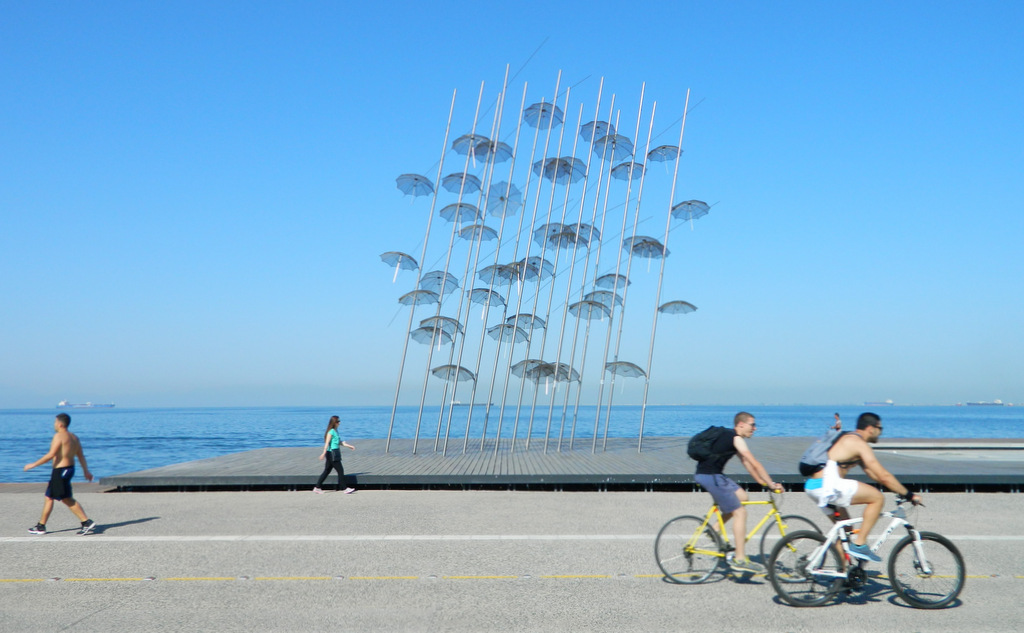
You need a parasol?
When I went to Greece, I forgot to take my stylish hat. Walking along the promenade in Thessaloniki and suffering from the sun, I found relief in the form of public parasols. Good that it was early in the day, so there were still plenty of parasols left.

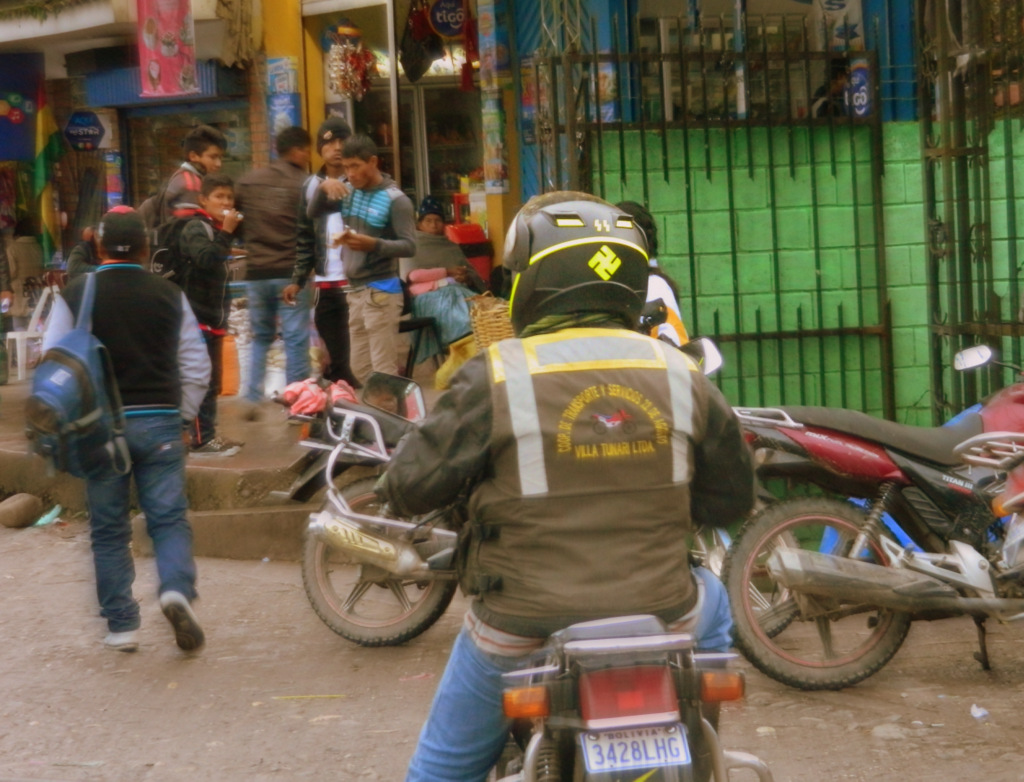
The Nazi-taxi in Bolivia
I recently wrote how football teams in South America are distinguished by their political affiliation. Apparently, the same is true for taxi drivers.
This moto-taxi driver in Villa Tunari in Bolivia wore his conviction on the helmet so visibly, that it was easy to choose a different driver.
A rather ugly contrast to the taxi driver in Santa Cruz, whose father had been a Jewish refugee from Germany.
Seriously, I think the Villa Tunari Moto-Taxi Drivers’ Association would do well to expulse that idiot.
Instagram 1.0
How our grandmothers got their cool Facebook profile photos.
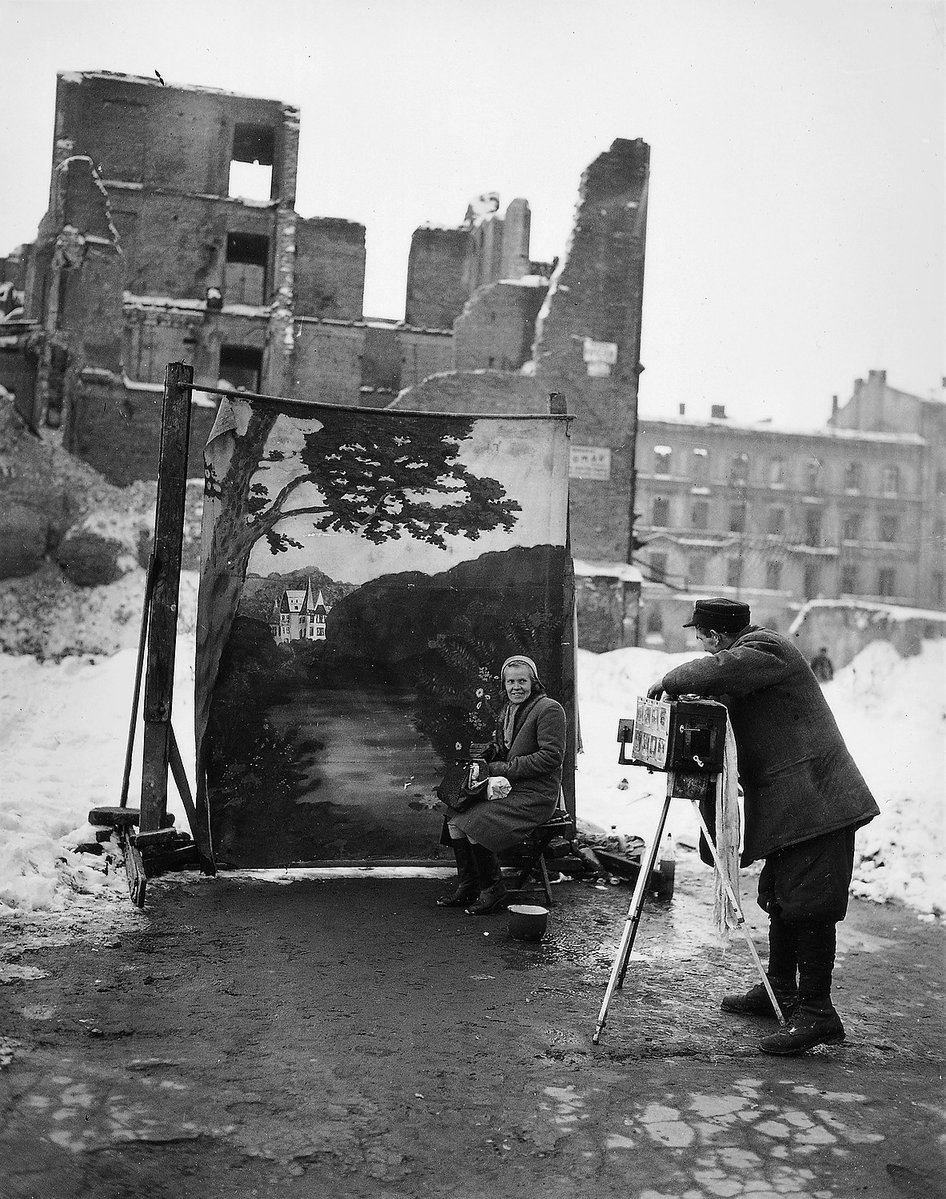
(Warsaw, Poland in 1946.)

 The Happy Hermit