Whenever someone brings up the argument of Europeans allegedly having a superior culture or history, I have to think about the whole continent being dotted with mass graves from the Baltics to the Balkans.
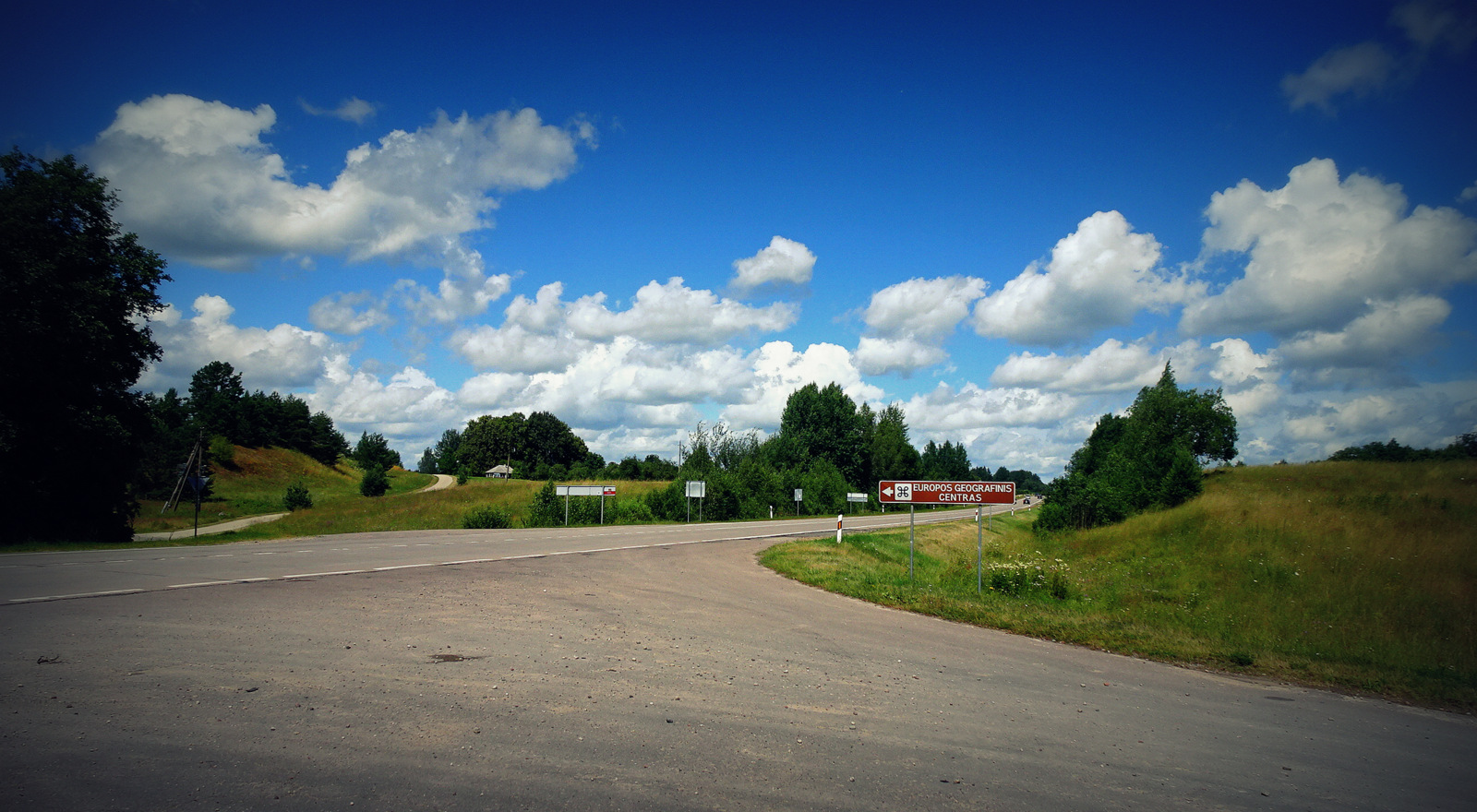
It felt more like the middle of nowhere than the center of Europe, when the bus driver dropped me off at this intersection in the Lithuanian countryside.
All day, I had been wondering about the police presence at train stations in the east of Poland. And then, while on the train, the cell phone chirped, providing the explanation.
Not the welcome I would have expected, but coming from Germany, I do appreciate the gesture of being warned before being shot.
The request to “Turn back immediately!” sounded rather harsh and insistent, but at that point I had been awake for 14 hours, had been on the train for 11 hours and was physically and mentally tired. Honestly, central Poland is not exactly the most exciting landscape in Europe. Flat and wide. Very wide. Unlike my tireless cell phone, I had neither the power nor the energy to turn back immediately. Besides, where to? I am on a mission to find the center of Europe!
So I just got off the train in Augustów and did what I’m particularly good at: Appearing innocent. I noticed that the police only checked people who looked like foreigners. I quickly asked a fellow passenger for a cigarette, lit it and put on a football-induced sad face. That way, I could pass for a Pole and sneak through the – admittedly not very rigorous – checkpoint.
In the park, I sponged a few megabits from the public Wi-Fi to catch up on what I had neglected to do before the trip: reading the news. That’s how I learned that Poland had set up a restricted zone on the eastern border, with foreigners no longer being allowed to enter. (Hence the text message in English, and apparently only to foreign cell phones that were traveling in the forbidden zone.)
Many people aren’t aware of this, but we are all foreigners, in most countries of the world. In Poland, I might still try to argue that we are all European, but I am not sure if the soldiers in the forest are up for such discussions. Also, as a German who is conscious of his country’s history, I don’t really want to be marching around Poland uninvited. The grandmothers and grandfathers of contemporary Poles have suffered enough from what my grandfathers once did here.
But it is a sad development, because I had really been looking forward to long walks along the Augustów Canal. With that canal leading to Belarus, that might not happen.
Fortunately, I found an accommodation that didn’t care about names or documents. Or rather, only about documents depicting ancient kings.
And now I’m sitting here, in the middle of the Suwałki Gap, and I can neither go forward (because I would be shot) nor back (because then I’d have to admit that I was in the restricted zone). For an employee on annual leave, that would be the dream situation, because “unfortunately” you have to extend your leave and can’t return to the office or the factory floor.
It honestly amazes me how unimaginative most people are. It’s so easy to “accidentally” “lose” your passport while on vacation in a faraway country. Or to “miss” the return flight. And poof, you have to extend your stay by two weeks! I once missed the last ferry from the Azores and had to stay on the island for a whole three months. That was really bad luck. 🙃
Now you want to ask: But how can I afford such long holidays? The answer lies in the very first photo, in my mobile phone. With each iPhone that I didn’t buy, I financed a trip around the world. The good old Nokia phone cost me 6 euros and has been doing its job for 15 years now. It is particularly practical when traveling, because the battery lasts so long, you don’t even need to bring a charger.
Now I have to find out what type of activities are still allowed in an exclusion zone.
I just wanted to interrupt my journey to Podlachia for a an hour or so, to stretch my legs and to grab something to eat.
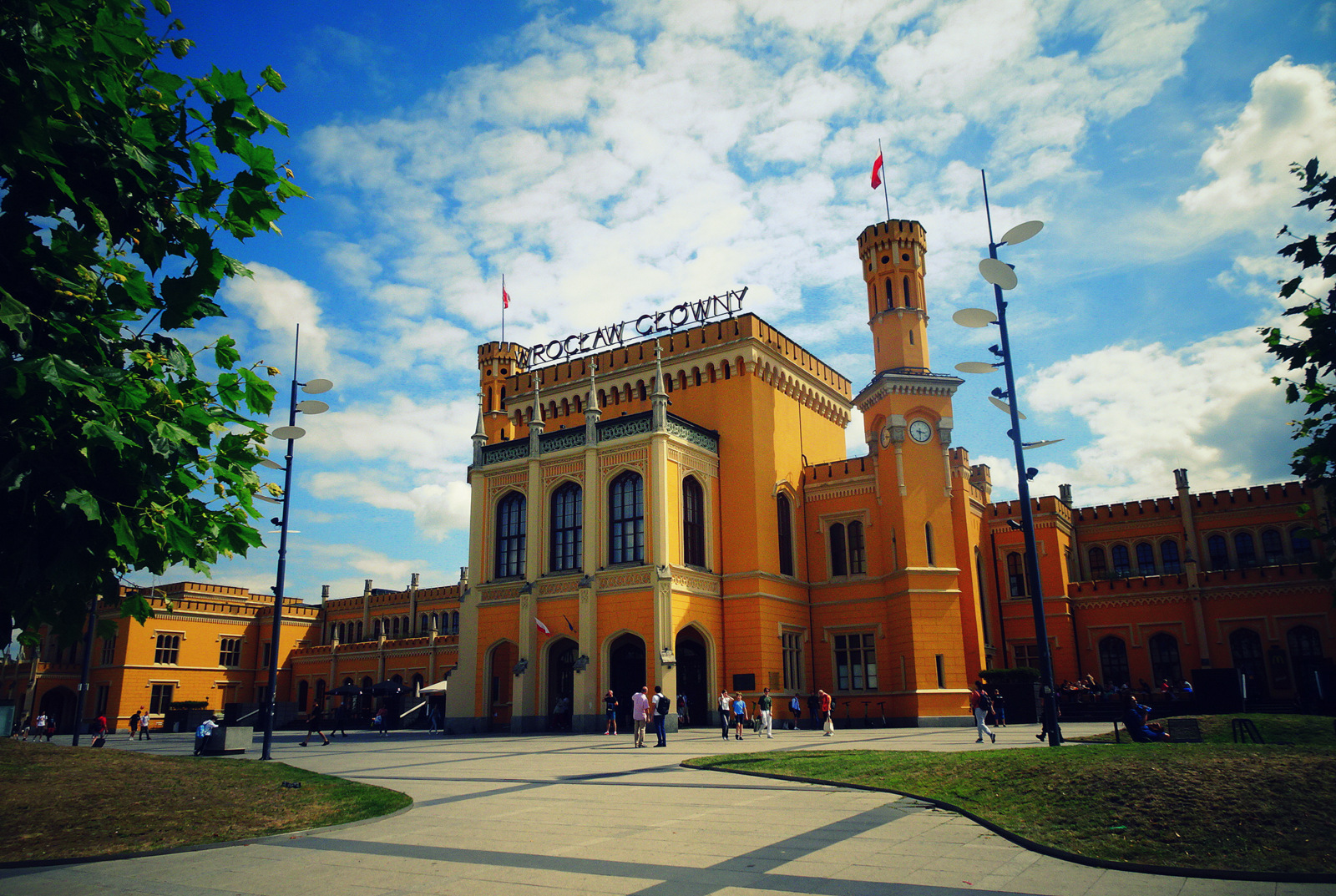
But when I stepped out of the train station in Wrocław, I thought: “Wow. If the train station already looks like a castle, then I am curious what the rest of the city looks like.”
So I decided to stay for two nights.
As I hadn’t prepared this, I have just been wandering around aimlessly. But what an interesting city this is! (More photos coming soon.)
Last year, my birthday coincided with the search for an apartment – ultimately successful -, so that I couldn’t embark on any of my classical birthday trips in 2023. Instead, I only went hiking for the whole day, which I still turned into three articles (part 1, part 2, part 3).
Since then, I have returned to practice as an attorney which sadly comes with a strict statutory 2-week limit on vacations (§ 53 I Nr. 2 BRAO). But those two weeks I am going to use fully and to the last minute to rejuvenate the cherished tradition of birthday trips.
Wow, there are still a lot of points missing. That will easily take a few more years, but you are not in any rush, are you? At the end of June, I will be heading to Poland, where the geographical center of Europe is located in Suchowola, in the far north-east of the country, according to the oldest calculations of 1775.
Suchowola is a small town of only 2200 inhabitants, but that’s the beauty of this series: the fact that I am randomly assigned to points that I would otherwise never have visited, thanks to the strange and obscure work of mathematicians, astronomers and geodesists. And then I have to see what I make of them.
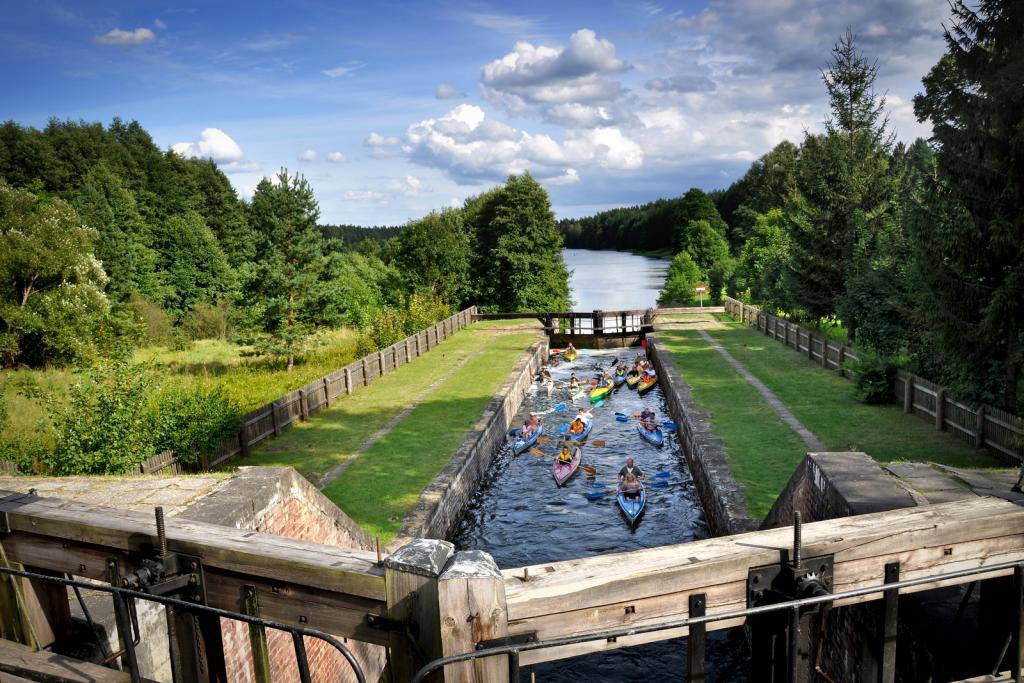
Besides, I can’t imagine Poland being boring anywhere. At least not for a traveler interested in history. If necessary, I will expand the radius by a few kilometers, which will put Augustów on our map. That town is by the Augustów Canal, which, because this blog brings together fans of canals from all over the world, would make a worthwhile hike.
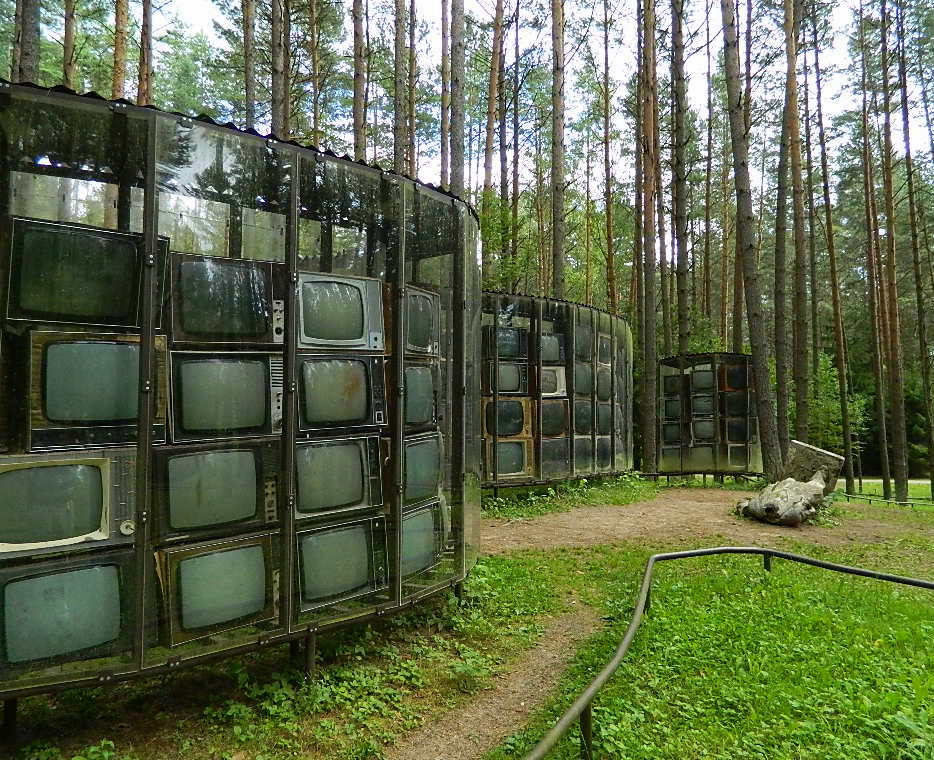
One of the centers is in Europe Park, a truly wonderful open-air museum.
But Lithuania has – apparently the calculations differ a little bit – a second place that claims to be the geographical center of Europe: Purnuškės.
I don’t know how I could have missed this second point when I was living in Lithuania.
In any case, I’m looking forward to returning to this lovely country. The one year I spent in Vilniusfelt like living in paradise. If Lithuanian wasn’t intentionally the most complicated language in the world, I might even have stayed.
Lithuania also fits in perfectly with my birthday trip, as Lithuanians celebrate their national holiday on July 6th. Wandering through the forests on this day, you will come across people in traditional costumes and with flowers in their hair, dancing through the countryside. And in the evening, the whole country gathers to sing. The Baltic peoples once even defeated the Soviet Union with singing.
The only center of Europe missing in the Baltic States will be on the island of Saaremaa. But at my leisurely pace, all of this would be too much for a two-week trip. (My travel guideline: If you have two weeks, only plan for one week. The rest will fill up spontaneously). Besides, these Estonian islands are so enchanting that I don’t mind spending two weeks just on Saareema.
Let’s see if it is still as complicated as it was in 2012 when I lived in Lithuania. Back then, you went to the post office, where the letter was weighed and the postage calculated at the first counter. With this information, you went to the second counter. There you paid the right amount and got a receipt. With the receipt, you went to the third counter, where you got the stamp. Then you had to go back to the first counter, where the strict postal inspector checked that you stuck the stamp on the correct letter. When I wanted to hand over the letter, I was told: “This is an international letter, you can’t post it here. You have to go to the international department of the central post office.” There I had to fill out a form for each letter and have it checked and stamped by the international mail commissioner. When I finally wanted to post the letter, I was admonished: “You’ll have to post it yourself. There are boxes outside.” It still felt like in the Soviet Union.
Ever since I returned to practice law, I get invited to all sorts of fancy events. Usually, I neither care much about them, nor do I have the time.
But when I saw the name of the place where the Bar Association of Saxony held its annual reception, it was clear that this was a coded invitation to the most exclusive club of the world. So I did show up.
Looking at my attire, I really don’t understand why they double- and triple-checked my credentials. (I mean, I have come a long way from my hobo days.) But in the end, I managed to charm my way inside.
You may not have heard much about the Bilderberg conference. In fact, you shouldn’t have, because it is top secret. No photos, no quotes, nothing. You don’t even swap business cards.
But, as I usually get invited to anything only once, I have nothing to fear anyway. So, I am going to spill two of the most important lessons I took away from the conversation with a fellow lawyer.
Lesson one:
He told me how he had once been extremely close to a burnout and had taken a few days off over New Year’s, to reflect on his options and to decide whether to continue in that field. He came to the conclusion that it was really just a handful of clients that caused all the stress and the headache. The rest were okay, some of them even nice.
When he returned to the office, he sent a letter to all the annoying clients, telling them that he no longer wished to work with them.
Sure, he lost business and revenue. But he regained joy and energy and peace of mind. After all, there are more important things in life than work and money.
He went on to give me his most important advice. Once a quarter, he goes through his list of open cases, firing the most annoying 10% of the clients. Because like in most other businesses, it’s a few clients who cause most of the headache. (And they are probably the ones who don’t even bring in much revenue.)
Funnily, clients are often surprised when I terminate my relationship with them. “You can’t do that,” they exclaim, apparently in the erroneous belief that they have hired me for life. I even know lawyers who aren’t aware of that possibility and believe that once they accepted a case, they have to stick it out.
Obviously, with experience you get pretty good at identifying such people before you take them on. In life and in business, the word “no” should be used as often as possible. But, like in relationships, some people seem nice at the beginning, and their darker sides only becomes apparent over time.
Lesson two:
As we were standing at the dessert buffet, the same lawyer told me about Quarkkeulchen, a local Saxon specialty.
These things are an absolute delight. A revelation. A feast of happiness and yumminess.
Maybe I should combine these two lessons and only accept clients who know how to cook Quarkkeulchen and a prepare a full platter for our first consultation.
Time management. To-do lists. Multi-tasking. 24/7 availability. Many of you are desperately trying many different methods to squeeze more productive time into your days or weeks, to get more done, and to become more efficient.
Forget about it! You cannot manage time. Time flies. You cannot stop it. And before you know it, you’ll be dead.
If you feel that you have too much to do, that you are over-worked and close to a burnout, you need to manage something else than time. You need to manage your tasks. Because time is a fixed value, it is the amount and the scope of the tasks accepted by you (or handed to you) which determine how much you work and how exhausted – or relaxed – you are.
There is only one proven method of “time management”: Do less!
Because of this, the word “no” is the most important management tool.
Most of us instinctively say “yes” when we are asked if we want to do something. With new tasks come new clients, new responsibilities, more income, more excitement. Sometimes, it even feels good when people ask you, because it shows trust in your abilities.
Also, it seems to be socially expected to say “yes” when somebody asks you something. “Do you want to come to my party?”, “could you help me with this sales project?” or “would you like to watch my children over the weekend?” If you say “no”, you will seem anti-social, suspicious, selfish, weird. You may simply say “yes” out of a reflex or because you don’t want to lose a friend or a job. You are too afraid to say “no”.
I have developed a few techniques how to deal with this problem:
Say “no thanks” instead of “no”. If someone asks you to watch their children over the weekend and you say “no thanks” in a very nice and genuine way, you make it sound as if they had offered you a favor but you graciously declined. I have often experienced that people don’t even know how to react to that. They just walk away, totally confused. Try it!
Another reply I sometimes use is the famous line from Herman Melville’s Bartleby the Scrivener who coincidentally also works at a law office. When asked to do something, he politely responds with “I would prefer not to.” However, I have found this to be less effective than a simple “no thanks”, as it sometimes elicits the question “why?”
Don’t reply at all. This works very well with e-mails, letters and voice messages (another reason not to answer your phone). Every day, I delete some of the e-mails I receive from prospective clients without replying to them. I know I won’t have the time, or I am not interested in their case or they sound as if they don’t want to pay for my services. You find this impolite? It isn’t. Nobody has an entitlement to your time. It is your time and you alone decide what to do with it. You do not owe anything to anybody, especially not an explanation.
Reply late. That’s a less drastic, but very effective version of method no. 3. Reply after a week or after a month. Usually the project will have found somebody else to do it. Or it will have turned out that it wasn’t that important after all. You will innocently ask “does this still need to be done?” and to the reproachful account of how somebody else already completed the job, you will reply – with a thankful smile – “that’s good, I am happy to hear that.”
I understand that all of this is harder when you are in employment because you have signed a contract that gives somebody else some control over some of your time. My first advice therefore is to avoid employment, but I realize that this is not always possible. When your manager asks you to do something which you don’t find worth your time, I suggest you reply “Sure I can do that, but then I cannot work on something else in the same time. Which other project/client do you wish me to abandon/neglect?” Make sure that your boss realizes that every hour can only be spent once and that every task they give you comes at the expense of some other task.
The last point is also an important point for your personal life. You may think “it doesn’t really cost me much to go to this party which I won’t enjoy, but it will make other people happy” or “well, it’s only one evening of the week”. But always remember: Whatever you do, it prevents you from doing something else at the same time! This something else could be something that you would enjoy much more. The fancy economic term for this is “opportunity cost”.
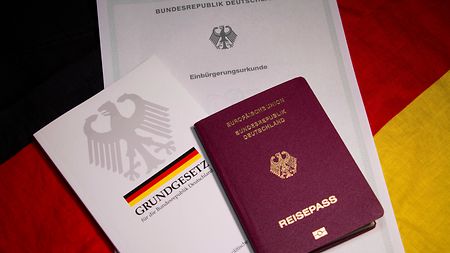
With the new German citizenship law entering into effect in June 2024, the number of people applying for naturalization will increase substantially.
For one, you no longer need to give up your primary citizenship. This requirement, though already riddled with as many holes as a piece of Swiss cheese caught in the crossfire between two competing cartels, has hitherto prevented many people from applying, although they would have been eligible already.
Second, with the standard residence requirement being reduced from 8 years to 5 years, many people have suddenly become eligible for naturalization who otherwise would have needed to wait for one, two or three more years.
This news has been met with jubilation, but also with dread. Many foreigners living in Germany, having fully adopted the national pastime of complaining, quickly voiced concerns that the application process will now take even longer, that you won’t even get an appointment at the citizenship office, and that in the end, it will still take years until you receive one of the most useful passports in the world.
Me being a very untypical German, I don’t like to complain, but to give constructive advice instead. In this article, you will learn the tricks to speed up the process of obtaining German citizenship.
First of all, is German bureaucracy really that bad?
The processing time in Germany varies between three months and several years. In the future, it should become quicker, because the whole part about giving up your primary citizenship (which required cooperation from your home country and which often slowed down the process considerably) will fall away.
Why the enormous difference in processing times?
There are mainly two reasons for that.
One is the difference between applicants.
Take, for example, an Austrian applicant, who is fluent in German, has a steady job, no criminal record, and who – as an EU citizen – was never required to give up his/her primary citizenship. Obviously, the caseworker will only need to look at that file once, approve it, and that’s it. One hour of work.
The next applicant is a man from Russia with a wife from Syria and with three adopted children from Somalia, Eritrea and Bolivia. They all want to keep their primary citizenships, each of them arguing specific hardships based on the situation in their home country. The background checks reveal that the husband was in the KGB and is sought for plutonium smuggling in Transnistria, to where he cannot be extradited. The wife’s brother spent 5 years in Guantanamo, which by itself doesn’t mean that he is guilty of anything, but additional checks are warranted. As to the adopted children, there are formal and legal problems regarding each of the adoptions, requiring a new proceeding to get the adoptions recognized in Germany before the children can be naturalized together with their parents. Also, the two parents are academics at German universities, and as such can’t show an uninterrupted work history, because that’s not how academia works. And – most seriously – they have a criminal record for once having barbecued on their balcony after 10pm. Obviously, this file will need to be looked at and attended to at least 30 times. It will require correspondence with 27 different national and international institutions, each of which is going to take their time.
The other reason for the difference in processing times is the federal system of Germany.
In Germany, citizenship law is federal law, but the application of citizenship law (with exceptions, of course) lies within the purview of the states. The 16 states, all being their own independent entities with their own constitutions and parliaments and kings and such, have each decided to deal with the application of federal law in a slightly different manner. Some of the states carry it out on the state level, but most have delegated it further to counties, regions or municipalities. This means that in some states, you deal with a large bureaucracy, while in others, it’s the mayor of your village who approves your passport if you are a nice guy.
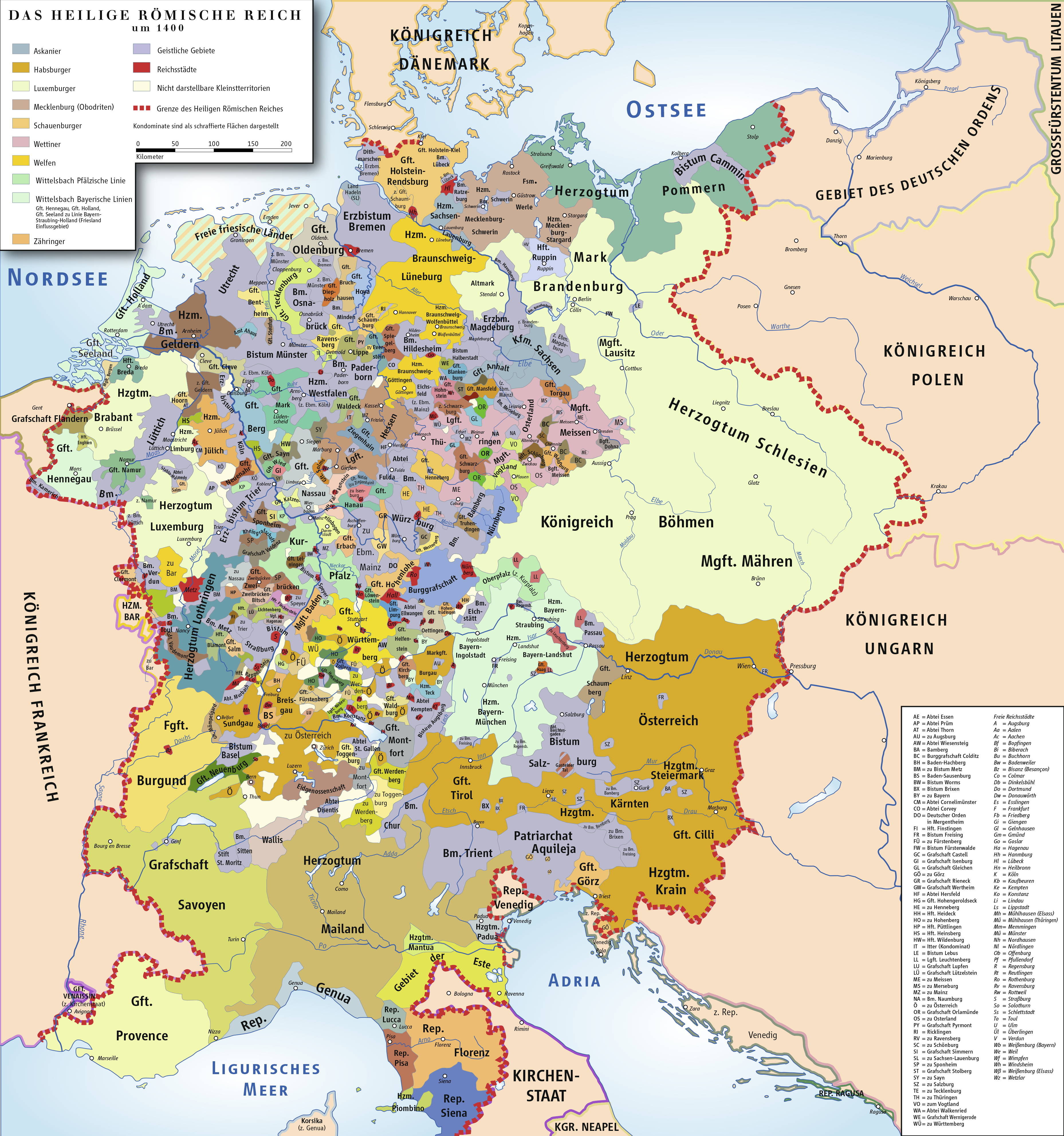
Admittedly, this sounds a bit complicated, but it’s the political system we inherited from the Holy Roman Empire. The last time somebody tried to change that, it resulted in the Napoleonic Wars, and therefore ain’t nobody never gonna touch that delicate balance again.
But before you complain about this arcane political system, consider that this is also the reason why Germany has so many castles. If you don’t like it, just move to a country without castles. Iceland, maybe, or Tuvalu.
Lastly, let’s keep in mind that historically, the world has suffered much more from German efficiency than from German inefficiency, if you know what I mean.
Well, even if my case is super easy, what can I do if I can’t get an appointment?
Simply file by mail or electronically.
The decision whether electronic filing is permitted, is of course decided at the county/municipality level, as explained above. But even when not, you can download the application form, add all the attachments and mail them in.
I honestly don’t understand why people think that they always need an appointment for everything. Almost anything can be done by writing or electronically. Sooner or later, you need to show up in person, for the oath of allegiance and the compulsory mug of beer, but that’s towards the end of the process.
By the way, as a lawyer, I can always file electronically, with any government agency in Germany, because we have our secret intranet, connecting all government offices, courts, lawyers, notaries, bailiffs, customs, police, submarines, and so on. So if you want to be fancy and do everything online, just hire a lawyer. – The only two things where I can’t help electronically: If you want to get married or if you need to go to prison, you still need to show up in person. And that should tell you something about the similarity between these two.
The most important advice when you file for German citizenship
There is one thing you can do to make your application stand out and increase the likelihood of it being processed faster.
Whether you file in paper or electronically, please only file when you have all the documents ready. And then, please organize everything neatly.
In the case of filing in paper, put everything in one folder, neatly organized, numbered and indexed. With a cover sheet that lists all the attachments, what they are and where they can be found in the folder. And if anything is out of the ordinary, for example your employment history, or if you need to explain something in your criminal record, proactively explain it instead of waiting.
If the caseworker receives your documents in a way that he/she can check immediately that they are complete, he/she might process your application right away. If, on the other hand, you send a box full of crumpled paper, with some payslips there, pages of your rental contract there, and a note promising that you will submit the things which you can’t find right now, among them your birth certificate and your language exam, then nobody will even bother starting to work on your application.
“I don’t know what you need, so I just sent everything I have.”
Same goes for the electronic filing: Only file when you have everything ready. Make neat scans, not shaky cellphone photos with bad lighting. Save them as PDF files and give them descriptive names. Birth_certificate_John_Doe_2Jul1973 instead of PIC_3275. If your employment contract has 8 pages, compile them into one PDF file instead of sending 8 separate files. And same here: Include a cover letter in which you address all the things that need to be addressed, where a simple “yes” or “no” on the form does not suffice, as it often won’t.
In my mind, all of this is common courtesy. But sadly, many people seem to have no experience of working with documents. (You should see the things I receive, with half of the documents being upside down, blurred, too dark, or where you can see the pizza in the photo.) Too many people prioritize speed over thoroughness. That never pays, because it will just lead to more work, more questions, and more delays.
And if it really takes too long, you can sue.
Now, we finally come to the famous Untätigkeitsklage.
Having said all of this, there are cases in which the government really does take too long. Some people have been waiting for several years for their citizenship application to be processed. And still, they haven’t heard anything.
In this case, you can sue the German government. While you can usually only sue after your application has been denied, § 75 VwGO (the Administrative Courts Code) allows you to sue the government if they have not made a decision about your application within 3 months from filing.
The Administrative Court then asks the government what is taking them so long. And this is why it’s so important that you file a comprehensive application. Because if the government can show that relevant information was missing or that some of your documents weren’t translated (especially if they are in Chinese or Amharic), they have a good reason for the delay.
If, on the other hand, the government has no good explanation – and usually they just respond with “too much work, not enough staff, we’re working on it” -, the court will give them a short deadline (a few months at most), in which the government will have to make a final decision.
Does the Untätigkeitsklage really work?
Well.
By going to the Administrative Court, your case will move from an overworked and understaffed government office to an overworked and understaffed court.
So, please don’t expect that your lawyer will file an Untätigkeitsklage, and you will be invited to pick up the German passport next week. The case before the court will also take several months.
Whether the way through the Untätigkeitsklage is really faster in your specific case is impossible to tell. After all, it could be the case – very theoretically – that your application was just about to be approved tomorrow. In this case, filing the Untätigkeitsklage didn’t speed up anything.
But there are two things I can say for certain:
One, filing the lawsuit definitely does not slow down the process. Most citizenship offices prioritize the cases in which a lawsuit has been filed, because replying to the court and explaining the delay costs them much more time.
Second, most people waste a lot of time by thinking and pondering and debating whether they should file the Untätigkeitsklage, sometimes for years. You should either do it, or you shouldn’t. There are arguments for both options. But nothing has ever been gained by mulling over the same question a gazillion times.
How much does the Untätigkeitsklage cost?
My fees for putting together a personalized Untätigkeitsklage are around 2,000 €. On top of my fees, the Administrative Court will charge court fees in the area of 800 €.
And that’s one reason why you shouldn’t file this lawsuit lightly. If you are living a happy life and it doesn’t make any difference whether you will receive the German passport this year or next year, then please don’t waste the money. After all, you may not even be in a hurry. Or you may think that the money is better spent on a holiday rather than on a lawyer. (Although this particular lawyer really likes holidays as well.)
If, on the other hand, you need German citizenship for a certain job or career, or you want to run for city council or parliament in the next election, then it may well be worth it.
And if you win, the court can order the government to reimburse you for lawyer’s and court fees (§ 161 III VwGO).
My advice
To summarize it, I would reserve the Untätigkeitsklage for cases where you haven’t heard anything for more than half a year and you have personal reasons for urgency. Especially those filing for German citizenship from abroad are often kept waiting for several years, which I find unacceptable.
The Untätigkeitsklage is not restricted to citizenship law, but applies to all interactions with the German government. For some types of visas (especially family reunion), the German consulates sadly often operate extremely slowly. If you find yourself in such a situation, you may want to consider hiring a lawyer to speed up the process.
I have also put together a set of FAQ on the Untätigkeitsklage, covering the general questions I receive all of the time.
Readers of this blog will surely have noticed that I am a rather conservative, almost boring type of person. So, naturally, I have no experience whatsoever with illegal drugs. Even the dealers usually notice this from a mile away, which is why I am very rarely offered any of the nasty-smelling herb. (Really only during global economic crises, as in chapter 31 of my report from Lisbon.)
I don’t even know the difference between cannabis, marijuana, hashish and weed, and I don’t know which of them you smoke, inhale, inject or eat as cookies. In any case, I am against it. Against all of it.
But even as a staunch opponent of drugs and as a friend of a clear mind, at some point you have to realize that the battle is lost. After all, you can’t wage a permanent war on drugs against your own population.
Bielefeld Police Department engaging with teenage potheads.
Also, putting people in prison for something that causes far fewer deaths than alcohol, road traffic, vicious dogs and – ironically – the war on drugs seems somewhat disproportionate to me. The limited and expensive capacity of the police, prosecutors, medical experts, lawyers, courts, prison and parole officers could probably be put to better use than chasing hashish hippies across Hasenheide.
A drug raid in Berlin-Neukölln.
In short, not everything that smells and is annoying has to be made a criminal offense.
And that’s exactly what the congenial German government thought. They introduced a bill to parliament, which, after some huffing and puffing, was passed as the Cannabis Act.
The result is, how could it be different in Germany, a carefully crafted compromise. You will be allowed to smoke more than before, but of course not everything, not always, not everywhere and not by everyone. In effect, we are somewhere between Woodstock and Singapore.
Now, because I don’t use any drugs myself, I am super efficient and I can already answer your most pressing questions about the new German cannabis law, before you even ask them:
Possession of cannabis will be legal up to a quantity of 25 grams. Because I’ve never tried the stuff myself, I don’t know whether that’s a lot. I am more of a chocolate addict, and 25 grams is barely enough for half an hour.
However, this only applies to adults and only for personal use. Children and teenagers still have to resort to beer and other alcoholic beverages. Personal use means that you are not allowed to sell the substance, give it away or share it. In this respect, cannabis users have it better than tobacco smokers, because the latter find it difficult to say no when they are asked for a “have you got a fag?” If, however, someone wants to take a puff on your joint, you can easily say no: “Sorry, dude, but the law only allows personal use.”
Friends or couples can still go out together with a joint if they have previously converted it into joint property. Then, but only then, they can also consume it together. However, the weight of the joint must not exceed 25 grams, otherwise the person carrying it would be in breach of the possession limit.
“This new cannabis law is so much fun!”
Because the purchase and sale of cannabis are still prohibited, the question arises as to where the stuff should come from. As befits a nation of foresters, fairy tales and allotment gardens, Germany is relying on home-grown cannabis.
Adults with residence or habitual abode in Germany are permitted, if they have at least one of the former for at least 6 months, to keep three cannabis plants in their home if they keep and maintain them in a species-appropriate and ecologically friendly manner. These three plants may be kept in addition to the 25 grams as long as they remain unharvested or the cannabis yield obtained from the harvest does not exceed a further 25 grams. The good old three-field system of crop rotation seems like a great idea, so that the three plants are ready for harvest at different times. However, it is important that no single plant is ever harvested for more than 25 grams.
As these three plants apply per adult in the household (if they have been living there for at least 6 months), couples or flat-sharing communities can of course grow more plants, whereby it is important to clearly assign each plant to a specific person.
As the photo insinuates, I assume that many people will soon be thinking of their previously neglected grandparents and other distant relatives: “Grandma, you always had such a green thumb! Can I put these plants in your house?” For me, these unexpected social side effects are always the most exciting aspects about new legislation.
If there are children or teenagers in the house, the plants must be kept in rooms to which the little rascals have no access. However, because the regulations on species-appropriate plant care require that the plants are exposed to sunlight and therefore face south, south-east or south-west with a window (to be cleaned every two months), in practice, especially in small apartments, you will often have to make a choice: Kids or weed. I predict a decline in the birth rate.
It also becomes tricky when a parent dies. Because then, the partner and the children usually are the heirs. According to the principle of universal succession, the inheritance is transferred directly to the heirs at the time of death, without any further legal act and without the need for consent. And, poof, the children are the owners of a drug plantation. The problem is minor for children under the age of 14, as they are still exempt from criminal culpability. But teenagers will already have one foot in jail.
“We still need to keep you for a few years, until you are big enough for the electric chair.”
You also need to be careful when moving house: As you are not allowed to carry more than 25 grams of cannabis in public, you can hardly move with three flowering plants at the same time. But you are also not allowed to give them away, because that would not be personal consumption. So you have to move gradually or destroy the plants. (I only know this from other plants, but as far as I have tried, you can destroy them by not watering them for several weeks.)
Now, of course, everyone wants to know: Where can you get the seeds or cuttings to grow your own weed? You can either order them, even via the internet, but only from EU member states. Alternatively, even if you are not a member, you can go to a so-called growers’ association and purchase up to seven cannabis seeds or up to five cuttings, but no more than five seeds and/or cuttings in total, of which no more than three may mature into fully-fledged plants.
And that brings us to the growers’ associations. This is a form of agricultural cooperative, which, at least for the East Germans among us, brings back fond memories of collective farming. I think the word “Anbauvereinigung” is a wonderful one, but I guess in popular parlance, people will refer to them as cannabis clubs.
So far, the rules that I outlined have been fairly relaxed and liberal, almost anarchic. But with cannabis clubs, the law on associations comes into play, and that’s where the buck stops and the fun ends. Growers’ associations may only be run as non-commercial associations or cooperatives, must be registered and require official permission to grow cannabis. The associations may have a maximum of 500 members, all of whom must be of legal age and have been residents in Germany for at least 6 months. They may only supply the cannabis to their members, who must also take over the cultivation themselves and personally, but collectively.
Founding meeting of a growers’ association.
Each member may obtain no more than 25 grams of cannabis per day and no more than 50 grams per month from this collective cultivation. Members between the ages of 18 and 21 may only obtain 30 grams per month, but only up to a THC content of 10%. If a member turns 18 or 21 in the course of a month, the maximum monthly supply is adjusted in proportion to the quotient between age, number of days in the month in question, and 30 or 50 grams, respectively. For members whose place of birth lies more than six time zones east of the Central European timezone, the birthday itself is not counted.
Furthermore, these clubs need a youth protection plan (although they are not allowed to accept juvenile members), a prevention officer, only board members with no criminal record, a fence around the plantation that is at least 2.24 meters (or 1.78 meters in Saarland) high and which obstructs the view, a wastewater protection plan, a security plan, a supply chain officer, a clubhouse, a flag and an embarrassing name such as “Weedmacht”, “Little Red Riding Reever” or “Sieg High”.
Rothenburg municipal health & safety inspectors visiting a growers’ association.
The cannabis cultivation compound must be at least 200 meters away from schools, kindergartens, playgrounds, hospitals and so on. Lost places experts like me are currently in great demand to find suitable sites, such as old factory buildings. I expect an enormous boom, particularly in the eastern German states, but also a general revitalization of rural areas.
Incidentally, on the premises of the cannabis clubs, you are not allowed to consume cannabis. That would really go to far, wouldn’t it? Also, unlike in parliament, no alcohol may be served there.
Oh, I almost forgot the most important question: Where can you actually smoke the 25 grams? At home, of course. But only if there are no children or teenagers around. Nor if children or teenagers could be watching, e.g. from a neighbor’s house, from the street or from a passing train.
However, people are allowed to smoke weed freely in public. You only have to keep a distance of 100 meters from schools, kindergartens, playgrounds, children’s and youth facilities, sports facilities, churches and military bases. In pedestrian zones, smoking is only permitted from 8 pm, but then all the night until 6:59 am.
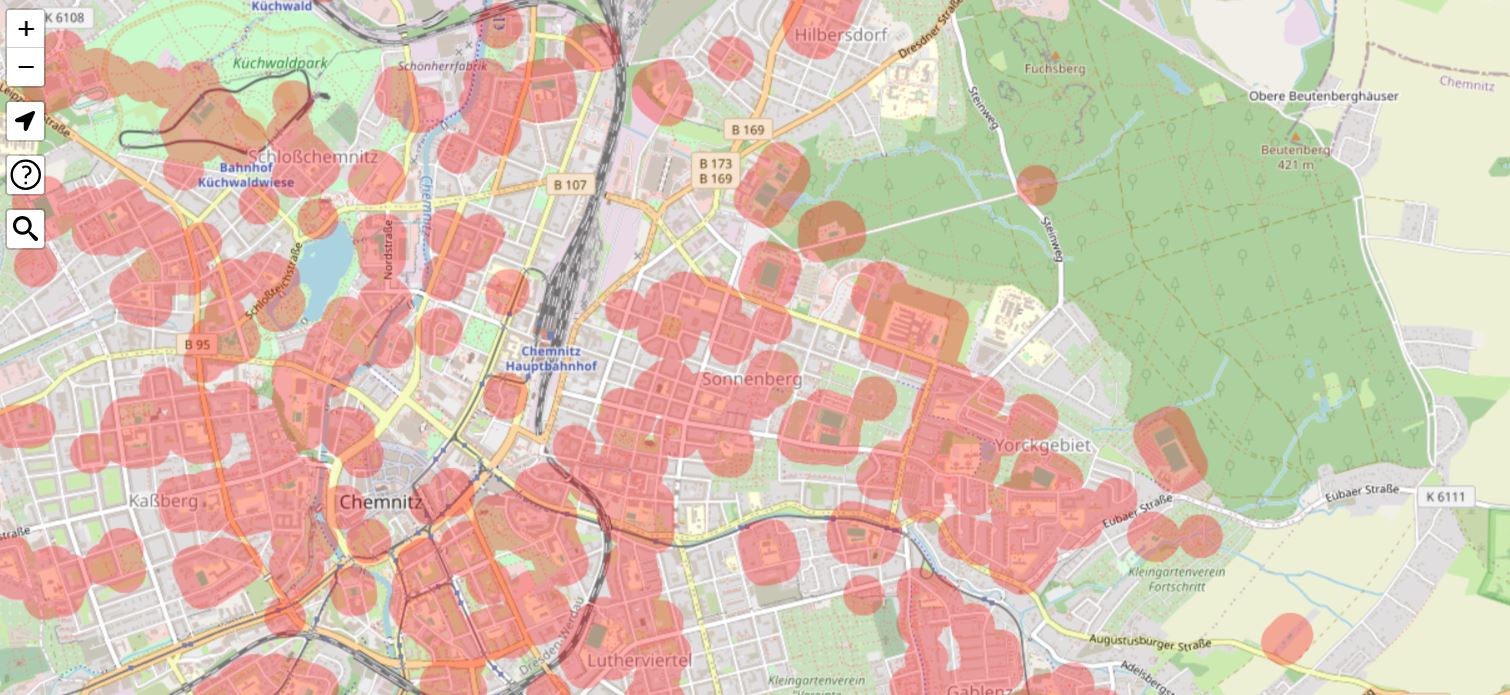
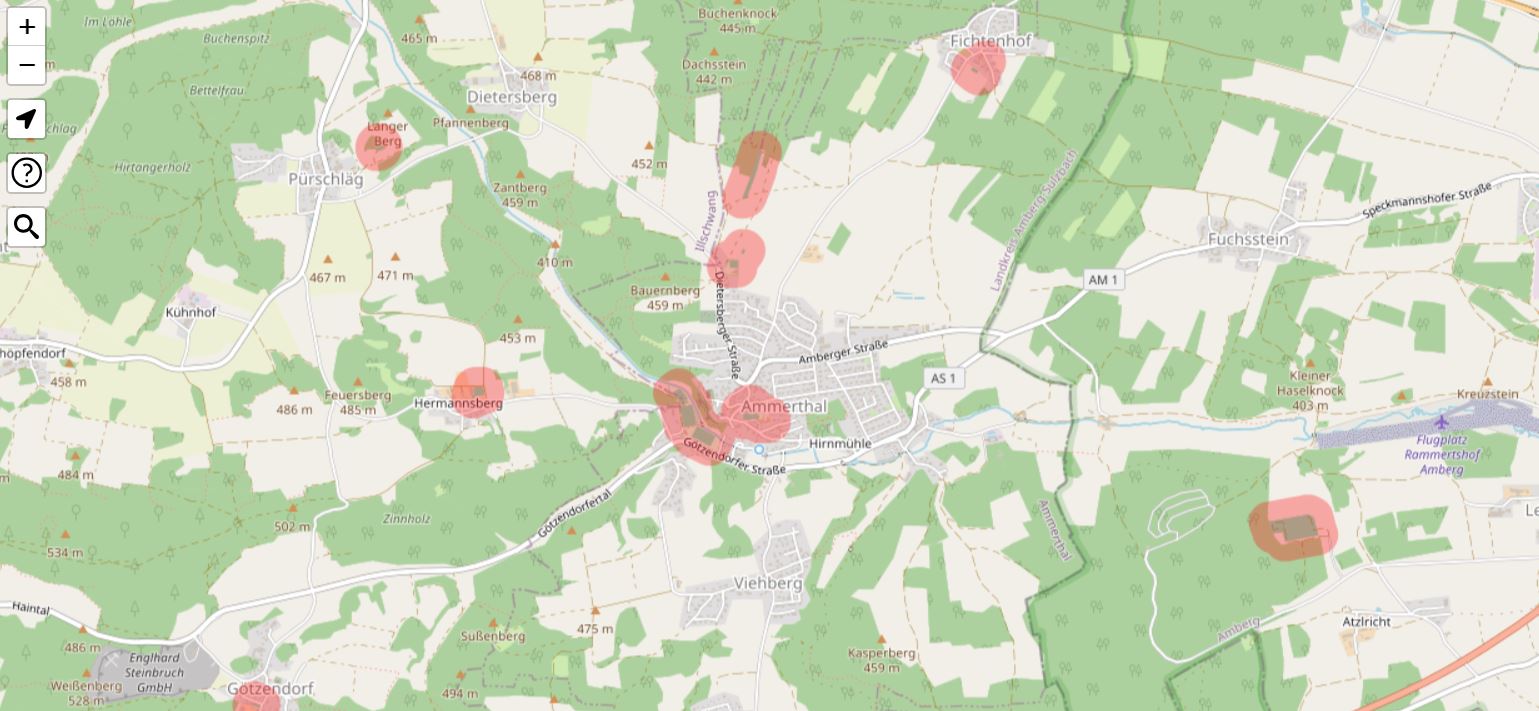
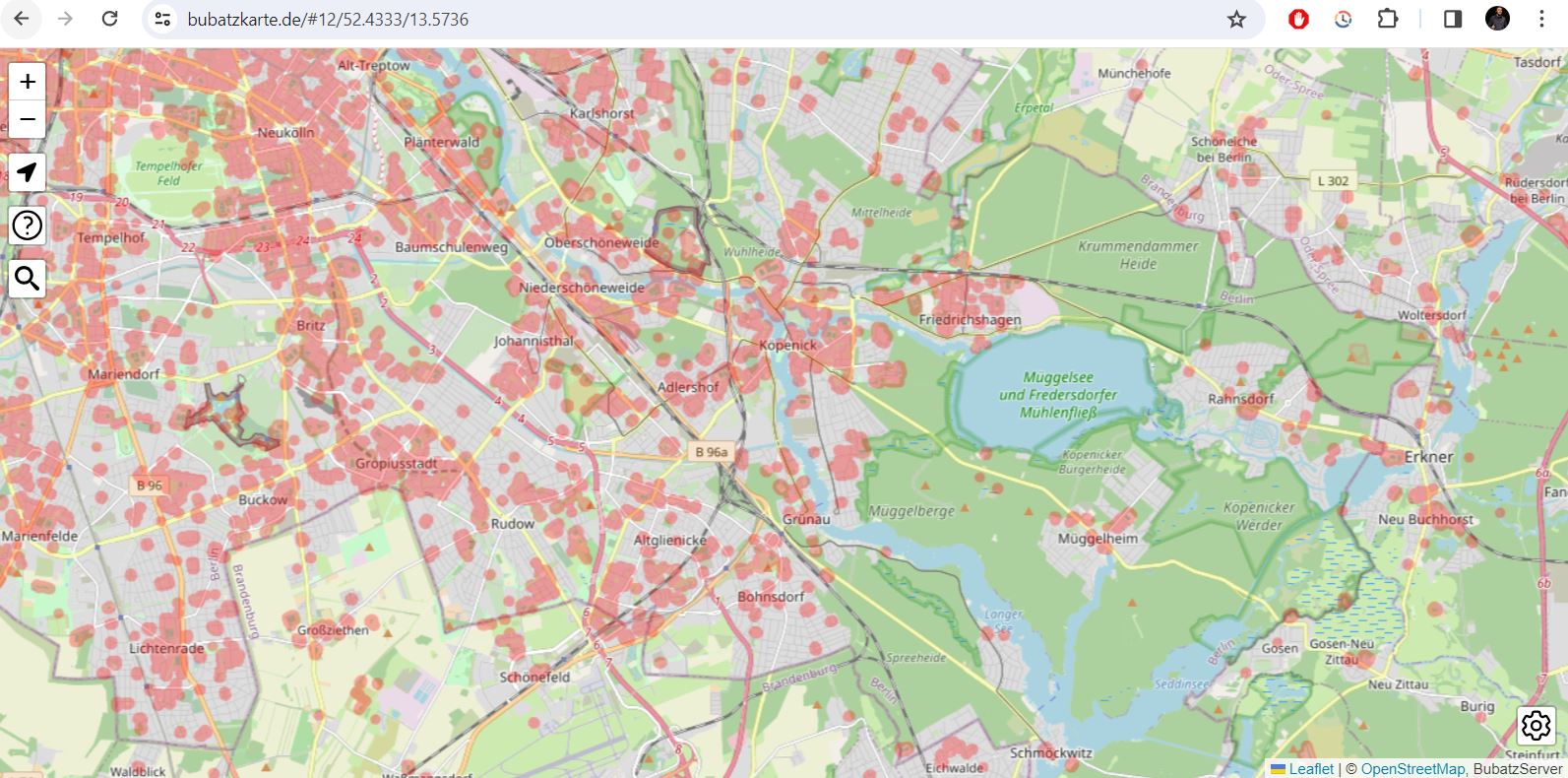
You can use this interactive map to test your neighborhood for drug suitability. You’ll be surprised how many kindergartens and playgrounds there are in your neighborhood that you hadn’t even noticed before.
I have run the test for my apartment in Chemnitz. The red zones are no-go zones. You can clearly see the advantage of living near a forest. I wouldn’t be surprised if I soon encounter many more people on my daily walks in nature than before.
For comparison, I also looked at the village where I grew up. The difference is striking and illustrates the advantages of the countryside.
For people in Berlin, I assume that beautiful Müggelheim will soon become very popular.
Keep in mind, though, that these maps work with automatically generated material and therefore overlook many children’s and youth facilities as well as sports facilities. You are really only safe in the great outdoors. Unless a a group of children is passing by. Or a school bus.
In principle, all bus stops where school buses stop must be kept cannabis-free on school days from 6:30 to 8:30 and from 12:15 to 16:30. Except during school holidays. If school is canceled, e.g. due to flooding, the child cannabis protection is only waived if the school cancellation was communicated at least 24 hours in advance, because otherwise it cannot be ruled out that a child did not hear about the cancellation and will still be at the bus stop. During school hours, cannabis consumption in the car is therefore prohibited as long as you are driving on a route that is also frequented by school buses. Unless you have tinted windows. In Thuringia, September 20th is World Children’s Day, which is a smoke-free public holiday. Special rules also apply in the northern German states whenever the wind force exceeds 6 Beaufort. The 100-meter zone is then adapted to the direction of the wind. In westerly winds, for example, it is shifted 20 meters per Beaufort point to the east. Vacation resorts, health resorts, church institutions, independent public corporations, universities, religious communities not recognized as churches, NATO military training areas, the German Patent and Trademark Office, embassies, consulates, chambers of trade, dyke associations, ski lifts and the Federal Waterways and Shipping Administration may issue their own regulations, which must however (except in the case of federal authorities or foreign, supranational and international institutions) comply with the administrative regulations of the respective state. In areas with elevated radon levels in the soil and in former uranium mining areas, both of which are particularly relevant in Saxony, smoking is only permitted from the 2nd floor upwards.
One issue has, in my opinion, not been sufficiently clarified: What happens in the border regions if there is no prohibited facility within a radius of 100 meters in Germany, but there is a kindergarten or a playground less than 100 meters away on the Polish, Belgian or Czech side?
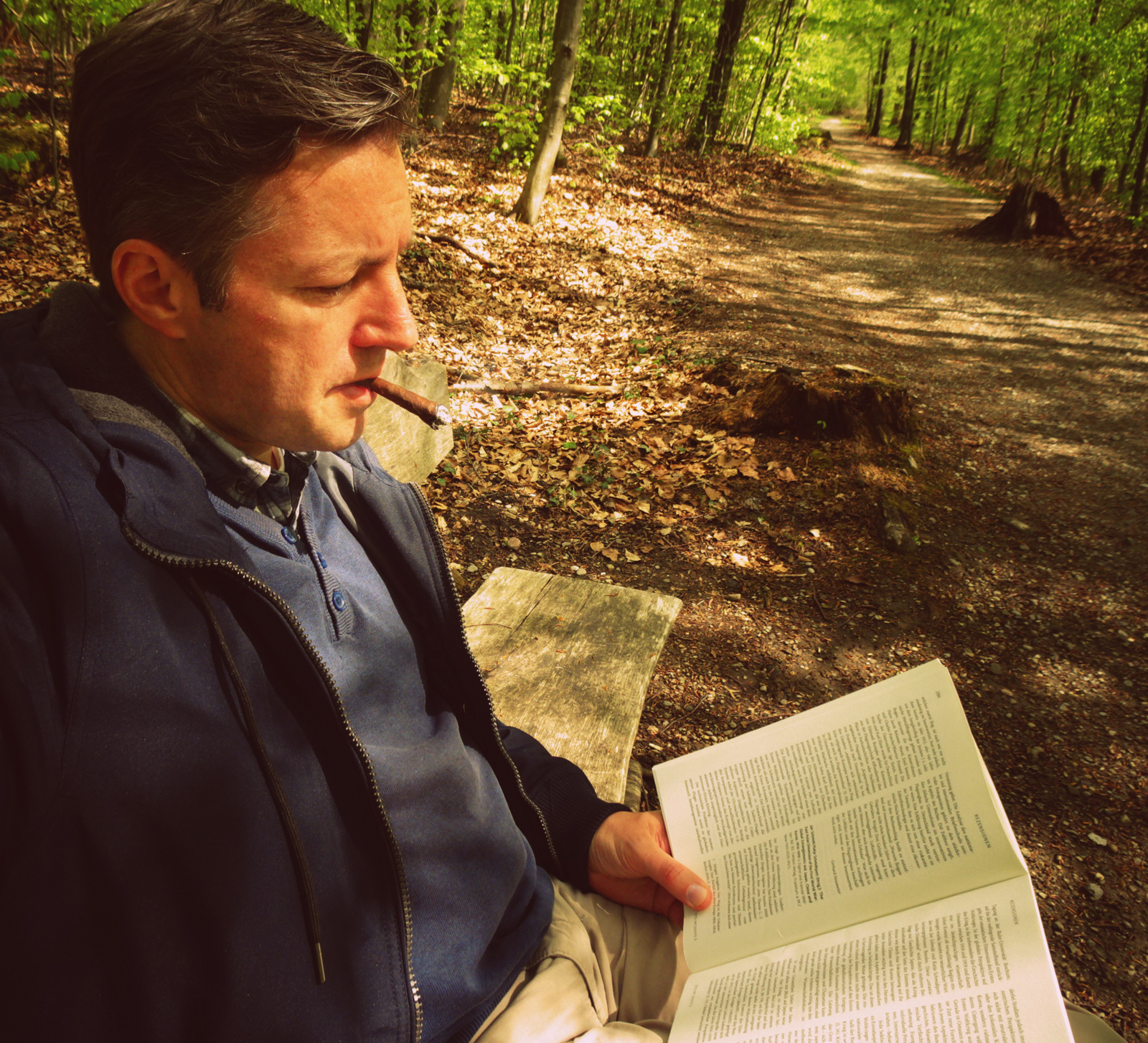
In effect, smoking weed will become something really bureaucratic and uncool. I myself will stick to tobacco, where I can rely on the Supreme Court decision BVerfGE 80, 137, which ruled that anything you do in the forest falls under the “unhindered unfurling of one’s personality”, protected under Art. 2 para. 1 of the German Federal Constitution.


















 The Happy Hermit