
With the new German citizenship law entering into effect in June 2024, the number of people applying for naturalization will increase substantially.
For one, you no longer need to give up your primary citizenship. This requirement, though already riddled with as many holes as a piece of Swiss cheese caught in the crossfire between two competing cartels, has hitherto prevented many people from applying, although they would have been eligible already.
Second, with the standard residence requirement being reduced from 8 years to 5 years, many people have suddenly become eligible for naturalization who otherwise would have needed to wait for one, two or three more years.
This news has been met with jubilation, but also with dread. Many foreigners living in Germany, having fully adopted the national pastime of complaining, quickly voiced concerns that the application process will now take even longer, that you won’t even get an appointment at the citizenship office, and that in the end, it will still take years until you receive one of the most useful passports in the world.
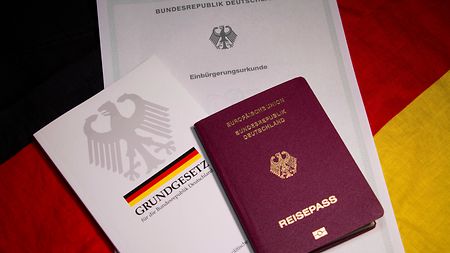
Me being a very untypical German, I don’t like to complain, but to give constructive advice instead. In this article, you will learn the tricks to speed up the process of obtaining German citizenship.
First of all, is German bureaucracy really that bad?
No, it’s not.
I get bewildered looks when I make that claim, but do you know how long it takes to process citizenship applications in your home country? No, you don’t, so let me tell you: It takes around one year in Australia, 14 months in Canada, and between 18 and 24 months in the USA.
The processing time in Germany varies between three months and several years. In the future, it should become quicker, because the whole part about giving up your primary citizenship (which required cooperation from your home country and which often slowed down the process considerably) will fall away.
Why the enormous difference in processing times?
There are mainly two reasons for that.
One is the difference between applicants.
Take, for example, an Austrian applicant, who is fluent in German, has a steady job, no criminal record, and who – as an EU citizen – was never required to give up his/her primary citizenship. Obviously, the caseworker will only need to look at that file once, approve it, and that’s it. One hour of work.
The next applicant is a man from Russia with a wife from Syria and with three adopted children from Somalia, Eritrea and Bolivia. They all want to keep their primary citizenships, each of them arguing specific hardships based on the situation in their home country. The background checks reveal that the husband was in the KGB and is sought for plutonium smuggling in Transnistria, to where he cannot be extradited. The wife’s brother spent 5 years in Guantanamo, which by itself doesn’t mean that he is guilty of anything, but additional checks are warranted. As to the adopted children, there are formal and legal problems regarding each of the adoptions, requiring a new proceeding to get the adoptions recognized in Germany before the children can be naturalized together with their parents. Also, the two parents are academics at German universities, and as such can’t show an uninterrupted work history, because that’s not how academia works. And – most seriously – they have a criminal record for once having barbecued on their balcony after 10pm. Obviously, this file will need to be looked at and attended to at least 30 times. It will require correspondence with 27 different national and international institutions, each of which is going to take their time.
The other reason for the difference in processing times is the federal system of Germany.
In Germany, citizenship law is federal law, but the application of citizenship law (with exceptions, of course) lies within the purview of the states. The 16 states, all being their own independent entities with their own constitutions and parliaments and kings and such, have each decided to deal with the application of federal law in a slightly different manner. Some of the states carry it out on the state level, but most have delegated it further to counties, regions or municipalities. This means that in some states, you deal with a large bureaucracy, while in others, it’s the mayor of your village who approves your passport if you are a nice guy.
Admittedly, this sounds a bit complicated, but it’s the political system we inherited from the Holy Roman Empire. The last time somebody tried to change that, it resulted in the Napoleonic Wars, and therefore ain’t nobody never gonna touch that delicate balance again.
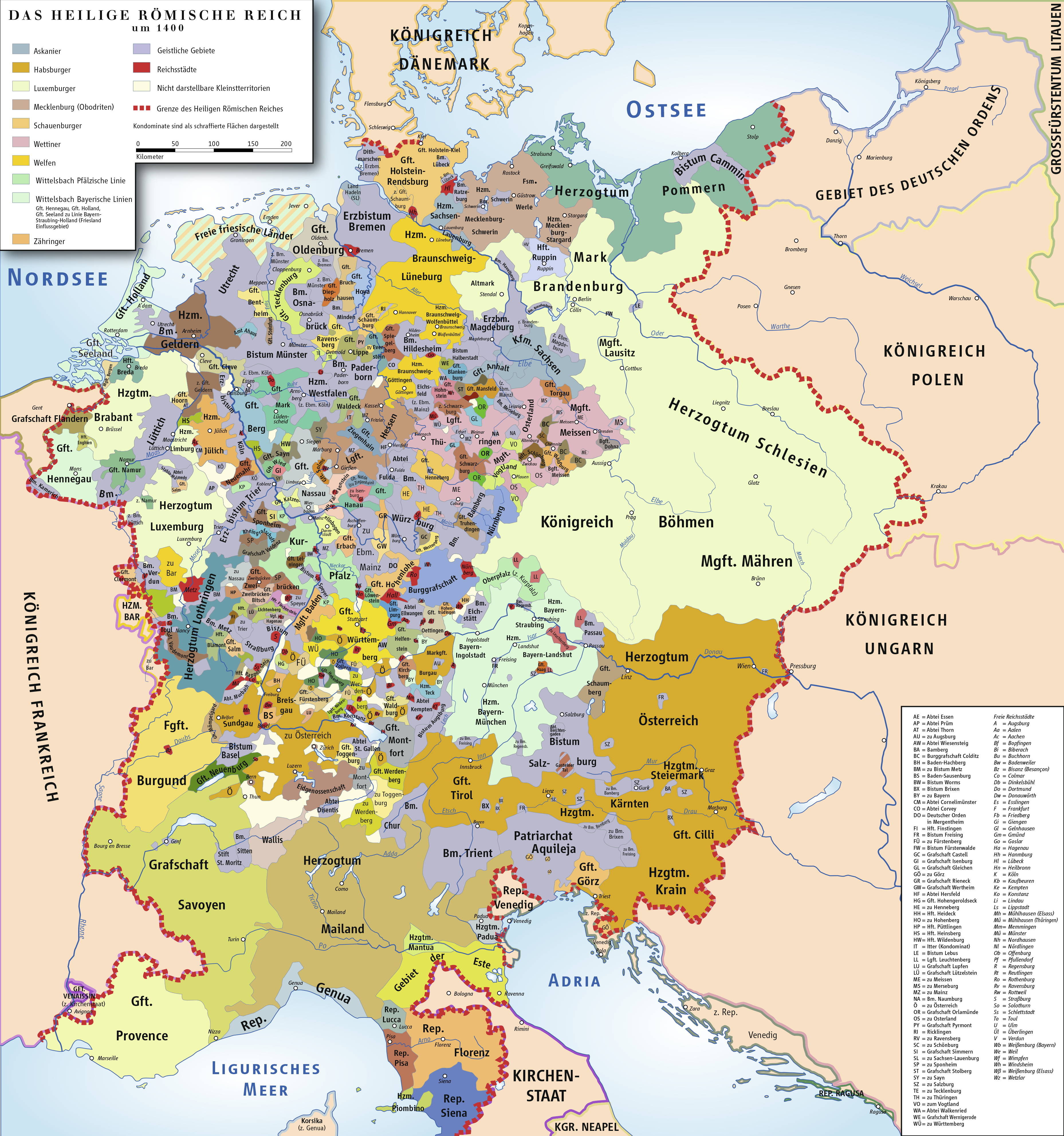
But before you complain about this arcane political system, consider that this is also the reason why Germany has so many castles. If you don’t like it, just move to a country without castles. Iceland, maybe, or Tuvalu.


Lastly, let’s keep in mind that historically, the world has suffered much more from German efficiency than from German inefficiency, if you know what I mean.
Well, even if my case is super easy, what can I do if I can’t get an appointment?
Simply file by mail or electronically.
The decision whether electronic filing is permitted, is of course decided at the county/municipality level, as explained above. But even when not, you can download the application form, add all the attachments and mail them in.
I honestly don’t understand why people think that they always need an appointment for everything. Almost anything can be done by writing or electronically. Sooner or later, you need to show up in person, for the oath of allegiance and the compulsory mug of beer, but that’s towards the end of the process.
By the way, as a lawyer, I can always file electronically, with any government agency in Germany, because we have our secret intranet, connecting all government offices, courts, lawyers, notaries, bailiffs, customs, police, submarines, and so on. So if you want to be fancy and do everything online, just hire a lawyer. – The only two things where I can’t help electronically: If you want to get married or if you need to go to prison, you still need to show up in person. And that should tell you something about the similarity between these two.
The most important advice when you file for German citizenship
There is one thing you can do to make your application stand out and increase the likelihood of it being processed faster.
Whether you file in paper or electronically, please only file when you have all the documents ready. And then, please organize everything neatly.
In the case of filing in paper, put everything in one folder, neatly organized, numbered and indexed. With a cover sheet that lists all the attachments, what they are and where they can be found in the folder. And if anything is out of the ordinary, for example your employment history, or if you need to explain something in your criminal record, proactively explain it instead of waiting.
If the caseworker receives your documents in a way that he/she can check immediately that they are complete, he/she might process your application right away. If, on the other hand, you send a box full of crumpled paper, with some payslips there, pages of your rental contract there, and a note promising that you will submit the things which you can’t find right now, among them your birth certificate and your language exam, then nobody will even bother starting to work on your application.

Same goes for the electronic filing: Only file when you have everything ready. Make neat scans, not shaky cellphone photos with bad lighting. Save them as PDF files and give them descriptive names. Birth_certificate_John_Doe_2Jul1973 instead of PIC_3275. If your employment contract has 8 pages, compile them into one PDF file instead of sending 8 separate files. And same here: Include a cover letter in which you address all the things that need to be addressed, where a simple “yes” or “no” on the form does not suffice, as it often won’t.
In my mind, all of this is common courtesy. But sadly, many people seem to have no experience of working with documents. (You should see the things I receive, with half of the documents being upside down, blurred, too dark, or where you can see the pizza in the photo.) Too many people prioritize speed over thoroughness. That never pays, because it will just lead to more work, more questions, and more delays.
And if it really takes too long, you can sue.
Now, we finally come to the famous Untätigkeitsklage.
Having said all of this, there are cases in which the government really does take too long. Some people have been waiting for several years for their citizenship application to be processed. And still, they haven’t heard anything.
In this case, you can sue the German government. While you can usually only sue after your application has been denied, § 75 VwGO (the Administrative Courts Code) allows you to sue the government if they have not made a decision about your application within 3 months from filing.
The Administrative Court then asks the government what is taking them so long. And this is why it’s so important that you file a comprehensive application. Because if the government can show that relevant information was missing or that some of your documents weren’t translated (especially if they are in Chinese or Amharic), they have a good reason for the delay.
If, on the other hand, the government has no good explanation – and usually they just respond with “too much work, not enough staff, we’re working on it” -, the court will give them a short deadline (a few months at most), in which the government will have to make a final decision.
Does the Untätigkeitsklage really work?
Well.
By going to the Administrative Court, your case will move from an overworked and understaffed government office to an overworked and understaffed court.
So, please don’t expect that your lawyer will file an Untätigkeitsklage, and you will be invited to pick up the German passport next week. The case before the court will also take several months.
Whether the way through the Untätigkeitsklage is really faster in your specific case is impossible to tell. After all, it could be the case – very theoretically – that your application was just about to be approved tomorrow. In this case, filing the Untätigkeitsklage didn’t speed up anything.
But there are two things I can say for certain:
One, filing the lawsuit definitely does not slow down the process. Most citizenship offices prioritize the cases in which a lawsuit has been filed, because replying to the court and explaining the delay costs them much more time.
Second, most people waste a lot of time by thinking and pondering and debating whether they should file the Untätigkeitsklage, sometimes for years. You should either do it, or you shouldn’t. There are arguments for both options. But nothing has ever been gained by mulling over the same question a gazillion times.
How much does the Untätigkeitsklage cost?
My fees for putting together a personalized Untätigkeitsklage are around 2,000 €. On top of my fees, the Administrative Court will charge court fees in the area of 800 €.
And that’s one reason why you shouldn’t file this lawsuit lightly. If you are living a happy life and it doesn’t make any difference whether you will receive the German passport this year or next year, then please don’t waste the money. After all, you may not even be in a hurry. Or you may think that the money is better spent on a holiday rather than on a lawyer. (Although this particular lawyer really likes holidays as well.)
If, on the other hand, you need German citizenship for a certain job or career, or you want to run for city council or parliament in the next election, then it may well be worth it.
And if you win, the court can order the government to reimburse you for lawyer’s and court fees (§ 161 III VwGO).
My advice
To summarize it, I would reserve the Untätigkeitsklage for cases where you haven’t heard anything for more than half a year and you have personal reasons for urgency. Especially those filing for German citizenship from abroad are often kept waiting for several years, which I find unacceptable.
The Untätigkeitsklage is not restricted to citizenship law, but applies to all interactions with the German government. For some types of visas (especially family reunion), the German consulates sadly often operate extremely slowly. If you find yourself in such a situation, you may want to consider hiring a lawyer to speed up the process.
I have also put together a set of FAQ on the Untätigkeitsklage, covering the general questions I receive all of the time.


“Lastly, let’s keep in mind that historically, the world has suffered much more from German efficiency than from German inefficiency, if you know what I mean.”
That is probably the most funny but incredibly sad joke I’ve heard.
I am not sure it was intended as a joke.
More as a reminder of what’s really important in life.
Sometimes, I say something similar when people complain about their train being late, just to put things into perspective.
Hi, This post was so much fun to read. I enjoy your humor so much. I also love your friendly, but no BS, advice to folks who are unrealistic, entitled, or whatever, and think it is a walk in the park to ask another country to adopt them – no questions asked, and at Clark Kent speeds.
For my son’s 18th birthday, I promised him that I would help him get his German passport. Life events have put fulfilment of that promise off for many years. Now, world-wide unrest, anti-immigrant sentiments, the possibility of Russian aggression moving beyond the Ukraine (especially since US MAGA forces are blocking our assistance to the Ukraine), and my EU friends considering leaving Shengen countries for safety’s sake, I am not so sure that it is wise to make a move across the pond from the US.
That said, I look forward to the day when I am able to follow through with that promise, partly just so that I can hire you and get to meet you.
I know you enjoy reading. If I hadn’t just mailed my copy of the following recommendation to a friend, I would send it to you. Instead, I’ll have to give you a review of this wonderful, wonderful book and refer you to your local library. I think you will enjoy it. Fifteen Dogs , written by André Alexis begins with a bet between Hermes and Appologranting human consciousness, language, and complex thought to a pack of dogs in a veterinary clinic. It is a modern take on the apologue, at times charming, frightening, sad, and beautiful. It is a meditation on communication, experience, happiness, and being. I hope you enjoy reading it.
Donnah Nickerson-Réti
Hello Donnah,
I write about boring stuff like administrative law and you call it “fun to read”, that’s too kind!
And yes, the people with a sense of entitlement are really a pain. Funnily enough, or maybe not, it’s usually people from first-world countries. They also believe that they should be exempt from the language requirement (“everybody in the world speaks English”) or even the residence requirement (“but I visit Germany once a year for Oktoberfest”).
But I think it would be a wonderful gift for your son. And if there is anything I can help you with, I’ll be happy to do so!
As to living in North America or in Europe, I will let other people weigh in who have made the move – in both directions.
For me personally, Europe wins out because it’s much more varied, especially culturally, linguistically, politically, historically. If you don’t like one country or just can’t stand the sound of Italian or the constant rain in Wales anymore, you simply hop on a train and move to Romania or Lithuania or Montenegro.
Of course there is also quite a difference between Arizona and Alaska, but in Europe the variation is much more stark, even over a much shorter geographical distance.
Thanks for always a fund read. You mentioned at the beginning of the article..”For one, you no longer need to give up your primary citizenship.”
If I am German already and want to apply another citizenship, is that case allowed under the new law (effective in June 2024)? Thank you!
Ja, die uneingeschränkte Zulässigkeit von Mehrstaatigkeit gilt auch für Deutsche.
§ 25 StAG wird ersatzlos gestrichen, und Deutsche werden nicht mehr die deutsche Staatsangehörigkeit verlieren, wenn sie sich um die Staatsangehörigkeit eines anderen Landes bewerben.
Pingback: How to speed up your application for German citizenship – THE FLENSBURG FILES
Hallo Herr Moser,
sehr schön geschrieben. Aber warum anworten Sie nicht Ihre E-Mail. Ich habe Ihnen wegen einer Beratung geschrieben und immer noch keine Antwort bekommen.
Hoffentlich bekomme ich bald eine Antwort.
Viele Grüße
Anonym
Es tut mir leid, aber ich arbeite nicht für anonyme Mandanten.
This are great insights! I really love the writing style. The humor makes it an awesome!
Thank you. 😊
I have a small scenario: If someone applied to facilitated naturalization from abroad and some 6+ months have effectively passed without a decision, how much longer would it take for the VwG Judge to make a decision in case someone files for Untätigkeitsklage?
Would it be a good idea to file for it as the VwG of Koeln will take any Untätigkeitsklage cases from abroad (correct?) plus many people of Stadt Koeln that will more than likely also file for Untätigkeitsklage locally.
–
Amazing sense of humour by the way! xD
Thank you for the compliment!
It’s impossible to say what the judge will do in what time without looking at the specific application. Especially with the foreign cases, as these differ greatly in complexity. The court will/should take the specifics of the case into account. If a case is super simple, the court will give the BVA less time. If the case involves going back several generations with tricky legal issues, the court will give the BVA more time.
But in either case, the Untätigkeitsklage should move your case to the top of the pile.
Pingback: Das neue deutsche Staatsangehörigkeitsrecht | Der reisende Reporter
Dear Andreas,
Thanks so much for the productive, not to mention uproarious, post! May I ask if you have any sort of a template, or at least guidance, for what to write or which phrases to use when sending the “kind but firm” nudge letter to LEA? This would be of great help to all foreigners not sure if they want to sue.
All the best!
I do not have any such template, because every letter is an individual letter, pointing out that my client meets all the requirements for naturalization, addressing possible problems, detailing the timeline thus far, and – if applicable – raising arguments why my client’s case should be expedited.
If people send a standard letter, it won’t achieve anything. Probably rather the opposite. If an applicant writes a personal letter, the immigration office knows: “This is another cheapskate who will never pay for a lawyer. We can put his/her file on the ‘non urgent’ pile.”
For that reason, I only write those letters for people who know that they will go ahead with the lawsuit and who have the funds to do so. Because if I send letters promising a lawsuit, and then I don’t sue, the authorities might remember me, and it will hurt my next client.
But honestly, most people should just sit back and relax and do something more useful with the thousands of euros that it will cost. After all, what’s the difference (for most people) if you receive the German citizenship in 4 months or in 12 months?
Although, and this is one dark cloud on the horizon, the CDU has announced that if they will form the next federal government, they will roll back the citizenship reform. They are particularly outraged about the residence requirement of 5 years and about dual citizenship.
Thus, if either of these points makes a difference in somebody’s application, then they should go ahead and sue.
I have been thinking about writing another article on this issue, because many people seem to be oblivious to that threat. But then, I would just receive even more requests, and I am already booked out until the end of 2024 now. :/
Pingback: Das neue deutsche Staatsangehörigkeitsrecht | Der reisende Reporter