
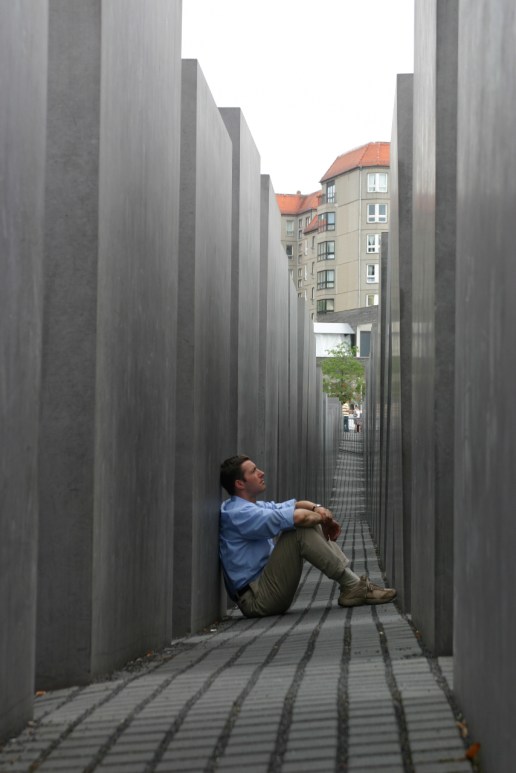
Whenever I meet someone who denies the Holocaust, I want to punch them in the face and say:
This punch did not happen. And if it did happen, it happened on a much lesser scale.
Too bad this doesn’t work online.
Links:
Whenever I meet someone who denies the Holocaust, I want to punch them in the face and say:
This punch did not happen. And if it did happen, it happened on a much lesser scale.
Too bad this doesn’t work online.
Links:
I want to share with you  one of the most fascinating novels I have ever come across: Martin Eden by Jack London. I would feel like keeping something beautiful from you if I failed to recommend this book. Also, it’s one of the rare novels with whose main character I can identify. If you want to understand me, you could do worse than reading this novel.
The plot:
Martin Eden is an impoverished sailor who pursues, obsessively and aggressively, dreams of education and literary fame.
He educates himself feverishly and becomes a writer, hoping to acquire the respectability sought by his society-girl sweetheart. She spurns him, however, when his writing is rejected by several magazines and even more so when he is falsely accused of being a socialist. After he achieves fame, she tries to win him back but Martin realizes her love is false. Financially successful and robbed of connection to his own class, aware that his quest for bourgeois respectability was hollow, Eden travels to the Pacific as a sailor again.
The issue of class:
Social class is a very important theme in the novel. Martin is a sailor from a working class background, who feels uncomfortable but inspired when he first meets the bourgeois Morse family. Spurred on by his love for Ruth Morse, he embarks on a program of self-education, with the aim of becoming a famous writer and winning Ruth’s hand in marriage. As his education progresses, Martin finds himself increasingly distanced from his working class background and surroundings. Eventually, when he finds that his education has far surpassed that of the bourgeoisie he used to look up to, he finds himself more isolated than ever.
I especially liked that the theme of class was not connected to material wealth, but to education, and then not mainly to formal education expressed in degrees and diplomas, but to a combination of what Martin read and what he had experienced himself, and to his ability of critical thinking and analysis. This, it turns out to his disappointment, is actually a much higher education than the formal one enjoyed by the class he initially looked up and wanted to belong to.
Overall review:
The language of the book is beautiful, marvelous. Several times, I read some of the paragraphs again, loud (and I’ve never done that with any other book before), reveling in the beauty and the art of the language.
This work of literature is the closest thing to “perfect” and maybe it even is perfect. Nothing I have read has left such an inspiring impression on me before. It manages to put things into (in my opinion: the right) perspective, especially the unmeasurable wealth of education in contrast to materialism. When I read this book, I was a busy lawyer. Ever since reading it, I felt the urge to return to university, to read more and to explore the world. Not long thereafter, I really quit my job, studied philosophy and then embarked on a hopefully never-ending journey around the world.
The story is ultimately sad, but it is still so great and so wonderfully written that you don’t feel sadness, but emotional and intellectual enrichment.
The book is unputdownable in the most extreme sense of the word; right after you have finished it, you want to go back to it and read certain chapters again. This is the first time that I would be thankful for having the ability to completely forget what I read – just for the sake of enjoying reading it again for the first time.
This book is not only a 5 out of 5 or a 10 out of 10, but a 99 out of 100. And the one point is only missing because the novel ends too soon and too abruptly.
Links to the full text of Martin Eden:
http://www.gutenberg.org/etext/1056
http://london.sonoma.edu/Writings/MartinEden/
But who would want to read such a beautiful book in electronic form? This is a book to take to the lake or the forest and read it slowly, cherishing each chapter. You can order the paperback here.
Links:
Exactly five years after the suicide bombings of 7 July 2005 that killed 52 people on underground trains and on a bus in London, I am in London myself. More specifically, I am on a underground train as I am writing this. To be precise, I am taking the Circle Line and the Picadilly Line on some of the exact same routes as the bombers of 7/7 (as these terror attacks have become known) did.
Jotting down these lines, I am going through the tunnel between Liverpool Street and Aldgate where one of the explosions occurred, and I experience – nothing. Nothing different at least from a regular evening in London. The underground is full, with Londoners and tourists, with the usual cosmopolitan mix of white and black, African and Asian, baggy pants and headscarfs, Financial Times and Al-Hayat. Passengers are carrying backpacks and suitcases, each one of them large enough for more explosives than the 7/7 bombers used.
Yet nobody checked these bags. None of the luggage is scanned. There are no police officers on the train or at the station. Nobody asks for an ID when boarding the train. I didn’t have to walk through a scanner, throw away my water bottle, or let somebody pat down my legs.
While we have all gotten used to these procedures in some countries and for international travel, in London everything is “normal”, like in pre-terrorism times, even on the anniversary of the worst terrorist attack in the history of Britain.
This normality radiates a feeling of calmness and yes, even of freedom. Freedom to move wherever I want without being checked, controlled, searched and stopped, but also freedom from fear.
Maybe Afghanistan, Pakistan or Yemen are not the places where the fight against terrorism can be won. Maybe we should try to win this fight closer to home, by refusing to change our lives, to limit our freedoms and to be intimidated by fear.
Today, I turned 35.
I am now older than what the average life expectancy for people in Swaziland (a small country in Southern Africa) is.
As I don’t feel old and I am still in fine shape physically and mentally, it’s an especially intense contrast. Had I not been lucky enough to be born in Germany, but unlucky enough to be born in Swaziland, I would now be – statistically – dead.
I don’t mean to spoil any party, and I realize that I cannot save the people in Swaziland or any other disadvantaged country. But maybe we could all try a bit harder?
At the very least, we could appreciate our time on this planet more and put it to some meaningful use.
Saturday June 12th will mark the first anniversary of the rigged Iranian elections. The blatant electoral fraud sparked protests throughout Iran which the Iranian regime only managed to crush by remorseless force. The brutality of the crackdown opened the world’s eyes not only about the nature of the Iranian government, but also about the dissent and the courage of a large part of the Iranian people. Since then, protests have flared up, been struck down, and flared up again.
For the past 52 weeks, Iranians and non-Iranians have gathered outside Iran’s embassies and consulates and other institutions of the Islamic Republic all over the world to protest against this government. They will do so again this Saturday.
I have been asked by many friends: “What is the point of these protests? What will it achieve?” and I am prone to joining in the disappointment. For on the face of it, we – if I may use this inclusive term for all those who care about freedom, democracy and human rights in Iran – have not achieved anything. Iran is still governed by an autocratic regime which ignores the wishes of its people, oppresses all dissent, stifles free thought and speech, performs executions and demeans the female half of the population. For those who care more about international security or stability than about the domestic situation (although these two issues might be far more correlated than many outside Iran want to believe), the picture is none less grim: Iran continues to sow mischief in the region and has not been brought to a halt in its apparent striving for nuclear weapons.
The disappointment about the obvious lack of any progress is understandable. I share this disappointment. And the time might indeed have come to step up the actions, both for the international community in their handling of Iran, but also for activists and protesters.
So why will I still join the protests on June 12th despite my disappointment? In the end, for one reason:
In June 2009, I was in Iran myself. I had flown there to witness and join the protests in the streets of Tehran. On June 25th of last year, I was arrested by the Iranian Intelligence Service and taken to Evin prison for what should become the toughest week of my life. On the late evening of June 25th, after having been stripped of my clothes and possessions, being blindfolded and not being told where I am and why I am being kept, being shouted at in a language that I did not understand, I was waiting under guard in the yard of Evin prison for transport to a cell. At that moment, it turned 10 o’clock at night and like every evening, the city of Tehran burst into a loud and vibrant chorus of shouts of “god is great”, a slogan which had become the symbol of the resistance. Even being surrounded by guards and still aching from a previous beating by the police, full of fear and uncertainty, I could not suppress a smile as I heard these chants from the rooftops and windows of the surrounding neighbourhoods. I felt that I was not alone. I felt that people like me were not forgotten outside of these darn walls.
Since then, I know about the value of moral support. It’s the very least that each and every one of us can do.
I hope to see you on Saturday!
(Because I didn’t yet have my own blog in June 2010, Potkin Azarmehr, one of the most informed and outspoken bloggers about Iranian politics, posted my piece: http://azarmehr.blogspot.com/2010/06/why-i-will-join-protests-on-12th-june.html )
A half marathon is 21 km = 13 miles.
I know the times are not spectacular. But many of these tracks were hilly or even mountainous, or going through snow or sand. I run more for the scenery than for a result.
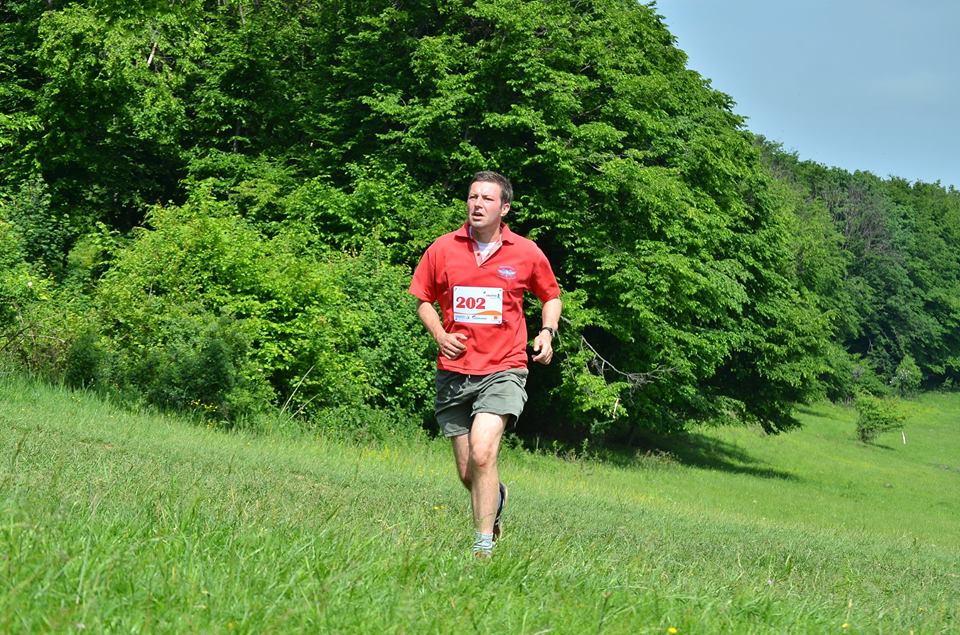
Honestly, many of these races were just a pretext to travel to new places. In the future, I will therefore mainly run in cities and countries that I haven’t visited yet.
Effective 31 July 2009, I will close my law firm and go on a sabbatical for at least one year.
 I thank all of you who have put your trust into me as your lawyer in the past 7 years. With my concentration in international family law, you have allowed me to learn a lot about life in different cultures and countries. This has been a great experience. I am especially proud of all the cases in which we together managed to perform separations in a way that least affected your children and after which you and your ex-partner still managed to be on speaking terms and continue to work together as parents. I will also never forget the cases in which I was able to successfully return your children to your homes after they had been abducted to other countries.
And finally, working in family law has reaffirmed my decision to never get married or start a family myself. :-)
My decision to leave work for a while has certainly been accelerated by the events in Iran in June 2009:
I had traveled to Iran to witness the historic situation in the aftermath of the rigged election. Not only was I beaten by Iranian police several times at one demonstration, but I was also arrested for meeting with an Iranian human rights lawyer. I was imprisoned and interrogated by Iranian Interior Intelligence Service. I spent 6 days at Evin prison in Tehran, with nobody outside knowing of my whereabouts or my situation. No information was given to me, either. I was in solitary confinement, had to sleep on the floor, and was blindfolded each time I left my cell. At times, I had gotten used to the thought of spending a few years in that prison.
My release was only due to an incredible amount of luck.
After this experience, my priorities have shifted quite a bit.
Some of the problems that I have had to deal with as a lawyer suddenly seem rather petty and unimportant to me.
Now that I appreciate every single day in freedom, I want to concentrate more on my own personal development and pursue my interests in literature, history, politics, philosophy, travelling. There are just too many things I still have on my life’s “to do list” for me to wait until regular retirement age in another 30 years.

After treatment by Iranian police.
You might have heard about my trip to Iran in June and July 2009 to join the protests against the rigged elections, a trip that ended up in the infamous Evin prison in Tehran, in the captivity of Iran’s Intelligence Service – luckily only for one week, albeit the most intense week of my life.
For your further information, I have tried to list a few sources where you can read more about these events. If you know of any other sources, please add them.
in English:
in German:
in Portuguese:
 Zu einer Rezension des aktuell erschienenen Buches “Die Israel-Lobby” in der Süddeutschen Zeitung vom 5. September 2007 (“Freundschaft im Kreuzfeuer”) erschien einige Tage darauf der folgende Leserbrief von mir:
Die Besprechung des Buches “Die Israel-Lobby” übersieht, daß es eben doch mindestens einen wichtigen Grund gibt, Israel anders zu behandeln als seine Nachbarländer im Nahen Osten: Israel ist die einzige wirkliche Demokratie im Nahen Osten, und das durchgehend seit seiner Gründung 1948.
Israel ist ein Rechtsstaat nach westlichem Muster mit einem unabhängigen Gericht, das Regierung, Parlament und Militär immer wieder in die Schranken weist. Die israelische Gesellschaft genießt vollkommene Meinungsfreiheit, Pressefreiheit und freie Wahlen. Israel ist das einzige Land im Nahen Osten, in dem Frauen gleichberechtigt sind.
Und all dies obwohl das Land ständig Terrorwellen und Angriffen von fast allen Seiten ausgesetzt ist, und auch in diesen Wochen täglich palästinensische Raketen auf Israel abgefeuert werden. Trotz dieser täglichen Angriffe hält Israel einen Standard an Demokratie und Rechtsstaatlichkeit aufrecht, wie er selbst in westlichen Demokratien nach nur einem Terroranschlag teilweise in Gefahr ist.
Die Unterstützung dieses Landes, dieses einzigen Brückenkopfes westlicher Zivilisation und abendländischer Werte in der gefährlichsten Region der Welt soll “überproportional” sein? Überproportional im Vergleich wozu? Woran, wenn nicht am Grad der Verwirklichung der unsere Gesellschaft ausmachenden Werte, soll die Berechtigung für unsere politische, wirtschaftliche und moralische Unterstützung gemessen werden?
Auf die tollkühne Behauptung, daß die USA sich durch ihre Unterstützung von Israel den Terror praktisch selbst ins Haus holten, ist den Autoren die Frage zu stellen, ob sie damit vorschlagen, daß wir in Zukunft unsere Außenpolitik an den Forderungen der Hisbollah, von Hamas und von Osama bin Laden ausrichten sollen, nur um vielleicht von Terroranschlägen verschont zu bleiben? Und gleich anschließened muß die Frage erlaubt sein, wie man so naiv sein kann, zu glauben, daß damit der Terror aufhörte.
Aus eigener Erfahrung aus Reisen im Nahen Osten seit 15 Jahren (und zwar sowohl in Israel, in den palästinensischen Gebieten und in allen arabischen Nachbarstaaten) schlage ich vor, sich ein Bild von den unterschiedlichen Gesellschaftsformen zu machen und dann für sich selbst zu entscheiden, ob Israel unsere Unterstützng verdient oder nicht. Wer mit offenen Augen und Ohren und vor allem einen offenen Geist in die Region fährt, wird womöglich seine Vorurteile ablegen und seine Meinung ändern oder zumindest differenzieren müssen.

 The Happy Hermit