“Why don’t you get married?”

“What’s the point?”, I could retort. Or talk about freedom, independence and self-determination.

But for now, I will just point you to the answer given by J. D. Salinger in his novella “Zooey“:

“I like to ride in trains too much. You never get to sit next to the window anymore when you’re married.”

And you get to read on trains even less.

Posted in Books, Life | Tagged , , , | 21 Comments

Assessing the risk of nuclear technology

The nuclear industry is keen on coming up with probabilistic risk assessments that show that a serious accident at a nuclear power plant can only happen every 20,000 years or so (admittedly this number is from a somewhat outdated report from 1974). Apparently, this is supposed to keep people’s minds at ease. But it shouldn’t:

  • This should not have happened. At least not yet.

    This does not mean that once Chernobyl has happened, mankind will be safe for 20 millennia. It’s just statistical, so two accidents could happen in consecutive years (although according to these statistics, the next accident would then be – again statistically – 40,000 years away).

  • If you read carefully, you will notice that these statistics use “reactor years” instead of “years”. A reactor year is one year of a reactor’s activity, so if your country has 20 active nuclear reactors, the probability of a serious accident is already 1 in every 1,000 years.
  • It doesn’t take into account the slow deaths caused by constant radiation and increased rates of cancer in the areas surrounding a nuclear power plant.

But I have a much more general problem with these risk assessments: I just don’t believe that anyone can predict the safety for the next 20,000 years of a technology that has been around for 60 years. I think this is beyond the capability of any statistical model.

I have recently been thinking about our abilities to predict the risks of technologies because I had just come across a study by NASA’s Space Shuttle Safety and Mission Assurance Office that examined the risk of the first Space Shuttle missions and found that these were actually 10 times more dangerous than the current Space Shuttle flights.

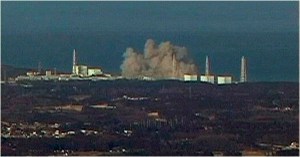
Especially in light of the recent catastrophe in Fukushima where the possibility of a combined earthquake and tsunami had apparently not been considered (which in itself is a bit odd, considering that Japan is [a] an island that is [b] quite prone to earthquakes], this report by NASA provides valuable lessons for the risk assessment of nuclear power:

  1. The first Space Shuttle missions (in the 1970s) were ten times as dangerous as the current ones. We have many nuclear power plants currently active that are just as old. A scary thought.
  2. The main reason why later missions became less dangerous was that each mission learnt from the previous one. Nuclear power plants however are being used for decades, without any changes to the reactor’s design. Because a nuclear reactor is expensive to plan and build, but relatively easy to run, the nuclear industry has an incentive to squeeze as many years as possible out of each reactor.
  3. The biggest improvements in safety only followed what NASA calls “major events”, meaning an explosion with lethal consequences. This leads one to assume again that we are not capable of grasping all the risks that are technology-inherent, unless they are being pointed out to us by actual catastrophes.

And then there is of course still one fundamental difference: If a space shuttle explodes, the astronauts die. That is sad, but they had accepted that risk. – The radiation from a nuclear power plant however kills much more indiscriminately.

Posted in Economics, Politics, Technology | Tagged , , , , , | 13 Comments

Why I don’t answer the phone

A warning to everyone: I don’t like it when you call or e-mail me and your first sentence is “Why didn’t you answer your phone?” Even if it’s not posed as a question but as a statement (“You didn’t answer your phone, that’s why I e-mail you…”), the reproachful undertone cannot be missed.

Don’t disturb!

I could give all kinds of reasons:

  • I was at the library.
  • I was eating.
  • I was on the other phone.
  • I was sleeping.
  • I didn’t hear it.
  • I was out running.
  • I was in the bathroom.
  • I was climbing up a tree.
  • I was jumping out of a plane.
  • I was in hand-to-hand combat with an assassin who was after my life.
  • I didn’t find the right button in time.

But I won’t.

Because it’s none of your business. I don’t owe an explanation to anyone about what I do with my time. It’s my life. Nobody is entitled to my time or attention.

I am not a slave to anyone. And I definitely won’t become a slave to a little gadget, like too many people have become.

Sometimes, I wonder what aliens would think about us humans if they came to visit from another planet: They would notice that we have machines with us or on our desks that sometimes emit a sound, upon which the humans jump to attention immediately and drop everything else, whether it’s a book, their dinner or even a conversation. The aliens would have to come to the conclusion that we are controlled by these beeping machines. – And maybe some of us are, sadly.

Links:

Posted in Life, Philosophy, Technology | 50 Comments

Deutsche Aussenpolitik schafft sich ab.

Nach Wochen des Mordens, Bombardierens und apokalyptischen Schwadronierens durch den libyschen Führer Gaddafi hatte die Weltgemeinschaft in Form des UN-Sicherheitsrates ausnahmsweise mal selbst genug von den ewigen “Ermahnungen”, “Aufforderungen” und “dringenden Bitten”, mit denen sonst auf Menschenrechtsverletzungen reagiert wird. Vor wenigen Stunden verabschiedete der UN-Sicherheitsrat die Resolution 1973, mit der eine Flugverbotszone gegen Libyen verhängt und militärisches Eingreifen durch die UN-Mitgliedsstaaten gegen das libysche Militär zum Schutz der libyschen Zivilbevölkerung authorisiert wird.

Dies kommt spät; angesichts der bevorstehenden Einmarsch in die Stadt Bengazi durch die libysche Armee eventuell zu spät. Unter Berücksichtigung dessen, daß Russland und China, die ansonsten die “Nichteinmischung in innere Angelegenheiten eines souveränen Staates” über alles andere stellen, ihre Vetostimmen nicht ausübten, ist dies dennoch einer der raren Momente, in denen mich die UNO positiv überrascht hat.

Und was macht Deutschland, das derzeit einen temporären Sitz im UN-Sicherheitsrat innehat? Deutschland enthällt sich der Stimme.

Es geht um den Schutz einer Zivilbevölkerung gegen Bombardierungen, um die Unterstützung einer Demokratiebewegung gegen eine 41-jährige Diktatur, um die Abwägung von Menschenrechten gegen Staatensouveränität; und Deutschland enthält sich.

Hat Deutschland keine Meinung zu diesen Fragen? Vermutlich schon. Bundesaußenminister Guido Westerwelle begründet die Enthaltung des Landes, das gerne einen ständigen Sitz im Sicherheitsrat (und damit ein Vetorecht) einnähme, anders: “Wir sehen hier erhebliche Gefahren und Risiken”, sagte der Außenminister. “Deswegen können wir diesem Teil der Resolution nicht zustimmen. Deutsche Soldaten werden sich an einem militärischen Einsatz in Libyen nicht beteiligen.”

"Außenpolitik? Ich wollte den Job doch nur wegen der Reisen."

“Erhebliche Gefahren und Risiken” also. Für wen? Für Gaddafi? Das ist ja wohl der Sinn der Resolution. Die einzigen, die derzeit “erheblichen Gefahren und Risiken” ausgesetzt sind, sind die Menschen in Libyen, die versuchen, sich von einer grausamen Diktatur zu befreien. Oder meint Herr Westerwelle “erhebliche Gefahren und Risiken” für die deutsche Wirtschaft, falls Gaddafi doch an der Macht bleibt?

Die Zustimmung zu der UN-Resolution würde kein Land zur Bereitstellung von Flugzeugen oder Soldaten verpflichten. Nachdem Deutschland keinen Flugzeugträger hat, wäre ein deutsches militärisches Engagement derzeit auch gar nicht so gefragt, wie es der Außenminister darzustellen versucht.

Aber all das ist nicht wichtig, solange der bundesdeutsche Reflex funktioniert und demonstrativer Pazifismus sich in der Wählergunst positiv niederschlägt. So einfach und sicher, wie vor “Krieg” zu warnen und “Ohne uns!” zu rufen, kann man seine Umfragewerte gar nicht nach oben schrauben. – Daß für die Menschen in Libyen der (Bürger-)Krieg schon lange Wirklichkeit ist und wir ihn stoppen könnten, kann nur denen egal sein, die Menschenleben mit zweierlei Maß bewerten.

Und dabei hätte Deutschland eine besondere Verantwortung, nachdem auch wir an Gaddafi Militärtechnik geliefert und seine Einheiten ausgebildet haben. Jetzt könnten wir diesen Fehler korrigieren. Aber dazu bedürfte es einer wirklichen Außenpolitik.

Posted in Germany, Human Rights, Libya, Military, Politics | Tagged | 50 Comments

Must a person have both desires and values?

As one of the reasons behind taking up blogging was to gain writing experience in English for my studies, it might be fair to publish the essays that I am writing for my MA Philosophy course at the Open University, of course only after they have been submitted and graded.

Below is the first essay, trying to answer the question “Must a person have both desires and values?“, posed in the context of the discussion about what constitutes a person in contrast to a human being. It asked to focus on the suggested reading, mainly by Harry Frankfurt and Gary Watson, making this essay completely uninteresting to anyone who is not taking the same course.

I. Introduction

This essay will examine if it is necessary for a person to have both desires and values and it will concentrate on what sort of complexity of mind we require of a human being in order to be qualified as a „person“.

The difficulty of defining what should be understood in philosophical debate as a „person“ is demonstrated by the rush to negative delimitation. Most attempts at this definition do not take long to get to state what might not be a „person“, for example foetuses1, people in a persistent vegetative state2, very young children3 or certain types of drug users4. Nobody who is asked to define a „house“ would start by saying that it is not a bridge. Even other academic disciplines that have to define less tangible terms would for example not define „democracy“ by stating that it is not a dictatorship. A „person“ seems to be a rather hard thing to grasp or pin down.

Any attempt to define „person“ shall therefore be approached with utmost modesty.

Most philosophical writers seem to agree that „person“ is not the same as „human being“5, although in everyday use and in other disciplines6, these two terms are used interchangeably. This leads to the possible existence of human beings who are not persons, but also of non-humans who are persons. Examples for the latter could be anthropoid apes7 or intelligent life on other planets8. I suggest that we don’t have sufficient insight into the mental workings of animals (we will see that we are already struggling enough to find out what is going on in our own brains/minds) and that the existence of any intelligent life outside of this planet is at this point purely hypothetical, and I will therefore refrain from considering possible non-human persons in this essay.

II. Frankfurt

Frankfurt argues that the difference between persons and non-persons is a difference in mental complexity9, specifically the structure of a person’s will10 and their ability (or lack thereof) to form desires11. Frankfurt describes a system of several orders of desires. First-order desires are all the desires a person has12. These may even be conflicting desires and not all of them may push the agent to an action in accordance with that desire13. But then, there are also second-order desires: someone wants to have a certain desire or he wants a certain desire to be his will14, the latter being called “volition” by Frankfurt15. Having these second-order volitions is what Frankfurt regards as essential to being a person16 because he sees this as a prerequisite for the freedom of will17. Those non-persons that lack second-order volitions are dubbed “wantons”18.

With so many new concepts and terms being introduced, it is high time to bring an example. Frankfurt uses two drug addicts to illustrate his thoughts19: Both addicts realise and hate their addiction, so both have the first-order desire to take drugs, but also the first-order desire to refrain from drug use. Whatever both drug users do, using or abstaining from the drug, they will thus fulfil one of their desires.

The first drug user however also has a second-order volition. In the conflict between his two first-order desires, he is not neutral, but he wants the desire to abstain from the consumption to prevail over his conflicting desire of the same order. He wants the desire to abstain to become his will20.

The second drug user suffers from the same first-order conflict. However, he does not prefer that one of his conflicting desires should win over the other one21.

For Frankfurt, only the first drug user is a person22, even if he remains a drug user, because he has shown freedom of will.

III. Watson

Watson is outspokenly critical of Frankfurt’s attempt at defining a person, calling it “simply insufficient to the task he [Frankfurt] wants it to perform”23.

For Watson, the decisive concept in defining a person is that of values, which he describes as “more or less long-term aims and normative principles that we are willing to defend”24. Using these values, we rank our desires by attributing different levels of worth to them25. A person is then identified as a being that can make evaluations of its desires and can shape its life accordingly26. Watson himself regards this explanation to be in the tradition of Plato27.

Watson refuses to see any insight that would be gained by Frankfurt’s theory of different levels of desire, arguing that this just increases the number of desires that are competing with each other28.

IV. Discussion

As desires and values are themselves terms that are open to definition, maybe the bridge between Frankfurt and Watson can be gapped by defining “valuing” as “desiring to desire”, as Lewis29 does. Watson’s “values” would therefore be nothing else than Frankfurt’s “second-order volitions”30.

Not quite unlike in contemporary usage of the term, the philosophical interpretation of “values” is however not only descriptive, but also normative. Watson thinks that values need to (attempt to) lead to a “good, fulfilling and defensible life”31. These are largely positive attributes that are not equally required of “desires”. The two theories – of Frankfurt and Watson respectively – can therefore not be seen as congruent beyond the mere use of terminology. Watson’s interpretation of what constitutes a person is narrower and does exclude some human beings from the set of persons who would enjoy inclusion under Frankfurt.

For me, it is hard to make a decision between these two conflicting theories without knowing what the purpose of defining a “person” is, specifically if persons shall have less, more or different rights or obligations than (other) human beings. Going back to some of the often-cited examples of very young children32 or people in a persistent vegetative state33 which are excluded from the set of persons under both Frankfurt’s and Watson’s respective definition because they lack the mental capacity to either influence their own will or develop values, we would on first sight clearly accept that these human beings should not have some rights that persons have, but maybe enjoy other protective rights that persons don’t need. At a closer look however, the difficulty will always be at the borderlines, for example when we need to determine when exactly an infant becomes a person. As this would require a look into that person’s mind, this judgement can hardly be passed by outsiders.

In areas where human beings need to be put into groups to provide them with certain rights or require certain obligations from them, we therefore devise more objective criteria, e.g. by attributing different legal rights to infants or adults, or citizens and non-citizens. This is possible without denying anyone the membership in the set of human beings and it makes me begin to entertain the question if anything can actually be gained by denying some human beings “personhood” in philosophical debate.

The necessity to establish what and thus who is a person and who is not is further undermined if we consider the possibility of somebody being a person (and this is true under both Frankfurt’s and Watson’s respective definition) and that same human not being a person in the next instant, day or week. Neither Frankfurt nor Watson rule out the possibility that someone can form a free will today but will be unable to do so later or that someone has values but won’t have these later (although Watson’s definition of values has a more stable, long-term idea in mind, but they could still change over a long period of time, or under the impression of dramatic life-changing events).

Taking this thought further, maybe someone can even be a person in one respect and not a person in another respect at the same time. After all, it might be that somebody has a second-order desire or values about one aspect of his or her life, but is devoid of any such notions in other respects.

At this point I am reminded of Frankfurt’s statement that “people are generally far more complicated than my sketchy account of the structure of a person’s will may suggest”34. As neither Frankfurt nor Watson could have known when they wrote their papers in 1971 and 1975 respectively, this statement might be more true than both definitions of “person” can possibly endure: In 1979, an experiment by Benjamin Libet seriously shattered the notion of volitions or free will because he was able to measure a surge in brain activity before participants in the “Libet experiment” thought that they had a desire to act35. This suggests that volitions and free will are not as free as we have been assuming from the readings of Frankfurt and Watson. As even the results of the Libet experiment allow for the power to veto the impulse given by the brain and decide not to act in accordance with it (the “free won’t”36), there is still room for some level of conscious volition though. Still, free will cannot be debated in the same way after these experiments as it was in the 1970s.

V. Conclusion

Reminding the reader of the modesty called for in the introduction of this essay and considering all the doubts pointed out in IV., I would respectfully suggest that neither Frankfurt nor Watson have made a compelling case for the necessity of the definition of a person as something distinct from a human being or for their respective definition of such.

Watson’s definition suffers from his resorting to “values” which is a vague term of subjective moral judgement, and nothing much can be gained from trying to explain what the definition of the hitherto vague term “person” shall be by utilising other terms of no lesser lack of clarity.

Frankfurt is less affected by this criticism as “desires” do not imply the same stamp of moral approval as “values”, although his choice of the word “wanton” for those he deems non-persons also has quite a moralistic tone to it. But his concept of second-order desires has clearly been put into doubt by later scientific research.

Until I come across a more convincing definition of person, I will therefore continue to view all humans as persons. If necessary, they can be grouped into humans/persons of different mental capabilities, moral values, abilities to implement their will, et cetera. But I do not want to go so far as to deny any other human being the right to be called a person.

1Beaney 2008: 29; Matravers 2001: 35

2Beaney 2008: 29; Matravers 2001: 35

3Frankfurt 1971: II:2

4Frankfurt 1971: I:5-10

5Beaney 2008: 29; Frankfurt 1971: 4; Matravers 2001: 35

6For law, cf. Garner 2005: 960

7Beaney 2008: 29, citing an unsuccessful example of a legal action in Austria to get a chimpanzee recognised as a person

8Beaney 2008: 28

9Beaney 2008: 33

10Frankfurt 1971: 5

11Frankfurt 1971: 6

12Frankfurt 1971: I:3

13Frankfurt 1971: I:3

14Frankfurt 1971: II:1

15Frankfurt 1971: II:1

16Frankfurt 1971: II:1

17Frankfurt 1971: III:1

18Frankfurt 1971: II:1

19Frankfurt 1971: II:5-10

20Frankfurt 1971: II:6 and 9

21Frankfurt 1971: II:8 and 10

22Frankfurt 1971: II:9

23Watson 1975: III.10

24Watson 1975: 1

25Watson 1975: 2

26Matravers 2001: 53

27Matravers 2001: 51

28Watson 1975: 12

29Lewis 1989: 6

30Matravers 2001: 54

31Watson 1975: 1

32Frankfurt 1971: II:2

33Beaney 2008: 29; Matravers 2001: 35

34Frankfurt 1971: III:8

35Precht 2007: 152

36Precht 2007: 154

Bibliography

Books

Garner, Bryan (2005) (editor) Black’s Law Dictionary, 8th edition, St. Paul, MN, USA, Thomson/West.

Precht, Richard David (2007) Wer bin ich – und wenn ja, wie viele?, 24th edition, München, Germany, Goldmann.

Papers

Frankfurt, Harry (1971) “Freedom of the Will and the Concept of a Person”, Journal of Philosophy, lxviii, 1, 5-20 (reprinted as reading 3.2 to accompany A850 Postgraduate Foundation Module in Philosophy, Milton Keynes, The Open University and quoted by the chapters [in Roman numerals] and paragraphs [in Arabic numerals] of the reprint).

Lewis, David (1989) “Dispositional Theories of Value”, The Aristotelian Society, Supplementary Volume, 113-38 (reprinted as reading 3.4 to accompany A850 Postgraduate Foundation Module in Philosophy, Milton Keynes, The Open University and quoted by the paragraphs [in Arabic numerals] of the reprint).

Watson, Gary (1975) “Free Agency”, Journal of Philosophy, lxxii, 8, 205-20 (reprinted as reading 3.3 to accompany A850 Postgraduate Foundation Module in Philosophy, Milton Keynes, The Open University and quoted by the paragraphs [in Arabic numerals] of the reprint).

Study material

Beaney, Michael (2008) Doing Postgraduate Research in Philosophy, A850 Postgraduate Foundation Module in Philosophy, Chapter 2, Milton Keynes, The Open University.

Matravers, Derek (2001) The Nature of Persons, A850 Postgraduate Foundation Module in Philosophy, Chapter 3, Milton Keynes, The Open University.

As I said, to non-students of this course this is not very illuminative. I passed the paper, but there is room for improvement.

The next paper, due on 22 April 2011, will be about the psychological continuity account of personal identity.

Posted in Philosophy | Tagged , , , , , , , , , , , , , , , , , , , | 7 Comments

Why the North is taking itself too serious

Map-making has always had the problem of trying to fit the surface of a (roughly) ball-shaped object on a flat piece of paper.

A map reflective of the true proportions of our planet would look something like this:

However, most traditional world maps look like the following. It has the map (and thus the depicted land masses) stretched to fit the rectangular shape.

This in effect enlarges or over-represents the land masses that are farthest away from the equator. Because the continents in the north are closer to the North Pole than the continents in the South are to the South Pole, this exaggerates the size (and thus the implied might and importance) of the Northern hemisphere in contrast with the countries close to the equator and in the Southern hemisphere.

Posted in Politics, Travel | Tagged , , , , , , , , , , | 2 Comments

Half Marathon at Eton

For the first time in almost a year, I have managed to run a half marathon (21 km = 13 miles) again yesterday. I ran at Eton, a small town situated west of London, which forms one community with the town of Windsor, home to the oldest still inhabited castle in the world.

The run was held at Dorney Lake which will be the site for the rowing events at the 2012 Summer Olympics. (While running, it occurred to me that Britain should actually not have been awarded the “Summer” Olympics, but at best the “Mixed Weather with some Sunshine and scattered Showers” Olympics because the local definition of “summer” might disappoint many visitors.) Running around the same lake for 4 laps might not sound too interesting, but when you’re on your last legs, you don’t have much of an eye for the beauty of nature anyway.

That would have been a better reason to visit Eton and Windsor.

The course was almost completely flat, perfect to run at an even pace. The organisers had pace-setters and I decided to run in the 9-minute-per-mile flock, aiming at a total time of 2 hours. The first 10 km are always relatively easy for me, so I could break out of the pack, albeit not by much. I maintained a very steady pace, not even slowing down in the third quarter although this was the one where my feet and muscles began aching and I was thinking “what a stupid idea; why didn’t I just go for a long walk instead?” The last quarter is psychologically easier because you’re already counting down the mile markers: 11, 12 and finally 13. With the goal of a race time of under 2 hours in sight, I managed to carry on regardless of physical pain and fatigue, fighting for every minute.

Usually lacking the energy for a final sprint, this time I had prepared myself: In addition to the standard podcasts on my MP3 about revolutions in the Middle East, book reviews and other information supposed to prevent my obsession about wasting valuable brain-time to set in, I had downloaded some music of which I believed it would catapult my body into über-human speed. I opted for the soundtrack of “Matrix Reloaded”. It worked: On the last 1.5 miles, I managed quite a sprint and finished in 1 hour, 57 minutes and 10 seconds.

Now I am going to ache and limp for 2 days, but the sense of achievement is worth it.

Posted in Music, Sports, Travel, UK | Tagged , , | 2 Comments

Superman, Batman and Spiderman off. Grandmother helps out.

At the risk of providing the British government with more arguments to cut police funding, some citizens can indeed do the job quite well:

This month, a gang of robbers tried to burglar a jewellery store in Northampton, England in daylight. The store alerted the police and activated the security shutters, but before the police could arrive, the robbery attempt was foiled single-handedly by an old lady who attacked the six robbers with her handbag.

To me, it is most shocking that so many people walk and drive by without intervening.

Posted in UK | Tagged , , , , | 8 Comments

The real explanation for the gender pay gap

Women have consistently been earning less than men, even in highly developed countries,

“Even I am earning less than my male predecessors.”

and even in 2011. This is still true in most industries, even for women with the same qualifications as men. (For the related topic of female under-representation on corporate boards, see here.) It seems especially odd nowadays, because in many countries more women complete secondary education and do so with better results than men. For many university courses, it is not uncommon to have more female graduates and they are often the ones with better grades.

So why do women on average still earn less than men?

1. lack of comparability

Even after making adjustments for socio-economic background, chosen degrees and grades, women in the same professions earn less than their male colleagues. Many will take this as sufficient evidence for an anti-female gender bias in the distribution of income.

I however suggest that even after allowing for all of these socio-economic adjustments, we still haven’t achieved a level of comparability. Because we are missing something else. Something that might be equally important as qualifications: Expectations, specifically expectations about life.

2. different expectations in life

Based (so far only) on my own personal, professional and academic experience, it seems to me that men are more focused on a career than on most other aspects of their lives. Women however, are also interested in finding a relationship, starting a family and other aspects of their social life. Please note that I am not saying that women are less interested in pursuing a career than men, I just think that they might be less mono-focused.

3. different incentives in the mating process

This is already an obviously distorting effect in itself, but it is exacerbated by the different incentives this sets for men and women in light of the non-career choices that both make, especially the mating habits:

a) Men are looking for an attractive, caring and faithful woman. Some men appreciate an educated and independent woman, but (too) many men still don’t. Beyond the level of having a job and an income, the financial status of a woman is rather irrelevant to men.

b) Women who are looking to find a man are therefore encouraged to take care of their looks and to present themselves as lovely, sweet, etc. Beyond an average qualification and income, there is not much to be gained for a woman in the mating process by spending more hours at the office. She had rather devote this time to finding a sexy dress. (And it open to debate if this means that the man or the woman is the more shallow one of both.)

c) While women also don’t mind to find an attractive, caring and faithful man, they have an above average interest in security. This includes financial security. For most women, the financial status of their potential partner is an important factor.

d) For men, this clearly sets the incentive to work as hard and as much as they can in order to earn more and thus maintain or increase their chances with the ladies.

4. conclusion

Because women are looking for well-off men, it is women who are subliminally forcing men to work and earn more. The gender pay gap is the women’s fault.

Posted in Economics | Tagged , , , , , | 18 Comments