Ukrainian Tears

Zur deutschen Fassung dieses Berichts.

It’s been two years since I visited my friends Yaniv and Nastya in Odessa. Because of Covid, we hadn’t had any chance to meet since, but this spring we wanted to make it happen. In April or May, whenever it would be warm enough to hitchhike to Ukraine again.

But then, things turned out differently.

Yesterday [I wrote this story on 12 March], they arrived in Nuremberg. Nastya has relatives here, so they have a place to stay. For the time being.

“It’s only for a few weeks,” they say.

I am thinking of World War I, the wars in Yugoslavia, the war in Syria, the Thirty Years’ War, and I don’t say anything.

We had arranged to meet in front of Frauenkirche, a church in the center of Nuremberg, at 10:30 in the morning. They arrive a little bit later, because they got confused with the subway. Odessa doesn’t have a subway, because there is a whole network of catacombs below that city, where people were hiding from the attacking German and Romanian forces during World War II. 80 years later, my friends fled in exactly the same direction from which the enemy came the last time: to Romania and then, via a ten-day odyssey of trials and tribulations, to Germany.

“We had wanted to do more traveling this year anyway,” they try to joke as we hug. But it’s obvious that they are exhausted and tired.

11 o’clock in front of Frauenkirche is apparently when and where a daily guided tour through Nuremberg starts. As we are in its way and Yaniv and Nastya need to get to know the city anyway, we spontaneously decide to join the tour.

On a bridge across the river Pegnitz, the guide shows a photo of the old town in 1945, completely destroyed.
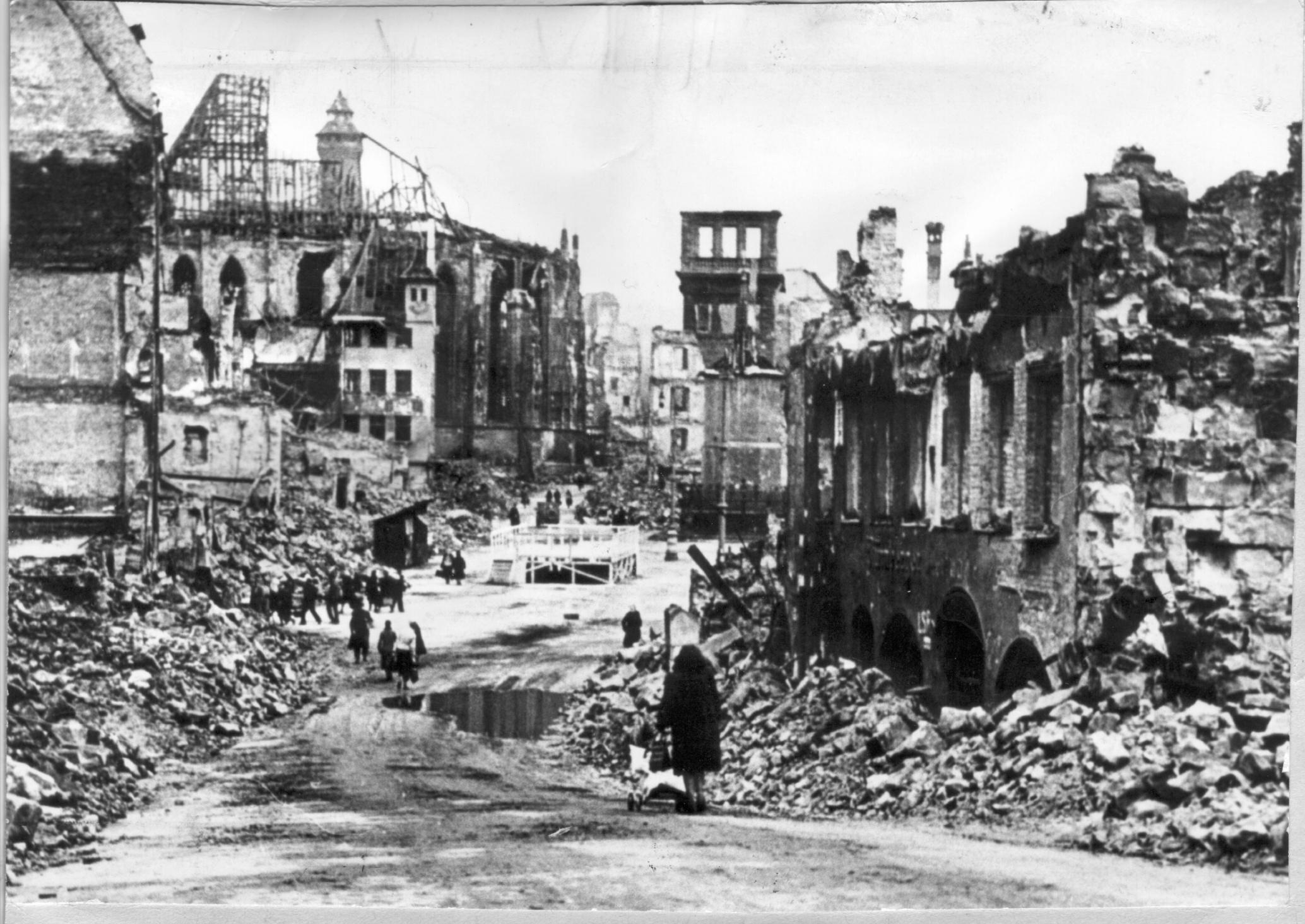
When they see such images, Yaniv and Nastya are not thinking of Nuremberg. They are not thinking of World War II. I can see the fear in their eyes. Not only the fear for their city and for their cat, which they had to leave behind, but above all for friends and relatives who stayed in Ukraine. Nastya’s parents, for example. The mother is sewing camouflage nets for the Ukrainian army. The father goes to the beach every day and fills sandbags to protect the buildings and monuments of the city.

And her grandfather is experiencing the second siege of Odessa in his lifetime. Back then, as a 14-year-old, he joined the partisans and stole batteries from the vehicles of the Romanian and German occupiers. How he will make himself useful this time, he doesn’t know yet. But he is already holding on to empty bottles, in case he needs to turn them into Molotov cocktails. Nastya is stifling tears as she talks about him.

In the meantime, the tour has arrived at the art bunker, below the Imperial Castle: “This is where the most important art treasures were stored during World War II to protect them from the bombs. But people also found refuge in the cellars, which had once been dug to keep the beer cool.”

Yaniv and Nastya are thinking of their friends all over Ukraine, holding out every night in bunkers or in subway shafts. They never complain about their own situation, by the way, but always talk about the people in Kharkiv or Mariupol, who got it much worse. At one point, Yaniv says: “It could be worse. We could be living in Afghanistan or Syria.”

Later, we go to the planetarium at Plärrer Square, right next to the Municipal Utilities building, which could star in any GDR movie. Nastya heard at the train station that they will give out free SIM cards for Ukrainians here. About 50 people are already standing in line, most of them exhausted, with blank looks, no tears left to cry.

People ask each other where they are from and then nod silently. Ukraine is a large country, almost twice the size of Germany, and Yaniv and Nastya hear about many towns for the first time. Besides those short questions, there is not much talk. Nobody wants to burden the others with their personal suffering.

It’s a warm day, so I suggest a walk through the Volkspark with its lakes. Nastya asks if she is allowed to feed the ducks, because then she would buy some bread. But she has heard that in Germany, there are many rules about what is allowed and what is forbidden. For the same reason, my friends don’t follow me when I leave the path and take a shortcut through the meadow. They prefer to take the long detour, not wanting to do anything wrong.

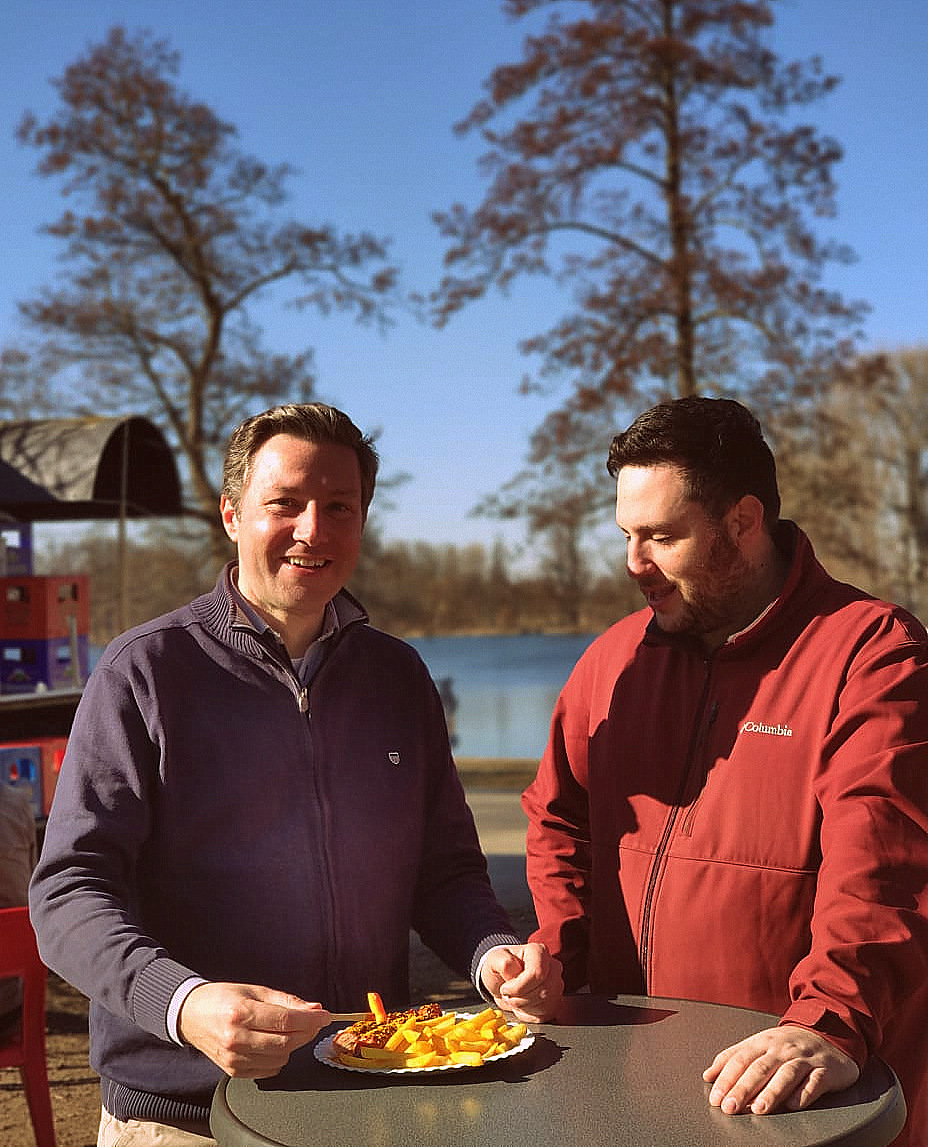
As we are eating currywurst at Fritten-Kalle, still in the park, Yaniv, pointing to the monumental building across the lake, asks: “What is that Colosseum there?”

I explain that we are standing on the grounds where the Nazis held their party rallies. This is where the marches took place. This is where the propaganda films were produced. This is where a nation was being sworn in for war.
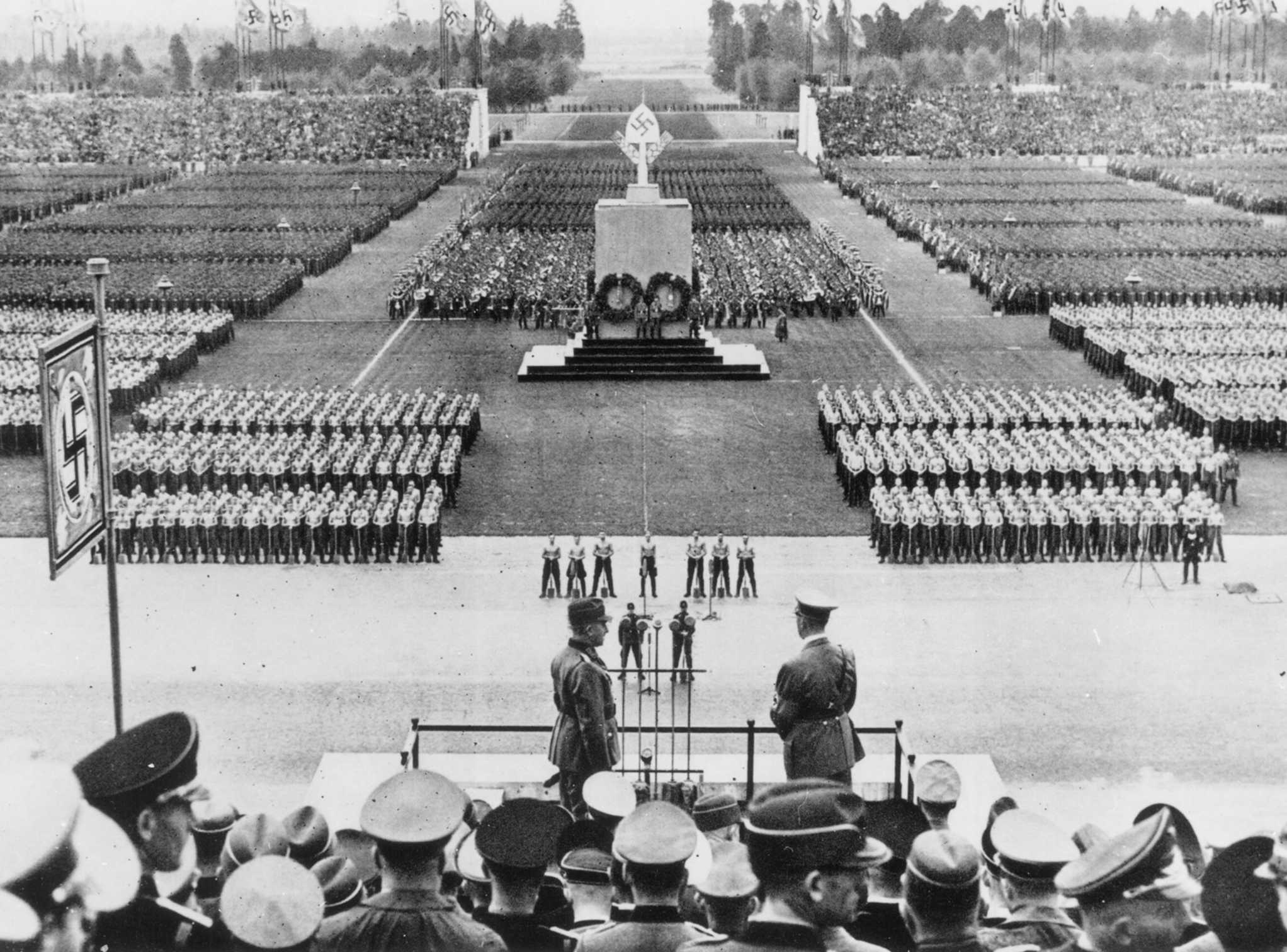
Yaniv says: “The fact that I, as a Jew, can stand here and say loudly and freely that Hitler was an asshole, that’s actually enough satisfaction for me.”

His grandparents and great-grandparents, who once had to flee Odessa to escape the Nazis, would never have thought it possible that their (great-)grandson would one day flee to Germany, and to Nuremberg of all places, and that he would chat with a German in sight of Nazi architecture and steal the fries off a German’s paper plate because I was so immersed in historical explanations.

Oh damn, this curry sauce is so hot, it really makes your eyes water.
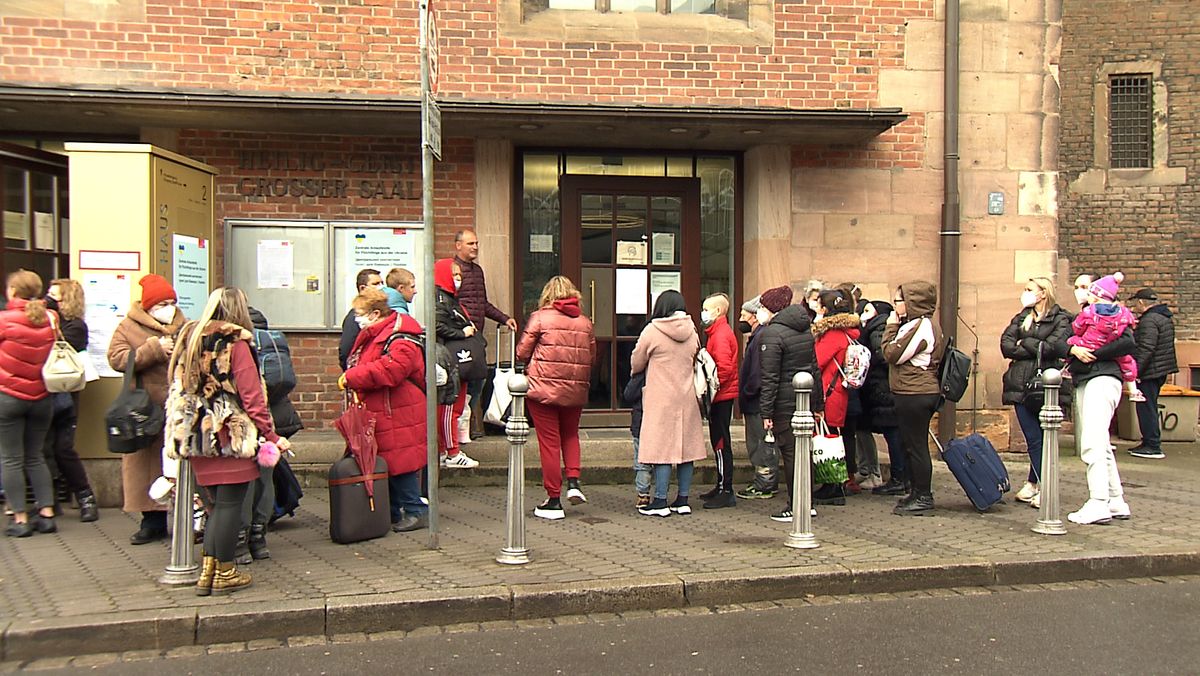
In the evening, we stop by the Welcome Center for Ukrainian refugees at Hans Sachs Square. About thirty people are waiting in line to register; they have just arrived from the train station. One or two bags is all they have for their new life. Less than most of us pack for a holiday.

There is information for people who need medication or a doctor. There are food vouchers. People can get vaccinations. The Ukrainian diaspora seems unfathomable, because there are bi-, tri-, quadrilingual people helping everywhere.

Back outside the Welcome Center, I am explaining the legal intricacies of their residency status to my friends. As a lawyer, I am constantly fighting against misinformation from non-lawyers spreading on the internet like a plague. There is no difference between peacetime and wartime, this is a perennial scourge of humanity. No, you will not be deported after three months. No, your relatives will not have to pay higher taxes if they house you. No, you do not have to stay in the town where you first register.
A woman with a child approaches, listening shyly. She doesn’t want to interrupt us. But I can tell she has something on her mind, so I turn towards her.

“Sorry to interrupt,” she says with a soft voice, “but I would have an apartment for a woman from Ukraine with a child. Free of charge, of course. For a year. Do you know anyone, perhaps?”

She has no connection to Ukraine, knows no one from there, but is eager to help. We also don’t personally know anyone who currently needs an apartment in Nuremberg, but we discuss the various possibilities of networking with those in need of help. When the woman, still holding her child by the hand, casually mentions that she has already been standing in front of the Welcome Center all day to present her offer, Nastya can no longer hold back.

Now she bursts into tears, not because of the horror, not because of the war, not because of the bombs, not because of having become a refugee from one day to the next, but because of the unexpected generosity of complete strangers. “I can’t believe that there are such good people,” she murmurs over and over, apologizing for crying in public. After all, she doesn’t know if that’s even permitted in Germany.

Links:

  • More stories from Ukraine.
  • More about refugees.
  • Germany’s official welcome website with information for refugees from Ukraine.
  • To make matters a bit more complicated, though, Germany is a rather decentralized country, so that every state, region, town and regional transport authority have their own additional rules. Honestly, it’s more confusing than in those dodgy Donbas “People’s Republics”. – But still, please don’t get legal advice from your grandmother in Kamyanets-Podilsky who read something on an internet forum from somebody in Krasnokutsk, whose niece once watched a movie with lawyers.
Posted in Germany, Life, Ukraine | Tagged , , | 10 Comments

Humanity’s Response to Catastrophes

A symbolic photo, taken in Odessa, Ukraine.

Posted in Photography, Ukraine | Tagged , , | 4 Comments

Attack on Odessa

I am currently working on an article about the Ukrainian port city of Odessa, where I was staying in January 2020, until the Corona pandemic called me back home. Because the article will be as comprehensive as you already fear, I will need a few more days of writing.

Sifting through the photos, I had to choke when I came across this one: a map of the siege of Odessa in 1941, photographed at the “Museum of the Heroic Defense of Odessa at the site of the 411th Battery” – and suddenly of tragic topicality.

At Odessa’s main train station, the city still proudly displays the Order of Lenin and the title “Hero City”, awarded by Stalin in recognition of Odessa’s long perseverance during the siege by the German and Romanian armies. In light of this, it is all the more cynical to sell the current Russian invasion as a campaign of “denazification”.

But I will of course also talk about all the other sides of Odessa: art, culture, city history, the movie-famous staircase, cats and why you should not necessarily take the cheapest ship for your onward journey.

In the meantime, we can only hope that Odessa will not be reduced to rubble like other cities in Ukraine have. And if there is something you always wanted to know about Odessa: Just leave a comment.

Links:

Posted in Military, Photography, Travel, Ukraine, World War II | Tagged | 6 Comments

Blue & Yellow

When I lived in Ukraine, I poked fun at how many things were painted in blue and yellow, down to rubbish bins and park benches.

I wouldn’t do that anymore today. Now, I am happy about every blue-and-yellow flag which I see, hoping that the solidarity such displayed also extends to driving less and turning the thermostat lower, in order to use as little Russian gas and oil as possible.

My most beautiful blue-and-yellow sight was in Bitola, at the old Turkish cemetery, no longer in use for a century already.

Bitola is in Macedonia, and that’s quite fitting. Because that cute country, too, has its right to exist denied by some of its neighboring countries. Luckily, Macedonia joined NATO in 2020, which may offer at least a little bit of protection.

Links:

Posted in Macedonia, Ukraine | 6 Comments

A Postcard from the Teutonic Knights

These days, I am finally finding the time to write and mail the postcards promised to supporters of this blog. I know that some of you have already been waiting for months.

But, as so often, it turns out that it was a good thing to wait!

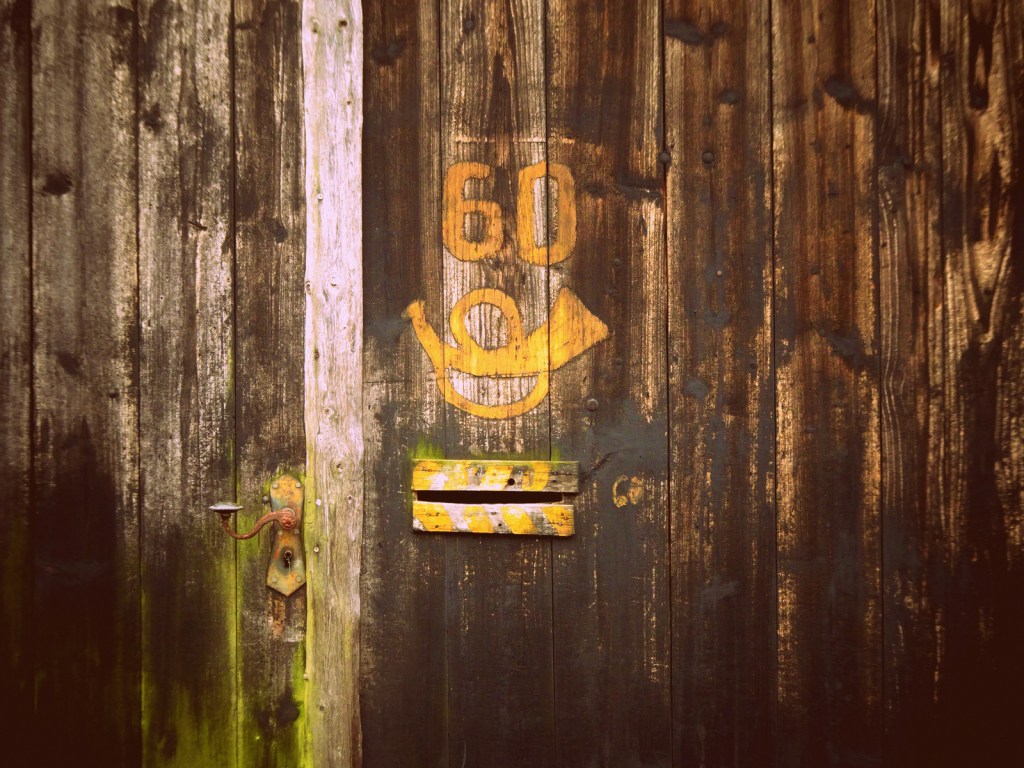
Because I am currently in Bad Mergentheim, which has probably the most beautiful letterbox in Germany. So, a postcard mailed from here is something very special indeed.

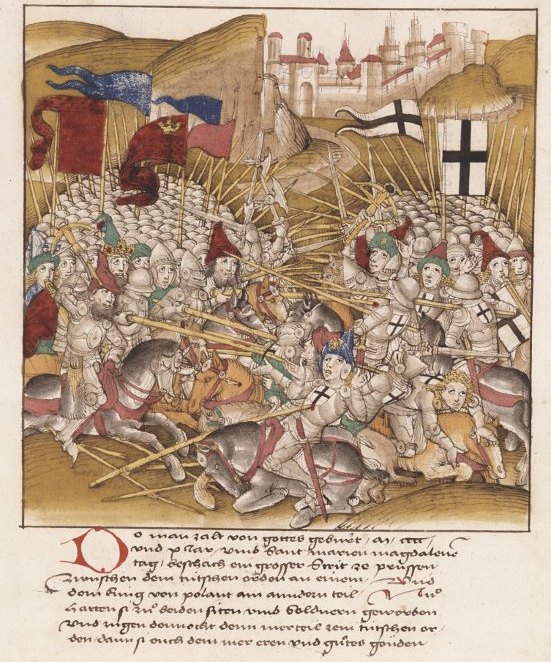
This historic letterbox is situated outside the castle of the Teutonic Knights, a dubious gang of conspirators who nicked the Holy Grail during the crusades and then set half of Eastern Europe on fire, establishing a sad German tradition. That’s why the German Army still proudly displays the black-and-white cross on their tanks.

So, it may be that your postcard will have some blood on its hands. Or, if you are lucky, it will come with a drop from the Holy Grail. Either way, you can look forward to my article about Bad Mergentheim, a nice little town, which, to no fault of its own, is only burdened with the presence of the Teutonic Knights because they got kicked out everywhere else.

Illuminated penguins, Illuminati, can this be coincidence? Soon, you will find out! If the Knights don’t stop me…

Posted in Germany, Photography | Tagged , | 6 Comments

Hitchhiking as Science

Zur deutschen Fassung.

Hitchhikers have this image of hapless hippies, too stoned to catch the bus in time. Or guys who just got out of the joint and ain’t got no money for no ticket to nowhere.

In reality, many hitchhikers are sociologists, geographers, psychologists, actresses, linguists, medical doctors or rocket scientists. And lawyers, like myself, as you may be able to tell from my standard hitchhiking attire.

Some hitchhikers also have a rather scientific or mathematical approach to this means of transport. They record wait times, average distances, speed, and plenty of other parameters. Then they upload the information to a database, for everyone to benefit. For free, of course.
Ábel Sulyok, a hitchhiker from Hungary and an atomic physicist, has gathered all the data on waiting times in Europe and compiled an interesting map. It shows the average waiting times in minutes from less than 30 minutes (green) to more than 90 minutes (dark red). Average waiting time is one of the most important factors by which to measure the “hitchability” of a country or region.

Obviously, many hitchhikers don’t contribute to such statistics. (Neither do I, to be honest. First, I often travel without a watch or a mobile phone. Second, I am much more interested in stories than in numbers.) Still, people who have hitchhiked much more than me, say that the map is a pretty good reflection of reality.

This map is especially useful if you want to go on a hitchhiking trip, but don’t really care where to. Ireland, Belgium, the Netherlands, Denmark, Albania, Montenegro, Romania, Moldova, Belarus, Lithuania, Latvia and Estonia look like very promising countries.

I’ve had quite good experiences in Eastern Europe, the Baltics and the Balkans myself. Hitchhiking in Belgium and the Netherlands also worked quite okay. I don’t know about Luxembourg, but as all trains, buses and trams are free in that country, you might as well make use of that.

Another thing I can confirm from personal experience is that islands are quite easy to hitchhike. The smaller, the better. I don’t know what it is, but on small islands, people seem more relaxed, open and friendly. And there are more drivers with pick-up trucks, which is always fun.

More than the difference between countries, I have noticed a difference in regions. Rural and especially mountainous areas are almost always better for hitchhiking than busy areas, let alone large urban sprawls, where nobody could guess where you are trying to get to. In the mountains, people often hitchhiked themselves as kids or teenagers, or they know that there aren’t many buses. National parks are also really good, because many people are in a good, relaxed mood when going there.

I have also had quite good experiences in Germany, Austria and Switzerland. I really have no idea why the south of Austria is painted in such negative colors in the map. Obviously, it helps to speak the local language. And in these countries, the license plates indicate where the car is from (and possibly going to), in Germany even down to the town level. It makes it much easier to talk to drivers at gas stations, when instead of asking “are you going to Bavaria?”, you can ask: “Oh, I see you are going to Passau. That would help me tremendously, because I am trying to get to Austria, and you could drop me at the last gas station before the border.”

And once you are on the highway in Germany, the famous Autobahn, people are going up to 417 km/h, so you can get really far in no time. Germany – or both Germanies, to be exact – also used to have quite a hitchhiking culture, so you meet many drivers who remember it romantically. It happened to me a number of times that a middle-aged woman, looking completely normal and un-adventurous, would pick me up and start telling me about the time she hitchhiked to Afghanistan after finishing high school.

Among the countries with longer waiting times, I got a few theories. In Sweden, people are generally averse to any human interaction. (They might take you if you put “I’ll be silent” on your sign, for all I know.) In the north of Scandinavia, I guess there are simply fewer cars. So, while a wait time of 70 minutes sounds bad, it may translate into an acceptance rate of 100%. In the United Kingdom, there is often simply no space by the side of the road.

Why Croatia is such an outlier among otherwise very friendly Balkan countries, I have no idea.

And I am really baffled by Southern Europe, with the exception of the islands, of course. I haven’t tried hitchhiking there on the mainland (except in the German-speaking, mountainous north of Italy), but I have heard from quite a number of really experienced hitchhikers who say that Italy and Spain are the absolute worst. Allegedly, if you rely purely on hitchhiking, you’ll cross Russia all the way to Kamchatka faster than you will cross Spain from the Pyrenees to Gibraltar.

But, speaking a bit of Spanish myself, I have always been tempted to try hitchhiking around Spain. Let’s just hope I ain’t gonna end up dying a sun-scorched death in the desert of Andalusia.

Anyway, I just wanted to post this map in order to ask you hitchhikers out there about your own experience. What did you notice? What are your tricks to get a lift?

And stay tuned for my own hitchhiking adventure this spring!

Links:

Posted in Europe, Travel | Tagged , , | 21 Comments

Walking from Castle to Castle

Zur deutschen Fassung.


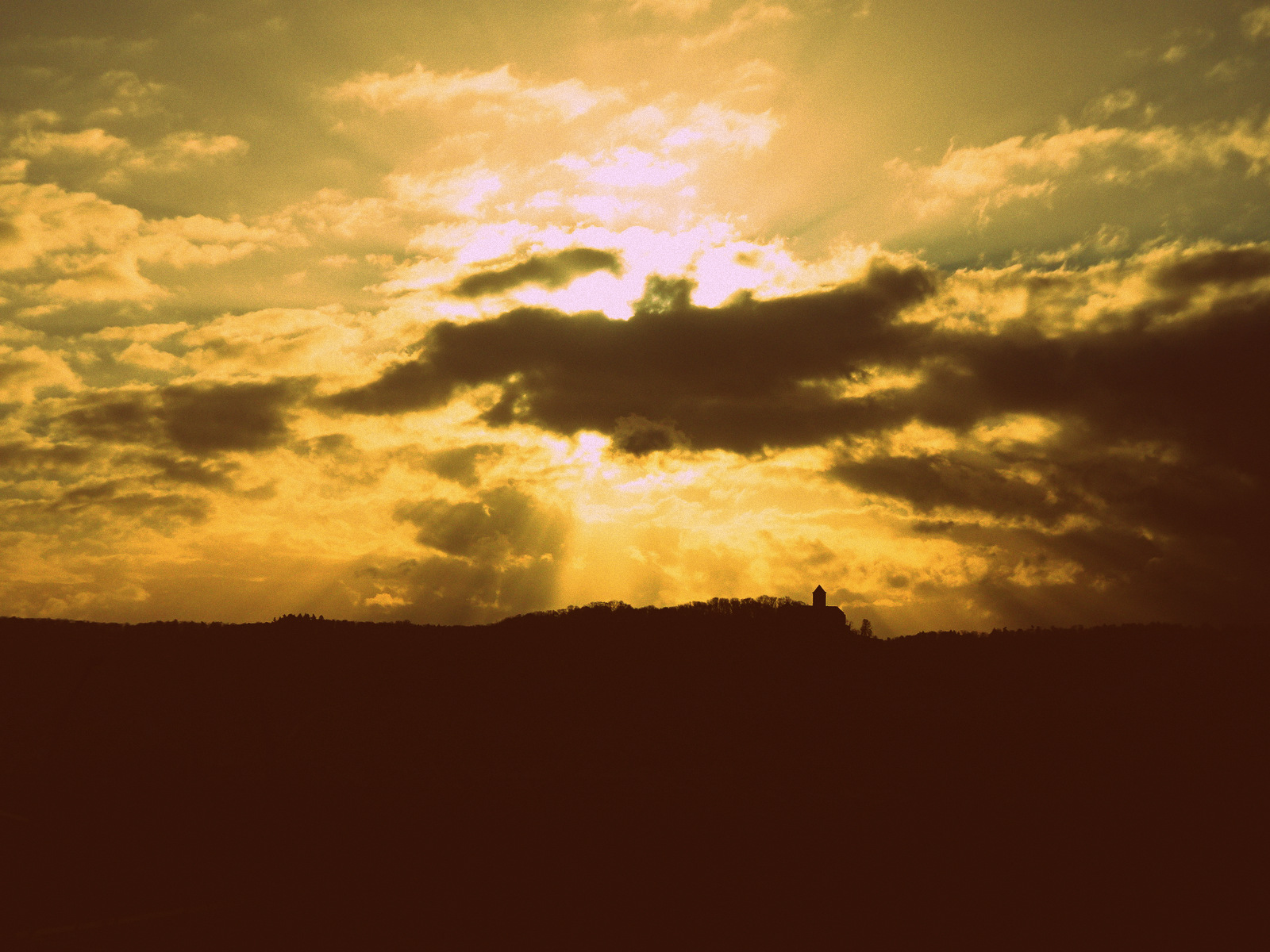
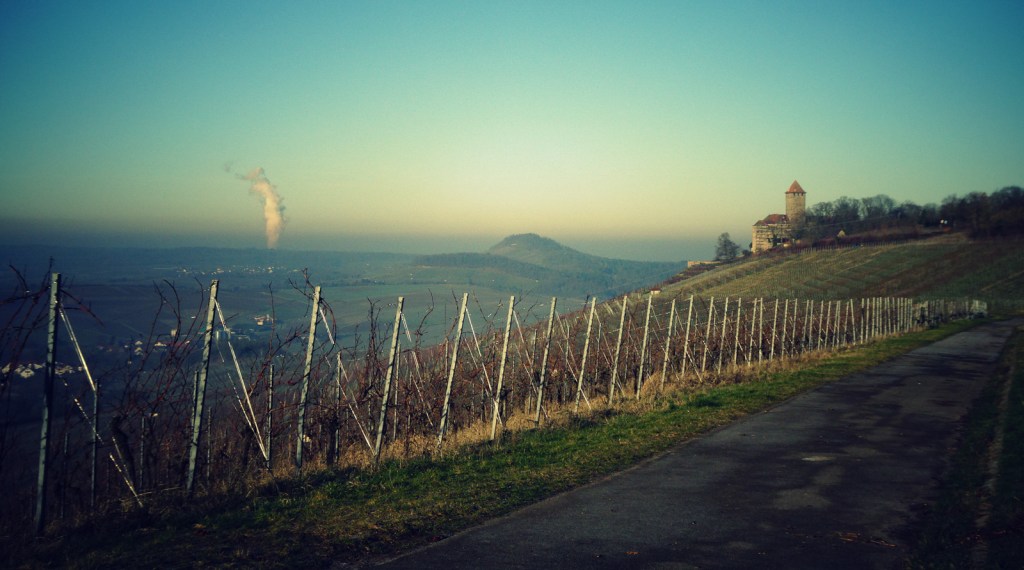
The early morning light promised a sunny day, and the first castle popped up on the horizon.

The last weeks have been so gray, cold and rainy that you can’t let such a day go by unused. So I ignored my endless to-do list, packed cigars, candy and a newspaper instead, put on hiking bookts and was out of the house as quick as a rabbit.

In the area around the Löwenstein mountains, which are really more hills than mountains, you can hike wonderfully from castle to castle. Once you have ascended to one of them, you can already see the next towers, fortresses or ruins from the hill. If anyone is allergic to castles (due to an inherited crusader trauma, for example), you really shouldn’t go hiking around here.

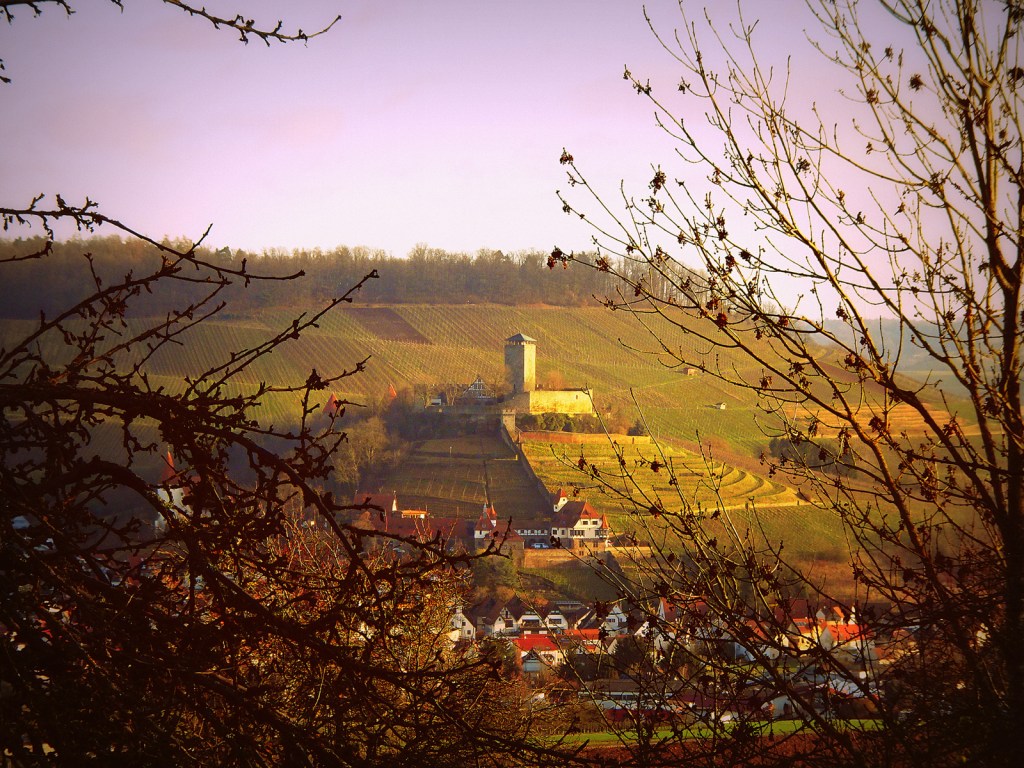
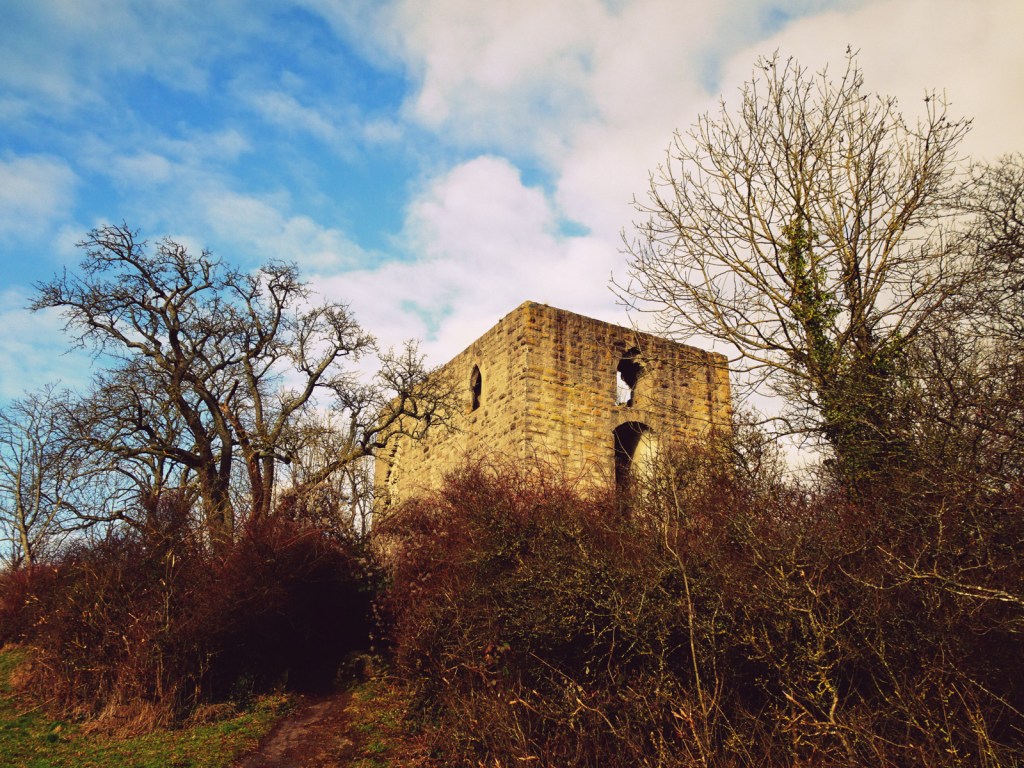
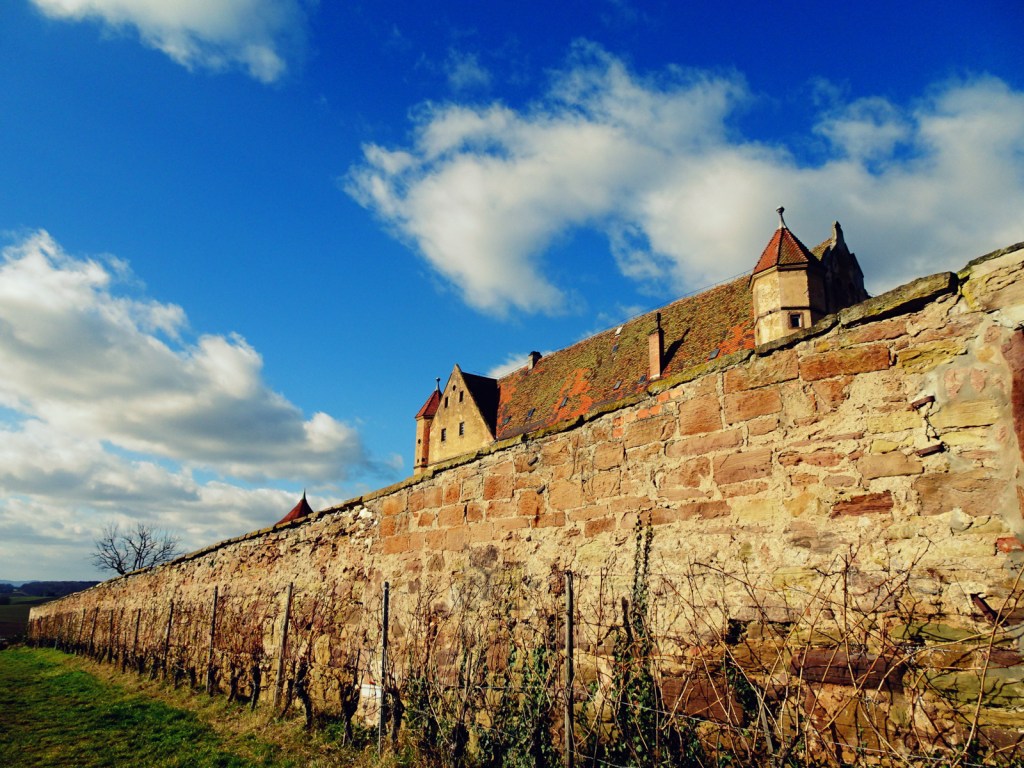
And thus my spontaneous path led me via Lichtenberg, Beilstein, Helfenberg, Wildeck castles all the way to Stettenfels Castle.

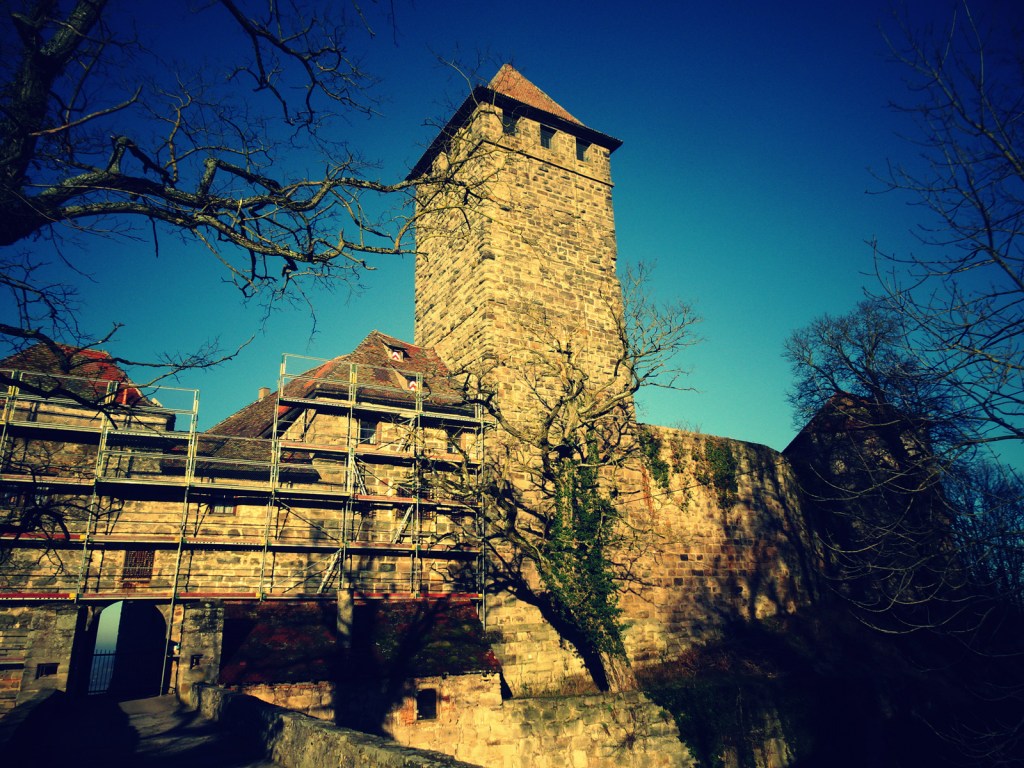
Stettenfels Castle, perched monumentally on the vineyard, was unfortunately closed and guarded by an oddball owl. This castle was once destined to become a Nazi “Ordensburg”, which never happened, because World War II got in the way.

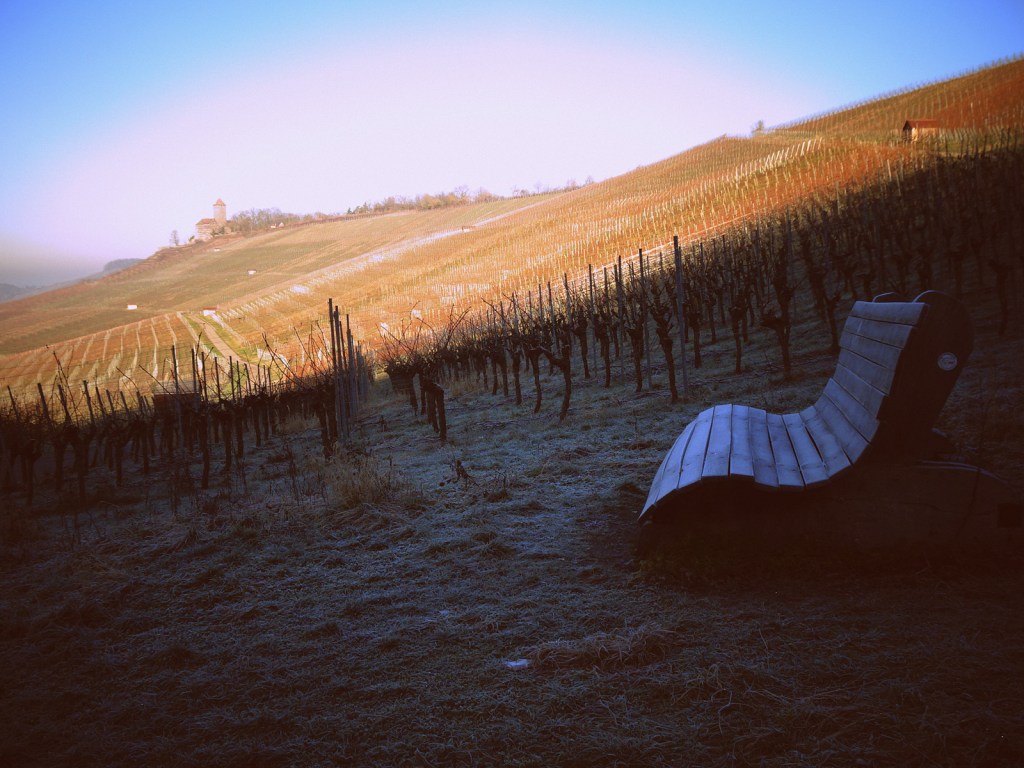
I personally wouldn’t know what to do with such a pompous castle, to be honest. For my purposes, one of the small cottages on the slopes or just a bench with enough sunlight would suffice.

In the village of Untergruppenbach, below the haunted castle, I detect some mysterious markings and, strung up on a pole in the middle of the village, an explicit warning.

Because the sky is turning black, dark and menacing, too, I take the warning seriously and make my way back. As I stand by the road, trying to hitchhike to Oberstenfeld, an older gentleman approaches and informs me: “It’s very dangerous what you are doing there.”

“No, not at all,” I attempt to play down the subject, thinking that for the hundredth time, I’ll have to refute the prejudices about hitchhiking.

“I had a relative who was murdered while hitchhiking,” he says. Now, that comes as a shock, and let my outstretched arm drop. “He was 22 years old. Happened near Tübingen. Forty years ago, though.”
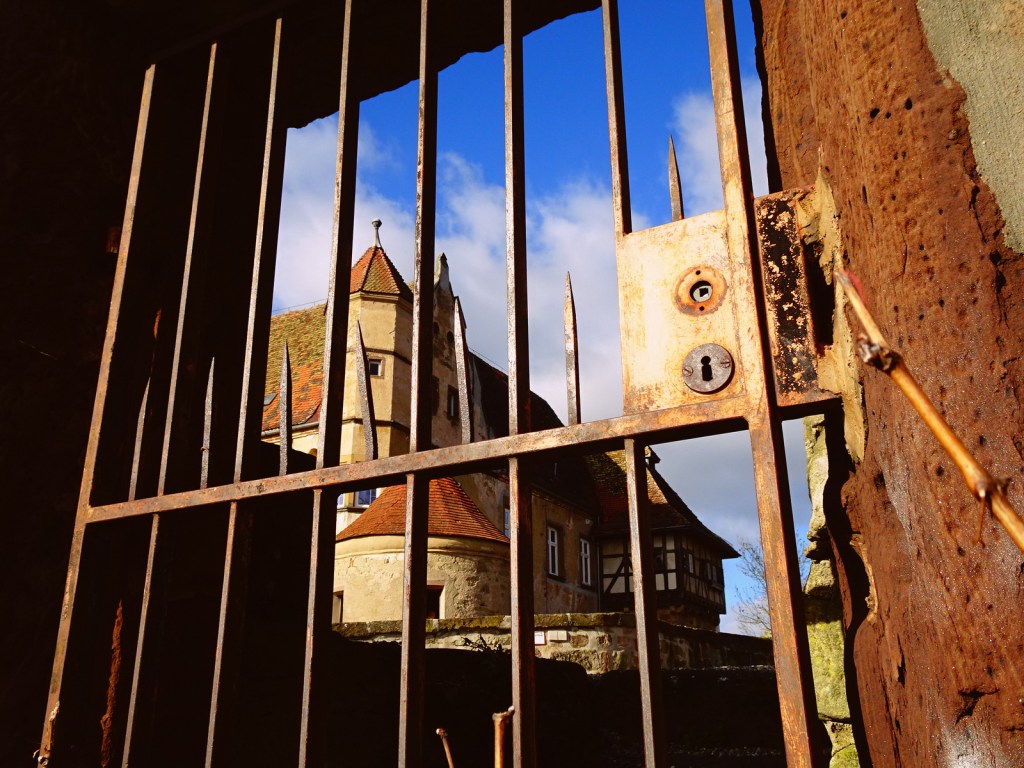
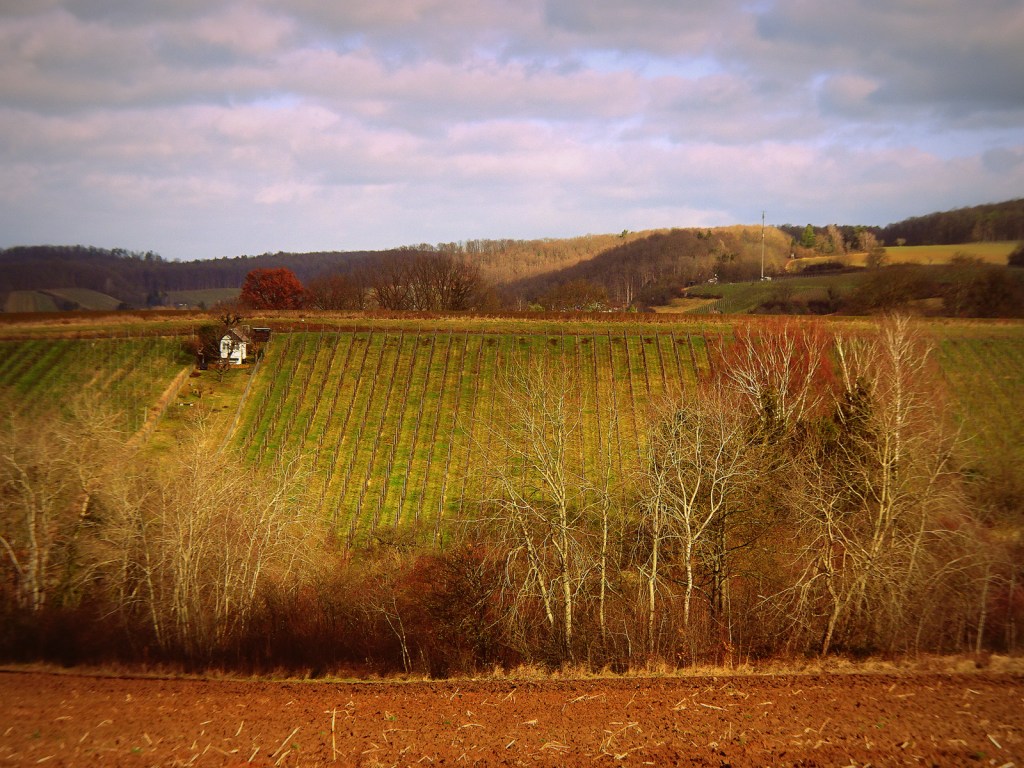
It doesn’t really scare me, but I don’t want to hurt the feelings of the bereaved gentleman. Fortunately, he knows that a bus will be leaving in five minutes. To make sure that nothing happens to me on the way, he gets on as well. And then he knows a horror story about each place we are going through: “At this intersection, many motorists have had fatal accidents.” “In Abstatt, there was a couple, they died in a plane crash. Left four children behind.” “In Beilstein, you have to be careful about the Latter Rain Mission.”

Hm, and everything seemed so peaceful on the morning hike.

Later, I tried to learn something about the murder of the young hitchhiker. But all I found was a report about Richard Schuh, a hitchhiker, murderer and the last person to be executed in West Germany.

Someone really needs to take it upon himself to improve the image of hitchhiking. And I guess I know a guy who might be the perfect person for that job.

This image has an empty alt attribute; its file name is andreas-mitfahrbank-sitzend.jpg

Links:

Posted in Germany, Photography | Tagged , , | 3 Comments

One Hundred Years Ago, Sweden set out to Create a New Man – January 1922: Eugenics

Zur deutschen Fassung.


So, what are your resolutions for the new year? Drink less, eat more, go to bed earlier, forward this blog to some friends? These are all good resolutions, for sure, but they’re a bit modest.

Look at Sweden, which, after a night of heavy drinking, on 1 January 1922 resolved to do nothing less than create a new man. The new Swede was to be taller, stronger, more handsome, healthier and, yes, more sober! True to the old Swedish motto “wenn man was verbessern wollen tut, gründet man ein Institut“, the State Institute for Racial Biology was founded at the University of Uppsala one hundred years ago on that very day.

And it was about time. Because one hundred years ago, the Swedes were rather small and wizened people, which is why they were not very welcome when they went on vacation, whether in England, in France or down the Volga river. Very often, the Swedes had to cut the trip short after a few days, returning home with nothing but a ship full of souvenirs. A sad life.
Of course, it was not the Vikings’ fault that they looked like leprechauns. No, it was – like so many things – the fault of the Romans. They had built a European-African-Asian multicultural empire in which citizens from all corners of the Earth could move about, work, study and retire as they pleased. In the process, it so happened from time to time that citizens fell in love and mixed their genes, which, as Charles Darwin could explain better, leads to bigger, stronger, more attractive and more intelligent offspring. Barbarians not blessed by Roman civilization, such as the Germans, Scandinavians, Scots and Irish, on the other hand, had to fish in an increasingly muddy and incestuous gene pool.

But now for a big leap into the modern era. Science is subject to fashion trends. The current hype is digitalization, the foolishness of which I have already illustrated. (Based on a train journey to Sweden, coincidentally.) At the beginning of the 20th century, the hype was eugenics, a (pseudo) science that attempted to address social issues with biological methods.

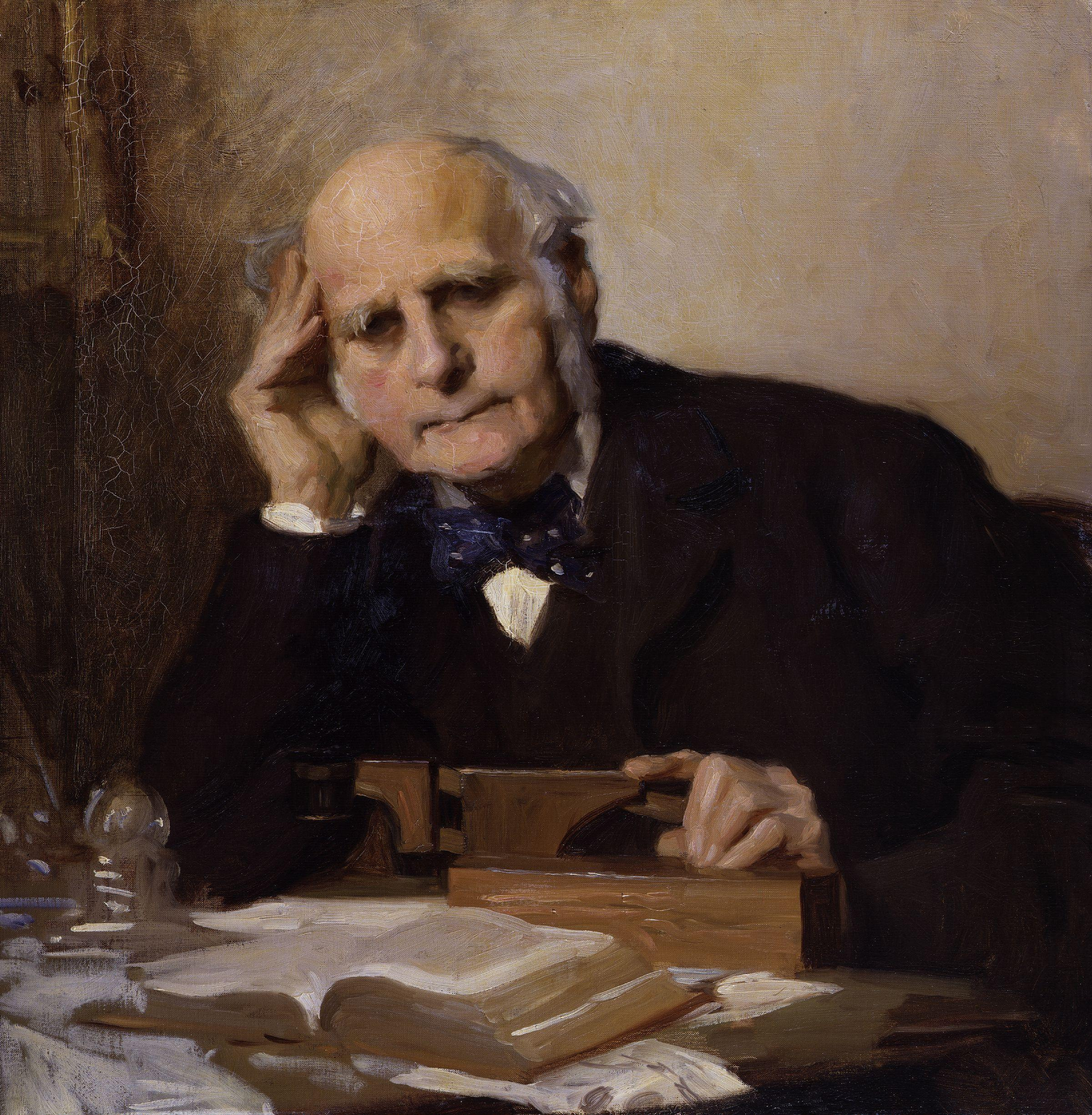
One of the most important people in this context is Francis Galton, who coined the term eugenics in 1883. He was a cousin of Charles Darwin and impressed by the latter’s travels and theories. And who wouldn’t be? However, he was a bit impatient. Darwin could explain no matter how many times that natural selection happens over tens of thousands of years, that it is unplanned, and that observations of birds in the Galapagos islands cannot be applied to humans in Britain. Galton ignored all of this, thinking that he could develop the theory further, apply it to human beings, and that one or two generations would be enough to spice up the human race genetically, if only the “right people” would reproduce. With “right”, he meant white, rich, upper class. That goes without saying.

“I am the pride of creation.”

The idea became really popular. Eugenics societies were established all over the world, eugenics conferences were held, and eugenics laws were enacted, for example in the USA, Switzerland, Scandinavia and Canada. Because it quickly dawned on the eugenicists that it would take an awfully long time to get the “right” people to reproduce, they soon came up with the idea of preventing the “wrong” people from doing so. Violently. With forced sterilization and forced castration.

Two notable exceptions were the Soviet Union, which simply banned genes altogether, and the German Empire under the Kaiser. In Germany, too, eugenic ideas caught on quickly. But instead of state intervention, the free market was relied upon. Germans were encouraged to detect hereditary, disease-related, but also race-related undesirable characteristics (circumcision) in potential sexual partners on the first date. That’s why nude bathing became mandatory at public beaches. (The German abbreviation FKK stands for “frow away your klothes, komrade!”)

“Oh yes, let’s do the same,” the Swedish eugenicists were enthusiastic. They had long wanted to shed the image of the prudish Scandinavians anyway. Unfortunately, except for that one week in August, it was too cold in Sweden for nude swimming.

While eugenics programs were different in each country, I’ll stick to Sweden for now. Sweden’s is an interesting (or frightening) example because it was quite an extensive program, because it served as a model for Nazi Germany, and because it lasted until well after World War II. Moreover, Sweden is always considered to be quite liberal and easy-going and nice and relaxed; a stereotype that finally needs to be put to sleep.

The Swedish eugenics program is inextricably linked with the name of Herman Lundborg. He was a cliché Swede who believed in gnomes and elves and Aryans. Speaking of Aryans: Did I already tell you about my time in prison in Iran, where the Iranian judge apologized to me “because after all, we are both Aryans”? Many Iranians adhere to the theory that they are the real Aryans and the Germans are a small, underdeveloped brother nation. Yes, it brought exactly the same stupid look onto my face, and I was locked up in solitary confinement again. But I don’t want to digress; we were just about to make the acquaintance of Herman Lundborg, the Swedish chief eugenicist.

Like most eugenicists, Lundborg was subject to a fundamental error. Although he could have known better from the Romans, he thought that the Swedish population suffered not from too little, but from too much genetic variation.

Strangely enough, there is not a single eugenicist who does not believe that he himself belongs to the most superior race. I don’t know how that worked out at the international eugenics conventions. But then, I have always wondered the same whenever I read about international neo-Nazi meetings where Mongolian, Colombian and Mexican neo-Nazis get together with German neo-Nazis for a beer.

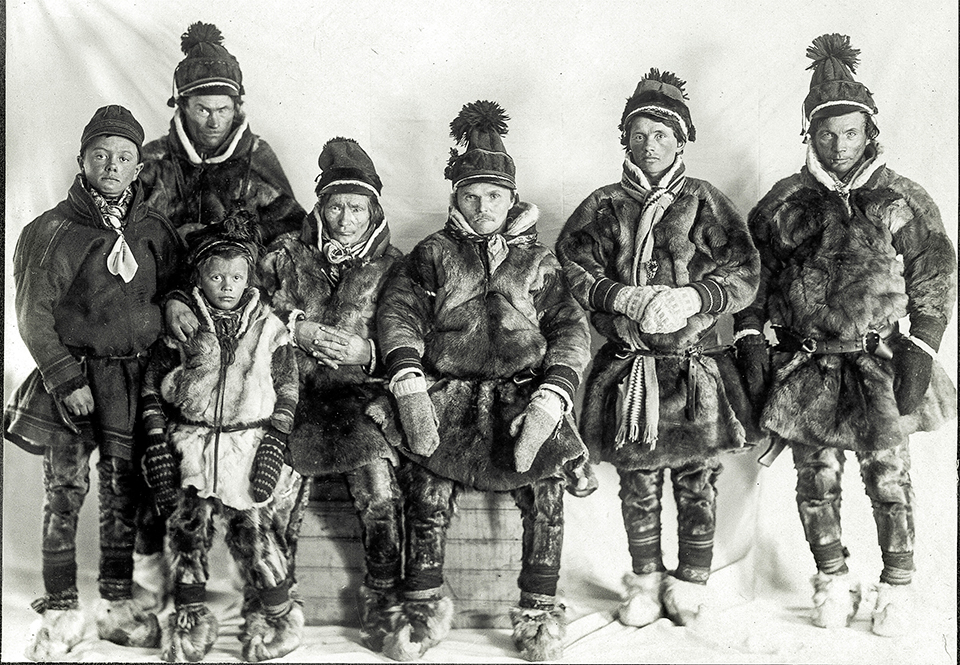
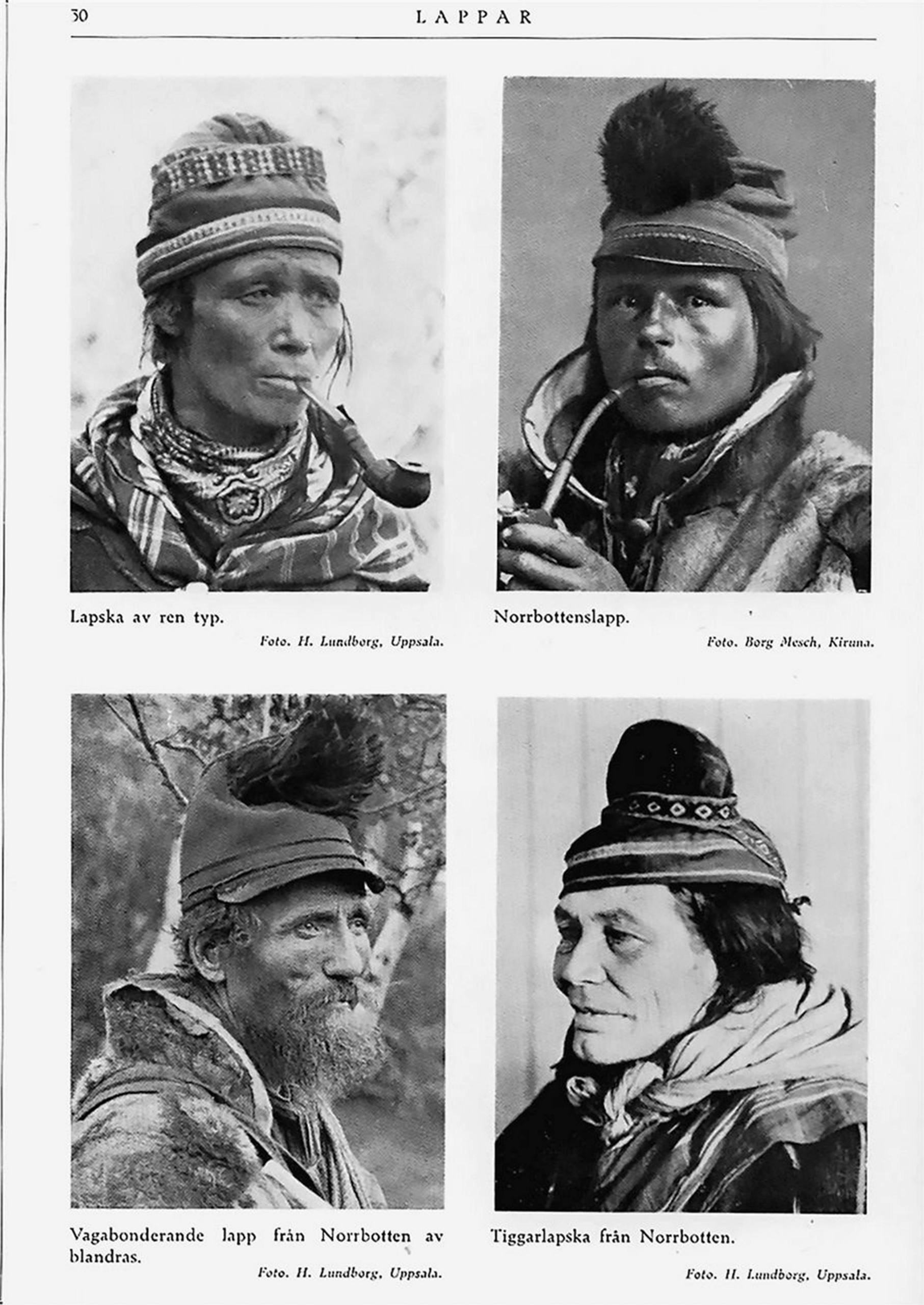
In any case, Lundborg kept babbling about the “exalted Nordic race” and the need to “prevent the degeneration of the Swedish people”. For him, the mingling of different races was a terrible evil. He had reserved a particular hatred for Finns, Sami, Lapps, Roma, Gypsies, Jews, Slavs, Blacks, Russians, Italians, Asians, Africans, Chinese, Arabs, Romanians, Albanians, Poles and Koreans, although – to his credit – he did not discriminate between North and South Koreans.

“Nice guy,” the Swedish parliament thought, and in 1922 appointed Lundborg as the first head of the just-established State Institute of Racial Biology. His methods, as was common among eugenicists, were measuring noses, measuring heads, taking blood samples, putting people in ridiculous costumes and photographing the undesirable ethnic groups with grim faces, while photographing the desirable ethnic groups in the best light. The books were richly illustrated and became best-selling coffee-table books. Pseudoscience can be very profitable, as homeopaths, astrologers and business consultants can attest to.

The Swedish institute was considered a pioneer by peers around the world. Foreign researchers came to Sweden to “learn” the trade, including Hans Günther from Germany, who later shaped Nazi racial ideology. Following the example of the Swedish institute, the Kaiser Wilhelm Institute for Anthropology, Human Heredity and Eugenics was founded in Germany in 1927 and soon provided the pseudo-scientific underpinnings of Nazi racial policy.

I have to say a few general words about the relationship between Sweden and Nazi Germany, including during World War II, here: Sweden had no problem with the Nazis. But they didn’t want to ally themselves either. Sweden just wanted to sell iron ore, and war is pretty good if you are in the iron ore business. When Germany invaded neighboring Denmark and Norway, and later the Soviet Union, Sweden allowed German troops to move through its territory. German money was very welcome, refugees from Germany not so much. After the German defeat became apparent in 1943, Sweden allowed the Allies to fly over its territory to bomb Germany, provided that the Swedish iron ore trains were not hit. This approach was called “neutrality”. (Switzerland is turning green with envy upon reading all of this.) In November 1945, a mere 6 months after the end of the war, Sweden declared war on the Third Reich, just to be on the right side of history. In return, IKEA received the concession to rebuild German homes.

Is this the appropriate punishment for World War II and Holocaust?

Lundborg, however, was too recognizably a Nazi sympathizer. He was fired in 1935 and had two children with a “genetically inferior” Sami woman he had met on his expeditions. Now, that doesn’t really surprise anyone, does it? It’s like those Christians who are most vocal against homosexuality. They always cheat on their wives with under-aged boys. Or like the leader of a German nationalist, xenophobic and homophobic party who lives in Switzerland, in a lesbian partnership with a woman from Sri Lanka. Or like the Serbian national hero Novak Djokovic, who pays no taxes in Serbia. The louder people preach, the less they adhere to their own sermon. (An exception is the author of this blog, who really practices the modest lifestyle he keeps advocating.)

But that was not the end of the Institute of Racial Biology. Quite the contrary, in 1935 the ball got really rolling. Up to then, they had only researched and published. Now, the theory was to be put into practice. In 1935 and 1941, the Swedish Parliament passed two laws on forced sterilization.

At first, “mentally ill” people were rendered infertile, then the “mentally deficient,” the “mentally disturbed”, people with psychological issues and people with physical malformations. Racism was not an official reason, but when Swedish doctors, all of whom belonged to the white, urban upper class, are asked to assess the mental state of possibly non-fluent Swedish-speaking nomads who had never been to school, you can see the problem. A problem inherent to many eugenics programs. In North America, intelligence tests were sometimes administered only in English, so Italian or Chinese immigrants naturally scored lower.

In 1941, the Swedish sterilization program was expanded to include social indicators. Now, behavior that was considered antisocial, such as alcoholism, could lead to sterilization. But of course only for the vodka alcoholic hanging out in the park, not the red wine alcoholic in his mansion. “Sexual debauchery” led to forced sterilization for some young women, for which visits to dance halls with changing dance partners were sufficient. Orphans were sterilized before they were released from the orphanage. Women seeking abortions often had to consent to sterilization. As late as the 1960s, a woman was accused of “undesirable social behavior” because she had joined a motorcycle gang; she was sterilized, too. And, of course, the unemployed, unmarried mothers, vagrants and, disproportionately, members of ethnic minorities.

As Gilbert Keith Chesterton, one of the few intellectuals of the 1920s who was critical of eugenics, wrote: “Every gloomy-looking vagabond, every taciturn laborer, every eccentric country hick can thus be effortlessly consigned to institutions built for dangerous lunatics.”

Some might call this antisocial behavior.

In the end, it was always about the reproduction of the white upper class, who didn’t even notice their racism and classism. Most people, and especially those moving only in circles similar to their own, are all too quick to take themselves as the benchmark. And thus, reading or arithmetic become the yardstick of intelligence, although from the point of view of those being judged, the scientists would be too stupid to milk a cow or find their way out of a deep forest. Especially in capitalism, work and consumption become the norm, although those who escape this social pressure paradoxically cause the least harm to the environment, the planet and thus humanity.

But which people are more useful or useless, that is not even a legitimate consideration. Not to pose the question of a person’s usefulness, that is the essence of human dignity! And that’s why it was a bit stupid of me to begin this article by making a distinction between attractive and unattractive people. (Which deprives me of the punch line that Swedes only became more attractive as immigration increased.) But it can’t hurt if even I learn something from my own writing.

Forced sterilization in Sweden, by the way, continued until 1975. In Finland until 1979. In Switzerland until 1985. In Peru, where the program took on genocidal proportions, until 2000. And in the Czech Republic until 2012.

But since then, the methods of eugenics have become more modern, such as prenatal and pre-implantation diagnostics. Population policy is coyly hidden in tax or welfare law, like child-related tax deductions that benefit rich parents more than poor parents. Or restrictions on welfare beyond a certain number of children. Or letting the old and weak die, so as not to impede the economy. And now you know in which tradition Sweden’s Covid policy sees itself.

This vagabond is trying to hide from the eugenics commission.

Sorry, this episode wasn’t as funny as I normally try to be. But not every topic is suited for humor. Just be thankful that I stopped before we even got to the Nazis.

But in February 1922, I will be back again, as funny, fresh and funky as ever. With history from Lithuania. Or Egypt. Or Poland. Or Rome. Or Turkey. Or The Hague. Or Latvia. Or Japan. Uff, every month, it’s such a tough decision! – And remember: If more people support this blog, I can write more than one episode of this educational series per month.

Links:

Posted in History, Human Rights, Philosophy, Sweden | Tagged , , | 11 Comments

Schöntal and Berlichingen

“The name is a bit of a show-off,” I thought, as the train pulled into Schöntal, which translates as “Beautiful Valley”. But, stepping out of the station, I had to admit that the name of the village was not wholly unjustified.

But as beautiful as the valley was, the sun pushed me up the hills on the left and right banks of the river.

There, completely unexpected, I found a surprisingly large Jewish cemetery. I mean really large, especially considering how small the villages down in the valley are. More than 1000 gravestones are slumbering there in the forest, I would venture to guess.

A memorial plaque informs me that nearby Berlichingen was once the seat of a rabbi and that the cemetery is about 400 years old. The last grave I find is that of Henriette and Samuel Strauss, who died in May and June 1938. Sadly, this is the time when the history of most Jewish cemeteries in Germany suddenly breaks off. For reasons well known.

Less well known, probably, is the fact that the Limes, the border of the Roman Empire, once ran through here, dividing Germany into a civilized and an uncivilized part. But then, even civilization does not protect against barbarism, as we can seen from the topic alluded to above.

If the village of Berlichingen, mentioned above, rang a bell, you are not mistaken. It is indeed named after the knight’s dynasty known from literature and medical history.

Then it turned grey and rainy and uncomfortable, and I had to cut short my hike. But don’t despair. Soon, there will be spring!

Links:

Posted in Germany, Photography | Tagged , , , | 17 Comments

Winter is no Excuse not to go Outside

In a week of nothing but cold days, yesterday was supposed to be the least cold one.

So I left home, early enough to catch the rising sun behind the forest, for my weekly walking ritual.

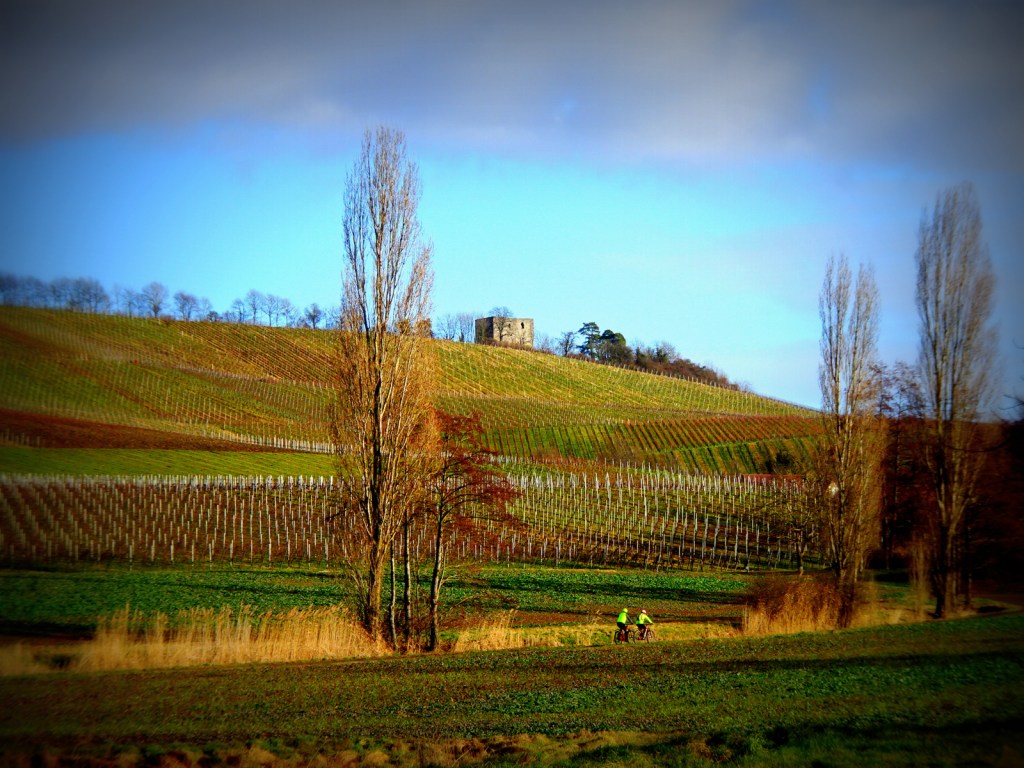
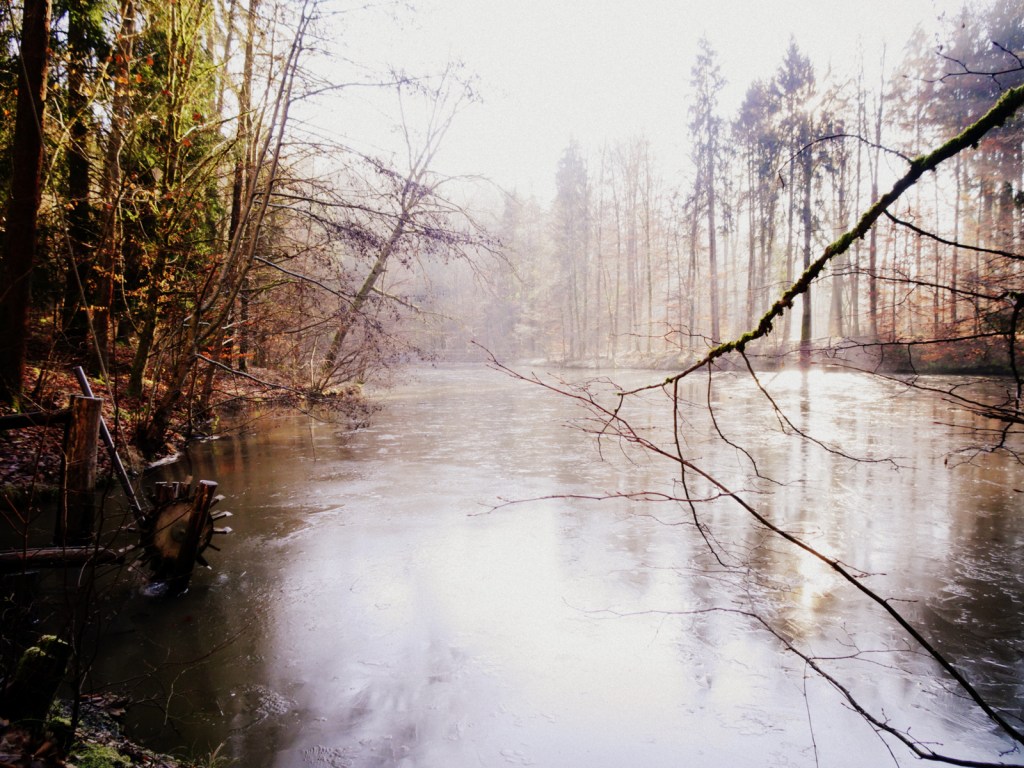
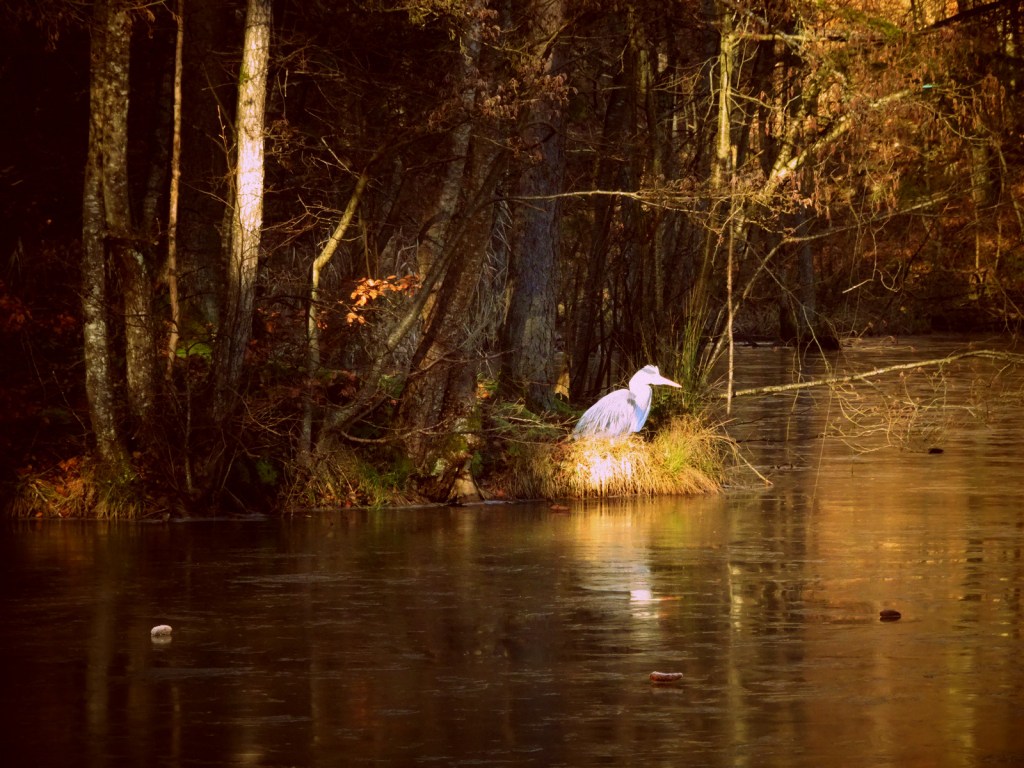
From Oberstenfeld, I climbed up the hill to Lichtenberg Castle, got lost in the forest, found Feuersee (Fire Lake) and finally reached Marbach via its gallows hill, where a beautiful cat joined me to watch the sunset.

Having spent winters in Lithuania and in Canada, I don’t even need a hat or gloves when it’s only zero degrees. For me, this is sitting-outside-with-a-book weather.

Links:

Posted in Germany, Photography | Tagged , , , | 14 Comments