No liability for intergalactic struggle

When I do legal translations, I often wonder if anyone will ever read all the terms and conditions and privacy policies that I translate. Probably not. Even I as a lawyer don’t read them very often.

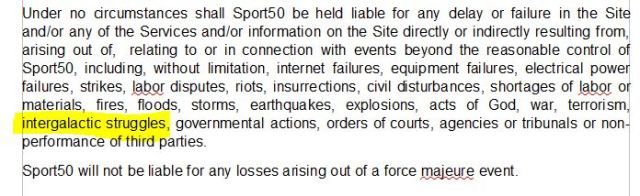
That brings up the idea of sneaking something funny or crazy into terms and conditions to see if anyone will ever find out. Of course, I am an honorable person, so I have never done that. But now I had a client with humor (or with a lawyer with humor) who already has a provision about intergalactic struggles in their terms and conditions.

intergalactic-struggles

Not surprisingly, they refuse any liability in such a case.

Posted in Language, Law | Tagged | 3 Comments

Easily Confused (63) Politicians and Science

Donald Trump:

Justin Trudeau:

What a difference an education makes.

Posted in Canada, Politics, USA | Tagged , , , , | 1 Comment

Pardon me!

When laws change, people who were once convicted as criminals are (sometimes) pardoned. We often find that just and necessary, like in the case of those convicted of homosexual acts when this was still a crime (which isn’t all that long ago), or those sentenced by previous dictatorial regimes. Reading Emmanuel Carrère‘s book Limonov, I found an interesting new perspective of these kind of pardons, in the context of Gorbachev’s glasnost policy.

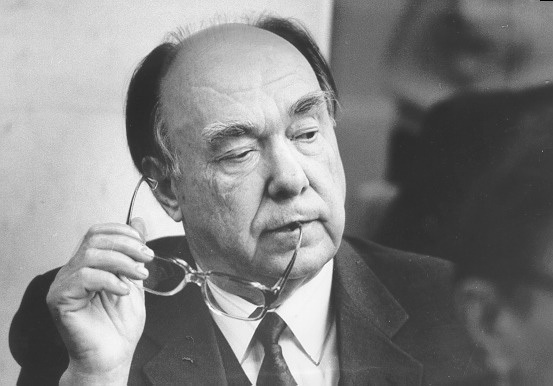
In 1989, Alexander Yakovlev, Gorbachev’s principal adviser, explained on television that the decree rehabilitating all those who had been persecuted since 1917 was not at all a measure of clemency, as people in the Party were saying, but of repentance: “We are not pardoning them, we are asking their pardon. The goal of this decree is to rehabilitate us, who by remaining silent and looking away were accomplices to these crimes.”

Wise words.

Alexander Yakovlev

Alexander Yakovlev

Posted in Books, Cold War, History, Law, Politics | Tagged , | Leave a comment

After the Rain

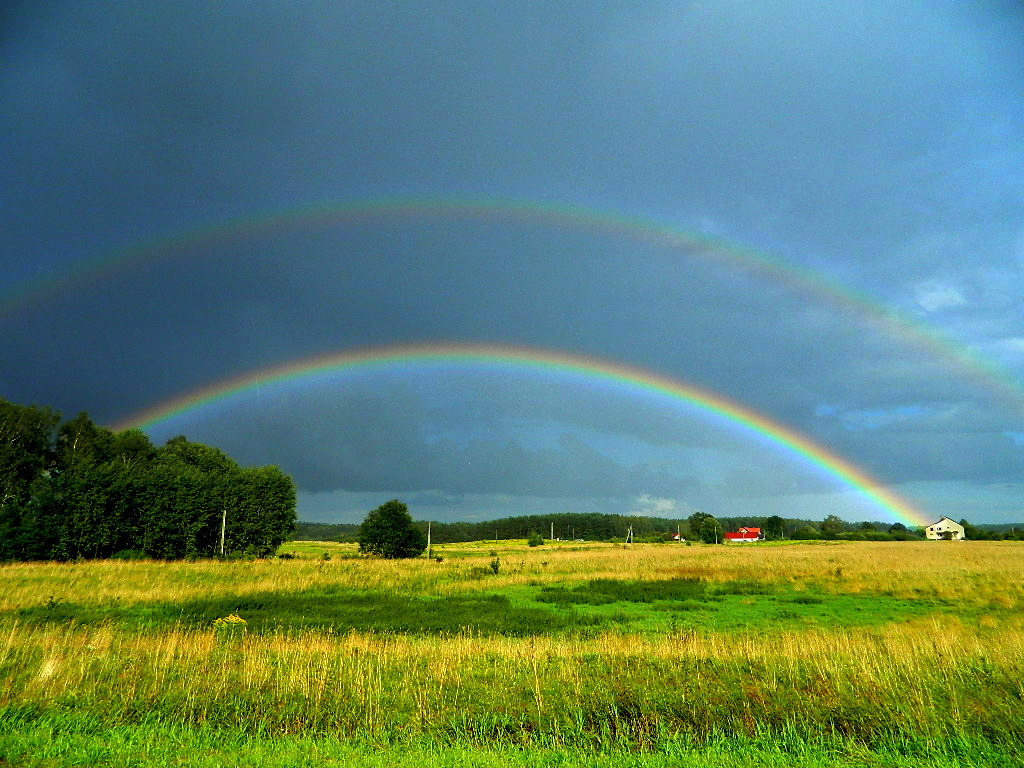
On my way back by bicycle from Europos Parkas to Vilnius, I first got lost (just a tiny bit) and then got caught up in the rain. By the time I had reached a patch of forest to seek shelter, I had already been soaked and was shivering from the cold that rain and wind brought with it.

After the rain however, I was rewarded with this sight.

The forest on the left is the one that provided cover during the downpour.

Posted in Lithuania, Photography, Travel | Tagged , | 13 Comments

After the Revolution

I am re-posting this article from 2015 because it seems that in Romania, the revolution is indeed never over:

– – –

This afternoon I had a brief exchange with a friend about the long-term effects of the Romanian revolution, probably the most bad-ass revolution of all the 1989 revolutions.

As you can see from the following excerpt, I was much more positive in my assessment, stressing the progress that has been made in Romania. But I do quite frequently hear dissatisfaction, particularly with the lack of criminal convictions of those responsible for the killing of protesters during the revolution as well as for the Ceaușescu dictatorship in general, but also with the political system, the media and the way parties work.

Romanian revolution unfinished

I think this level of criticism and skepticism is healthy and useful, although, as I point out in the conversation above, I find it natural that a revolution runs out of steam once the primary objectives have been achieved. It’s much harder to explain why people should take to the street about changing the law of admitting new parties than it is to motivate people to rise up against a regime that leaves them hungry, cold and destitute.

Coincidentally, later today I was reading Ryszard Kapuściński’s Shah of Shahs, a most insightful book about the revolution in Iran in 1979, and came across the following passage:

When thinking about the fall of any dictatorship, one should have no illusions that the whole system comes to an end like a bad dream with that fall. The physical existence of the system does indeed cease. But its psychological and social results live on for years, and even survive in the form of subconsciously continued behavior. A dictatorship that destroys the intelligentsia and culture leaves behind itself an empty, sour field on which the tree of thought won’t grow quickly. It is not always the best people who emerge from hiding, from the corners and cracks of that farmed-out field, but often those who have proven themselves strongest, not always those who will create new values but rather those whose thick skin and internal resilience have ensured their survival. In such circumstances history begins to turn in a tragic, vicious circle from which it can sometimes take a whole epoch to break free.

I am curious to hear from my Romanian readers, particularly those who remember the time of the revolution, what you think about this.

Posted in Books, History, Iran, Philosophy, Politics, Romania | Tagged | 8 Comments

Cats in Riga

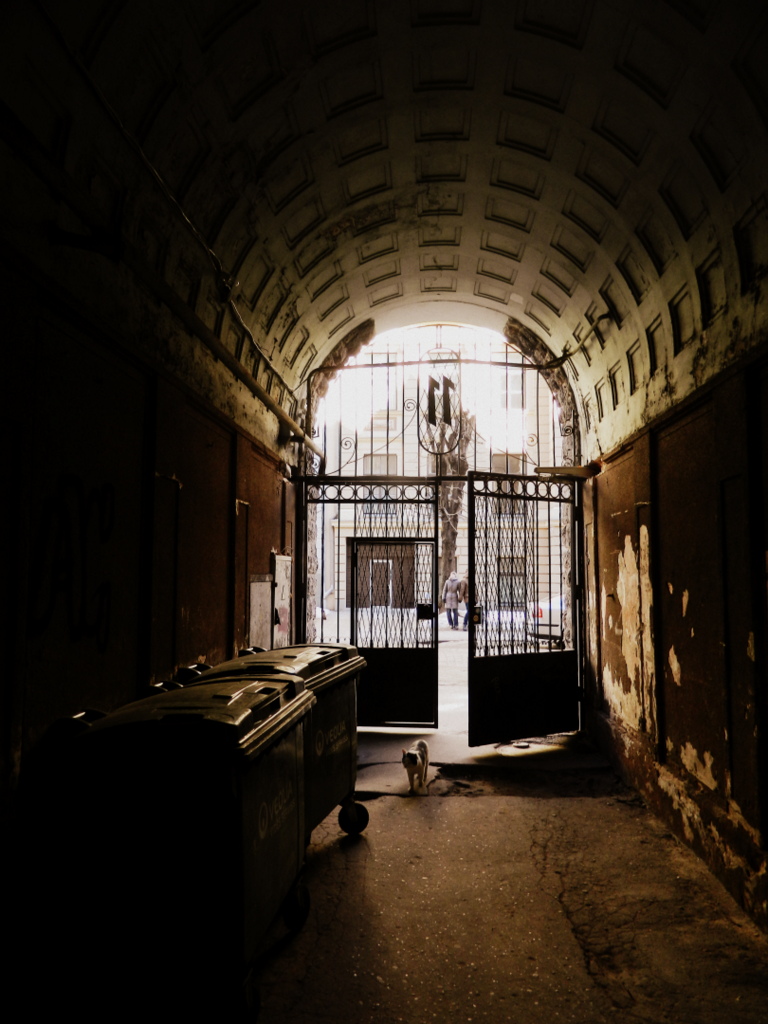
cat Riga

cat 3 Riga

lion Riga

cat 2 Riga(All photos taken during my trip to Riga in March 2013.)

Posted in Latvia, Photography, Travel | Tagged , | 16 Comments

Maritime Law with Cats

When I started this blog, I promised myself that I would never stoop as low as other blogs who use photos of cats to surreptitiously obtain their readers’ affection. But now I have come across a historical source of law in which cats fill maritime law with life.

Katze SchiffThe legal code of the Consulate of Valencia, published in 1494, contains the following clauses, whose disregard in subsequent centuries may have contributed to the demise of cats’ social status:

If any property or merchandise is damaged by rats while aboard a vessel, and the patron had failed to provide a cat to protect it from rats, he shall pay the damage; however, it was not explained what will happen if there were cats aboard the vessel while it was being loaded, but during the journey these cats died and the rats damaged the cargo before the vessel reached a port where the patron of the vessel could purchase additional cats. If the patron of the vessel purchases and puts aboard cats at the first port of call where such cats can be purchased, he cannot be held responsible for the damages since this did not happen owing to any negligence on his part.

(From Consulate of the Sea and Related Documents by Stanley Jados, quoted according to The Great Sea: A Human History of the Mediterranean by David Abulafia. – Hier geht es zur deutschen Version.)

Posted in Books, History, Law, Travel | Tagged , , | 2 Comments

Easily Confused (62) GDP

Donald Trump on GDP:

I already understood more about GDP in 9th grade. But then, I just went to a regular public school.

Robert Kennedy on GDP:

Posted in Economics, History, Politics, USA | Tagged , , , | 3 Comments

Climate Change is Real (my TEDx video)

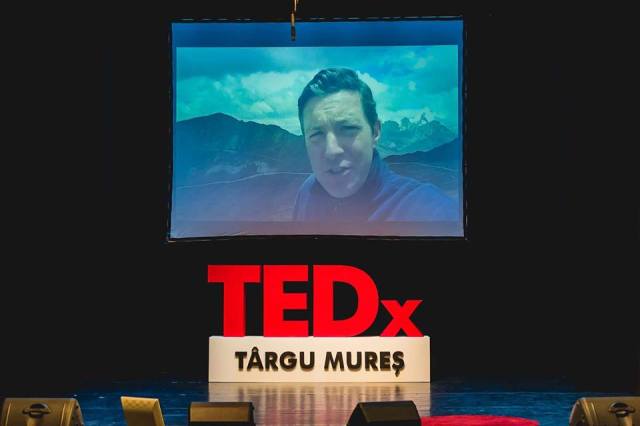
After giving a talk at a TEDx conference in Romania in 2015, I stayed in contact with the very friendly team in Târgu Mureș even after I moved to South America. So, for this year’s conference, they asked me for a video message.

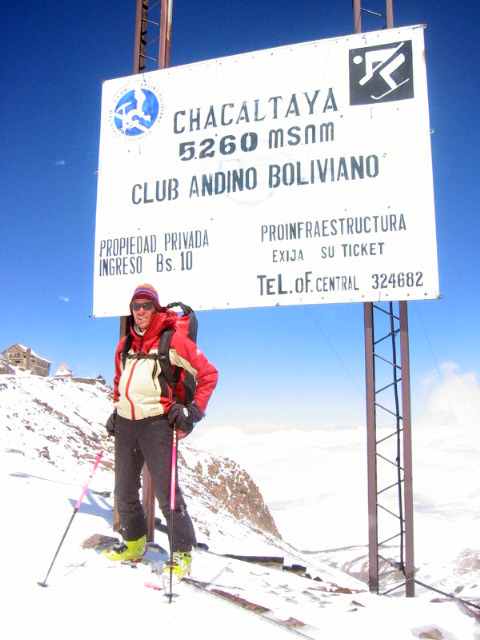
I was happy to do that and climbed all the way to Mount Chacaltaya in Bolivia, at 5395 m a new record for me, a great adventure, but sadly also a place where the effects of rapid and dramatic climate change can be observed.

Here are the few words I could manage to speak, still short of breath after the heroic feat of climbing that mountain.


If you don’t believe that there really was the world’s highest ski resort, look at some photos from a few years ago:

skiing

Admittedly, I was there in summer, but until 2009, the glacier had been there all year round, as glaciers usually are. And above 5000 m of altitude, the change in seasons – less pronounced that close to the equator, anyway – shouldn’t make that much of a difference. (The Făgăraș Mountains in Romania are only 2500 m high, and I saw snow there in a very hot summer.)

In another coincidence connecting my two favorite countries, Romania and Bolivia, I was wearing my cool Gabor hat from Transylvania on that expedition.

andreas-moser-chacaltaya

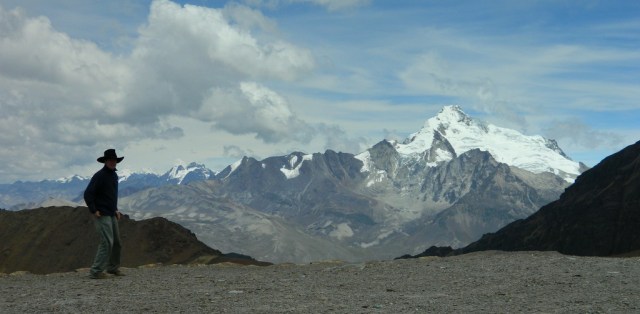
The mountain in the back, Huayna Potosi, still has snow because it is another 1000 meters higher, but the glacier there has lost thickness and is retreating too.

Because I am returning to Europe in May 2017, I will probably be able to attend the next TEDx conference in Târgu Mureș in person.

tedx

Posted in Bolivia, Romania, Travel, Video Blog | Tagged , , , , , | 6 Comments

Winston Churchill on New Year’s Resolutions

It’s mid-February. If you are like me, most of your new year’s resolutions have already dissipated, been forgotten or pushed to March or April. The smarter ones among you won’t have made any resolutions in the first place.

But if you want to feel really bad, consider young Winston Churchill’s new year’s resolutions, as reported in his autobiography My Early Life:

I therefore planned the sequence of the year 1899 as follows: To return to India and win the Polo Tournament: to send in my papers and leave the army: to relieve my mother from paying my allowance: to write my new book and the letters to the Pioneer: and to look out for a chance of entering Parliament.

These plans as will be seen were in the main carried out.

A year has after all 365 days. Why limit oneself to resolutions regarding exercise, diet or learning a language?

River War ChurchillWhen Winston Churchill made these resolutions he had just turned 24. The planned book was about the war in Sudan. Churchill had requested to take part in that campaign several times but had always been turned down. He eventually paid for his own trip to Africa and financed it by writing reports for newspapers. The River War came out in two volumes comprising around 1,000 pages. Shockingly for someone of Churchill’s age, the book was already his third. It should however be remarked, without the age of the writer or the age of the time being able to serve as an excuse, that The River War includes some crude racist and anti-Islamic passages.

Churchill_&_Mawdsley 1899 OldhamChurchill did indeed run for a seat in the British Parliament at age 24, but did not get elected that year. Of course, he managed to get elected in the same constituency only the following year. It probably helped that he had used the few months in between to work as a war correspondent in South Africa where he, as a civilian, took part in some skirmishes, got captured by the Boers, managed to escape from a POW camp, found some English miners in South Africa (one of whom happened to be from Oldham, Churchill’s constituency) who hid him underground before he managed to escape South Africa hidden on a train, making him a celebrated war hero. Obviously, Churchill also wrote a book about these exploits, London to Ladysmith via Pretoria.

All in all, Churchill published 43 books in 73 volumes, some quite good ones among them (he won the Nobel Prize in Literature). All of this while fighting military and political campaigns, governing an empire and winning World War II. He also found time to paint, to build houses as an amateur bricklayer and to collect butterflies.

So now, please tell us why YOU can’t find the time to go running three times a week or to read one book per week.

Winston_Churchill_in_1900

Winston Churchill in 1900, unimpeded in his productivity by Facebook and YouTube

(Thanks to long-time reader Ana Alves who mailed me Churchill’s autobiography as part of her annual book package. If you want to support this blog too, here is my wishlist of books. Thank you! – This article was also published by Medium.) 

Posted in Books, History, Life, Military, Politics, Time, UK, World War II | Tagged , | 16 Comments