Car-free by choice

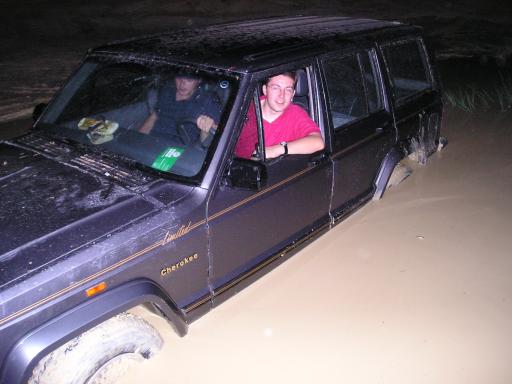
Testing the limits of my Jeep Cherokee.

No, I am not immune to charismatic cars. I have had some really cool cars myself: a Chevrolet Blazer S10 was the first one, then a Jeep Cherokee and finally a Jaguar XJ with a 222 HP engine. I loved the cars and I enjoyed them!

But 2 years ago, I decided to become car-free by choice. It has improved the quality of my life.

-For the money that I save on gas, insurance, repairs, taxes, and parking and speeding tickets, I could buy a yearly ticket for the rail and bus system. I always found a car a terrible investment: Not only does it lose in value dramatically the minute you put the key in the ignition for the first time, but you also pay insurance and taxes for 24 hours and 365 days a year although you only use your car maybe 2 hours a day.

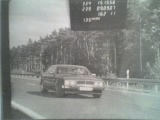
Caught speeding (a bit) with my Jaguar XJ.

-Although some journeys take longer, I lose less time because I can read newspapers, books or do some work during the journey. Or just sleep, which is still more productive than being stressed out in a traffic jam.

-I plan my trips better now. I don’t just drive to the supermarket for a pizza, but I plan what I need to purchase for the next few days. I don’t drive to the library to pick up a book, but I make a list and go once a week to pick up 5 or 10. Being without a car has made me much more time-efficient and organised.

-I walk more, so I am of course also much fitter. Also, you’d be surprised how many new things you discover in the area that you have been living in once you start walking.

-And finally, it’s a good excuse if somebody whom you don’t necessarily want to see (family, in-laws etc.) invites you for dinner: “Sorry, I don’t have a car, I can’t really make it.”

Just give it a try!

Posted in Economics, Travel | Tagged , , , , , | 12 Comments

What Sarah Shourd can’t say (yet)

Sarah Shourd, the American woman who was hiking in the Iraq-Iran border region last year and was arrested on that occasion and who subsequently spent 13 months in a prison in Iran, was finally released on 14 September 2010 without ever having been charged although the Iranian government continues to claim that she was/is a spy.

Sarah Shourd after her release from Evin prison.

I am happy for her, but we should not forget that her two friends Shane Bauer and Josh Fattal are still being held by Iran. We also should not forget that she was just hiking in the mountains, something which doesn’t really warrant being put into an Iranian prison for more than  year.

Unfortunately, Ms Shourd’s own comments after her release sound rather mitigating. Upon her release, she thanked Iranian President Mahmoud Ahmadinejad and Ayatollah Ali Khamenei, the representatives of the country that imprisoned her, for that “humanitarian gesture” of freeing her. No word about the year of her life that she has lost. But that wasn’t all: On 24 September 2010, Ms Shourd met with President Ahmadinejad in New York and later said that “it was a very gracious gesture and a good meeting”.

Andreas Moser after his release from Evin prison.

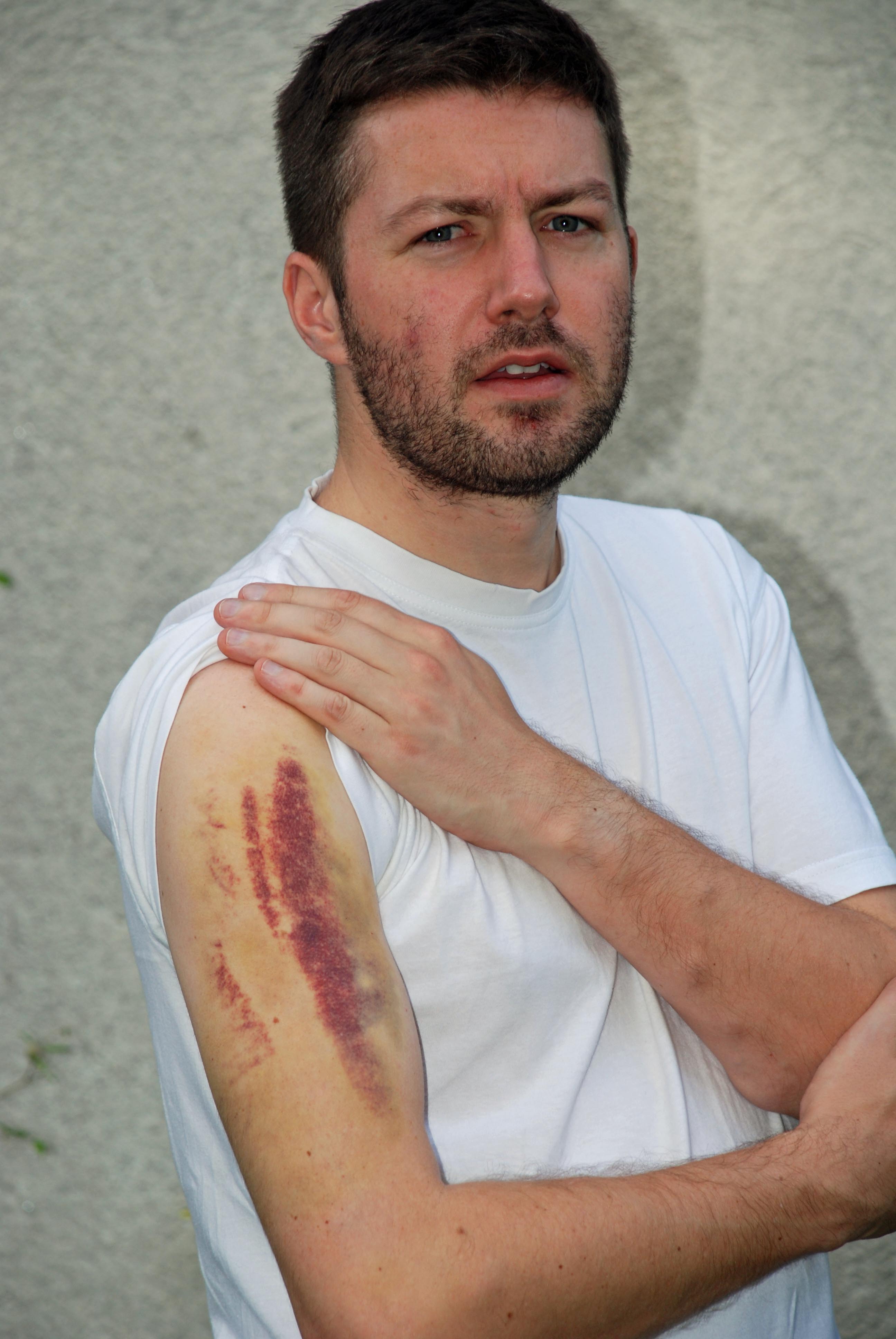
While I fully understand that Ms Shourd has to be diplomatic because her two friends are still in Iran’s hands, I would still like to point out that spending time in an Iranian prison is no piece of cake. How do I know that? I was there myself in June/July 2009. – I have seen a lot of bad places, but Evin prison in Tehran is as close to hell as I have ever been. I certainly have no reason to thank anybody in the Iranian government for kidnapping me from the middle of the street while I was on the way to a restaurant, for keeping me in solitary confinement and blindfolded for a week, for making me sleep on the floor and standing against walls for hours, for interrogating and threatening me day and night, for not informing anyone of my imprisonment, for not allowing contact with my embassy, let alone for the severe beating by the police a day before my arrest.

And by the way, releasing a prisoner for 500,000 $ is no “humanitarian gesture”, it’s selling a hostage. If the Iranian government has to resort to these measures to fill up its coffers, it might be a sign that the sanctions are beginning to show some effect.

Posted in Iran, Politics, USA | Tagged , , , , , , , , , , , , | 3 Comments

Ed, you are too late for the protest.

Dear Ed Miliband,

congratulations on becoming Labour leader, even if it might have irreparably strained relationships with those whom you professed to “love”. If that’s worth it for you, that’s your decision.

But what really struck me is that you have now – in September 2010 – declared that the Iraq war (of 2003) was “wrong”. You come up a bit late with that, don’t you?

Granted, you didn’t vote for the Iraq war in 2003, but then you weren’t an MP yet so you couldn’t really vote on it. Or actually, you could in a way: Did you subsequently vote for the Labour government that had gone to war? I bet you did. After all, in 2005 you stood as a Labour MP. Were there no alternative parties around that opposed the war, that you could have run for?

In fact, you even joined that same government in 2006, under Prime Minister Blair who had been the driving force behind Britain’s engagement in Iraq. You served in this government for 4 years, without any (audible or visible) criticism of its Iraq policy.

When I was active in politics as a student, at every protest or rally there were people who showed up towards the very end of it. Because they were afraid of the police, because they were afraid of being seen or confronted in public, or because they didn’t really believe in the cause. But they also didn’t want to lose the votes of those protesting so they paid a visit. – Ed, you are one of these phonies. You are not only late for the protest, you are too late.

And I wouldn’t even mind what your true opinion is or was, if only you were honest. I myself supported the Iraq war (one of the things which added to the end of my political career in the Social Democratic Party in Germany, where this war was extremely unpopular) because of my strong dislike of dictatorships but I also respect any other opinion. To be respected however, it has to be a real opinion, a conviction, a belief – not a reflection of the current polls.

If you were against the Iraq war all along, then you sold your convictions for your career in previous Labour governments. Or you were supportive of the Iraq war all these years and only changed your stance now to win the party leadership contest. Either way, I cannot trust you. – In the event that you changed your opinion about the Iraq war somewhere between 2003 and 2010, I find it highly unlikely that this conveniently happened just after the general election in May 2010 and before your entry into the leadership contest.

Andreas Moser

Posted in Politics, UK | Tagged , , , , , , | 5 Comments

The joy of reading many books at the same time.

Reading "Schachnovelle" ("The Royal Game") by Stefan Zweig.

“What are you currently reading?” – Don’t ask me this question if you don’t have a few minutes time. Because I love to read several books at the same time. Of course not absolutely simultaneously, but I begin with the next book before having finished the first one. And then I begin with another one, and another one. Sometimes, I am reading up to 10 books at the same time.

“Why?” – Mainly because I am in different moods at different times. Also, my brain does not always have the same level of receptiveness. And some books require a certain setting.

Reading "Catch 22" by Joseph Heller.

Let me introduce you to my current canon to exemplify my point:

Walden by Henry David Thoreau. Quite in line with my own philosophy of simple life and detachment from society, but not an easy read. This is the book that I like to read when I have an hour to sit in the forest and smoke a cigar. Because these moments don’t occur too often, I have been reading this book now for more than a year. Spreading out the experience of a book over such a long time does not diminish the joy. Quite the contrary: my longest read was also one of the most memorable ones and I cherished each occasion of the two years it took me to finish Der Zauberberg (The Magic Mountain) by Thomas Mann. With foresight, Thomas Mann mentions in the foreword that he hopes it won’t take seven years to finish this voluminous novel.

– At exactly the opposite end of the intellectual spectrum is The Foreign Correspondent by Alan Furst. Spy novels are perfect to read on the train or at night in bed when mind and body are exhausted. So far, I am not fully convinced by this author but I will wait for a few more chapters until I begin to pass judgement. If you want to read really good spy novels, pick anything by Eric Ambler.

– A work of finer literature is Invitation to a Beheading by Vladimir Nabokov. Not a particular friend of Nabokov ever since I broke off reading Pnin, I am however interested in all literature about prisons since my own stint in Evin prison in Tehran, Iran in 2009. I already have a few other novels about this subject lined up on my shelves: The Shadow of a Smile by Kachi Ozumba, whom I met personally and who is an incredibly friendly guy, and of course The Count of Monte Cristo by Alexandre Dumas.

-About my main areas of interest in law, politics, history, and philosophy, I am always reading a few books at once. Currently these are Counterterrorism and Comparative Law of Investigative Detention by my friend and legal mentor Dan Stigall (he was my supervisor at the US Army JAG Corps), The Big Questions: Philosophy by Simon Blackburn, Kleine Geschichte Englands (a history of England to acquaint myself with the country in which I live now) by Michael Maurer, War Games by Linda Polman, and The Case for Israel by Alan Dershowitz. And more lined up already: Freedom for Sale by John Kampfner, A  History of the Middle East by Peter Mansfield, In Defence of America by Bronwen Maddox, Nothing to Envy by Barbara Demick, Geschichte des Antisemitismus (a history of anti-Semitism) by Werner Bergmann, The Spirit Level by Wilkinson/Pickett although I am not quite in agreement with some of their statistical methods, No god but God by Reza Aslan, Wer bin ich und wenn ja wie viele? by Richard David Precht, and The Constitution of the United Kingdom by Peter Leyland.

– And sometimes I am still reading literature in my mother tongue, especially from authors that have an incredibly impressive mastery of German. One of them is Thomas Mann and I have just started his Bekenntnisse des Hochstaplers Felix Krull (Confessions of Felix Krull). My other favourite German author is Jurek Becker and his masterpiece is Jakob der Lügner (Jakob the Liar). Next, I will try Der Fuchs war damals schon der Jäger by Herta Müller. After all, it doesn’t happen every year that a German author wins the Nobel prize for literature.

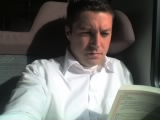
Train rides are perfect for reading.

“Doesn’t it confuse you to read so many books at once?” – No. As you can see, most of them are not plot-driven so it’s not like there are stories to confuse. If at all, some of these books complement each other.

With this choice of books next to my bed, it is ensured that at any given moment I will find something that I like. – Another (less worthy) advantage is that you will always have at least one very smart book that you can carry with you if you need to impress people, for example on a date. ;-)

Posted in Books, Life | Tagged | 6 Comments

A day at the beach is NOT a human right.

Rachel Shabi of the Guardian writes sympathetically about Palestinian girls that are being taken to the beach by Israeli women. As nice as this may sound, this is another article about Israel/Palestine that is not inaccurate but delves too much on human interest without highlighting or even attempting to explain any of the backgrounds of Middle Eastern politics.

The article and the women involved argue that Israel’s refusal to grant entry into its territory (and in the context of the article especially to the beaches of Tel Aviv) to Palestinians living in the West Bank constitutes an illegality and a grave injustice.

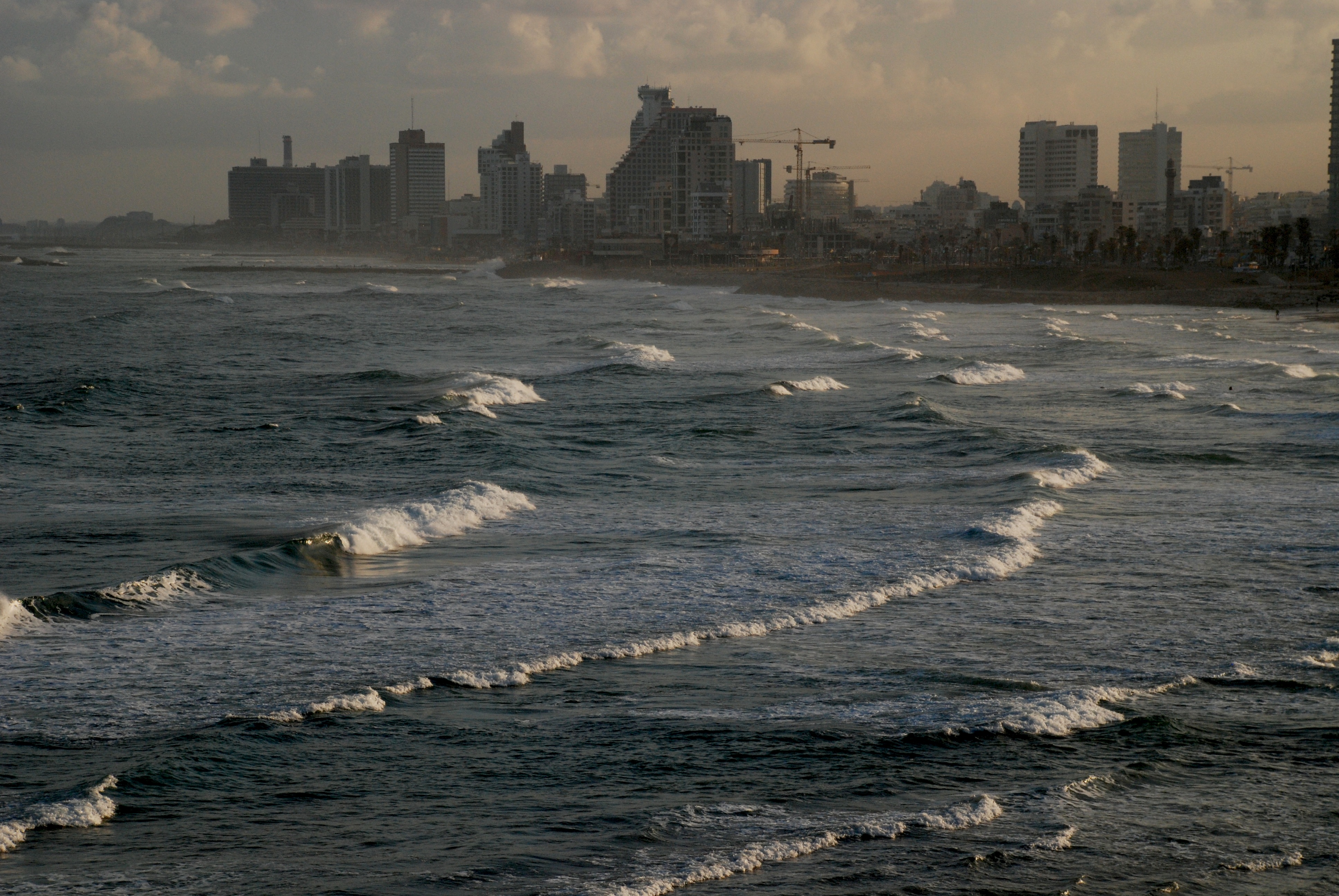
(C) Günter Moser

Tellingly, no reasoning for this interpretation is given. – Probably because it would be very hard to argue that any state is obliged to grant access to the citizens of another state just because the territory of this other state doesn’t have a beach (or in this case only one in Gaza). I find it rather normal that any country would retain the right to control its borders and to decide who can enter when for which purpose. Not many countries in Europe would give a visa to Palestinians (or anybody else who falls under a visa requirement) if the sole purpose of the visit is to spend a day at the beach.

Countries requiring visas are nothing extraordinary, nor are landlocked countries or territories that don’t have access to the sea. Yet I don’t think that the Guardian would run an article about Armenians, Nepalis, Uzbeks or Serbians and their beach-less lives.

And if one wants to concentrate on the plight of the Palestinians in this context, I suggest to raise the question why Palestinians can’t easily travel to the beaches of the surrounding Arab countries of Lebanon, Syria, Jordan and Egypt, all countries with beaches on the Mediterranean or the Red Sea. But this would have raised the far more complex question of boastful Arab solidarity – and uncovered that they do nothing to back up the slogans.

Most Palestinians want their own state – and I think they should get it, pretty much along the current borders between Israel and the West Bank and Gaza. But if you have your own state, you can’t argue that it is your natural right to enter the territory of another state without any visa. Especially because it was mostly Palestinian terrorists and their suicide attacks on civilians in mainland Israel that prompted Israel to strengthen its border security.

And I wonder how would Israelis would be welcomed if they wanted to spend a day at the beaches of Gaza…

Andreas Moser in Israel

There are serious problems with Palestinians’ rights, but making a day at the beach an issue of human rights is trivialising both Palestinians and human rights.

As a frequent traveller to both Israel and the West Bank, I do however agree that Israel’s beaches are among the most beautiful in the Mediterranean and that Israelis should be less fearful about travelling to the West Bank. Despite sporadic terror attacks, it is usually not dangerous. At least I have been lucky so far.

Posted in Human Rights, Israel, Law, Politics, Travel | Tagged , , , , , | 3 Comments

The Pope in Britain. What kind of a “state visit” is this?

Much has been written about the costs of at least 12 million £ that British taxpayers will be stuck with for the “state visit” by the Pope to the UK in September 2010.

The argument that British taxpayers should not have to bear the costs because only a minority of them are Catholic does not convince me. After all, if the US President or the German Chancellor visit, the UK government also pays the full expenses even though only a small minority of Britons are American or German.


What disturbs me however is that the Pope uses every occasion of this “state visit” to criticise his host country: He criticises the secularism in Britain (does he think he’s on a crusade to convert the rest of us?). He called on his followers to “promote faith at every level of national life”, which sounds dangerously like a call to infiltrate society with their beliefs. He voices his “concern at the increasing marginalisation of religion” (this is called Enlightenment and it has been going on for a few centuries now, Mr Pope). He finds it horrible that religion could be “relegated to the purely private sphere” (that should go without saying that your religion is your private matter, and mine is mine). He wants us to publicly celebrate Christmas (no thanks, I also don’t force my festivals upon you). Of course he also attacks same-sex marriages and gay adoptions, institutions which have not only been voted for by the legislature of this country but which are also deemed to be  unalienable human rights by British and European courts.

Any riposte from the Queen who invited the Pope or from the British government? Not that I could hear of. If it is now an integral part of a state visit that the foreign head of state criticises everything about our country and society, why don’t we invite Iranian President Ahmadinejad to spread his nonsense, or President Mugabe of Zimbabwe to explain how to effectively treat the opposition, or Russian Prime Minister Putin to lecture about voting reform?

Posted in Politics, Religion, UK | Tagged , , , , , , | 1 Comment

“The Case of the Pope” by Geoffrey Robertson is a flawed case.

This week I attended a lecture at LSE by Geoffrey Robertson who was introducing his new book “The Case of the Pope: Vatican Accountability for Human Rights Abuse”, conveniently published just days before the Pope’s visit to Britain. Mr Robertson points out the scale of child abuse within the Catholic church and the church’s unwillingness to effectively prosecute (or submit to civilian prosecution) members of the clergy. He continues to argue that the two main reasons why the Catholic church gets away with this are (a) its use of canon law, the church’s own legal system, which helps to keep their investigations internal and (b) the fact that the Pope lays claim to immunity as the head of a state, the Vatican.

I am an atheist and a critic of the Catholic church myself and quite a radical one (and in this context I wish to express my happiness about having withstood my parents’ suggestion of entering a Catholic convent school when I was 10 years old) and as such would love to agree with Mr Robertson’s findings and analysis.

Alas, like Mr Robertson I am also a lawyer and have to subject his latest book to the standards of legal reasoning. I am sorry to say that this is a standard that it miserably fails on several accounts:

  1. I fail to see any connection (and none is explained in the book) between the Vatican’s status of a state and the lack of prosecution of Catholic priests around the world. Catholic priests and bishops neither possess diplomatic immunity, nor does the Vatican claim so. If a Catholic priest in the UK, Germany, Ireland, France or any other country is suspected of having committed a crime, that country’s law enforcement agencies can investigate him, arrest him, indict him, and put him on trial.
  2. That this is not happening often enough is in no way due to the Vatican’s status as a subject of international public law. I can only speculate that it has to do with victims’ (understandable) reluctance to come forward and with the prominent role that the Catholic church plays in many societies which makes the victims’ families think more than twice before filing charges against a priest.
  3. The portrayal of canon law as an arcane and secretive system is correct. However, again I fail to see any connection to widespread non-prosecution of Catholic child abuse: That the church uses canon law to investigate internally does not prevent any country from using its legal system to investigate, prosecute, put on trial and eventually punish criminal acts that happened within the territory of that country. Canon law is NOT designed to be a substitute for secular, civilian legal systems, it is merely something that guides the Catholic church’s internal investigation.
  4. The point that canon law is the reason why the Catholic church doesn’t turn over suspected priests to the police might be a morally valid criticism. Legally however, it is only worthy of criticism if and where domestic law would require other members of an organisation to turn over fellow members that are suspected of a crime to local law enforcement. The fact is however that most countries do not have such a duty for any citizen to report a crime. Can we reasonably expect canon law to establish a duty that national legislatures don’t even want in their statute books? I don’t think so.
  5. Mr Robertson’s criticism of Vatican statehood raises some good points, but is at least negligently confusing: The Vatican and the Holy See are NOT the same, and this would need to be pointed out and explained to readers who are not versed in the peculiarities of international public law. The former is a state, the second is a subject of international public law sui generis (of its own kind). Any serious legal reasoning should keep these two entities separate from each other.

To sum it up: What could have been a valuable contribution on an important subject fell prey to the apparent urge to publish something provocative just in time for the Pope’s visit to Britain. No doubt that it will sell. That Terry Eagleton praised this book in “The Guardian” as having “steely forensic precision” can only be attributed to Mr Eagleton’s lack of any background in law.

Posted in Law, Politics | Tagged , , , , , , | 1 Comment

Life after Facebook

I don’t want to pretend that I came to the decision to leave Facebook after much deliberation and after carefully weighing the pros and cons, the privacy concerns and shallowness of many of the posts and the wasted time with the usability and opportunities of this networking site.

It was much simpler than that: My account was deleted by Facebook. – Don’t ask me why, because they won’t even tell me. As this is now the second time that this has happened to me, I can’t be bothered to reopen an account again.

So in one day, I have lost around 600 “friends”. That’s the equivalent of two fully packed jumbo jets colliding in mid-air and leaving nobody alive. And based on how neglectingly I used to treat my friends that refused to join Facebook, I will soon be forgotten by most of them, while they will continue to follow each others’ lives, share their latest photos, send event invitations and work on their virtual farms. I won’t even be able to track some people down outside of Facebook with whom I have been in regular contact (and would like to continue to be), nor will people easily find me who will try to do so (there are unfortunately too many people called “Andreas Moser” in this world, rendering a google search pointless). I will miss some people and I will miss some of the features, conceded.

But I refuse to sign up again. Living without Facebook seems to me like the 21st century equivalent of the reclusiveness once sought in the Judean desert, a monastery in Tibet, or in the forests of Massachussetts. I will try to cherish my newly gained mental freedom, my additionally available hours and the fact of no longer being exposed to status messages about what somebody is having for breakfast or watching on TV.

The only drawback is that Facebook drove quite a lot of visitors to this blog, and part of this traffic is now missing. So if you want to be nice and help out, share this link or any other of my blog posts that you like on your Facebook page regularly. Thank you very much!

Andreas Moser

“I love to be alone. I never found the companion that was so companionable as solitude.” (Henry David Thoreau in “Walden”)

Posted in Life | Tagged , , , , | 31 Comments

Umfrage zur angekündigten Koran-Verbrennung

Umfrage zur angekündigten Koran-Verbrennung:

(Sorry für den geschmack- und niveaulosen Humor. Ich wollte nur mal ausprobieren, wie man eine Umfrage in einen Blog einbauen kann und mir fiel spontan nichts Witzigeres ein. Die einzig korrekte Antwort ist natürlich, daß man weder Bücher noch Vögel verbrennen sollte.)

Posted in Politics, Religion | Tagged , | 1 Comment

TV documentary “For Neda”

On 12 June 2010, the TV documentary “For Neda” was aired on HBO in the United States. Simultaneously and in an unprecedented move, HBO made the movie available on YouTube in full length and also distributed a version in Farsi, for the benefit of millions of viewers in Iran.

I have contributed a small part to this documentary about the death of Neda Agha-Soltan who was shot and killed during one of the protests against the rigged elections in Iran in summer 2009. As most of you know, I happened to be in Tehran at exactly that time and coincidentally also happened to be at some of the protests against the Iranian government. I was therefore able to witness (and unfortunately also experience myself) the extreme police brutality against completely peaceful protests.

Please see below the documentary in English, Farsi, and Arabic:

(Thanks to fellow blogger Potkin Azarmehr and fellow blogger and lawyer Mehrtash Rastegar for establishing the contact between the producer Antony Thomas and myself and thus making my participation in this film possible.)

Posted in Iran, Politics | Tagged , , | 18 Comments