How to prevent Same-Sex Marriage

Churches, Conservatives, commentators, advocacy groups, politicians, media outlets and other concerned citizens are using all means possible to stop same-sex marriage from becoming legal. They use public information campaigns, they pray, they petition parliaments and file lawsuits in state and federal courts. Some even go so far as to kill gays and lesbians.

But all of this is not necessary. There is a far easier and more effective method if you want to avoid same-sex marriage:

Just don’t get married to somebody of your own sex!

Very easy. Job done. Now leave the rest of the world alone with what is none of your business.

Posted in Family Law, Human Rights, Law, Politics | Tagged , , , | 16 Comments

Saint Paul in Malta

Paul the Apostle was on a sea journey from Caesarea (in today’s Israel) to Rome in the year 59 to appear in front of a court there, when he was shipwrecked and managed to get to safety on the island of Malta.

A mosaic about St Paul's rescue on Malta, inspired by a fresco in the Vatican by Nicolò Circignani and given to Malta by Pope Benedict XVI.

Chapter 28 of the Acts of the Apostles says:

[1] And when they were escaped, then they knew that the island was called Melita [=Malta].
[2] And the barbarous people showed us no little kindness: for they kindled a fire, and received us every one, because of the present rain, and because of the cold.
[3] And when Paul had gathered a bundle of sticks, and laid them on the fire, there came a viper out of the heat, and fastened on his hand.
[4] And when the barbarians saw the venomous beast hang on his hand, they said among themselves, No doubt this man is a murderer, whom, though he hath escaped the sea, yet vengeance suffereth not to live.
[5] And he shook off the beast into the fire, and felt no harm.
[6] Howbeit they looked when he should have swollen, or fallen down dead suddenly: but after they had looked a great while, and saw no harm come to him, they changed their minds, and said that he was a god.
[7] In the same quarters were possessions of the chief man of the island, whose name was Publius; who received us, and lodged us three days courteously.
[10] Who also honoured us with many honours; and when we departed, they laded us with such things as were necessary.

It’s not because of the description of the Maltese as “barbarians” – which means “people who don’t speak Greek” and thus includes myself – that I am reminded of this passage from time to time, but it is the ever-recurring discussion in Malta about refugees.

Per capita, Malta received the highest number of asylum applications in the EU last year, mainly due to its location. Not all Maltese are happy about this, though. Any debate about refugees or immigrants will quickly lead to comments likes these (taken from the comments by readers on the Times of Malta website only today):

We’ve been saying for a long time that Malta is full up. Now the figures prove us right. What is the EU going to do to stop the influx? We need a robust Frontex with the means to push back the boats.

Or this one, apologising or belittling charges of racism against people of colour:

The world has gone completely crazy with this political correctness and allowing a group of fanatics to play the race card. Malta does not need these illegals from Africa, they are just a burden on our welfare system, nobody asked them to come over. If they feel they are being discriminated against then they should have thought it before making the illegal crossing. Malta was very much at peace and was a serene place before this invasion of illegals from Africa started crossing from Libya.

The following commentator seems to take his view more from verse 4 than verse 2 of the above, assuming that all refugees are criminals.

Shame on our authorities who bow to EU dictatorium, ending tarnishing our island with drug dealers / prostitution / robbers and street roamers.

People are not ashamed to draw crude historical comparisons:

These enormous influx of illegal immigrants seeking asylum, with only a minority (5%) given the status of refugees, have led to the situation where many Maltese people are seeing this as an invasion.

Maltese people have always reacted very strongly when other nations tried to invade us, and till now we have always been hailed as heroes! (Great Siege, French Invasion, English occupancy, World War 2 etc.)

I am totally against racism, however we have to STOP this illegal immigration immediately.

"Thank God I wasn't black."

These are not comments that people make in a bar or among friends, these are comments that people leave on a website of a newspaper, signed with their names. I shudder at the thought of what these people utter in private.

Blogs, not least this one, have experienced similar xenophobic rants, culminating in an anonymous phone call with racist slurs. I wish to point out that on the other hand a considerable number of Maltese care about those less fortunate and are aware of and concerned about the wide-spread xenophobia and racism on this island.

I wonder how Saint Paul would be welcomed today in Malta if he were on one of those ships in distress in the Mediterranean.

Posted in History, Human Rights, Malta, Politics, Religion | Tagged , , , | 28 Comments

Functional Explanation in the Social Sciences

The first paper in my second-year module Contemporary Social and Political Philosophy as part of my MA in Philosophy had to address the following question:

‘Functional explanations are essential for the study of evolution. Evolutionary explanation through chance variation and natural selection is a successful explanatory model. So it is surprising that functional explanation in the social sciences should be so contentious.’ Discuss

I am afraid I could not hide my deep disdain for functional explanations which I think don’t explain anything and which remind me more of conspiracy theories than of a scientific approach. So here is my paper:

In any debate – not only – in social or political philosophy, it won’t take long until someone mentions the word “society”. Society seems like a very real force. It seems to exist in the world just like other real things. But when we pause for a moment and look around, we only find human beings in this society, individual human beings. This leads some to go so far as to call society “fiction” or to postulate that “there is no such thing as society”1.

This debate is not only relevant for the normative aspects of social and political philosophy, but also for examining the explanatory approaches to social and political subject matters.

Functional explanation is one of these approaches, partly based on biology2 3 and especially the study of evolution4. This paper seeks to address the question whether functional explanation is an adequate explanation in the social sciences, especially in view of its origin in biology.

I. What is functional explanation in social sciences?

A functional explanation is one in which the existence of an entity or process is explained by the functions it carries out5 6 or by its effect 7, or put the other way round: the function of an institution, activity and so on is what explains its existence8 9.

To illustrate this with an example, the unequal distribution of wealth in a country may be explained by its function of keeping the capitalist system working, by allowing a small group of people who own most of the capital to employ the larger part of the population for wages which are just enough to survive but don’t allow the workers to build up a stock of capital of their own. If this sounds Marxist, it is no surprise because functional explanations are rampant in Marxist social science10 and actually dominated sociology until the 1960s11.

“It’s one big conspiracy.”

For a rather everyday example, I will refer to a variation of an example provided by Matravers and Pike12: Why is there food in my fridge? A functionalist explanation would be: for me to eat it.

One characteristic feature of functionalism is that it postulates a purpose without a purposive actor13 14, just like evolution works without a purposive actor and is guided, if at all, by an “invisible hand“15.

II. Functional explanation in evolution

Some sociologists, like Talcott Parsons16 or Herbert Spencer17, equate sociological knowledge with biology where “the elements of the whole are understood in terms of their relations to the whole”18.

Evolution can be explained without the need for a purposive actor, as it works through chance variation and natural selection19 20. It roughly works like this: some animals of a species have genetic mutations which happen by chance. They have longer necks, stronger muscles, a different colour and so on, just like different human beings have different characteristics. Some of these mutations will be negative, they will make these animals slow or prone to disease. The animals affected in such a way will become extinct (possibly only over many generations) and with them the genetic mutations will die out. Other characteristics will prove to be beneficial by making the animals stronger, faster or give them better mimicry. These animals will live longer, find more mating partners, have more offspring and thus pass on their genetic sequences to far more animals in the next generation(s). This is how an originally arbitrary mutation will prevail over generations until a whole species will slowly have changed.

Don’t let this give you the wrong idea about how evolution works.

Pike describes this mechanism of chance variation and natural selection as leading to a “seemingly purposive result”21. I am not sure I would call it “purposive” because after all, it’s only chance. It is random. Some animals die, some species become extinct. What could be the purpose behind this?

I also find the description of evolution as “purposive” dangerously close to the theory of Jean-Baptiste Lamarck who did indeed argue that animals developed and acquired certain helpful features which were then passed on to the next generation. Since Charles Darwin, we know this theory of “soft inheritance” to be false.

III. Differences between evolution and social sciences

I have strong objections against the use of functionalism in the social sciences based on biological evolution, and I think there are numerous arguments against transferring this theory from the natural world to the world of social science, especially in highly complex societies. I shall address just a few of these arguments here:

  1. The main criticism of functional explanation is its lack of a mechanism22. Without a mechanism that is able to explain cause and effect, there is actually no cause and effect, but only correlation. Correlation can be an indication of causality in some cases, but doesn’t necessarily imply causality.

For evolution, we know this mechanism (but only since Charles Darwin): chance variation and natural selection. This is a logical mechanism, supported by ample evidence and meanwhile accepted by the overwhelming majority of natural scientists. – In the social sciences however, in the absence of a plausible mechanism, nothing is explained23.

  1. Evolution is an inappropriate comparison to apply to social sciences because of the different time spans and the different subjects involved.

a. Life on earth began to evolve approximately 3.7 billion years ago. Mammals came into existence about 129 million years ago, modern humans only about 250,000 years ago.

These are obviously immense time spans over which no single scientist could observe much in the way of evolution. Even a scientist who would become very old and who would study one species all his lifetime could not determine the function or the purpose of a change in that species, if he could even detect any change at all. The “purpose” of an evolutionary change only becomes clear in hindsight.

In social science, we don’t have that much time. Changes happen much quicker, and we want answers much sooner. 23 years ago the world was divided in East and West, in a constant fear of a nuclear worldwide war. Just one and a half years ago we had dictatorships all over North Africa and no hope for change. Today, the world is completely different. Last year, during the London riots, a substantial part of society seemed to have changed within two days (and for not much longer).

A theory grounded in a science where developments can only be observed tens of thousands of years in hindsight is not suitable to social sciences.

b. Humans are not animals. Animals are an object of evolution, they do not think, they don’t make rational decisions, they follow instincts24.

Humans on the other hand are not only objects, but subjects. They think, they try to be rational, they have several choices, they make decisions, they correct these decisions, they talk to other humans about what to do jointly.

c. In addition to this rationality, humans are also blessed with (or plagued by) psychology. Evolution and the functional explanation of evolution doesn’t need to take account of psychology.

d. Humans – and other social actors like companies or government or armies – are much more different from each other than animals are.

A crocodile is a crocodile is a crocodile. At least for crocodiles of the same age, length and sex we pretty much assume that it will behave exactly the same way as any other crocodile with the same attributes.

Not so with humans: A 6-year old school girl in Kenya is completely different from one in Korea. A farmer in Iowa is completely different from one in Islamabad. Even if the economic and political situations were more or completely similar, people in different societies, countries or regions will still have different moral values, different priorities, different beliefs out of which they will act differently.

Evolution and the functional explanation derived from it is far too simplistic for the world as we know it.

IV. Conclusion

Functional explanation is at best at the stage at which the study of evolution was at the time of Jean-Baptiste Lamarck and before Charles Darwin25: it may be true that a certain function is helpful in explaining the existence or development of a (social) phenomenon, but we cannot say for certain, we cannot say anything about the mechanism and we can neither prove nor disprove it (yet).

The hunches that functionalists have may well be right. But it is still no more than speculation26. It is not science.

I will return to the very simple example of paragraph I., about the food in my fridge, to illustrate another point why I think that functional explanations are logically not sustainable. A functional explanation would explain the presence of the food by its purpose, i.e. to feed me. However, if I look into my fridge now, it is empty. Yet, I am hungry. What is the function of the absence of food or of the emptiness of the fridge? There is none that is discernible. Functional explanation cannot explain social phenomena that don’t have a function. But because functions are debatable – one person may see a function in something, the other may not – this leaves social science open to the kind of endless argument that is not worthy of the term “science”.

And the same applies to issues of more interest to social and political philosophers: if the function of the Arab Spring was to get rid of dictatorships, then surely this function would also have been fulfilled if the Arab Spring had happened two years earlier. Why didn’t it happen? The function, the goal, the effect would have been the same.

“I told you so.”

To me, this makes clear that there is no better explanatory method than methodological individualism which is based on the realisation that all actions are the actions of flesh-and-blood individuals and not of some overarching invisible hand27 28 29 and that rejects “all attempts to explain social … phenomena … unless they are couched wholly in terms of facts about individuals”30. As Karl Popper wrote: “All social phenomena … should always be understood as resulting from the decisions, actions, attitudes, etc. of human individuals, and … we should never be satisfied by an explanation in terms of so-called ‘collectives’.”31

Sticking to the example of the Arab Spring, some of the protesters may have been motivated by anger, some of them by poverty, some of them by ideas about liberal democracy, some of them by women’s rights, some of them just wanted to join their friends, some of them maybe craved the excitement and the action, some of them wanted to jump on the bandwagon in due time before the regimes fell. It may well be that there are almost as many motives and explanations as there were agents. But these explanations at the individual level can still be put together again to form a larger picture and then truly explain social change. This methodology will be more descriptive than functionalism, but it will stick to the facts and observations of researchable data instead of what will have to remain speculations about the function of a process which might end up having a completely different result once it will be completed in a few years, forcing us to change our view of the function altogether32.

1Interview of former British Prime Minister Margaret Thatcher on 23 September 1987

2Elster 1982: 30

3Cohen1982: 41

4Other sources are the Christian theodicies: Elster 1982: 23

5Matravers/Pike 2003: 8

6Macionis/Plummer 2012: 38

7Cohen 1982: 41 and 43

8Matravers/Pike 2003: 8

9Cohen 1982: 41

10Elster 1982: 29

11Macionis/Plummer 2012: 39

12Matravers/Pike 2003: 8

13Elster 1982: 23

14Pike 2005: 18

15Elster 1982: 23

16Cuff/Sharrock/Francis 2006: 91

17Macionis/Plummer 2012: 38

18Cuff/Sharrock/Francis 2006: 91

19Pike 2005: 21

20Cohen 1982: 48

21Pike 2005: 21

22Pike 2005: 18

23Pike 2005: 18

24Elster 1982: 30

25Cohen 1982: 48 thinks this is sufficient to justify the theory

26Elster 1982: 23

27Pike 2005: 22

28Matravers/Pike 2003: 10

29Wright/Sober/Levine 1987: 56

30Lukes 1973: 12

31Popper, The Open Society, Vol. II, p. 98; quoted according to Lukes 1973: 13-14

32Elster 1982: 28 states that functionalism is „arbitrary, because [of] the manipulation of the time dimension“

Bibliography

Books

Cuff, E.C., Sharrock W.W. And Francis, D.W. (2006) Perspectives in Sociology (5th edition), Abingdon, Routledge

Macionis, John J. and Plummer, Ken (2012) Sociology – A Global Introduction (5th edition), Harlow, Pearson

Matravers, Derek and Pike, Jon (2003) (editors) Debates in Contemporary Political Philosophy – An Anthology, Abingdon, Routledge

Papers

Cohen, G.A. (1982) “Reply to Elster on ‘Marxism, Functionalism and Game Theory”, Theory and Society 11 (reprinted in Matravers/Pike [2003] and quoted by the pages of the reprint)

Elster, Jon (1982) “Marxism, Functionalism and Game Theory”, Theory and Society 11 (reprinted in Matravers/Pike [2003] and quoted by the pages of the reprint)

Lukes, Steven (1973) Individualism, pp. 110-24 (reprinted as Methodological Individualism in Matravers/Pike [2003] and quoted by the pages of the reprint)

Wright. E.O., Sober, E. and Levine, A. (1987) “Marxism and Methodological Individualism” New Left Review I/162 (reprinted in Matravers/Pike [2003] and quoted by the pages of the reprint)

Study material

Pike, Jon (2005) The Philosophy of Social Explanation, A851 Issues in Contemporary Social and Political Philosophy, Chapter 1, pp. 15-26, Milton Keynes, The Open University

The internet

Margaret Thatcher Foundation, http://www.margaretthatcher.org/speeches/displaydocument.asp?docid=106689

The next paper, due on 4 May 2012, is about egalitarianism and sufficiency criteria which should be a bit more interesting.

Posted in Philosophy | Tagged , , | 16 Comments

Violating Section 127 of the UK Communications Act 2003

One could argue that parts of this blog are in violation of Section 127 of the UK Communications Act 2003.

127 Improper use of public electronic communications network

(1) A person is guilty of an offence if he—

(a) sends by means of a public electronic communications network a message or other matter that is grossly offensive or of an indecent, obscene or menacing character; or

(b) …

(2) …

(3) A person guilty of an offence under this section shall be liable, on summary conviction, to imprisonment for a term not exceeding six months or to a fine not exceeding level 5 on the standard scale, or to both.

After all, this blog contains a large amount of bad taste, directed not least at the head of state of the country that passed this law, and even incendiary calls for an overthrow of the British monarchy.

"We did not find your blog funny."

Paradoxically, the most “grossly offensive” thing I can see on this page is the text of the law itself. “Grossly offensive” is such a vague term that it can cover almost anything. Or nothing. It doesn’t even specify to whom the statement in question must seem “grossly offensive”.

In a lively democracy – which I think the UK is – arguments will be exchanged every day that somebody, somewhere will find “grossly offensive”. Heck, I am no wimp, but even I hear stuff uttered every day that I find quite offensive and that makes my blood boil. Offensive against reason, against the laws of logic, against decency, against human rights. But I would never dream of invoking a law or the powers of the state to lock the person up who makes these statements, because I am left with two good alternatives: I can pick up the debate and try to get it civilized again, or I can stop listening and walk away.

I propose that the only way to demonstrate the ridiculousness and at the same time the danger of laws like these is for bloggers and other internet users to file hundreds and thousands of charges against each other for violation of Section 127 of the Communications Act 2003 and swamp law enforcement so much that they will themselves petition for the abolishment, or at least a concretion and limitation, of the law. But most likely, this appeal violates some other law again.

(Hat tip to the Liberal Conspiracy blog which is a case in point: although I disagree with a whole lot of what is being written on that blog, I enjoy the debate with them.)

Posted in Human Rights, Law, Politics, UK | Tagged , , | 25 Comments

Death at the Funeral: a Vicious Circle

Pope Shenouda III of the Coptic Christians died last weekend. On the next day, his body was put on display at the Coptic cathedral in Cairo, Egypt. Mourners overcrowded the cathedral and caused a stampede in which three people died.

Death is just another pyramid scheme.

So, one person dies and the next day, three people die at his pre-funeral ceremony.

If this continues at the same rate, the funerals of these three victims will cause 3 x 3 = 9 victims tomorrow. These 9 people will be laid to rest later in the week and 3 x 9 = 27 people will be crushed to death. And so on, and so on. Soon, mankind will become extinct. Or at least Egypt will.

I reckon if I get invited to a funeral, I will rather come up with a creative excuse and will stay away as far as possible.

But then I have always been wary about attending funerals ever since I saw the news about the Milltown Cemetery attack in 1988:

If I will ever die, please don’t feel compelled to rent a cathedral and pack it full of people.

Posted in Egypt, Religion | Tagged | 5 Comments

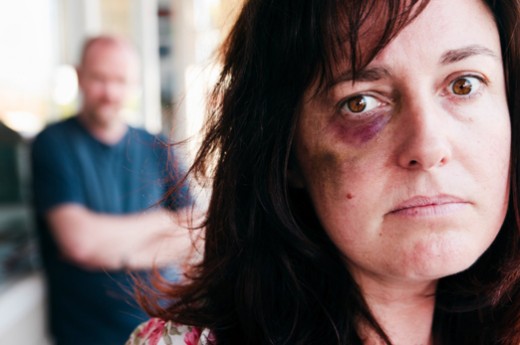
Malta, the Paradise for Victims of Domestic Violence

8 of March was International Women’s Day. I don’t think much of it, because I am anything but a feminist and because on the other hand I think the legitimate grievances by women (for example in Iran or Saudi Arabia) need more than one day’s attention.

But some organisations in Malta made a bad idea even worse. For International Women’s Day, these business and educational organisations in Malta had a fabulous idea. Quotes from the Times of Malta:

As part of International Women’s Day celebrations, a morning of pampering and beauty therapy was organised for women from the domestic violence shelters Dar Merħba Bik, Dar Qalb ta’ Ġesu’, Dar Tereża Spinelli and Aġenzija Appoġġ, as well as those receiving support from St Jeanne Antide Foundation and Prison Fellowship.

“Don’t worry. We have some really nice lip gloss for you.”

The event, organised by the HSBC Malta Foundation and MCAST Institute of Community Services in collaboration with Banking on Women (BoW) and HSBC Malta’s Diversity & Inclusion Committee, treated the ladies to a variety of relaxation and beauty therapies, including facials, makeovers, haircuts and hairstyling.

These treatments were provided free of charge by students and lecturers from the MCAST Institute of Community Services, and gifts, donated by The Body Shop, were handed out. Similar services were offered to women who could not leave the shelters.

“International Women’s Day celebrates the importance and the achievements of all women in society. This Women’s Day activity reinforces this message while making the occasion a special one for women facing difficult life challenges.” said Catherine Gonzi, HSBC Malta Foundation chairperson, who attended the activity together with Sarah Watkinson, HSBC Malta Foundation Deputy Chairperson; Louise Stanton, British High Commissioner and HSBC Malta Foundation Director; and Simone Mizzi, Director of The Body Shop, Malta.

Yes, because a make-up or a new hairstyle is exactly what women who have been beaten, kicked, assaulted and raped need.

Prof Maurice Grech, MCAST Principal and CEO, thanked the HSBC Malta Foundation for collaborating with MCAST in this initiative.

Prof Grech is an engineer so I don’t expect him to be an expert on domestic violence. But surely he could also apply some common sense.

HSBC Malta’s CEO Mark Watkinson and his wife Sarah, who have recently been transferred to Malta, shared a personal account of their experiences as they have moved within the HSBC Group globally – both from a career perspective and from a family perspective.

Listening to the story of a banking executive will provide tremendous solace to women who are wondering what will happen to their children, their marriage, their families. I can virtually see their minds floating off to dividend taxation, return on investment and off-shore accounts. Maybe they will all sign a petition against the financial transaction tax at the end of the event.

Seriously?? Is this the best that Malta can do for victims of domestic violence?

How about concentrating on law enforcement, courts, social services? How about addressing the question why these women are in a shelter in the first place? How about enabling the victims of domestic violence to stay in their own homes while the perpetrators get kicked out of the house? (Like it is done in Germany, for example, with a rather effective law where eviction orders against the perpetrators are often issued by civil courts within one or two days, before law enforcement even gets cracking.) As a specialist for family law, I have a bit of experience with domestic violence, and none of my many clients has ever told me she is worried about her nail polish.

Posted in Family Law, Law, Malta, Politics | Tagged , , | 14 Comments

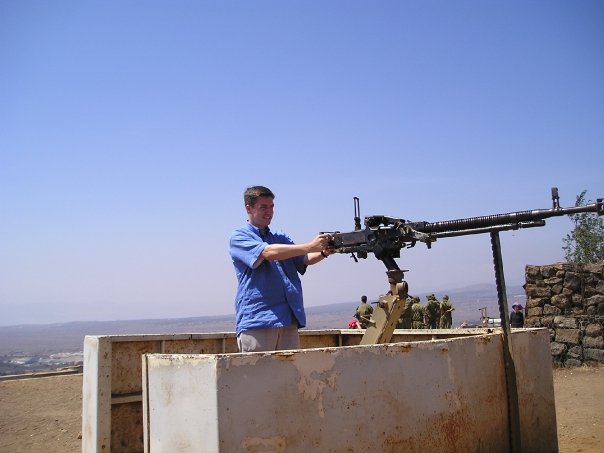
Prepared for Self-Defence

After the vicious threats against my life this morning, I have assembled everything that I could find in my armoury. Now, I am prepared. Prepared for the full onslaught or the sneak attack, prepared at day and at night, at home and on the road. I am prepared to defend myself with the latest military hardware.

Of course, I don’t want a war. But I hope that the arsenal that you see here proudly displayed will be enough of a deterrence to make you think twice. Or thrice, if necessary.

Of course I also have the ammo to go with it. Somewhere.

This is a bit immobile. But I will lure you into an ambush before you realise it.

And yes, I got myself a tank:

I may have nuclear weapons, even. But I will neither confirm nor deny this.

Peace!

Posted in Military, Photography | Tagged , , | 10 Comments

Welcome to Malta?

This morning at 0926 I received an anonymous phone call that began by asking for my identity although I always answer the phone with my name.

Andreas? Is that you?

I confirmed that it’s me and said a very friendly “good morning”. The caller broke into the following tirade:

Now listen: You get off our island, you fucking Zionist, you fucking Nazi swine. You go back to Germany.

Stop writing about Malta and leave us the fuck alone.

And go to Germany, don’t even go to Palestine, because you are not welcome there.

Do you understand me?

Unfortunately, I was too busy laughing – mainly about the fact that somebody calls me a Zionist and a Nazi in the same rant – to respond.

I wonder which of my articles about Malta incensed this person so much, although based on the comments on my blog I have a hunch it must have been this one.

Other than this call, I have been made to feel very welcome in Malta. But now I am waiting for some Molotov cocktails or some poison in my pastizzi.

Posted in Malta | 50 Comments

Why I don’t ask people to take photos of myself, # 2

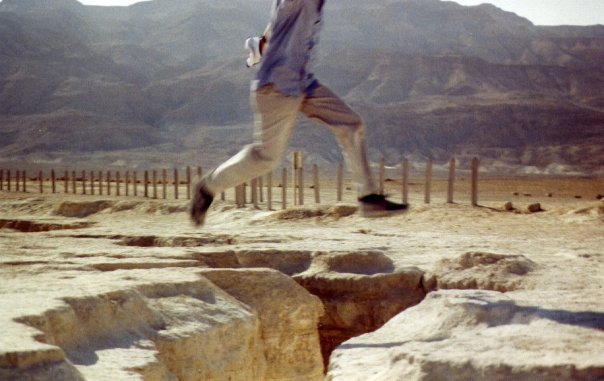
Because when I do something really, really cool, they cut my head off:

Me, jumping across a frighteningly wide and deadly deep ravine in the Negev desert in Israel.

Posted in Israel, Photography, Travel | Tagged | 5 Comments

My Home is my Castle

Yes, Britain really is that foggy.

At St Michael’s Mount in Cornwall, England in 2010.

Posted in Photography, Travel, UK | Tagged | 2 Comments