In his autobiography My Early Life, which concluded the time before World War I and was published before World War II, Winston Churchill takes this lesson from the Boer Wars:
Let us learn our lessons. Never, never, never believe any war will be smooth and easy, or that anyone who embarks on that strange voyage can measure the tides and hurricanes he will encounter. The Statesman who yields to war fever must realise that once the signal is given, he is no longer the master of policy but the slave of unforeseeable and uncontrollable events. Antiquated War Offices, weak, incompetent or arrogant Commanders, untrustworthy allies, hostile neutrals, malignant Fortune, ugly surprises, awful miscalculations – all take their seat at the Council Board on the morrow of a declaration of war.
This warning should hang in all offices of any Defense Department.
Very interesting also the young Churchill’s thoughts on what should come after war.
I have always urged fighting wars and other contentions with might and main till overwhelming victory, and then offering the hand of friendship to the vanquished. Thus I have always been against the Pacifists during the quarrel, and against the Jingoes at its close. […]
As it is, those who can win a war well can rarely make a good peace, and those who could make a good peace would never have won the war. It would perhaps be pressing the argument too far to suggest that I could do both.
The last two sentences read like a foreboding of Mr Churchill’s election defeat in 1945, just as he had helped to win World War II.
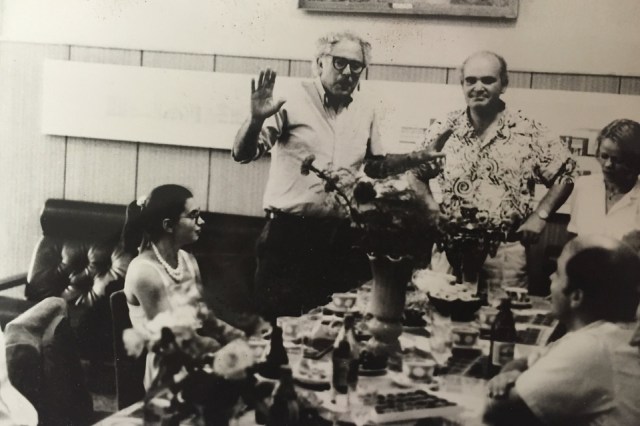
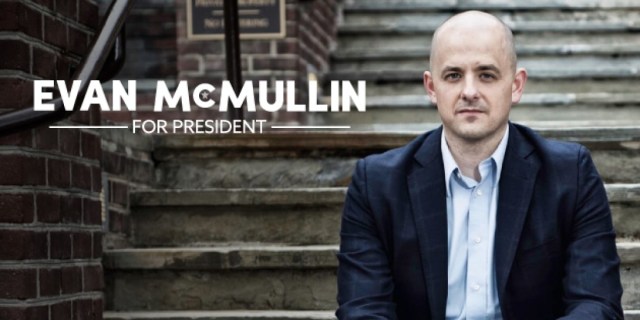
Maybe this photo made voters doubt if Mr Churchill would be the right man for peace.
(Thanks to long-time reader Ana Alves who mailed me Churchill’s autobiography as part of her annual book package. If you want to support this blog too, here is my wishlist of books. It’s hard to get the books I want in English or in German in South America, so I appreciate any help. Thank you!)
It was a mistake to believe that Arequipa would be like Cochabamba just because it has the same perfect climate, spectacular mountain views and is of similar size. Maybe it’s not fair to compare anything with Cochabamba in Bolivia, which was the friendliest city and the city with the best quality of life I have ever lived in, but Arequipa in Peru is one of the noisiest, busiest, loudest cities I ever had to endure. Rush hour is so stressful here that I was happy not to have a gun, because I would have gone amok like Michael Douglas in Falling Down. And the ever-barking dogs would have been the first ones to die. Once I tried to film the traffic on Avenida Ejército, when a warning appeared on my phone: “The noise level around you suggests that you are in a war zone. Leave immediately!” But I found this video which closely resembles the traffic in Arequipa:
And as if that wasn’t bad enough, the city dispatches cars with loudspeakers for extra noise. Another problem seems to be that the Peruvian Traffic Police consists exclusively of attractive women, so that many men drive recklessly on purpose because they want to get stopped.
It was a mistake to believe the many people who told me that Arequipa is a tranquil and cozy city. By now I know that all Peruvians work for the National Tourism Agency and at all times only say good things about their country. You hear the same list of places that “you have to see” from everyone, and everything in Peru is “the best” and “the most beautiful”. Like in North Korea. Even when I point out that I am actually more interested in politics or sociology, people respond: “You have to see Machu Picchu.” For a country that receives billions of tourists every year, it seems to be unthinkable that there is a foreigner who has different interests than taking a selfie in front of Inca ruins that are already depicted on 22% of all Facebook profiles worldwide. Oddly enough, the same people who advertised Arequipa as “the best city to live in” before I came now readily admit that it’s very chaotic, hectic, loud and that there are no parks or green spaces to go running.
It was a mistake to believe all the friendly messages along the lines of “Don’t worry. Once you are in Arequipa, I will help you find an apartment.” Miraculously, 90% of these people disappeared, died, were extremely busy or moved away as soon as I arrived in Arequipa. The rest didn’t try to help me but help themselves by offering apartments which were more expensive than in Tokyo. Well, you do also get regular earthquakes here. One of my readers offered a “cozy house in the countryside”. I had to ask for photos several times and it turned out to be a garage in a village. She wanted 350 US-$ per month for it. Most landlords in Peru even try to rent you places without any furniture. “You don’t have your own bed, table, bookshelf, fridge, oven, everything?” “Ehm, no. I mentioned that I am traveling around the world and that I am just here for a few months.” “Oh.” I thought only landlords in Germany were that silly.
Many landlords were also openly discriminatory. “I prefer renting to foreigners.” “Oh sorry, I prefer not to rent from racists.” Scaremongering is another tactic: “This is the safest part of town. Don’t move anywhere else! All the other neighborhoods are very dangerous,” as if Arequipa was between Baghdad and Caracas on the list of most criminal cities in the world. Well, regarding the noise it actually is like Baghdad on the evening of 21 March 2003.
It was a mistake to believe any non-writer who promised that “Arequipa is a perfectly peaceful place to write”. I should have listened only to Mario Vargas Llosa who was born in Arequipa and who moved away as soon as he could. Guess where to? To Cochabamba. I actually developed a theory about magical realism while here: it was never a deliberate art form, but the result of writers not being able to properly sort their thoughts amidst all the banging doors, beeping cars, fireworks, screaming neighbors and barking dogs. That’s why The Time of the Hero doesn’t make sense and why the sequence of chapters in Rayuela is completely muddled up. Now I understand why the literary output in Russia is higher and better. I too miss my cozy Soviet Krushchovka, particularly in a cold winter where you can’t do much else than sit at home and write. Actually, even the one time I was stranded on an island in the Pacific which was used for tests of nuclear bombs, it was more peaceful than in Arequipa.
Thinking about the Pacific, I got an idea. Luckily I am not only good at making mistakes, but also at analyzing them and correcting them quickly. Arequipa is only 100 km from the Pacific Ocean. Now it’s winter in the Southern hemisphere, so there should be plenty of empty holiday homes by the empty beach. Because it’s off-season and because I am a better negotiator than Donald Trump, I found a huge apartment in Mollendo for a good price. It’s spacious, cozy, light, furnished with bookshelves and writing desks and it overlooks the sea.
Perfect for writing. The beach seems great for running. And for watching sunsets. After all, this is the west coast. If I am lucky, I will even experience a tsunami.
But you won’t learn about that because there is of course no internet in old pirate palaces on top of steep rocks overlooking the ocean. So if you want to stay in contact, you have to write an old-fashioned letter or send a most welcome book package. Thank you!
By the way, Arequipa is really interesting to visit. The old part of town has beautiful architecture, an enormous monastery and many museums. But I discover more and more that there are cities which are good to visit and there are cities which are good to live in. The two groups rarely overlap.
Every few days, my regular good-morning concert of yapping dogs, hammering neighbors, beeping cars and weeping babies is enriched by Beethoven’s Für Elise.
First I thought that one of the neighbors has a monotone taste in music and is playing the song on infinite loop. When the musical terror was right in front of the door once, I assumed that one of my housemates’ cell phone has a kitschy ringtone. Finally, my blogging housemate enlightened me that the song announces the arrival of the rubbish collection.
That’s actually a nice service for people who can’t remember that every Tuesday, Thursday and Saturday you can put the far too ubiquitous plastic bags out for collection.
Once I saw a rubbish collection vehicle in the center of town, which played a different song. Apparently, every ward in Arequipa has its own rubbish collection music. With great delight I imagine the debates at the city council meeting in which the decision was made which district got to use which song. Maybe someone was particularly clever and noticed that the copyright for Für Elise has already expired and thus no royalties are due.
In his autobiography My Early Life: A Roving Commission, Winston Churchill recounts his first attempt to run for a seat in the House of Commons, the democratic half of the British Parliament.
Early in November [1898] I paid a visit to the Central Offices of the Conservative Party at St. Stephen’s Chambers, to inquire about finding a constituency. […] The Party Manager, then Mr. Middleton, […] was very cordial and complimentary. The Party would certainly find me a seat, and he hoped to see me in Parliament at an early date. He then touched delicately upon money matters. Could I pay my expenses, and how much a year could I afford to give to the constituency? I said I would gladly fight the battle, but I could not pay anything except my own personal expenses. He seemed rather damped by this, and observed that the best ans safest constituencies always liked to have the largest contributions from their members. He instanced cases where as much as a thousand pounds a year or more was paid by the member in subscriptions and charities in return for the honour of holding the seat. Risky seats could not afford to be so particular, and ‘forlorn hopes’ were very cheap.
But Churchill actually got his first chance the next year.
(Thanks to long-time reader Ana Alves who mailed me Churchill’s autobiography as part of her annual book package. If you want to support this blog too, here is my wishlist of books. It’s hard to get the books I want in English or in German in South America, so I appreciate any help. Thank you!)
I was in Iran for the first time in December 2008 and January 2009, one of my traditional Christmas/New-Year getaways, hoping to escape these awkward festivities. However, many people still wished me “merry Christmas” or “a happy new year”, with some Iranians thinking that Christmas is New Year. (The Iranian New Year Nouruz is on 21 March.) In Tehran, many shops had Christmas trees and Santa Clauses as decoration. Anyway, I only mention the time of the trip because some things may have changed since then.
In 2008/2009 I didn’t yet write a blog , so I only took a few photos with my mobile phone.
1
I wanted to see something of Iran between the large cities and thus wanted to travel by train/bus. But friends I had made in Tehran helpfully took me to an office of Iran Air where I was offered three flights Tehran – Isfahan – Shiraz – Tehran for 85 €, saving me at least 3 days of sitting on a bus in the desert. So I was issued handwritten tickets and flew on some old Soviet Tupolev plane.
On the plane, I sat between a young woman and a very old lady. The old lady asked me to change seats with the young woman. The young woman translated, adding in English “sorry, but the lady is very old-fashioned”. I didn’t mind because the younger lady was more interesting anyway.
I also remember noticing that crossword puzzles exist in every language.
2
After the hustle and bustle of Tehran, with 13 million people still the largest city I have ever been to, the first impression of Isfahan (2 million people) was one of a much quieter, more relaxed and noticeably more beautiful city. Sadly, it was cold and overcast most of the time. Somehow, I hadn’t expected Iran to have winter. It was one of 541 surprises in those two weeks.
3
In Tehran I had stayed with people whom I had met, so this was the first time I had to check into a hotel. Because Iran was/is cut off from the international banking system, your cards won’t work with Iranian cash machines. You have to take all the money you need in cash. If you run out of money, bad luck. Well, actually not so bad, because many other travelers have reported almost not spending any money in Iran because they kept getting invited. It’s one of the most hospitable countries in the world.
So I was shocked when a simple room cost 200,000 rials per night. Two-hundred thousand! I could never handle the conversion of such large numbers, but in my notebook I find the remark that it equaled 15 €. At the current exchange rate this would be 6 €, which is an indicator of the level of inflation in Iran. But don’t get excited too early. It just means that the room will cost 600,000 rials now and you’ll have to carry around even more paper.
4
Talking about paper, the Lonely Planet guide on Iran recommends to take your own toilet paper when traveling. It’s a good tip. Much better would be to try not to use a public toilet at all for the time of your journey. Even at airports, there is only a hole in the floor, like on French camping sites. But there is always a hose to wash yourself with.
5
I stayed on Chahar-Bagh-e-Abbasi-Street, which is one of the main roads of Isfahan. Still, it was quieter than any side street in Tehran. Here, drivers even stopped for me. It was obviously a city to relax and a welcome relief from the nightmare of crossing wide streets in Tehran.
And green spaces, parks, a river to stroll along. Easy to find your way around. And if you got lost, there was always someone to help and if necessary walk all the way with you.
6
A Persian proverb says “Esfahan nesfe jahan,” meaning “Isfahan is half the world”. It was the crossroad of the main north-south and west-east routes passing through Iran and as such was the most important city in Persia for centuries and indeed its capital city twice. An astonishing amount of architecture from the time when traders from Europe and China, from Russia and Arabia crossed paths on the Silk Road is still intact.
7
I first went to the main square, Naqsh-e Jahan Square, now known as Imam Square, although some people still referred to it as Shah Square. After the Islamic Revolution in 1979, the names of most boulevards and squares were changed. The square is so huge – 650 by 160 meters – that I didn’t even try to take a photo of it. Any of my attempts would have done it injustice.
There were surprisingly few people around. I was the only obvious tourist, but still almost none of the traders were pushy or aggressive. Only the carpet vendors were trying to convince me hard that I needed a hand-woven carpet to fly home with.
At one shop, where I bought a few postcards, a gentleman asked me where I was from, and upon learning that I was from Germany, he switched to German, explaining that he was a tour guide who worked with German tour groups. But lately, there weren’t very many of them. We were discussing why and I offered the solution that Iran should end its requirement for women to wear headscarves and lift the ban for unmarried couples to stay in the same hotel room. The latter doubled the bill for some travelers. Later, when I returned to Europe and reported about my trip to Iran, I noticed that the bigger problem was that people confuse Iran and Iraq and think it’s dangerous. That’s like not going to Austria because you are afraid of the huge snakes and spiders in their desert. And in reality, Iran is safer to travel than Austria even.
8
The best thing to buy in Imam Square was gaz, a nougat confectionery with pistachios.
Together with tea, this is a perfect breakfast. Unless you have some loose fillings in your teeth. I bought it every day and at the end of my trip I bought a few kilos to take back to Germany. When none of my friends and family liked it, I was happy that I could enjoy it longer.
Maybe they had read what it’s made out of. From Wikipedia: “The sticky white substance is formed from honeydew, which is exuded from the anus of the nymph of a psyllid insect, either Cyamophila astragalicolaor C. dicora, in its final instar, which live on plants of Astragalus adscendens, and is collected annually and is combined with other ingredients including pistachio or almond kernels, rosewater and egg white.” Ok, so maybe it’s not vegan and the anus-part sounds weird, but I love it. And in any case, it seems to be halal.
9
Above all, Isfahan is a city of mosques. I have always liked visiting mosques with their grand courtyards and the tranquility they provide even in the midst of a large city. Like cathedrals in a way, but less formal. You can wander around and lie down on one of the cozy Persian carpets.
At Jameh Mosque, more people were sleeping than praying.
And this was about as busy as I ever saw a mosque – except for the festival of Ashura in Shiraz. They seemed more like places to relax, to rest, to read a newspaper, to discuss things with friends, to go for a walk in the courtyard and to drink tea than like places of worship.
10
Looking at the photo of me almost stealing some valuable 13th century Qurans at Hakim Mosque, I am surprised that nobody even asked me to take off my shoes.
Most churches are stricter. Only when I wanted to take a photo of a mullah, he indicated that he would prefer not to.
Of course I didn’t steal any of the books! But I did take one of the prayer stones with me. There were so many that I hoped one missing stone wouldn’t make a difference.
11
And then there is the fine artwork of course, both outside and inside. For example at Hakim Mosque.
12
At Imam Mosque, which was of course called Shah Mosque until 1979.
Only now as I see the picture on a large screen do I notice the swastika graffiti in the previous photo. I don’t know what the graffiti says, but you will find paragraph 23 interesting.
And the photo of Imam Khomeini.
13
Not all of Isfahan is glamorous though. Like the walk from Hakim Mosque to Jameh Mosque.
Somewhere on the side of that street there was this dog that swallowed a sword.
14
At Jameh Mosque, which was not the largest, but probably the most interesting mosque. What you see today is the result of constant reconstruction, alterations, renovations, additions from the 8th to the 20th century. Different sides of the mosque are thus built in different styles dating from different periods, making this a perfect museum of Persian architecture.
15
But there are beautiful secular buildings as well, like Chehel Sotoun Palace. The name means “forty columns” although there are only twenty. But when you take into account the mirror image in the lake, you get your “chehel sotoun”. This was my favorite park in Isfahan for reading a book and smoking cigars.
(Photos from Wikipedia because I somehow forgot to take some.)
16
The most annoying thing about restaurants was that they left the doors open, even at night when it was cold. As so often, I was inadequately dressed and was freezing through my meals.
The best thing about restaurants was the food.
The funniest thing about restaurants were all the copies of Western restaurants, with names like Mash Donald’s, The Great Fried Chicken, complete with the face of Colonel Sanders, and Pizza Hat, with their own creative logo.
17
With some photos I don’t remember exactly where I took them. I was going in and out of so many mosques, walking through bazaars where I lost my bearings, that I muddled them all up in my head. (And you have to consider that I went to Shiraz after, where I visited even more mosques and palaces.) Maybe one of my readers from Isfahan can help identify these places.
18
Because I was still working as an attorney back then, I had to find an internet café every day to write e-mails and legal briefs. There were many of these coffeenets, as they are called in Iran, and most of the computers were occupied by young people chatting on Yahoo Messenger or learning foreign languages.
Once I stepped into a coffeenet where all the computers were occupied by young women. I felt like I had stepped into a university class or a female-only coffeenet and was about to apologize, when the young ladies almost fell over each other to get up from their tables and offer me their computers. They were clearly jealous of their colleague I sat down next to and they were all very obviously distracted while I was there. Actually, I was distracted too. More and more of them wanted to practice their English, we started to talk about my trip, about university and about other foreign languages we spoke.
I only traveled in large cities, so this is not representative of the whole country, but I never had a problem finding someone who spoke good English. And many people offered that we could also speak French, Italian or Spanish, if I would prefer so. German was not that popular, it seemed. How about Arabic? “Uff, I hate Arabic! I had to learn it at school, but I don’t remember anything,” was the standard response. Most Iranians associate Arabic with religious education, of which they are not very fond, and of course with Arabic culture, which they look down upon. Treating Persians and Arabs as one and the same is probably the most insulting faux-pas committed by travelers in Iran. Luckily, I always read books before I travel, something which I highly recommend.
But then, none of the books told me that it was also considered highly impolite in Iran to blow one’s nose in public. Anyone who has ever heard me knows that I sound like an elephant when doing that. I earned shocked looks as if I had urinated in the middle of the street. Once I noticed what was the problem, I always went into some side alley to clear my nostrils.
19
Along Zayandeh River, there was a restaurant with a more-than-life-size figure depicting what looked like a woman from Grimm’s fairy tales. How good that a large part of European culture too depicts women with headscarves, making them easily compatible for marketing in the Islamic Republic.
20
The iconic Si-o-seh Bridge (“the Bridge of 33 spans”), leading to the Armenian quarter of Isfahan.
The level of Zayande River seemed quite low. When I asked, I learned that a lot of water is taken from the river for agriculture. Unlike most other rivers which grow in size and eventually end up in the sea, Zayande River is becoming smaller and smaller as it progresses until it fizzles out in Gavkhouni Swamp.
21
On the south side of the river, there was a large park, stretching for a few kilometers along the river. As the sun set, more and more young people congregated. It was obvious that this was the place for unmarried or same-sex couples to hang out. You could see and smell all kind of stuff being smoked. And probably some worse drug addictions, too. Because of the common border with Afghanistan, opium and heroin is easily available.
Speaking about Afghanistan, Iran is home to about 3 million Afghans, many of them refugees from the Afghan wars. Remember this the next time you argue that your rich country can’t take in 5,000 refugees. When talking about this with Iranians, I had the impression that most people found it absolutely normal that their country would accept refugees. Maybe it helped that most Iranians went through 8 years of war themselves between 1980 and 1988 and thus have a better understanding of refugees than spoiled Europeans and Americans.
On the other hand, Iranian construction companies also seemed happy to exploit cheaper Afghan labor.
22
Also south of the river is Vank Cathedral, just one of the Christian churches in Isfahan. Even though I am atheist, I thought it would be an interesting experience to go to a Christmas service in Iran. But as the church is Armenian, Christmas was not yet celebrated and I would have had to wait until 6 January.
But, like everywhere in the Middle East and probably the world, there is anti-Semitism too, and it often comes to the forefront when people hear I am from Germany. They seem to hope that all Germans are Nazis.
In the evening, as I came back to my hotel, the guy at the reception stopped me. “You are from Germany, right?” he asked. “Yes.” It was normal that I attracted attention as a foreigner. During my whole two weeks in Iran, I only met two other non-Middle-Eastern foreigners, a British couple working in the United Arab Emirates. “Wait a moment, I have something for you,” he smiled. I wondered what it would be, assuming that he wanted to show me some Bundesliga paraphernalia or photos from the time his parents had visited Neuschwanstein. He came back from his office and proudly handed me a copy of Les Protocoles des Sages de Sion. Understanding enough French to immediately identify it as that infamous anti-Semitic forgery, I pushed the book back disdainfully and switched to Hebrew, replying “lo toda, laila tov,” hoping he would at least be able to identify the language.
I only learnt on a subsequent trip to Iran that some Iranians subscribe to the strange notion of Aryanism, believing that Persians, Germans and maybe Norwegians are from the same superior race. Actually, the name “Iran” derives from the Old-Iranian word for “Aryan” which meant the same as “Iranian”. But that’s such a crazy and funny story that it will be subject of a separate article.
24
Some of the minarets are so tall that I am not surprised that muezzins nowadays play cassettes or CDs for the call to prayer instead of climbing up that tower five times a day.
25
I have no idea what the text on the column behind me said. That’s the risk of traveling without learning the language first. Actually, I tried to learn Persian a bit, but I never got beyond the first letter of the alphabet, which is like all letters spelt differently depending on whether it stands at the beginning, the middle or the end of a word. – I would rather go to Tajikistan and learn Persian with Cyrillic script.
26
After I had taken a taxi to the airport, the driver couldn’t give me change on a 200,000-rial bill. The fare was 50,000 rials. “No problem,” I suggested, “I will quickly go to the terminal, buy a Zam Zam Cola and get some change. I can leave my bag here, so that you know I will come back.” The driver, who had played a cassette of his own undercover rock band on the way to the airport, wanted nothing of this. “No, no, take all your luggage, go ahead, check it in, and then – if you still have time before your flight leaves- you can come back to pay me. I will wait.” It was 5:30 in the morning and not very busy, so I made it. About 15 minutes later, I walked up to the taxi and had to wake the driver. He was not the least surprised to see a complete stranger who was about to leave the city and who could have simply flown off without paying the fare, without any fear of repercussions, return.
When you notice such a level of trust among strangers somewhere, you know that a place is safe.
I flew to Shiraz, which again was quite different from both Tehran and Isfahan.
Whenever material things, money, worldliness, become the center of our lives, they take hold of us, they possess us; we lose our very identity as human beings.
This new line of the Catholic Church, breaking with the tradition of dealing with indulgences and of preaching water while drinking wine, doesn’t seem to have reached Bolivia yet. Because on a normal Friday afternoon, hundreds of cars, minibuses and trucks line up in front of the cathedral in Copacabana. They are neatly festooned with colorful ribbons, adorned with kitschy knick-knack, and many of the cars wear a cute Andean hat.
“That’s a huge wedding,” you may think, but it ain’t. People bring their cars to have them blessed. The exact procedure as prescribed by psalm 68:17 works like this: You wait until the cars in front of you are finished, then you drive up to the square before the cathedral.
There, you open the hood of your car, adorn it with garlands, confetti, flowers, wallets, icons, statues of the Virgin Mary and plastic models of cars. I didn’t quite understand if you are supposed to use a model of your own car or of the car that you want to upgrade to.
So far, you may have been thinking “These people don’t understand what Jesus is about. They misinterpret the Bible. This has nothing to do with the Catholic Church”.
Wrong.
Because then the priests show up. The priests – and there are several of them because they have a whole convoy of Christian truckers to deal with – not only silently tolerate this spectacle, but they bow in front of the open hood, make the sign of the cross as if standing before an altar, spray water on it (Christians believe that water can be holy), say some prayers and walk around the car, spraying water into all its doors.
Then they pose for a photo with the happy family.
Next, the owner of the car opens a bottle of beer or other alcohol, walks around his car once and disperses the alcohol like the priest did with the holy water before. And then, this is South America after all, where noise is good, some firecrackers are lit.
Because I had seen this ritual once before when I had been in Copacabana, also on a Friday, I ask the owner of a restaurant if this takes place every week. “Nooo,” he exclaims, as if my question was an insult to the local level of activity, “every day! From 11 a.m. to 2 o’clock in the afternoon.” Friday only seems to be the most popular day because many of the cars are actually from neighboring Peru. The devout families like to come for this Christian procession and then spend a few days on the shore of Lake Titicaca. Funnily enough, there I saw many families hire an Inca priest who will perform a second ceremony on the already baptized car, which involves the burning of coal and coca leaves, some singing and dancing and of course another bottle of alcohol being sprayed over the car.
Further down the shore, car washers offer their services in Lake Titicaca. This may be the only lake in the world with a higher content of alcohol than of salt. The trout is particularly tasty here.
Perhaps you deem all of this to be rather materialistic. But the Catholic Church in South America always had a heart for the poor (liberation theology). Thus, there is also an option for car-less Christians. You need to climb the mountain on the left with me to discover it.
Because this place is all about Jesus, the mountain is Mount Calvary and the way up is a way of the cross. It’s a steep climb and because of the altitude (the top is at 3,973 meters – maybe the highest way of the cross in the world), you are really forced to stop at every station and pray catch your breath, allowing you to enjoy the views of Copacabana and then of Lake Titicaca.
Halfway up, there is a statue of Jesus, with an open door underneath.
In case you don’t get it, there is a helpful sign, explaining that this is where you should leave your donations. As everyone knows from Bible study, it works like this: You have to leave a little bit of money, pray, and then Mr Jesus, Mr God or Mr Ponzi (the holy trinity) will send you more money. The sign helpfully suggests “cars, houses and dollars” as donations, which is particularly strange because dollars are not the currency of Bolivia. Apparently, this Mr Jesus is very picky.
Exactly behind the “Sacred Heart of Jesus” are many Aymara priests offering their services, some of them unproblematically combining Christian with Inca symbols.
At this point, you are honestly better off to enjoy the view. But that’s the subject of another article, which – God willing – will be forthcoming if you pray and pay enough.
In the interest of receiving divine salvation, I continue the climb. At the top, I am rewarded with a whole lot of crosses, candles and people in funny costumes posing for photos.
But now to the most important part. After all, you don’t pilgrimage the whole way for nothing. As a proper Christian, you want stuff! You want a car, a house, maybe a bigger house or even an apartment complex. And lots of dollars, apparently. In order to achieve these sacred goals, you can buy miniature models of whatever it is that you desire. Then you buy a few candles, you light them and leave them on one of the altars and – swoosh – you will receive cars, houses and more dollars. It really works! Only this can explain Bolivia’s economic boom.
Funniest of all, you can also purchase university diplomas, health certificates, driving licences and even a Bolivian passport. Maybe I should have tried that to avoid my visa problems.
What happened in South America is that the Catholic Church took over the pre-existing idea of human and animal sacrifices, but because they didn’t know what to do with all the virgins (how could the Incas have known that Catholic priests prefer boys?) and llamas, they accept money instead.
– – –
In case the subtle message didn’t get across:
Most of my readers live in countries that you would consider as overwhelmingly influenced by Christianity. So when you read that 90% of Bolivians are Christian, you think that you know something about the country. In reality you don’t know much if you never leave the house and get to know the world yourself. (Or read this blog.)
If even terms like “Christian” or “Catholic” , with which you grew up and which you believe to know, are interpreted so differently in the country next door, just imagine how wrong you are with your prejudices about Jews, Muslims and Hindus.