
South America is noisy enough, I definitely don’t need a hostel that advertises “party”.

(Photographed in La Paz, Bolivia, where I found quieter and cozier places to stay.)
South America is noisy enough, I definitely don’t need a hostel that advertises “party”.
(Photographed in La Paz, Bolivia, where I found quieter and cozier places to stay.)
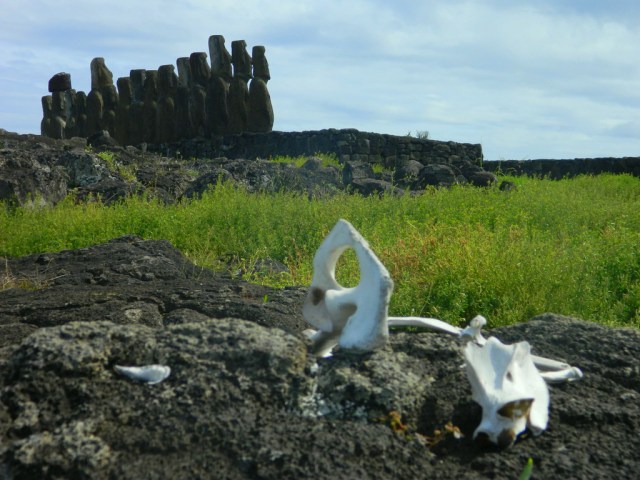
“Are you here to investigate the mysterious deaths?” I was asked when I arrived on Easter Island, shattering the image of a peaceful paradise.
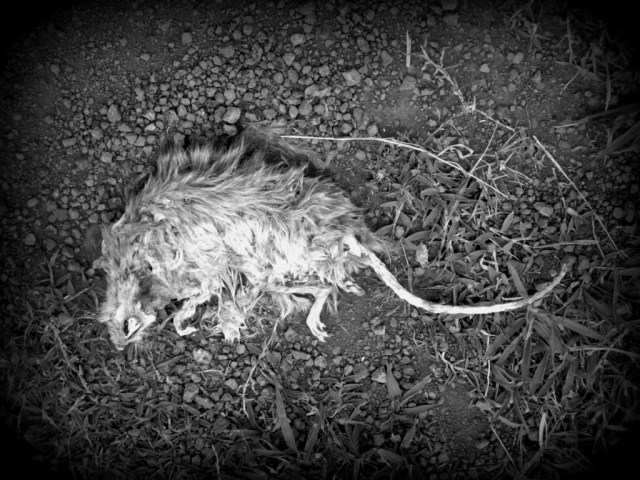
“No,” I replied, but it made me curious. Over the following days, I should find plenty of evidence of a streak of murder and rage.
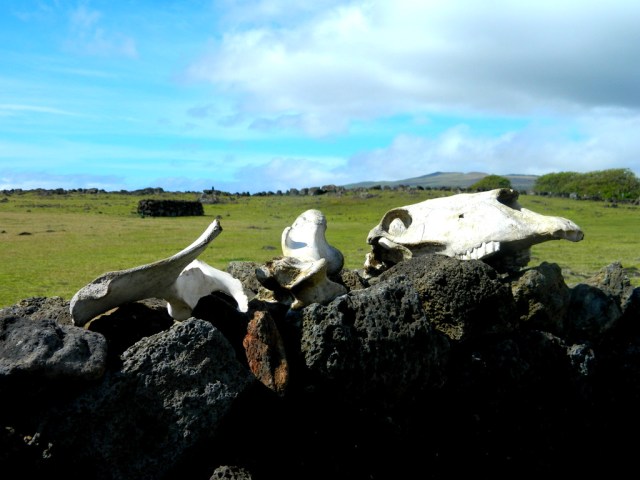
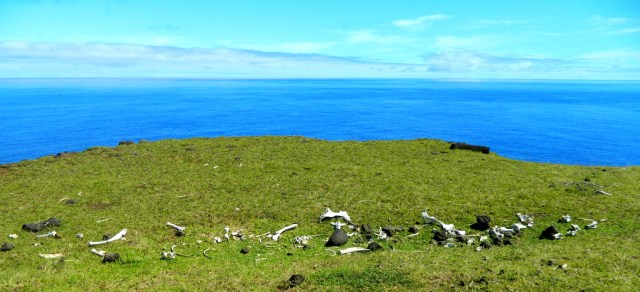
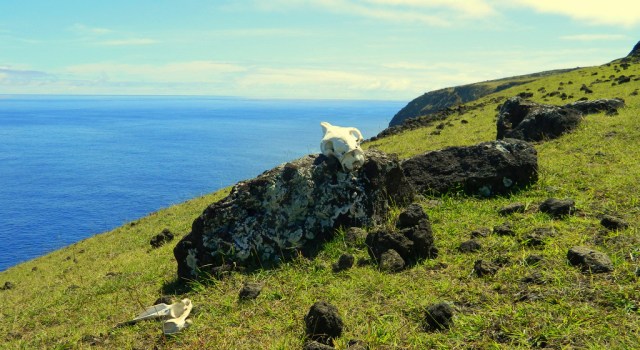
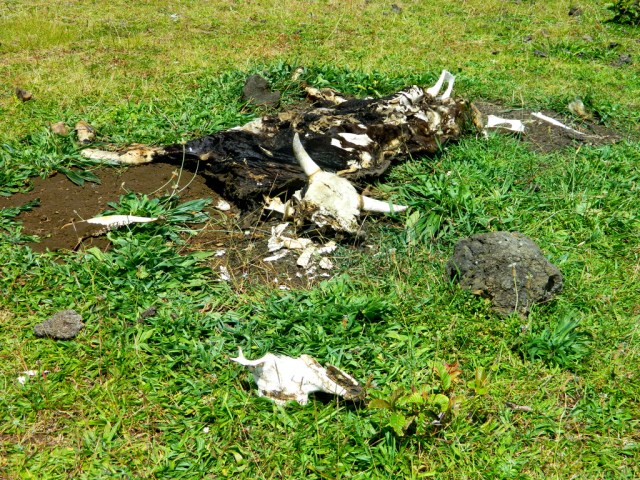
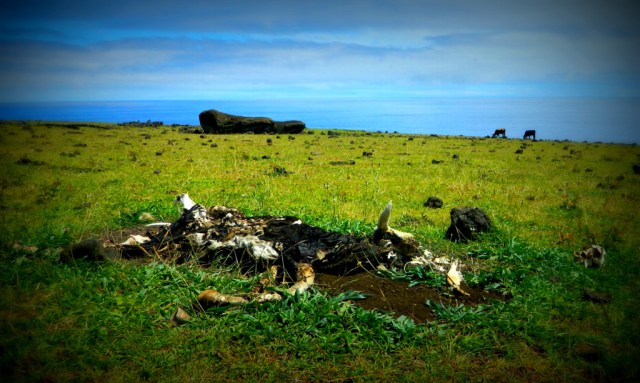
Yes, that is a toppled moai in the background. The murderers need to topple the moai because they believe it could otherwise observe them.
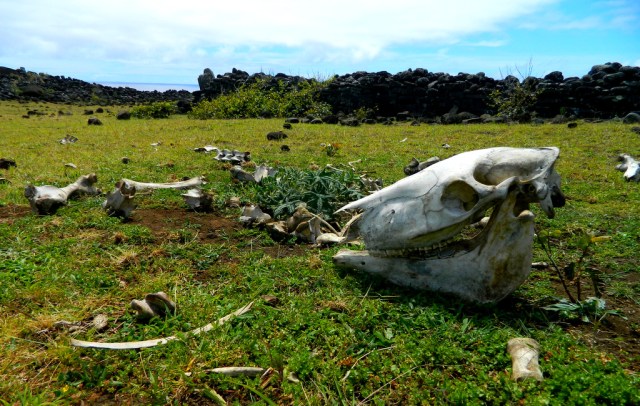
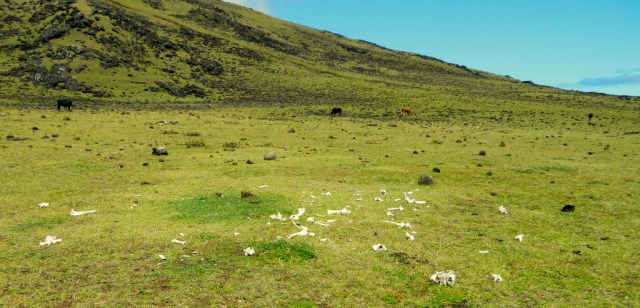
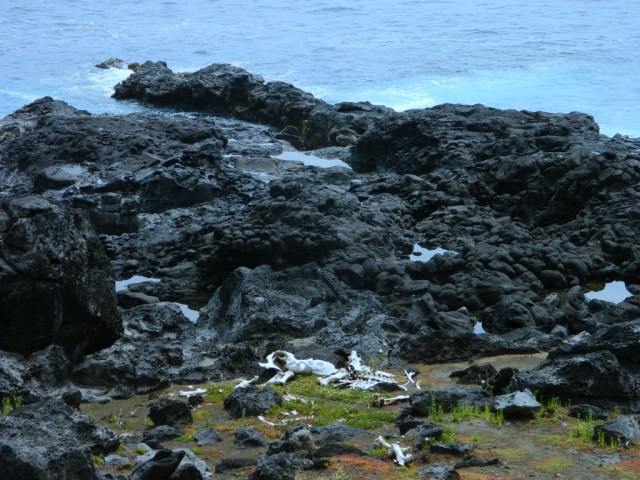
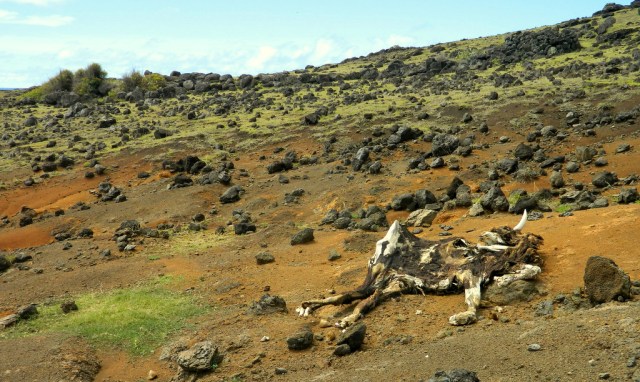
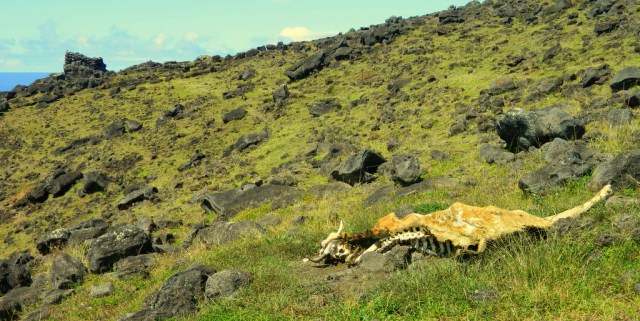
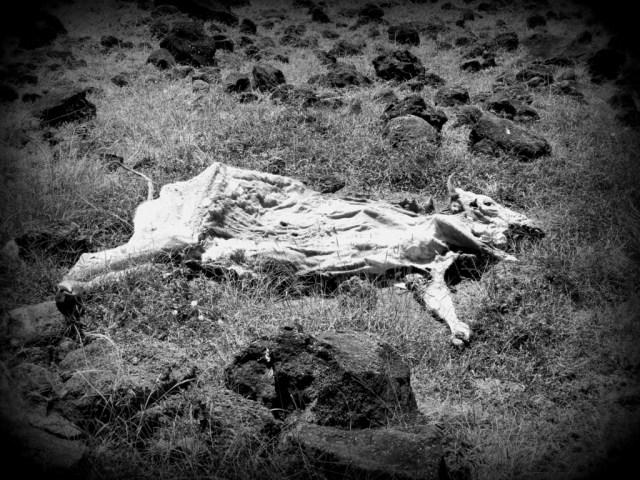
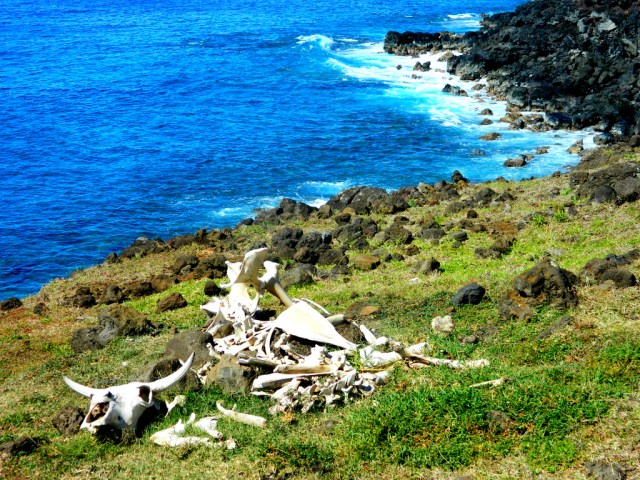
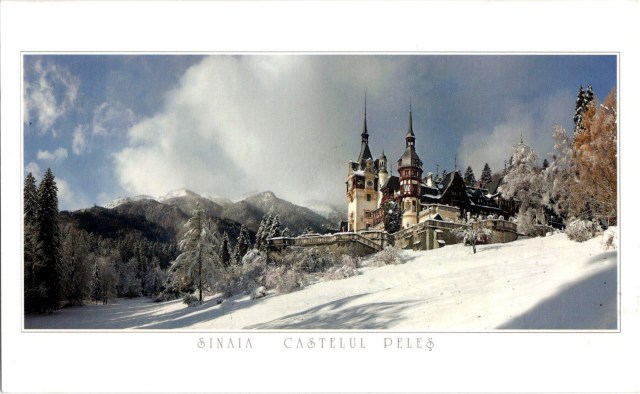
Some of these scenes would actually make for beautiful postcards.
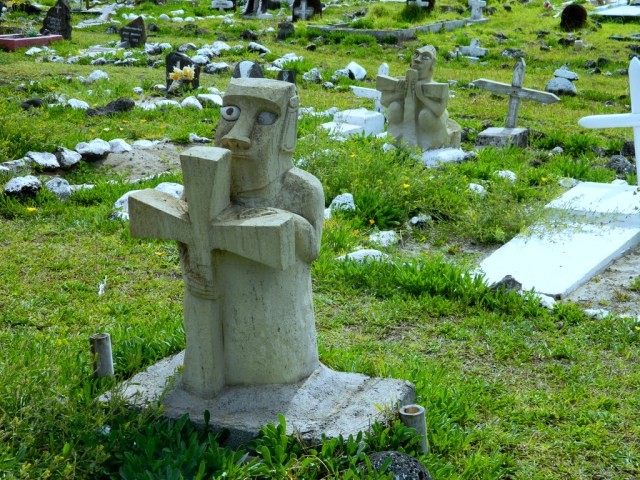
The cemetery on Easter Island is a wonderful example of syncretism, the blending of different beliefs, with Rapa Nui figures holding Christian crosses.
On the return flight to Santiago a week later, a few seats were empty. More skeletons would be found soon. Time for CSI Rapa Nui to investigate.
The museum in Narihualac was closed. All I could do was walk through the dusty streets of the small village, watch one of the many religious processions which take place in Peru every day, and visit some bars to soak up shade, water and chicha.
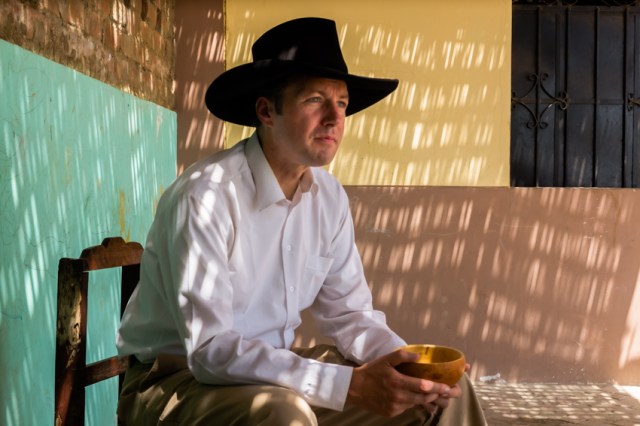
The brew had too much alcohol for me, but the children of the village were tough enough to empty the whole pitcher in seconds.


Narihualac’s main industry is actually not alcohol, but the production of straw hats which are better known under the name of faraway Panama. So I went into one of the hat stores, where my attention was drawn to an exhibition piece measuring at least one meter in diameter. I wondered about any connection to the alcohol.
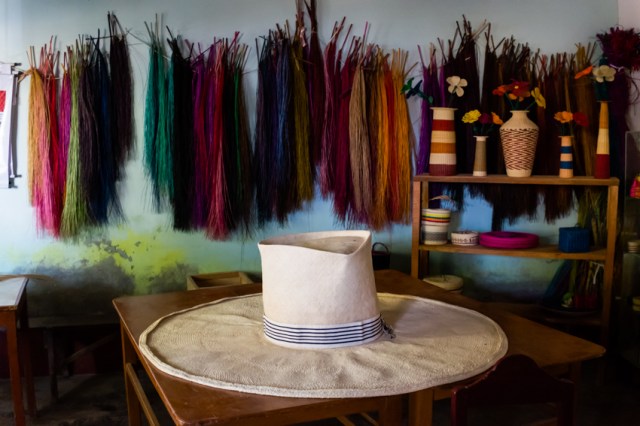
The daughter of the hat maker, hanging around in the shop, was more fascinated by my very own hat, which had traveled 11,500 km from Transylvania to Peru. She insisted on trying it on and needed a lot of convincig pleas to hand it back to me.

From then on, Margarita, as the 10-year old girl introduced herself, didn’t leave my side, although two boys of similar age told me that I should rather hire them as local guides because the girl was bad at school. Speaking about it, “why aren’t you at school?” I asked. It was Monday. “Today is our day off,” she replied and because there were children running around everywhere, I had no choice but to believe it.
The inquisitive girl asked me about Europe, if I had ever been on a plane, what languages I speak, how much my hat cost, where I would travel next, if she could try on the hat once more, whether I have pets, why I am so tall, if we have tablet computers in Europe and if I had games on my cell phone.
Finally, Margarita wanted to know what my profession is. When I talk to adults, I sometimes explain the concept of freelancing or of a digital nomad. Even when I want to keep it simple, I have several options: lawyer, translator, blogger, journalist, spy. In other languages I find it less boastful to use the word writer, so I replied that I am an escritor.
Upon hearing that, the girl jumps two steps ahead of me, puts herself in my way and looks at me with excitement, her eyes and mouth wide open in delight: “You write stories?” She couldn’t be more enchanted if there was an astronaut standing in front of her.
“Yes.“
“And novels?” she asks hopefully.
“Not yet,” I am beginning to explain.
“But you are going to write a novel?” And before I can respond: “Do you also write fairy tales?”
In this moment, in a dusty village in the Sechura Desert, on an unbearably hot day, while a young girl in sandals is going through all genres of literature like other children her age could rattle down only TV shows or soccer players, and making the impression as if writing is the greatest profession on earth, I decide that I won’t return to my lawyer job after this journey, but that I will exclusively devote myself to writing.
I don’t care that most adults react differently. I don’t care that they respond with “huh?” instead of “wow”. I don’t care that they ask about the financial viability, about health insurance or retirement plans. I don’t care about their lack of curiosity and excitement. I don’t care that almost nobody reads stories anymore and that most people prefer to mindlessly scroll through their phones. I don’t care that even friends suggest that I should make videos of my travels because they are too lazy to read.
None of that matters. I want to write! I want to tell stories. I want to explain the way I see the world. And if there are only a handful of people like the young literature lover from Peru, then it’s worth the effort.

Links:
When bloggers don’t write it’s not for lack of ideas. If that was their problem, they would never have had the idea of harassing the rest of the world – innocently and unsuspectingly stumbling through the internet – with their thoughts without being asked to do so in the first place. They don’t write for lack of time, lack of a quiet place or lack of money. Because the lack of the latter forces them to sell their time in other ways, prostituting themselves to clients instead of writing for a Pulitzer.
When starving writers meet, sooner or later you will hear one of them say “I would need to go to prison for half a year in order to write without any distractions”. As someone who has actually been to one of these institutions – albeit only for a week, during which I had no access to paper or pencil outside of interrogations, thus not permitting me to use that time productively – I always found this idea slightly inappropriate.
But Romania has made this writer’s dream come true and even provides incentives to creativity that expresses itself in writing. Inmates in Romanian prisons can shorten their remaining prison term by writing and publishing. Hence the saying “publish or perish”. You get 30 days off your sentence for each scientific work. And the inmates really do write. 76 books by inmates got published in 2014, often several by the same author. Fraudsters, money launderers, bribers and bribees suddenly turn creative.
But when fraudsters become creative, experience suggests that this goes beyond the actual writing. Just like they did with their Bachelor and Masters theses, they hire ghostwriters who churn out book after book. Quality doesn’t matter in this program, it’s only the volume and the number of publications that count. The content isn’t checked. Thus it comes as no surprise that it is mainly politicians and managers, of whom there are many in Romanian prisons – still not enough of them, my Romanian readers will interject -, who avail themselves of this opportunity. They have the money to employ “research assistants”. Meanwhile, some of the other inmates can’t even properly read or write.
As much as this unjust system deserves to be criticized, at least one aspect has improved since Ceausescu’s time. It used to be that writing got you into prison, now it gets you out of prison. And maybe one of the books will turn out to be a good one. After all, Romania lays bare literary talents in the most unexpected places, as Varujan Vosganian, the former Minister of Economy and Commerce, proved with his novel The Book of Whispers.
I am writing these lines in the park in Bolyai Street, outside of the prison in Targu Mures, but I am not creative enough to contrive a crime that I could commit spontaneously, that wouldn’t really harm anybody and that would – considering my flimsy criminal record so far – lead to more than a fine, but to less than the death penalty. Additionally, it should be something special, because just like you don’t want to toss off a boring romance story, you don’t want to commit a commonplace crime. It should make the evening news or the Romanian equivalent of the Criminal Justice Review. For Christmas, I would like to get a copy of the Romanian Penal Code to stimulate my creativity.

“I have written all of these myself.”
(This article also appeared in Medium. – Zur deutschen Fassung dieses Artikels.)
First of all, if you have a subscription to my blog, you don’t need to change anything. If you have bookmarked links to my blog, you don’t need to change anything.
But if you want to tell your friends about my blog, I have made it easier for you by getting a shorter and more memorable domain name:

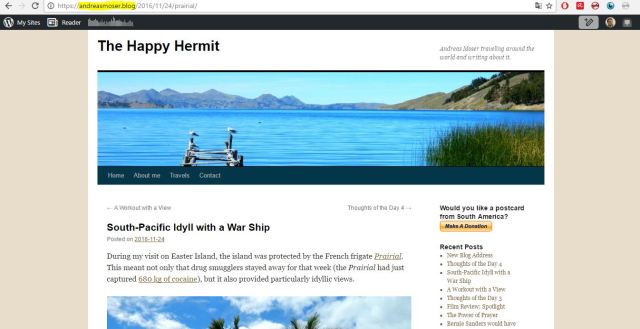
If you don’t have a subscription to my blog, I recommend that you get one. It’s free and you can unsubscribe yourself anytime. Unlike with Facebook or Twitter, there is no nefarious algorithm that stands between my writing and your reading. Either use the RSS reader of your choice or click on this button

in the right hand column of the blog and enter your e-mail address. With the RSS feed, you can even get tailored subscriptions, for example only to photos, only to travel articles or even to articles about a specific country. Very fancy stuff.
For those of you who speak – or at least read – German, I still have my German blog, which will from now on be available at www.andreas-moser.blog. Easy to remember: English blog without hyphen, German blog with hyphen. If too many readers will get confused by this, I can still change the address of the German blog to http://www.fueralledieessonstnichtkapieren-dashieristmeinblogaufdeutsch.de. The subjects there are often the same, but of course there are more articles about German politics and law, which I don’t find worthwhile to translate into English. And some of my more creative writing remains untranslated because it wouldn’t work in English, although this also happens the other way around.
By the way, if you ever think – as I do – that I am not writing enough, fast enough, there are around one thousand posts from the past four years. Enough to read for a whole week. It almost makes you want to break a leg in order to be confined to a hospital bed for that time, doesn’t it?


During my visit on Easter Island, the island was protected by the French frigate Prairial. This meant not only that drug smugglers stayed away for that week (the Prairial had just captured 680 kg of cocaine), but it also provided particularly idyllic views.





Easter Island is the perfect place to get slim and healthy: food is so expensive that you’ll automatically be on a diet. As there are no buses, you have to walk/run/cycle everywhere (although never for long because someone will stop to offer you a ride).
And then there are these fitness parks close to the town of Hanga Roa. They offer a great view while working out.

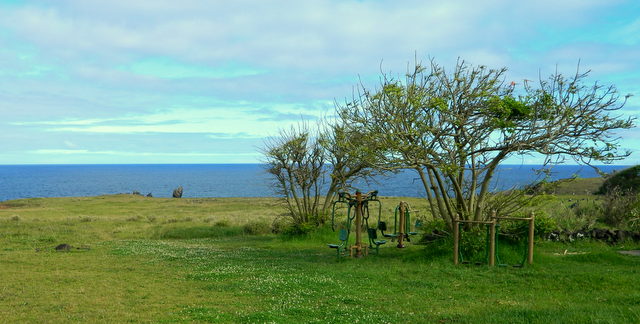
Because I was hiking and cycling every day, I never had the chance or need to use any of them. But if I lived on Easter Island, that’s where you could find me most of the time.
But I did use this playground for a nap.


Zur deutschen Fassung dieser Filmkritik.
The best film of the year – as confirmed by my friend Oscar from Hollywood– is one without explosions, without car chases, without a love story, without superheroes, without perfectly shaped asses in tight dresses, without shootouts.
It simply shows people at work.
Not even exceptional people. No astronauts, no snipers, no circus artists. Only reporters. Not war reporters dogging bullets or glitzy Hollywood gossip paparazzi, just normal reporters working for a local newspaper.
Spotlight shows the real story a team of four Boston Globe reporters who investigate child molestation by Catholic priests and the cover-up by the diocese. While everyone knows that the journalists will be successful in the end and will make the world a safer place for children, the film mercilessly depicts how reluctant they were to pursue the story, that they originally didn’t see the bigger picture and that they had to be pushed to do their job by a new editor (Marty Baron, now with the Washington Post).
None of the reporters is portrayed as an exceptionally bright investigative star as a fictional movie would do it, none of them has to go undercover for a year, none of them risks his or her life. Instead, Spotlight shows the drudgery of hours spent in a basement archive, of going through court filings or microfiche by hand, and – the technological highlight – compiling an Excel spreadsheet.

Yet, as viewers we are moved to nostalgia about “the good old days of print journalism”. There must be something that we miss about this kind of reporting. In my mind, this something is time. Or patience, to be precise. The investigation drags on for many months before the Boston Globe finally breaks the story, although one of the reporters is getting impatient himself, even thinking that the paper may want to bury the story.
Nowadays, when most writers and readers would believe that timeliness is of the essence, this luxury – which is the only way to achieve quality and accuracy, let alone stylistic grace – is almost not available anymore. But in the rare instances when it is, good work can be done, as the revelation and analysis of the Panama Papers show.
It is fitting that this message is conveyed in a film which is equally based on substance and quality instead of speed and effects. Spotlight is among the best-ever films about journalism, and I personally found it even better than the classic All the President’s Men. Watching interviews with the real Spotlight journalists, it is also striking how well the actors portrayed the demeanor of their respective characters. They must have been following them around for weeks in order to copy all their quirks.
But unfortunately, not only the journalists are authentic. The victims are real too. While the film focuses on the investigative work, it does a very good job in outlining the scope and the depth of the Catholic sex-abuse scandal. It shows how the Catholic Church worked like a criminal organization to protect its members, sending them on holiday or to a different parish each time allegations of abuse were substantiated. A new parish with new children. It points out how priests systematically prey on vulnerable children from broken families, how they groom their victims. It quotes Church-internal studies according to which 6% of Catholic priests are pedophiles.
None of this is limited to Boston or to the United States, of course. It happens in every country in which there is a Catholic church or monastery or school. I have watched the movie in South America and while the film lists a few South American dioceses at the end in which scandals have been uncovered, I cannot help but wonder how many more children get molested here, where the Catholic Church has a much stronger standing, more members and more influence.
Especially perfidious is a policy which is only briefly touched upon in the film: some molesting priests, who become untenable in the US, are sent to South America to get them out of the way. The Church didn’t think that there were no children in South America to be molested, it didn’t think that the priest would suddenly behave, it merely calculated that Latin Americans wouldn’t file a lawsuit – or maybe that the Church would have other methods to make allegations “go away” in heavily Catholic South American countries with judiciaries that are sometimes less robust than in other countries. After all, money is not an issue. In other words, they were thinking strategically like a criminal organization, like drug traffickers, like the mafia.

 The Happy Hermit