Prison for Writers: How Romania promotes Literature

When bloggers don’t write it’s not for lack of ideas. If that was their problem, they would never have had the idea of harassing the rest of the world – innocently and unsuspectingly stumbling through the internet – with their thoughts without being asked to do so in the first place. They don’t write for lack of time, lack of a quiet place or lack of money. Because the lack of the latter forces them to sell their time in other ways, prostituting themselves to clients instead of writing for a Pulitzer.

When starving writers meet, sooner or later you will hear one of them say “I would need to go to prison for half a year in order to write without any distractions”. As someone who has actually been to one of these institutions – albeit only for a week, during which I had no access to paper or pencil outside of interrogations, thus not permitting me to use that time productively – I always found this idea slightly inappropriate.

But Romania has made this writer’s dream come true and even provides incentives to creativity that expresses itself in writing. Inmates in Romanian prisons can shorten their remaining prison term by writing and publishing. Hence the saying “publish or perish”. You get 30 days off your sentence for each scientific work. And the inmates really do write. 76 books by inmates got published in 2014, often several by the same author. Fraudsters, money launderers, bribers and bribees suddenly turn creative.

But when fraudsters become creative, experience suggests that this goes beyond the actual writing. Just like they did with their Bachelor and Masters theses, they hire ghostwriters who churn out book after book. Quality doesn’t matter in this program, it’s only the volume and the number of publications that count. The content isn’t checked. Thus it comes as no surprise that it is mainly politicians and managers, of whom there are many in Romanian prisons – still not enough of them, my Romanian readers will interject -, who avail themselves of this opportunity. They have the money to employ “research assistants”. Meanwhile, some of the other inmates can’t even properly read or write.

As much as this unjust system deserves to be criticized, at least one aspect has improved since Ceausescu’s time. It used to be that writing got you into prison, now it gets you out of prison. And maybe one of the books will turn out to be a good one. After all, Romania lays bare literary talents in the most unexpected places, as Varujan Vosganian, the former Minister of Economy and Commerce, proved with his novel The Book of Whispers.

I am writing these lines in the park in Bolyai Street, outside of the prison in Targu Mures, but I am not creative enough to contrive a crime that I could commit spontaneously, that wouldn’t really harm anybody and that would – considering my flimsy criminal record so far – lead to more than a fine, but to less than the death penalty. Additionally, it should be something special, because just like you don’t want to toss off a boring romance story, you don’t want to commit a commonplace crime. It should make the evening news or the Romanian equivalent of the Criminal Justice Review. For Christmas, I would like to get a copy of the Romanian Penal Code to stimulate my creativity.

“I have written all of these myself.”

(This article also appeared in Medium. – Zur deutschen Fassung dieses Artikels.)

Posted in Books, Law, Romania | Tagged , , | 14 Comments

New Blog Address

First of all, if you have a subscription to my blog, you don’t need to change anything. If you have bookmarked links to my blog, you don’t need to change anything.

But if you want to tell your friends about my blog, I have made it easier for you by getting a shorter and more memorable domain name:

www-e


new-blog

If you don’t have a subscription to my blog, I recommend that you get one. It’s free and you can unsubscribe yourself anytime. Unlike with Facebook or Twitter, there is no nefarious algorithm that stands between my writing and your reading. Either use the RSS reader of your choice or click on this button

subscribe

in the right hand column of the blog and enter your e-mail address. With the RSS feed, you can even get tailored subscriptions, for example only to photos, only to travel articles or even to articles about a specific country. Very fancy stuff.

For those of you who speak – or at least read – German, I still have my German blog, which will from now on be available at www.andreas-moser.blog. Easy to remember: English blog without hyphen, German blog with hyphen. If too many readers will get confused by this, I can still change the address of the German blog to http://www.fueralledieessonstnichtkapieren-dashieristmeinblogaufdeutsch.de. The subjects there are often the same, but of course there are more articles about German politics and law, which I don’t find worthwhile to translate into English. And some of my more creative writing remains untranslated because it wouldn’t work in English, although this also happens the other way around.

By the way, if you ever think – as I do – that I am not writing enough, fast enough, there are around one thousand posts from the past four years. Enough to read for a whole week. It almost makes you want to break a leg in order to be confined to a hospital bed for that time, doesn’t it?

Posted in Language, Technology | Tagged , , | 3 Comments

Random Thoughts (4)

  1. Donald Trump doesn’t understand the role of the media, asking them to please be nice because it will make things so much easier for him. It reminded me of the film Spotlight in which the Catholic Church asks the Boston Globe the same.
  2. Trump’s statement that “the President can’t have a conflict of interest” on the other hand reminded me of Richard Nixon’s “if the President does it, it’s not illegal”, if not of the defense used in the Nürnberg Trials.
  3. Jürgen Klinsmann is the first victim of Trumpism.
  4. Interestingly, if Donald Trump were to implement a huge infrastructure program, it would probably lead to more immigration from Mexico again.
  5. From an article about the death penalty in the US: “Stephen Bright, founder of the Southern Center for Human Rights in Atlanta, argued that death sentences were generally imposed ‘not for the worst crimes, but the worst lawyers.'”
  6. For the few fellow lawyers who are interested in legal history, the BBC has a podcast about Justinian’s Legal Code.
  7. It was 100 years ago that Jack London died and many of the obituaries omit his greatest novel, Martin Eden. I am always sad when I see Jack London being reduced to his adventure novels, while Martin Eden is a beautiful book, in which I could really identify with the main protagonist, misunderstood by everyone else. One of the few novels I have read several times. Highly recommended in particular for anyone who is writing or wants to write. jack-london
  8. It’s interesting that Martin Eden is much more widely known in other languages, in particular in Russian and in Turkish than it is in the English word. Once I was in a bookstore in Tirana in Albania when a young couple in front of me bought Martin Iden, how he is called in Albanian. I congratulated them on their purchase and later saw them sitting on the steps outside of the theater, reading the book together.
  9. I left the store with a pile of books by Ismail Kadare. The File on H was the best one.
  10. Albania is one of the countries that are totally underrated touristically and culturally. I would love to spend a few months there.
  11. After dinner, I also sat on the stairs in front of the theater, reading a newspaper and smoking a cigar, when the road and the square were blocked off. But because I looked somehow official in my khaki pants and blue shirt, the police didn’t ask me to leave. Then, several black bullet-proof cars with a US flag sped by. But it was only Victoria Nuland, Assistant Secretary of State, not President Obama.
  12. I did see Barack Obama twice, though, once in Berlin and once in Prague.
  13. The latter should be an encounter with far-reaching consequences for my arrest by the Iranian Intelligence Service a few months later.
  14. Ok, I am jumping from one story to the next. Let’s stop this. If I want to tell a story, I should sit down and write a book. When Jack London was as old as me, he was already dead.
  15. But did you know that my blog is still censored in Iran? If you try to access it, the Islamic Republic helpfully shows a page indicating more useful and interesting sites. Censorship with a smile. iran-filter-2011
  16. Book reviews on YouTube are mostly boring.
  17. The rescue of manuscripts from Timbuktu to Bamako is an old story, but I was just reminded of it by the conviction of Ahmad Al-Mahdi at the ICC.
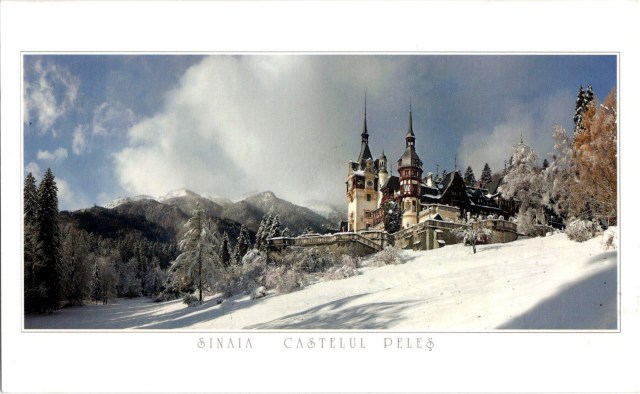
  18. Finally, a photo of Peleş Castle. Maybe it will help you understand why I long for the Romanian winter, even when I am spending the summer in the southern hemisphere. peles-winter
Posted in Albania, Books, Iran, Law, Romania, Sports, USA | Tagged , , , , , , | 1 Comment

South-Pacific Idyll with a War Ship

During my visit on Easter Island, the island was protected by the French frigate Prairial. This meant not only that drug smugglers stayed away for that week (the Prairial had just captured 680 kg of cocaine), but it also provided particularly idyllic views.

prairial1prairial2prairial3prairial4prairial5prairial6prairial7prairial8prairial9prairial91prairial92prairial93

Posted in Chile, Easter Island, France, Military, Photography, Travel | Tagged , | 4 Comments

A Workout with a View

Easter Island is the perfect place to get slim and healthy: food is so expensive that you’ll automatically be on a diet. As there are no buses, you have to walk/run/cycle everywhere (although never for long because someone will stop to offer you a ride).

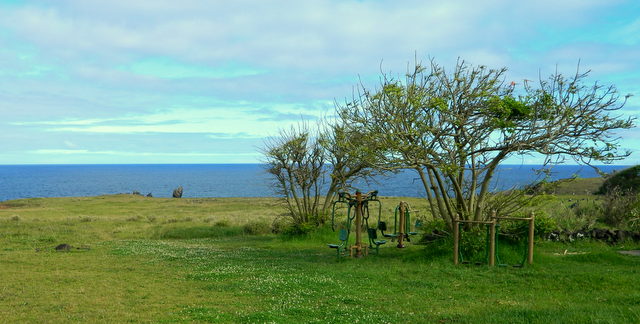
And then there are these fitness parks close to the town of Hanga Roa. They offer a great view while working out.

fitness1fitness2

Because I was hiking and cycling every day, I never had the chance or need to use any of them. But if I lived on Easter Island, that’s where you could find me most of the time.

But I did use this playground for a nap.

spielplatz

Posted in Chile, Easter Island, Photography, Sports, Travel | Tagged | Leave a comment

Random Thoughts (3)

  1. Always funny: places that don’t serve Coca Cola or other “capitalist”/”imperialist”/”Western” drinks, but all the staff have Apple phones and computers.
  2. The Guardian confirms my numbers on Britons applying for foreign citizenship.
  3. Somehow I found the list of US Presidents and their linguistic abilities. It looks like people used to speak more languages in centuries past. Sad.
  4. If I ever get cancer, I want to have the optimism of John Kerry.
  5. Sometimes, when people ask me “How can you afford to travel all the time?”, I just want to answer “The Illuminati are real.”
  6. “To be properly enjoyed, a walking tour should be gone upon alone.” (Robert Louis Stevenson)
  7. Whenever I hear people say “I cannot live without music”, I want to unplug people’s radios and watch them combust in agony.
  8. “Paradoxically, now that we can move so quickly around the world, most of us don’t actually travel any more – we just arrive.” (Dan Kieran: The Idle Traveller)
  9. When conspiracy theorists are in the White House, will real conspiracy theorists begin to argue that there are no conspiracies?
  10. Matthew Yglesias raises a few points on why the Trump presidency will be even more dangerous than we think.
  11. Finally an Attorney General from Selma, Alabama. Huge victory for civil rights. – Oh wait, it’s Jeff Sessions.
  12. There will always be more terrorists than we can catch. This is hopeless. But they all seem to work for this Mr God. Why don’t we take him out?
  13. In a poll conducted in the US in 1938, two thirds were against accepting refugee children from Germany and Austria. More of this information on the “Historical Opinion” Twitter account.
  14. “I don’t watch TV” proudly says a person who spends 16 hours a day on the internet.
  15. Jimmy Carter was no better than Donald Trump: “I’ve looked on a lot of women with lust. I’ve committed adultery in my heart many times.”
  16. As soon as I began reading Leonardo Sciascia’s The Day of the Owl, I began to miss Sicily.
  17. When people are hungry, they kill an animal and nobody cares. When I want to sleep and kill the neighbor’s noisy dog, people think I am a monster.
  18. I’ve literally managed to express myself for 41 years without using the word “literally” once.
  19. Some readers have written to tell me that the story about the homeless man in Romania brought tears to their eyes. That’s the best compliment I ever received on any of my articles.
  20. What is the best book on the Weimar Republic? I am asking for an American friend.
  21. Talking about books, here is my wishlist, just in time for Christmas. Every donor will receive a postcard from South America. postcard-to-alexandra-raluca
  22. Any invention praised with “This could totally change …” will be forgotten in a year.
  23. If all your dreams become reality, you didn’t have big enough dreams.
  24. Omarosa, the director of African-American outreach in Donald Trump’s presidential campaign tells us what to expect:

Posted in Books, Immigration Law, Law, Music, Religion, Sicily, Terrorism, Travel, UK, USA | Tagged , , , , | 2 Comments

Film Review: Spotlight

Zur deutschen Fassung dieser Filmkritik.

The best film of the year – as confirmed by my friend Oscar from Hollywood– is one without explosions, without car chases, without a love story, without superheroes, without perfectly shaped asses in tight dresses, without shootouts.

It simply shows people at work.

Not even exceptional people. No astronauts, no snipers, no circus artists. Only reporters. Not war reporters dogging bullets or glitzy Hollywood gossip paparazzi, just normal reporters working for a local newspaper.

Spotlight shows the real story a team of four Boston Globe reporters who investigate child molestation by Catholic priests and the cover-up by the diocese. While everyone knows that the journalists will be successful in the end and will make the world a safer place for children, the film mercilessly depicts how reluctant they were to pursue the story, that they originally didn’t see the bigger picture and that they had to be pushed to do their job by a new editor (Marty Baron, now with the Washington Post).

None of the reporters is portrayed as an exceptionally bright investigative star as a fictional movie would do it, none of them has to go undercover for a year, none of them risks his or her life. Instead, Spotlight shows the drudgery of hours spent in a basement archive, of going through court filings or microfiche by hand, and – the technological highlight – compiling an Excel spreadsheet.

spotlight-one-sheet

Yet, as viewers we are moved to nostalgia about “the good old days of print journalism”. There must be something that we miss about this kind of reporting. In my mind, this something is time. Or patience, to be precise. The investigation drags on for many months before the Boston Globe finally breaks the story, although one of the reporters is getting impatient himself, even thinking that the paper may want to bury the story.

Nowadays, when most writers and readers would believe that timeliness is of the essence, this luxury – which is the only way to achieve quality and accuracy, let alone stylistic grace – is almost not available anymore. But in the rare instances when it is, good work can be done, as the revelation and analysis of the Panama Papers show.

It is fitting that this message is conveyed in a film which is equally based on substance and quality instead of speed and effects. Spotlight is among the best-ever films about journalism, and I personally found it even better than the classic All the President’s Men. Watching interviews with the real Spotlight journalists, it is also striking how well the actors portrayed the demeanor of their respective characters. They must have been following them around for weeks in order to copy all their quirks.

But unfortunately, not only the journalists are authentic. The victims are real too. While the film focuses on the investigative work, it does a very good job in outlining the scope and the depth of the Catholic sex-abuse scandal. It shows how the Catholic Church worked like a criminal organization to protect its members, sending them on holiday or to a different parish each time allegations of abuse were substantiated. A new parish with new children. It points out how priests systematically prey on vulnerable children from broken families, how they groom their victims. It quotes Church-internal studies according to which 6% of Catholic priests are pedophiles.

None of this is limited to Boston or to the United States, of course. It happens in every country in which there is a Catholic church or monastery or school. I have watched the movie in South America and while the film lists a few South American dioceses at the end in which scandals have been uncovered, I cannot help but wonder how many more children get molested here, where the Catholic Church has a much stronger standing, more members and more influence.

Especially perfidious is a policy which is only briefly touched upon in the film: some molesting priests, who become untenable in the US, are sent to South America to get them out of the way. The Church didn’t think that there were no children in South America to be molested, it didn’t think that the priest would suddenly behave, it merely calculated that Latin Americans wouldn’t file a lawsuit – or maybe that the Church would have other methods to make allegations “go away” in heavily Catholic South American countries with judiciaries that are sometimes less robust than in other countries. After all, money is not an issue. In other words, they were thinking strategically like a criminal organization, like drug traffickers, like the mafia.

Posted in Cinema, Law, Religion, USA | Tagged , , , , , , , | 4 Comments

The Power of Prayer

People pray for health.

People pray for world peace.

People pray for financial success.

People pray for finding a boyfriend.

People pray for success with the chemistry exam.

People pray for having a child.

People pray for a safe journey.

People pray for a lottery win.

People pray that their parents won’t find out about their boyfriend.

People pray that they won’t be pregnant.

People pray that the tumor won’t be cancer.

People pray that their enemies will get cancer.

People pray for their cat to return.

If you believe that any of this helps, why don’t you ever pray for a pizza when you are hungry?

prayer

“With extra cheese, please.”

(This article was also published by Medium.)

Posted in Food, Philosophy, Religion | Tagged | 13 Comments

Bernie Sanders would have won? Bullshit.

Of course it didn’t take long for some of Bernie Sander’s supporters to exclaim with certainty that their candidate would have „easily/certainly/absolutely“ won against Donald Trump.

That is not only an easy thing to say because it can never be tested, it’s also as useless as me saying “if I had been born in America and had run against Donald Trump, I would have won”. But beyond the general problem with counter-factual alternatives, the claim doesn’t stand up to scrutiny.

Polls

The claim is usually based on one poll from six months ago in a year in which most polls were wrong and in which the level of Trump’s support was consistently under-polled, both in the primaries and in the general election.

It’s like saying that 35 years ago, I was a better football player than Messi (because he wasn’t born yet, and I was), so I assume I would easily beat him.

Bernie Sander’s message

Let’s face it: half the voters opted for a racist, sexist, megalomaniac authoritarian because he’s “anti-Washington”. Do you really think these anti-establishment voters would instead have voted for a long-term congressman who calls himself a “socialist”, who is Jewish and whose signature policy is to make it cheaper for rich Bostonians and Californians to attend Harvard or Yale to study sociology or gender studies? Heck, you really ain’t know nothing about the people who get their news from Breitbart, do you?

Facing a tough campaign

Bernie Sanders was doing well in the primaries because he faced no opposition. Clinton didn’t even run against Sanders. She didn’t attack him because she couldn’t and didn’t need to. She was sure that she’d win the nomination anyway and she wanted to have his voters. So she had to play nice. Ignoring him like the annoying grandfather who talks to much was as far as she could go.

How would that have worked in a general election against Donald Trump? 100% different. Trump would have attacked Sanders head-on. And the press would have started to investigate him, too. Sanders was the most un-checked candidate in the primaries of both parties. First, he was ignored, then people found him cute, and ultimately he was annoying in his fight against mathematics. But at no point was he taken seriously enough for reporters to go back 30 or 40 years and dig out old interviews. He was not even pressed on his random economic numbers which he made up of thin air (which apparently wasn’t a problem with the electorate in this year, I will grant you that).

Sanders would have been so vulnerable like none of the Sanders supporters would want to believe. First, he has a voting record on the local and the national level. There are hundreds of decisions to attack. Trump has zero. Of course Sanders would fight back with all the attacks that Clinton made, but why would they stick this time?

Second, there are all the dirty secrets about Bernie Sanders. Some of them true, some of them not, many in the grey area. You have no idea what I am talking about? Of course not, and that illustrates my point: Bernie Sanders never had to face a candidate who would go low. But you can be sure that Donald Trump would.

For a first idea, here’s an excerpt from a Newsweek article by Kurt Eichenwald, who had a chance to glimpse some of the opposition research compiled on Bernie Sanders by the Trump team:

I have seen the opposition book assembled by Republicans for Sanders, and it was brutal. The Republicans would have torn him apart.

Here are a few tastes of what was in store for Sanders, straight out of the Republican playbook: He thinks rape is A-OK. In 1972, when he was 31, Sanders wrote a fictitious essay in which he described a woman enjoying being raped by three men. Yes, there is an explanation for it—a long, complicated one, just like the one that would make clear why the Clinton emails story was nonsense. And we all know how well that worked out.

Then there’s the fact that Sanders was on unemployment until his mid-30s, and that he stole electricity from a neighbor after failing to pay his bills, and that he co-sponsored a bill to ship Vermont’s nuclear waste to a poor Hispanic community in Texas, where it could be dumped. You can just see the words “environmental racist” on Republican billboards. And if you can’t, I already did. They were in the Republican opposition research book as a proposal on how to frame the nuclear waste issue.

Also on the list: Sanders violated campaign finance laws, criticized Clinton for supporting the 1994 crime bill that he voted for, and he voted against the Amber Alert system. His pitch for universal health care would have been used against him too, since it was tried in his home state of Vermont and collapsed due to excessive costs. Worst of all, the Republicans also had video of Sanders at a 1985 rally thrown by the leftist Sandinista government in Nicaragua where half a million people chanted, “Here, there, everywhere/the Yankee will die,’’ while President Daniel Ortega condemned “state terrorism” by America. Sanders said, on camera, supporting the Sandinistas was “patriotic.”

The Republicans had at least four other damning Sanders videos (I don’t know what they showed), and the opposition research folder was almost 2-feet thick. (The section calling him a communist with connections to Castro alone would have cost him Florida.) In other words, the belief that Sanders would have walked into the White House based on polls taken before anyone really attacked him is a delusion built on a scaffolding of political ignorance.
sanders-in-yaroslavl

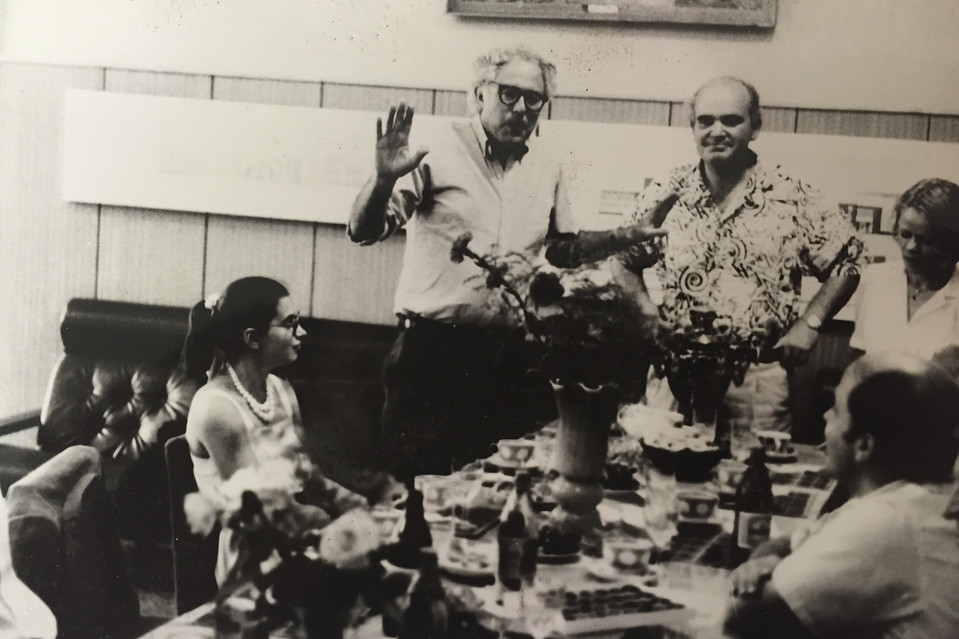
I think it’s absolutely OK to visit the Soviet Union. But explain that to voters who think that everything foreign is bad.

And that is only what Republicans gathered until they knew that Sanders wasn’t going to be their opponent. Imagine what else would have come out in the ensuing months, just like old Trump videos and tapes surfaced week after week.

Turnout

Some people point to the lower turnout among Democrats in 2016 and attribute it to the voters who were allegedly super-hyped about Bernie Sanders, but didn’t want to elect Hillary Clinton.

If you are a Democrat and can’t be bothered to vote in a close election in which the opposing candidate is dangerous and vile, then I doubt that you would stand behind a candidate whose image would be severely tarnished by what I described above all the way through election day.

Talking about election day, I wouldn’t recommend building a political strategy on so-called millennials. I know these people and they are lazy and ineffective. They may be strong on facebooking and instagramming, but they don’t know how to register to vote, they don’t know how, where or when to vote, they will forget it, they will play X-Box too late the night before and they will oversleep. I am not making this up. I am currently in South America where I constantly bump into young Americans, many of them Bernie fans who are now shocked, dismayed and angry. Did they vote? Of course not. Why not? “Can you vote when you are in another country?” Yes, duh. “I don’t know how that works.” “But I told my mom to vote for me.” “I thought I could vote when I get back after the election if it was close.” “But I am very active on Facebook.” And then they roll their next joint or puke over a cup of ayahuasca.

The die-hard Bernie fans also forget that just as the Secretary Clinton of the general election was not the Hillary of the primaries because she had to accommodate Bernie voters, Senator Sanders wouldn’t have been the Bernie of the primaries, but would have needed to accommodate Clinton voters. Just promising guns and drugs and free college wouldn’t have worked all the way to November 8th.

And why should women be excited to vote for Bernie Sanders? If a female candidate cannot win a landslide among women against someone bragging about acts of sexual assault, another old white dude wouldn’t have pulled that off either.

And let’s not forget the Republicans who voted for Hillary Clinton this time. They did so because she was a moderate and respected candidate with experience in government. No big risk there. But do you really believe that Republican ex-Presidents and Secretaries of State – and beyond them the group of like-minded Republican voters – would vote for a “socialist” whose only program is “we need a political revoluuuuution”? I doubt that.

Summary

Obviously, Hillary Clinton was not the perfect candidate. But neither was Bernie Sanders.

Maybe people on the left should be realistic and admit that none of them would have had an easy ride against any Republican this year. After all, the only two Democratic presidents in the past 36 years, Bill Clinton and Barack Obama, are both exceptionally well-gifted campaigners and orators. Neither Hillary nor Bernie are in that league.

Now, if you want to make the case that Joe Biden could have won, that’s a different story…

(This article also appeared on Medium.)

Posted in Politics, USA | Tagged , , | 11 Comments

The homeless non-beggar

Shortly after midnight at the train station of Cluj in Romania. The night train to Targu Mures has been canceled without any information about the underlying reason, let alone a replacement train or even a bus. With my broken Romanian, I fail to obtain any further information because the counter for “international information” only calls itself such because it sells tickets to Budapest and Vienna, not for the linguistic abilities of its staff. Sometimes I understand why in a whole year in Romania, I never heard one positive statement about the state-owned railway CFR.

The next train will leave at 5:30, so it’s not worth the hassle to look for a room for the night. After having gotten bored from walking up and down the large railway station building several times, I step outside onto the platform. It’s cold there, but at least that keeps me from falling asleep.

bahnhof-cluj-alt

There is not much going on here at this time of the night. The usual suspects, whom you see loitering at train stations after midnight all around the world.

After a while, the expected happens. One of the prowlers asks me for a cigarette, quite politely though. Unfortunately, I cannot help him with that. He notices my limited Romanian and asks me if I’d rather continue the conversation in English. I affirm, and I am in for a surprise. Because Sebastian, as he introduces himself, speaks a very good and flawless English.

“Where did you learn to speak English so well?” I inquire, expecting a story about a previous job in England or a stint at a university in the US.

“From watching movies. I like action films.” He is full of praise for the Transporter series. I find this hard to believe because his English goes well beyond these stupid movies. Maybe he secretly watches C-SPAN, but has internalized the anti-intellectual mood which briefly flared up in Romania in June 1990 and is therefore too afraid to admit it, for fear of marauding miners.

After I have told a little bit about myself, custom dictates that I ask about his personal life, too. Thus I learn that he is indeed homeless. An accident damaged both his legs, making it hard for him to find work. He receives a small pension, around 50 $ per month. He spent two years in prison after stealing food items from a supermarket. They were worth 10 $. “But if you steal a couple of millions, nothing will happen to you.” This is not only the relativization of a convict, but consensus in corruption-riddled Romania. A few hours ago, I had dinner with a criminal defense attorney, now I am discussing the proportionality of penal law with an ex-prisoner. At least the night will pass quickly like that.

“And where do you sleep?” I ask, half sheepishly, half caringly. I don’t have much experience in small talk with homeless people. He sleeps at the train station. That’s actually not permitted, he explains, “but they make an exception for me because I never cause any problems. I don’t drink alcohol, I am not loud, and I am gone by early morning.” The canceled night train however means that the warm waiting hall is now occupied by travelers and that he won’t get any sleep tonight. During the day, he walks around town, through the parks, and when his brother’s flatmate is not at home, he can sometimes go to that apartment to wash himself.

I readily believe that the station staff tolerate him, for although he does look poor and battered, he doesn’t appear scruffy at all. And he is exceptionally polite. From time to time he asks passers-by for a cigarette, but so unintrusively and with a low voice that some of them don’t even hear him and most others are happy to help.

The ladies working in the station café also know Sebastian. When they step out onto the platform to break for a smoke, they listen to our conversation for a while and then ask him in disbelief: “You speak English?” He smiles shyly, “yes, of course.” “No! You must be pretending. You are fooling us.” The coffee and sandwich sellers cannot believe that the poor man whom they grant shelter, and hopefully a piece of cake, every night is a polyglot. Their mouths are open with awe, so wide that the Orient Express could drive through. One of them decides to ask me: “Is that true? He really speaks English?” “Oh yes, very well, actually,” I remove all doubts with the authority of the stranger. “Incredibil, incredibil” they keep murmuring, throwing a stealthy glance at us from time to time. Once, when the eyes of the more attractive of the two ladies and the homeless man meet, she shakes her head appreciatively and still in disbelief, but smiles at him, as if she wants to ask “what other surprises do you have in store?” and he cannot completely hide his pride anymore.

But I really cannot believe that Jason Statham movies are the source of his English when some birds fly by and he not only knows their names in English, but explains which of them are nocturnal and which are diurnal. I have to ask to learn that these are the technical terms for animals active at night or during the day.

Unfortunately, Sebastian then asks how old I am. This part of the conversation is equally depressing in all such situations. “I am 40,” upon which he predictably responds “You look much younger. Maybe like 30.” I say nothing, for I want to put an end to this subject. He, without being prompted: “I am 29.” Sadly, I cannot return the compliment because marked by poverty, illness, prison, homelessness and possible further blows of fate with which he doesn’t want to bother a stranger at their first meeting, he does indeed look older than 40. These are the moments when I realize how much luck I have had in life.

“Do you want a coffee?” he suddenly asks, adding right away: “I will pay for you.” Moved and filled with indignation, I refuse. Instead, I offer to buy him something to eat. “Oh, that’s not necessary, thank you. I have already eaten today.”

When the train arrives, we bid farewell cordially, each of us thankful for the company provided. “Andreas,” he calls after me as I make my way to the wagon, “watch your bag on the train. There are a lot of thieves.”

Links:

Posted in Language, Law, Romania, Travel | Tagged , , , , | 14 Comments