If you care neither about the deficit, nor about providing public services, it’s actually quite easy to cut taxes.
When I saw books by Džon Grišam at the bookshop in Montenegro, I was happy that my name wouldn’t have to be changed quite as much for the Serbo-Croatian editions of my books.
“You judge very quickly,” many people judge me, often rather quickly.
Romania is offering 85 scholarships for BA, MA and PhD studies plus one year of Romanian classes (which at least for speakers of another Romance language is not too hard).
A fully revised and updated edition of one of the best books on Latin America has just been published: Forgotten Continent: A History of the New Latin America by Michael Reid. Highly recommended for anyone going to Latin America and interested in more than Machu Picchu and caipirinha.
In 2017, I have analyzed all your Facebook posts. Those of you who are single are 65% happier.
Once, I was in Oxford, and fell into a coma.
I feel sorry for Jesus. His birthday was always on Christmas, so he only got presents once per year.
On the same note, I feel sorry for people living in countries with only one Christmas. Long live the schism!
I don’t understand all this glass half-full/half-empty debate. I always drink straight out of the bottle.
I have come to the sentence “Nemam pojma” in my studies of Serbo-Croatian.
It describes the situation very well.
In 56% of the cases in which I prepare a cup of tea, I forget about it and only rediscover it hours later when I walk into the kitchen again.
Based on how people feel after talking to me, I have a new business idea:
If you ever need a headache, I can give you one. Only 49 $ and money-back guarantee.
Something for my lawyer friends: some generous PhD scholarships by the University Sant’Anna in Pisa, Italy.
Legal marijuana in Germany is really taking off. Maybe I’ll have to devote one of my popular pages with legal FAQ to that subject.
In Montenegro, I met a house-sitter, i.e. someone living in a house on behalf of the absent owners, taking care of the plants and pets. “I can do that, too,” I thought, minus the dogs. And I already got the first job. This summer, I will be living in Vienna for two months.
Remember that I warned you about Bitcoin.
Yes, Oprah Winfrey gave a good speech. No, she should not run for President because of it. Let’s please have someone again who studied law and spent some time as a Congressperson or in government. I don’t understand the appeal of “outsiders”. Would you include a swimmer in a football team, just because she is an “outsider”? Or pay your barber to take care of your legal problems?
The only disadvantage about Kotor is its location in a fjord, surrounded by steep mountains, which to cross takes the sun a few cumbersome hours every morning while it already warms people and spirits elsewhere in the country, and behind which it will disappear again by 3 pm, just to perform a wonderful sunset elsewhere. But we citizens of Kotor never get to see that because Mount Vrmac lies between us and that sunset. Disappointed about the few rays of sunlight that graze and grace Kotor, we compensate by drinking a bit more.
Alternatively, you can follow the Balkanese saying “If the mountain won’t move out of the way, you have to get on top of it.” The path up to Mount Vrmac was planned or erected under the influence of alcohol, too, it seems. Instead of taking Euclid’s advice that the shortest distance between two points is a straight line, the path goes back and forth, left and right, zig and zag. When the Austrians conquered the mountain, they gave this topsyturvydom the important-sounding name serpentines and imported the concept for their Alpine roads.
But I have to concede one thing. Because the mountain is so steep that you can never see the distance still ahead, but looking back you see dozens of switchbacks, you receive a psychologically important confirmation about the hiking performance already achieved.
That may have a different effect on the way back, but then, the way back is always easier anyway. And my plan was not to return the same way, but to cross Vrmac and follow the movement of the sun, spending the morning on the Eastern flank, the afternoon on the Western flank and to walk down towards Tivat and the sun in the evening.
The day could not have been more beautiful. Seeing the bay of Kotor from a new angle, with the sun letting me forget the winter, the deep blue of the sea, the snow-covered peaks on the horizon, everything was as grandiose as if a painter had gathered all his energy to create one last masterpiece. The perfect combination of sea, forest and mountains, of colors and shapes made me almost dizzy, even without alcohol. Or was that already the high-altitude high?
By the time I reached the summit, Kotor still lay in the shadow of the mountains.
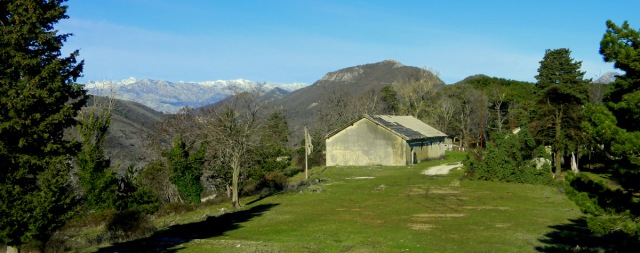
The few houses on Vrmac were deserted and had begun to fall apart, but the chicken coop was still fenced in. So, one could move there any day and begin a new life.
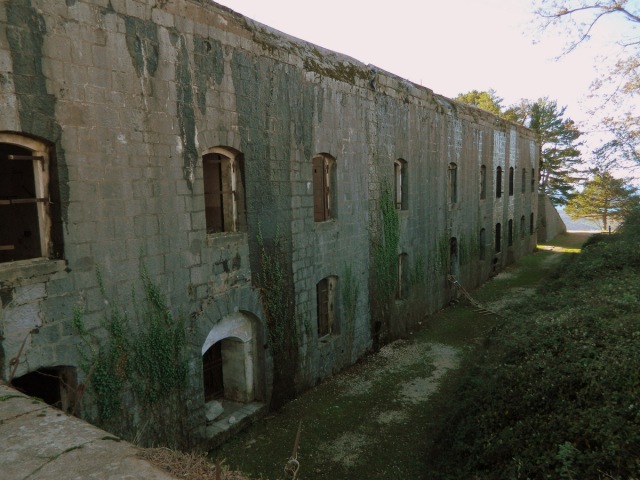
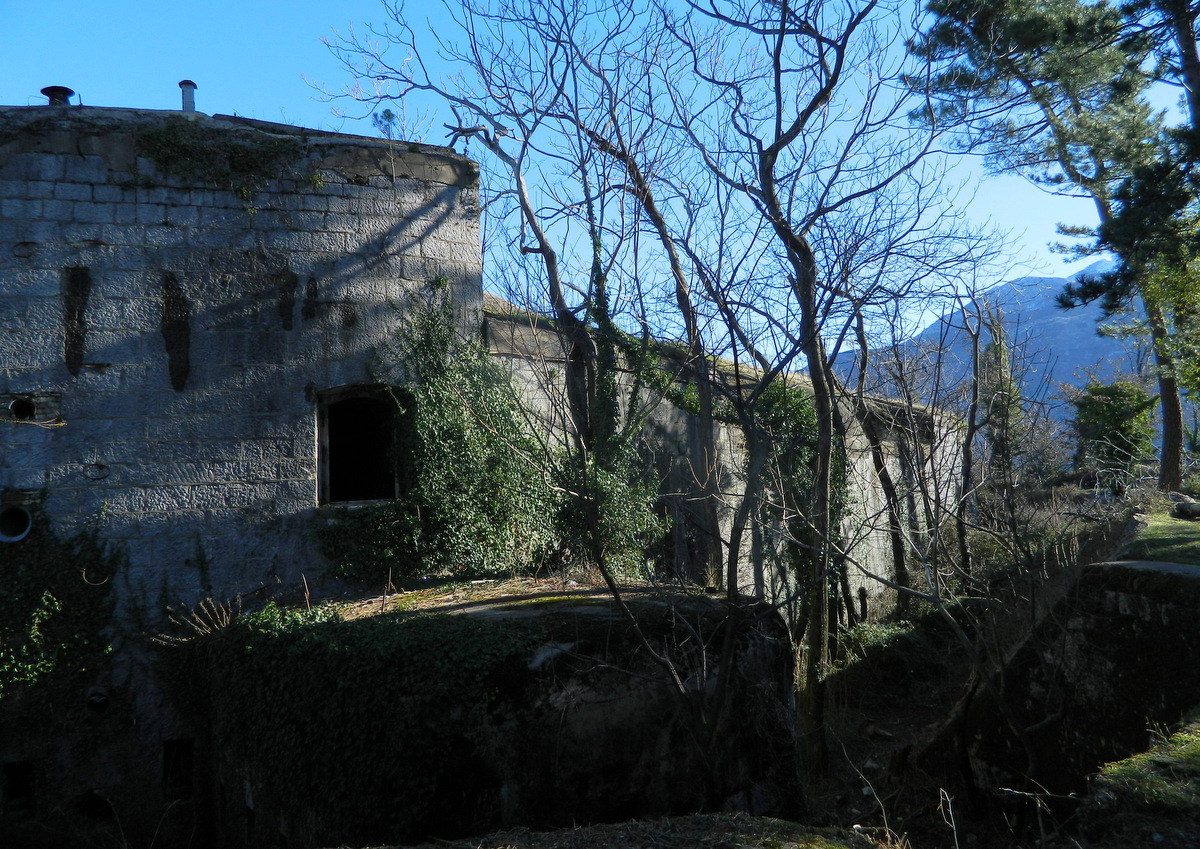
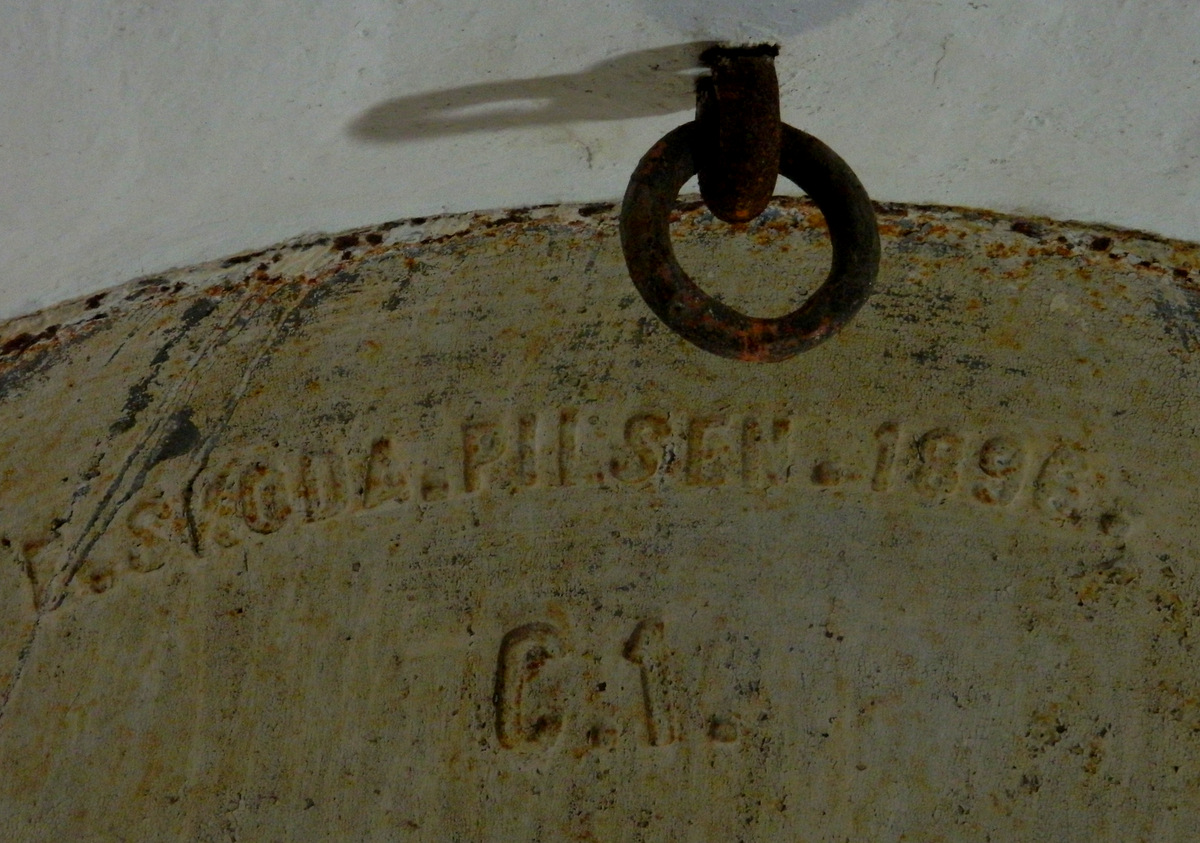
Living there, one wouldn’t need to worry about security either, because Vrmac houses one of the largest Austro-Hungarian fortifications, built in its current form in 1894, and which is still in good shape despite having seen battles in World War I. For the historical details, I refer you to the colleagues from the Austrian Society for Fortification Research, who list many more details on their page than anyone can remember. Just a bit of context: Kotor was Austria’s most important military port in the Southern Adriatic and therefore required considerable protection. Right behind Kotor (called Cattaro at the time), there was the border with Montenegro, leading to skirmishes and little wars from time to time. It was in this bay, by the way, that the Austrian Navy saw a revolutionary mutiny in February 1918. Yes, even Austrian history can be interesting.
But back to the fortification on Vrmac. The beautiful thing about Montenegro is that nobody would put up any guards, let alone lock the door. Thus, you can frolic around the fort freely. If there are still landmines from World War I, they must have decomposed by now, I was hoping.
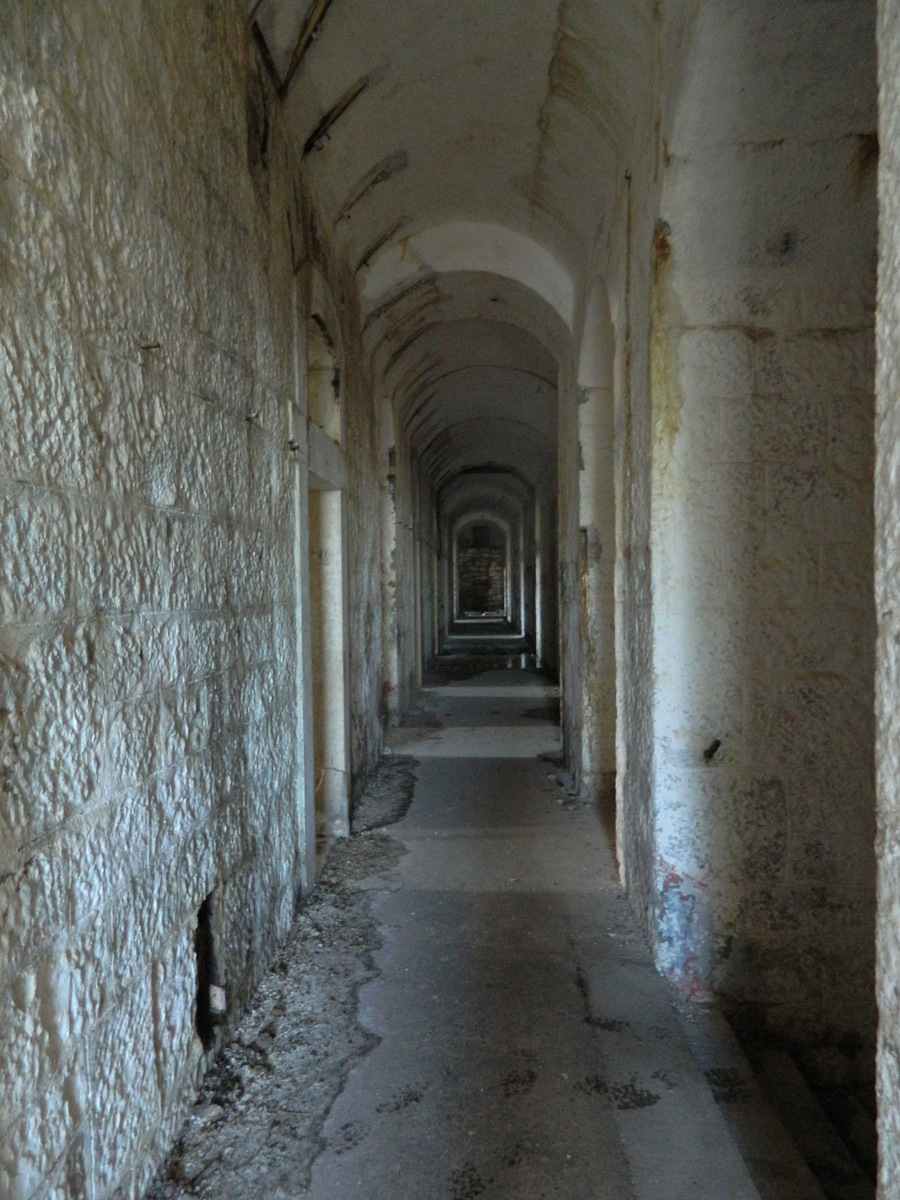
To venture into the interior of the fort, particularly into the tunnels and basements, a lamp would be useful. In accordance with my guidelines on adventure (no. 17), I had of course not brought a lamp. That looked like a stupid decision, but only for a short time, because equally in accordance with aforementioned guidelines (no. 5), two guys from Russia appeared from the forest, who also wanted to explore the military installations, who had lamps and whom I joined in the spirit of peace among the peoples. Now, “two guys from Russia” sounds very innocent, but anyone who has Russian friends, can imagine what the two were thinking when they said: “We’ll explore the fortress from the basement to the roof. Let’s go!” Because Russians do it like this:
But what could I do, I didn’t have my own lamp. Cling together, swing together. Literally, for the two guys pulled themselves up 2-meter walls and jumped through windows more easily and elegantly than I get out of bed in the morning. Whenever they spotted a hole in the ground, through which one could descend into darkness even deeper, they screamed “woohoo!” with joy and swung themselves down.
But thanks to these guys, I really saw every corner of the fortress, all the way to the roof, which we somehow managed to scale. How I ever got back down without falling, I have no idea.
After the fortress no longer served any military purpose, a monk had apparently lived in one of the casemates, because the walls were painted with Orthodox icons.
Speaking of casemates, I didn’t know the word either until that day. But one of the two Russians could explain every place and object in very good German; „zwei Maschinengewehrpositionen“, „Munitionslift“, „Panzermörserlafette“. Lots of terms which even I as a native speaker don’t know. He was studying German at the university in Saint Petersburg, he said, and I chose not to ask if he referred to the Military or the Intelligence Service Academy.
The spontaneous encounter and the survived adventure had intoxicated me so much that I chose the longer path to Tivat – following the whole ridge of Mount Vrmac to the north first -, not realizing that said path would, like so many endeavors undertaken in an intoxicated state, lose itself in the brushwood at some point.
But first it went upward, opening new views: to Perast, to the mountains bordering Bosnia, to churches hidden deep in the valley
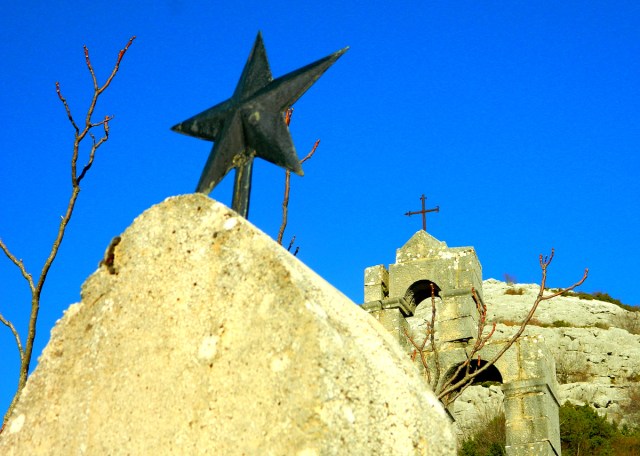
or planted on hilltops,
but in both cases equally forgotten by the world.
The only place I no longer saw was Tivat, the destination of the hike. Because there was suddenly another mountain, of whose existence I had not heard anything before, blocking the way and derailing my plan. Where I spotted something like a trail that went vaguely in the right direction, I followed it. Where I found an empty streambed, I used it to descend towards the valley. And when I had gotten completely lost, I fought through the forest like the Partisans once did, fighting here against my grandfather (among others), who had chosen the wrong side and was shooting up the forests (and probably more) with a German Volksgrenadier unit.
One thing that scares me even more than the Wehrmacht are dogs. Unfortunately, it was exactly these monstrous creatures whose barks indicated that I had approached what I hadn’t really been missing: civilization. There were only a few houses in the hills far above Tivat, but now the direction was obvious. The barking alerted the owner of some of the dogs and he stepped into his garden, greeting me with both “dobar dan” and the question from where I had walked. When I explained that I had come all the way from Kotor on foot, the friendly gentleman, who had already calmed his dogs, was impressed enough to invite me to some rakija right away. My only New Year’s resolution had been to be more social and less shy, so I accepted happily.
He led me into a garden shed full of hunting trophies, photos and guns. That explained the many dogs, for which he had collars with GPS, so that the dogs would lead him to the boar. The hunter spoke some English and German and I a few words of Serbo-Croatian, and thus we merrily spoke about hunting (“I hunt boar, but I raise rabbits to release them in the wild”) and the current close season, which he strictly adhered to, about Germany (his sister lives in Karlsruhe), about the deserted villages and churches on Mount Vrmac and about driving from Germany to Montenegro. “The best way is by motorcycle,” he insisted: “Freedom, air, sun, so close to nature!” I told him that my father had once driven a moped from Germany to Mostar in the 1960s, but had turned back just before he could see the beauty of Montenegro.
The hunter pointed out two black-and-white photos on the wall behind me (all of them hunters, too): “This is my father, and this is my grandfather.” Then, he nodded to a photo next to the door and said, laughing but not jokingly: “This is my second father.” It was Tito.
There may be no more Yugoslavia, but that gentleman was still a Yugoslav to the core. In the corner, there were a Croatian and a Montenegrin flag, one for his ethnicity and one for that of his wife. If he had turned on the record player in the corner, I am sure a brisk anthem for Marshall Tito would have filled the room with music and memories.
During the whole conversation, I managed to limit the intake of the extra-strong rakija to one and a half glasses. But because my stomach had not been fed anything more than one müsli bar the whole day, even that was too much. I was seriously tipsy, my head was heavy, as were my legs. My host seemed to notice, because he carefully explained to me that I would simply have to follow the road down the mountainside to get to Tivat safely. Luckily, I didn’t walk into any police sobriety checkpoint.
For world travelers, the German passport is the most useful passport: 177 countries can be visited without a visa or with only a visa on arrival. That saves money, time, effort and uncertainty. While holders of other passports are running from consulate to consulate with a stack of paperwork, the German explorer is already on the plane to Tuvalu or Mongolia. That usefulness might explain the desire of many to obtain a German passport.
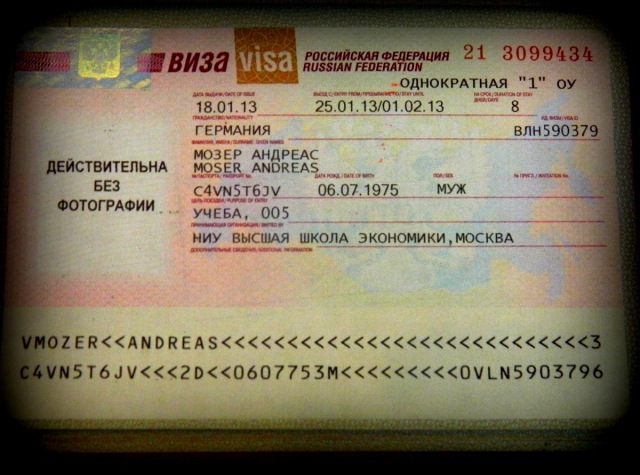
Since February 2017 it’s possible to travel to Belarus without a visa (albeit only for a short stay), leaving Russia as the only country in Europe for which we Germans need a visa. But even here, I have a tip for you: Student visas for Russia are issued free of charge. So if you conceal the real purpose of your trip (Transsiberian Railway) and claim a wish to study at the Obninsk Institute for Nuclear Power Engineering instead, you will save 60 euros. (“This blog saves real money and deserves our support!”, the excited readership is proclaiming in the author’s dreams.)
But the German passport has more advantages. Even in countries granting visa-free entry to other nationalities, one is often better treated with a German passport. In South America, for example, I heard a few times that US-Americans were turned back at the border because they didn’t have a vaccination certificate. I had one, but never had to show it. There simply is more anti-Americanism than anti-Germanism in the world. In Bolivia, I once sat in the park in Sucre when the police checked the passports of all foreign-looking people, recalculated the days spent under their tourist visas and asked a few guys to come with them (they were Argentinian, I believe). When I handed over my passport, the police officer only asked “Alemania?” and handed it back when I answered in the affirmative. (My visa had already expired and I was staying in Bolivia illegally.)
Especially in the Middle East, a German passport allows for much more relaxed travel than a US-American, let alone an Israeli passport. Just compare how long innocent US-Americans or Britons are kept in prison in Iran and that I (not quite as innocent) was released after only one week. The Iranian judge explicitly referred to the close historical ties between Iran and Germany: “After all, we are both Aryans.”
Even in regions rife with conflict, as a German, one is hardly ever targeted, if only because German arms companies are providing both sides with weapons. Another tip: print yourself a Heckler & Koch business card, and you will be treated like royalty anywhere from Homs to Kabul.
But the German passport also has a decisive drawback. Notwithstanding all the hype about “German quality”, it really is very lousily manufactured, almost like that job has been outsourced to China. Cornflakes and chocolate can easily be enjoyed way past their end date (yes, I tried), but the German passport will never last for the 10-year warranty period, at least not if you travel intensively.
This summer, I already had problems entering Armenia because the fabric cover was coming off and the meticulously checking border guards couldn’t believe that this would happen to a genuine German passport. And now, coming to Montenegro, the plastic card became loose. What’s the point of all the electronic chips, fingerprints and biometric photos if the Federal Printing Office doesn’t even use proper glue?
It has to be noted that this passport hasn’t yet reached the 60% mark of the promised lifespan.
The border guard at Podgorica Airport called a colleague and then his boss, all of whom again expressed the allegation that this passport was a forgery. (Why anyone should produce such a low-quality forgery, I don’t know.) They told me that I couldn’t enter the country like this, that I would need to wait at the airport and would be returned to Germany with the next plane. (Which is a weird threat to a person accused of somehow not being a real German, but that’s not Montenegro’s problem.)
Only due to my convincing and polite manner, pointing out that I had already rented an apartment for two and a half months, that I had been to Montenegro once before and that, ever since, it has become my heart’s dearest desire to spend more time in Europe’s most beautiful country, I finally received the coveted entry stamp. But now I will probably really have to apply for a new passport, or I will one day be stuck in the no man’s land between Macedonia and Kosovo or be refused re-entry into Schengen at the Hungarian border fence.
Maybe I didn’t put up enough of a fight. Maybe my silent and thoughtful manner got mistaken for sadness, thought to be a suitable attribute for this particular line of work. Maybe it was the fact that I had been sent on similar missions in the past, from which I had returned unscathed, at least outwardly, each time. Maybe I had never quite shaken off the aura of my cover in Ecuador, where I had been a priest. Or maybe even I thought that I was the best person to do it.
“Moser will go,” Fletcher summed up the consensus. The nature of the mission suggested that this order meant to go immediately. “Take Williams with you,” the boss said in lieu of wishing me good luck, which, in any case, might have been an inappropriate farewell on yet another mission for Queen and country.
Not that I needed a partner, but it was a rule. The reason for that rule, if ever there been one, I didn’t remember. Maybe the office was concerned that the bearer of bad news would be assaulted. Personally, I was more worried about freshly widowed ladies throwing themselves into my arms. Women sometimes did crazy things in my presence.
There are probably some theories as to whether it is easier depending on one having known or not having known the deceased and/or his wife. (Equality had not yet spread enough that I ever had to visit a surviving husband or same-sex partner.) In this case, I knew Grier, had worked with him, had even developed a professional friendship. I didn’t know his wife, but knew that they had children. I just hoped that they were either at school at this time of the day or too young to understand anything. For the thousandth time in my life, I wondered why anyone would want children.
While I was pondering these thoughts, Williams did his job as best as he could, it has to be pointed out: by silently walking next to me, helpfully, almost subserviently pushing the button at each pedestrian crossing on the short walk to the other side of the river, where Grier had lived but never invited me home. It was a professional deformation of sorts, to not let anybody too close into what little was left of our private lives.
I cleaned the sweat from my hands with a handkerchief before I pressed the bell for “Grier”. At least they wouldn’t need to take off his first name.
The woman who opened the door was dressed too neat for a housewife and had a friendly, seemingly genuine smile. “Yes?”, she inquired. She had no idea.
“Mrs Grier, we are from your husband’s work. Could we come inside for a minute?” Often, it really didn’t take longer. Less time than you need to get rid of Jehova’s Witnesses.
“Would you mind if I called him first?”, she asked, expressing first signs of disconcertment.
“I am afraid that is no longer possible,” I replied, almost thankful to her for giving me this opportunity to break the news. “That is what we wanted to talk to you about.”
“Oh no,” her right hand covering her open mouth too late to hide two gold teeth in the back. She beckoned us to enter and advance to the living room, where we sat on the couch without removing our coats.
“Mrs Grier, we are very sorry to inform you that your husband had an accident this morning.” She didn’t ask, so I had to go on, unprompted. “He did not survive it.”
With two strangers sitting in one’s flat, people rarely burst into tears or other drama. Mrs. Grier kind of fell together, becoming smaller, paler, grayer, older, frailer from one second to the next. Again, she clasped her mouth, lowering her head and her gaze. Behind her, on the mantelpiece above the fireplace, I spotted a family portrait. A man, a woman and two girls.
The last thing I wanted to do was to prolong our presence in the home of a family that had endured an unexpected loss. Well, as unexpected as it could be, working for the intelligence service.
Which led me to the most delicate part of the conversation. “Mrs Grier, what exactly did your husband tell you about his work?”
“Why, he talked about it all the time.” Her face brightened up a bit, as both Williams and me must have looked as shocked as if we, too, had died that morning. “He likes the children, and he loves teaching French. He adores everything about France.”
Williams looked as if he was about to get sick and I too wanted to get out of that flat as quickly as possible. While Grier’s position had obviously required a high degree of confidentiality, it was actually none of the jobs that asked for the invention of a complete cover for the agent’s family. Such jobs were reserved for bachelors, as I knew only too well.
But there was one last thing.
“That photo behind you, was that also taken in France?”, I asked.
“Yes, we were in Brittany this summer,” she sighed, the memory bringing a flicker of joy into her gray-blue eyes.
“Well,” I got up. “I am really sorry,” I said, “to be the one having to do this job,” I thought.
By the time we left the flat, it had begun to snow, as if to symbolize that the few minutes had aged me by months. But I needed to walk. And to think. And to make a decision.
“Did you know Grier?”, I asked Williams.
“No,” he said, sounding dutifully sad, having missed the chance to work with one of our finest men.
That gave me ten more minutes to come up with a decision.
The man on the photograph wasn’t Grier. At least not the Grier I had known and whose body had been found this morning on a bench on the Curonian Spit, close to the border between Lithuania and Kaliningrad. Frozen to death, but possibly poisoned. To add pressure to problems, if the real Grier was a teacher, he would be home in a few hours.
The story of a young graduate who wants to become a hot-shot journalist, receives the advice
“you wanna make it as some big-swinging dick journalist, you gotta go somewhere fucking crazy”
and goes to Somalia to learn and write about pirates is fascinating, not least because it’s the true story of Canadian journalist Jay Bahadur.
Sadly though, the movie The Pirates of Somalia distorts this feat of reporting into an unrealistic (TV stations admitting on air that they have absolutely no sources? the Canadian journalist having a flirtatious affair with the drug-dealing wife of the pirate mastermind?) slapstick film, with Evan Peters playing a buffoon character out of a high-school comedy. Each time he pleads how important it is that the world learns what is happening in Somalia, one wonders why the much more competent Somali journalists can’t do that job.
The stupid dream scenes, some of them in Quentin-Tarantino-rip-off manga style, discredit the film completely.
After the movie, I watched an interview with Jay Bahadur to see if he was really as clueless and dim as portrayed by Evan Peters, and – no surprise – he isn’t:
But what will become of James Bond if we don’t tolerate sexual harassment anymore?
Trying to cash in on crypto-currencies, I have now invested all my savings in Paypal.
I always find it strange when people say “I am writing an eBook”, as if form matters more than substance. On the same note, I find it fishy when people say “I am studying for a master’s”, without mentioning the subject.
– Hey Andreas, how easy is the language in Montenegro?
– Well, the language calls itself “crnogorski književnojezički izraz srpskohrvatskoga ili hrvatskosrpskoga jezika”.
– Oh.
I have actually never been influenced by an “influencer”.
From Wikipedia:
“Smoking in public places is prohibited in Montenegro, unless you obtain a smoking permit from the government.”
So where do I get this permit to smoke on top of a mountain?
Thanks to Daniel Kehlmann’s wonderful novel Measuring the World, Alexander von Humboldt became even more popular than he already was. But this BBC podcast points out that one of the other scientists in the book, the mathematician Carl Friedrich Gauss, is just as interesting.
How to get rid of fake friends. (I am the blue part in the conversation, of course.)










 (photo by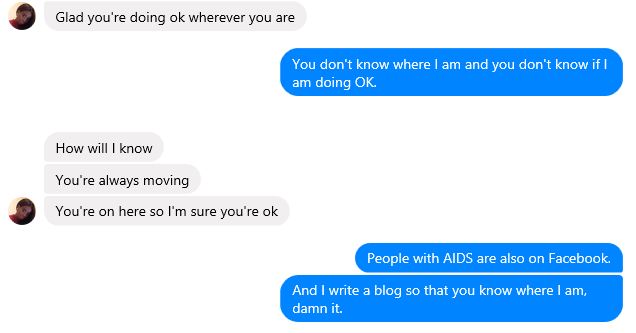

 The Happy Hermit