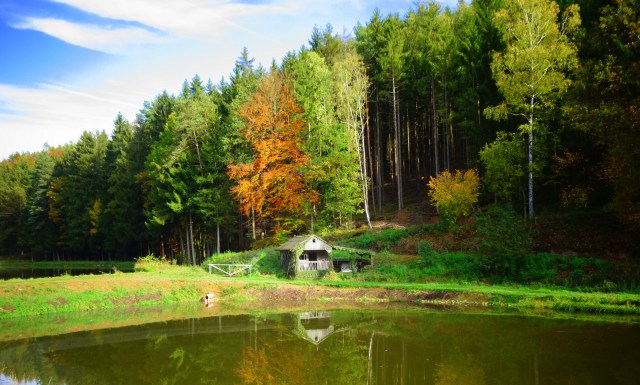
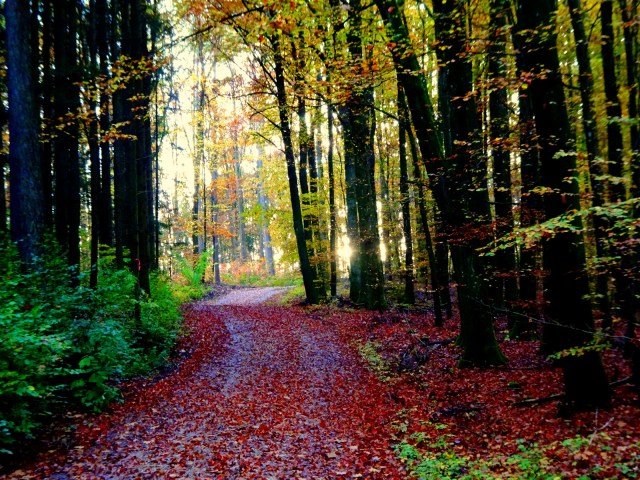
These months, I have a lot to do for university. But yesterday, it was such a warm, sunny and colorful day that I had to escape for one of my secular shabbat walks. From Schnaittenbach to Ammerthal, two unremarkable villages in Bavaria, I walked about 30 km. Nothing spectacular happened, so I’ll just leave you with a few photos, reminding you to go out before it gets cold and dark.
Walking 30 km took all day, admittedly because I was often seduced to take a rest.
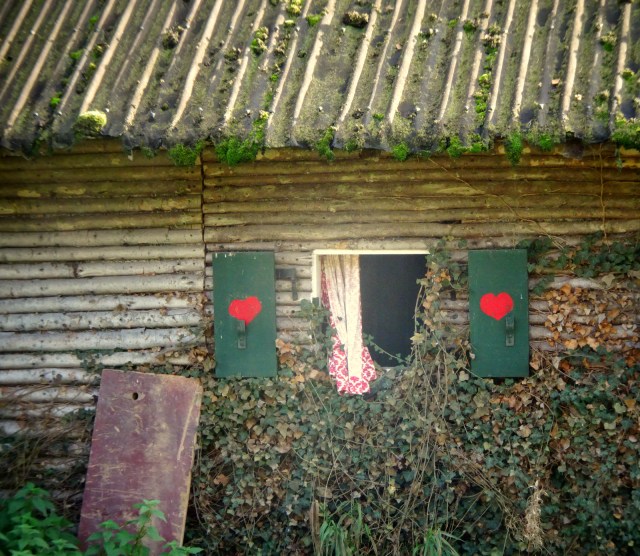
At this house by the lake, I was almost lured into staying the night. It was empty, but the door was invitingly open. Only the hearts scared me off.
Sunday, 8 September. Day of the Open Monument. Today they are open, the castles and cloisters, buildings and bunkers that are usually hidden from the people. You’ve got to use that opportunity, I think. Scrolling through the program, I put together a route with as many monuments as possible.
“No way,” says the girlfriend.
It’s only once a year, I think. But I want no quarrel. Even less so as she makes a better suggestion: “Let’s go hitchhiking to Liège!”
We are in Aachen, I should mention that. Not a bad city, but the best thing about it is the location. As soon as you leave town, you step into Belgium.
We only have one day. I don’t like going to bigger cities for a day. After all, Liège is no boring hamlet, there is quite a bit to explore there. Then, I’d rather not go at all. Or only once I will have four or five days.
We come to an agreement, without any quarrel. To the border, we’ll take the car. Because the girlfriend actually owns one. But she wants to know what my vagabond life looks like. We both want to know whether it will work, who will give us a ride, how long we have to wait. A scientific experiment, in a way.
Once in Belgium, we start hitchhiking. We’ve seen a blue bench there, a “hitchhiking bench”. You stand there – or sit when tired -, put out your thumb or not, and swoosh, a car stops. In theory. Today, we are running a field test.
For those interested: the bench is in front of a café. The café is directly at the border. It’s called Kuklux or Kukuruza or something. In Eupener Strasse anyway. If Eupen-Malmedy doesn’t want to join Germany, then we’ll come to Eupen.
We look friendly. We smile, although we can’t recognize anything behind the windscreens. Some drivers wave at us. Nice, but it would be better if they stopped. Well, some cars are already full to the brim. Quite a lot of traffic for a Sunday morning. Good that the borders are open in Europe.
Maybe ten minutes until the first car stops. German license plate, Dutch driver, going to Belgium for shopping. And to have the car washed. “You get a car wash for 10 € here. Manual! That’s not even allowed anymore in Germany.”
“I like your music,” says the girlfriend, to change the subject.
“But soon they will start singing,” the driver warns.
“Hopefully nothing as heavy as Wagner,” I interject. If it was Wagner, the mood in the car would be kaput. If someone is kind to hitchhikers, he doesn’t want them to dictate the radio program.
“Oh no, that would be too much so early in the morning,” the flying Dutchman soothes my concerns. “But you are from down there, aren’t you?” He means Bayreuth.
“From Bavaria, yes,” I concede. A Dutchman, a Georgian woman and a German are speaking German, but the German has the strongest accent. Depressing.
A golf course flies by on the right hand side. The driver and the girlfriend talk about joint acquaintances in the club. That’s not my world. I feel excluded.
That would be a good time to sleep. But we’re already there. Not in Eupen, but in Eynatten, half the way. “The family is waiting for breakfast, I am sorry. Otherwise, I would have loved to drive you all the way to Eupen.” Even in Eynatten, the friendly gentleman goes farther than he would need to. He wants to put us on the right road to Eupen.
He hasn’t even asked us why we are standing by the side of the road. But if someone recommends car washes and golf courses, he probably doesn’t think of us as a poor carless couple.
So now we are in Eynatten. Without a blue bench. Or we can’t find it. Again smiling, thumbs, waving. “You should try it,” I encourage the girlfriend, “maybe that will get someone to stop.” She is rather attractive.
Eight times, ten times, twelve times she sticks out the pretty thumb. But nobody stops. “Oh damn it, I am no good at this,” she gives up, unnerved. “You go for it again!”
We change positions. I stick out my thumb. The first car stops.
The driver is still on the phone. He gestures that we should get into the car.
We don’t even speak about the destination. “Where else than Eupen would they want to go?” he thinks. “Surely, he is going to Eupen,” I think. “Andreas surely knows what he is doing,” the girlfriend thinks. She doesn’t know me very well yet.
The chauffeur is a relaxed dude. His right hand resting in the pocket of his pants. Even while he is driving. Very cool. From the rear-view mirror hangs a wooden Orthodox cross. His T-shirt is splattered with paint.
“You are a painter?” I ask.
“We have just moved. New house with six rooms. I’ve got to paint them all.” He sounds proud, but exhausted. Now he would have enough space for relatives to visit, “but my wife is not to keen on that idea.” Maybe she prefers to fill the additional rooms with babies.
The conversation somehow comes to where we come from. The friend is from Georgia, I think I already mentioned that. The driver is from Armenia. What a Caucasian coincidence on the Belgian road. Both of them speak a bit of Russian with each other. Only to test how rusty it has become.
An Armenian and an Azeri in the same car would be worse. Or an Abkhaz and a Georgian. But even here, I sense some tension. Georgians have an inferiority complex towards Armenians. Because Armenians have better cognac. And cleverer chess players. Even a peaceful revolution now.
“Andreas has been to Armenia,” the girlfriend says. She seems to read my blog. Not all friends do that.
“But only in Yerevan and in Dilijan,” I admit the limits of my experience. Maybe he is from one of them. No. He is from Karabakh. I haven’t been there yet.
Where in Eupen we want to go, the Karabakhi asks. We don’t really know. He recommends a walk along the Weser river dam. He would love to take us there, but he has to pick up his wife from the flea market.
Flea market? We are happy to join him. After all, we have wanted a spontaneous day, thus the unspontaneous plan.
We never would have spotted the market on our own. It’s hidden in a multi-storey car park. And the stuff they have there! Records, video cameras, books, lots of tableware. And war paraphernalia. Iron Crosses, swastikas, maybe even something from the crusades. And next to it a T-Shirt that shows Micky Mouse and Minnie Mouse kissing.
The Armenian finds his wife, plods around the market behind her. He finally wants lunch, and then to the dam for a walk with the dog. But his wife needs to decorate six rooms. He introduces us. The Armenian lady is not too excited about her husband having picked up a young Georgian lady. Proselytize she wants, though: “Do you already know the Orthodox church in Eupen?” But the friend is an Atheist. Old Soviet school. She would rather blow up all them churches.
We say good-bye.
“Did you see that he didn’t have a right hand?” the friend asks as soon as we have left. She has studied anatomy, so she knows about such things. I wouldn’t even have noticed it. I look more at people’s inner qualities. So, the hand which I presumed in the pocket of the pants, really lies on some battlefield in Nagorno-Karabakh. An armless Armenian, I think, for alliteration’s sake.
Eupen could be interesting. But today it’s cold and grey. Even the Museum for Contemporary Art is grey, at least from the outside. A concrete block like high schools and student dormitories built in the 1970s. Between a tanning saloon and a supermarket.
A stray dog leads us to Eupen’s most beautiful house. Unclear if anybody still lives there.
Some festival is camping in town. The park is full of tents. A girl brushes her teeth by the river. Many people with rucksacks and sleeping bags. A Belgian Woodstock. But none of them are hitchhiking. Only we are cool like that.
“Let’s go to Limburg, that’s beautiful,” the friend suggests. I thought Limburg was in the Netherlands or in Germany. But the friend knows better.
Back on the road. A small car stops. The driver is smoking. Actually, the whole car seems to smoke. We are not opposed to tobacco, quite the contrary, so we get in. The driver offers me a cigarette. I offer him a cigar. We both decline. That’s the ritual.
The driver looks Ottoman-Babylonian, but he speaks French. So, we have crossed the Germanic-Francophone language border. He too proudly speaks of having bought a house. The economy seems to be booming.
Without asking where we want to go, he takes us to the town square. Because that’s where his new house is. Would we like to rent an apartment? No, thanks. Or the store on the ground floor? Rather not. He is disappointed.
I would like to rent one of the jeeps, though, leftovers from World War II.
But the jeeps have to drive towards the front. Wrong direction. We want the castle of Limburg, not the battle of the Bulge. So we have to continue as infantry. But first, let’s fill up our energy at the chip shop. Good food can be so simple.
This Limburg is really impressive, the girlfriend was right after all. Situated on top of a hill, completely surrounded by city walls. Medieval. Uneven cobblestones. Houses entwined with plants. The church thrones over a scarp. No new or ugly buildings. Perfect for Robin Hood movies.
From one of the houses, a choir sounds. About as askew as the front of the house. But it lures us into the witch’s cottage. Once beyond the threshold, I notice it’s more of an embassy building than a witch’s house. Mirrors and paintings on the walls. Soft carpet. Chandeliers. A piano. And tables full of Limburger cheese.
Nobody offers us cheese. Only two glasses of wine. And a lecture. A Dutch lady explains the history of Limburg, of the house, her own role, and many other things. So fast that I don’t understand everything. But the three Limburgs seem to be connected, were all part of the same duchy once. This castle was the center of power and representation. Even the bishop of Liège lived here. Now it is a cultural center for Belgian-Dutch-German friendship. In the spirit of the Duchy of Limburg, but without the war of succession, hopefully.
Our heads are spinning, both from the explanations and from the wine. In the garden, we find a quiet corner behind rose bushes and ivy vines. The girlfriend throws the content of her glass into the hedgerow. “They could have offered us better wine.” Georgians are somewhat snobbish about wine, believing that they invented it.
The lady in the duke’s house said something about a hiking trail, the “Chemin des Ducs de Limbourg”. 140 kilometers through the beautiful autumn scenery. I find that enticing. The girlfriend thinks it’s a bullshit idea.
But I manage to convince her to visit the church for a short visit. It’s a huge thingy, like in Paris or so! But empty, as if the Vikings had just come through. The paint is falling off, the floor is riddled with dangerous holes, mold covers the walls. It’s so bad, even praying won’t work anymore.
This Day of the Open Monument can be quite interesting, I was right after all.
But sooner or later, we have to leave the Middle Ages for modernity again. From the market square with blacksmiths to the highway with truckers. One stupid thing about hitchhiking is this: almost always, you have to walk to the edge of town. Nobody gives you a lift in the center of the city. It’s only one or two kilometers, piece of cake. But for the girlfriend, it feels like a crusade to Canossa. “I need to go to the loo.” “I am cold.” “I have no energy left.” “I miss my cute little car.”
There is a bust stop as we leave Limburg. That opens the possibility of a compromise. Maybe the relationship can still be saved. We wait for the bus – it’s due in an hour – and try to stop a car in the meantime. Now, I am the only one smiling. Nobody stops.
But I am prepared for everything. Like a Swiss Army knife. In the backpack, there is cardboard and a black marker. The friend has more artistic talent than me. So she has to draw “EUPEN – AACHEN” in large letters. Anyone leaving Limburg towards the east has to go in that direction. There is no reason not to stop for us.
In debates, the friend usually represents a mild form of capitalism, while I am the socialist. But now, in the cold, she undergoes a quick process of radicalization: “Those bourgeois fat cats in their fat cars would let us freeze to death. You all have plenty of space, we can see it! It won’t hurt you to interrupt your leisurely Sunday drive for a minute, will it?” Being determines consciousness, after all. Marx was right.
On the other side of the road, a small red car stops. A young couple winds down the window. The girl calls over: “Hey, we’ve seen you and turned around. We can take you to Eupen.” Wow. An unknown couple, on a romantic trip, turns around only to help us out. There are some really good people in this world. But first, they need to empty the backseats. Dozens of beer, wine and whiskey bottles get thrown into the boot. Picnic blankets, pillows and backpacks follow. “We have no space,” other drivers would have said. Not these two.
“But of course we would stop,” says the girl. She has just been to Australia. Hitchhiking along the east coast. People there were friendly and helpful. She always got a ride.
They are both having a beer while driving. “Merde, Polizei,” the polyglot boy calls out as a police car pulls in front of us in Eupen. If we got stopped now, that would be a real bummer. Because they are going farther than they actually needed to, just to drop us off by the road to Aachen.
It has become warm and sunny again. People are happy and helpful again. Soon, a friendly lady stops. “Where in Aachen do you need to go?” she asks. “To Café Kukuk,” the girlfriend says, because she can remember names better than me. “You are on the wrong road then,” the lady explains. Not only does she offer a ride to strangers, she also corrects their navigational mistakes. Maybe she is a teacher. “This leads to the autobahn to Aachen, but you need the country road.”
So we walk back to the center of Eupen. We could have saved the Australian alcoholics the detour. Lesson: always say exactly where you want to go. Most drivers know the area and will drop you at a convenient location. For a driver, it’s often merely a small detour, but the hitchhiker saves hours of walking or waiting under the scorching sun.
Because of our “AACHEN” sign, we can now stay in the middle of town. Every driver should be able to read. And indeed, just a few minutes pass before a young woman stops. Instead of bottles, she has to clear the backseat of files and piles of work. “I’ve passed you by already, but then I turned around and came back,” she too explains.
And she has a detailed plan: “I am only going to the border, to Kukuk. But there, I will meet up with friends who will then return to Aachen later. They can take you in their car.” Incredible how nice people are! But Kukuk is exactly the place where the girlfriend’s car is waiting and where our adventurous day will have to come to a sudden end. “Too bad,” I am thinking. “Finally,” the girlfriend is thinking.
When hitchhikers tell non-hitchhikers about hitchhiking, they receive strange questions. About dangers. About mass murderers. (Those who want to mass murder will much rather shoot down a plane on the way to Mallorca or invoke the Second Amendment.) And sometimes, we get accused of being parasites. But that’s not the case. We don’t only take, we give and take. Passengers tell stories, entertain, give travel advice, solve legal questions or simply listen. The driver stays awake and once at home, they have a story to tell. Time flies. Hitchhikers give the driver the feeling of having done something good, maybe something adventurous even. The young woman says it quite openly: “I have always wanted to give a lift to hitchhikers, but I have never seen any. You are the first ones.” A perfect win-win situation.
One thing we notice that day: Except for the question about our destination, nobody interrogated us. No driver asked why we didn’t take the bus or the train. No driver asked if we were poor. No driver asked what we work, if the dissertation is already finished, whether we have children, how the girlfriend and me met, all the stuff you constantly get asked everywhere else. Such a ride with strangers is much more relaxing than most family gatherings.
The evening sun paints the hills, cows and farmhouses of eastern Belgium in soothing warm light. The green is lush, the blue sky strong, the sheep fat and satisfied. Near Hauset, the driver points to Schlemmerstübchen, “the best chip shop in the German Community in Belgium.” Why none of the two ladies wants to stop remains a mystery. But I already know where I will hitchhike to next. After all, research with practical use for my readers is the top priority of this blog!
And – swoosh – we are at Café Kukuk, at the Belgian-German border. The end of a fulfilled day. My résumé: “That worked fantastic! I will try this more often, also for longer rides.” The girlfriend’s résumé: “Never again! But,” she concedes that much, “from now on, I will always stop when I see someone by the side of the road.”
Links:
Information about the blue benches in East Belgium.
Oh, the girlfriend actually fired me soon thereafter. She said my lifestyle made her “worry about social relegation”. In other words, I was deemed too poor because I don’t have a car.
Those who are familiar with the weather in Belgium will understand why everyone here wants to leave for vacation as much as they can. That creates an enormous demand for house sitters and cat carers.
Hence, immediately after house sitting in Antwerp, I was hired to take care of two cats in Brussels, our beloved European capital.
On the last day in Brussels, the doorbell rang. Contrary to my worst fears, it was neither the Jehovah’s Witnesses, nor Belgian counterintelligence (luckily, they had already gone on holiday, too), but a gentleman who introduced himself as representative of the “Belgian Royal Federal Commission for Ensuring the Equal Consideration of all Regions and Communities in Belgium”. He had a business card that I needed to fold out in order to read everything – in three languages, of course.
“Guten Tag, bonjour, goedendag,” he began, and I will henceforth only translate him once, “it has come to our attention that a world-famous blogger is currently in Belgium, looking after Belgian cats.”
“Yes,” I admitted, as denial would have been pointless.
“You have been to Antwerp?”
“Yes.”
“And now in Brussels?”
“Obviously,” because that’s where we were.
“Have you already made the acquaintance of the German-speaking part of Belgium?” he asked sternly.
“Yes,” I explained happily, “I have been to Kelmis for a few days. And to Eupen.”
“And don’t you think that something is missing?” One could see that he would have loved to have become a teacher, just to pester pupils who couldn’t recite Pelléas et Mélisande by heart.
“There is a lot that’s missing. Of course I also want to visit Mechelen, Ghent, Leuven, Bruges, and so on. There are so many fascinating places in Belgium.”
The gentlemen lost his composure: “What would you think if someone was writing about Germany, having visited only Bavaria?”
“I am from Bavaria myself,” I explained.
“Or only in Saxony?”
I understood.
But, to make sure that the dumb foreigner really got it, he explained: “Belgium consists of three communities and three regions: the Flemish Community, the French Community, the German Community, the Flemish Region, the Walloon Region and the Capital Region of Brussels. As far as I can tell, you have been to the Capital Region, to the Flemish Community, the Flemish Region, the German Community, the Walloon Region, because the German Community is part of that one,” – he had lost me by then – “but not yet in the French Community.” It sounded like someone reproaching a father of six children who had never bothered to care about one of them.
“But people also speak French here in Brussels,” I interjected.
“The Capital Region of Brussels has a special status! It’s the only bilingual region in Belgium. Anyway, as Commissioner for Ensuring Equal International Coverage about the Regions and Communities in Belgium, it is my duty to suggest to you, politely but unequivocally, that after Flemish and capital cats, you have to take care of Walloon cats, too.”
“Oh, I would gladly do that,” I replied, relieved that my unintended discrimination of almost half of the country could be straightened out in such an agreeable manner. “Could you help me find such a placement? I am available from tomorrow afternoon.”
“For the unity of Belgium, we do everything!” The commissioner, who, as it turned out, due to the delay in forming a government was only the provisional pet commissioner at the time, became very friendly and helpful. After the experience of two large cities, I asked if I could work in the countryside next, for a change and for recovery.
The same evening, I received notice that I should report to Chastre, a small town in Wallonia, the next day. Until the end of September, I will be taking care of two cats named Rock & Roll, cleverly transcending all linguistic policies.
The cats are hiding in the garden and playing guitar.
I am happy to oblige.
And even happier that the Congo is no longer Belgian.
It’s really mystifying how Aachen could once have been such an important city. Charlemagne, Holy Roman Empire, coronation place of kings, and all of that in a city without a river. I am only here for a few days, not enough to ascertain whether the nonexistence of a waterway has negative effects on Aacheners’ romanticism, but I can imagine that the lack of opportunity to stroll up and down along something that flows straight into the Baltic or the Black Sea, totally and obviously unencumbered and unimpressed by sorrows, plans, dreams and other pranks played on humans, may not be conducive to a healthy state of mind and heart.
The proud citizens of Aachen claim to have a stream, at least. As I walked into the street where it allegedly flows, I didn’t recognize anything at first, then I had to laugh. A trickle like a sewage channel runs between road and sidewalk to somewhere, but into no sea. No wonder that the Romans felt superior over the Germans as soon as they saw this.
Along this wannabe-Venice, there is Café Einstein, which appeared just in time to provide some rest for my feet which had become exhausted on a German-Belgian-Dutch cross-border walk. And the name of the establishment promises a meeting of geniuses and intellectuals. At least it’s none of those annoying bars meting out unsolicited ultrasound treatment, with the sounds being all the louder for their askewness. Rather, it is one where patrons are having a beer at unstable tables, discussing everything from Aachen’s woeful absence from the Bundesliga to the role of tuberculosis in Soviet literature.
At another table outside of the café, there sat a lady, also alone, and ordered a cup of tea. That was a quite comprehensible request, for temperatures had dropped noticeably that last evening in July. The otherwise ubiquitous moaning about the weather only failed to materialize because in the weeks prior, Central Europeans had felt that global warming would not only turn out to be lethal for people on some islands off the coast of Bangladesh, which, if we are honest, most people in this country aren’t really concerned about, but that it now dares to become inconvenient to them as well.
Maybe the lady also felt a bit chilly because she was only wearing a dress, a very elegant one, not obtrusive at all, but all the more attractive. She looked like an actress, but she wasn’t, at least not a well-known one, because if I had ever seen her, I would have memorized her name to watch everything that she had played, even if it was vampire films or a doctor series, although I would, without knowing her, have deemed that to be below her dignity.
She was dressed in black, so maybe she had just been widowed, although she was not of the typical age for widows, but rather stood in the prime of life. Probably, her husband had just been shot and she had to spontaneously spend the evening outside while the blood stains in the apartment were being quickly painted over. But I would never find out, because it was obvious that I couldn’t address her, wearing hiking boots and an unironed shirt.
Only now, writing down what happend days ago, but which hasn’t left my memory since, I notice that she did not practice the infuriating habit, recently en vogue, of ordering something which sounds as complicated as possible, is imagined as mightily individual, and pretending to be suave, like “cherry blossom tea with ginger salt, but in a ceramic pot please, and with an infusion time of exactly three and a half minutes”. No, she had simply ordered “a cup of tea”. Nonetheless, the waitress tartly declined that wish.
“I have already cleaned the coffee machine.”
Why this is done hours before closing the restaurant can probably only be understood by people in a mostly beer-consuming country. The connection between the coffee machine having fallen victim to excessive cleaning mania and a cup of tea, however, cannot be understood by anyone.
Even the uncomplicated customer tried again, very unobtrusively, as if to imply – certainly against better knowledge – that she may have expressed herself in an ambiguous manner.
“Oh, I didn’t want any coffee. Just a cup of tea.“
Now, the server, who preferred not to serve, explained why this was absolutely not an option.
“The water for the tea runs through the same machine, you understand? This is not possible anymore today.” She had become surly, maybe upon reflecting, while on the subject of water, how beautiful it would be to live by the Rhine or the Volga.
“This is Germany,” I thought. A country where professional waitresses who probably had to undergo a three-year training, pass exams and acquire diplomas, don’t realize anymore that putting a pot with water on the stove would suffice, and that nobody needs to push buttons of a complicated and overly expensive machinery. Or who don’t understand that even a recently cleaned machine doesn’t get soiled by boiling water, quite the contrary, it may become even cleaner. And why does a tavern not buy an electric kettle for a few euros? Every student has one in their room.
I felt sorry for the lady who was not served anything hot. She didn’t allow her discontent to show, which once more signaled her cosmopolitanism, for I was sure that someone of that appearance and effect did not come from here, but probably from Paris, from Milano or out of a fairy tale. But as our eyes met, just once, but in such a momentous manner, she emitted a brief smile, appreciating the absurdity of the situation, which electrified me so much that I needed no more tea to get warm and no more coffee to stay awake. She was really extremely enchanting, but she carried her beauty with a nonchalance as if she simply woke up that perfect every morning. And these dark eyes – but wait, you actually wanted to learn more about tea.
Tea is really the most simple thing in the world: hot water and a teabag. I have prepared it high in the mountains, on a fire. One of the first things you learn in prison is to build an immersion heater from wires to boil water. Railway carriages have a samovar dispensing hot water at all times. Even in Vorkuta, there was tea.
Since then, I have to think of the unknown lady each time I prepare myself a cup of tea. And soon, it will be autumn.
Many years ago, someone walked into my law office, showed me a notice about some traffic fine and explained, confusing our respective roles in the attorney-client relationship, why he definitely wouldn’t need to pay the fine. According to him, the notice was issued by an authority without authority because the Federal Republic of Germany didn’t really exist, was merely a corporation belonging to the Allied Powers, which are still occupying our country. The Provisional Reich Government would not recognize this and we would need to act against it swiftly and vigorously.
Admittedly, I am a bit older, but this was not in 1946, but around the year 2006. “An eternally malcontent troublemaker,” I thought, happy on the the one hand because such clients provide a regular income. On the other hand, from painful experience (which almost every attorney makes in the first years on the job), I knew that those troublemakers also strain the nerves. Therefore, I quoted an exorbitant fee, which was the first thing that stopped his flow of words. “I can’t pay that much right now, but soon we will assume power again. Then, we will appoint you as Reich Commissioner for Justice!” That was the end of the negotiation for me, because I had never been interested in a government job.
As time went on, the so-calledReichsbürger movement (“citizens of the Reich”) became louder and more dangerous. They like to stock weapons, annoy government agencies with never-ending letters and faxes and kill police officers. Since the recent radicalization, the problem of those flat-earthers among political conspiracy theorists is being taken somewhat more seriously.
With their numbers increasing and thanks to the internet, it is ever more likely that you too will have to deal with one of those Germany denialists. Even as far away as Bolivia, the phenomenon received the attention of a whole page in Página Siete, as I discovered to my great surprise one morning as I sat in a café on Plaza Avaroa in La Paz.
The best approach is to ignore those weirdos. But if you cannot escape them, for example because they have infiltrated your family, or if you know someone who is showing an interest in the Reichsbürger movement, but who might still be saved, the following article will give you the answers to their arguments.
If you are not a regular reader of my blog, I should mention that I am a German lawyer currently persuing a degree in history. And I would like to extend my thanks to Ralf Grabuschnig, a historian, blogger and author, who invited me onto his Déjà-Vu History Podcast for a show about the historical and legal aspects of the Reichsbürger movement. If you speak or at least understand German, you may want to listen here. (If not, you may want to learn German because everyone needs a challenge from time to time.)
The podcast and the following article are not identical, by the way, so it’s still worth to listen and to read, preferably consecutively, not simultaneously.
Reichsbürger: The German Reich never ceased to exist. The Federal Republic of Germany (FRG) is no legitimate state, but a corporation or a puppet regime controlled by the Allied Powers. Germany is still occupied by foreign powers, which means that the Hague Convention on the Laws and Customs on War on Land applies instead of the Basic Law (Grundgesetz), which is not even a valid constitution anyway…
Me: Stop, stop! There are so many issues, we need to address them one by one. Of course the Basic Law from 1949 is a constitution. Why shouldn’t it be?
If it is a constitution, why is it called Basic Law and not “Constitution”?
Ah, I recognize the formalistic thinking which is characteristic for non-lawyers. The title that a document is given is irrelevant for its content or validity. If you agree on a lease contract with your landlord in which you agree on the premises, the monthly rent and the duration of the rent, but call it an insurance contract, you still have a rental contract. The same remains true, by the way, if you don’t give it any title or make up a new name for it.
The content is relevant. (Like on my blog.) The Basic Law governs the different state organs like Parliament, Chancellor, President, their authorities, how they relate to each other and the relations between the state and the citizens. It includes all the elements of a constitution.
But all other countries call such a document “Constitution”. Why not Germany?
That’s not true. Based on Montesquieu’s terminology of “loi fundamentale“, many countries call their constitutions “Basic Law”, for example Denmark, Estonia, Ireland, the Netherlands and the Vatican City State.
Ah, the Vatican is always behind everything!
And I thought that was the Jews, the Freemasons and the Bavarian Illuminati?
Yes, but everyone knows that they control the Vatican.
OK, back to the constitutional question. There are even countries that don’t have a written constitution at all, most famous among them the United Kingdom of Great Britain and Northern Ireland. Nobody would therefore deny that it is a country or claim that it didn’t exist.
But Paragraph 146 of the Basic Law itself says that we don’t have a constitution.
First of all, the Basic Law doesn’t have paragraphs or sections, but articles. Article 146 reads:
This Basic Law, which, since the achievement of the unity and freedom of Germany, applies to the entire German people, shall cease to apply on the day on which a constitution freely adopted by the German people takes effect.
This is merely the Basic Law (as a constitution!) showing the way how it could be replaced by a new constitution. The historical basis for this article lies in the situation of 1949, when there was still hope for a quick German reunification and nobody could imagine how long the West German Basic Law would remain in effect. After all, German entities of state had not always existed for a very long time, even if politicians liked to spout 1000-year nonsense.
Article 146 never became relevant. Before German reunification in 1990, it was briefly debated whether it should be applied, but then Article 23 as it was worded back then
For the time being, this Basic Law applies for the territory of the states of Baden, Bavaria, Bremen, Greater Berlin, Hamburg, Hesse, Lower Saxony, North Rhine Westphalia, Rhineland Palatinate, Schleswig-Holstein, Württemberg-Baden and Württemberg-Hohenzollern. In other parts of Germany, it shall apply from the respective date of accession.
was applied, which permitted new states to accede to the territory of the Federal Republic of Germany.
But did you know that this Article 23 was abolished by James Baker, the US Secretary of State at the time? This rendered the German Basic Law invalid.
What?
Yes, during the negotiations for the 2+4 Treaty in July 1990, James Baker suspended Article 23. This removed the article about the territorial applicability of the Basic law, rendering it invalid.
Oh dear! First of all, I doubt that Mr Baker really said that.
Second, foreign secretaries of country A cannot change the constitution of country B by a throwaway remark. The Basic Law can be amended by a joint decision by Parliament (Bundestag) and the representative body of the German states (Bundesrat), requiring a two-thirds majority in each house (see Article 79).
Third, of course the Basic Law could continue to exist without Article 23. The territorial applicability is undisputed. In the meantime, it is also listed in the preamble:
Germans in the states of Baden-Württemberg, Bavaria, Berlin, Brandenburg, Bremen, Hamburg, Hesse, Lower Saxony, Mecklenburg-Western Pomerania, North Rhine Westphalia, Rhineland-Palatinate, Saarland, Saxony, Saxony-Anhalt, Schleswig-Holstein and Thuringia have achieved the unity and freedom of Germany in free self-determination. This Basic Law thus applies to the entire German people.
You fail to see that Germany is not sovereign, but is still in a state of war and is occupied by the Allied Powers. Hence, the Hague Convention on the Laws and Customs on War on Land applies and …
Say, do you sometimes leave your house and travel around Germany? Where the heck do you see a war?
Currently, combat operations have ceased because the Reich government is not able to act and is therefore unable to organize any resistance against the occupiers.
Which occupiers?
There are still Allied Forces on German soil. That alone shows that we are occupied. We Germans are being held as prisoners of war.
You mean the NATO forces? They are not here as occupiers, but based on the North Atlantic Treaty and the NATO Status of Forces Agreement, basically by German invitation. If Germany wanted to, it could kick out the foreign troops (as it did with the Soviet Army). But then we would need to spend more of our own money on defense, which is why having the US Army here is not such a bad deal.
By the way, the German military (Bundeswehr) is also stationed in other NATO countries, for example in Lithuania. That’s no occupation either. Until recently, the German Air Force even had a base in the USA.
But the German Reich never signed a peace treaty. That means that World War II is not yet over.
There it is again, the formalistic thinking. This is how laypeople imagine the law, but that’s not how it works.
Wars cannot only be ended through peace treaties, but also by completely subjugating the opponent or, as was the case with Germany, by unconditional surrender.
In addition, most Western Allies ended the state of war by statute or by royal proclamation in 1951, the Soviet Union followed suit in 1955.
The Reich government never surrendered! The unconditional surrender of 8/9 May 1945 was only signed by the High Command of the Army (Wehrmacht).
I would actually interpret the Reich Chancellor’s suicide as the ultimate act of surrender. And the short-lived government under Admiral Dönitz had granted the generals power of attorney to surrender, proclaimed the end of World War II itself, and did nothing else to counter the impression of Germany’s unconditional surrender.
For there to be peace, you don’t necessarily need a treaty that says “peace treaty” on the first page. You can achieve the same through other treaties, like the General Treaty between West Germany and the Western Allies, the accession to the EEC and to NATO, the 2+4 Treaty and lastly by the normative power of the factual, diplomatic relations, trade and simply by the enduring absence of war.
I also don’t understand the connection between the allegedly missing peace treaty and the allegedly non-existent statehood, because states can exist very well without peace treaties. Between 1939 and 1945, the German Reich wasn’t non-existent either, was it?
But even the Federal Constitutional Court has said: “The German Reich still exists.”
Do you recognize how ironic it is to quote the Constitutional (!) Court of the Federal Republic of Germany, which you don’t recognize, as evidence of your theory that it doesn’t legally exist?
Well, sometimes the usurper regime makes mistakes.
And you are the only one who notices it?
But let me explain that. You refer to the Federal Constitutional Court’s decision about the Basic Treaty between West Germany and East Germany, signed in 1973. This is indeed a very unfortunate ruling, with which the court wanted to approve the treaty with the German Democratic Republic without recognizing it as a state. The situation was so schizophrenic that for West Germany (the FRG), East Germany (the GDR) was neither a foreign country nor part of the own country, that West Germany claimed to be the only Germany, and that the West German constitution made it illegal to recognize the factually existing division of Germany. All of this could only result in a verdict that is impossible to read without turning crazy.
The part which the Reichsbürger like to quote continues as follows:
The German Reich still exists and still has legal capacity, but due to lack of organization, in particular the lack of any institutional organs, it cannot act by itself. […]
The establishment of the Federal Republic of Germany did not establish a new West-German state, but reorganized a part of Germany. The Federal Republic of Germany is therefore not the “legal successor” of the German Reich, but as a state it is identical with the state “German Reich”, – although only “partly identical” regarding the territorial extension, meaning that insofar, the identity lays no claim to exclusivity. Accordingly, the Federal Republic’s people and territory do not include the whole Germany, irrespective of it recognizing one people of “Germany” (German Reich), which is a subject in public international public law and of which its own people is an inseparable part, as well as one territory “Germany” (German Reich), of which its own territory is an inseparable part, too. Constitutionally, it limits the exercise of its state powers to the “territorial jurisdiction of the Basic Law”, but also feels a responsibility for the whole Germany (cf. the preamble of the Basic Law). […] The German Democratic Republic is part of Germany and cannot be regarded as a foreign country when it comes to its relations with the Federal Republic of Germany.
It goes on like this for pages, and everyone can pick out the sentences that suit their needs. The better approach however is to ignore this ruling as the low point of constitutional and public international law dogmatics, as my professors at law school chose to do.
In the ruling itself, the Constitutional Court indicates that it didn’t deem it a very clever idea that the State of Bavaria (the eternally malcontent troublemaker state) had brought the lawsuit against the treaty with the GDR:
A proper legal appreciation of the treaty requires it to be put in a wider context.
In any case, in the meantime all of this is history, because since 1990 the Federal Republic of Germany has become fully identical with the German Reich again or the German Reich ceased to be forever due to lack of effective power. The constitutional approach of East Germany was more logical. According to their view, East Germany was simply a new country, which also had the advantage of not being liable for old debts and other financial and moral liabilities.
I do recognize that the German Reich is temporarily not able to act because of the occupation. That’s why our government is a provisional one.
This is something that I really don’t understand. Even if you were right on all points, from where do YOU personally take the authority to represent the German Reich?
We are only doing this as temporary regents until a new government of the Reich will constitute itself.
But who will then know which of these governments is the legitimate one? There are the Kommissarische Reichsregierung, the Freistaat Preussen, the Exilregierung Deutsches Reich as well as the similarly sounding but different Exil-Regierung Deutsches Reich and the Regierung des Deutschen Reiches, the Volks-Reichstag, the Volks-Bundesrath, the Interimspartei Deutschland, the Staat Germanitien, the Fürstentum Germania, the Republik Freies Deutschland, the Königreich Deutschland, the Bundesstaat Bayern, the Heimatgemeinde Chiemgau and hundreds more.
I have the impression that this is more of a business, because all of these organizations sell identity papers and driving licences, which are of course invalid, pointless and worthless.
So what? The FRG is merely a GmbH (the German Ltd.) as well. And we have resigned from that limited liability company, so that it cannot control us anymore.
No, a country is not a limited liability company. This myth is based on one company, called Bundesrepublik Deutschland – Finanzagentur GmbH, which is a state-owned company carrying out the sale of bonds on capital markets. But this doesn’t turn all of Germany into a GmbH.
By the way, you can’t simply resign from being a shareholder in a limited liability company. That’s another point where one can see that your theories are not even coherent in themselves.
Have you never wondered why our identity cards are called Personalausweis? Because we are all personnel (“Personal” in German) or employees of the FRG Ltd.
I just noticed that my driving licence is called Führerschein. And as Führer, I am ordering you to shut up now.
You also overlooked the fact that the Roman Empire never capitulated and thus continues to exist. So you better prepare yourself for a provisional Caesar taking over.
Oh damn. We hadn’t thought of that.
Whew. Conversations with conspiracy theorists are quite exhausting, because they simply posit new claims all the time, ignoring facts and logic, and they subordinate all counter-arguments to their theory. For example, the presence of the German military in other NATO countries is then viewed as a diversionary maneuver with which the sly Allies mess about with the German public. Because one thing is for sure: only the conspiracy theorist is smart enough to see through everything, while everyone else is too dumb. This feeling of being part of an elite seems to be pretty alluring.
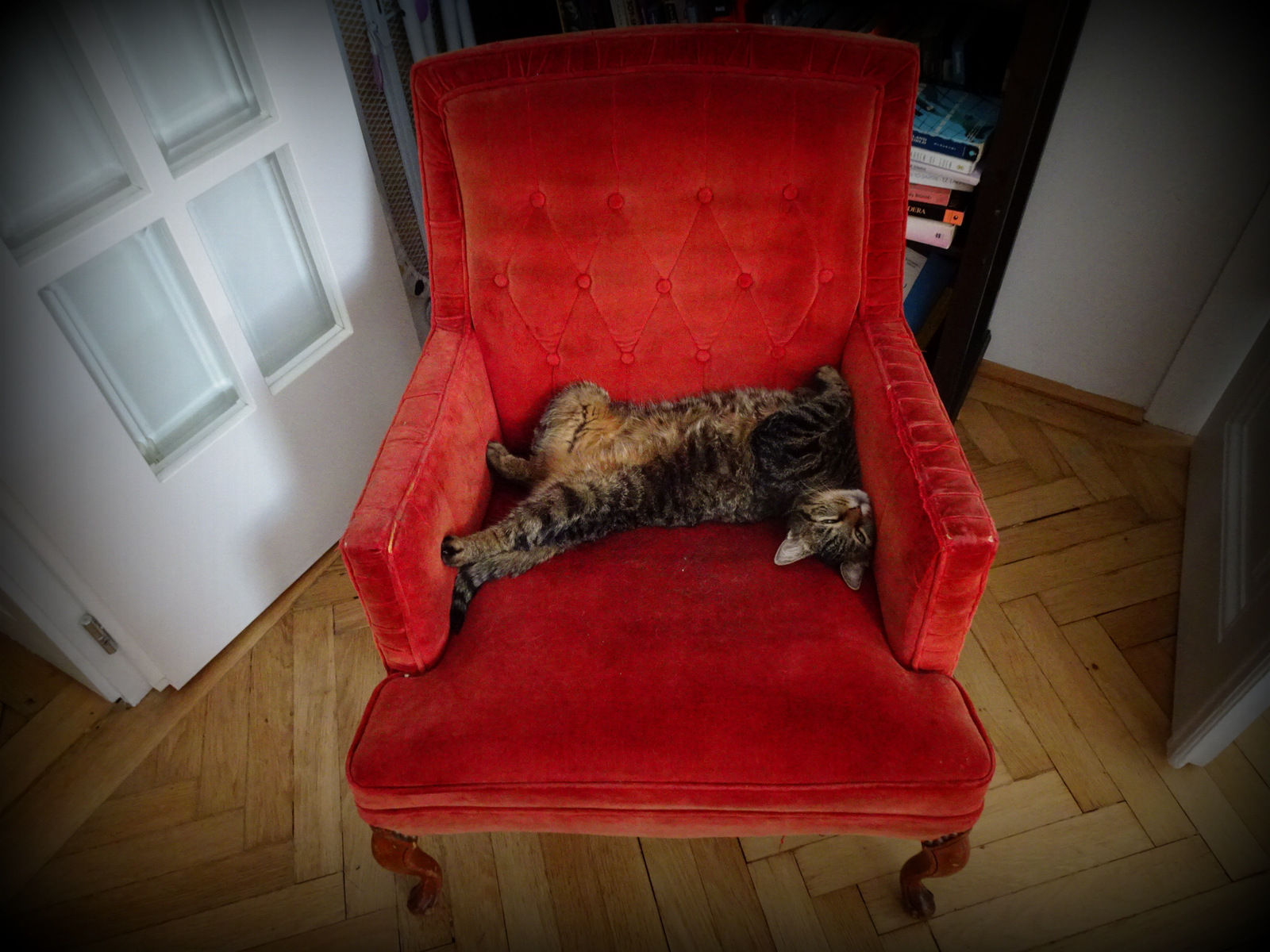
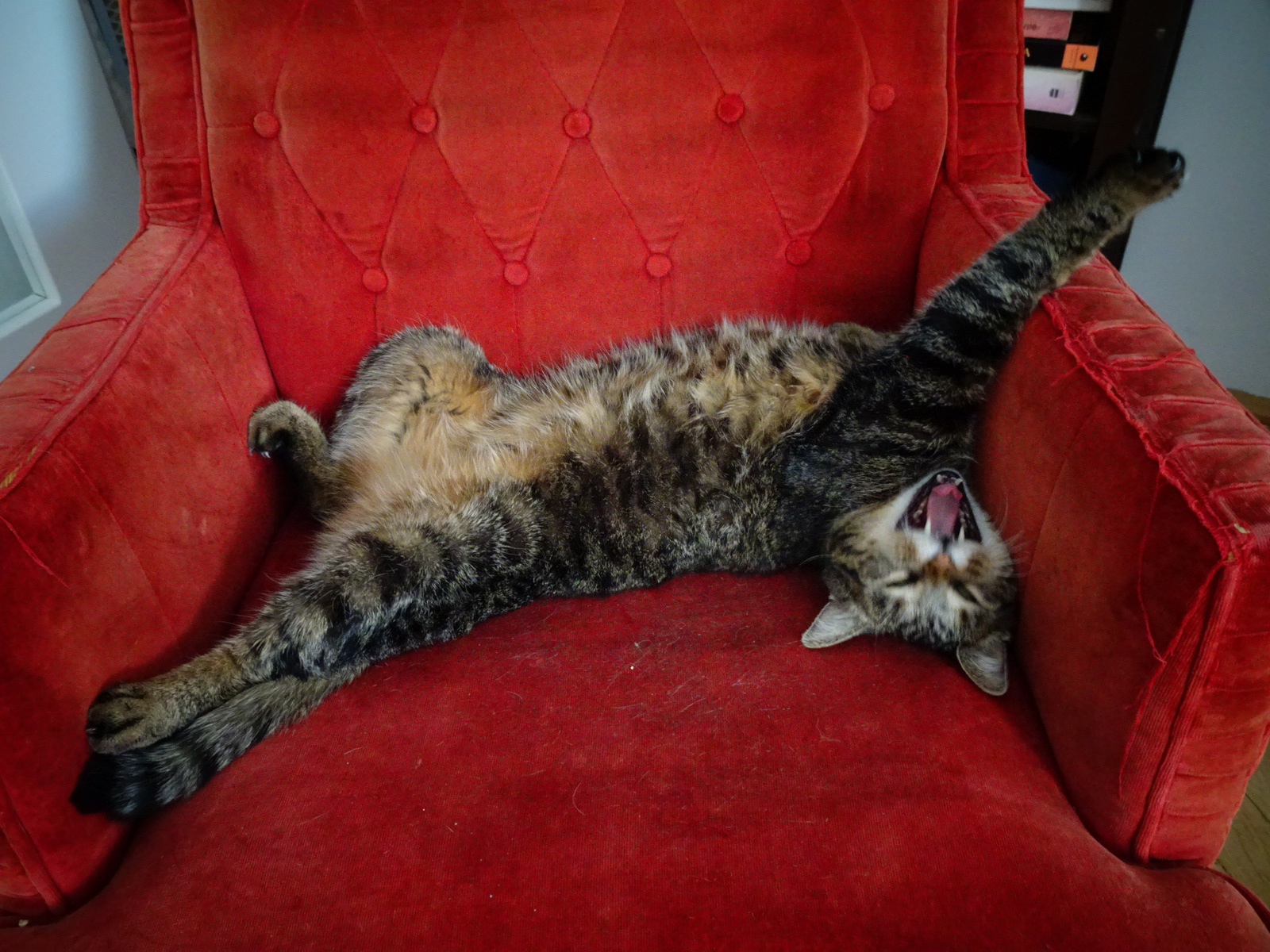
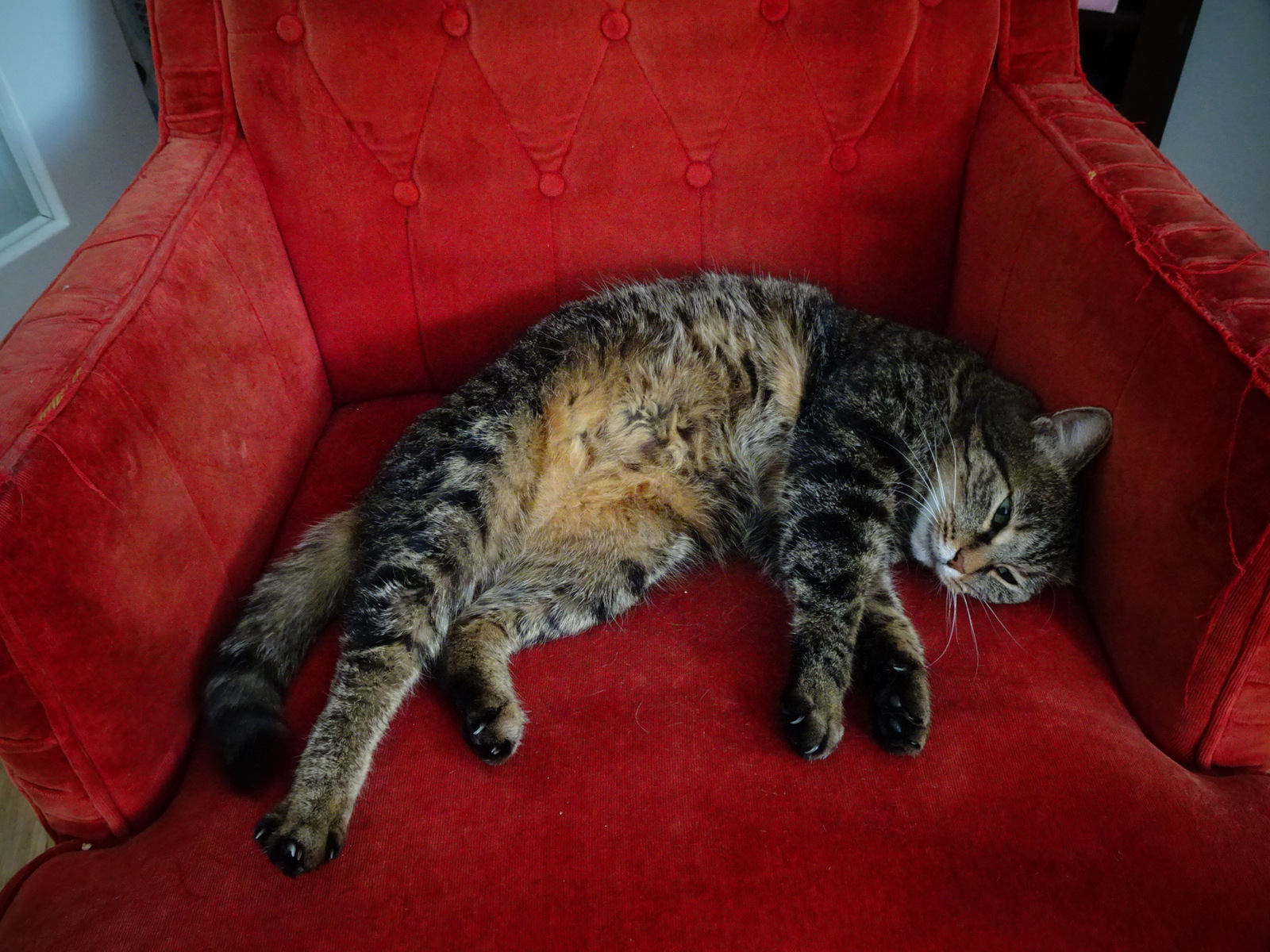
This is Sisi, my friends’ cat that I am currently watching in Vienna. She is clearly suffering from the heatwave, too. Her advice in this kind of weather: “Don’t move. Sleep as much as possible. And don’t go to work.”
Another cat has contacted me, requesting me as her sitter. This time in Antwerp in Belgium.
I am happy to oblige, because I have never been to Antwerp. And hardly to Belgium either, to be honest, where I have only visited the EU institutions. Now, from 2nd to 17th of August, I will have the opportunity of getting to know one of the most important trading cities in Flanders.
I can already see that the two weeks won’t be enough by far. After that, I have to hope for a job in a remote village, so I can write the articles about Antwerp and Flanders without further distractions.
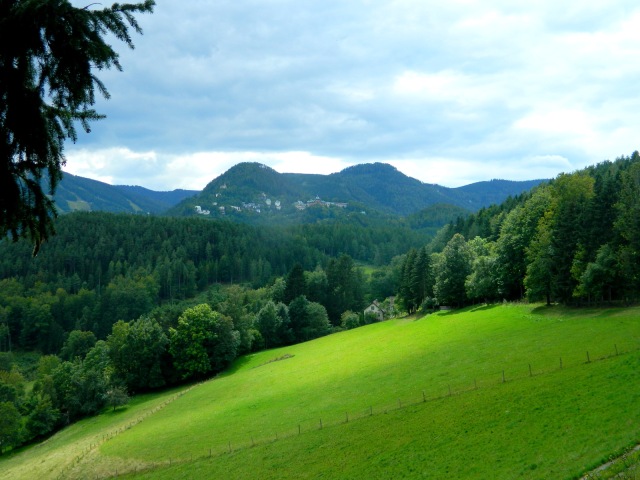
At first glance, the landscape in the Vienna Alps looks idyllic.
But the expert’s eye realizes immediately that something is missing here: a railroad!
Because how are the people supposed to enjoy the picturesque landscape if they can’t get there from Vienna main train station? This discontent about the lack of public transport boiled over into the revolution of 1848. Emperor Ferdinand I, himself a railway fanatic, was happy to heed the calls and initiated an engineering competition. The lucky ticket was drawn by Carl von Ghega, of Albanian descent, born in Venice, graduated with a doctorate degree at age 17 and thus a typically multicultural Austrian with the required academic title in front of the name. The only problem was, he had never built a railway. But more on that later.
As an avid train traveler, I could of course enjoy the way from the luxury and comfort of the train, but for people who are fit and have time all day long, there is a better option: a hiking trail along the railway line. If you are thinking,”what a stupid idea, walking along the railroad embankment all day and getting run over in the end”, I hope that this report will convince you of the opposite.
I start the hike in Semmering, the village that lent its name to the project and which is surprisingly small for its importance. But I guess there used to be more activity, as the overdimensioned hotels in Magic Mountain style suggest. Now, they are being used as retirement homes or not at all.
At Semmering railway station, trains are leaving to Mürzzuschlag, Payerbach, Graz, Vienna, Ljubljana and Prague. For a village with just over 500 people, train connections to three European capital cities are quite good.
But the heyday of tourism seems to have left Semmering with a one-way ticket, because as I approach Kurhaus Semmering, I notice that it is deserted and uninhabited.
In the lounge, neither hot chocolate nor Almdudler is served. Only a few mice scurry away.
The railway, on the other hand, is shaped by progress. The old trains have long been replaced by modern ones and are only left by the side of the tracks for their museum value.
As if to confirm that the ambitious timetable is no chimera, the first hyper-modern train whizzes past just as I am leaving Semmering, having taken a last gulp from the water fountain.
Soon, I learn that the hiking trail does not simply run parallel to the railway tracks. In quick succession, I find myself walking below the tracks, on the other side of the valley, and then I look down on the railway from a mountain or a panoramic lookout, just like Peter Rosegger in his story Als ich das erste Mal auf dem Dampfwagen saß:
We walked across the Stuhleck Mountains to make sure to avoid the valley, in which, as people said, the devil’s carriage was going up and down. But when we were high up on the mountain and looked down to Spitalerboden, we saw a worm creeping along a sharp line, smoking tobacco.
I have already lost any sense of orientation, because the Semmering Railway runs like a knotted ball of wool. The reason lies in the chief planner’s aforementioned lack of railway experience. Ghega didn’t know that railway lines are best built in a straight line or at least in wide curves that allow the engine to maintain a high speed. He was fascinated by the landscape and wanted to integrate the tracks into it, creating an artwork on a grand scale. His declared goal was to build the first railway to be recognized by UNESCO as a world heritage site.
Thus, the Semmering Railway extends over 42 km, although the linear distance between start and end point is only 21 km. The line covers 14 tunnels, 16 viaducts and more than 100 bridges. Some curves are as narrow as hairpin bends on an Alpine pass. The combination of slopes and narrow arc radii was deemed to be insurmountable by most engineers at the time.
But it looks beautiful.
Construction work began in 1848 and finished in 1854. That’s only six years, which is an impressive speed for such a grand project. It’s an even more impressive feat once you consider that sleepy Alfred Nobel only invented dynamite in 1866 and thus far too late for the Semmering Railway. (Because of the lost bet with Ghega, he had to donate the Nobel Prize.) The tunnels were still blown into the rock with gunpowder. The resulting rock debris was then used to build bridges, viaducts, train stations and tobacconist shops. That way, Ghega not only invented recycling, but by constructing the buildings along the railway with material won from the immediate surroundings, he reinforced the interaction between nature and design. (This would have been worthy of a Nobel Prize for architecture, but Nobel was mean enough not to set up a prize for that discipline.)
One of these residences for signalmen now houses the Ghega Museum, but sadly, I have planned such a long hike that I don’t have enough time for a visit.
The hike is very beautiful and varied, but also quite a challenge. Without any steam engine, I go up the mountains, down the mountains, up the mountains, down the mountains. Each stop is a temptation, because I could simply take the next train back to Vienna. On the other hand, I am worried about missing spectacular views. Through the trees or on the other side of the valley, I keep spotting cute little houses.
Ok, maybe more than cute little houses in most cases. The location on the trade route between Venice and Vienna seems to have paid off for the robber knights residing in the valley. Just like the people collecting the highway toll nowadays.
Speaking of traffic, I would have expected to see only a few local trains all day, but every 15 minutes, a train is passing by. Passenger and freight trains non-stop. We all know that we need to move more traffic onto rails, here it is already fully in progress.
At the 20-schilling lookout, I meet a gentleman from Nippon who bought every photographic equipment that Nikon produces. He came here all the way from Salzburg, just to take this shot. To say something different from what I am really thinking, which is that I find his long journey for a photo a bit over the top, I mention: “There are quite a lot of trains passing by, aren’t there?” Unimpressed, he retorts: “You think so?” Well, when you are from Tokyo, you probably have different expectations.
The place is called the 20-schilling lookout because the view from here was proudly displayed on the banknote of that denomination. When Austria adopted the euro, it was so sad to lose this banknote, it insisted that henceforth all euro banknotes need to show images of bridges.
20 Alpine dollars also happens to be the price for a return ticket to Vienna, which I would of course like to save. And topography is my friend. Because the hiking trail runs above the railway tracks from time to time and because the trains have to slow down in the narrow bends, I should be able to jump onto a freight train, just like Jack London.
Hopping a train would be easiest during a stop, but the freight trains all rush through from the Austrian Adriatic port in Trieste to Vienna. If I jump down onto the moving train from a bridge, I have to time it really well because I don’t want to land right between two wagons and get crushed to death. I need to hit the roof or the bed of the carriage.
I have no experience doing this, but I did have physics in high school. Education really makes life so much easier. From Galilei, Brecht and Newton, I remember that objects fall at the same speed irrespective of their weight, given the same aerodynamic drag. So I collect a few stones and let them drop from a bridge onto the moving train. That way, I am trying to ascertain where exactly the carriage needs to be when I jump off, making sure that the stone or I safely land in the center of the wagon.
Because I am even smarter than a physicist, I also calculate that I have a similar air resistance to a stone, but a higher mental resistance. So there will be a longer delay in my jump, increasing the danger that I won’t land exactly in a wagon full of cozy mattresses or Slovenian Christmas trees.
And then the train is gone.
I guess I am more of a theoretical person, after all. So I walk the last kilometers to Gloggnitz quite conventionally, where I law-abidingly purchase a ticket to Vienna, having waved goodbye to my audacious plan. “But one day, I am going to jump onto a freight train and ride across Mexico, I swear,” I am still thinking, as I fall into my bed at home, exhausted from real and imaginary adventures.
Practical advice:
The railway trail from Semmering to Gloggnitz is signposted quite well, and there are plenty of interesting boards with information along the way (both in German and in English).
There is an alternative route from Semmering to Payerbach or in the other direction from Semmering to Mürzzuschlag. Naturally, all places can be reached by train. Even between these places, you could cut the hike short and catch a train at the closest village.
Here you find the essential information (in German only) and a map. If you read German, there is also a guidebook.
The walk from Semmering to Gloggnitz (23 km) took me 9 hours, but with plenty and long breaks. If you want a shorter hike, I recommend to walk only to Klamm, which is 15 km from Semmering. That way, you would cover the most beautiful part of the hike, because after Klamm, there is really not much more spectacular scenery.
There are only a few places offering food and drinks, so you better take enough with you. If you come by the Blunzenwirt in Breitenstein, only get something to drink. The food there was the worst I have ever tasted in Austria. (And I have cooked myself here.)
Austrian Economics dictates that there are competing railway lines in the country, but as far I have seen, the ride to Semmering is only offered by ÖBB.
UNESCO’s declaration about the Semmering Railway becoming a world heritage site.
Readers of this blog will have noticed that I am a radical Atheist. But there is one religious idea that I have incorporated in my life, although in a secular version.
It’s the idea of the shabbat, the 7th day of the week, on which one is supposed to rest. I use the Jewish term for this day, because I think it’s the best known, but many other religions have similar recommendations/rules, following a 7-day rhythm, from the Buddhist uposatha to the appropriately named 7th Day Adventists.
The Bible says you are not to shear sheep or to plow the field, but as this wouldn’t really make any difference in the lives of most contemporary believers, there is room for interpretation. Have you ever noticed that theology is a lot like law, just without the democratic legitimacy? Contemporary disputes seem to focus on whether it’s OK to drive on shabbat or to use electricity.
But I am not bound by the Bible or others’ interpretations of it. I don’t have any gods to appease. I have adopted the idea for the sake of my own sanity alone.
So what do I do on my shabbat?
The first point is: no work. Now, most people will say “oh, I already do that. I have Saturday and Sunday off.” But that’s not what I mean. After all, I personally don’t work regularly anyway. I mean: not even thinking about work! And that’s a big difference.
In practice, this means that on my shabbat, I will not read any e-mails, I will turn off my phone, I will not go through any documents that are work-related, I will not try to improve any skills that can be put to use, and I won’t even think or talk about work.
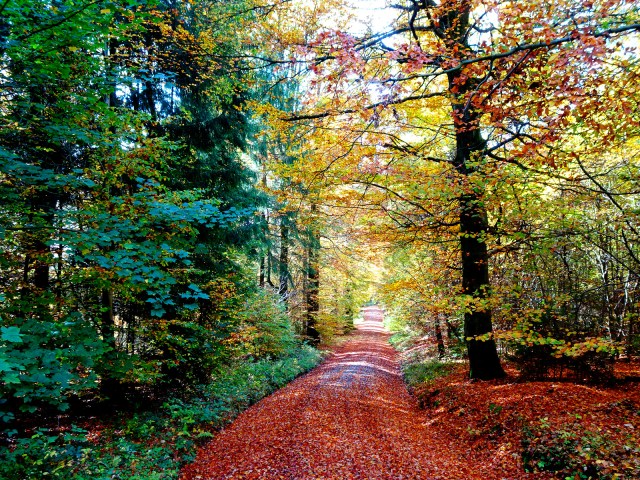
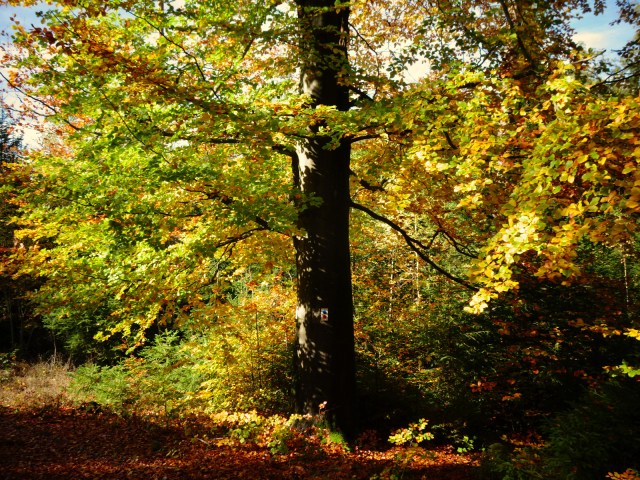
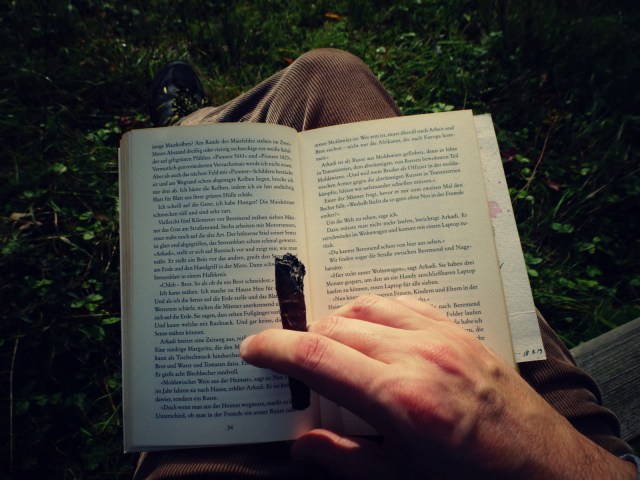
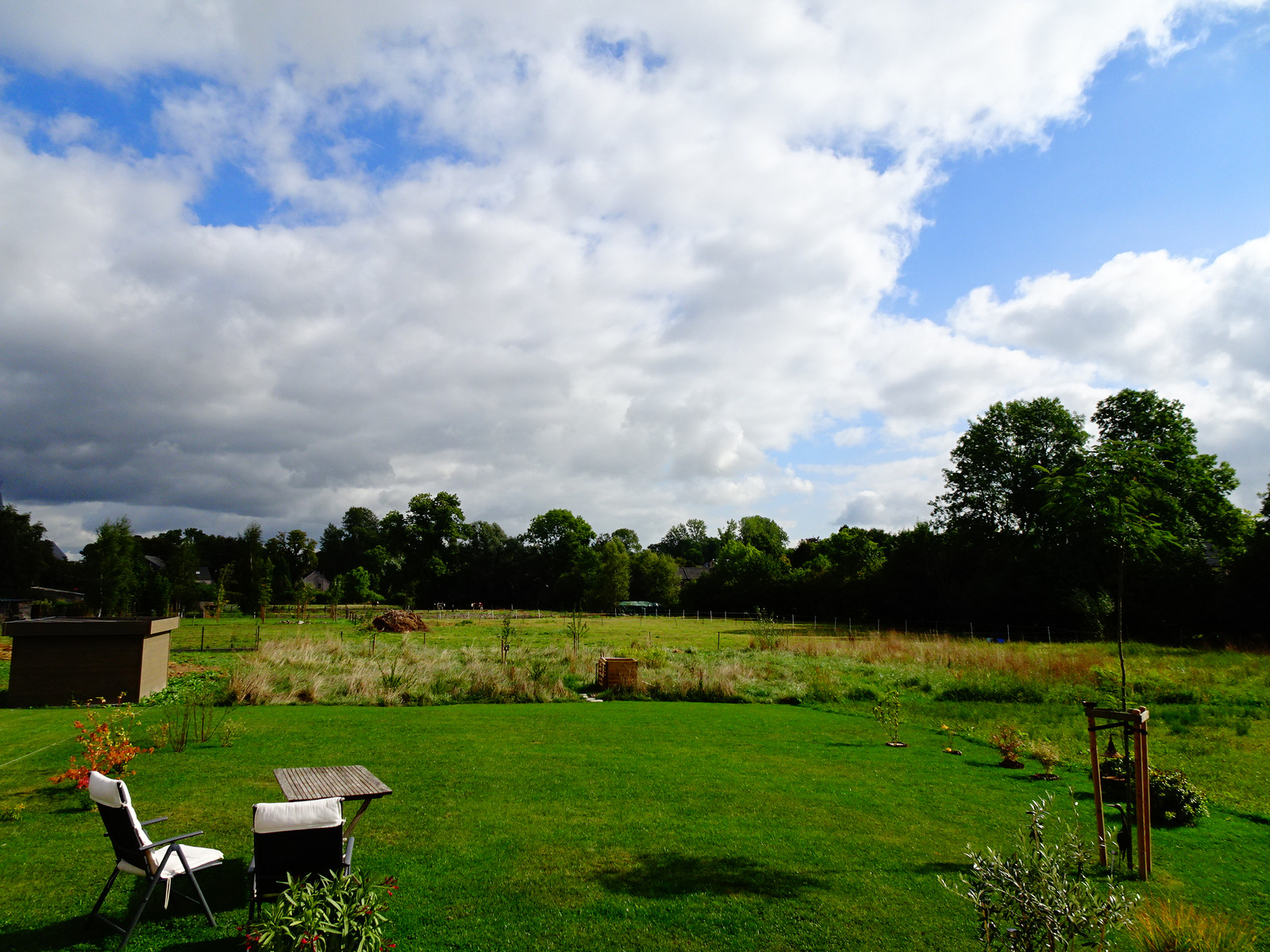
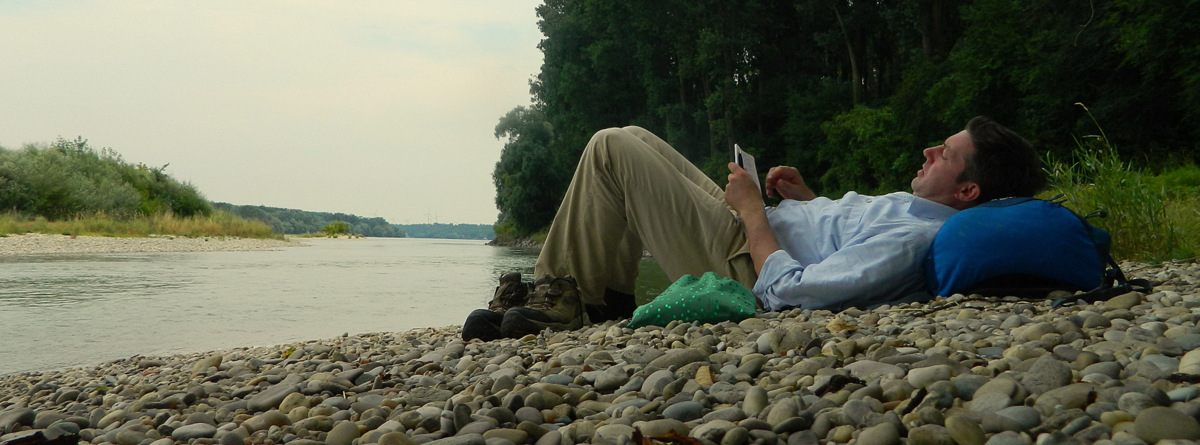
The second point, and it aids the first one tremendously, is to spend the day in nature. It doesn’t need to be anything far or fancy. I usually just go out of the door and walk through the forests and across the fields, until it gets dark. If I felt that I can’t walk that much, I would go to a lake and read a book there (but nothing work-related).
I currently live in the countryside in Germany, which makes this easier than for someone living in Mexico City, I concede that. But when I have lived in cities, I just took the bus to the last stop and started walking from there. Or sometimes I take the train to a town 30 km away and walk back home. It doesn’t really matter, it’s not a sports day, it’s not a competition. The idea is to clear the mind from all the clutter. And you’ll be surprised how soothing nature is.
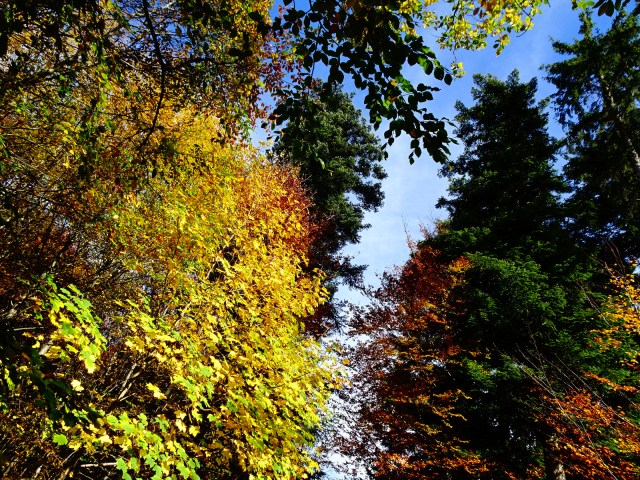
The third point might be the most important one: no internet. I wake up in the morning, I pack my backpack and I leave the house without having checked e-mail, Facebook or Twitter. If this is a problem for you, then you are addicted. And most of us are. But once you are outside, enjoying all the shades of green, the fresh flowers, the chirping of the birds, or maybe talking to the farmer in the field or another hiker that you bump into, you will begin to feel the freedom that comes from lack of connectivity. And remember, until about twenty years ago, that’s how we all lived all the time. And we were fine.
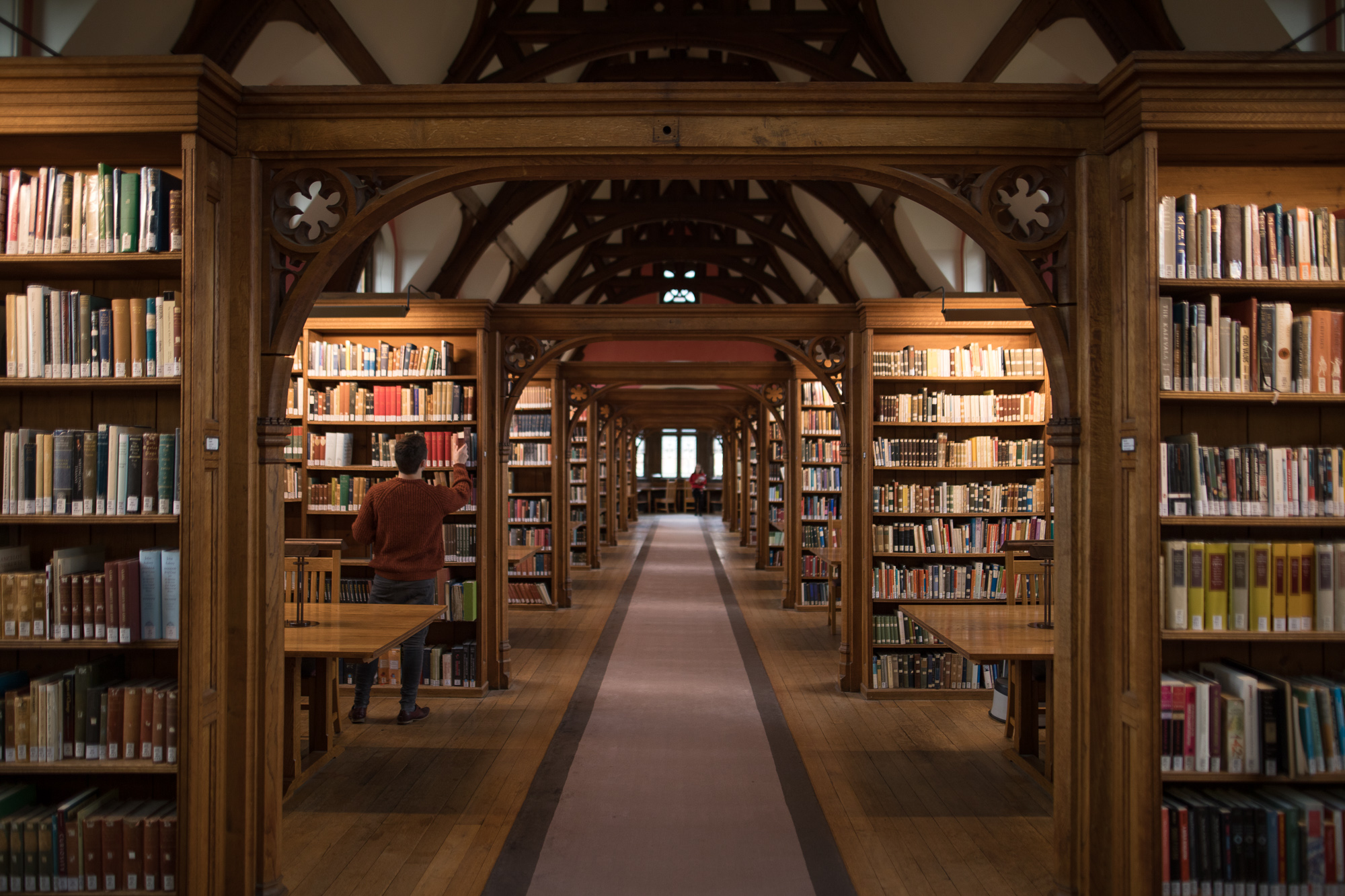
Even if you are not into nature, you can follow the third point. You can go to a museum. Or to the library. Or fishing. Or race your bike around the island. Theoretically, you could also do it at home and read Russian literature or play the guitar all day. But at home, I find the temptations too many. There is the TV, there is the computer, there is the phone. And swoosh, you’ll have lost another day to mindless waste of time.
There are three main lessons of the internet-free day: (1) I don’t really need Twitter or Facebook or even the news. When I come home from such days, I realize how much you can get out of a day if you aren’t constantly online. (2) Nobody needs me or my opinion, either. The world continues very well, or just as badly, without my contribution. I am really not important. (3) Without the constant distractions and interruptions, I can have deeper thoughts, think about bigger issues, think differently. I feel that this has an effect on the quality of my thinking, as I am not torn out of any train of thought by a new tweet or a beeping cell phone every few minutes.
You may have noticed that I prefer to do such activities alone, but that’s not necessary. Actually, when I look at many couples and how little they communicate with each other and their children, compared with the time they spend on gadgets, then maybe it would be healthy to spend a day outside, just the two of you, without worrying about likes on Instagraph, being happy to spot a squirrel instead. If that thought scares you more than it fascinates you, then it’s time to end the relationship anyway.
Even with all my skepticism towards technology, I make one exception when I walk around an area that I know and where the novelty effect is low: an MP3 player with one earplug, because one ear should always be open to the sounds of nature. The important difference to a phone or the internet is that I choose ahead of time what I download and what I listen to. I am not lead from clickbait to clickbait. I listen to podcasts about the history of the Incas or about Kant’s categorical imperative (I try to avoid current politics because a lot of it won’t matter in six months), rather than waste my time looking at the 112th photo of cute cats or girls in bikinis. (By the way, guys, you would be surprised how often you come across a secret lake or a secluded bay, with a naked woman walking out of the water, lasciviously asking you if she can use your shirt as a towel. True story.)
I personally don’t even have a regular day of the week for this. Sometimes it’s on the weekend, sometimes during the week, depending on where I am, what I have to do, and on the weather, of course. But it’s the one day of the week that I am always looking forward to. There is delight in being unproductive. After all, we are humans, not machines.
Actually, now that I am thinking of it, maybe I should extend this routine to one week per month.















 The Happy Hermit