German minister incites racism.

Maybe I have gotten spoilt regarding respect for minorities and other cultures since moving to London, probably Europe’s most multi-cultural city. But what I heard this week from a German minister about some ethnic minorities was shocking even by German standards:

Speaking about the terror threat level which had been heightened once again, the interior minister of the state of Berlin, Mr Ehrhart Körting, said“If we see something in our neighborhood, if suddenly three rather strange-looking people move in who try to keep out of sight and who only speak Arabic or another foreign language that we don’t understand, then I think one should make sure the authorities know what is going on.”

We have gotten used to panic about terrorism being fuelled by governments, we have unfortunately also gotten used to a certain level of racism, but as far as I am aware, this is the first time that a minister of the interior has linked the fear of terrorism with racist prejudices against one specific group.

This is both stupid and dangerous:

  • Most Germans wouldn’t be able to tell Arabic from Turkish or Farsi or Swahili.
  • What constitutes “strange-looking”? The most strange-looking thing to my eyes in Germany are Bavarians with their traditional costumes.

    Are these the "strange-looking people" the security services are after?

  • And why would it be suspicious if you “keep out of sight”? I keep to myself most of the time, because I have enough to do and because there are not too many interesting people to talk to. That makes me a bookish nerd maybe, but it shouldn’t make me a terror suspect.
  • It is outrageous and sad that anti-terrorism policy has come down to calling for fear and mistrust. If the security services are in need of “information” picked up by grandmas spying on their neighbours, then we are in a dire situation indeed.
  • It provides a pretence for anyone who has an axe to grind with a member of an ethnic minority: You have a business dispute with a Syrian or a child custody dispute with a Moroccan? Just blame them of terrorist ties, some dirt will stick.
  • Terrorists now know that they just have to go to a beer garden more often and speak English or German, and they will be safe from detection.
  • Putting one group (Arabic speakers) under general suspicion won’t help to receive the cooperation from members of this group with law enforcement.

If this kind of thinking will become acceptable or even mainstream in Germany, then it won’t be my country any longer. And I am certainly not inclined to return to a country where citizens are asked to spy and report on each other.

(Zur deutschen Version dieses Artikels.)

Posted in Germany, Law, Politics | Tagged , , , , , , , , , , , , , | 2 Comments

Engagement of Prince William and Kate Middleton

Isn’t it obvious that Prince William had been waiting with his engagement to Kate Middleton until the United Kingdom’s Supreme Court ruled that prenuptial agreements are now also recognised by English courts? Smart guy.

Posted in Family Law, Law, Politics | Tagged , , , , , | 24 Comments

Die Pogromnacht und das Leid der Palästinenser

Brennende Synagoge in Bielefeld am 9. November 1938.

Beim Gedenken an die Opfer der anti-jüdischen Pogromnacht vom 9. November 1938 konnte sich ein Redner, Alfred Grosser, die Forderung nach der Anerkennung des Leids der Palästinenser nicht verkneifen: Man könne von keinem Palästinenser verlangen, “daß er die Schrecken der Attentate versteht, wenn man nicht ein großes Mitgefühl hat, die Leiden im Gazastreifen zu verstehen”.

Alfred Grosser ist nicht der einzige, der einen Zusammenhang zwischen dem im Holocaust eskalierten Antisemitismus im Deutschen Reich und dem aktuellen Konflikt in Israel und Palästina herzustellen versucht. Logischer oder richtiger wird dies dadurch jedoch nicht.

  • Das Leid der Palästineser

Leid ist fast immer subjektiv, und immer relativ. Leiden die Palästinenser? Das kommt darauf an, im Vergleich zu wem, und es kommt ganz besonders auch darauf an, wo. Im Vergleich zu den meisten Kanadiern, Schweizern und Deutschen geht es den Palästinensern drchschnittlich sicher schlechter. Im Vergleich zu den Bewohnern Afghanistans, Äthiopiens und Zimbabwes geht es den meisten Palästinensern besser.

Darüber hinaus ist eine örtliche Unterscheidung angebracht: Palästinenser in arabischen Staaten leiden ziemlich. Im Libanon und in Syrien werden sie in Lager gepfercht, dürfen diese nicht zu vollwertigen Städten ausbauen und sind von etlichen Berufen ausgeschlossen. In Jordanien ist es ein bißchen besser, aber die staatsbürgerlichen Rechte werden ihnen nur teilweise zugestanden. Es ist die Politik der Arabischen Liga, den Palästinensern die Staatsangehörigkeit der jeweiligen Aufenthaltsstaaten zu versagen.

Palästinser in Palästina leben im Westjordanland unter weitgehender innenpolitscher Autonomie und genießen derzeit ein jährliches Wirtschaftswachstum von 8 %. Im Gaza-Streifen haben die Palästinenser 2006 die radikale Hamas an die Macht gewählt und leiden jetzt tatsächlich darunter. Hamas installiert ein islamistisches System, verhaftet und foltert politische Gegner, schließt Kinos und Internetcafés, verordnet einen Kopftuchzwang, und feuert wöchentlich aus Wohngebieten Raketen auf Israel ab und provoziert damit selbstverständlich Gegenreaktionen.

Und dann gibt es noch die Palästinenser in Israel. Sie machen ca. 20 % der israelischen Bevölkerung aus. Sie haben die israelische Staatsbürgerschaft, sie wählen, sie stellen Abgeordnete im Parlament, Richter, Beamte, Diplomaten und Offiziere. Arabisch ist einer der offiziellen Sprachen des Staates Israel, und die arabischen Bürger genießen rechtliche Gleichberechtigung. Von der Wehrpflicht sind sie ausgenommen, allerdings dürfen sie freiwillig in der Armee dienen.

Festzuhalten ist also, daß es Palästinensern beim angeblichen Erzfeind Israel mit Abstand am besten ergeht.

  • Der Zusammenhang zur Pogromnacht

Was ist nun der Zusammenhang der aktuellen Lage der Palästinenser zur Pogromnacht?

Genau: Gar keiner. Es gibt keinen Zusammenhang zwischen brennenden Synagogen in München, Berlin und Wien 1938 einerseits und dem Wahlergebnis im Gaza-Streifen 2006 andererseits. Es gibt keinen Zusammenhang zwischen der systematischen Ausgrenzung der Juden im NS-Staat und der Palästinenserpolitik des jordanischen Königshauses oder der syrischen Diktatur.

Genausogut hätte Herr Grosser also auf das Leid der Tamilen, der Tibeter oder der Kurden hinweisen können; alles Gruppen, denen es schlechter geht als sie es verdienen. Hat er aber nicht. Wieso nicht? Weil der Hang zum Reflex einfach zu stark ist.

Und wieso kommt der Hinweis auf das Leid der Palästinenser am 9. November, dem Gedenktag für die ausgegrenzten, verfolgten und schließlich ermordeten Juden? Warum nicht am 3. Oktober, dem Nationalfeiertag, oder am Volkstrauertag, oder zu Ostern? Weil dann die mediale Aufmerksamkeit nicht garantiert ist.

  • Vielleicht doch ein geschichtlicher Zusammenhang?

Wenn auch kein aktueller Zusammenhang erkennbar ist, so läßt sich doch ein (überraschender) geschichtlicher Zusammenhang herstellen. Man muß nur Fragen, wie die Vorfahren der Beteiligten des jetzigen Israel-Palästina-Konflikts die Zeit von 1933 bis 1945 verbrachten:

Das Schicksal der Juden als der späteren Gründer des Staates Israel ist bekannt und endete für einen Großteil von ihnen tödlich und für die Überlebenden mit der Flucht aus Europa.

Die Deutschen waren schon immer Unterstützer der palästinensischen Sache. Oder war es umgekehrt?

Was die Palästinenser so trieben, während die Nazis ganz Europa judenfrei machen wollten, ist weit weniger bekannt: Der Großmufti von Jerusalem, Mohammed Amin al-Husseini bot den Nazis bereits 1933 – wenige Wochen nachdem Hitler an die Macht gekommen war – die Unterstützung der Palästinenser an. Das NS-Regime war zunächst nicht sonderlich interessiert, aber der Großmufti gab nicht auf und insistierte regelmäßig auf eine palästinensisch-arische Zusammearbeit gegen die Juden. Ab 1941 residierte er auf Einladung Hitlers in Berlin, von wo aus er die Nazi-Propaganda in der arabischen Welt unterstützte, unter anderem mit folgendem Aufruf: „Ich erkläre einen heiligen Krieg, meine Brüder im Islam! Tötet die Juden! Tötet sie alle!“ Der Palästinenserführer drängte gegenüber Hitler, Ribbentrop, Himmler und Eichmann auf die vollständige Ausrottung der Juden. Unter anderem setzte er sich 1943 persönlich gegen die Freilassung jüdischer Kinder im Austausch gegen deutsche Kriegsgefangene ein.

Auch nach der deutschen Niederlage endete diese unheilvolle Allianz nicht: Neben Südamerika waren die arabischen Staaten, insbesondere Ägypten und Syrien, beliebte Zufluchtsorte von ehemaligen Nazigrößen. Ruhestand gab es allerdings nocht nicht, denn ihre tatkräftige Hilfe konnten sie weiterhin entsprechend ihrer Ideologie einsetzen, indem sie den arabischen Staaten bei der Kriegsführung gegen Israel halfen. Es muß den Nazis wohl doch geschmerzt haben, daß einige Juden überlebt hatten.

Der spätere Palästinenerführer Jassir Arafat nannte al-Husseini “unseren Helden”.

Wenn schon eine Verbindung zwischen der NS-Zeit und dem jetzigen Nahen Osten hergestellt wird, dann bitte mit diesen Tatsachen. Vielleicht dürfen wir das zum 9. November 2011 hören? Auf die Reaktionen hierauf wäre ich gespannt.

Posted in Germany, History, Holocaust, Israel, Politics | Tagged , | 73 Comments

Update: UNESCO World Philosophy Day in Iran cancelled

I had already commented about UNESCO’s decision to hold this year’s World Philosophy Congress in Iran and about how Iran thanked UNESCO for this.

Apparently, the worldwide protest against UNESCO that ensued has had quite some effect: UNESCO has now cancelled the events planned to be held in Iran and will celebrate World Philosophy Day in Paris instead.

That's a much better venue.

Thanks to everyone who participated in the protest against UNESCO’s initial decision!

But Iran must not despair: Another chance to host an international gathering might come again. Maybe there is some UN organisation that wants to hold a World Torture Congress?

Posted in Philosophy, Politics | Tagged , , , , , , , , | 2 Comments

Borat or Bilo? No, it’s Nursultan in Kazakhstan.

Four years after the release of Borat (or Borat: Cultural Learnings of America for Make Benefit Glorious Nation of Kazakhstan as the full title is), Kazakhstan still doesn’t seem to have gotten over it.

Borat, by and with Sacha Baron Cohen, pretended to show a Kazakh journalist dispatched to the USA to find out what Kazakhstan might learn from the West. Kazakhs are portrayed as backwards, simple-minded, ant-Semitic and perverse. The few shots of purported Kazakhstan show a slum-like village with an inbred population. The film ends with a spoof of Kazakhstan’s national anthem that takes pride (among other things) in Kazakhstan’s prostitutes.

Although Borat depicted much more aspects of America that are worthy of poking fun at or even criticism, and although it seemed clear that Kazakhstan was just chosen for the fact that not many people know anything about it, thus allowing Borat to create an image that his counterparts were ready to believe, the government and the people of Kazakhstan were quite insulted. The film was not released in Kazakhstan (it was also banned in all Arab countries, except for Lebanon) and the Kazakh government started a multi-million dollar campaign to foster its image – thereby only coming across as lacking any sense of humour.

Apparently, Kazakhstan is still deeply hurt in its pride: The Kazakh director Erkin Rakishev is filming a documentary My Brother, Borat which features Bilo, Borat’s younger brother, about whom Borat had not revealed much more than that he lived in a cage. In this film, an American becomes interested in Kazakhstan after watching Borat and decides to travel to the country to see for himself, where he will of course be positively surprised.

I am looking forward to that film, but I would prefer if the world take note that Kazakhstan, the ninth largest country in the world, an increasingly important exporter of oil and gas, and currently chairing the OSCE, has quite a strange character at its helm. His name is neither Borat, nor Bilo, it’s Nursultan Nazarbayev. He has been the country’s only president since the country’s independence in 1991 and although elections are taking place, it’s more of an autocracy than a democracy:

  • The president can veto any legislation passed by parliament.
  • Part of the members of the senate are not elected, but appointed by the president.
  • In the parliamentary election of 2004, opposition parties won a single seat in parliament. The OSCE said these elections “fell short of international standards.”
  • The OSCE had the same verdict about the presidential election of 2005, in which Nazarbayev won more than 90 % of the vote.
  • In the last parliamentary election in 2007, the ruling party Nur-Otan won every one of parliament’s 98 seats. There is no more opposition representative serving in parliament.
  • In 2007, any term limits for the president were removed from the constitution. To be bothered less often with these annoying elections, the president’s term was also extended from 5 to 7 years.
  • President Nazarbayev expanded his presidential powers by decree: only he can initiate constitutional amendments, appoint and dismiss the government, dissolve Parliament, call referendums at his discretion, and appoint administrative heads of regions and cities.

Kazakhstan also has a dismal human rights record:

  • Political opponents are arrested and detained without trial.
  • There are no independent broadcast media.
  • Many independent newspapers have had trouble finding printing houses. Some of them had their contracts with their printers cancelled.
  • Newspapers are being sued by the government after running critical reports.
  • Websites that are critical of the president have been blocked.
  • Corruption is widespread. When former minister Zamanbek Nurkadilov announced that he wanted to speak about corruption, he was found shot dead.
  • The religious minority of the Hare Krishna is persecuted.
  • Civil society groups have been closed by the government.
  • The independence of the judiciary is in serious doubt.

You wonder why such a country is given the chairmanship of the OSCE? I wonder too. Could it be the oil? Could it be the gas?

Next time you enjoy a re-run of Borat or when you will see My Brother, Borat and of course when you visit the country, spare some thoughts about the political system and the lack of human rights.

Posted in Politics | Tagged , , , , , , , , , , , , , , , , , , , , , , , , , | 3 Comments

Fireworks for Bonfire Night 2010 at Blackheath in London

No fireworks for you, Guy Fawkes.

Every first week in November, all over Great Britain fireworks are lit up for “Bonfire Night” to commemorate the failed Gunpowder Plot of 1605. A group of English Catholics around Guy Fawkes had conspired to kill King James I and to blow up Parliament. Guy Fawkes who was hiding underneath the House of Lords with barrels of gunpowder was found and arrested on 5 November 1605. Since then, 5 November is celebrated as Guy Fawkes Night.

As far as I am aware, this is the only country that annually celebrates the failure of an assassination attempt on its head of state. (Until 1859, it was a public holiday.) Together with the irony of commemorating a failed attempt to blow up Parliament by setting off fireworks, this leads me to believe that it’s just a welcome excuse to have one more display of fireworks before New Year’s Eve.

Be that as it may, I dearly love fireworks and can’t get enough of them. So for me, Guy Fawkes Night is the perfect night to go out and enjoy the spectacular. Living in London, this is a tough choice because there are dozens of fireworks. Coincidentally, almost all of them take place in the evening, so I cannot attend more than one. I decided to give the one at Blackheath a try, and I was not disappointed at all.

It was a great performance:

  • Set on the wide open space of Blackheath, with All Saint’s Church as a beautiful backdrop.
  • 25 minutes of a non-stop impressive display.
  • Not just the standard rockets shot into the air, but fireworks coming from above and fired in a way that they seem to come directly towards you.
  • Wonderfully choreographed.
  • For the militaristically minded like myself, some parts were reminiscent of anti-aircraft artillery.
  • No idea how this was done, but there were fireworks that looked like wide cascades of falling water.
  • Stalagmites of light and fire that would have made Leni Riefenstahl exuberant.
  • Continuous power and force, without any intermission.
  • At times, they sky was so illuminated from the explosions that it was as light as daytime.
  • Rays of fire and light buzzing around in all directions.

But why am I trying to explain it. Technology – escaping the realms of my comprehension – has advanced so far that by the time I got home, admittedly via a detour to the pub, from the fireworks, some people had already uploaded videos of it on the internet. When watching these, remember that the whole fireworks went on at full throttle for 25 minutes.

Have you ever seen a fireworks display that swept you away? Where and when? Let us know and share your experience or recommendations!

Posted in History, London, Travel, UK | Tagged , , , , , , | 4 Comments

Election Boycott – What is it good for?

If this headline reminds you of the 1970 song “War” by Edwin Starr, then you already have your answer: “Absolutely nothing!”

In pseudo-democratic to openly oppressive countries around the world, opposition parties and candidates regularly face a tough choice: Should they take part in elections that they know are a sham? Where they know that they won’t have equal access to press, radio and TV? Where they know that their rallies and speeches might be attacked, their supporters might be beaten or jailed? Where they know that the ballot boxes will be stuffed and no independent election oversight will take place?

My answer is: Yes, they should. They should, in full awareness that they don’t stand a chance of winning. I can already hear the criticism: This will lend legitimacy to a farce. But I disagree. Those who care will be able to distinguish a free and fair election from a bogus one any time. Nobody would seriously rate Russia, Iran or Venezuela as democratic as Germany, Australia or France. And nothing has ever been achieved by boycotting an election.

I am writing this on the eve of the parliamentary elections in Burma where the National League for Democracy of Aung San Suu Kyi decided not to run, but there are other examples that come to mind as well:

  • The 2009 presidential election in Afghanistan was widely reported to have been anything but fair. Still, the main contender to President Hamid Karzai, Abdullah Abdullah scored 30 % of the total vote and forced a run-off, which would have taken place under enormous international scrutiny, given the stakes the world has in Afghanistan. One week before the run-off election, Dr Abdullah withdrew and President Karzai was automatically declared the winner, of course. What did he achieve by that? Absolutely nothing.
  • Morgan Tsvangirai not only had the courage to run against Zimbabwe‘s brutal Robert Mugabe in the 2008 presidential election, but he even came ahead with 48 % versus 43 % against all odds. Yet he decided not to take part in the run-off, citing the (clearly existent) violence against his supporters. What did he achieve? A power-sharing deal with Mugabe as President and Tsvangirai as Prime Minister. Better than nothing, but so far, Mugabe does not stick to many of the agreements of this power-sharing deal. And Tsvangirai only got this deal because he decided not to boycott the first round of the election, nor the parliamentary election.
  • In the 2005 parliamentary elections in Venezuela, five opposition parties withdrew at almost the last minute. What did they achieve? Absolutely nothing. The boycott made matters even worse, because President Chávez’ party won a two-thirds majority, enabling it to change the constitution.

And then there are other case studies that show the effects of opposition candidacies in the face of insurmountable obstacles:

  • In 2010, Venezuela‘s opposition vowed not to repeat the mistake of 2005 and participated in the parliamentary election, not an easy feat in a country where most independent media has been shut down. What did they achieve? With 47 %, the opposition this time came very close to the ruling party (48 %). The ruling PSUV still gained the majority of the seats but lost its two-thirds majority, stripping it of the possibility to change the constitution.
  • The presidential election in Iran in 2009 was neither free nor fair. Out of 476 candidates, the Guardian Council only allowed 4 candidates to run. The two more reformist candidates, Mir-Hossein Mousavi and Mehdi Karroubi were hampered in their campaigns, there was no free press or independent broadcast media, no independent election observers and many indications for widespread election fraud on behalf of sitting President Ahmadinejad‘s government. What did the opposition candidates achieve? On the face of it, nothing: Ahmadinejad was re-“elected”. But the reformists’ campaign brought to life and to the streets the pent-up discontent with Iran’s political system, leading to the largest and longest protests Iran had seen in decades. While this “Green Movement” ran out of steam a year later under continued brutal government crackdowns that included the killing of protesters, I still hope that something was begun in Iran in the summer of 2009 that cannot be undone. If nothing else, it demonstrated to the rest of the world that Iranians are not united behind the present government, and that therefore the active support of opposition groups might be a better strategy of dealing with Iran than a possible military intervention.

The lesson is clear: If you want to achieve something, even if it is only international awareness (which unfortunately only rarely leads to international action), you have to take part in elections, as unfair as they are and as tough as it may be. The strategy to draw attention to a lack of democracy by abstaining from the race backfires because where nothing happens, there won’t be any attention. Also, if even opposition politicians don’t dare to stand up against the government, how do you expect the people to rally for change? – I know it’s easy to say that, sitting in the comfort of the capital of the mother of all democracies, but I think I have shown that I am willing to risk something for democracy.

Posted in Afghanistan, Iran, Politics | Tagged , , , , , , , , | 1 Comment

Messing with Mythology

Any unknown side effects?

Any unknown side effects?

Having no inclination for product placement, I still have to tell you what came to my mind when I was shopping for shaving equipment recently. I saw Gillette‘s “HydraGel” (pictured left) innocently sitting on the shelf, and I was just about to pass it by – because I prefer cream over gel – when a seemingly strange question struck me:

Will using this chop off my head? Or will it make me grow two new heads when I cut myself?

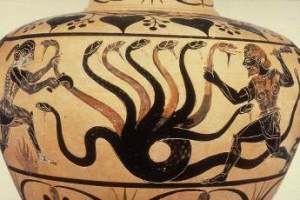
Because as everyone outside of Procter & Gamble, the owners of the Gillette brand, knows, the Hydra was a beast in Greek mythology with nine heads that grew two new heads for each one that was cut off. It was one of the labours that Heracles had to face, and he only could overcome the Hydra by burning the stumps of the cut-off heads to prevent new ones from growing.

No time to shave for Heracles.

What does Gillette want to tell me with this? – Whatever was intended by choosing that name, it only tells me that the people who came up with it don’t have enough general knowledge, a fact which endears neither the product nor the company to me.

This little episode in the supermarket got me thinking about other examples of organisations using mythological or historical names for their products or services and thereby scoring an own goal:

  • Volkswagen has a car named after Phaeton, who went – again in Greek mythology – on a joyride with the sun chariot and couldn’t control it, putting the earth in danger of being set on fire. Zeus has to kill Phaeton with a thunderbolt. – And this should convince us to buy a car?
  • The US military participation in the enforcement of the no-fly zone over Libya has been code-named Operation “Odyssey Dawn”. Homer’s Odyssey describes the 10-year long, perilous wandering of Odysseus. Does the US Department of Defense suggest that it will take us equally long to disarm Gaddafi‘s forces? I hope not.

Can you think of any other examples? Please share them!

Posted in Greece, History, Language, Libya | Tagged | 4 Comments

“The Foreign Correspondent” by Alan Furst

I like spy novels and I have always longingly admired the profession of foreign correspondents. As I finally wanted to read one of Alan Furst‘s spy novels, all set against a historical background, it was therefore natural for me to pick “The Foreign Correspondent”.
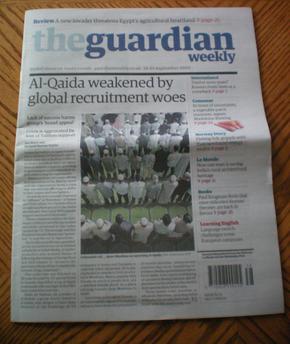
It’s 1939 and the main protagonist, Italian émigré Carlo Weisz, works in Paris as a journalist. At night, he and fellow Italian intellectuals are working on an anti-Mussolini underground paper that is being shipped to Italy and distributed there. Mr Weisz also covers the Spanish Civil War and has a female friend in Berlin who somehow (the book remains vague) works against the Nazis.

In a side plot which doesn’t really lead anywhere, Carlo Weisz ghostwrites the autobiography of an Italian commander of a Republican unit in the Spanish Civil War. Asked by his doubtful client if the book will catch anyone’s interest, Mr Weisz replies optimistically “Don’t worry. Your story is so good, it will write itself.”

Apparently, Mr Furst though the same of “The Foreign Correspondent”: Take some émigrés in Paris, make it 1939 in the advent of World War II, add a trip to the Spanish Civil War and a few trips to a Berlin full of Nazis, and you got a great story. – It didn’t work.

Despite all the travel between Barcelona, Paris, Berlin and Turin, not much is happening. Of course there is a civil war and there are some assassinations, but they all fail to connect to one big plot. I kept reading, hoping for it all to come together. It didn’t.

The lack of a plot alone isn’t something to drive me away from a book (after all, Thomas Mann’s “Magic Mountain” is one of my favourite novels and its 700-odd pages are almost exclusively about people talking to each other in a sanatorium), but “The Foreign Correspondent” has neither captivating characters nor impressive prose.

The characters don’t come to life. They are flat. It doesn’t help at all that Mr Furst tries to provide Carlo Weisz with a James-Bond-like love life which is described in far too much detail than I care for in a spy novel. Even Ian Fleming did not do that in his novels (he is not to blame for what happened in the films). What the author misses with his characters, he does too much with places: A café in Paris or a train compartment or a street in Berlin are described in minute detail. In a spy novel, I don’t need this, it just slows me down.

The book is a disappointment. If somebody had taken it away from me while reading it, I would not have cared how the story would progress. It demonstrates how little I was captivated by the book, that I even bothered to check some of the historical facts. Being fully aware between difference of fiction and non-fiction, if as an author you try to make everything authentic, please don’t include mistakes. They cost you the last ounce of credibility. Granted, most of the facts are correct. But the German newspaper “Das Reich” would not have been read in 1939 as it only began publication in 1940. And to put a Wertheim department store in pre-war Berlin is almost cynical, as the (partially Jewish) Wertheim family were victims of “Aryanisation” and were dispossessed of their stores in 1937.

If you want to read a really good spy novel about an émigré living in Paris and stumbling into a pre-World War II spy plot, read “Epitaph for a Spy” by Eric Ambler.

Posted in Books, Germany, History, World War II | Tagged , , , , | 5 Comments

Al-Qaeda 2.0: DIY Terror

Remember Al-Qaeda? They used to scare us a bit by hijacking planes and blowing themselves up. With their nasty activities, they have caused us quite some trouble.

But nobody knew it was THAT bad.

But nobody knew it was THAT bad.

Recently however, they seem to have experienced some problems of their own. Recruits have mostly not even managed to blow themselves up, let alone others. Instead, they have earned rather pathetic nicknames like the “shoe bomber” or – and this must be really embarrassing for a wannabe big-shot terrorist – the “underwear bomber“. Both managed to get burnt a bit, but that’s not enough to get you into paradise. The wannabe “Times Square bomber” not only managed to leave his car behind, but also enough information to reveal his identity which led to his arrest just minutes before leaving the country.

Apparently this has led to a new strategy: Al-Qaeda 2.0, realising that they cannot count on their followers, are now sending explosives to their intended destinations by air mail. We don’t know yet if these devices were destined to explode in mid-air (of course all government officials involved are stressing this possibility now, because a scared public will tolerate more restrictions of air travel) or if their idea was to explode once they had reached their intended recipient. The parcels were addressed to Jewish organisations in Chicago. I seriously doubt by the way, that a synagogue in Chicago would simply open a large parcel that will clearly indicate that it was mailed off in Yemen.

As Al-Qaeda seems to run out of suicide terrorists and/or has to operate on a seriously trimmed down budget, I wouldn’t be surprised to see “Do it Yourself Terror” as the next stage: Targets of Al-Qaeda’s hate will receive a parcel with explosives, a box of matches and instructions on how to detonate the package. I am wondering when I’ll receive mine in the mail…

Posted in Politics, Terrorism, Travel | Tagged , , , , | 8 Comments