Grutas Park – a Museum of Falsification of History

Last weekend I was in Druskininkai, in the South of Lithuania, and of course I wanted to visit nearby Grūtas Park (Grūto parkas in Lithuanian), a sculpture park of Soviet monuments and a museum about the Soviet occupation of Lithuania. I decided to walk the 8 km to the park, and despite getting a bit lost a few times, it was a beautiful if strenuous walk through the snow-covered forest, along peaceful frozen lakes.

Grutas Park watchtower trainWhen I finally reached Grūtas Park, I discovered that it is less of an organized museum and more of a hotchpotch of relics from the Soviet era, from the grand statutes which dominate the park to books and posters. The idea behind surrounding the park with a fence and Gulag-like watchtowers may have been to recreate the feeling of being in a Soviet labour camp, but it doesn’t really work when there are a children’s playground and souvenir shops inside.

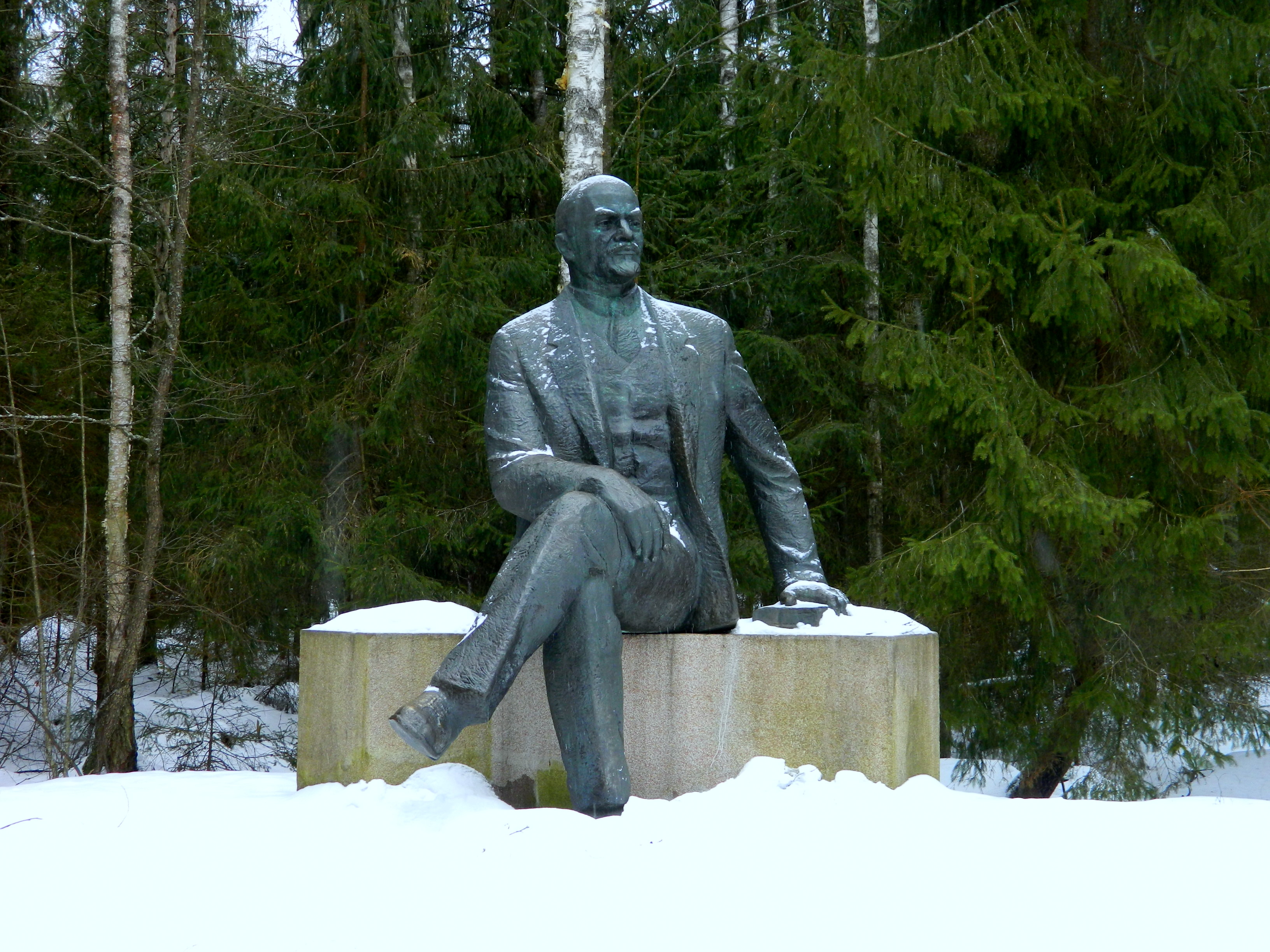
On a walk through the park you will encounter all the famous faces of Communism: Karl Marx, Friedrich Engels, Vladimir Lenin, Joseph Stalin plus several hitherto unknown Lithuanian communists as well as the obligatory pioneers and brigades of proud and strong labourers.

Grutas Park Stalin

Grutas Park Lenin

Grutas Park mosaic pioneers

Grutas Park Soviet soldier

Grutas Park colourful window

As I was reading the descriptions and summaries in front of the artefacts, I began to notice that without any prior knowledge of 20th century history, I would get the impression as if Lithuania had always been an independent nation which was viciously attacked by the Soviet Union in 1940, then nothing had happened between 1941 and 1944, and in 1944 the Soviet Union had oddly attacked Lithuania again, enslaving all of its people. There were no Communists among Lithuanians. Those who were, were traitors. Or Jews, which apparently is incompatible with being Lithuanian.

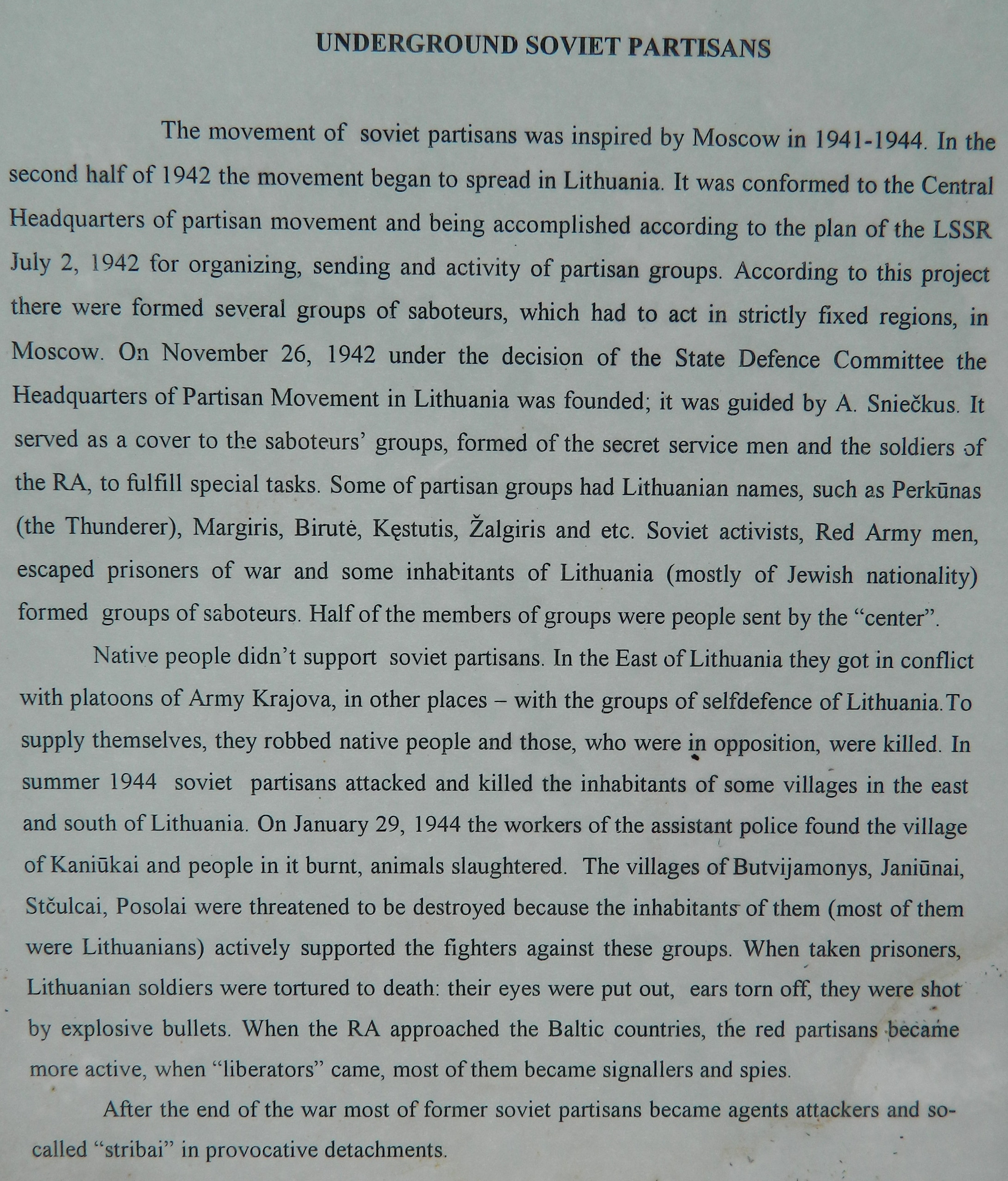
The plaque about “Underground Soviet Partisans” for example details how they were controlled by Moscow, how brutal they were, it states that they were made up of “Soviet activists, Red Army men, escaped prisoners of war and some inhabitants of Lithuania (mostly of Jewish nationality)” – as if the Jews in Lithuania were not also Lithuanian citizens, and oddly confusing religion with nationality. The partisans are described as “saboteurs” – but nowhere in the lengthy text does it mention once whom they actually fought.Grutas Park Soviet partisans That was of course Nazi Germany, the Wehrmacht and the SS. The few Jews who managed to escape the ghettos and concentration camps alive and then took up arms to fight the Nazis in Eastern Europe are heroes in my eyes, but are turned into menacing monsters by the makers of Grūtas Park. (To anyone more interested in the Soviet partisans, I recommend the book “If Not Now, When?” by Primo Levi.) There was no word on the genuinely Jewish partisan groups like the FPO.
A very strange depiction of history indeed. I found it most curious that the period from 1941 to 1944 was almost always omitted or glossed over, as if nothing important had happened between the two Soviet advances on Lithuania. Yet these years were the height of World War II.

The true course of events was that as everywhere in Europe in the early 20th century, some people in Lithuania identified with the idea of socialism. From 1918 to 1919, Lithuania was even briefly a Socialist Soviet Republic. In 1920, the Soviet Union under Lenin recognized Lithuanian independence. Vilnius was however still contested and fought over between the Soviet Union, Lithuania and Poland. From 1926 on, Lithuania was ruled by an authoritarian, nationalist regime which had come to power in a coup d’état. The Soviet Union and Germany famously agreed to carve up all of Eastern Europe in the Molotov-Ribbentrop Pact and most of Lithuania, except for the coastal region around Klaipeda, fell to the Soviet Union which annexed it militarily in 1940.

In 1941, Germany broke the Pact and attacked the Soviet Union and also occupied Lithuania. They immediately began to carry out the Holocaust there, murdering 90% of the pre-War Jewish community of Lithuania, often with the help of the Lithuanian locals (something which you won’t read anything about at Grūtas Park). The war between Germany and the Soviet Union ensued. When the Red Army advanced towards Lithuanian territory in 1944, it did not attack Lithuania because Lithuania no longer existed as a state. The Soviet Union fought a war against Nazi Germany which had previously attacked it and which was executing a genocide. Judging by the information in the plaque referred to above that “native people didn’t support soviet partisans”, Lithuanians in the 1940s preferred the Nazis over the Soviet Union, which says much more about the Lithuanian population of the time than about the Soviet partisans.

One of the most famous Lithuanian books is “Forest of the Gods” (Dievų miškas in Lithuanianby Balys Sruoga who spent two years at the Stutthof Concentration Camp when Germany had occupied Lithuania. In the last pages of that book, he is left behind to die from weakness on one of the death marches with which the Nazis evacuated the concentration camps when the Soviet Army was advancing. Balys Sruoga only realizes that he will survive when he hears the advancing tanks. Soviet tanks.

I do not wish to belittle the brutality and oppression of the Soviet Union in any way, but putting things into context goes a long way towards preventing the creation of erroneous national myths. If one has any desire to prevent them, that is. Eastern Europe suffered most terribly during the 20th century from its location between Germany and the Soviet Union. Nobody wants to deny that. But seeing oneself as the victim of Soviet occupation, blaming it entirely on other nationalities and religions and at the same time refusing to accept one’s own nation’s complicity in nationalism, anti-Semitism and the Holocaust is not a fruitful way of dealing with history. It is not even the truth.

(Zur deutschen Fassung dieses Artikels.)

Posted in History, Holocaust, Lithuania, Military, Photography, Politics, Travel, World War II | Tagged , , | 38 Comments

Sad Things (# 4) Sick Tree

Apparently, even trees can get cancer:

tree cancer Europos Parkas

(Photographed at Europos Parkas in Lithuania.)

Posted in Photography | Tagged , , , | 2 Comments

Plastic Surgery Statistics

While browsing charts and graphs about property bubbles and purchasing power parity, I came across this chart in The Economist which shows how much plastic surgery is performed in the following countries.

plastic surgery chartThere is a lot to be said about this from a statistical viewpoint, especially that the results may be distorted by medical tourism (for example from China to South Korea, to take two of the more extreme examples on the chart). Also, the graphic depiction of the chart is somewhat misleading because the values on the top scale are only per mille values. The 986 to 999 people in a thousand who don’t get any plastic surgery are not shown, so the graphic overemphasizes the difference between the listed countries.

Taking that into consideration, I was surprised by the top three: South Korea, Greece and Italy (although I wonder where Italy would end up without Mr Berlusconi’s many operations). Europeans would not expect Greeks to spend that much money on plastic surgery while there is allegedly not enough money in the country’s medical system to buy medicine. But then again, it’s just a few out of a thousand and maybe Greek tax-dodging millionaires are getting plastic surgery to escape arrest or revolutionary crowds.

I was not at all surprised to find the USA, Colombia and Brazil high on the list. Not that I am that closely inspecting all of the Brazilian women whom I meet, but from the ones I have met, I suspect there are more fake boobs than footballs in Brazil. And in Colombia it’s even government policy to make people lazy and fat, which they then apparently have to counter by plastic surgery.

The interesting question is whether the women in the countries with a lot of plastic surgery are now more beautiful, or if the ones in the countries without much plastic surgery were already more beautiful to begin with and therefore didn’t see any need for plastic surgery. Let’s have a look at representatives of the top three and the bottom three countries:

I would say that my personal chart is the exact reversal of the above one.

Probably, the numbers say much more about the self-confidence than about the beauty of the citizens of the listed countries. – I’ll rather stick to the countries with less plastic surgery, if only for the personality of their people.

Posted in Brazil, Colombia, Greece, India, Italy, Russia | Tagged , , , , , | 18 Comments

Sad Things (3) Yahoo Messenger

When I started to use the internet in the late 1990s, I also signed up to the Yahoo messenger. It was an easy way to find like-minded people (and attractive girls) before the time of Facebook or Couchsurfing and I made a few friends there whom I later met in real life.

At times, it was nice to go online and see somebody with whom I could chat away the night instead of studying property law. At other times, the constant bleeping and messaging was a nuisance. But always somebody was there. Even if it was 0300 at home, in some distant time zone somebody was awake.

Now when I sign in on my Yahoo messenger, it looks like this:

yahoo messenger emptyEmpty. Totally empty. Did everybody die? Or did everybody grow up? Or did technology evolve?

Another sign of how relentlessly life moves on. And yes, I know that people use Skype now.

“andreas_lawyer” on both Skype and Yahoo IM (I finally got rid of the Yahoo Messenger in 2014.)

Posted in Technology | Tagged | 3 Comments

Super Bowl XLVII

Some of my American friends have tried already to explain American Football to me, but I have always forgotten the fine minutiae of the rules even before the match was over. To somebody more accustomed to European football, it just seemed to have an awful lot of breaks.

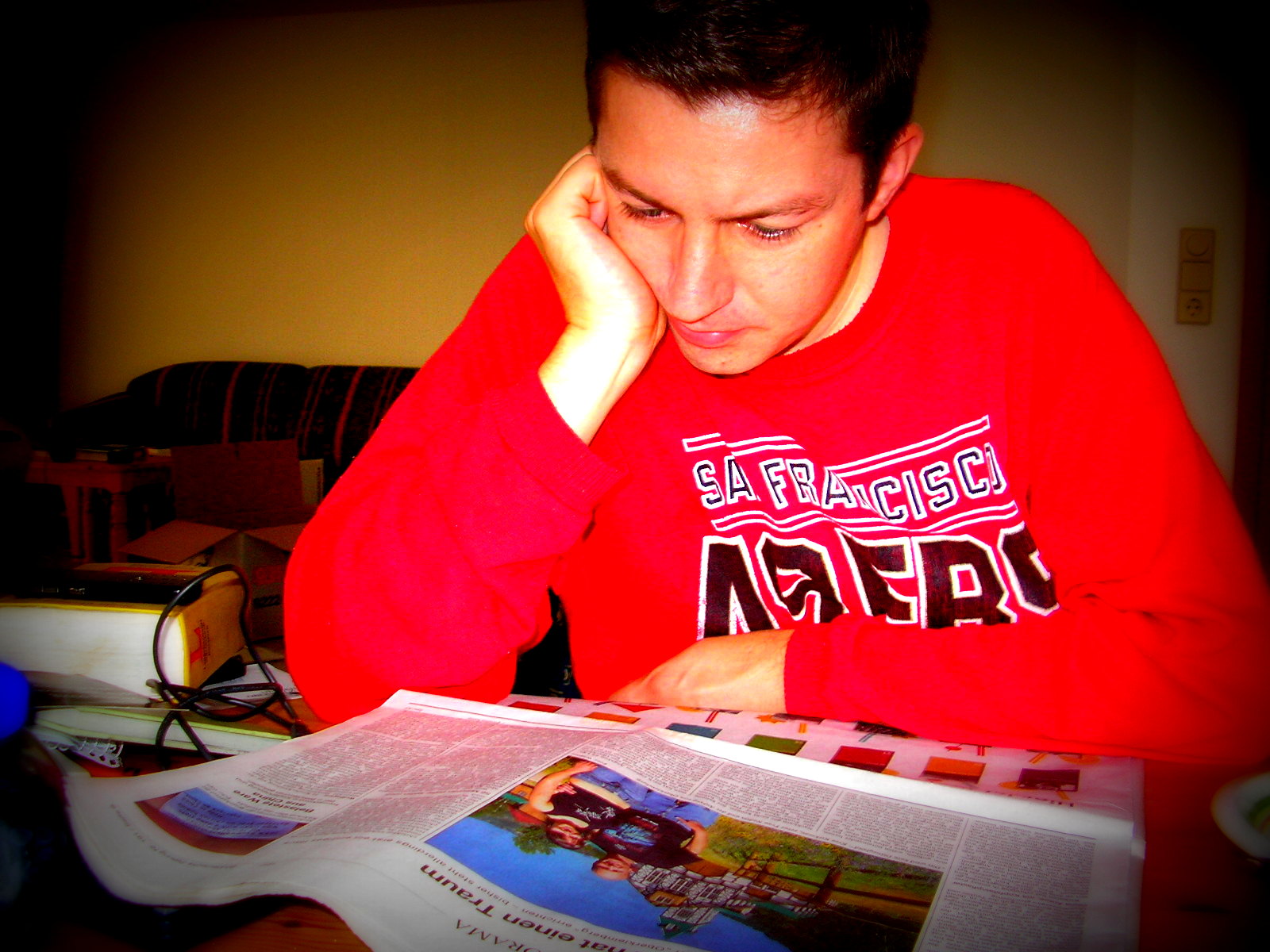
But in this year’s Super Bowl between the Baltimore Ravens and the San Franciso 49ers, my sympathies are clear:

SANYO DIGITAL CAMERAI received this sweater at least 25 years ago when my uncle brought it for me as a souvenir from  a trip to America. And it still works now which demonstrates both the high quality of the product and my frugality with regards to clothing.

Posted in Sports, USA | Tagged , | 2 Comments

How cold is it?

Question: How cold is it in Lithuania?

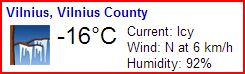
Answer: It is so cold that I saw this “icy” icon in the Google weather forecast for the first time. Not snow, not hail, just ice.

Vilnius iceBut honestly, it’s not that bad. You get some warm clothes and you get used to it very quickly. During the day, when it is sunny and only -10 degrees, I find it rather mild now and I enjoy walking through the snow.

Such a cold winter has two advantages:

  1. Everything is covered in snow and looks beautiful.
  2. Can you imagine how much more I will enjoy and appreciate the first warm days in spring?

Vilnius cathedral christmas tree winter snow

Winter Vilnius Kreuzweg

Posted in Lithuania, Photography, Travel | Tagged , | 10 Comments

Sad Things (2) E-Mail from an old Friend

e-mail inboxThis is sad:

I receive an e-mail from an old friend with whom I haven’t had contact for years. I am excited. I open the e-mail, only to find out that they are contacting me in my capacity as a lawyer in the hope for free legal advice because they are going through a divorce or because their niece is facing deportation.

(Yes, this happens quite often.)

Posted in Law, Life | Tagged , | 8 Comments

Sad Things (1) Where is the Cat?

It is not advisable to write about positive things only because it would evoke jealousy in the reader. (I just heard about a study on the radio which investigated how depressed people get from browsing their friends’ Facebook profiles, especially when they see the holiday photos of others.) So I have decided to start a new series about some of the sad things I encounter. Who knows, you may even discover a certain beauty in or fascination with those sad moments in life.

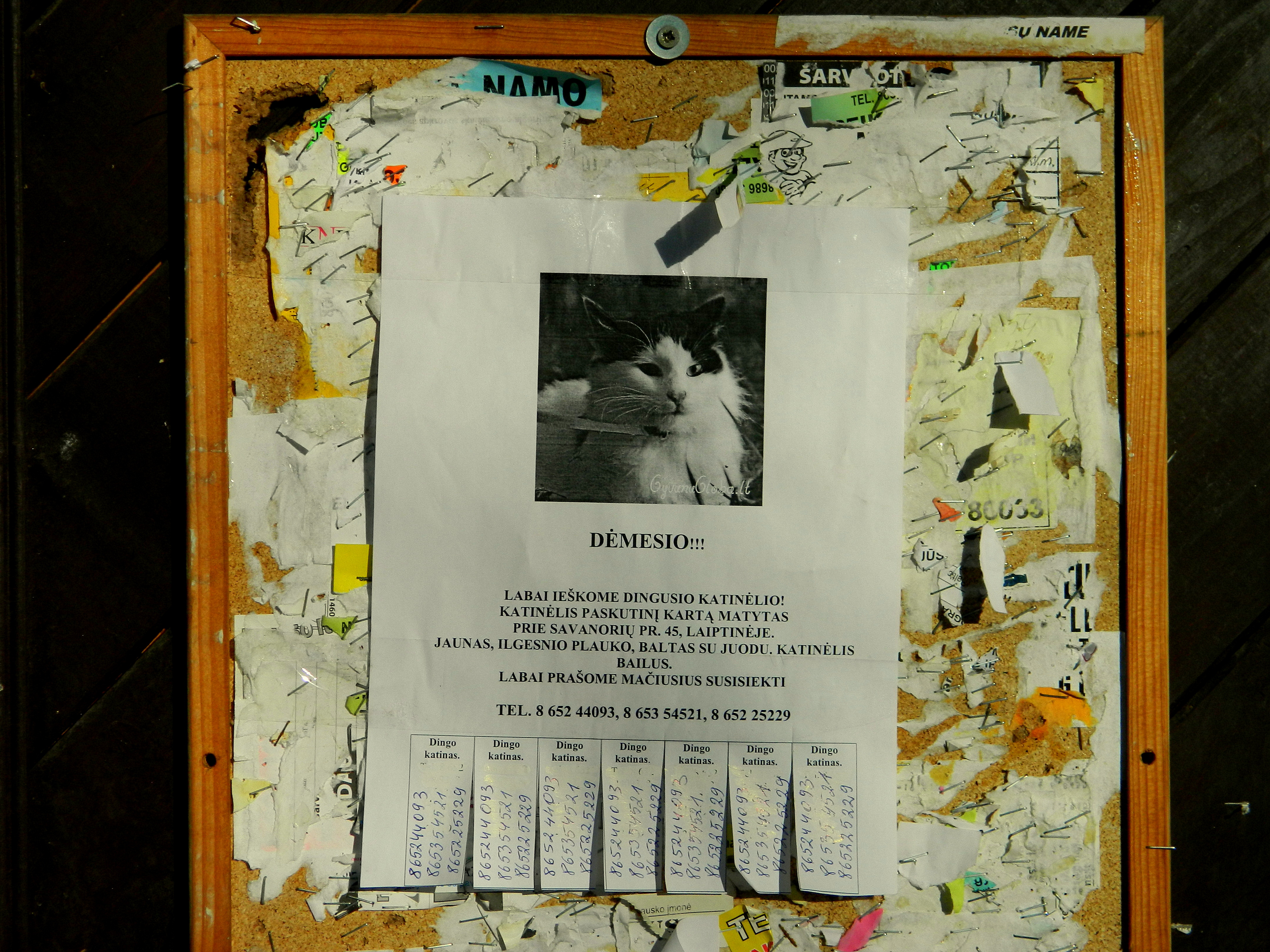
I start with this poster which has been attached to the door of my house in Vilnius for at least one week now. Somebody is looking for a cat which escaped, and not a single one of the strips with the owners’ phone numbers has been torn off yet.

missing cat

(Photographed outside of my apartment block in Vilnius, Lithuania.)

Posted in Life, Lithuania, Photography | Tagged , , | 14 Comments

Money-Back Guarantee

Every year, the service that I offer to my clients is getting better and better. Beginning immediately, I will apply a

100% money-back guarantee. *

That’s right. I am probably the only lawyer in the world to implement a money-back guarantee. This will not only cover my legal services, but it will also apply to all my other freelance services, including translations, academic writing, speeches, consulting and all of the other odd jobs I do from time to time.

money-back guarantee* I guarantee 100% that if I don’t like your money, I will give it back to you.
Posted in Law | Tagged , , , | 7 Comments

Film Review: “Django Unchained”

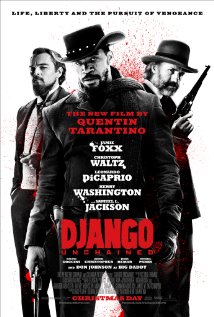
Django Unchained film posterWhen a film is bad or mediocre, there is a lot to write about it. When a film is as perfect as Django Unchained, one could keep the review short: Go and watch it. You will enjoy it.

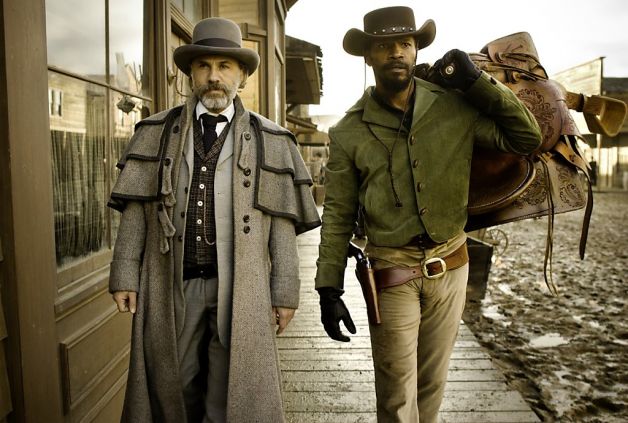
The plot is set in the southern United States in 1858. Dr King Schultz (Christoph Waltz of Inglourious Basterds fame) is a German bounty hunter who is both linguistically and morally superior to his American contemporaries who understand neither his stilted English nor his distaste for slavery. Dr Schultz buys the slave Django (Jamie Foxx) from a somewhat uncooperative owner because Django can identify the Brittle brothers whom Dr Schultz wishes to find and capture or kill, although he clearly prefers the killing option. Dr Schultz and Django are less master and slave but rather turn into partners in the bounty hunting business. Jamie Foxx plays one of the coolest Western heroes of all time. In reward for Django’s help, Dr Schultz then helps Django to find his wife who has been sold as a slave to the plantation of Calvin Candie (Leonardo di Caprio in a mad and evil impersonation of the Old South). They embark on an anti-racism, anti-slavery rampage which is bursting with energy, passion and violence.

The acting by the aforementioned and by most other actors (especially by Samuel L Jackson) is fantastic. The music is fantastic. The cinematography is fantastic. Django Unchained abounds with references to other works of film, among them of course the soundtrack of the original Django (1966) and a meeting of the old Django (Franco Nero) with the young one.

Django Unchained Christoph Waltz Jamie FoxxAs you would expect from a film made by Quentin Tarantino, it is at times very brutal, with a forced fight between two slaves, the whipping of Django’s wife and an encounter with dogs (which confirmed my fear of those creatures) among the most horrifying scenes. The shootouts on the other hand are so overblown that they are almost funny (the character played by Quentin Tarantino himself dies in a massive explosion). The film also does have a lot of funny scenes, from great dialogues to the Ku Klux Klan scene. In fact, I already had to burst out in laughter at the very opening of the film when Dr Schultz’s wagon with the wobbling tooth came riding along.

Django Unchained is a Western action thriller comedy which excels in each of these four genres. The film is 2 hours and 45 minutes long, but I did not notice the time at all. A great film, which is not a minute too long.

Posted in Cinema, History, Music, USA | Tagged , , | 9 Comments