“I am a very logical person. You could say I am left-brained.” When I heard that remark, I already knew I wouldn’t need to take the guy behind me in the queue at Lima airport seriously. And indeed, he went on to talk about cosmic purpose and why I have to try ayahuasca, a tea prepared from banisteriopsis caapi vines and the leaves of the chacruna bush found in the Brazilian and Peruvian jungle which allegedly has hallucinogenic effects. It most definitely has strong side effects, in particular vomiting.
Citing that, I explained that I would prefer to refrain from drinking something which makes most people vomit, and that this generally didn’t seem like a good idea to me. The “very logical” North-American traveler, who had come to Peru for the sole purpose to drink this foul brew, explained: “Whoever created you and me also created that plant. So it is for us to consume it.” It was 3:30 in the morning and I hadn’t slept all night, so instead of pointing out the several erroneous assumptions and fallacies in his statement, I simply replied: “Like stones and plutonium?” “You know what I mean,” he replied, but I didn’t.
I only knew that I wasn’t going to hear anything new. Even before I came to South America, people were recommending this tea to me, citing its potency, its cleaning effect for body and soul, and always forgetting to mention the very real side effects. They also forgot to mention that the tea contains dimethyltryptamin which is a banned substance, although the US Supreme Court exempted a church in New Mexico, the Centro Espírita Beneficente União do Vegetal (“Beneficient Spiritist Center of the Union of the Plant”), from the ban after its members had argued that they can only understand their god while or after drinking said tea. Vomiting as the new form of flagellation. So much for “very logical”.
Even without imagining a night in the mosquito-infested jungle between puking tourists, I never felt any desire to undergo this tea ceremony. I have never been susceptible to consciousness-altering drugs. I really like my clear and quick mind (both halves of it), and I can keep it quite busy and challenged without chemical substances. So far, I have yet to meet a single druggie whose mind impresses me. Most of them, particularly regular users, are dull, slow, sad conformists and don’t say anything that would want me to exchange my mind with theirs.
As for the cleaning of the body, I admit that vomiting can achieve that, but I have another orifice which I prefer to use for that purpose.
These ayahuasca-gringos are some of the most annoying people in South America. If you have mental issues that you think a plant will help you, go ahead. Eat it, smoke it, drink it. But don’t assume that I have the same mental issues and please don’t recommend vomit-inducing herbal tea. Of all the plants that “our creator” put into the Peruvian jungle, I still prefer tobacco. Cigars don’t make me talk like Paulo Coelho at least, because you should be warned that if you hang around someone sipping that tea you will hear a lot of context-free “kind of”, “you know?”, “I can feel it”, “there is something divine in every person”, “we are all one”, “it’s healing on a vibrational level” bogus, bullshit, bla bla bla.
But to be fair, that one American botanist whose name I forgot to take before we parted ways, him going to Cuzco and me to Piura, was a likable guy. I hope he will survive. In 2015, during a ceremony at an ayahuasca center in Iquitos, Peru, a young British man started brandishing a knife and yelling; a Canadian man who was also on ayahuasca wrestled it from him and stabbed him to death. There have been other reports of violence, and several women have been molested. Most of the people who told me that they want to drink ayahuasca struck me as weird already, so the violence may be influenced by a certain predisposition to craziness. Anyway, these are not the kind of people whom I want to hang out with, let alone watch them puke all over the Amazon. Also, some people have died simply from drinking ayahuasca without a fellow tripper ramming a spear into their recently cleaned heart.
To make it clear: I don’t mind people drinking that tea. Drink as much as you want. But stop running around and telling everyone they should do so, too. I like Coca Cola, but I don’t try to shove it down your throat every day. And yes, all the ingredients of Coca Cola have been made by the same “creator”.
I admit that one of the reasons for setting up this blog was that I had gotten tired of answering the same question more than once, even if asked by different people.
The other danger of talking to bloggers is that you might find yourself as a character in one of my next stories.
After staying at my father’s house in Germany for two weeks, he reminded me of the tradition to go on a road trip for my birthday, coming up on 6 July. When my plans were too petty – some hiking here, some hiking there – he said: “Think of the place where you always wanted to go, the country that is always in your dreams but that you have never seen. I’ll pay you the flight.”
It was obvious that he wanted to get me out of the house.
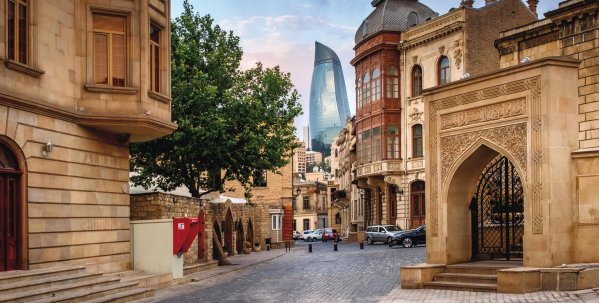
I didn’t have to hesitate a second, for I have long had a fascination with the Caucasus, that region where Europe and Asia meet quietly and out of the limelight while all eyes are turned on Istanbul. But Istanbul is only there because one needed a plughole to drain the Black Sea, while the real Eurasian borderlands are in Georgia,
Armenia
and Azerbaijan.
From 30 June to 18 July, I shall find out if my fascination has been justified. And, as I have no idea yet where to move next, I am open to coming into a hitherto unknown town – unknown only to me, that is – where I will be enchanted enough to want to live there. If only the languages weren’t scaring me off.
And because many readers will still be wondering “where???”, here is a map:
When people fly five hours to an island 3,700 km away from the mainland, they want photographic proof of having been there. Lots of photos. Tourists were walking up and down in silly poses before each stone statue on Easter Island, photographing themselves with cameras mounted on ski poles.
I don’t do that. After all, I have a brain to record memories.
Only after walking around the crater of Rano Kau, I was apparently too exhausted to pull my legs out of the photo in time.
And in Tongariki, I was so lost in thought that I walked into my own picture.
And these are all the photos of myself from one week on Easter Island. I was probably the only visitor who left without a photo of himself grimacing in front of a statue. But I did get to explore more of the island itself; a full report will be published on this blog soon.
When you spot a name like Humberstone on a map of South America, the interest is already piqued. As I asked the bus driver to let me get off there, in the middle of the Atacama Desert, he looked at me as if he were to deliver me to certain death by thirst and vultures. He knew what I couldn’t suspect: Humberstone was indeed a town, but nobody lived there anymore. “One dead guy more or less doesn’t make any difference,” he may have secretly thought, but he wished me “suerte” – good luck.
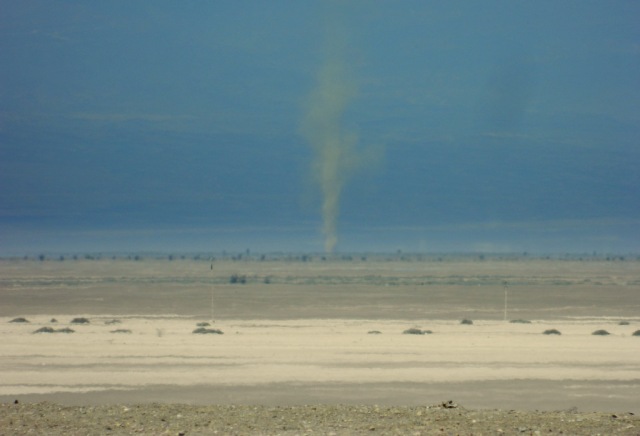
“Water would have been more useful than good luck,” I pondered not much later, scuffling through the sun-scorched sand and spotting the odd storm on the horizon, swirling up – what else – more sand.
Vultures I didn’t spot, but I knew they and the snakes and the scorpions would come rushing as soon as I were to collapse from exhaustion. A fresh and juicy human body would be a rare feast in the world’s driest desert that not even a snake on the strictest vegetarian diet could withstand.
It was so hot that my skin got burned under the sleeves of the shirt. Only my hat prevented my hair from catching fire. From Jim Button you know the Fata Morgana phenomenon, but I didn’t even see a mirage town anywhere. My will to survive was only kept alive by the prospect of a city with green parks, cool drinks and a well-stocked library. The map even indicated a swimming pool.
But what use is a map when there are no points of orientation? You can spot a good adventure when, during the course of it, you say to yourself “what a stupid idea!” at least once. I had already reached that point when once again, I wiped the sand from my eyes and spotted a tinny monster. A train engine!
That was a good sign, for where there is a train engine, there is life. Where there is a train engine, there is a train station, a timetable and a coke machine. I was saved!
Or so I thought. Until I looked around and realized that the “station” was rather deserted. Even the tracks had been dismantled or stolen. Only the wooden ties had remained and were still pointing the way.
Conveniently though, there was an enormous mound of earth next to the tracks. When lost, you should always aim for the highest point to get an overview. Climbing it furiously, I kept sliding back down, but the very last hurdle of what looked like the edge of a crater was helpfully equipped with stairs.
And then I saw Humberstone.
The city for which I had walked so far.
An oasis in the desert.
A source of life amid the sea of death.
Civilization and safety.
Full of anticipation for the amenities and pleasures connected with a city, I ran down the other side of the hill, spotted a pavilion in the center of the square and was getting excited about ice cream and cold drinks.
Until I stood before it and had to accept that it was closed. Actually, everything was so faded, silty and deserted that it must have been closed for a long time.
The whole town looked as if the citizens had fled one day to never return. And it was quiet. No noise, no screaming, no cars, no dogs, no machines, no music. Dead silence. Eternal peace.
With one exception: through the whistling wind, I heard something squeak. Regularly, about every three seconds. The source of the metallic and unpleasant sound seemed to be just around the corner. If it was a human being, I didn’t want to startle it, so I coughed on purpose before walking around said corner – but I only saw a dark creature (no idea if it was a man, woman, child or monster) scurrying away.
The sound had been caused by a swing which was still dangling back and forth. Very spooky.
Obviously, that made me all the more curious. Either the unknown person was a hobo like me, or the remaining inhabitants of Humberstone didn’t have any desire for contact. Maybe they were contaminated? Victims of experiments on humans? I had already spotted the industrial plants and blast furnaces, but hadn’t seen anything yet that would have told me what it actually was that had been mined or produced here.
I had to investigate.
Thus, I looked around inside the factory buildings,
climbed through the crumbling roof,
saw more steam engines than in a railway museum,
found out that German companies had always dominated the world market in any technology,
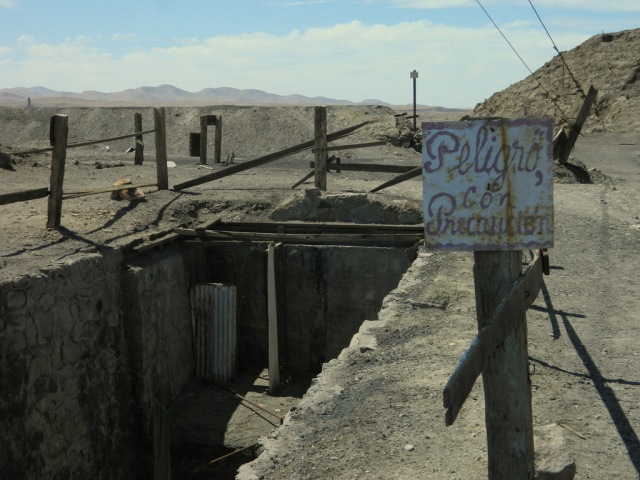
climbed into pits,
scaled shaking towers,
got an overview
and determined competently: Humberstone must have been a saltpeter work. “Of course! Not for nothing, Chile saltpeter is another name for sodium nitrate (NaNO3),” I remembered as one remembers things from chemistry class 25 years ago. The caliche ore deposits here were the largest natural reserves of sodium nitrate; valuable enough for Chile, Peru and Bolivia to fight a war over this stretch of desert, which was won by Chile.
Admittedly, the part about chemistry class is made up. Only thanks to the helpful, detailed and lovely presentation boards on the premises, I could attempt to understand at least the basics of what the purpose of Humberstone had been.
To be honest, I still haven’t really understood it. As I already figured out in said high school chemistry class, I am simply more of a social than a natural scientist. Hence I left the still smelling chimneys and walked back into town to take a look at the living conditions of the saltpeter workers.
To sum it up: the up to 3500 people living in Humberstone didn’t live too badly.
The houses for the workers and their families were spacious and cozy.
and had a front yard,
which apparently even produced fruits and vegetables,
Only the single workers had to live in barracks,
but for that, they had the bar – unfortunately dried out when I visited – right across the road.
The city planner had been thoughtful. Humberstone actually conveyed the impression of a cute little town where theater, swimming pool, church, school and hospital could easily be reached on foot, while the emission-causing industrial premises were located a bit aside (the top left on the map).
And of course there was a railroad for the way to work and back home.
I hung around for a while, waiting for the train to depart, but nothing moved. Finally, I had to realize that Humberstone really was a ghost town. The saltpeter works had been operating since 1872 and beginning in 1934, they were expanded under the name of the company’s founder, James Thomas Humberstone. Most of the buildings still standing are from that time, although the decline of the saltpeter business already began in the 1930s because German scientists had discovered a way to produce ammonia on an industrial scale, rendering saltpeter superfluous as a fertilizer. In 1960, both the works and the city were closed. Thus, all buildings that you see on the photos haven’t been inhabited for more than 50 years. Anywhere else in the world, the wooden houses would long have been taken over by plants and mold, but the aridity of the Atacama Desert preserves the ghost town in the exact state it was in when the last train took the workers and their families towards unemployment.
Equally untouched since 1960 was the clock tower, indicating a different time on its two clocks, none of its hands moving anymore, probably because they noticed that nobody ain’t watching.
That wouldn’t have happened when workers and schoolchildren still had their days dictated by that clock.
Yes, there was a school in Humberstone. From 1920 on, Chilean law required that company towns, too, establish an elementary school if there were at least 20 children of school age. The busiest year was 1942, when 463 children were learning and playing at this school under the supervision of 8 teachers.
After school, they ran to the swimming pool, a true luxury in the desert.
I can imagine that the existence of a swimming pool made it easier for the company to recruit workers and for workers to win their children’s consent to the move into the middle of nowhere. And once daddy had the children on his side thanks to the pool, momma couldn’t say nothing much no more.
But the ladies didn’t lack opportunities for amusement and activities either. There was a tennis court
on which they could, thanks to electric lighting, even play at night
and a theater and cinema.
The theater is typical for the construction style in Humberstone. Wood, clear edges, rectangular corners, almost cubic, flat roofs, high interior, often with raised skylights.
Is this Art Deco? In any case, it must have been le dernier cri in the 1930s, for it still exudes the spirit of modernity today.
Even the church displays only the slightest inclination of the roof.
The priest’s notes for the last sermon were still on the altar.
Speaking of Jesus: you know the story in which he transforms water into wine? Well, I do it the other way round and therefore have to pour some water into the wine now.
Walking through the ruins of Humberstone, one can easily imagine how children of laborers and children of engineers were floundering about in the pool together, while the ladies watched a sociocritical theater play, and the father beamed with joy as he extracted nitrate because the manual labor provided his family with an idyllic life, the company with riches and the republic with progress.
It wasn’t like that. At least not always.
This mine had been operating under the name La Palma since 1872 and it was a company town as you know them from John Steinbeck‘s books. All stores and houses were owned by the mining company. The workers weren’t paid in money, but with tokens which they could only use in the company’s own shops, where, due to the monopoly, the prices were often usuriously inflated. Thus, the workers couldn’t shop anywhere else, let alone save anything. The company had its own security service which functioned as the police on the premises. In cases of mistreatment by superiors, dangerous working conditions or delayed payment, there wasn’t any point in complaining to them.
In December 1907, a general strike broke out in the whole province. The main demands were payment in cash, calibrating the scales in the company stores, safety measures to prevent workplace accidents, in particular burns, and a location where the workers could organize their own night school.
That was too much for the factory owners. The Chilean government referred to the autonomy of collective bargaining and didn’t get involved until, after a few weeks, it became obvious that the strikers wouldn’t return to work. Instead, more than 10,000 people including the wives and children of the striking workers, were camping at Santa Maria School in Iquique. The established way of dealing with labor disputes at the time (not only in South America) was to deploy the military. Three days before Christmas 1907, the strike was brutally crushed with a massacre of the workers and their families. About 2,000 people were shot.
It should take another generation until the working and living conditions in the saltpeter towns improved.
But for that, farmers around the world got cheap Chile saltpeter.
Practical information:
The two former mining towns of Humberstone and Santa Laura now are UNESCO world heritage sites and museums.
Humberstone is about 50 km east of Iquique, directly by the highway crossing Chile from north to south. It is signposted and can easily be reached by car or bus. To continue the journey from there is no problem either. When I left, I went to the bus stop towards Iquique and had to wait no more than 15 minutes for the next minibus.
The ticket price for adults is 3000 pesos, which is 4.50 dollars.
I spent almost the whole day in Humberstone. There were many more buildings than shown in this article and it really doesn’t get boring. Because all buildings are open, you can always find a shady place to rest.
But there is nothing to drink, although the heat is tormenting. Bring a few liters of water and a hat against the sun!
In Santa Laura, there is far less to see. If you only have time for one of the saltpeter towns, I would focus on Humberstone.
Although the premises are a museum now, I didn’t see a single guard after buying the ticket at the entrance. You can move and climb around completely freely. Great!
After 18 months in South America, I am back in Europe. I have already written extensively about the reasons for my return. Here are the first impressions from the old continent:
You cannot imagine how happy I was when I set foot on European soil in Funchal on Madeira.Green, a pleasant climate, wonderful architecture, no more noise, newspapers in English and German for the first time in one and a half years, large parks.
I was seriously impressed by Portugal. In Sintra alone, I saw more different styles of architecture than in all of South America.
Traveling through Germany by car or train is idyllic. Green everywhere, neat villages, hilly, forests of trees instead of billboards with advertisement.
But Germany also appears too spruced up. Everything is clinically clean, as if treated antiseptically every day. Even the roads are so clean that you could eat from them. Hedges and lawns are trimmed better than my hair. The cars are cleaner than my desk.
But life is lacking in all of this. You can walk through villages or residential neighborhoods without seeing a single person in the street, in the gardens or in the park.
What I do appreciate however is that you can walk through the forest for hours without being attacked by dogs.
Latin Americans who had already been to Germany sometimes asked me: “Why are there no children in your country?” Now I understand the question. There are really not many children in Germany, and the few apparently never leave their rooms.
My Couchsurfing host in Portugal put down the shopping bags in front of her house and we had to walk back to the car around the corner to get more bags. “Shall I watch the bags?” I asked. “No,” Joana laughed, “you are in Europe again. Nobody is going to steal anything here.”
The greatest joy is to be able to sleep through the night without being interrupted by barking dogs/music/fireworks/religious processions/screaming/shouting/honking cars.
On the first day, I had currywurst and spezi, two culinary delights that haven’t conquered the world yet. But I guess I haven’t fully arrived in Germany until I have had a döner kebab again.
Why are all dishes in German restaurants sufficient for two people? It’s almost like in Cochabamba.
I still have a few Eastern Caribbean dollars from Antigua. If anyone among my reader collects coins and banknotes from far-away countries, please contact me.
What I miss most about South America is that you can go out at almost any time of the night and you will get anything from hamburgers, fruit juices, minced meat, light bulbs, notepads to toilet paper within a radius of 500 meters. In Germany, on the other hand, you need to plan your shopping trip like a military campaign because of the restricted opening hours and the small number of shops.
Speaking of military campaigns; my parents have realized that they don’t have much time left and they have belatedly entrusted me with investigating our family history. Although I have been to 55 countries already, it turns out that there are a few places that members of my grandparents’ generation visited which I haven’t seen yet: they attacked Norway, Poland, Russia and Northern Africa and were imprisoned in the USA and in Yugoslavia. Two granduncles emigrated to the United States.Insofar as the research will yield interesting results, I may therefore post something about my family from time to time. Because maybe others have questions on which archives to approach and on how to handle this quest systematically, too.
I am also interested in reconstructing my grandfathers’ “travel routes” in World War II and to travel along that route now to discover and portray how much Europe has changed in only two generations.
But the coming months I will mainly spend at an undisclosed location in Germany to put the adventures of the past years on paper.
It’s nice to live in a house with thousands of books again.
But I don’t have any emotional feeling of being “back home”. I am happy to be in Europe, but when I return to Bavaria after years of traveling and I notice that everything is still the same as it was 2, 5 or 7 years ago, it rather reaffirms my opinion that I didn’t miss anything here.
Returning to Germany after one and a half years in South America offers a drastic shock regarding the visual attractiveness of our compatriots. And that’s putting it mildly. For that reason alone, Germany should accept more immigrants.
But it’s great how long it remains light at night! Closer to the equator, the sun goes to sleep around 6 p.m., whether it’s winter or summer, and there isn’t any long twilight either. In Germany now, it’s light enough until almost 10 p.m.
Sometimes, I still dream in Spanish. I hope I won’t lose the language too quickly.
And, my dear European friends, what is with that deplorable custom of going out without a hat?In South America, even the children have more style.
And now I have to plan my birthday trip to a yet undetermined location.
The United Kingdom may descend into political chaos, but it will do so with style and in a calm and dignified manner.
You can say about the UK what you want, but Britons can carry off things that would look silly everywhere else.
In Britain, nobody would ever think of excluding you from a public debate just because you call yourself Lord Buckethead, dress accordingly and claim to be an intergalactic space lord.
Always on 6 June, I have a feeling of gratitude to the more than 160,000 Allied troops that landed in Normandy on 6 June 1944 (D-Day) and marked the beginning of the second phase of the liberation of Europe (after the landing in Sicily on 10 July 1943). As a German, I still find it embarrassing that my grandparents could not get rid of the Nazi tyranny themselves, but that soldiers from around the world had to muster their courage and many of them had to sacrifice their lives to allow my parents’ generation to grow up in a free, liberal and democratic Germany.
If you wish to commemorate this day, I recommend to find a veteran of World War II and celebrate with him or her. In the absence of such a veteran, you may at least want to watch a movie about D-Day. Here are my top three recommendations.
The classic: The Longest Day
The Longest Day from 1962 is the classic movie about D-Day, recounting the military action on both sides hour by hour. It is a massive production with an enormous line-up of stars.
Even though the film won several Oscars, by today’s standards the black and white The Longest Day is far less impressive. Because original colour footage of the landing in Normandy has been discovered in the meantime, I would actually recommend to go for that if you want to get a realistic impression.
The fictional: Saving Private Ryan
A much more harrowing account than in The Longest Day is given in the opening landing scene of Saving Private Ryan, directed by Steven Spielberg.
Watching this opening scene is an exhausting, sickening, physical experience. I still remember that I saw it in its opening week at a cinema in New York and I had to fight with the girl who had accompanied me because she wanted to leave the cinema in the first 10 minutes into the movie. I myself was happy that I hadn’t had dinner yet.
Steven Spielberg made a very intense movie about D-Day. The colours that he used create the impression of watching an account filmed in 1944. The brutality of war displayed in this film makes it even harder to watch classics like The Longest Day with the same eyes. The latter seems like a modern version of a Western film, a sanitized depiction of real events.
The only weakness of Saving Private Ryan is its story. Private Ryan has lost three brothers in other battles of World War II and he is the only remaining son of his family. The US War Department decides to send a rescue mission to France to get him home before he will be killed.
The real deal: Band of Brothers
If you are looking for a good story, the director and the star of Saving Private Ryan, Steven Spielberg and Tom Hanks, have teamed up to produce the ultimate movie about World War II with great characters, a great script and in the same old-style cinematography as Saving Private Ryan.
However, you will need a bit of time, as Band of Brothers was produced as a TV series of almost 12 hours. It is actually not only about D-Day, but follows one company of a US Parachute Infantry Regiment from their basic training in the USA, to the preparation for the landing in France, to D-Day, the liberation of Europe, including the most moving part about the liberation of a concentration camp until the end of World War II in the Bavarian Alps.
Because of the time available, Band of Brothers can develop the characters with much more depth than the other films. The series covers a time span of two years, with highs and lows in the Allied war efforts, with victories and retreats, with summer lulls and fierce winter battles. What I especially liked about Band of Brothers is that it takes the time to depict some battles in such a detail that one learns about the strategy and the tactics used. Very useful for some of us!
Recommendation:
If I had to pick one of the above, I would not hesitate to choose Band of Brothers over the other two. If you have already seen all of the above, I recommend some alternative history with Inglourious Basterds.
If I am ever on a quiz show, my telephone joker will be the dude who wrote Wikipedia.
Suki Kim has done impressive undercover reporting in North Korea, fooling both her employer, by pretending that she was a devout Christian, and of course the North Korean government.
If I had listened to all the well-meaning advice I ever got, I would lead a boring life.
“Oh, your Spanish is very good,” people all over Latin America tell me. I thought it was a personal compliment until I realized that my Bolivian accent makes me sound more refined.
After my trip in South America, I have an unused but not generally useless package of anti-malaria medicine to give away.
On the other hand, thanks to climate change, malaria flies will soon badger us in Europe.
In the 18th century, Catholic clergy in Mexico tried to christianize the Nahuatl god Quetzalcoatl by arguing that he was in reality the apostle St Thomas, who had come to the New World before the Spanish to deliver the word of God to the Indians.











 Green, a pleasant climate, wonderful architecture, no more noise, newspapers in English and German for the first time in one and a half years, large parks.


 Insofar as the research will yield interesting results, I may therefore post something about my family from time to time. Because maybe others have questions on which archives to approach and on how to handle this quest systematically, too.
 Returning to Germany after one and a half years in South America offers a drastic shock regarding the visual attractiveness of our compatriots. And that’s putting it mildly. For that reason alone, Germany should accept more immigrants.
 In South America, even the children have more style.


 The Happy Hermit