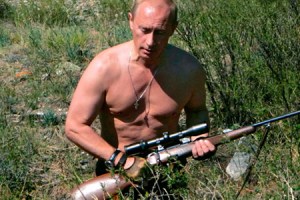
“I was surprised that other countries even dared to compete with us. I hope they won’t repeat that mistake in 2018.”
Although I live in England, I am actually not sad about this country missing out on the opportunity to host another Football World Cup. Living in London, I am already annoyed with the daily dose of tourists, and I am dreading the prospects of the Olympics coming to town in 2 years. I certainly don’t need another global event that hikes up prices and overburdens public transport. I am also not convinced that host countries benefit economically from events like the World Cup or the Olympics.
But I was still a bit surprised by FIFA’s choice of Russia and Qatar as the two countries to host the Football World Cups in 2018 and 2022 respectively:
The candidates for 2018 were England, the Netherlands and Belgium with a joint bid, Spain and Portugal with a joint bid, and Russia. Five countries that are stable, peaceful democracies where the world could feel welcome in open societies with respect for human rights – and one country that is an autocracy at best and a mafia state at worst, where independent journalists routinely are targets of assassinations, where Stalinism is glorified, and a country that was engaged in a war with a neighbouring country just two years ago.
Given this choice, FIFA decided that Russia was the best place to do business to play football.
As if that had not been provocative enough, FIFA also already made the decision for the

“What did we win?”
2022 World Cup: Contestants were Australia, the USA, South Korea, Japan and Qatar. Four modern democracies with equal rights for their citizens – and one emirate without elections, where political parties are banned and members of “parliament” are all appointed by the Emir (who is not accountable to anyone). In February of this year, Qatar entered into a defence cooperation with Iran.
A tough choice, but FIFA thought that Qatar was the safest place to hide from an inquisitive press looking into FIFA corruption to play football.
Looking for a pattern here, this is what you have to consider if you are thinking of competing for the 2026 World Cup:
- The less freedom, the better.
- The more natural resources, the better.
- The less democracy, the better.
- The more authoritarian rule, the better.
- The less freedom of speech, the better. (In the Press Freedom Index, Qatar is number 121 and Russia number 140, compared with an average of 23 among the competitor nations.)
- Experience of football is irrelevant.
Sepp Blatter must be dreaming of an oil-rich country ruled by Nazis… But for 2026, maybe Iran or Zimbabwe will do.


 Israeli weightlifter Sergio Britva. As the respective silver and gold medal winners (bronze went to Germany) Mr Khodadadi and Mr Britva stood next to each other on the podium.


 The Happy Hermit