
This week, US soldiers in Afghanistan accidentally burnt a few copies of the Quran because they regularly change the copies of the Quran that the prisoners there are allowed to use, in order to prevent messages being written into the books and being passed on to other prisoners.
The population of Afghanistan is outraged, aghast and angry. More than 20 people were already killed in the ensuing riots.
An over-reaction? After all, the story is only about a few books which can be printed again. Surely this matter does not warrant the loss of human lives.
But maybe Afghans have simply learnt the lessons of history. Let us look at another book burning, at another place, 79 years ago:
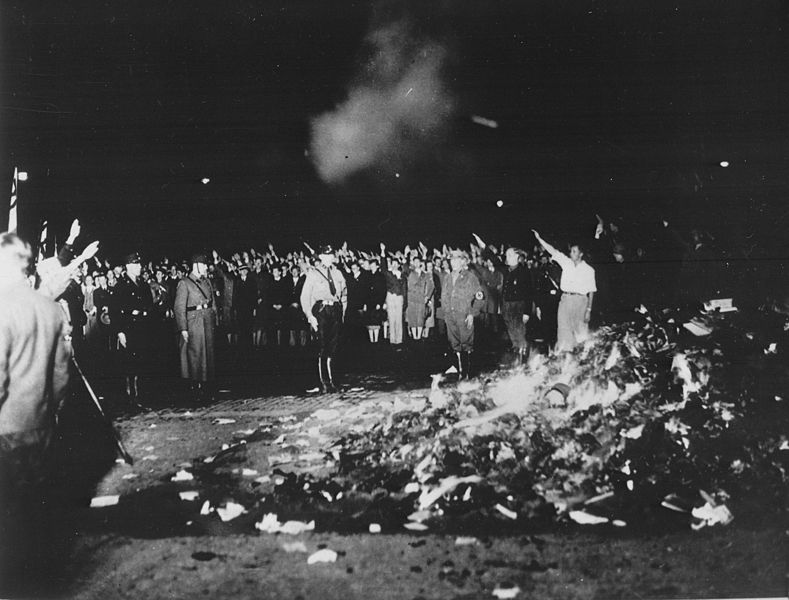
The nation of poets and thinkers got together in May 1933 for the specific purpose of burning books. The book burnings were led by students and professors, the supposed intellectuals, who set tens of thousands of books ablaze under the jubilation of spectators.
Already 1823, Heinrich Heine had (the Muslim) Hassan say in Almansor:
Where they burn books, so too will they in the end burn human beings.
This quote, which actually refers to the Quran (!) in Almansor, should turn out to become true as German history proceeded. At the end of the only 12 years of the Nazis’ reign, the book-burning people had laid waste to all of Europe and murdered several million people.
I wish Germany in 1933 would have seen protests anywhere near as now in Afghanistan.
(Es gibt eine deutsche Version dieses Artikels.)
















 The Happy Hermit