
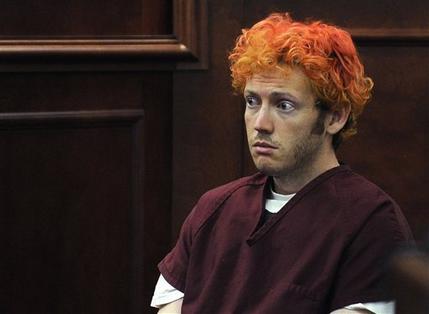
“If only there had been a waiting period”, James Holmes is thinking.
“If only there had been a waiting period”, James Holmes is thinking.
The prize for the president with the best hat goes to Salva Kiir Mayardit from South Sudan.

Goodluck Jonathan from Nigeria is second.

And lastly, credit where credit is due, George Bush junior looking like straight out of an old Marlboro commercial.

The following essay was part of the second year of my MA in Philisophy and set out to examine which problems criminal punishment poses for liberalism, especially in view of John Rawls‘ theory of punishment in “A Theory of Justice”.
This essay draws heavily on my previous essay about punishment in the light of the reason constraint which is twice as long and thus more detailed. The new ideas in this essay are the ones that deal specifically with John Rawls and those about moral luck.
“All punishment is mischief:
all punishment in itself is evil.”1
1.
Punishment “is an authority’s infliction of a penalty on an offender”2 and thus at least “appears to involve overriding a person’s autonomy”3, making it sound like a deeply illiberal measure which could never be reconciled with liberalism.
According to Rawls, a criminal justice system and its sanctions do not violate liberal principles, but actually “can be derived from the principle of liberty”4. He only sees a “danger to the liberty of the … citizen” if “these sanctions will wrongly interfere with his freedom”5.
Rawls argues that “even in a well-ordered society the coercive powers of government are … necessary for the stability of social cooperation”6 and names the income tax scheme as an example that would not work on a voluntary basis7.
I fear that Rawls reaches this conclusion rather too quickly and easily. Although it seems to be intuitive to demand that transgressions of the law shall be punished8, even this short essay will hopefully show that once we delve into the justifications offered for punishment (and justification is required in a liberal state or society for such severe intrusions into a person’s autonomy as imprisonment), many of these justifications are unconvincing and self-contradictory.
In “Theory of Justice”, Rawls provides two justifications for his theory of punishment and explicitly rules out a third one.
a.
For Rawls, the criminal justice system is like “men’s security to one another”9 to ensure that others comply with the rules, which in turn is necessary for our own decision to comply with these same rules10.
b.
As a second justification for punishment, Rawls states that “a propensity to commit [criminal] acts is a mark of bad character”11 and that “in a just society legal punishments will only fall upon those who display these faults”12.
c.
In Rawls’ view, punishment must not be “a scheme of taxes and burdens designed to put a price on certain forms of conduct and in this way guide men’s conduct”13.
2.
The “assurance argument” sounds like a description of the theory of general deterrence14.
The theory of deterrence is based on the aim of preventing15 or at least reducing future crime16: punishment is justified because or “in as much as it deters people from breaking the law and thus prevents harm in the future”17.
Deterrence consists of two main aspects which face quite different philosophical problems and thus always have to be recognised and discussed as two different aspects:
a) Special deterrence18 19 aims at the offender himself/herself. The punishment shall serve as a reminder to the offender of the consequences of his or her criminal action for himself/herself and shall thus make him or her refrain from (at least similar) criminal acts in the future20.
b) General deterrence21 seeks to deter potential imitators. The punishment shall serve as a reminder of what the consequence would be for someone else if they were to break the law in a similar way as the offender in question.
One obvious problem with general deterrence is that it violates the means/end constraint22 because it uses one offender as an example for others to learn from it. When A, B, C and D commit the same crime independently from each other and only B is caught and brought to court, it is hard to see why B should bear the burden of being punished in order to serve as an example for the rest of the population. It is hard to see how the (possible future) actions of others, on whom B has no influence, can be used as a justification for punishment in the relationship between the state and B.
Another problem with deterrence is that it needs to work in order to justify punishment23. While it might seem logical at first that a sentence deters an offender from re-offending and also makes would-be offenders think twice (thus working like the economic [dis-]incentive24 that Rawls derides25), the evidence is actually not as overwhelming26. One plausible reason for this is that would-be offenders don’t think about the possible punishment at the time of their offence27, for the simple reason that most of them don’t plan to get caught by law enforcement28.
3.
The “bad character argument” is a very surprising one coming from Rawls, as he has emphasised that natural assets (such as character) are distributed by chance and luck and that nobody “deserves” them29. It seems inconsistent to deny that rights or entitlements are established by character (and other arbitrary factors) but then to argue that “bad character” is the basis of deserving punishment30.
Also, if “bad character” was really the core reason for punishment, as Rawls suggests31, the system of punishment would need to look completely different from the one in place now, as the following examples will illustrate:
a.
Let us imagine that A and B both attend a party and get drunk. They both get into their respective car and drive home, although both of them know that it is against the law and that it is potentially dangerous.
A falls asleep due to the intoxication and veers off the road into a tree. He is not hurt.
B falls asleep due to the intoxication, veers off the road and hits a passer-by, killing him32.
If “bad character” was the basis of punishment, both A and B would have to be punished equally because they committed the same character mistake of driving drunk. That the outcomes are different is only due to chance, it is absolutely arbitrary. Yet, in most penal systems B would be punished more severely than A.
b.
We can change this example and imagine that A wants to kill somebody on the way home, let’s say for his strange concept of excitement, whereas B just wants to get home.
It then happens that A gets home safely and without killing anybody. B however, falls asleep again, veers off the road and kills somebody.
If “bad character” was the basis for punishment, there would be good arguments for punishing A or at least not punishing B (less than A) because A is the one with the intent to kill, indisputably a “bad character” trait. The only extent of B’s “bad character” was that he was too lazy or stingy to call a taxi to take him home, surely a less evil character trait than wishing to kill innocents for one’s own enjoyment.
Yet, in most penal systems, B would be punished much more harshly than A (who would would get a fine for drunk driving).
c.
Taking this thought of punishing “bad character” to its extreme could result in a criminal code that knows only one criminal offence, that of “not accepting the law“, punishable by one uniform penalty. If disobedience of the law – or the “character flaw” behind this decision to violate the consensus of one’s society or country – is the main trigger for punishment, then one could argue that disobeying a statute against drunk driving is equally bad as disobeying a statute against homicide.
In addition to these concerns, I have an even stronger reason for my dislike of the “bad character” argument: I believe that questions of citizens’ character are not the business of the state33. I do agree that the democratically elected majority in a state’s parliament can determine what is a crime34 and what is not, but I do not want to see the state trying to impose its (majority’s) moral beliefs onto each individual citizen. Although it might be ideal if a criminal trial convinces the offender to accept the law35, the law cannot make its acceptance a requirement36. This would go beyond the normal realms of law enforcement and cross the threshold to a “thought police”.
4.
The economic analysis of punishment which is dismissed by Rawls37 is in my view much more respectful of the individual and his/her autonomy.
People are free to choose if they offend or not. In a state governed by the rule of law38 they more or less know what the law is39, they can look it up before deciding whether to offend and they can trust that the law won’t be changed after the fact and applied retroactively. Rawls described this “price system” model in more detail in an earlier article40. It can also be viewed as part of the “economic theory of law”41, in which offenders are viewed “as having voluntarily chosen to risk penalties as the price of disobedience”42 and punishment “supplies a motive for avoiding some actions and doing others”43 44. I find this a realistic depiction of most offenders’ thinking, as is demonstrated by research that would-be offenders are not put off by harsh sentences45, but by a high likelihood of being detected and convicted46 or a combination of these two risks.
This still leaves people the choice between obeying or disobeying the law and purely engages with their reason. This treatment of people as autonomous beings is after all “a prominent element in liberal thought”47.
Deterrence which respects offenders as economically thinking agents who make decisions based on weighing their options, an interpretation which I find not inappropriate in our (over-)economised societies, does not want to change people’s opinions or minds. It just wants them to know the consequences of their actions and act accordingly. Deterrence certainly wants to reduce crime, but if somebody chooses to re-offend again and again, it will simply make him or her pay the advertised price and not try to change his personality or make him “repent” or any other semi-religious act48.
Of the possible justifications for punishment covered in this short paper, I deem deterrence based on the economic analysis of punishment the only acceptable one.
1Bentham 1789: chapter 13, paragraph 2.2(c)
2Honderich 1989: 19 quoted according to Matravers 2001: 233
3Matravers 2001: 233
4Rawls 1999: 212
5Rawls 1999: 211
6Rawls 1999: 211
7Rawls 1999: 211
8Moore 1987: 112
9Rawls 1999: 211
10Matravers 2005: 76
11Rawls 1999: 277
12Rawls 1999: 277
13Rawls 1999: 276-7
14Matravers 2005: 77 writes that ”Rawls invokes deterrence without defending it.“
15Duff 2008: section 3; Roberts/Ashworth in von Hirsch/Ashworth/Roberts 2009: 39
16Matravers 2001: 238
17Matravers 2001: 238
18Roberts/Ashworth in von Hirsch/Ashworth/Roberts 2009: 40
19Matravers 2005: 78 calls it “specific deterrence“.
20Matravers 2001: 238
21Roberts/Ashworth in von Hirsch/Ashworth/Roberts 2009: 40
22Which is based on Immanuel Kant: Matravers 2001: 234
23Duff 2008: section 3; Honderich 1989: 51-8 quoted according to Matravers 2001: 239
24Rawls 1967: 3
25Rawls 1999: 276-7
26Doob/Webster 2003: 49-51; Duff 2008: section 3; Roberts/Ashworth in von Hirsch/Ashworth/Roberts 2009: 39, 44 and 47 fn. 1
27Roberts/Ashworth in von Hirsch/Ashworth/Roberts 2009: 44
28Roberts/Ashworth in von Hirsch/Ashworth/Roberts 2009: 45
29Matravers 2005: 77
30Matravers 2005: 77
31Rawls 1999: 277
32I owe this example to Fiery Cushman who introduced it in a “Philosophy Bites“ podcast.
33Duff 2008: section 6; Matravers 2001: 252-253; Matravers 2005: 77
34Within the confines of the rule of law, the applicable constitution and international law that the state in question has ratified.
35Duff 1986: 1 and 5
36Duff 2008: section 6
37Rawls 1999: 276-7
38Rawls 1967: 1 lists the basic requirements of rule of law and points out that Hobbes already mentioned these in Leviathan, chapter xxviii.
39Walker 1980: 215
40Rawls 1967: 3
41Posner 1985: 64-6; Roberts/Ashworth in von Hirsch/Ashworth/Roberts 2009: 41
42Roberts/Ashworth in von Hirsch/Ashworth/Roberts 2009: 40; Walker 1980: 215
43Rawls 1967: 3; Roberts/Ashworth in von Hirsch/Ashworth/Roberts 2009: 41
44Doob/Webster 2003: 71-74 explain why offenders do not always act as economists say they should.
45Roberts/Ashworth in von Hirsch/Ashworth/Roberts 2009: 40; von Hirsch/Bottoms/Burney/Wikström 1999: 57-63
46Roberts/Ashworth in von Hirsch/Ashworth/Roberts 2009: 41
47Matravers 2005: 77
48As the communicative theories of punishment require.
Bibliography
Books
Duff, R. A. and Garland, David (1994) (editors) A Reader on Punishment, Oxford, Oxford University Press
Rawls, John (1999) A Theory of Justice, Revised Edition, Cambridge, Massachusetts, Harvard University Press
Von Hirsch, Andrew; Ashworth, Andrew and Roberts, Julian (2009) (editors) Principled Sentencing: Readings on Theory and Policy, 3rd edition, Oxford, Hart Publishing
Papers
Bentham, Jeremy (1789) “Punishment and Deterrence”, An Introduction to the Principles of Morals and Legislation, chapter 13 (reprinted in von Hirsch/Ashworth/Roberts [2009] and quoted by the chapter and paragraphs of the original edition)
Doob, A. N. and Webster, C. M. (2003) “Studies of the Impact of New Harsh Sentencing Regimes” and “Offender’s Thought Processes”, both from Crime and Justice: A Review of Research, edited by Tonry, M., volume 30, Chicago, Illinois, University of Chicago Press (reprinted in von Hirsch/Ashworth/Roberts [2009] and quoted by the pages of the reprint)
Duff, R. A. (1986) “Expression, Penance and Reform”, Trials and Punishments, Cambridge, Cambridge University Press, pp. 233-66 (reprinted as reading 7.2 to accompany the A850 Postgraduate Foundation Module in Philosophy, Milton Keynes, The Open University and quoted by the pages of the reprint)
Moore, Michael (1987) “The Moral Worth of Retribution”, Responsibility, Character, and the Emotions: New Essays in Moral Psychology, edited by Schoeman, F., Cambridge, Cambridge University Press (reprinted in von Hirsch/Ashworth/Roberts [2009] and quoted by the pages of the reprint)
Posner, Richard (1985) “Optimal Sanctions: Any Upper Limits?”, An Economic Theory of Criminal Law, Posner, Richard, 85 Columbia Law Review 1193 (reprinted in von Hirsch/Ashworth/Roberts [2009] and quoted by the pages of the reprint)
Rawls, John (1967) “Two Concepts of Rules”, Theories of Ethics, edited by Foot, P., Oxford, Oxford University Press, pp. 149-53 (reprinted as reading 7.1 to accompany the A850 Postgraduate Foundation Module in Philosophy, Milton Keynes, The Open University and quoted by the pages of the reprint)
Walker, N. (1980) “Reductivism and Deterrence”, Punishment, Danger and Stigma, Walker, N. (reprinted in Duff, R. A. and Garland, David [1994] and quoted by the pages of the reprint)
Study material
Matravers, Derek (2001) Persons and Punishment, A850 Postgraduate Foundation Module in Philosophy, Chapter 7, pp. 232-58, Milton Keynes, The Open University
Matravers, Derek (2005) Punishment, A851 Issues in Contemporary and Political Philosophy, Chapter 7, pp. 75-81, Milton Keynes, The Open University
The internet
Duff, Antony (2008) “Legal Punishment”, The Stanford Encyclopedia of Philosophy (Fall 2008 edition), Edward N. Zalta (editor), http://plato.stanford.edu/archives/fall2008/entries/legal-punishment/
This essay was part of the second year of my MA in Philosophy and concentrated on the work of one philosopher exclusively: John Rawls. If you haven’t read any of his work, I would advise against reading this essay. There will be another essay about the philosophy of punishment which should be of greater interest.
This essay is supposed to compare two publications by John Rawls, his seminal book A Theory of Justice1 and his essay The Domain of the Political and Overlapping Consensus2 and to determine if the position outlined in the latter marks a fundamental change from the views expressed in the former.
1.
The question should be easy to answer as both texts were written by the same author and The Domain of the Political and Overlapping Consensus includes a chapter VIII3 explicitly entitled “Comparison with A Theory of Justice”. However, it will become clear from going through this short4chapter that its title feigns support and helpfulness which are woefully absent and that Rawls’ remarks about his own works yield less clarification than hoped for.
Not an easy read.
Rawls begins by stating that “it may seem that the idea of an overlapping consensus … [is] a significant departure from [A Theory of Justice]”5 and that there is “some departure certainly”6. Rawls states here that A Theory of Justice “emphasizes the limited scope of justice as fairness”7 and that the book “never discusses whether justice as fairness is meant as a comprehensive moral doctrine or as a political conception of justice”8 and indeed that it contains “no mention of the distinction between a political conception of justice and a comprehensive doctrine”9 at all.
Where Rawls becomes more concrete in the chapter “Comparison with A Theory of Justice”, he calls parts of A Theory of Justice “utopian”10 and not realistic11. In Rawls’ later view, “the idea of an overlapping consensus was … introduced to think of the well-ordered society of justice as fairness in a different and more realistic way”12. This “overlapping consensus exists in a society when the political conception of justice … is endorsed by each of the main religious, philosophical and moral doctrines”13. Rawls expressly states that “we can no longer assume that citizens generally, even if they accept justice as fairness, also accept the particular comprehensive view in which it might seem to be embedded in [A Theory of Justice]”14. In contrast, and in one of the few examples of clarity about the difference between the two works, “we assume their overall view has two parts”1516, the political conception of justice for once and – possibly related to the first in some manner17 – a comprehensive doctrine as the second part18. When it comes to the relation between these two parts however, Rawls sadly retreats into vagueness again: “It is left to citizens individually to decide for themselves in what way their shared political conception is related to their wider and more comprehensive views.”19
Rawls’ concluding remarks in the chapter “Comparison with A Theory of Justice” make it seem as if his overall idea of what a fair or just society should like have not changed, but that only his argumentation has: “This is a better and no longer utopian way of thinking of the well-ordered society of justice as fairness. It corrects the view in [A Theory of Justice], which fails to take into account the condition of pluralism to which its own principles lead.”20
Although it is not up to me to deny Rawls the criticism of his own earlier work, I find it too harsh to call it “utopian”. A Theory of Justice made it clear that the “veil of ignorance” and the “original position” were (only) thought experiments21 and not to be interpreted as a description of a present or desired society. Based on my reading of A Theory of Justice, I found it convincing. I did not see it as an inadequate theory that called for correction or improvement.
2.
Matravers lists “two main differences between early and late Rawls”22: First that The Domain of the Political and Overlapping Consensus “focuses on ‘the domain of the political’ and takes the two principles of justice as ‘an23 example of a political conception’”24. Matravers interprets this to mean that “what Rawls calls ‘the domain of the political’ is broader than justice as fairness and includes it”25. And second that “Rawls is explicit that his account is grounded in conditions that will only be found in a ‘well-ordered democratic regime’”26. Matravers suggests that the overlapping consensus “would root Rawls’s account firmly in political fact … with the result that it would not be a theory of justice for all people at all times, but a theory of justice only for a particular sort of pluralist, democratic society.”2728
“I bet I can confuse you.”
This later point is something which I found quite disturbing in The Domain of the Political and Overlapping Consensus. Rawls states that “those who grow up in a society well-ordered by [justice] … develop a sufficient allegiance to those institutions”29.
I find this circular. It is a more convoluted way of saying “living in justice produces a sense of justice” or – to exaggerate – “you will recognise justice when you see it”. This is not only methodologically unsatisfactory as it fails to even attempt to explain how justice can be created in a society that is as yet devoid of it, it also takes an enormous step back from the far more universal approach in A Theory of Justice which was applied to all “rational men”30, not only those living in liberal democracies. In fact, in A Theory of Justice, the original position even “specified the political setting that would give rise to the democratic institutions that would be necessary in justice as fairness.”31 In this way, the original position of The Domain of the Political and Overlapping Consensus “has a more modest task”32.
3.
The “key term in late Rawls”33, according to Matravers, is “the concept of the reasonable and reasonable disagreement”34. Wellman also stresses Rawls’ belief that “the solution … lies in ‘public reason’”35.
But in The Domain of the Political and Overlapping Consensus, Rawls is also expressly sceptical about the use of reason. In the chapter “Burdens of Reason”36, he lists a number of reasons why people are not exclusively swayed by reason and also why the use of reason won’t necessarily lead to agreement. After all, there is plenty of room for “reasonable disagreement”37.
This sounded to me far more sceptical and pessimistic as A Theory of Justice in which Rawls assumed that every rational person would accept the original position. Granted, reason is not the same as rationality, but in The Domain of the Political and Overlapping Consensus, Rawls contrasts having reason with being “irrational”38 and as far as I could see, he did not venture to point out the difference in his use of “reasonable” and “rational”.
4.
By “showing that justice as fairness is the most compatible conception”39 and by declaring it to be a “free-standing view”40, “one that is independent of any comprehensive moral theory or doctrine”41, Rawls seems to seek the support of people who would not accept his justice as fairness as their comprehensive view and who might have quite different comprehensive views from his own. I understand him to hope that they can all gather under the big tent of the “overlapping consensus”42.
I doubt however if this method will lead to anyone who doesn’t share Rawls’ egalitarian outlook to change his or her mind. For example, “it is not clear that utilitarians could ever accept Rawls’s priority of the first principle over the second“43.
5.
In conclusion, the statements by Rawls himself44 make it obvious that he thinks there are noticeable differences between his reasoning in A Theory of Justice and the reasoning later displayed in The Domain of the Political and Overlapping Consensus. I see no reason to distrust the author’s judgement on his own works. Also, if there were no differences at all, presumably there wouldn’t have been any need for a new publication.
On the question whether these differences are fundamental I would have to remain agnostic if I had to judge this question on substance alone, not least because I share both Warburton’s description of A Theory of Justice as “a complex and in places rather dry book”45 and Matravers’ assessment that “there is disagreement as to what late Rawls is claiming”46. I would like to add my own disappointment not only about my lack of understanding large parts of what I have read in the process of preparing for this essay, but also at Rawls’ failure to explain the changes in his theories or his thinking and how they affect his conception of justice47. Given the importance of A Theory of Justice in philosophical discourse since its publication, this is an almost wantonly negligent omission. I thought I understood the gist of A Theory of Justice after I had read it; after reading Rawls’ later works, I am not sure about this anymore. “Si tacuisses, philosophus mansisses” comes to mind.
If I had to make an intelligent guess about whether the reasoning of the later Rawls marks a fundamental change from the early Rawls, I would say it doesn’t. For the changes to be fundamental, they would have to imply a discontinuity between The Domain of the Political and Overlapping Consensus and A Theory of Justice. But the former can be seen as a continuation, explanation, expansion, variation of A Theory of Justice. If The Domain of the Political and Overlapping Consensus is a correction of A Theory of Justice, it is only a correction in parts.
I take support for this view from the preface to the revised edition of A Theory of Justice, written by John Rawls in November 199048, and hence after the publication of The Domain of the Political and Overlapping Consensus, in which Rawls writes that “despite many criticisms of the original work, I still accept its main outlines and defend its central doctrines”49. He adds: “if I were writing A Theory of Justice over again, I would not write, as authors sometimes say, a completely different book”50.
This, to me, is sufficient evidence against assuming that The Domain of the Political and Overlapping Consensus was intended to contain fundamental differences from Rawls’ earlier work.
1I use the revised 1999 edition of A Theory of Justice which had first been published in 1971.
2Published in 1989.
3Rawls 1989: 171-2
4Not even one and a half pages long.
5Rawls 1989: 171
6Rawls 1989: 171
7Rawls 1989: 171. The “limited scope“ quote can be found at Rawls 1999: 15.
8Rawls 1989: 171
9Rawls 1989: 171
10Rawls 1989: 172
11Rawls 1989: 171
12Rawls 1989: 171
13Rawls 1989: 176, footnote 1
14Rawls 1989: 171
15Rawls 1989: 172
16See also Vaggalis: 1 and 2
17Rawls 1989: 172
18Rawls 1989: 172
19Rawls 1989: 172
20Rawls 1989: 172
21Rawls 1999: 8; Wellman 2002: 66
22Matravers 2005: 44
23Emphasis added by Matravers 2005: 44.
24Matravers 2005: 44, quoting Rawls 1989: 160
25Matravers 2005: 44
26Matravers 2005: 44, quoting Rawls 1989: 172
27Matravers 2005: 45
28See also Vaggalis: 1
29Rawls 1989: 165. A similar statement can be found at Rawls 1989: 170.
30Rawls 1999: 11
31Vaggalis: 2
32Vaggalis: 2
33Matravers 2005: 44
34Matravers 2005: 44
35Wellman 2002: 69
36Rawls 1989: 162-3
37Rawls 1989: 162-3
38Rawls 1989: 162
39Vaggalis: 2
40Vaggalis: 2
41Vaggalis: 2
42In Rawls 1989: 178, footnote 26, Rawls gives an example in which three different comprehensive doctrines can all agree on justice as fairness as their overlapping consensus.
43Vaggalis: 4
44Rawls 1989: 171-2
45Warburton 2006: 241
46Matravers 2005: 44
47Vaggalis: 3 also calls this “most unsatisfying”.
48Rawls 1999: xvi
49Rawls 1999: xi
50Rawls 1999: xi
Bibliography
Books
Matravers, Derek and Pike, Jon (2003) (editors) Debates in Contemporary Political Philosophy – An Anthology, Abingdon, Routledge
Rawls, John (1999) A Theory of Justice, Revised Edition, Cambridge, Massachusetts, Harvard University Press
Simon, Robert L. (2002) The Blackwell Guide to Social and Political Philosophy, Oxford, Blackwell
Warburton. Nigel (2006) Philosophy: The Classics, 3rd edition, Abingdon, Routledge
Papers
Rawls, John (1989) “The Domain of the Political and Overlapping Consensus”, The New York University Law Review 64, 1989, Chicago, University of Chicago Press (reprinted in Matravers/Pike [2003] and quoted by the pages of the reprint)
Wellman, Christopher Heath (2002) “Justice”, in: Simon, Robert L. (2002) The Blackwell Guide to Social and Political Philosophy, Oxford, Blackwell
Study material
Matravers, Derek (2005) Liberalism and Communitarianism, A851 Issues in Contemporary Social and Political Philosophy, Chapter 3, pp. 39-49, Milton Keynes, The Open University
The Internet
Vaggalis, Ted (undated) John Rawls’s Political Liberalism, URL = <http://caae.phil.cmu.edu/cavalier/Forum/meta/background/Rawls_pl.html> (quoted according to the pages of the A4 printout, comprising 4 pages in total)
Yesterday when I visited Užupis (more about this part of Vilnius later), I spotted two houses which both had an old bedframe on the roof.

 Is this used as kind of an antenna? Or is it the place for the visiting mother-in-law to sleep at? If you know, please tell us! Thanks.
After the midnight movie massacre in Aurora, Colorado, a frequently raised question is: Were there any warning signs in the person of James Holmes? Could we have known before that he was up to something sinister?
 Let’s look at what we know about James Holmes and you decide which of these would be a “warning sign”:
I don’t think you have to be a trained profiler to determine which of these actions should have raised concern.
 For more photos of Vladimir Putin in action, click here.
Dear defenders of gun ownership in America,
I have gotten used to the fact that in your interpretation, the 2nd amendment to the Bill of Rights dating from 1791 and reading
“A well regulated militia being necessary to the security of a free state, the right of the people to keep and bear arms shall not be infringed.”
allows a 24-year old student to purchase a Remington shotgun, an AR-15 assault  rifle and two handguns plus ammunition within a few months without any permit or license required. I have equally gotten used to expect that the largest mass shooting in US history would not change any of your beliefs.
But please allow me two questions:
1. Proponents of liberal gun laws always argue that it actually reduces crime if more citizens have guns because they could then defend themselves and others against criminals. After all, criminal would always get guns, even illegally.
My question: Why is there never any of these NRA-card carrying citizens around when you need them? Never!
2. In the debate after today’s shooting, many of the defenders of gun ownership point the finger at Hollywood and the violence in the media and computer games instead. They argue that this is what poisons America and we have to stop producing filthy films.
My question: Don’t you notice the irony of using the 2nd amendment as your argument for gun control, and in the same breath arguing for a limitation of free speech, which is – it may surprise you – protected by the 1st amendment?
Thanks for your time, until the next massacre.
Yesterday evening, I went for a walk around Vilnius and I was threefold lucky: I came past Vilnius Cathedral exactly at dusk, there were beautiful clouds, and I had my camera with me.
Here is the result:


I am not a bad photographer, nor was I drunk. The tower really is not quite straight.

And then, as it became darker, the lights of the cathedral were slowly turned on.

Until the whole cathedral was illuminated.

Which made for a spectacular contrast with the menacing dark clouds.







(Sie können diesen Artikel auch auf Deutsch lesen.)
(C) for all photos: Andreas Moser on 13 July 2012
When I was young, I had a Guinness Book of Records from my mother’s childhood, sometime in the 1950s or 1960s. Back then, it was still an interesting and informative book  to read. The records included the highest mountain, the highest building, the longest river, the first man in space, the longest journey by ship, and so on. Useful stuff to know.
In later years, the Guinness collection of records became sillier and sillier: most computers streaming simultaneously on the same network, the farthest milk squirting distance, the loudest purr by a domestic cat, biggest blind date. Yes, these are all real. It became obvious that you just had to invent a new category, and swoosh, a record was yours.
But today, I heard about one of the most useful records to make it into the Guinness list: the longest confirmed sniper kill. I haven’t checked, but it may actually be the only entry for killing somebody.
In November 2009 Craig Harrison, a British soldier serving in Afghanistan, killed two Taliban with his sniper rifle from 2,474 metres away. That’s almost two and a half kilometres.
Now, that’s a useful record!
Here is a video from the History Channel:
Just two remarks, dear History Channel: (1) The name of the province in Afghanistan is Helmand, not Helmland, and (2) you don’t need to tell us how many football fields one and a half miles are. Everybody who has ever walked or driven a car can imagine one and a half miles without resorting to the measurements of some obscure sport.
I am off to the forest now to work on my shooting skills...

 The Happy Hermit