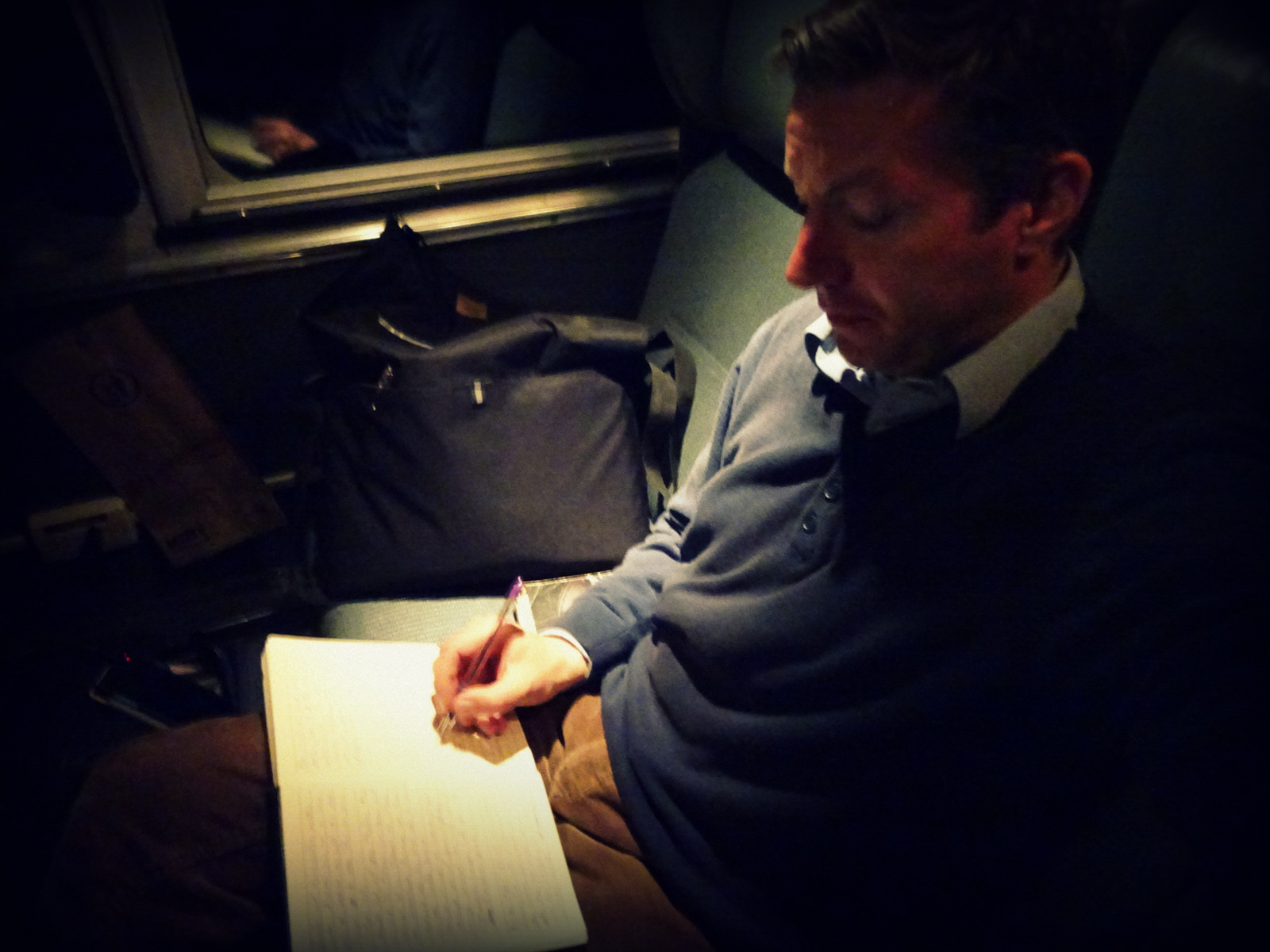
Apparently, publishers are trying to cash in on that trend. It’s the only explanation I have for why some stuff gets printed. Like Slow Trains to Venice, in which Tom Chesshyre recounts a 30-day train journey from London through Central Europe to Ukraine and then south through the Balkans to Italy.
And recounting really is the right word. Half of the book is a boring listing of departure times, train stations, speed, distances and engine types. It’s like his notebook, jotted down during the trip, was then published without any revision. And without any editing. Or if there was an editor, he/she quickly fell asleep, which is no surprise when you read paragraphs like:
A red and white train pulls in. I board the red and white train. Belgian Rail is what I am calling the train service of Belgium, and its website is indeed belgianrail.be. […] (page 61 et seq.),
or the countless detailed descriptions of the hotel rooms he is staying in. It’s okay to describe a hotel room once in a while, but if you do it every night, it just shows that nothing else is happening. And maybe that’s no surprise if you only give yourself 30 days to travel through half of Europe. Mr Chesshyre comes across as a decent and nice guy (quite unlike Paul Theroux of incomprehensible train-travel-writing fame), and on the occasions when he gets off on a whim and spends a night in a small town, like in Vrbas in Serbia, in Slavonski Brod in Croatia, or in Zidani Most in Slovenia, the reporting can be good and interesting.
But with a little more time than a few hours here and there, he would have really gotten to know places and people. And with some research and editing, the book wouldn’t be full of annoying mistakes. Just a few examples:
When he tries to explain the language situation in Belgium (page 62), he completely forgets the third official language (German) and totally misses the point about Belgian language policy. I know it’s complicated, but you could have read all about it here.
I really have no idea what Mr Chesshyre means when he calls Bonn “Germany’s de facto capital from 1949 until the reunification in 1990” (pages 74 and 80). Bonn was the capital city of West Germany. There was also East Germany, whose capital city was (East) Berlin. Not de facto, but de jure. If there was anything de facto about Bonn as a capital city, it was from 1990 to 1999, not before. I know, that’s really petty stuff. But I always think: When I spot such glaring mistakes in the sections about one country that I know about, how can I trust anything he writes about Serbia or Slovenia?
A more serious error, especially considering that Mr Chesshyre heralds himself as rather knowledgeable on all things train-related, publishing a train-travel book every year: When he complains (on page 92) that “it is really quite difficult to take a slow train in Germany”, I wonder if he has ever been in a train station in Germany for more than half an hour. Or on the website of Deutsche Bahn. You can take a slow, by which he means regional, train from any station in Germany at least once an hour in any direction. From 5am to midnight. Every day. Everywhere. All across the country.
But he probably had simply run out of time and needed an excuse to take the fast train, cutting through Germany as fast as he could. Which is maybe better, considering how little he knows or cares to learn. In Leipzig, he muses that the protests towards the end of the GDR began in that city because it had no Stasi headquarters (page 95). Well, you can already guess by now: It had. It’s a museum now.
By the way, I’ve just been to Leipzig, interviewing for a house/cat sitting job, and it has a seriously impressive train station.
But then, what to expect of a Brit who crosses the Channel tunnel with this attitude?
I am on European Union soil, with its funny rules written by funny bureaucrats with funny accents. (page 25)
Well, people with accents at least speak a foreign language, often two or three. And they know that the European Union is not run by bureaucrats, but by elected politicians. And as to funny rules, I can’t possibly imagine anything funnier than the rules in the United Kingdom.
Lazy reporting, lazy writing, lazy editing.
Seriously, you can gain more insight into Europe when I am on the train for only two days, whether wild awake or sound asleep.
Oh, and I got the job in Leipzig, so I will be spending the summer of 2022 there!
Illyrian wars. Eritrean War. World War I. War of Independence. Samnite Wars. World War II. Italian-Turkish War. First Battle of the Isonzo. Alexandrian War. Second Battle of the Isonzo. Italian-Libyan War. Third Battle of the Isonzo. Cimbrian War. Fourth Battle of the Isonzo. Italian-Greek War. Augustan Alpine campaigns. Fifth Battle of the Isonzo. African campaign. Sixth Battle of the Isonzo. Sardinian War. Seventh Battle of the Isonzo. Gothic War. Eighth Battle of the Isonzo. Jugurthine War. Ninth Battle of the Isonzo. Italo-Ethiopian War. Tenth Battle of the Isonzo. Marcomannic Wars. Eleventh Battle of the Isonzo. Pyrrhic War. Pyrrhic Battle of the Isonzo.
And that’s why Italy is dotted with fortifications, trenches and bunkers.
If this has escaped your notice thus far, it’s only because there is lots of other interesting stuff in Italy to catch your attention. Or because you are only heading to the beach, which is really a waste of Italy, in which case you should give up that seat on the coach for travelers more interested in history. Or because you have never been to Italy, which is a deficit that should be remedied anyway.
Most of these bunkers are just sitting around, waiting for their next deployment. But in the Vinschgau Valley, I have met a few bunkers which have been recycled for civilian use. Like this one, now integrated into an apple orchard. But then, these are special apples here in Mals, they are always in court, arguing about pesticides and stuff. Maybe that’s why they have to be protected against the aerial forces of the district court.
Walking from Mals to Schluderns, I had somehow gotten lost between the forests, fields and apple plantations. But I didn’t mind, because first of all, I am a staunch advocate of getting lost. If you never get lost, you have a dull life. Secondly, I was in Vinschgau for the first time, so anything would be new and interesting to me, regardless of where I would end up.
And suddenly, above the village of Tartsch, I found myself in front of a bunker, you ain’t never seen nothing like that!
“An artist,” I am guessing like a hot-shot-Sherlock detective, not only because of the caravan and the creative roof terrace with its palisade fence and playground, but also because no one answers the door bell. Those artists often sleep until noon. (With the exception of travel bloggers, of course, who are up early every morning, hiking through the countryside and collecting stories.)
On the other side of the valley, above Tartsch, I spot a little church, equally Romanesque and romantic, which I choose as my next hiking destination and which, for once, I do not fail to reach.
And there happens one of those chance encounters which enrich travel so much: I am sitting in front of the closed and locked churchyard, smoking an Italian Toscano cigar which I had discovered that morning in the newspaper shop in Mals, when a gentleman walks by, holding not only the key to the church, but also an encyclopedic knowledge and great patience with an uneducated audience like me. I leave the cigar outside, and he shows me the frescoes in the church and tells me about the history of St. Vitus, about Tartscher Bichl, as the hill is called, about Romanesque and Gothic artwork, and about the Swabian War that once swept into the valley.
However, I’ll skip that for the moment and save it for the comprehensive Vinschgau article that, God willing, I will get to write in the coming months. Because the clergyman also knows about the bunkers on the opposite side of the valley.
“Those are from World War II,” he corrects my assumption that they must be remnants of the Alpine front from World War I.
“But there was no fighting on this front in World War II, was there?”
“Mussolini had them built because he didn’t fully trust the alliance with Hitler. That’s why this Alpine Line is also called the ‘linea no mi fido‘, the ‘I-don’t-trust-you line’.“ If I knew where to look, I could discover many more bunkers and anti-tank barriers up here in the mountains. Each of them more megalomaniac than the other, as we know from fascist construction projects.
During World War II, however, the bunkers were not as easily recognizable as they are now, but were – fitting for the rural area – disguised as farms or barns.
The artistically designed bunker did indeed belong to an artist, but he died three years ago while handling old ammunition. Since then, the giant studio has stood empty. Perhaps it could be turned into a refuge for vagabond writers, if I am permitted a hint as broad as a bunker.
In Mals, I am also staying in a bunker, in a way. The former barracks of the financial police have just opened as a hostel. The financial police in Italy are a combination of customs, anti drug-trafficking police, coast guard and the police combatting economic and financial crimes. They are organized and equipped militarily, with frigates, submarines, planes, helicopters, paratroopers, mountain rangers, scuba divers, snipers and even lawyers.
(Photo from La Maddalena, an island in the north of Sardinia. Oh, I actually still have a few stories to tell you from there as well… But for the moment, let’s stay in northern Italy.)
Well, and that’s why the financial police have barracks for their financial police officers, for their weapons depots and to store confiscated illegal wealth (and what wealth is not illegal?). The walls of the building are so massive that they can withstand rocket-propelled grenades, explains Sascha, the hostel director, and because he explains all sorts of other things and invites me to dinner, I will stay for a few days, feeling right at home. Sascha tells me so much, it must be reserved for the definitive Vinschgau article, because today I want to focus merely on the civilian follow-up use of military buildings.
FinKa, as the former financial barracks is now called in what constitutes a pun between German and Spanish, manages three things at the same time: not denying its former purpose, being very cozy and avoiding the standard global hostel flair. The old wooden folding chairs still stand in the entrance area, and the barred doors still squeak in the hallways. The police dining room is now a guest dining room, the officers’ lounge is now the guest lounge, and so on. Really, tourists don’t need anything else than policemen, although I hardly dare to write this in the times of austerity, as it might lead the government to disband one of those groups upon hearing that some money could be saved.
Well, that’s what happened. The financial police barracks in Mals were indeed closed in 2005. Because of the Schengen Agreement, border controls were no longer necessary in the mountains. And thus, even rookies like me can smuggle cigars into Austria. The financial police now mainly cruise around the Adriatic Sea to catch bigger fish.
I have actually taken the drug-smuggling route from Albania to Apulia myself, albeit with perfectly innocent intentions and dozing harmlessly on the deck of the steamer.
One or two weeks ago, I was sitting under a tree, smoking a cigar.
When out of nowhere came a young man, one of those cool guys with a hoodie and a charming smile: “May I sit next to you?”, he pointed to a second bench. “Because this is my Bodhi tree.”
Naturally, I said yes and offered him some gingerbread. I had bought more than I wanted to eat anyway. Because the large packs are much cheaper than the small ones. It’s like that with a lot of products, have you noticed? As a consumer, I always feel a bit cheated by this.
He offered to share his kebab, which I gratefully declined. Because honestly, how would you share a kebab in pita bread? That’s just gonna be one huge mess, making the rodents in the field happy.
“You know what a Bodhi tree is?” he asked and there I was, caught in my ignorance by the young fellow. He explained something about awakening and awareness and enlightenment and salvation and that Buddha Siddhartha Gautama had found all this under a Bodhi tree. Well, you can discover all kinds of things when sitting under a tree like that, I can confirm that myself.
Somehow it was lovely to listen to someone talk about Buddha in Swabian. Even if I didn’t understand everything. People think that German sounds harsh because they once watched a Nazi film. That’s like judging English based on “Full Metal Jacket”. (Which really does sound better in German.) But German has some rather soft and melodic dialects where you can listen to people for days on end, no matter what they are talking about. Swabian, Swiss, North and South Tyrolean.
And he was not overbearing in any way, not like those who want to hit you with all 84,000 teachings for the path from Samsara to Bodhi, as you experience with other Buddhists. Actually, he talked more about his own life, which I will not reproduce here, because that ain’t nobody’s business. I have a rule: When I sit somewhere and I’m writing and someone comes along and tells me his life story, then I’m allowed to use it. Because honestly, what do people think I’m doing when I’m loitering in the park with a notepad and pen? But if I’m just munching on gingerbread to attain at least the physical shape of a Buddha, then really no one can suspect that there’s a roving reporter sitting under the Bodhi tree.
The young man said that I looked like a spy, by the way. Which I understood even less than the thing about the four noble truths, because we were sitting on a hill above a small village in Baden-Württemberg. There’s really nothing to spy on around here.
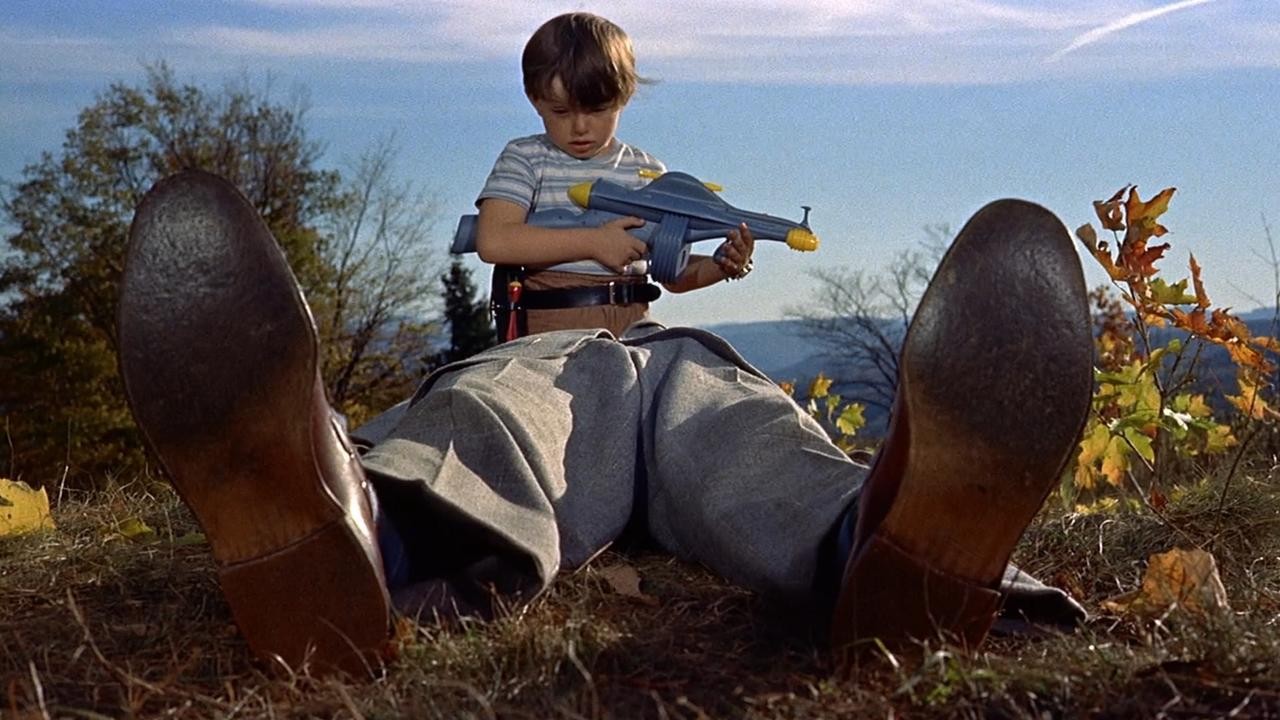
It was November and no pleasant temperature, but suddenly there were people coming by every five minutes. Walkers with dogs, walkers with wives or husbands, walkers who said hello, walkers who said nothing, walkers who stopped and also talked about their lives. It reminded me of the movie “The Trouble with Harry”, where the paths of all the protagonists keep intersecting on a hill above the village. Have you seen that one? It’s a Hitchcock movie, but a funny one. Some people are afraid of Hitchcock because they think his films are cruel or something. Not at all. Even mild-mannered Buddhists can enjoy it.
Then he drove me home, because the Buddhist had a car and I didn’t. And he told me to go to the kebab store downtown and tell them that I was a friend of Yalçin. That would get me a free kebab.
I should really pick that up soon. After all, kebabs don’t get any better with time. They are very un-Buddhist that way.
But then – rather fittingly for the anniversary of the Spanish Flu – a small pandemic intervened, limiting my world travels quite a bit. As if I would have guessed, however, I had set up a treasure trove of travel tales, from which I can now draw. This month’s story, for example, I can illustrate with photos taken personally on the World War I battlefields in Flanders, where I went with a university field trip in February 2020. This unusually, almost frivolously, brief episode shall only serve as a teaser for the soon to be published full travelogue from Ypres.
But today, we focus on flowers.
If you’ve ever been to the UK in November, you’ll have noticed that corn-red poppies suddenly pop up everywhere. On the subway, in Parliament, on the evening news. And anyone who dares to walk down the street without a poppy on their lapel is stopped by soldiers who will urge you to patriotically wear a poppy. Because soldiers are well organized, they always have an extra poppy with them, which they are happy to hand over for a small fee. If you’re old, frail and can’t fight back, it’s quite possible to come home with as many as five of those plant patches, even if you only wanted to walk the dog around the block.
The heyday of this flowery season is November 11th, the anniversary of the armistice that ended the fighting in 1918. But, when I came to England first, I didn’t know that and refused the poppy. By nature, I am skeptical of everyone doing the same thing. And even more skeptical of ostentatious displays of patriotism. So I preferred to give my money to the homeless, who, appropriately enough, were often war veterans. Colleagues of Mr. Lawrence of Arabia, it seemed, because they spoke of Iraq and desert warfare and such.
This novemberly custom is not only celebrated in Great Britain, but also in many countries of the happy and large Commonwealth family. In 1914, these countries were still too young and inexperienced and were “persuaded” by King George V to enter World War I. But then, Britain can’t always do everything on its own. Except for Brexit, of course, but that’s a different topic.
It was a poem written by Canadian military doctor John McCrae, In Flanders Fields, which turned the poppy into a famous symbol, already during the war. In May 1915, he buried a comrade and friend who had fallen during the Second Battle of Ypres. The blood-red poppies sprouted around the grave as soon as he was buried, and poof, the poem that would become the most popular English-language poem of the First World War was born. In Canada, it is something of a national poem.
In Flanders Fields, the poppies blow Between the crosses, row on row, That mark our place; and in the sky The larks, still bravely singing, fly Scarce heard amid the guns below.
We are the dead. Short days ago We lived, felt dawn, saw sunset glow, Loved and were loved, and now we lie, In Flanders fields.
Take up our quarrel with the foe: To you from failing hands we throw The torch; be yours to hold it high. If ye break faith with us who die We shall not sleep, though poppies grow In Flanders fields.
John McCrae himself died in January 1918. But after the war, two women, Moina Michael and Anne Guérin, had the idea of using the poppies mentioned in the poem as a symbol of remembrance for the Allied casualties of the war. (Women had attained a wee bit of independence and freedom during World War I. Unfortunately, this only lasted as long as the men were away or the economy needed women’s labor. As soon as the men returned, the women were relegated to the kitchen again. As a small compensation, they got the right to vote and – in West Germany already in 1977 – the right to enter into an employment contract without the husband’s signature. Yay!)
For the festivities in November 1921, the lapel flowers were mass-produced for the first time and sold by veterans’ associations. The Chinese factory workers who churn out the plastic flowers today are probably thinking it’s for a New Year’s celebration or a birthday party. By the way, this division of labor is nothing new either, as I learned in the “In Flanders Fields Museum” (named after the poem) in Ypres.
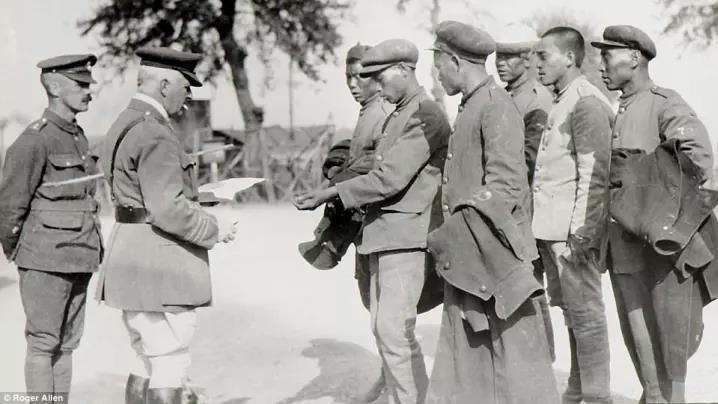
Some 140,000 Chinese served on the Western Front. Not as soldiers, but as laborers for the British and French armies. World War I was even more of a world war than most people think.
But this and much more I will tell you in the detailed report from Ypres. As you have already seen from the photos, there will be a lot about war and death and commemoration. But also about a city rebuilt true to the original after its complete destruction and about the people now living there.
And about a bunch of students from the University of Hagen, getting high on Belgian beer. Except for that one weird student who stealthily absconded and discovered a secret underground NATO command bunker.
If you are interested, just give me another week, month, year or two. Soon, there will be plenty of news from the Western front!
Links:
All articles of the series “One Hundred Years Ago …”.
As you can see from the comments below those articles, I have helped hundreds of people gain German citizenship, to regain a citizenship once lost, sometimes generations ago, and more often than not to discover that they have been German all along, without knowing it.
But I have also had to spread the disappointing news that law is complicated, tricky and sometimes a bit outdated. One particular pet peeve of German citizenship law has been the attempt to prevent dual or multiple citizenship. Because law needs to be complicated, there are many exceptions to this rule, some clear, some ambiguous, but many of you have shied away from the ultimate step of giving up your original citizenship, as usually requested in the German naturalization process.
Especially for complicated restitution cases, the German government has in recent years passed several regulations easing the requirements and permitting dual or multiple citizenship in more cases than before. In August 2021, in the last minutes before the end of the parliamentary term, the Citizenship Act was amended to include those new rules. But these were band-aid measures for this or that particular group of people, turning a complicated field of law into an impenetrable jungle of law.
And then there was an election in September 2021, won by the Social Democratic Party (of which I am a member, full disclosure, never once having won an election in which I ran myself). Yesterday, the new government, a coalition between Social Democrats, Liberal Democrats and the Green Party announced their governing program.
Now, I don’t want you to get excited too early, because this is not yet a law. This is merely a declaration of intent. But it looks like the new government wants to make the pathway to German citizenship much easier. Specifically, the coalition agreement says:
Dual and multiple citizenship will be allowed.
This is a huge step, as many non-EU citizens hitherto had to apply for an exception from the ban on dual citizenship when applying for naturalization in Germany. This was a tedious process and I had to tell clients repeatedly to not even bother if it was clear that they wouldn’t meet the requirements of one of the narrow exceptions.
Naturalization shall be granted after five ears of residence, and after three years of residence in the case of exceptional integration.
If nothing changes, “exceptional integration” will be measured mostly by the level of German language skills. Studying helps! I just hope the new government will keep § 12b StAG, one of my favorite sections of the German Citizenship Act, which means that you don’t have to spend the whole qualifying time in Germany and even allows you to combine several stays. I have often had clients who were surprised to learn that they already meet the residency requirement because the time spent in Germany as a student a decade ago does count. (Holidays don’t count, though, sorry.)
Children born to foreign parents in Germany will receive German citizenship if at least one parent has been a legal resident in Germany for five years.
This is still not as easy as countries with ius soli, but a bit easier than the current rule in § 4 III StAG, requiring one parent to have been a legal resident for 8 years and holding permanent residence.
There will be hardship clauses for applicants wo cannot pass the language test.
This has hardly been a problem for people contacting me, but then, people going on the interweb, finding a blog and contacting a lawyer are a pretty self-selecting group of literate and savvy people. The formal language exams are indeed a problem for some people who speak German alright, but simply haven’t sat an exam for all of their adult life. Honestly, I think many native Germans wouldn’t pass that exam (or indeed the citizenship test).
This has nothing to do with citizenship law, but some of you will be happy to hear that
it shall become easier for foreign citizens to attend university or professional training in Germany,
especially as most universities in Germany are free of charge. Yes, also for non-citizens.
So what’s my advice?
If you qualify for German citizenship while retaining your original citizenship, just go ahead.
If you are in the process right now and have been told that you cannot (easily) maintain your original citizenship, put things on hold and wait until the new law will be passed. (No, I don’t know when this will be, but watch this blog. As you should do anyway, for a myriad of reasons.)
If your application for German citizenship has been declined in the past or you didn’t pursue it because you wanted to maintain your original citizenship, take another look once the new law will have been passed. A previous denial does not prevent you from applying again.
If you have given up your original citizenship in order to receive German citizenship, it may become legal to re-obtain your original citizenship and hold both of them. But don’t do anything before the new law will be in effect!
If you found this helpful, I would appreciate your support. And please share the blog with anyone whom you think this information will help. Thank you!
I have just started house and rabbit sitting for a family in Germany who will be flying to Tanzania for three months to work in a hospital there.
After the family of five had packed seven suitcases for a quarter of a year – two of them with donations for the people of Liuli -, the daughter, who might be about 10 years old, thoughtfully stood in front of the luggage and said: “Wow. This is really everything that we need to survive,” which already included stuffed animals and school supplies.
“And our closets are still completely full,” she continued. “It seems we don’t really need all the stuff we own.”
This is a random photo, not the house I am staying at.
Traveling is the best way to learn real minimalism. The more often you pack and unpack your bag and laboriously drag it up the steep steps to the youth hostel in the castle on top of the hill (where youth hostels in Germany are often located), the more obvious it becomes that property and possessions are more of a burden than a liberation.
After World War I, four empires lay in ruins. The former rulers dealt with sudden unemployment in very different ways. The Russian Czar Nicholas II got himself shot. The Ottoman Grand Vizier Talât Pasha got himself shot. The German Emperor Wilhelm II went into exile in Holland, where he discovered his petit-bourgeois streak and devoted himself to chopping wood. And to supporting the National Socialists.
Only Emperor Karl (Charles) I of Austria was, at the age of 31, too young and impetuous to give up. Or rather, to point to the true instigator of this drama, his wife, the even younger and even more impetuous ex-empress Zita Maria delle Grazie Adelgonda Micaela Raffaela Gabriella Giuseppina Antonia Luisa Agnesewar of Habsburg-Lothringen, née Bourbon-Parma, was not ready to give up the throne. She had already thrown a tantrum when Karl had renounced his official duties after the revolution in November 1918, although, realistically, there had been no alternative.
“What the f***, Charlie? I want to be an empress, not a housewife.” Not that Madame had ever lifted a finger in the kitchen herself, but being Italian, she was a bit melodramatically inclined.
Besides, when she’d found herself an emperor, she’d envisioned more of a Napoleon type who would conquer all of Europe and stuff.
“Six hundred and fifty years of monarchy, and you just sign that away?”
“But Zita, we’re still young. We can start something new!”
Zita was much more attached to the job than her husband, who was actually looking forward to have more time to travel, to read books, to take it easy. Besides, he hoped, this would enable him to resume his interrupted law studies. (Austrian emperors and chancellors often come into office a bit prematurely and then have to let their studies languish.)
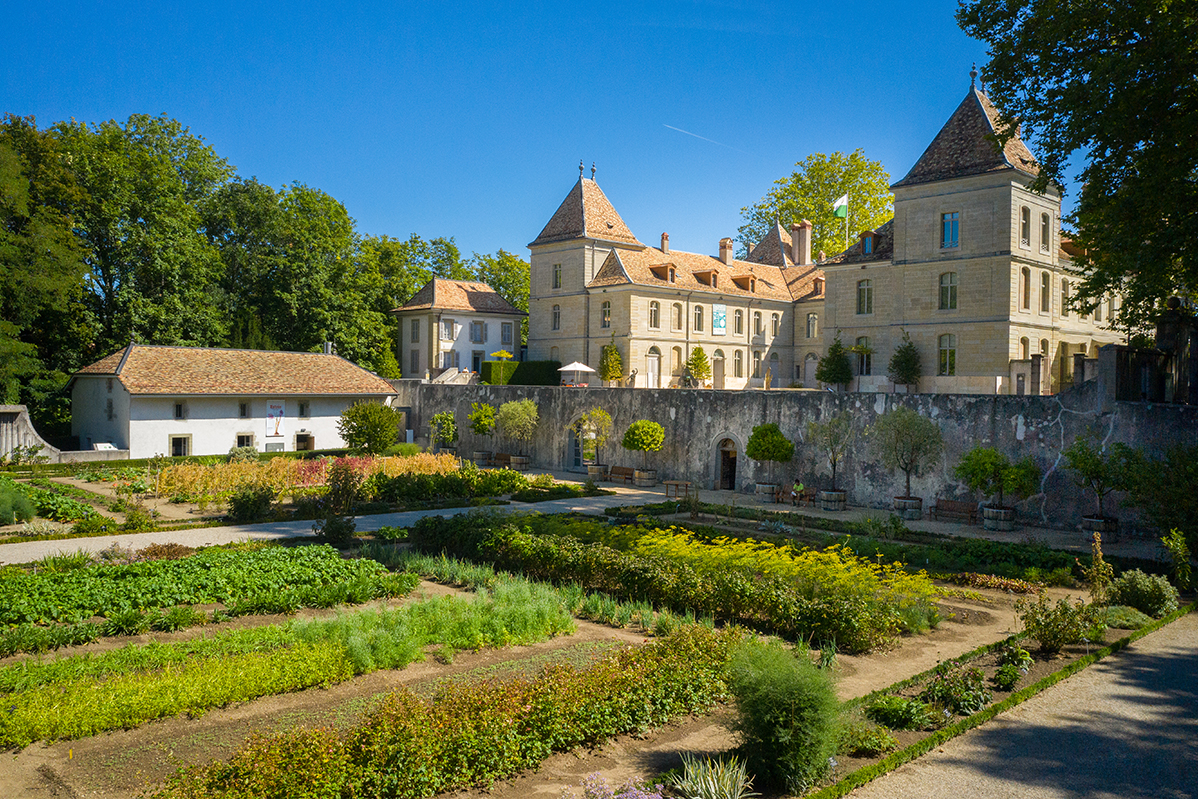
“Switzerland is also nice,” Karl tried to make the exile in Prangins, to where the imperial family left in March 1919, palatable to her. And that was not even a lie.
But once a relationship is in trouble, even the best vacation can only cover up the problems for a short period. Zita continued to nag: “As far as I understand, you are not only Emperor Karl I of Austria, but also King Karl IV of Hungary and King Karl III of Bohemia.” At some point, probably in a war of succession, the Habsburg numbering had gotten mixed up, and poor Karl had to suffer the ensuing confusion.
“Yes, but that was just by virtue of being Austrian Emperor. And for that post, I signed the resignation.” Sometimes, Karl wished that this would have relieved him of the ambitious empress as well.
“But you only resigned in Austria, not in Bohemia and Hungary,” the canny empress objected.
“There is no more Bohemia, honey,” Karl explained the new world order, “it’s Czechoslovakia now, and they certainly don’t want a king who doesn’t speak Czech.” Learning Czech is famously impossible because the language is entirely devoid of vowels: Chrt zdrhl z Brd. Vtrhl skrz strž v tvrz srn, v čtvrť Krč. Blb. Prskl, zvrhl smrk, strhl drn, mrskl drn v trs chrp. Zhltl čtvrthrst zrn skrz krk, pln zrn vsrkl hlt z vln. Chrt brkl, mrkl, zmlkl. (Personally, I am particularly sorry about this, because in Germany, I live not far from the Czech Republic and would very much like to learn the language of this friendly neighboring country. But I ain’t got the tongue-twisting talent.)
One morning, Zita came into the room all excited, the newspaper in her hand, and exclaimed, “Hungary is a monarchy again!” Indeed, after a brief interlude that we touched on in August 1921, Hungary had declared itself a kingdom again. However, one without a king. Instead, with Miklós Horthy, whom we already know from said episode, as regent. The regent is a kind of administrator, a straw man, someone who keeps the chair warm while the boss is away.
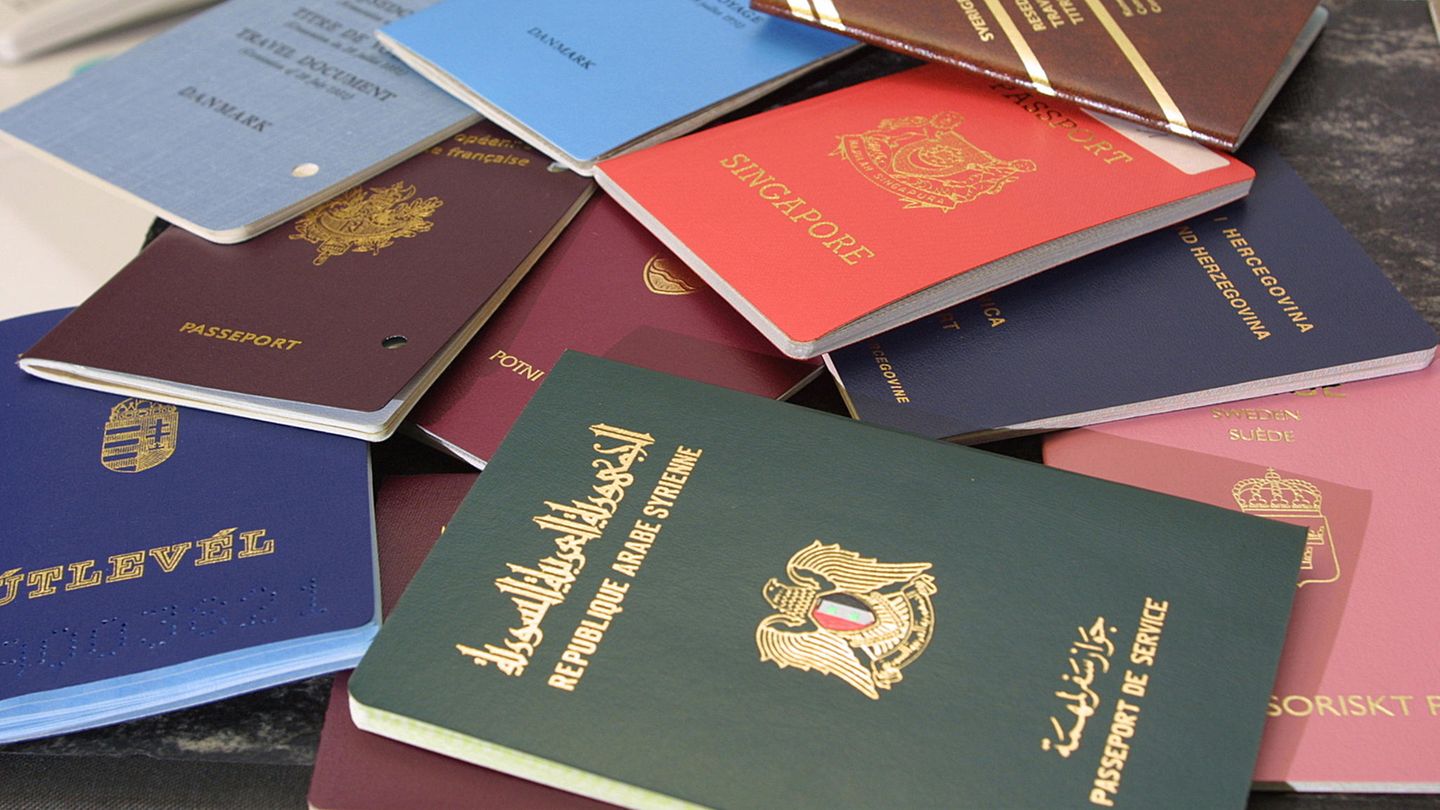
“They’re just waiting for you!” the empress was on fire, and Karl had to admit that events could be interpreted that way. Now, the problem was that Austria had forbidden not only the ex-emperor and ex-empress, but all Habsburgs from ever entering the country again. At that time, in the spring of 1921, the airplane had not yet been invented. So Karl put on a false beard, got himself a false passport (probably in Malta, it’s quite easy there if you have money) and secretly and undetected drove from Switzerland through Austria to Hungary.
The Habsburgs had already experienced some bad luck when traveling by car, but on Easter 1921 everything went smoothly. Until the arrival in Hungary.
The emperor had forgotten one thing: He had not informed Horthy. And the regent, who was supposed to keep the Hungarian throne warm for the king, was quite taken aback when one day the doorbell rang like in a Halloween prank, and Karl I, or from the Hungarian point of view Karl IV, or even, if one took into account the interruption of the monarchy, Karl V, stood in front of the door.
“Hello, it’s me, his majesty.”
“Well, I didn’t expect that. But please come on in. I’m afraid we only have a little soup left.”
Karl shared his plan to retake the Hungarian throne and was quite taken aback that Horthy did not want to vacate it voluntarily.
“Horthy, you swore an oath to me!”
“Yes I did, Mr. King, but you see, the global political situation …” And Horthy explained his fear that the Entente would attack Hungary if another Habsburg ascended the throne. This was, of course, a flimsy pretext. In reality, Horthy had simply become accustomed to ruling a kingdom without a king. Since he was also an admiral without a fleet (or even a port city), that suited him quite well.
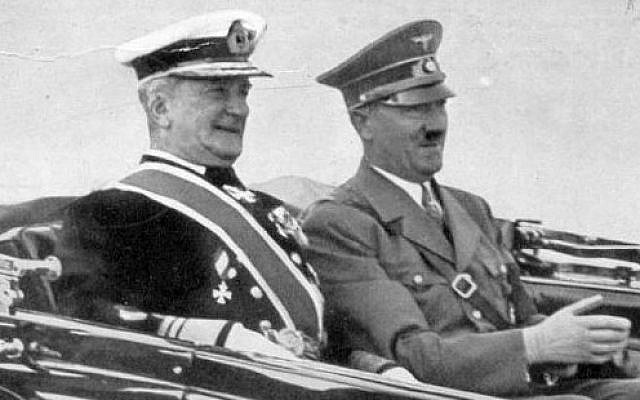
What Horthy did not mention, was that he had already found a new best friend. Another Austrian.
The conversation at Horthy’s kitchen table was to no avail, and in the end the emperor had to ask for a guest room in his own palace in Budapest. It was just as well that the palace was not one of the smaller ones. On the other hand, perhaps that was why the Horthys were so reluctant to move out.
Karl I/III/IV/V stayed another week, every evening discussing possible ways to his re-enthronement, but at some point realized that it had been a fool’s errand to go to Budapest without any plan, without any agreements, without any allies.
They parted with face-savingly vague promises to keep in touch, and the emperor drove back to Switzerland. Honestly, the furor of his wife worried him more than the vacant throne and the already-inhabited palace.
And really, the time in Switzerland was even more unbearable for Karl than being bored in the guest room of his own palace. Zita was now bothering him almost every day, teasing him, sometimes even cheekily mentioning that maybe she should look for another emperor. (Haile Selassie, the Shah of Persia and the Emperor of California were top on the list of European princesses at the time.) And when he thought about it, Karl had to admit that this Horthy guy was somehow pulling his leg.
So he staged a second attempt to reclaim the Hungarian throne! In October 1921 and thus – appropriately for this little series – exactly 100 years ago.
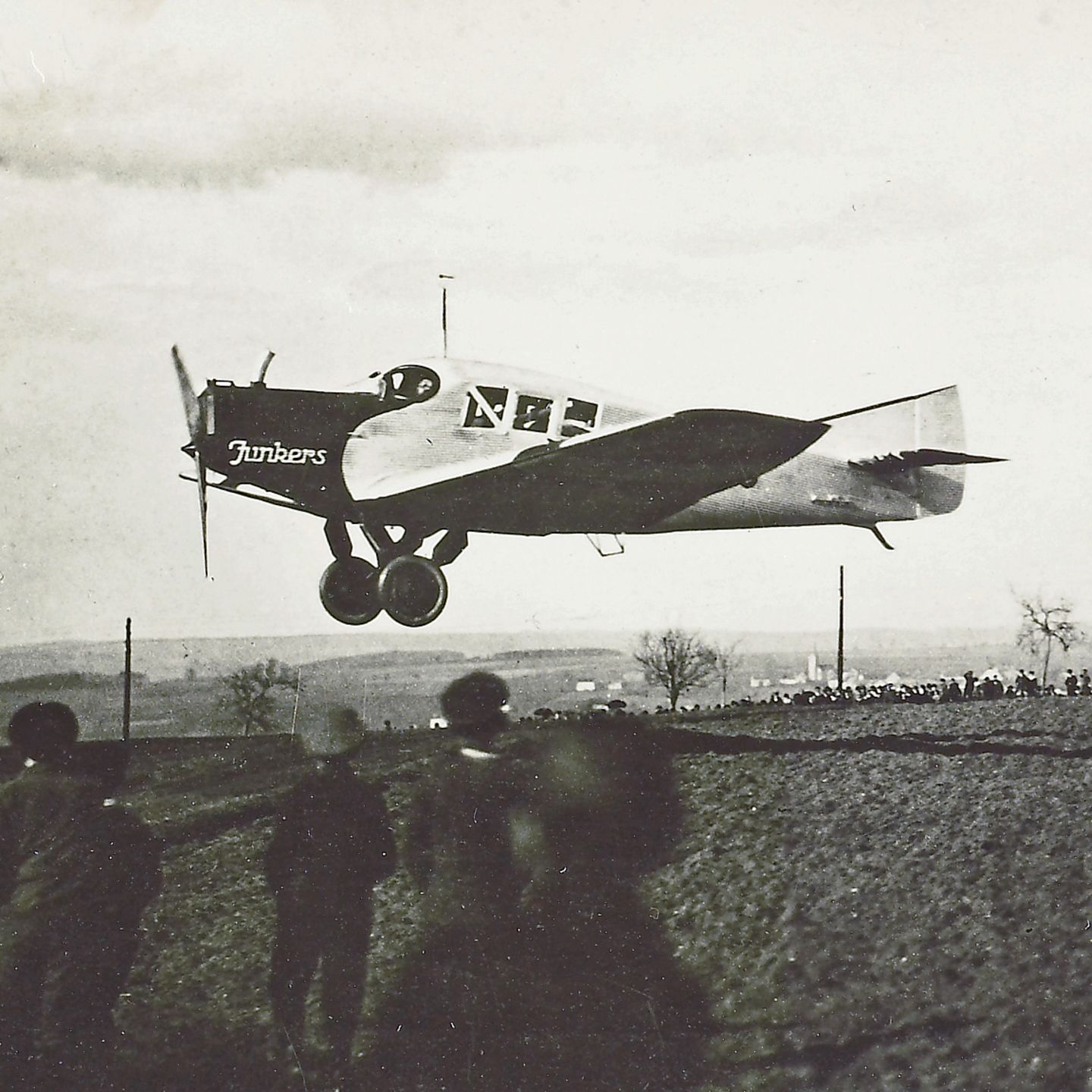
“This time, I’m coming with you,” insisted Zita, who no longer had full confidence in her husband’s unconditional determination to succeed. Neither of them had any confidence at all in Admiral Horthy, whom they therefore again did not inform in advance. Conveniently, the airplane had been invented in the meantime; the two bought a Junkers F-13 and flew to Hungary.
This time the Habsburgs had even prepared a few troops, the so-called Legitimists. Because flying was new and unfamiliar, however, the imperial couple and the Legitimists missed each other and it took a while for them to find each other in western Hungary.
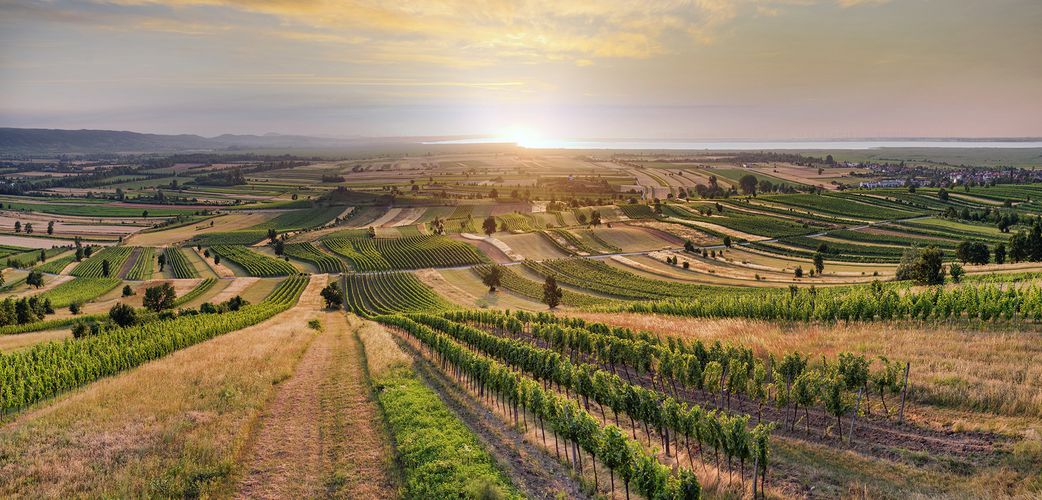
Back then, and you wouldn’t believe it if you wandered over the barren fields there today, western Hungary was a hot spot. Reading every month that World War I did not end in 1918 is probably as tiring as a long walk across the Pannonian Steppe, but even between Austria and Hungary there were still unresolved territorial questions lingering at the end of 1921.
This one was particularly tricky, because at the peace negotiations in Paris, or rather in the eponymous castles around Paris (Neuilly, Sèvres, Saint-Germain, Trianon, Versailles), Austria-Hungary was initially one defeated country, which then quickly split into several countries that wanted absolutely nothing to do with Austria-Hungary, which had, after all, triggered the world war in the first place. “Austria? Never heard of it,” said the Hungarians. “We were actually the first victims,” said the Austrians, and – surprisingly – got away with it. So the victorious powers awarded the border strip disputed between the two countries (essentially today’s Burgenland) to Austria, not least because Vienna would otherwise have been very close to the border with Hungary and would not have had sufficient agricultural land in its environs to feed the capital’s population, which has always been endowed with a healthy appetite. Moreover, by an unfortunate coincidence, Hungary was briefly communist at that very moment (you remember), which did not earn it any sympathy from the victorious powers.
Vienna, by the way, is still quite close to the border, despite the Burgenland, which is why this is one of the few possibilities to walk from the capital of one country (Vienna) to the capital of another (Bratislava) in one day, as I once spontaneously proved, just for the fun of it. This was not even possible between East and West Berlin, because the latter was not a capital. Jerusalem and Ramallah might be another option, but this will immediately hail protesting comments, denying the statehood of the one and the role as capital city of the other.
But back to the Burgenland conflict, the Middle East conflict of our grandparents’ generation. Although, actually, let me cut this short, because I myself do not understand what’s going on between Saint-Germain and Trianon, between Wieselburg, Ödenburg and Eisenburg, between the Association for the Preservation of Germanness in Hungary, the Association of German Compatriots from Western Hungary and the Action Committee for the Liberation of Western Hungary, between the Austrian Legion, the Royal Hungarian Western Hungarian Insurgents, the Legitimists, the Friedrich Liberationists, the Osztenburg Detachment and the Interallied Generals’ Commission. All these parties fought against each other, with each other, and among themselves.
About a few fields. (Burgenland is about the size of French Polynesia. Or Cape Verde. Or South Georgia and the Southern Sandwich Islands. None of that tells you anything, which just proves how small Burgenland is.)
You would think that after four years of world war, people would have been tired of fighting. But that was not the case. Not at all. Quite the contrary, in Austria things were just heating up.
And into that pandemonium, into that witch’s goulash cauldron, into that paprika powder keg, his imperial-royal highness Karl I and his wife jumped out of a plane to claim the throne.
It took him a few days to even figure out who was with him and who was against him. In the course of the discussions thus triggered, many of the brigades, parties, and free-army corps split into anti-monarchist, monarchist, revanchist, legitimist, moderate royalist, constitutionalist, Magyarist and dozens of other groups. But at least this had a pacifying effect, because now there was no more shooting, but debating. (Which is why there is no Hollywood movie about this offshoot of World War I. Which, in turn, is why you’ve never heard of it.)
For a photo at the train station in Ödenburg, they at least managed to gather a handful of soldiers paying homage to Karl I/III/IV/V.
The woman with the bouquet is Zita, who, because they were already at a train station, urged the party to travel to Budapest, to the great castle. So the imperial couple got on the train, together with a few soldiers, most of whom probably didn’t care about Karl, nor about the monarchy, but were thinking: “Oh, great, finally to Budapest! That must surely be better than Burgenland.” At that time, Budapest already had cinemas, pubs and pretty female students, because George Soros had opened a new university.
In the meantime, news of Karl’s renewed excursion to Hungary had reached Admiral Horthy. He was less eager about having to discuss the matter with his nominal boss again. Instead of setting the table and preparing the guest room, he rallied his troops to stop the train at Budaörs, a suburb of Budapest. On 23 October 1921, a small skirmish took place. 19 soldiers died. When Karl saw that the accession to the throne would not be a walk in the park, he called it off.
The person most unhappy about this was Zita. She herself had never renounced anything, so she still felt herself Empress of Austria, Queen of Hungary, Queen of Bohemia, Dalmatia, Croatia, Slavonia, Galicia, Lodomeria and Illyria, Queen of Jerusalem, Archduchess of Austria, Grand Duchess of Tuscany and Cracow, Duchess of Lorraine and Bar, of Salzburg, Steyer, Carinthia, Carniola and Bukovina, Grand Duchess of Transylvania, Margravine of Moravia, Duchess of Upper and Lower Silesia, of Modena, Piacenza and Guastalla, of Auschwitz and of Zator, Teschen, Friaul, Ragusa and Zara (this has nothing to do with the clothing line, I think), princely Countess of Habsburg and Tyrol, of Kyburg, Gorizia and Gradisca, Princess of Trent and Bressanone, Margravine of Upper and Lower Lusatia and Istria, Countess of Hohenems, Feldkirch, Bregenz and Sonnenberg, Lady of Trieste, of Cattaro and on the Windisch Mark, Grand Voivode of the Voivodeship of Serbia, Infanta of Spain, Princess of Portugal and of Parma.
But before the couple could have a mighty royal quarrel, the two were already arrested, put on a Danube steamer and, at England’s insistence, taken far away, where they could do no more mischief: Madeira, an island belonging to Portugal, far out in the Atlantic, where Zita discovered that her “Princess of Portugal” was worth absolutely nothing. Portugal, always one of the most progressive countries in Europe, had dismissed the king, the nobility and the church already in 1910.
In Portugal, every citizen who has not yet been vaccinated receives a personal letter and a phone call. From this man: Vice Admiral Henrique Eduardo Passaláqua de Gouveia e Melo, the submarine captain from “Red October”.
The result? More than 98% of the over-12 year olds in Portugal are vaccinated.
It’s a pity that in Germany, all the George Clooney knock-offs, if we even have somebody like that, are anti-vaxxers. And Austria has sunk its submarine fleet in the Bay of Kotor after that nasty experience with Admiral Horthy.
Ex-Emperor Karl was beatified by Pope John Paul II in 2004. I didn’t really understand why. Really, these Catholics are weirdos. The Emperor Karl Prayer League has branches and places of worship around the world and a desperate appeal on its website: “We urge you to report answered prayers!!!” Well, if people in 2021 still believe that a dead emperor will help with an empty stomach or with a high-school chemistry test, how are we supposed to believe in progress?
Instead of a prayer, let me close with a quote by Karl Kraus:
Admittedly, a monarch can be an idiot for the duration of his reign; this does not contradict the monarchical idea. But if he behaves like an idiot even in the time when he is no longer a monarch, for example by the way he wants to become a monarch again, one should think that even the supporters of the monarchical idea should deny him the suitability for that position.
By the way, Austria did indeed get Burgenland in the end, but without its capital Ödenburg (Sopron in Hungarian), where the imperial plane had landed. So, both sides could feel like they won something, and there have been love, peace and Kaiserschmarrn for a hundred years.
Speaking of which: Writing really makes me hungry…
Links:
All articles of the series “One Hundred Years Ago …”.
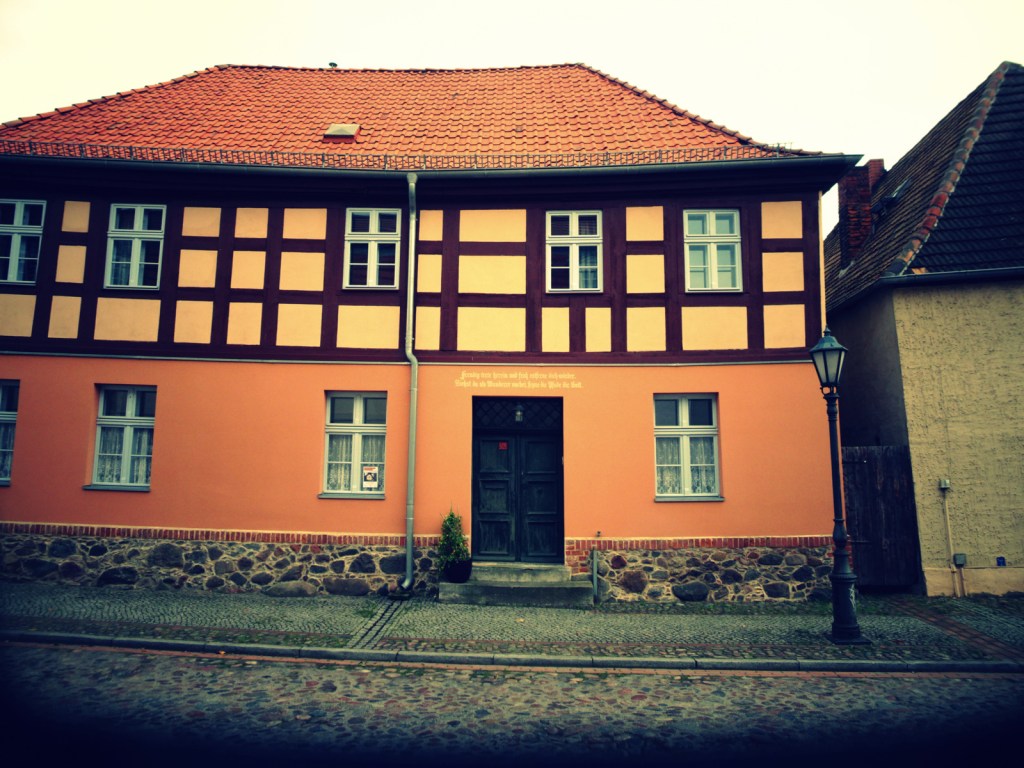
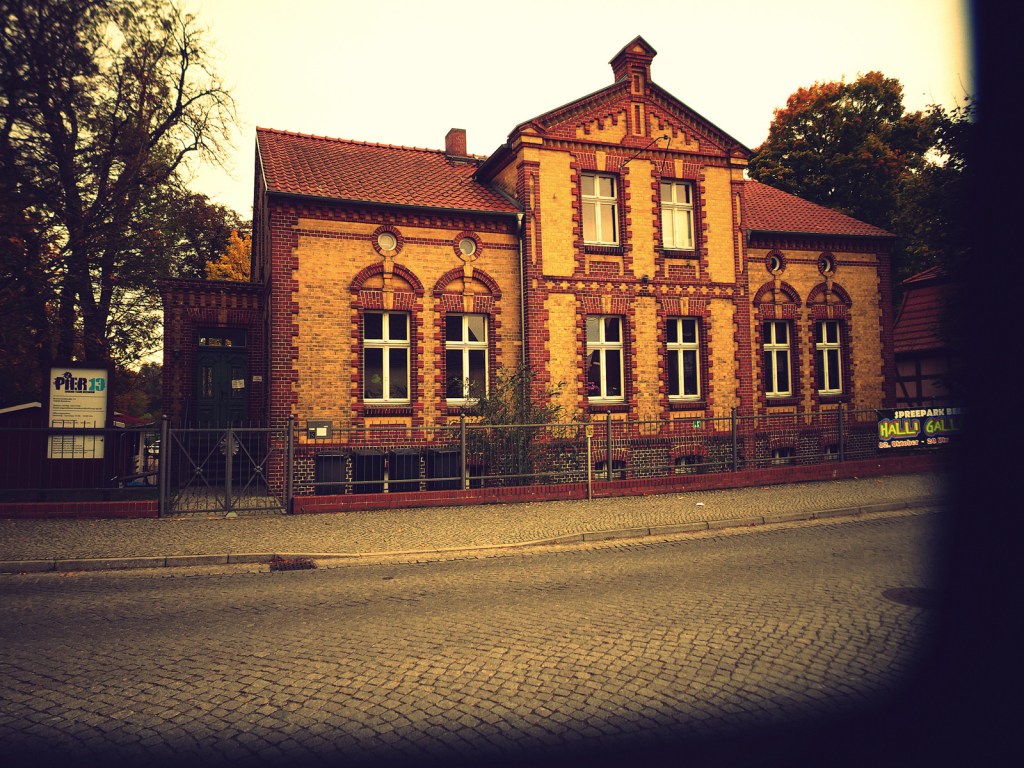
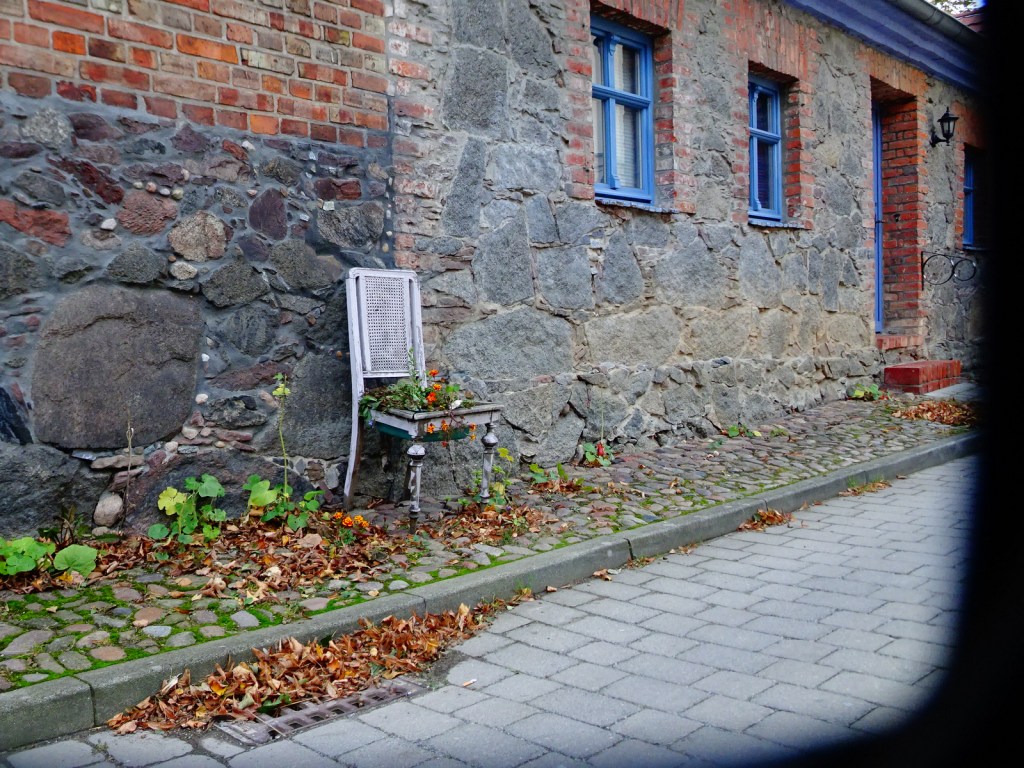
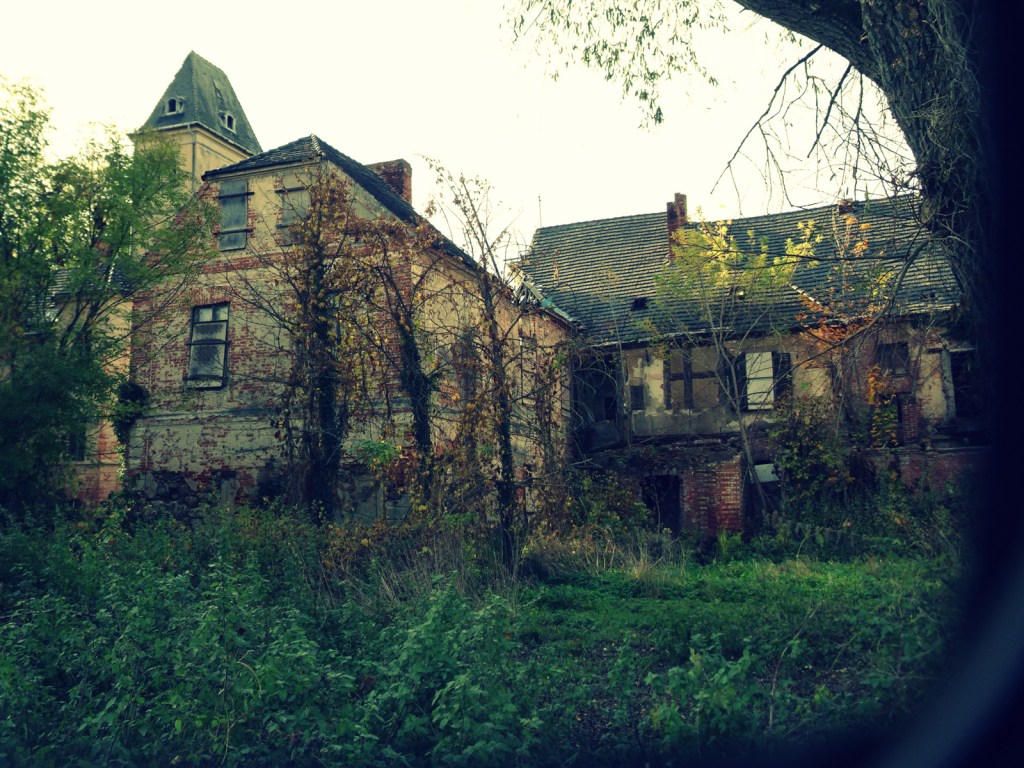
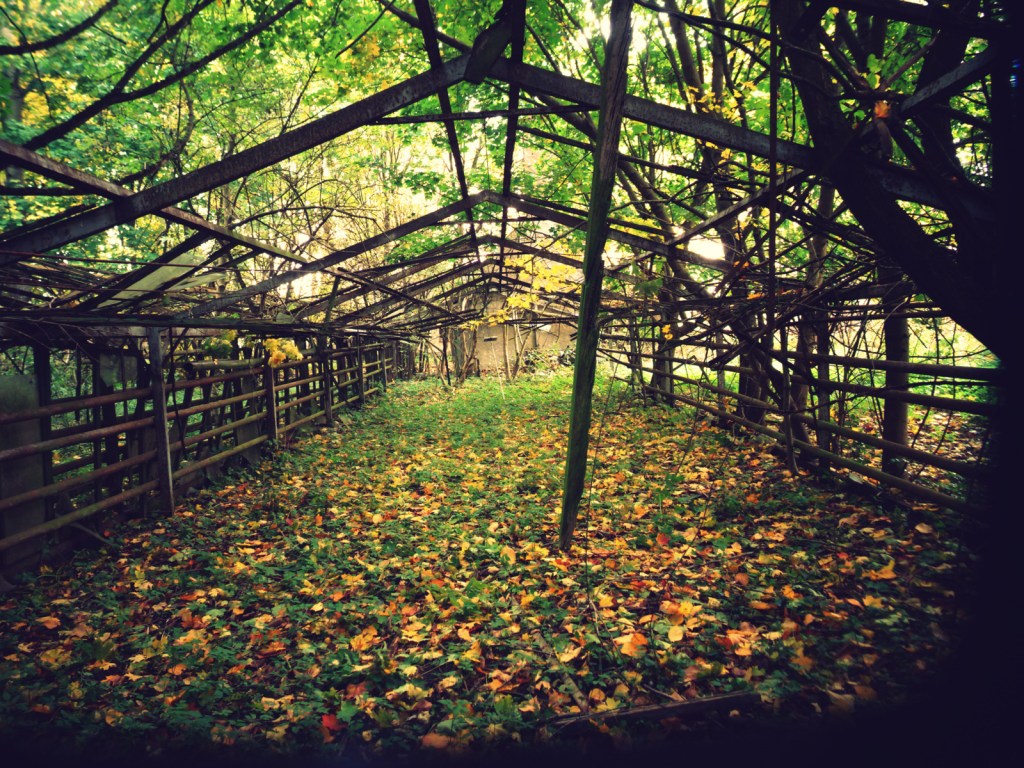
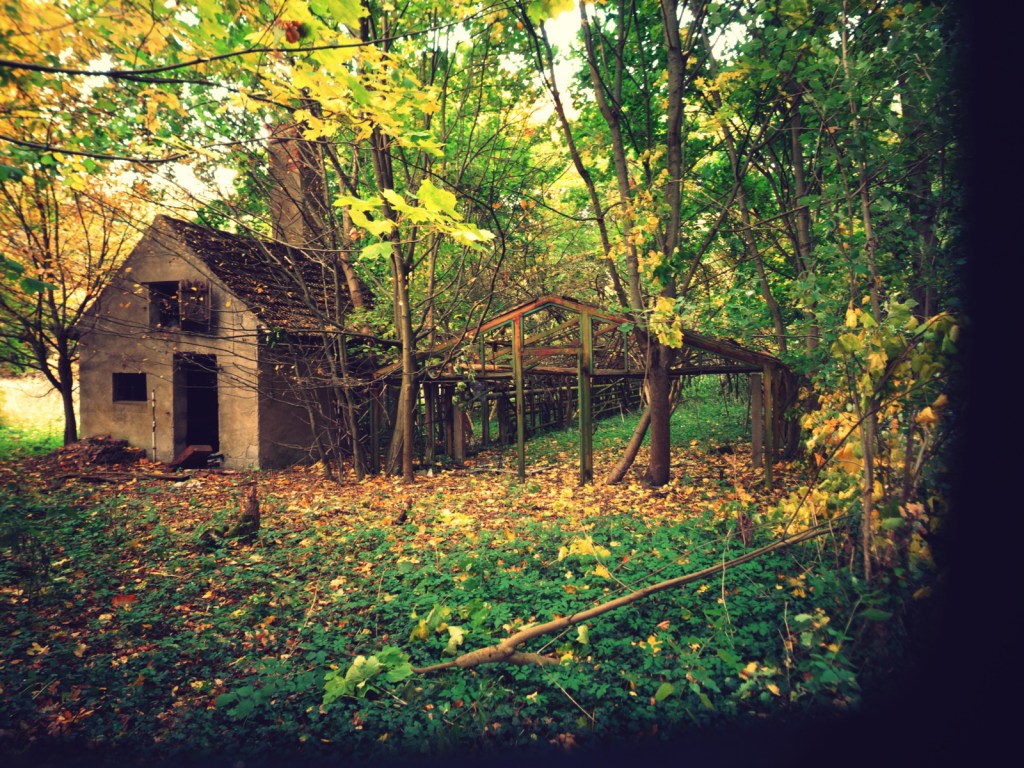
The other week, when I was living on a ship (did I tell you about that?), the camera must have suffered some water damage. Because one roll of film produced photos with black edges on two sides, and I am quite certain I didn’t hold my thumb in front of the lens for every single picture.
I will try to repair them, but for the moment, I will just put them out there and let you make up your own story about what happened that day around Beeskow.
So, I am curious what you think happened that day in Beeskow.
Once I’ll get around to repairing those photos, I will publish the true story of adventures on the boat, a stash of cigars and the lost city in the jungle.