Easily Confused (67) Peace Conference

Munich, 1938: A so-called peace conference at which the aggressor receives all the concessions he demands, the victim of the aggression is not represented, and the participants and observers act on the unbelievably naive assumption that world peace can be established that way. The dictator uses the reprieve for further rearmament, six months later annexes a democratic neighboring country, despite his promises not to do so, and less than a year later starts another world war.

Riyadh, 2025: The same.

Posted in Germany, History, Military, Politics, Russia, Ukraine, World War II | Tagged | 8 Comments

A realistic lawyer movie: “Maîtres”

Zur deutschen Fassung.

Most lawyer movies and legal series convey a completely skewed image of lawyers and courts.

But as most people unfortunately spend more time in front of the television than before an appellate court, these misconceptions inform their expectations. And then, people are disappointed when the whole law firm with five lawyers is not exclusively dedicated to their one single case, when the court still hasn’t made a ruling two days after a lawsuit has been filed, when the courtroom is neither packed with jurors nor with curious spectators, and when the judges aren’t constantly smashing their desks with wooden hammers. I can also regularly sense the disappointment of my clients when I don’t show up with a limousine and a chauffeur, like the “Lincoln Lawyer”, taking the tram instead. Or simply walking to court.

A particularly annoying example is “Suits”.

“Better call Saul”, on the other hand, I found surprisingly realistic.

Now, I don’t mean that the drug mafia kidnaps me, drags me out into the desert of New Mexico and tries to shoot me every week. But that’s probably because the guys from the Sinaloa cartel read that I am totally capable of getting lost in the desert and almost dying of dehydration by myself. There’s really no need for them to get their hands dirty.

Beyond the superficial theatrics, “Better call Saul” presents the hard life of a solo lawyer with all its ups and downs: the exhausting courtship of clients, but then too many show up at the same time. You have to take care of everything yourself because you have no staff. And if you don’t get around to answering e-mails for a few days, clients show up at home.

But now I have discovered a truly realistic lawyer movie: “Maîtres” is a documentary about three French female lawyers who run a law firm in Strasbourg, focusing on immigration law.

Not only because I also work in immigration law did I immediately recognize a lot: Of course, superficial things like the older editions of legal commentaries, which serve as a base for laptops and lamps, or the smoker’s balcony (although in my case with relaxing cigars instead of a quick Gauloise).

But most of all, I recognized the clients and their stories. There are clients who come with a thick folder, everything perfectly organized. And then there are those from whom you have to extract every piece of information, as if they were in Guantanamo. (There is a movie about that, too.) Clients who bring their children to interpret, half proud, half ashamed. Clients who think they have done everything right because they have always worked hard and never been on welfare, because they speak French and all their children go to school, but from the state’s point of view, it weighs more heavily that they provided a false identity 16 years ago. (Please don’t do anything like that. It only leads to endless complications.) Chaotic clients who would need a secretary to make their appointments, to deal with their mail and, above all, to pay their bills. Clients with dramatic life stories. Clients whose case only has a half-baked chance of success, but whom you really want to help because they are nice people. And even the conversation to prepare for the naturalization test rang a bell.

At first I thought: “Convincing acting, chapeau!” Until I realized that the lawyers are real. And so are the staff and clients. They simply set up a camera in the office and let it roll. Of course only with clients who agreed to it.

Maybe screenwriters and directors should take a lesson from this. Dare to be more realistic. As Egon Erwin Kisch wrote: “Nothing is more exciting than the truth.” Or, if you really want to make lawyer movies, at least ask some real lawyers before. There are enough of us who are willing to help.

By the way, I don’t really want to complain the way it sounded above. In all honesty, it’s a pretty cool job. You sit around, listen to people’s stories, think, write a few letters, read a lot, and in between, you smoke.

I realized how privileged I am as soon as I watched the next film, which was about work on a construction site. Now, that’s what you can legitimately call a stressful work environment.

What about your job? Are there any realistic movies/series/books about it?

Links:

Posted in Cinema, France, Immigration Law, Law | Tagged | 21 Comments

FAQ on International Child Abduction – updated 2025

I have noticed that I receive many e-mails with the same questions, so I have started to post the most frequent questions – and of course the answers to them – for everyone to read. For free, can you believe that?!

As this blog post might already answer many of your questions, I invite you to browse these FAQ before you contact me (or any other lawyer) about your case.

Before asking a new question, please read through the many comments which may already answer your questions. And if you find these FAQ useful or if you ask a new question, it would be nice if you support this blog. Thank you!


1. What is an international child abduction?

The removal of a minor child from one country to another country without the (other) parent’s consent constitutes an international child abduction. It usually happens when parents who are from different countries split up and one parent wants to go back to his/her home country and takes the child with him/her.

It also constitutes an international child abduction if the other parent allows you to take the child to another country (usually for a holiday) and you then decide not to return the child once the agreed stay is over.

The latter is called an illegal retention, and it is governed by exactly the same laws as a child abduction.

2. What is the remedy against international child abduction?

If both countries are member states of the Hague Convention on the Civil Aspects of International Child Abduction (see question no. 11), you can request the return of the abducted child within one year of the abduction or retention.

3. What do I need to prove for a successful return of my child?

You need to prove that

(1) you have at least shared custody of the child,

(2) you have been exercising that custody, e.g. by living in the same house with the child or by having regular visitation with the child,

(3) your child had established residence in your country by living there for at least a few months,

(4) the other parent either abducted the child to another country or overstayed an agreed visit to another country

(5) without your consent.

4. Should I get the police involved?

In a regular case, I would recommend against it. Involving the police, the FBI and other people with guns and helicopters usually only adds to the tensions between the parents, which is the last thing we need. Also, the police are not exactly experts on international family law, so they might do things which aren’t really in your interest (like taking the child to a foster home or issuing a no-contact order).

Law enforcement won’t bring your child back without a court order and if you know where your child is staying, there is nothing that you need law enforcement for. And even if the whereabouts of your child are unknown, I have sometimes been quicker at finding them than the police. Most abducting parents aren’t very creative.

5. How should I react once I find out that my (ex-)partner abducted our child to another country?

Find a lawyer in that specific country who has experience with child abductions. Reunite has a list of lawyers who deal with international child abductions. In Germany, you can of course contact me.

Your lawyer should file for the return of your child as soon as possible to prevent any impression that you are giving consent to the abduction by tolerating it. You should also avoid any other behavior that could be construed or interpreted as consent, e.g. helping the other parent to get settled in the other country, sending money or personal items, working out a visitation schedule for contacts with the child in the other country, discussing which school the child should attend in the other country, etc.

During all of this, please keep focused on the primary goal of getting your child back. Too many people get totally sidetracked by filing criminal complaints, initiating family law cases in their home country, and pestering politicians, the press and the Pope. This is a very stressful phase of your life, and you need to chose your battles carefully.

6. Once I file for the return of my child, how long will it take?

Germany has vowed that child abduction proceedings in its courts should not take longer than 6 weeks, and that timeline is usually met.

7. Will I need to submit evidence about who is the better parent?

No.

The child abduction proceeding under the Hague Convention is not a child custody proceeding. It does not matter who is the better parent or who spends more time with the child or anything like this. It is in essence only a dispute about jurisdiction, i.e. about which country’s courts get to decide about child custody, visitation, etc.

8. Are there any reasons why the court would deny the return of the child?

This refers to Art. 13 I (b) of the Hague Child Abduction Convention, which gives the court the option to deny the return in case of a “grave risk of physical or psychological harm”. As an exception to the Hague Convention, this clause has to be interpreted very narrowly.

Because a return under the Hague Convention does not mean a return of the child to the requesting parent, but only to the last country of habitual residence (see question no. 9), parent-related arguments are usually not relevant.

Currently, this clause mainly becomes relevant with requested returns to Ukraine. So far, the German courts have ruled differently in different cases. Some courts have denied the return of a child to a country engulfed in war. Other courts have made it dependent on the specific circumstances and the place where the child would be returned to. Especially within a large country like Ukraine, there is quite some difference between the situation in different parts of the country.

9. What happens after I secure the return of my child?

As the decision is not a custody decision, the abducting parent is free to return to your country with the child that he/she had abducted. You therefore do not necessarily win physical custody for your child.

Actual custody and/or visitation needs to be sorted out by a court in your country. Most abduction cases are actually followed by cases for child custody and visitation very swiftly after the return of the child. So far, I have only had one case when the abducting mother did not comply with the court order and refused to return the child to the USA. So, I took the court order, picked up the 1-year old baby at Frankfurt airport, and flew him to Boston.

That’s the kind of lawyer I am. (Although, not knowing anything about children myself, I was very thankful that two ladies sitting next to us knew what to do with such a little human being.)

10. How do I prevent a child abduction, if I fear that one is about to occur?

If a passport is needed for the child to travel (which is not the case between many European countries), then you could of course try to hold on to the passport.

If you have very specific reasons to believe that a child abduction is upcoming (e.g. you found one-way tickets that your spouse booked, or your spouse transferred all his/her money to another country and quit his/her job), you could also get a court order in your country that specifically does not allow any travel with the child, that requires the deposit of passports with the court or the police, or that alarms the border and airport authorities that the child should not be allowed to travel.

11. Which countries are member states of the Hague Convention?

A current list can be found here: www.hcch.net/index_en.php?act=conventions.status&cid=24 At the moment (January 2025), 103 countries are a party to the convention, although not all of them are always in full compliance. (With Russia being one of the worst offenders, as with anything that concerns international law.)

Posted in Family Law, German Law, Law | Tagged , , , , | 110 Comments

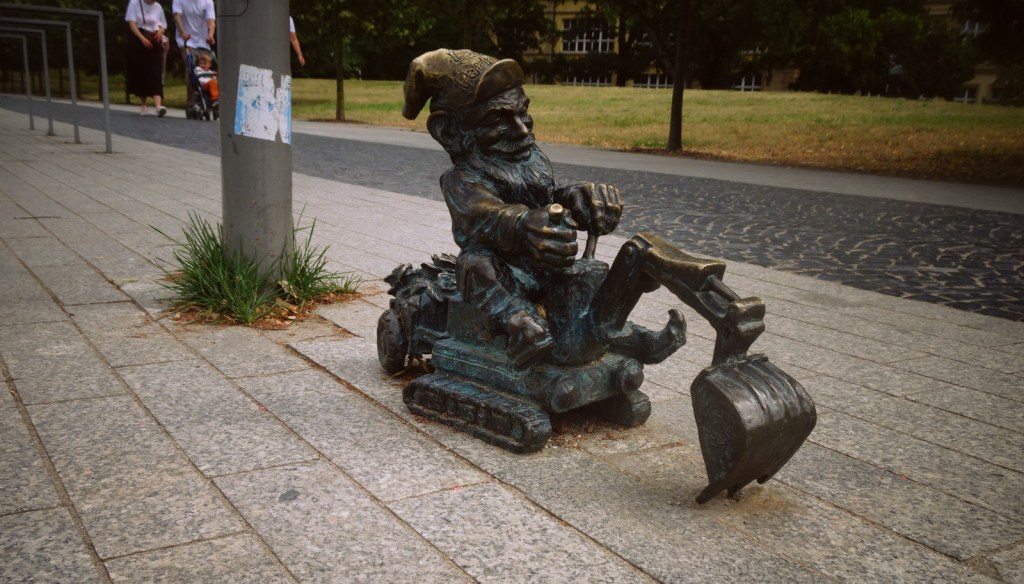
The Gnomes of Wrocław 

Wrocław is an interesting city.

The only thing that’s annoying are the gnomes. You’re sitting comfortably in the park or enjoying the view of the Oder river, and suddenly one of these little rascals emerges from the undergrowth and starts making a scene.

These creatures are everywhere. Even in the churches.

But some people like the dwarfs. Many tourists even come to Wrocław specifically, consciously and predominantly because of the hobgoblins and try to track down as many as possible of the more than 800 gnomes.

As you may know, I myself prefer concrete over metal. But for this taste, too, there is some beautiful art to be found in Wrocław.

Posted in Photography, Poland, Travel | Tagged | 15 Comments

FAQ on the Untätigkeitsklage for German Citizenship

I never thought that so many people would ask me to write about the Untätigkeitsklage, an obscure type of lawsuit contained in the German Rules of Administrative Court Proceedings. Honestly, I would much rather write about my quest for the geographical center of Europe, panoramic train journeys, silly adventures or beautiful islands in the middle of the Atlantic. And I will get to that again, I promise.

But as you know, I am a lawyer and somewhat of an expert on German citizenship law. And as such, I am all too aware of an egregious problem that is burdening people who have applied for German citizenship, whether by naturalization, by descent or by restitution: The process can take a looooong time.

From the moment of applying for German citizenship, when – ideally – all requirements are already met, it can take up to anything from four months to four years. The former ain’t bad, the latter is terrible, and not knowing where their case will fall really seems to bother some people.

I have already shared a few tips on how to speed up your application for German citizenship, but because so many people are contacting me with the same questions, I will answer the most common questions here. For free, can you believe that?!

1. What is the Untätigkeitsklage?

Untätigkeitsklage literally means “lawsuit because of inactivity”.

It’s a special type of lawsuit that you can file against the German government, when you have applied for citizenship and the local, state or federal agency neither grants nor denies your request. In the absence of the Untätigkeitsklage, the government could simply refuse (or forget) to make any decision on your application. Without even a negative decision, you would be deprived of the chance to appeal the government’s decision.

Despite its name, the goal of the Untätigkeitsklage in citizenship cases is not to get the government to do just anything and feign activity. By filing the Untätigkeitsklage, you explicitly request the Administrative Court to order the government to grant you German citizenship.

2. Does the Untätigkeitsklage apply to all citizenship cases?

In fact, this type of lawsuit applies to anything that you request from the government, whether it’s citizenship or a building permit, a tax refund or a hunting license.

In the context of citizenship law, you can avail yourself of the Untätigkeitsklage whether you applied for German citizenship by naturalization, by descent or by restitution. It also applies irrespective of whether you applied online, to your local citizenship office, through a German consulate or directly to the Bundesverwaltungsamt.

The applications based on descent and restitution that go to the BVA usually take many years, making the Untätigkeitsklage particularly helpful in those cases.

The Untätigkeitsklage can also become necessary in the context of immigration law. Some people wait more than a year for permanent residence (Niederlassungserlaubnis) or for a family-reunion visa.

There is just one thing to keep in mind: Because of separation of powers (thank you, Mister Montesquieu), the court cannot substitute the discretion to be exercised by the government in certain decisions. For citizenship law, this means that an Untätigkeitsklage makes most sense in cases where you are entitled to citizenship. This covers all cases of descent and restitution (if you meet the requirements, of course) as well as the regular naturalization under § 10 I StAG (Anspruchseinbürgerung).

You may already have read that I am rather skeptical of people who apply after only three years of residence, claiming the “exceptional integration” clause in § 10 III StAG. Well, those people who think they are special will face a special problem when it comes to the Untätigkeitsklage. As § 10 III StAG provides for discretion, the court cannot grant you German citizenship, but can only order the government to start working on your case. In effect, most of these cases will take longer than if you had simply waited until you complete the required 5 years of residence.

3. How long after submitting my application do I have to wait before I can file the Untätigkeitsklage?

The law, specifically § 75 VwGO, requires that you wait for three months.

And that is three months from the time when you have filed a complete application pack. Really complete, with all the attachments, with the language certificate, the citizenship test, and so on. Please don’t file incomplete applications. It makes no sense. It just causes delays and extra work for everybody involved.

The three months are not reset each time the government contacts you.

How and whether communication between you and the government influences the three-month waiting period depends on the type of communication, of course. If the government informs you that documents are missing, you don’t yet qualify for citizenship anyway. In that case, don’t even think about the Untätigkeitsklage. If they inform you that the whole process will take at least one more year, you might as well go ahead and file the Untätigkeitsklage right away. If they inform you that they are waiting for information from other agencies, usually regarding the security check, then you could still sue, but why should you? In that case, you know that you are in the final stretch of the process.

4. So, when do you recommend to file the Untätigkeitsklage?

First of all, and most importantly: You don’t need to.

If you are living a happy life and it doesn’t make any difference whether you will receive the German passport this year or next year, then please don’t waste the money. For example, you may not be in a hurry because you have a very secure immigration status and a secure job. Or you may think that the money is better spent on a holiday rather than on a lawyer. (Although this particular lawyer really likes holidays as well.)

If, on the other hand, you are in a hurry because you want to apply for a job that requires German citizenship, or because you want to join the Bundeswehr, or because you want to run for a seat in parliament, or if you are simply an impatient person, then you should file.

In my experience, people who can sit back and relax are the happiest ones. People who are impatient are less happy. But most miserable are those who cannot make a decision and keep pondering and debating and postponing for years.

5. Can you guarantee that I will receive German citizenship faster if I file the Untätigkeitsklage?

Whether the way through the Untätigkeitsklage is really faster in your specific case is impossible to tell. After all, it could be the case – very theoretically – that your application was just about to be approved tomorrow. In this case, filing the Untätigkeitsklage today won’t speed up anything.

But statistically, it makes a difference, because the Administrative Court will force the citizenship administration to prioritize your case.

You should however keep in mind that the judges at the Administrative Court aren’t sitting around idly, either, and they do have more important cases. So, please don’t expect that your lawyer will file an Untätigkeitsklage and, swoosh, you will be invited to pick up the German passport next week. The case before the court will also take its time. But at least there will be some progress.

6. How do these court cases work?

Once your lawyer files the Untätigkeitsklage – and depending on the case, I sometimes send a warning letter to the government first, to give them a last chance -, the court asks the citizenship office what is taking them so long.

Very often, it only takes a few days until the citizenship office suddenly springs into action. Your file has been moved to the very top of the pile. In those cases, they usually ask for updated documents, like current wage statements and a current confirmation from your company that you are still employed in good standing. In the best of cases, citizenship is then approved within a month from filing the lawsuit.

In other cases, the citizenship office replies with some general bla-bla about being understaffed and overworked, about a sudden increase in applications, about the effects of Covid, about a new software being introduced, and so on.

None of these are legally acceptable reasons for a delay.

The court will only accept a delay if your specific case is complicated, for practical or legal reasons. These can be missing documents, an open criminal investigation, a complicated financial situation, a complicated security check. (That’s why your lawyer should double-check all of these aspects before filing the Untätigkeitsklage.)

In the end, the court will give the government a last deadline (and this can still be several months, depending on how sympathetic they are to the plight of overworked civil servants). In most cases, the government will then grant you citizenship within that deadline. If not, the court itself will make the decision about your application.

7. What does all of this cost?

My fees for filing a personalized Untätigkeitsklage are 2,000 € altogether.

I charge 200 € for the initial consultation. We will discuss your application, your situation, the whole process, the pros and cons, as well as potential individual reasons for why you cannot wait any longer (this is an important, but often overlooked point for these lawsuits).

If we then decide that we want to work together, I will charge the remaining 1,800 €. Depending on the specific case, I will then either send a warning letter to the government, giving them one last chance, or I will put together and file the lawsuit without any prior warning (for example if the government has already told you that you need to wait at least one year before they will even look at your file).

On top of my fees, the Administrative Court will charge court fees of 849 €.

8. Do you charge more if you file for myself and my spouse/children?

I would recommend against filing a joint lawsuit.

Whenever I represent a family, my strategy is to pick the most uncomplicated family member and only file on his/her behalf. With uncomplicated, I mean the person who has sufficient income, who has a clear record of legal residence in Germany, and where I foresee no problems with the security check.

This approach saves you legal fees and makes the case easier for the court.

And when the government will finally look at your case to make a decision, they will make a decision on your spouse and children too, anyway.

Also, and I know that nobody wants to think about that, if you file jointly and then get separated or divorced, we have a huge legal mess.

9. Will I get reimbursed for the legal fees if we win?

Potentially, yes.

The court can order the government to pay your legal fees, if you could reasonably have expected the government to grant you citizenship by the time you filed the lawsuit, as § 161 III VwGO puts it.

This gives the court some leeway. They can order the government to grant you citizenship and to pay your legal fees. But they can also order them to grant you citizenship without ordering a reimbursement of fees, arguing that although the government was slow and late, you were aware of that widespread problem and couldn’t reasonably have expected to receive your citizenship within the three months mandated by the law.

For reimbursement of fees, some courts have ruled that you should at least wait six months from the date of application. (And sadly, many people misinterpret this to mean that you cannot file the Untätigkeitsklage before that.) Basically, the courts can rule about fees any way they want, because the ruling on the reimbursement of fees cannot be appealed (§ 158 VwGO).

So, my advice is: Don’t count on being reimbursed for the fees. If it happens, it will be a nice surprise. (And you can give your lawyer a tip.)

10. Do I need a lawyer for the Untätigkeitsklage or can I file myself?

After you have killed your own steak, built your own car and pulled your own wisdom tooth, you can maybe try to put together your own lawsuit in administrative law.

But if you have moved on from the stone age and believe in the value of professional advice, you are invited to contact me.

Posted in German Law, Germany, Immigration Law, Law | Tagged , , , , | 6 Comments

FAQ on German Citizenship Law – updated 2024

I am a German lawyer, specializing in German citizenship law. These FAQ are supposed to give you an overview of the basic principles governing this area of law, so you can decide whether a paid consultation is worth it.

Before asking a new question, please read through the many comments which may already answer your question. But always look at the dates of the comments and my answers, as most of them have been superseded by later changes in the law. And if you find these FAQ useful, or if you ask a new question, it would be very nice of you to support this blog. Thank you!

1. Does Germany have a system of ius sanguinis or ius soli?

Germany has traditionally always been a ius sanguinis country, meaning that citizenship is passed on to the next generation by birth, irrespective of the place of birth. Only recently has the law been amended to incorporate ius soli, giving German citizenship to a child born in Germany to two parents of foreign citizenship.

I will explain these different ways of obtaining citizenship in more detail below.

2. Does ius sanguinis mean that I am entitled to German citizenship if I have German great-great-grandparents, even if they left Germany generations ago?

Possibly yes.

You are a German citizen under ius sanguinis if your ancestors had German citizenship at the time of birth of the next generation and passed on German citizenship. And the same for the next generation, and so on.

It is therefore necessary to find out the exact timeline of events to determine if your ancestors might have lost their German citizenship (e.g. by giving it up voluntarily, or by accepting a foreign citizenship) or if they still had it and could thus pass it on.

You see that this requires a lot of research into your family history and into the respective laws of the relevant points in time. But if you are lucky, you might already have German citizenship, even if you or your parents never knew about.

3. How many generations can I go back to claim German citizenship?

There is no legal limit to the number of generations, if each generation complied with the laws in place at the time.

In reality, though, I have never had a successful case that went back more than 4 generations.

There are two reasons for this: One, with each additional generation, it becomes much harder to collect the necessary documents. Keep in mind that your ancestors may have come from territories that were later ravaged by war, and all the archives got destroyed. Or, if we go into the 19th century or earlier, a lot of people didn’t bother much about written records. The fact that Germany did not exist until 1871 is not a problem, if you can show that your ancestor had Bavarian, Prussian, Hessian or a similar citizenship of a territory which then became part of the German Empire.

The second problem is the so-called Konsulatsmatrikel. The German citizenship law in effect between 1871 and 1913 stipulated that German citizens lost German citizenship if they lived abroad for more than 10 years and did not register with a German consulate. Almost nobody knew about this requirement and even if they did, they didn’t bother about it. Therefore, the large majority of German emigrants did not register with the German consulate (which may have been a few days away from the farm).

This means that if your ancestors left Germany before 1904, chances are slim. But it’s still worth to take a look at it, because depending on when and whom they married and when they had their child (which is in your direct line of ancestors), you may still qualify.

4. Is there any chance to obtain German citizenship for someone without German ancestors?

Yes. You can become a German citizen trough the ius soli option (more about this below), through adoption by a German citizen, and through naturalization.

Please note that German citizenship cannot be obtained through marriage with a German citizen, although such a marriage does make it easier to become naturalized.

5. So what is the ius soli component of German citizenship law?

Ius soli means the acquiring of a citizenship based on being born in a country’s territory. Germany’s ius soli law is much less far-reaching than that of the USA or Mexico for example. Since 2000, a child born to foreign parents in Germany receives German citizenship at birth if at least one of its parents has been a legal resident of Germany for at least 5 years and has a permanent residence status (§ 4 III StAG).

Because these children usually also receive the citizenship(s) of their parents, they will have dual or triple citizenship.

6. Does German law allow dual citizenship?

Since June 2024, Germany no longer objects to dual or multiple citizenship.

This means that you are no longer required to give up your existing citizenship(s) when applying for German citizenship. Except, of course, if the law of your home country does not accept dual citizenship. Then, you still need to make the tough decision which passport you prefer.

Contrary to popular belief, there is no limit on the number of citizenships/passports somebody can hold. I have several clients who have four citizenships/passports, and if they hav a child with somebody who has four different citizenships, then the child could have all eight citizenships. Plus a ninth citizenship if it was born in a ius soli country. Obviously, such a child should go on to become the Secretary General of the United Nations.

However, because the German relaxed approach to multiple citizenship has only been enacted in 2024, the previous ban on dual citizenship is still relevant in descent cases. For example, if your parents were born German, but gave up German citizenship in 1965 to become Canadian citizens, and you were born in 1966, then nobody in your family was German at the time of your birth. You’re out of luck.

7. How long do I have to live in Germany before I can get a German passport?

For the spouse of a German citizen, the residence requirement is 3 years (of which you need to have been married for the last 2 years).

For other foreigners, it is 5 years.

As to all the other requirements (language, financial, security check, political allegiance, et cetera), I point you to my article about the 2024 German citizenship law.

Theoretically, you can apply after 3 years of residence if you can show excellent German skills and an exceptional level of integration. But this is restricted to really exceptional cases.

8. My ancestors lost German citizenship. Can I get it back?

Yes, at least in many cases.

§ 15 StAG grants German citizenship to the descendants of anybody who lost or was denied German citizenship under the Nazis.

The standard cases are ancestors who left Germany between 1933 and 1945, and you do not need to prove individual persecution in these cases. In fact, your ancestors need not even have been German citizens. Because the political and the territorial landscape in Central Europe changed a lot before 1945, there are many possible scenarios, and it’s hard to make a general statement. (It’s even more complicated if your ancestors came from the Free City of Danzig.)

§ 5 StAG grants German citizenship if you or your ancestors were previously denied German citizenship due to gender-based discrimination or because of discrimination against illegitimate children. There are several scenarios as well, but the prime example are people born to a German mother and a non-German father before 1975. Until 1975, these children did not receive German citizenship under German law.

Obviously, this was highly discriminatory, and thus it is being rectified now. This and other scenarios are addressed by § 5 StAG. Individuals affected by previous discriminatory laws and – most importantly – their children can now claim German citizenship.

Please see the FAQ on reclaiming German citizenship for more on both of these avenues to German citizenship by restitution.

9. How well do I need to speak German?

If you apply for German citizenship based on descent or based on restitution, you do not need to prove any German skills.

If you apply for naturalization after living in Germany for 5 years, you need to pass the written and oral language exam at the B1 level. That’s an intermediate level, which is pretty easy to attain.

For more of the language requirement in the case of naturalization, see my article about the 2024 German citizenship law.

10. How can you as a lawyer help me get German citizenship?

In naturalization cases, if you have been living in Germany for more than 5 years and you have a straightforward application, you do not need a lawyer. It would be a waste of money – and of my brainpower – to hire a lawyer to fill in the forms. It also won’t save you any time.

I usually only get involved if there are problems. For example if the duration of your legal stay in Germany is in doubt, if you had a minor criminal sentence, if your allegiance to democratic values is in doubt, or – these seem to be most of the tricky cases under the new 2024 law – if the German government doubts your ability to provide financially for yourself and your family. They have become rather strict on the latter point, but as a lawyer, I can often demonstrate and argue that you do indeed meet the legal requirements.

The other problem with naturalization cases is that they sometimes take a long time. Not always, but I have seen anything between 4 months and 4 years from the date of application. My advice in most cases is to sit back, wait and relax. But if you have reasons for urgency, we can actually sue the German government if they have been inactive for more than 3 months. See more about this in my article about the so-called Untätigkeitsklage.

But most of my work is focused on descent and restitution cases.

Because I am not only a German citizenship lawyer, but also a student of history, this area of the law is tailor-made for me. Knowing quite a bit about 19th and 20th century Central Europe, about the persecution under National Socialism, as well as about the history of German migration, I can point my clients in the right direction. I can also often fill in the gaps that people couldn’t yet explain. (In other cases, though, I have to poke holes into the family history that has been handed down, because some things simply don’t add up.)

So, if you think you have a shot a German citizenship, contact me!

Posted in German Law, Germany, Immigration Law, Law | Tagged , , , | 2,094 Comments

Espionage as Exceptional Integration

As a citizenship lawyer, I am not very fond of clauses in the law that allow naturalization under exceptional circumstances. Far too many people think of themselves as very special, and I have to spend a large part of my time explaining to people that they are not.

Like that one guy from Florida, who asked me if it counted as “special ties to Germany” within the meaning of § 14 StAG that he had always owned a German car.

Thus, I was not happy when the new German Citizenship Law enacted in 2024 came with § 10 III StAG, according to which the residency requirement can be reduced to anything between 3 and 5 years in cases of exceptional integration. Because I knew right away that thousands of people would try to claim “exceptional integration” – and that 99% of them would not qualify.

As I explained in my article about the new German Citizenship Law:

To answer one of the questions I receive most often: If your German is not at the C1 level, there is no chance. That is the minimum requirement, on top of which you need to have done outstanding academic or professional work, run for city council (if you are an EU citizen), volunteered in environmental, social or political groups, organized arts exhibitions, volunteered as a firefighter, and published a book about Germany. As a general rule, if you haven’t been on television or radio, then your achievements probably don’t count as exceptional.

In practice, even if those requirements are met, the main problem is not when you are allowed to apply, but the duration of the process. With naturalization taking up to several years even in straightforward cases, the prospect of applying one or two years early may simply provide false hope. (Although there are some tricks to speed up the process.)

In my professional experience, there are only two groups of people whose citizenship applications are subject to preferential treatment:

For one, if you are really good in a sport where Germany wants you on the national team. If the deadline for the qualification for the Olympic Games or a European or World Championship is coming up, these applications are suddenly processed super fast.

Maybe we should extend the same preference to people who are willing to represent Germany in the Eurovision Song Contest. Because without foreign talent, we will forever be the “zero points” laughing stock of the world of music.

But even if you can neither sing, nor run or jump or kick balls, there is another option, by which you can prove exceptional integration under § 10 III StAG: Providing information that is vital to the security of the Federal Republic of Germany.

Currently in high demand is any information about the Iranian nuclear program, the Chinese navy, Bolivian lithium fields, and the whereabouts of the Bernsteinzimmer.

Some people may call it snitching or other derogatory terms, but in reality, espionage is a respected activity under international law.

Once, there was a guy who provided material first-hand information about biological weapons in Iraq. That’s the information which was used as justification for the Iraq War in 2003. It turned out that he was a big joker and had all made it up, but he got to keep the German passport.

True story: 

It was even turned into a book and a movie.

So, if you know anything about something and want to use that information to ingratiate yourself with your new country of residence, contact me inconspicuously. After all, it makes sense to have a lawyer who has been accused of espionage once or twice himself.

By the way, in such cases, German law of course also allows you to change your identity in the process of naturalization (Art. 47 EGBGB).

Links:

Posted in German Law, Germany, Law | Tagged , | 2 Comments

What is it with American Clients and their Nazi Obsession?

I really like to help the victims of Nazi persecution. Or rather their descendants, considering that most people who survived that horror have passed away since. My main focus is on the restitution of German citizenship to those whose ancestors were once stripped of it by the Nazis. (Sometimes, it even happens that I get into a random taxi in Bolivia, and as the driver recounts his family history, I can tell him that he is eligible for a German passport.)

But then, there is another group of clients, and I am sure it is mere coincidence that, thus far, they have all been American: People who want to be victims of Nazi persecution.

These cases have nothing to do with the Nazis, they are not even political in any way. It’s usually a child custody dispute or some tax stuff. Little things. Nothing to get agitated about.

Yet, that particular type of client wants to turn their mundane dispute into a personal fight against evil, as if they were single-handedly storming the beaches of Sicily, Salerno and Normandy and killing every single Nazi on the way to Berlin. (Where they would then complain about the absence of the Berlin Wall and a McDonald’s.) Or maybe they have watched too many movies and not enough news and believe that Germany is still ruled by the Nazis.

For example, there was this one lady, from Florida, but living in Munich, who was late with paying her bill. Very late. Despite repeated reminders. When she realized that I wouldn’t yield, she finally paid and sent this e-mail:

Andreas, I paid today. 

I told you I was in bad shape. Very bad shape in this Nazi nightmare.

To which I replied, with – for a lawyer – astonishing conciseness:

1- Thank you very much for the payment!

2- I recommend a short trip to Dachau and a visit to the exhibition there before making Nazi comparisons. It’s belittling to the real victims.

That advice was free. Because I am a nice guy, and I give people the chance to reflect on what they wrote. But always, really always, those people keep digging the hole they put themselves into.

Her reply:

If you knew my husband’s tactics I don’t think you would make that comment. Less than putting me in a gas chamber which is almost my wish at this point is that it all is humiliated me beaten me taking my kids away called me a whore and a slut in front of my kids to me there’s nothing worse than this and it’s an appalling behavior of abuse of power. But I guess it’s always the victim said allow themselves someway to be a little old so in the end it’s always the victim fault.

Oh, he also threw out my nine-year-old father and my mother out of the house that I used to own in Florida that I was stupid have to sign over to him that he will sell it in the company and I end up with nothing kids no home no life. After working for him for so many years. And too stupid to take care of myself.

By the way my family history is of partial Jewish descent the last name was like who fled to America rest of the family was annihilated by the German Nazis. I never held resentment which is why I was able to live in Germany and excepted as a tragedy of war . My experience has proven different and if I could to my life over again I would’ve skipped the German part. I was so understanding forgiving and in disbelief of cruel behavior that I even had children here. Anyway , A systematic premeditated intent to destroy the life of another person was just calling to spade a spade

To which I replied nothing, because as only a foreign speaker of English, the grammar had become too complex for me. Sorry.

As you may have figured out from the above excerpts, this sort of people have more problems than inappropriate historical comparisons. In fact, it is just one of many red flags, which by now I have learned to detect early on, giving me the opportunity to gracefully decline any request to get involved in their personal battles and tribulations.

Or take this guy, who has been fighting to spend time with his children for years, which must suck big-time. However, child custody cases are severely contested in many jurisdictions around the world, and I am not sure the Gestapo comparison is appropriate.

I want a lawyer to find out if there are any restraining orders or anything else against me. I can’t imagine what anything else could mean, but lying and ignoring the law have not prevented German officials from acting badly. One of my other lawyers tells some horror stories from her 10 years of court cases to finally get one man his son.

Maybe not the same lawyer because this requires a bit of courage: I also want a lawyer to be around if the police act illegally with me like they did 5 years ago. (The Goettingen police arrested me on false charges, refused to let me talk to a lawyer, only let me out of jail after they confirmed they had nothing to arrest me on but told me if they saw me again they would keep me in jail regardless of the law). So I want a lawyer around who won’t meekly ignore illegal actions by the police, if there is any chance I meet with my kids. I may get some extra help (e.g. PhD psychologist) as observers so if the police do one of their Gestapo tactics again, others are present. This will remind them of how much trouble they will be in if the police act badly.

This may sound extreme, but after my experiences in Germany (also included judges clearly lying, in writing) tell me the law isn’t that important so I need to take extra measures to prevent that from impacting me.

Just to put things into perspective: The Gestapo was the Nazi’s secret police and played a key role in the suppression of any opposition and in the Holocaust. It was an instrument of terror.

Now, I am not saying that contemporary German police are all nice people. Quite the contrary, there is the problem of racial profiling, and each time I return to Germany from abroad, I really wonder why my country has one of the unfriendliest border police forces in the world. – But still, that’s very far from the Gestapo. I mean, in all of last year, there were 8 people shot dead by the police in Germany. (In the USA, it takes the police only three days to kill as many people. Or twelve days if adjusted per capita.)

If you are ever in Germany and interested in the Gestapo, their former headquarters in Cologne have been turned into a museum.

Oh, you remember the “part of my family was of Jewish descent” from above? This is of course topped by “I have Jewish friends”, which is another warning sign, reminding me of people who “can’t be racist, because I have black friends / have been to Africa / like Puff Diddy”.

Let’s take this example:

Hi Andreas,

I just discovered your website and think you took a great decision by closing your office and travel! I feel that you are the kind of Lawyer we could have hired, you seem loyal, honest and knowledgeable.

Actually, I have since returned to practice as a lawyer in Germany. But I don’t necessarily want everyone to know about that.

Here is the situation and I need your total honesty.

Our story: In 2012 (USA), (10 years ago!!!) we purchased a cell phone to our daughter and put her on the phone family plan and she started sending nasty pictures (pictures taken when she was on vacation in Hawaii 2 weeks with her friend. We were not with her on vacation! So being nice parents and buying her a trip in Hawaii was a big mistake that destroyed our lives) to her “friends” on line and when she was caught at her return, my husband smashed her phone in pieces and cut Internet access to protect her and deleted everything to protect her (because kids go to prison for that matter in America) and he was not aware she hid a pic on an Apple Ipad. The daughter blackmailed her father, furious that he destroyed the phone and said that she would make up a story if she did not get what she asked for. My husband refused and she reported false allegations to the police.

The Law Enforcement were not happy because the nasty pictures were destroyed and the police is mad at my husband for destroying the data because they could have caught her “friends” with her nasty pictures so the Law enforcement retaliated and gave my husband a false conviction, he was held for 5 years without trial (with false added allegations), tortured, included water boarding and in extreme psychological torture. By the way, our daughter of 12 years old was kidnapped by FBI and put for adoption because I did not want to collaborate and did not want to lie to get her back.

Why isn’t there a movie about this?

So because of that ONE picture that he did not take and that picture was found on the Ipad that he was not aware of, he was put on the Megan List (a cruel list that does not make sense where about 1 million people (included children from 5 years old are labeled absurdly Sex Offenders and are on that list that violates their human rights) have their lives destroyed and family members and friends are harassed by the police.

As soon as a person is on the registry in USA (Megan list/Sex Offenders list) his/her life is basically over.

They are labeled harshly Sex Offenders (in USA, you do not need to commit a sex crime to be on that list, if someone is caught to pee outside, two teenagers in love, mooning, touching a shoulder, sexting, sending pics, and even a five year old hugging a teacher…  will end on the Sex Offenders Registry and basically it had been proven that life on the Megan registry is very parallel to the Dark History of Germany (branded passport, you cannot go to the park, library, live where you want…, people are on a Public List on Internet with their pictures and address and are murdered, commit suicide….

We moved at the end of 2021 to Germany to try to get a life and the American government with the help of the German Law Enforcement and vigilantes stalk us, snitch on her, report our location daily, telling neighbors, Doctors not to deal with us, shops refuse services…..

Basically we are treated like Jewish people were, sadly. Could you believe that?

A Holocaust Survivor man has his grand-son on the Megan List and mentioned the parallel with the Holocaust and said “no, not again!”.

We hired a Lawyer in Nuremberg, Germany where we live and after reading on your Blog how to hire a good Lawyer, I realized he was not a good fit because he portrayed exactly the “Lawyer” not to hire. He was not loyal, barely talkative, the authorities told him not to work with us anymore.

We consider ourself good and educated people and we did nothing wrong in USA or anywhere else. We would like to file for international human rights violation and against harassment.

We know that we will never get a loyal Lawyer so we would like to file a petition against the police, against USA too by ourself. Would you be able to help us? To tell us where to go to file or file for us, the form to use…We are from USA and we do not speak German enough to do so. Of course, we will pay you to do everything for us fast.

Is it something you could do? We have also other law suit we would like to do too.

We do not want to waste money with another Lawyer who will not help us.

Again, in my reply, I offered the chance to walk away from the unfounded comparison:

I am aware of Megan’s Law and its completely over-bearing consequences, although, based on my understanding of the law and of German history, I would not compare it to racial and anti-semitic persecution of whole groups of people.

I am also not quite sure what you want to achieve. There is nothing that a German lawyer or a German court could do to change a US federal or state law or indeed influence any US federal or state government action. Neither country is subject to the jurisdiction of the other country.

There is no international human rights court. (There is a European one, but it only deals with acts by member states of the Council of Europe.)

A different matter would be specific acts of harassment taking place in Germany.

And as always, the person did not take the clue, instead doubling down:

As I mentioned a Holocaust survivor compared the Megan Law himself with the dark History of Germany because his son is on the Megan List and that link does prove it,

followed by the link to a YouTube video.

I realized that they were generally more the YouTube-watching rather than the e-mail-reading folks, because what they wrote next sure sounded as if they hadn’t properly read my e-mail.

We want to abolish the Megan List in an International court because it is a violation of Human rights based on the “Universal Declaration of Human Rights” and the Lawyer we had did say that it is also an International matter because the Megan List also exists in other countries.

By now, one of my standard replies is:

This is not how the law works.

As the couple live in Nuremberg, they would actually have two memorial sites in their neighborhood: the Nazi party rally grounds and the site of the Nuremberg Trials.

But this time, I didn’t even recommend a visit, because the people sounded like they would just bother the poor museum staff. And as a general rule, historians are not any more interested in watching your YouTube links than lawyers are.

By the way, whenever I have a court case in Nuremberg, I try to cheer up my client: “Hey, you gonna get divorced in the same courthouse where they hanged the Nazis!” It never works.

Henceforth, I only want clients with a sense of history, please. Or at least with a sense of humor.

Links:

Posted in German Law, Germany, Law | Tagged , , , | 36 Comments

The Sad Life of a Superlawyer

Criss-crossing the country, from court to court, from case to case, from client to client. At night you find yourself in yet another hotel, going to bed early, because there is nothing else to do.

And when you turn on the telly, they are showing “The Lincoln Lawyer”.

By the way, the series is better than the movie.

They just published the third season, but I won’t be able to watch it. Because I already saw in the trailer that there is a snake under the pillow. Also, I don’t have a Netflix. But seriously, snakes should be banned from TV, from movies, from zoos, from the whole planet, and especially from trains and planes.

To be honest, I often enjoy the traveling part of the job. I like the arbitrariness of ending up in a small town that I would never have visited, if it weren’t for a divorce or a custody dispute. With more than 600 family courts in Germany, I sometimes get called to towns that I had never even heard of before.

If I lived 150 years ago, I guess I would have been one of them lawyers on a horse, riding from town to town, advertising in the local gazette: “Long awaited by the people of Tombstone, world-renowned hot-shot lawyer Andreas Moser will be staying in our lovely town from Tuesday onward, dispensing legal advice in the saloon, every day from 8:30am until he can’t talk no more. Reduced fees for widows and orphans. Se habla español.

Posted in Law, Life | Tagged | 17 Comments

Wrocław – First Impression

Only a few short years ago, when I was still young, I could easily sit on a train for 27 hours without getting off once. And shortly thereafter, I did the same again. And then for an incredible 38 hours.

But now I have become old and appreciative of at least a minimum of comfort. Even when I just want to embark on a short train journey to the Baltics, I have to interrupt it in Silesia already. This is all the more true when it is a birthday trip, which unfortunately makes you yet a year older. (Unless you use this trick under international law.)

So I ended up in Wrocław this summer, decided on a stopover and spent two days wandering around the city, aimlessly and unprepared. Since I hadn’t read up on the history this time, I can spare you the long and boring explanations and simply present you with a few photos. The first impression.

Wrocław is a pretty cool city.

An interesting mix of old and new. Lots of culture. Surprisingly little hustle and bustle, especially for the size of the city. I felt very relaxed. So, if any of you live in Wrocław and ever need a cat sitter, please let me know!

Posted in Photography, Poland, Travel | Tagged | 3 Comments