My next adventure: Walking across England

One danger of living in London is that there is so much to see and do that you never get out of the city to explore the rest of this island that constitutes Great Britain. I will do something against this, and not only in the form of a day trip to Winchester or Cambridge, but in a more radical way: I will walk across England, from coast to coast. 

In the week from 6 to 12 June 2011, I will walk across England along the Hadrian’s Wall, all the way from the North Sea to the Irish Sea.

The Hadrian’s Wall was a Roman fortification in northern England, parts of which still remain in place today.

The distance is about 135 km which I estimate will take me around 5 days. After leaving Newcastle in the east, the walk will cross mainly uninhabited areas. I will have to carry my supplies with me and I will camp in the wild.

My father, an experienced outdoors man, supplied me with a rucksack, sleeping bag, bivouac sack and other necessaries. I bought a small Esbit stove, enough food and a tarpaulin to build a makeshift protection against the rain. And I have the relevant OS maps and some cigars with me, so I should be fine.

If I survive you will read about it here. If I won’t, I guess you will read about it somewhere else. Sooner or later.

I am off now for a week.

UPDATE: I am back. Read the account here.

Posted in Travel, UK | Tagged , , , , , , , , , , , , , , , , , | 6 Comments

The Psychological Continuity Account

After I already published the first essay that I wrote for my MA Philosophy course at the Open University, I can now add the second essay after it has been graded and returned.

This one tries to answer the question “What is there to be said for and against the psychological continuity account of Personal Identity?” It asked to focus on the suggested reading, mainly by Bernard Williams, Derek Parfit and Mark Johnston making this essay probably rather uninteresting to anyone who has not read these philosophers’ papers.

I. Introduction

Last month, all of us living in Britain received the forms for the 2011 Census. The British government wants to know how many people live at a certain address, how old they are, how far they travel to work and so on. Looking for a demographic snapshot of the country, the Office for National Statistics is not interested if these people are identical with the people counted at the last census 10 years ago.

For philosophers it is however an important question if the person that lived 10 years ago at your address, had your name and the same family and job as you have now, is indeed identical with who you are today.

One attempt to make sense of this question is the Psychological Continuity Account on which this paper will concentrate.

II. What is the Psychological Continuity Account

According to the Psychological Continuity Account, two people A and B are the same person if and only if B’s psychological states are continuous with A’s psychological states1. The survival of memories and personality traits is what defines a person’s identity2. To put is as concise as possible: A person is his/her mind, as opposed to his/her body3 (as the proponents of the Bodily Continuity Account would see it).

The continuity of two psychological states is presumed to exist if the later psychological state has developed from the prior psychological state4. This can happen either directly or indirectly, through intervening steps5. These steps may change the psychological state, but each step must not exceed the scope of gradual change in comparison to the previous state6. A sudden, dramatic change would interrupt and thus destroy the continuity7.

Because continuity does allow for changes, as long as they are gradual8, the later psychological state can ultimately be quite different from one of the earlier ones9.

Although most philosophers writing about the Psychological Continuity Account are looking at this theory as one way to explain or define personal identity, Parfit thinks that this tackles the important questions from the wrong end and that psychological continuity is in fact more important than identity1011. He does however see psychological continuity as close to being a criterion of identity12.

Parfit is also the one to introduce the distinction between psychological continuity and psychological connectedness13.

Psychological connectedness is the direct causal relation between two psychological states14, usually of two states that are temporarily not too far apart. Remembering an earlier psychological state is one possibility of this causal link that establishes psychological connectedness15. Because psychological connectedness is non-transitive (if A is psychologically connected with B and B is psychologically connected with C, it doesn’t mean that A and B are psychologically connected with each other)16, psychological connectedness is a matter of degree17.

A chain of psychological connections establishes psychological continuity18.

At this point and in preparation for the discussion in chapter III., I should mention the defining requirements of personal identity:

  1. The All-or-Nothing Requirement: Two items or persons either are identical or they are not. There are no options in between; identity is not a matter of degree19.
  1. The Transitivity Requirement: Identity has to be transitive. If A is identical to B and B is identical to C, then A is identical to C20.
  1. The Intrinsicness Requirement: This postulates that the identity of a person is determined without considering facts about a second person21.
  1. The Determinacy Requirement: Questions about personal identity must have determinate yes/no answers22.

The first two requirements are widely accepted23, whereas the third one is used as an additional requirement by Williams24, Swinburne25 and Johnston26. The fourth one is mentioned by Parfit, although he argues against it27.

III. Discussion

By contrasting the Psychological Continuity Account with the Bodily Continuity Account, it should not surprise that among philosophers and students of philosophy, the account that centres on the mind is the one more people are intuitively drawn to. If the same question was posed to a group of people who rely more on their body, let’s say a Rugby team, the preferences might tilt towards the Bodily Continuity Account.

But a decision in the matter of personal identity cannot be made by means of a straw poll. Instead, the Psychological Continuity Account has to be tested independently of its alternatives against the following possible objections, which are by no means an exhaustive enumeration:

  1. The informative value of thought experiments

Reading the material for this chapter felt in large parts like reading science fiction: Williams sends A and B into a machine in which A’s mind is transplanted into B’s body and vice versa28 and believes the resulting thought experiments to show that identity lies in the mind and not the body29. Parfit lets a man divide like an amoeba30, not without later reuniting these brain-halfs31 or even accomplishing a “fusion” of two previously independent persons32. Johnston writes about a brain in a vat33. (Blessed be Thomas Hobbes for sticking to the more understandable example of “Theseus’ ship”34, to which the replacement of human body cells over time even shows some resemblance35.)

I am rather sceptical about most of these thought experiments, because I fail to see what insight can be gained from them. People are not earthworms that can be divided and continue to live. We can’t build a new brain or mind out of two or more existing ones. These experiments are not only physically, technically and medically impossible3637 (and might just as likely result in the death of all persons involved were they carried out), but so far from reality that we should admit that we cannot possibly grasp their consequences. They raise plenty of questions without answering any of the pressing questions that we have38.

But while the use of these thought experiments therefore does nothing to convince me of any of the theories of personal identity, I realise that (a) this is due to my lack of capability for abstract understanding,and (b) that the use of bad examples does not discredit the theory that is to be tested. We therefore have to deal with some substantive issues of the Psychological Continuity Account:

  1. Inconsistency with the All-or-Nothing Requirement

The All-or-Nothing Requirement (see II.1.) is one of the requirements widely accepted by most thinkers that discuss personal identity39. It postulates that two persons are either identical or they are not40: identity cannot be a matter of degree41.

Psychological connectedness however, which in turn establishes psychological continuity42, is a matter of degree43. Parfit prefers to speak of “survival” instead of identity44 but equally says that it is a matter of degree45.

Defining personal identity through the Psychological Continuity Account which has different stages and grades could be seen as watering down the All-or-Nothing Requirement. On first sight, it seems as if one is trying to avoid the tough (possibly conceptually unanswerable) question of personal identity by moving to (psychological) continuity.

However, it is not uncommon that something that has to be decided on an all-or-nothing basis is dependant on criteria which are themselves open to different stages or degrees. For example, a person can be guilty or innocent of a certain crime. This is an All-or-Nothing Requirement. But this decision depends on some factors which are open to varying degrees, like criminal responsibility.

This criticism therefore does not stick.

  1. Inability to separate mind and body

Most discussions of psychological versus bodily continuity seem to assume that the two can be separated or analysed apart from each other46. Wiggins disagrees with this47, and so do I.

I rather believe that my psychological state not only relies on my brain or mind, but also on the body that houses it48. I am 35, relatively fit and undeservedly healthy and I cannot help but assume that this has an effect on my mostly energetic, optimistic and happy psychological state. If my mind was transplanted into a different body, small changes might not matter. If I am 2 cm shorter or have a different eye colour, that probably would not change my psychological state. But if I was bound to a wheelchair, I could not physically express my psychological state, my ideas, my wishes. Likewise, if I was terminally ill, I might lose quite a bit of my optimism. “Life dominates consciousness” as Karl Marx said, admittedly in a different context.

My brain removed from my body would not be the same. It would realise (if it could even survive such an operation) that it has been deprived maybe not of the ability to think and feel, but of the ability to execute and implement these thoughts and emotions. The same might happen if my brain was not removed from my body, but my body was suddenly changed (without any direct medical effect on the brain). Gregor Samsa of Franz Kafka’s Metamorphosis would almost certainly concur with this.

The psychological continuity would come to an end in such cases, which suggests that psychological continuity without any bodily support cannot exist49.

IV. Conclusion

I am inclined to side with Swinburn who declares personal identity to be “something ultimate”50 that is beyond being explained by further definitions, whether they concentrate on the Bodily Continuity Account or the Psychological Continuity Account51. If at all, identity may explain continuity, not the other way around52.

The objections raised under III.3. seem to severely discredit the Psychological Continuity Account because we lack any indication about what a brain or mind would think if it was deprived of its bodily surroundings, reducing the thought experiments used by most authors to nothing more than mere speculation.

1Belshaw/Price: 69

2Belshaw/Price: 69

3Belshaw/Price: 69

4Belshaw/Price: 85

5Belshaw/Price: 85-86

6Belshaw/Price: 86

7Belshaw/Price: 86

8Belshaw/Price: 86

9Belshaw/Price: 86, citing the example of a 60-year old who is psychologically continuous with the person she was at 17, although she is quite different

10Belshaw/Price: 87; Parfit 1971: 2

11Olson 2010: section 1 goes even farther: “Identity itself has no practical importance.“

12Belshaw/Price: 86 and 87; Parfit 1971: 7

13Belshaw/Price: 89; see also Olson 2010: section 4

14Belshaw/Price: 89; Olson 2010: section 4

15Olson 2010: section 4

16Belshaw/Price: 90

17Belshaw/Price: 90

18Olson 2010: section 4

19Belshaw/Price: 58-59

20Belshaw/Price: 59

21Belshaw/Price: 75 and 115

22Belshaw/Price: 115

23Belshaw/Price: 115

24Belshaw/Price: 75 and 115

25Belshaw/Price: 115

26Belshaw/Price: 115

27Belshaw/Price: 82

28Williams 1973: 5

29Williams 1973: 12

30Parfit 1971: 2

31Parfit 1971: 3

32Parfit 1971: 11

33Belshaw/Price: 109

34See Belshaw/Price: 61-65 for a discussion of “Theseus’ ship“

35Belshaw/Price: 66

36Belshaw/Price: 105

37Belshaw/Price: 89 call the fusion case “exotic in the extreme.”

38Johnston is equally critical of the thought experiments: Belshaw/Price: 104-105 and 114

39Belshaw/Price: 115

40Belshaw/Price: 58-59

41Belshaw/Price: 58-59

42Olson 2010: section 4

43Belshaw/Price: 90

44Olson 2010: section 2

45Belshaw/Price: 89; Parfit 1971: 11-13

46Belshaw/Price: 77 concede that “in everyday life, bodily and psychological continuity do not come apart.”

47Belshaw/Price: 99 and 101

48Belshaw/Price: 114 also raise this issue.

49Belshaw/Price: 114; Olson 2010: section 3

50Belshaw/Price: 94; Swinburne 1973: 15

51Belshaw/Price: 94; Swinburne 1973: 15

52Belshaw/Price: 94; Swinburne 1973: 15

Bibliography

Papers

Parfit, Derek (1971) “Personal Identity”, The Philosophical Review, LXXX, 3-27 (reprinted as reading 4.2 to accompany A850 Postgraduate Foundation Module in Philosophy, Milton Keynes, The Open University and quoted by the pages of the reprint).

Swinburne, R.G. (1973) “Personal Identity”, The proceedings of the Aristotelian Society, LXXIV, 231-47 (reprinted as reading 4.3 to accompany A850 Postgraduate Foundation Module in Philosophy, Milton Keynes, The Open University and quoted by the numbers of the paragraph in the reprint).

Williams, Bernard (1973) “The Self and the Future”, The problems of the Self: Philosophical Papers 1956-1972, Cambridge, Cambridge University Press (reprinted as reading 4.1 to accompany A850 Postgraduate Foundation Module in Philosophy, Milton Keynes, The Open University and quoted by the numbers of the paragraph in the reprint).

Study material

Belshaw, Chris and Price, Carolyn (year unknown) Personal Identity, A850 Postgraduate Foundation Module in Philosophy, Chapter 4, Milton Keynes, The Open University.

The internet

Olson, Eric T. (2010) “Personal Identity”, The Stanford Encyclopedia of Philosophy (Winter 2010 edition), Edward N. Zalta (editor), http://plato.stanford.edu/archives/win2010/entries/identity-personal/

I passed the paper, but not with flying colours. Obviously, I couldn’t hide the fact that some of the subject was over my head.

The next paper will be about self-ownership, specifically the question whether one may conceive of one’s own body in terms of property rights. With this move into political philosophy, the course is finally becoming really interesting for me. I have already touched on the issue in my article about suicide and I will write about some related topics like taxation, organ donation and prostitution on this blog in the next months.

Posted in Philosophy, Technology | Tagged , , | 5 Comments

London Underground (Tube) Map

When you come to London, one of the first things you will familiarise yourself with is the map of the London Underground, also called “the tube”. Colour-coded, it is easy to navigate:

However, this map is also quite misleading as it is NOT an accurate depiction of the underground network, and even less of London. In order to be easy to read, it has been simplified to the maximum:

  • You probably would have guessed that the lines are not completely straight in reality.
  • This map is absolutely out of scale:
  • Because most people travel in the centre and because there are more stations in this part of London, the centre shows as larger than the outskirts.
  • The distances between the stations are also not to scale.
  • Some distances appear worth taking the underground, but the stations are really within walking distance (Charing Cross to Embankment or Leicester Square to Covent Garden are only a few hundred meters and a short walk away from each other; definitely faster than going down the escalator, waiting for a train and going back up the escalator).
  • What looks like the same station are often two or three parts of one station that share the same name but will take you up to 10 minutes to walk from one part of the station to the other (for example Paddington or Elephant & Castle).

This is one of the most abstract and distorted, yet also one of the most used maps in the world, demonstrating that accuracy can be an undesired feature for a map. The reality would look more like this:

My advice to visitors of London: Walk or use the bike. It’s the only way to really get to know the city, not only in its realistic geography but especially in its colourful diversity.

Posted in London, Travel, UK | Tagged , , , , , , , , , | 7 Comments

This scammer watched “Three Kings” too often.

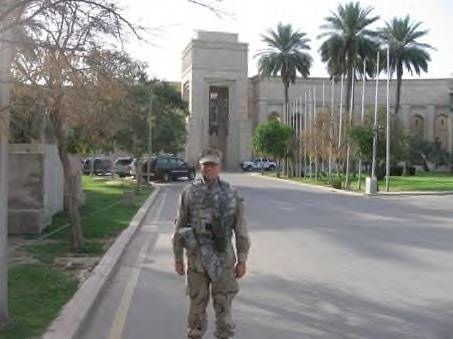
Scammers seem to be shifting from Africa to the Middle East. After I was recently contacted by “the attorney of Hosni Mubarak”, I received the following, purportedly from Iraq:

From: “SGT DALE KING”
Sent: Mo, 28.03.2011, 23:13
Subject: From; Sgt. Dale King

I am Dale KING,  a US Marine Sgt.serving in the 3rd Battalion, 25th Marine Regiment.I am presently in Iraq.I have summoned up courage to contact you for an assistance to evacuate some cash (US$25 Million dollar ) to the States or any safe country.

SOURCE OF MONEY: Some money in various currencies was discovered and concealed in barrels with piles of weapons and ammunition at a location near one of Saddam Hussein’s old Presidential Palaces during a rescue operation and it was agreed by all party present that the money will be shared among us.

I will provide you with more details upon the receipt of your response.

In GOD we trust.

With regards,

Sgt. Dale King

Sounds familiar? Indeed: In the 1999 film “Three Kings“, US soldiers stumble across one of Saddam Hussein’s treasures after the 1991 war. Because it is a rather good film, I will use this scam as an excuse to post the trailer:

“SGT King”, you are a couple of years late with your hoax. And the 3rd Battalion of 25th Marine Regiment has left Iraq in 2005. But for those of you who want to give it a try, the reassuring return e-mail address is sgtdaleking1@mail.kz.

Just for the heck of it, I replied:

From: Andreas Moser
Sent: Mo, 11.04.2011, 22:22
Subject: From; Sgt. Dale King

That sounds remarkably like “Three Kings”, doesn’t it?

In the footer of my e-mail I had the link to this blog and thus to the exposure of the scammer himself. He didn’t get it:

From: “Sgtdale King”
Sent: Mi, 13.04.2011, 10:41
Subject: Dear Andreas Moser

Dear Andreas Moser,

Good day to you and Thank you very much for your prompt response to my email. I quite appreciate your reply and I will be glad to work with you. I have decided and willing to go into partnership with you because I am going to benefit a lot.

Meanwhile, I want to assure you that this is an opportunity for both us and all I require from you are your complete honesty and confidentiality because of my safety here in Iraq . As you know, I am trying to secure this money for my future knowing that I may not have such opportunity again in life.

Very importantly, I would like to inform you that this matter must be very confidential. You must not expose it to anyone because of my safety. This business will not take much time to conclude once I reach an agreement with you. You will be required to send your contact address, phone number, your full name and a scan copy of your ID proof. Again, I would like to know more about you, your business and family background.

I am looking forward to invest this fund in any good profitable business investment in which you may advice me, it could be in landed properties, Real Estate, Production company, Hotel Business or Auto motor Business, etc,

I have attached my picture and the picture of the money for you to be sure of what I am saying. Please these pictures must be kept confidential and it is for you alone for security reasons. I am not supposed to send it to you for security reasons but I decided to send it to you to assure you of what I am doing.

I will let you know the next step to follow once I get the information I requested from you. Your urgent response is needed because I need to take this money out of Iraq as quickly as possible following the planed withdrawal of our unit.

Thanks for your maximum cooperation.

With Regards

From,Sgt.Dale King

This was the attached photo:

I still can’t see the money, though.

Posted in Cinema, Military | Tagged , | 3 Comments

“Please RSVP”

No, I won’t. Or only after crossing out the “please”.

Because I get annoyed by people abusing language.

“RSVP” is the abbreviation for the French sentence “Répondez s’il vous plaît” which translates as “Please reply”. Therefore, RSVP does not need an additional “please”.

Posted in Language | Tagged , , | 1 Comment

If you don’t read my blog, you will die.

That caught your attention, didn’t it?

And on the face of it, it’s true and backed up by facts and statistics:

  1. About 150,000 people died worldwide yesterday.
  2. Of these, none had read my blog yesterday.
  3. The few people who did read my blog yesterday are still alive today.

Conclusion: Reading my blog keeps you alive.

“Damn. We should have read Andreas Moser’s blog.”

Or does it? You immediately sense that a few things are fishy here, even if you believe that I know each one of my readers personally and know that they are alive: Of the people who died yesterday, many had no access to the internet. If they also live in countries with higher mortality rates, their chance of death is of course higher than those of the bulk of my readers who are in the USA and Europe (see the flag counter on the right hand side). This increased mortality risk might have less to do with lack of wifi, but with lack of food or the danger of diseases or with a war. On the other hand, of the people who read my blog, some might be couch potatoes who never venture outside. They don’t have the risk of car accidents, of being shot or struck by lightning. But again, the reason for their longevity is not reading my blog, the reason is staying inside.

You see that just because two events (reading my blog and staying alive) happen at the same time or to the same people, there is not necessarily a causal connection, as long as there are other possible more causal connections (like the country where you live or the dangers that you are exposed to, in this example).

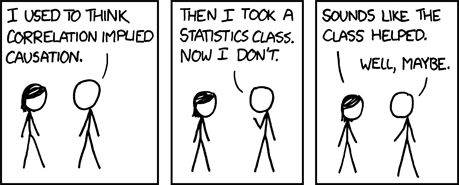
Correlation is not causation!

In fact, correlation does not even imply causation.

With a silly example like the one I have chosen, this is obviously clear. But keep this sentence in mind when you read or hear about the latest “new study” that tries to show a link between something and cancer or something and crime or something and divorce. This is especially true for the social sciences, because human interactions are so complex that they will rarely be open to monocausal explanations.

A few more examples that we come across regularly:

  • If a study suggests that married people are happier, this is presented as proof that marriage is a way to happiness. However, it could simply mean that happy people find partners more easily than grumpy ones and therefore get married more often.
  • Children who watch TV or play computers too much, have psychological problems. Parents use this as an argument to cut down on your computer use. In fact, it might be interpreted the other way round: Children who already have psychological problems don’t want to interact with other children and thus prefer to sit in front of a screen.
  • Babies who have been breast-fed will have a higher IQ. Proponents of breast-feeding will cite this again and again and probably even petition for tax relief for breast-feeders. However, if we look at the group of breast-feeding mothers, these might be the mothers who generally take more time for their babies, have a closer emotional bond, will be more supportive and will also read books to the child. All of which might have a greater impact on the IQ than where the milk comes from.

To be clear: What these studies pretend to show, could be true. But it could also be false. Even the opposite could be true. – Without the context of many other studies, they just don’t tell us anything of value.

More critical thinking, please!

correlation

Posted in Economics | Tagged , , | 10 Comments

Print is King

I have some information stored on 3.5-inch discs, but I can’t find a computer that still has a slot for these floppy discs. With my old phone, I had taken some cool photos, but I can’t retrieve them because I can’t find a fitting data-transfer cable. On my old laptop, there is a lot of valuable information, but I can’t get it to run.

expires faster than yoghurt

And then I have some books printed a hundred years ago and passed to me through the generations. I can read them without any problem.

Sometimes, technology is not bliss, but loss in the disguise of bliss.

When you buy an e-book or download books on your Kindle, I-Phone, I-Pad or any other e-reader, think about how quickly some data storage formats of the past decades disappeared. There is nothing to indicate that the current formats will stay around longer. You may be investing – not for the first time in your life – in something that will have lost all of its value in 2 or 3 years and that will end up in the bin or a box in the attic.

no updates necessary

With a printed book, that won’t happen. And you can even pass it on to your children. – That sounds like the real future to me.

Posted in Books, Economics, Technology | Tagged , , , , , , , | 19 Comments

A welcome alternative to flag-burning

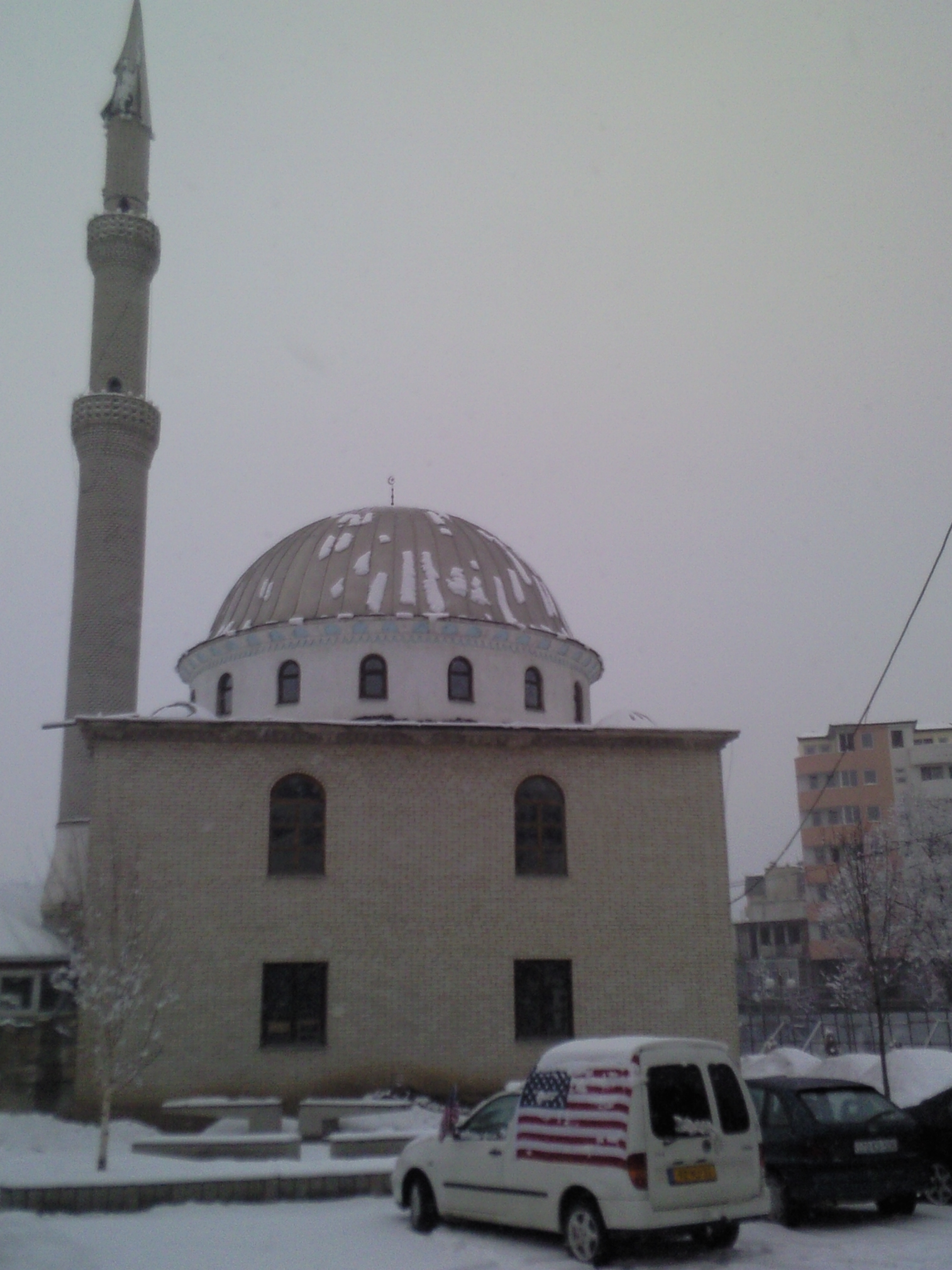
When I was in Kosovo in February 2009 for the first anniversary of Kosovo’s independence, I spotted this car draped is US flags in front of a mosque in the Southern (i.e. Kosovar) part of Mitrovica:

Of all the countries I have travelled, Kosovo and Serbia have been the only ones where the Muslim part of the population is very strongly pro-West, pro-USA, even pro-NATO and the Christian part of the population is predominantly rather hostile towards the West.

Posted in Islam, Politics, Travel, USA | Tagged , , , , , | 4 Comments

Strangers on a train

I like long train journeys because they provide me with the time to read books, magazines and newspapers.

Once, on a train in Germany, I was reading a newspaper or a news magazine. Across the table sat a man who was looking at me from time to time, so I decided to offer him one of my newspapers when he glanced at me again: “Do you want to have one of the papers to read?”

“No, I don’t read newspapers. They are a waste of time.” he replied, a tad too harshly for the occasion, and continued to stare out of the window.

“A waste of time compared with doing nothing?” I asked after a few minutes. The look I earned as a response was something between unfriendly and non-comprehending.

The rest of the journey passed in silence until the non-reader got off the train a few stops later, not without a friendly “Good Bye” from myself.

Posted in Germany, Travel | Tagged , , , , , , , , , | 6 Comments

Book Review: “Into the Wild” by Jon Krakauer

“Into the Wild” is the real story of Christopher McCandless, a young American who decided to roam the wilderness of the United States after graduating from university and who eventually died of starvation in Alaska, aged 24.

“Greetings from Fairbanks! This is the last you shall hear from me, Wayne. Arrived here 2 days ago. It was very difficult to catch rides in the Yukon Territory. But I finally got here. Please return all mail I receive to the sender. It might be a very long time before I return South. If this adventure proves fatal and you don’t ever hear from me again, I want you to know you’re a great man. I now walk into the wild.”

Such read the postcard that Chris had mailed to a friend on 27 April 1992. Four months later, he was dead. His dream had been to live in the wilderness of Alaska, without any contact with or support by the outside world. Chris stumbled across a derelict bus (pictured on the cover of the book, above) which he made his home. From there, he set out to collect food and hunt animals. Chris had neither taken a compass, nor a lot of other useful gear. If it hadn’t been for a helpful gentleman who had given Chris a lift on the last leg of his hitch-hiking journey to Alaska, Chris wouldn’t even have had proper boots. – One thing that he did have plenty of stock though, were books, among them works by Henry David Thoreau, Boris Pasternak and Leo Tolstoy. The entries in Chris’ diary also show the influence of Jack London.

self-portrait of Chris McCandless

“I have had a happy life and thank the Lord. Goodbye and may God bless you all!” is the entry in the diary, dated 12 August 1992. Chris felt that his body was weakening, that he was losing weight fast, that his end was near. On or shortly after this day, he died. Three weeks later, his body was discovered by a group of hunters. Had Chris still been alive, this encounter would have saved his life.

To die three weeks before a potential rescue and after having walked off into the wilderness a bit unprepared might be considered as a sad or silly thing. And maybe Alaska is really too dangerous for these kind of follies, especially for a kid that grew up in a Virginia suburb.

But one shouldn’t judge a life by its end or its duration, but by its content. Chris may have had a short life, but he certainly had a fulfilled one: After graduating from university, at age 22, he gave away all his savings to charity and went on a road-trip around the United States. The car was lost to a flash flood, so he continued by walking, hitch-hiking and jumping freight trains. He crossed into Mexico by canoe and got lost in the canals there. He lived and worked on a farm in South Dakota for a while. He spent time in Arizona and California, sleeping in forests, on mountains, next to rivers and in the desert. But all the time he was dreaming of the big adventure in Alaska.

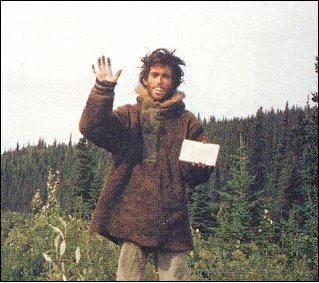
the last photo of Chris McCandless

The strongest parts of the book by Jon Krakauer are actually not the last months in Alaska (which had to be recreated based on Chris’ diary and the evidence found at the site of his death), but the memories of people whom Chris had met on his travels, with whom he had caught rides, worked and stayed. I was especially moved by the generosity of strangers and by Chris’ friendship with an old man, whom he managed to convince to (also) give up the monotonous life and take up adventure. These two years of travelling sound like a heck of a time! No obligations, no limitations, no expectations (at least not somebody else’s). Just exploring the world, life and yourself. That’s a life! – In contrast to that, what most of us do is just “passing time”.

One annoying thing about the book: Jon Krakauer could not refuse to compare his own youth with that of Chris McCandless and insisted on writing about himself. Conveniently though, this is confined to two chapters of their own, which I could thus easily skip.

Let’s hit “the road” again!

Reading the story of Chris McCandless conjured up romantic feelings in me. I was reminded of many of my own adventures, from the Australian Outback to a hike along the Southern coast of France, from sleeping outside the city walls of Jerusalem because I had arrived in the city too late to find any open hotel to crossing the mountains from Lebanon to Syria in a snowstorm. But even more so, I realised how much I miss these adventures. – And I have vowed to take them up again! Living in England, I have decided to start by walking across the country, from coast to coast, this summer without sleeping in any man-made shelter.

Posted in Books, Life, Philosophy, Travel, USA | Tagged , , , , , , | 25 Comments