Communist centrally planned economy:

Capitalist free market economy:
 The main difference seems to be that nowadays, young people do the queuing themselves instead of sending their mothers. That’s progress.
Communist centrally planned economy:
Capitalist free market economy:
The main difference seems to be that nowadays, young people do the queuing themselves instead of sending their mothers. That’s progress.
In the past two years, I have had the exact following conversation around 57 times:
Someone: Where are you from?
Me: I am originally from Germany, but …
Someone: Oh, from Germany?!! There is this really funny video on YouTube …
Me: [Sigh.] I know that one already.
Someone: … where they compare the sound of German …
Me: Yes, I know which one you mean. Everyone mentions that to me.
Someone: You have to watch it! It’s really funny!
Me: I have seen it often enough, thank you, and it’s really not that funny.
Someone: Kraaaaaankenwaaaaagen! [rolling with laughter]
Me: [being unimpressed/tired/annoyed]
You know which video I am talking about. It’s this silly stereotyped video which was not even particularly funny the first time I watched it.
I kept pointing out that German can actually sound quite agreeable when I speak it and that we aren’t really shouting and screaming all the time. Actually, after living in Malta and in Bari, I can say for certain that there are countries/regions where people shout much more. We can probably add some Middle Eastern and at least one North American country to that list.
Anyway, finally someone got around to making a more nuanced, neutral, scientific comparison between German and a few other languages:
Granted, comparing anything with Hungarian or Latvian skews the playing field a bit.
When I am looking for a quiet place to read, there aren’t as many options available as it may seem: In the park, noisy children are playing. In the forest, man-eating bears are roaming. At the library, some of the girls are distracting.
That’s how I took to the thought of hanging out at cemeteries. Not at active cemeteries where I might disturb a funeral or fall into a dug-out grave, but old cemeteries which haven’t been visited by anyone in a long time. Forgotten cemeteries. Cemeteries that in a way died themselves. Like the Ottoman cemetery in Bitola in Macedonia or the German military cemetery in Vilnius, Lithuania, which is now a leafy, shadowy park.
In Târgu Mureș in Romania, where I currently live, I stumbled upon a Soviet military cemetery. If you have already traveled in Eastern Europe, you will recognize the standard architecture which has been used hundreds of times.


The cemetery is indeed as deserted as it looks. One reason is its location on a steep hillside which puts an arduous climb before any commemoration. The other reason is that in these future-bound, forward-looking times nobody wants to remember what happened 70 years ago.
Even on 8 May, the anniversary of the end of World War II, no wreaths were laid, no speeches made, no anthems sung. Only a few geraniums in black plastic pots had been deposited by someone.
 Siting on one of the decaying wooden benches, I contemplate how much depends even nowadays on whether you were born east or west of that line where the Western Allies or the Red Army stood in May 1945. In Eastern Europe, the memory of the liberation is understandably marred by the memory of the 45 ensuing years of communism, yet this often overlooks cause and effect. If you go to bed with the Nazis, like Romania did, then you gotta be liberated.

For Jews, Roma and other persecuted people who were hiding in cellars or attics (if they hadn’t been deported or murdered already), the chattering engines and rumbling chains of Soviet tanks did primarily announce liberty.
For that reason and because numerically they bore the largest burden in liberating Europe from the fascists, I do find it appropriate to commemorate the Soviet soldiers who are buried here.
There are these two Frenchmen, Raymond and his son David Belle, who go around and claim that they invented Parkour running.
In reality, the sport had already been invented by Arnim Dahl in Germany in the 1930s. Here is some early Parkour footage:
This reduces the number of useful inventions made in France back to 4 (all cheese-related) and increases the number of useful inventions made in Germany to 18,277.
One of the 10 best photos in this year’s National Geographic Photo Contest comes from Romania. Shot by Eduard Gutescu, it shows an autumn landscape in the mountains between Bran and Sinaia.
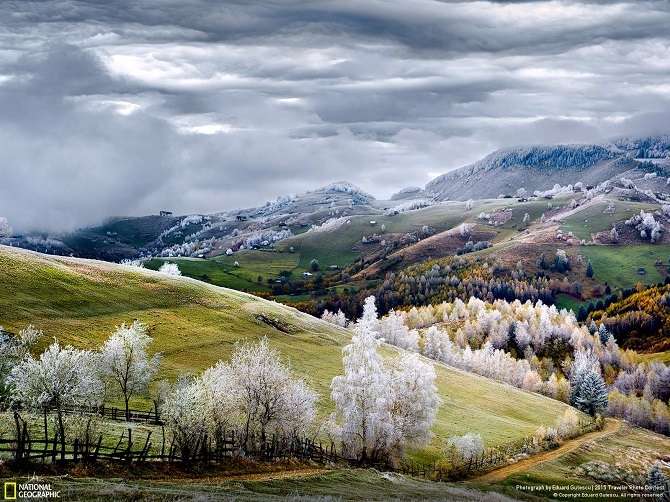 It reminded me of similar autumn weather in which I took photos like this,

and of some of the photos taken by my brother when he visited Transylvania in December. Yes, it really is that beautiful here! In any season.
There are plenty of figures, numbers and statistics about marriage and divorce, some of them even more conflicting than an arguing couple.
To know the truth, you only need to know these two statistics about divorce:

(Source: my experience as a lawyer. – Zur deutschen Scheidungsstatistik.)
“A Spy at the Heart of the Third Reich” would be one of the best spy novels I have ever read, if only it was a novel. But even better, it’s a true story. It’s a cliché that the best stories are written by life itself. In the case of Fritz Kolbe, World-War-II spy, this is true. Yet, it still requires a good writer to turn it into an exciting book. French journalist Lucas Delattre was evidently the right man for this job.
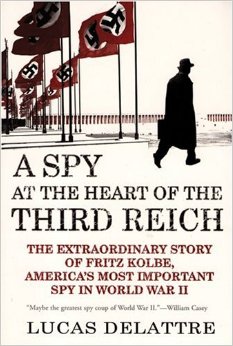 Fritz Kolbe was a mid-level bureaucrat in the German Foreign Office in Berlin during World War II. Unlike many better known “resistance fighters” who only turned against the Nazis when they noticed that Germany would lose World War II, Fritz Kolbe was always opposed to Nazism, dictatorship, militarism, nationalism and anti-Semitism. He was one of the few who refused to join the NSDAP, even after being asked to explain himself several times and after he was informed that his steadfast refusal to join the party would damage his career (he was no longer sent on foreign postings). This is yet another example which shows that it was absolutely possible to put up some resistance during the Third Reich, putting those at shame who kept repeating the lame excuse “But what should we have done?” after 1945.
Because his career had been stalled, Fritz Kolbe was limited to a job in the department of the Foreign Office that received dispatches from German embassies around the world, analyzed the foreign press, compiled reports and forwarded them to German government departments. It wasn’t an exciting job, but few jobs provided that amount and level of insight into classified matters. Kolbe decided to keep or make copies of these highly classified documents in case there would ever be a chance to provide them to the Allies.
The chance came when he was asked to deliver documents to the German embassy in Bern, Switzerland. He had a few extra days there and paid a visit to the British embassy, where he was flat-out turned away. He tried the US embassy next. Luckily, there was an agent called Allen Dulles, who would later head the CIA, who trusted his instinct and this German spy who – to the surprise of Dulles and his colleague – did not ask for any money.
Like a spy thriller, the book describes in detail how Kolbe smuggled the paperwork across the border, how he met with the Americans under the cover of darkness and how they debriefed him. Delattre also provides quite some insight into how intelligence information was checked, double-checked, tested and verified before it was used.
Kolbe returned to Bern several times, each time with hundreds of documents and invaluable notes. He provided embassy cables, assessments of the military and political strength of Germany’s allies and most usefully, he made suggestions about where to bomb to hit weapons factories, rocket launchpads, industry, railway junctions. He even provided a detailed map of Hitler’s HQ in Poland which he had drawn on one of his visits there, practically begging the Americans to bomb it. Tragically, a lot of the information got stuck between the US and British intelligence and their different competing branches. Those in London and Washington who had never met Kolbe in person did not believe that someone would turn over that much legitimate information without asking for payment and approached anything Kolbe provided with much suspicion. Valuable time was wasted, possibly prolonging the war.
One interesting fact that I had hitherto not known is that the resistance group around General Beck and Carl Goerdeler had contacted the Americans, asking them for military support during the coup d’etat on 20 July 1944 (they asked particularly for several American airborne divisions to be parachuted into Berlin) and proposed that the Wehrmacht would capitulate on condition that they were allowed to continue fighting against the Soviet Union in the East. In line with the agreement between the Allies, the USA insisted on unconditional surrender.
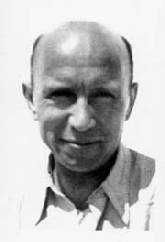 Fritz Kolbe was eager to do yet more. He was in contact with others opposed to the Nazis and had prepared a “people’s militia” consisting of 30 to 100 men, equipped with bicycles, who would be ready to take over Berlin once the Americans landed. The American spies probably deemed this naive and dissuaded Kolbe from going further with such plans, telling him that he was far more valuable as a spy. What the Americans never told him, is that he was actually the only spy they had within the Nazi administration in Berlin.
Although the action mostly stops in May 1945 – Kolbe survives the war undetected, despite his relatively open association with opponents of the Nazis and despite having told some of his colleagues about his contact with the Americans -, the book doesn’t stop here. Sadly, the story of Fritz Kolbe in the first years of the Federal Republic of Germany is all too symptomatic of that time. Shunned as a traitor by his former colleagues in the Foreign Office, he is never re-hired, while many erstwhile Nazis are. It’s as if he had been put on a secret black list. His story, his deeds, his courage and his motives only become known to a wider audience long after he died in 1971.
Delattre’s book is excellently told and has a range of interesting notes, sources and thematic bibliography that make you want to continue researching this episode of World War II. – If you like this book, I also recommend “Alone in Berlin” by Hans Fallada and “Beautiful Souls” by Eyal Press.
(This book review was also published by Medium. – Zur deutschen Fassung dieser Buchbesprechung.)
A report by the Commonwealth Fund which compared the health systems of 11 countries gave top marks to Britain’s tax-funded universal National Health Service.

If only there wasn’t this tiny detail which dampens the jubilant mood just a bit:

This car carries the plants around to offset the carbon dioxide that it produces.

(discovered and photographed at Europos Parkas in Lithuania)