Sad things (16) Birthday Party

When you invite your friends to a birthday party and nobody shows up.

chairs

Photographed at the Kalemegdan fortress in Belgrade, Serbia.

Posted in Life, Photography, Serbia | Tagged , | 1 Comment

How Romania got its flag

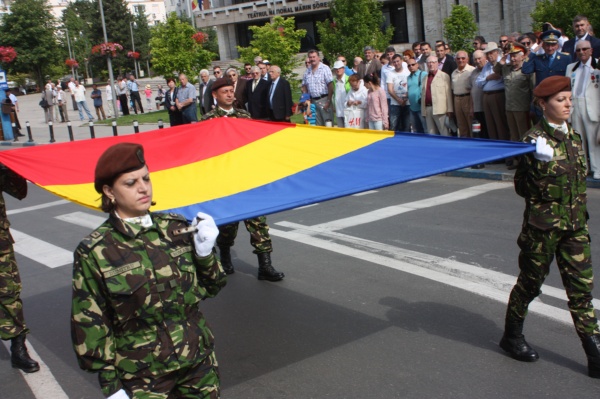
Romanians are really crazy about their flag. The blue-yellow-red banner hangs from every lamppost, in front of every building, in bakeries, doctor’s practices and in liquor stores. Because that is not enough, there is even a public holiday to celebrate the flag.

flagday1

With all this pomp, I should have guessed that the real purpose is to hide something else, something bigger, something sinister. In the typical convoluted Romanian way of thinking, the constant display of oversized flags is supposed to prevent people from wondering about the origin of the flag. Because the sad truth is that the Romanian flag was stolen.

In the late 19th century, the King of Romania kept being reminded by his British and German royal and imperial cousins, friends and girlfriends that his kingdom was the only one in Europe without colonies. “Even tiny Holland has colonies,” Emperor Wilhelm used to tease King Carol, who was a rather mild-mannered man and wasn’t really interested in conquering other countries. Also, “Bessarabia” sounded exotic enough, so what did he need places like Sumatra or Madagascar for?

There was no need to go after resources either. Romania had gold, silver and salt mines. It had enough timber that even the Austrians came across the border to cut down the forests illegally in order to supply wood to the Schweighofer piano factory in Vienna. (Back then it was easy for Austrians to cross the border because the fence-building nation of Hungary was still an Austrian colony, although the Austrians in an untypically canny move made the Hungarians believe that they had their own country.)

Unique among European nations, Romania even had slavery. Perhaps out of ingenuity, perhaps out of lack of sea-faring skills, Romania hadn’t gone to other continents to enslave Africans or Indios, but had simply used part of its own population.

All in all, there was really no economic need for colonialism. Yet, the constant prodding finally convinced the king to give in and to dispatch a small military contingent of 120 soldiers deep into the heart of Africa. It took the troops a few months to get to Africa because due to lack of funds, Romanians only travel by hitch-hiking (examples in defense against possible allegations of stereotyping are Dumitru Dan and Timotei Rad). The problem (and the allure) of hitch-hiking is that you sometimes end up where you didn’t want to go, and the Romanian soldiers found themselves in Chad.

Tasked with taking whatever they could find, the colonial force began to look around, but found only sand (hard to carry back home) and camps full of Sudanese refugees. Less in a conquering and more in a humanitarian mood, the Romanians asked the Sudanese if they wanted to come to Romania with them. “Romania? No, no, no!” the refugees exclaimed in horror. (The Sudanese had a feeling that Romania would not enter the Schengen zone anytime soon and were hoping to be colonized by Germany, not having heard of the Hereros’ fate.)

So, things dragged on, the Romanians got drunk, they got into fights with the Chadians (about women, of course), and, as always happens in these stories, one day one of the Romanian officers killed the son of the Chadian Prime Minister. At that time, Africans were used to a lot of mistreatment by Europeans, but that murder was the straw which broke the camel’s back (this figure of speech may only be used legitimately in stories set in Africa). The government of Chad gave the Romanian force an ultimatum to leave the country by sunset the next day.

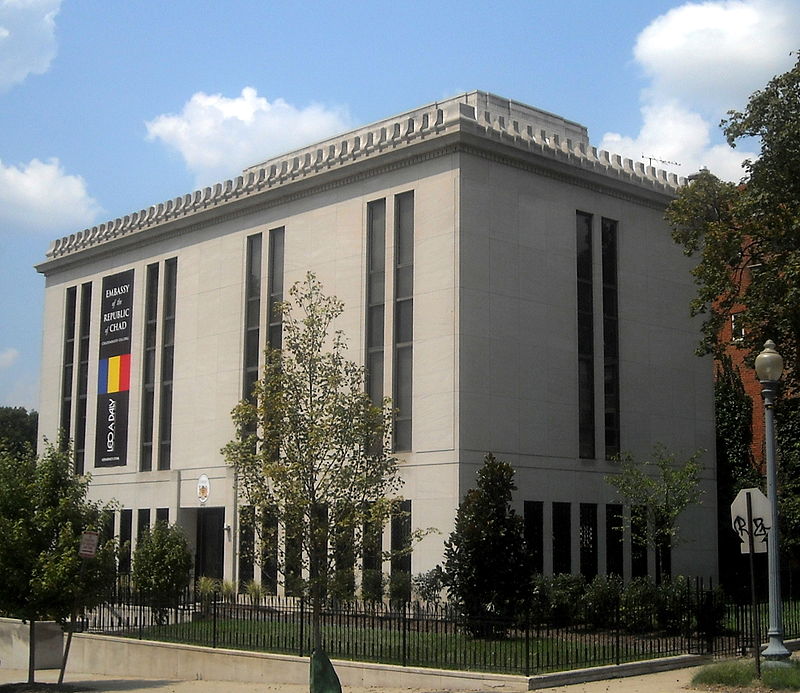
chad-flagSuddenly in big haste, the soldiers remembered their king’s orders to “bring home as many exotic and colorful items as you can carry”. They grabbed a hapless elephant for the zoo in Târgu Mureș, but because it was grey, they still had to find something colorful. So they ran up and down the main boulevard and removed all the flags from the buildings. The flag of Chad is blue-yellow-red.

And that’s how Romania got its national symbol. The next time you walk past the tri-colored flag, you won’t just ignore it, but you will remember your country’s history, from slavery to almost-in-Schengen and everything in between. Or at least you will remember this story. And if you ever make it to Chad, please return one of the many flags to them.
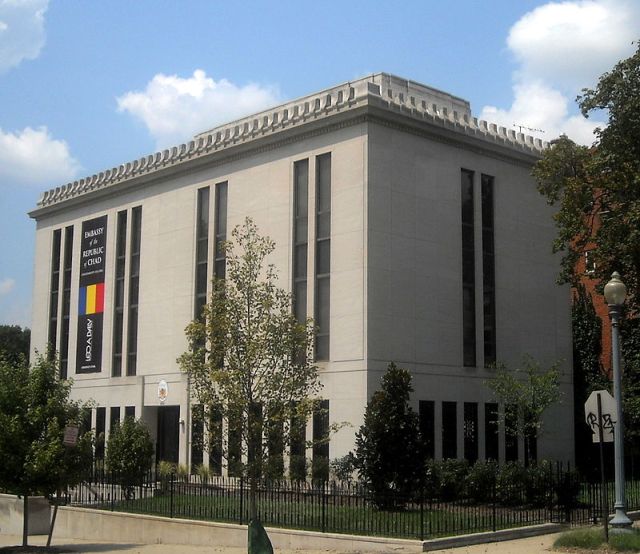
“We won’t even put up real flags anymore. We are afraid the Romanians will steal them.”
Posted in History, Hungary, Romania | Tagged | 13 Comments

The whole Internet in one GIF

loading

Posted in Technology | Tagged | Leave a comment

Belgrade and the signs of war

I have this talent to find traces of war wherever I go, but in Belgrade the task is made really easy.

First of all, the city’s fortress in Kalemegdan Park houses a military museum.

cannons Kalemegdan

tanks Kalemegdan

In addition to the permanent display of military hardware, on my last visit to Belgrade in October 2014 there was an exhibition commemorating the 70th anniversary of the liberation at the end of World War II.

exhibition 1944

Sadly, almost nobody stopped to read the texts and look at the historic photos. I did, and suddenly realized that my German grandfather had spent a few years in a prisoner-of-war camp in Yugoslavia. I don’t know if he was fighting in Yugoslavia or captured somewhere else and taken there after his capture. (I really need to investigate this one day. If you know something about POW camps in Yugoslavia or know of relevant archives, please contact me!) Like everywhere else in Europe, it was wonderful to be able to stand there, only two generations later, with war between our two countries unthinkable, and Serbia on the path to EU membership.

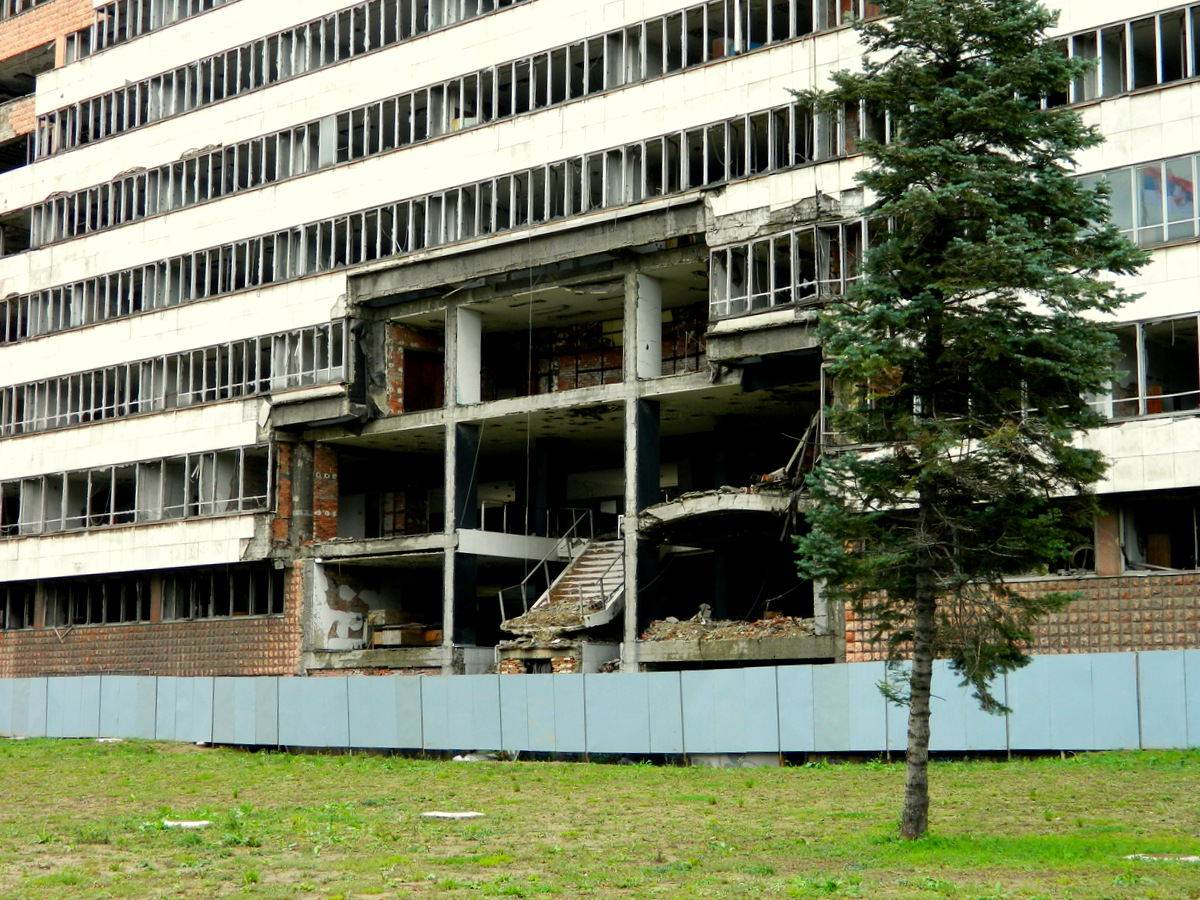
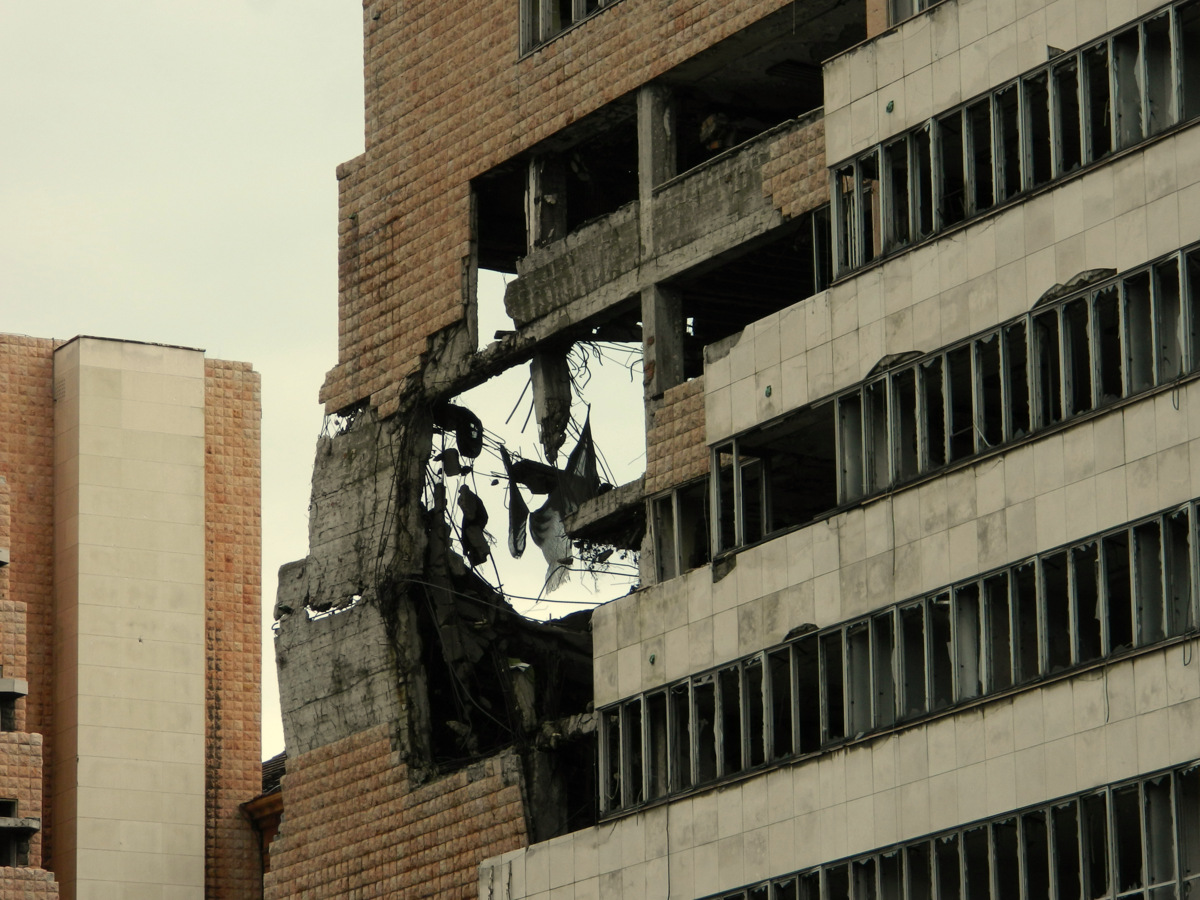
More visible are the reminders of the NATO bombing in 1999. The bombed-out buildings of the Serbian (former Yugoslav) Ministry of Defense were left like this, in the middle of Belgrade.

MOD1 MOD2 MOD3

Either there is no money to repair the ministry or someone thought that this would make a great memorial. In my mind, it’s rather a great testimony to the precision of cruise missiles. And because the rest of the building is still large enough to continue to house the Ministry of Defense, it also shows that countries can do quite well with a much reduced military.

Posted in History, Military, Photography, Serbia, Travel, World War II | Tagged , | 1 Comment

The Bridges of Venice

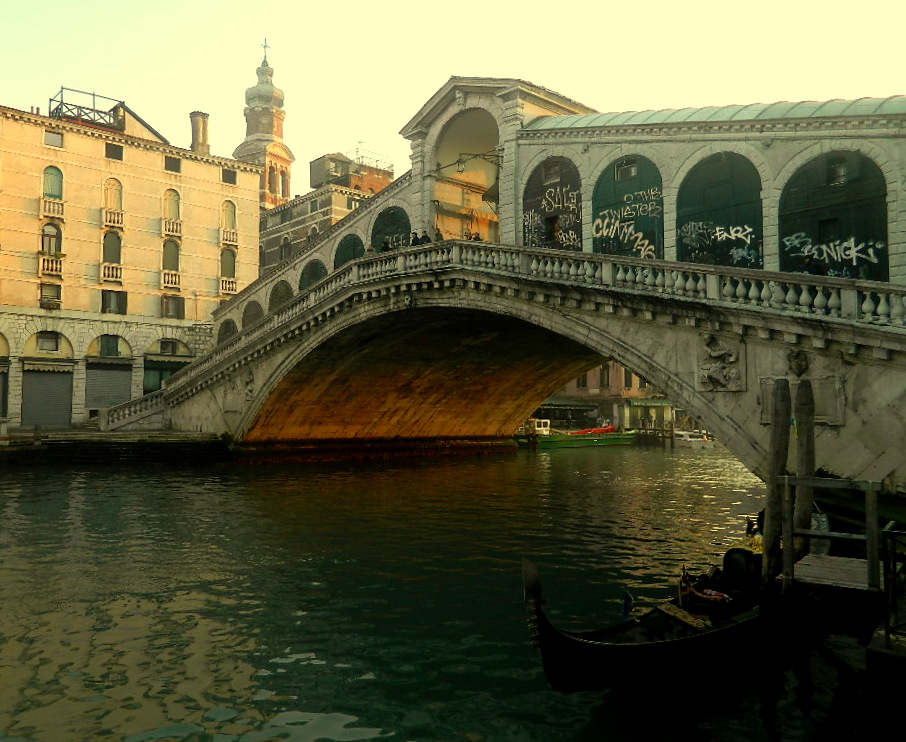
The Rialto Bridge, built in 1524 but preceded by wooden bridges and before that by pontoons, was the only bridge to cross the Grand Canal until 1854. The covered ramps carry small shops on either side of the bridge.

Rialto1

The graffiti are more recent, I believe.

In the past 150 years, a few more bridges crossing the Grand Canal have been built, but you still have to walk quite a while to get to the next one: Accademia Bridge.

Accademia Bridge

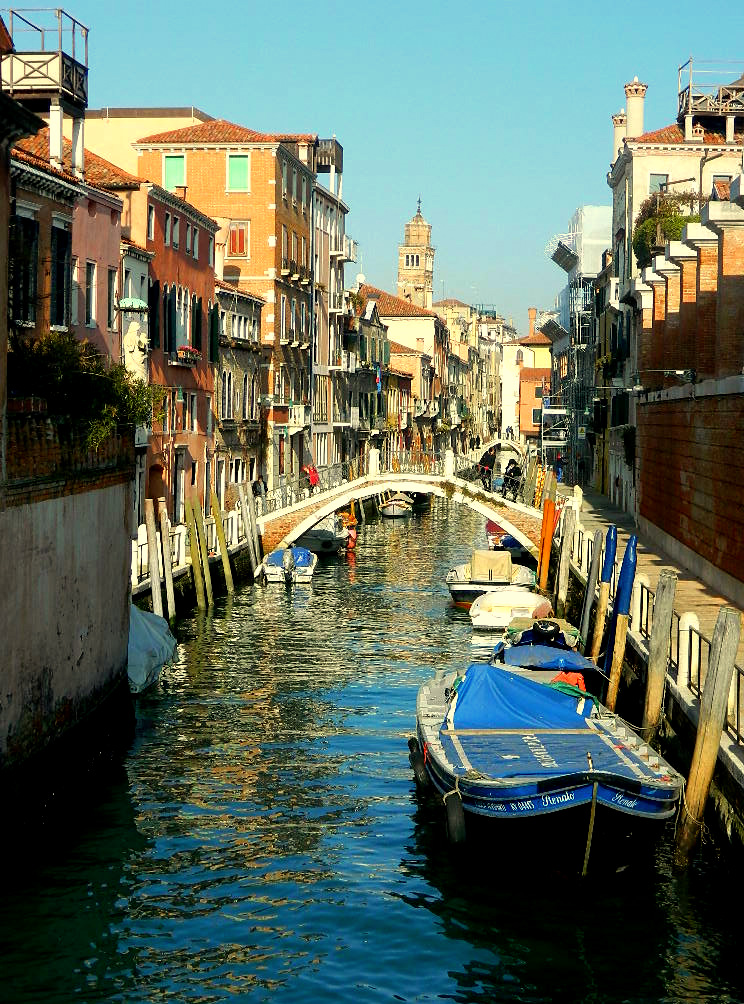
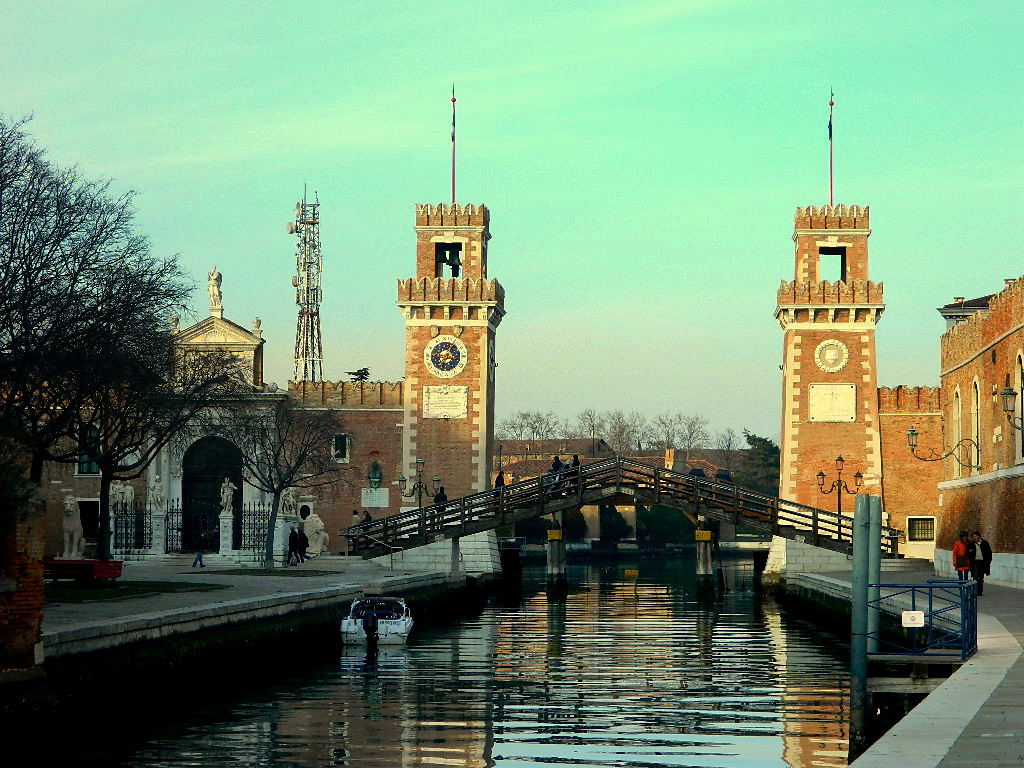
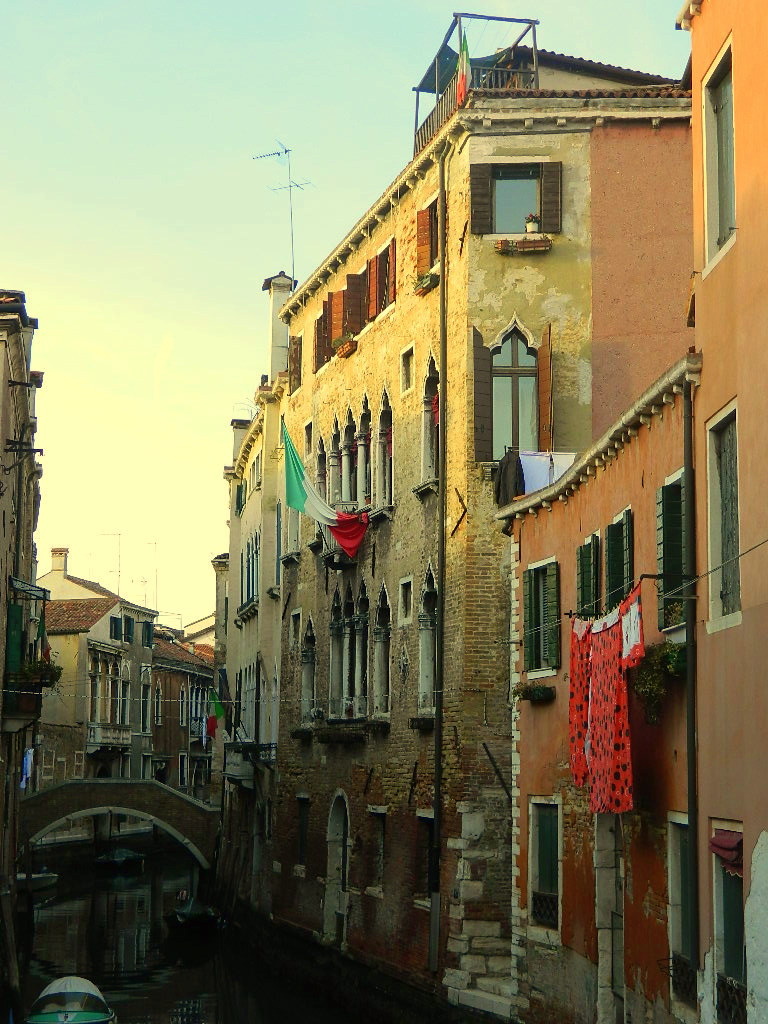
But there are more of the little bridges in each of the quarters, leading you on labyrinthine paths which always seem to lead deeper into the city, and never out of it.

bridge1 bridge2 bridge3

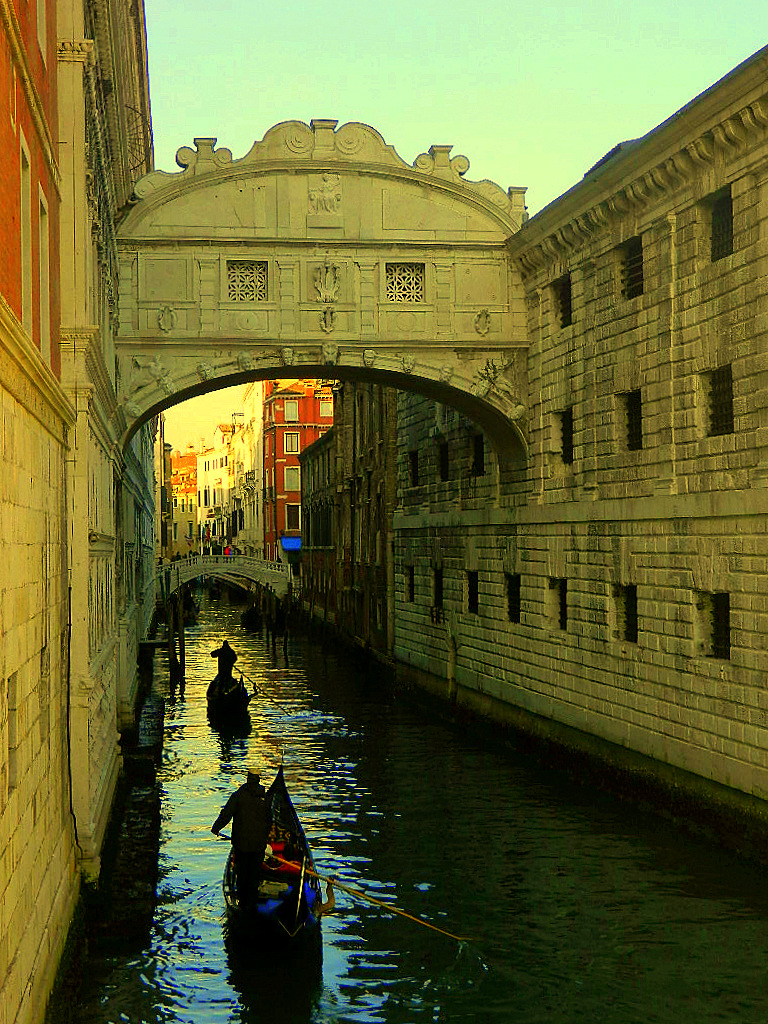
The Bridge of Sighs (Ponte dei Sospiri) is not called like that for romantic reasons, but because it is the last bridge that convicts pass(ed) on the way to prison.

Gasse6

Posted in Italy, Photography, Travel | Tagged | 1 Comment

Dangerous or cute?

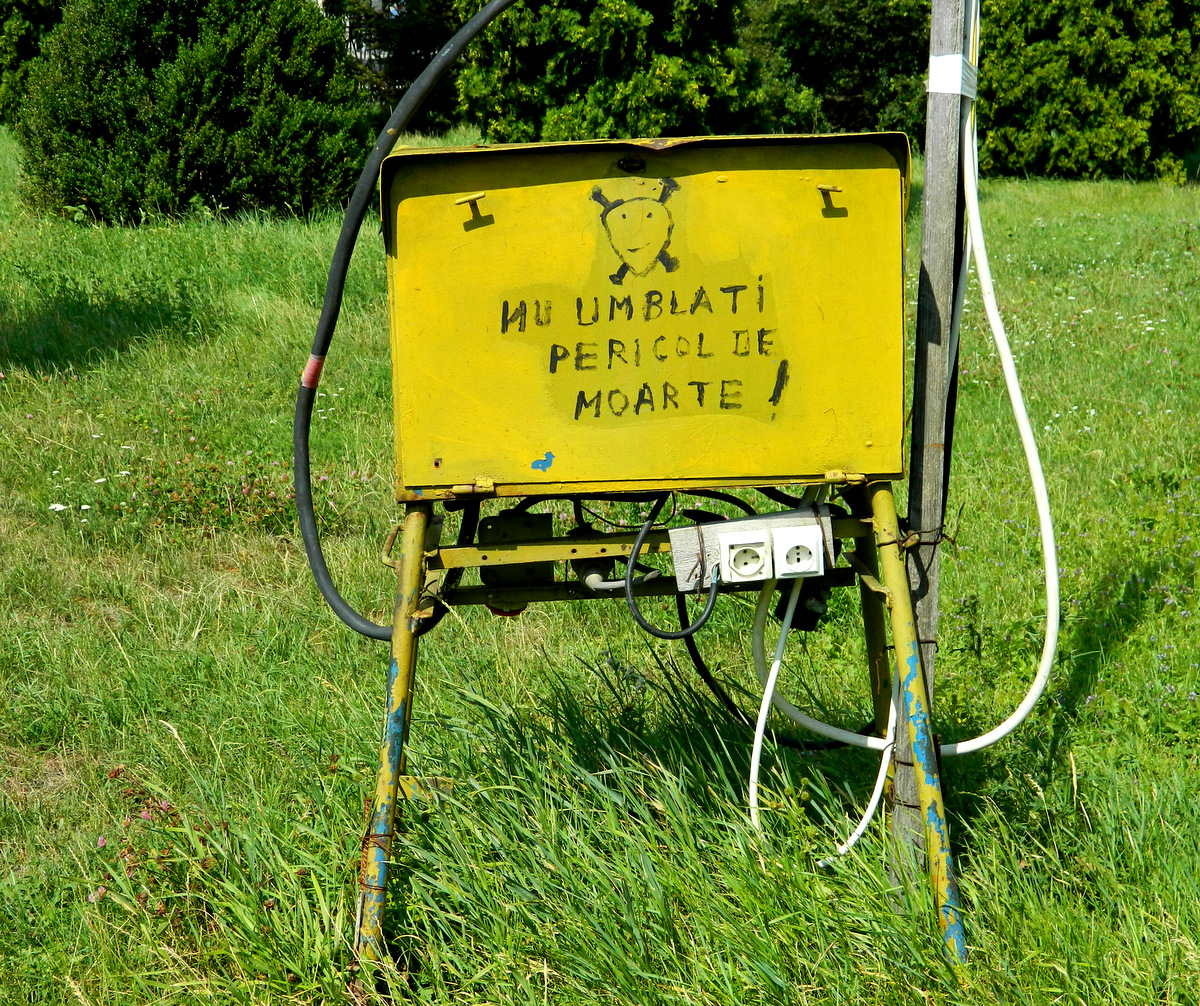
“Don’t open. Danger of death!” the scribbling warns, but putting a smiley face on the skull and crossbones makes it look much less threatening.

smiley death skull

(Photographed at the Monastery of the Three Hierarchs in Iași, Romania. You can read more about this monastery in my article about Iași.)

Posted in Photography, Romania, Technology | Tagged | Leave a comment

Eastern Europe, where Low-Tech meets High-Tech

One of the many things I like about Eastern Europe is the contrast between low-tech and hi-tech, often in one and the same place.

For example, you might find yourself at a dilapidated bus station with crumbling concrete,

The bus station in Kolašin, Montenegro.

The bus station in Kolašin, Montenegro.

you step on a 40- to 60-year old bus,

A bus in Transnistria.

A bus in Transnistria.

from which nobody bothered to remove the old German writing, disclosing the second-hand nature of the vehicle,

I am not sure if this German advertising is very useful in Iași, Romania.

I am not sure if this German advertising is very useful in Iași, Romania.

you sit down in a worn-out seat, and you have free, reliable and fast wi-fi, even in the most remote mountain areas.

In Romania, you live in a house like this,

DLP_264_0880

but you have Europe’s fastest internet, for only a few euros a month.

broadband-speed-europe

When you need to find the train station, you have to look for the hand-written sign,

gara2

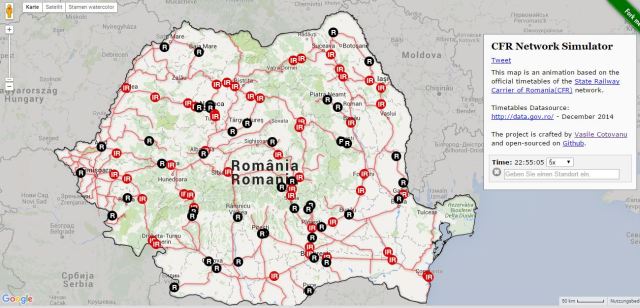
you will be in a station where the map on the wall still shows the border with Yugoslavia and the Soviet Union, 25 years after these countries’ break-up, and the air-conditioning on the train will consist of leaving the doors open during the trip. But you can follow the progress of all trains online,

cfr live map

although the speed indicated will make you weep again.

And it goes on like this, in a constant up-and-down, usually with private initiatives providing the up and public entities providing the down part. But there is this dynamic, not least because people are fed up with how slow government moves, so they take matters into their own hands. I find Eastern Europe more interesting than Western Europe because here in the East I feel like everything will look different in 3 or 5 years, while the West is relatively settled and static. I am curios what things and societies will be like when/if I will return from my South America trip after a few years.

Posted in Montenegro, Photography, Romania, Technology, Transnistria, Travel | Tagged | 5 Comments

Peace in Colombia? Just in time!

In January or February 2016, I will be somewhere on the Amazon river, on a boat, sailing upstream, deeper into the jungle. I will be on the way to one of the many tributary rivers of the Amazon, and chance may well dictate where I will end up next.

There are basically three options:

  • taking a boat to Iquitos in Peru and continue from there by boat further into Peru (the Fitzcarraldo route),
  • catching a boat to Cobija in Bolivia, although I haven’t found any information about regular boat service between Brazil and Bolivia there and Cobija is cut off from the rest of the country during the rainy season,
  • I can get off the boat at Tabatinga (Brazil) and walk across the border to Leticia in Colombia. This is tricky too because there is no river that connects Leticia with the rest of Colombia, and the nearest national road is 800 km away. I would need to walk through the jungle, which is scary in itself, but particularly scary in Colombia due to the civil war between the Colombian government and the FARC rebels who have been fighting there for more than 50 years. Scarily, FARC also have a tendency to kill foreign hikers whom they suspect of being spies because they have a GPS or a camera with them.
The lines are rivers and borders, not roads. There are no roads.

The lines are rivers and borders, not roads. There are no roads.

Just in time for my trip to South America, the last problem is being addressed and considerable progress is about to be made in this longest-lasting conflict in the Western hemisphere. The Colombian government and FARC are on the last stretch to reach a peace deal. That’s good news, although their deadline of March 2016 means that I will still be crossing the impenetrable and highly dangerous jungle during a state of war, or a ceasefire at best. But I just hope that everyone will be tired of fighting already and that the rebels will be more concerned with polishing their CVs and negotiating book deals than with taking hostages.

Colombia peace deal

Now that this problem is out of the way, I hope someone will conclude a peace treaty with the piranhas and anacondas.

– – –

If you are in Brazil, Colombia, Peru or Bolivia and know this area, I am curios to hear which option you would suggest. Thank you! ¡Gracias!

(Zur deutschen Fassung.)

Posted in Bolivia, Brazil, Colombia, Military, Peru, Politics, Travel | Tagged , | 12 Comments

Film Review: “The Man from UNCLE”

In a summer full of yet more stupid vampire, dragon, animation, monster and trying-to-be-funny movies, you have to be thankful for any spy movie that makes waiting for the next James Bond film a bit easier. Even if it’s not a particularly good one.

Actually, it’s better to treat The Man from UNCLE not as a spy movie, but as a period piece about the 1960s, for otherwise you might get disappointed. The plot is not particularly complicated, and if the film was set in the present, nobody would watch it. But these suits, these glasses, these cars, these colors, the interior design of the 1960s! It’s like leafing through a very old IKEA catalog.

Unfortunately, the actors aren’t more than models showing off the fashion of the time. They aren’t bad, but they aren’t remarkable either. Well, actually, Alicia Vikander is bad. She plays a German and has some lines in that language. I could only make them out thanks to the Romanian subtitles (although I am German and don’t speak any Romanian). Seriously, if you have to learn only a few lines of text and you can shoot the scene as often as possible, is it too much to ask to make an effort? Just ask Christoph Waltz how to do it. Veteran actor Hugh Grant who plays a minor role thus easily steals the show and has the film’s best line (“For a special agent, you are not having a very special day, are you?”).

The Man from UNCLE is one of these films which are nice to watch, but nobody would go for a second serving. Nothing spectacular, yet entertaining. The perfect movie for a date because you can easily chat (and more) in between without missing out on much. I mean, if someone can distract me from a spy movie, it can’t have been too good. That, or the girl was really cute.

man-from-uncle

Posted in Cinema, Cold War | Tagged , , | 3 Comments

Modern Mecca

Is it still the Kaaba (the black box in the arena) which is supposed to be the holiest site in the world, or has Mecca just become another place to worship dollars and riyals (and a copy of Big Ben)?

MakkahRoyalClockTowerHotel

Posted in Economics, Islam, Religion, Saudi Arabia | Tagged , | 6 Comments