Did you notice the Irony? (# 1)

Quite often when I read something that other people find tragic or outrageous or don’t even notice at all, I find that my first reaction is to think “Look at the irony behind that!” That is why I now start a new series “Did you notice the Irony” which I already know will be one of the more popular series of my blog.

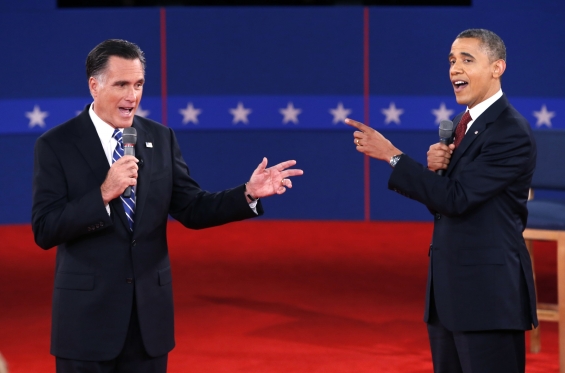
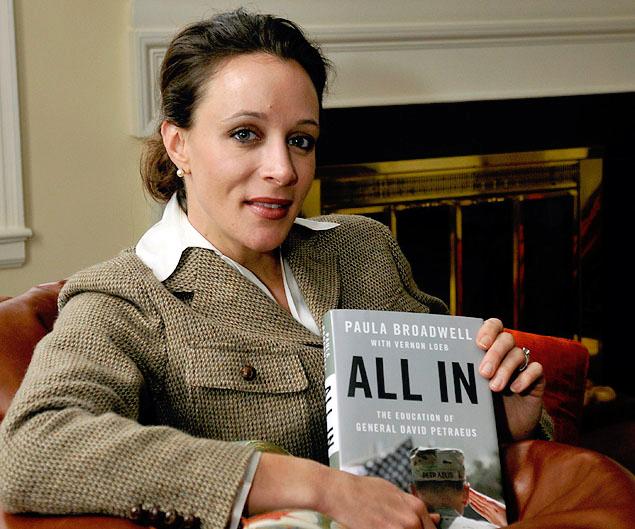
General David Petraeus, the head of the CIA, resigned yesterday because of his extra-marital affair with Mrs (yes, she is also married) Paula Broadwell, who had written a biography about David Petraeus.

The irony lies in the title of the book: “All In”

Continuing down of this slippery slope of bad taste, Mrs Broadwell’s page at King’s College London where she is currently pursuing her PhD mentions some “top-down” and “bottom-up” stuff.

Posted in Books, Military, USA | Tagged , | 12 Comments

10 FAQ about filing a Constitutional Complaint in Germany

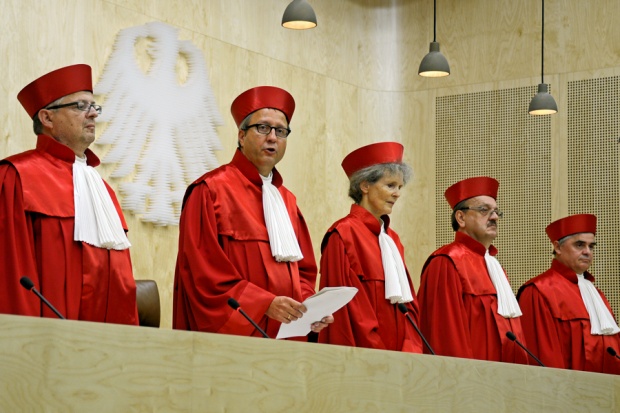
As part of my very popular series of legal FAQ, I introduce the German Constitutional Complaint (“Verfassungsbeschwerde”) today. It is a way by which every citizen – and even foreign citizens living in Germany – can address the Supreme Court, if they feel that their human rights have been violated.

Before asking a new question, please read through the many comments which may already answer your questions. And if you find these FAQ useful or if you ask a new question, it would be very nice of you to support this blog. Thank you!

1. I feel that my human rights have been violated in or by Germany. Can I seek redress against this?

Yes. Everyone can file a constitutional complaint (“Verfassungsbeschwerde”) with the Supreme Court (“Bundesverfassungsgericht”) if the appellant believes and argues that his/her fundamental rights have been violated by an act of the German executive, by a German court order or by a German act of parliament.

2. What are these fundamental rights that I have in Germany?

They are all the fundamental rights enumerated in Art. 1 through 19 of the Constitution (“Grundgesetz” [GG]) as well as the rights mentioned in Art. 20 IV, 33, 38, 101, 103 and 104 GG.

Some of these, like freedom of assembly (Art. 8 I GG), freedom of association (Art. 9 I GG), freedom of movement (Art. 11 I GG), the protection against removal of German citizenship and others, are citizens’ rights and are only applicable if you have German citizenship.

Other rights, like human dignity (Art. 1 I GG), equal protection (Art. 3 I), equality between men and women (Art. 3 II), protection from discrimination (Art. 3 III), freedom of religion (Art. 4 I), free speech (Art. 5 I) and many others, are human rights and you can also invoke them if you are not a German citizen.

3. How hard or easy is it to file such a constitutional complaint?

Theoretically it’s very easy. You don’t need to be represented by a lawyer, you can write the complaint yourself and the court charges no fees (except in frivolous cases).

What is hard however is to file a successful complaint. The Supreme Court receives thousands of constitutional complaints every year. In 2011, only 1.62 % of these were successful.

4. Why are the chances of success so small?

For one, many of the constitutional complaints don’t have any merit. If you are thinking of not paying taxes and and want to base this on “freedom of religion” (Art. 4 I GG) because you founded your own cult which does not believe in paying taxes, don’t waste your time bothering the court. If you have been convicted of a crime and are appealing your prison sentence for violation of your “freedom of movement” (Art. 11 I GG), save yourself the time.

Second, there are a whole number of formal requirements, some of them easier, some of them quite complicated, that need to be met in order for your complaint to even qualify for the judges to read through it.

5. What are the formal requirements for the constitutional complaint?

There are plenty and I can’t go into all of them here. I will list the ones that usually cause the complaints to fail or that cause me to dissuade a client from filing a constitutional complaint:

(a) You can only seek remedy against acts of the state. If your human rights have been violated by a company, by a private individual or by your spouse, you have to address this to the civil courts.

(b) The constitutional complaint is the last resort. You need to have exhausted all other remedies and appeals before addressing the Supreme Court. If you are not happy with a verdict of a Family Court or a Criminal Court, you need to file the regular appeal(s) first. If you don’t like that the police ordered you to do something, you need to sue them in the Administrative Court first, then go through the appeals and then you can finally address the Supreme Court. Because of this, the Supreme Court usually hears cases years after the underlying situation actually occurred.

(c) The constitutional complaint needs to include all the necessary information and documents to enable the Supreme Court to decide the case. You need to point out which of your constitutional rights has or have been violated and you need to explain how they have been violated. You need to show what attempts you have made in the lower courts to seek redress against this problem.

6. Is there a deadline for filing the constitutional complaint?

Yes. It is one month from the time of the last court order, usually the denial of your last appeal. One month is a short time to put together a solid and well-written constitutional complaint, so you better contact me or another lawyer as soon as possible.

7. Is the Supreme Court another Appeals Court?

No. Absolutely not. The Supreme Court only looks at whether your constitutional rights have been violated. It does not supplement the lower courts’ decisions with its own decision. The Supreme Court may think that the lower courts were wrong in evaluating the facts, that they miscalculated damages, that a sentence was too harsh, that a decision should have been issued differently from the way it was, but all of this is irrelevant, as long as it does not touch on your constitutional rights.

It is therefore imperative to limit the constitutional complaint to matters constitutional and not attempt to retry the whole case once more.

8. Are there any other constitutional complaints in Germany?

Yes. Germany is a Federal Republic and thus each of the 16 states has its own Constitutional or Supreme Court. 10 of these states allow constitutional complaints. Baden-Württemberg just introduced this possibility and it will be available from April 2013 on. Before the State Supreme Court, you can only claim your rights under the State Constitution. Most of the basic rights are however very similar to those in the Federal Constitution.

9. Can I go to the European Court of Human Rights instead?

It depends on the specific case, but usually no. Or more precisely: not yet. The European Court of Human Rights (ECtHR) requires that you have exhausted all possible remedies in national law, including the German constitutional complaint. Thus, if you do not address the German Supreme Court before and await its decision, your human rights complaint will be dismissed by the ECtHR in Strasbourg on formal grounds.

10. Can you help me with my case?

Sure. I can determine if your case has any merits and if you then decide to go ahead, I’ll be happy to file the constitutional complaint on your behalf.

But as we only have one month, please contact me as soon as possible.

Posted in German Law, Germany, Human Rights, Law | Tagged , , | 37 Comments

Should I get a Twitter?

For years, people asked me if I have a Twitter. I always answered “no”. It took me until recently to realize that this seems to be one of these new fancy technological gadgets. But even after I realized that, the answer remained “no”.

Here are the reasons why I don’t have a Twitter:

  • I am generally apprehensive towards new technology. I’ll give it 10 or 15 years to see how it works. I feel no urge to be among the brain-cancer attracting pioneers.
  • I watch the news, I listen to radio, I read blogs, newspapers and books. I really don’t need, nor do I have time for another source of information.
  • Apparently, one is limited to 140 characters per message on Twitter. That’s not much, especially not for people in love with convoluted sentences, lawyers and German speakers (we have words that are longer than 140 characters). I fall in all three of these groups.
  • Also, I don’t like the idea of somebody limiting the flow of my ideas, my mind, my speech and my writing. This is a deeply illiberal approach and I don’t see how it could advance the future of mankind. Maybe they will limit it to 120 characters next year until one day we’ll be limited to sending smiley faces. Is this Twitter company run by Chinese and Japanese who can express much more with fewer character?
  • I don’t like to own too many gadgets. A computer, a phone and a camera are already enough for me. I really don’t need something else to carry around with me all the time.
  • I don’t even answer my phone most of the time, so I doubt if I would use this Twitter much.
  • If I wait, it will probably become cheaper, like anything else that has to do with technology.
  • I don’t like to engage in activities for which the verb is derived from a company name. I don’t “google”, I “search online”. There is a perfectly useful English word for it, so I don’t need to take part in a marketing campaign for a company of which I don’t own any shares. As long as there is no English word to describe the activity now called “twittering”, it seems that there hasn’t been any need for this activity in real life.
  • As always, there are opportunity costs. If I spend time twittering, I will have less time to enjoy nature or read a book or watch James Bond movies. Proponents of Twitter should consider that I would have to give up something else for it.
  • Twitter seems to be for short, snappy pieces of “information”. Twitter prioritizes speed over content. That’s not my approach. I can read the newspaper the next day, or The Economist or Die Zeit after a week or a book after a year and I will get much better analysis.
  • I see that some Twitter messages look like this: “OMG! #SXSW 2012 Music Gr8! ow.ly/7QoSt” This is ugly. It destroys language. I refuse to write like this.

But then a friend pointed out that I am actually using my Facebook page just like other people use Twitter. I began to think: If I can somehow hook up my Twitter with my Facebook page and maybe even with my LinkedIn profile, my Skype and all these other fancy things, then I don’t need to write more, but it will potentially reach more people. But will it? 

So I am asking you now: Would you follow my musings if they were henceforth disseminated by Twitter, while you wouldn’t do so otherwise? In other words, should I finally get a Twitter or not? Will it really lead to more readers and especially readers’ participation?

Posted in Technology | Tagged , , , | 23 Comments

Will the World come to an End in December 2012?

You have 42 days left to live if you believe the wackos who misinterpret the Maya calendar and believe that the end of the world will come on 21 December 2012. Thanks to the film “2012”, people are preparing for the worst.

As this blog is known to dig deeper than any other in the search for truth, hundreds of my readers have been asking me: what is the background to these predictions? Is there any chance that there is a grain of truth to them?

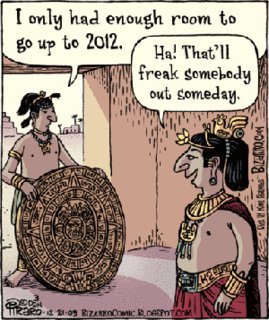
I can lay your fears to rest. You can relax. The Maya calendar is no prediction and was never meant to be one. Here is what really happened thousands of years ago:

Posted in Time | Tagged , | 12 Comments

After Obama’s re-election, what is next for Iran?

Last night’s re-election of President Barack Obama as well as the Senate elections and the ballot measures will alter the political landscape in the US more than the 2008 election did, but the rest of the world has mainly been watching this US Presidential election because of its effect on how to deal with Iran.

How urgent of a problem is Iran?

First of all, Iran is not that important as the world and Iran itself believe. It’s in the news all the time because it’s a mysterious, fascinating country which conjures up a lot of pre-conceived notions which nobody can verify because (except for me) nobody has ever been to Iran. If I was the US President, I would worry about Afghanistan, I would have sleepless nights over Pakistan, I would worry about Syria for the time being, I would worry about China’s and Russia’s continuing obstruction at the UN, I would worry about Egypt. Honestly, I may even worry more about Greece and Saudi Arabia than about Iran.
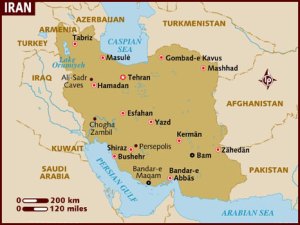
Sure, Iran has a nasty and brutally oppressive government which sows terror in the region and is striving to get the nuclear bombBut Iran is becoming completely isolated, except for friendly relations with the current Iraqi government. Bashar al-Assad of Syria, Iran’s last ally in the Middle East, will fall next year at the latest. Iran has the moral support of Hugo Chavez and similar lunatics, but he is far away and has problems of his own.

The Iranian economy has collapsed. It is completely in shambles. Its civilian aircraft are dropping from the sky for lack of maintenance. The rial suffers from galloping inflation, so much that in some shops in Iran the prices are now indicated in US-$, so that they don’t have to be amended every day. People are selling their kidneys in order to survive. The sanctions have some holes, but overall they have been working quite well.

Whoever has the chance to leave Iran does so. Whoever is young and bright and productive is leaving the country. The rest of the young and bright are in prison. Iran is on the way to become a country of old men and religious fanatics. If it won’t change, it will collapse or implode.

But what about Iran’s nuclear program?
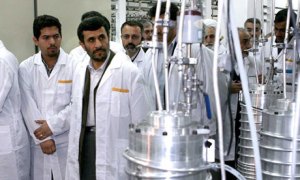
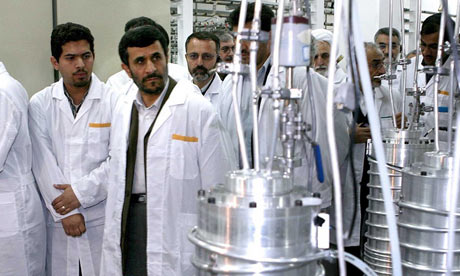
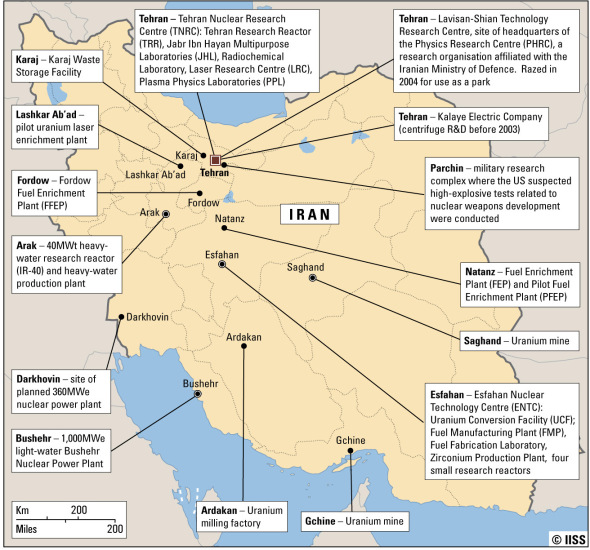
OK, that is a problem. It is clear that Iran is working not only on a civilian, but a military nuclear program. The evidence is overwhelming and the Iranian government has been caught lying about it repeatedly.

We need to continue our course of sabotage, planting viruses, killing nuclear scientists, blowing up weapons factories and so on. This has been very effective in delaying and derailing the Iranian progress. Let’s keep in mind that we are not talking about a country with extraordinary technological or organizational abilities (remember the brain drain). The Iranian space program’s proudest moment was when a mouse, a turtle and a can of worms were sent into space. They all died. The Iranian nuclear program began in 1957 and look where it is now.
If all the sabotage won’t work and Iran will become too close to building a nuclear weapon, we could still launch military attacks against specific nuclear sites, as Israel successfully did against Iraq in 1981 and against Syria in 2007. Ironically, Israel’s destruction of Saddam Hussein’s nuclear program helped Iran which was at war with Iraq at the time. Both Iraq and Syria never responded or retaliated against the superbly executed Israeli missions, probably because they were too embarrassed that foreign aircraft could invade their airspace, destroy the country’s nuclear program and return home unharmed. Admittedly, destroying Iran’s nuclear program would be much harder because it is spread out to dozens of sites, but if delaying is our goal for now, we don’t need to attack all of these sites.

It would be a shame if Israel again had to do all the dirty work, while the rest of the world, including all of Iran’s Middle Eastern neighbours, are secretly hoping for Israel’s success. This is not a matter for Israel to take up, but for the world, and NATO countries should therefore fully support such an action (or actions, if they have to be repeated every few years).

“But this would end in World War III,” I hear you scream out with horror. No, it wouldn’t lead to war at all. Iran is too weak politically and militarily (and will run out of money if the sanctions continue) and not in a position to lead a war, especially not against NATO. Iran would grumble and protest, Mullahs would try to incite the geezers who attend mosques, and Iran would retaliate through its proxies Hamas and Hezbollah. But it is doing so all the time anyway and we have learnt more or less how to deal with this threat.

Why can’t we negotiate with Iran?

I am for continuing negotiations with Iran because they don’t cost much and we have nothing to lose. But based on the experience of the previous and current negotiations, I see no reason for optimism. Most meetings between the EU and Iran are over after 5 minutes because there is no agreement about the agenda of the meeting or they are limited to exchanging friendly words and empty rhetoric.

Just read how two representatives of Iran’s regime have responded to the re-election of Barack Obama:

“An overnight resumption of relations is not possible. The Americans should not think they can gain concessions from the Iranian people by coming to the negotiating table.”

And, more flowery:

“If the interest of the regime requires it, we are prepared to negotiate with the devil in the pits of hell.”

What can you seriously expect from negotiations with such a regime? Let alone the question of what to negotiate about: (a) Iran’s main concern is that it wants to be respected as a player in the region. Iran will mention its “thousands of years of history and culture” (which it admittedly has) at each meeting, but will behave like a 16-year old teenager who wants a nuclear program because he thinks it is part of becoming an adult, much like buying a first car. (b) The world has no problem with a civilian nuclear program in Iran, but doesn’t trust Iran that it will restrict it to peaceful means. The past behaviour of Iran’s regime has not given us any reason to trust it. (c) We could trust Iran if it became more open, liberal, democratic and would stop supporting terrorists and issuing fatwas. In two words, regime change. (d) It is of course impossible to negotiate regime change with a sitting regime, especially one which faces no real opposition at home.

What are the chances of regime change in Iran?
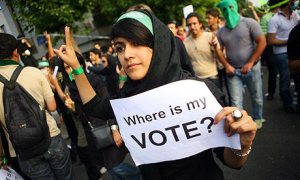
Oh, how I wish that Iran would become free and democratic! I have been to Iran twice and it is a fascinating country with fascinating, kind, intelligent, humorous, sweet people who deserve and would cherish liberty. I have fallen in love with one of the country’s daughters and part of my family lives in Iran and I wish I could visit them without fear of being arrested again, like during my last visit. I battled the police and militia in the streets of Tehran in June 2009 with thousands of brave Iranians during the attempted “Green Revolution”.

Sadly, the protests fizzled out quickly when the government cracked down violently. Iran lacks any kind of effective opposition and the large diaspora around the world seems to forget the plight of their fellow citizens left behind as soon as they come to Europe or America. Compared to Libyans and Syrians who have returned to their home countries to fight the dictatorship, Iranians abroad mostly seem to relate to their country by regularly congregating in Persian restaurants. No, I don’t see any hope for regime change in Iran in the near future. If there is nothing at all coming from Iranians inside and outside of Iran, then the rest of the world doesn’t have anything to support, even if it wanted to. However, once there is any sign of an opposition or a civil society forming inside of Iran, I think it deserves our full support.

Posted in Iran, Israel, Military, Politics, USA | 18 Comments

Six Billion Dollars

Q: What do you get for spending 6 billion $ on an election campaign in the US?

A: You maintain the status quo. The President is re-elected, the House of Representatives remains Republican and Democrats maintain their majority in the Senate.

This demonstrates that campaign donations are less effective than people hope, but also less dangerous than other people fear. I feel vindicated by this because I have always argued with the cynics who claimed that money buys elections, especially in America. Defending democracy against this cynicism, I have always pointed out that the millionaire has one vote, the billionaire has one vote, I have one vote and the homeless guy has one vote. That’s democracy. Money does not buy you any extra vote.

Posted in Economics, Politics, USA | 7 Comments

Not another historic election

Of course it had to happen with this US election as well. It happens with every election now, whether domestic or international ones. TV anchors, journalists, bloggers and especially the candidates call this “a historic election”. But they almost never explain why.

In my view, this election is not a historic election at all.

There are two possible outcomes: Either an incumbent is re-elected. I don’t see anything historic about that. It has happened quite frequently, for example for George W Bush, Bill Clinton and Ronald Reagan in recent history. Or the incumbent is not re-elected due to the economic situation and is replaced by the candidate of the other of the two main parties. This has also happened before, for the last time in 1992 when Bill Clinton won against George Bush senior. If at all, maybe in retrospect the US election of 2008 was historic because it was the first time that a non-white American was elected as President.

The act of the US Presidential election itself is also not historic. It takes place every 4 years, quite regularly since 1788.

If you want to talk about historic elections, I would draw your attention to the first election in South Africa after the end of apartheid, the first election in Germany after the re-unification of the country, the first election in which women were allowed to vote, generally first elections after the fall of dictatorships.

So, tone it down, politicians and media folks. Calling everything “historic” only sounds hysterical.

Posted in History, Language, Politics, USA | Tagged | 1 Comment

Ethical Dilemmas on Election Day

For election day, I would like you to imagine the following scenarios and tell me in the comments how you would decide and for what reasons.

Scenario 1:

Imagine you are a strong supporter of Barack Obama. You are 100% convinced, you have followed all the debates, you have been reading all the newspapers, attended town hall meetings and then you made up your mind.

You are on the way to drive to the polling station to cast your vote when your neighbour asks you if you can give him a ride to the polling place. It’s 5 km away, he can’t walk very well. If you didn’t take him with you, he would not be able to vote today.

The problem is: He will vote for Romney. He has also followed the campaign closely, read everything he could, but came to a different conclusion from you. You know you won’t be able to convince him during the ride to the polling place to vote differently.

You know if you take him with you, his vote will cancel our your vote. Will you take your neighbour to the polling place? Will you leave him behind? Will you tell him that both of your votes will cancel each other out and that you should simply both stay at home?

Scenario 2:

Same scenario as no.1, but this time your neighbour will vote for Romney for the one reason that he (the neighbour, not Romney) is a racist and doesn’t like black people. Again, you know you won’t be able to change his opinion.

Will you take your neighbour to the polling place? Will you leave him behind? Will you tell him that both of your votes will cancel each other out and that you should simply both stay at home?

Scenario 3:

You have followed the campaigns closely, read all the newspapers and blogs, studied the party manifestos and finally made up your mind. You are one of the most informed voters in the country.

Driving to the polling place, a drunken guy stops you and asks you where you’re going. You explain. He says “Whoa, an election! Great idea. I’ll vote too. Who is running? What it is about?” He asks you to give him a ride because he has no idea where the polling place is.

You know that this guy will just randomly vote for anybody (if he won’t invalidate his vote) because he has not followed any part of the campaign. His uninformed vote may cancel out your vote. Will you take the drunken guy to the polling place? Will you leave him behind?

I am curious about your responses and especially your reasons!

Posted in Philosophy, Politics | Tagged , | 19 Comments

My predictions for the US Presidential Election 2012

I know that after tonight’s US Presidential election, whatever the outcome will be, a lot of people will say “I told you so” and “that’s exactly what I said would happen”. I am different. I make my predictions before election night and you can then hold me to account and decide if you will follow this blog for the next four years or not.

  1. My stance (which I have held throughout the whole year) that polls don’t matter will be confirmed. I have consistently refused to look at, read or discuss polls and have always said “polls don’t count, votes do”. Tonight, this will be proven to be true.
  2. Because the US encompasses different time zones, votes in the Eastern  United States will be counted first. (It has to do with the rotation of the earth around the sun, something which is actually denied by a considerable part of the the electorate and against which there is a ballot initiative in Kentucky.) Florida, a swing state with 29 electoral votes, will be among the first to be counted. Ohio, the other important swing state with 18 electoral votes, will come soon thereafter. After this, the election will be decided. But as the TV networks will still have to fill another couple of hours, they will show you lots of boring charts about how some county or some demographic group voted or what would happen if California suddenly would come up with a majority for Mitt Romney and they will bring in some people from previous campaigns whom we have forgotten about to say a few sentences. You may as well go to sleep.
  3. Whoever wins, the political climate in the US will deteriorate further. It will remain a polarized country. Disappointed voters will say that the “election has been stolen” and assemble outside of the White House with placards saying “this is not my President”. I don’t see any reason for optimism. Blame Chuck Norris’ wife and her prediction of “a thousand years of darkness” if President Obama is re-elected.
  4. All the people who have promised that they will leave the US and move to Canada if X or Y will win, will however not move at all. Sadly.
  5. There will be endless court cases and legal disputes about recounts, provisional ballots, disenfranchisement of voters, irregularities with voting machines, the delayed robo-calls in Florida, long waiting lines, voter ID laws and much more. Lawyers are waiting like vultures already. We may not have a final, binding result for a few more months.
  6. If Mitt Romney will lose, the Republican Party will immediately dump him (and vice versa, probably). They never really liked each other anyway. Paul Ryan will be the early frontrunner of the Republican primaries for 2016. (Better than Rick Santorum or Michelle Bachmann in any case.)
  7. I can’t watch Fox News for more than a minute without getting angry and I don’t receive it here in Lithuania, but when the election will be called for President Obama, I would love to see what Fox News will make of it. I am also curious about what this girl will have to say.
  8. Now finally to my prediction of the outcome: I predict a tie. Yes, I predict that the 538 votes of the Electoral College will split exactly down the middle. That means that the (newly elected) House of Representatives will elect the President and the Senate will elect the Vice President. Assuming that the composition of both chambers of Congress won’t change too much, this would mean that Mitt Romney would become President and Joe Biden would be his Vice President. The relationship between the two offices will be as strained as in some seasons of 24.
  9. I have no scientific, statistical, mathematical mumbo-jumbo to support my prediction, but my thinking goes like this: If I correctly predict an Obama victory, I will be one among thousands. If I correctly predict a Romney victory, I will be one among hundreds. If there will really be a tie, I will be the only guy to have predicted it correctly and I will win a scholarship for a PhD program in political science.

Please follow me tonight at www.facebook.com/andreas.moser.blog where I will be live-blogging throughout election night.

Posted in Politics, USA | 8 Comments

An evening stroll, the sun and the sky

Every day, you should go for a walk or a run or a bike ride. At least once. Twice is better. It may be good for your health, but it’s definitely good for your spirit. Early mornings and evenings are the best time.

Two days ago, I was on another walk around Vilnius in the evening when there was a fantastic light. The colorful leaves of autumn were already gone, but the sun found other places to reflect its golden glow.

The clouds were giving a beautiful concert.

If you are wondering why you never see such a sky or such light conditions, it’s not because they don’t appear in your city or your country. It is because you’re not outside at the right moment. You only have about half an hour during which you can see this dramatic light in the evening before the sun suddenly drops below the horizon and artificial sources of light take over.

(C) for all photos: Andreas Moser on 4 November 2012

Posted in Lithuania, Photography, Travel | Tagged | 10 Comments