
New York Marathon in 2011:
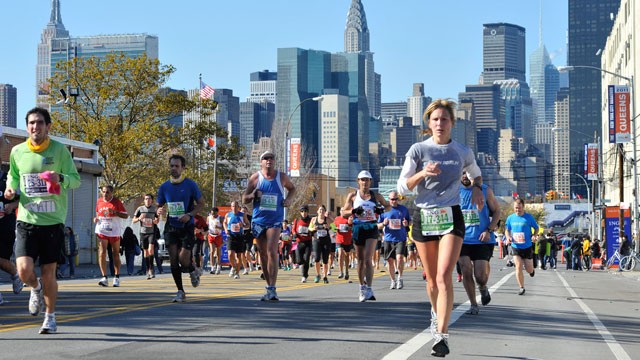
New York Marathon in 2012:

New York Marathon in 2011:
New York Marathon in 2012:
 After the havoc and destruction caused by Hurricane Sandy in the Caribbean and in the Eastern United States, appeals for help and donations have popped up as reliably as Christmas chocolate will hit the shops around this time of the year.
At first sight, it sounds both normal and great: millions of people have suffered from the storm, the water, power outages and you can help them by donating 10, 20 or 50 $. An easy way to help someone in need.
On closer inspection however, donating money to the victims of Hurricane Sandy, especially in the US, is the dumbest idea ever.
“What?” I hear you cry out in shock, especially from my American readers. “What can possibly be wrong about donating money to victims of a natural disaster?” Let me explain: the problem with so many actions that seem good if evaluated as an isolated action is that there is no isolated action. More concretely, any money that you donate to victims of Sandy will be gone. You can’t donate it again to another cause. Because of this, all options of charitable giving compete with each other for your purse or cheque book.
When making a decision about a charitable donation, you have to assess, at the very least, two factors: need and impact.
Need:
In the Eastern United States, several hundred thousand people are now without electricity, without running water, many of the can’t go back to their homes, they have lost their cars and their other belongings. Their places of work might have been destroyed as well.
That’s bad. But all of those affected receive considerable help from local, state and federal emergency rescue services, police, fire fighters, hospitals, FEMA and so on. And honestly, as long as you can tweet and twitter non-stop about your plight or as long as your biggest problem is the cancellation of a marathon run, this doesn’t strike me as the worst humanitarian catastrophe of the decade.
In other parts of the world, people are starving to death, suffering from malaria or are exposed to hurricanes without the recourse of effective government help. I would respectfully suggest that these should be the priorities of your help, especially considering that the US are one of the richest countries in the world.
Impact:
Because of the higher level of prices in the US and because the basic needs (like getting enough food to survive) which are cheaper to cover, have already been met in the US, your donation will have much less of an impact if it goes to the US.
If you donate 100 $ to New Jersey or New York, somebody will buy a new charger for his Apple iMac and order a pizza for the rest. If you donate 100 $ to Swaziland, Mali or Afghanistan, a child could get fed for a month, could get a life-saving vaccination or could get enough schoolbooks for a few years of education.
Conclusion:
If you have family or friends that have been affected by Hurricane Sandy, I fully understand that you prefer to help them directly. But if you are an unrelated donor who wants to give some money, please think again and look for a more worthwhile cause.
(Anläßlich des Elbe- und Donau-Hochwassers 2013 erschien ein ähnlicher Artikel auf Deutsch.)
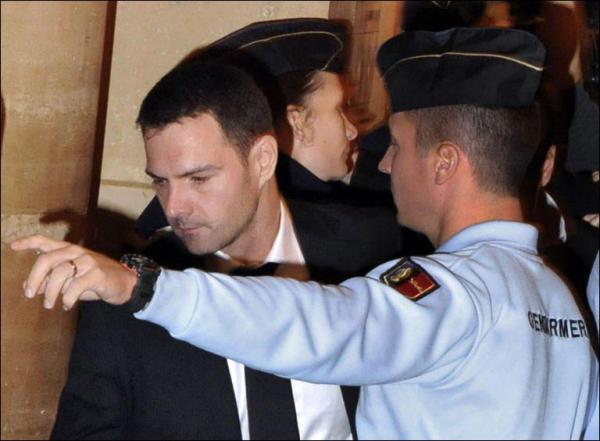 Today, an Appeals Court in France upheld the conviction of Jérôme Kerviel, a former trader with the French bank Société Générale, sentenced him to serve time in prison and ordered him – rather symbolically I assume – to pay 4.9 billion Euros to the bank by which he had been employed.
What did Jérôme Kerviel do?
Jérôme Kerviel worked as a trader at Société Générale. Beginning in 2006 and up to 2008 he was engaging in high-risk trades which the bank later said were “unauthorised” (although they didn’t mind reaping the profits of these trades as long as they went fine). He exceeded his risk limits and tried to conceal his activities. When Société Générale finally “discovered” what had been going on, they closed the trades in January 2008 at an alleged loss of 4.9 billion Euros.
What should Jérôme Kerviel have done instead?
He should have opened a bank himself before losing several billion Euros, because then he would have been rewarded for this reckless behaviour with a taxpayer-funded bailout.
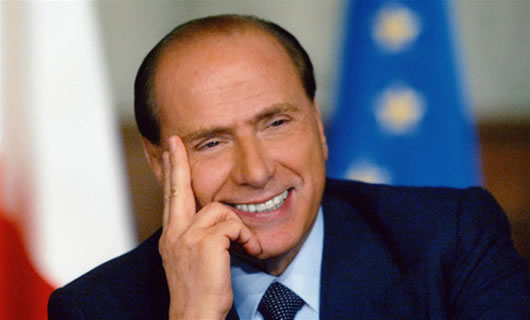
In Italy, if you are suspected, accused and tried of bribery of businesses, politicians, judges and the tax authorities, Mafia connections, false accounting, false testimony, soliciting prostitution from underage girls, tax evasion, embezzlement, antitrust violations, drug trafficking, abuse of political office you don’t need to worry: Nothing will happen to you.
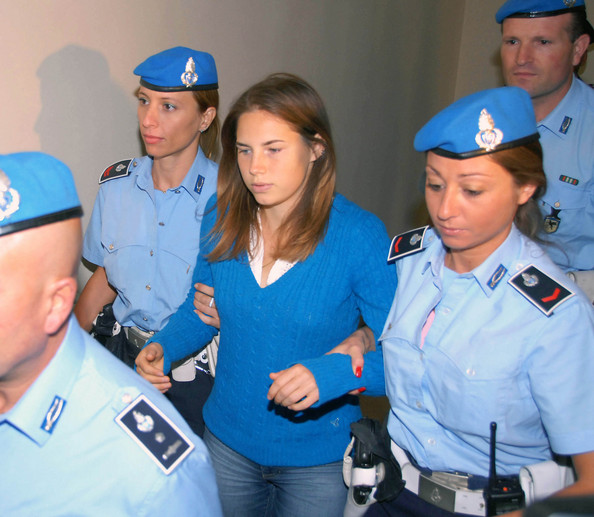
If you are an attractive young woman, you may be arrested at first, but you will eventually go free.
If you are a scientist doing your job, you will go to prison for a long time.
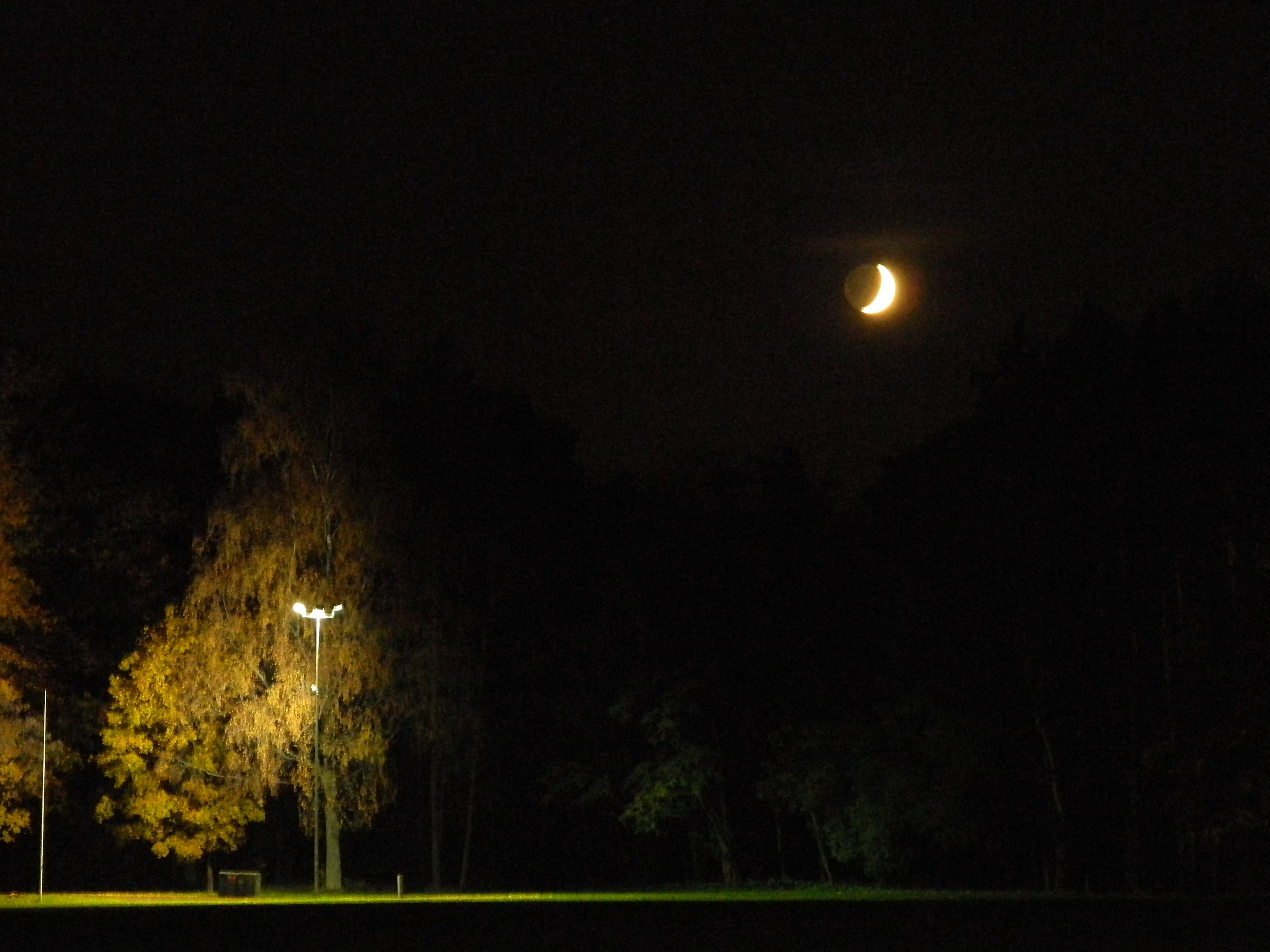
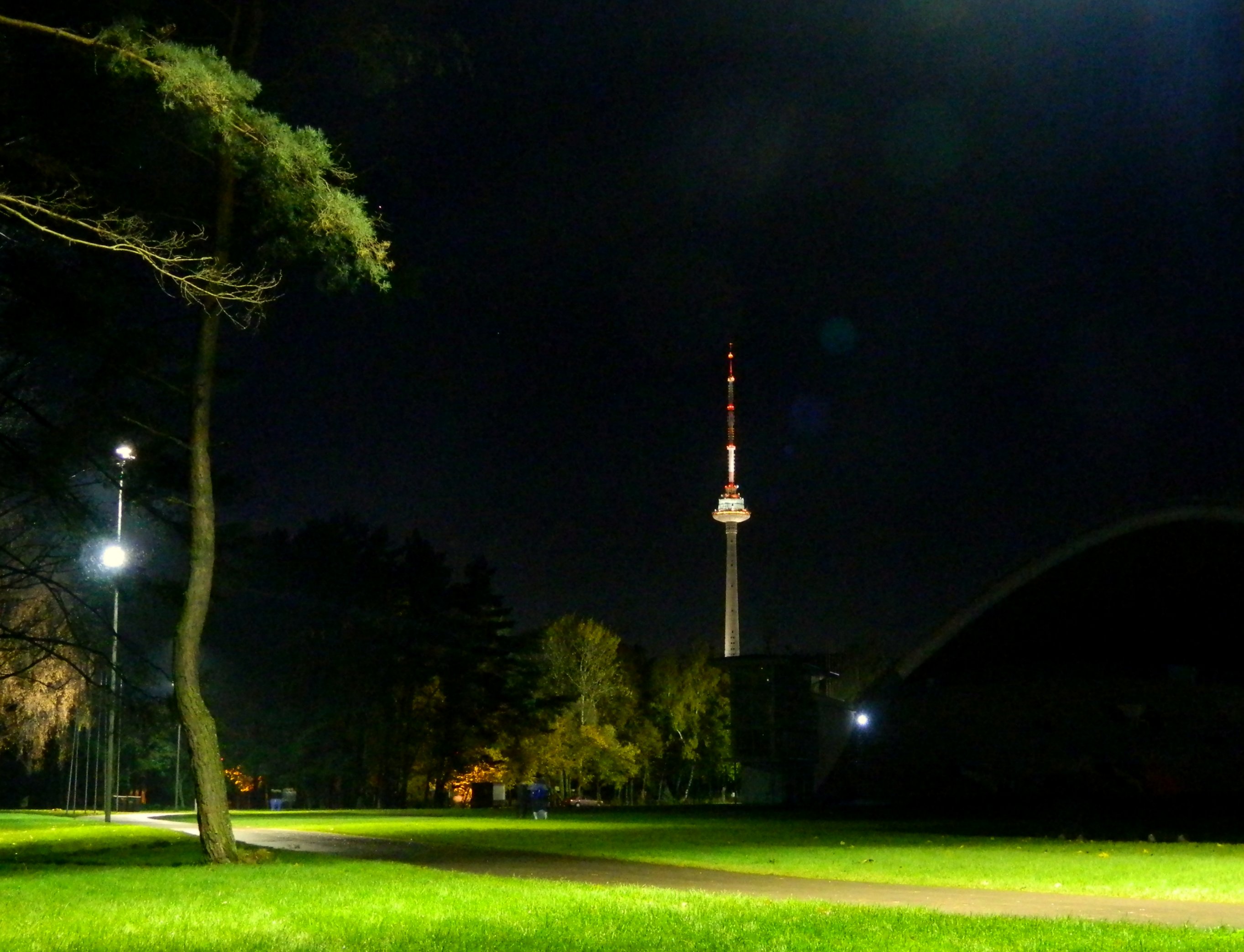
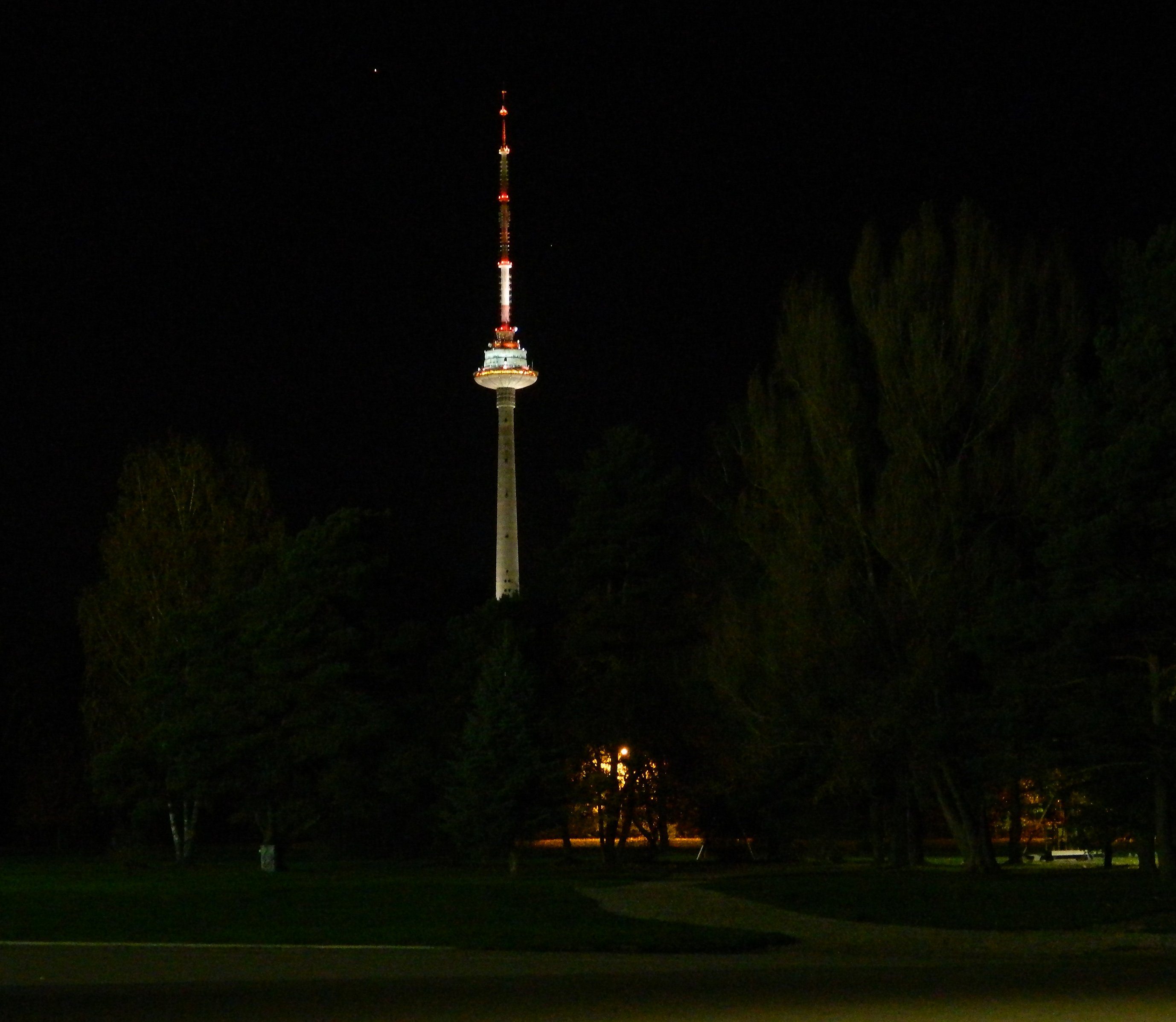
One of the nice things about the area of Vilnius in which I live is that I only have one minute to walk to Vingis Park, a large and beautiful park which is in large parts more of an urban forest than a park.
In summer I spent may days there with my books and now in autumns it’s beautiful to observe the changing colours of the foliage.
But even late at night, it is worth a stroll.
 A number of employees of Amnesty International, the human rights NGO, went on strike yesterday over the threat of job losses.
Let us examine how this strike affected the human rights situation yesterday:
– The Syrian government continued to murder the population of its country.
– There were still inmates being held in Guantanamo Bay, about some of whom even the prosecution agrees that they should be freed.
– A Nobel Peace Prize winner was still in jail in China, and he was by far not the only political prisoner there. Yet China is one of our bigger trading partners.
– In dozens of countries, among them the country from which we get most of our oil, half of the population still had considerably fewer rights than the other half.
– After the collapse of Iran’s Green Movement after a few weeks of protest in 2009, there is no reason for optimism regarding next year’s Presidential elections in Iran.
– and so on
But don’t worry, people of China, Iran, Syria, Cuba and Tibet, tomorrow the people at Amnesty International will return to work and everything will be fine again. – Wait. It won’t? You mean there won’t be any change? No improvement in your situation at all irrespective of whether the folks at Amnesty International write reports, attend conferences and “strongly condemn”?
Well, then we should say thanks to the striking employees of Amnesty International because they have finally revealed that in reality, all of Amnesty International has been on strike for years.
(I know that criticism is cheap, but I will soon reveal my plans for a new and really efficient human rights NGO. Stay tuned.)
Ever since my move to Lithuania a few months ago, I feel like I am in Eastern Europe. In fact, discovering Eastern Europe was one of the main reasons behind my move east (I should point out that I am from Germany), but whenever I mention this to Lithuanians, they are visibly insulted and correct me that I am not in Eastern but in Central Europe. I had always been tempted to ask “If this is not Eastern Europe, what is?” until I was informed that possibly Ukraine and definitely Armenia and Georgia are Eastern Europe, but not this Baltic country. I then apologize for the unintended insult, try not to repeat it and feel ashamed about having been so EU-centered when speaking of Europe.
Later, usually on my way home from the pub, I always wondered – thus far to no avail – why people are insulted by the term “East” but most probably wouldn’t be insulted by being called “Western”. Then I began to work out objective factors for what is Eastern Europe and what is not. I am sorry to say that after applying these objective factors, Lithuanian is part of Eastern Europe. I know this means that I will lose the few friends I have made here so far, but I am not one to hide my true conviction just to make people feel cozy or happy.
Let’s look at the facts, one by one:
Geography
On a somewhat ball-shaped planet, East and West are of course completely arbitrary concepts, as Christopher Columbus had to discover. Looking at parts of Europe from within Europe however, there is clearly an East, a West, a North and a South and of course a center. Looking at a topographical map of Europe, it becomes obvious that it was indeed rather close-minded of me to equate Europe with the EU (which is constantly growing and shrinking anyway).
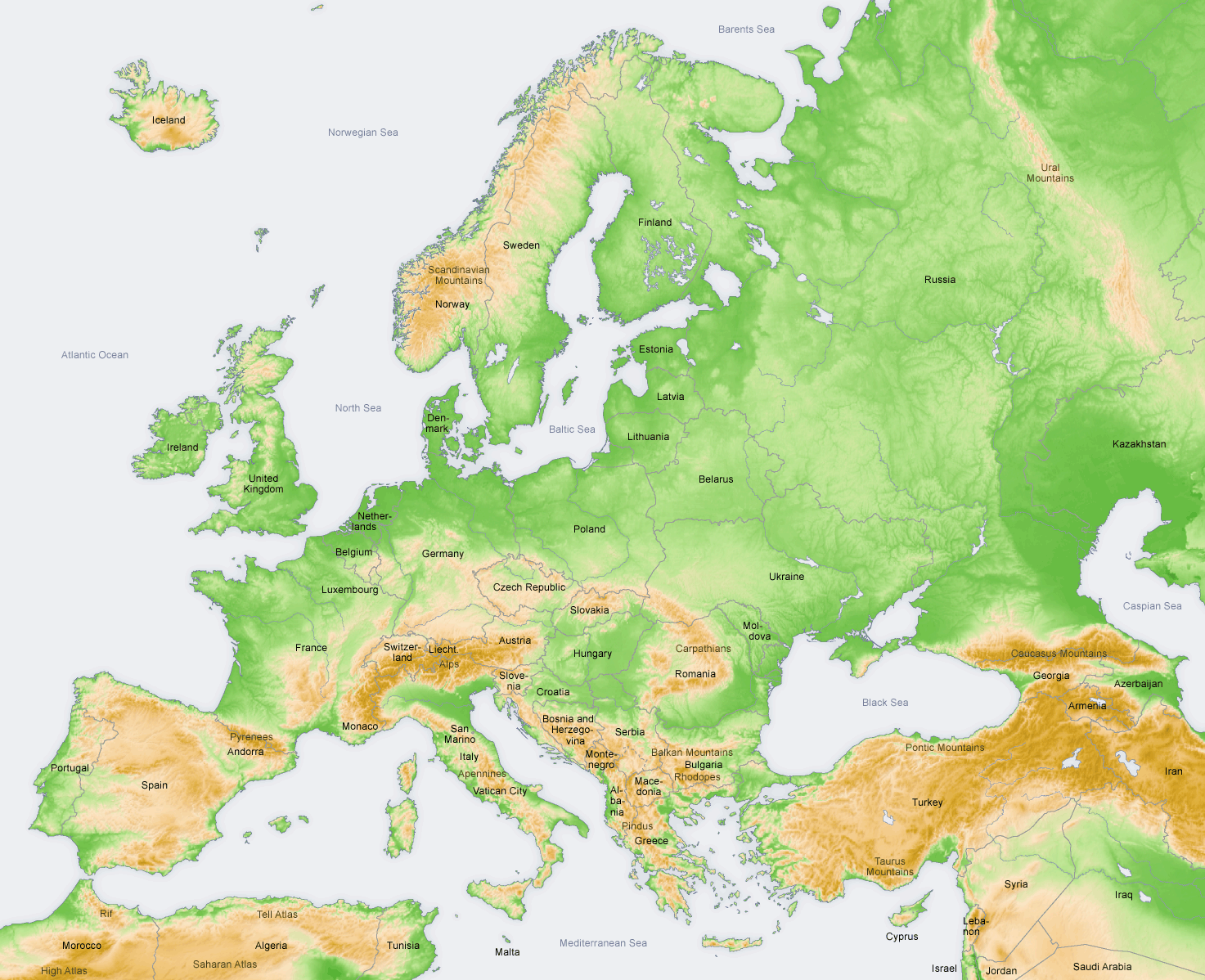
If we accept that the eastern geographical boundary of Europe are the Ural Mountains, this continent is actually a surprisingly large chunk of land.
According to one calculation, the geographical midpoint of Europe is actually in Lithuania. With that in mind, it would be hard to argue that Lithuania is anything but in Central Europe. But first, there are several geographical midpoints all over the continent, depending on the method of calculation. Second, all of this reasoning relies on counting a large part of Russia and Kazakhstan as Europe, which I find highly dubious given that the much larger parts of these countries are in Asia. If we are in the business of drawing clear-cut lines, like Sykes-Picot, Mason-Dixon or this article, we can’t allow a country to attend two parties. Good bye, Russia. And without Russia, it is very hard to argue that Lithuania is not in Eastern Europe. In fact, it is so far east that it is in danger of falling off into the abyss which already swallowed Napoleon’s Army and large parts of the Wehrmacht (albeit too late, unfortunately).
History & Politics
This brings us to history and politics. My interest in world affairs began to develop surprisingly soon after my birth (yes, I was the kid who read the newspaper while other children played in the sandbox) and my political socialization thus began in the 1970s and 1980s. It has been heavily influenced by the Cold War, which sounds like such a negative term (and for those in Asia, Africa and Latin America it was indeed not cold at all, but a rather lethal affair) but which many spies, political scientists, writers of thrillers and arms dealers miss for its clarity: there was East and there was West, with a clear line, dramatizingly dubbed “the Iron Curtain”.
The antagonism between NATO and Warsaw Pact, between free market economies and communism, between freedom and repression admittedly continues to influence my image of Europe. To me, history and politics are more important than rivers or mountains or other unelected boundaries. Therefore, any country that was part of the Soviet Union or the Warsaw Pact will always remain Eastern Europe.
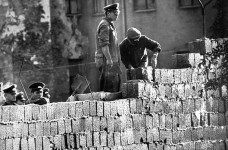
(Some of you will try to be a smartass and point out that my own country, Germany, would be West and East according to this definition. I will retort that if East and West fuse together in one country, this means that this country is the only one which is really Central Europe.)
Time zone
Lithuania is within the Eastern European Time Zone, which is one hour ahead of the Central European Time Zone. The name says it all. If you want to be part of Central Europe, don’t make me wait an extra hour every evening to watch Tagesschau.
Language
Language offers the most incontrovertible evidence yet that Lithuania is part of Eastern Europe. Any language that has letters that look like č, š and ž (and sound accordingly) is definitely Eastern European.

(Central Europe is identified by ä, ö and ü, Western Europe by á, è and ô.)
Guidebooks
Lastly, and most authoritatively, Lithuania is included in the “Eastern Europe” guidebooks of most publishers, for example the Lonely Planet guidebook for Eastern Europe.
(This article was also published by Medium.)
My suggestion for the Nobel Peace Prize 2012: Liu Xiaobo, the Chinese writer and human rights activist.
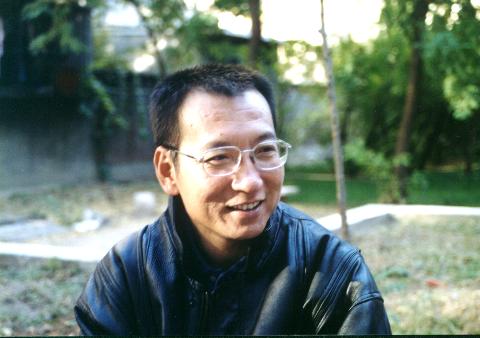 Yes, I know that Liu Xiaobo already won the Nobel Peace Prize in 2010 and I know it would be the first time that one person wins the same prize twice. But this is a special situation which calls for a special reaction: The Nobel Peace Prize laureate of 2010 is still in prison in China. If the Nobel Prizes are supposed to achieve anything beyond some newspaper articles for a week after their announcement, then the Nobel Prize committee should display the determination to continue awarding the prize to the last laureate who is still imprisoned and thereby to name and shame China. They should do so year after year after year – until China will have to release Liu Xiaobo.
The outrageousness of China’s treatment of Liu Xiaobo becomes even more apparent when we consider this question: When was the last time that a Nobel Peace Prize laureate was kept in prison by his home country? It was in 1935. The laureate was Carl von Ossietzky. The country was Nazi Germany. (Aung San Suu Kyi was under house arrest in Burma when she was awarded the Prize in 1991.)
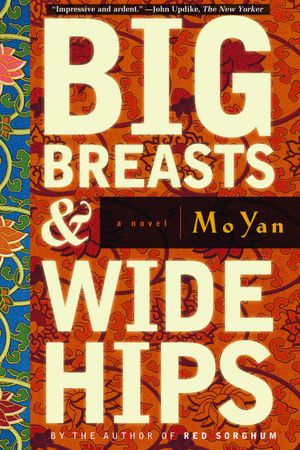
“Big Breasts & Wide Hips”, a book by the Nobel Prize winning Chinese author Mo Yan:
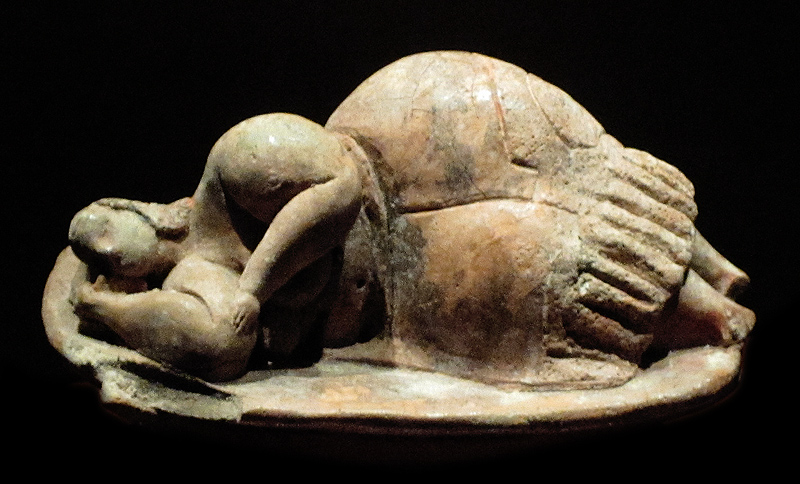
Big breasts and wide hips in Malta:
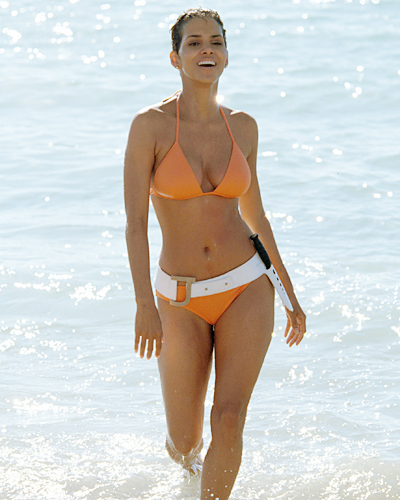
Big breasts and wide hips in my imagination:
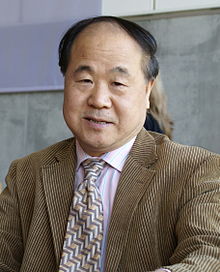 My empty, questioning stare when I heard that this year’s Nobel Prize for Literature would go to the Chinese author Mo Yan showed me three things: that I don’t read enough books, that I don’t read enough literary supplements of newspapers and most importantly that my reading is still too much focused on the two sides of the North Atlantic.
I want to rectify this omission. Because many of Mo Yan’s books had already been translated into English (and German) even before winning the Nobel Prize, no obstacle and no excuse can abate my determination.
Counting on my esteemed readers’ experience, knowledge and literary taste, I kindly ask for your opinion: Which of Mo Yan’s novels should I read first to get an impression of his work?
Thank you very much for your vote and for your comments! Of course I will review the book here on my blog once I will have read it.
Too bad that my blog is censored in China, so that some of the most competent commentators won’t be able to participate.

 The Happy Hermit