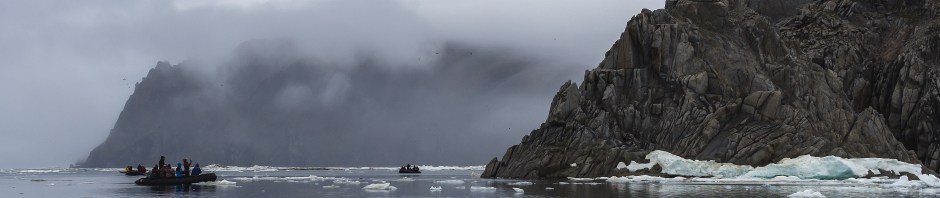
For reasons of global inequality, the majority of this blog’s readership is located in the northern hemisphere, where they are currently suffering from the summer heat, fleeing forest fires, or – depending on their worldview and personal priorities – simply happy that the golf course is still getting enough drinking water to keep the lawn green.

Perhaps that is why the greatest popularity is enjoyed by those of my stories that chillingly drift into the snow, the ice and the Arctic, such as Fridtjof Nansen’s Fram expedition, Umberto Nobile’s polar blimp or the daring ascent of high mountain ranges in the depths of winter by the author of these lines, who, for lack of imagination, always has to freeze his own toes off or succumb to altitude sickness before he can write about anything.
Not everyone is a Karl May, who can just make up wild stories. Or a Karl Marx. But that’s another topic, albeit one I might return to soon, because I’ve recently settled down in Karl-Marx-Stadt for the foreseeable future. Due to apartment hunting, moving stress and similar petit-bourgeois nonsense, there was also a noticeable lull on the blog this summer. But now, it’s time to put away hammer and compass, and pick up the pen again.

So, while it’s 35 degrees outside (and even more for those who think that Fahrenheit is a useful measure), I have dug up another refreshing expedition to a cooling place for you. Even in summer, Wrangel Island rarely gets more than zero degrees.
“Wrangel who?” you are asking, prompting me to go back in time, not only by the one hundred years promised in this series, but by two hundred years to start with. Because it was in 1823 that the history of this island began, at least discounting for such boring disciplines as geology, prehistory or paleontology, which would even put a polar bear asleep.

Ferdinand Baron von Wrangel was one of those Baltic Germans whom I have already introduced in another (and unfortunately more bloodthirsty) episode. He worked as a geographer, explorer and surveyor for the Russian tsar, who wanted to know more about Siberia, especially if there was anything useful (gold, wood, fur) to be found between all the useless stuff (snow and ice).
Now, I would ask you to pause for a second and think about the great explorers and their voyages that come to mind. You will probably remember Christopher Columbus, James Cook, Alexander von Humboldt, Vasco da Gama, Henry Morgan Stanley, Hernán Cortés, Roald Amundsen, Ernest Shackleton and all their voyages around the oceans, the search for the Northwest Passage, the marches to the South Pole, the conquest of America, Africa and Australia, but I am certain that Siberia will remain a white spot on your mental map. (Alexander von Humboldt’s expedition to Russia and Siberia is largely unknown even in his home country.)
But after the Middle Ages, Russia was just as much a colonial power as most other European powers. Except that it didn’t need to send fleets overseas because it had the world’s largest landmass right next door, just waiting to be conquered, plundered and subjugated.


Another difference with Portugal, Spain, France, Great Britain, the Netherlands and Germany is that in Russia the colonial attitude still determines foreign policy to this day.
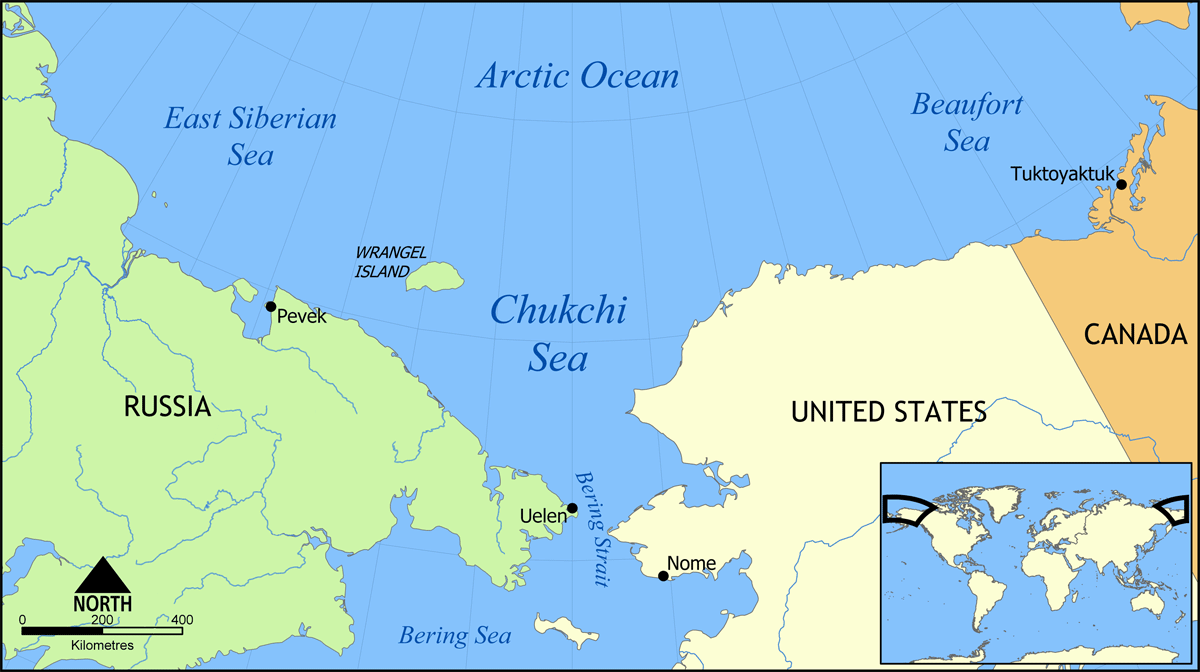
On the map of Russian expansion, you can already spot Wrangel Island in the upper right corner. However, Baron von Wrangel could not see it in 1823, because either the weather, the sea or his mind was too foggy at the time. But while mapping the coast of Siberia, the local Chukchi people told him that there was an island to the north of Siberia. This was confirmed by bird flight, because birds usually do not senselessly and pointlessly fly into the Arctic Ocean, but towards an island where they can take a rest and grab a bite. Birds are pretty clever creatures.
One always wonders how the Polynesians, for example, were able to discover tiny Easter Island in the huge Pacific Ocean. But actually, all you have to do is surf around on the sea until you see flocks of birds. You follow the birds, and swoosh, you’ve discovered an island with mysterious statues and can henceforth make a living from tourism.

That reminds me that I still haven’t gotten around to write the full story about my trip to Easter Island. Maybe in November, when it will be grey and cold and miserable, and you will be longing for the sun and the South Seas. As a countercyclical traveler, I should also write countercyclically.
Baron von Wrangel never saw the island that was named after him. But before you want to pity him about this, don’t worry, he still had an exciting life. He sailed around the world several times and became Governor General of Russian America in 1829, later an admiral, Minister of the Sea and all sorts of scientific jobs.
Yes, you read that right: Russian America. And it’s quite logical, in a way. Once you’ve colonized all of Siberia, you won’t be stopped by a small Bering Strait, and you’ll conquer the next continent. Like the other colonial powers with their East India Companies, Russia established the Russian-American Trading Company, privatizing profits while socializing costs, and allowing a state within a state to emerge that put politics before the cart of its financial interests. (Much like Wall Street.)
It is well known that Alaska was Russian until it was sold to the United States in 1867. Less well known is that the Russian-American Trading Company also had a base in California: Fort Ross, which you can still visit today.
In 1841, Fort Ross was not sold to the USA, but to a Mr. Sutter from Switzerland, who established something like a private colony, called New Helvetia. But at least the older ones among you already know this story, which sounds suspiciously like Karl May, from the movies. Oddly though, in the film, the Swiss gentleman becomes German. The German movie industry must have been on some weird propaganda trip in the 1930s.
Even fewer people know that the Russian-American Trading Company wanted to annex Hawaii and established several bases there. Once again, a German was significantly involved. German-Russian cooperation for the subjugation and division of the world really has a long tradition. Therefore, please do not be surprised if at some point the Russian Pacific fleet appears off Hawaii and says: “You have always been Russian, and therefore we must bomb you into submission.” Strange logic that, bombing and killing the people who supposedly belong to one’s own country or people.
Therefore, let’s quickly return to the good old times when everything was happy-hunky-dory and all people were brothers.
Wrangel Island was sighted several times by whalers or explorers. The coast was mapped. From 1881 at the latest, people also set foot on the island. But nobody wanted to hang around longer than for a glass of grog, because the island didn’t really look that inviting. It’s Siberia, after all. Only further north. And surrounded by ice-cold water.

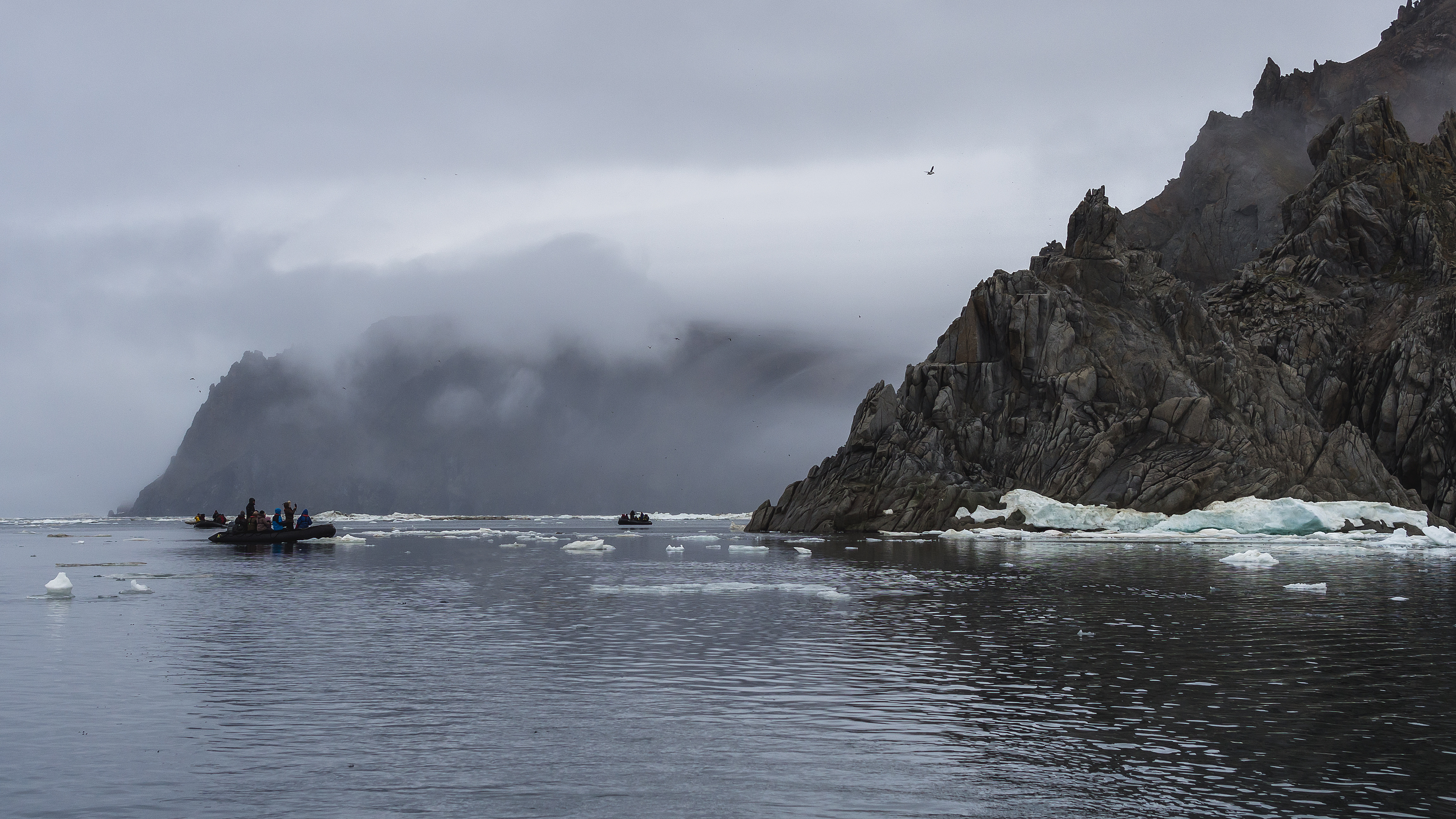

Not an island worth fighting over.
Especially not between countries that already have millions, if not billions of acres of vast and empty land. The 3,000 square miles of Wrangel Island aren’t quite nothing, but from the point of view of the United States, Canada, Russia or the Soviet Union, you wouldn’t think that they could work themselves into a frenzy over something the size of Rhode Island.
Well, then you don’t know the great powers very well.
They are as quarrelsome as bored pensioners with a grandson in law school.
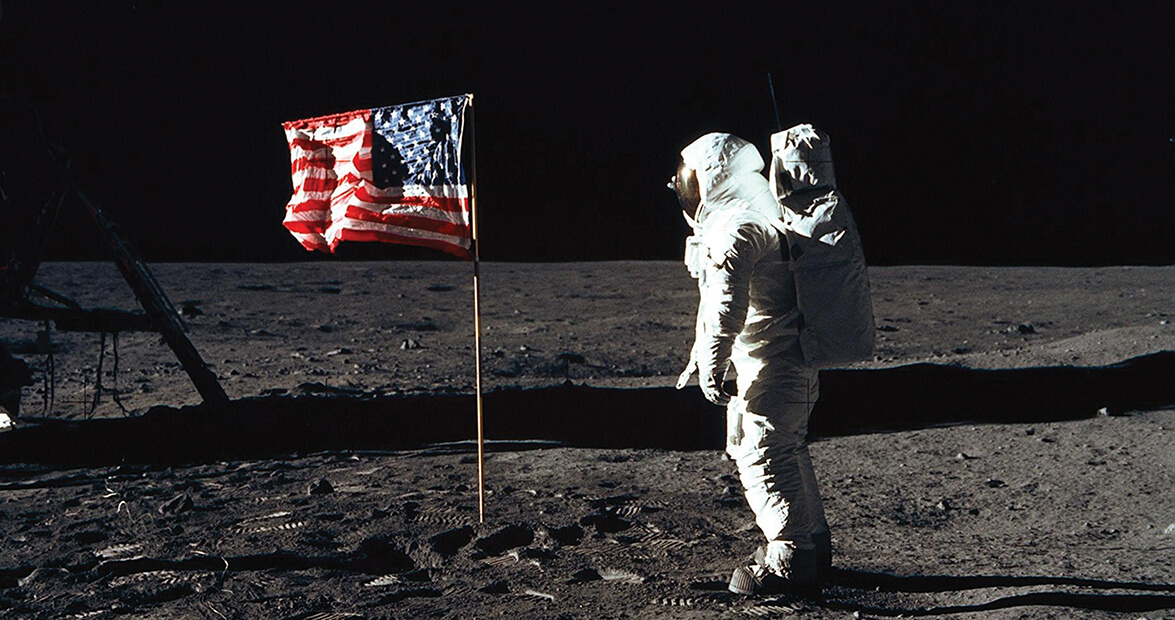
The first move was made by Captain Calvin Hooper, who set foot on the island in 1881 and rammed a U.S. flag into the ground. Hooper may have been a good captain and a nice chap (I have no information about this), but he was not a scholar of international law. Otherwise, he would have known that it takes a bit more than a windy flag to take possession of islands.
But he probably wasn’t that serious, because neither he nor the United States Navy returned to the island in the decades that followed. Instead, a Russian icebreaker came by in 1911, piled up a pile of rocks, and then moved on. That doesn’t win you an island in the long run, either.
The next visitors came unintentionally. In January 1914, the Karluk, the flagship of the Canadian Arctic Expedition, sank. The castaways made it to Wrangel Island. The captain, Robert Bartlett, together with a colleague, set out on foot for Siberia (the sea was frozen over, after all), and from there another 1,100 kilometers through Siberia to the Bering Strait, still on foot, to find a ship to Alaska.
From there he sent a rescue ship to Wrangel Island, and when you see the King & Winge, it becomes clear why many of the Arctic expeditions of the time ended with ships crushed in the pack ice. But this time, the rescue mission was successful, at least for those who survived the nine months on Wrangel Island.


The leader of the Canadian Arctic Expedition, Vilhjálmur Stefánsson, had a very bad character trait which, absurdly, some people, especially those working in HR departments, consider a positive one: He was ambitious.
As the majority of his posse had survived on Wrangel Island, he thought: “I might as well take possession of this island for king and country!” The country was Canada, the king was British, because Canada at the time was not yet truly independent. – As far as I know, Canadians still believe in the British king. I have a friend who has been living in Canada for ages, but he refuses to apply for Canadian citizenship, because then he would have to swear an oath to the king. Personally, I think that’s a bit pedantic; especially since he’s British. So he already has the king on his hands anyway, whether he wants to or not. That is what a monarchy is all about, after all.
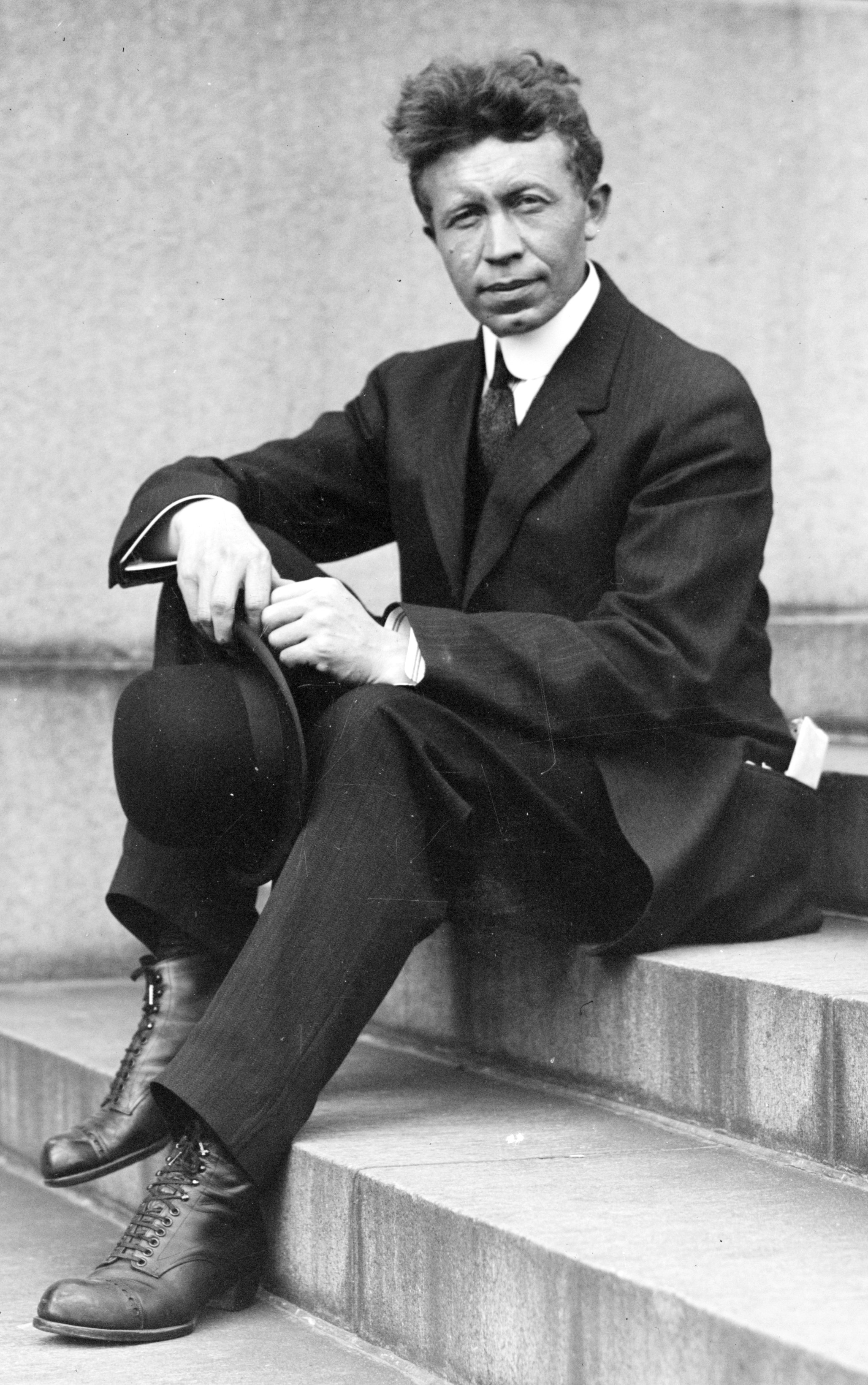
But back to Stefánsson. In 1921, he organized an expedition, this time with the explicit goal of not becoming shipwrecked, instead landing on Wrangel Island with full intent and to live there for a year and thus take possession of the uninhabited island for Canada. Granted, this was a better plan than the earlier excursions, which only briefly stuck a flag in the snow and then departed again. At least in theory.
Stefánsson gathered four young men (Allan Crawford, Frederick Maurer, Milton Galle and Errol Lorne Knight). All of them under 30, fresh out of college and just as ambitious as the expedition leader. They had probably been at McKinsey or Boston Consulting Group together.
Because the Canadians and Americans were, of course, to conduct highly important research, they could not under any circumstances engage in mundane activities such as hunting, cooking or sewing tents and winter clothing. For that, Stefánsson hired some Inuit families, of whom he thought: “They live in the ice anyway, they will know what to do.”
When the whole troupe gathered in a port in Alaska on 9 September 1921 to set sail on the Silver Wave, there were two surprises.

First surprise: The Inuit immediately realized that they were dealing with a bunch of inexperienced snobs, that the equipment was inadequate, and that in case of food shortages, the plan seemed to be that the Eskimos would serve as food for the white folks.
So, at the last minute, the Inuit withdrew. With one exception, a 23-year-old woman named Ada Blackjack. She was widowed, had a son with tuberculosis, and knew that without the monthly expedition salary of $50, her son would probably die. Because Ada Blackjack could cook and sew, the explorers thought: “Well, the girl will do. This way we’ll even save the money intended for all the other guys.”
Second surprise: In port, the great expedition planner Stefánsson told his men that unfortunately he could not accompany them – “too much work at the office, you know”, – but that he would visit them next year with another ship, possibly even pick them up.
Maybe I’m a little oversensitive, but for me, that would have been one giant red flag!
Not so for our young heroes, which is why the four men and one woman went off on their own. (Plus the ship’s crew, of course, but they wouldn’t stay on the island).

Oh, and on the voyage, there was the third surprise: They were supposed to stay on Wrangel Island for one year, but they only had food for six months. To save money, clever Mr Stefánsson had planned that the Inuit would hunt enough animals for everyone to live in luxury. Except that the hunters hadn’t come along.
On 16 September 1921, the four men and Ada were abandoned on the island. The captain promised to come back in the summer of 1922 to check up on them. All they would have to do was to get through one year of cold and isolation, “for king and country”.
In the beginning, things didn’t even go badly. They built tents for themselves and traps for the local fauna. The men learned to hunt – willy-nilly, because Campbell’s tomato soup soon becomes very boring. Ada cooked and sewed furs and blankets from the skins of seals and foxes – they didn’t dare touch the polar bears, though. For entertainment, they invented a card game, which they named after their cook.
The winter of 1921/22 was hard; as was to be expected. But, like in life, you can survive the coldest winter when you know that next summer the redeeming ship will appear on the horizon.
By now, you can probably guess what the next surprise was. The summer of 1922 was exceptionally cold. The sea around Wrangel Island did not thaw, even in summer, and the rescue ship got stuck in the ice somewhere along the way.
“Surely just a little delay,” the four men and Ada thought in August 1922, waiting for September.
“Maybe they will come after the summer holidays,” the four men and Ada thought in September, waiting for October.
“It is probably taking them longer because they had to rescue someone else on the way,” the four men and Ada thought in October, waiting for November.
“Maybe they want to surprise us for Christmas?” the four men and Ada thought in November, waiting for December.
“Or for New Year’s,” the four men and Ada thought in December, waiting for January.
“Screw it, I don’t think anybody will ever show up,” the four men and Ada thought toward the end of January 1923 and decided to walk to the Siberian mainland. It was winter, after all, and the sea was frozen over.

However, one of the men, Errol Lorne Knight, had fallen so ill that he was no longer fit to walk. He was suffering from scurvy, a deficiency disease that predominantly affects North Americans if they do not regularly consume fast food, fat and sugar. – Well, our merry band of explorers should have gone to the McDonald’s Islands instead, haha.
In such exceptional situations, it helps to have a clear moral compass. For the other three men, it was therefore immediately clear: “Ada, you stay with the terminally ill guy, and we’ll get out of here.” Of course, they also promised Ada and Knight that they would get help, but everyone had heard that promise more than enough. That’s like me promising to “take care of it this week” when you call or e-mail me. You might as well wait for the next ice age.
Because Knight could no longer get up, Ada now had to go hunting all by herself. For lack of experience, she often caught nothing at all for days, and then only a rabbit. Despite absolutely insufficient food intake and although Knight lay on the couch all day like Al Bundy, Ada was able to nurse him through another five months. It was not until 22 June 1923 that he died.
Crawford, Maurer and Galle, the three men who had made their way to the mainland, died as well. However, no one knows where or when or how. They disappeared, and ain’t nobody never found no shred of them.
Ada Blackjack was now all alone in the Arctic Sea.
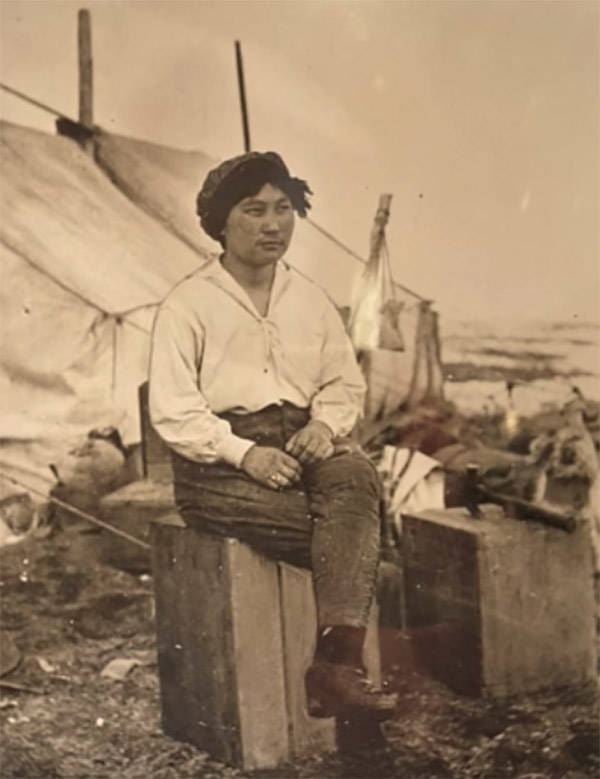
She was so bored that she came up with 140 different words for “snow”, tremendously enriching the Inuit language to the delight of subsequent generations of linguists.
Did I just say she was all alone on the island?
Actually, that’s not true.
You may have noticed it above in the group photo. If not, take another close look:
Exactly! The men, who otherwise got nothing right and did everything wrong, had made one correct decision. In good seafaring tradition, they had taken a cat with them.
The cat’s name was Victoria and she was extremely sweet, cute, kind, smart, cooperative, funny, sensitive and generally the perfect companion in all situations. In addition, she proved to be very adaptable and resilient, motivating the humans, who otherwise would have long ended their misery, to stay alive and keep going.

Indeed, it must be stated unequivocally: Without the cat, Ada would not have survived. And all the expeditions that failed before and since – whether in the Arctic or Antarctic, in the Himalayas or in outer space – probably lacked a cat.
And so, Ada and Victoria held out until 20 August 1923, when the Donaldson finally arrived to pick up the two sole survivors after almost two years in the ice.

Because the Donaldson thought she would find a prosperous Canadian colony, she had immediately brought along a slew of new settlers. Charles Wells and twelve Inuit climbed off the ship cheerfully and – were people really that stupid back then? – were not discouraged by the fact that everyone but Ada and the cat were dead.
And Stefánsson, the unlikable organizer of the whole mess? He claimed that the island now belonged to him – not the king – and sold it.
Pretty cheeky, you might think. Until you think about it a bit and realize, together with Jean-Jacques Rousseau, that all of capitalism is based on this cheekiness:
The first person who, having enclosed a plot of land, took it into his head to say this is mine and found people simple enough to believe him, was the true founder of civil society. What crimes, wars, murders, what miseries and horrors would the human race have been spared, had someone pulled up the stakes or filled in the ditch and cried out to his fellow men: “Do not listen to this imposter. You are lost if you forget that the fruits of the earth belong to all and the earth to no one!”
Fortunately, in the meantime, just around the corner from Wrangel Island, a country had emerged that wanted to reverse this misguided idea. In the course of that, it sadly took its own many misguided paths. The Soviet Union renewed a claim to the island that had already been made by Tsarist Russia in 1916, this time not for king and country, but for the workers, peasants and soldiers.
The USSR sent the ship Red October (not the one from the movie) in 1924, told the Americans that the fun was over and got them off the island. And then the Soviets did the same nonsense as the Americans and Canadians before: They sent colonists to the island, left them to themselves again for years, because the supply ships couldn’t get through the ice.
But the Soviets made one additional mistake: They didn’t bring a cat.
That’s why the governor of the island, Konstantin Sementchuk, went crazy at some point in the 1930s and had all the other inhabitants murdered, persecuted, poisoned and starved to death. The story is too grim to go into the details. On the other hand, quite normal for the Soviet Union under Stalin, where every day and in every life, there was big drama. You actually have to be thankful that nobody detonated a nuclear bomb on the island.
Stalin died in 1953 – probably because he didn’t have a cat.
From then on, almost normal life developed on Wrangel Island, though never with more than a few hundred people. But the icebreakers had improved, so ships with newspapers and tobacco showed up regularly. The town of Ushakovskoye was founded, with a school, hospital, department store, airport and even a library.
If you are now thinking “great, I’ll go on a holiday there”, you are too late. Because in 1997, the settlement was abandoned. The older inhabitants refused to move away, like they always do. The last surviving lady got eaten by a polar bear in 2003.
Now it looks like this, and only a ranger is holding the line:


And what do we learn from all this?
Probably how important cats are for mental health and survival during hard times.
Links:
- All articles of the series “One Hundred Years Ago …”. – You probably noticed that I only found time for the August episode in September, but there will also be an episode for September 1923. Either about the Bauhaus, about the military coup in Spain or about Bavaria, just in time for the upcoming state elections there.
- More history.
- And more cats.
- Too late to be included in the article, I discovered this amazing photo album with historic photos from the first expeditions to Wrangel Island.


 The Happy Hermit
You make bad jokes about MacDonald’s Islands, and you don’t suggest writing about your Easter Island trip over Easter? For shame!
Pedantic point #2: Umberto Nobile used a dirigible, not a blimp. Two different animals.
And cats don’t give you the will to survive, per se. They give you the desire to out-stubborn their little furry butts! (I know – I’ve been challenged by a large number over the past ten years. And God bless every one of the little buggers I’ve lost.)
Nice to see you in full … shall we say, expositional form. ;)
That’s a great idea!
I will gladly postpone the Easter Island project from November to Easter, which will give me a few additional months. :-)
If nothing else, you can always rely on me for a procrastination excuse. ;)
Fantastic and enjoyable, as usual.
Karl-Marx-Stadt, that means you are in Chemnitz?
Karen Price
Yes, indeed.
After years of bumming and bouncing around, I wanted a bit of stability, a base to travel from.
And I found Chemnitz to be the ideal fit.
Not too big, not too small. Many green spaces. The Detroit vibe between all the abandoned factories, and the Eastern European vibe in other parts of the city.
Also quite a beautiful area, with many castles and rivers and beautiful valleys, perfect for hiking.
I’ve been here four months now, and I am still surprised how much I like it. :-)
This made me giggle! I love the way you write! I have two cats, so I guess I’m prepared😂
Thank you!
I seriously see more people traveling with their cat nowadays. Sometimes in a basked, sometimes on a leash.
To someone who always had free-roaming cats, it looks strange at first. But then, dogs are taken on a leash as well. And being outside on a leash is better than staying at home while the human is sailing around the world.
The guy whose cat I took care of in Stockholm also took his cat on holidays sometimes, he told me. The cat would go in the camper van with him and then run around freely on the campsite or in nature.
It was only a problem when there were too many dogs at the campsite.
I vote for an episode on Bavaria in time to prepare us all for the Octoberfest.
So far, you are the only vote and therefore the winner
You actually gave me an idea, because I hadn’t even thought of the Oktoberfest connection. Thank you!
Endlich auch cat content auf deiner Seite. 🤣 Die Geschichte mäandert ganz wundervoll umher und man will mehr wissen über alles, was noch so im Eis verborgen ist an Geschichten. Dass Russland eine Kolonialmacht ist und sich nicht natürlich von der Ostsee bis zur Beringstraße erstreckt habe ich erst gelernt, als ich zum ersten Mal ein sowjetisches Geschichtsbuch in die Hand bekam. Es wäre wirklich brisant, wenn Herr Putin Russland in den Grenzen vor 1862 wiederherstellen wollte. Grüße nach Kams (so wurde deine neue Heimat früher abgekürzt) Deine Beschreibung hat meinen Wunsch verstärkt, dort mal bei dir vorbeischauen zu kommen.
Cat content for nerds. 🤓
Mir wurde das lustigerweise auch anhand eines Schulbuches bewusst. Bei einem Seminar an der Fernuniversität über “Entdeckungen” und die europäische Expansion hatte der Dozent einen Atlas aus der DDR mitgebracht. Und da waren neben den bekannten Humboldt-, Kolumbus- und Cook-Reisen eben Dutzende von bisher unbekannten Pfeilen jenseits des Urals, nach Sibirien und Zentralasien.
Leider habe ich die Karte verlegt, aber wenn sie wieder auftaucht, werde ich sie nachliefern.
Ich habe mich schon ziemlich kurz gehalten und vielen Versuchen zum ausholenden Exkurs widerstanden.
Von wilden Gouverneuren auf einsamen Inseln könnte man zur Meuterei auf der Bounty springen. Außerdem wurde Ada Blackjack auch für die Expedition ausgewählt, weil sie Englisch sprach. Das hatte sie auf einer Missionsschule gelernt. Diese Schulen sind ein ganz trauriges Kapitel in der kanadischen Geschichte, weil dort den indigenen Kindern bis in die jüngste Vergangenheit ihre eigene Sprache, Herkunft und Identität abtrainiert werden sollte. Und dazu natürlich all der Missbrauch, der mit christlichen Schulen einhergeht.
Aber dann wäre es ein Buch geworden.
Und die Einladung nach Chemnitz gilt weiterhin, wann immer es dich Richtung Süden verschlägt!
Ab dem 25. September bin ich allerdings auch wieder für drei Wochen in Berlin, zum Housesitting für Freunde in Charlottenburg (nach Kreuzberg und Müggelheim wieder ein ganz anderes Viertel).
Dann sehen wir uns in Charlottenburg. Bin ab 21. September wieder in Berlin. Freue mich.😀
Que habría sido de Ada sin el gato. Una historia interesante, cuando eras nómada escribías mas seguido.
Que habría sido de Ada sin el gato,una historia interesante. Cuando eras nómada escribías mas seguido. (Así es correcto, disculpas por arruinar los comentarios, el Whatsapp ya ofrece la opción de editar los comentarios, cuando podremos hacerlo desde los blogs).
I wrote this yesterday, Andreas, about my small neck of the world’s woods. I hope you like it. https://thehappynarcissist.wpcomstaging.com/2023/09/30/im-not-who-i-was/
Another wonderful article Andreas!
Thank you very much!
Brilliant. I’m usually firmly Team Canine but this has me rethinking the benefits of cat ownership.
Although dogs have also proven to be quite useful in polar exploration.
Amundsen even killed the dogs he no longer needed and fed them to the remaining dogs. 😔
I stumbled upon your blog by accident and stayed on purpose. I have a wandering soul like you. Can’t stay in a place for long, before my feet become itchy. A bit like a hobbit in that regard. Thanks for your blog entries! They are very enjoyable and highly relatable.
Thank you very much!
I am always happy to hear about those kind of accidents. :-)
Fascinatingly entertaining and very funny too – very rare combination so thank you Andreas.
Thank you very much!
I am always glad myself when I find some story for this history series which is not only about wars or revolutions or other mayhem.