When you visit Albania – which I highly recommend – you should not only get a guidebook, but read a few books by Ismail Kadare during your trip. Of the ones I have read so far, I enjoyed The File on H the most.
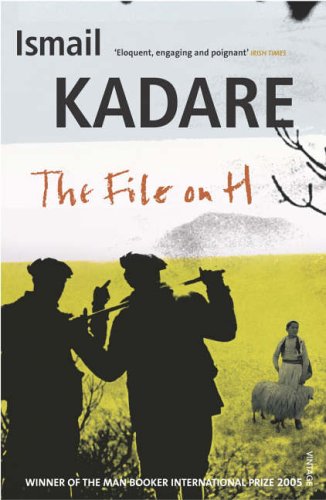
As in all of his novels, Ismail Kadare takes historical facts and fictionalizes them, in the course teaching you something about Albanian history and culture, but without the book losing its quality as a novel. All of his books made me want to research more about the underlying factual elements. The question in The File on H is the Homeric Question, that is the dispute about the identity of Homer and about the origin of his tales.
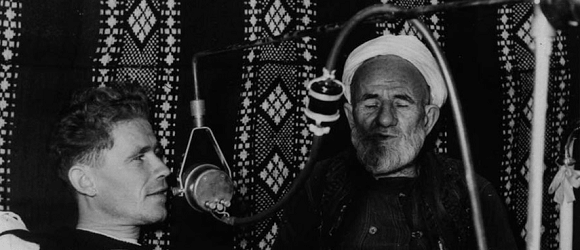
The main protagonists are Milman Parry and Albert Lord, two American academics who really went to the Balkans between 1933 and 1935 to find local bards, preferably illiterate ones to focus on the oral tradition, and to record their renditions on the just-invented tape recorder. They intended to research how the ballads changed over time to understand the process of Homer’s work. Although they traveled in Bosnia, they mostly interviewed Albanian bards. After Parry’s death, Lord returned to Albania and traveled through the northern mountains – the atmosphere of which is conveyed beautifully in the book – where foreigners traveling with a huge tape recorder, which had never been seen in that part of the world before, naturally aroused suspicion.
And thus the story turns into an espionage novel, a novel about politics, about preservation of culture and about the fear of the unknown. The reports of one of the spies for the governor are a literary delight, almost like a novella inside a novel.
The only point of criticism is that once the Serbian monk talks to the Albanian hermit, the end is foreseeable. But then, that’s just realistic, because the end of any Serbian-Albanian discussion is foreseeable to this day.


 The Happy Hermit
Pingback: Thoughts of the Day 4 | The Happy Hermit
Pingback: Der Dichter auf seinem Berg | Der reisende Reporter
Pingback: Ismail Kadare, 1936-2024 | Der reisende Reporter
Now, two things: There were no tape recorders in 1933. They would have recorded on vinyl or shellak, with a much bulkier recorder, obviously. The alternative, not as widely used, were steel wire recorders. The first practical tape recorder was introduced in 1935 and manufactured by AEG.
And no, Serbian-Albanian discussions do not necessarily have predictable endings. Debates between Kosovar or Macedonian Albanians and Serbs usually do, when they touch topics such as politics, minority rights, territorial claims etc.
The relationship between Albanians from Albania and Serbs is quite different from that. Many people in Albania do look up to Serbia as a very cultured nation, and there are no territorial disputes between Albania proper and Serbia. Hence, Albania is one of the few countries in the region with which Serbia has relatively relaxed diplomatic relations.
That doesn’t mean all is fine, and there is still a lot of people on both sides who harbor resentments. But this relationship is far less stereotypical than a lot of people think.
Danke für diese korrigierenden Erläuterungen!
Das mit dem Kassettenrekorder war ein bisschen flapsig von mir formuliert, glaube ich. Soweit ich mich erinnere, was so viele Jahre nach der Lektüre nicht leicht ist, hatten die beiden auch im Roman ein wesentlich größeres und umständlicheres Gerät dabei.
Hier sieht man ein Foto:
Klassisces Grammophon für Tonaufnahmen. Wahrscheinlich nimmt es auf Schellackrollen auf.